Pebble Ceramic Ikebana Kenzan Container

with drainage hole and saucer

Regular price $21.50
Colors: Orange
Drainage hole
Saucer Included
30-day return policy

Curate Your Indoor Landscape With These:

Designed to layer beautifully in any room. Choose a piece as your design anchor, then build your custom pottery collection with these complementary companions:


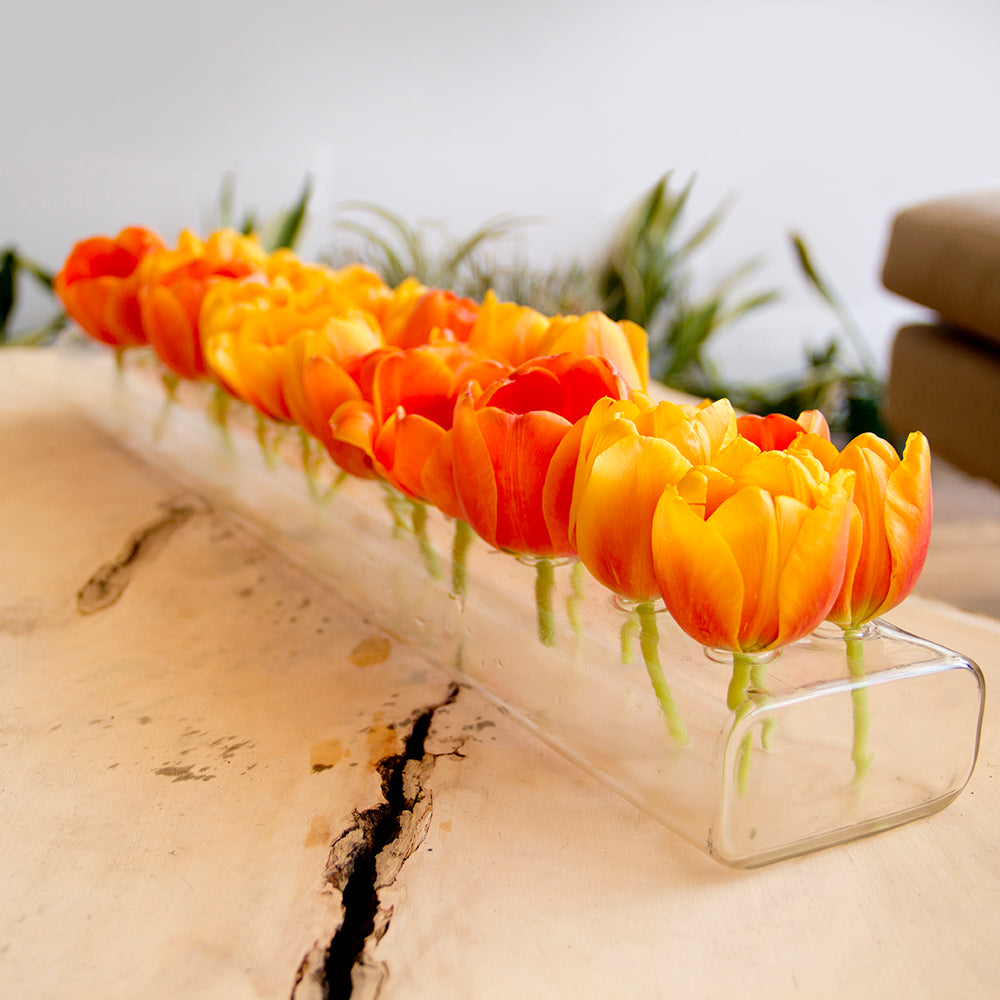
A ceramic kenzan flower frog solves the one problem every cut-flower arrangement has: stems that lean, drift, or slump sideways by hour two. Pebble pairs a glazed ceramic dish with a built-in pin base, so stems press in and hold exactly where you put them, whatever the angle. It's 4 inches across and 2.5 inches tall, small enough for a windowsill, heavy enough to stay put once it's loaded. Cut stems shorter than you think you should, set them on the pins, and the shorter path pulls water up faster — flowers arranged this way tend to outlast the same stems dropped loose in a tall vase. No drainage hole here; it's built to hold water, not soil, though it moonlights fine as a small succulent dish between arrangements. Comes glazed in orange, silver, or white. It's a strange little object to explain and an easy one to use — which is usually the sign a design got something right.

Product detail
  • Color:
  • Material: Ceramic
  • Glaze finish: Glazed
  • Finish variation: Natural variation between pieces
  • Drainage: No drainage hole
  • Saucer:
  • Dishwasher safe: Yes
  • Indoor / Outdoor: For indoor use and covered outdoor temperate weather use
  • Designed by: Chive Studio
  • Year Designed: 2010
Dimension
  • 4 inches in diameter, 2.5 inches tall

Plants that love this pot
  • Haworthia
  • Zebra cactus
  • Pothos cuttings
  • Air plants (tillandsia)
  • Crassula ovata

Potting Tips

  1. Repot in the evening.
  2. Wait 1–2 days after watering, then repot.
  3. Buy potting mix. Not backyard dirt.
  4. Move the top layer of soil from the old pot into the new one. It's a little ecosystem.
  5. Never go more than one inch bigger.
  6. Soil line sits an inch below the rim. Leca or small rocks at the bottom for drainage.

Which pot size for my plant? →

Full Repotting guide →

Pot Care instructions
  1. Dishwasher-safe. Can also be hand-washed with warm soapy water and a soft cloth.
  2. Glazed pots are dipped and kiln-fired — they are sealed, durable, and not looking for trouble. No special cleaning products required.
  3. For pots with saucers empty the saucer periodically. Standing water in the saucer defeats the purpose of having a drainage hole, which is a thing we feel strongly about.
  4. Not frost-safe. Designed for indoor use and covered outdoor temperate weather use. Freezing temperatures are not recommended.
Shipping & returns

Shipping

  • Free shipping: On qualifying US orders — threshold shown at checkout
  • Standard: 5–8 business days Express2–3 business days (at checkout)
  • International Ships: to 40 countries — rates at checkout
  • Packaging Ships: in outer box to protect gift box

View full shipping policy →

Returns

We accept returns within 30 days of delivery on unused items in original packaging. If your piece arrives damaged, contact us within 14 days with a photo and we will replace it at no charge.

View full return policy →

Wholesale Inquires

Have a cool shop? Know someone that does?

Find Chive on Faire →

The Story Behind This Piece

A kenzan is really just a heavy base studded with pins, designed to hold cut stems upright in shallow water without a vase's help — the tool most ikebana arrangements actually depend on, hidden entirely once the flowers go in. Ceramic makes an unusual choice for the base, since most kenzan run metal specifically for the weight, but a dense ceramic disc turns out to do the same job at four inches across without needing lead or iron to stay put once stems start pulling at odd angles. The pins themselves stay metal, set into the fired ceramic base rather than molded into a single piece, which lets the two materials each do the job they're actually suited for — ceramic for weight and a finished surface, metal for pins that need to hold an edge. At two and a half inches tall, it disappears into almost any shallow dish or bowl once submerged, which is the whole point of the design. Nobody's supposed to notice the kenzan itself. They're supposed to notice the arrangement it's quietly holding in place. Most people only ever encounter one once, tucked at the bottom of a bowl they've already filled with water and stems, never actually seeing the piece doing the work until an arrangement gets taken apart and rebuilt.


Potting a plant with Chive

  1. It's best to repot your plant in the evening. Trust us, we know.
  2. Repot 1–2 days after watering — keeps the same rhythm going and won't shock it.
  3. Potting soil is not the dirt from your backyard. Go buy good, nutrient-rich soil.
  4. The top layer of soil in your current pot should be the top layer in the new pot too. It's a little ecosystem your plant likes.
  5. Never go more than one inch bigger than your existing pot. "It'll grow into it" is not correct, and you will kill it.
  6. Keep the soil line about an inch below the top of the pot. Add some leca or small rocks to the bottom for better aeration.
Repotting plants with Chive | Chive Studio

The Ultimate Repotting Guide

For those who have killed a plant. Or several. Or, frankly, many.

Before you put a plant into your new pot, you have to get it out of the nursery pot — a process that ends badly more often than any gardening influencer will admit. We wrote a full guide: when to repot (early spring, and not when you're feeling impulsive in October), which soil to use, how to tell your plant is root-bound, and how to avoid the three mistakes that kill perfectly healthy plants within a week of a well-intentioned repotting.
It is the guide we wish someone had handed us twenty-five years ago. It is written by people who have personally committed most of the errors in it.

Mesh Ceramic Planter Pot - Chive Ceramics Studio - Pots - Chive US

Mesh Ceramic Planter Pot

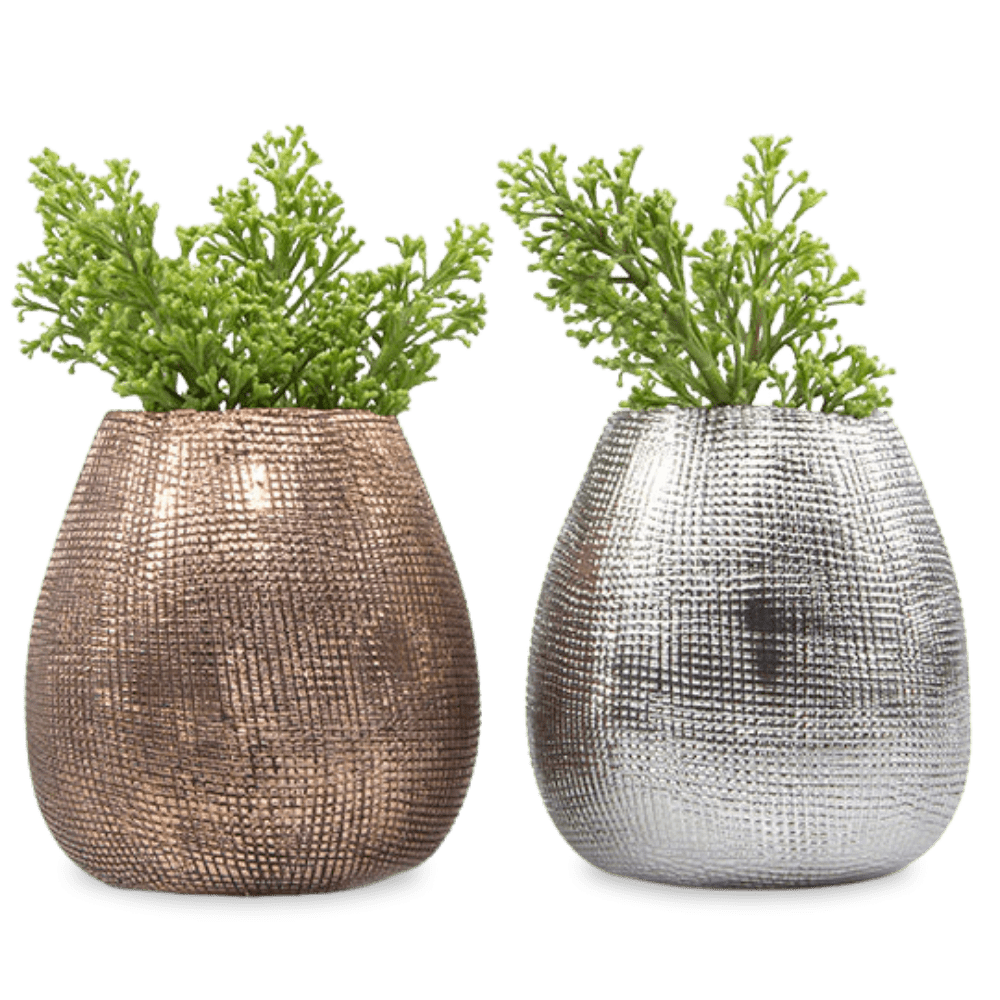
Pebble's function-over-fuss approach pairs naturally with the Mesh Ceramic Planter Pot, a similarly small piece that earns its keep through texture rather than a fussy silhouette.

Find this among Chive's pots collection, where small, function-first pieces like this one sit next to larger planters built for entirely different jobs.

A kenzan holds stems in water rather than soil, which makes it a natural companion to Chive's vase collection rather than anything built around potted, rooted plants.

Pots with drainage by chive studio

About Chive Studio

Ikebana tools have never been the studio's biggest category, but they've stayed in rotation since 2004 anyway, mostly because a kenzan solves a real problem that a vase alone never quite manages — getting a stem to stand exactly where you put it, rather than wherever gravity and water pressure decide. The rest of the catalog is generally built to be looked at directly. This is one of the rare pieces built to disappear entirely once it's doing its job, a different design problem than most of the catalog has to solve, and one the studio has come to genuinely enjoy solving. That's a fair trade, most days. An object that succeeds by vanishing is still succeeding, even if nobody ever compliments it directly.


Plant Tips from Chive Studio

Quick tips, straight answers, and the occasional reminder that overwatering kills more houseplants than neglect does.

How to Repot a Plant: Watch for the Linen

Todd Newgren
How to repot a plant comes down to three signs, one rule, and one soil decision that most people get wrong. Chive Studio has been making drainage pots since 2004. The neighbor i...
Read more

Begonia Care: The Complete Guide

Ryan Hearst
Begonia plant care requires bright indirect light, consistent watering, and a pot that drains. Chive has been designing ceramic pots with real drainage for over two decades. Her...
Read more

Frequently asked questions

What is a ceramic kenzan used for in flower arranging?

A kenzan holds cut flower stems upright in shallow water, doing the structural work a vase alone can't manage on its own. The heavy base and metal pins keep each stem exactly where it's placed rather than drifting or leaning as the arrangement settles. That structural support is really the entire reason kenzan exist at all.

How do you use the Pebble kenzan for ikebana?

Submerge it in a shallow dish or bowl of water, then push stems down onto the pins at whatever angle the arrangement calls for. The kenzan itself stays hidden once water and flowers cover it, doing its job entirely out of sight. Trimming stems at a slight angle beforehand makes them easier to seat firmly onto a pin.

How many pins does the Pebble ceramic kenzan have?

The Pebble kenzan carries enough pins across its ceramic base to hold a genuinely full arrangement, spaced closely enough that stems of different thicknesses can all find a secure spot without crowding each other out. That density is what lets stems of noticeably different thickness all sit securely without special adjustment.

Does a ceramic kenzan work as well as a metal one?

Yes — a dense ceramic base provides the same weight and stability a metal kenzan relies on, without needing lead or iron to keep it anchored once stems start pulling at odd angles during arranging. The trade-off is a slightly heavier overall piece, which most people consider a fair exchange for the finish.

How do you clean a ceramic ikebana kenzan container?

Rinse it under running water after each use to clear away plant debris, and an old toothbrush works well for getting between the pins if buildup starts to collect. Ceramic doesn't stain or hold odor the way some materials do, so a quick rinse is usually all it needs. Nothing more elaborate than that.

How big is the Pebble ceramic kenzan in inches?

It measures 4 inches in diameter and 2.5 inches tall, sized to sit comfortably inside most shallow bowls or dishes without needing a specially matched container built around it. That's compact enough for a windowsill grouping but heavy enough to stay anchored once stems are loaded. Small, but it holds its ground.

Is the Pebble kenzan good for beginners at ikebana?

Yes, more so than many kenzan actually — the pin spacing is forgiving of imprecise stem placement, which matters more to a beginner than a densely packed traditional metal grid built for advanced technique. Traditional metal kenzan pack their pins closer together, which rewards experience more than it welcomes a first attempt.

When did Chive first make the Pebble kenzan container?

Ceramic ikebana tools have stayed in the studio's rotation since 2004 in one form or another, though this particular shape came later, once it became clear a ceramic base could do the job as well as a metal one. The ceramic version has held its own against the traditional metal standard ever since.

Shido Vegetable and Flower Seeds Vacuum sealed for peak freshness

The pot is sorted. Now what goes in it?

Shido seeds come vacuum-sealed, non-GMO, and packaged well enough that people keep the packets after the seeds are gone. Which is either a design success or a problem, depending on how you look at it.

Your new pot is waiting.