





Kenzan Metal Floral Frogs For Ikebana
Build the Arrangement That Looks Harder Than It Was
Pick a vase to anchor the shelf, then add the rest until it reads as curated instead of collected.
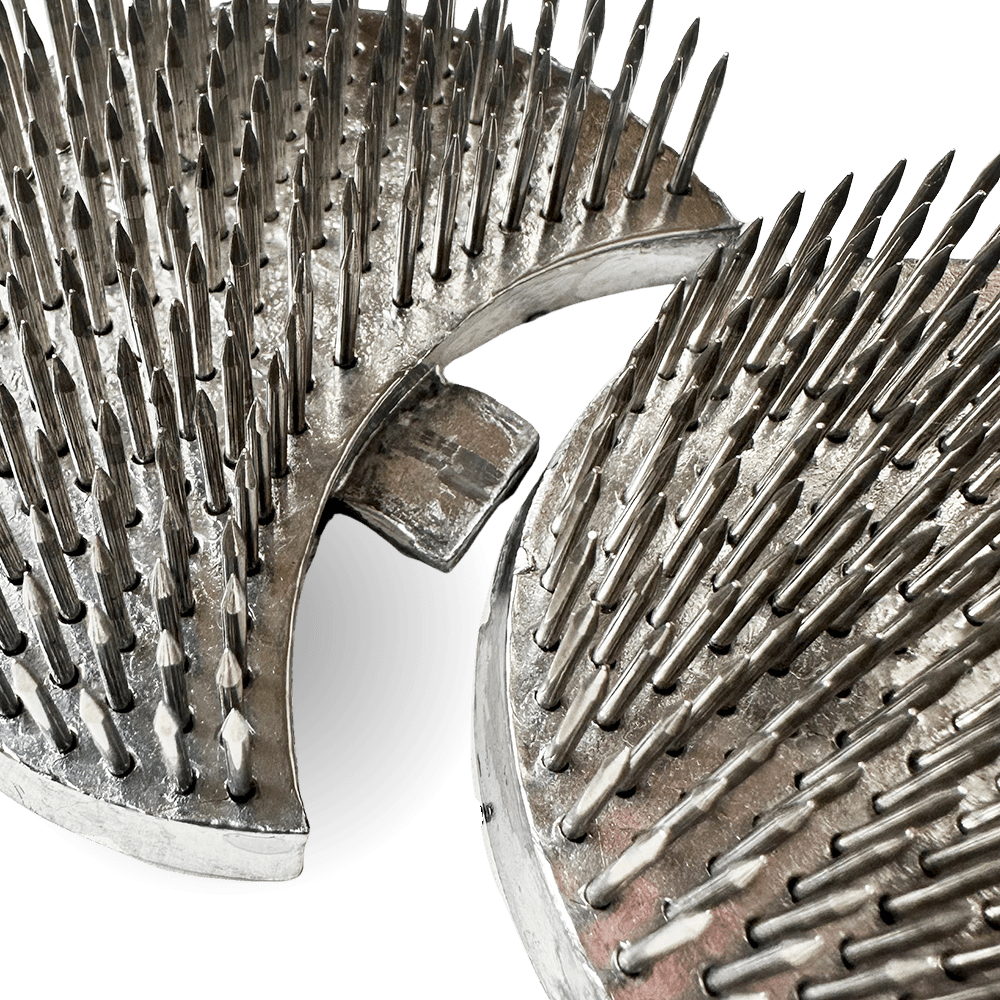
Kenzans have held up flower arrangements for hundreds of years, long before anyone thought to call it ikebana specifically — a heavy base studded with metal pins that a stem presses onto and simply stays where it's put, no wiring or floral foam required. Cutting stems shorter to fit the pins isn't a compromise; shorter stems have less distance to pull water through, so arrangements built on a kenzan tend to last noticeably longer than ones crowded into a narrow vase neck. Nine sizes are available here, from a compact 1.4-inch round suited to a single stem up to a 4.2-inch Sun and Moon shape built for something more ambitious. Round and rectangle options cover most bowl and dish combinations in between. The pins themselves are simple, but the principle behind them has outlasted nearly every flower-arranging trend that came after it, which says something about how well a good, unglamorous idea holds up over time.
- Material: Metal
- Glaze finish: Stainless Steel
- Year Designed: 2008
Quick Guide to Building a Ikebana Floral Arrangement
- Choose a low, open vessel
- Set the frog before anything else
- Place the main line first
- Add the second and third lines
- Fill in sparingly
- Step back before deciding it's finished
- Reset the frog between arrangements
Shipping
- Free shipping: Orders $200+ within the US
- Standard: 5–8 business days, Express 2–3 business days (at checkout)
- International Ships: to 40 countries — rates at checkout
- Packaging Ships: in outer box to protect gift box
Returns
We accept returns within 30 days of delivery on unused items in original packaging. If your piece arrives damaged, contact us within 7 days with a photo and we will replace it at no charge.
Have a cool shop? Know someone that does?
The Story Behind the Kenzan Metal Floral Frogs

Building an Ikebana Arrangement
A floral frog, called a kenzan in ikebana, is a small weighted disc studded with metal pins. Stems get pushed onto the pins and hold whatever angle they were given, no tape or spare hand required.
Choose a low, open vessel. Ikebana favors shallow bowls over tall vases, since a kenzan needs a flat base to sit on. A tall bud vase will not do.
Set the frog before anything else. Place the kenzan first, then add water. Water over pins is slippery, and a shifting kenzan takes the arrangement with it.
Place the main line first. Ikebana builds around three stems at different heights: tall (shin), mid (soe), short (hikae). Start with the tallest, cut with intention, since it sets the scale.
Add the second and third lines. Lean the mid stem outward, then the short stem the opposite way, low and close to the rim. Together they form an uneven triangle. Symmetry is what a kenzan avoids.
Fill in sparingly. Empty space is a design element, not a gap to fix. A few stems angled to hide the pins is enough. Past that, it looks like a grocery store bouquet.
Step back before calling it finished. Walk across the room and look again. There is almost always one stem to remove.
Reset the frog between arrangements. Trimmings settle in the pins and give the next stems less to hold onto. Rinse it clear before the next round.
Pro Tip: The light does half the work.
Glass catches and bends light in a way ceramic can't. Set the arrangement somewhere it'll get some late afternoon sun, even for an hour, and the water and stems start doing something a solid vase never will.
Perfect Pairs for Any Shelf
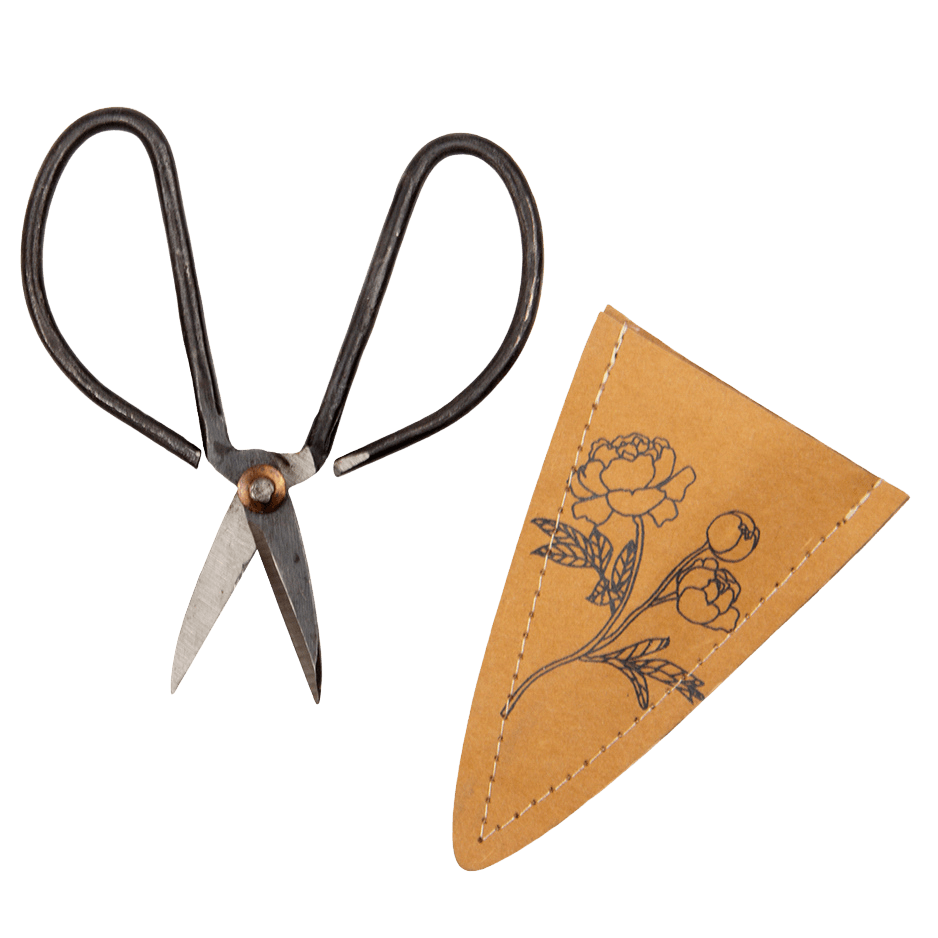
The Tool That Cuts It Down to Size
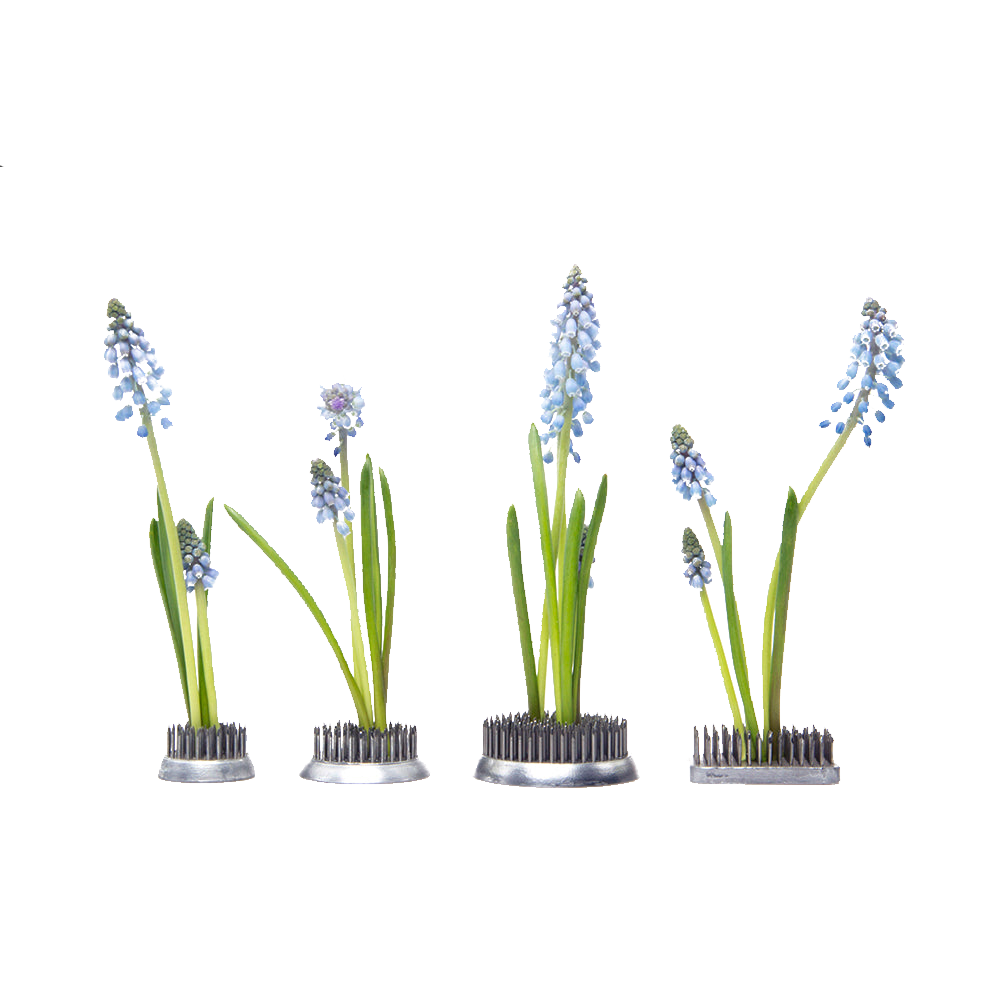
The Full Ikebana Set
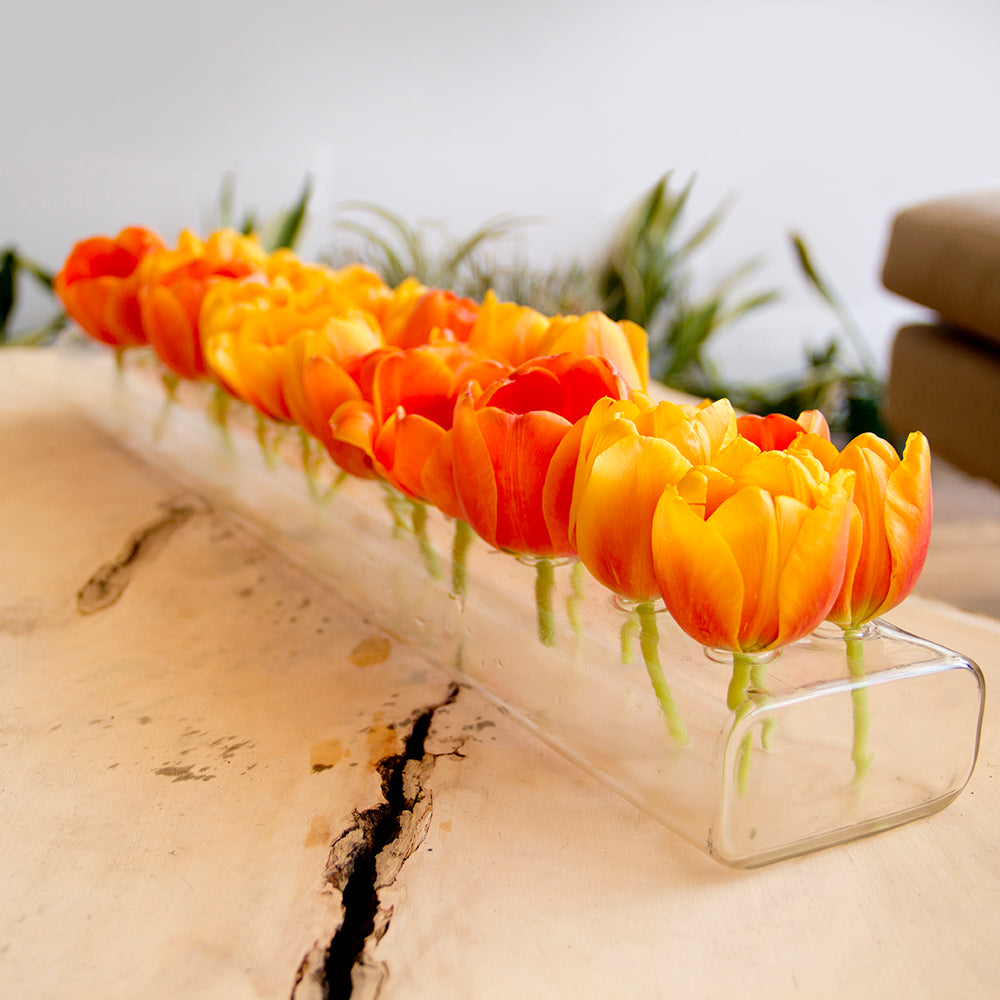
What the Arrangement Still Needs

About Chive Studio
Inside the Chive Design Studio
Low maintenance, high impact. Let's make home styling look easy.

