Frost Porcelain Bud Vase For Flowers

Regular price $10.50
Colors: Black
Sizes
Fully Glazed
Dishwasher safe cleaning
30-day return policy

Build Your Effortless Arrangements With These:

Choose a vase as your anchor, then round out the shelf with these for that thrown-together-but-somehow-perfect look.


The Frost vase is a frost vase in the sense that the finish forgot to shine, and forgetting to shine turns out to be the whole game. As a frosted porcelain vase it looks less like something bought and more like something turned up in a drawer, and as a matte white bud vase it holds one honest stem at a time without asking anything else of the room. The studio spent a slightly embarrassing amount of time looking up what bisque porcelain actually means and understood the definition for about four seconds before it left the brain entirely. What matters is the surface — no shine, no glare, no argument for being anywhere but exactly where you set it down. Every Frost takes shape by hand at Chive Ceramics Studio in the small porcelain room, and each one comes out at a fractionally different white, which is not, on inspection, a defect worth remedying.

Product detail
  • Vase Type:
  • Material: Porcelain
  • Glaze finish: Matte
  • Water Resistance: Watertight
  • Year Designed: 2016
Dimension
  • 3" diameter
  • 3.5" tall
Vase Care Instructions

Every ceramic vase in this collection is dishwasher safe on the top rack, making cleanup between arrangements as simple as loading it in with the rest of the dishes. The glazed surface holds up fine to regular washing, so there's no need to hand-wash unless you'd prefer to.

If you're cleaning a piece with painted or sculpted detail, a gentler cycle or a quick hand-wash with warm water and mild soap will help keep the finish looking sharp for longer. Either way, rinse and dry after each use — especially if flower food or cut-stem residue was in the water — so nothing lingers and clouds the glaze.

No special sealants, no periodic maintenance. Wash it, dry it, put flowers back in it.

Flowers that Love this Vase
  • Cherry Blossom
  • Baby's Breath
  • Sweet Pea
  • Poppy
  • Nigella
  • Columbine
  • Phlox
  • Foxglove
  • Iceland Poppy
  • Evening Primrose

Quick Guide to Building a Floral Arrangement

  1. Pick your vase first
  2. Start with your anchor flower.
  3. Build in odd numbers.
  4. Add height, then fill.
  5. Greenery does the quiet work.
  6. Cut stems at an angle, underwater if you can.
  7. Step back before you decide it's done.

Shipping & returns

Shipping

  • Free shipping: Orders $200+ within the US
  • Standard: 5–8 business days, Express 2–3 business days (at checkout)
  • International Ships: to 40 countries — rates at checkout
  • Packaging Ships: in outer box to protect gift box

View full shipping policy →

Returns

We accept returns within 30 days of delivery on unused items in original packaging. If your piece arrives damaged, contact us within 7 days with a photo and we will replace it at no charge.

View full return policy →

Wholesale Inquires

Have a cool shop? Know someone that does?

Find Chive on Faire →

Frost Porcelain Bud Vase For Flowers - Chive Ceramics Studio - Vases - Chive Ceramics Studio

A finish that forgot to shine — the Frost

The team here logged a mildly humiliating stretch of time looking up the definition of bisque porcelain and holding it inside the collective head for perhaps four seconds before it exited. That is the standard half-life of ceramics explanations delivered in this building. What the studio does know is that the material never receives a glaze pass after firing, which means the surface will not shine, which means it looks like something quietly found on a windowsill rather than something bought new online, which turns into the entire game over time. Frost is the right descriptive word for it, even though nobody officially asked the studio to weigh in on the naming discussion at the time and one designer would still slightly prefer the word Bisque, in a running argument nobody expects to see resolved during their tenure at the studio. The vase measures three inches across at its widest section and three-and-a-half inches from base to lip — a compact bud form built to hold precisely one honest stem per arrangement, requesting nothing else from the room around it. Every Frost leaves the kiln carrying a slightly different white value from the one before it, which is not, on close inspection under a lamp, a defect worth remedying. It is a small quiet argument for keeping the second one too.

Chive Studio trimming tulip stems with scissors on a wooden surface, with white, purple, and pink tulips arranged nearby.

A (Mostly) Simple Guide to Cutting Your Flowers

So, you’re making an arrangement? Let’s ensure it lives long enough to impress someone—even if it's just you.

  1. Scrub the Scissors: Wash your shears first. Your flowers do not want a side of Dorito dust.
  2. Cut at 45°: Snip stems at an angle. It gives them a straw instead of making them chug from the bottle.
  3. Trim Underwater (Fancy Mode): Cut them submerged to block air bubbles. It’s extra, but they didn’t ask to suffocate.
  4. Ditch Submerged Leaves: Strip anything below the waterline. Unless you are actively going for a swamp aesthetic.
  5. Snip Again if Stale: If they sat out on the counter, trim them again. They need a fresh start (don’t we all?).
  6. Swap the Water: Change it and trim the stems every few days so they don't die immediately.

Voilà! You are now a domestic deity. Go take your Instagram photo before you forget to water them.

Pro Tip: Keep It Short and Sweet!

When it comes to flower stems, shorter is better. Not only do shorter stems look chic in arrangements, but they also help your blooms last longer. Why? Because the shorter the stem, the less distance water has to travel to keep those petals perky. It’s like giving your flowers a shorter commute—less stress, fewer breakdowns.

Perfect Pairs for Any Shelf
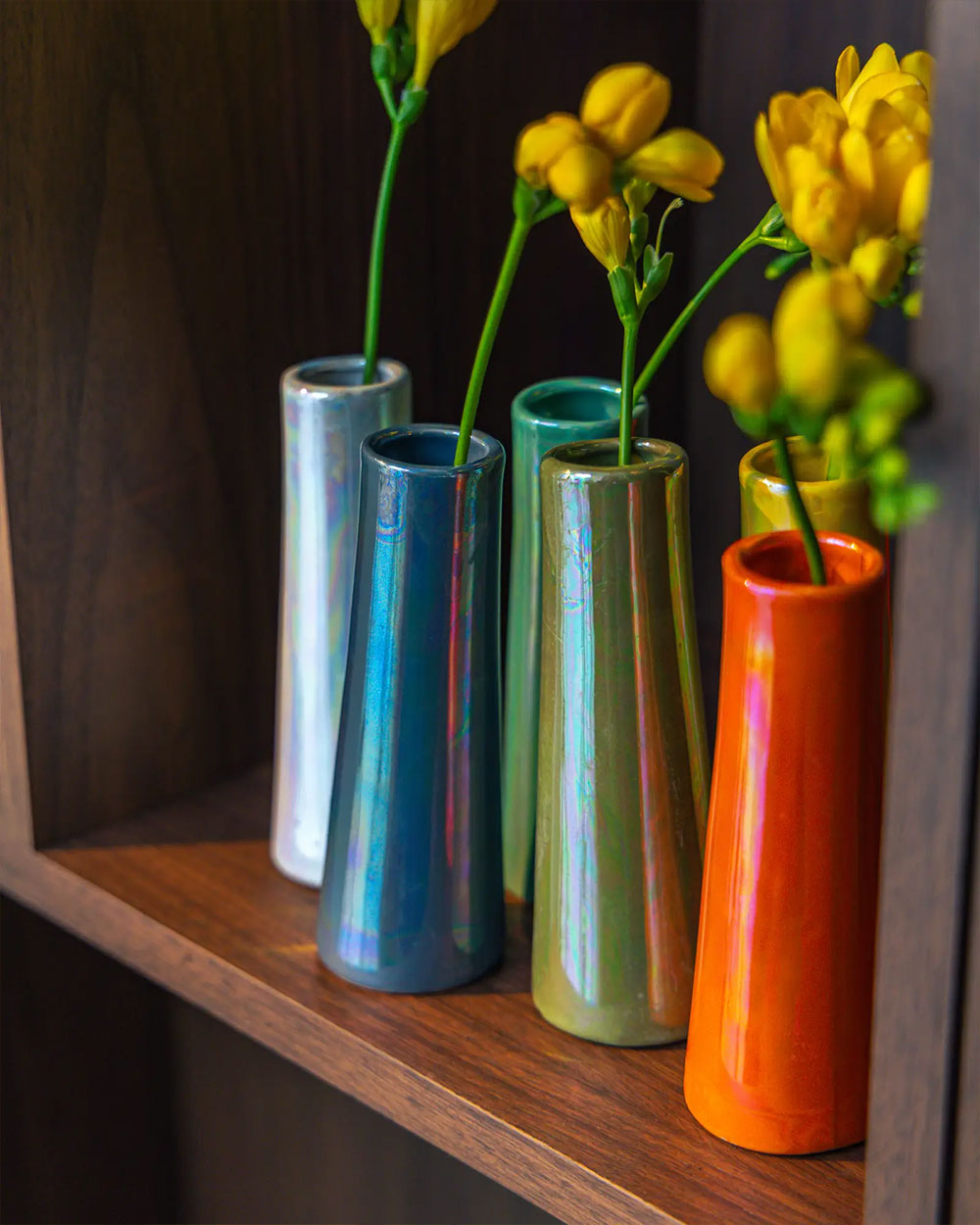
Galaxy Ceramic Bud Vase For Flowers
The ceramic vases at Chive come out of the same studio habit that produced everything else here: design the object once, correctly, then resist every opportunity to complicate it. Each one holds stems. None of them holds back. The Frost stays quiet; the Galaxy ceramic bud vase speaks up, catching light instead of absorbing it and running pale specks across a deep blue field. Same studio, same one-stem bud brief, opposite arguments about what a finish should do when a lamp is in the room.

The Ceramic Vases Collection

Every Chive vase is built around one decision about how flowers should stand, then finished by hand until that decision reads as obvious. For the Frost, the decision was the surface — a matte porcelain finish that catches nothing and reflects less, sized to hold one stem and treat it as the whole event. On a windowsill it reads as quiet furniture; on a bathroom shelf it reads as a small daily object worth keeping. Both are correct. Browse the ceramic vases collection to see where the Frost sits among the wider set.

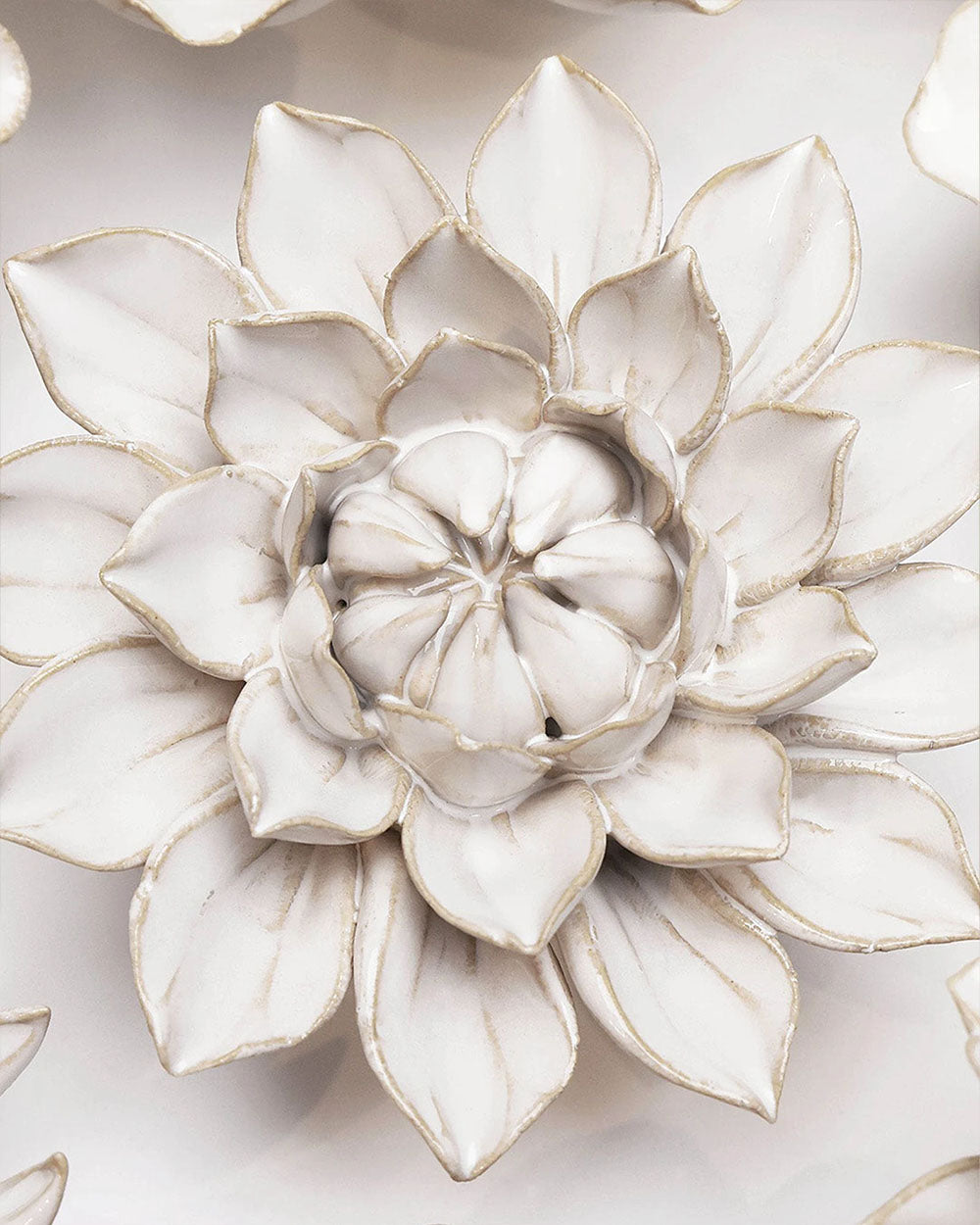
Close-up of the Chive September Birth Flower Aster ivory ceramic flower among assorted Chive ceramic flowers.

Ceramic Wall Art — Ivory Monch Aster

The Frost's matte white finish pairs naturally with the ivory glazes in the studio's wall pieces — the Ivory Monch Aster wall piece above the vase treats shelf and wall as a single tonal wash rather than two competing surfaces. Matte over matte. Ceramic beside ceramic.


Chive Studio at Chelsea Flower Show displaying ceramic pooley vases of different colors.

How Chive Keeps Matte Finishes On The Shelf — Studio Notes

Matte finishes have stayed on the studio's shelves the entire twenty-plus years the doors have been open — since 2004, specifically — despite repeated advice from the wider market to drop them entirely in favor of glossier pieces that photograph faster online and read louder on any given category page. The team has, more than once, respectfully declined the advice. Matte finishes age slower over time. They absorb more of the room's ambient light without bouncing it back as glare or hot spots. And they reward the kind of close attention the studio has been quietly trying to design toward the entire time it has been in business. The Frost represents that particular line at its most compact iteration.


Inside the Chive Design Studio

Low maintenance, high impact. Let's make home styling look easy.

Wedding Centerpiece Vases: The Planning Guide Nobody Gives You

Todd Newgren
Wedding centerpiece vases work best small and plural — three to seven per table, one to three stems each. A fifteen-table reception needs roughly seventy-five vases and 100 to 1...
Read the full story

The Best 10 Styles of Vases

Jessie Duenas
The glorious world of flower vases! Because nothing says "I have my life together" quite like a carefully chosen vessel for your soon-to-be-wilting flora. Gather 'round, fell...
Read the full story

Frequently asked questions

What makes the Frost a genuinely useful frost vase at home?

The Frost earns its place on the shelf by doing precisely one thing without asking for any additional credit — holding a single stem at a matte surface that stays quiet against every wall color the studio has tested it against so far. Most bud vases fight the room around them. This one refuses to. It stays honest.

How many flower stems does the Frost vase comfortably display?

One stem at a time. That is the whole design brief in a sentence. The neck is sized for a single flower, so a Cherry Blossom branch, a lone poppy, a stem of sweet pea, or a spike of foxglove reads as its own event against the matte porcelain rather than as part of any larger cluster. Two stems fit if squeezed. Two also look squeezed.

Will the Frost vase fit on a narrow shelf or ledge?

The Frost runs a compact 3-inch diameter with a total height around 3.5 inches, small enough for a picture ledge, a narrow bathroom shelf, or the underused sliver of counter beside a backsplash tile. Every published measurement lives on the listing above rather than inside this FAQ. Measure the shelf first. Photos oversell.

Is the Frost vase's porcelain surface prone to marks or scratches?

Unglazed matte porcelain proves more susceptible to visible marks than a glazed equivalent — a stray pencil line, a moisture halo left by a coffee mug, a fingerprint left too long — but most marks lift off with a damp lint-free cloth and a soft, patient touch. Deeper scuffs require mild soap and time. Keep sharper objects at arm's length. Care rewards the finish.

How do you clean the Frost vase without damaging the finish?

Lukewarm water, a mild detergent, a plain cotton cloth, rinsed until the water runs clean, then set right-side-up on a lint-free surface to air-dry overnight if needed. Skip the dishwasher entirely, since repeated hot cycles dull matte porcelain over time. Skip abrasive scrubbers of any kind as well. Gentle care ages it well.

How do you style the Frost vase on open shelving?

Give the Frost a nearby shelf-mate that shares the same matte finish rather than fighting it for attention — a plain saucer, a paperback with an uncoated spine, a bone-white ceramic dish in the same value range — so the eye reads the shelf as one continuous material family belonging together. Add a single stem when one is available. Otherwise the vase does the job alone.

Is the Frost vase larger or smaller than the Galaxy vase?

The Galaxy climbs taller and considerably narrower; the Frost holds shorter and slightly broader through the body. Raw footprint runs close between the two pieces, though silhouette drives them sharply apart when set side by side on a shelf. Neither piece stands in for the other on paper. Rooms benefit from owning both.

What design tradition does the Frost vase draw from?

The Frost draws from a smaller tradition of unglazed European porcelain — parian ware across the nineteenth century, bisque figurines a little earlier still — and applies that surface language to a contemporary bud vase rather than to any decorative figurine repeating old visual ground. The nod here stays deliberately quiet in tone. It borrows a proven discipline.

Ceramic astronaut vase with flowers styled on shelf — Chive Studio Toronto
Behind the Studio

The story behind the Chive astronaut vases

The story of Laika, Félicette, a solar eclipse in New York, and a space bar that ordered a hundred vases a month until it closed.