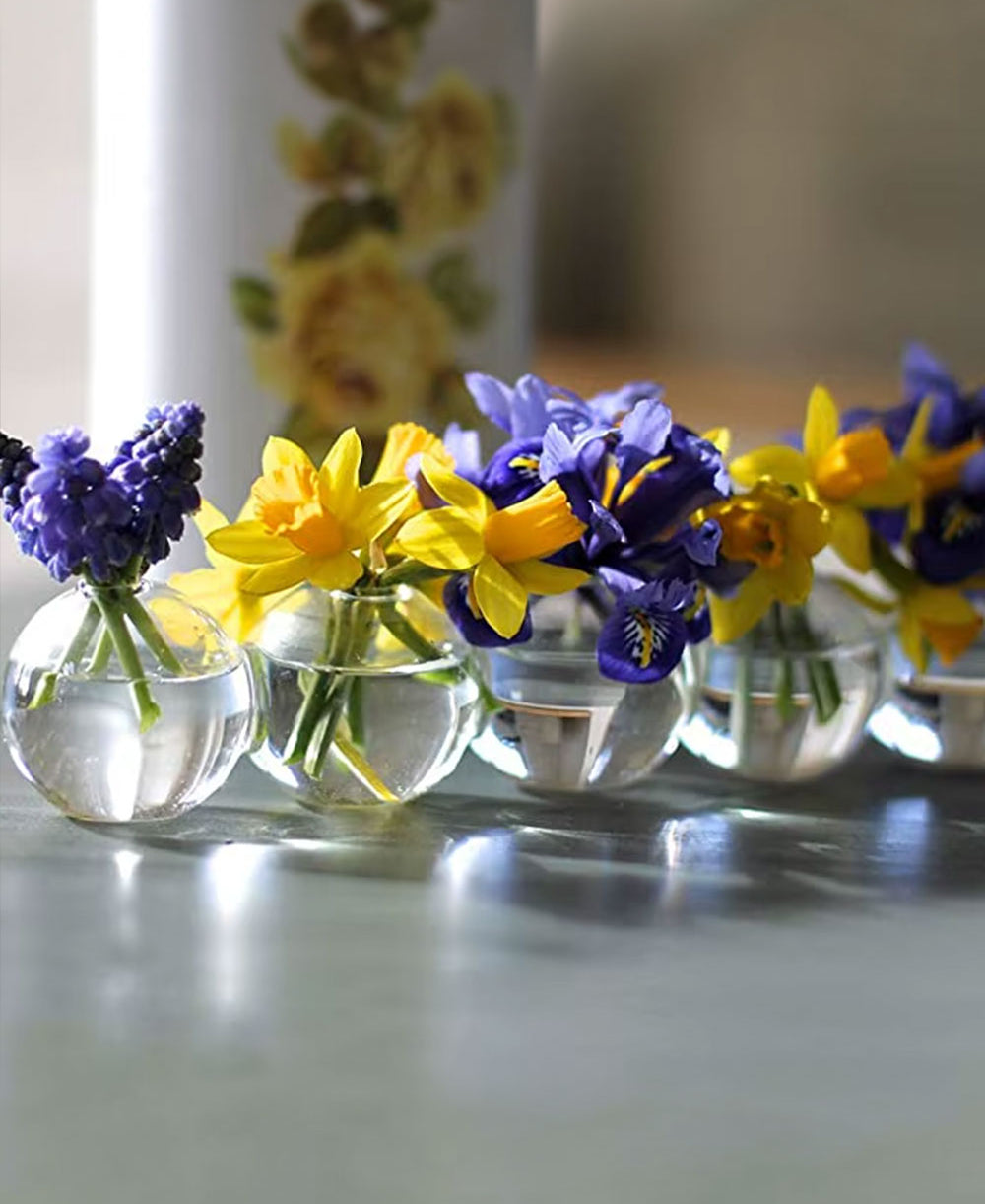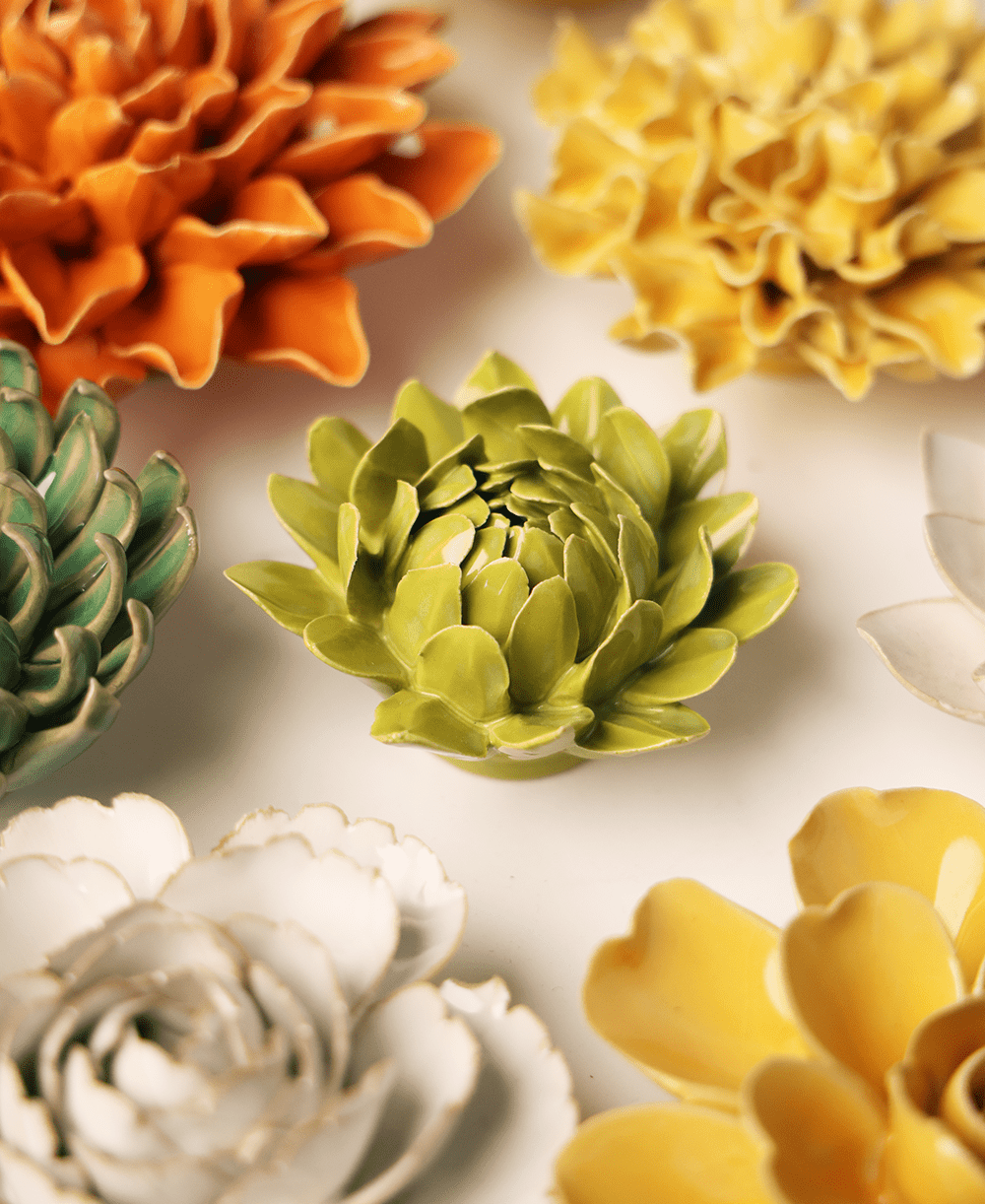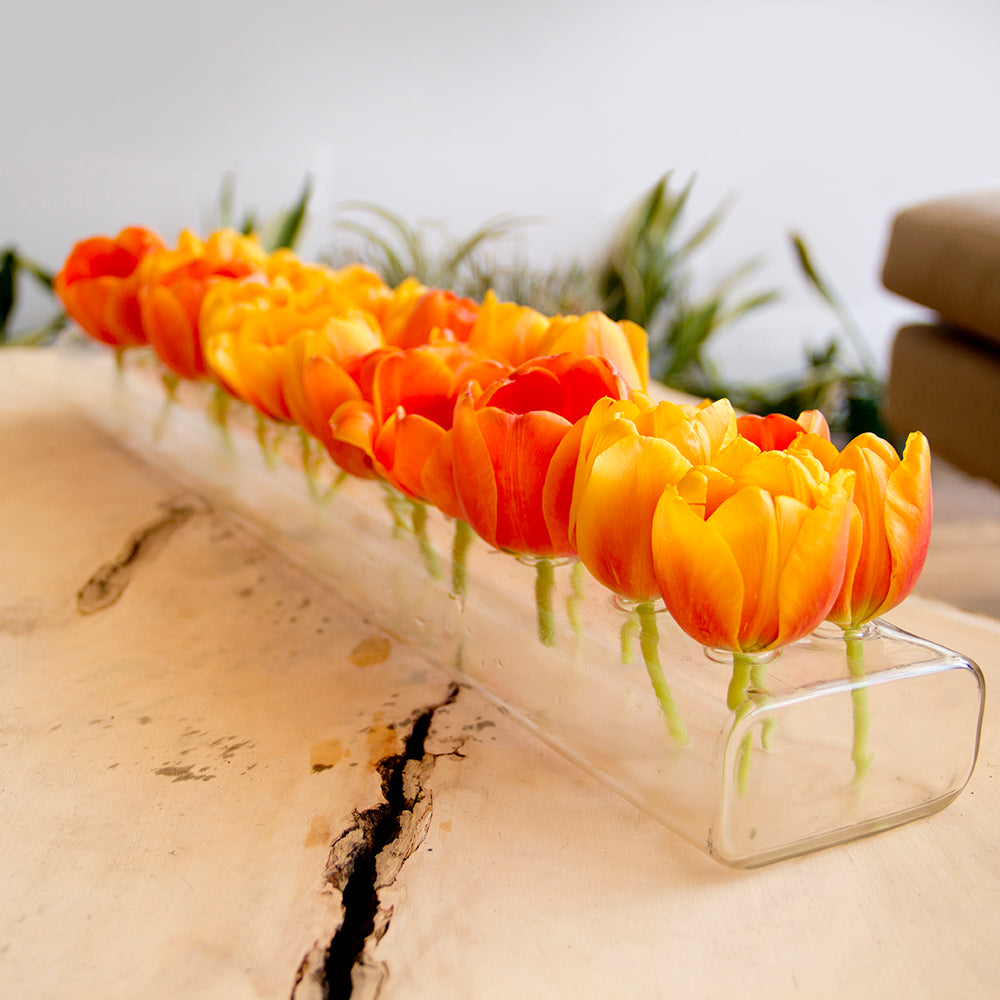
Aptar Glass Modern Flower Vase

Regular price $24.75
Sizes
Hand Blown Glass
Dishwasher safe cleaning
30-day return policy

Build the Arrangement That Looks Harder Than It Was

Pick a vase to anchor the shelf, then add the rest until it reads as curated instead of collected.


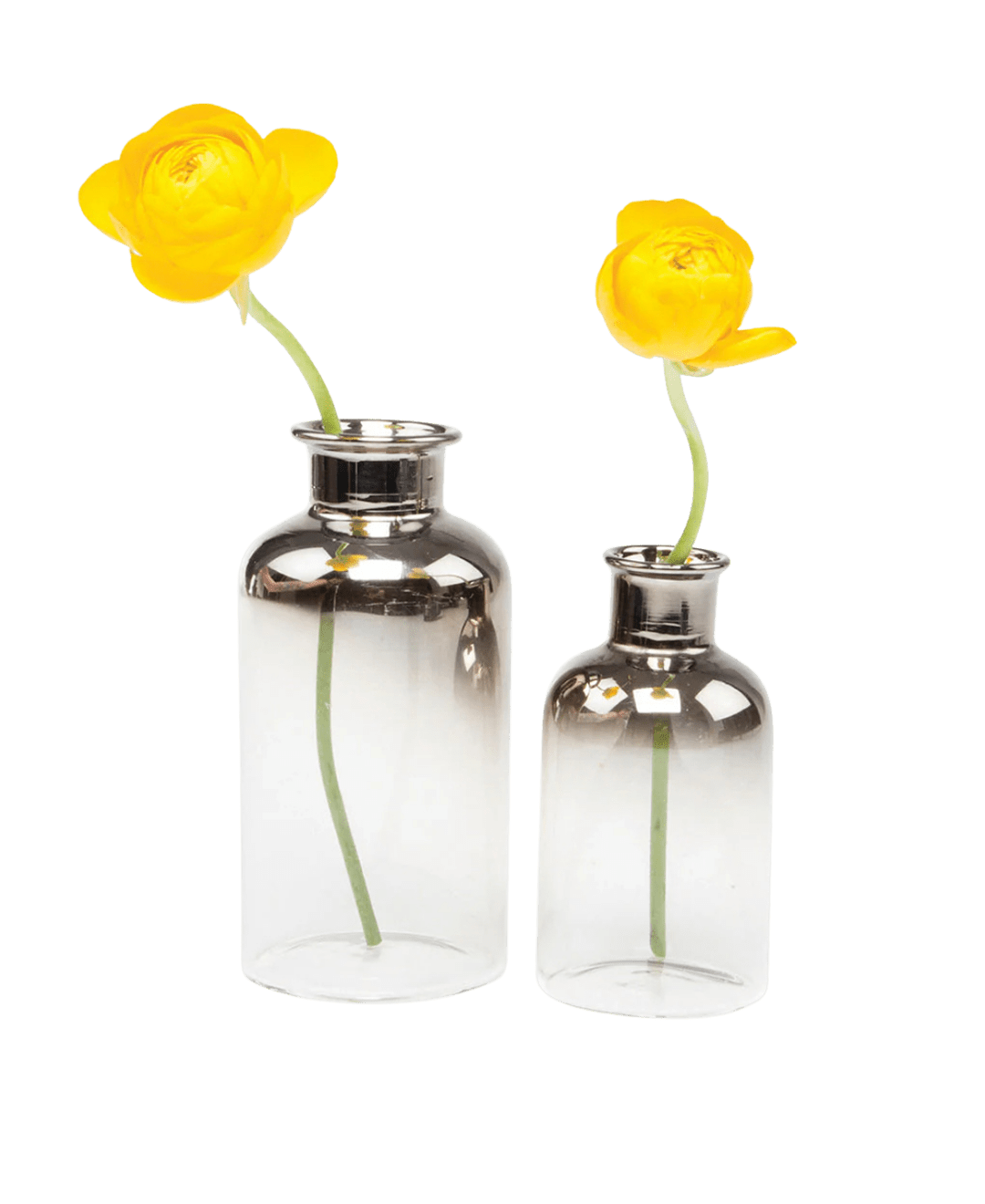
The Aptar vase is an angled glass vase finished in electroplated silver — not the cloudy imitation that gives certain vintage processes their complicated reputation, but the real thing done properly, the kind that delivers what the word silver has been promising since somebody first applied it to glass. As a sculptural glass vase the Aptar earns its angle by holding stems off-center in a way that looks composed rather than accidental, which is harder to achieve than tilting something and hoping for the best. Shipped as a larger format (2.7 by 5.2) and a medium (2.3 by 4.3) — it suits single daffodils, orchids, and the kind of cornflower that looks best when it has room to breathe. The silver finish holds its clarity instead of drifting toward something cloudier, which is the whole advantage of electroplating over the alternatives. Electroplating seals the silver only after the angled glass beneath passes inspection at the Chive studio, which is where the fussiness earns its keep.

Product detail

Product Detail:

  • Material: Glass
  • Glaze finish: Electroplated
  • Year Designed: 2014
Dimension
  • Large: 2.7 inches diameter, 5.2 inches tall
  • Medium: 2.3 inches diameter, 4.3 inches tall
Vase Care Instructions

All glass vases in this collection are dishwasher safe for easy cleaning, with one exception: mercury glass vases should be hand-washed only. The silvered mercury finish is a delicate coating rather than a solid color, and dishwasher heat and detergent can dull or strip it over time.

For standard glass vases, just load it in with the rest of the dishes — no special care needed. For mercury glass pieces, wash gently with warm water and mild soap, and dry with a soft cloth rather than letting it air dry with water spots.

Rinse and dry after each use, especially if flower food or cut-stem residue was in the water, so nothing lingers and clouds the glass.

Flowers that Love this Vase
  • Daffodil
  • Orchid
  • Cornflower
  • Tulip
  • Astrantia
  • Chamomile
  • Calendula
  • Phlox
  • Magnolia
  • Clematis

Quick Guide to Building a Floral Arrangement

  1. Pick your vase first
  2. Start with your anchor flower.
  3. Build in odd numbers.
  4. Add height, then fill.
  5. Greenery does the quiet work.
  6. Cut stems at an angle, underwater if you can.
  7. Step back before you decide it's done.

Shipping & returns

Shipping

  • Free shipping: Orders $200+ within the US
  • Standard: 5–8 business days, Express 2–3 business days (at checkout)
  • International Ships: to 40 countries — rates at checkout
  • Packaging Ships: in outer box to protect gift box

View full shipping policy →

Returns

We accept returns within 30 days of delivery on unused items in original packaging. If your piece arrives damaged, contact us within 7 days with a photo and we will replace it at no charge.

View full return policy →

Wholesale Inquires

Have a cool shop? Know someone that does?
Find Chive on Faire →

Aptar Glass Modern Flower Vase - Chive Ceramics Studio - Vases - Chive Ceramics Studio

What Mercury Glass Was Trying to Be — The Aptar

Mercury glass has a reputation, and it has not earned it in quite a while. A lot of what passes for mercury glass these days looks cloudy in the wrong way, more like something abandoned in a basement than something you would choose deliberately, and the word silver gets attached to finishes that are closer to tin in every way that actually matters. The Aptar skips that whole problem entirely by being electroplated instead — a fussier process than it sounds, done at the studio since 2014, and it produces a finish that actually delivers what mercury glass was always trying to be. The silver is real, the angle is deliberate, and the glass holds a single daffodil or orchid off-axis, producing an arrangement that reads as purposeful rather than haphazard. Two sizes here: the large at two point seven inches across and five point two tall, the medium at two point three by four point three. Both catch light the way real silver should — clean, reflective, without the cloudiness that sends most vintage-inspired finishes back to the shelf within a year. It is top-shelf work, and it looks the part without requiring you to squint and be generous about the difference.

Chive Studio trimming tulip stems with scissors on a wooden surface, with white, purple, and pink tulips arranged nearby.
How to Cut Flowers Like a Pro:

A (Mostly) Simple Guide to Cutting Your Flowers

So, you’re making an arrangement? Let’s ensure it lives long enough to impress someone—even if it's just you.

  1. Scrub the Scissors: Wash your shears first. Your flowers do not want a side of Dorito dust.
  2. Cut at 45°: Snip stems at an angle. It gives them a straw instead of making them chug from the bottle.
  3. Trim Underwater (Fancy Mode): Cut them submerged to block air bubbles. It’s extra, but they didn’t ask to suffocate.
  4. Ditch Submerged Leaves: Strip anything below the waterline. Unless you are actively going for a swamp aesthetic.
  5. Snip Again if Stale: If they sat out on the counter, trim them again. They need a fresh start (don’t we all?).
  6. Swap the Water: Change it and trim the stems every few days so they don't die immediately.

Voilà! You are now a domestic deity. Go take your Instagram photo before you forget to water them.

Pro Tip: The light does half the work.

Glass catches and bends light in a way ceramic can't. Set the arrangement somewhere it'll get some late afternoon sun, even for an hour, and the water and stems start doing something a solid vase never will.

Perfect Pairs for Any Shelf

Arch Glass Modern Flower Vase - Chive Ceramics Studio - Vases - Chive Ceramics Studio

A Bend That Does The Florist's Job

The glass vases at Chive come out of the same studio habit that produced everything else here: design the object once, correctly, then resist every opportunity to complicate it. Each one holds stems. None of them hides anything. The Arch is a curved glass piece whose bend arranges stems at a settled angle, doing the florist's job without charging anyone for the service. See the Arch.

One Decision, Repeated In Glass

Every Chive vase is built around one decision about how flowers should stand, then finished by hand until that decision reads as obvious. Chive's glass range runs from ribbed Art Deco cylinders to flat-backed wall cups and magnetic test tubes, each piece shaped to display flowers through glass rather than behind it. Clear, colored, and silver finishes all share the same studio habit: design the object once, finish it properly, then leave it alone once it works. Browse the full glass collection.

Chartreuse Sugarbush Protea ceramic wall flower mounted on a wall — Chive Ceramics Studio

Silver Catching Borrowed Light

Place the Aptar beside a Chartreuse Sugarbush Protea Wall Art for a shelf that mixes electroplated silver with ceramic texture, different materials reading as deliberate contrast rather than accident when positioned within arm's reach of each other. The silver catches whatever light the wall piece already absorbed. Shop the Chartreuse.


Real Silver, Proper Process

The standard at Chive has held since 2004: a finish should be what it claims to be, which is not as common a standard as it ought to be. The Aptar is electroplated silver — real silver, applied through a process fussier than most buyers will ever need to know about, and producing a surface that actually behaves the way the word silver implies. The studio has been making it since 2014, in small batches, each piece handled individually through the plating process because consistency at this level does not survive automation. Nothing leaves without inspection. Nothing ships with a finish that approximates rather than delivers. Every Chive piece is shaped by hand and held to a standard that has not moved since opening day, which is the kind of inflexibility that builds trust.


Inside the Chive Design Studio

Low maintenance, high impact. Let's make home styling look easy.

The Best 10 Styles of Vases

Jessie Duenas
The glorious world of flower vases! Because nothing says "I have my life together" quite like a carefully chosen vessel for your soon-to-be-wilting flora. Gather 'round, fell...
Read the full story

Wedding Centerpiece Vases: The Planning Guide Nobody Gives You

Jessie Duenas
Wedding centerpiece vases work best small and plural — three to seven per table, one to three stems each. A fifteen-table reception needs roughly seventy-five vases and 100 to 1...
Read the full story

Frequently asked questions

Why would you choose a vase like the Aptar vase?

You would choose an aptar vase like the Aptar because the electroplated silver finish delivers what most silver-toned glass only approximates — actual reflectivity, clean edges of light, and a surface that does not cloud or dull over time the way cheaper metallic coatings tend to. The Aptar earns the word silver instead of borrowing it. That distinction matters on a visible shelf.

What single flowers look striking on their own in the Aptar?

Single flowers that look striking in the Aptar include daffodils, which catch the silver at the base; orchids, whose arch echoes the vase's angle; and cornflowers, whose blue reads as deliberate contrast against the metallic surface. Tulips work when placed off-center, and chamomile softens the formality when tucked alongside. One stem usually suffices.

How tall is the Aptar vase and what space does it need?

The Aptar ships in a larger format near 2.7 inches across by 5.2 high, and a medium near 2.3 across by 4.3 high. Both fit comfortably on a nightstand, a bookshelf, or a bathroom counter without crowding the surface. The angled profile tucks into tight spaces.

How is the Aptar vase's glass finish made at the studio?

The Aptar vase's glass finish is made at the studio through electroplating — a controlled process where real silver is deposited onto the glass surface in a thin, even coat. This differs from spray-on metallic finishes, which tend to cloud and peel. The electroplating bonds permanently, producing the reflective quality that defines the Aptar. The process takes longer and costs more.

What is the safest way to wash the Aptar vase at home?

The safest way to wash the Aptar vase at home is gently under lukewarm water using a soft cloth, avoiding abrasive sponges or harsh chemical cleaners that could compromise the electroplated surface. Rinse gently, dry immediately to prevent water spots on the silver, and store upright. The interior is glass and cleans like any glass vessel. Treat the exterior like silver.

Which rooms suit the Aptar vase's shape and scale best?

The Aptar vase suits rooms where reflective surfaces add value — living rooms with natural light, dining tables with candles, bedrooms with bedside lamps, and bathrooms with overhead lighting. The silver surface reflects whatever illumination the room offers, which means the vase changes character from morning to evening. Place it where light reaches it consistently.

Does the Aptar vase pair well with the Arch vase on display?

The Aptar vase pairs well with the Arch vase on display because the silver finish of the Aptar contrasts cleanly with the Arch's colored glass, creating a shelf arrangement where two different textures read as deliberate rather than random. Place them at different heights — the Aptar forward, the Arch slightly behind — and the depth of field does the rest.

What was the original idea behind the Aptar vase's form?

The original idea behind the Aptar vase's form was to build a vase where the angle served the flower instead of just looking interesting on its own. The tilt positions a stem slightly off-axis so the arrangement reads as intentional, and the electroplated finish means the glass disappears behind the silver. Designed in 2014, the shape has remained identical since.

Ceramic astronaut vase with flowers styled on shelf — Chive Studio Toronto
Behind the Studio

The story behind the Chive astronaut vases

The story of Laika, Félicette, a solar eclipse in New York, and a space bar that ordered a hundred vases a month until it closed.