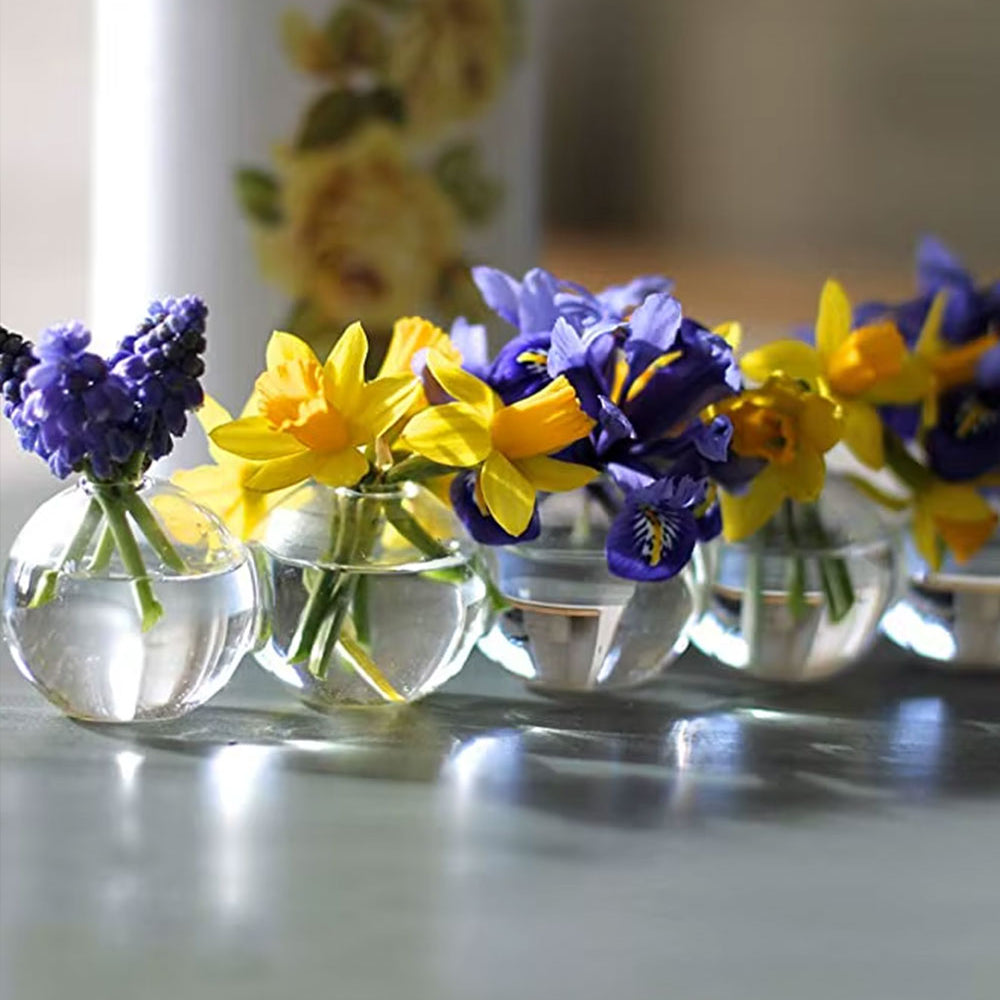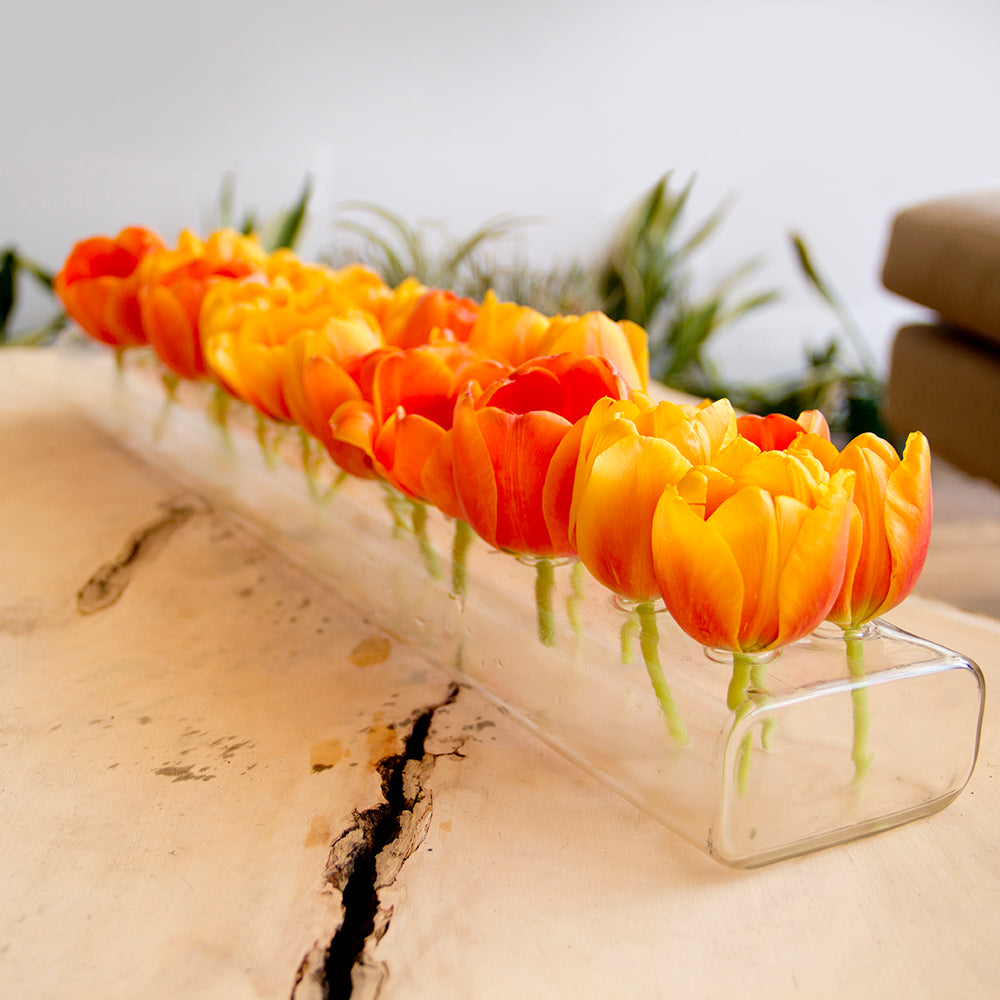
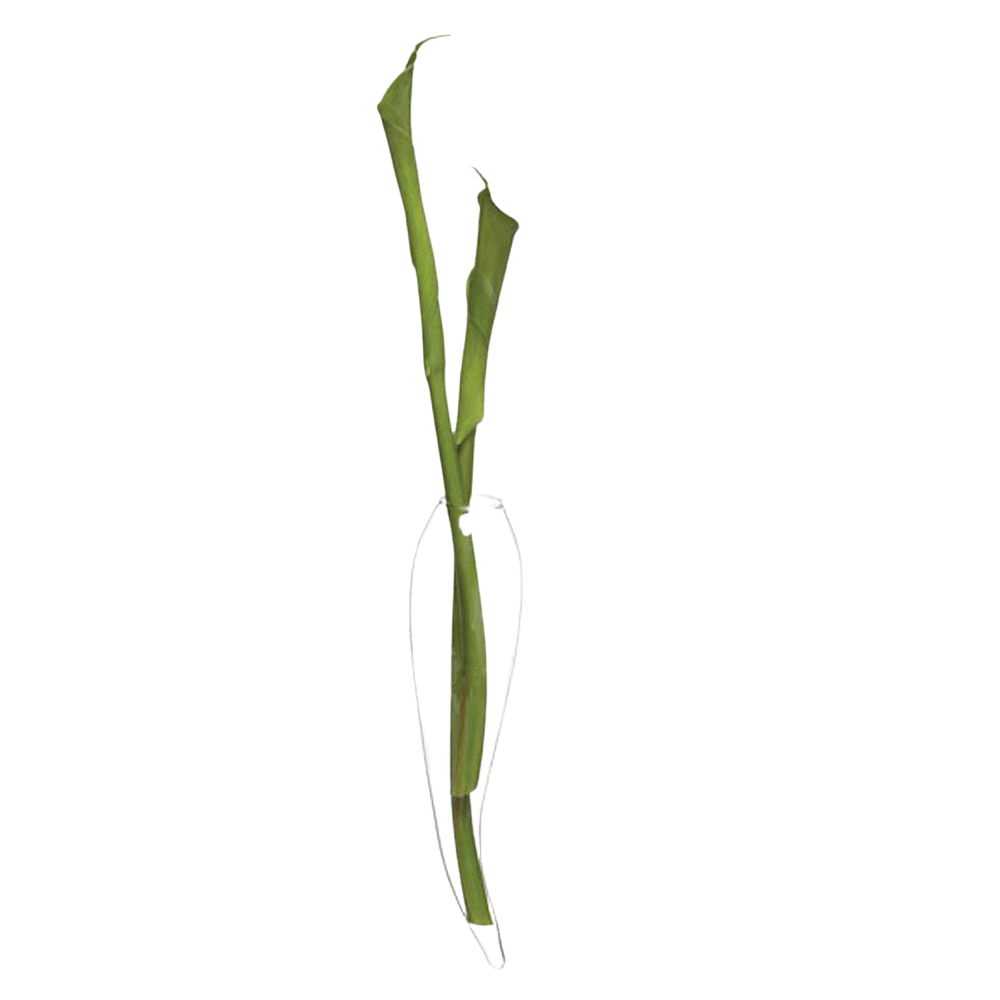
Wall Horn Glass Modern Clear Flower Vase

Regular price $19.25
Hand Blown Glass
Dishwasher safe cleaning
30-day return policy

Build the Arrangement That Looks Harder Than It Was

Pick a vase to anchor the shelf, then add the rest until it reads as curated instead of collected.


The Wall Horn vase serves as a wall mounted horn vase shaped for flowers that need a little help standing up straight — tulips mostly, which have a documented tendency to lean the moment nobody is watching. The cone wall flower holder mounts flush against a surface and holds stems at the angle they wanted to be at in the first place, horn-curved and forgiving in the way good design often is. With a 3.5-inch rim and 11.5 inches of height, there is enough depth for water to keep cherry blossoms and peonies alive for the better part of a week, and enough room at the opening for stems that arrive with opinions about direction. The glass is clear enough that you can see exactly how much water remains, which turns a guessing game into a glance and saves at least one disagreement per household about whose job it was to check. The horn takes its final form while the glass cooperates, and Chive finishes every one before the material second-guesses the curve.

Product detail

Product Detail:

  • Material: Glass
  • Glaze finish: Clear
  • Year Designed: 2003.0
Dimension
  • 3.5 inches diameter, 11.5 inches tall
Vase Care Instructions

All glass vases in this collection are dishwasher safe for easy cleaning, with one exception: mercury glass vases should be hand-washed only. The silvered mercury finish is a delicate coating rather than a solid color, and dishwasher heat and detergent can dull or strip it over time.

For standard glass vases, just load it in with the rest of the dishes — no special care needed. For mercury glass pieces, wash gently with warm water and mild soap, and dry with a soft cloth rather than letting it air dry with water spots.

Rinse and dry after each use, especially if flower food or cut-stem residue was in the water, so nothing lingers and clouds the glass.

Flowers that Love this Vase
  • Cherry Blossom
  • Peony
  • Freesia
  • Daisy
  • Veronica
  • Waxflower
  • Dianthus
  • Foxglove
  • Heather
  • Bells of Ireland

Quick Guide to Building a Floral Arrangement

  1. Pick your vase first
  2. Start with your anchor flower.
  3. Build in odd numbers.
  4. Add height, then fill.
  5. Greenery does the quiet work.
  6. Cut stems at an angle, underwater if you can.
  7. Step back before you decide it's done.

Shipping & returns

Shipping

  • Free shipping: Orders $200+ within the US
  • Standard: 5–8 business days, Express 2–3 business days (at checkout)
  • International Ships: to 40 countries — rates at checkout
  • Packaging Ships: in outer box to protect gift box

View full shipping policy →

Returns

We accept returns within 30 days of delivery on unused items in original packaging. If your piece arrives damaged, contact us within 7 days with a photo and we will replace it at no charge.

View full return policy →

Wholesale Inquires

Have a cool shop? Know someone that does?
Find Chive on Faire →

Wall Horn Glass Modern Clear Flower Vase - Chive Ceramics Studio - Vases - Chive US

Shaped for Stems That Lean — The Wall Horn

It was designed in 2003 alongside the Wall Cup, and the two have been hanging next to each other at the studio ever since, which is the longest unbroken partnership in the entire building if you do not count Todd and the espresso machine he categorically refuses to replace or even discuss replacing. The Wall Horn is shaped like a horn because horns hold things at an angle, and certain flowers — tulips, peonies, freesia, the kinds that lean sideways when left alone — perform better when the vase leans with them instead of fighting their natural inclination. Measuring about three and a third wide by nearly twelve high, the depth accommodates a full week of water and the rim clearance tolerates stems arriving with definite opinions about lean. It mounts flush, the glass is clear, and the whole thing functions as a quiet form of support for anything inside it that needs some structural encouragement to stay upright. We could have added a lip. We could have added texture. We left the surface smooth and let the flowers bring whatever complication they wanted. Two decades on, both pieces occupy the same positions, and neither relocation nor redesign has been seriously proposed.

Chive Studio trimming tulip stems with scissors on a wooden surface, with white, purple, and pink tulips arranged nearby.
How to Cut Flowers Like a Pro:

A (Mostly) Simple Guide to Cutting Your Flowers

So, you’re making an arrangement? Let’s ensure it lives long enough to impress someone—even if it's just you.

  1. Scrub the Scissors: Wash your shears first. Your flowers do not want a side of Dorito dust.
  2. Cut at 45°: Snip stems at an angle. It gives them a straw instead of making them chug from the bottle.
  3. Trim Underwater (Fancy Mode): Cut them submerged to block air bubbles. It’s extra, but they didn’t ask to suffocate.
  4. Ditch Submerged Leaves: Strip anything below the waterline. Unless you are actively going for a swamp aesthetic.
  5. Snip Again if Stale: If they sat out on the counter, trim them again. They need a fresh start (don’t we all?).
  6. Swap the Water: Change it and trim the stems every few days so they don't die immediately.

Voilà! You are now a domestic deity. Go take your Instagram photo before you forget to water them.

Pro Tip: The light does half the work.

Glass catches and bends light in a way ceramic can't. Set the arrangement somewhere it'll get some late afternoon sun, even for an hour, and the water and stems start doing something a solid vase never will.

Perfect Pairs for Any Shelf
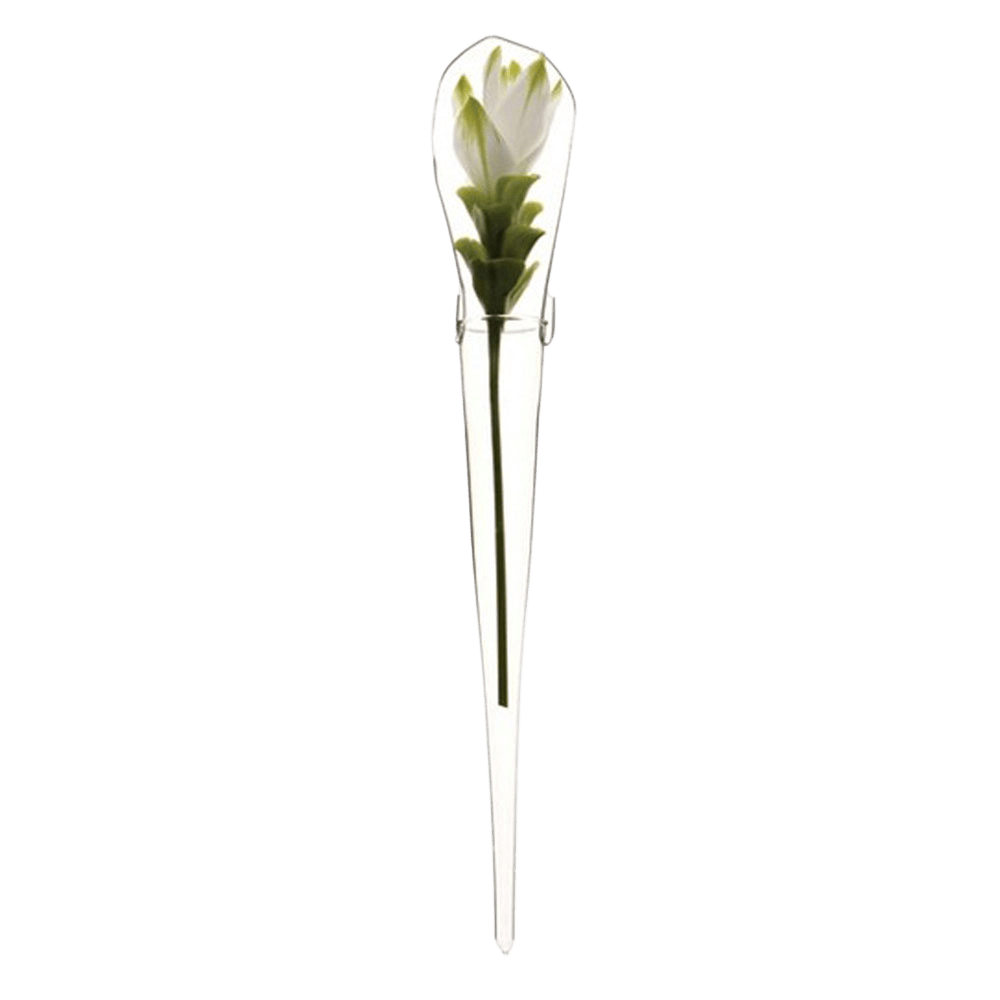
Window Cone Glass Modern Clear Flower Vase - Chive Ceramics Studio - Vases - Chive US

The Window Becomes The Anchor

The glass vases at Chive come out of the same studio habit that produced everything else here: design the object once, correctly, then resist every opportunity to complicate it. Each one holds stems. None of them hides anything. The Window Cone Glass Vase hangs by suction mount and suspends a few stems against the window glass, converting the pane itself into the visual anchor of any room. See the Window.

Reveal The Arrangement, Not The Frame
Every Chive vase is built around one decision about how flowers should stand, then finished by hand until that decision reads as obvious. The glass collection holds everything from single-stem magnetic tubes to wide-mouth jars, each one built to reveal the flower arrangement rather than frame it. Clear surfaces, translucent curves, and electroplated silver all share the same studio standard: design the shape once, correctly, then finish it by hand until the decision reads as certain. Browse the full glass collection.

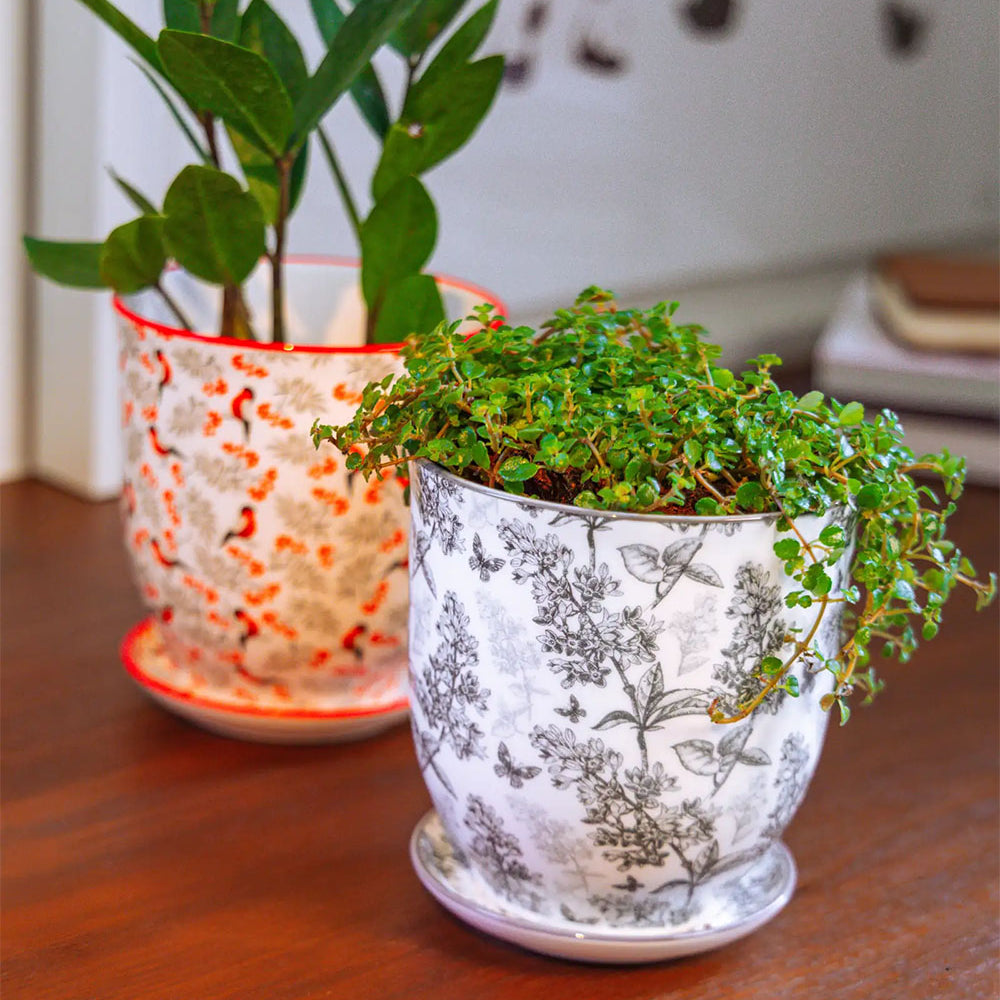
Chive Liberté small planters in grey forest and red birds prints, styled with baby tears and a ZZ plant on a wood surface.

Neither Piece Asked To Do More

Pair the Wall Horn with the Liberté Porcelain Pot and a single peony for a corner that balances clean glass against glazed porcelain, each piece holding exactly what it was designed to hold and neither one asking the other to do more than that. Two materials, one considered shelf. Shop the Liberté.


Designed to Lean With You

Starting in 2004, the team at Chive has designed vases that solve one specific problem well instead of solving several problems halfway. The Wall Horn is the clearest expression of that priority — a horn-shaped glass vessel that cradles tilting blooms at whatever slant they prefer, hung flat, stripped of every feature that would get in the way of that single function. It was drawn up in 2003 and has not changed since, which is either stubbornness or confidence depending on whether you think the original was correct. The studio thinks it was. Small batches, steady hands, no shortcuts through the parts that take patience. Every piece is shaped individually, examined before it ships, and measured against a benchmark the studio locked on opening day. The Wall Horn works. That was always the whole assignment.


Inside the Chive Design Studio

Low maintenance, high impact. Let's make home styling look easy.

Wedding Centerpiece Vases: The Planning Guide Nobody Gives You

Jessie Duenas
Wedding centerpiece vases work best small and plural — three to seven per table, one to three stems each. A fifteen-table reception needs roughly seventy-five vases and 100 to 1...
Read the full story

Frequently asked questions

What should you look for when buying a wall horn vase online?

A wall horn vase bought online should feature a horn-shaped profile that widens at the opening, a flat back for flush mounting, and glass clear enough for the fill level to register from across the room. Verify the listed height and diameter against the space you intend to mount it. The Chive Wall Horn has met those criteria for twenty-three years.

Can the Wall Horn vase hold dried stems as well as fresh?

The Wall Horn vase holds dried stems as well as fresh — the cone shape supports branching forms like dried lunaria, lavender bundles, and preserved eucalyptus just as steadily as it holds live peonies and cherry blossoms. With dried arrangements you skip the water entirely, which means less maintenance and no risk of mineral buildup. Fresh or dry, the angle holds.

How much water does the Wall Horn vase hold when filled?

The horn profile holds enough water to sustain fresh-cut stems for roughly five to seven days before needing a refill, depending on the season and the room temperature. The cone shape concentrates the volume at the base where the stems sit, so the water depth is greater than the opening width suggests. A daily top-off extends the life of the arrangement.

Why was glass chosen for the Wall Horn vase's construction?

Glass was chosen for the Wall Horn vase's construction because the transparent surface shows the water line clearly, which turns stem care from guesswork into a glance. Ceramic would hide the water level behind opaque walls, and metal would alter the temperature. Glass keeps the arrangement visible, the maintenance obvious, and the material neutral. Clarity was the priority.

Can you remove hard water marks from the Wall Horn vase easily?

You can remove hard water marks from the Wall Horn vase by soaking the interior in a mixture of equal parts white vinegar and warm water for twenty to thirty minutes, then buffing gently with a lint-free cloth. For stubborn deposits, a gentle brush reaches the base of the cone. Avoid abrasive cleaners that could scratch the glass. Vinegar handles most buildup without effort.

Where does the Wall Horn vase look best in a modern room?

The Wall Horn vase looks best in a modern room when mounted at eye level beside a doorway, above a console table, or along a hallway where the horn shape catches sightlines from both directions. Pair it with a Wall Cup for mixed silhouettes, or mount three horns in a vertical line at staggered heights for a gallery effect. Entryways benefit most.

Should the Wall Horn hang alone or beside the Brick?

The Wall Horn can hang alone effectively, and it can hang beside the Brick vase for a pairing that contrasts a tapered cone with a rectangular silhouette — the horn's curve softens the Brick's straight edges. Alone, it reads as sculptural. Beside the Brick, it reads as part of a considered arrangement. Both approaches work well on modern walls.

When did the Chive studio team design the Wall Horn vase?

The Chive studio team designed the Wall Horn vase in 2003, at the same time as the Cup, and both pieces have occupied the same wall continuously since. The horn shape came from a desire to hold leaning flowers at a natural angle rather than forcing them upright. Twenty-three years later, the design remains unchanged.

Ceramic astronaut vase with flowers styled on shelf — Chive Studio Toronto
Behind the Studio

The story behind the Chive astronaut vases

The story of Laika, Félicette, a solar eclipse in New York, and a space bar that ordered a hundred vases a month until it closed.