Kapow Ceramic Grenade Flower Vase Unique

Regular price $23.75
Colors: Classic Green
Shapes
Fully Glazed
Dishwasher safe cleaning
30-day return policy

Build Your Effortless Arrangements With These:

Choose a vase as your anchor, then round out the shelf with these for that thrown-together-but-somehow-perfect look.


The Kapow is a grenade vase, shaped like a grenade and named Kapow, and nobody involved in either decision was interested in subtlety, which I respect. It refuses to be a metaphor. This is not explosive florals or a bouquet that packs a punch; it is a pop art vase that made its own joke first and dares you to top it. I have tried. It wins. The Kapow vase stands four and a half inches tall by three across, cast in glazed ceramic, small enough to detonate very quietly on a desk, a shelf, or wherever guests will find it and form opinions. Since 2013 it has run through a rotating cast of colorways, white and soft pastels doing most of the disarming. Fill it with something delicate and let the contrast do the talking. Artisans shape these pieces by hand from a mold with a family argument behind it.

Product detail
  • Vase Type:
  • Material: Ceramic
  • Glaze finish: Glazed
  • Water Resistance: Watertight
  • Year Designed: 2013
Dimension
  • 3" in diameter
  • 4.5" tall. 
Vase Care Instructions

Every ceramic vase in this collection is dishwasher safe on the top rack, making cleanup between arrangements as simple as loading it in with the rest of the dishes. The glazed surface holds up fine to regular washing, so there's no need to hand-wash unless you'd prefer to.

If you're cleaning a piece with painted or sculpted detail, a gentler cycle or a quick hand-wash with warm water and mild soap will help keep the finish looking sharp for longer. Either way, rinse and dry after each use — especially if flower food or cut-stem residue was in the water — so nothing lingers and clouds the glaze.

No special sealants, no periodic maintenance. Wash it, dry it, put flowers back in it.

Flowers that Love this Vase
  • Poppy
  • Lavender
  • Baby's Breath
  • Sweet Pea
  • Black-Eyed Susan
  • Scabiosa
  • Yarrow
  • Hellebore
  • Kangaroo Paw
  • Bells of Ireland

Quick Guide to Building a Floral Arrangement

  1. Pick your vase first
  2. Start with your anchor flower.
  3. Build in odd numbers.
  4. Add height, then fill.
  5. Greenery does the quiet work.
  6. Cut stems at an angle, underwater if you can.
  7. Step back before you decide it's done.

Shipping & returns

Shipping

  • Free shipping: Orders $200+ within the US
  • Standard: 5–8 business days, Express 2–3 business days (at checkout)
  • International Ships: to 40 countries — rates at checkout
  • Packaging Ships: in outer box to protect gift box

View full shipping policy →

Returns

We accept returns within 30 days of delivery on unused items in original packaging. If your piece arrives damaged, contact us within 7 days with a photo and we will replace it at no charge.

View full return policy →

Wholesale Inquires

Have a cool shop? Know someone that does?

Find Chive on Faire →

Kapow Ceramic Grenade Flower Vase Unique - Chive Ceramics Studio - Vases - Chive Ceramics Studio

The Best Rebuttal We Ever Fired — Kapow

Todd's father designed one of the great protest logos of the twentieth century, which gives him permanent license to critique, and one day he used it: he told Todd the new work wasn't landing the way the old work used to. Todd did not take this well. He announced he would cast a hand grenade, glaze it in three colors, and sell ten thousand of them — a plan with the exact energy of a son slamming a door, except the door was a kiln. Here is the inconvenient part for everyone who rolled their eyes: it worked. The ten thousand sold, over a few years, to people who understood immediately that a grenade full of flowers is either a peace statement or a punchline and were happy either way. The colorway list has grown well past the original three, rotating through whites and pastels that make the silhouette read softer than it has any right to. The argument that started all of it was never formally settled. Fathers rarely concede, and sons who have sold ten thousand of anything stop needing them to. The vase remains: small, absurd, produced in earnest, and still the best rebuttal this studio has ever fired.

Chive Studio trimming tulip stems with scissors on a wooden surface, with white, purple, and pink tulips arranged nearby.

A (Mostly) Simple Guide to Cutting Your Flowers

So, you’re making an arrangement? Let’s ensure it lives long enough to impress someone—even if it's just you.

  1. Scrub the Scissors: Wash your shears first. Your flowers do not want a side of Dorito dust.
  2. Cut at 45°: Snip stems at an angle. It gives them a straw instead of making them chug from the bottle.
  3. Trim Underwater (Fancy Mode): Cut them submerged to block air bubbles. It’s extra, but they didn’t ask to suffocate.
  4. Ditch Submerged Leaves: Strip anything below the waterline. Unless you are actively going for a swamp aesthetic.
  5. Snip Again if Stale: If they sat out on the counter, trim them again. They need a fresh start (don’t we all?).
  6. Swap the Water: Change it and trim the stems every few days so they don't die immediately.

Voilà! You are now a domestic deity. Go take your Instagram photo before you forget to water them.

Pro Tip: Keep It Short and Sweet!

When it comes to flower stems, shorter is better. Not only do shorter stems look chic in arrangements, but they also help your blooms last longer. Why? Because the shorter the stem, the less distance water has to travel to keep those petals perky. It’s like giving your flowers a shorter commute—less stress, fewer breakdowns.

Perfect Pairs for Any Shelf
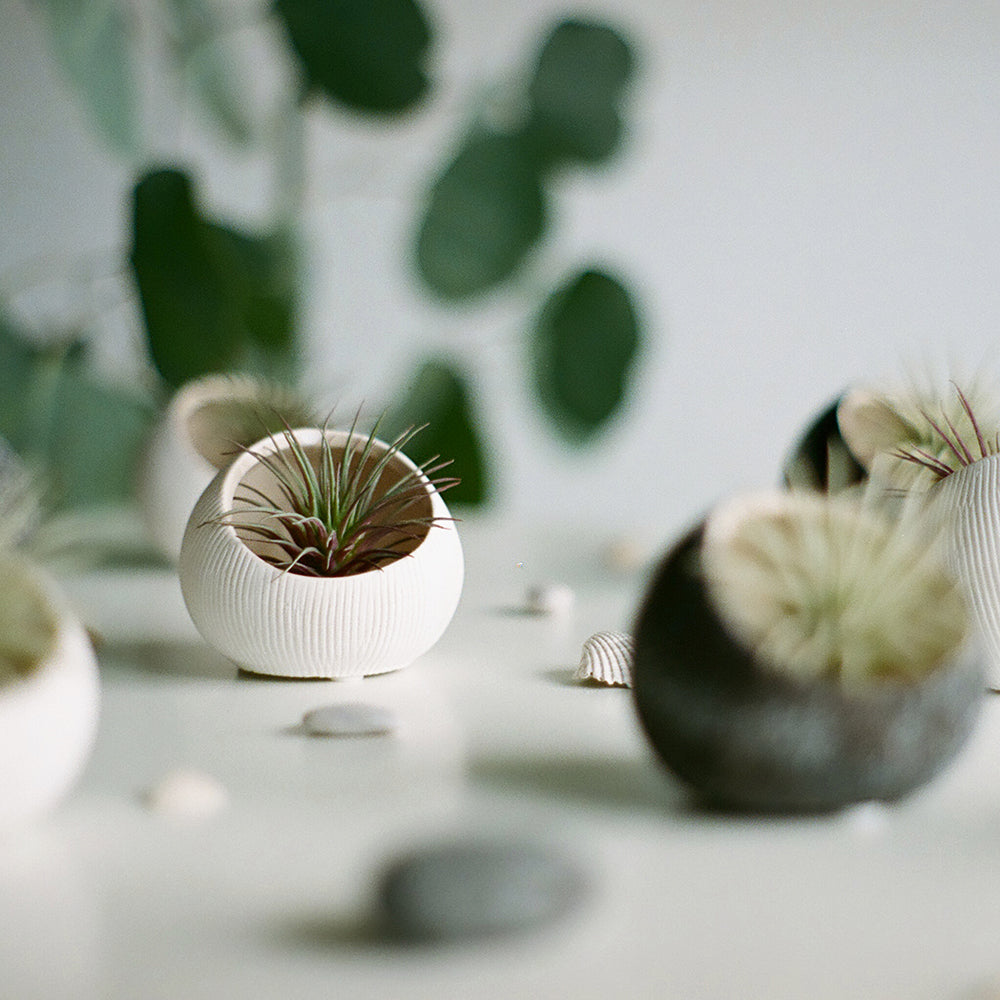
Koski Ceramic Vase
The ceramic vases at Chive come out of the same studio habit that produced everything else here: design the object once, correctly, then resist every opportunity to complicate it. Each one holds stems. None of them holds back. If the joke lands but the room needs calm, the Koski Ceramic Vase answers with quiet ribs and earth tones — same hands, opposite volume.

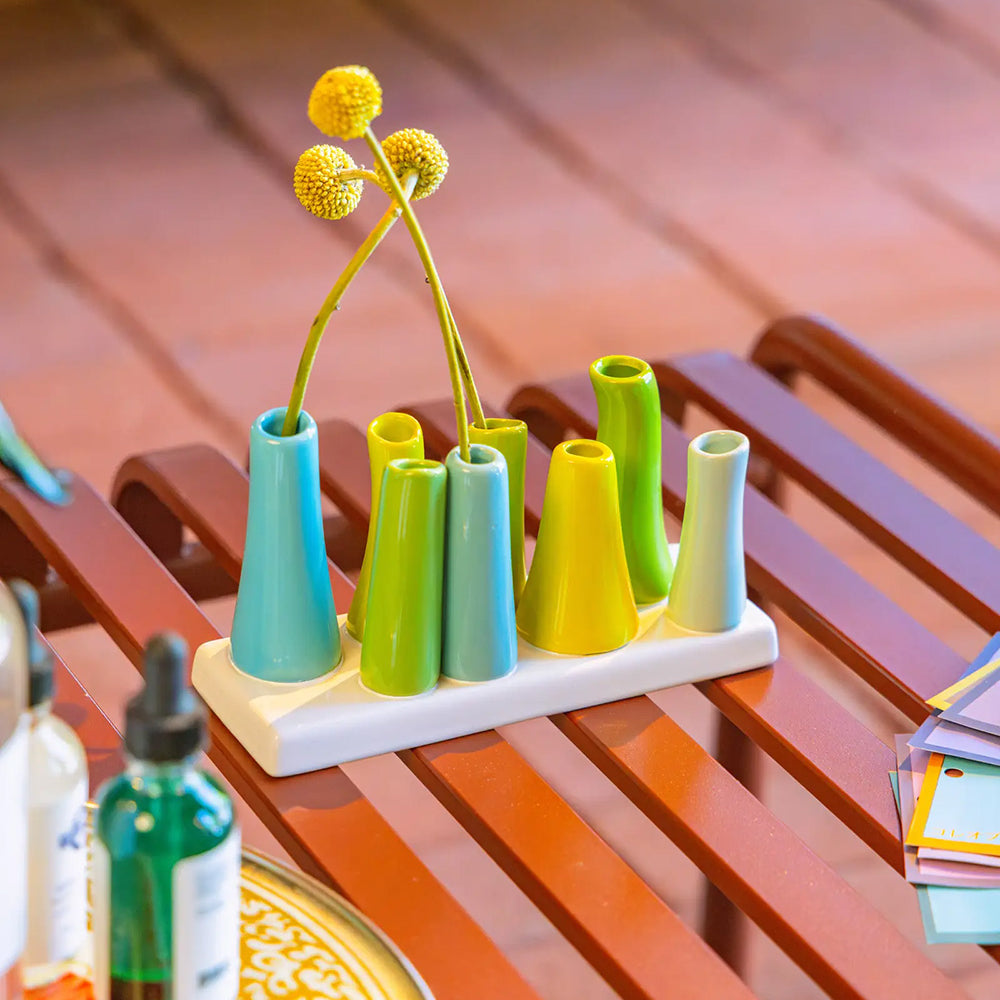
Chive ceramic pooley bud vase in color scout blue, styled with fresh flowers, on a red bench.

The Ceramic Vases Collection

Every Chive vase is built around one decision about how flowers should stand, then finished by hand until that decision reads as obvious. The Kapow decided flowers deserve a straight man, and volunteered. Its siblings mostly play it straighter — cylinders, spheres, planes — which makes the group shot better, not worse. A shelf wants one loud object and several quiet ones, and this collection supplies both ends of that bargain. Shop the Ceramic Vases collection.

Sage Shido Candle

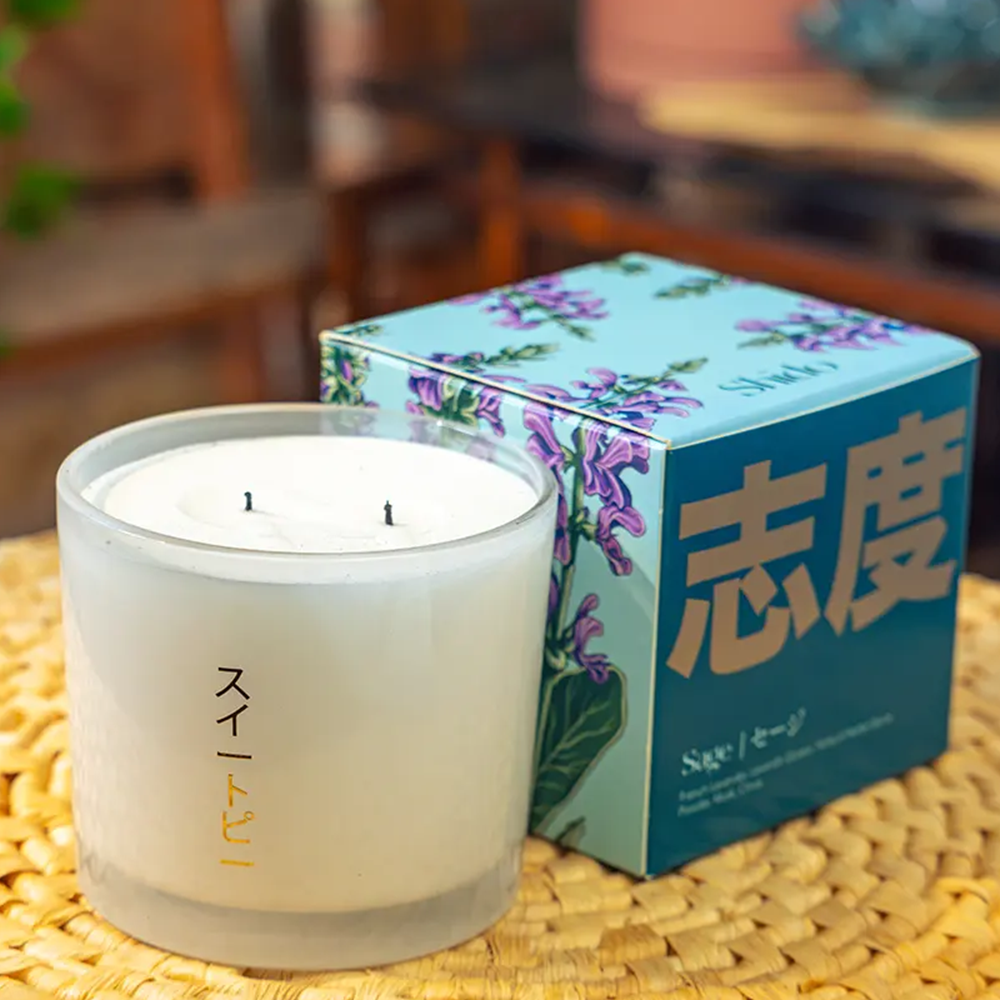
If a grenade on the shelf raises the room's temperature, the Sage Shido Candle brings it back down — sage being the traditional remedy for questionable energy, and this one arriving in a clean coconut-soy burn. Strike a match, cue the détente. Every standoff resolves better with something soft burning nearby.


Chive Studio at Chelsea Flower Show displaying ceramic pooley vases of different colors.

Productive Arguments Since 2004 — Chive

Family businesses argue; ours has been doing it productively since 2004. The Kapow is the most famous outcome, but the pattern behind it runs through everything on the shelf: somebody says it cannot or should not be done, and the kiln gets to referee. What keeps the arguments useful is the standard underneath them — every piece cast clean, glazed evenly, and inspected by someone with the authority to reject it, no matter whose point it proves. Stubbornness is only a virtue when the quality is not negotiable, and here it is not. Two decades on, the grenade still sells and the debate is still technically open. We consider both facts excellent for business. The flowers, as ever, remain neutral.


Inside the Chive Design Studio

Low maintenance, high impact. Let's make home styling look easy.

Wedding Centerpiece Vases: The Planning Guide Nobody Gives You

Todd Newgren
Wedding centerpiece vases work best small and plural — three to seven per table, one to three stems each. A fifteen-table reception needs roughly seventy-five vases and 100 to 1...
Read the full story

The Best 10 Styles of Vases

Jessie Duenas
The glorious world of flower vases! Because nothing says "I have my life together" quite like a carefully chosen vessel for your soon-to-be-wilting flora. Gather 'round, fell...
Read the full story

Frequently asked questions

How does the Kapow earn its name as a grenade vase?

Both halves of the name are literal. The body is cast from a grenade silhouette, pineapple segmentation and all, and Kapow is the comic-book caption for what grenades famously do — except this one's payload is stems. The pop art tradition runs on exactly that swap: a loaded image defused by context. Name and object tell one joke together. It still lands.

Do short-stemmed garden flowers work well in the Kapow vase?

Short garden stems are the ideal ammunition — poppies, lavender, sweet peas, anything with charm at six inches. The four-and-a-half-inch body wants cuts on the shorter side so blooms sit just above the lip rather than towering. A tight little cluster reads best against the segmented body. Trim short and pack loosely. Contrast does the styling.

What footprint does the Kapow vase take up on a table?

A three-inch circle of table, nothing more. It occupies about what a mug does, minus the handle's sprawl, while its extra height gives it presence beyond that modest claim. Desks, bookcases, bar carts, and window ledges all host it without rearranging. The blast radius is strictly visual. The footprint is polite.

Is the Kapow vase's ceramic body durable for everyday use?

Very. Casting produces uniform wall thickness — no thin spots waiting for an unlucky knock — and the fired glaze seals it against water, sun, and handling. This is a piece people pick up constantly, because everyone picks it up, and years of that reality informed how solidly it's built. That was a design requirement. It survives curiosity.

Is the Kapow vase dishwasher safe or hand wash only?

The care guidance clears both: the glazed interior rinses spotless by hand and tolerates the dishwasher when you'd rather not bother. Given the segmented exterior, a quick pass with a soft brush catches anything the sponge skips between the ridges. Hand washing preserves the finish longest across the years. Machine when lazy, hand when fond. It accepts both moods.

Does the Kapow vase work as decor without any flowers in it?

It might be better empty. Without stems it's a small pop sculpture — a punchline in glaze holding a shelf corner on pure attitude — and plenty of owners never put a single flower in it. Stems soften the joke; emptiness sharpens it. Rotate between the two depending on the week you're having. The vase commits either way.

What makes the Kapow vase different from the Koski vase nearby?

The Kapow is the extrovert of the pairing. It arrives loud — segmented, symbolic, daring comment — while the Koski nearby answers in ribbed earth tones and says nothing at all. Same benches, same glaze discipline, opposite volumes. A shelf holding both reads like a good conversation between two very different friends: one talks, one listens. The shelf benefits.

How did the Kapow vase's design evolve at Chive studio?

It started in 2013 as a dare with a family history attached, cast in three colors as proof of concept. The concept proved: the run sold in numbers nobody had budgeted for, and the palette has been rotating ever since — whites and pastels currently doing the heavy lifting. The mold hasn't changed since the first pull. The point still stands.

Ceramic astronaut vase with flowers styled on shelf — Chive Studio Toronto
Behind the Studio

The story behind the Chive astronaut vases

The story of Laika, Félicette, a solar eclipse in New York, and a space bar that ordered a hundred vases a month until it closed.