Caterpillar Glass Modern Clear Flower Vase

Regular price $42.00
Sizes
Hand Blown Glass
Dishwasher safe cleaning
30-day return policy

Build the Arrangement That Looks Harder Than It Was

Pick a vase to anchor the shelf, then add the rest until it reads as curated instead of collected.


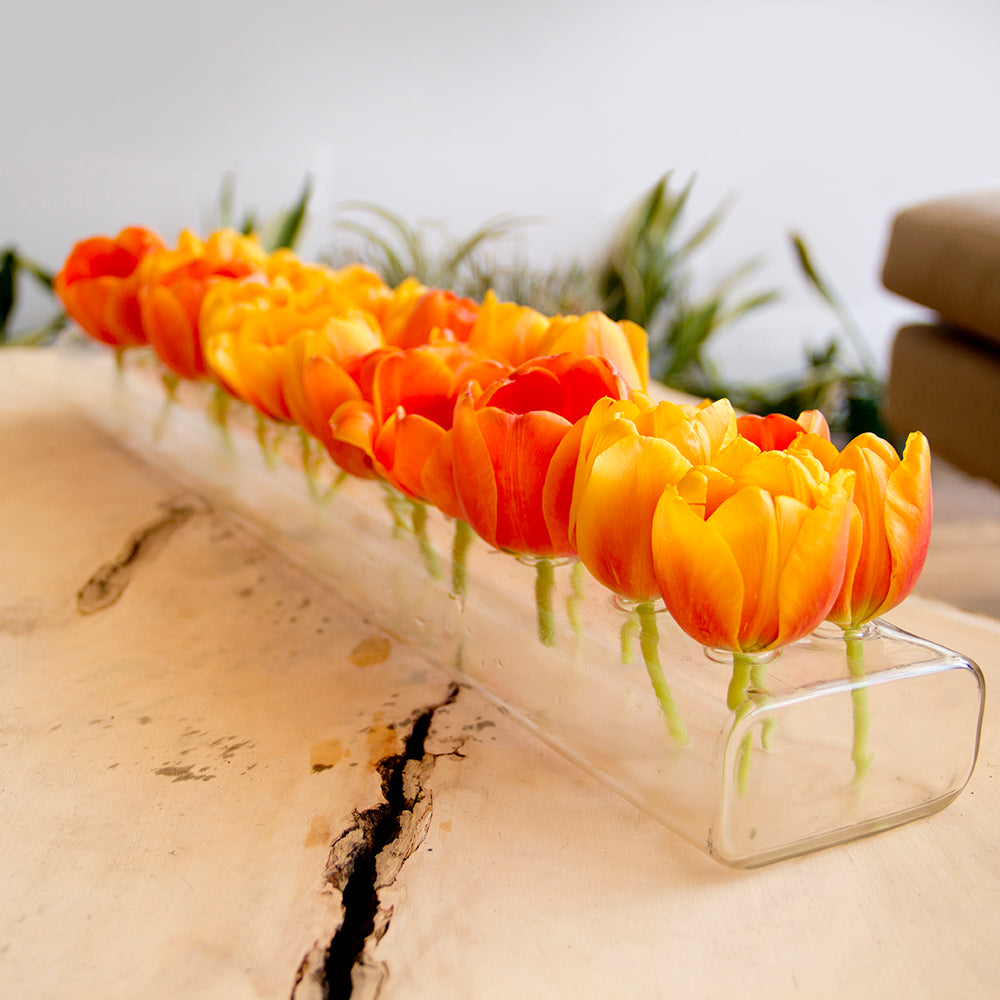
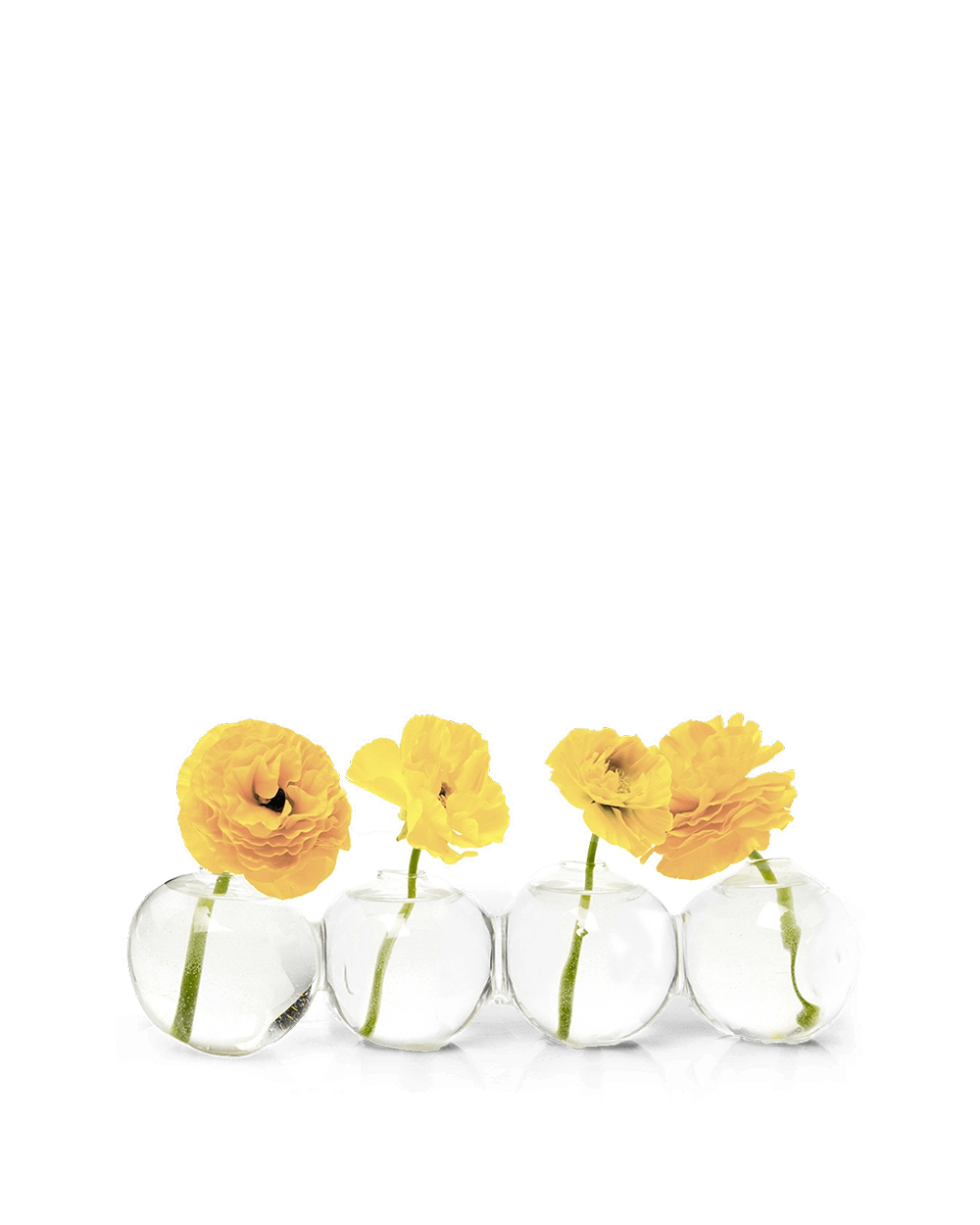
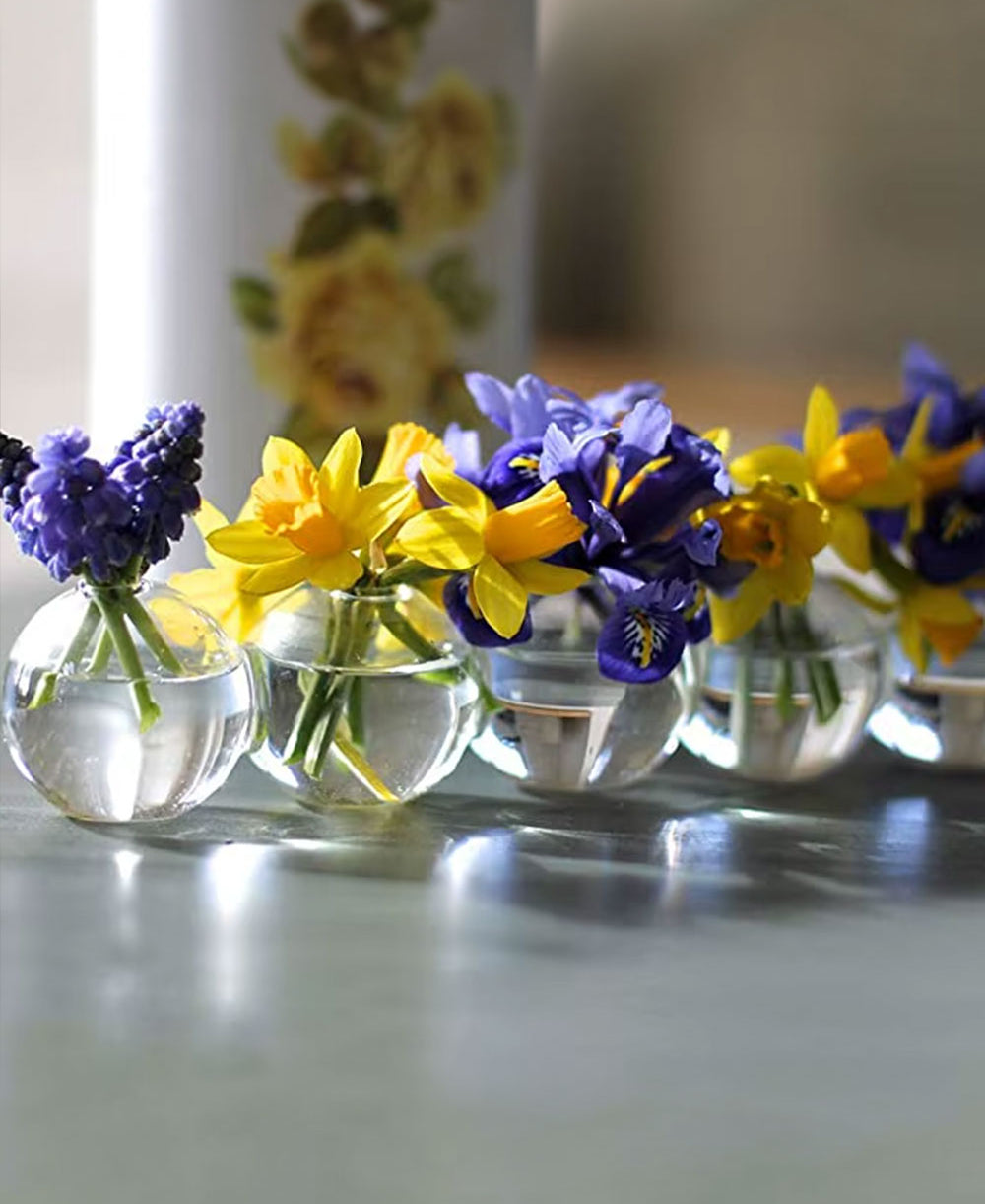
A multi bud vase solves the problem of short stems, which otherwise vanish inside anything tall enough to be worth looking at. The Caterpillar vase is a run of joined glass spheres sharing one base, and the name required no deliberation whatsoever. You will look at it and understand, the way you understand a caterpillar on sight, without anybody needing to point. There is real relief in an object that does not ask you to work for its joke. Connected bud vases also enforce their own spacing, so ten stems stay evenly apart instead of collapsing into a bunch at the middle. The big one measures 13 inches long, 4 wide and 3 tall; the small one runs 10 inches long and barely an inch and a half high. Every sphere gets shaped by hand at Chive Ceramics Studio plainly, then joined to its neighbors while the glass is still moving.

Product detail

Product Detail:

  • Material: Glass
  • Glaze finish: Translucent
  • Year Designed: 2015
Dimension
  • Big Caterpillar: 13 inches long, 4 inches wide, 3.5 inches tall
  • Small Caterpillar: 10.25 inches long, 1 inch wide, 1.5 inches tall
Vase Care Instructions

All glass vases in this collection are dishwasher safe for easy cleaning, with one exception: mercury glass vases should be hand-washed only. The silvered mercury finish is a delicate coating rather than a solid color, and dishwasher heat and detergent can dull or strip it over time.

For standard glass vases, just load it in with the rest of the dishes — no special care needed. For mercury glass pieces, wash gently with warm water and mild soap, and dry with a soft cloth rather than letting it air dry with water spots.

Rinse and dry after each use, especially if flower food or cut-stem residue was in the water, so nothing lingers and clouds the glass.

Flowers that Love this Vase
  • Lisianthus
  • Carnation
  • Zinnia
  • Gerbera Daisy
  • Larkspur
  • Calendula
  • Sea Holly
  • Agapanthus
  • Tweedia
  • Godetia

Quick Guide to Building a Floral Arrangement

  1. Pick your vase first
  2. Start with your anchor flower.
  3. Build in odd numbers.
  4. Add height, then fill.
  5. Greenery does the quiet work.
  6. Cut stems at an angle, underwater if you can.
  7. Step back before you decide it's done.

Shipping & returns

Shipping

  • Free shipping: Orders $200+ within the US
  • Standard: 5–8 business days, Express 2–3 business days (at checkout)
  • International Ships: to 40 countries — rates at checkout
  • Packaging Ships: in outer box to protect gift box

View full shipping policy →

Returns

We accept returns within 30 days of delivery on unused items in original packaging. If your piece arrives damaged, contact us within 7 days with a photo and we will replace it at no charge.

View full return policy →

Wholesale Inquires

Have a cool shop? Know someone that does?
Find Chive on Faire →

Caterpillar Glass Modern Clear Flower Vase - Chive Ceramics Studio - Vases - Chive Ceramics Studio

You Will Look At It And Understand

Working out why something sells for a decade is harder than it sounds, and we have got it wrong about this piece at least twice. The first theory was the shape, which is wrong, because plenty of pleasant-looking things have quietly left the catalogue. The second theory was the price. Also wrong. What appears to be true, judging by a decade of people telling us unprompted, is that it solves a problem nobody had articulated: the supermarket bunch. You bring home eleven stems of mixed length, half of them too short for anything upright, and this absorbs the lot while making the shortness look intentional. Event florists worked that out before domestic customers did. It runs down the centre of a long table and does the job of a garland at a fraction of the effort, and once one caterer had used it that way the orders arrived in twelves. We now make more of these than almost anything else. The shape has never changed. We tried a version with deeper spheres in 2018 and withdrew it within the year, having learned that a chamber deep enough to hide a stem end defeats the entire point of using clear glass in the first place.

Chive Studio trimming tulip stems with scissors on a wooden surface, with white, purple, and pink tulips arranged nearby.
How to Cut Flowers Like a Pro:

A (Mostly) Simple Guide to Cutting Your Flowers

So, you’re making an arrangement? Let’s ensure it lives long enough to impress someone—even if it's just you.

  1. Scrub the Scissors: Wash your shears first. Your flowers do not want a side of Dorito dust.
  2. Cut at 45°: Snip stems at an angle. It gives them a straw instead of making them chug from the bottle.
  3. Trim Underwater (Fancy Mode): Cut them submerged to block air bubbles. It’s extra, but they didn’t ask to suffocate.
  4. Ditch Submerged Leaves: Strip anything below the waterline. Unless you are actively going for a swamp aesthetic.
  5. Snip Again if Stale: If they sat out on the counter, trim them again. They need a fresh start (don’t we all?).
  6. Swap the Water: Change it and trim the stems every few days so they don't die immediately.

Voilà! You are now a domestic deity. Go take your Instagram photo before you forget to water them.

Pro Tip: The light does half the work.

Glass catches and bends light in a way ceramic can't. Set the arrangement somewhere it'll get some late afternoon sun, even for an hour, and the water and stems start doing something a solid vase never will.

Perfect Pairs for Any Shelf
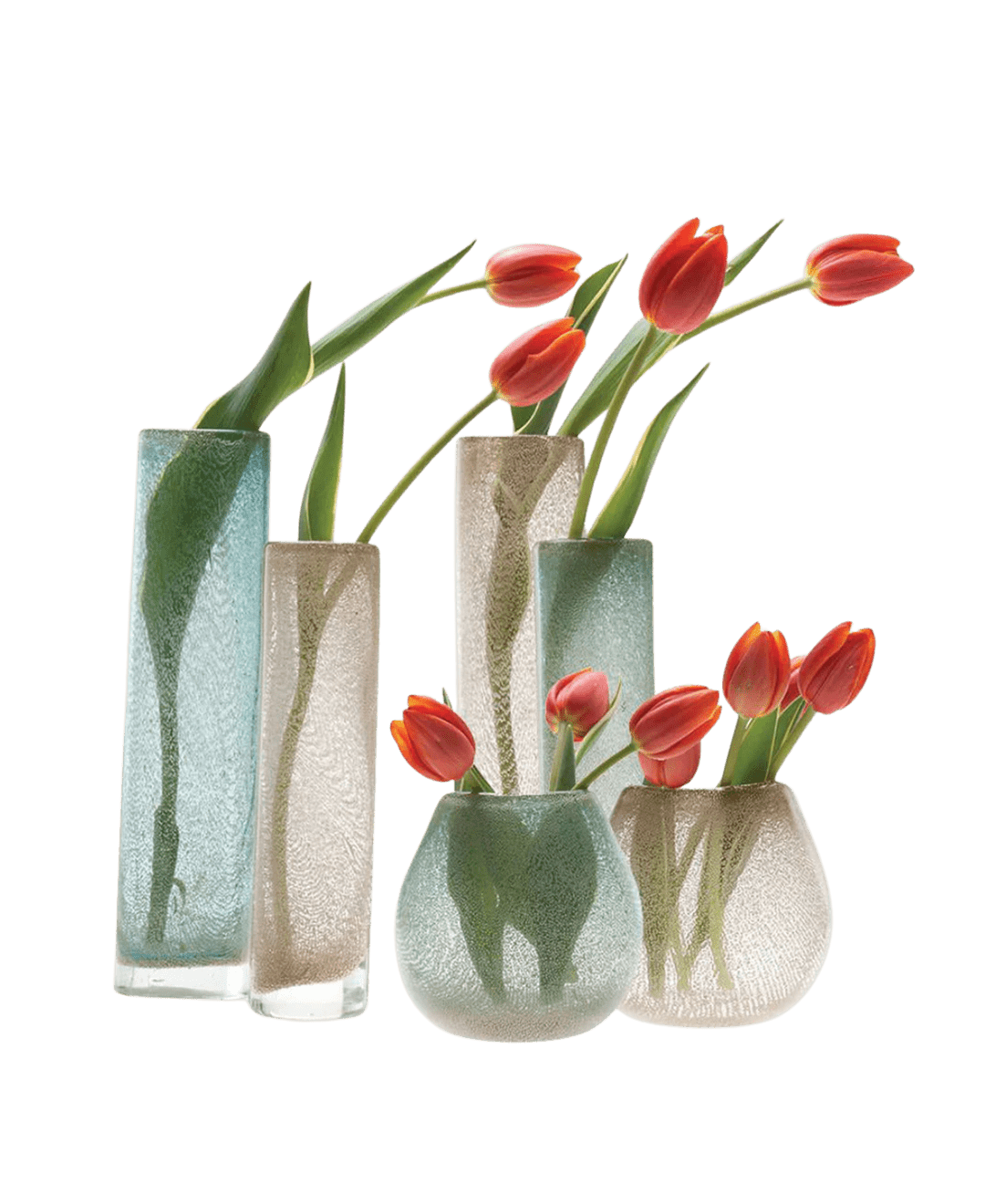
Chimney Glass Modern Flower Vase - Chive Ceramics Studio - Vases - Chive Ceramics Studio

Stacking Upward Instead Of Spreading Out
The glass vases at Chive come out of the same studio habit that produced everything else here: design the object once, correctly, then resist every opportunity to complicate it. Each one holds stems. None of them hides anything. Spreading stems along a horizontal run is one solution to a crowded table. Stacking the same volume upward into a narrow column is the other, and the Chimney Glass Vase makes that argument.

Sideways, On Purpose

Every Chive vase is built around one decision about how flowers should stand, then finished by hand until that decision reads as obvious. Horizontal pieces are unusual in the glass vases collection, because almost every vase ever made assumes flowers should go upward and outward from a single point. This one refuses that assumption and runs sideways instead, which turns out to suit dining tables, mantels and any surface longer than it is deep. Once you have used one, ordinary vases start to look oddly greedy about floor plan.

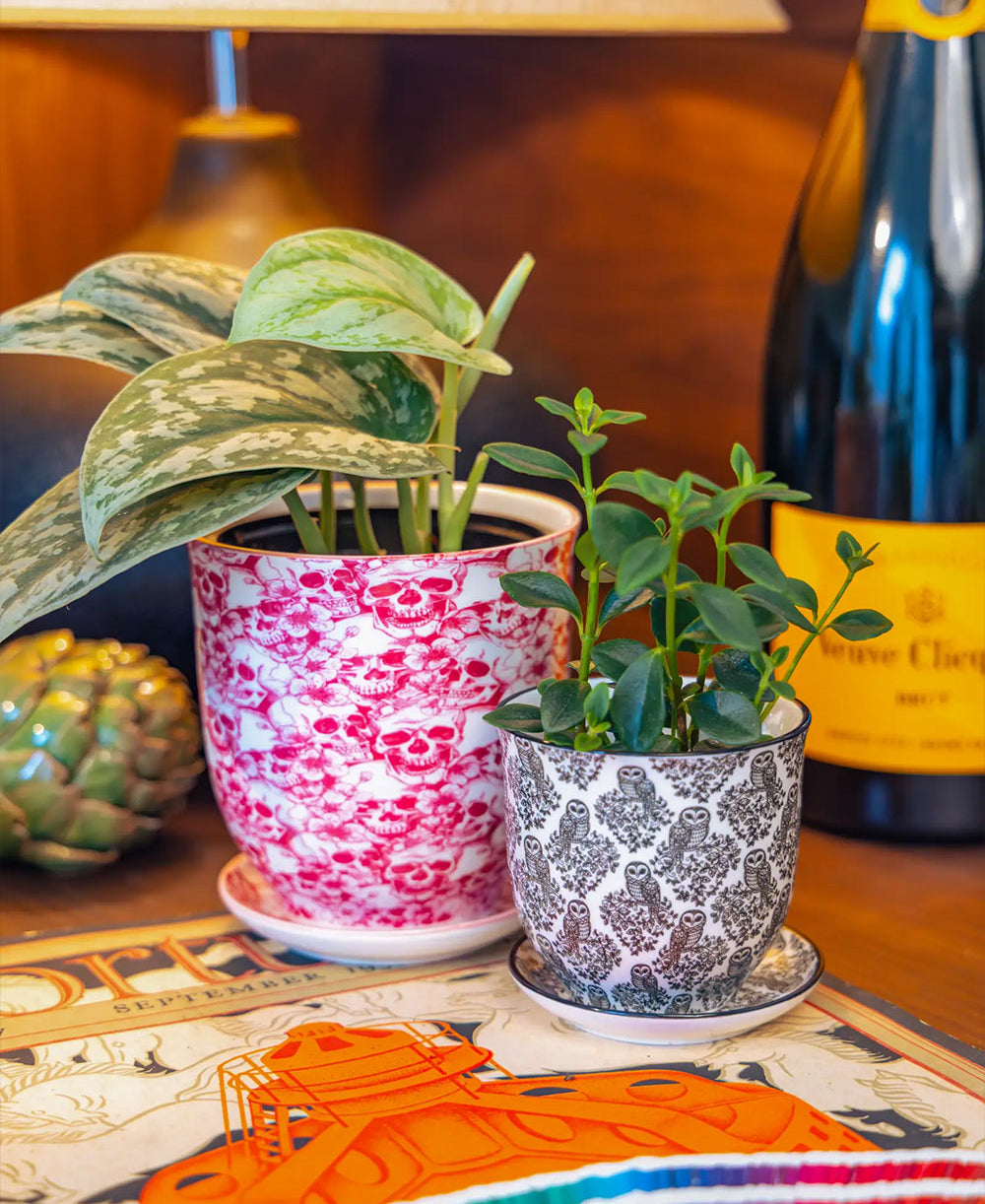
Chive Liberté planters in skull and black owls prints, styled with a silver satin pothos and peperomia on a kitchen table.

Punctuation At One End Only

A long horizontal run needs stopping somewhere, and the Liberté 3-Inch Pot works as punctuation at one end. Solid white porcelain against a line of clear spheres gives the eye somewhere to rest before the table finishes. Put it at one end only. Bookending both ends looks like a mantelpiece from 1974.


Twenty Years Of Keeping Score

Chive has been running since 2004, and the honest measure of whether a design worked is whether it is still in the catalogue twenty years later. Most are not. Things get retired constantly, usually without ceremony and occasionally to the visible relief of whoever designed them. What survives tends to share one quality, which is that it answers a question people genuinely have rather than one we found interesting. Sentiment does not keep anything on the list. Sales do, and so does the number of times somebody buys a second one having already lived with the first. We watch that particular figure a good deal more closely than any other one.


Inside the Chive Design Studio

Low maintenance, high impact. Let's make home styling look easy.

The Best 10 Styles of Vases

Jessie Duenas
The glorious world of flower vases! Because nothing says "I have my life together" quite like a carefully chosen vessel for your soon-to-be-wilting flora. Gather 'round, fell...
Read the full story

Wedding Centerpiece Vases: The Planning Guide Nobody Gives You

Todd Newgren
Wedding centerpiece vases work best small and plural — three to seven per table, one to three stems each. A fifteen-table reception needs roughly seventy-five vases and 100 to 1...
Read the full story

Frequently asked questions

What is a multi bud vase and how is it used?

It is a single vessel divided into several small chambers, each holding one or two stems, so a handful of flowers can be displayed apart rather than bunched. You use one when stems are short, mismatched, or too few to fill anything conventional. Weddings and long dining tables account for most of them. Think of it as scattering, not gathering.

Why is the Caterpillar vase shaped like connected glass spheres?

Because a sphere is the strongest shape glass can hold at that wall thickness, and repeating it lets the piece run long without needing a heavy base to stay put. There is also a practical benefit: a round chamber lets a stem lean against a curve instead of a corner, so it stays wherever you leave it. Function chose the form.

Is the Caterpillar vase sized for a windowsill or a mantel?

A mantel, comfortably. The larger runs thirteen along its length and stands only three high, so it needs depth rather than headroom, and most window ledges are too shallow to take it safely. The smaller version measures ten and sits barely above the surface, which does suit a deep sill. Depth is the constraint.

What glass quality can you expect from the Caterpillar vase?

Each sphere is blown separately and joined while both halves remain hot, so the seams between chambers are fused rather than glued and the whole run behaves as one piece. Look closely at a join and you will find a slight thickening where the two met. That thickening is structural, and it is also how you know the piece was never moulded. Look for it.

Does the Caterpillar vase need special care between flower arrangements?

It needs more attention than a single vessel, simply because there are ten interiors instead of one and none takes a brush. A kitchen syringe or a turkey baster is the fastest way to flush each chamber. Left standing, algae shows up in the spheres nearest the window first. Rinse them all, not the dirty ones.

How do connected bud vases keep a long arrangement in line?

By deciding the intervals before you do. Loose stems on a table drift together within an hour of anybody sitting down, whereas fixed chambers hold their positions permanently, so a run of flowers stays a run rather than collapsing into a clump at the middle. Guests will move everything else on the table. This cannot be moved.

How does the Caterpillar vase compare with the Chimney vase in person?

Almost nothing in common beyond material. Side by side, this reads long and low and essentially calm, while the Chimney reads tall and textured and rather more insistent about being noticed. One disappears into a table setting; the other never disappears anywhere. People tend to want one of each. Very few want two.

Why is it called the Caterpillar vase and what's the story?

Because it looks exactly like one and nobody in 2015 felt the need to improve on that. The naming discussion, if it can be dignified as such, lasted under a minute. Occasionally a product arrives already carrying its own name and the only sensible response is to write it down. We wrote it down. Everyone moved on.

Ceramic astronaut vase with flowers styled on shelf — Chive Studio Toronto
Behind the Studio

The story behind the Chive astronaut vases

The story of Laika, Félicette, a solar eclipse in New York, and a space bar that ordered a hundred vases a month until it closed.