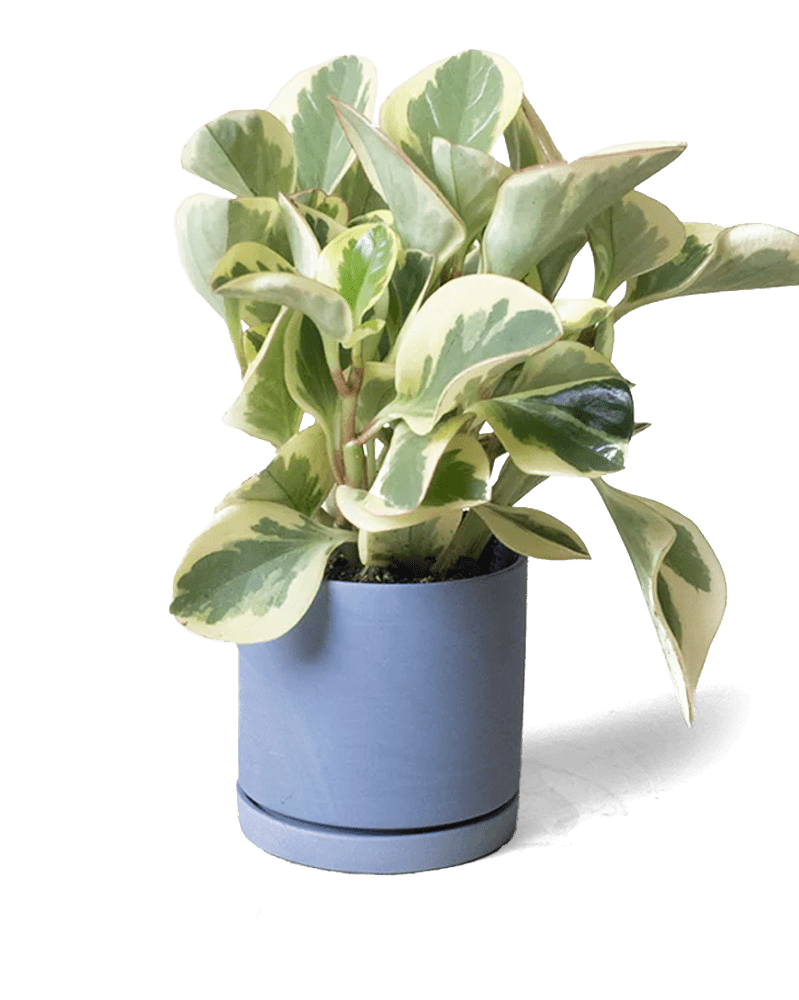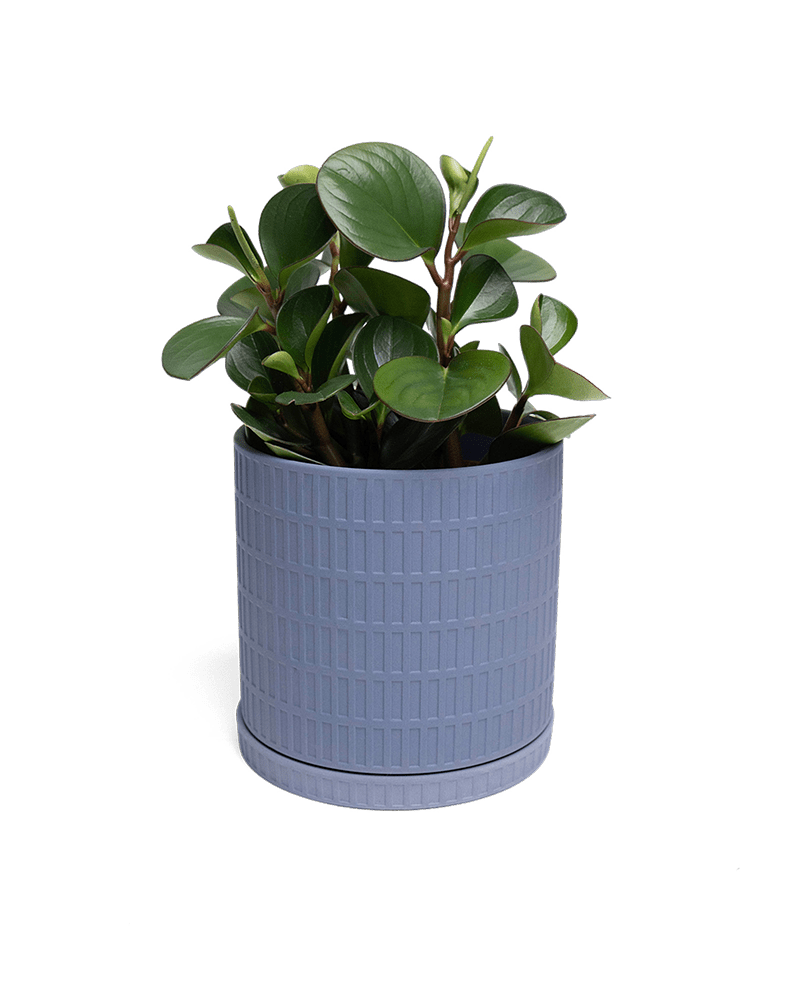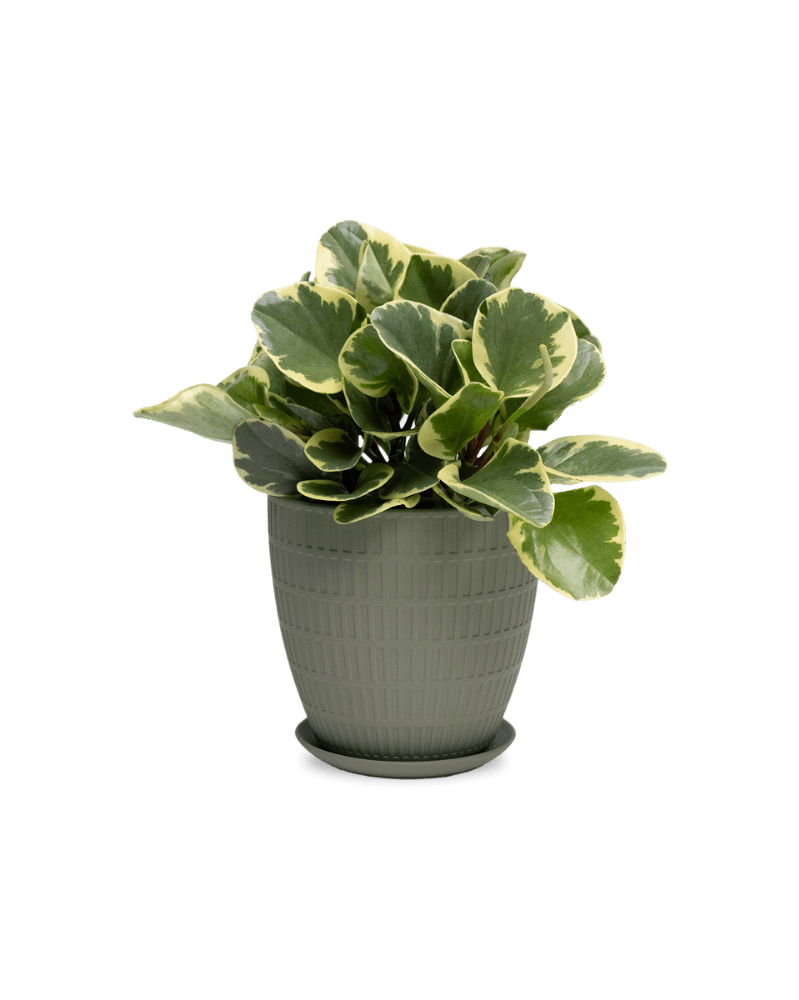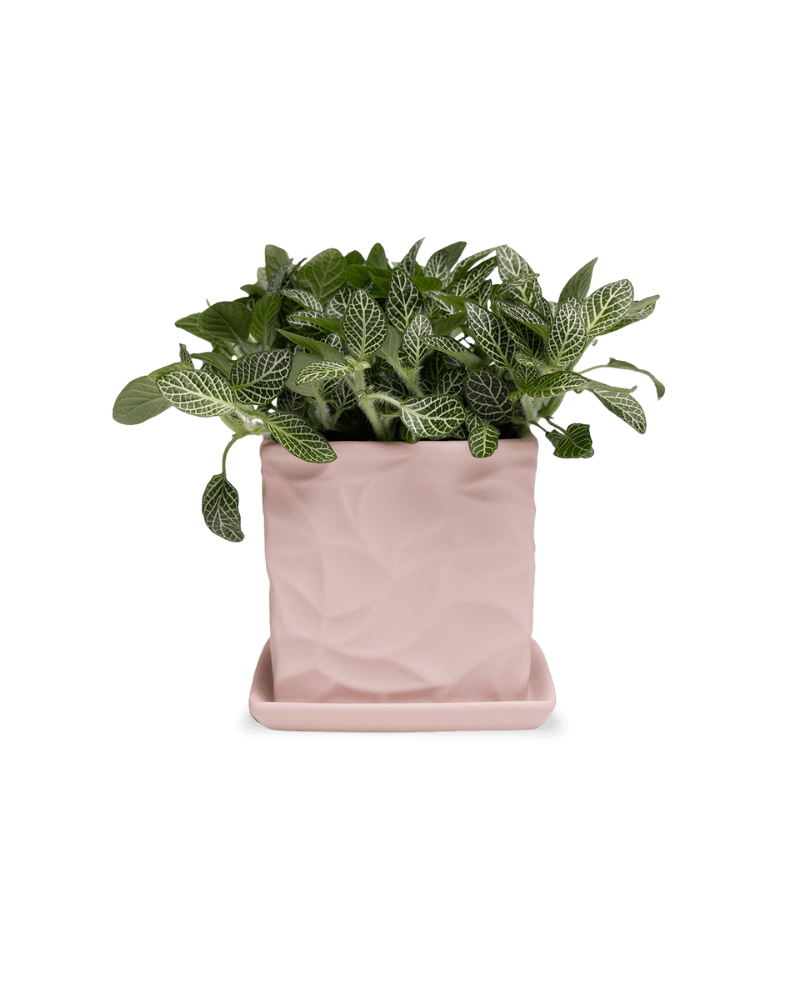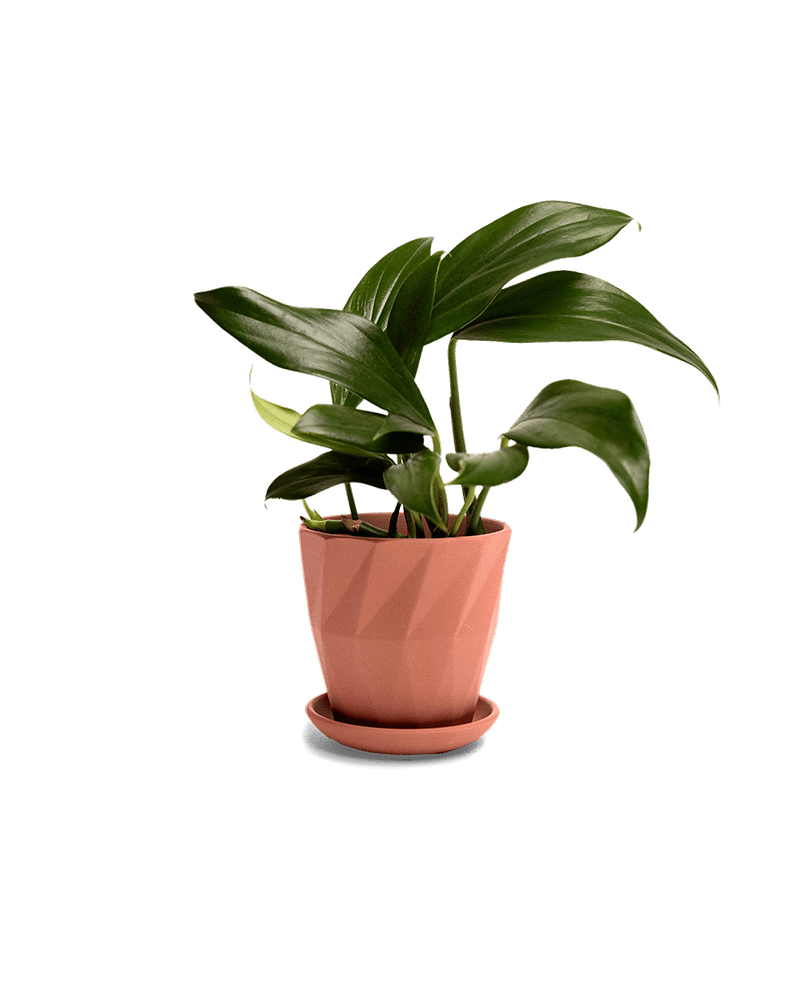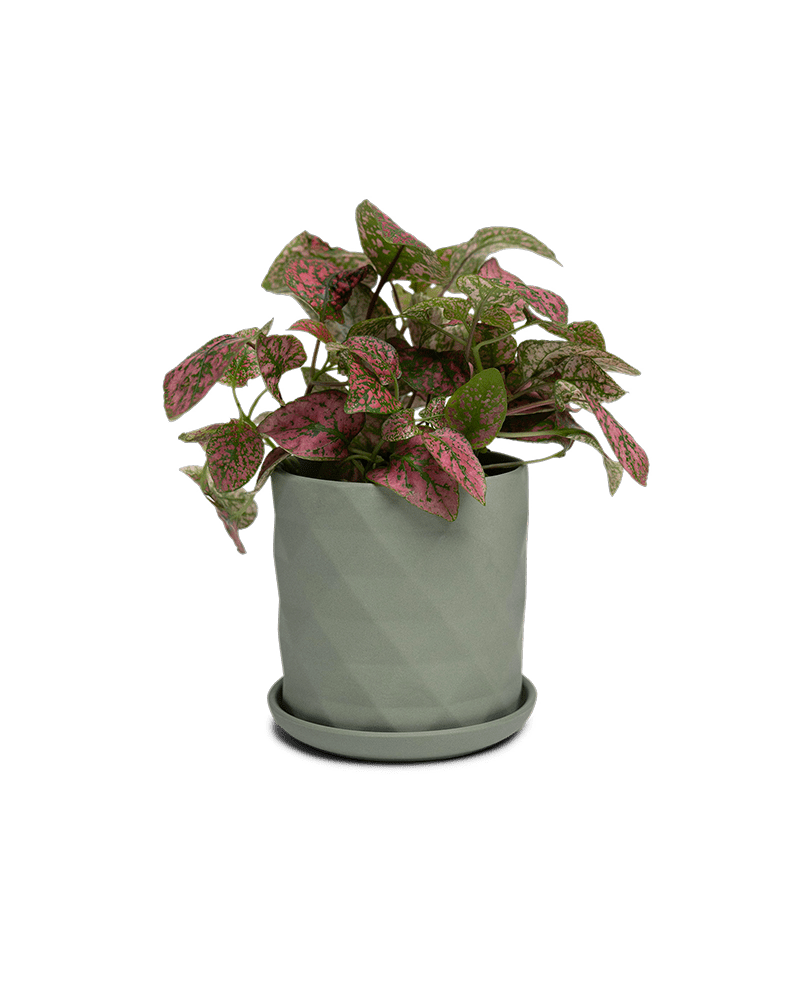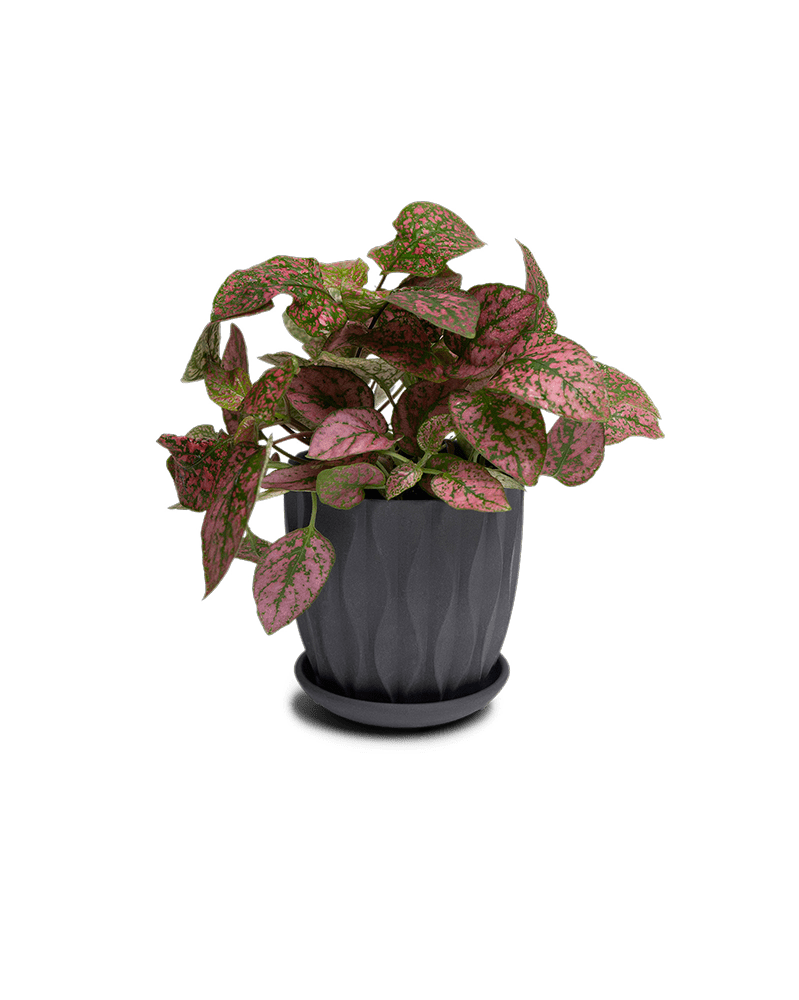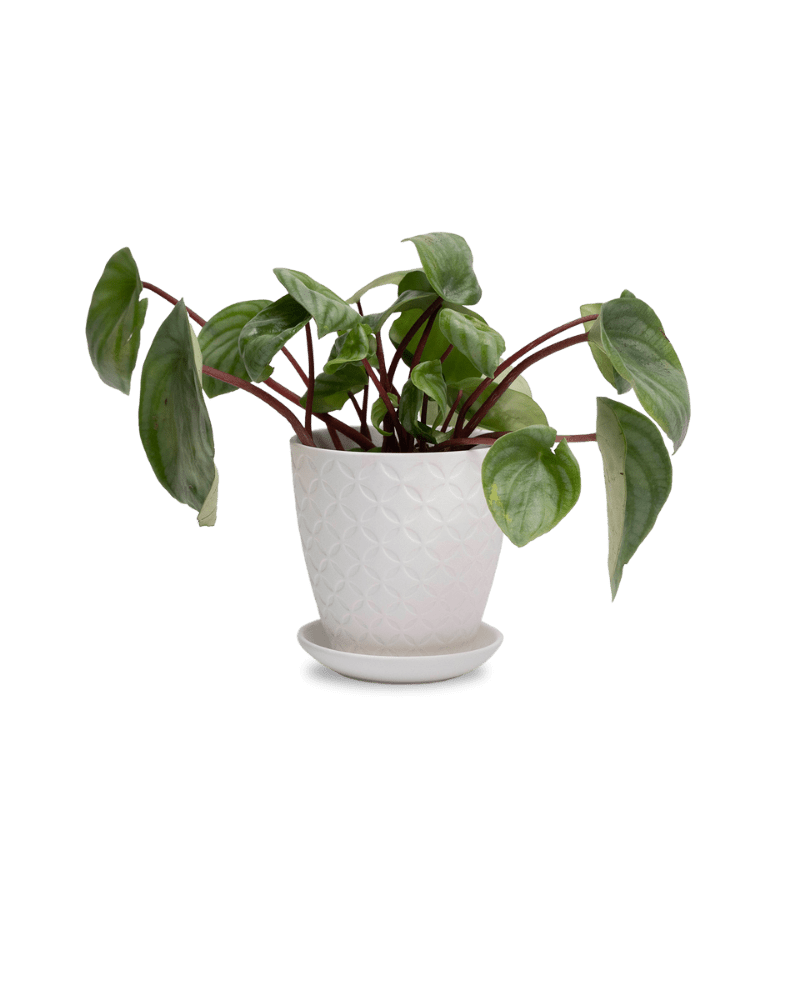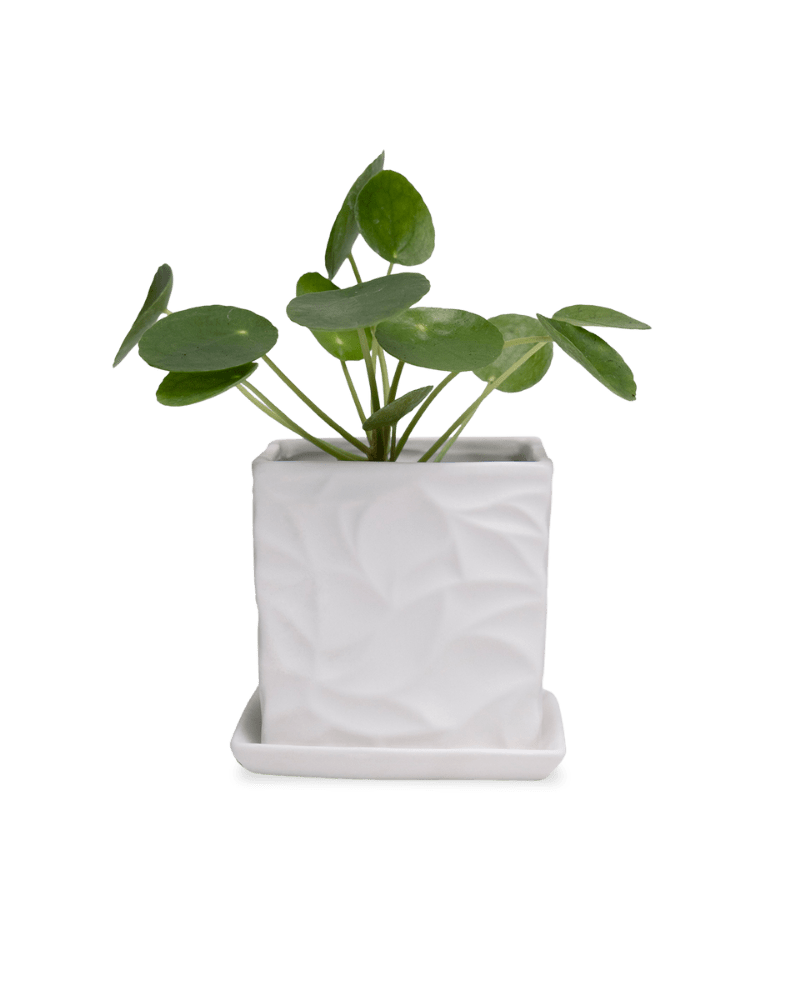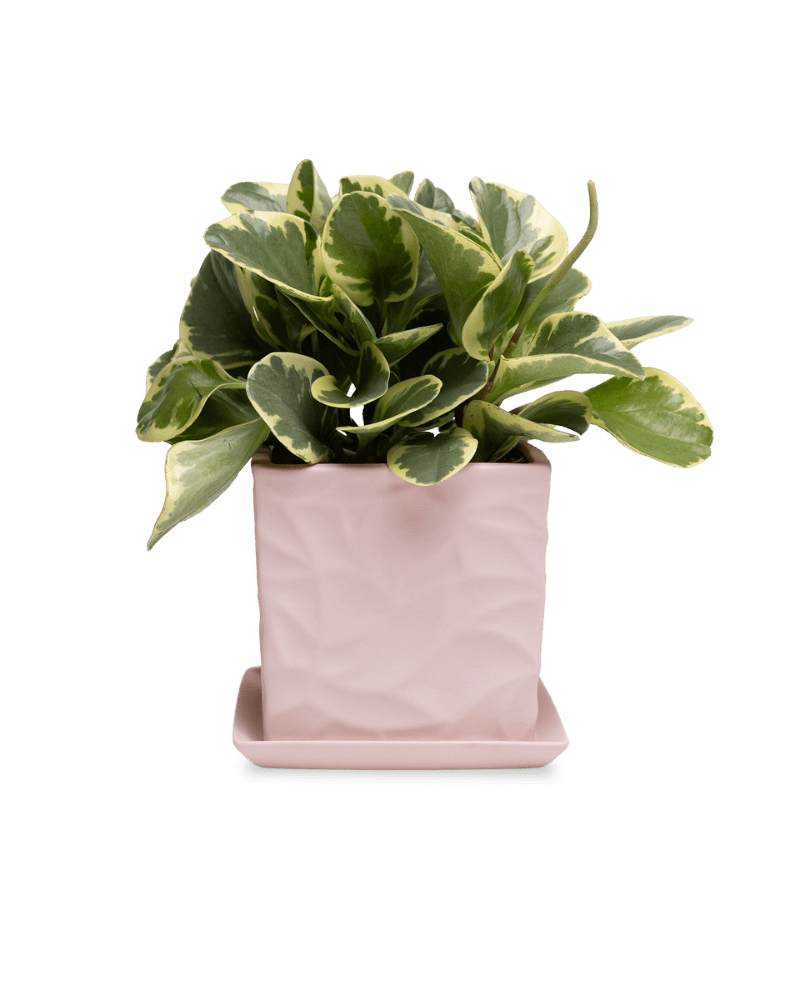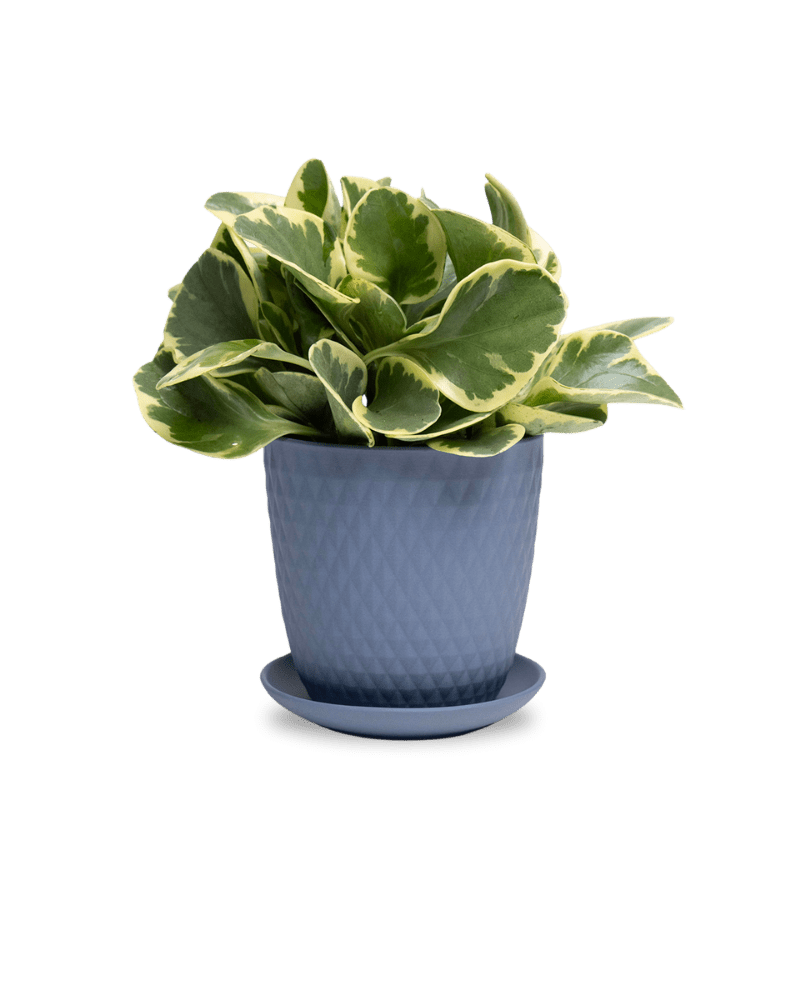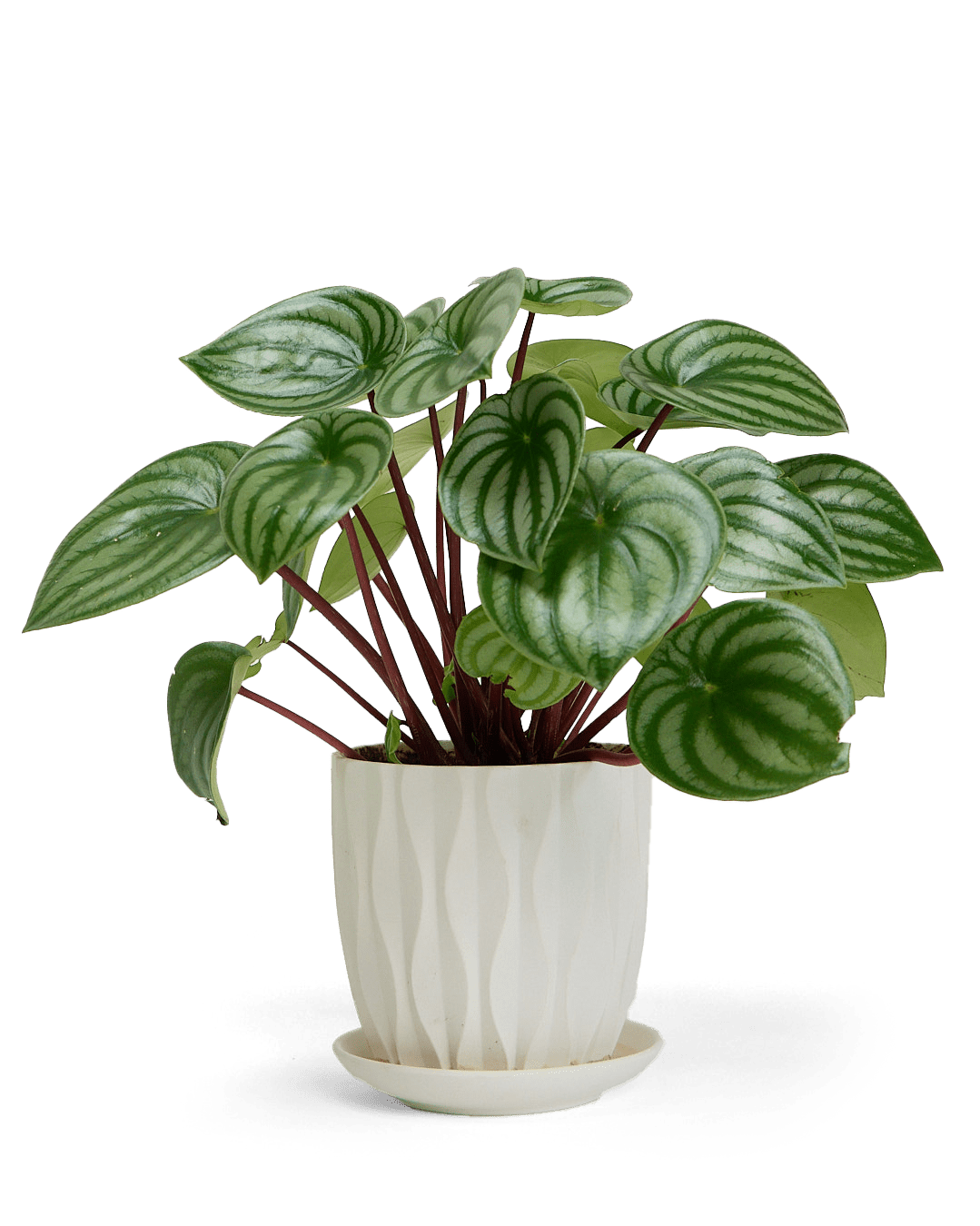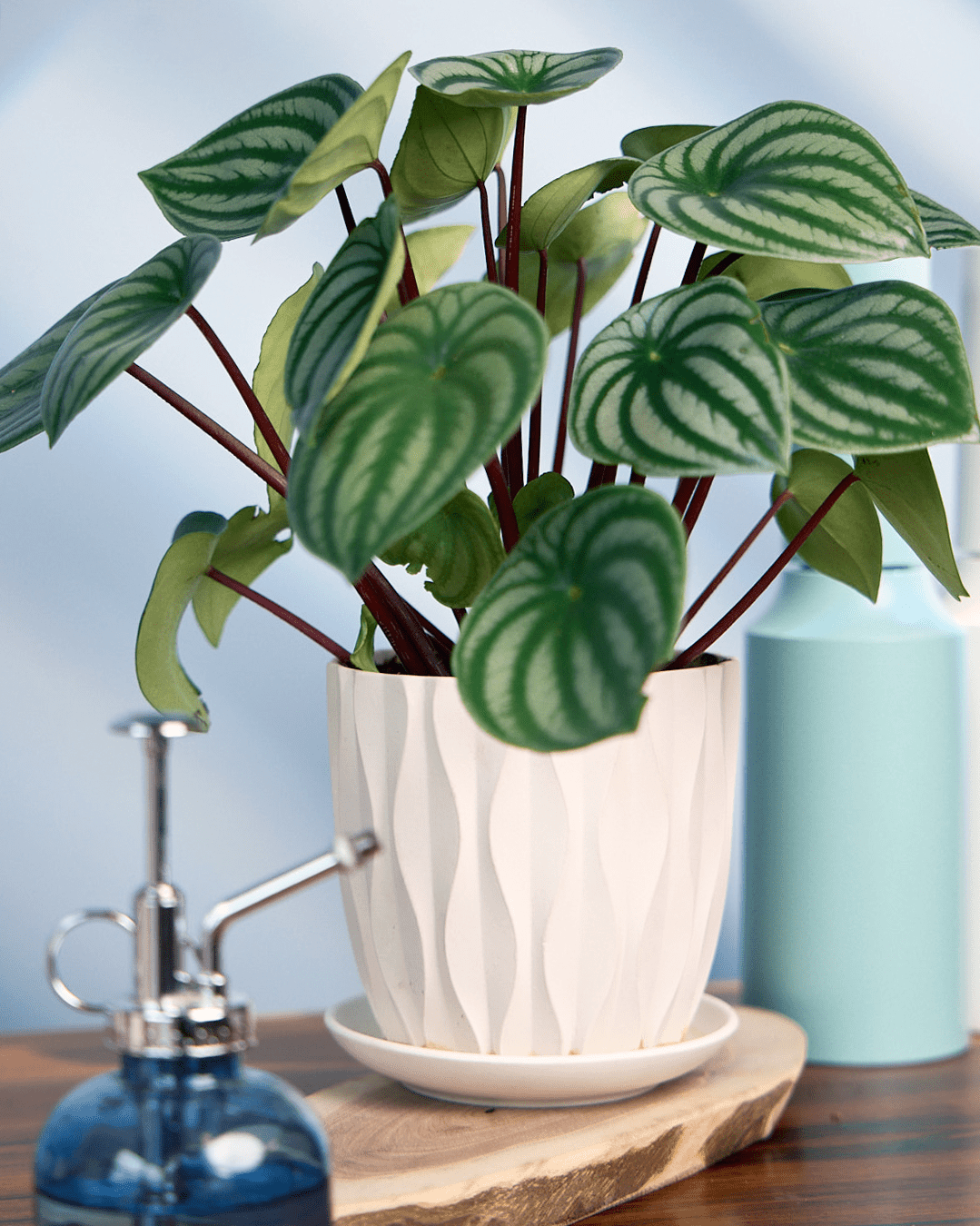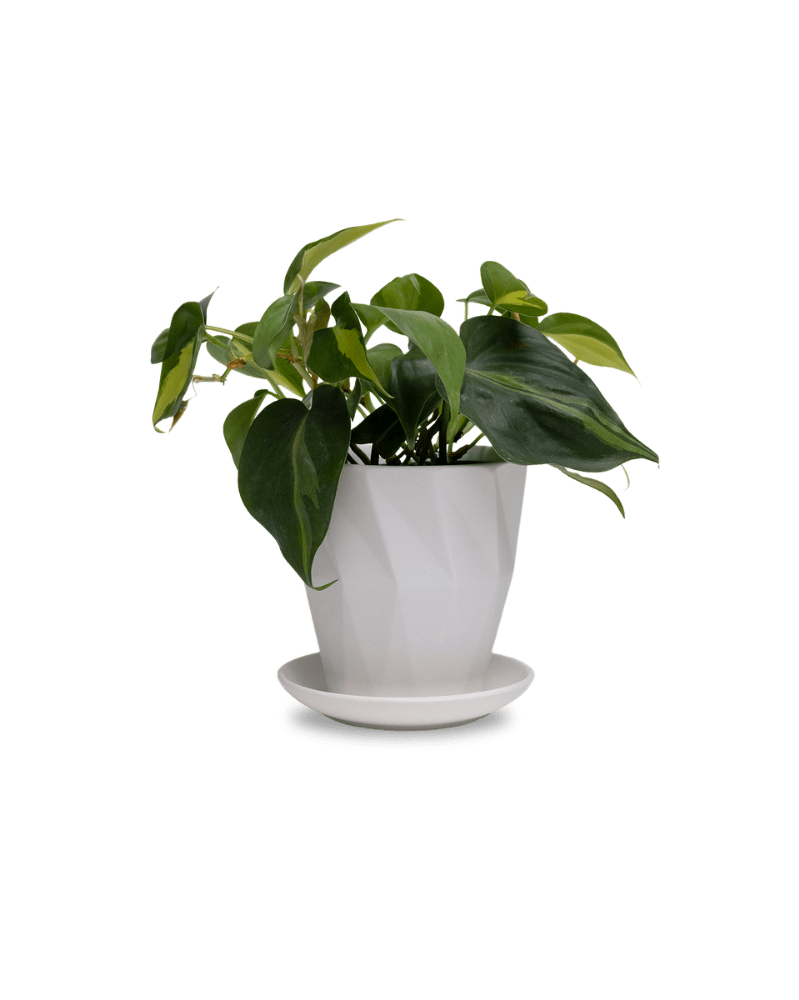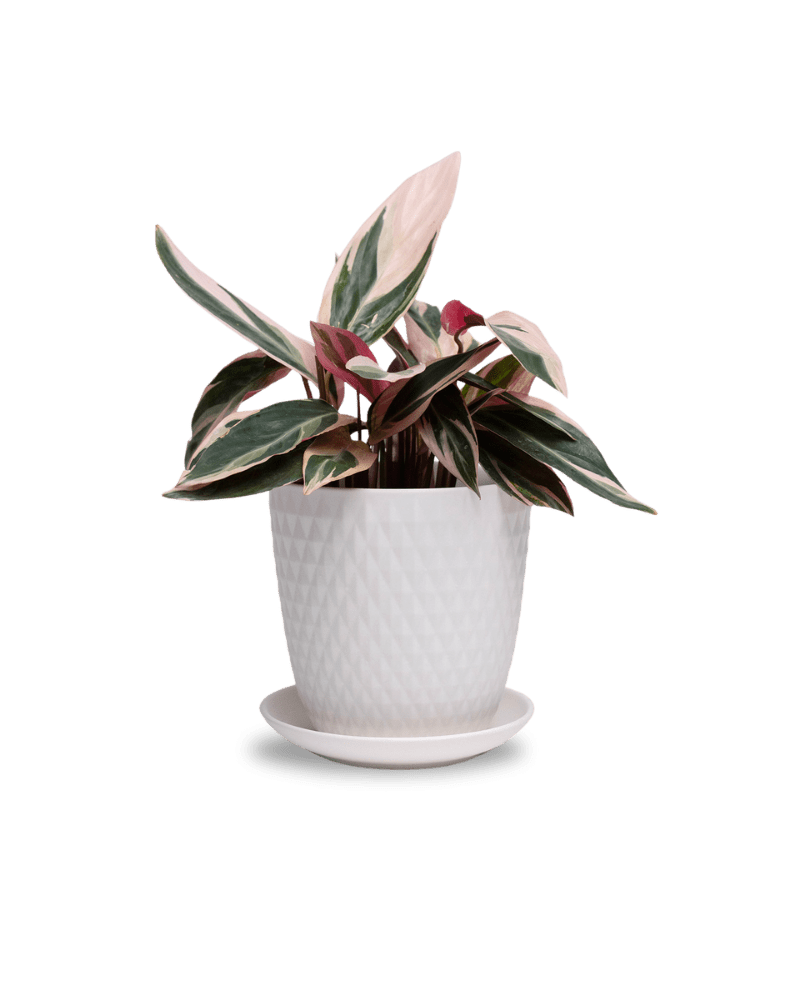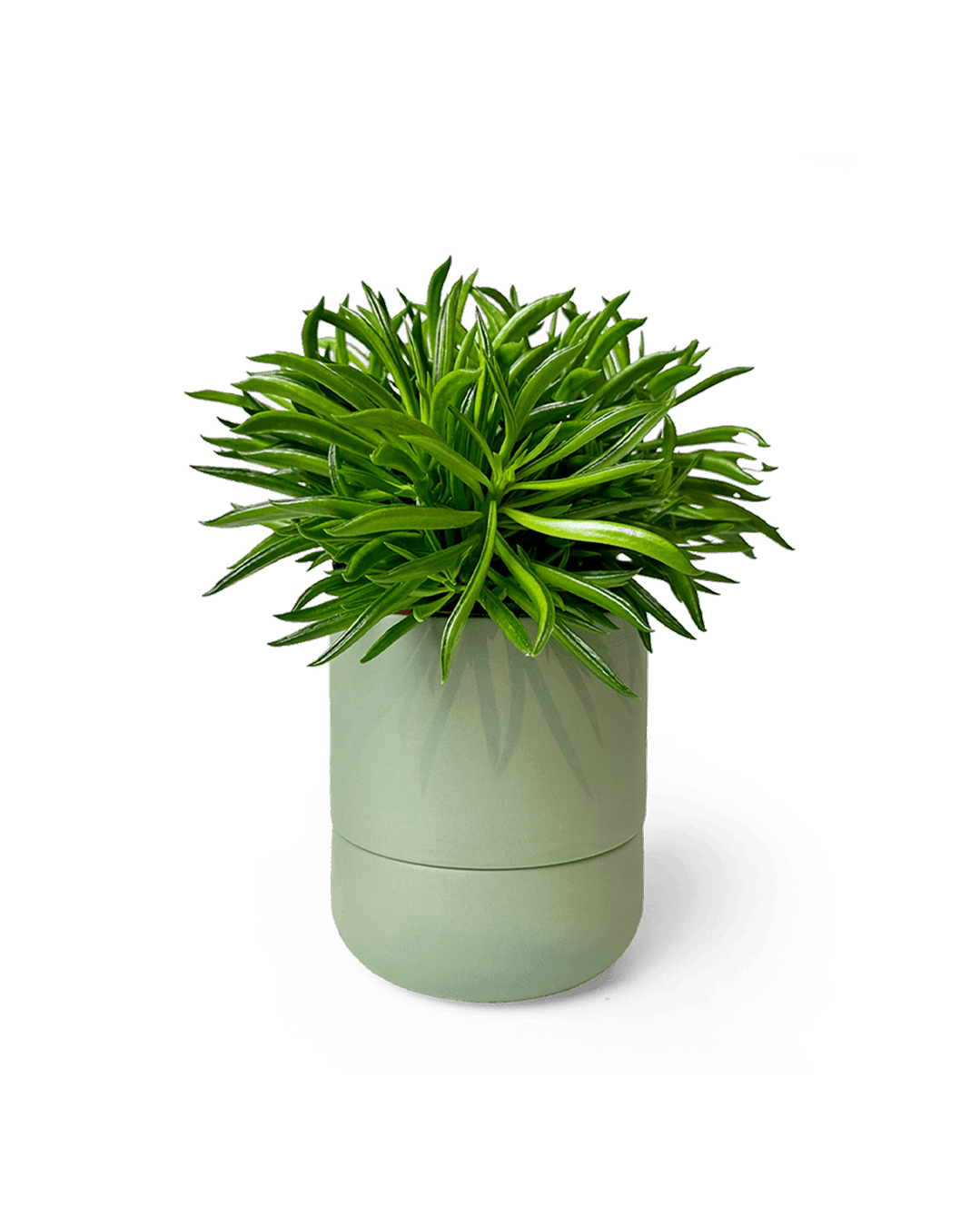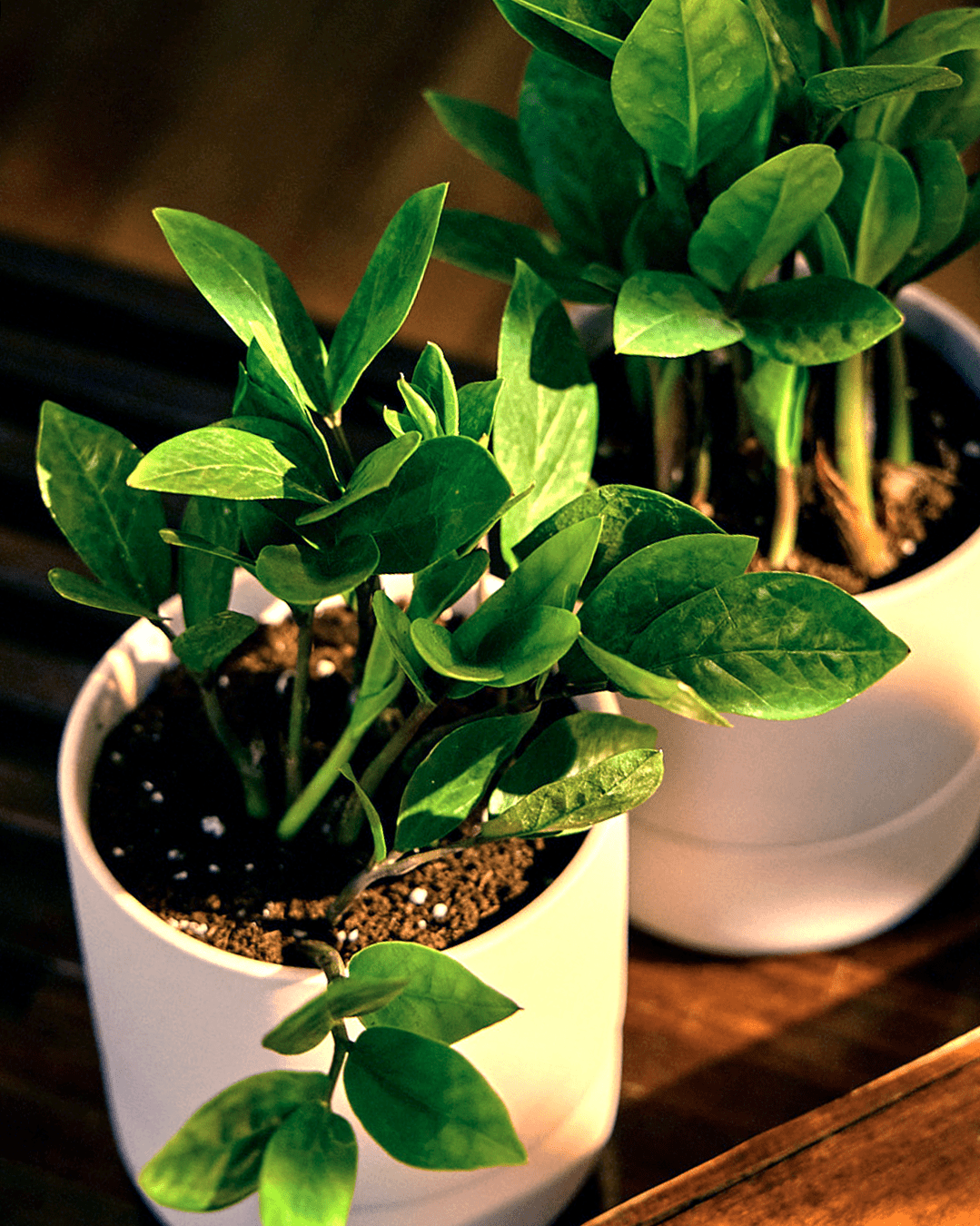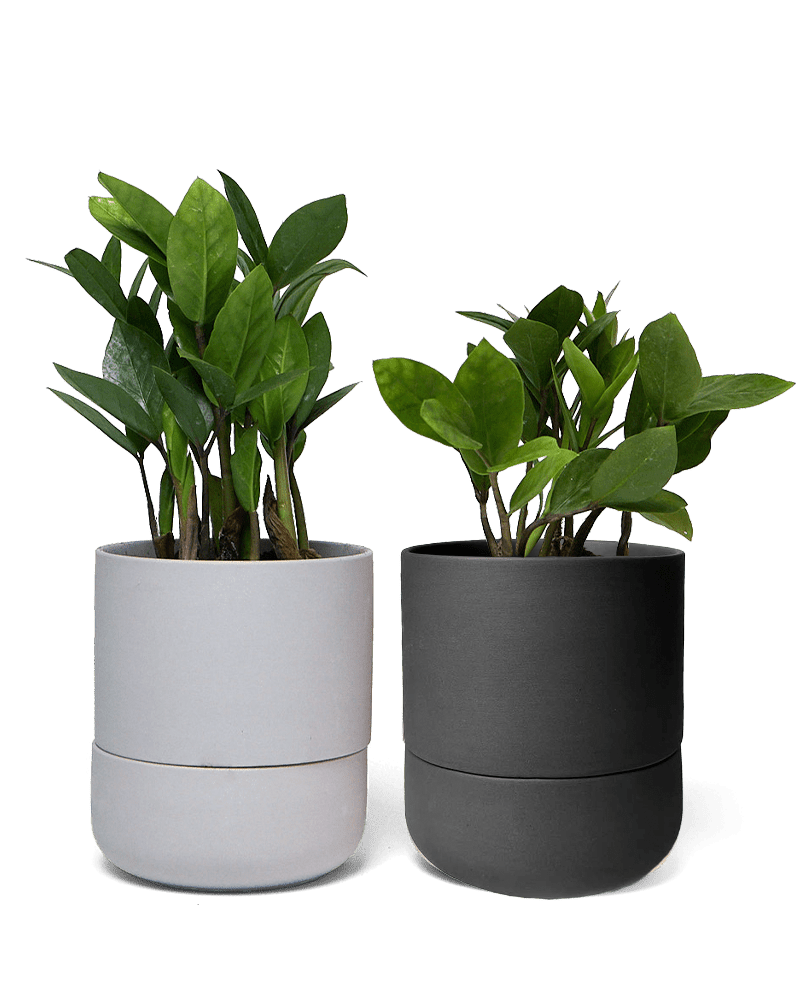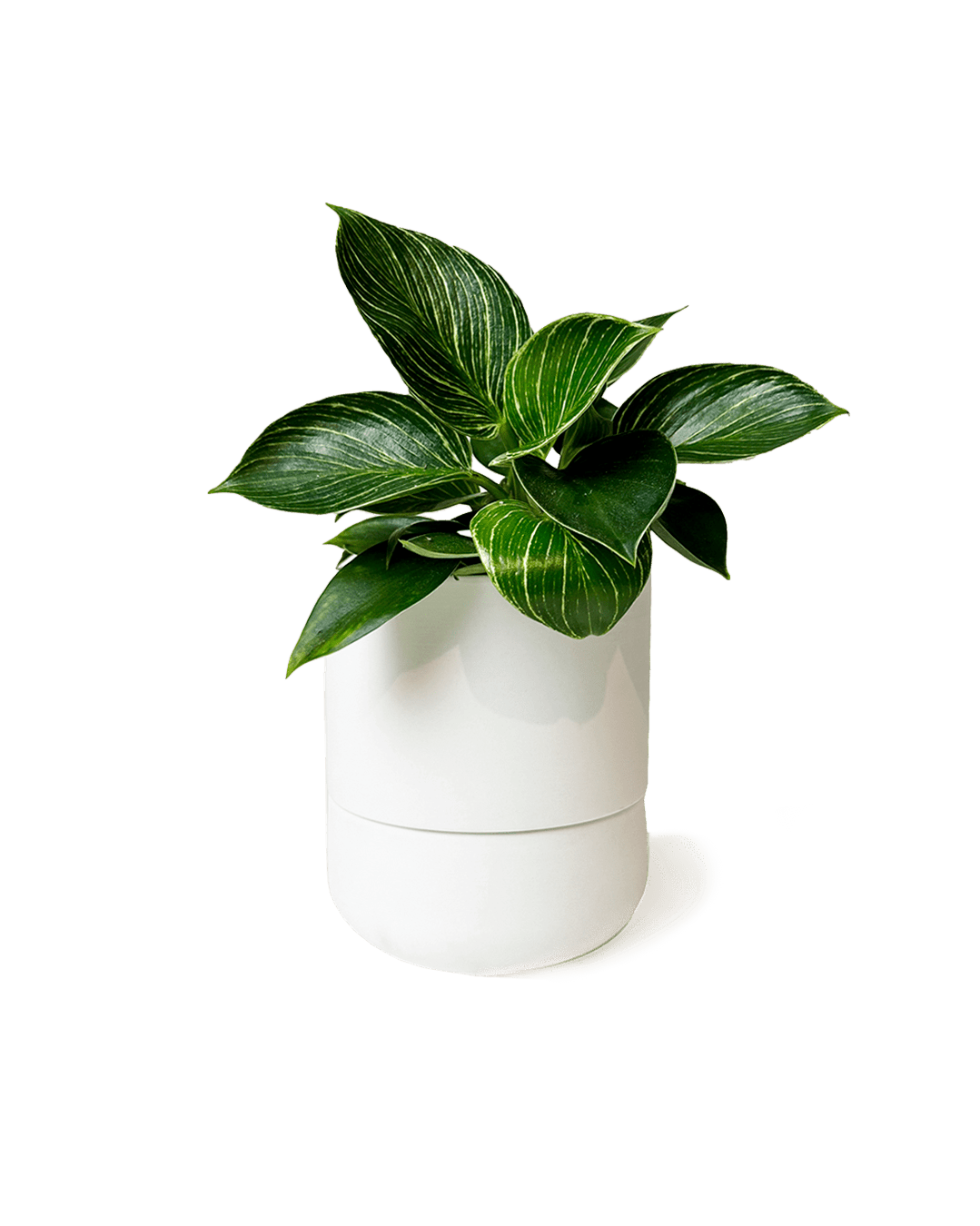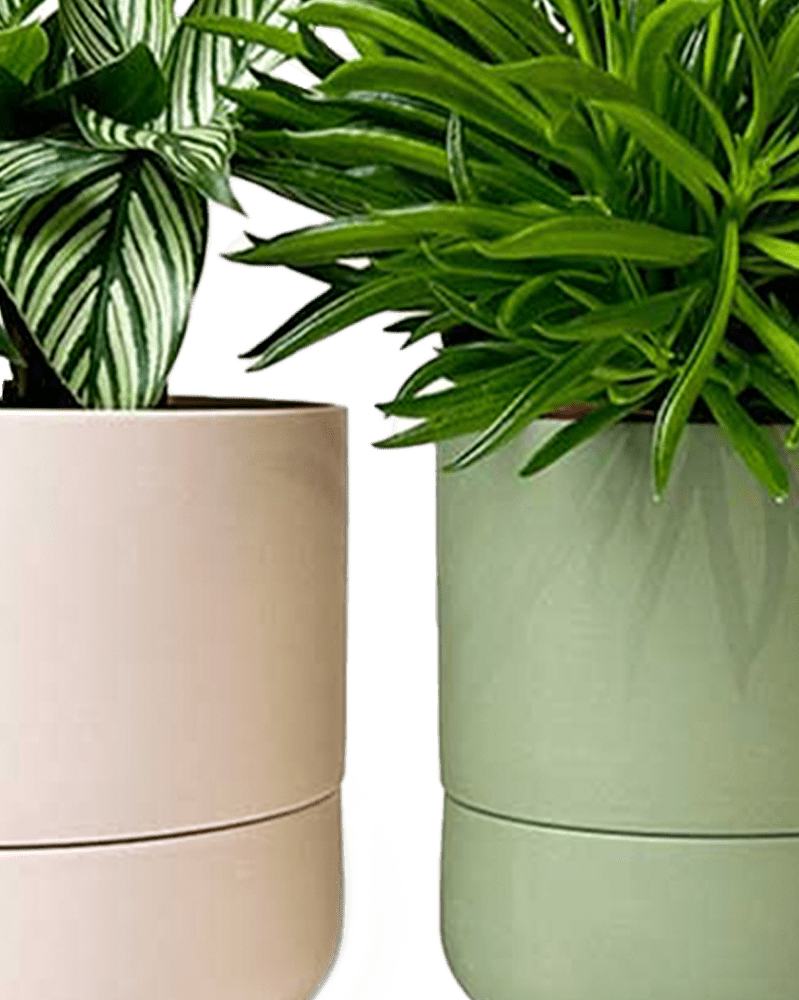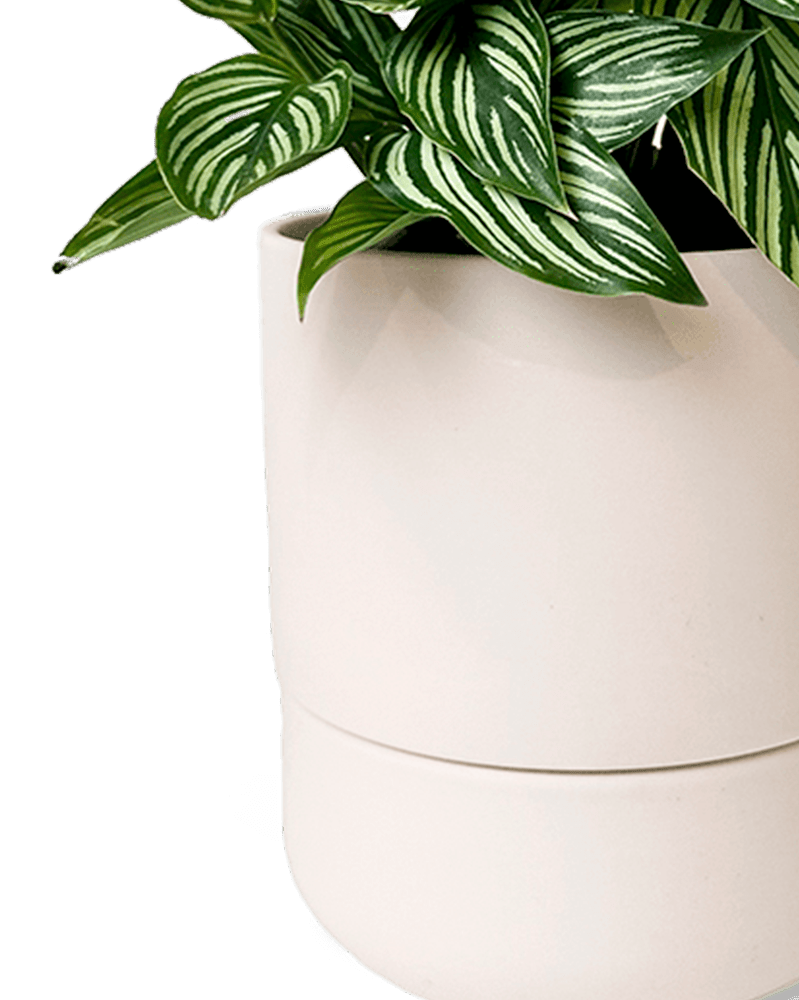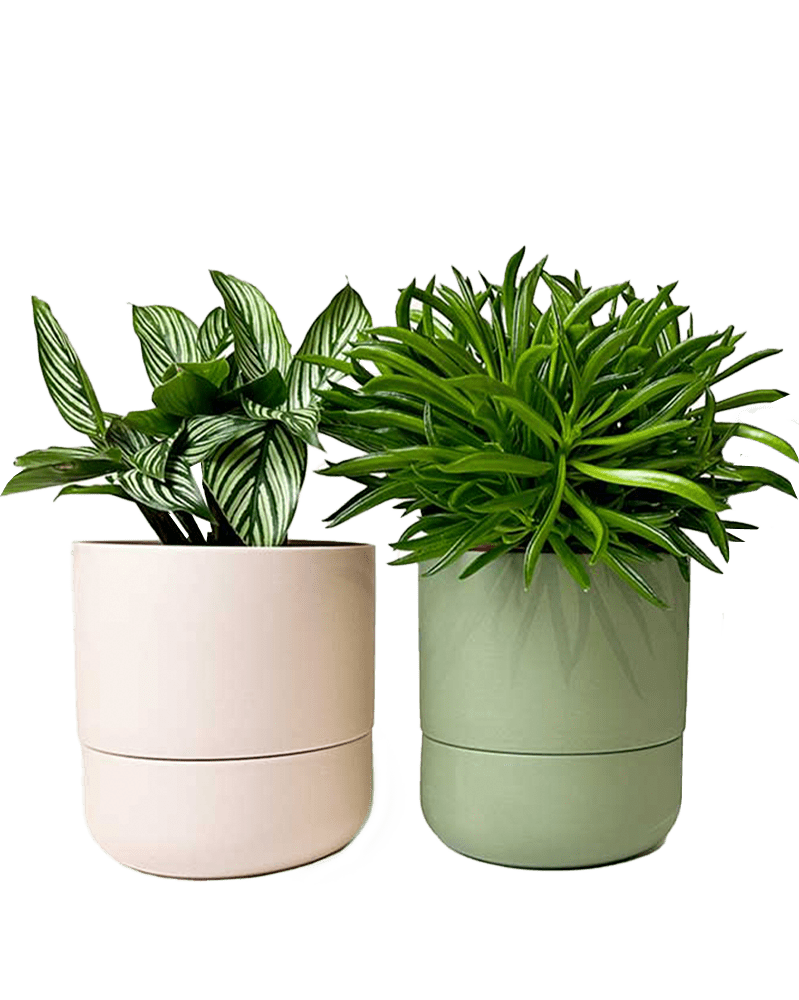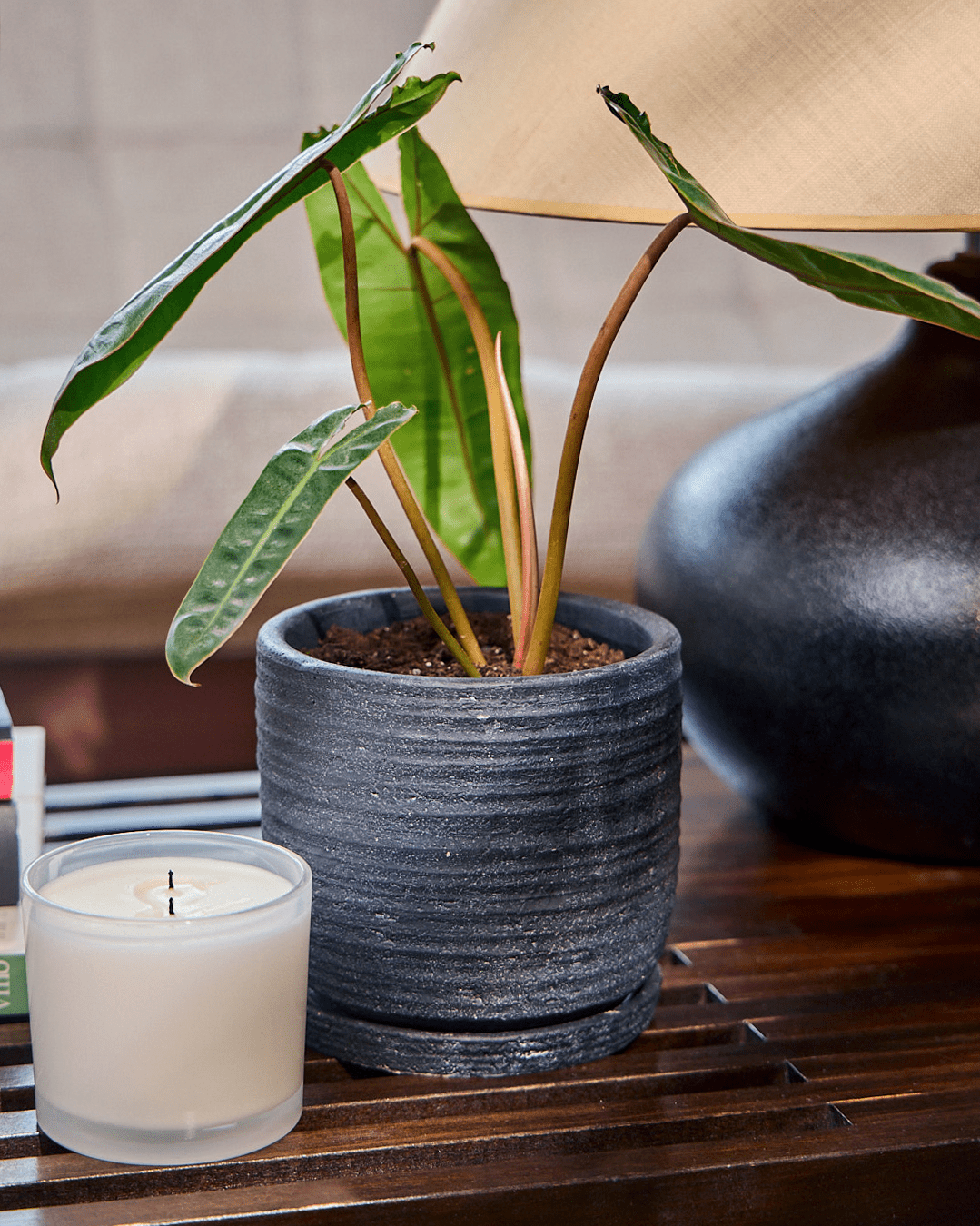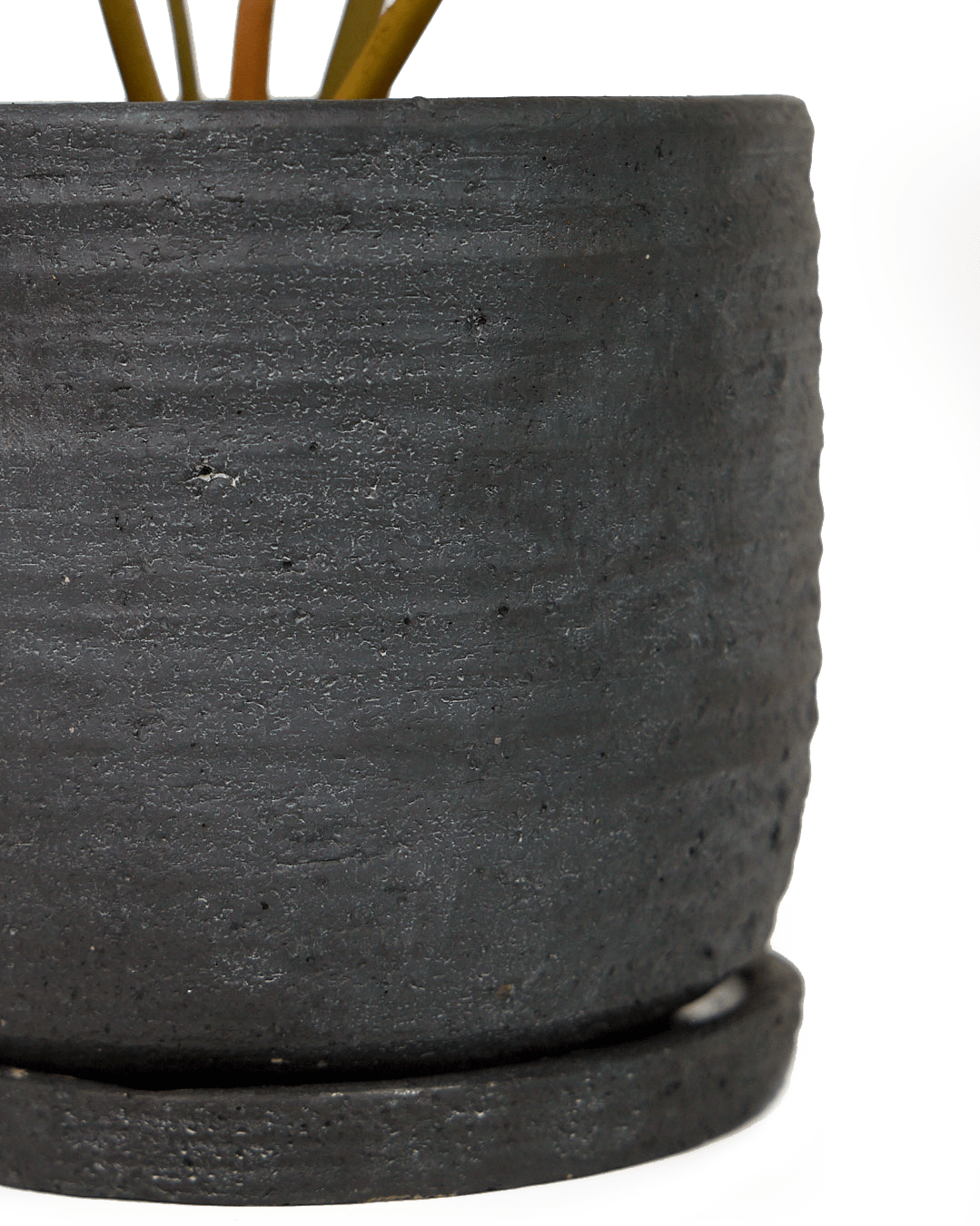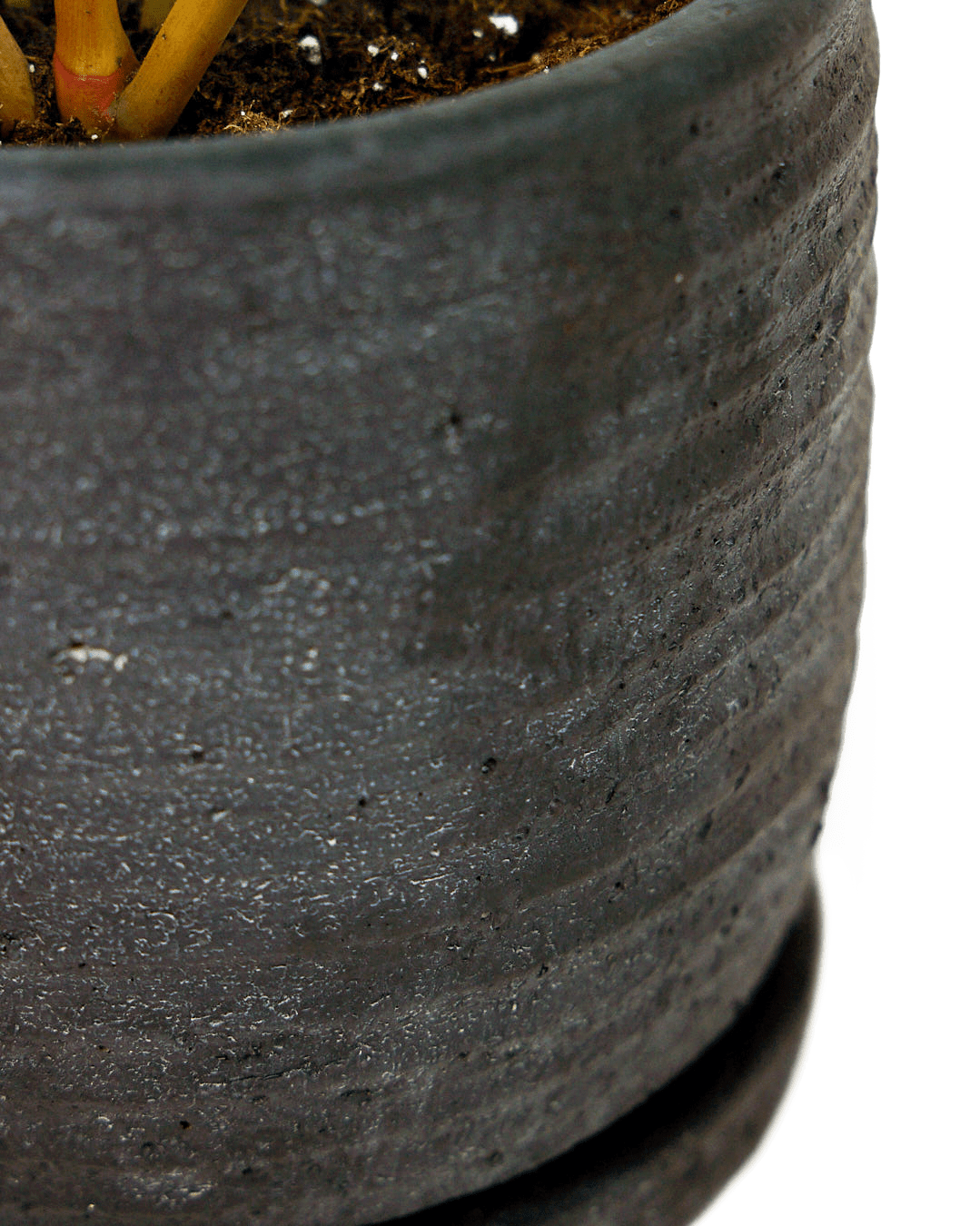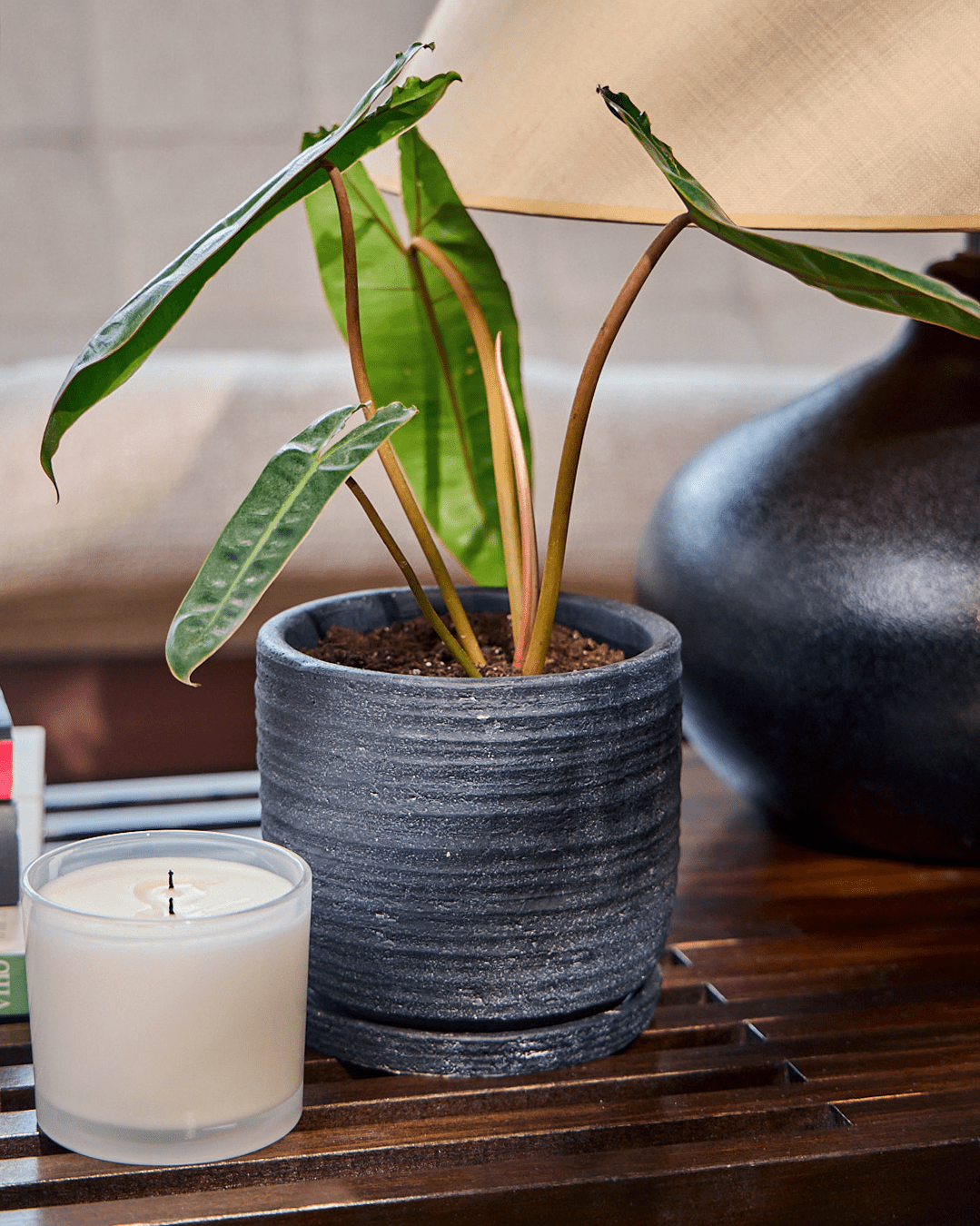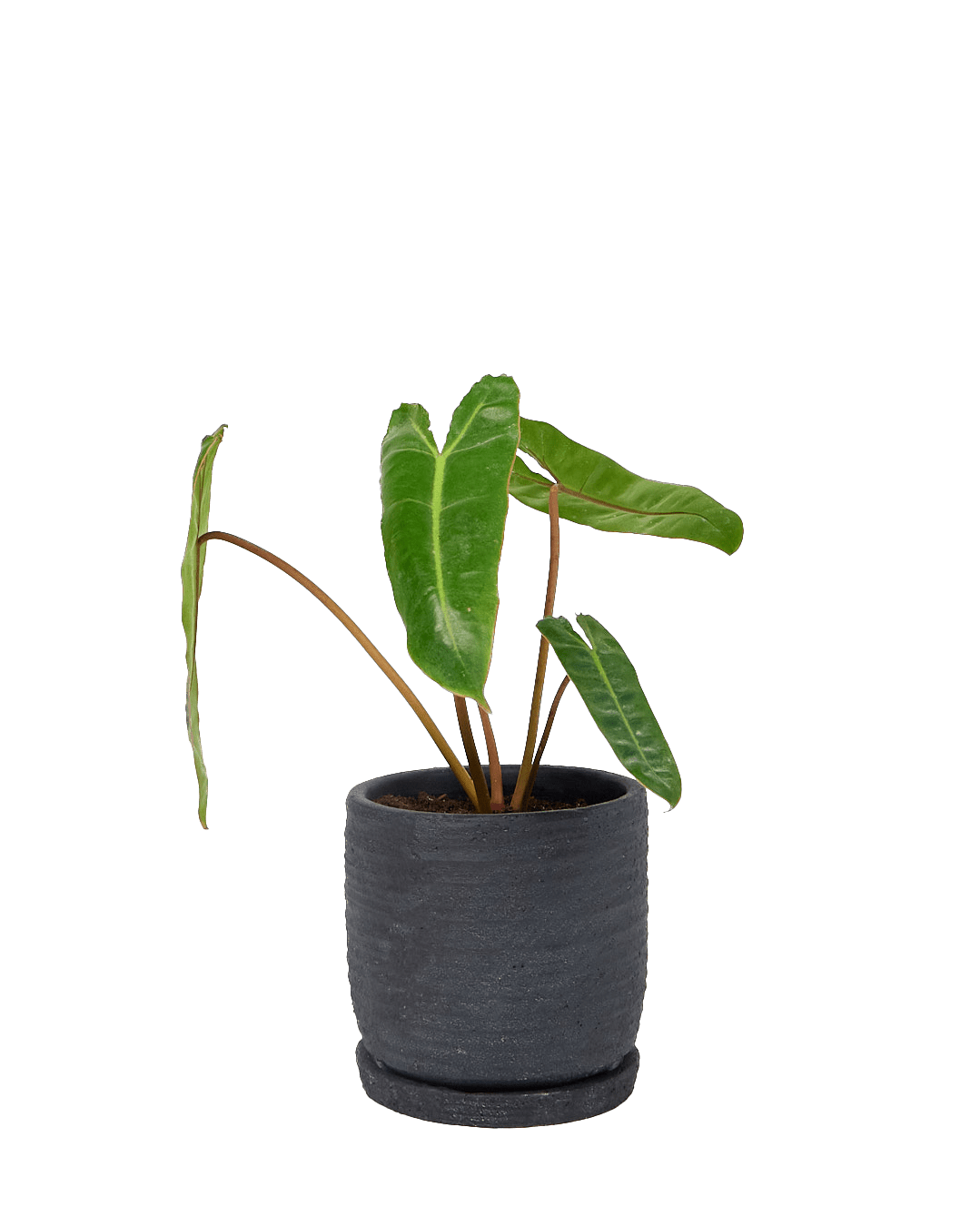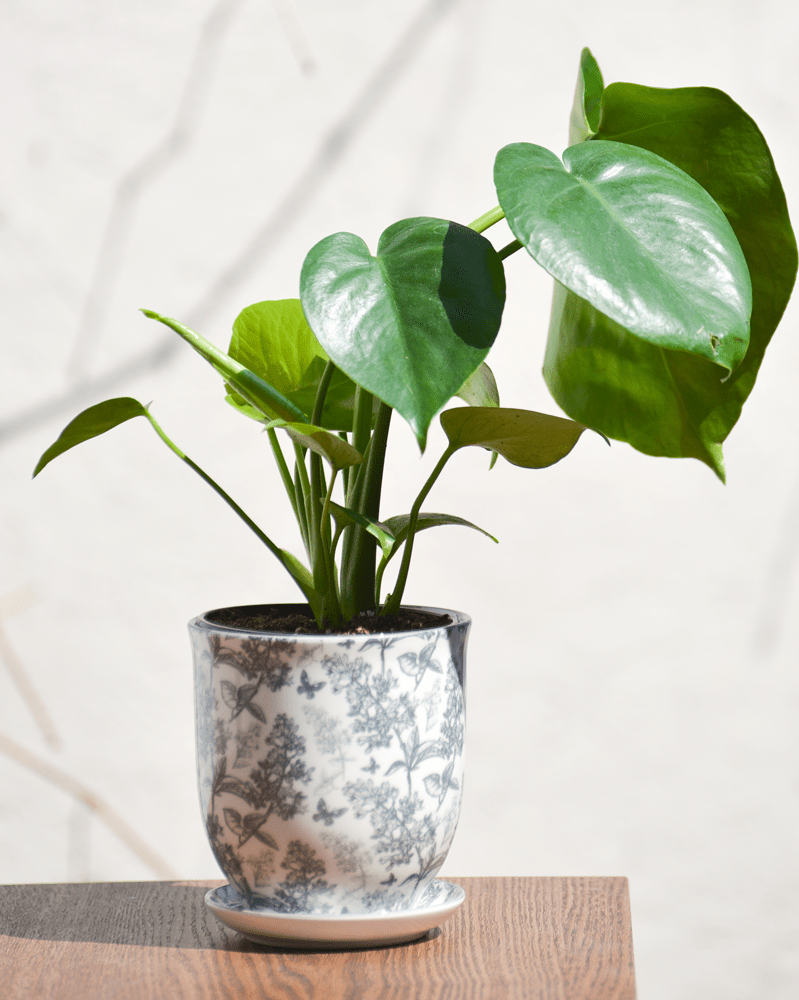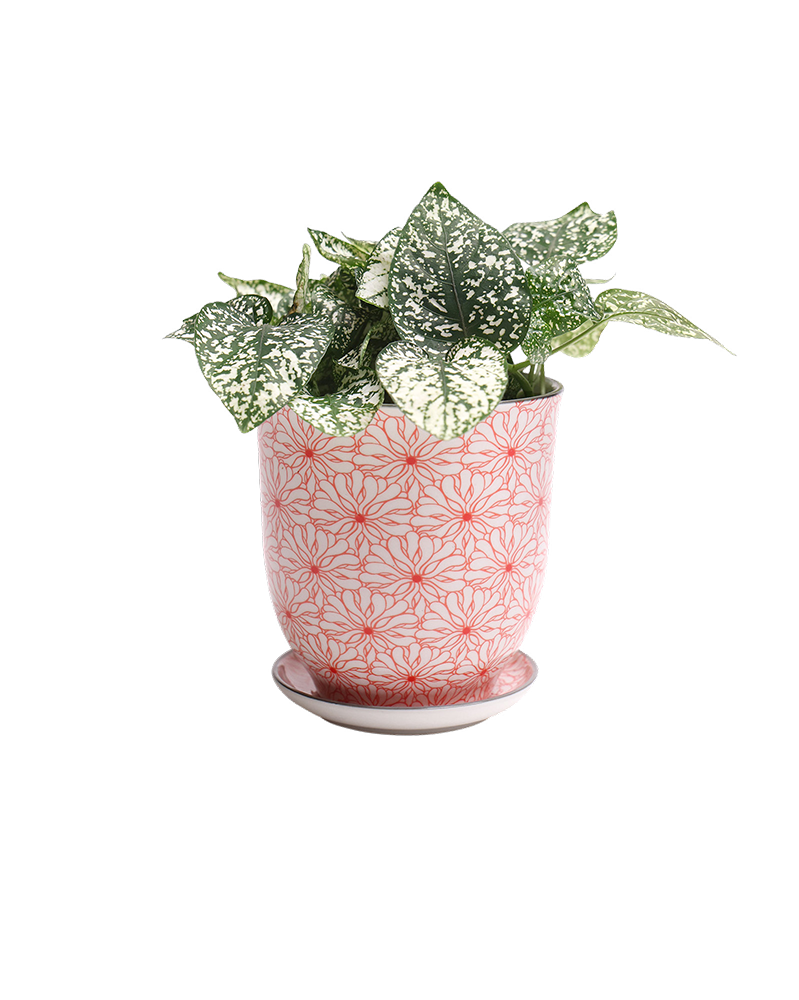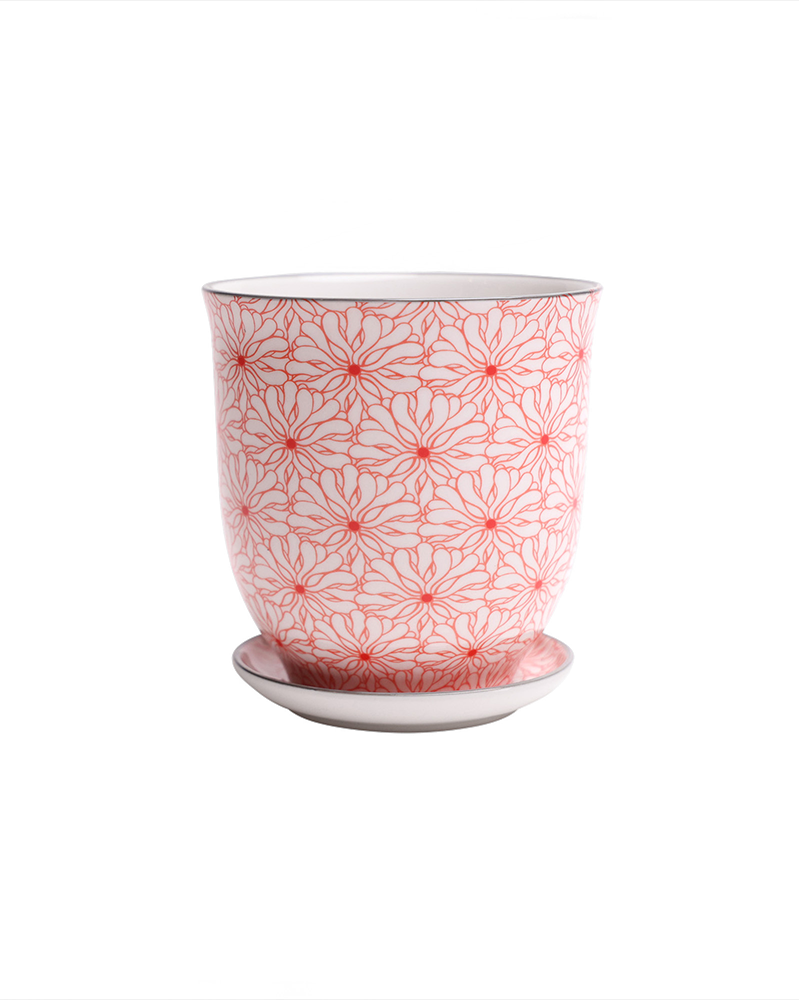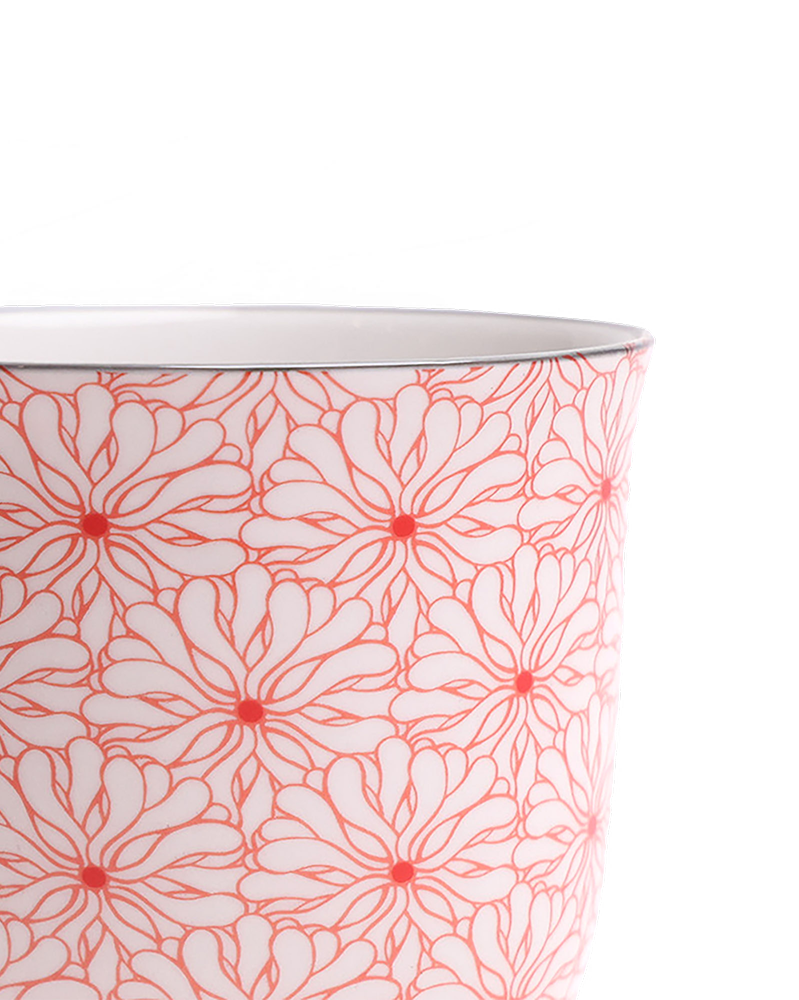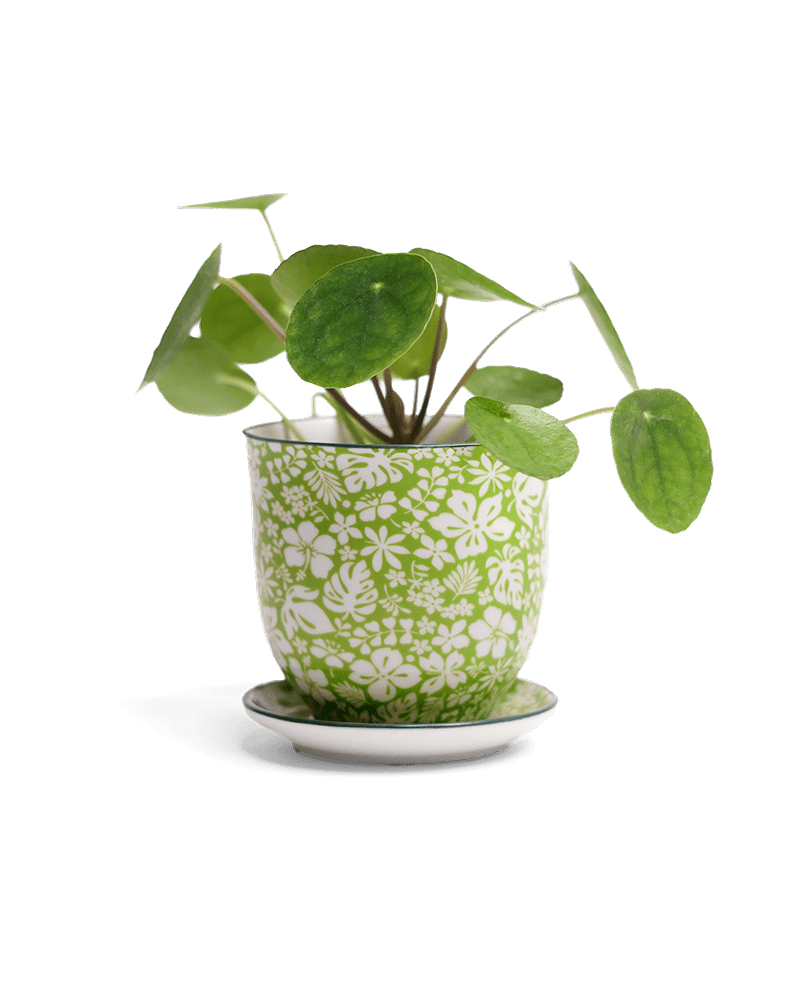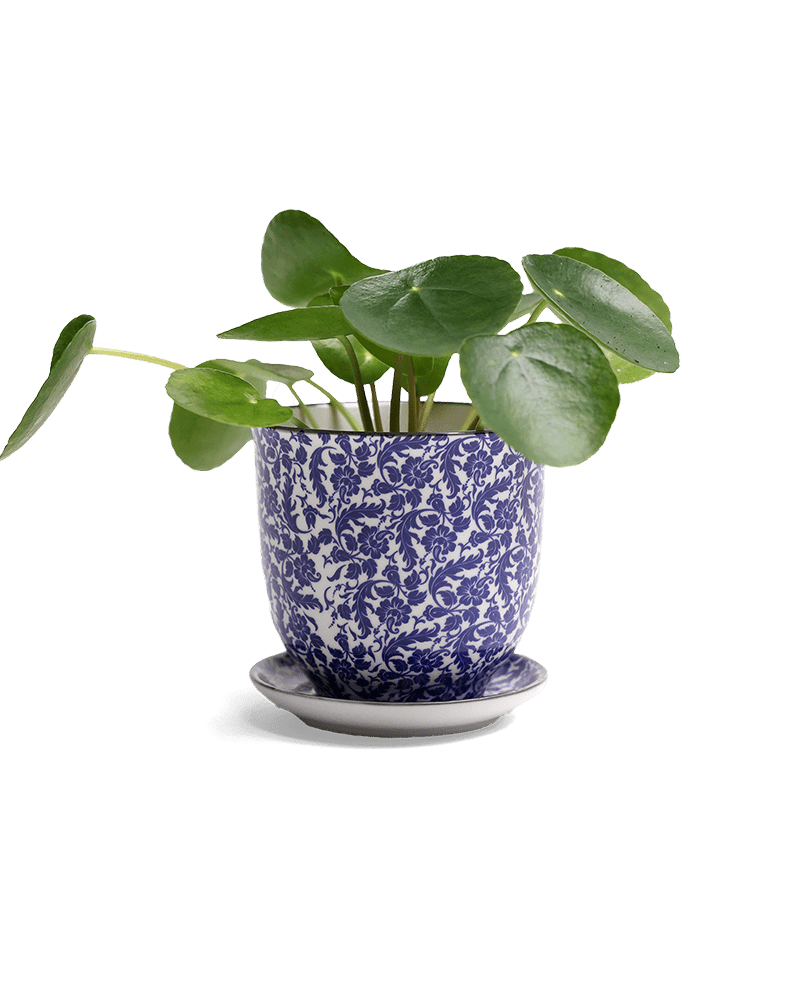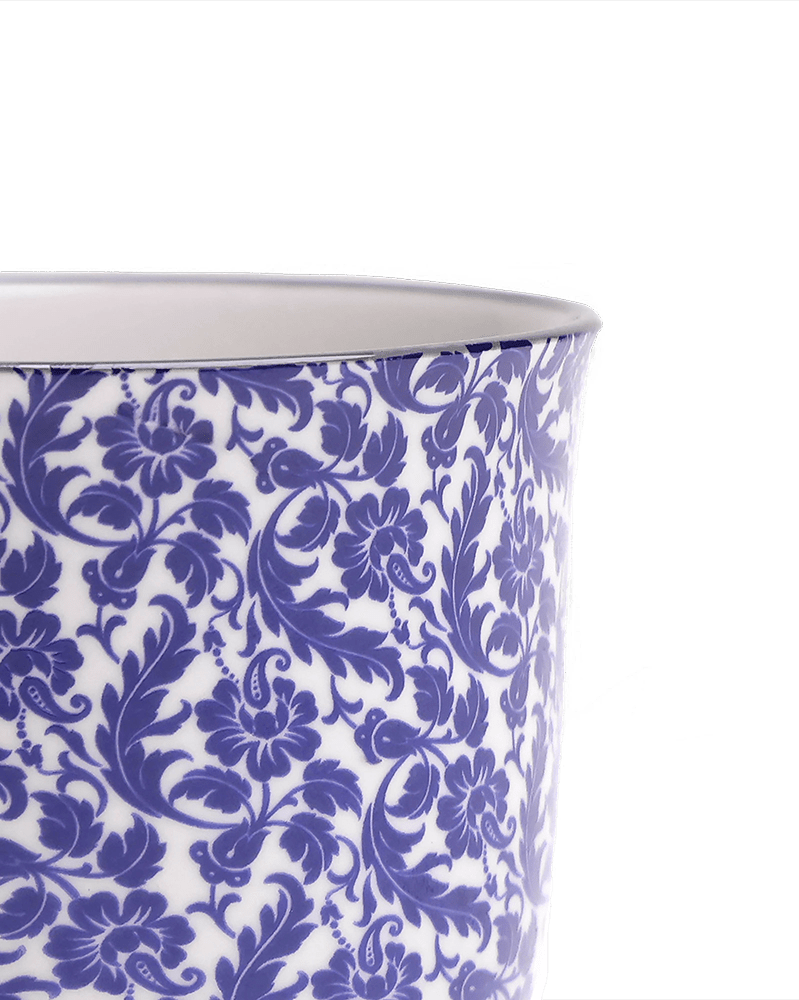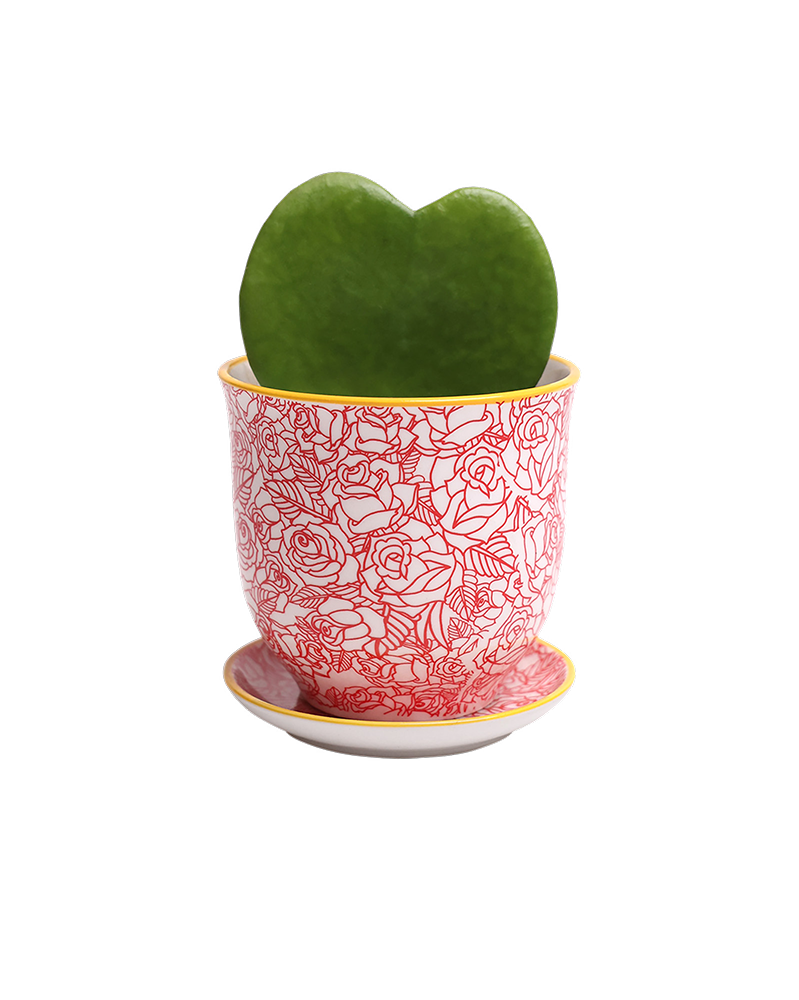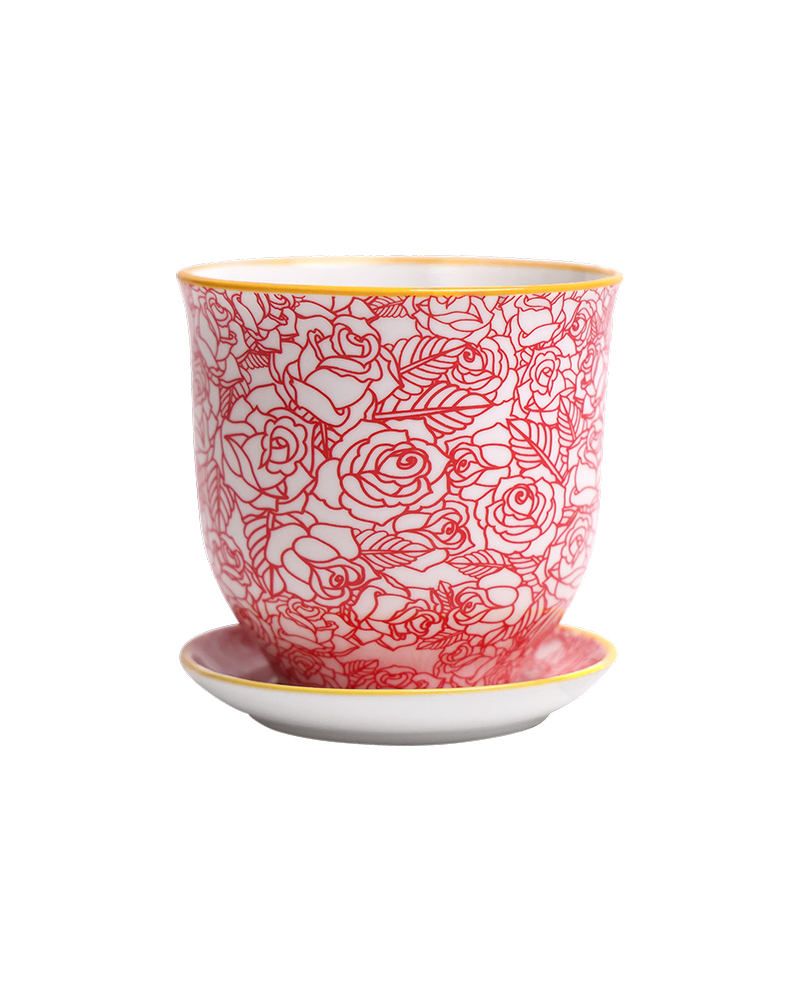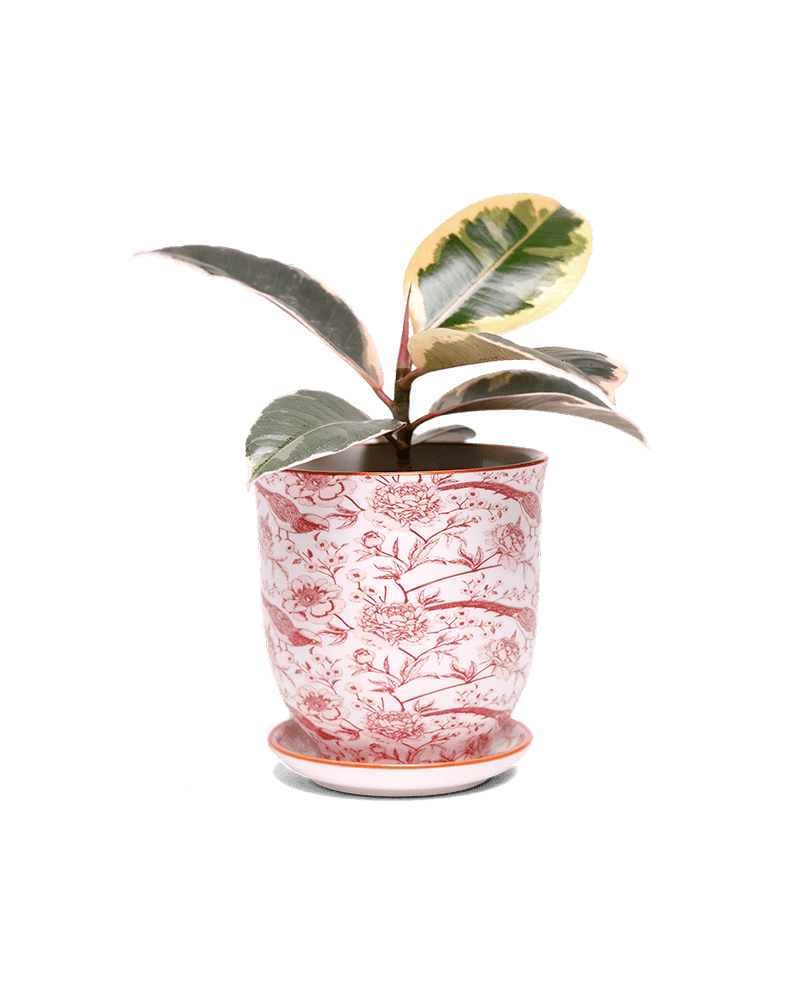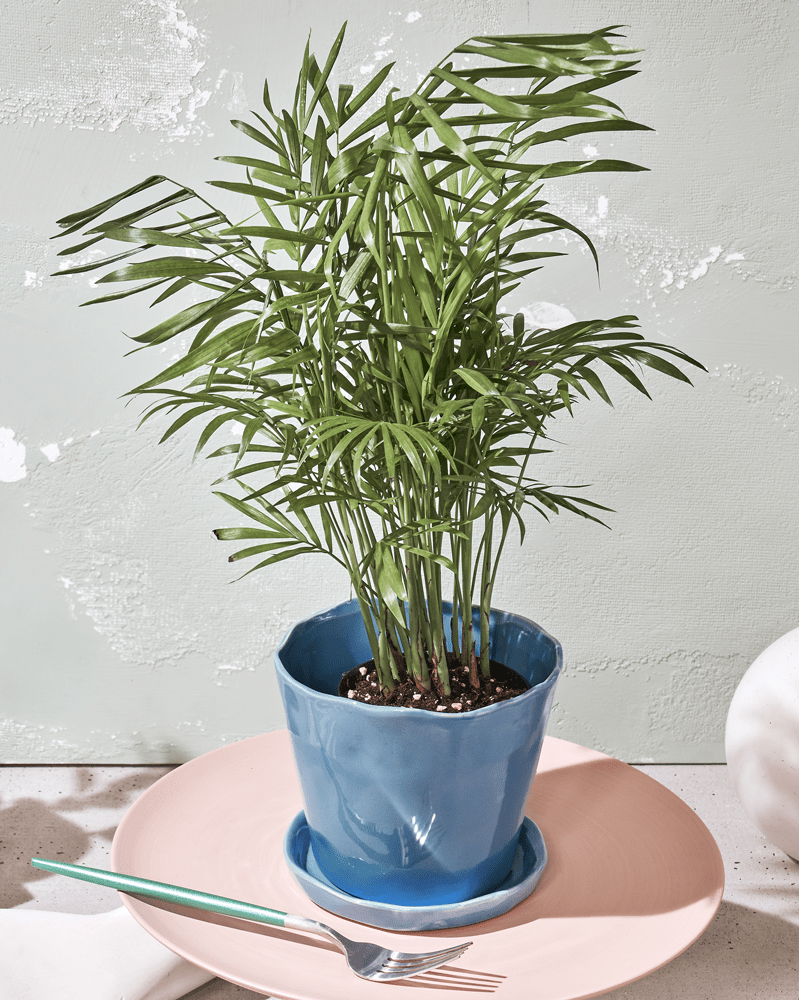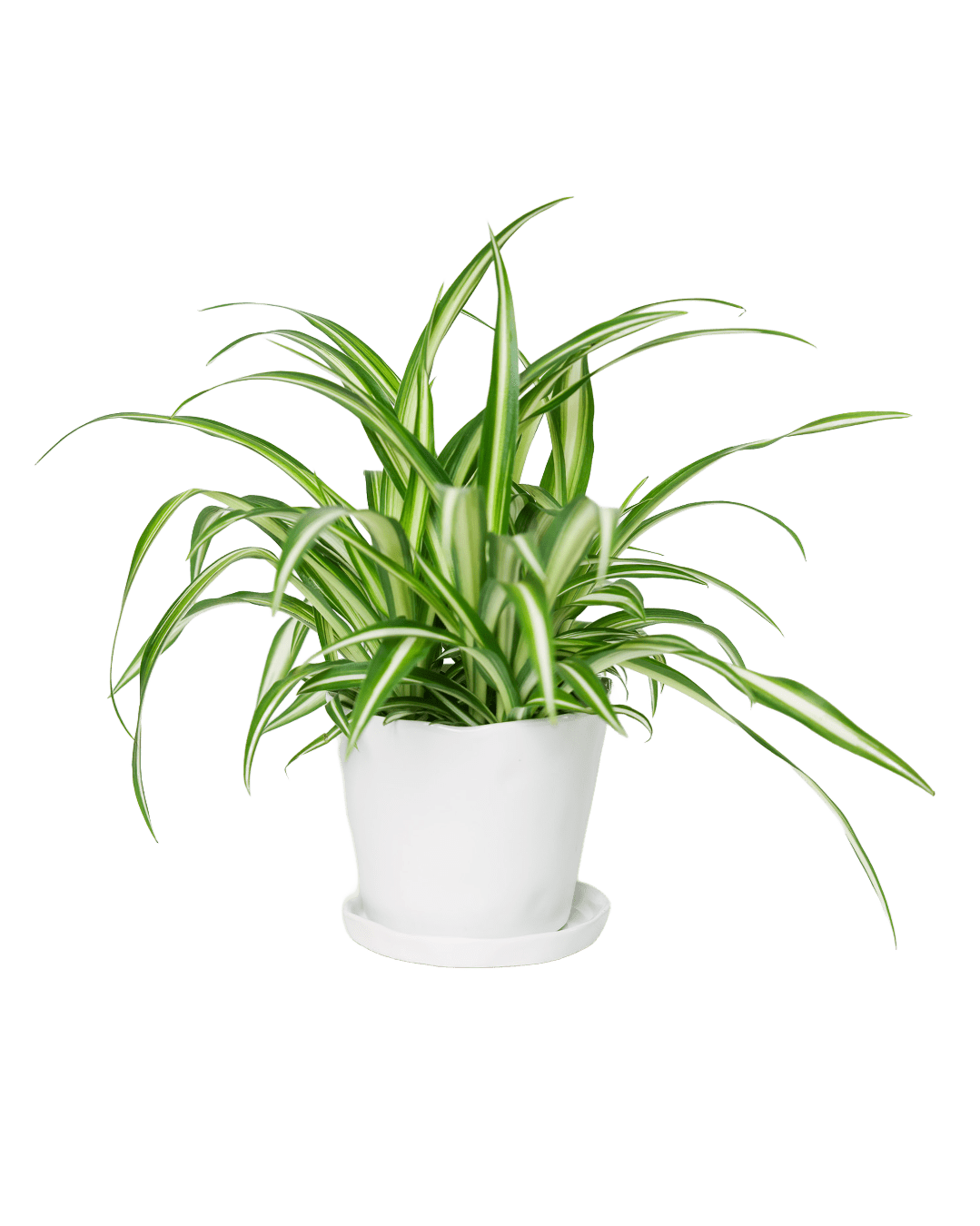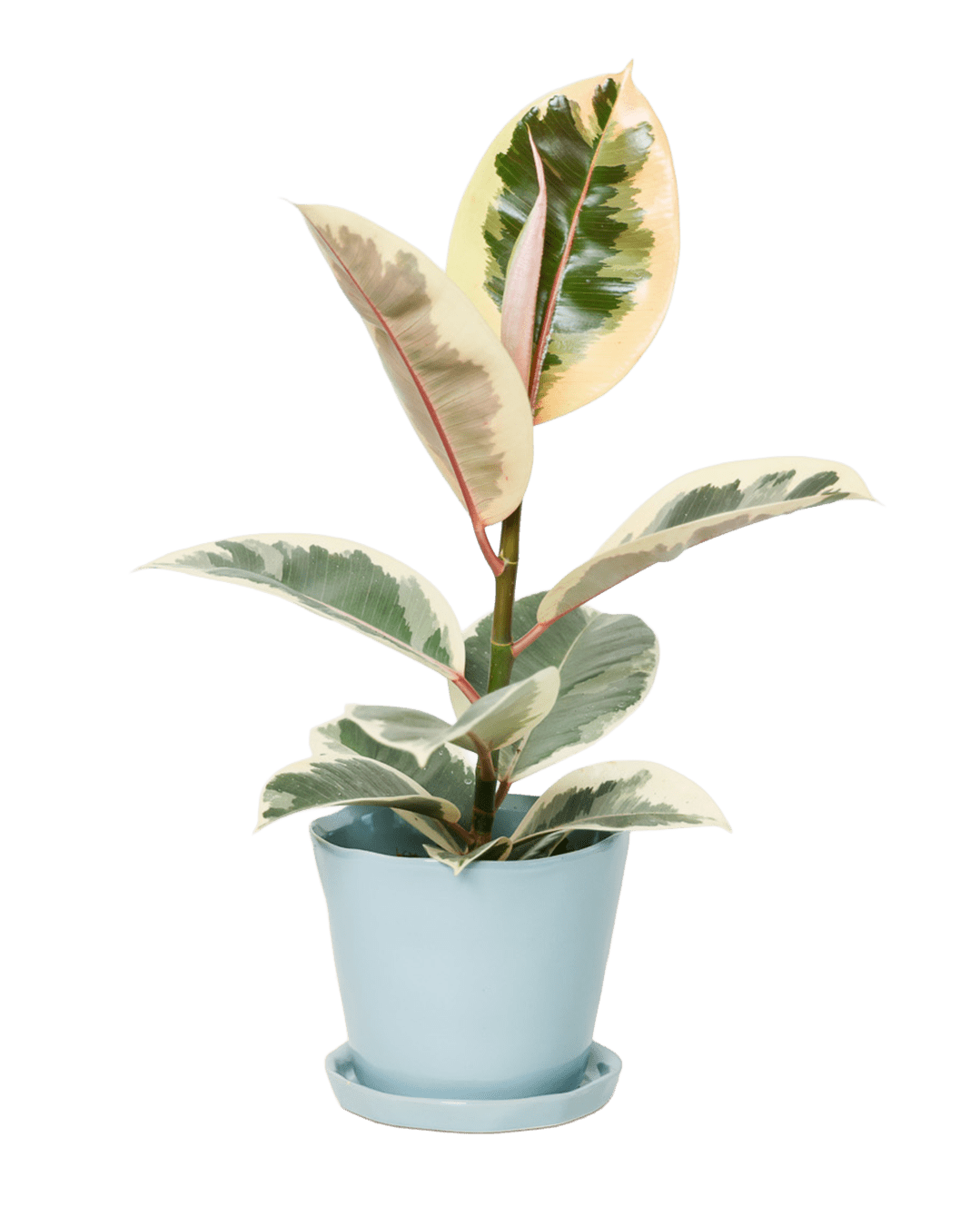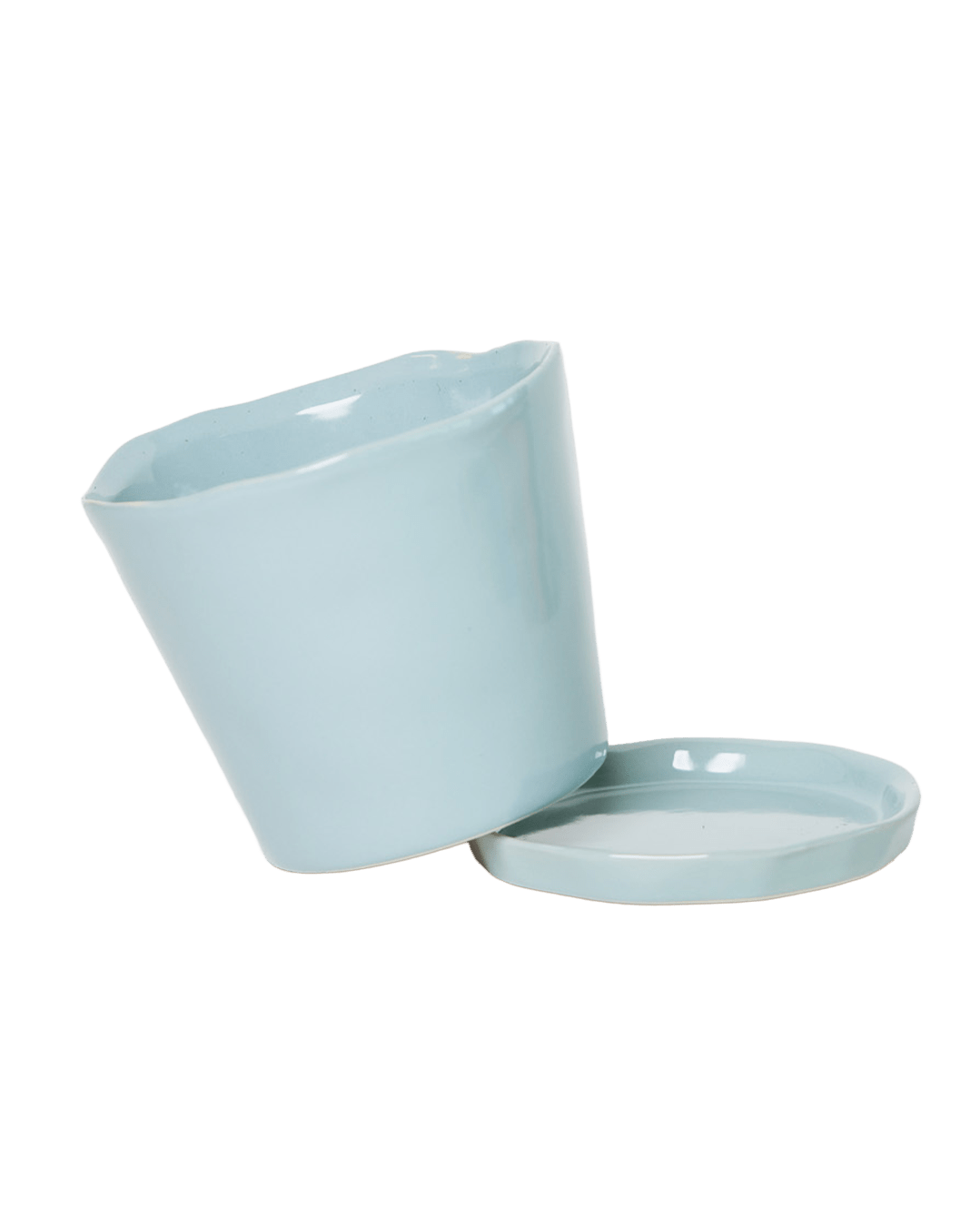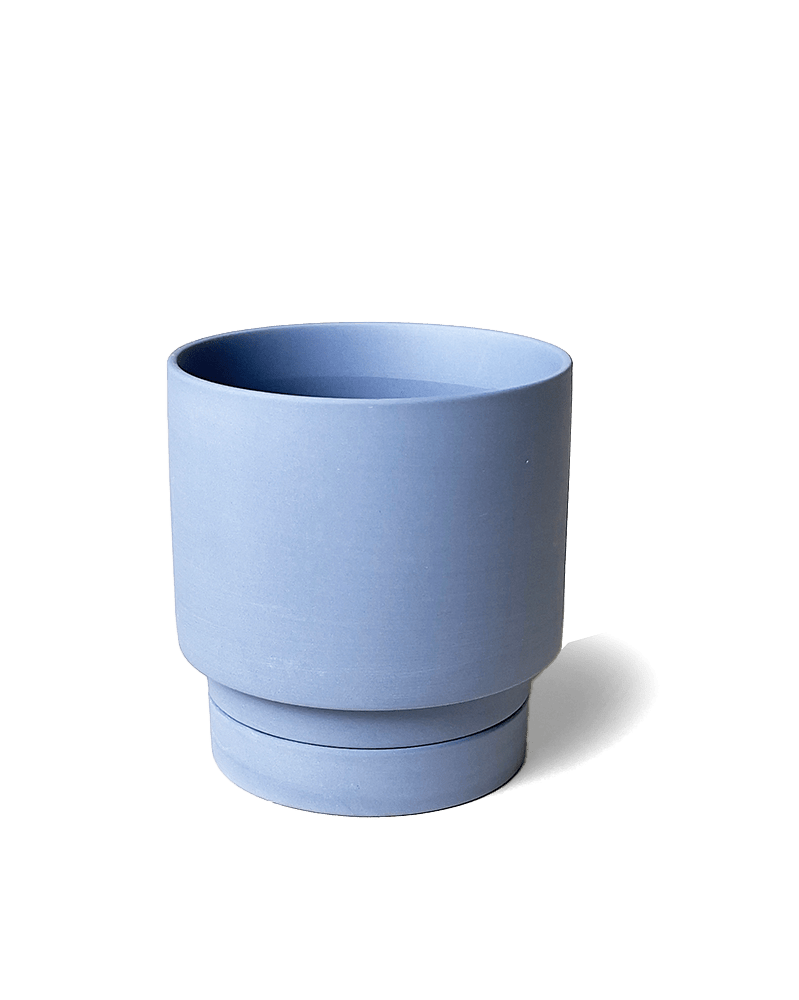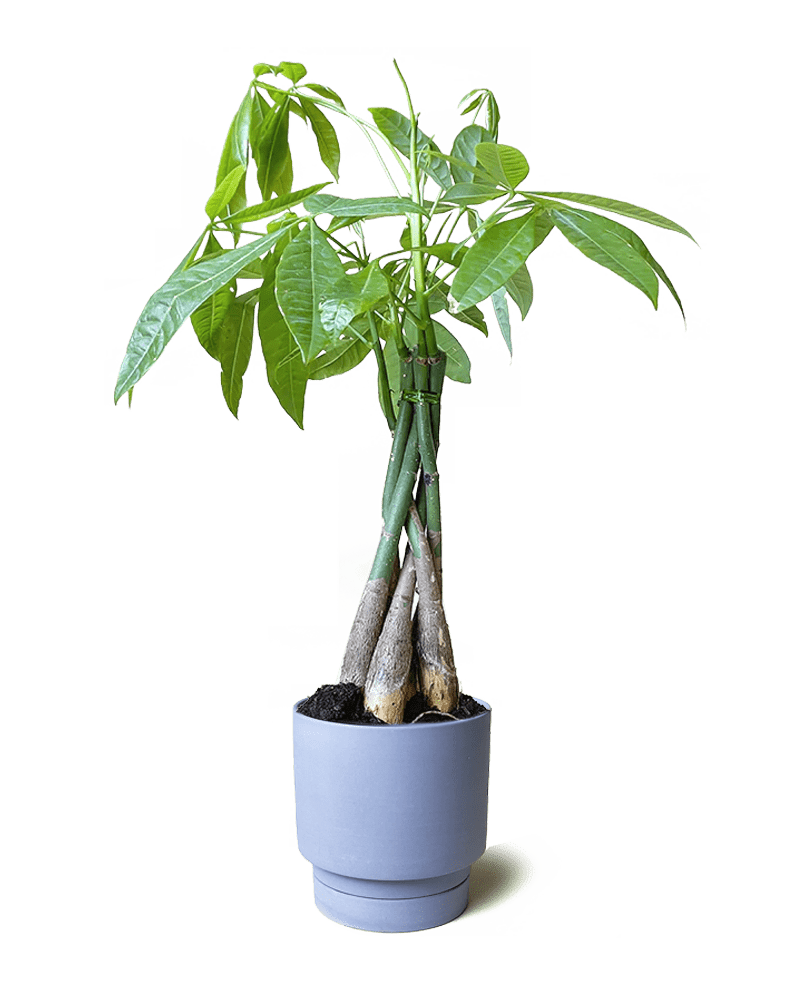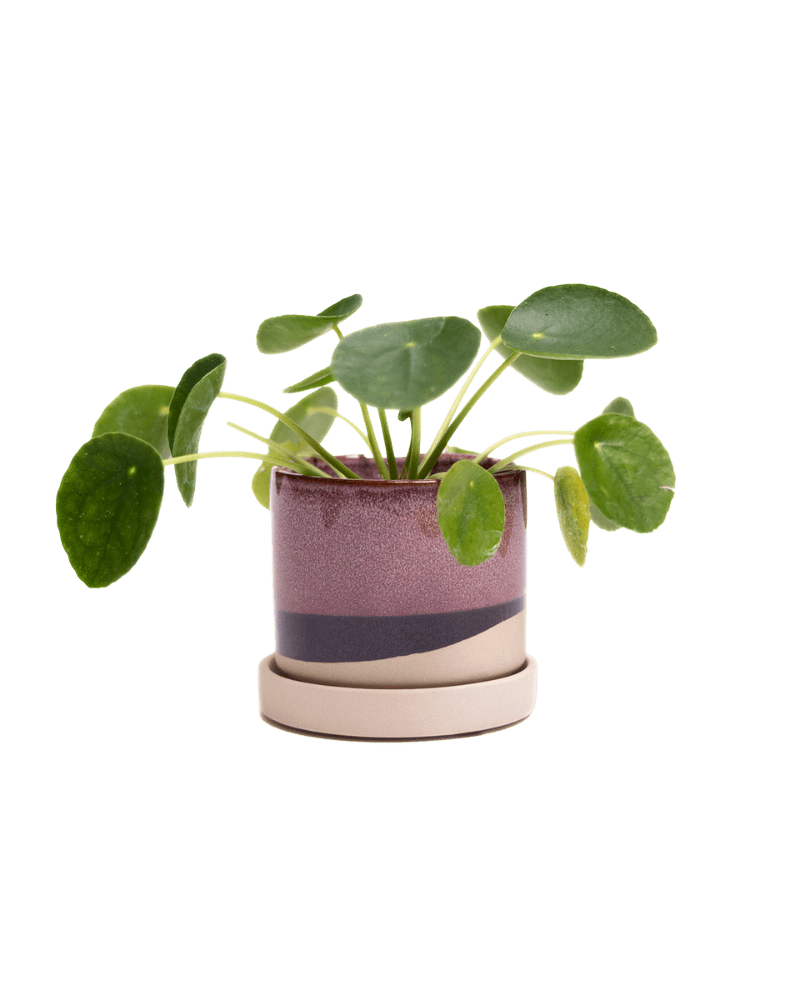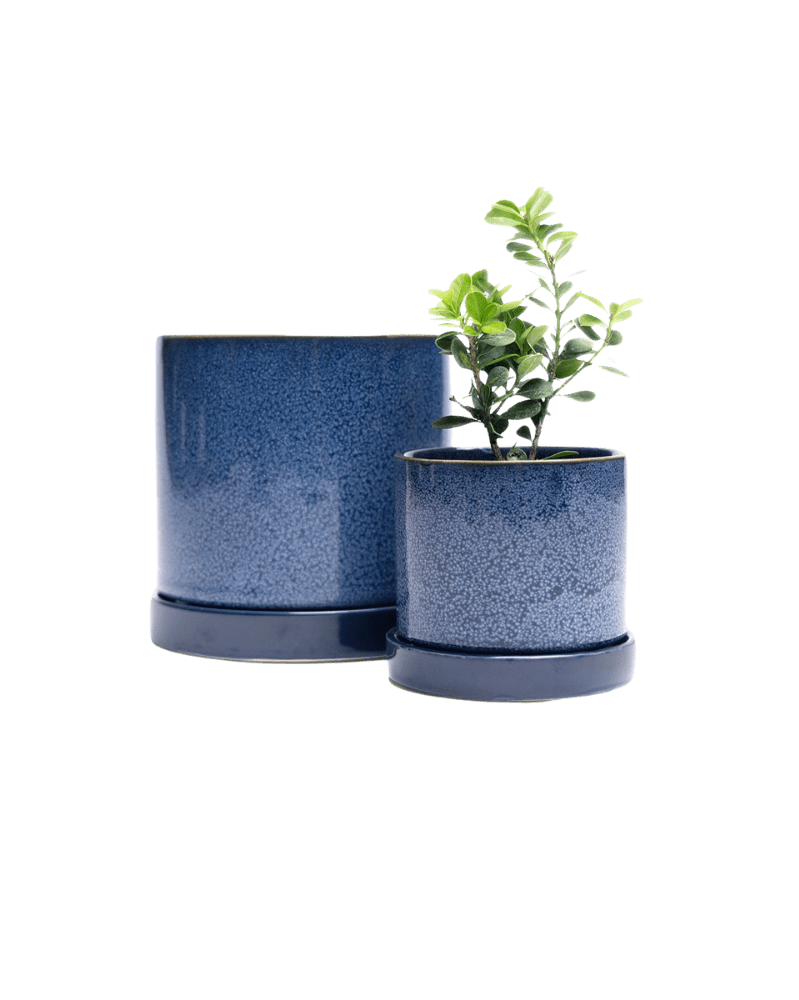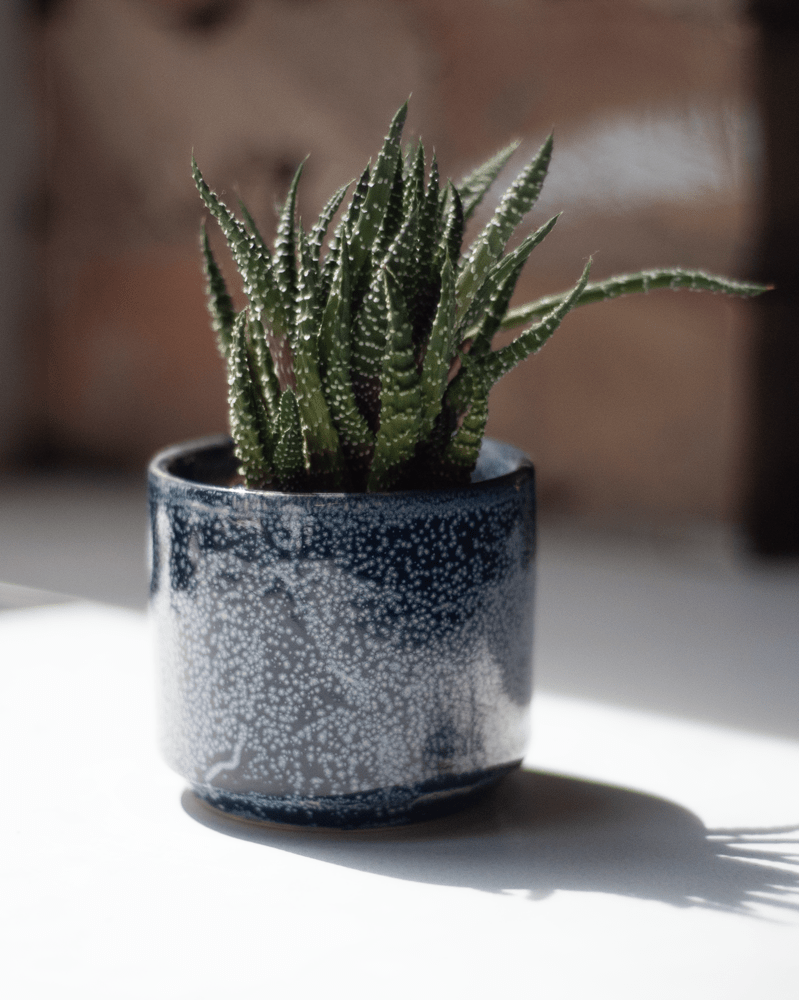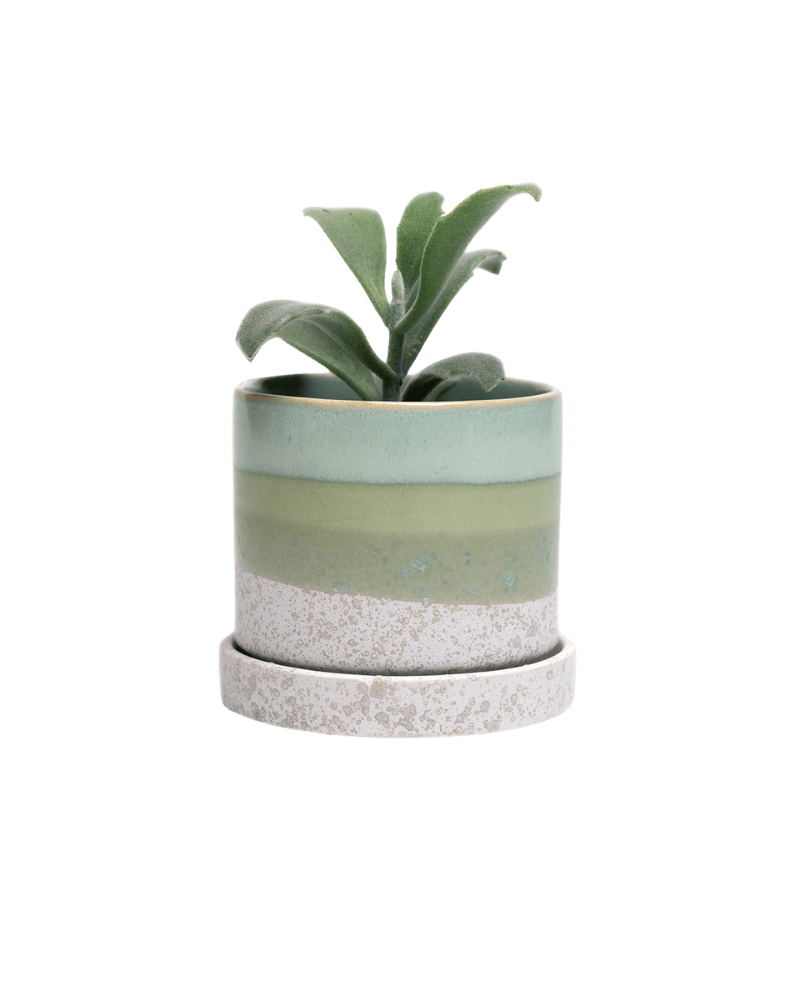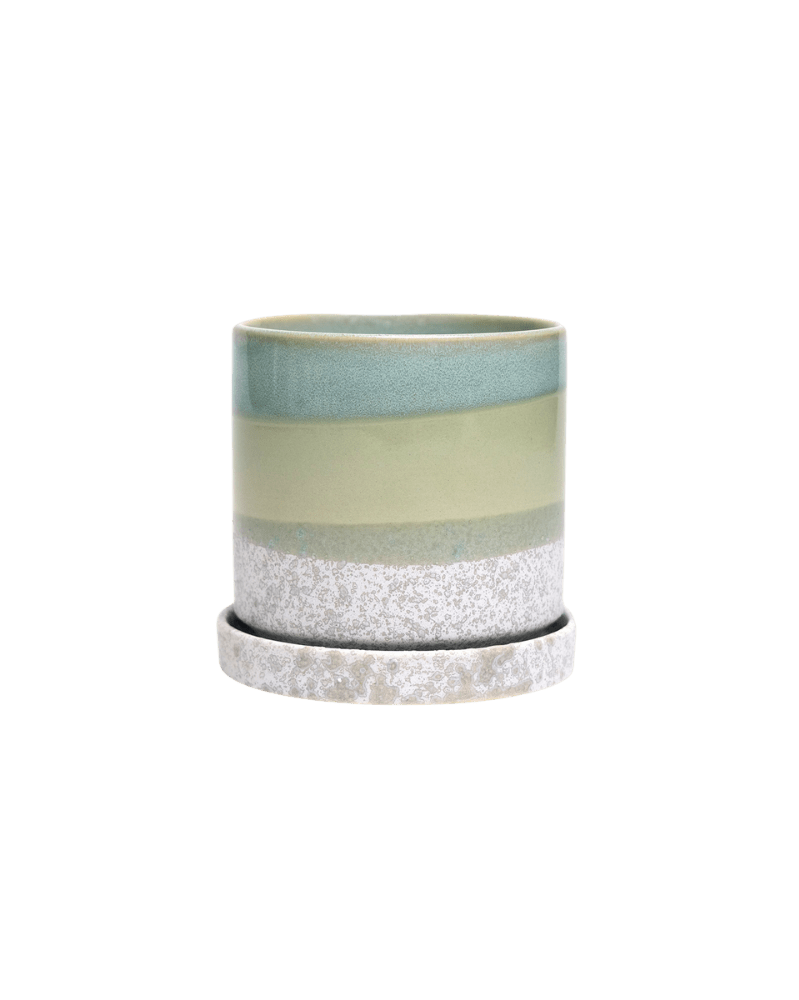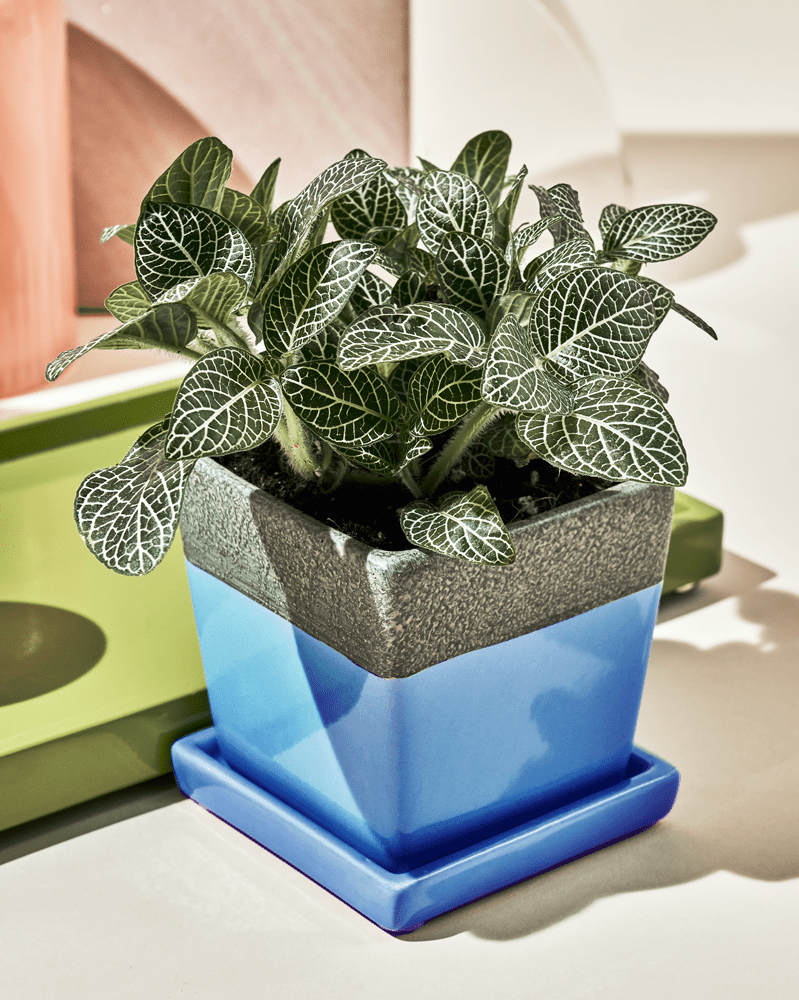


Peperomia plant care is straightforward, forgiving, and quietly one of the most rewarding relationships available in the houseplant world — not because the plant is dramatic, but because it is generous in a way that takes a few years to fully appreciate and then becomes something you plan your December around.
My girlfriend has been propagating peperomia off the same plant for six years. We want to be precise about the number because it matters to the story: approximately one hundred new plants from one original specimen, produced through leaf and stem cuttings with the reliability of something that has made propagation its primary contribution to the household and has no intention of stopping.
Every Christmas we arrive at gatherings with plants. This is the tradition. We find it genuinely meaningful — the idea that something that started as a single plant on a windowsill six years ago is now distributed across the homes of people we care about, connected by origin to the original plant which is still alive and still producing.
What surprises us is that nobody else has started this tradition. We have given away one hundred peperomia plants over six years and none of them have called to say they have started propagating and would like to bring plants to the next gathering. We have two theories about this. The first is that most people are waiting for someone else to start it. The second is that we are not entirely certain the plants survived the car journey in December, which in Toronto involves temperatures that peperomia finds objectionable, and the plants may have arrived at their destinations already committed to a bad outcome. We are choosing not to investigate this theory too carefully.
Peperomia plant care summary: Medium to bright indirect light from a north or east-facing window. Water thoroughly only when soil has dried out completely — not mostly, completely. Temperatures between 65 and 80°F, away from cold drafts and heating vents. Monthly fertilizer in spring and summer, nothing in fall and winter. A small pot with genuine drainage sized to the root system, and the restraint to let the soil dry fully between waterings.

How to Care for Your Peperomia
Light should be medium to bright indirect — a north or east-facing window works well. The peperomia does not need high light to thrive, which is one of the qualities that makes it a genuinely useful houseplant. In lower light it grows more slowly and variegated varieties may lose some of their pattern definition, but it will not punish you for a less-than-ideal position.
Watering is where the peperomia's one genuine requirement lives. It stores water in its thick leaves and wants its soil to dry out completely between waterings. Not mostly dry. Completely dry. Overwatering causes root rot faster than you expect and presents as wilting and yellowing leaves that look like underwatering and cause well-meaning people to water more, which is the exact wrong response.
Temperature between 65 and 80 degrees Fahrenheit. Away from cold drafts and heating vents. The peperomia is not particularly fussy about temperature within this range. — Chive Studio
Fertilize once a month through spring and summer with a diluted balanced fertilizer. Stop in fall and winter.

How to Propagate Peperomia
Propagating peperomia is the simplest large-scale propagation project available in the houseplant world and the one most likely to result in you showing up to Christmas with more plants than you intended to bring.
Take a healthy leaf with its stem, allow the cut end to callous for a day, and place it in moist well-draining propagation mix or a small glass of water. Roots appear within two to four weeks. New plantlets emerge from the base of the leaf stem within six to eight weeks and can be separated when they have three or four leaves of their own. One healthy peperomia produces dozens of cuttings per year without any visible inconvenience to the original plant.
Starting your propagation practice
- Take a healthy leaf with its stem and allow the cut end to callous for a day before placing in propagation mix or water
- Roots appear in two to four weeks; new plantlets emerge from the base of the stem in six to eight weeks
- Stem cuttings work equally well — three to four inches with two or three leaves, cut end calloused, placed in water or propagation mix
- Separate new plantlets when they have three or four leaves of their own — before that they are still drawing from the original leaf
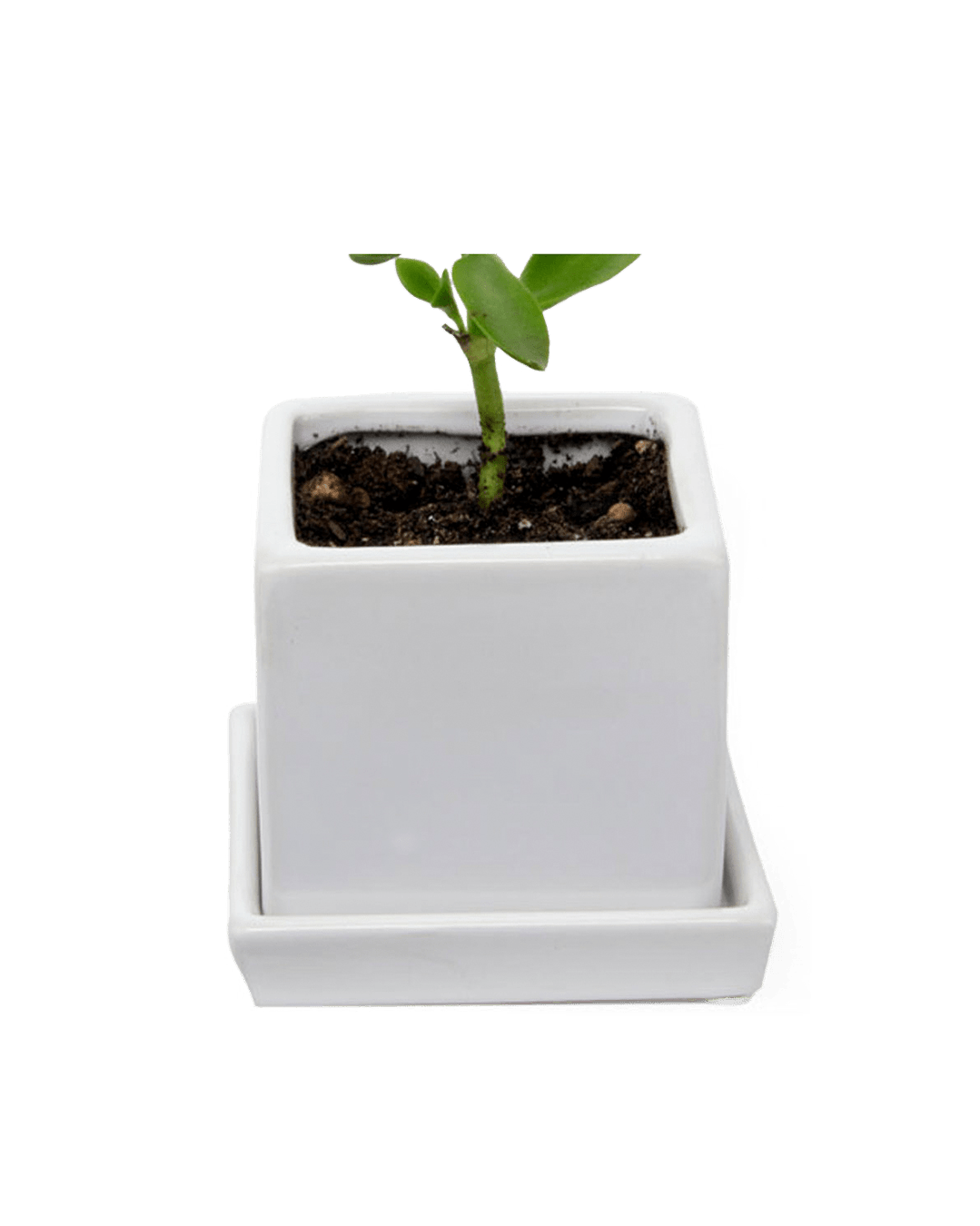
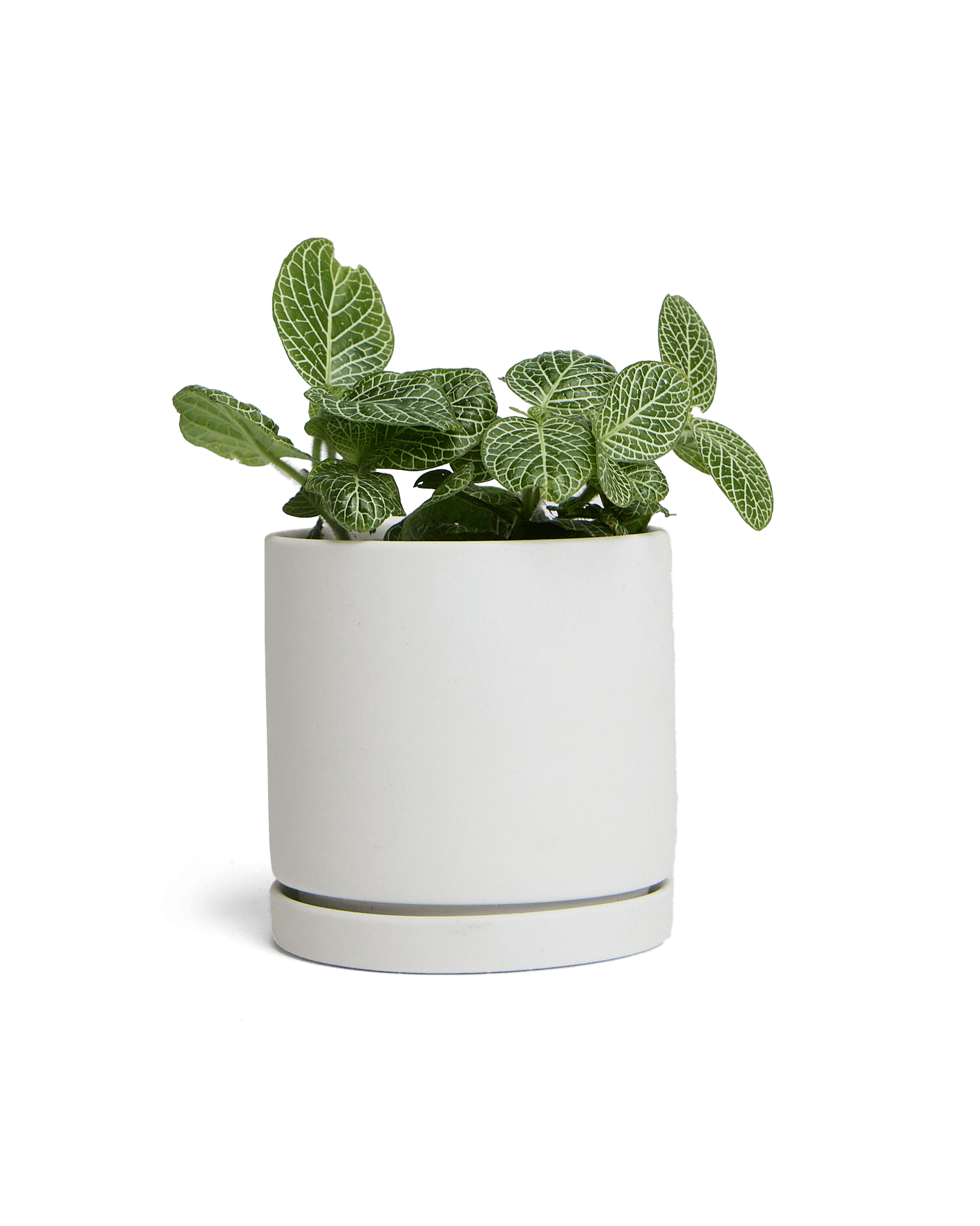
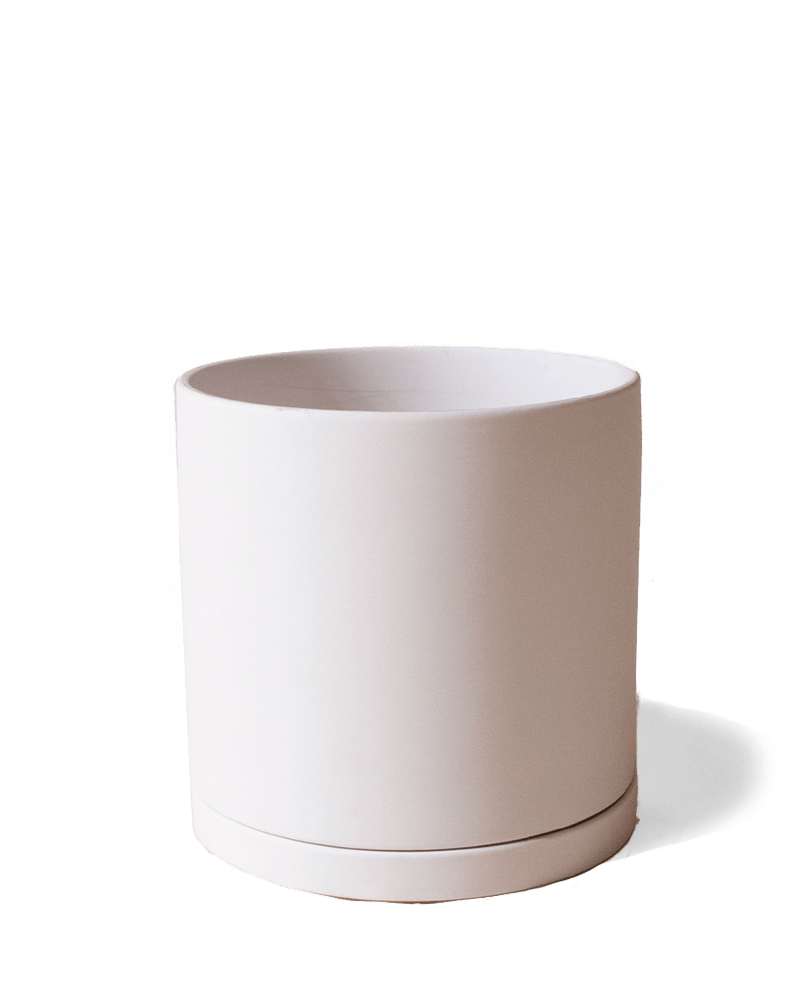
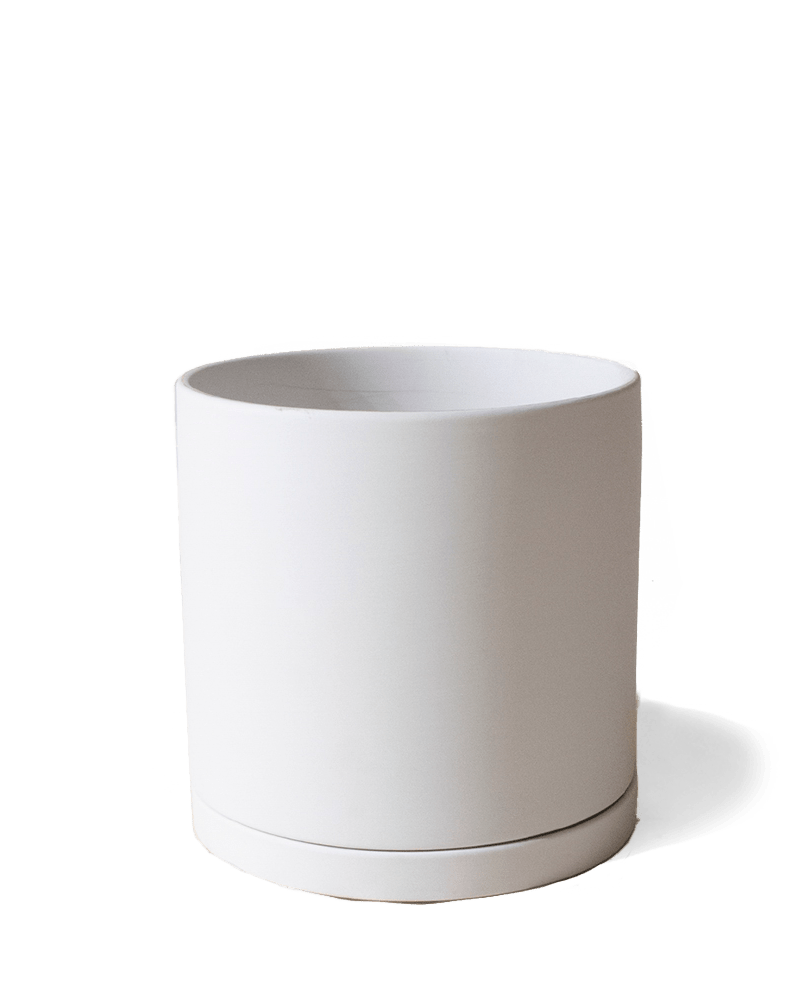
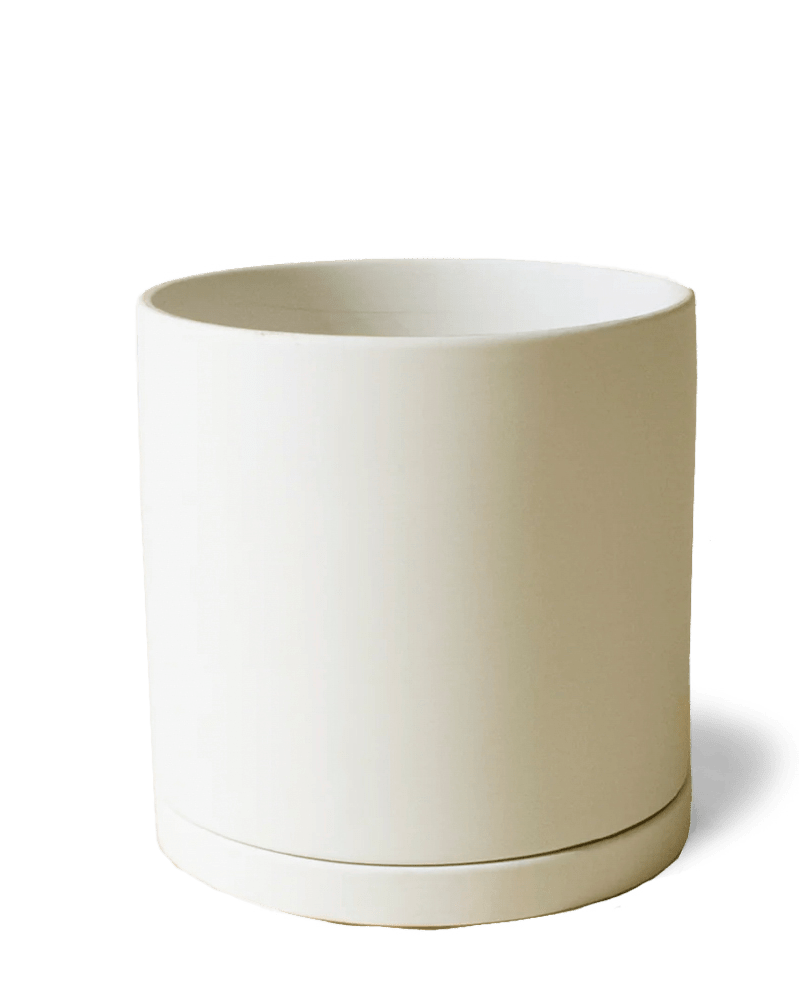
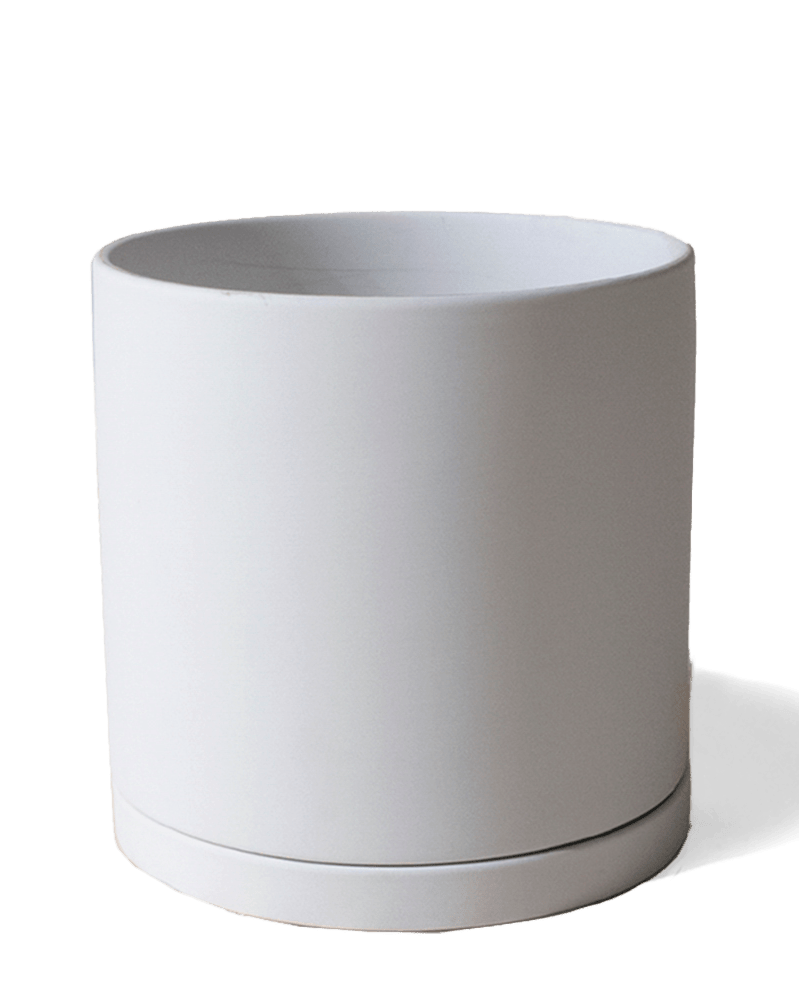
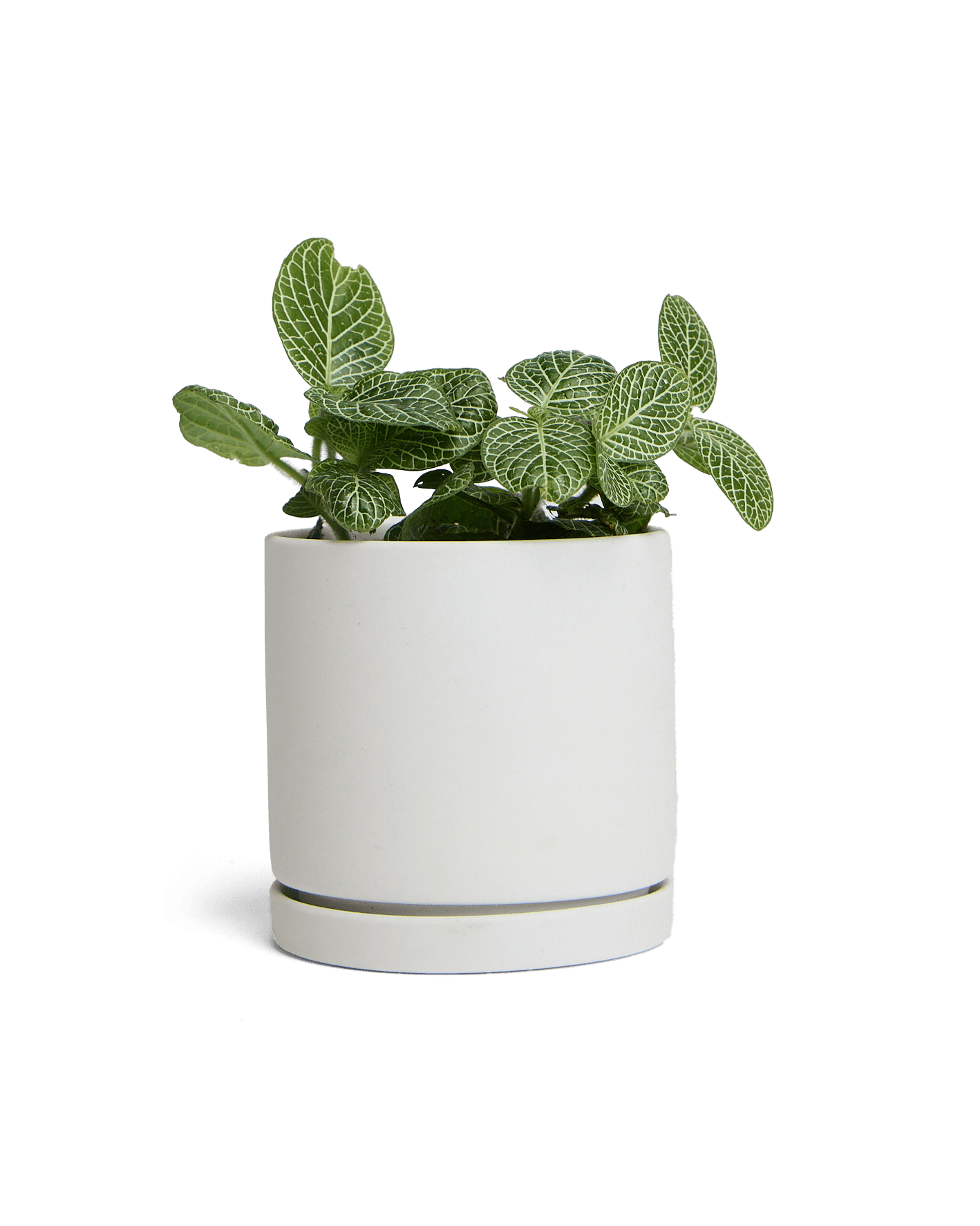
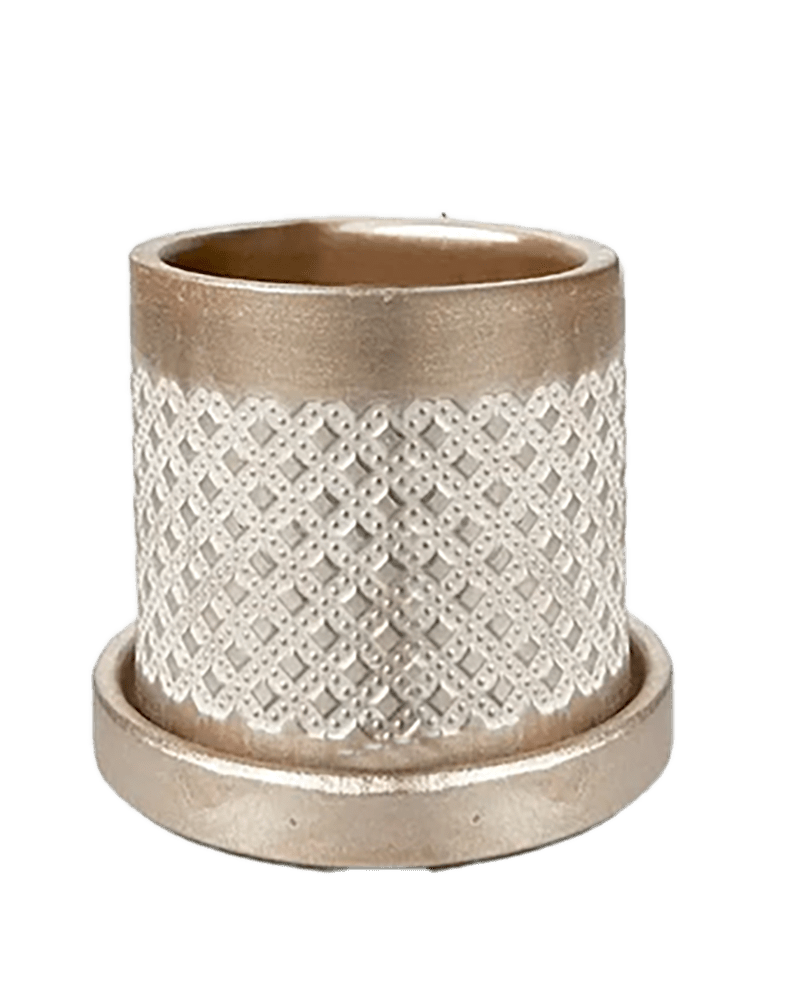
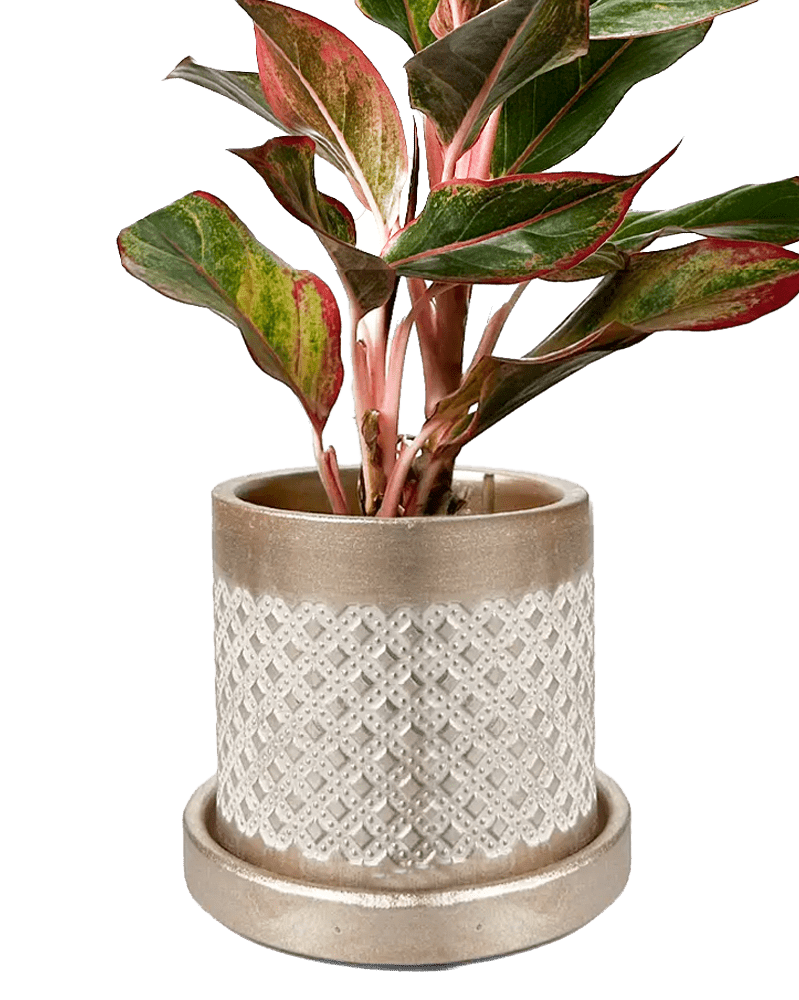
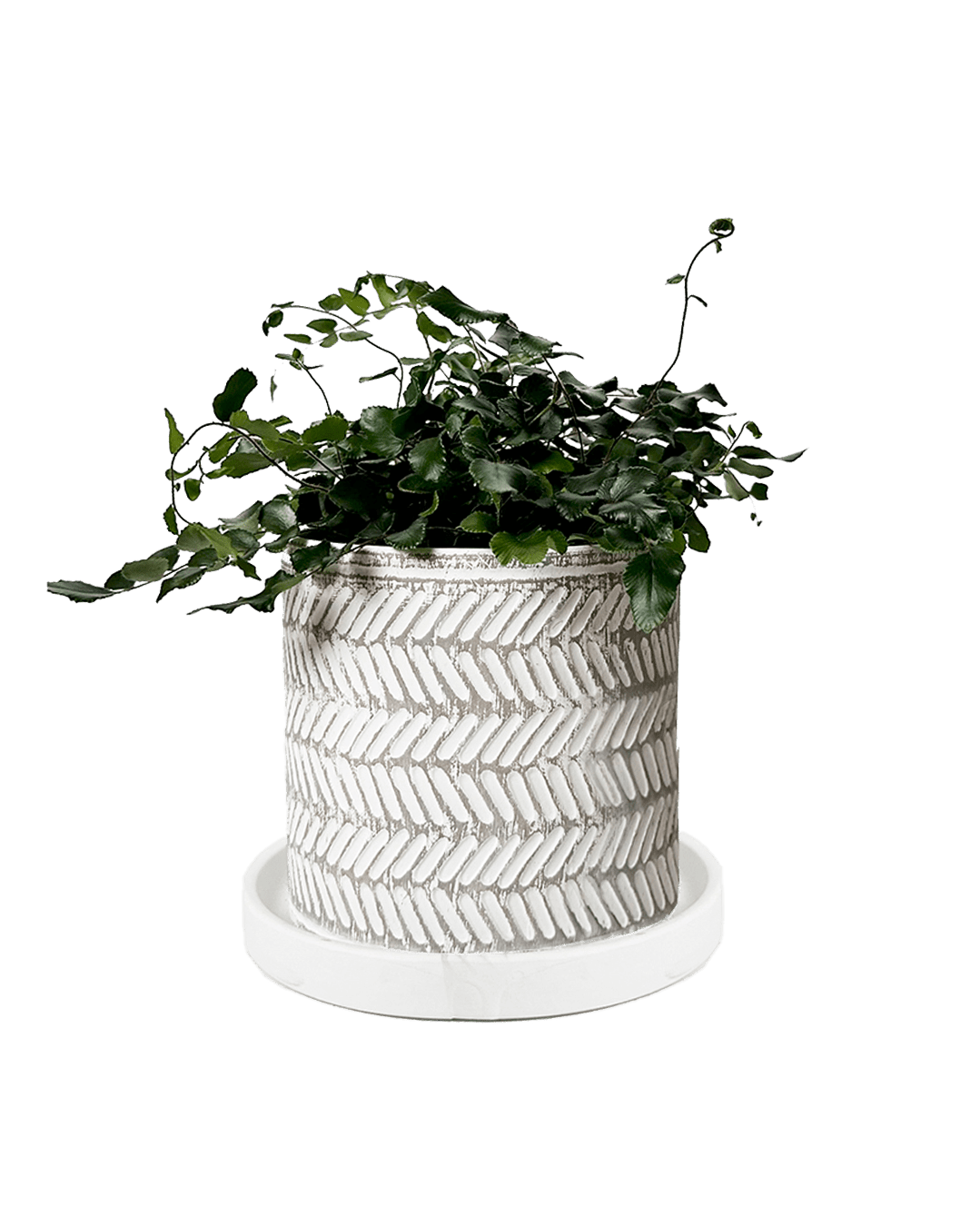
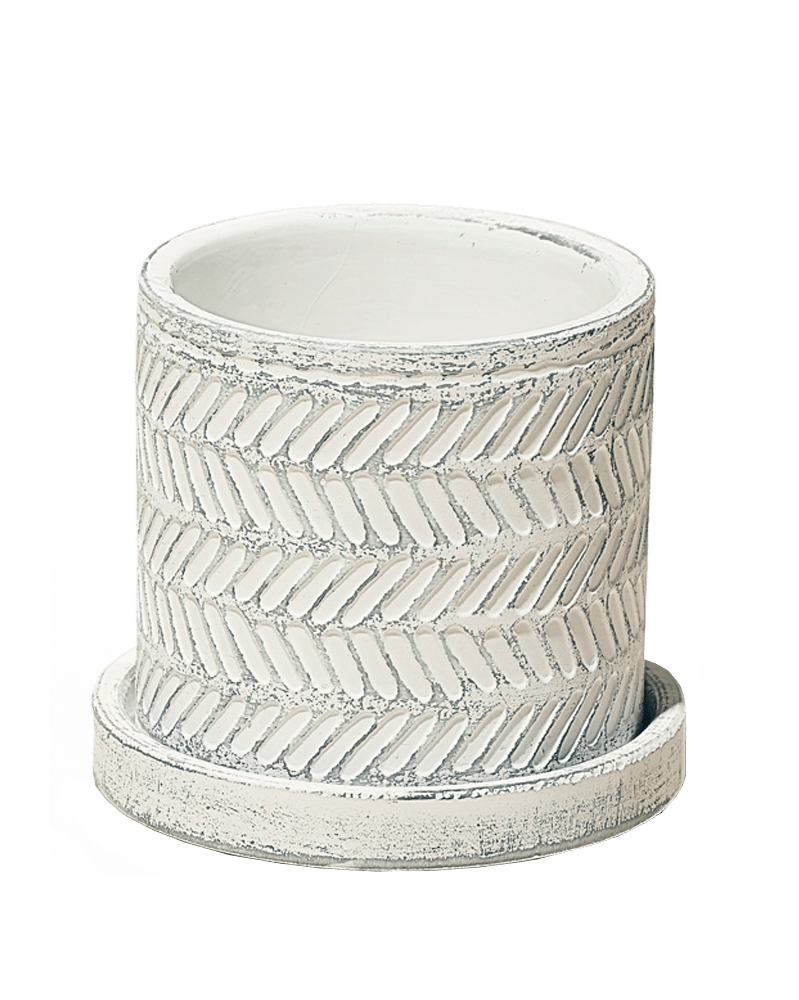
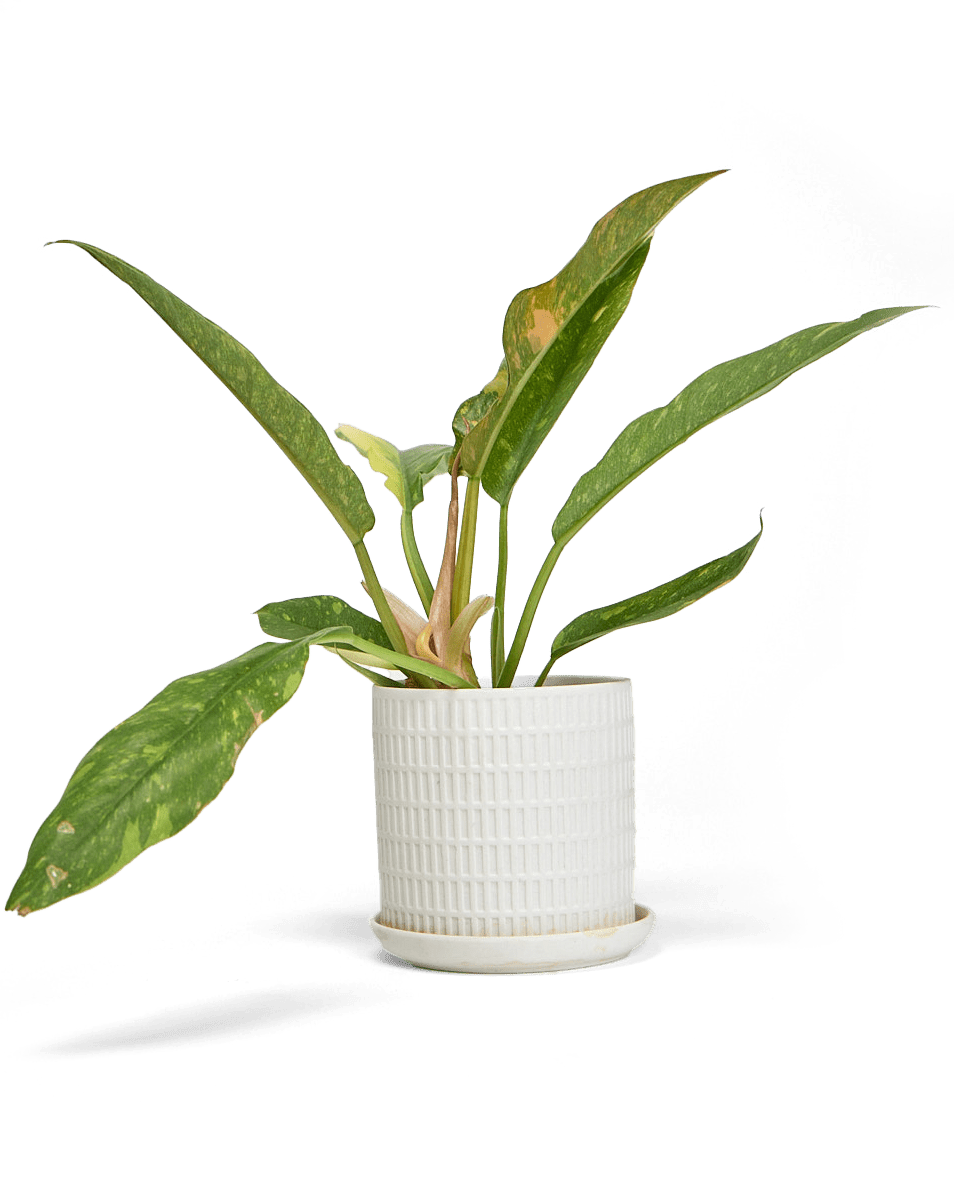
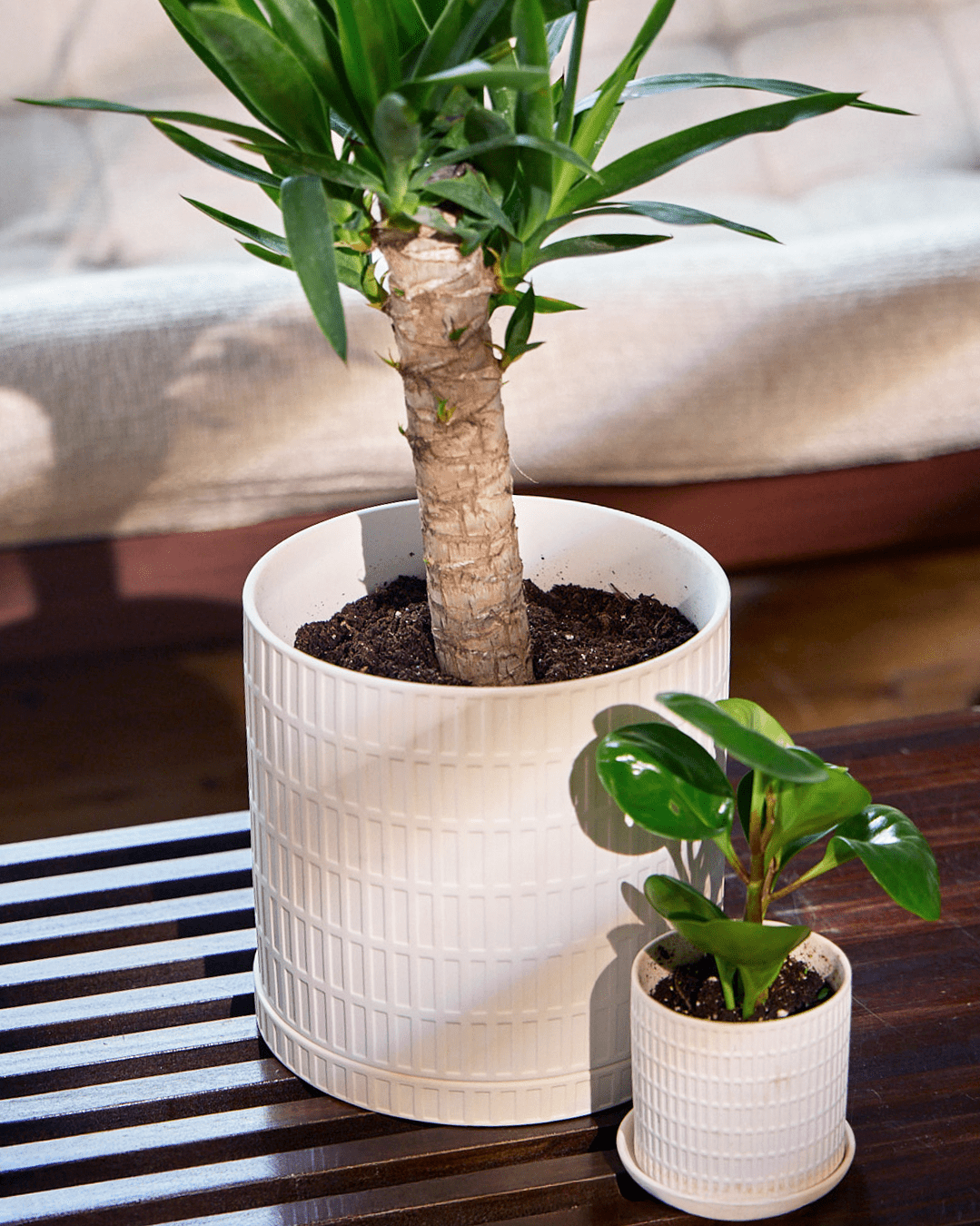
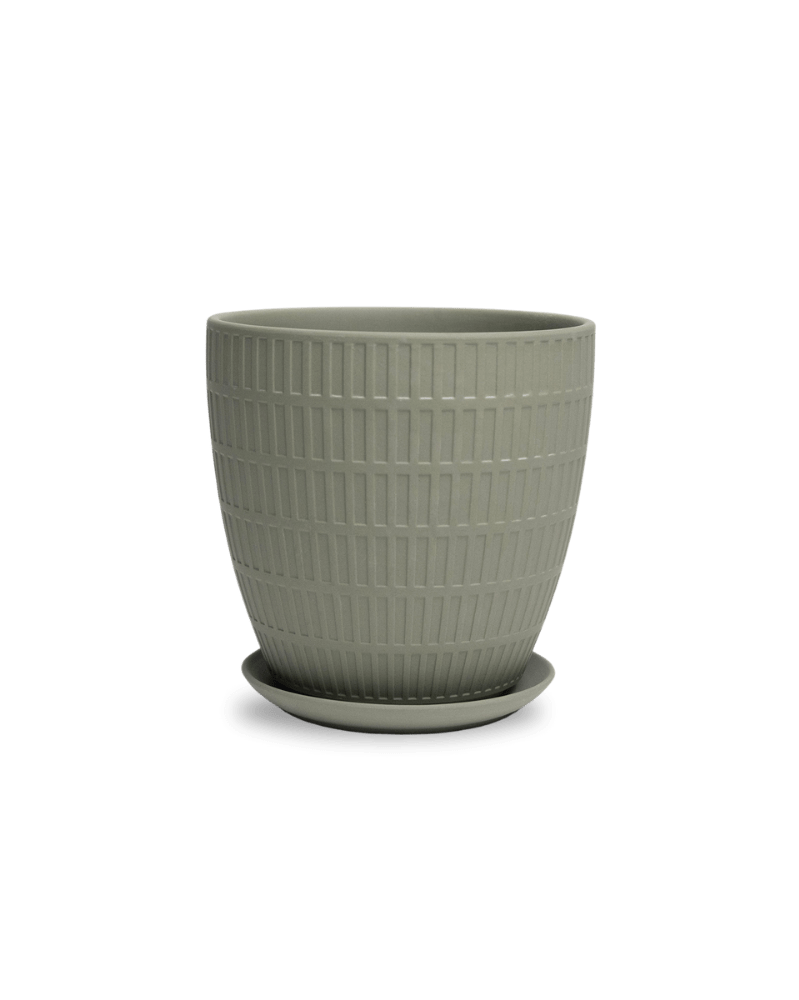
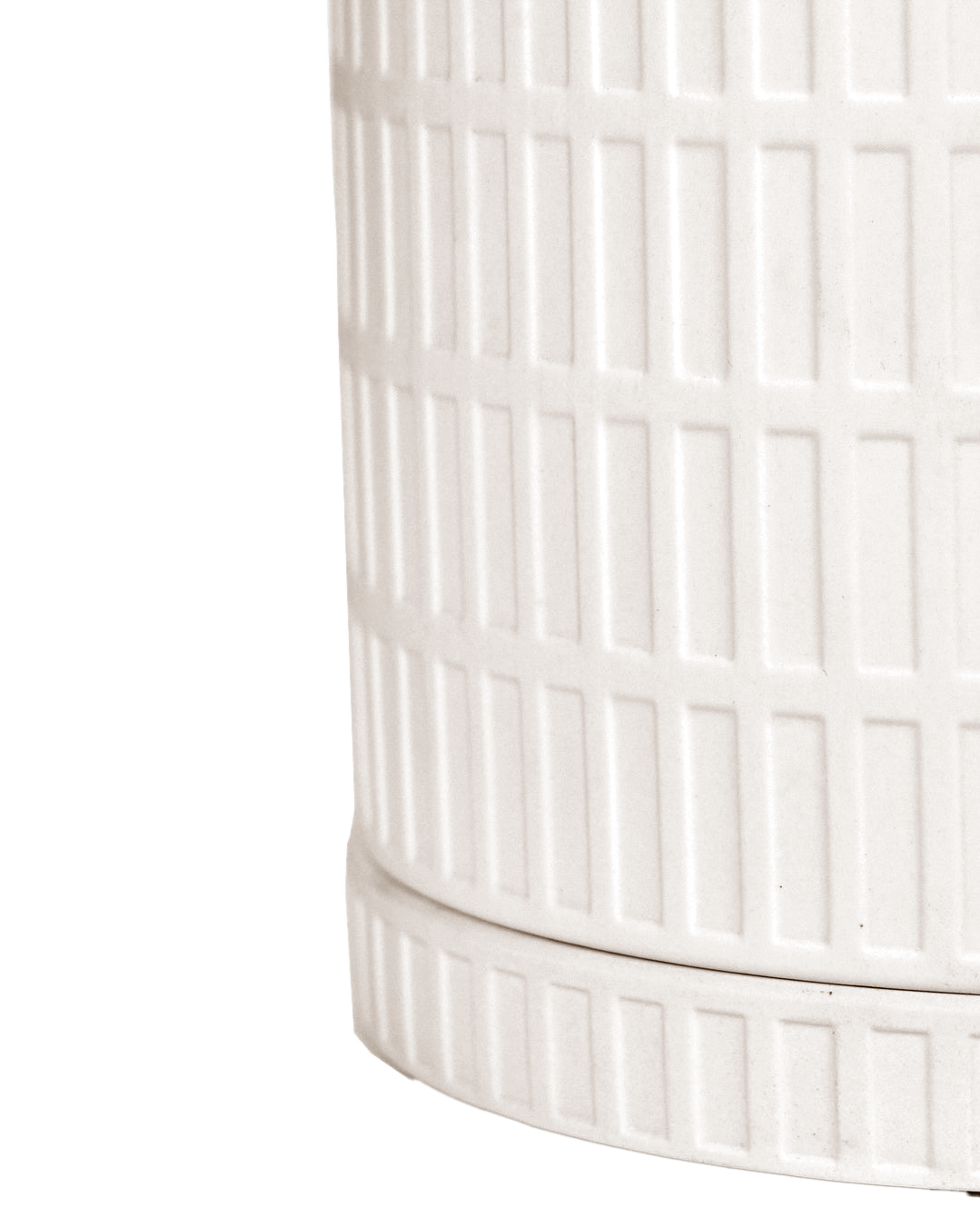
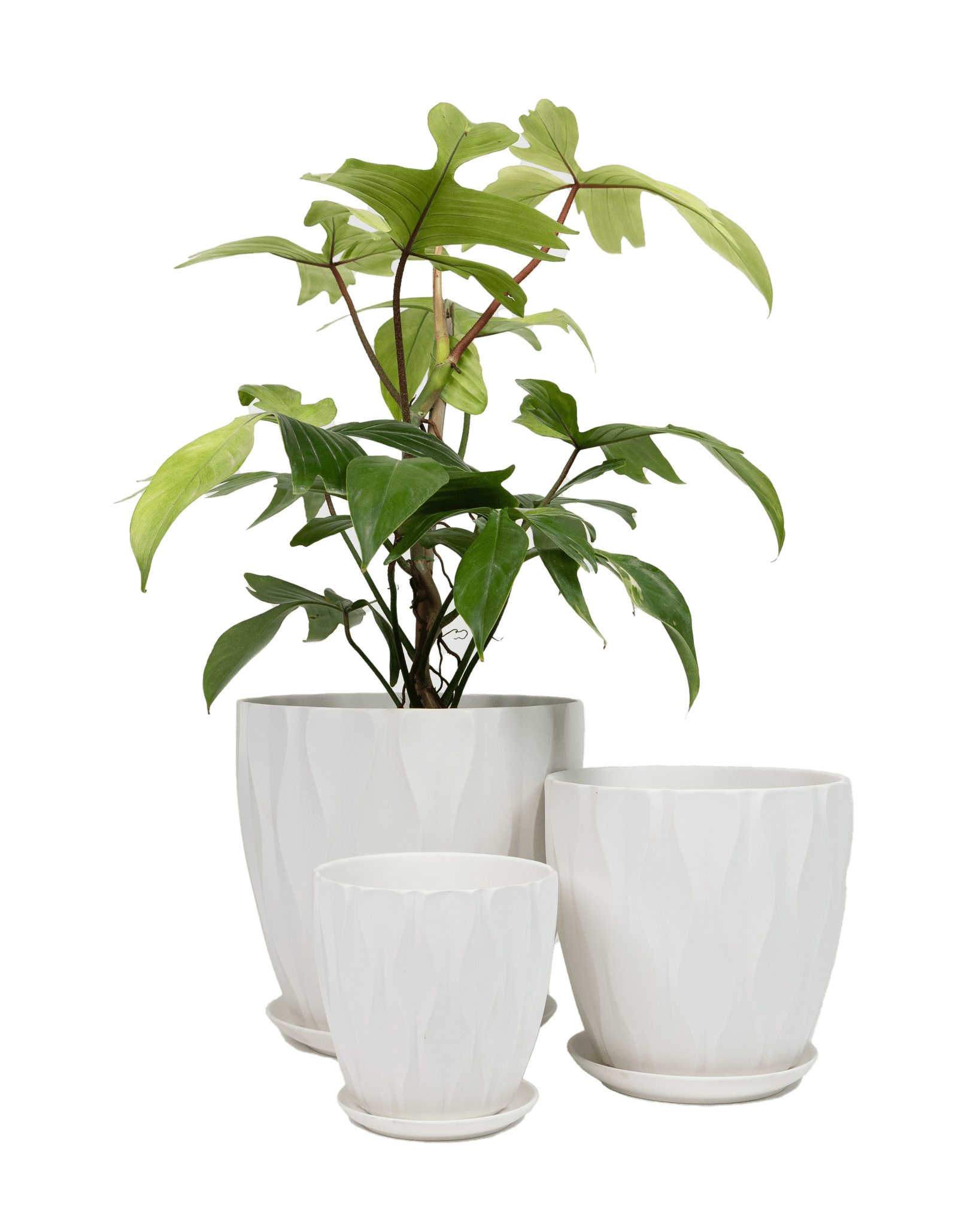
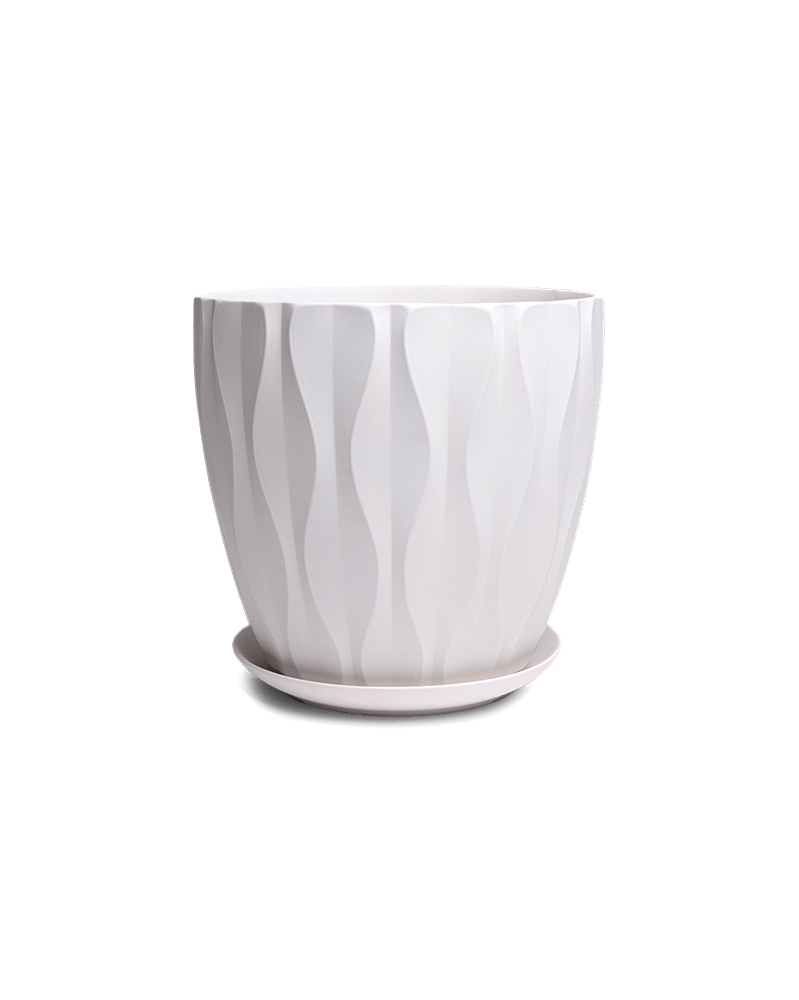
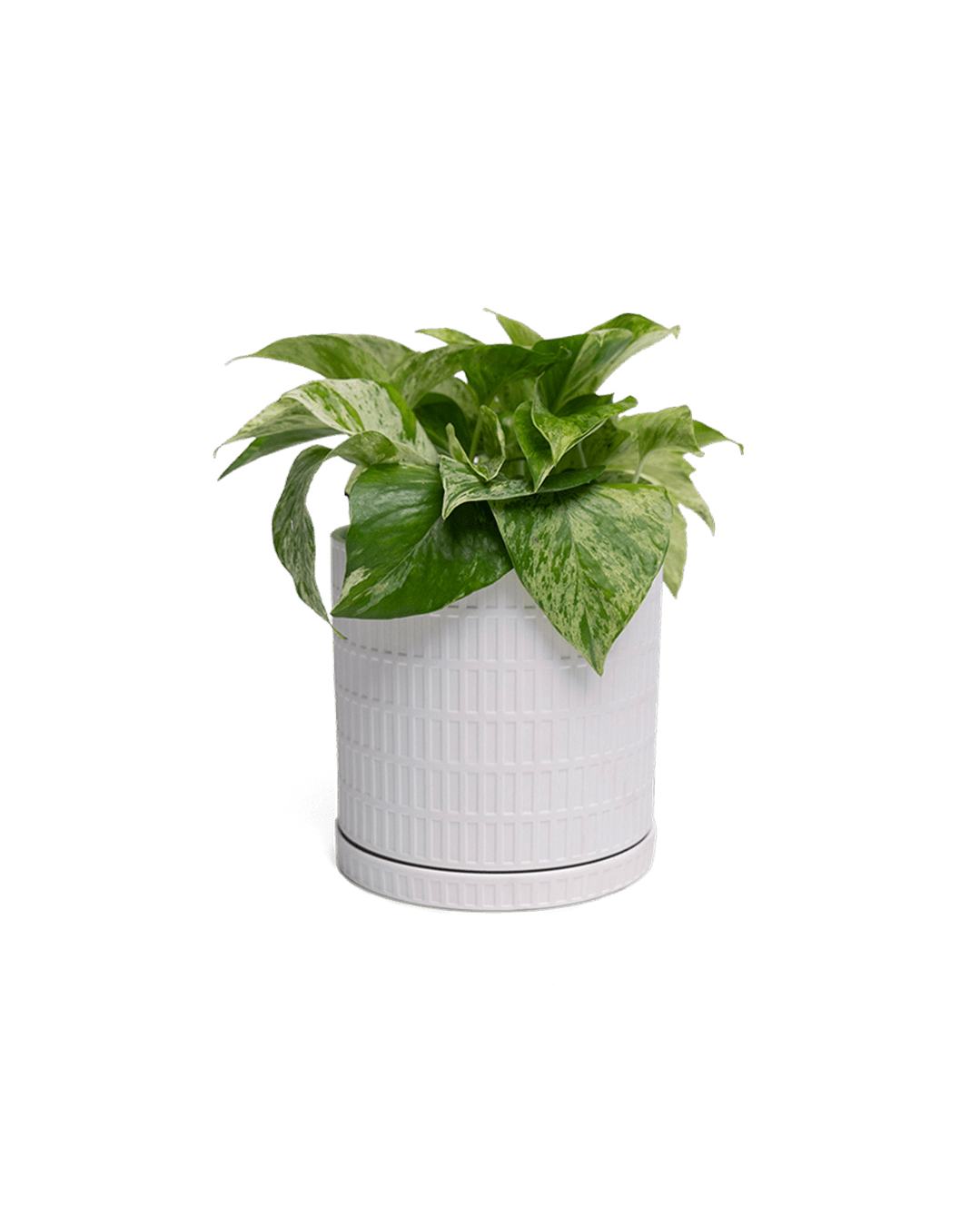
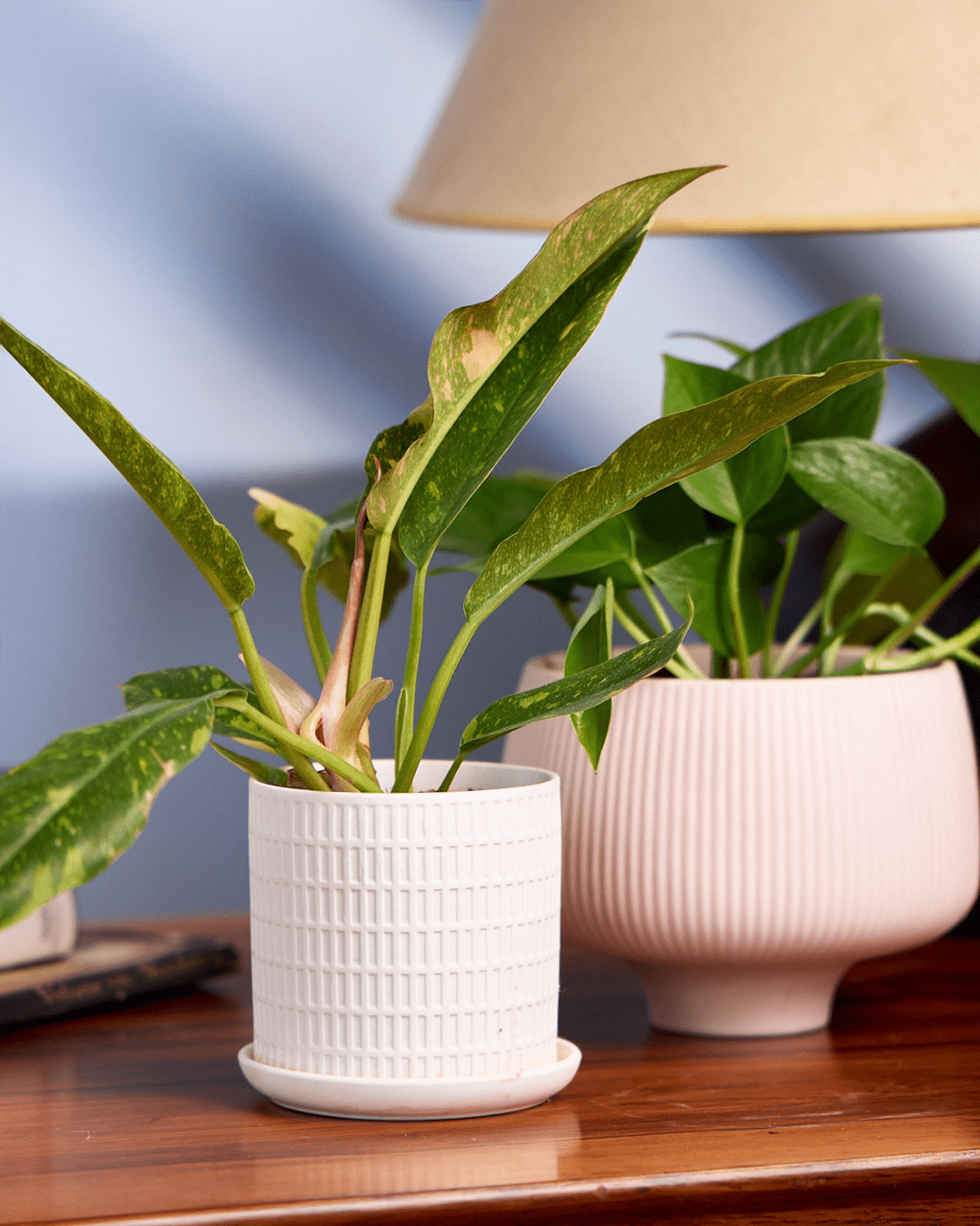
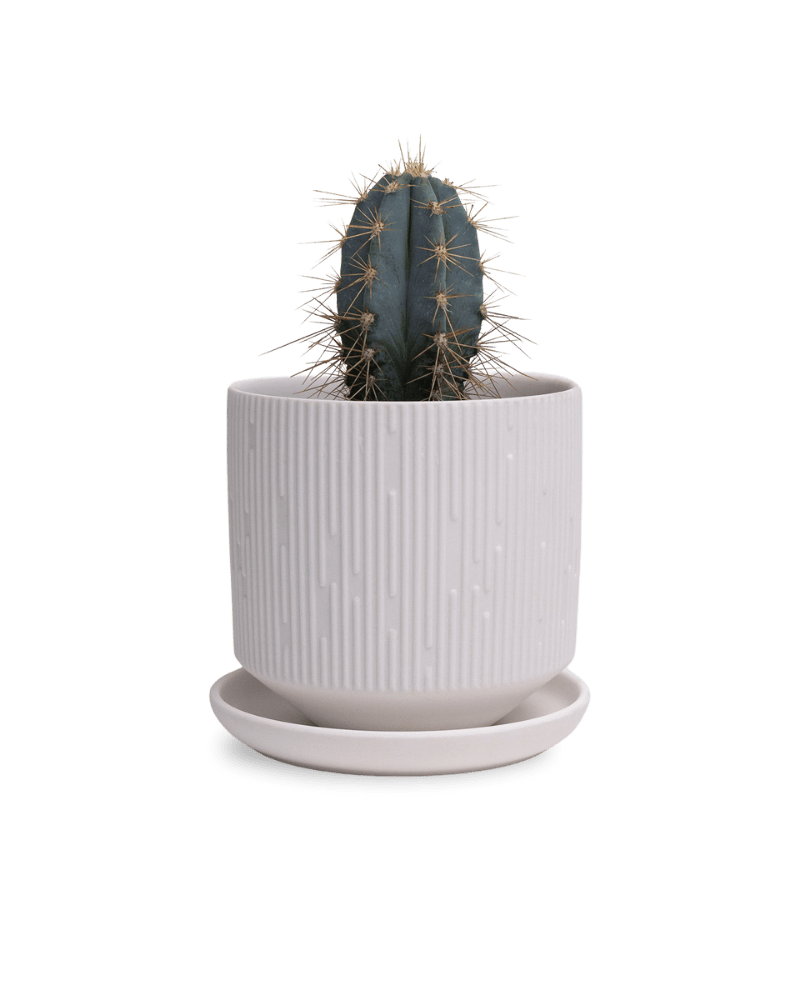
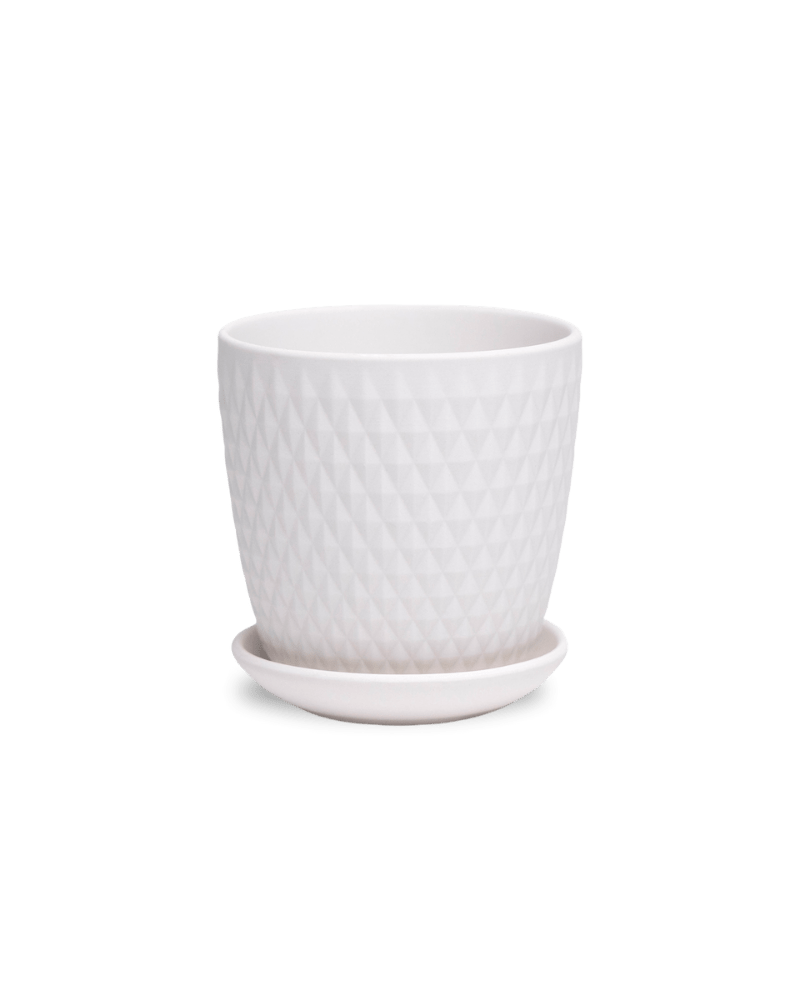
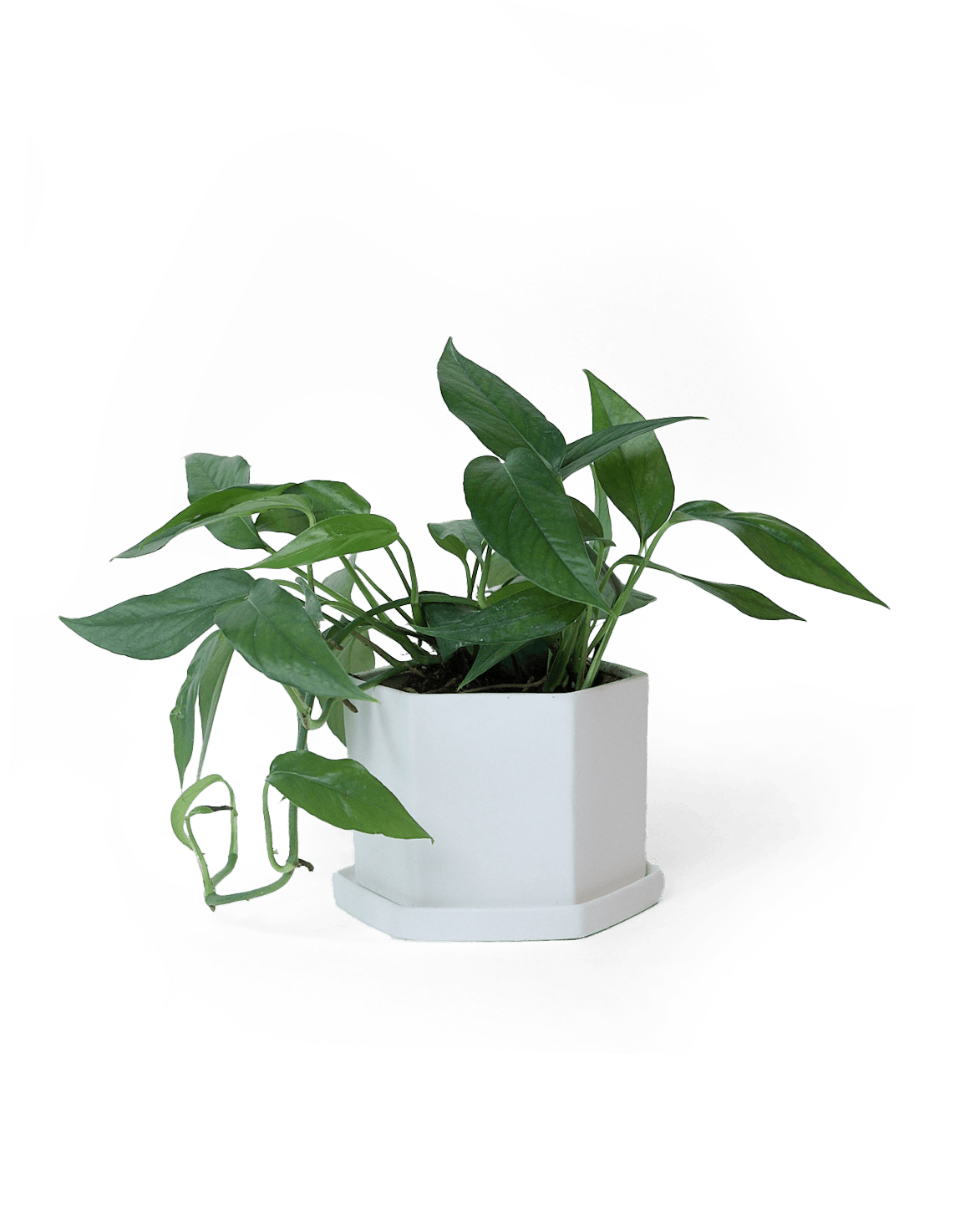
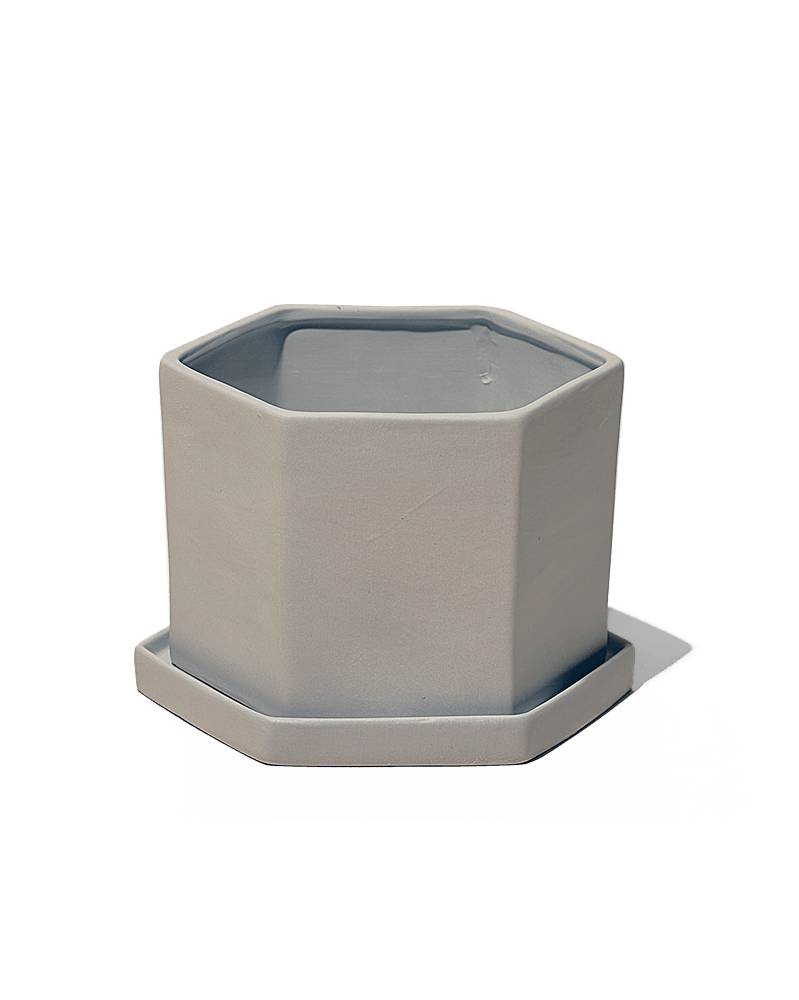
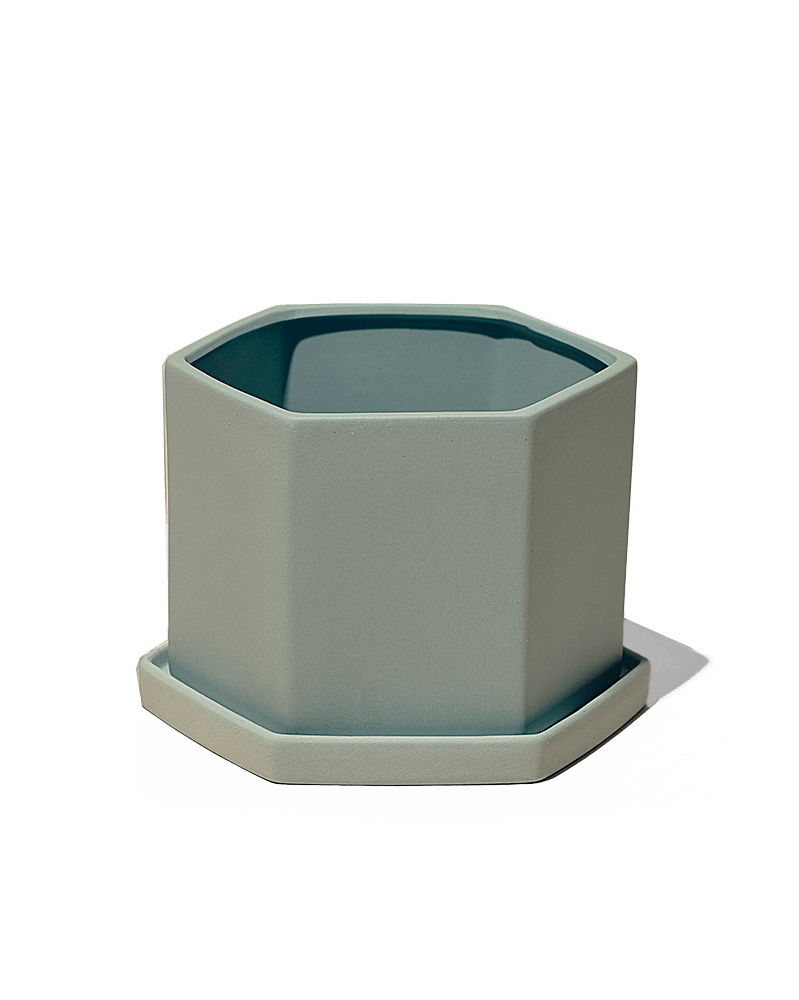
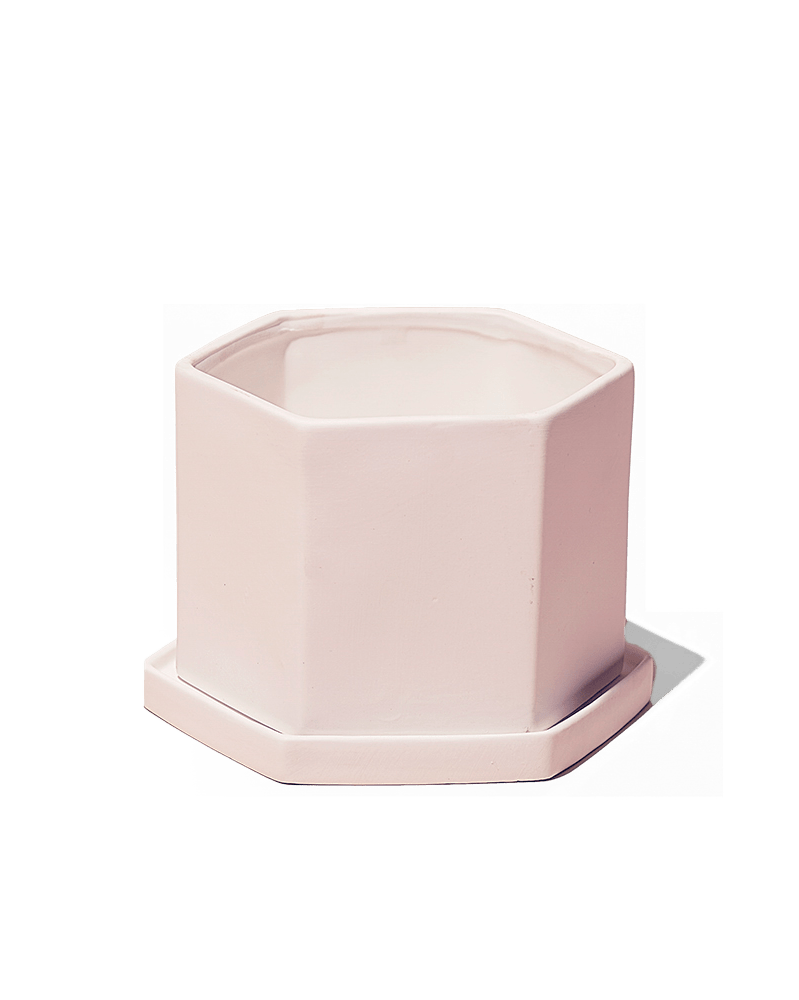
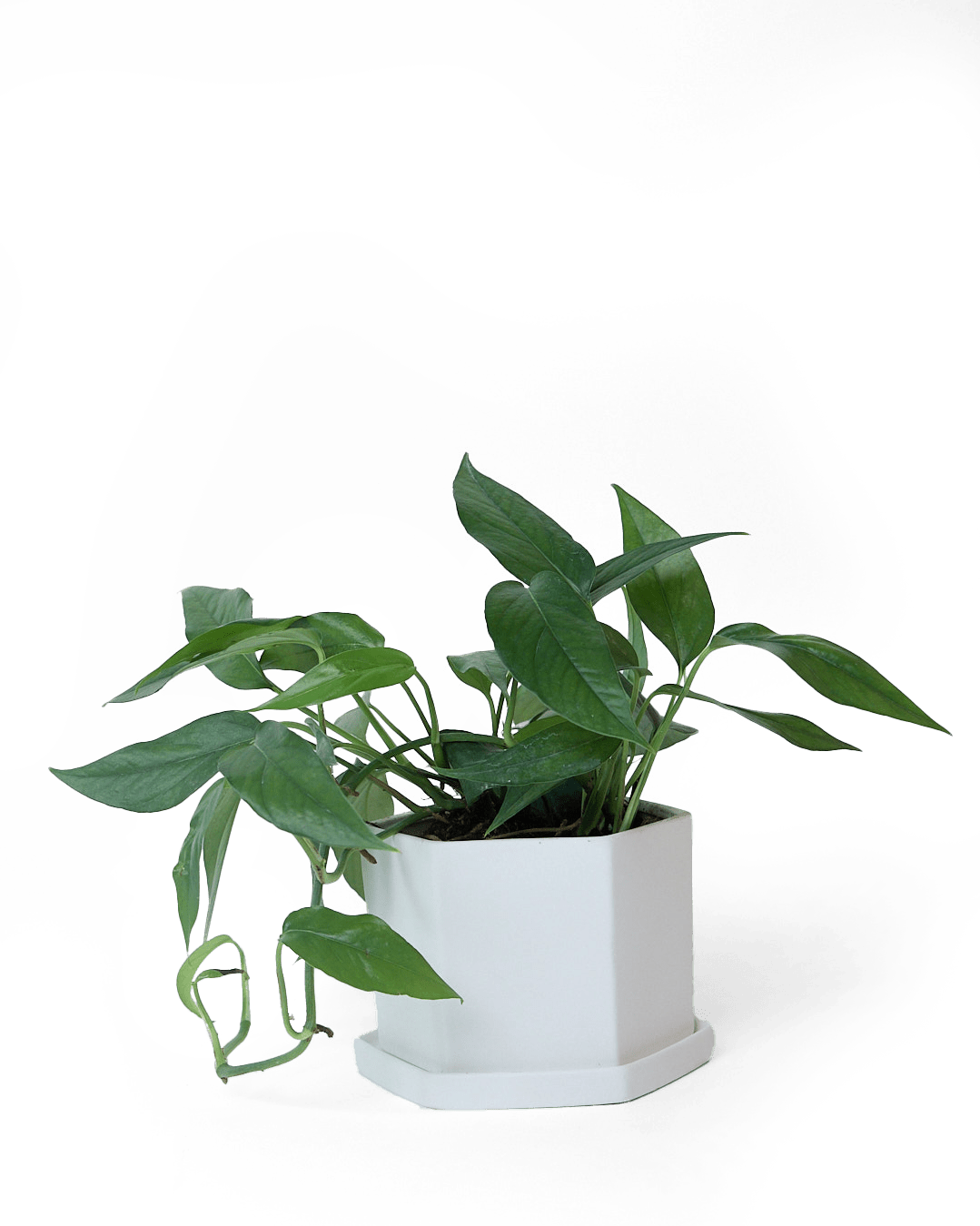
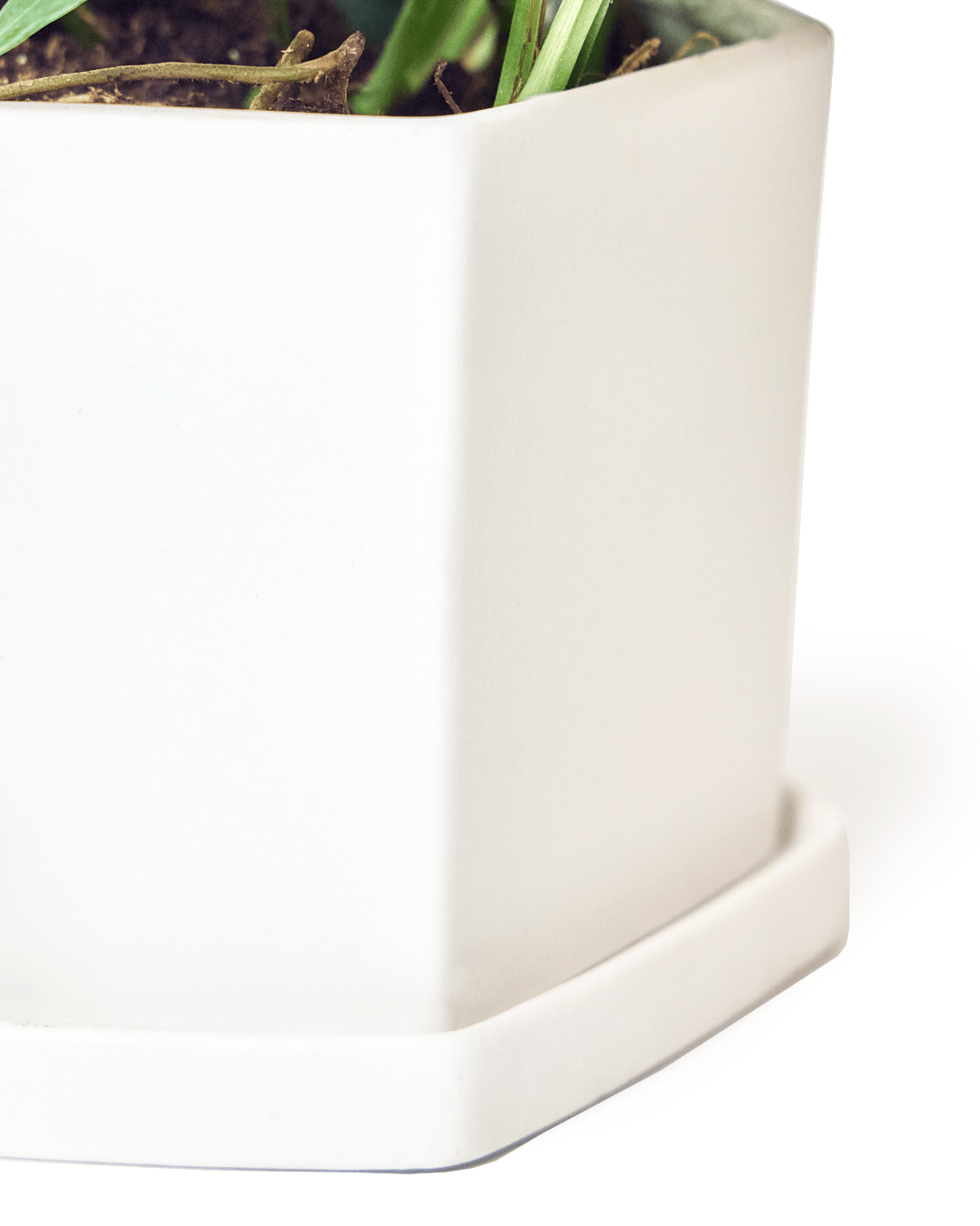
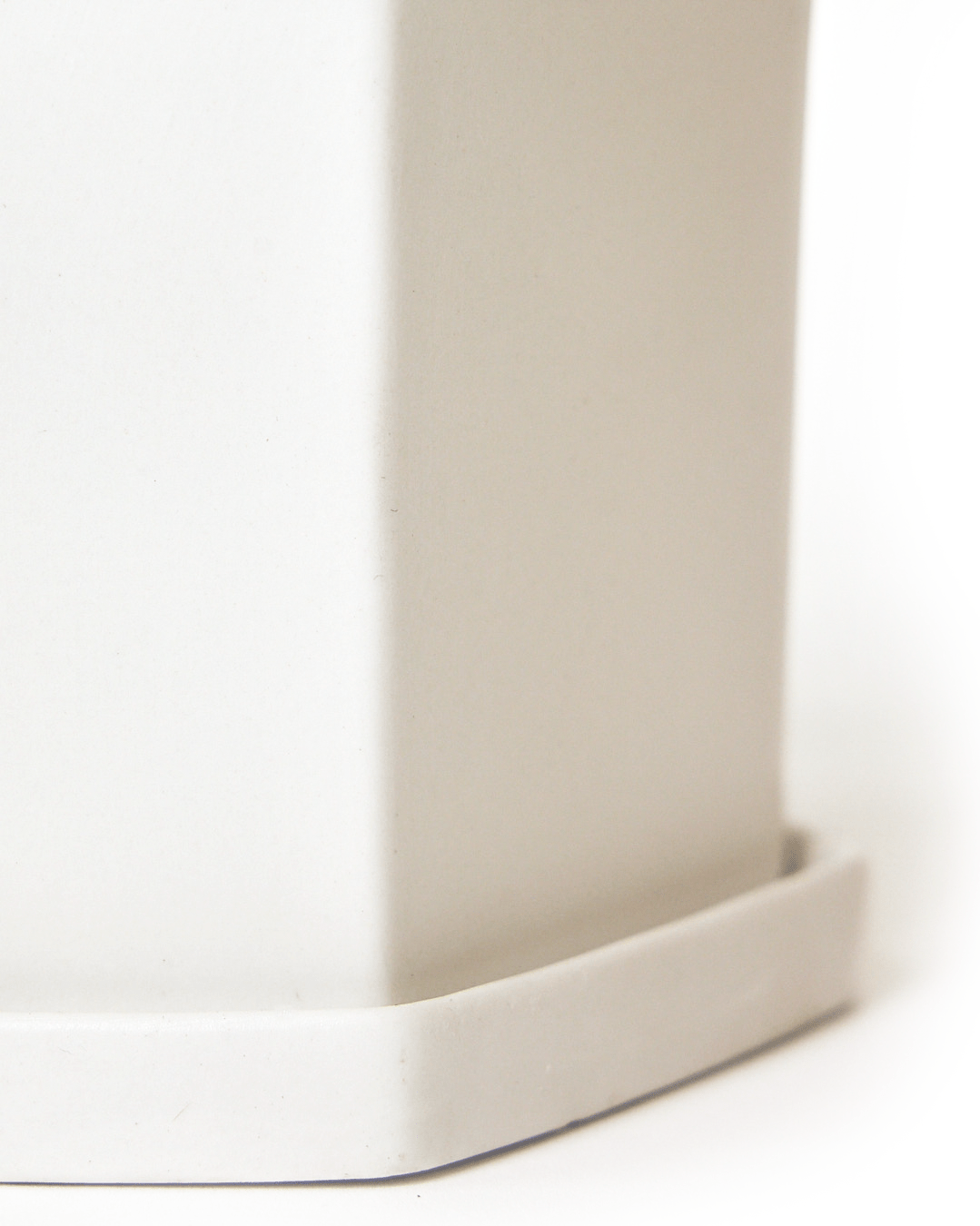
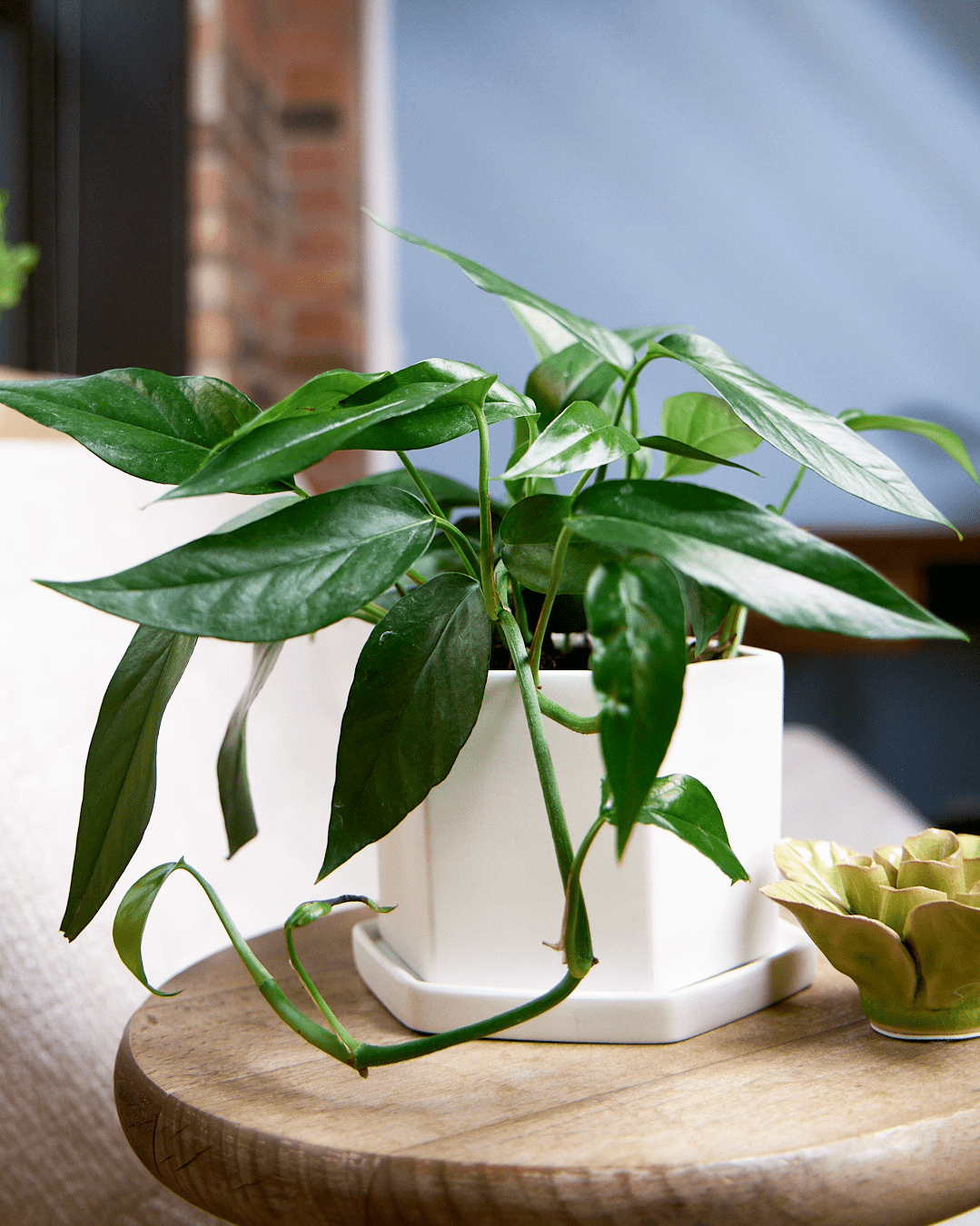
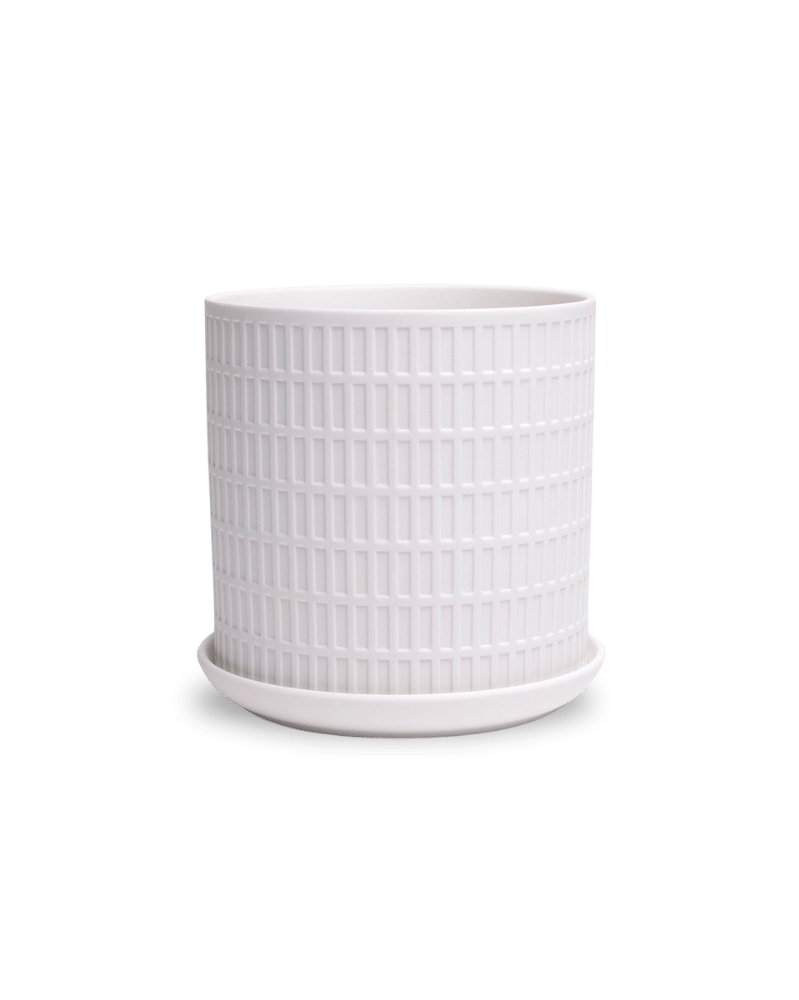
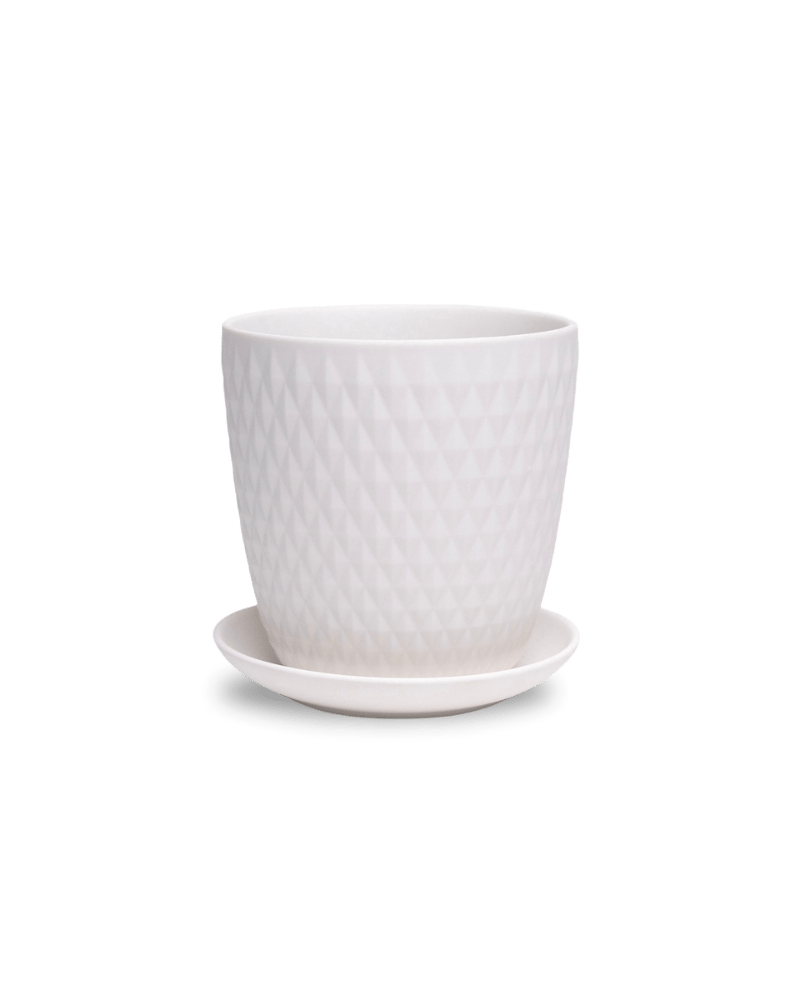
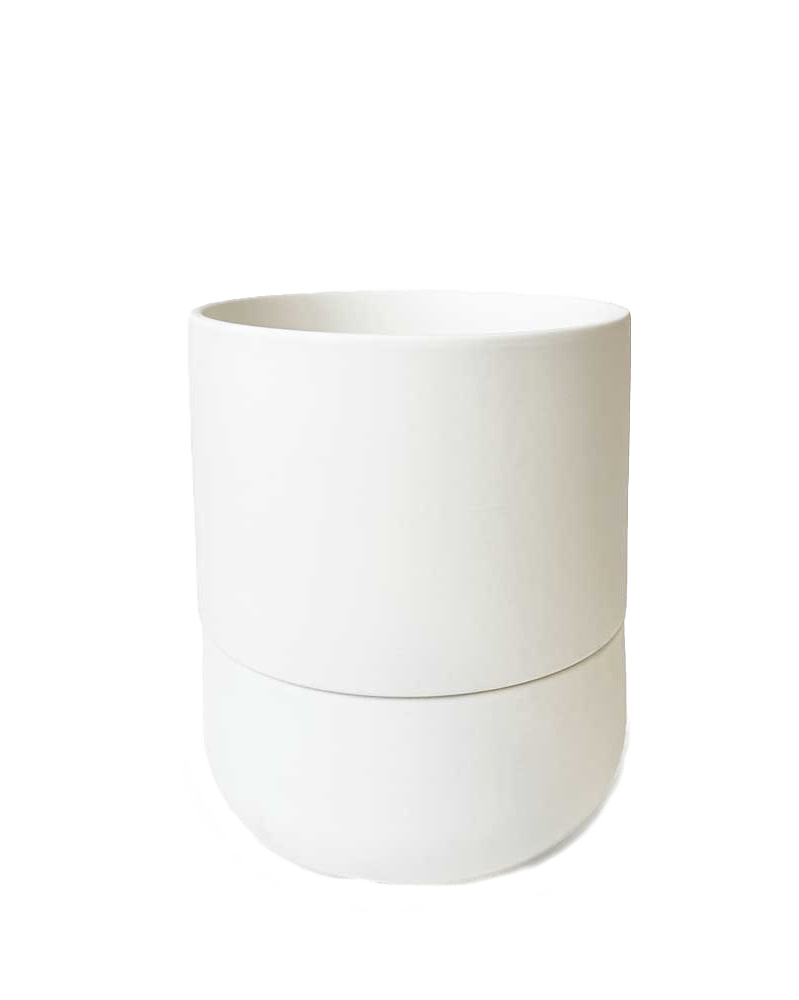
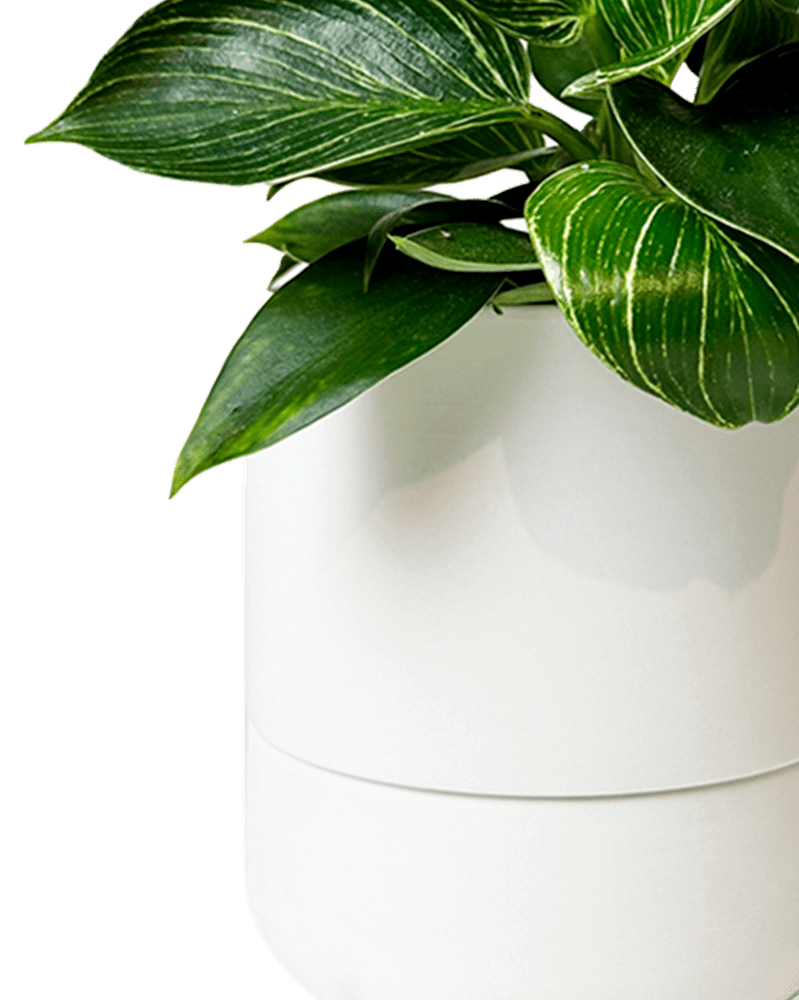
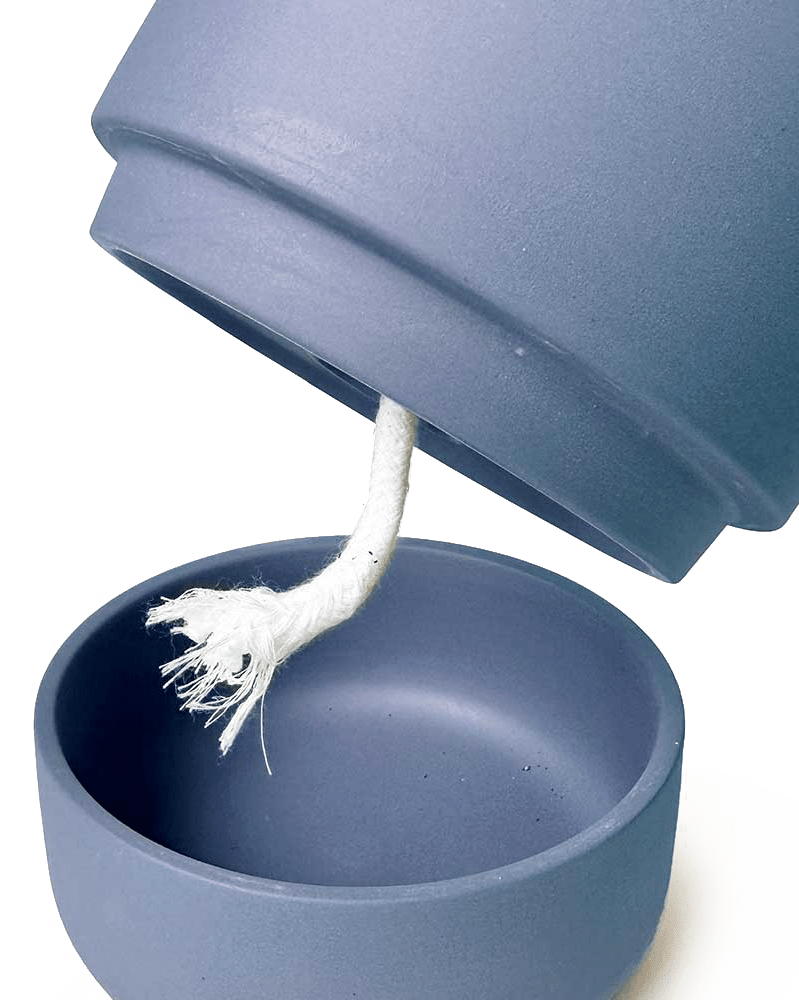
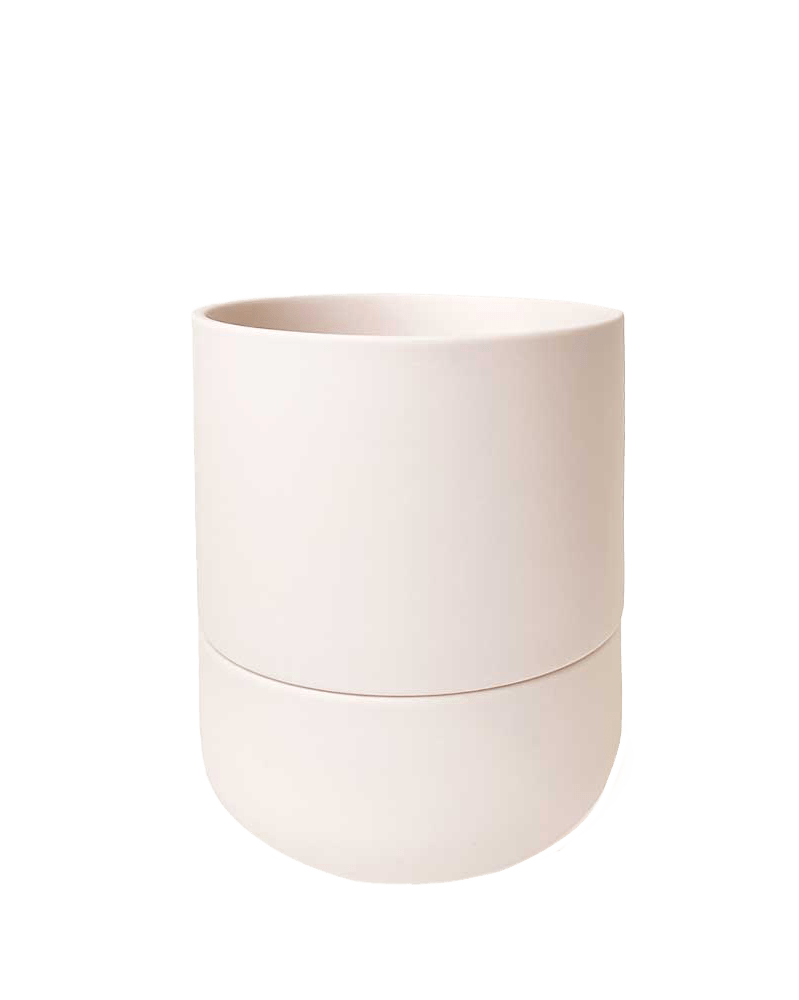
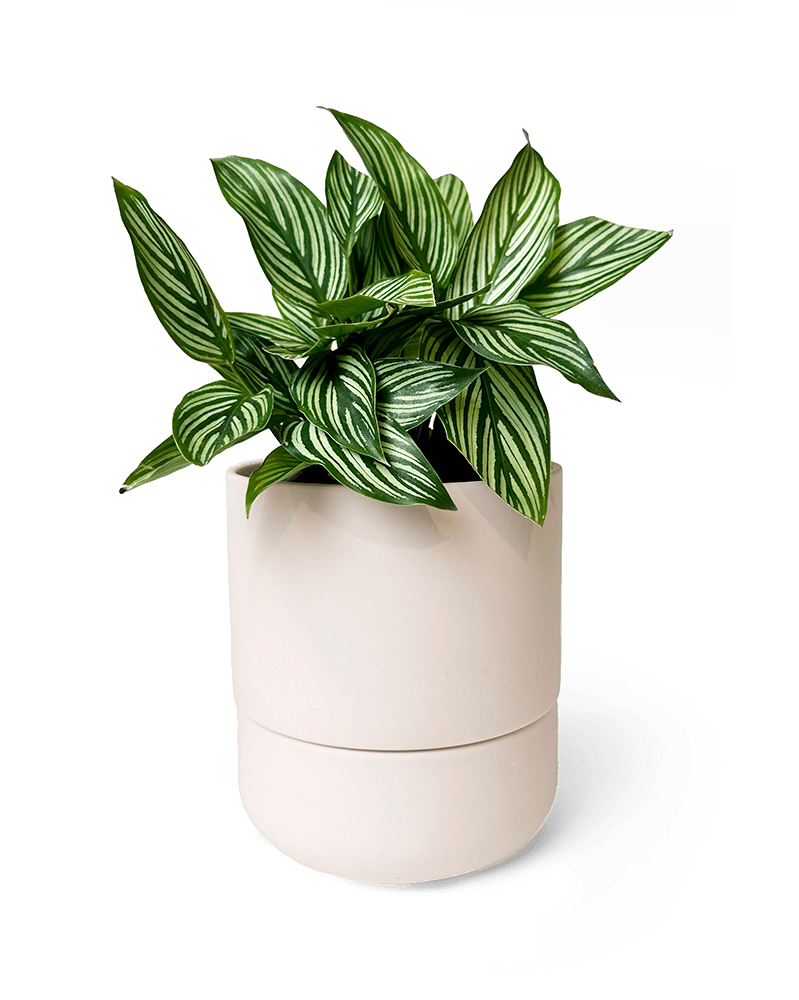
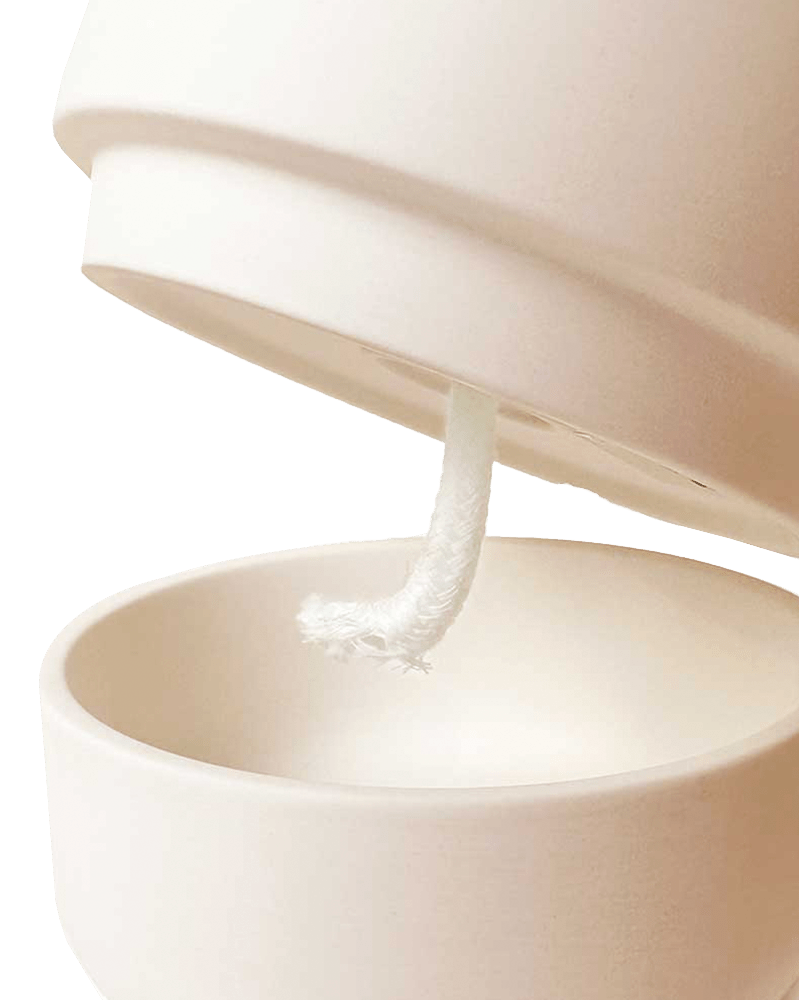
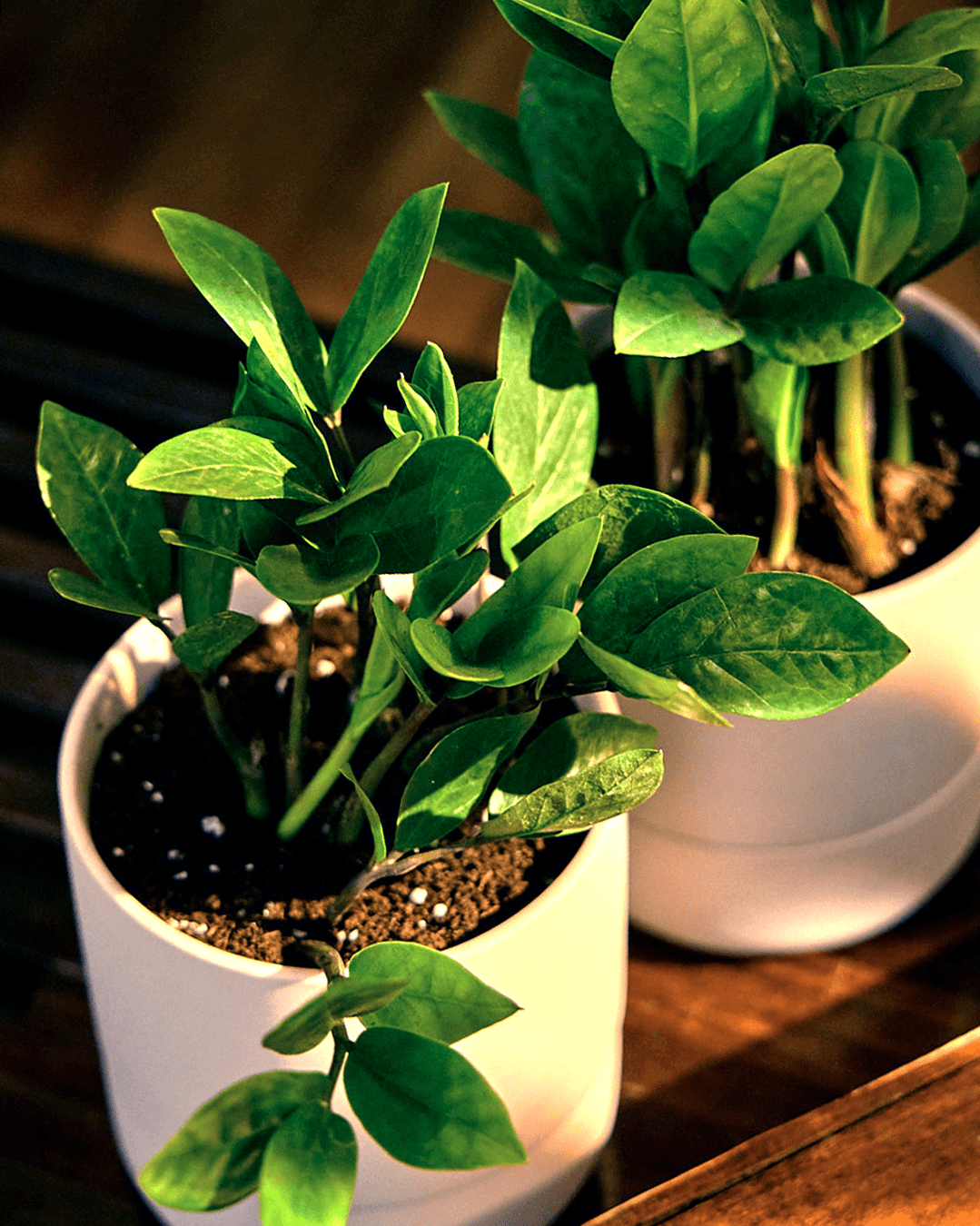
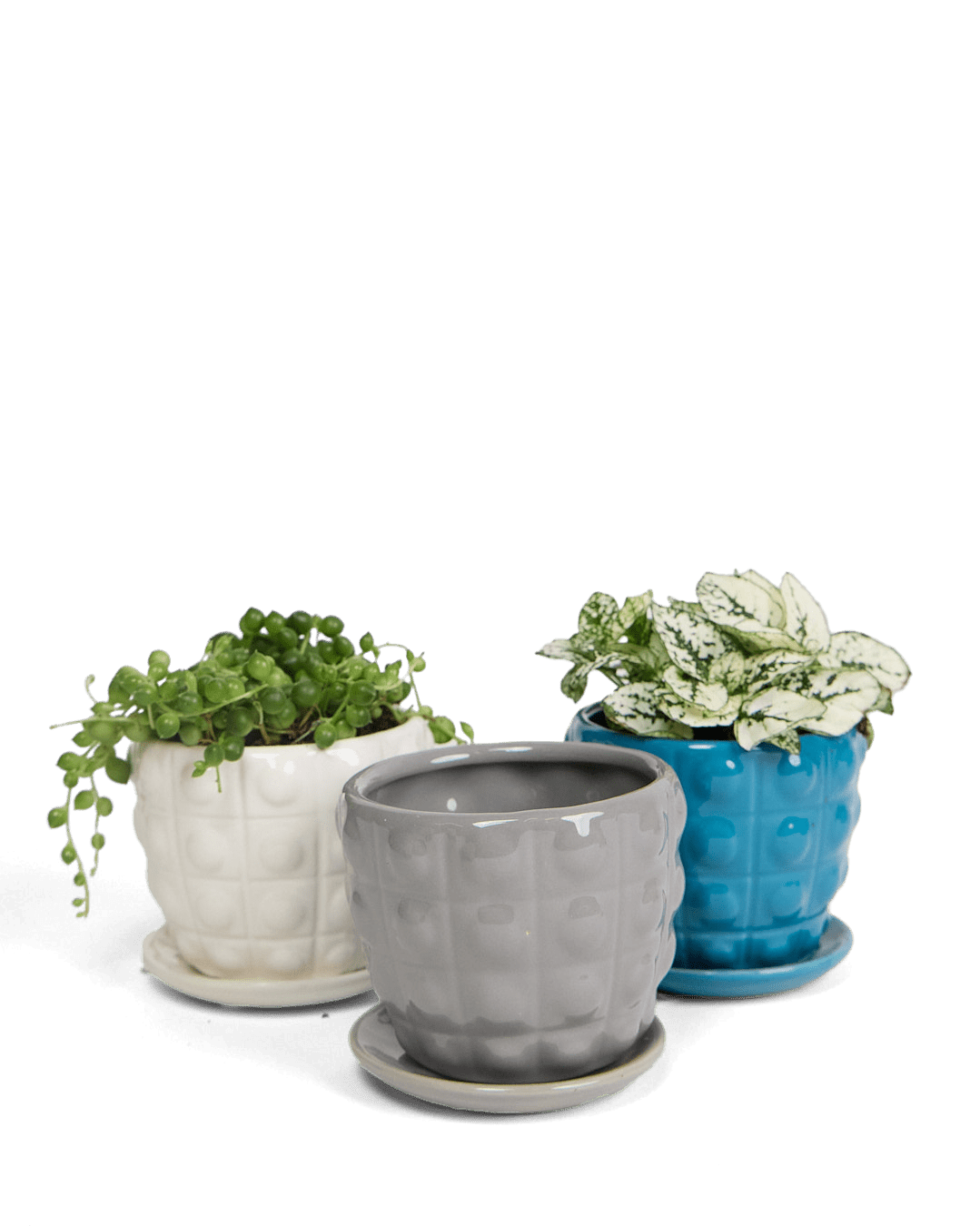
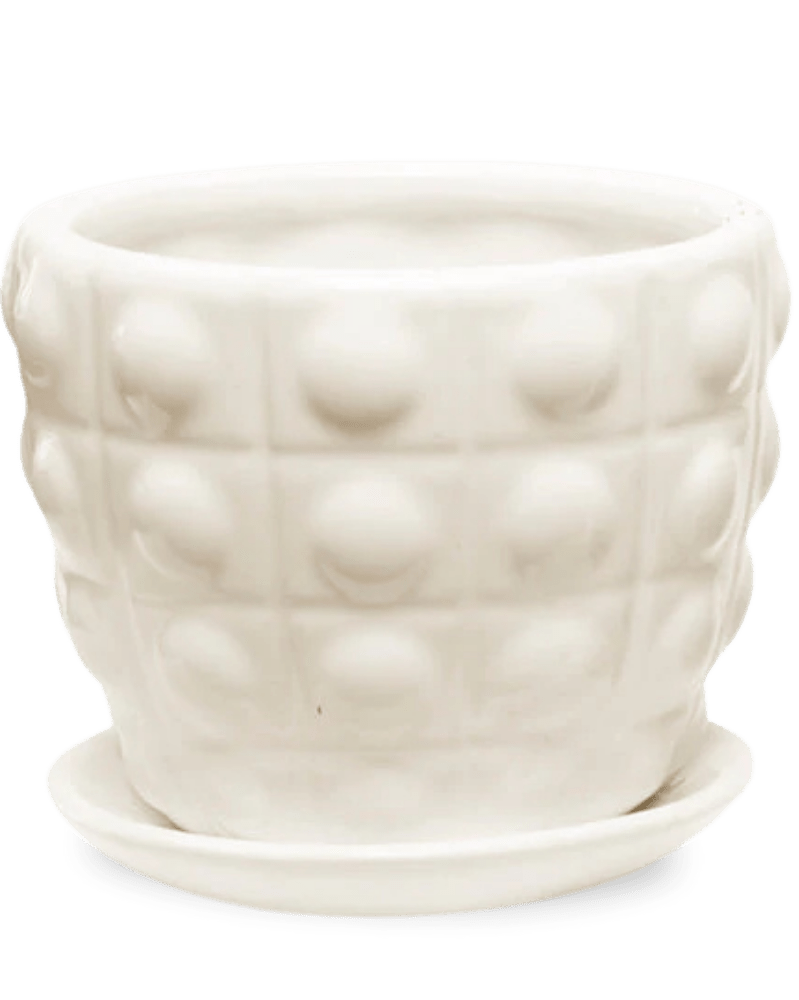
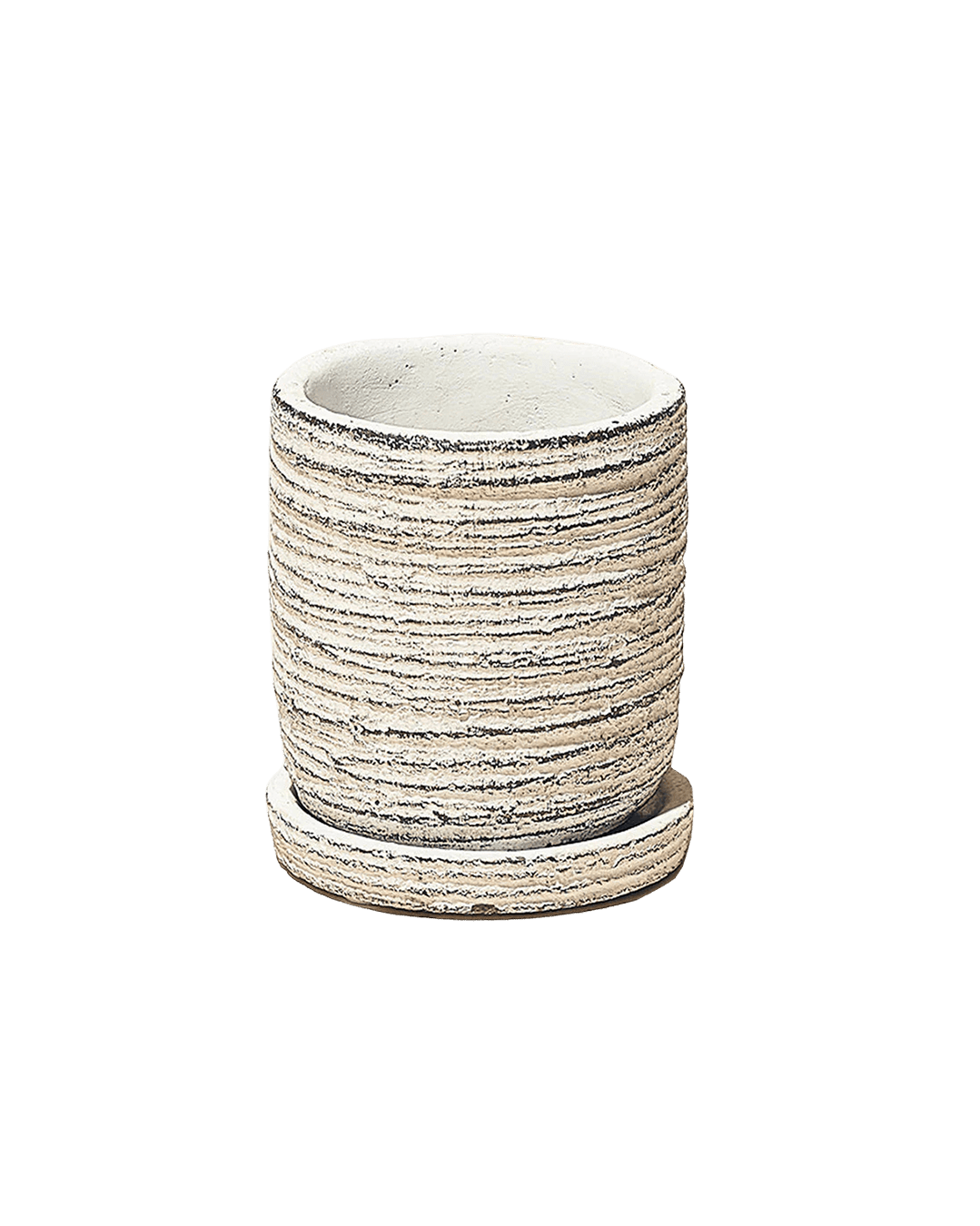
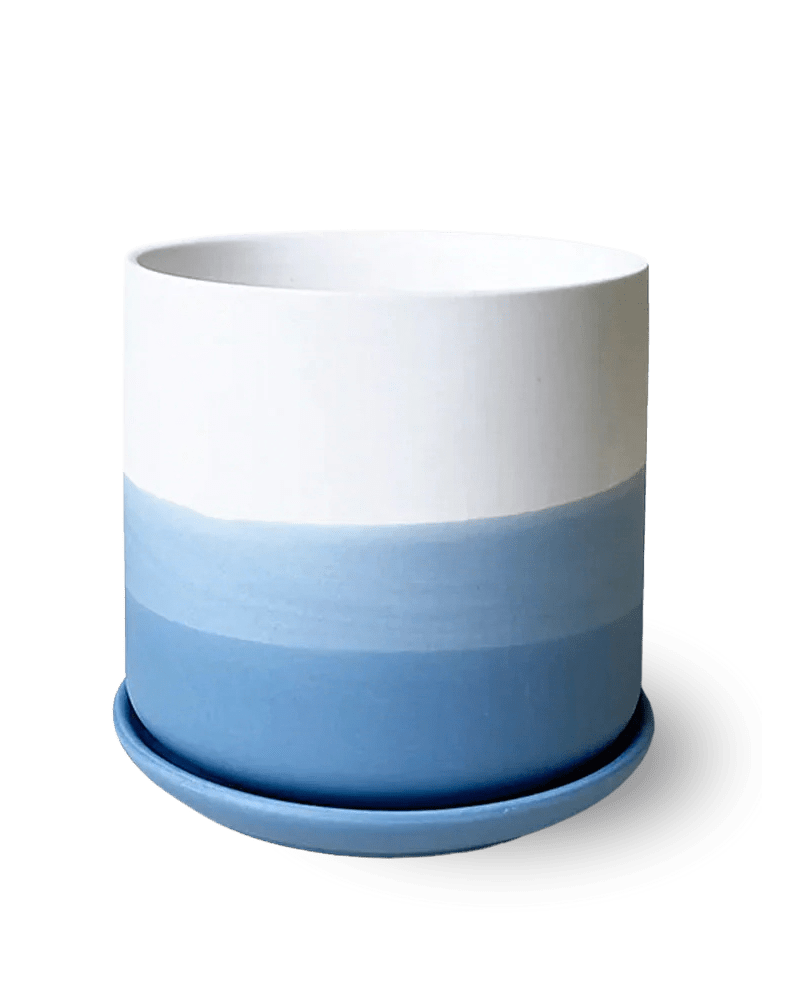
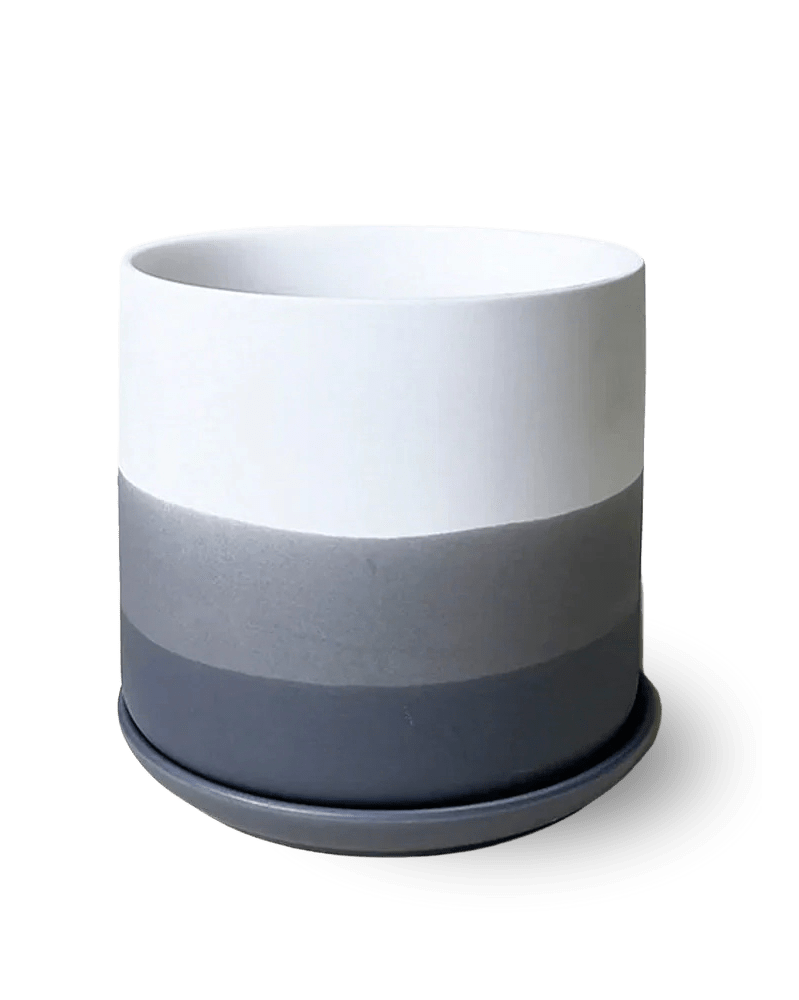
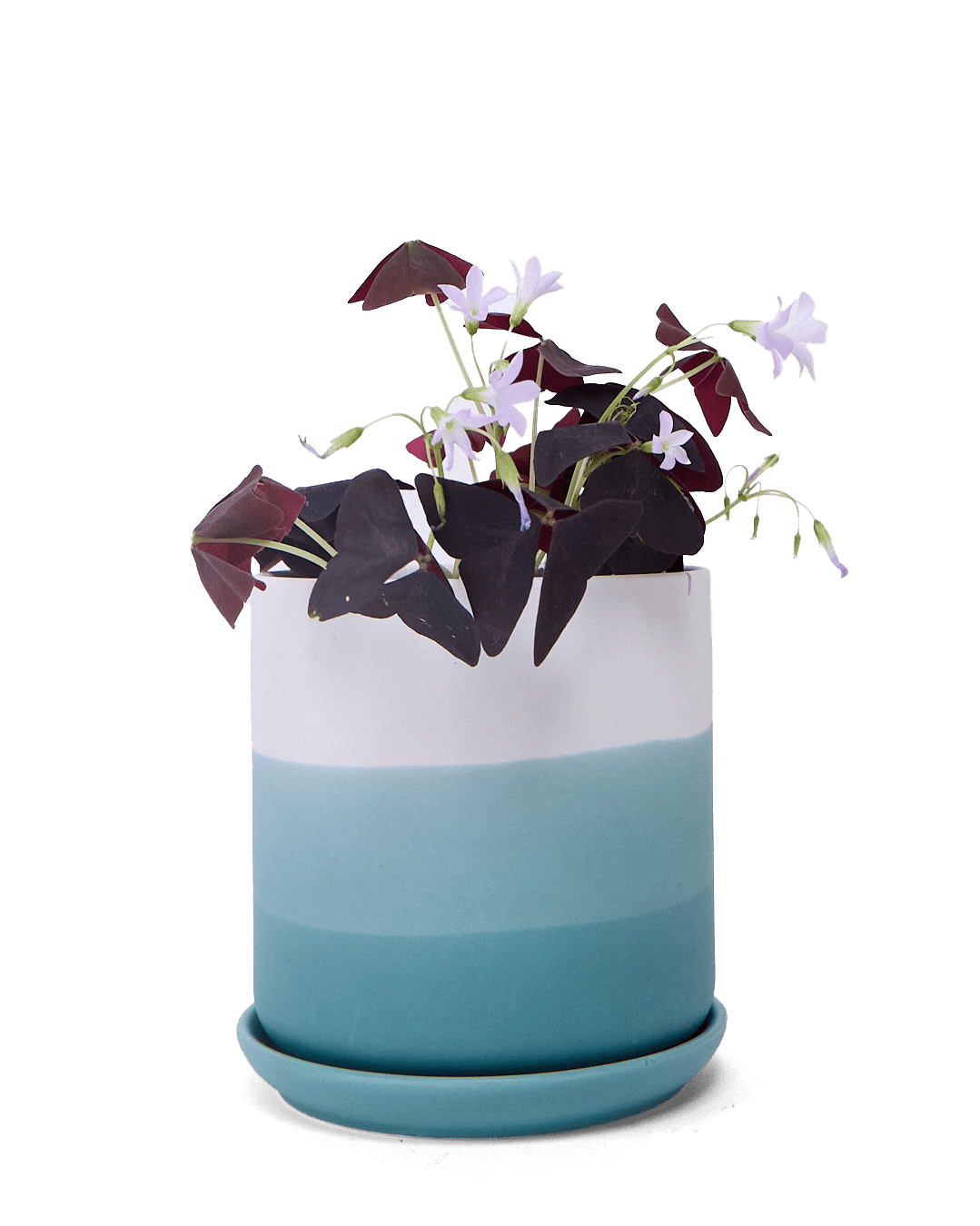
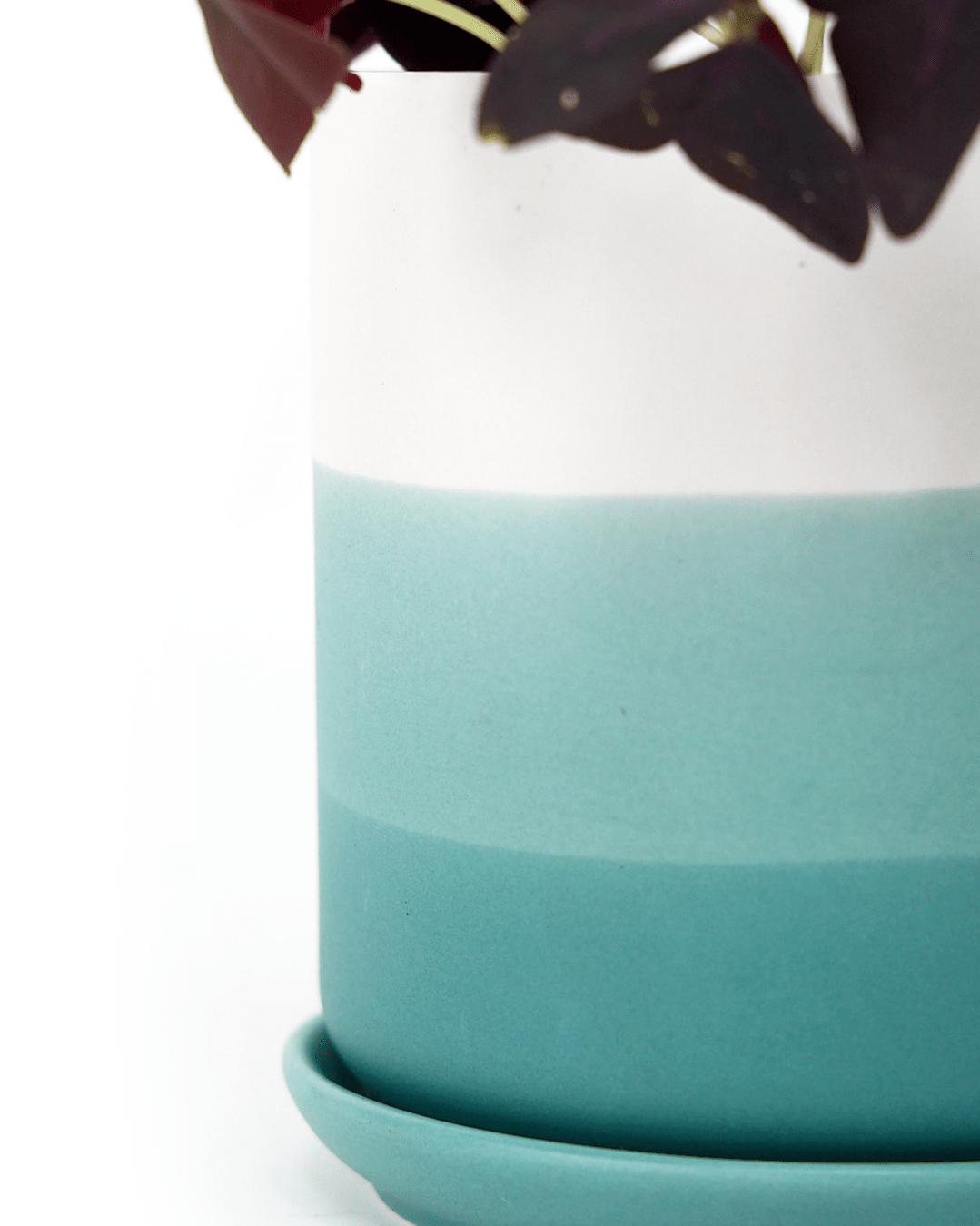
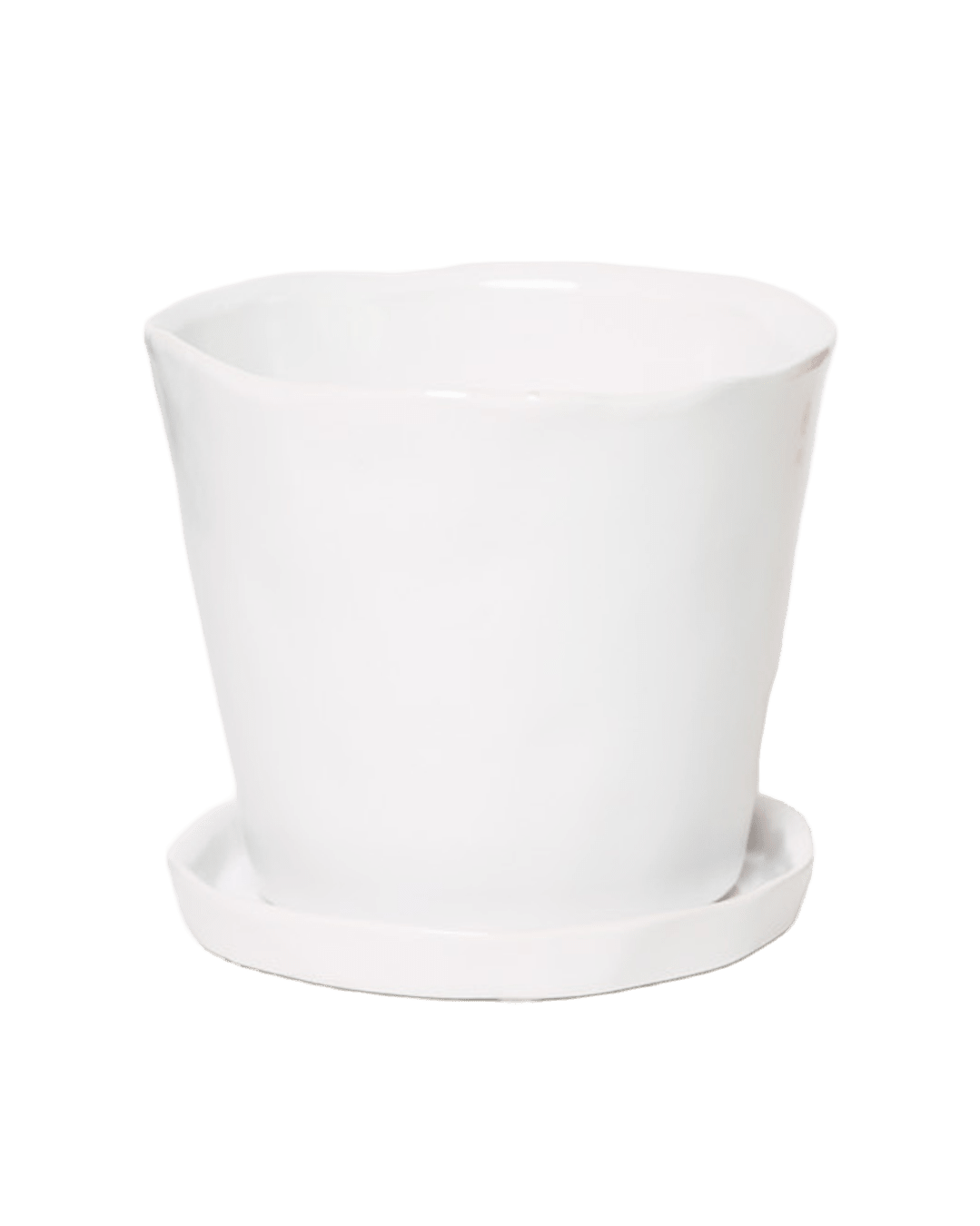
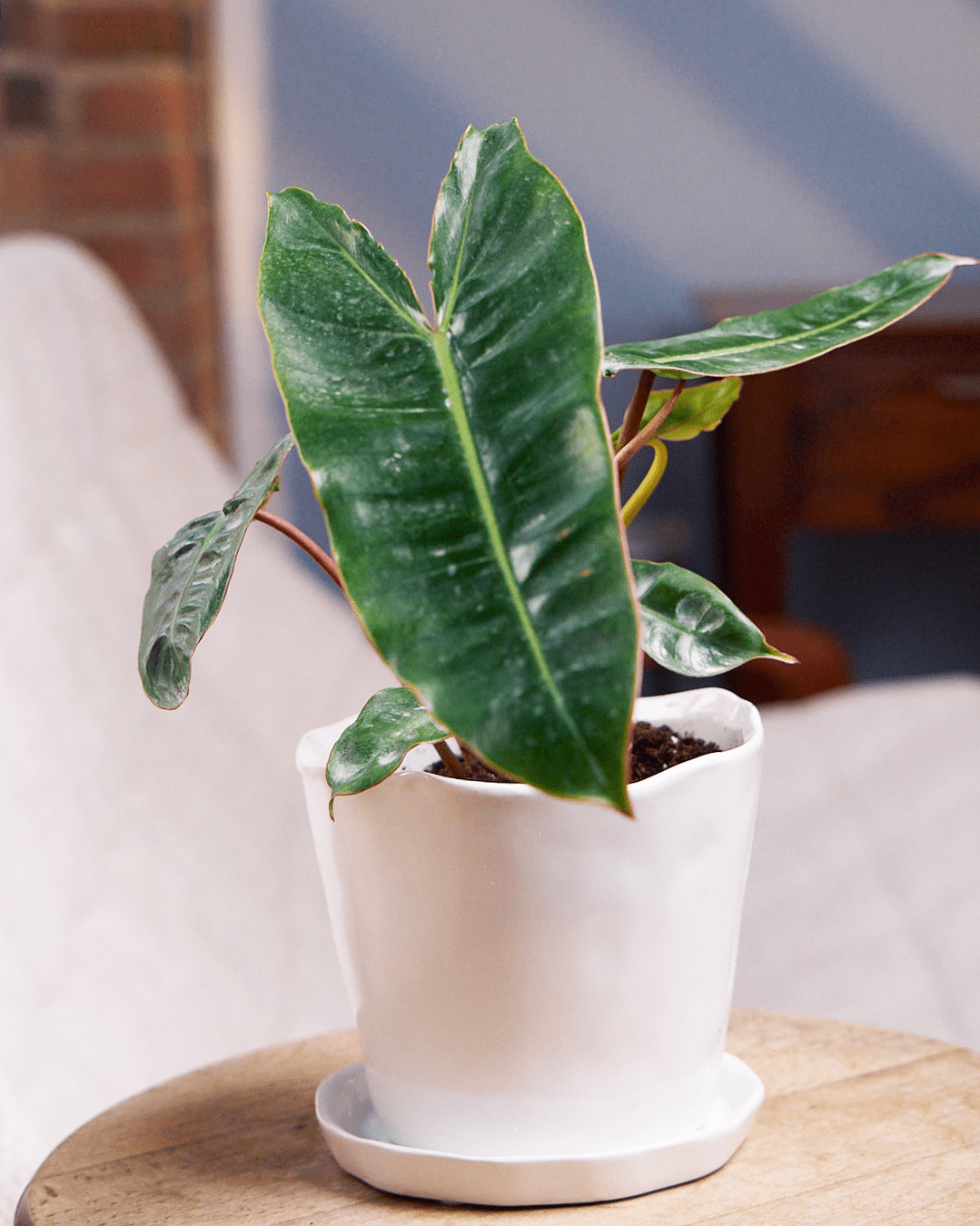
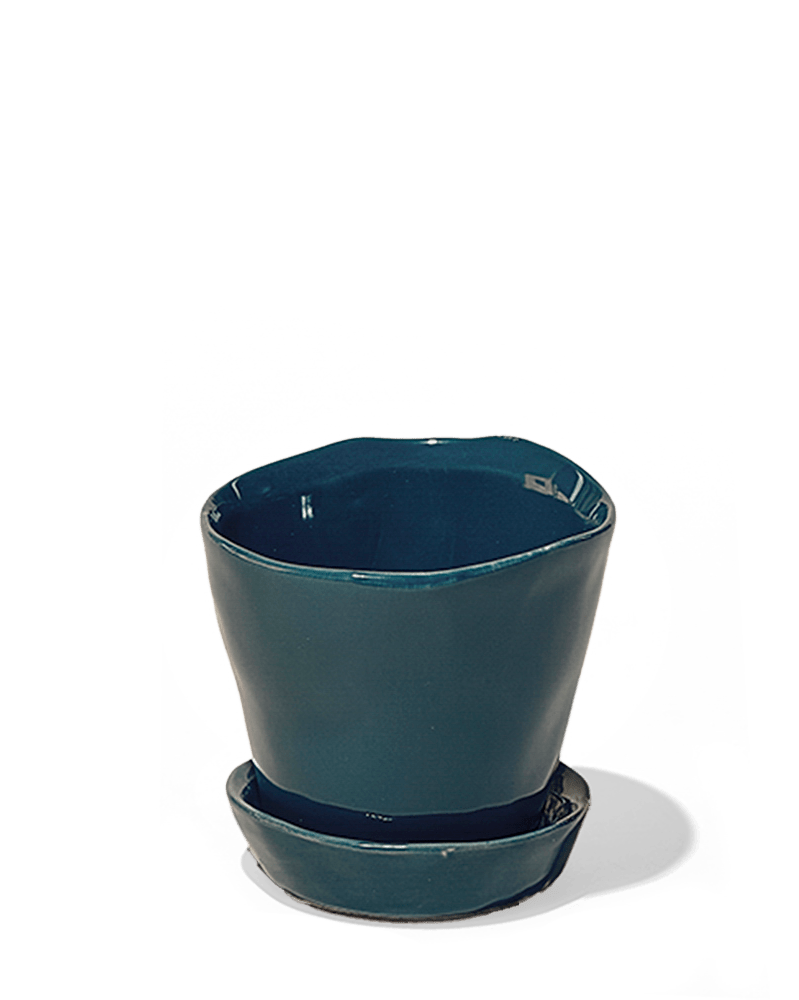
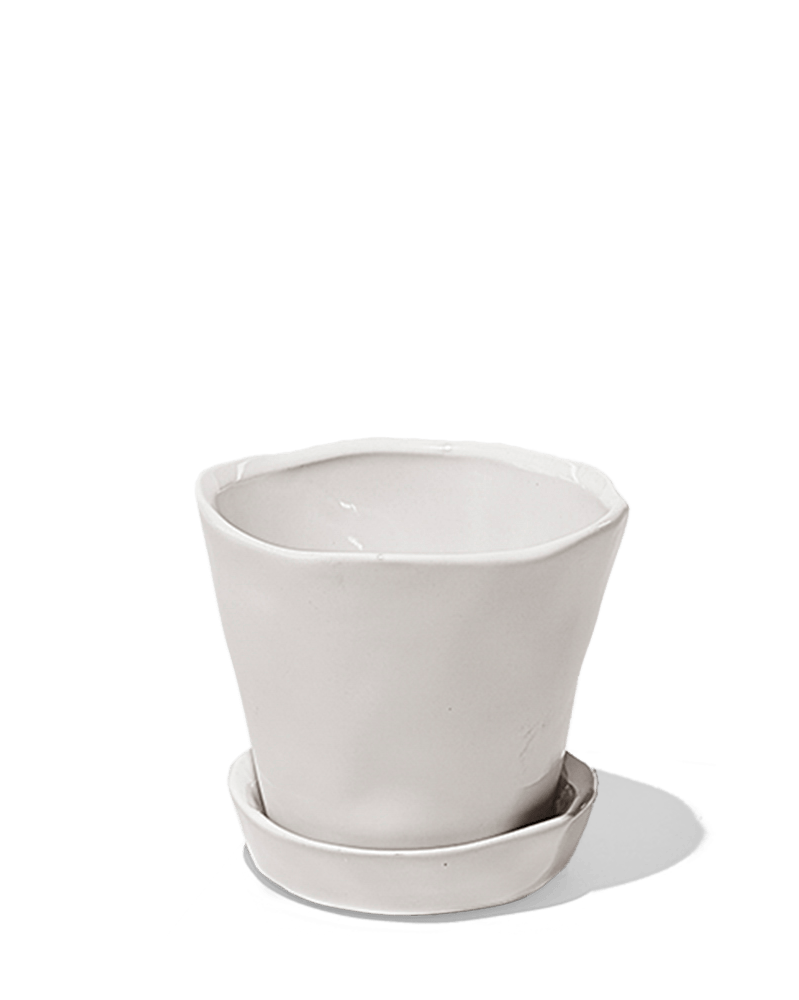
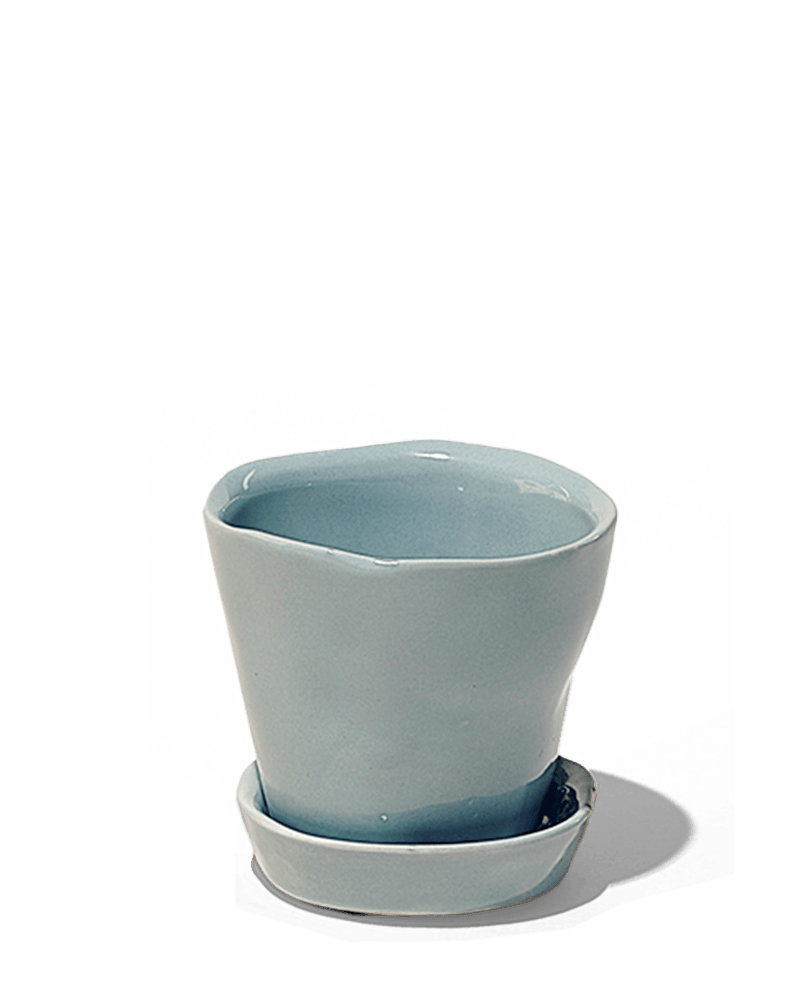
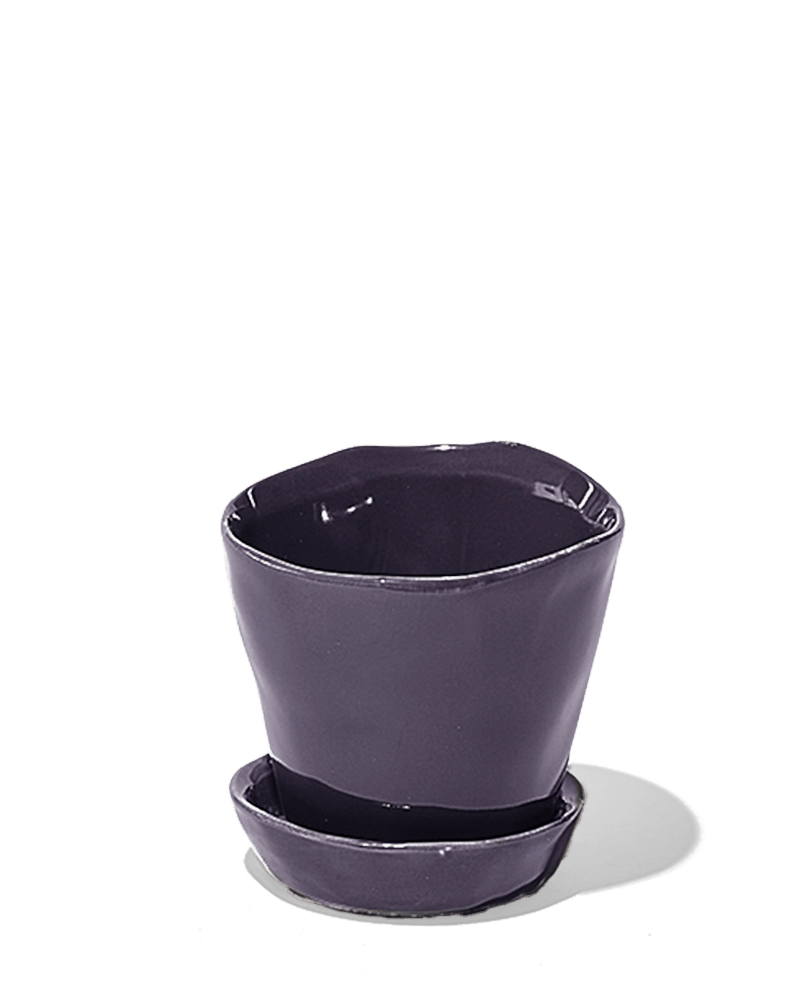
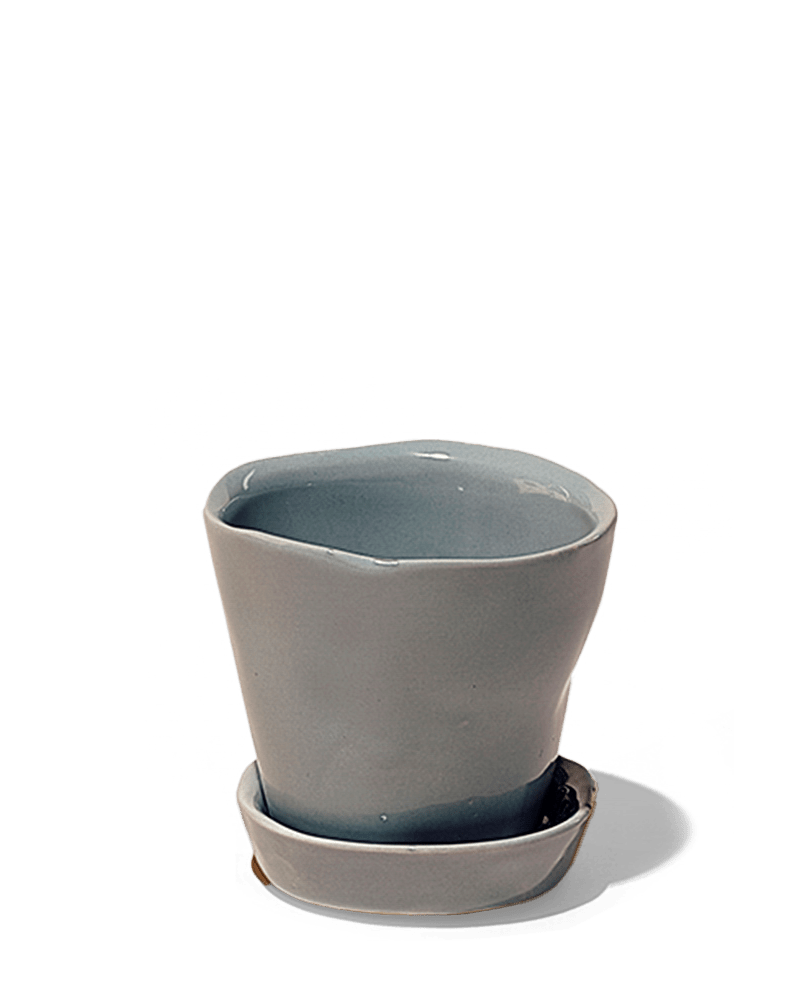
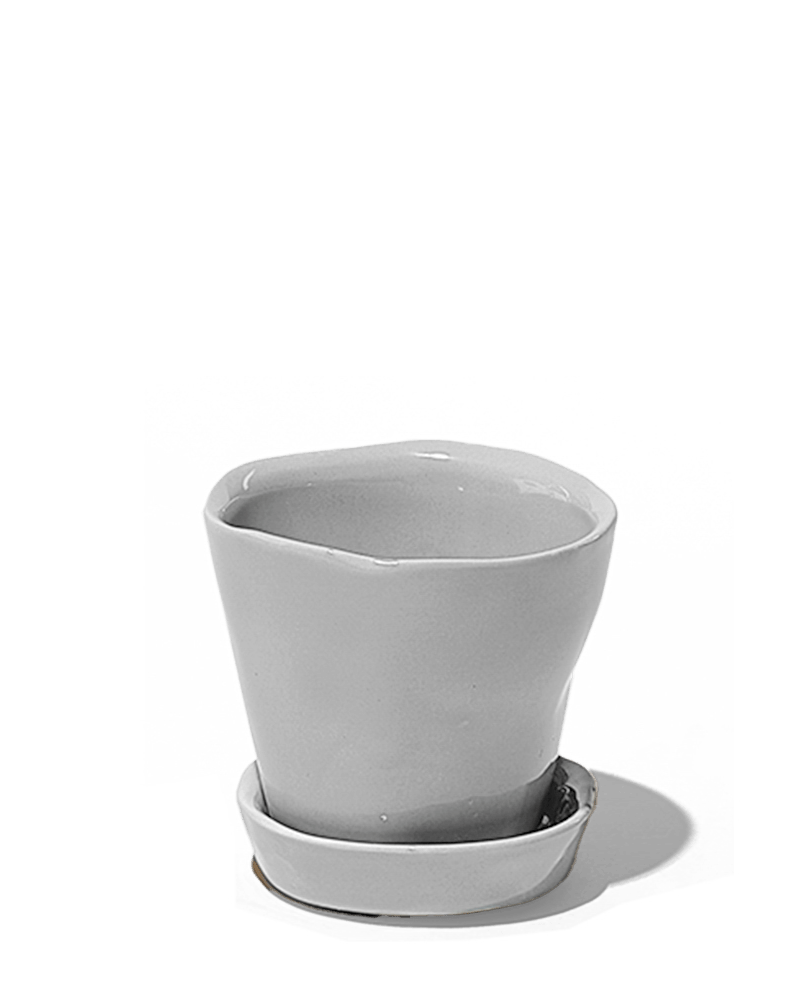
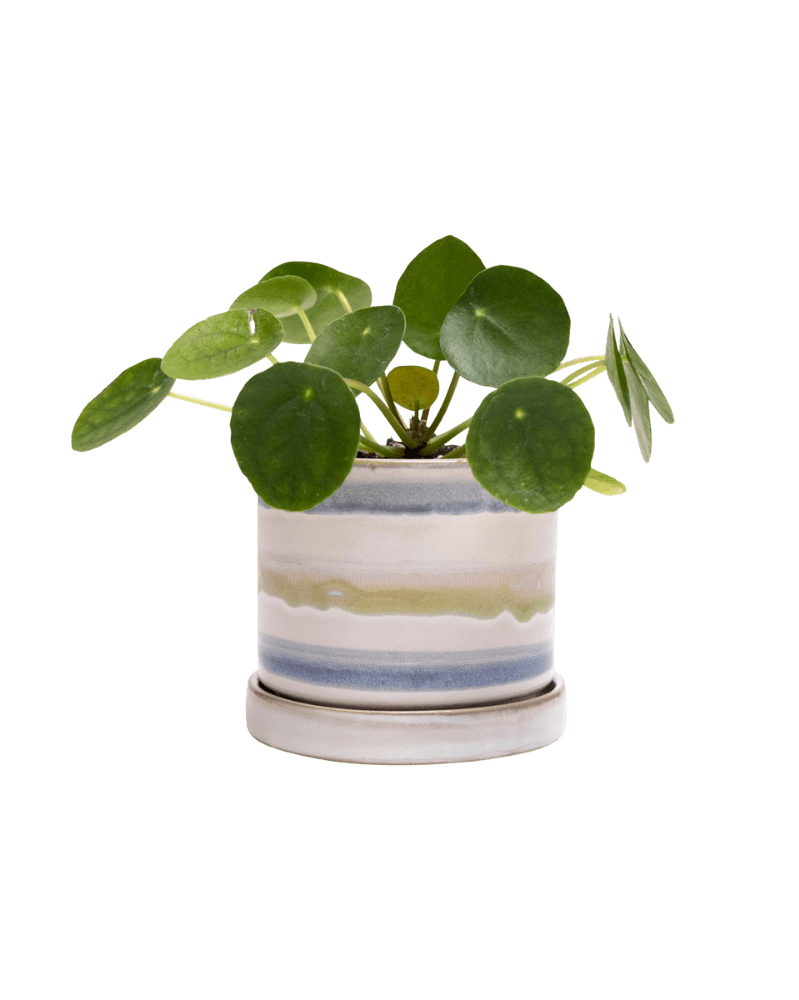
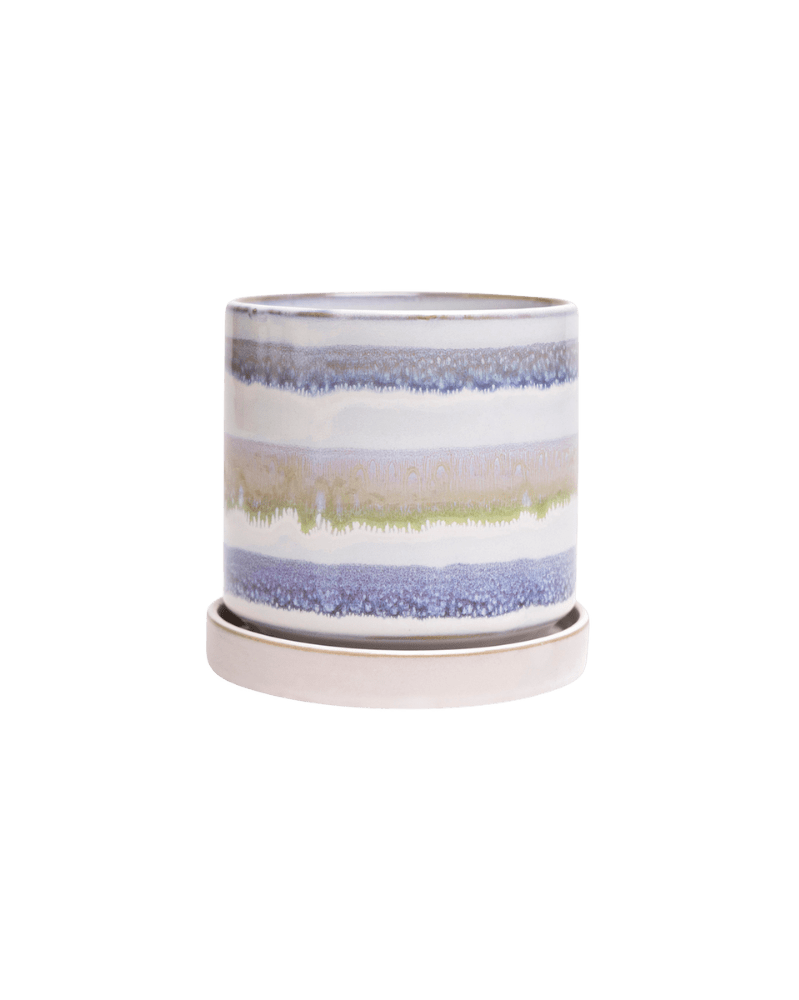
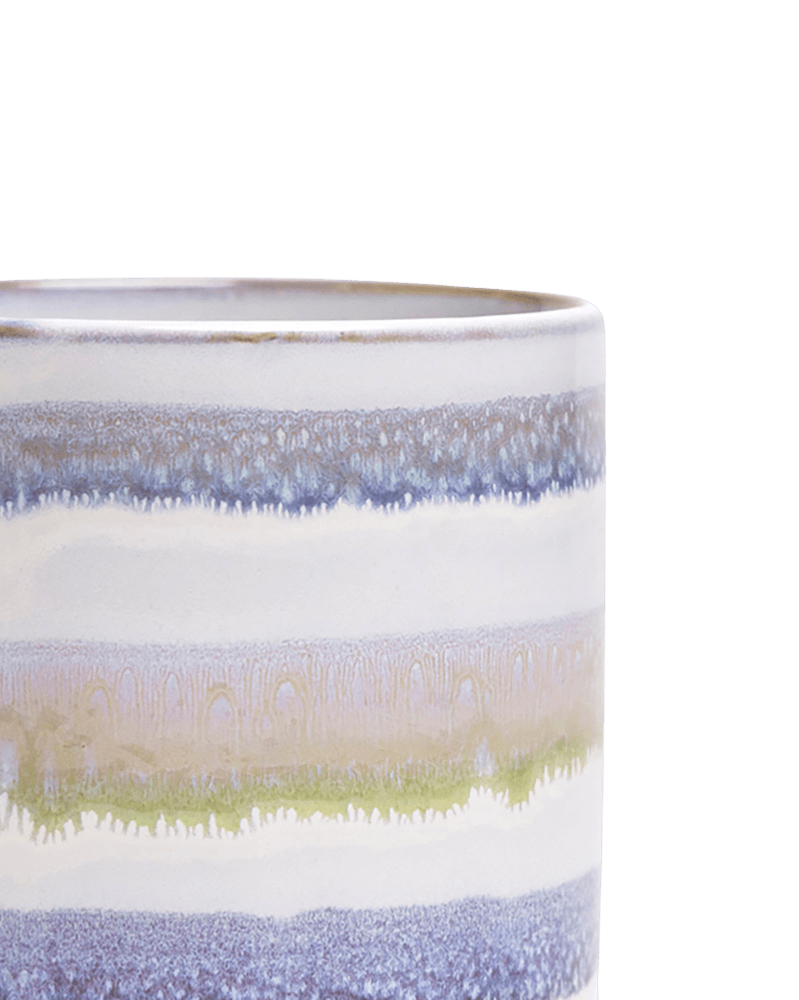
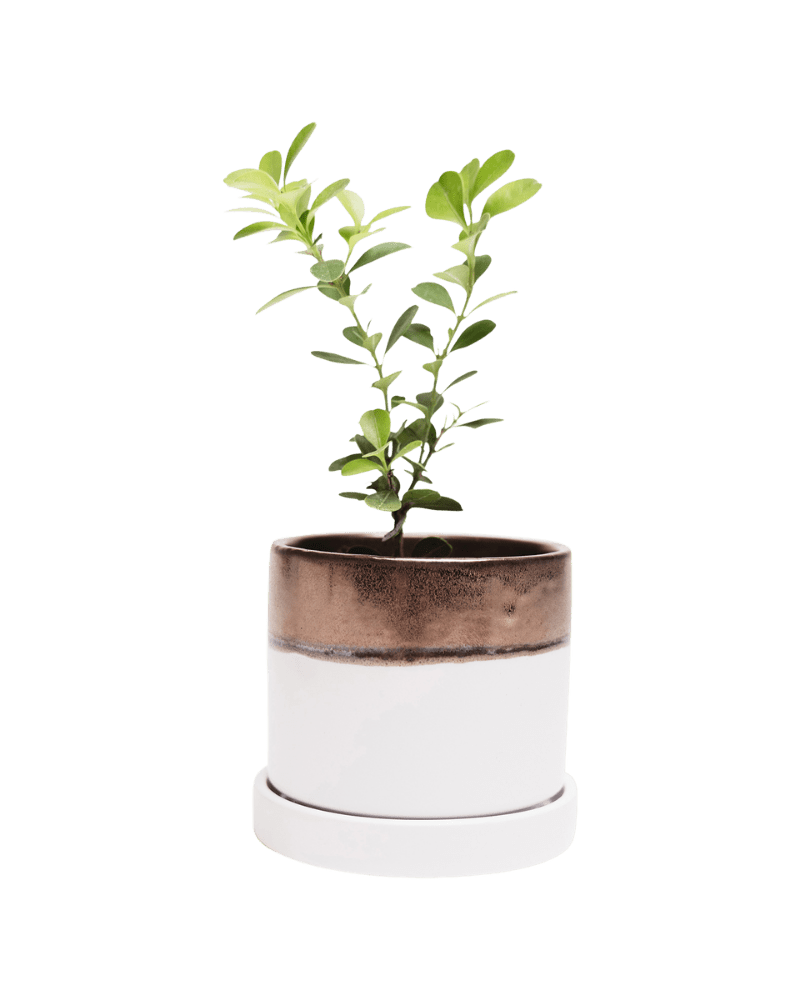
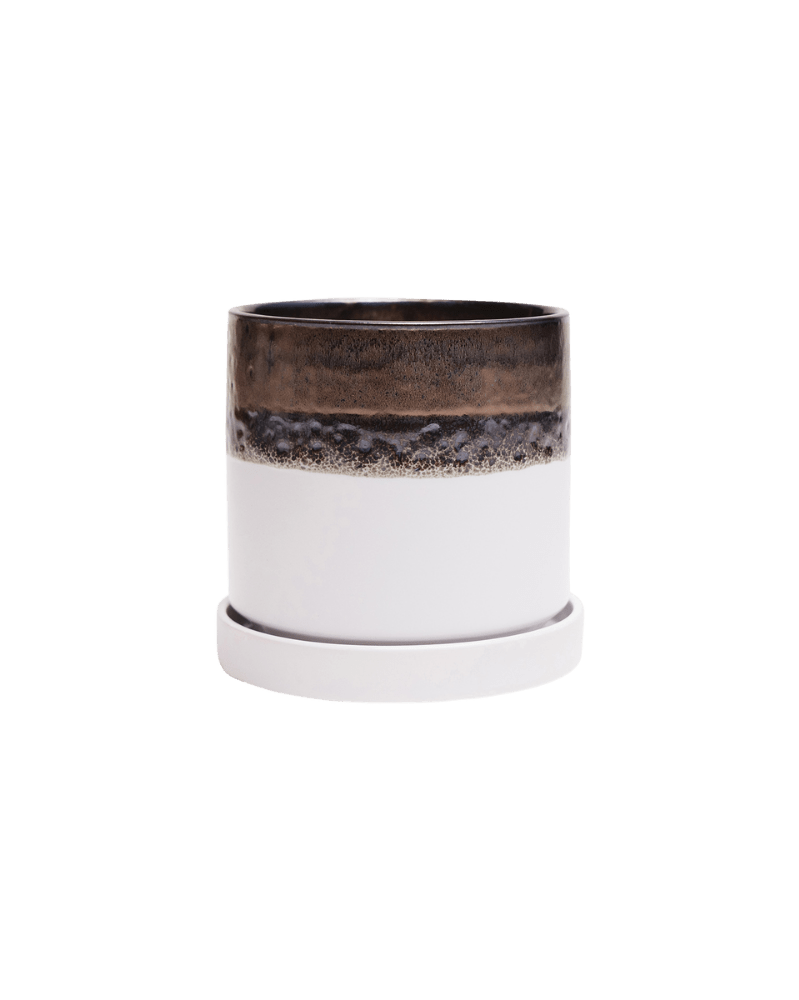
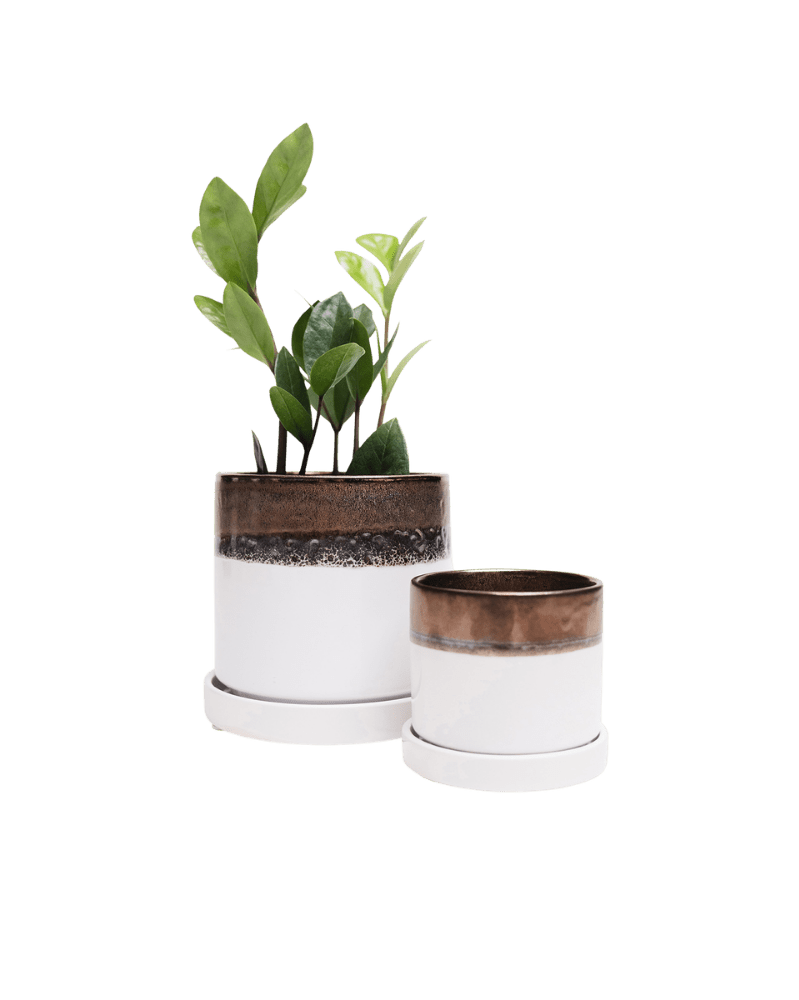
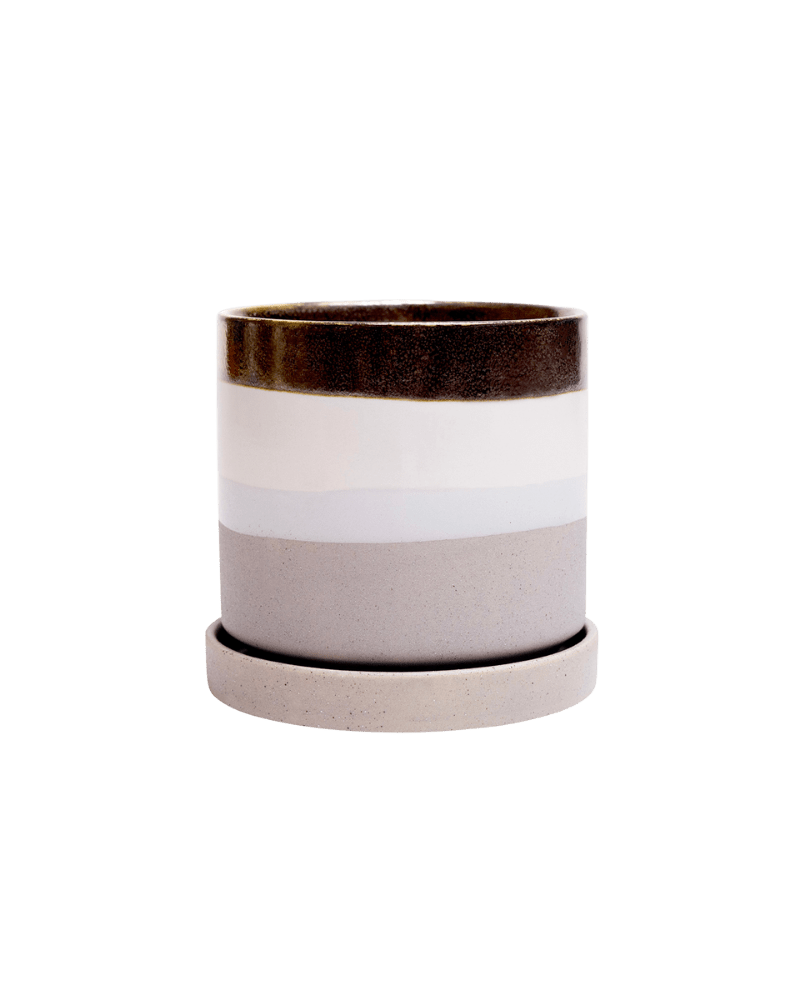
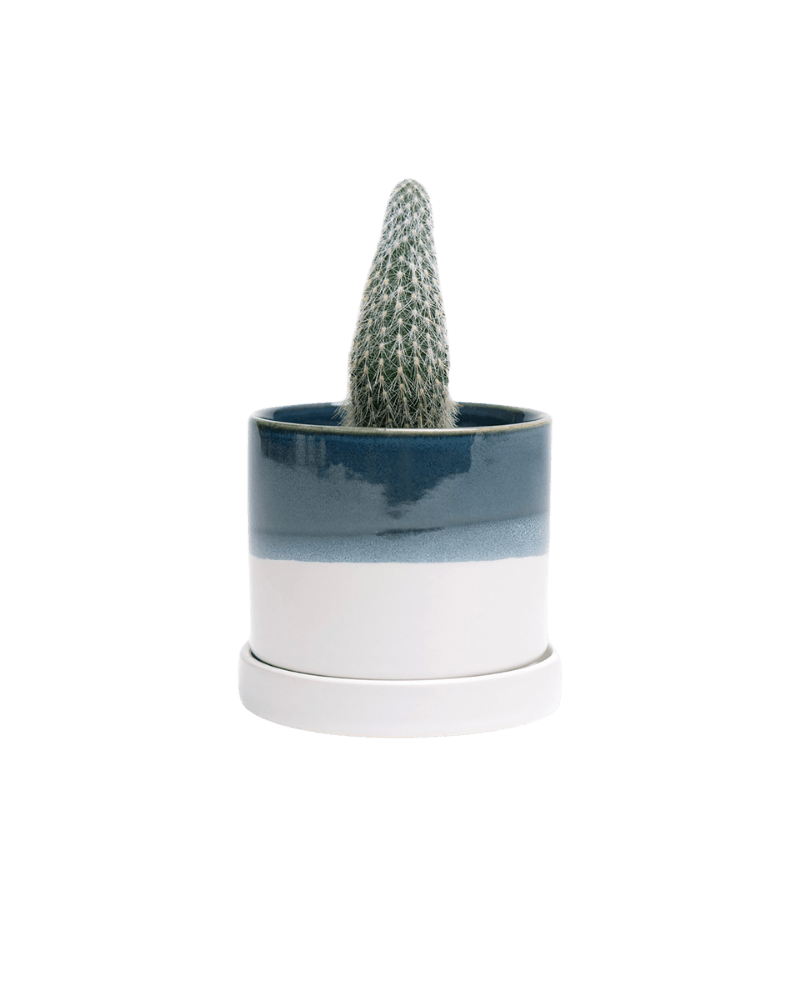
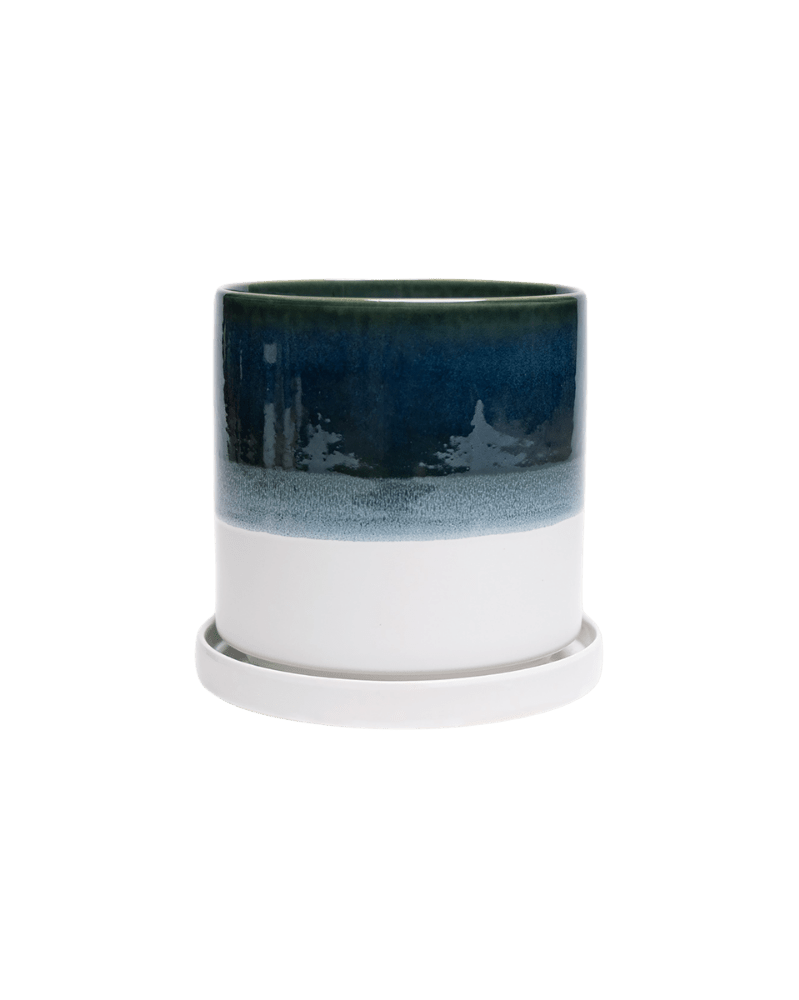
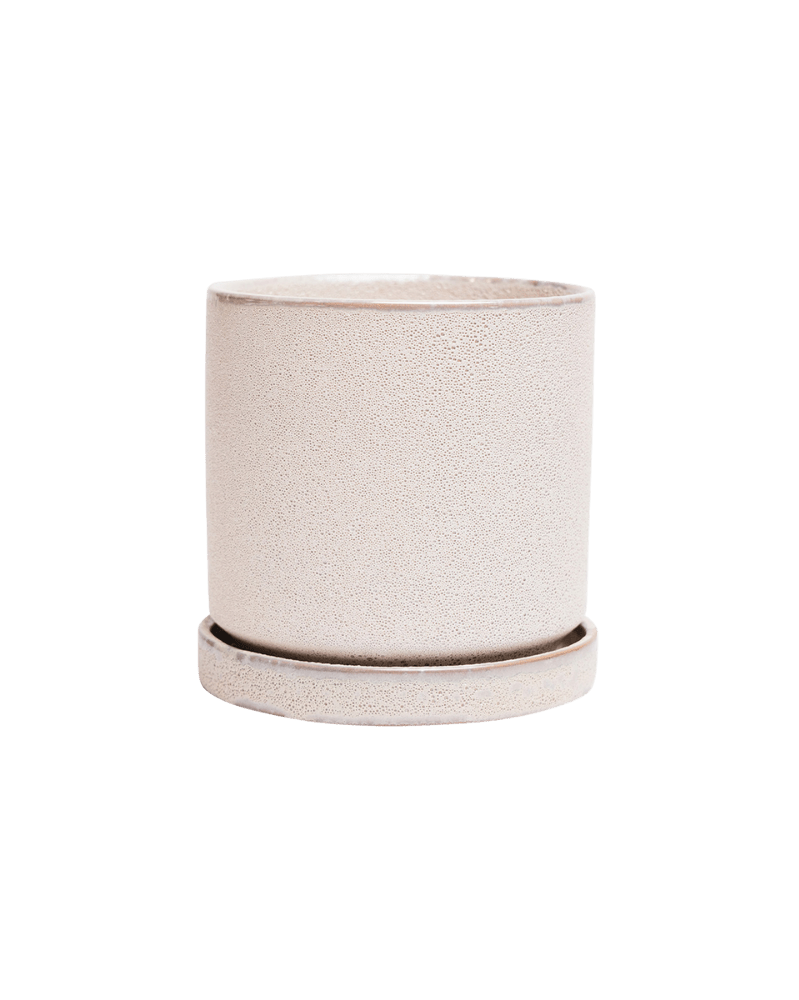
- Use the white Virago in the 3 inch — sized for a small root system, drains properly, does not retain excess moisture
The Right Pot for a Peperomia
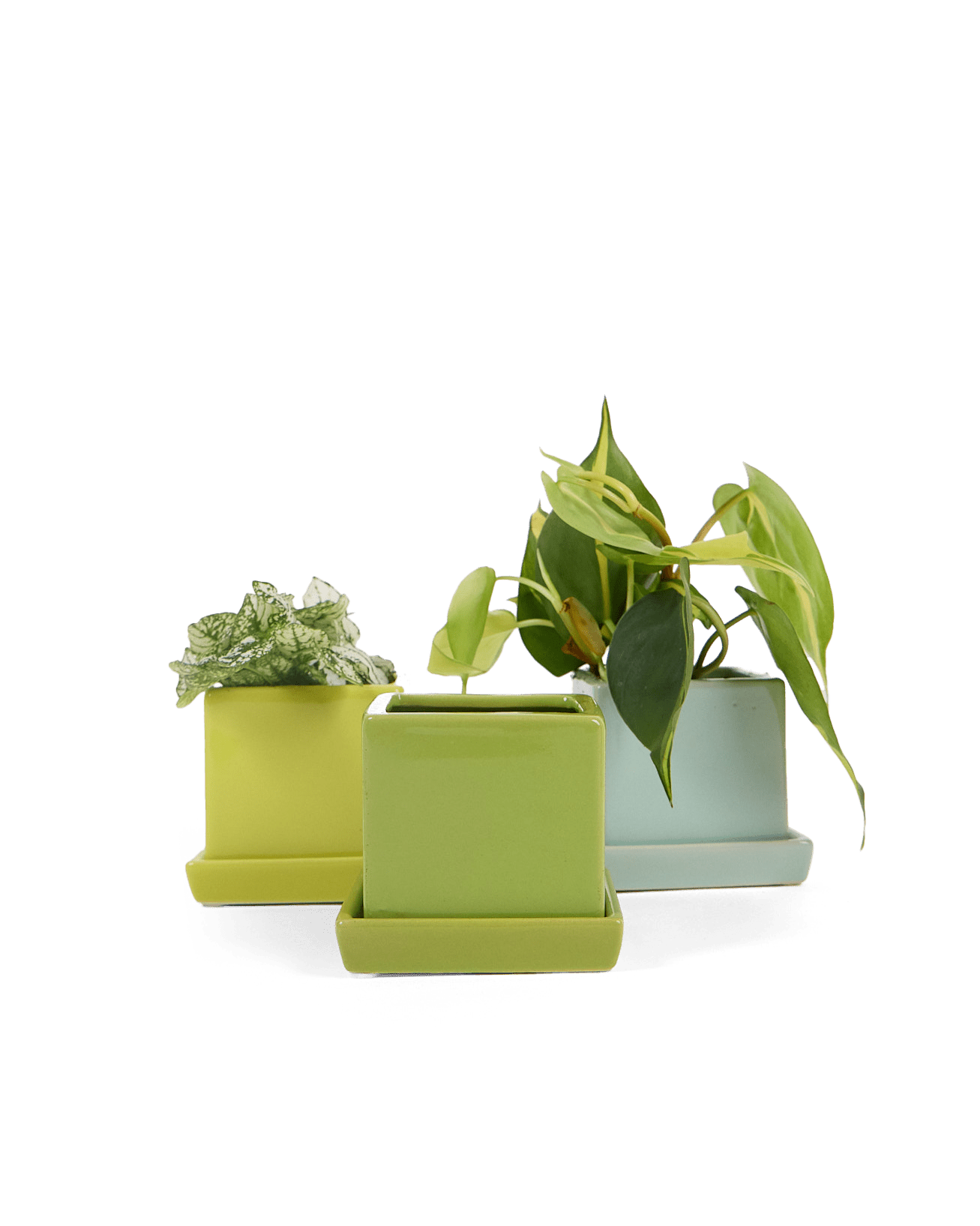
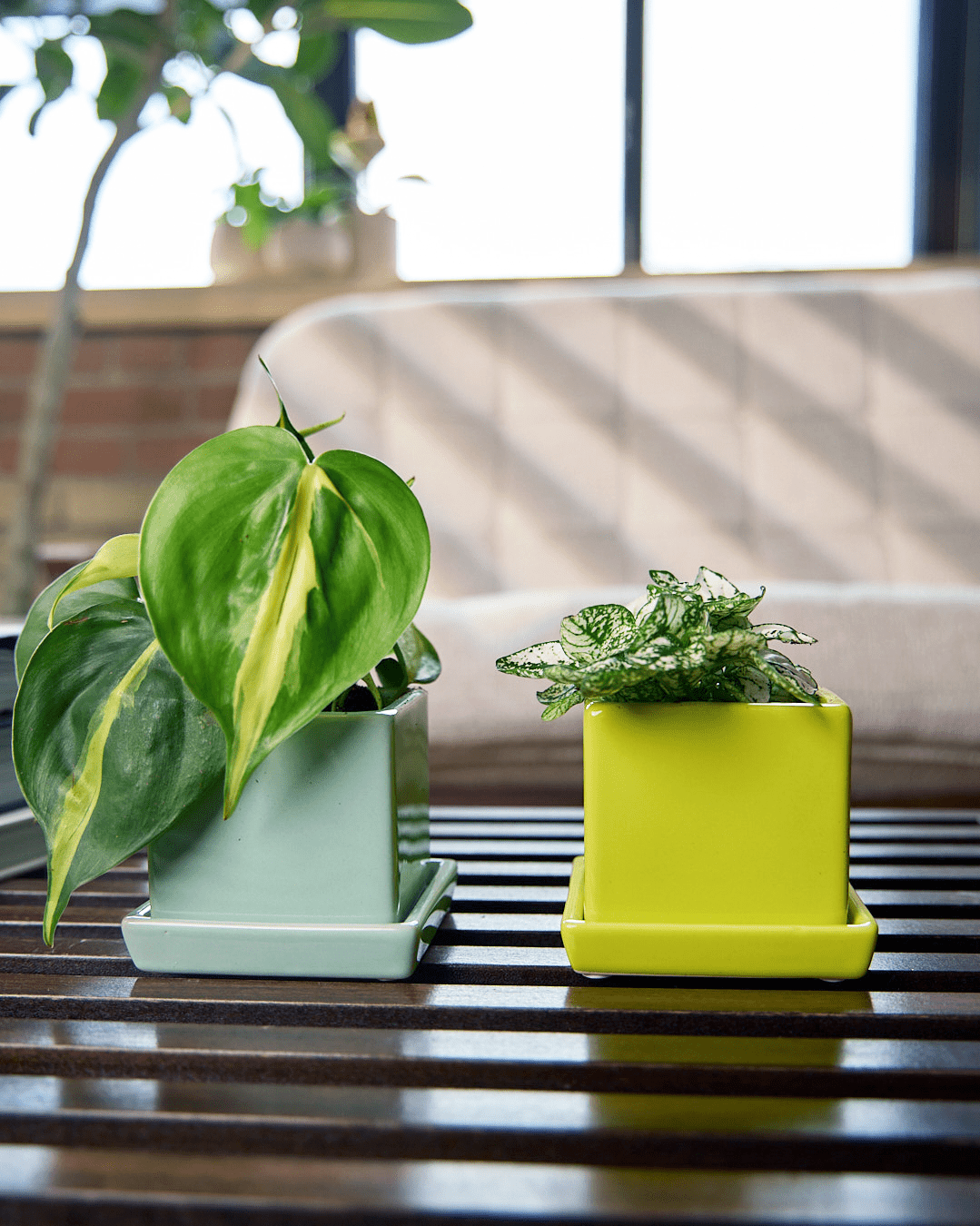
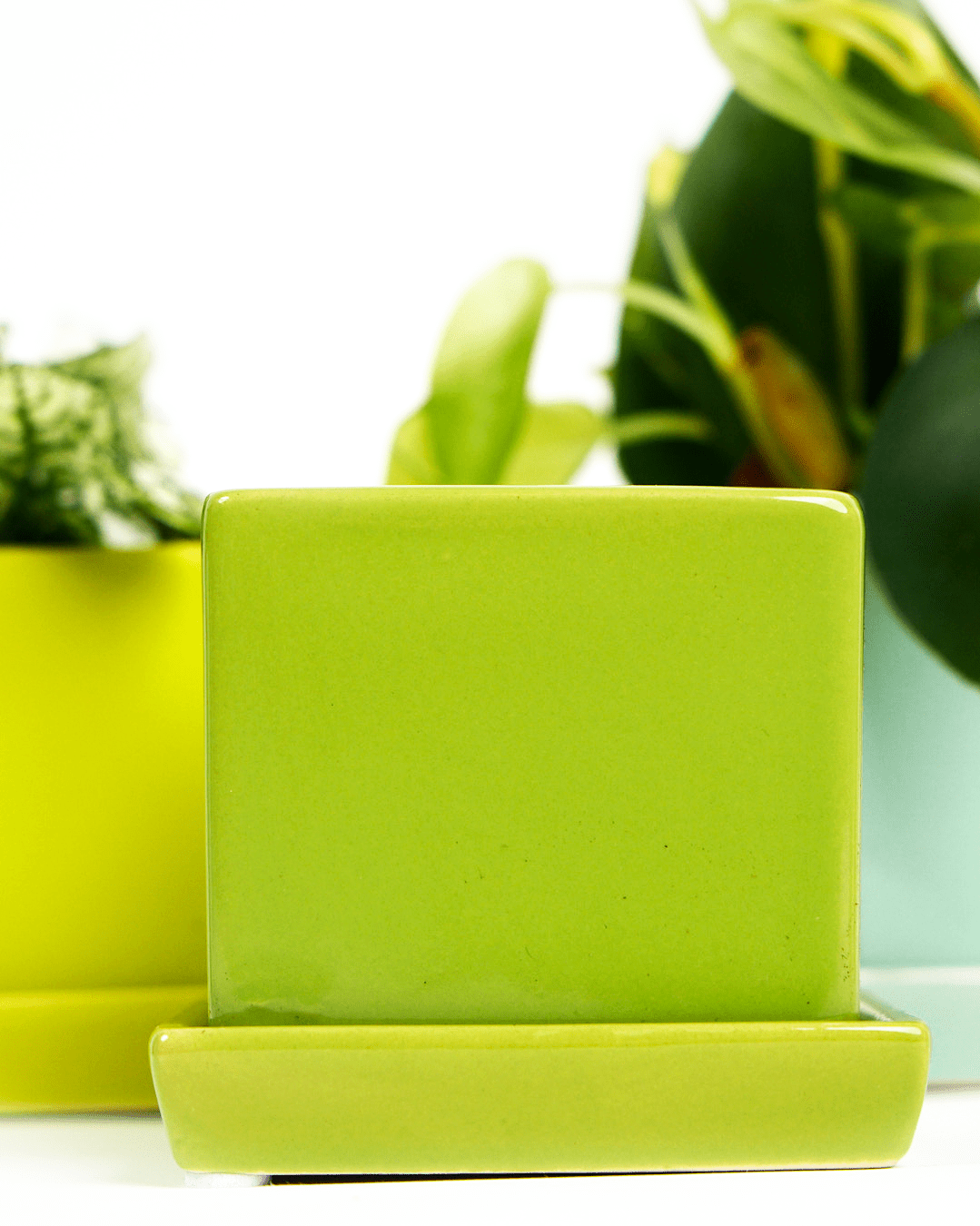
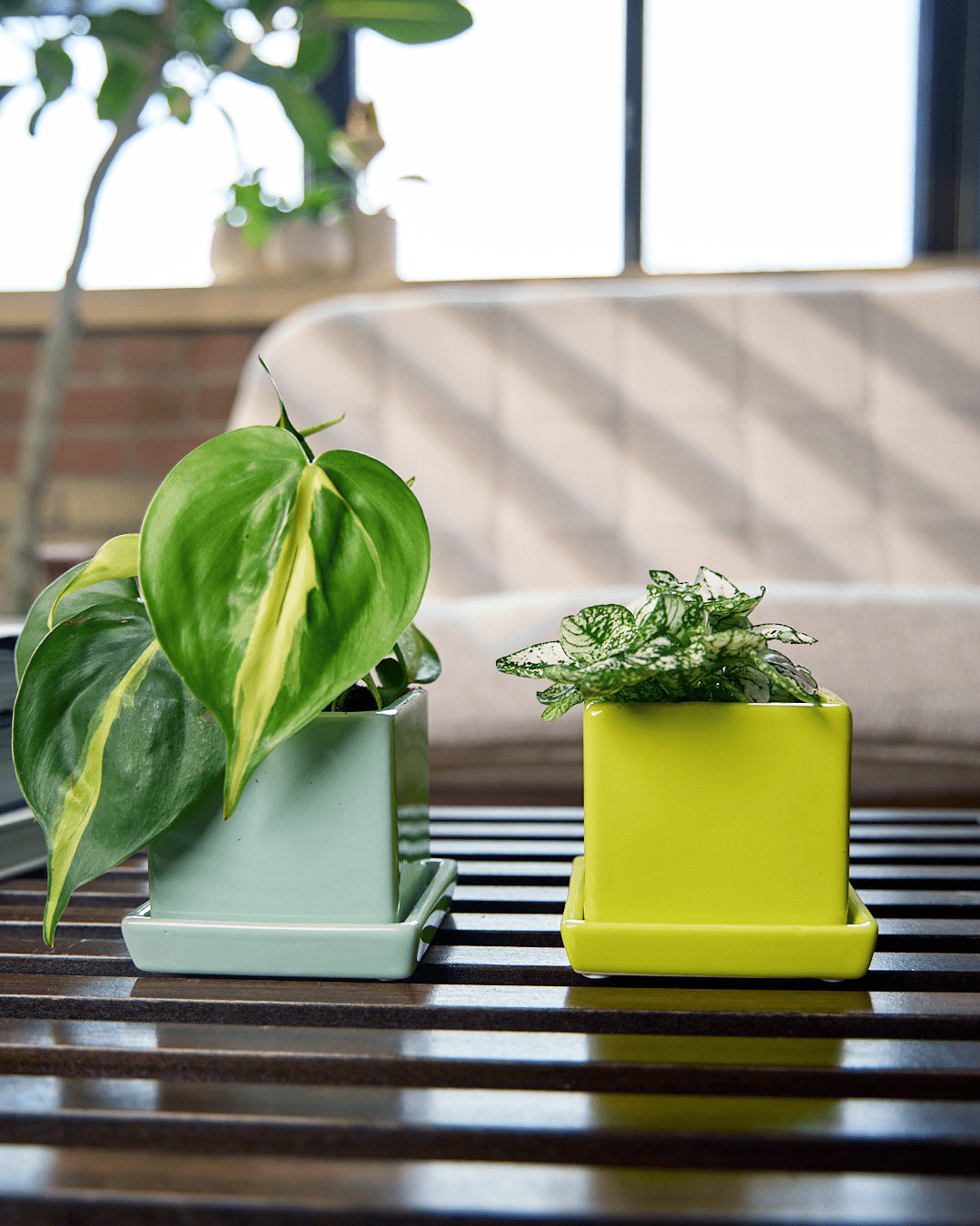
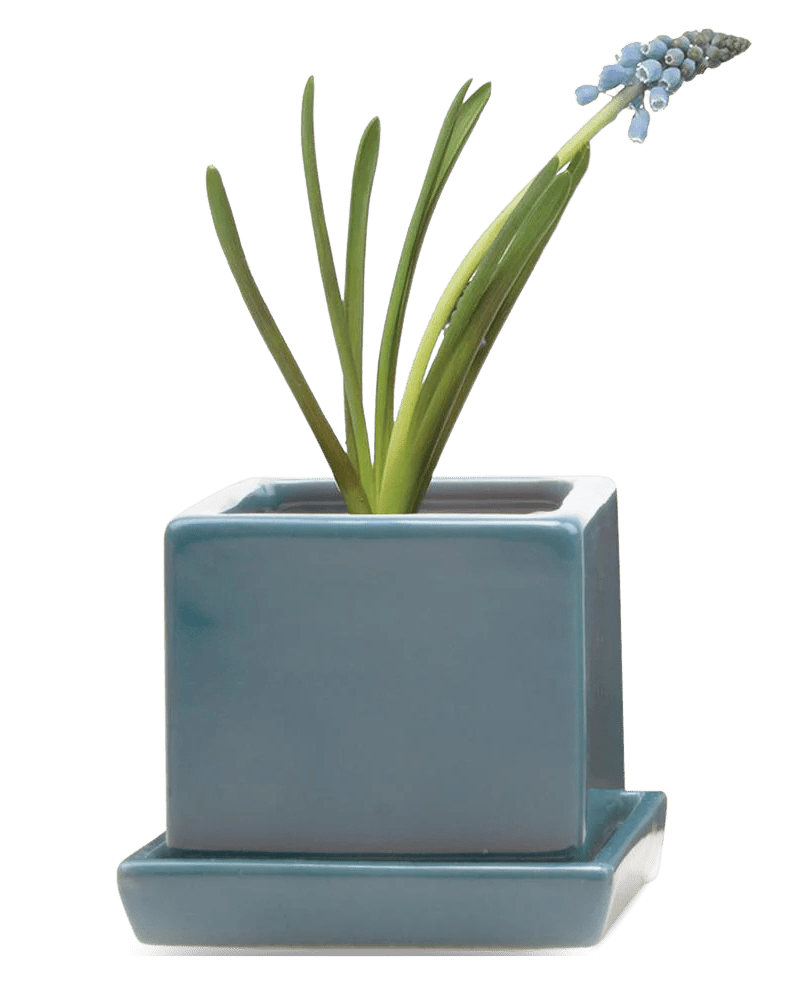
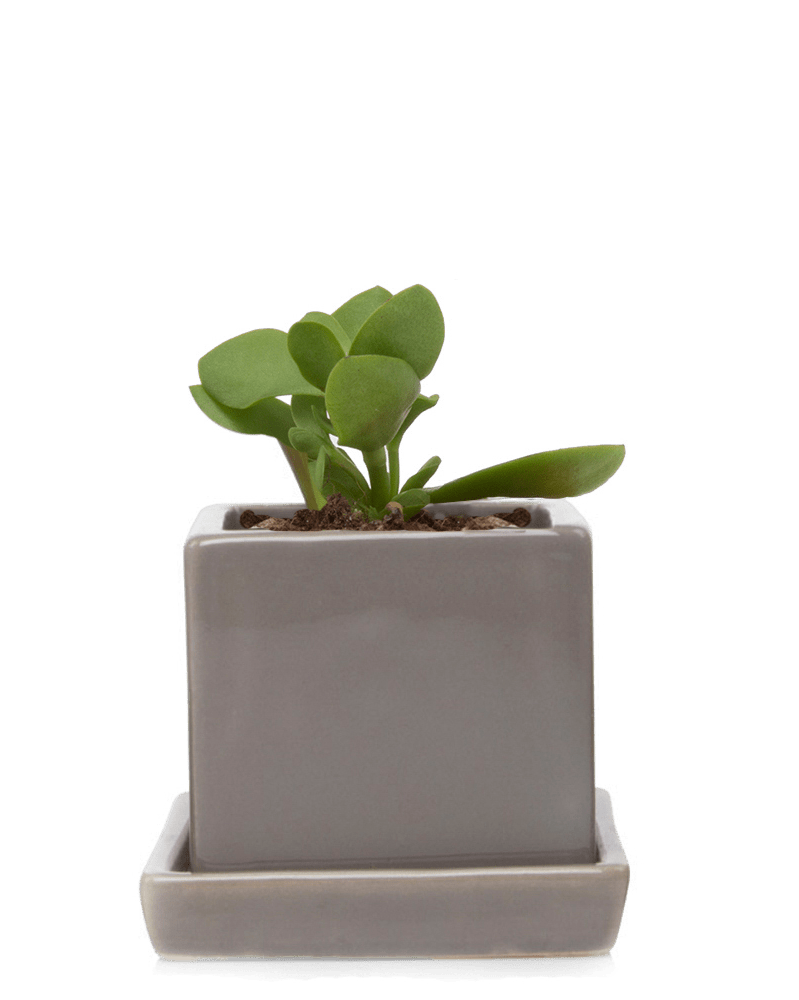
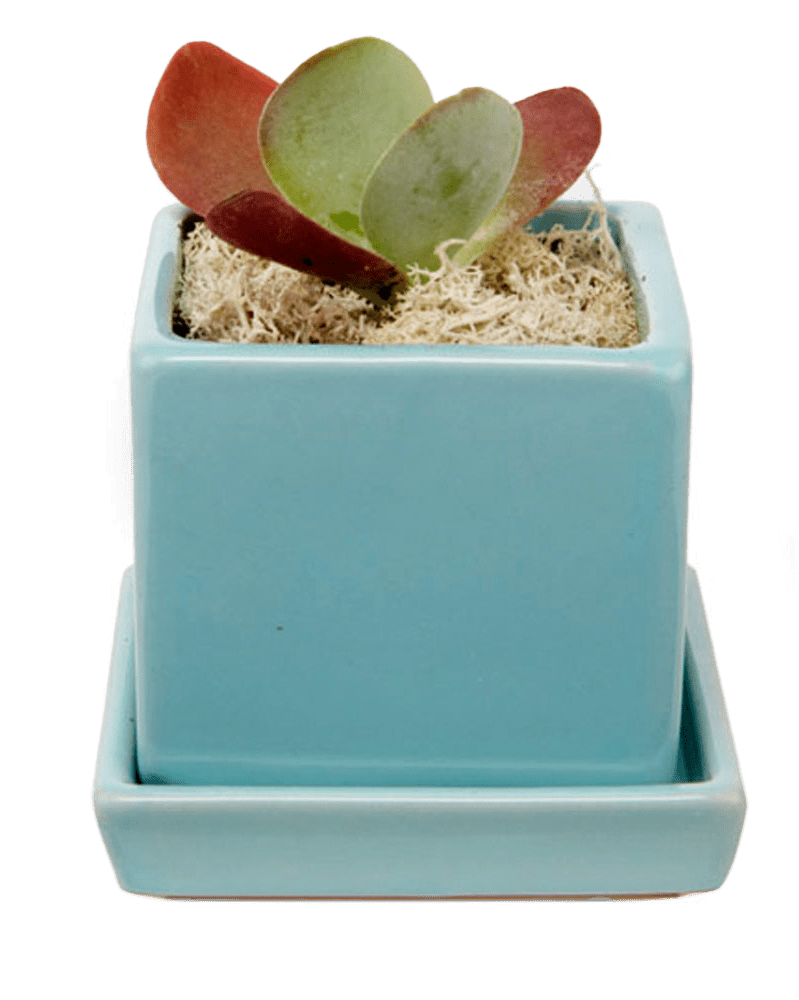
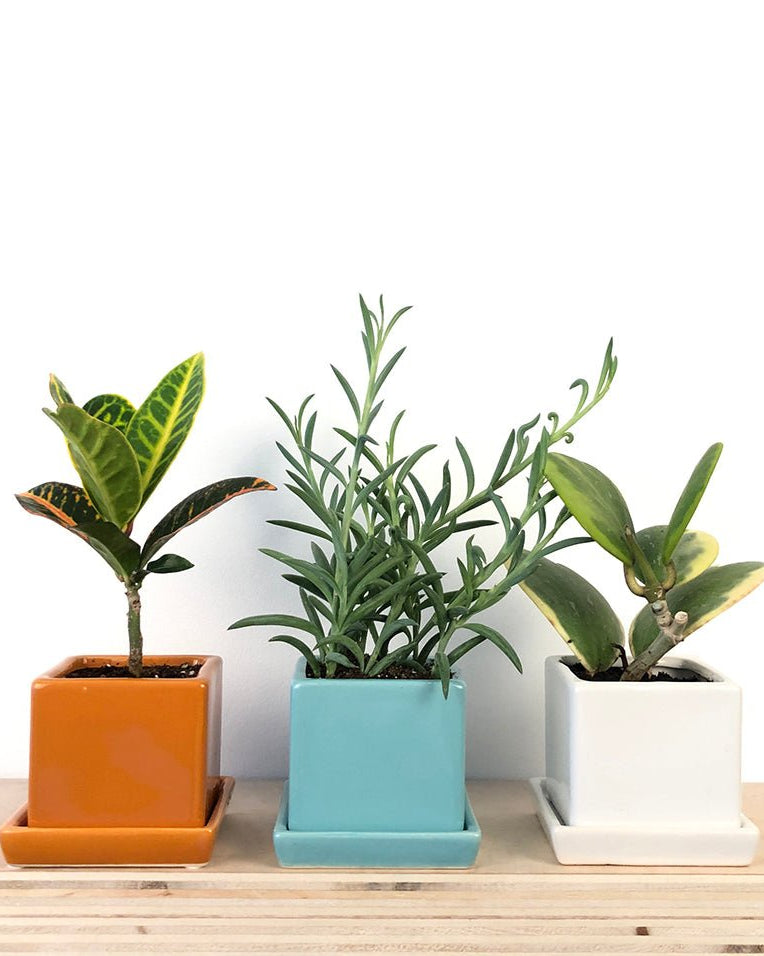
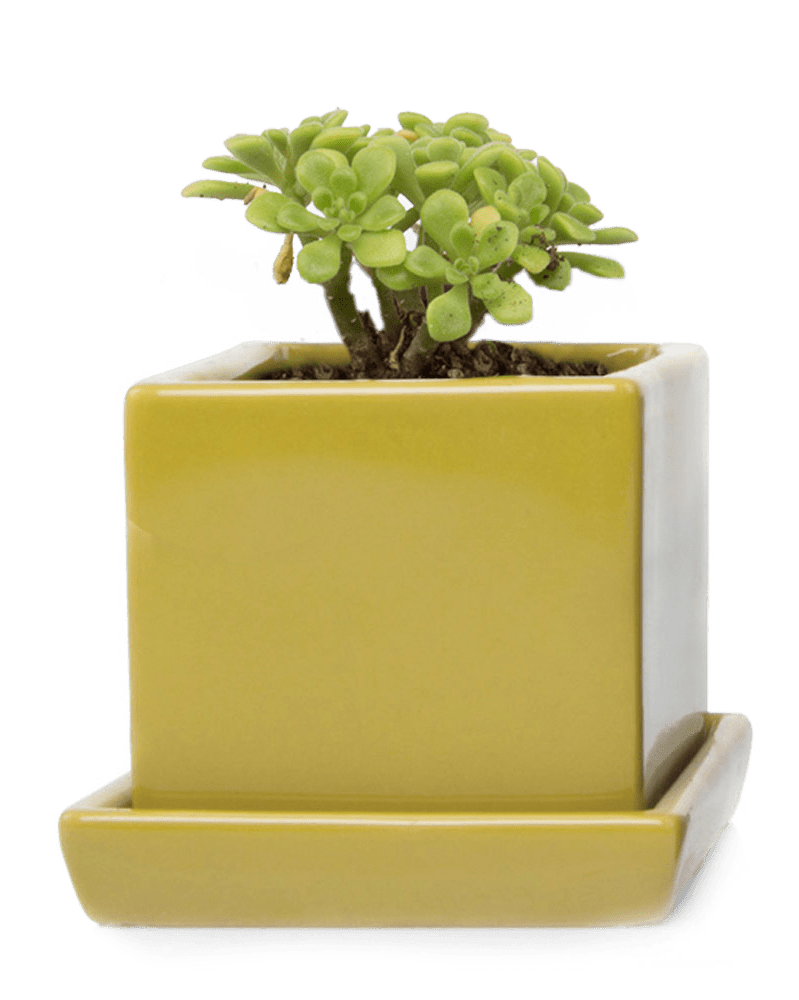
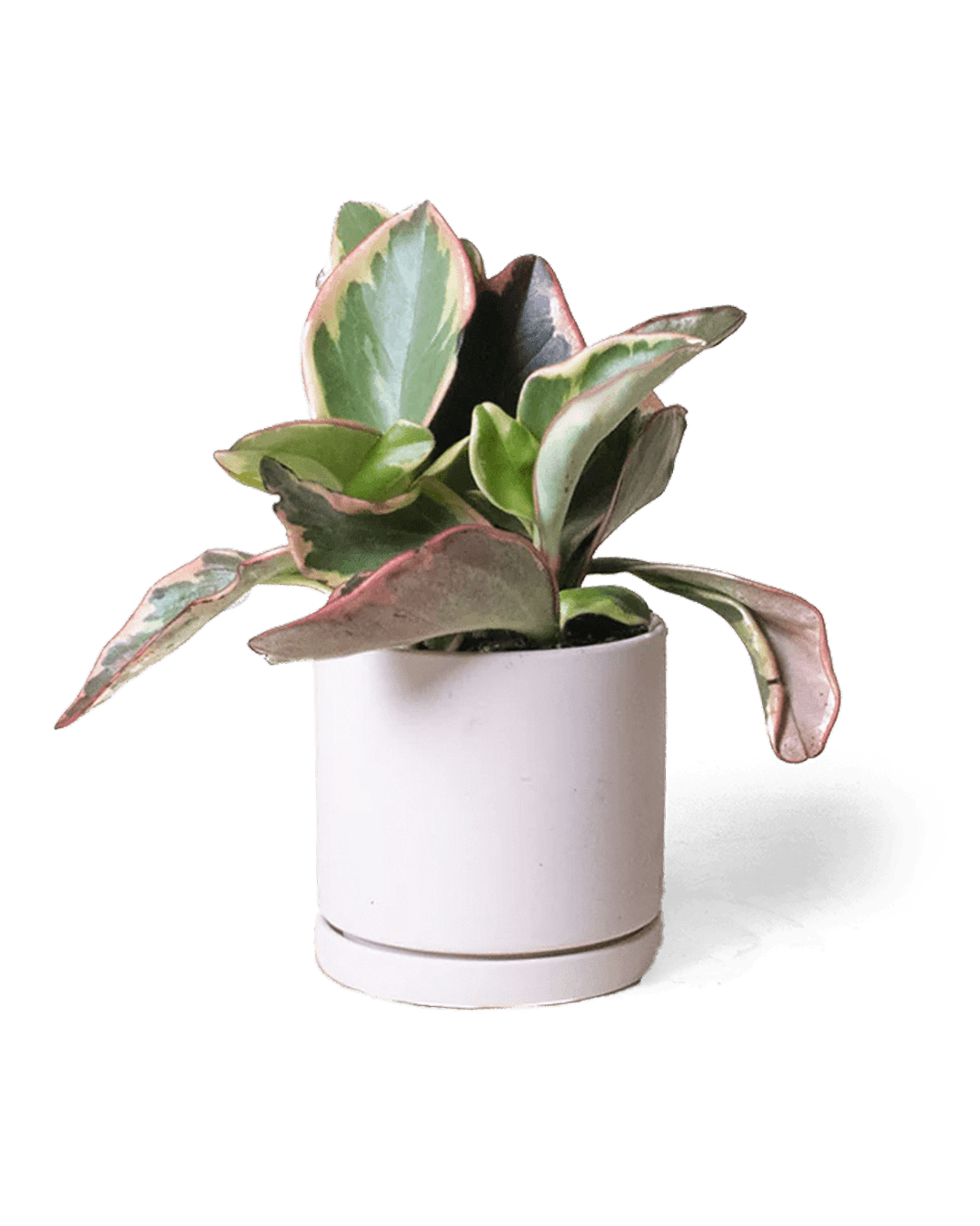
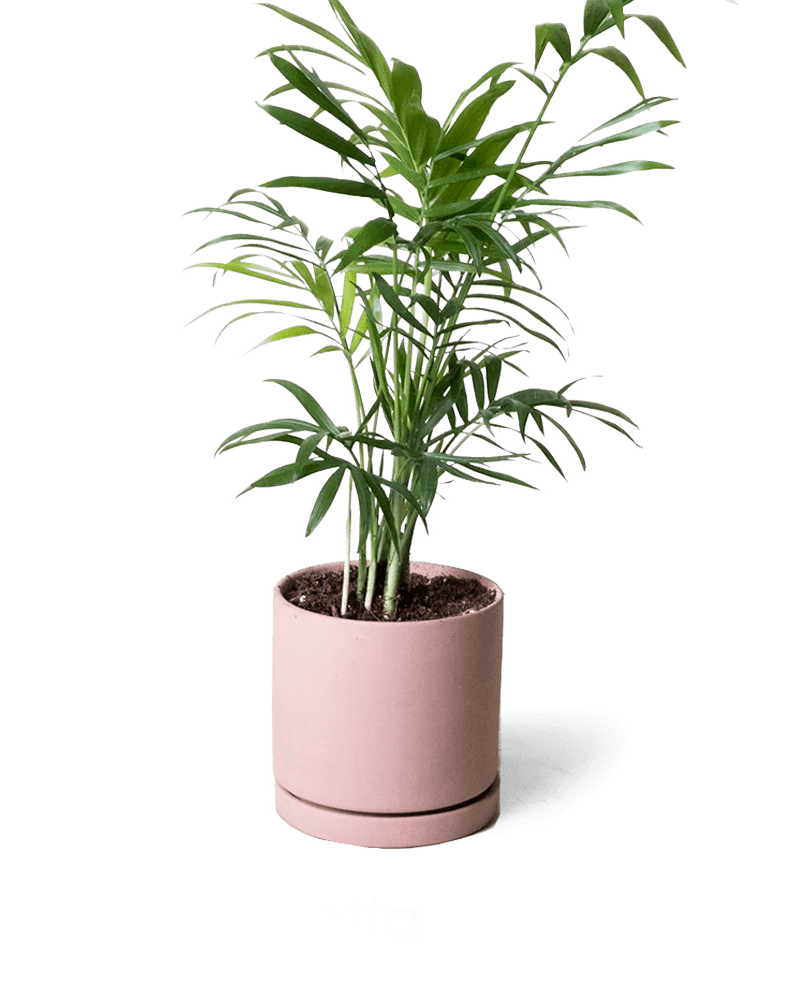
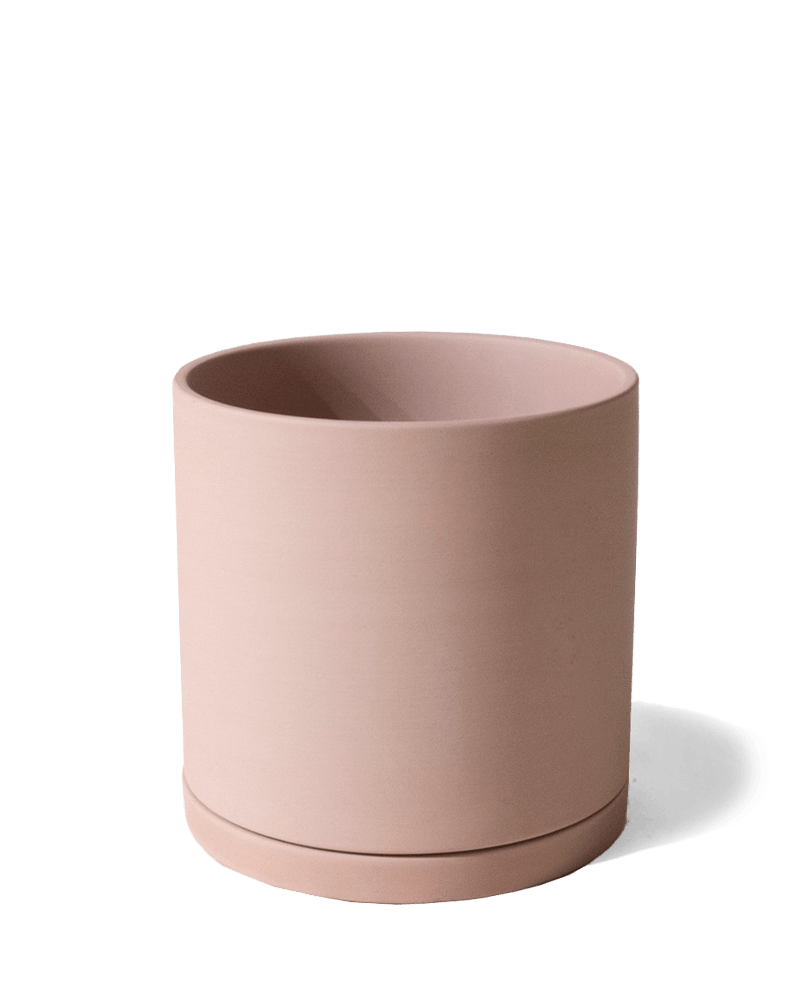
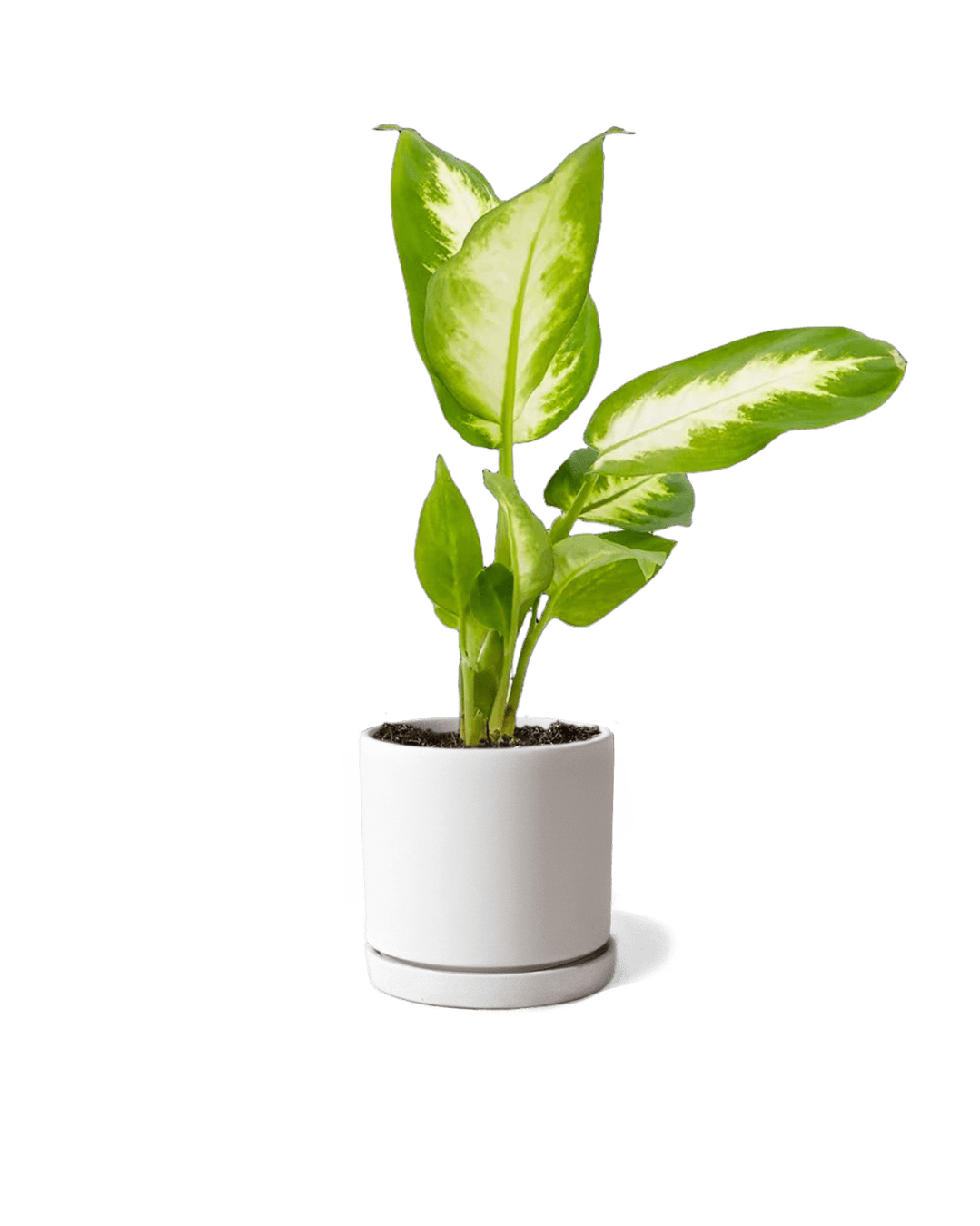
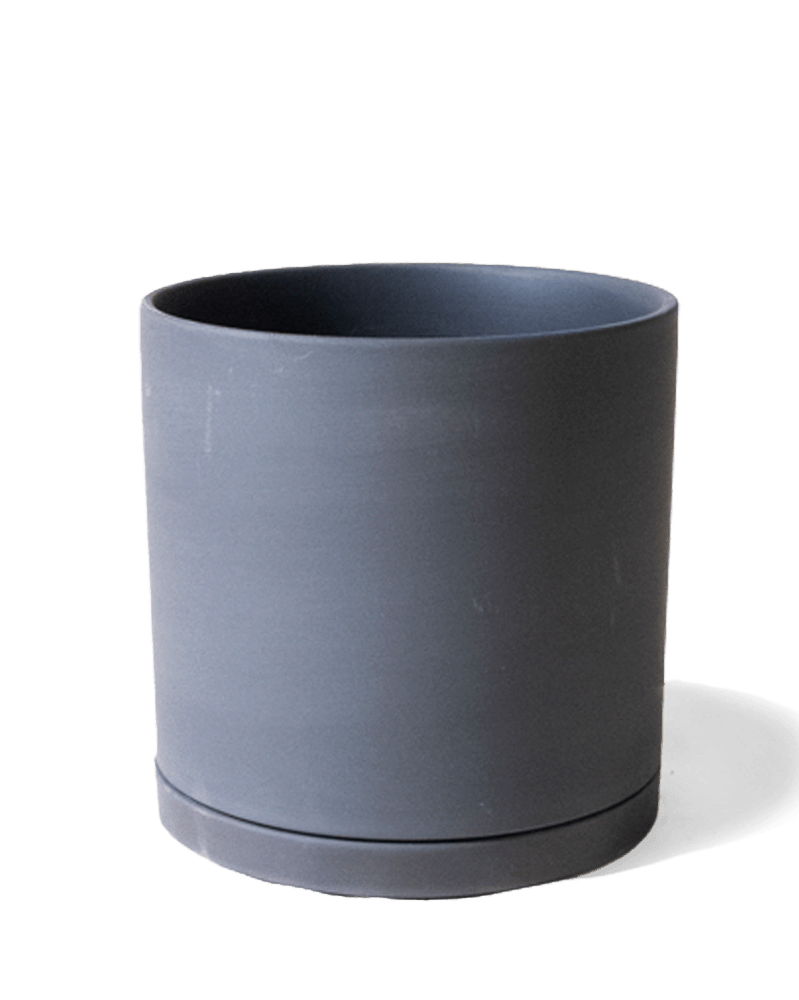
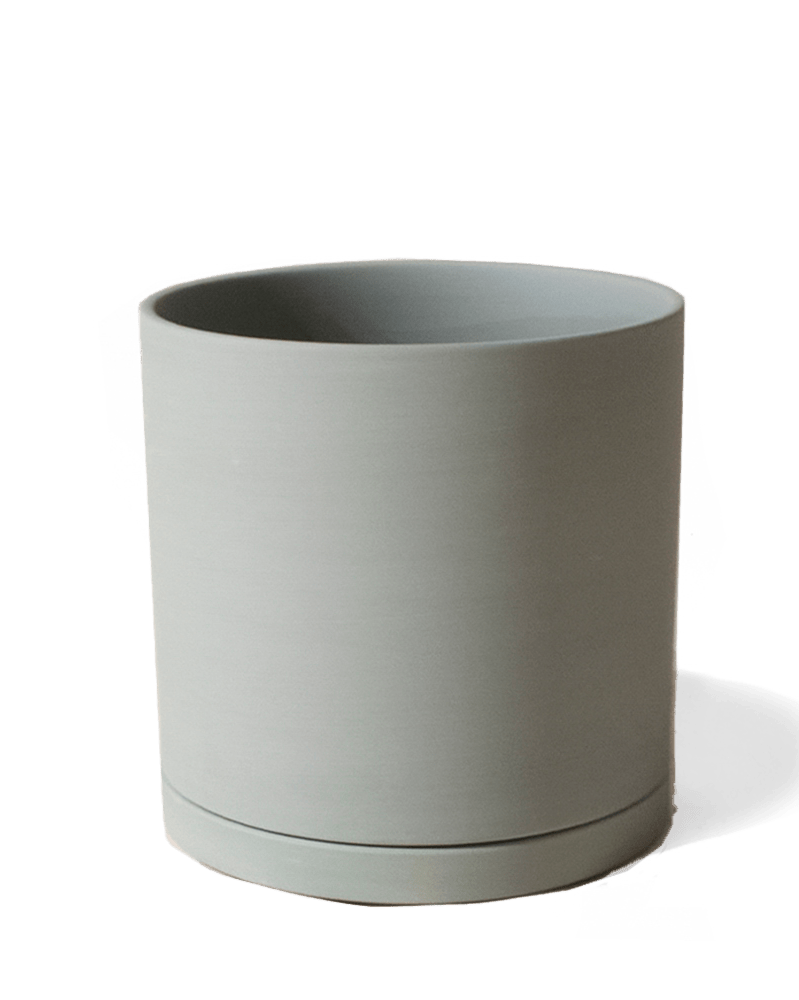
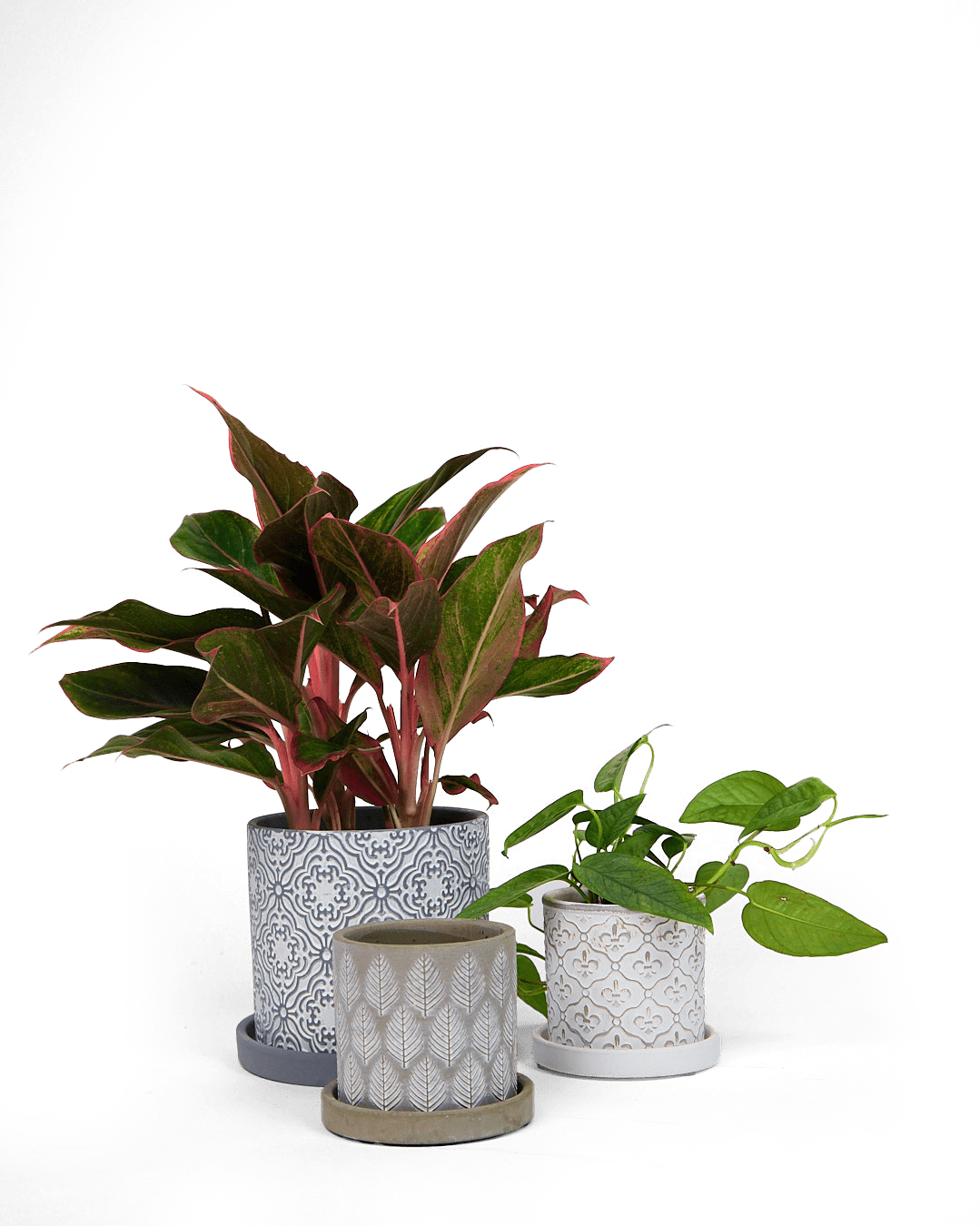
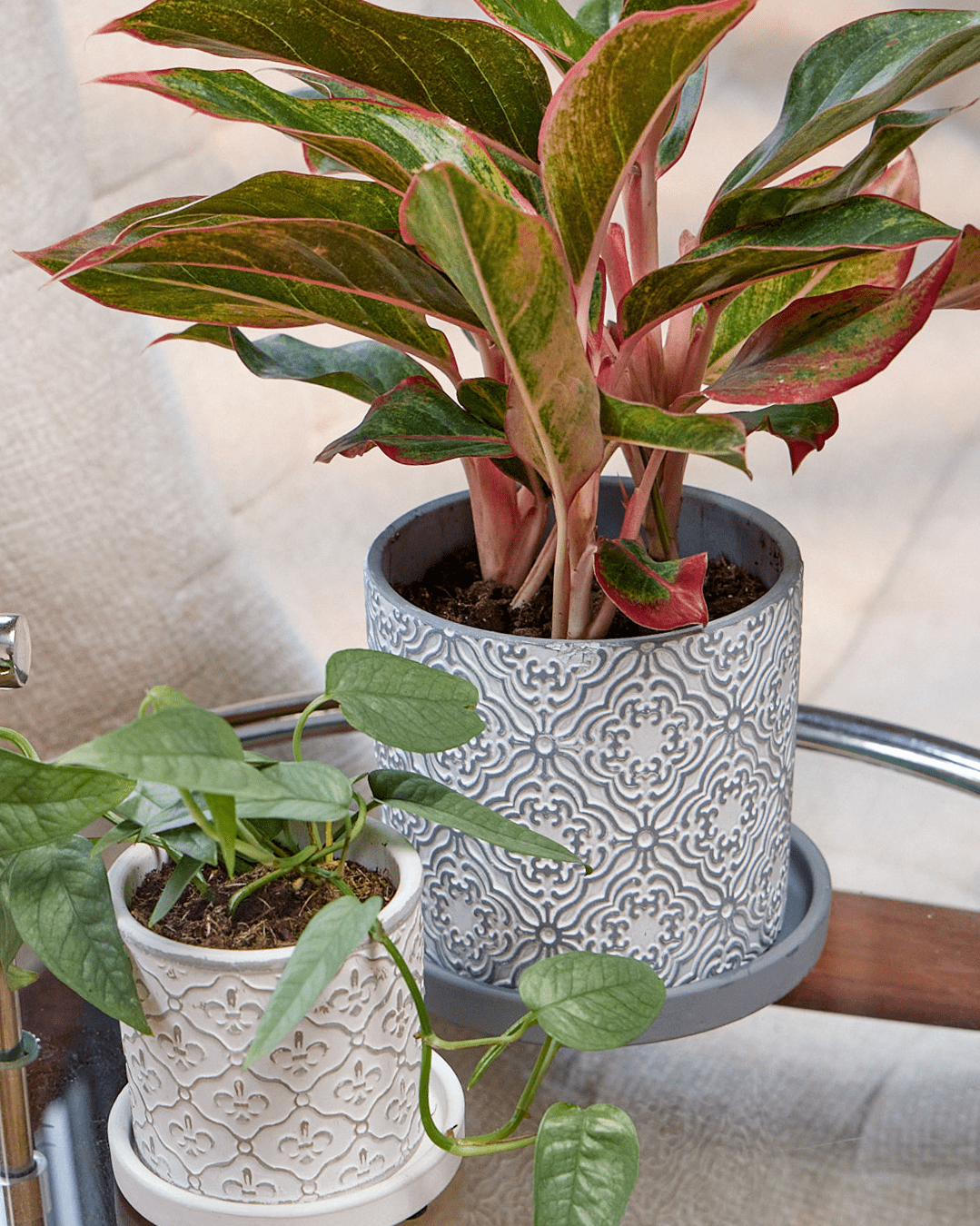
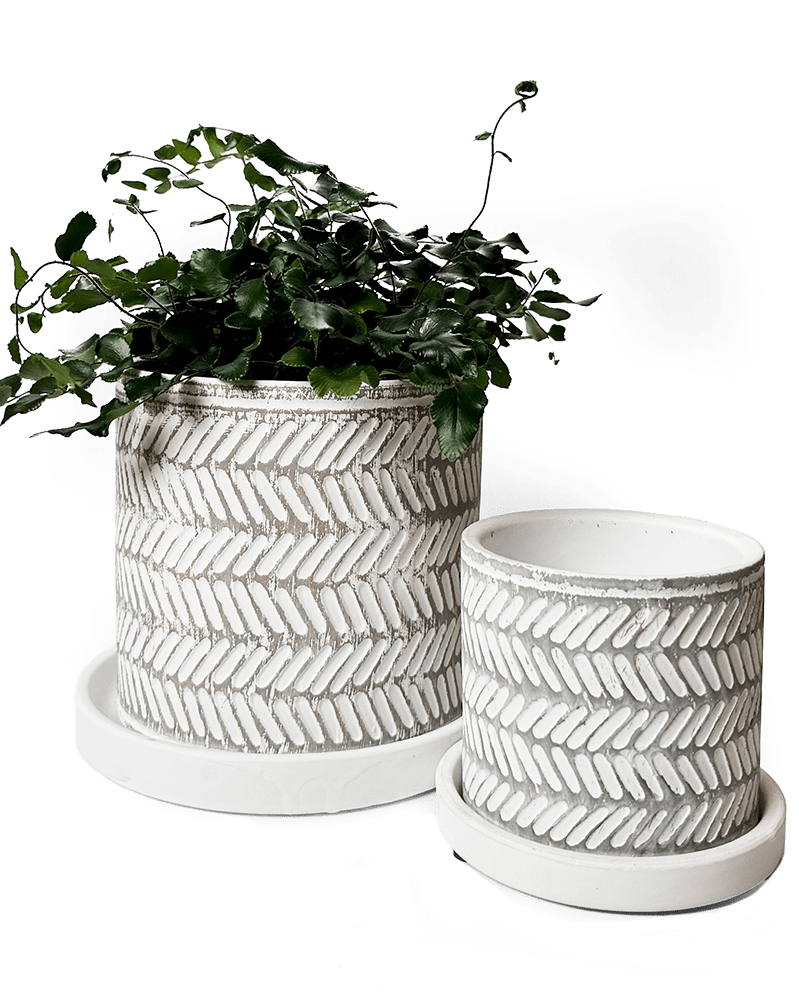
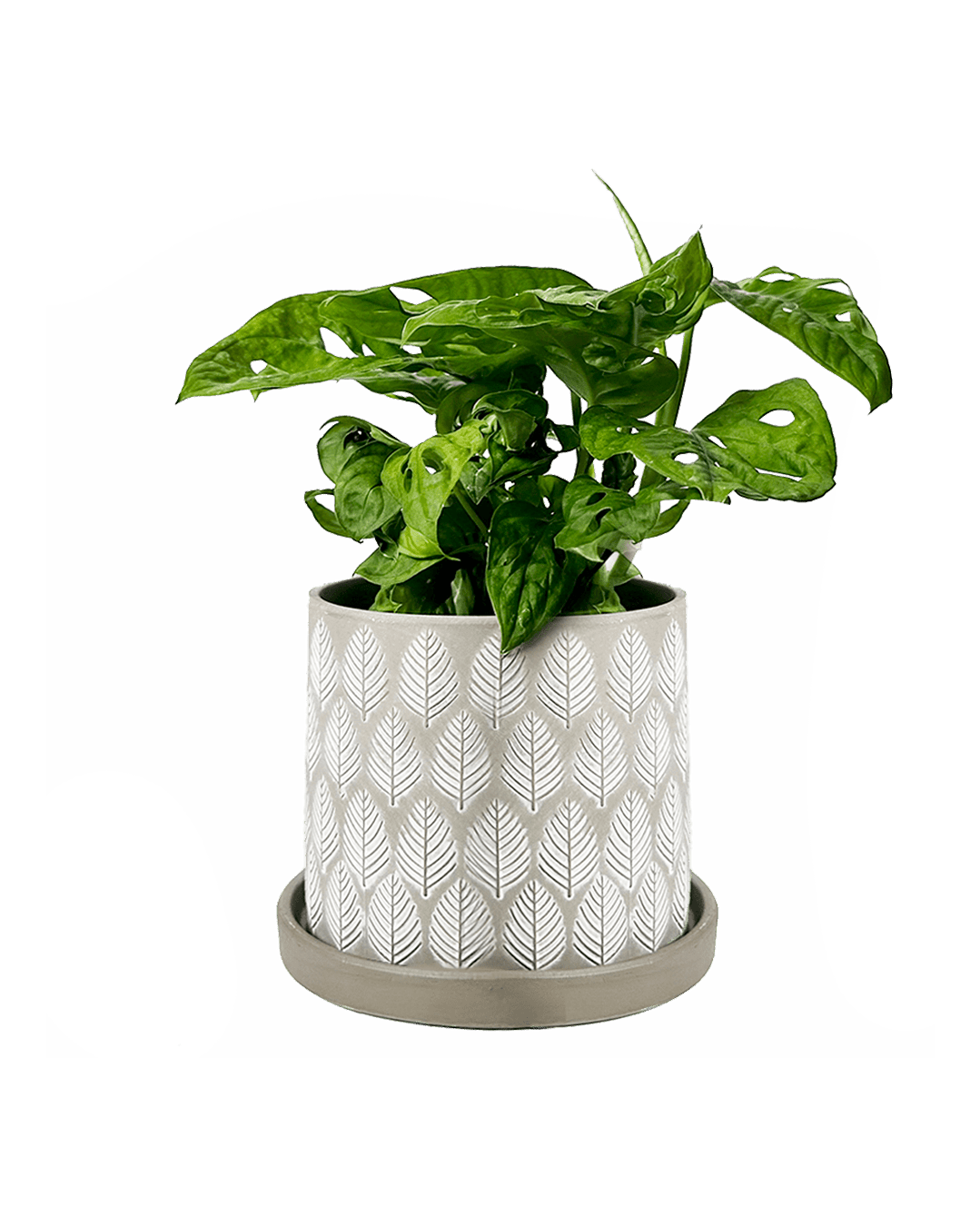
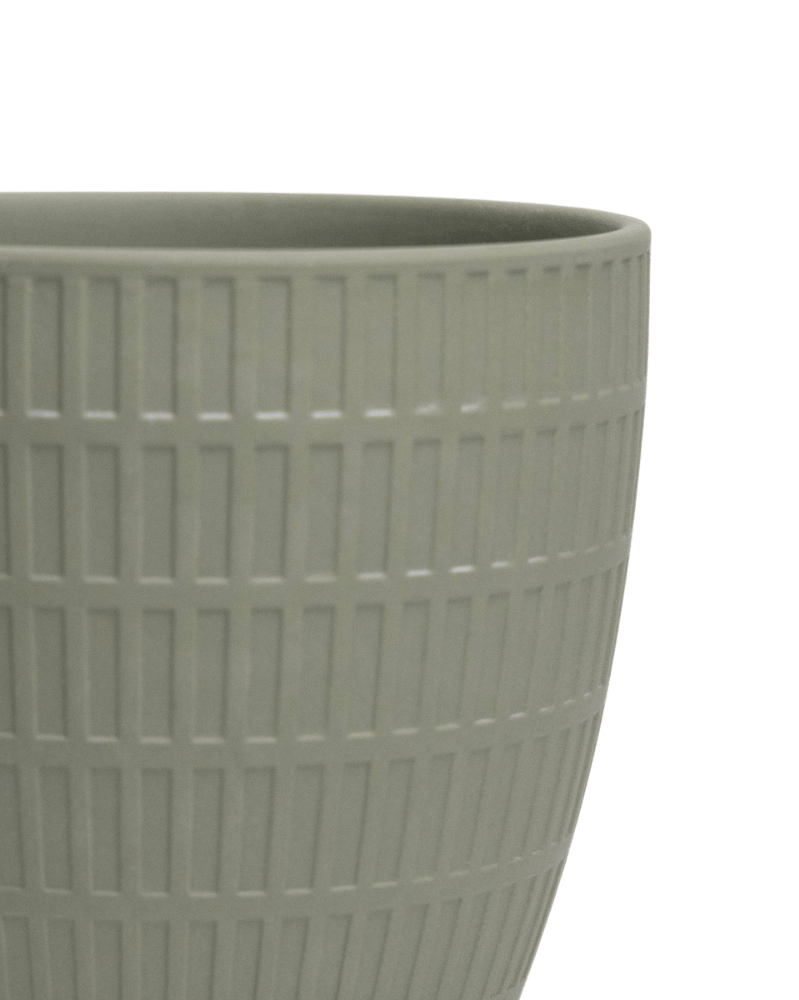
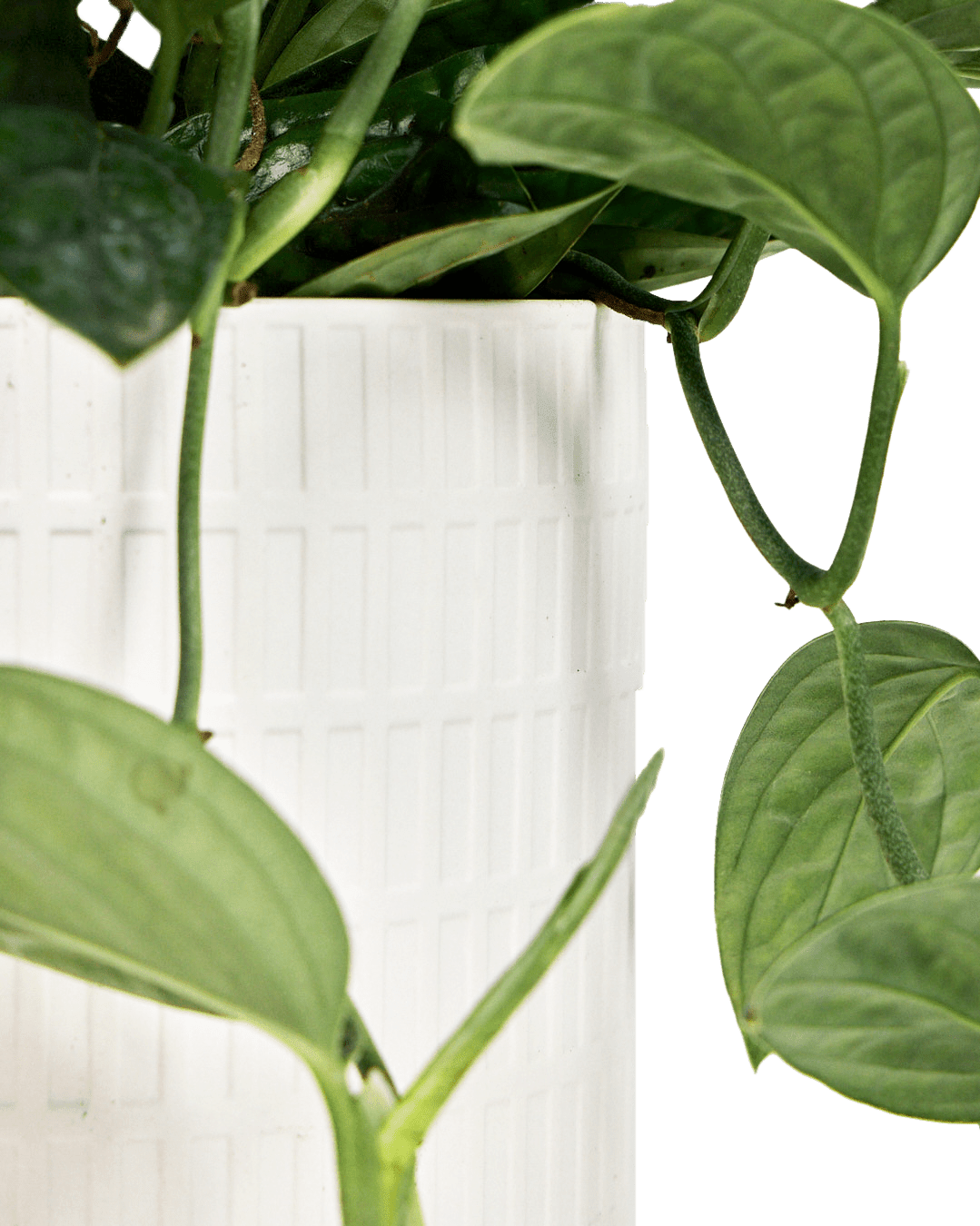
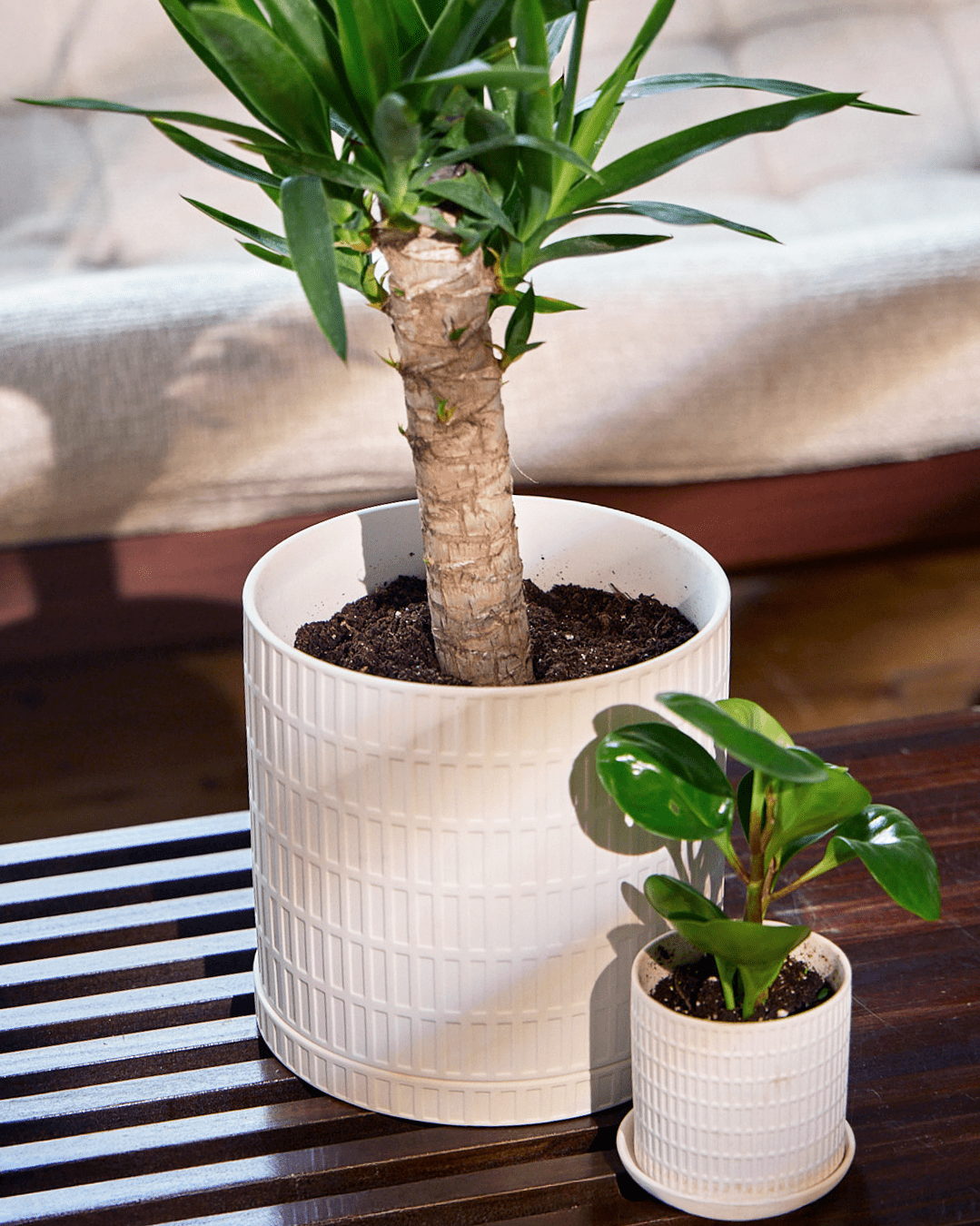
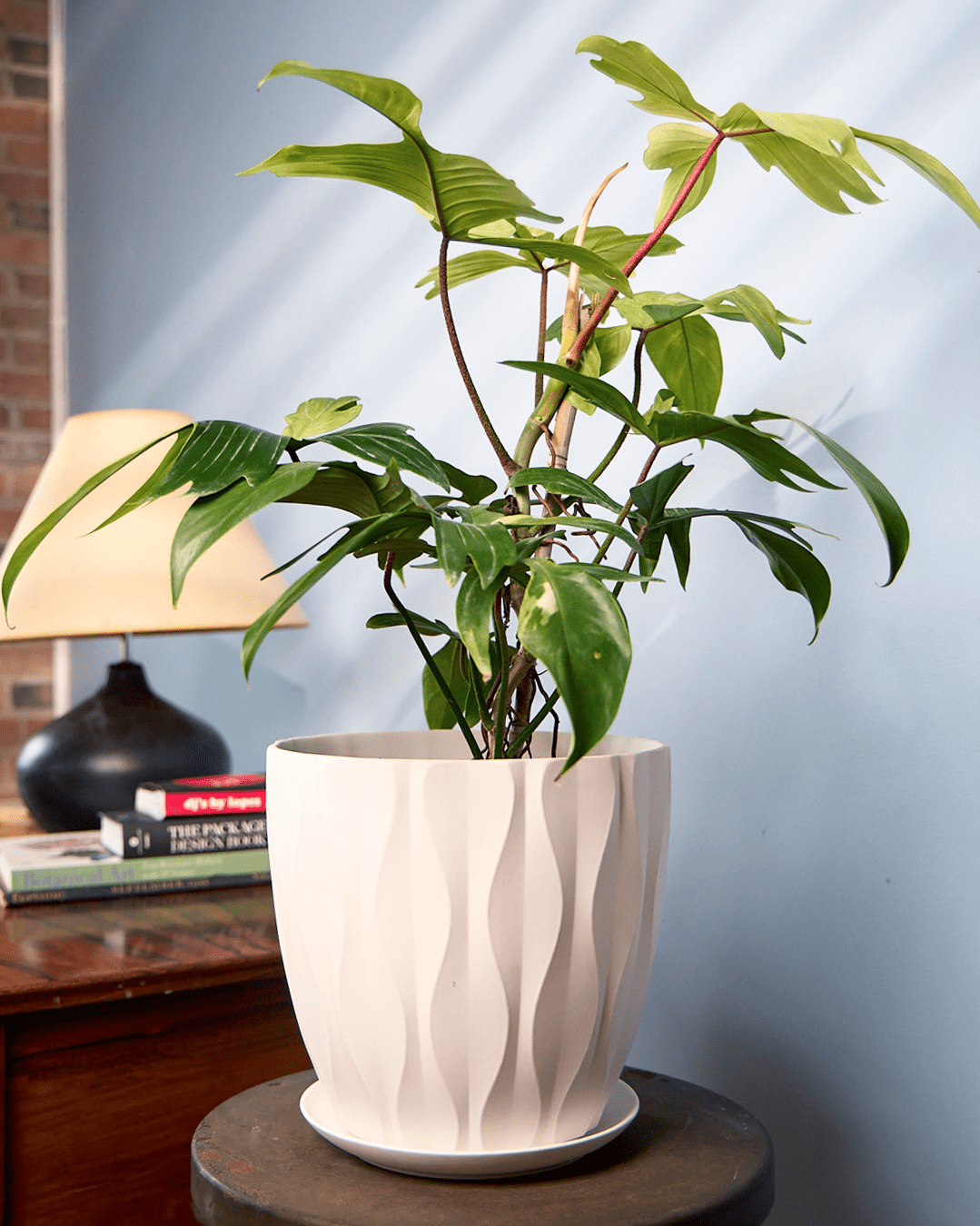
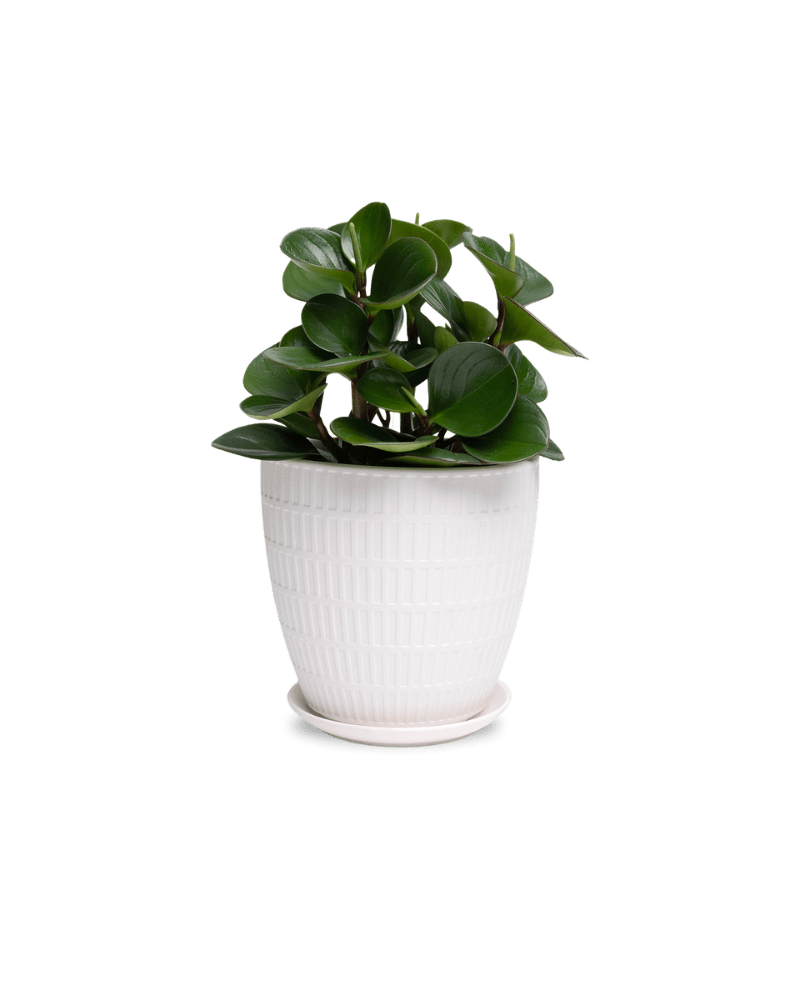
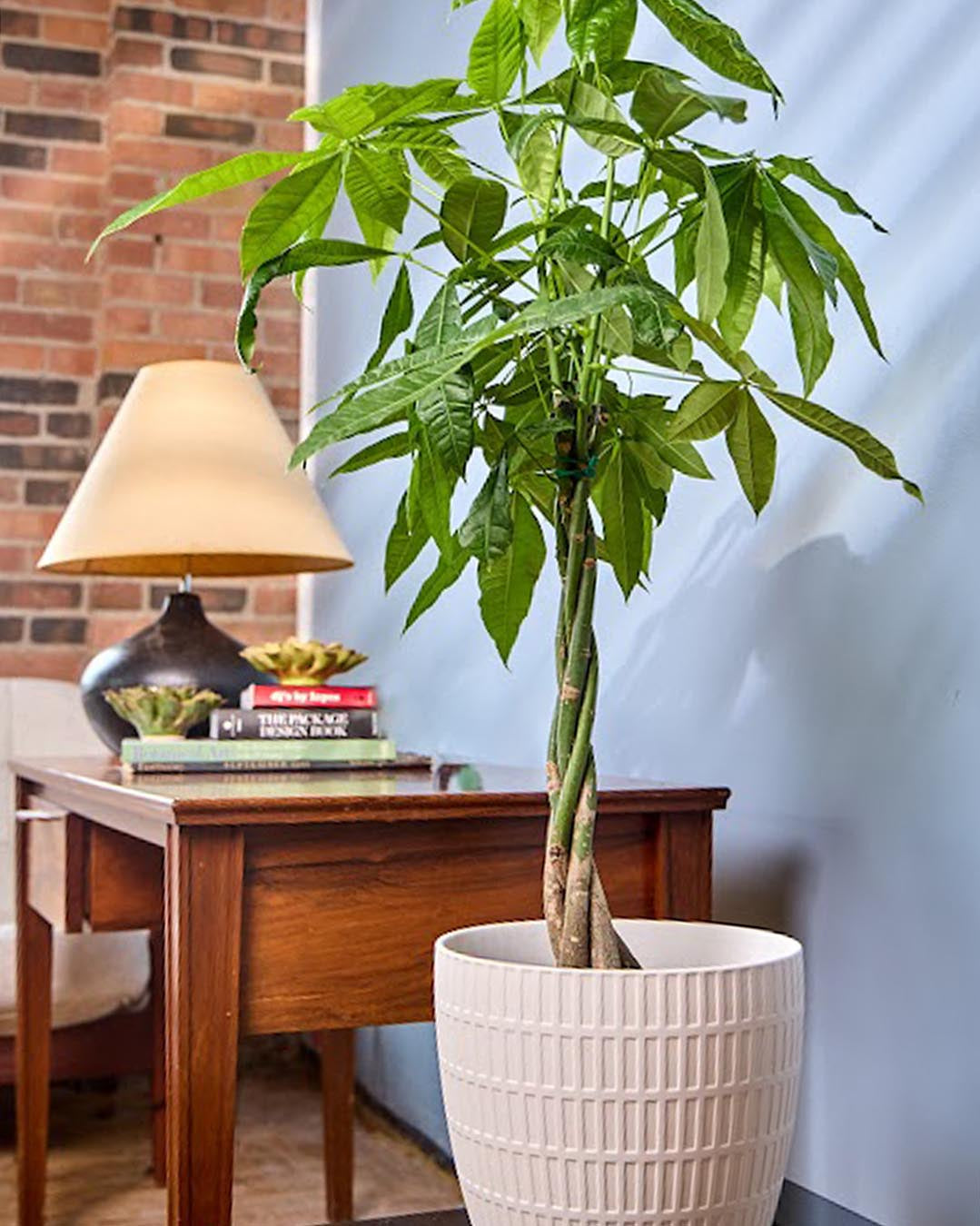
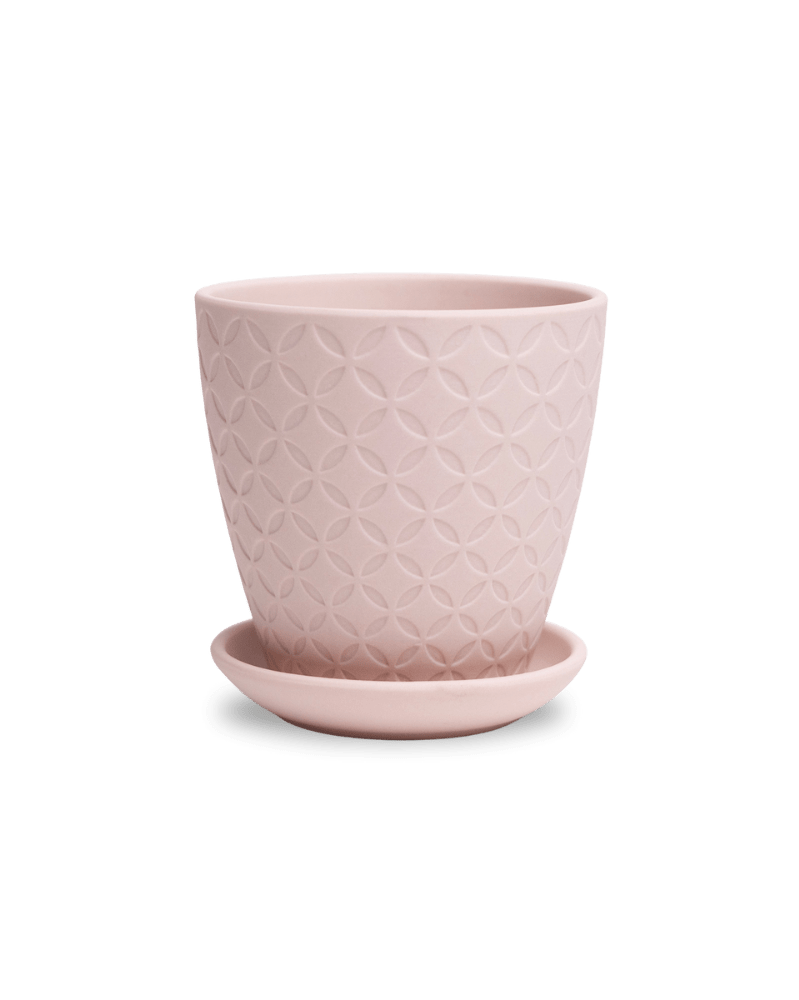
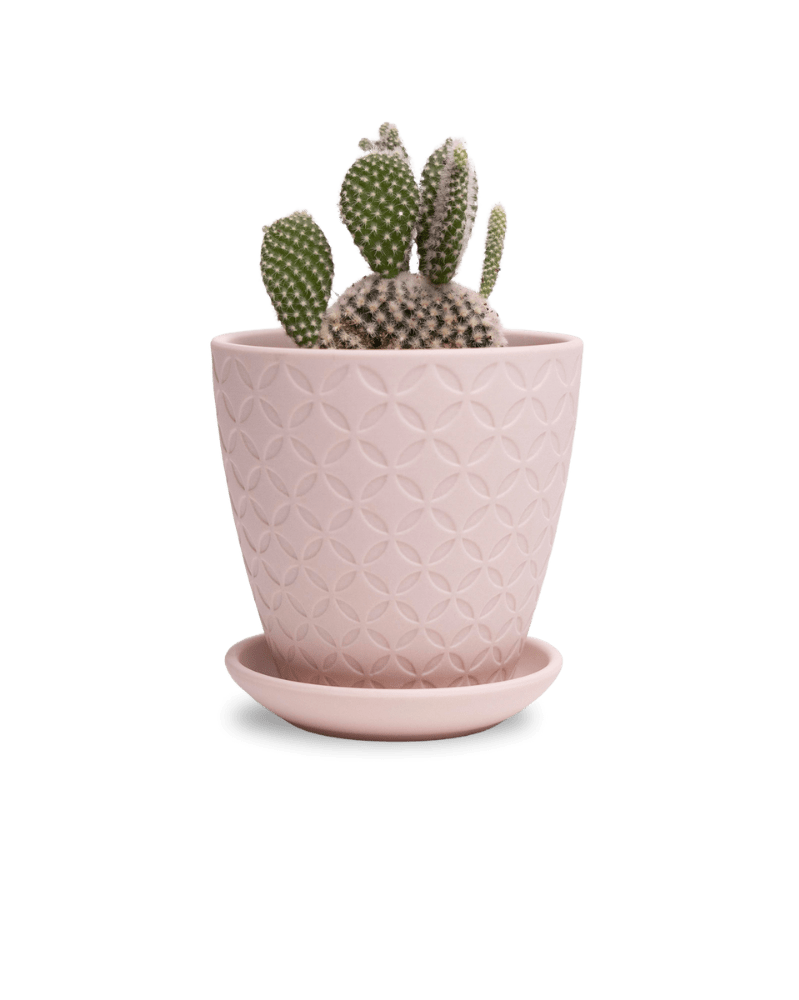
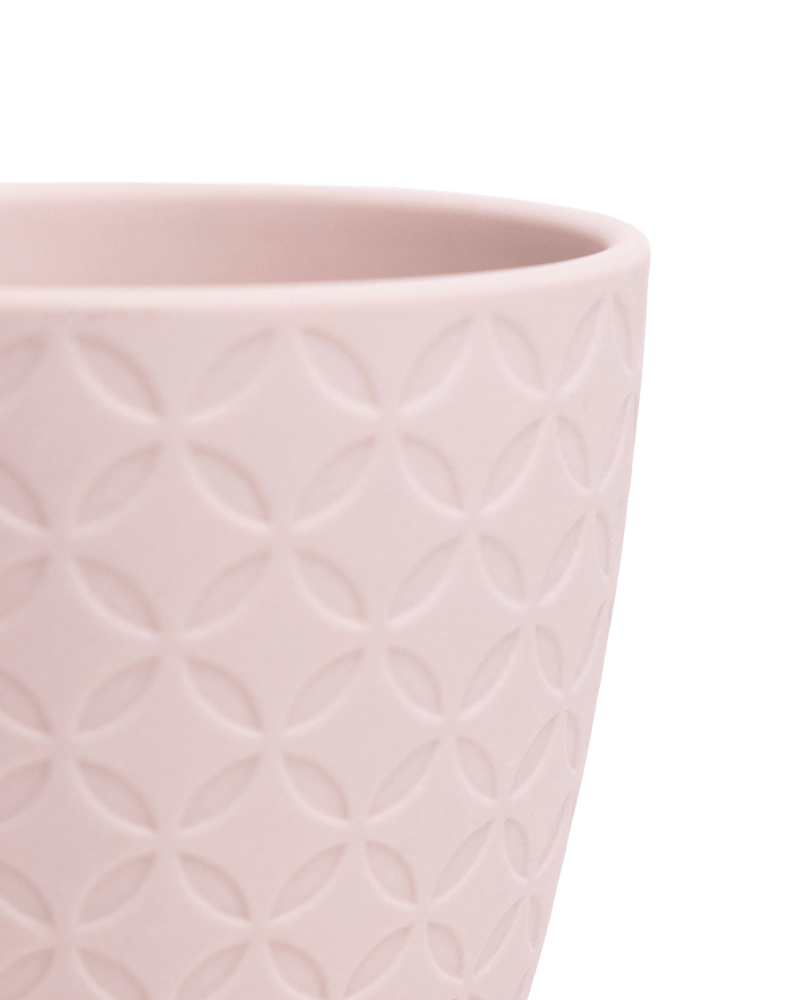
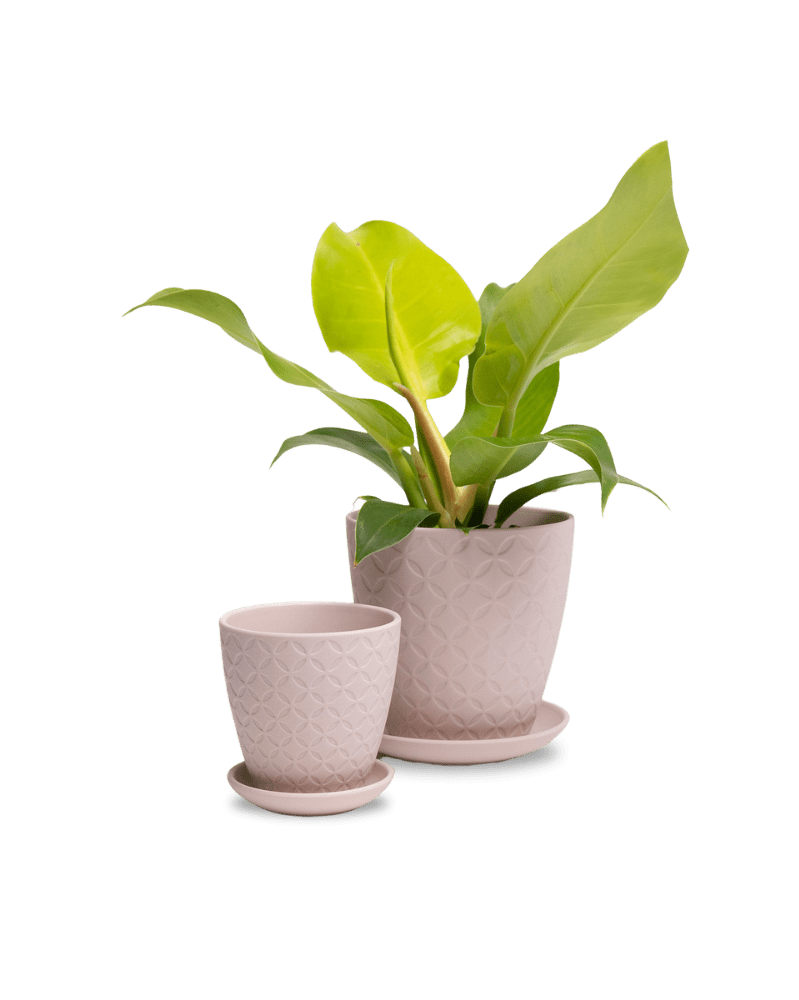
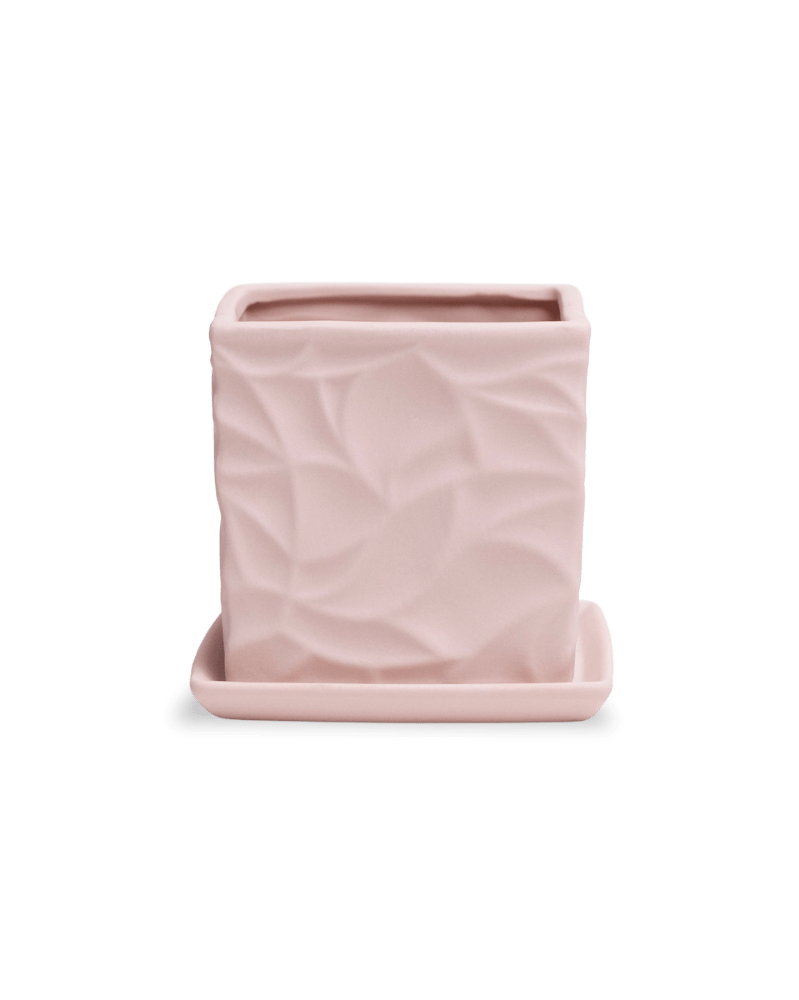
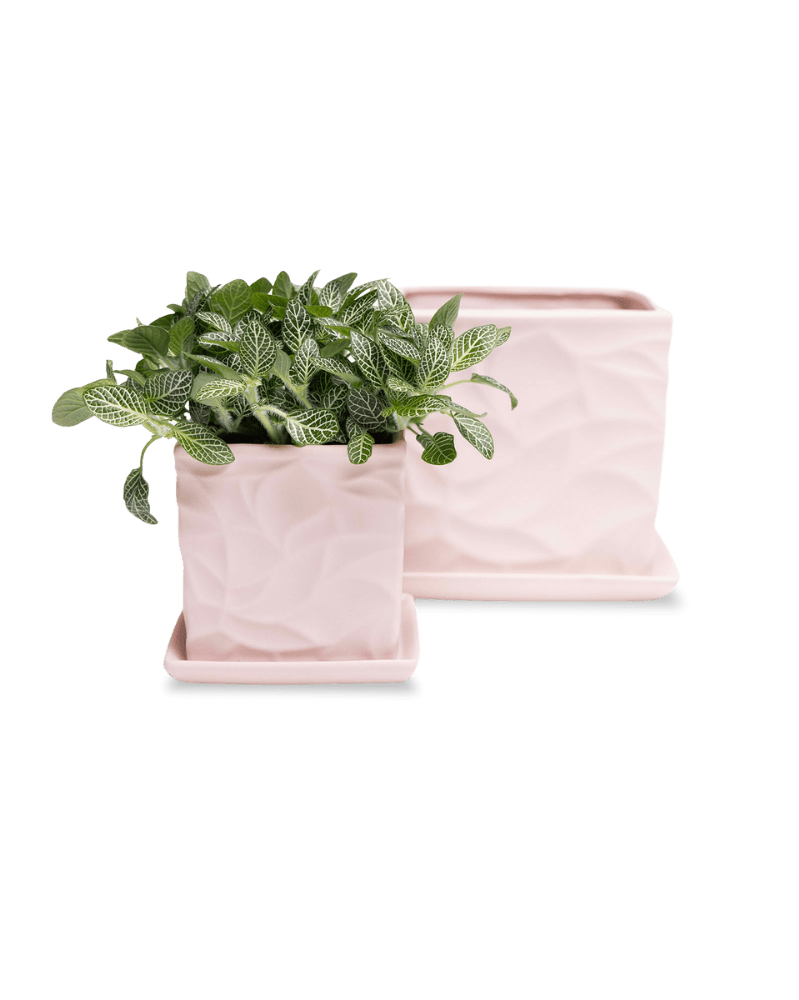
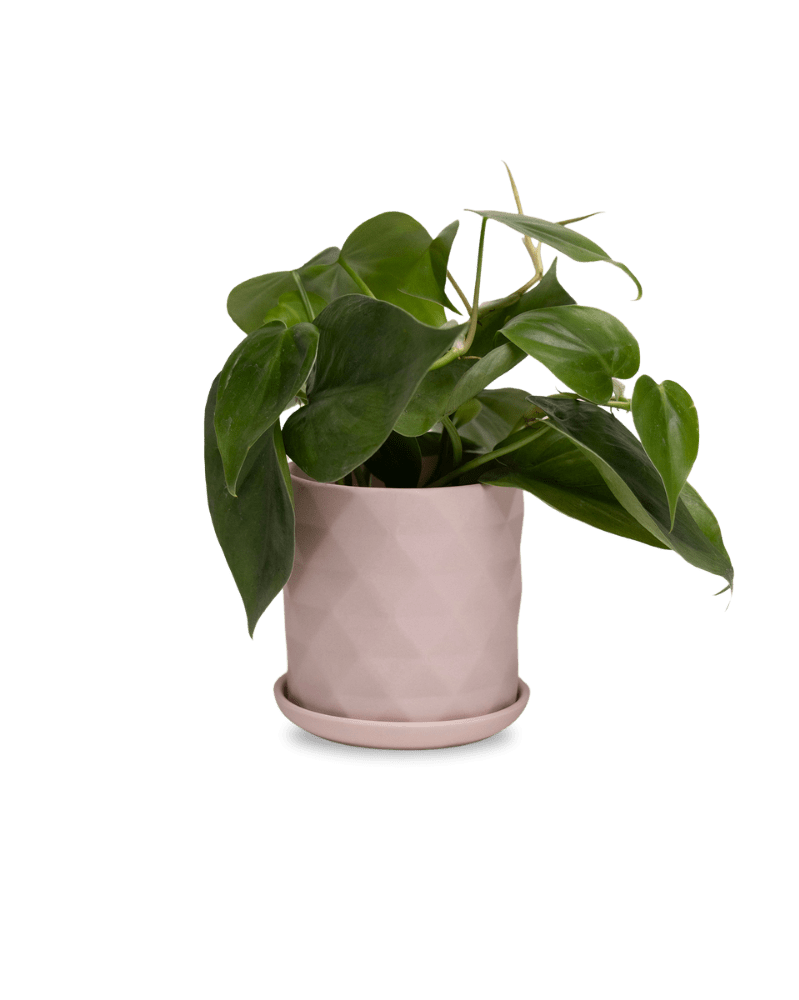
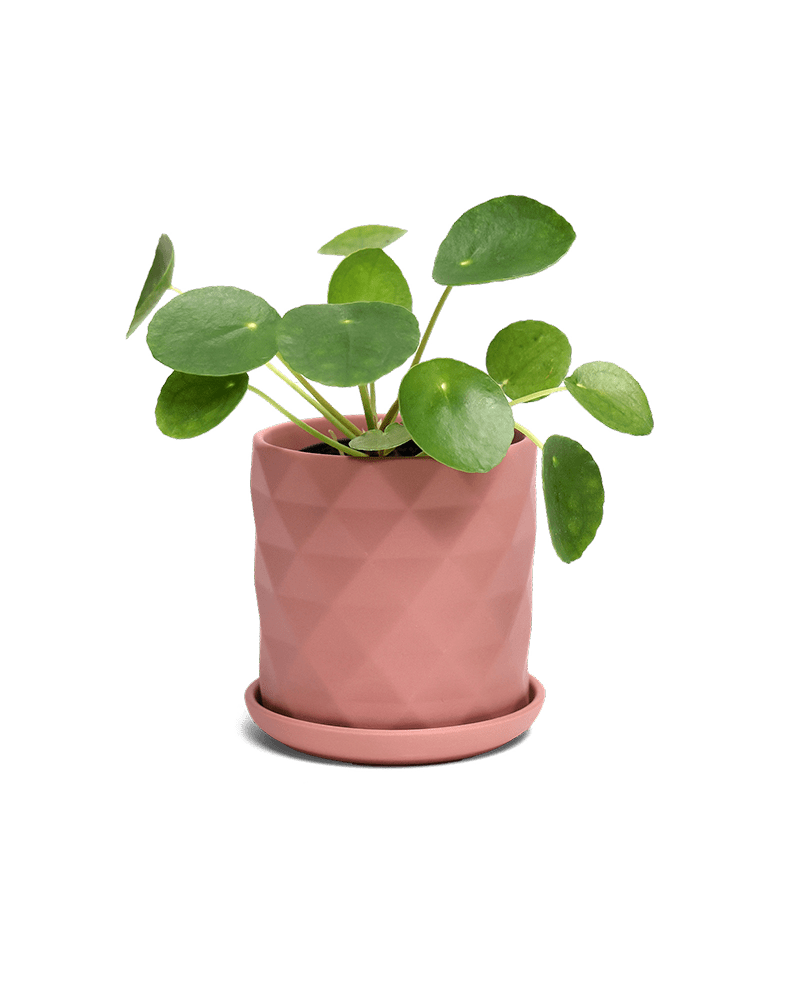
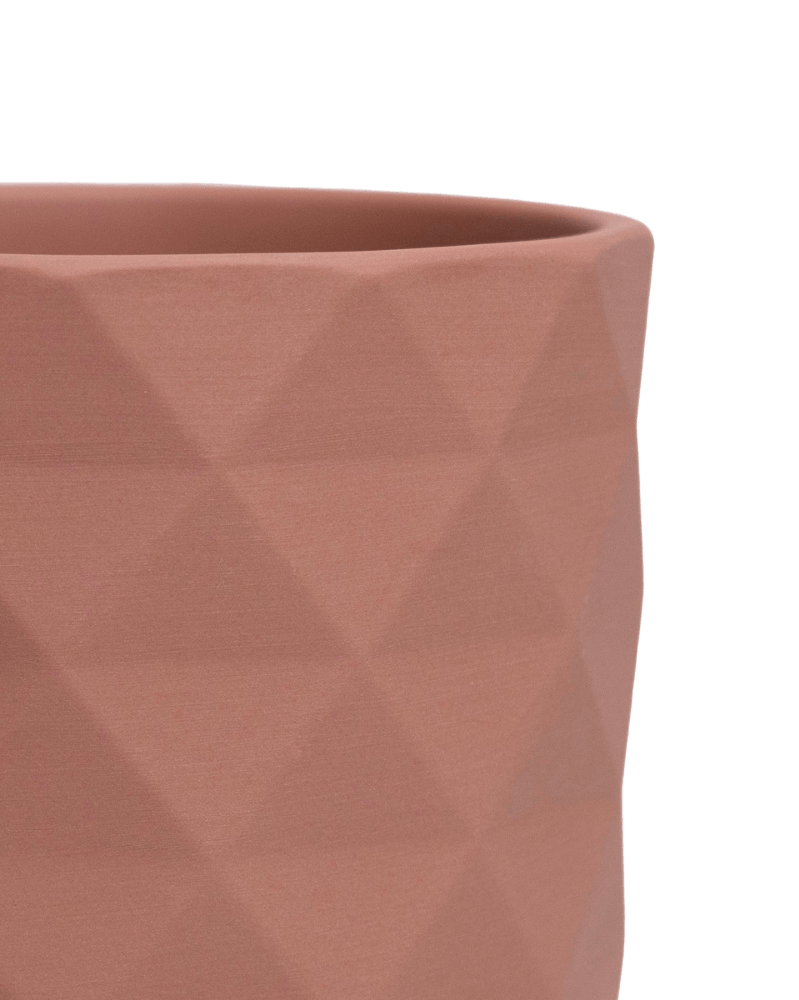
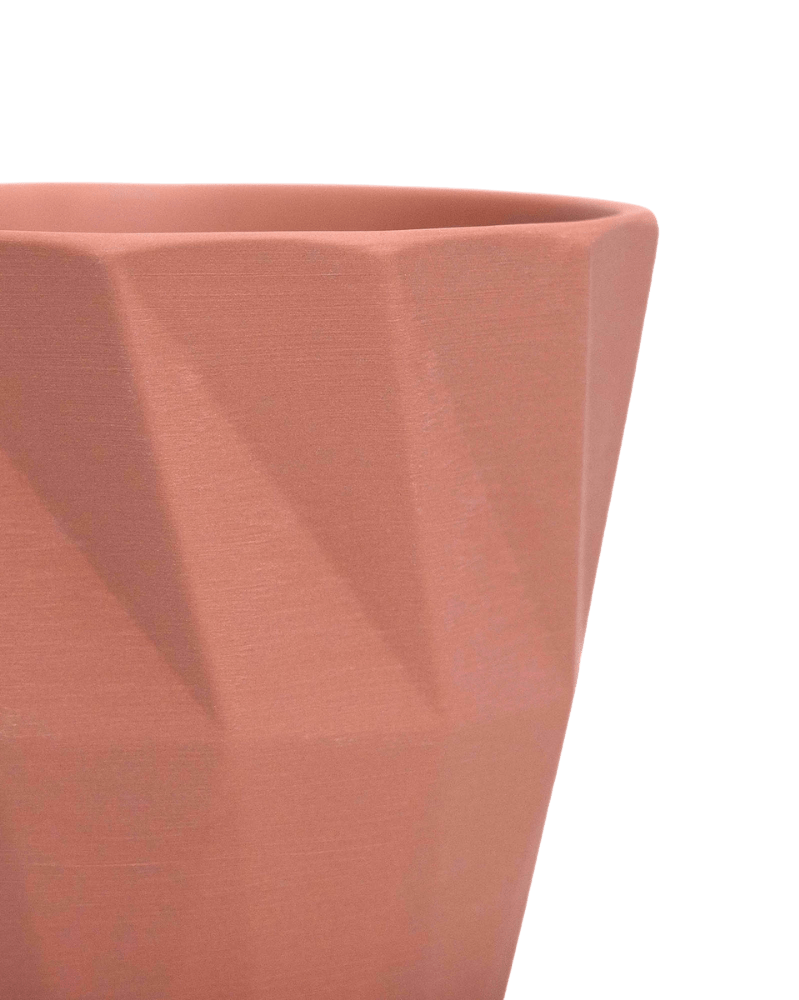
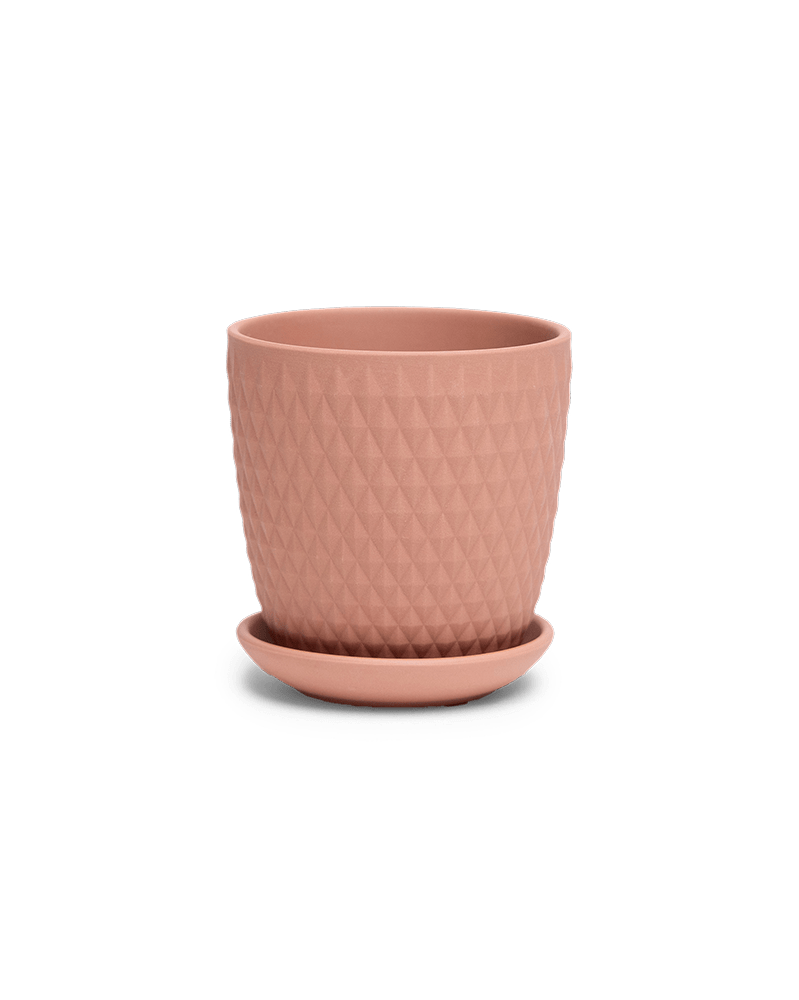
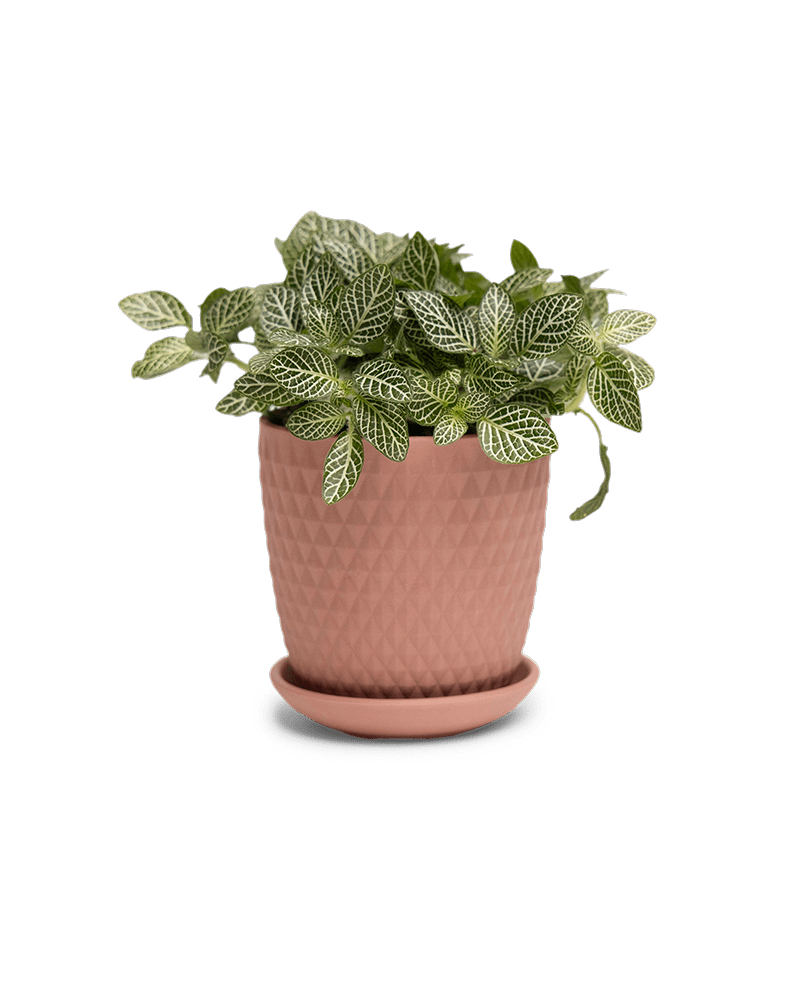
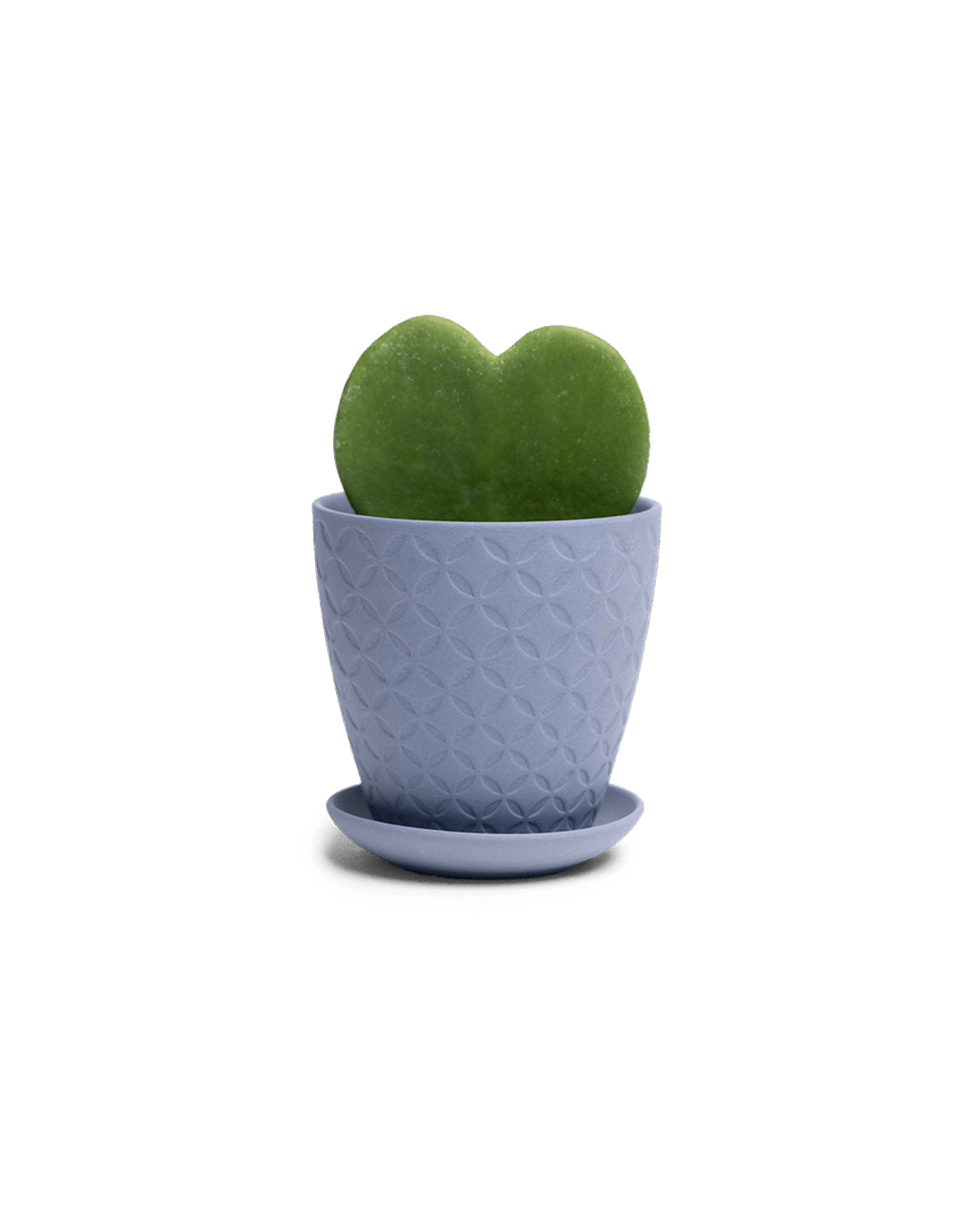
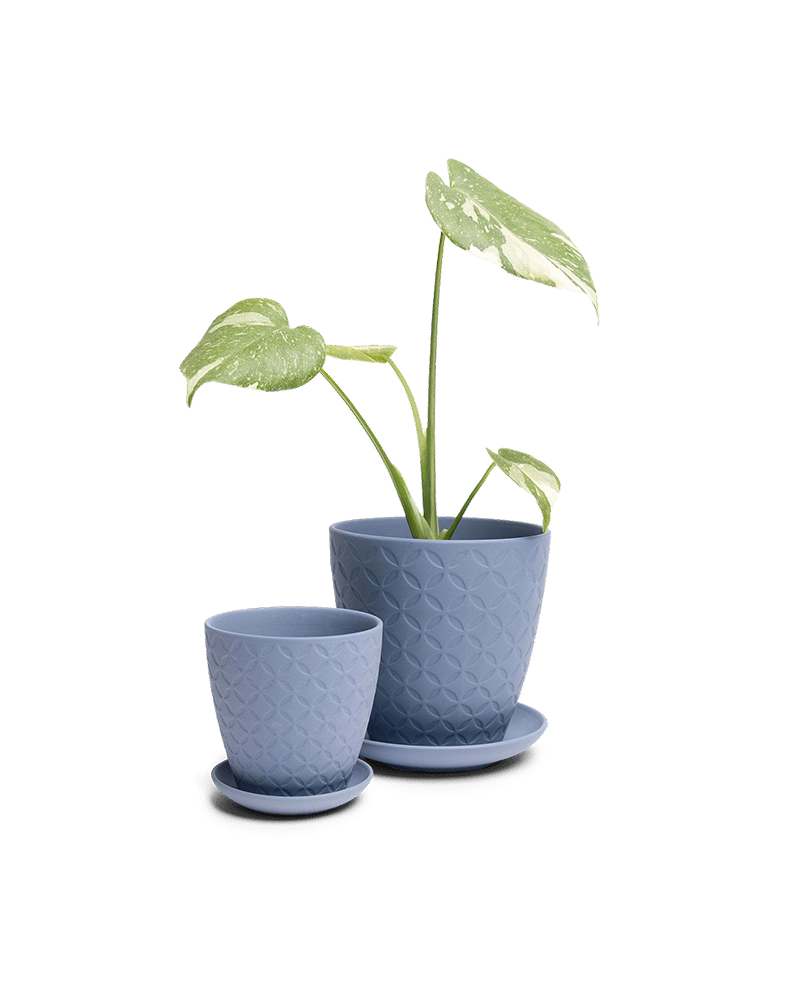
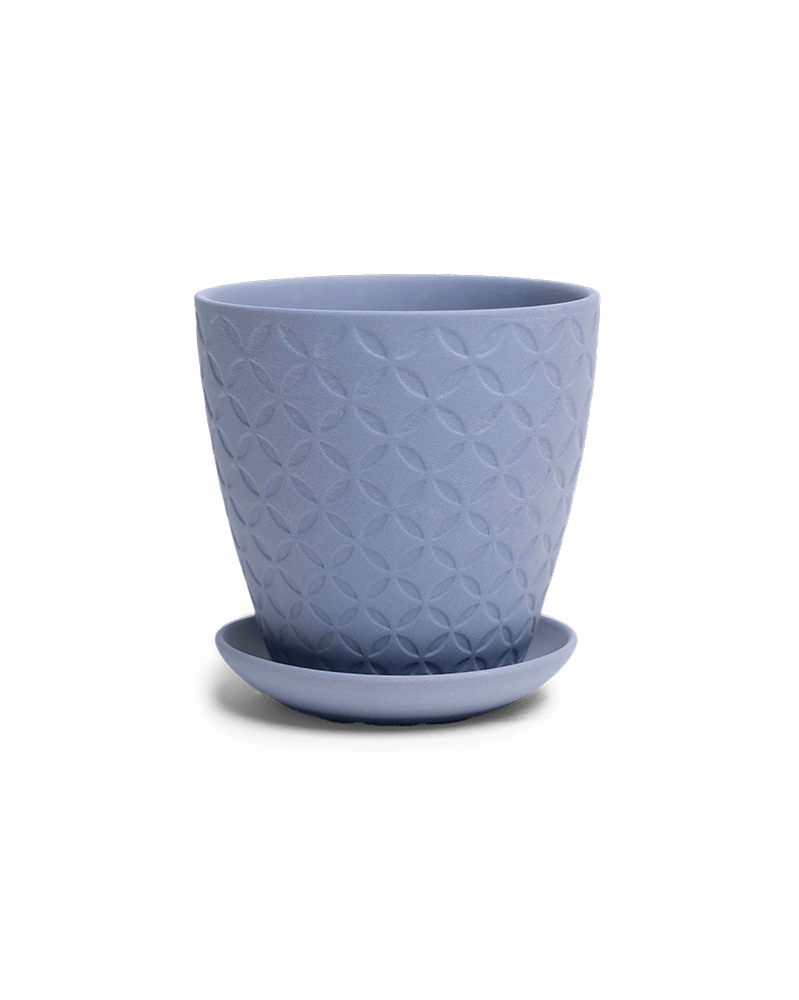
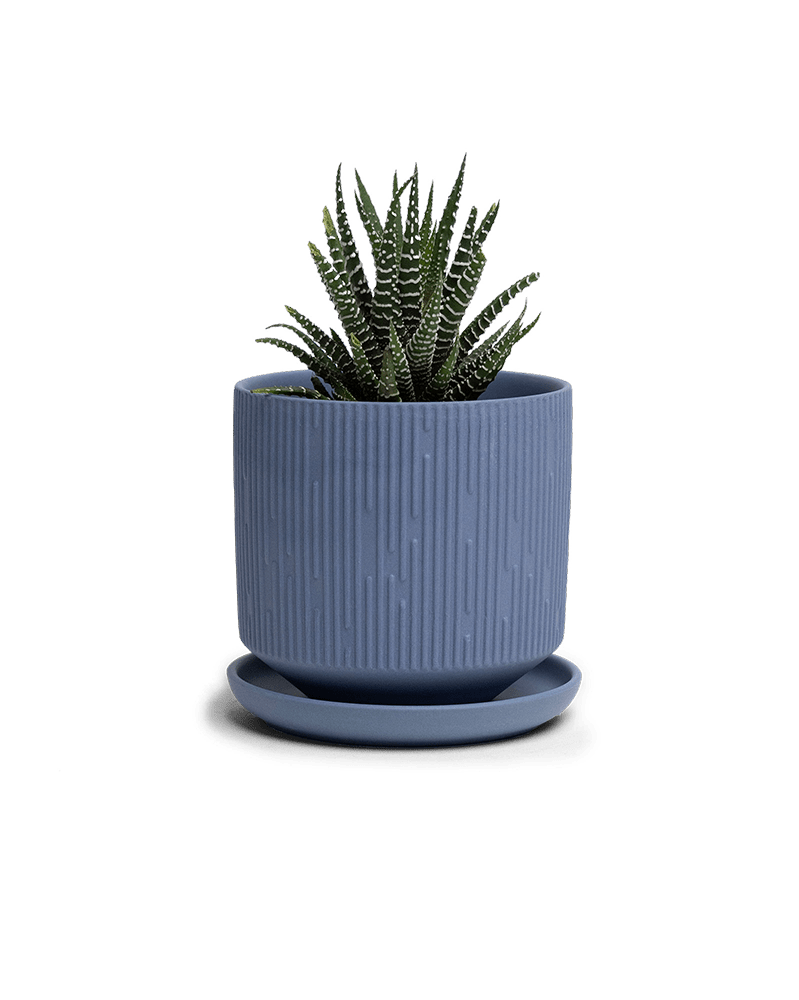
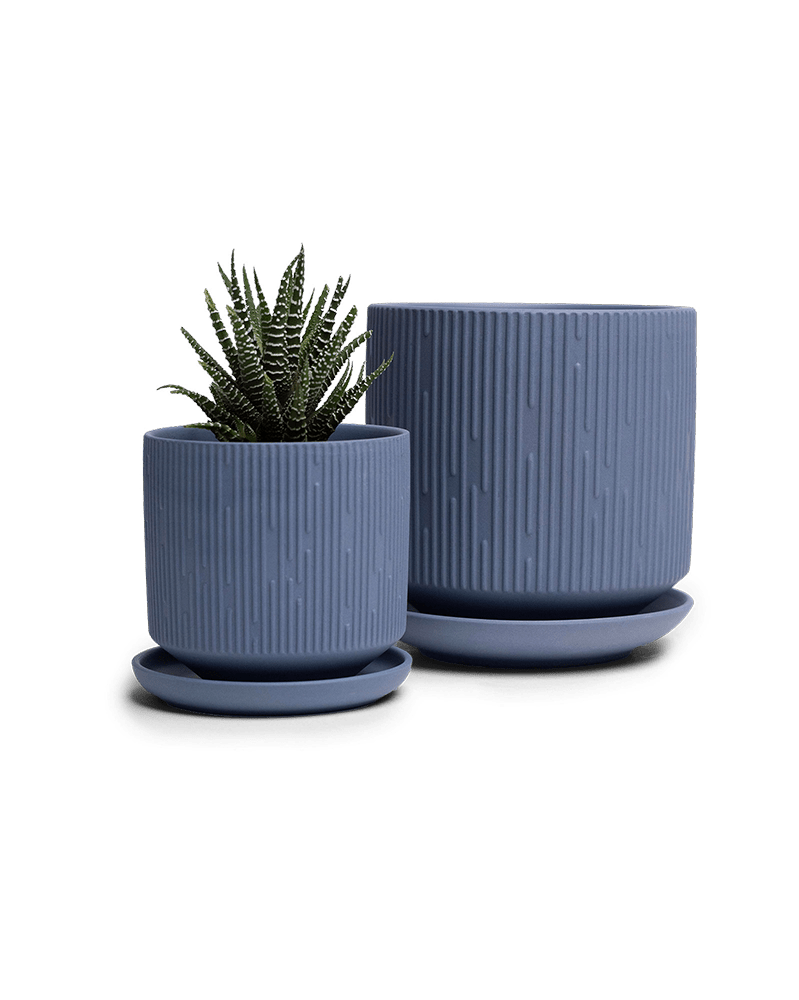
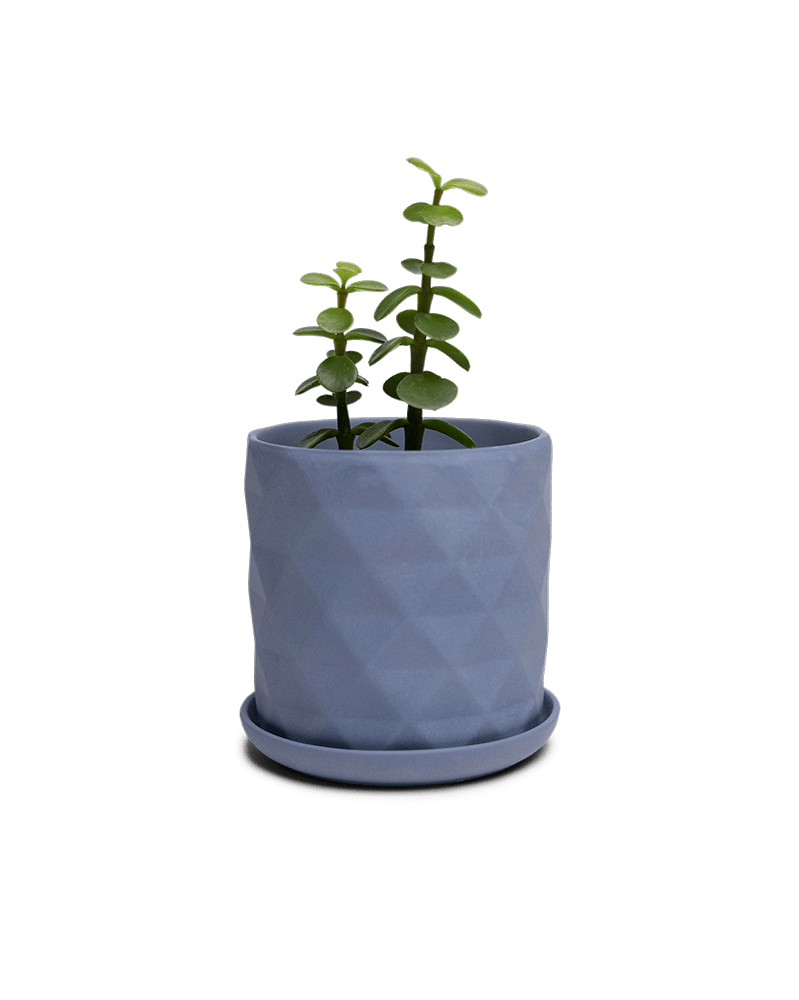
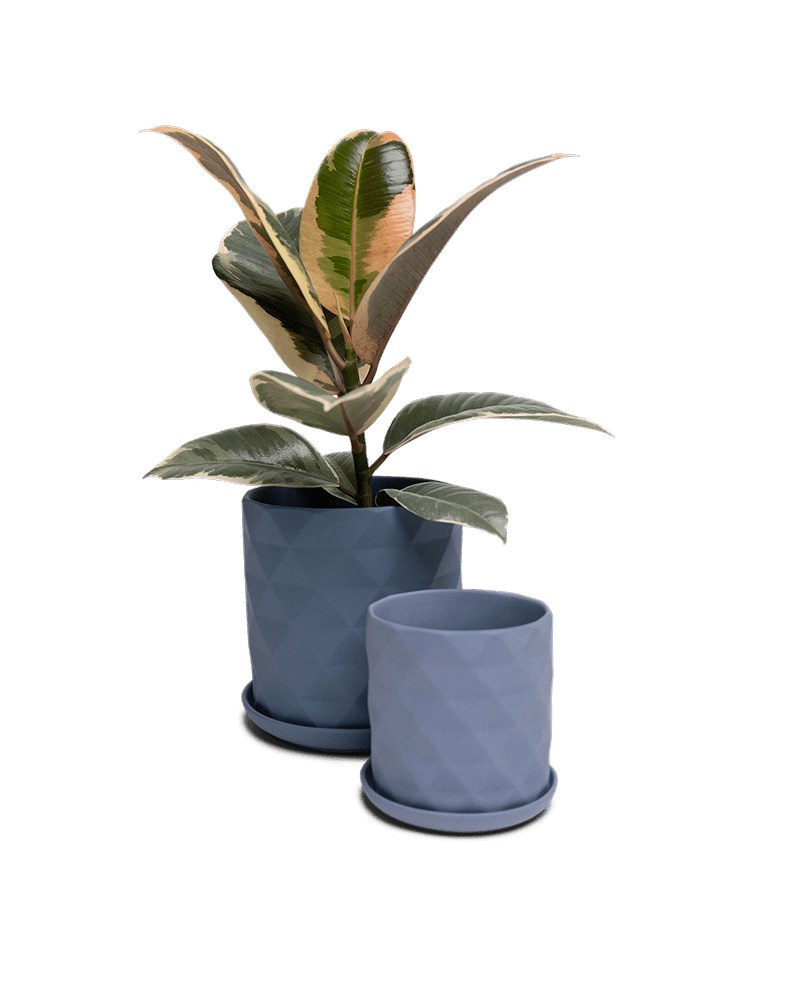
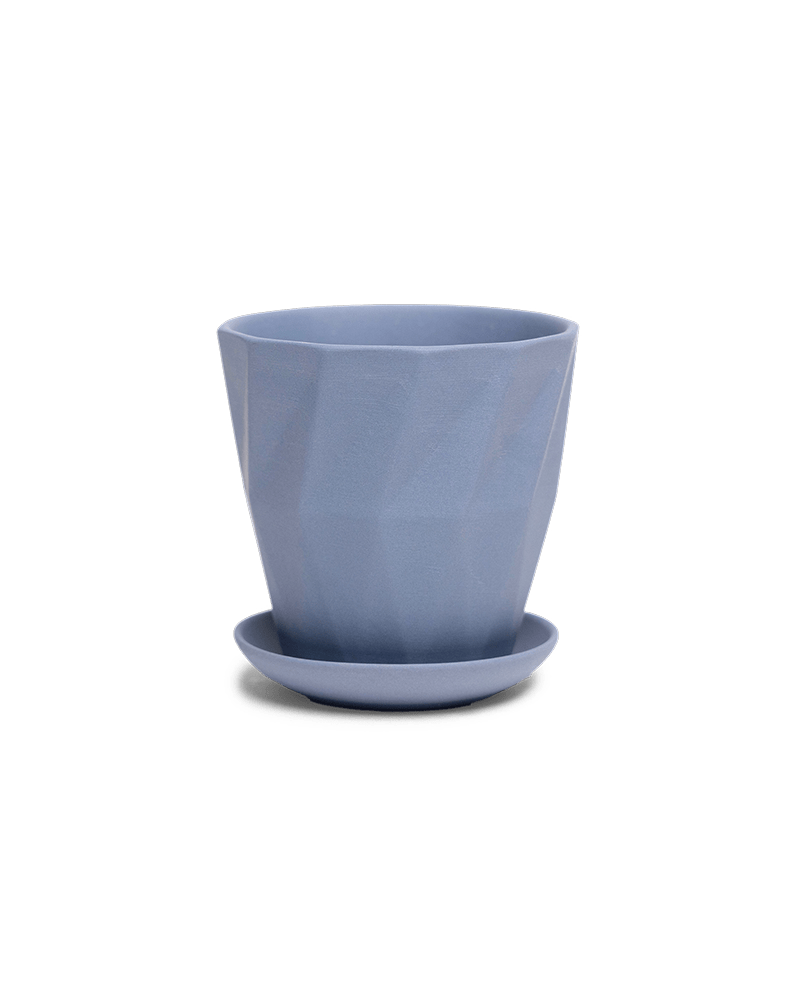
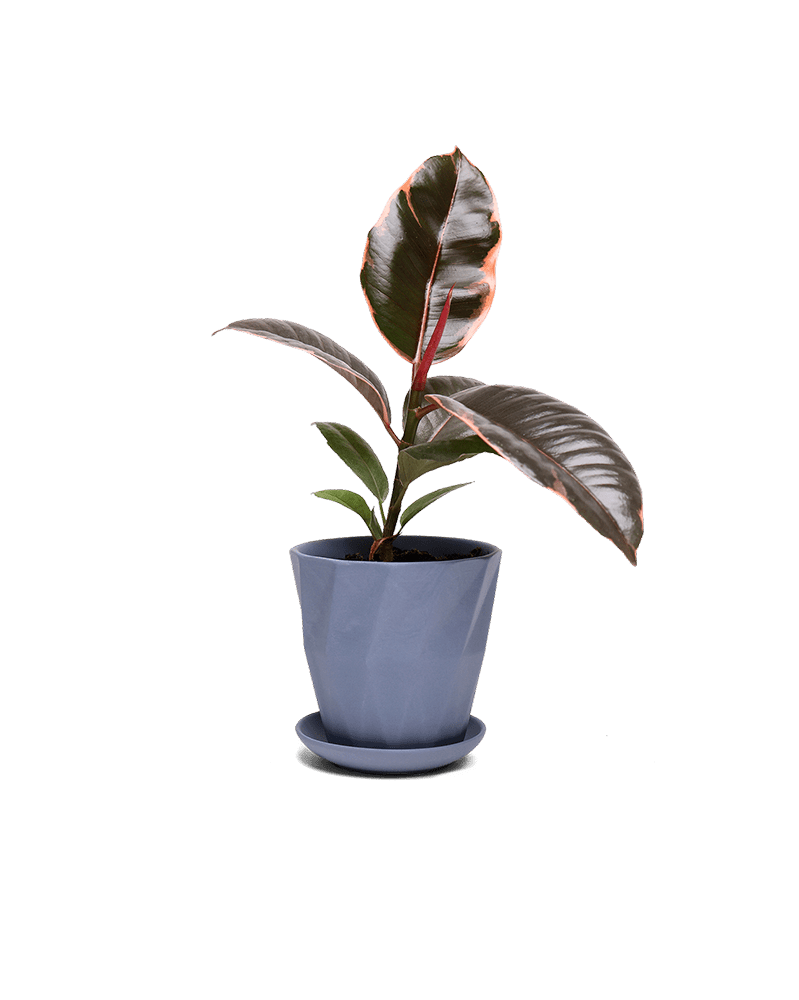
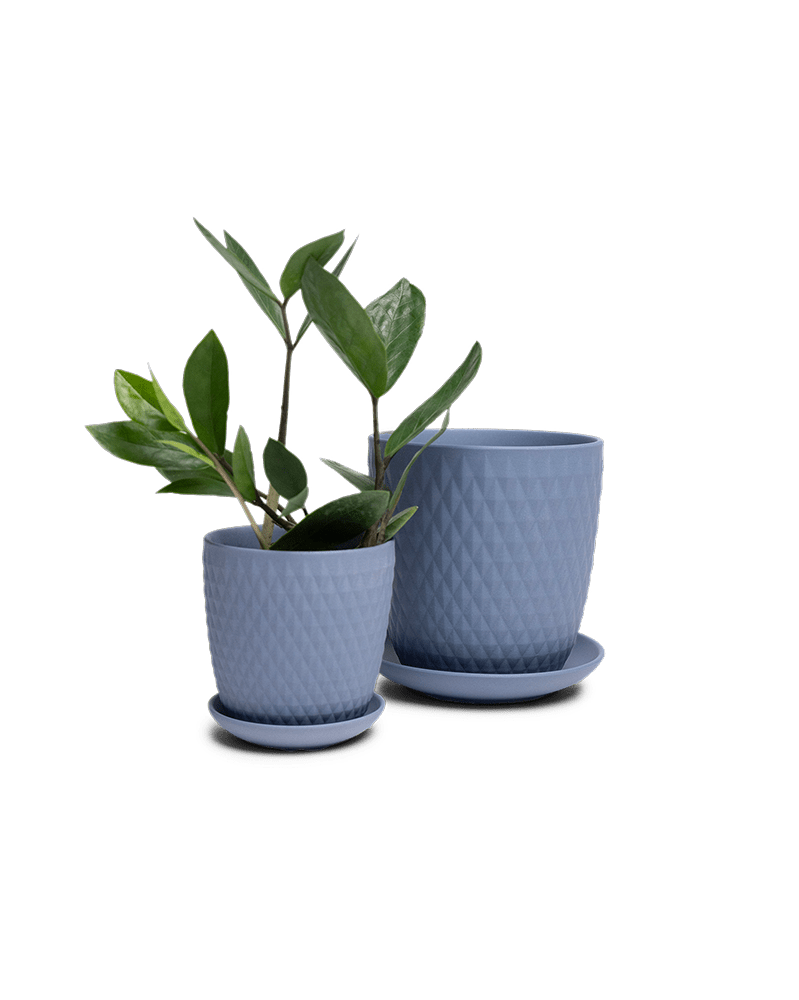
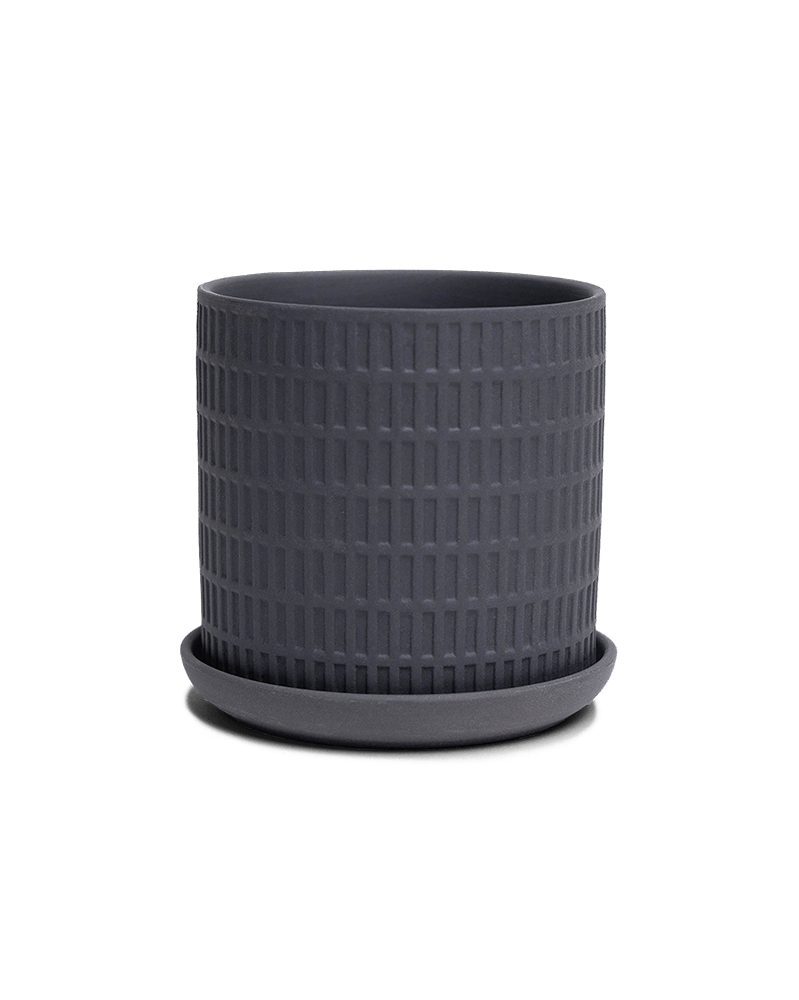
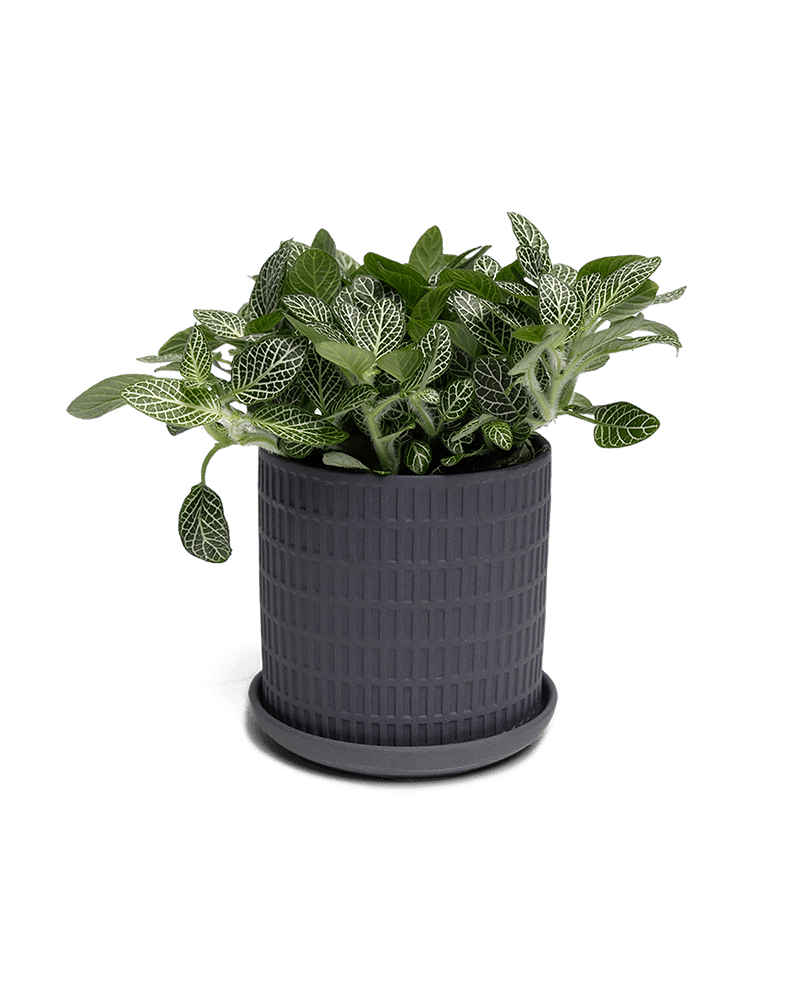
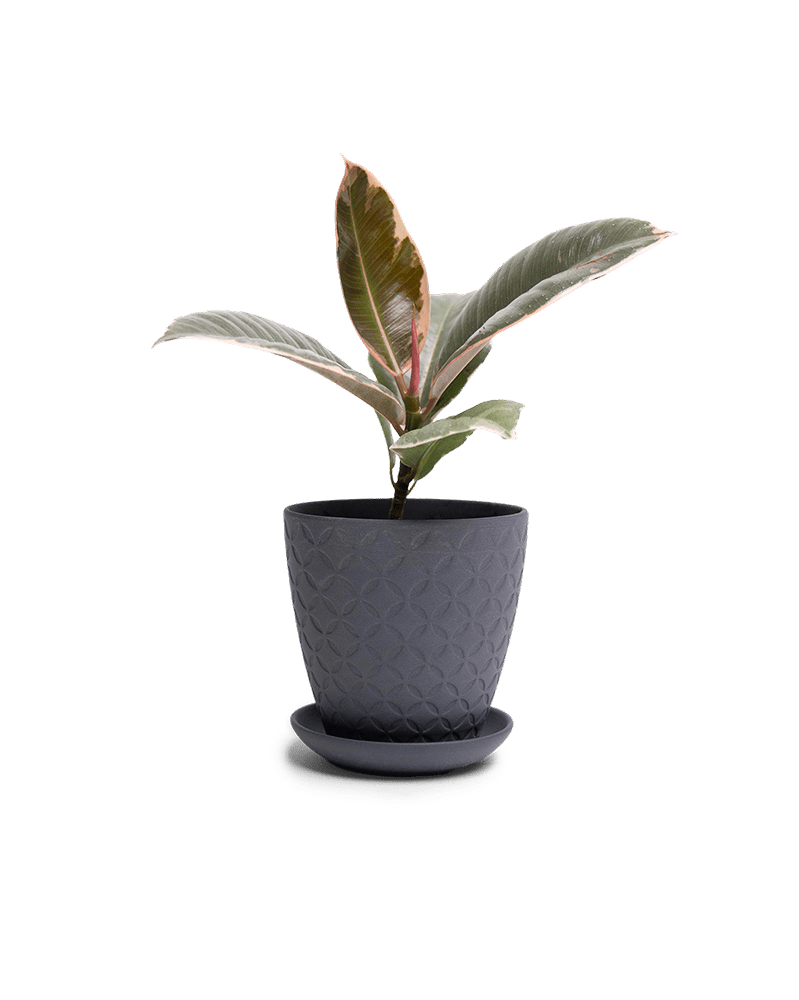
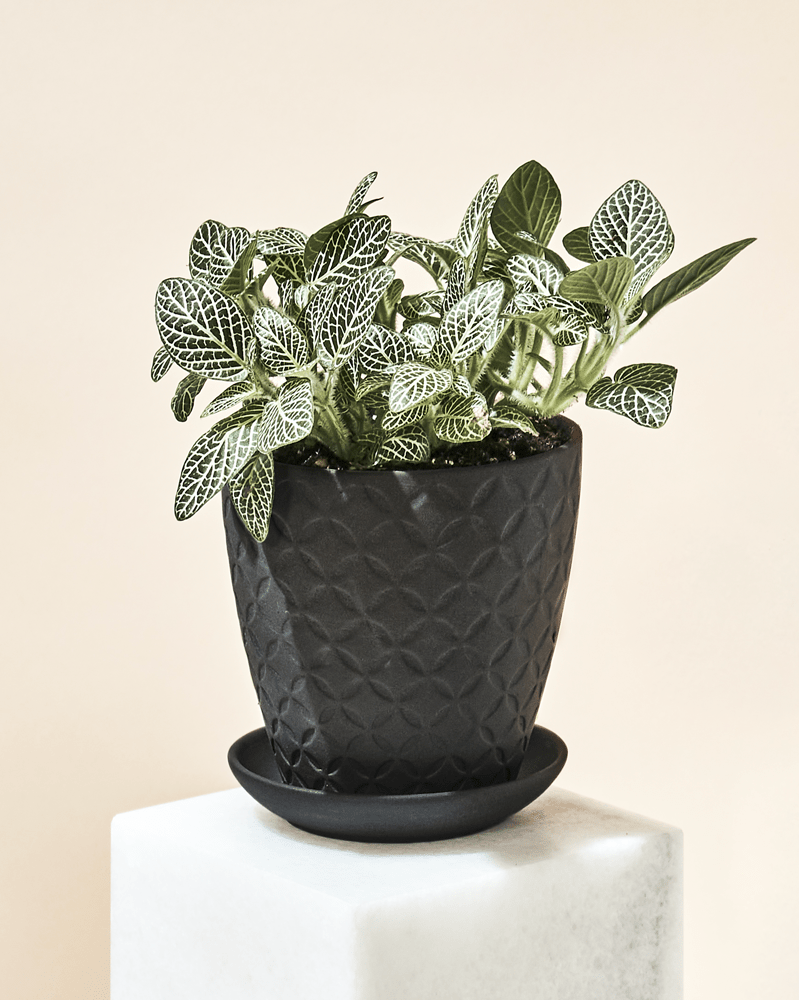
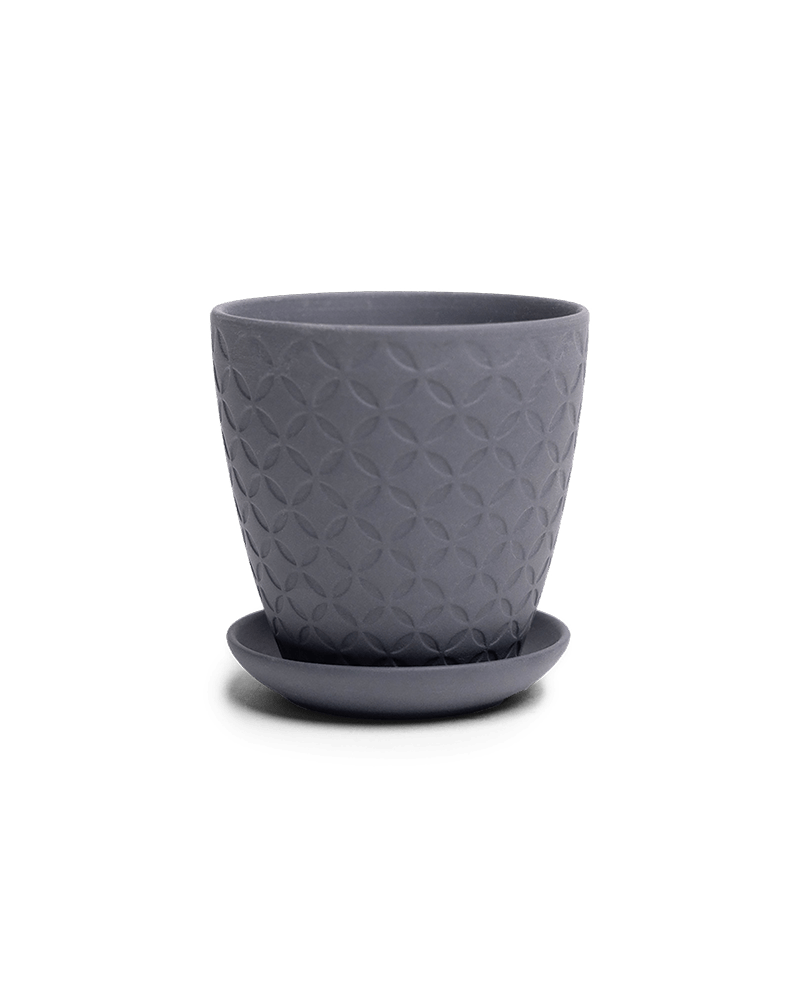
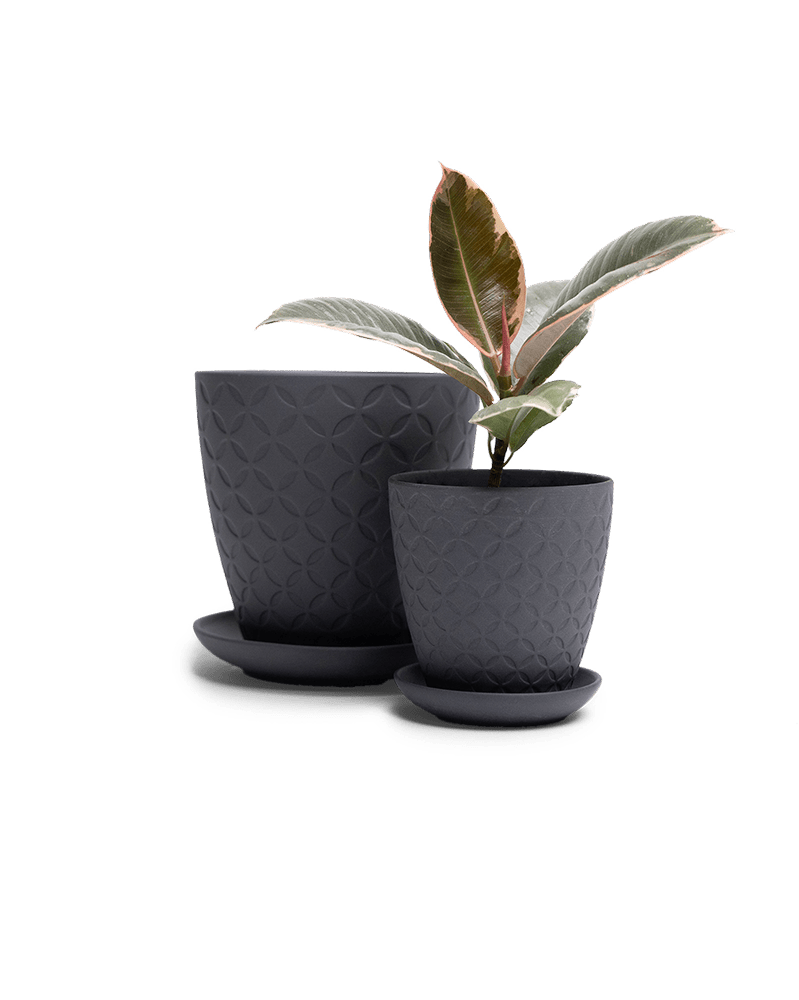
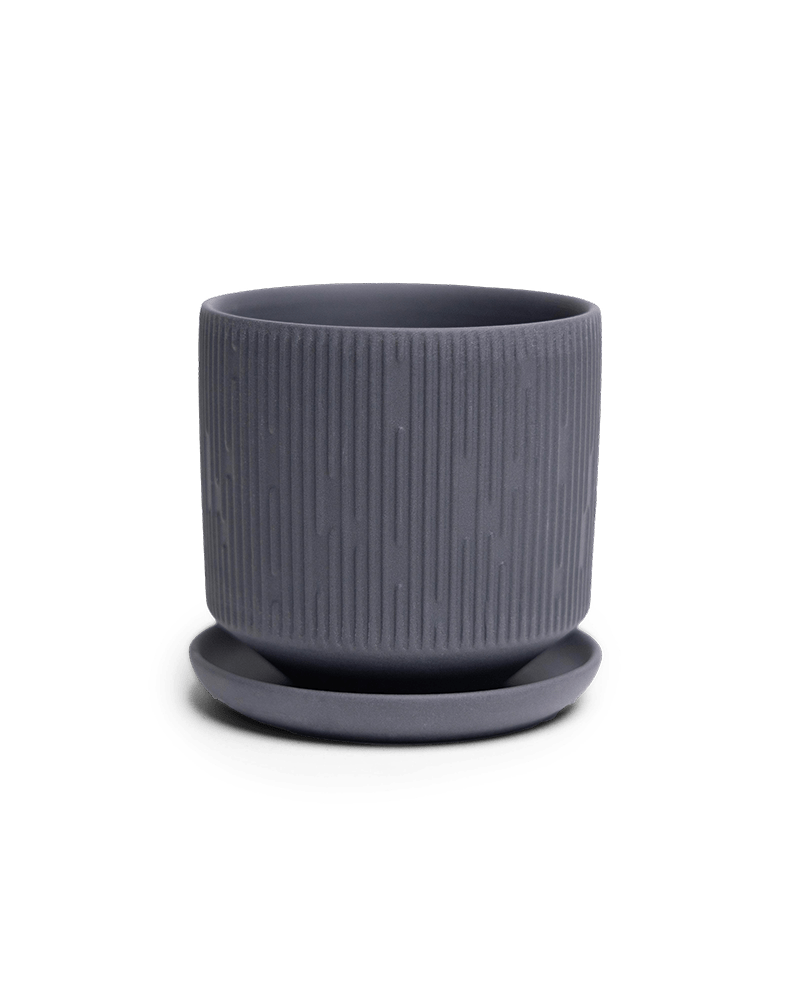
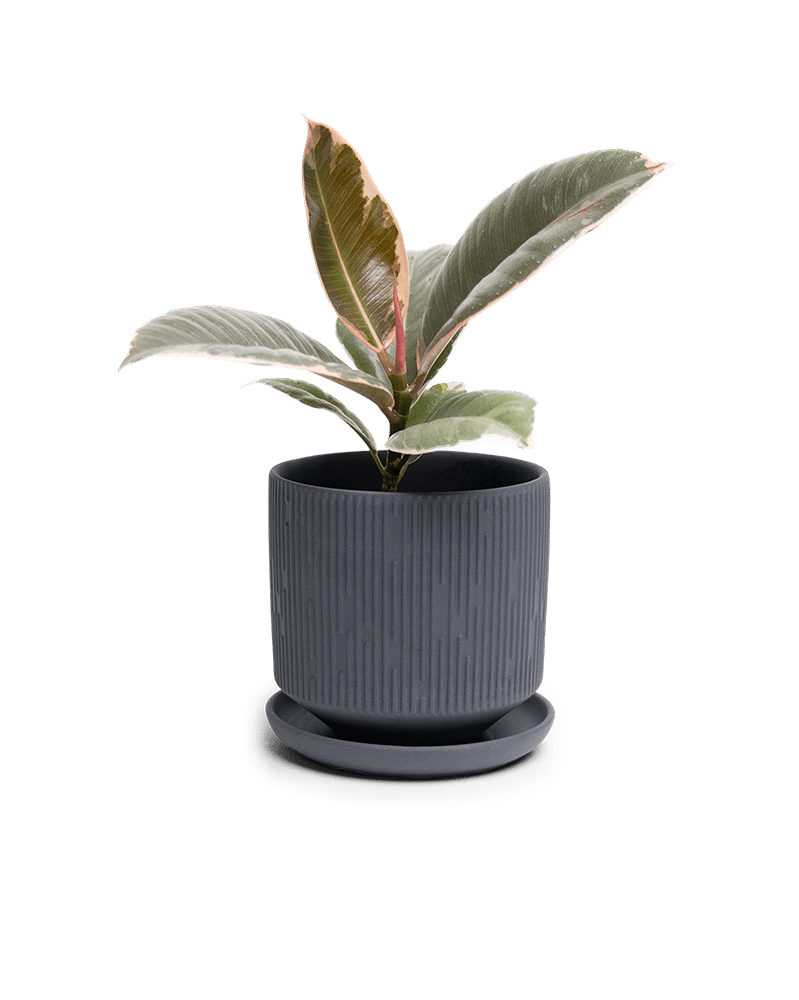
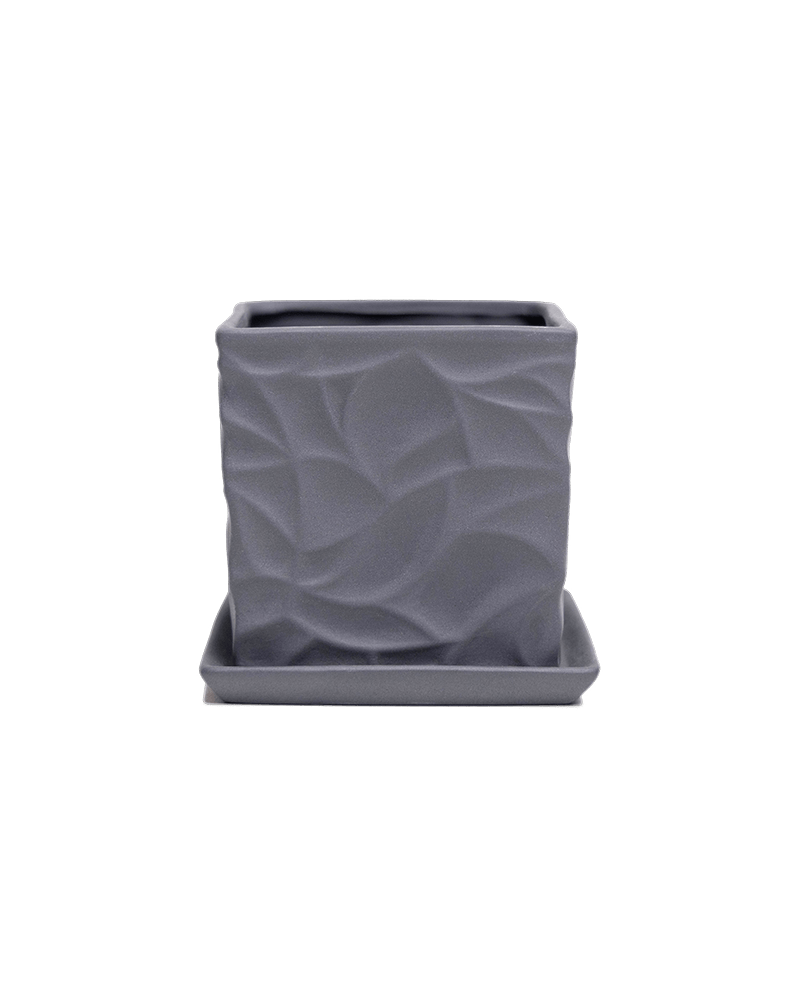
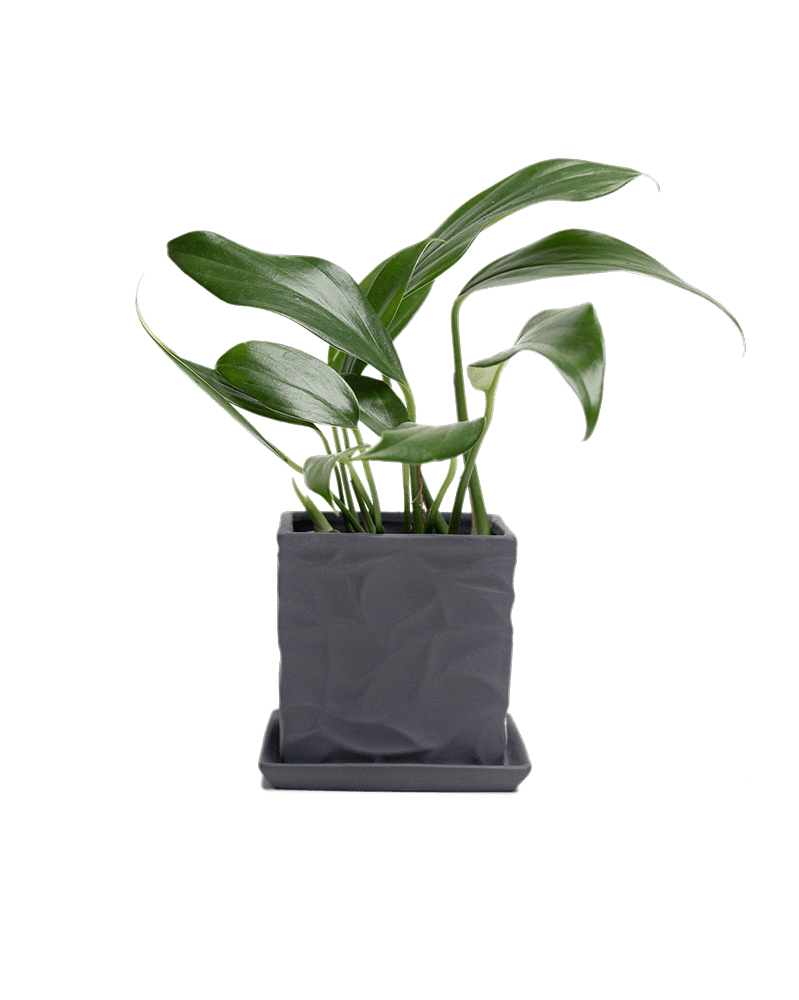
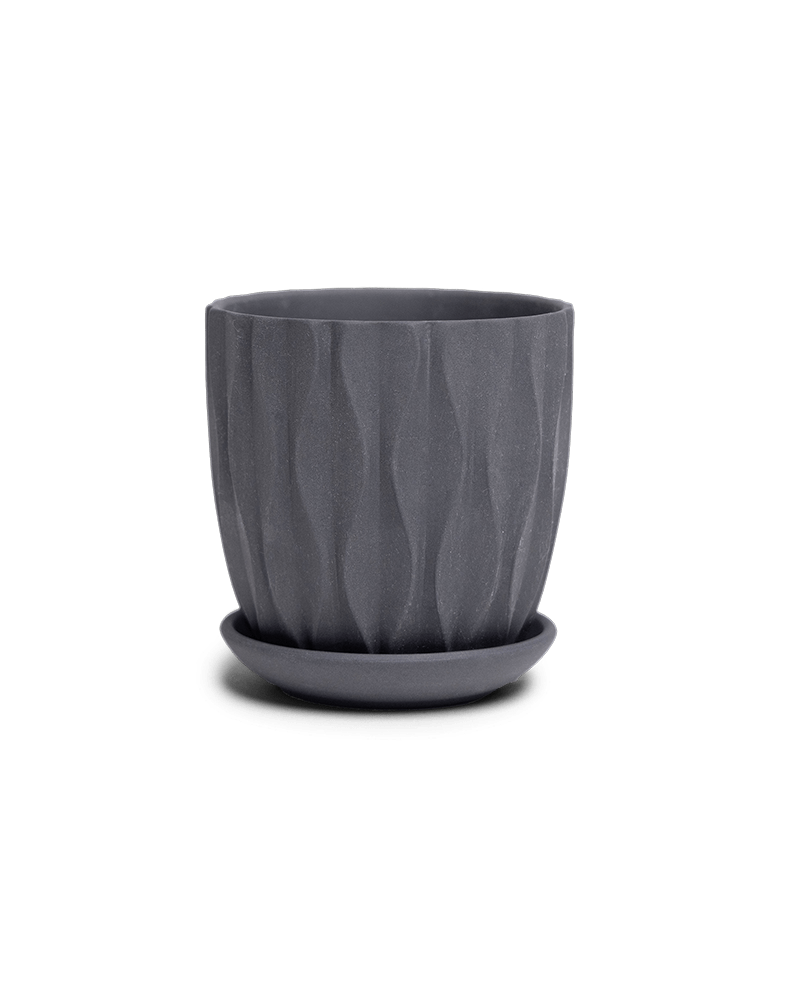
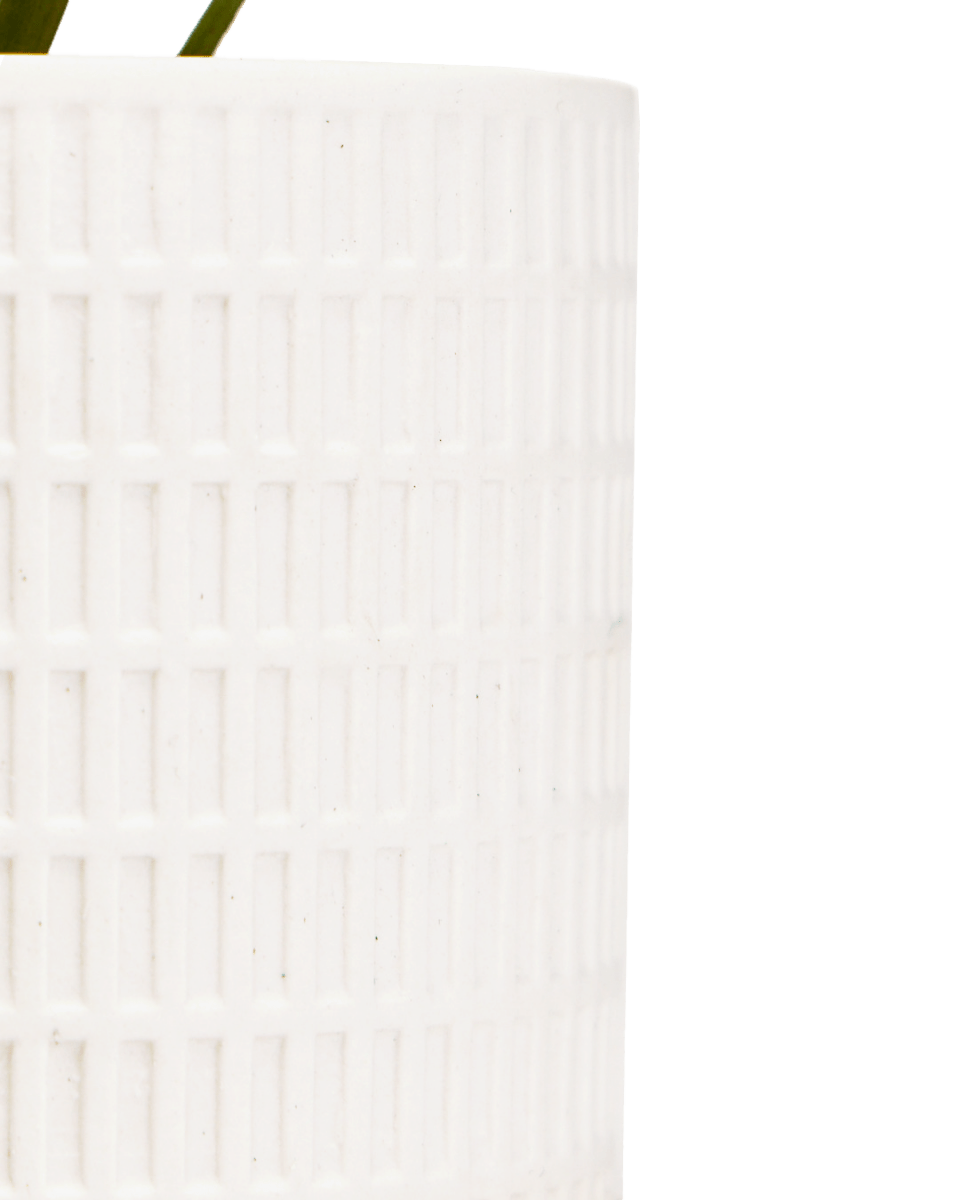
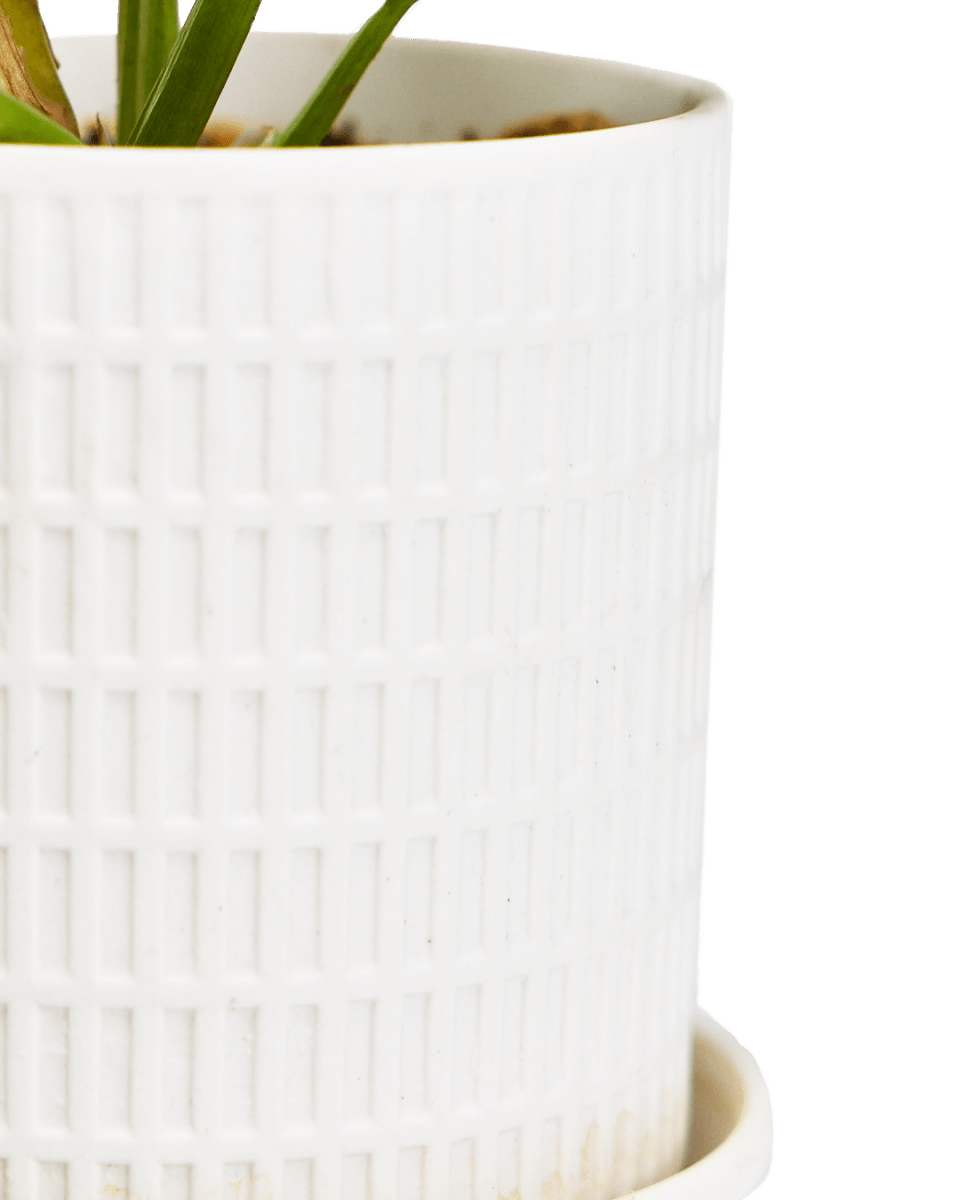
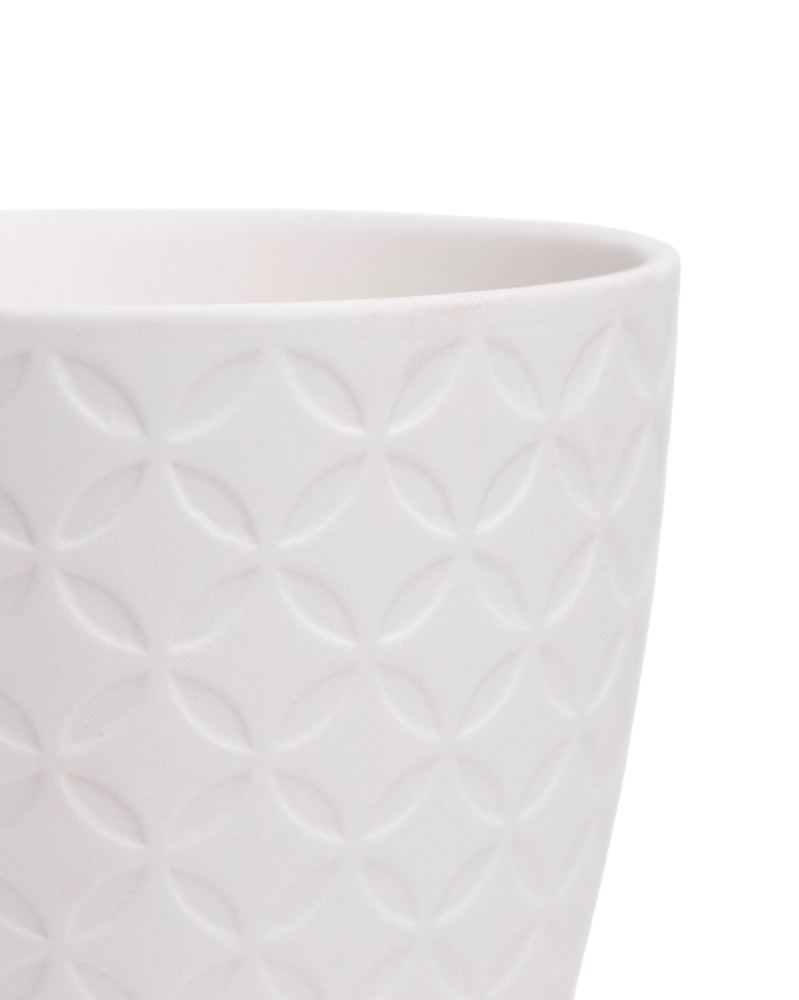
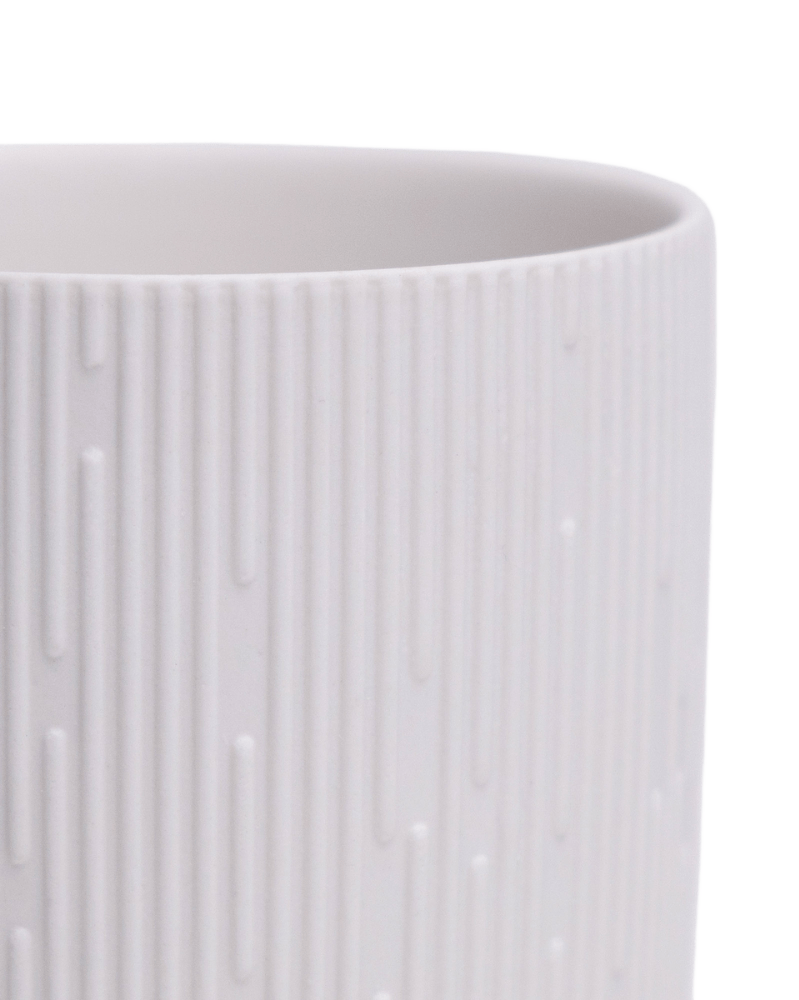
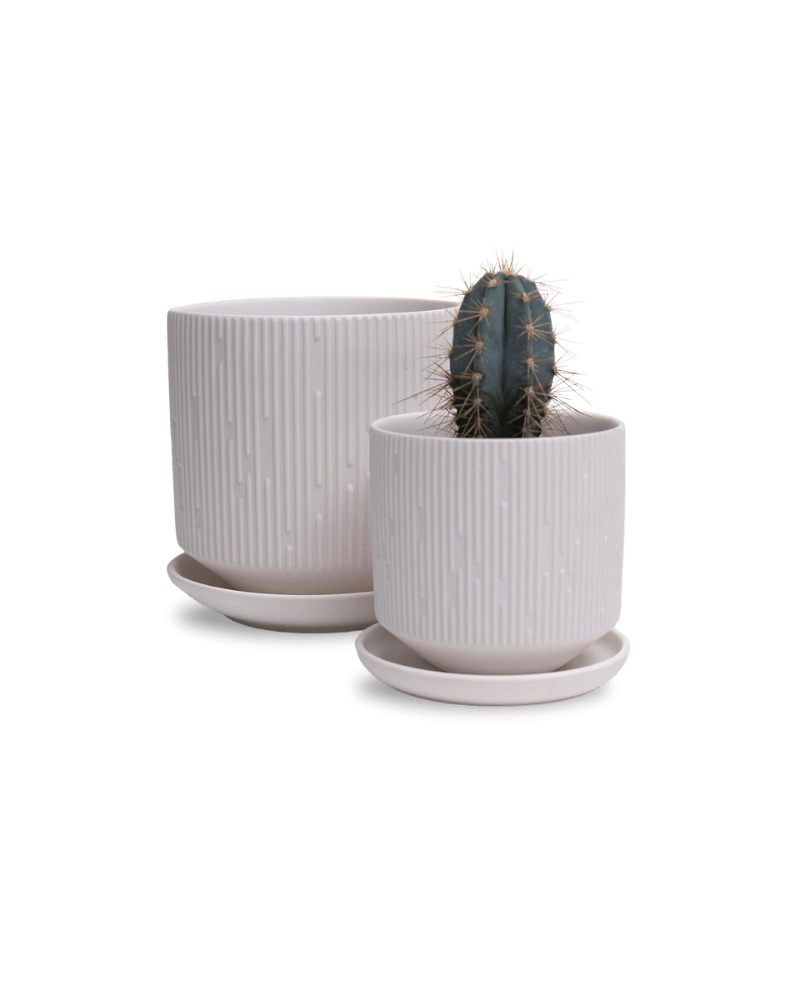
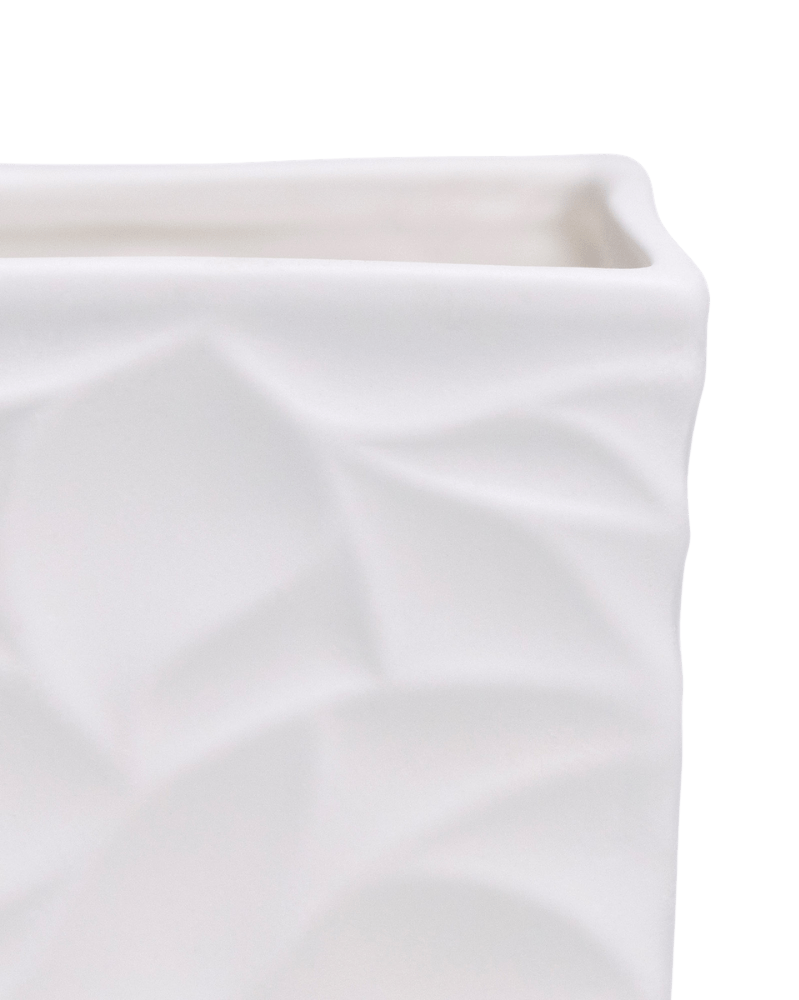
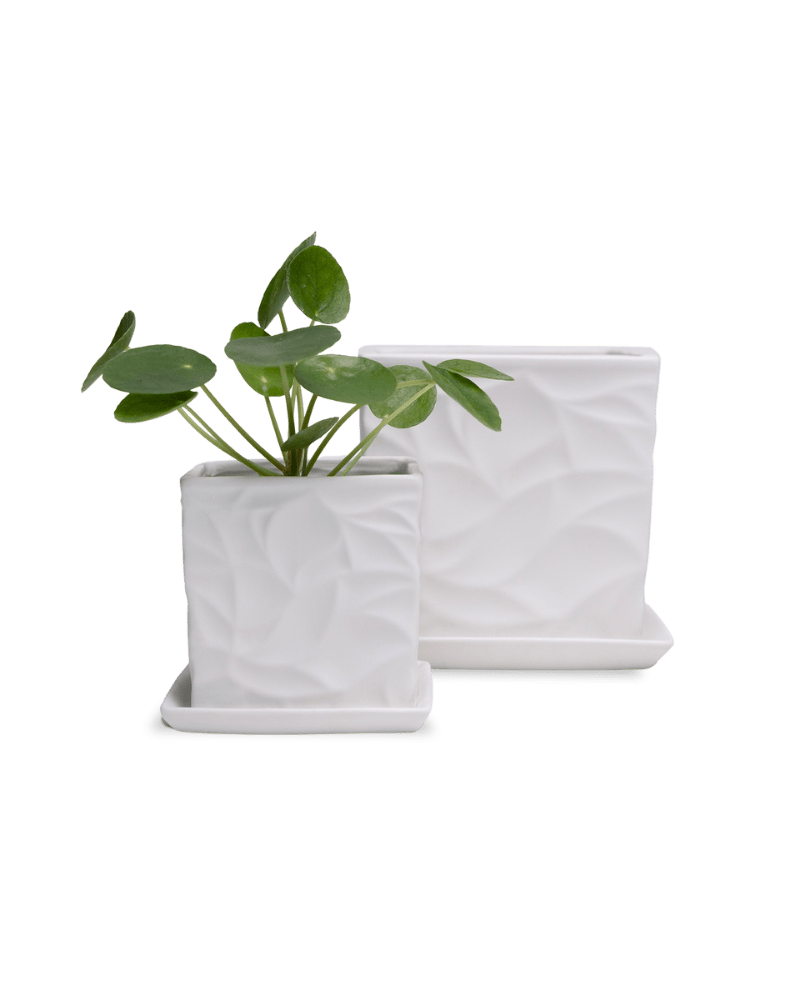
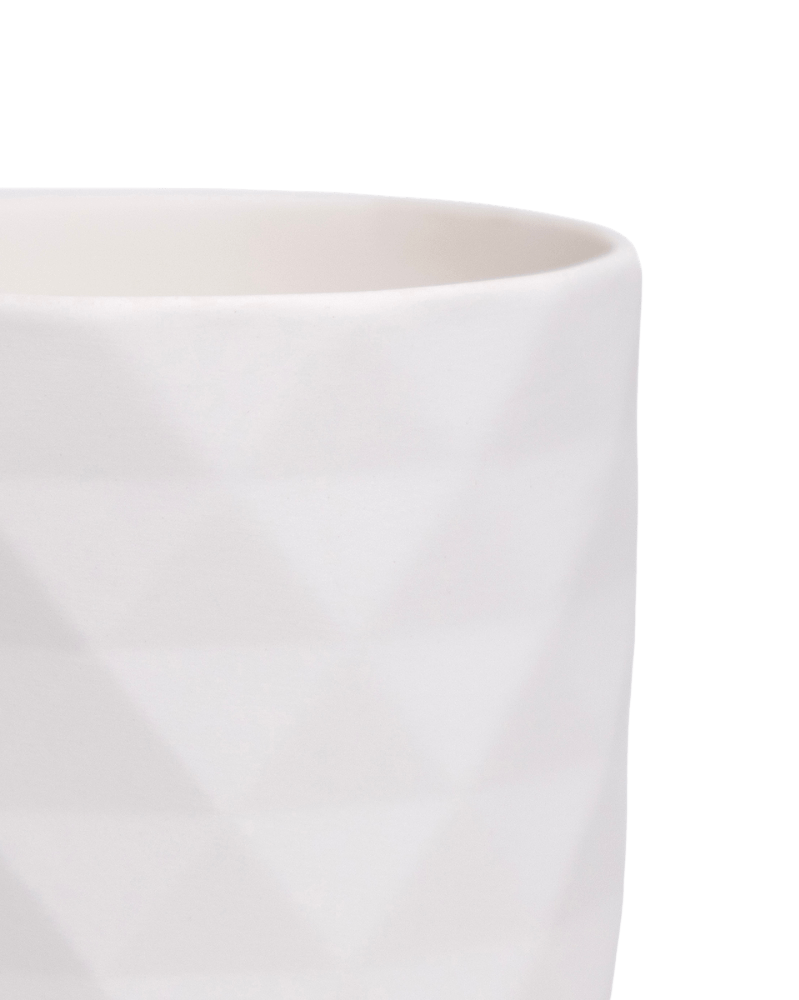
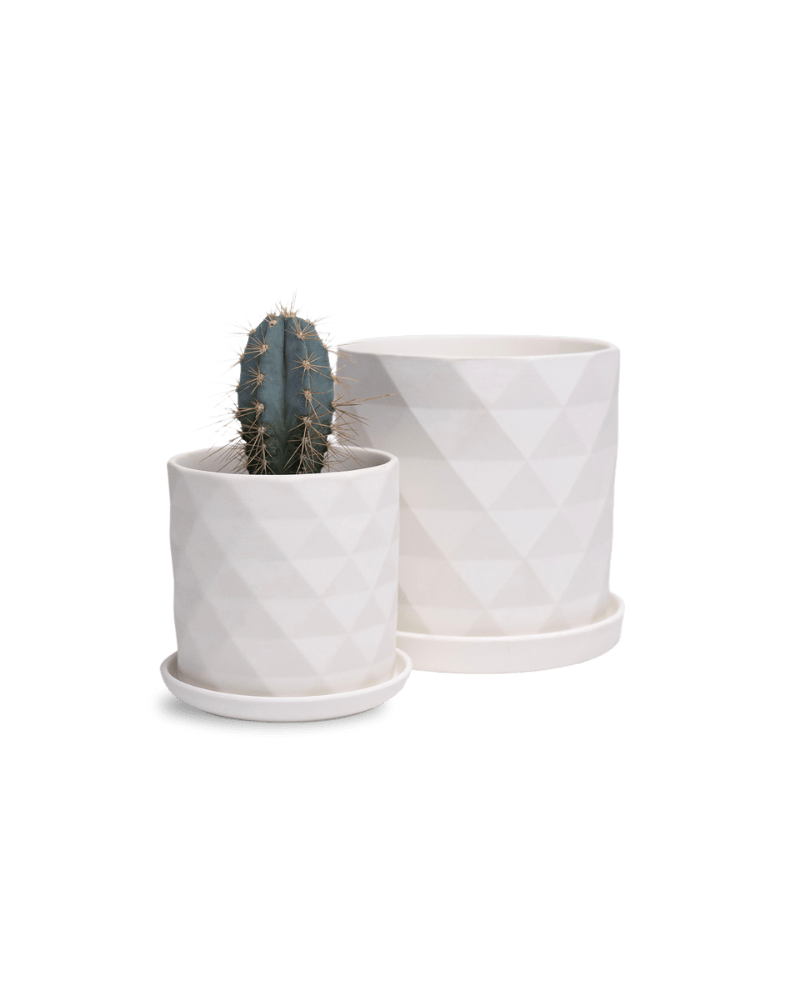
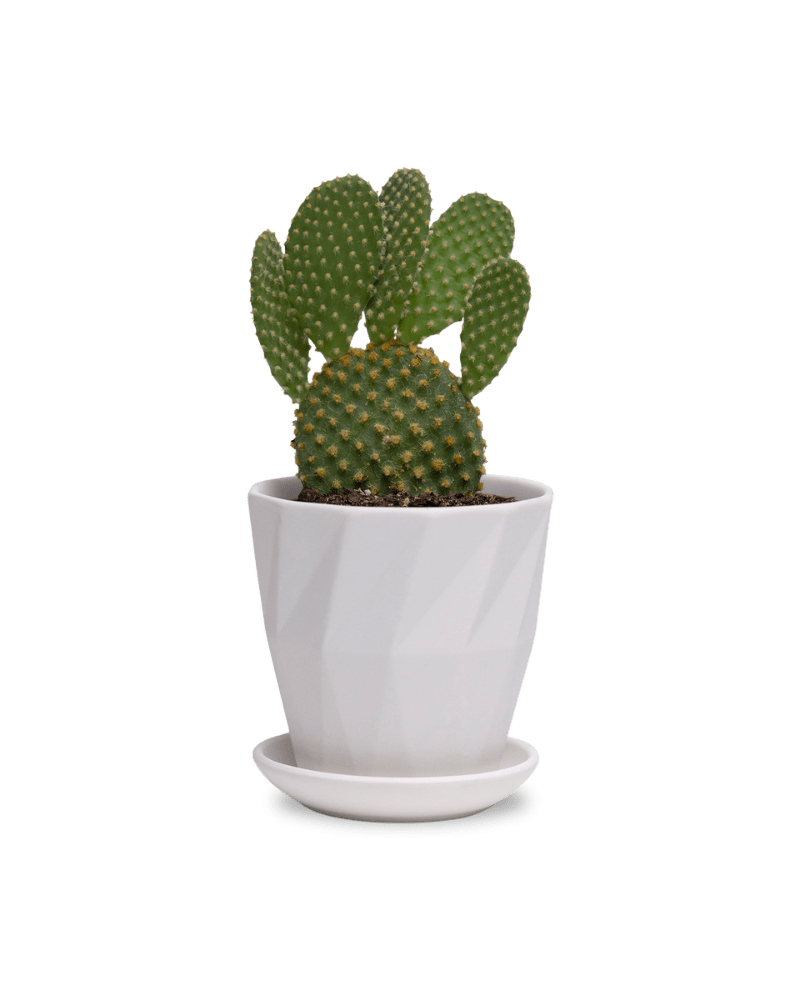
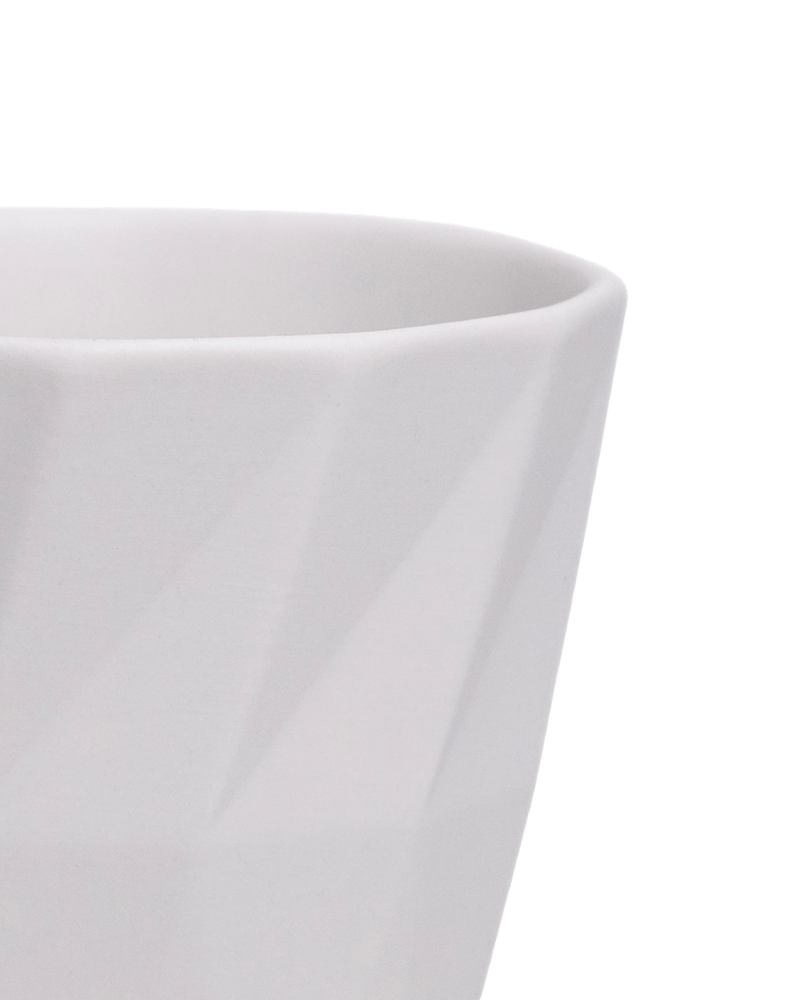
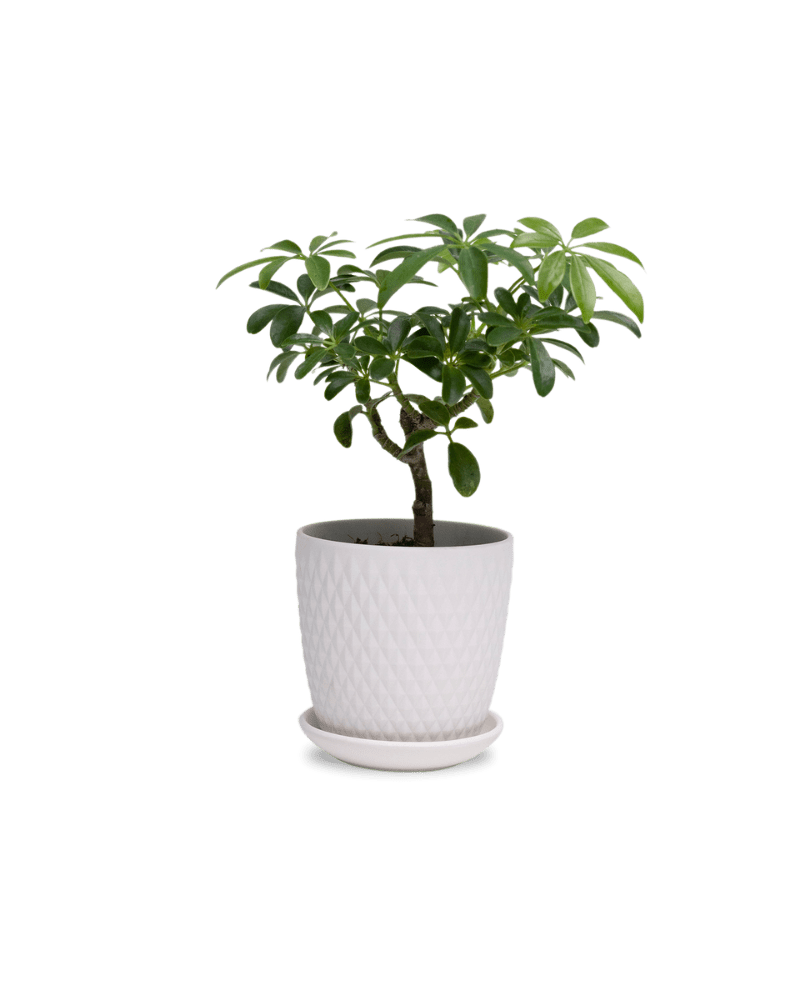
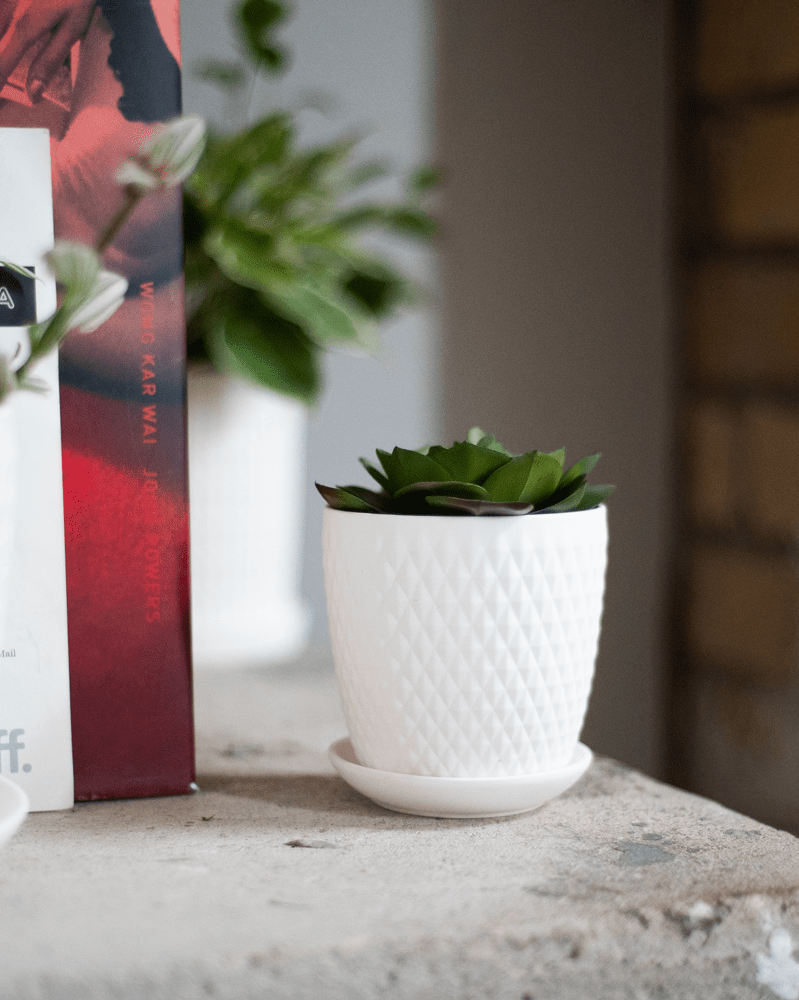
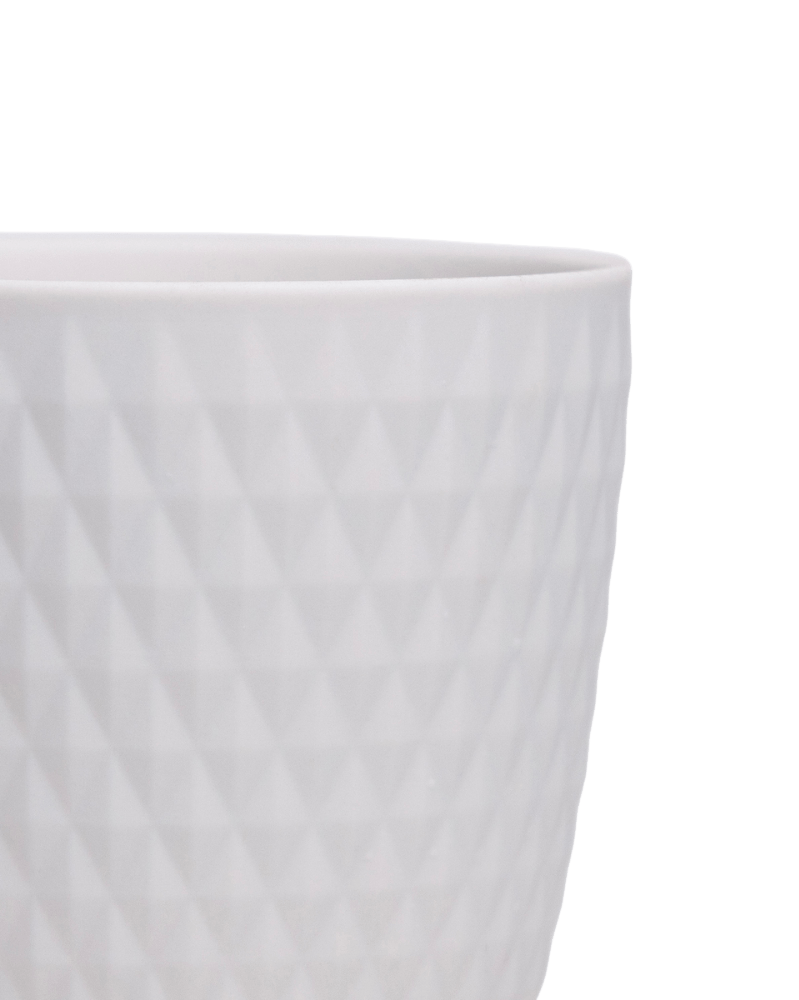
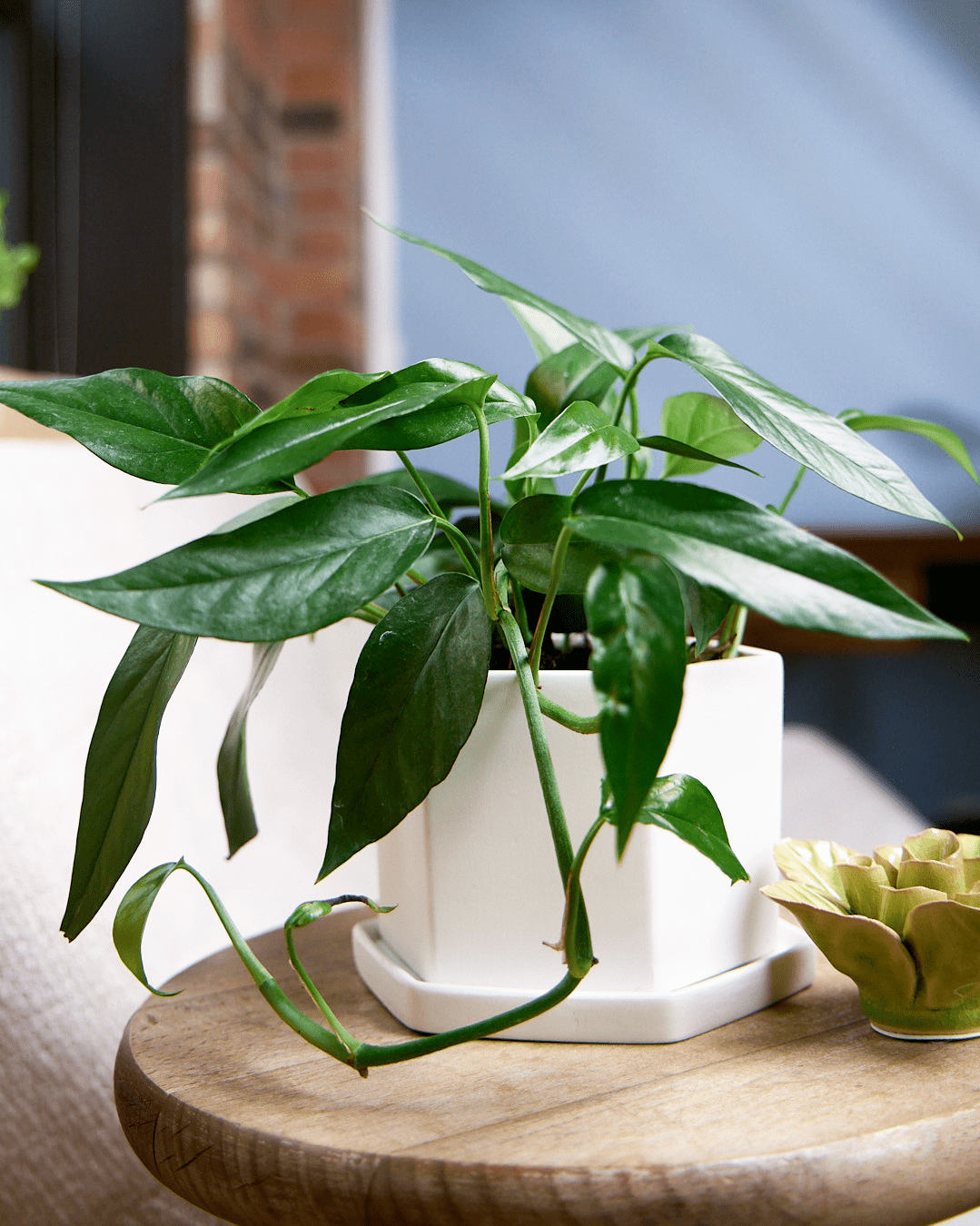
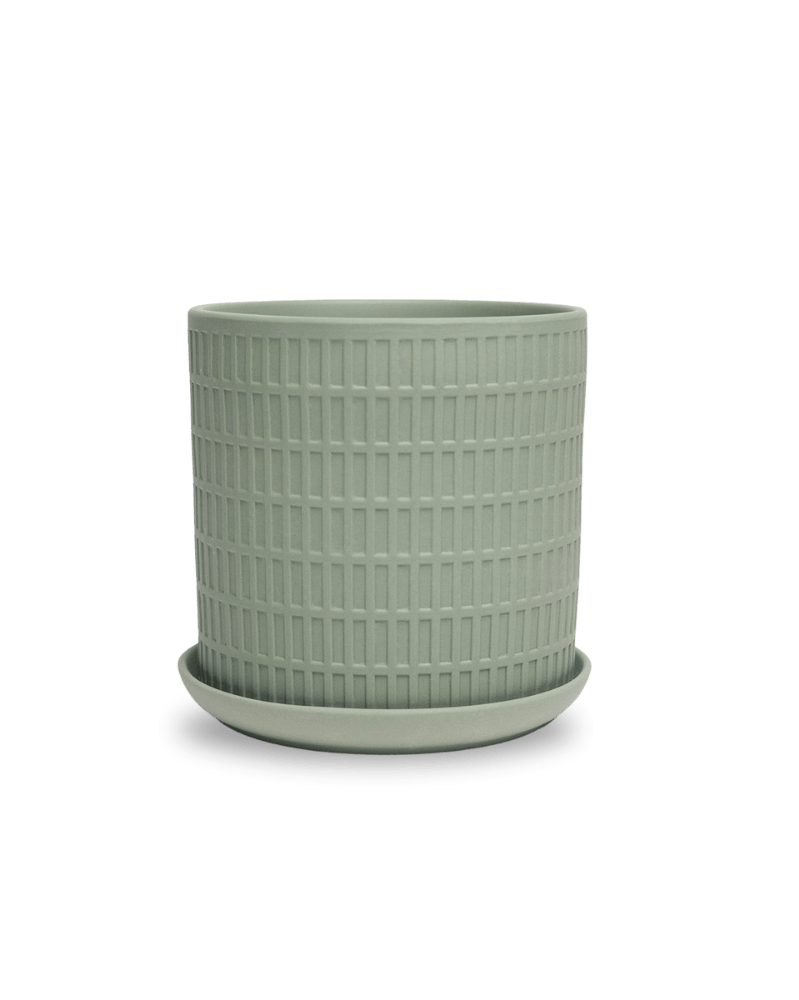
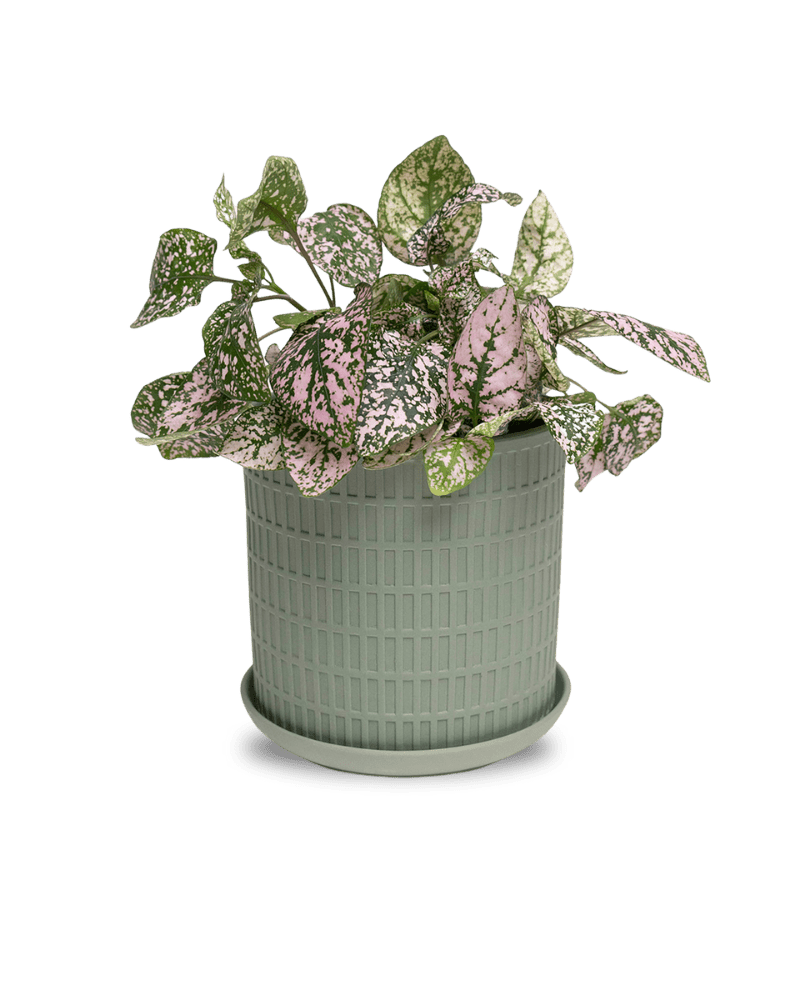
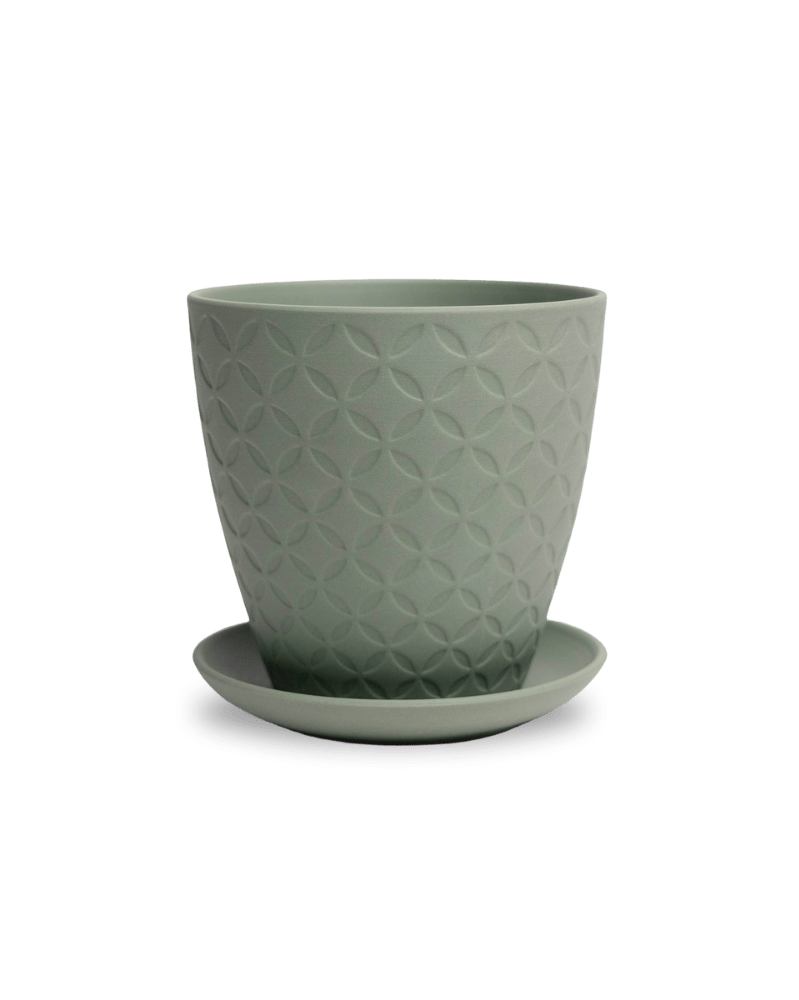
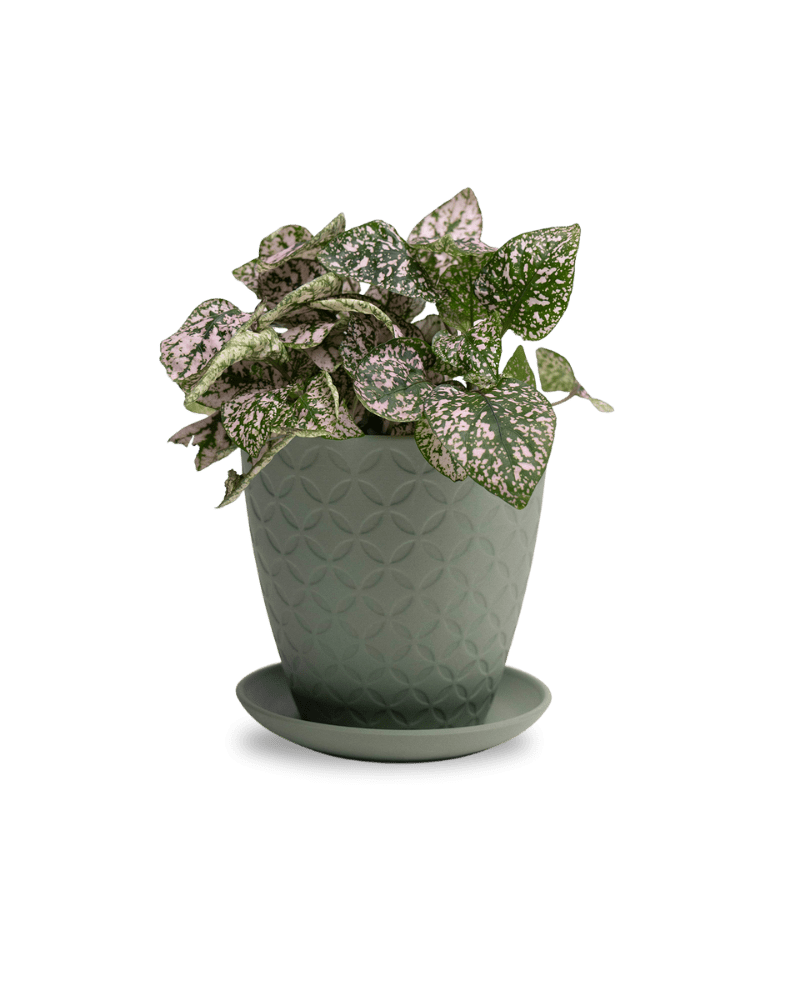
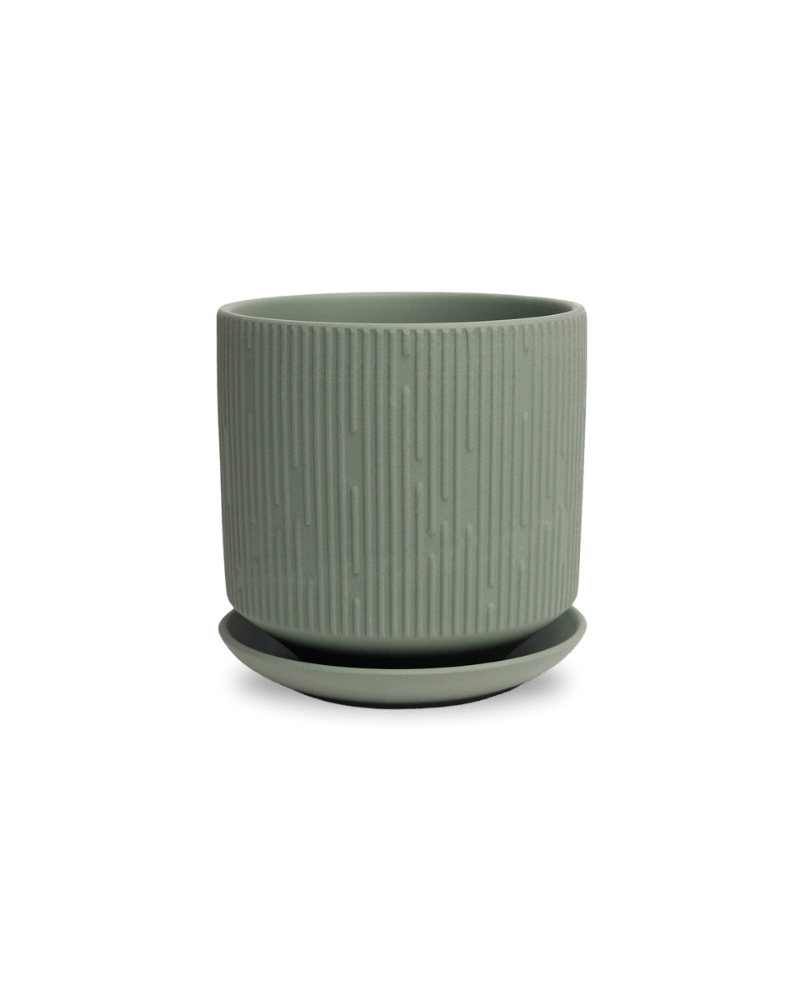
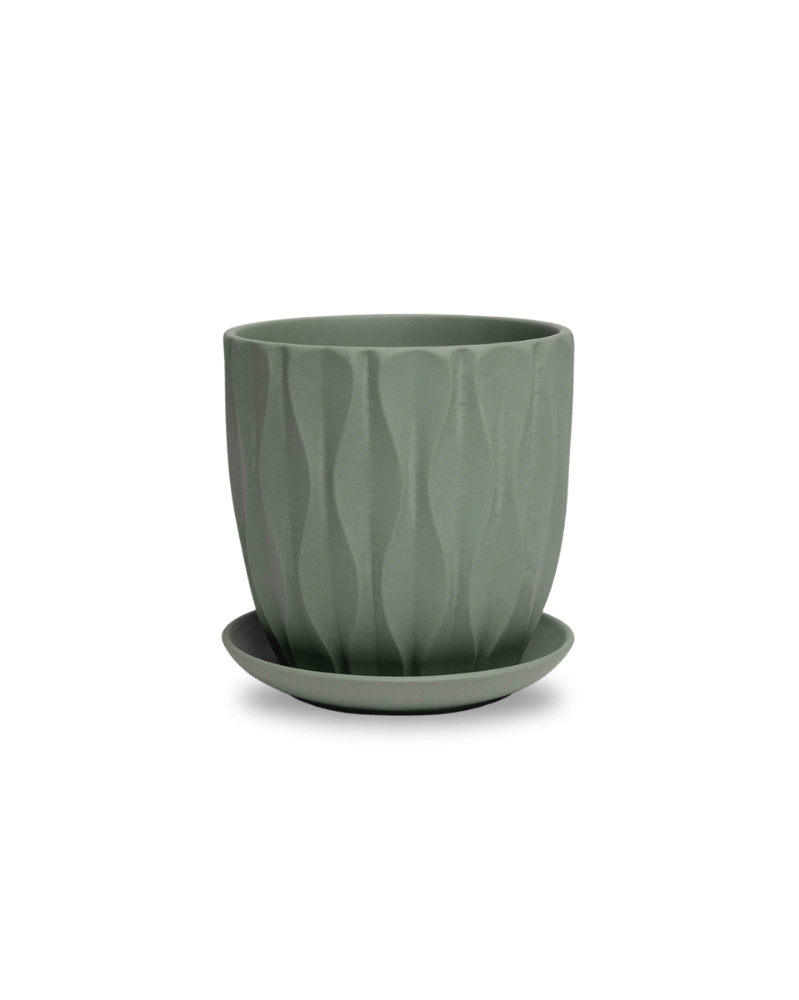
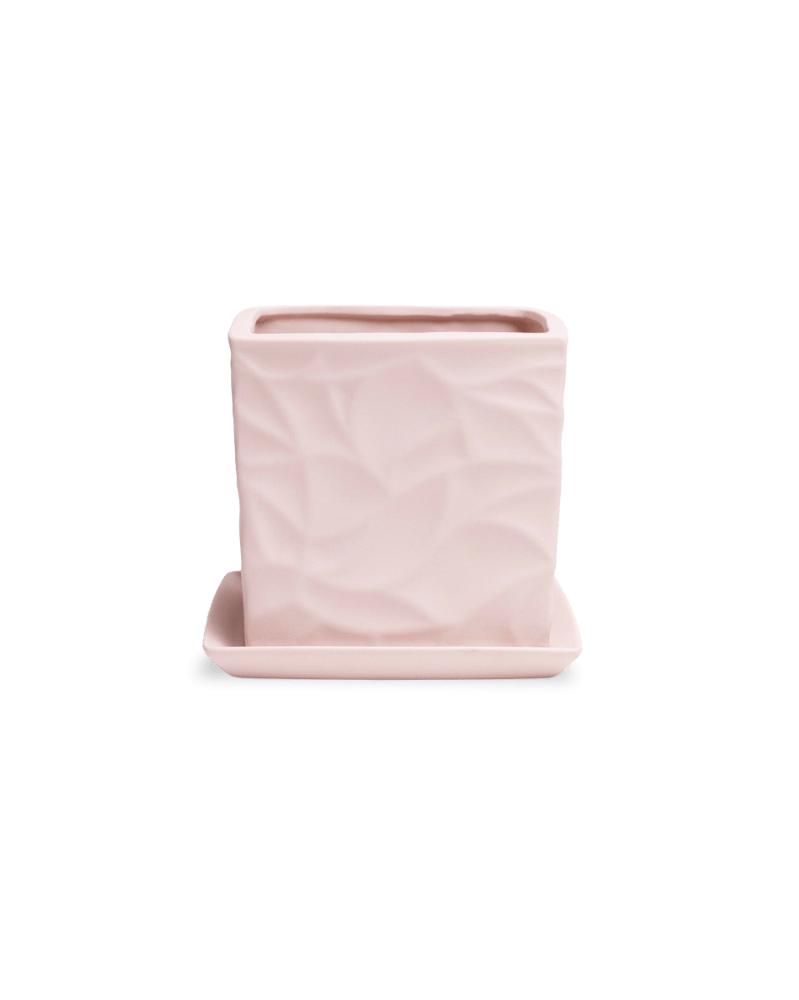
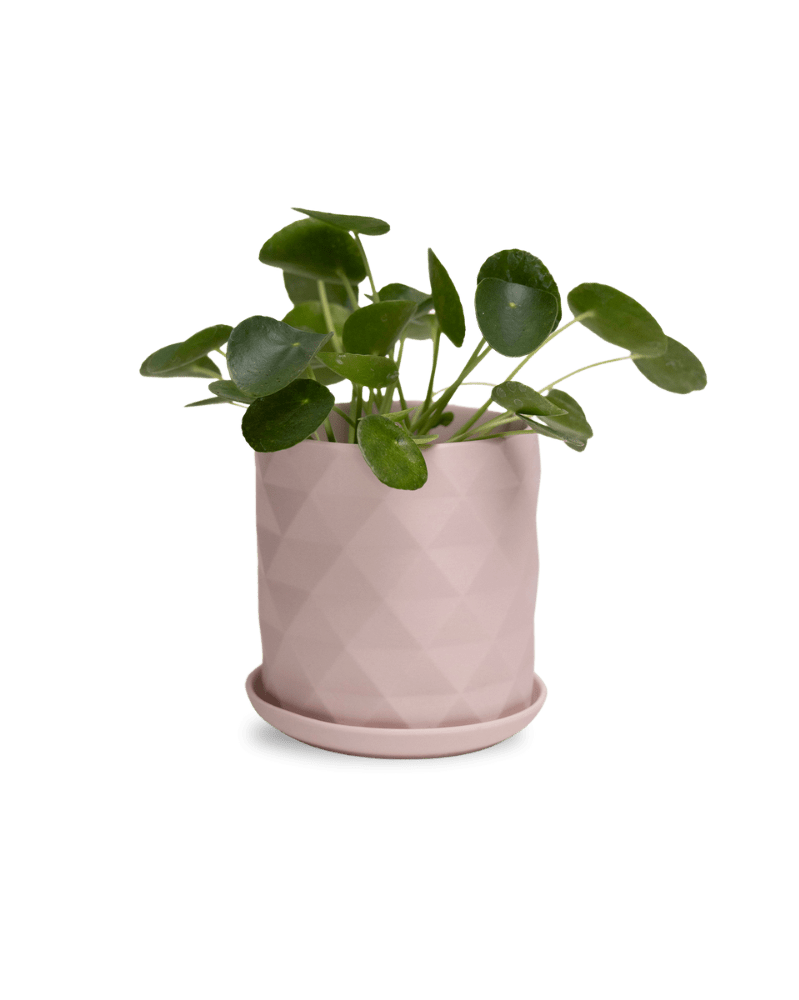
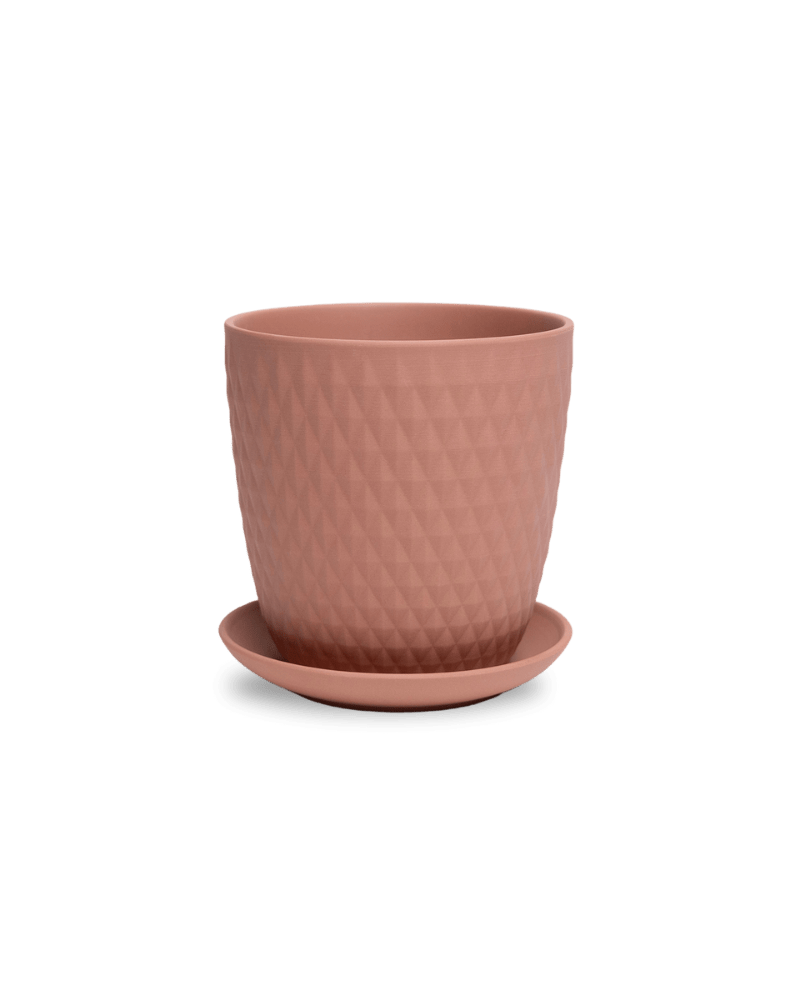
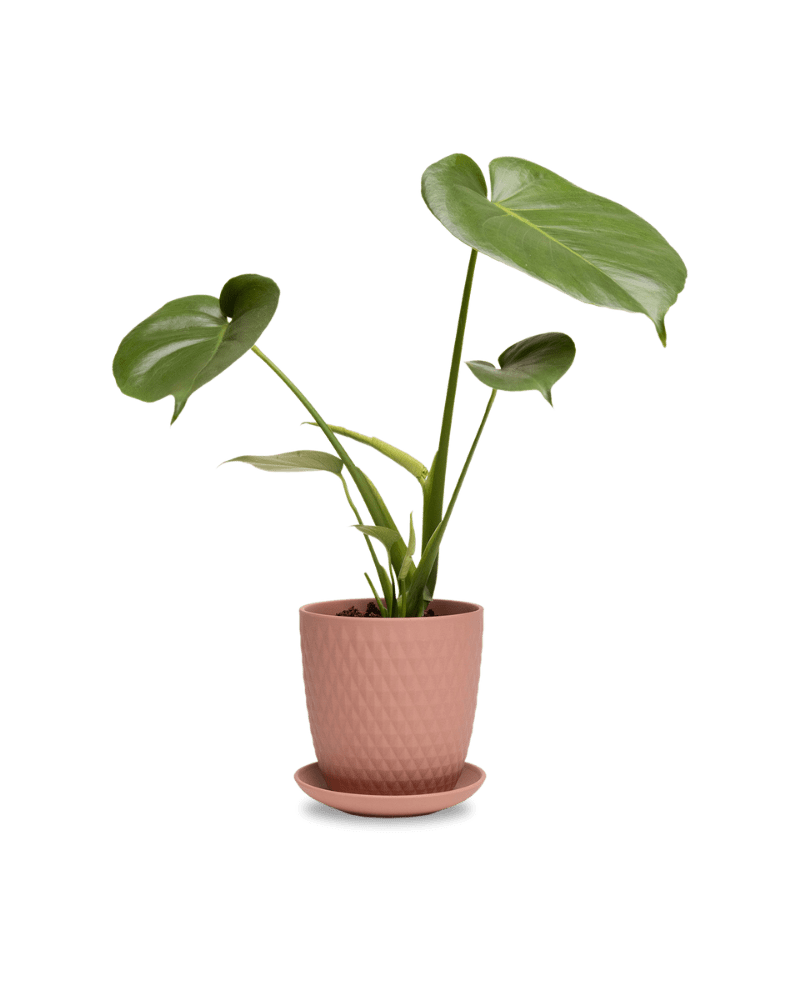
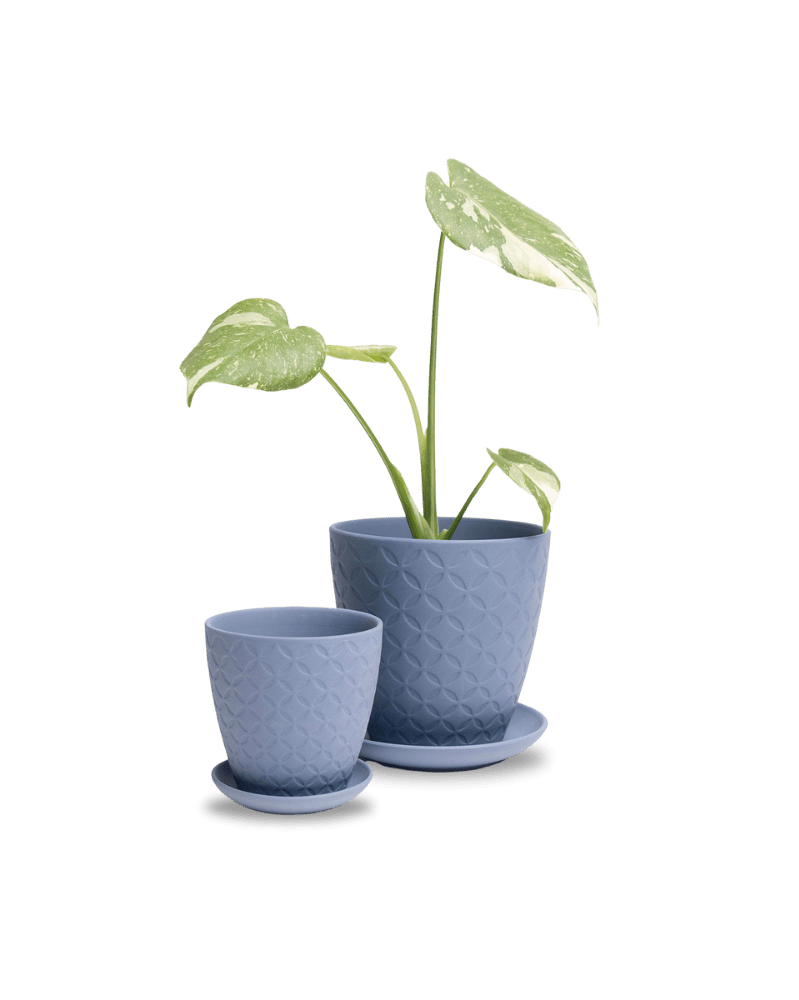
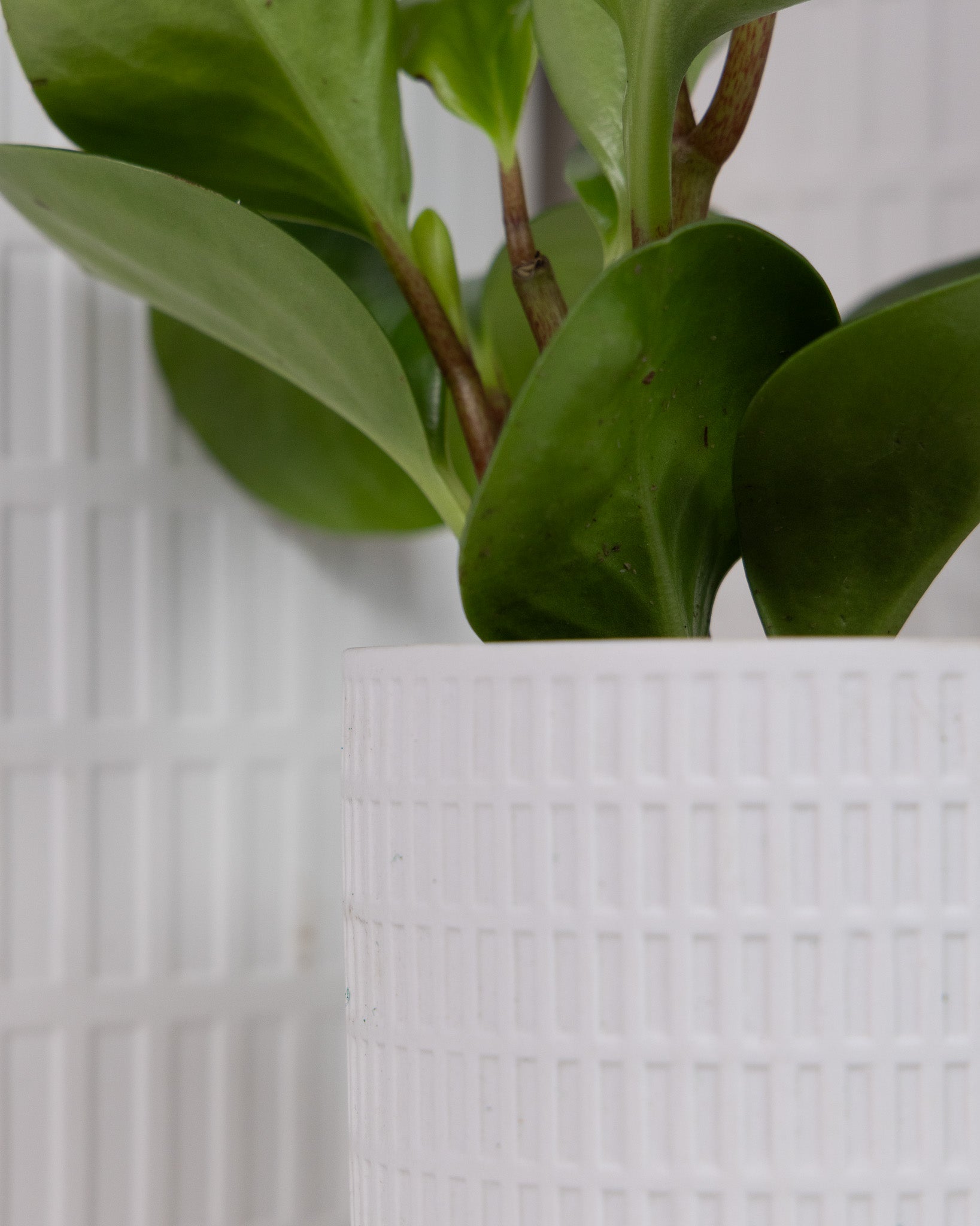
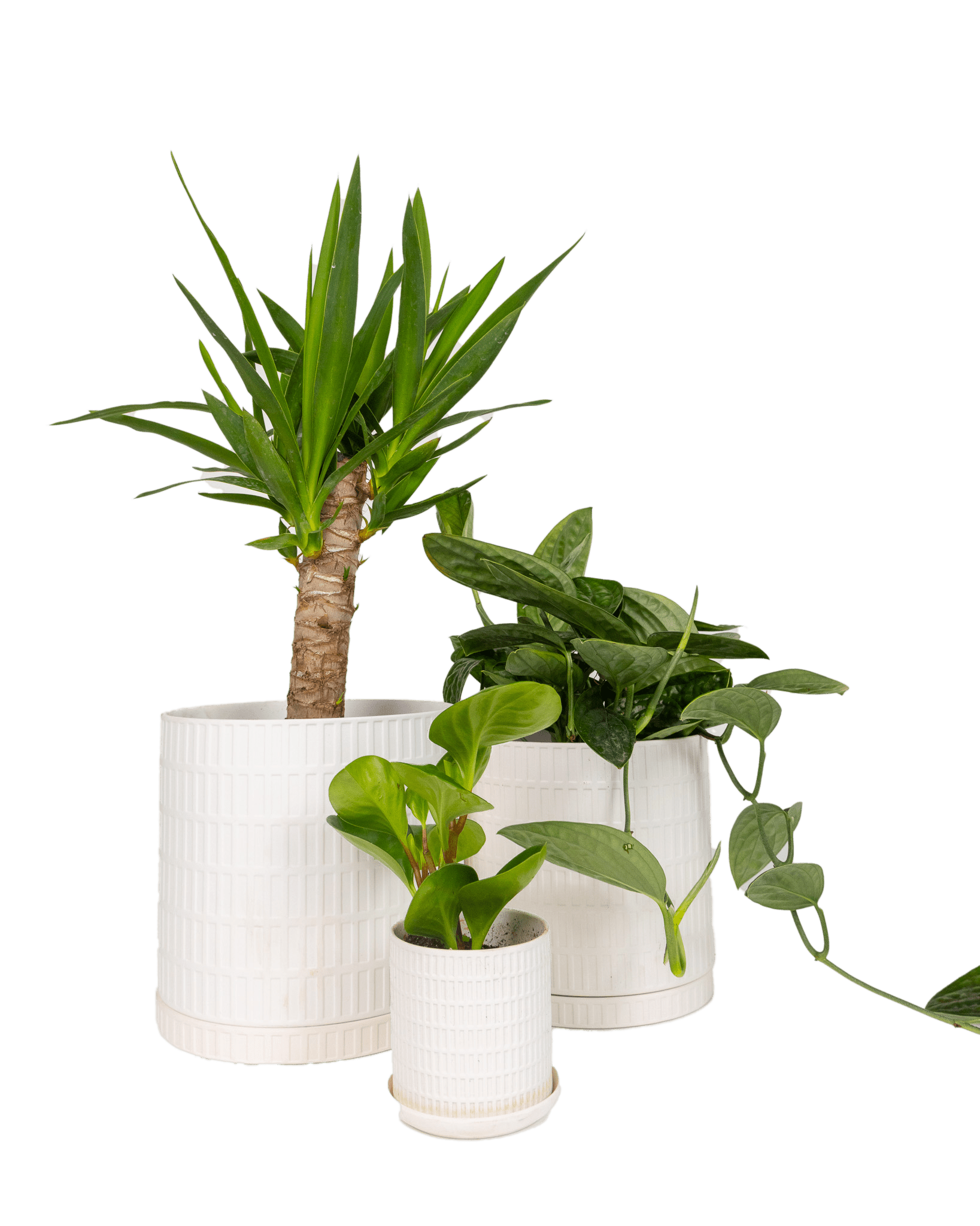
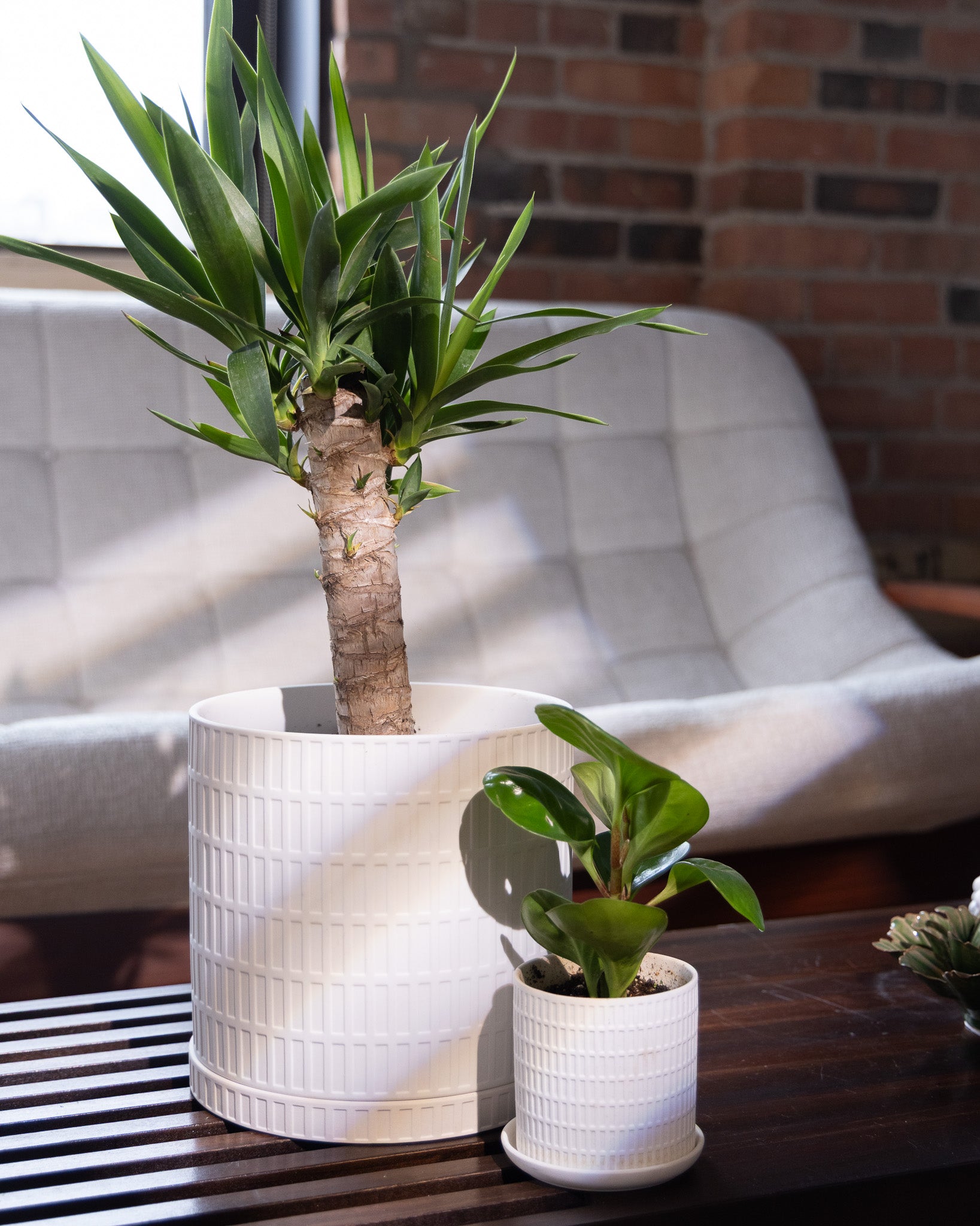
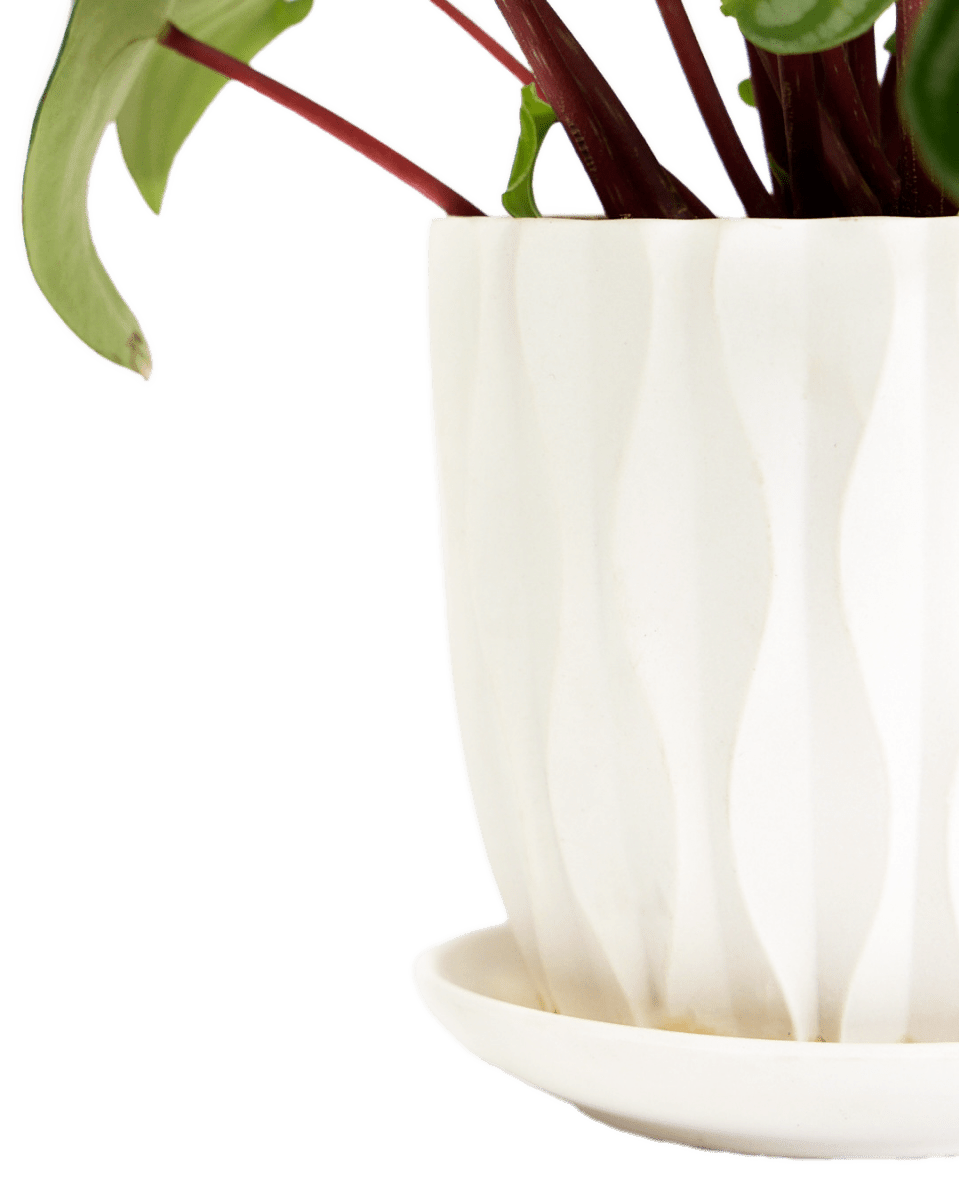
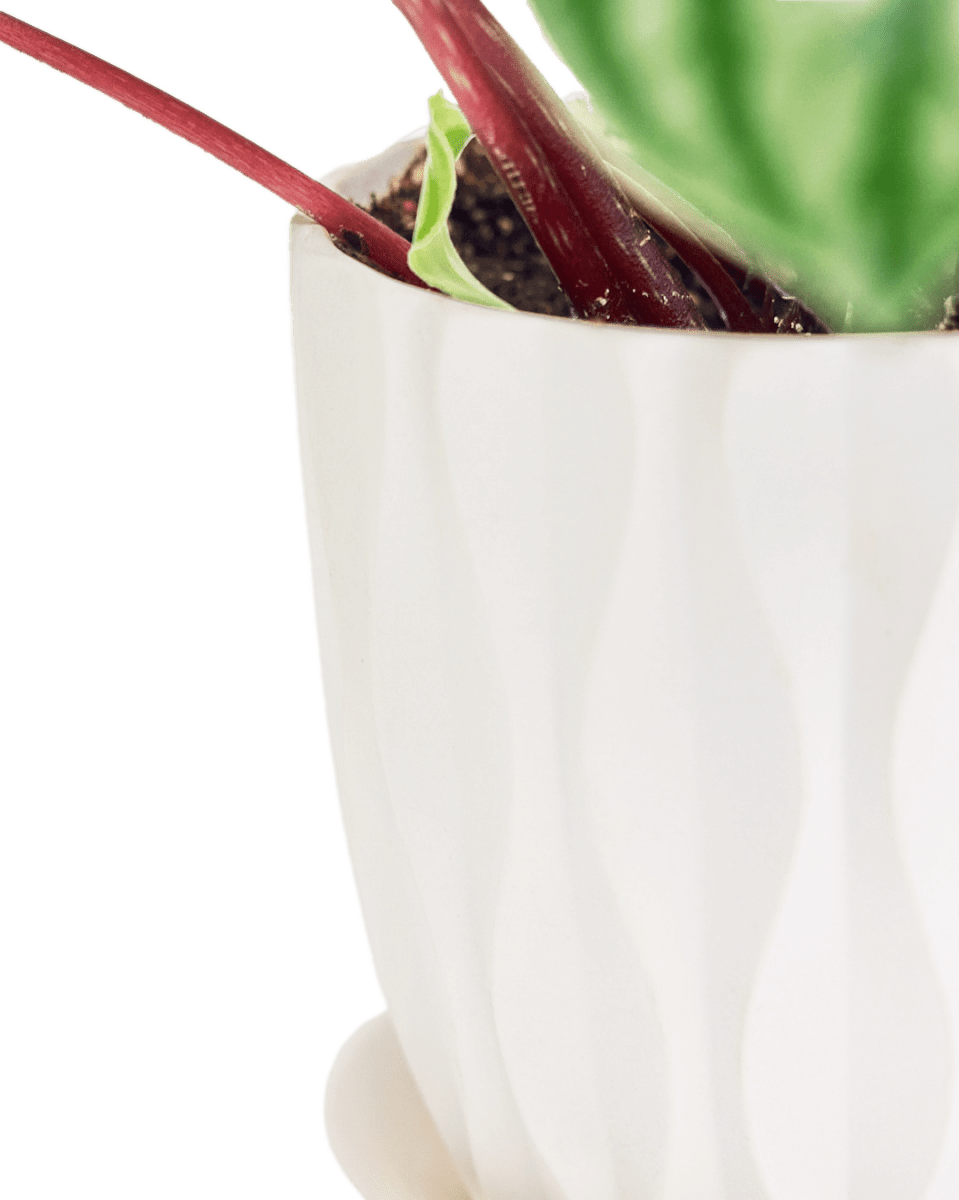
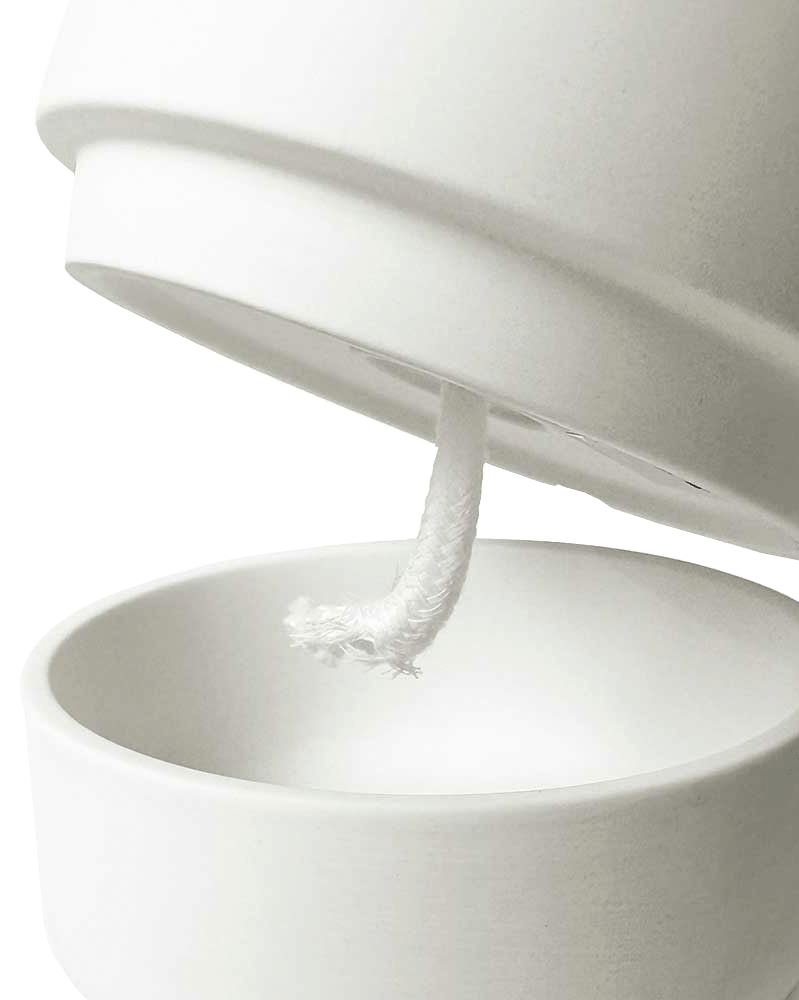
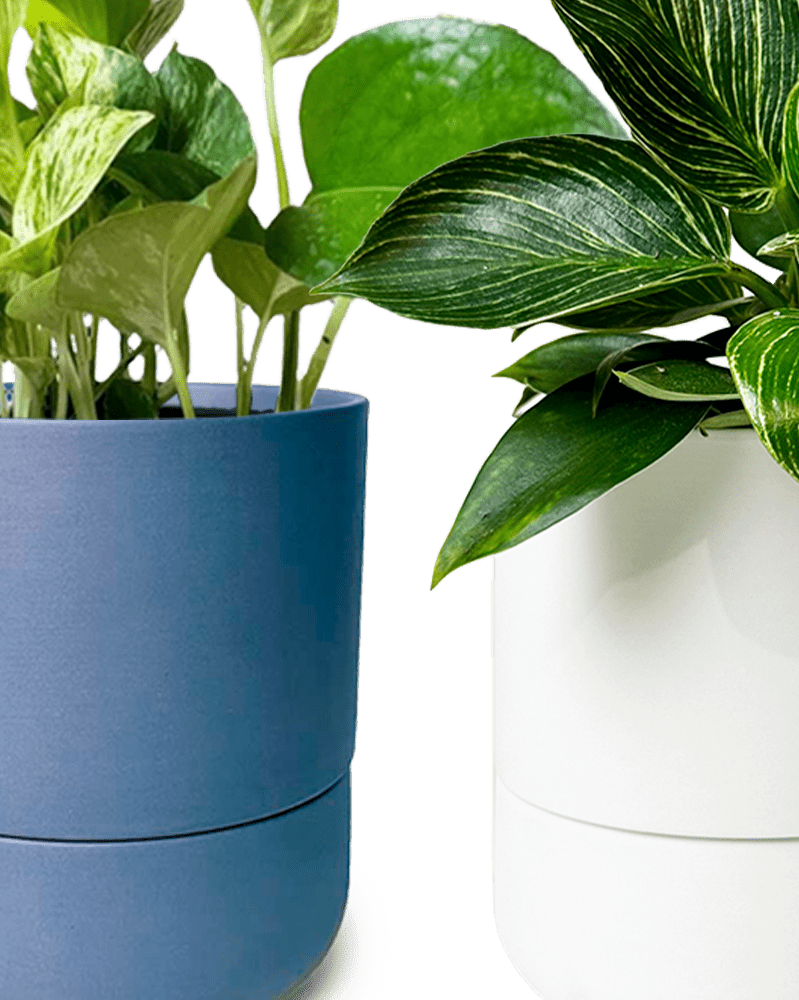
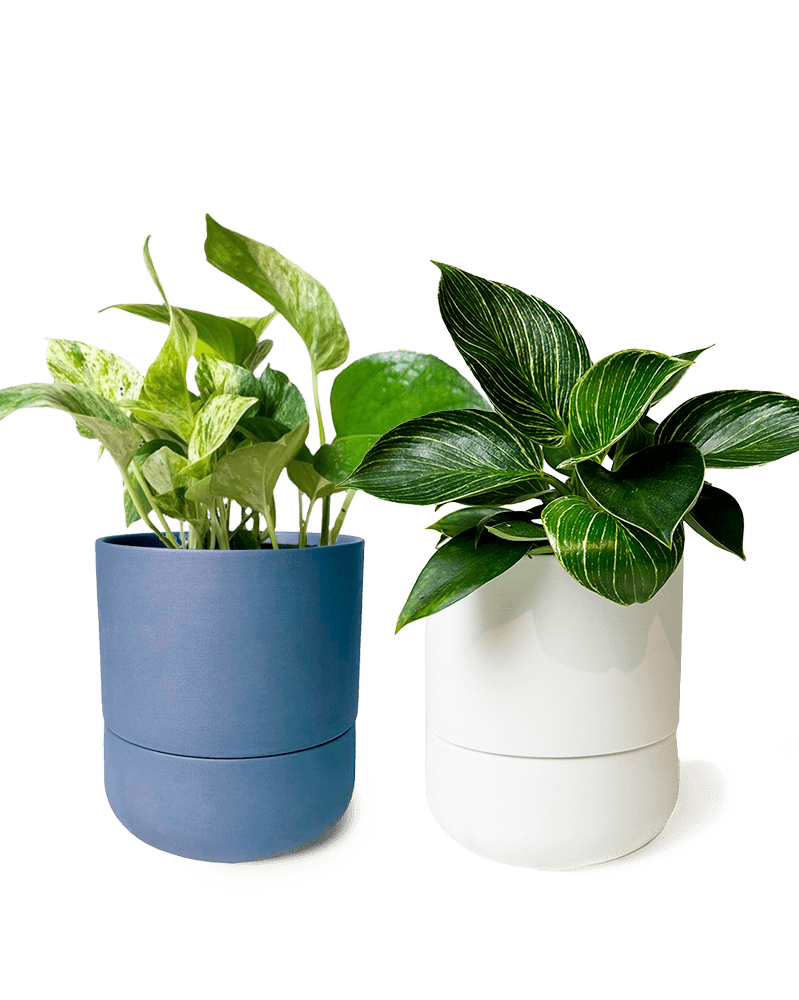
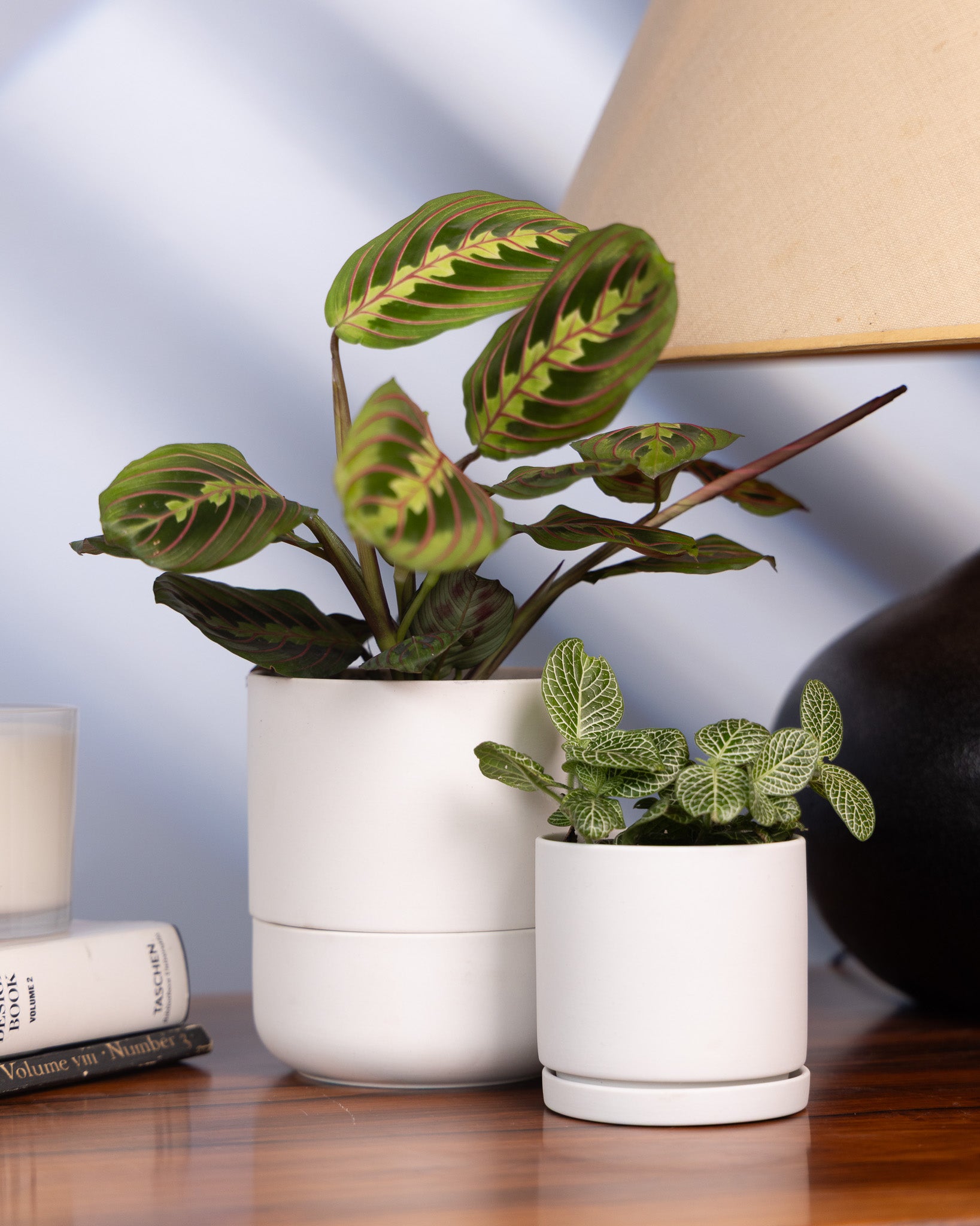
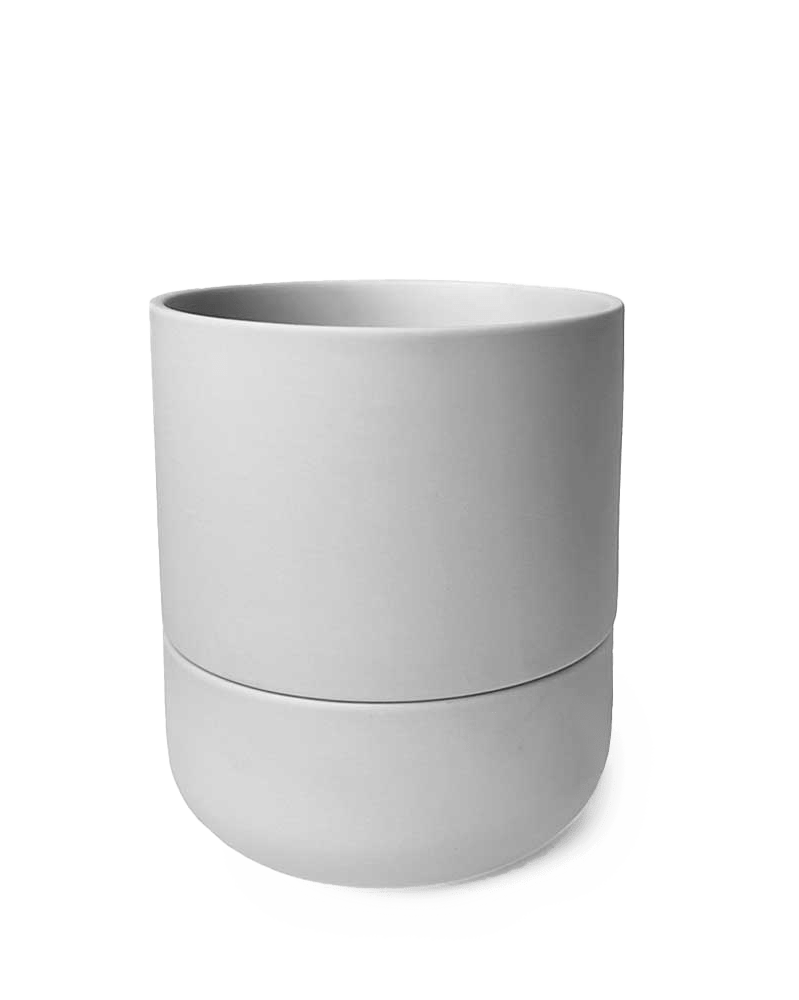
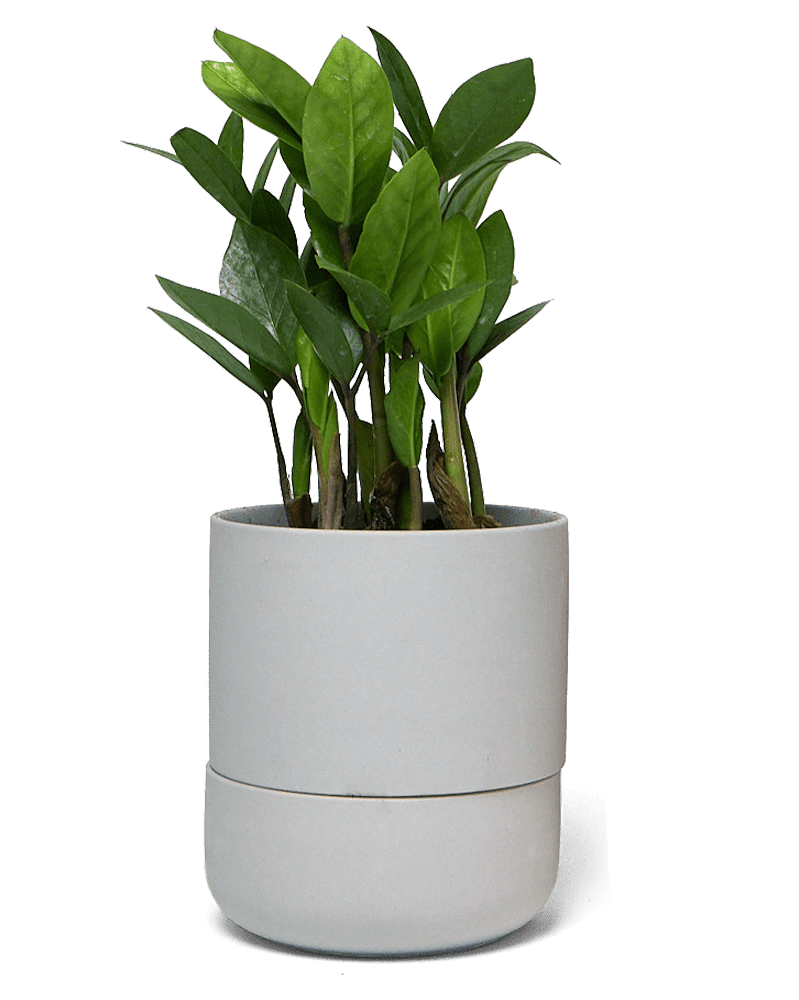
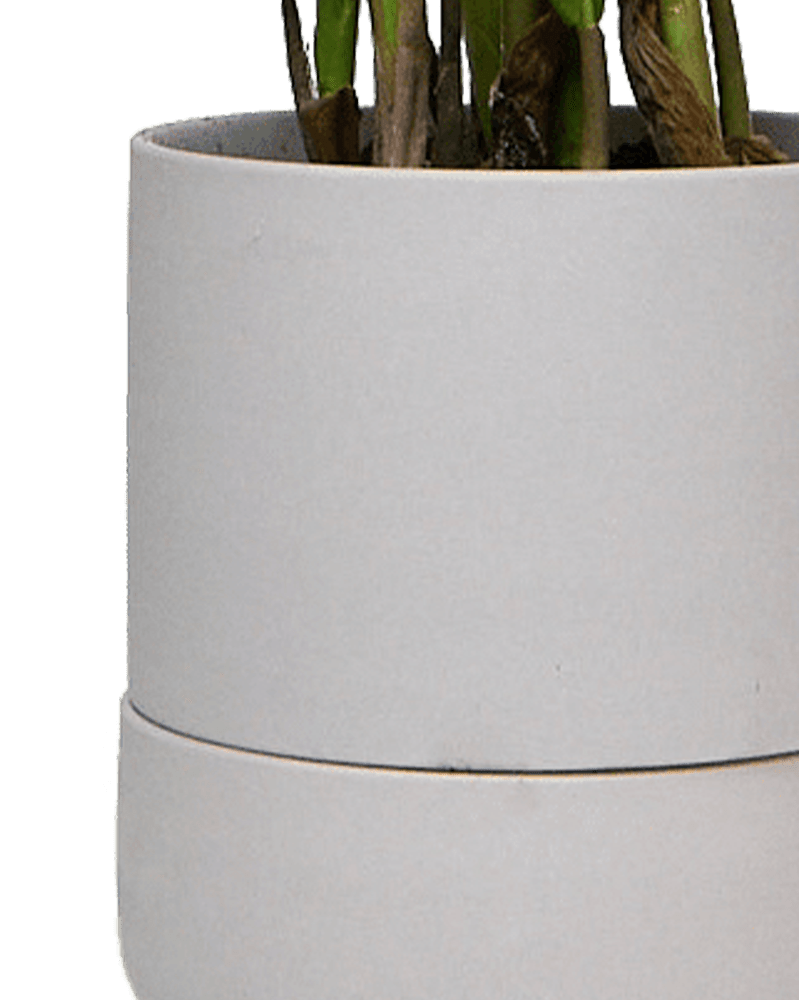
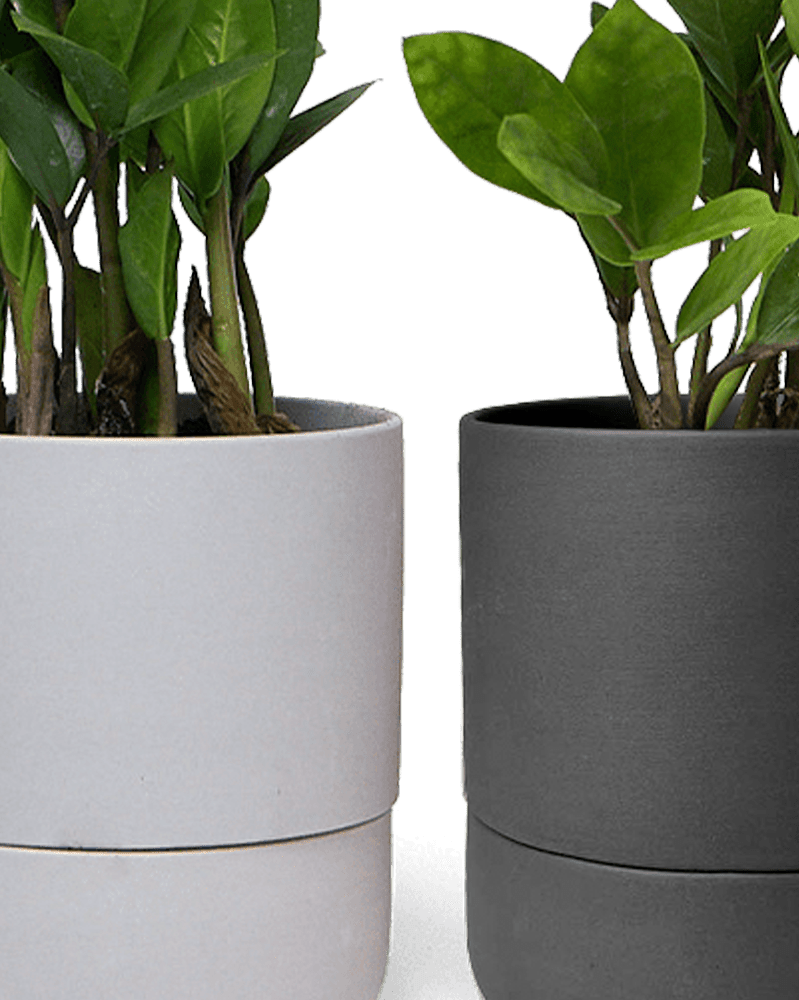
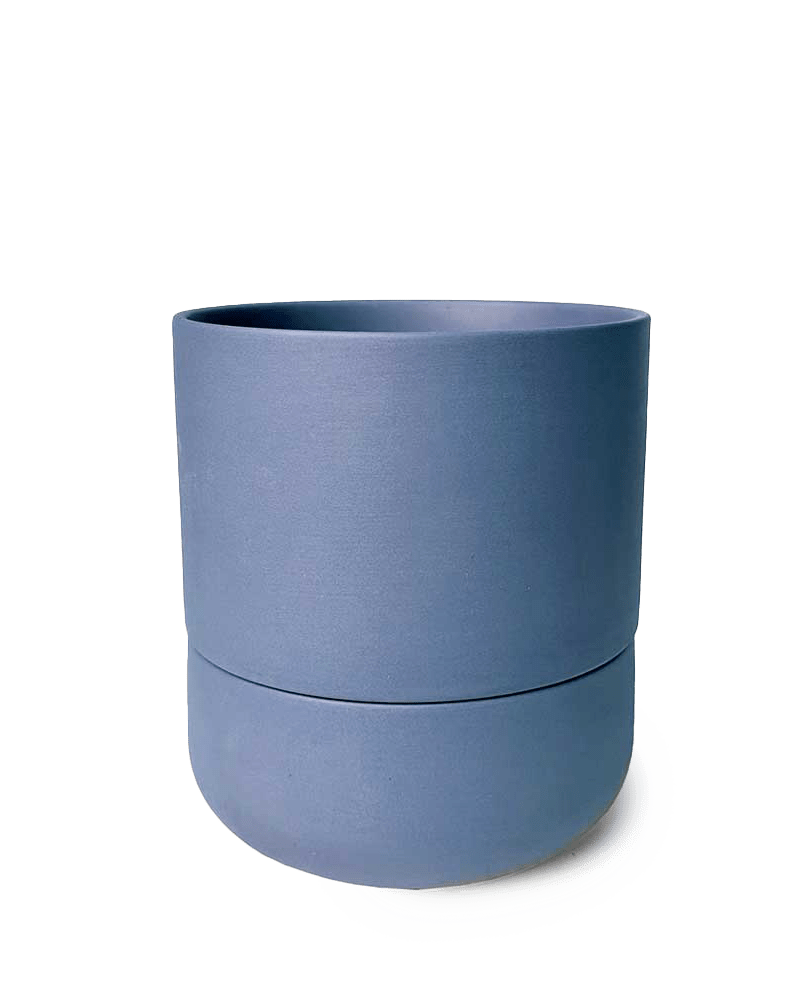
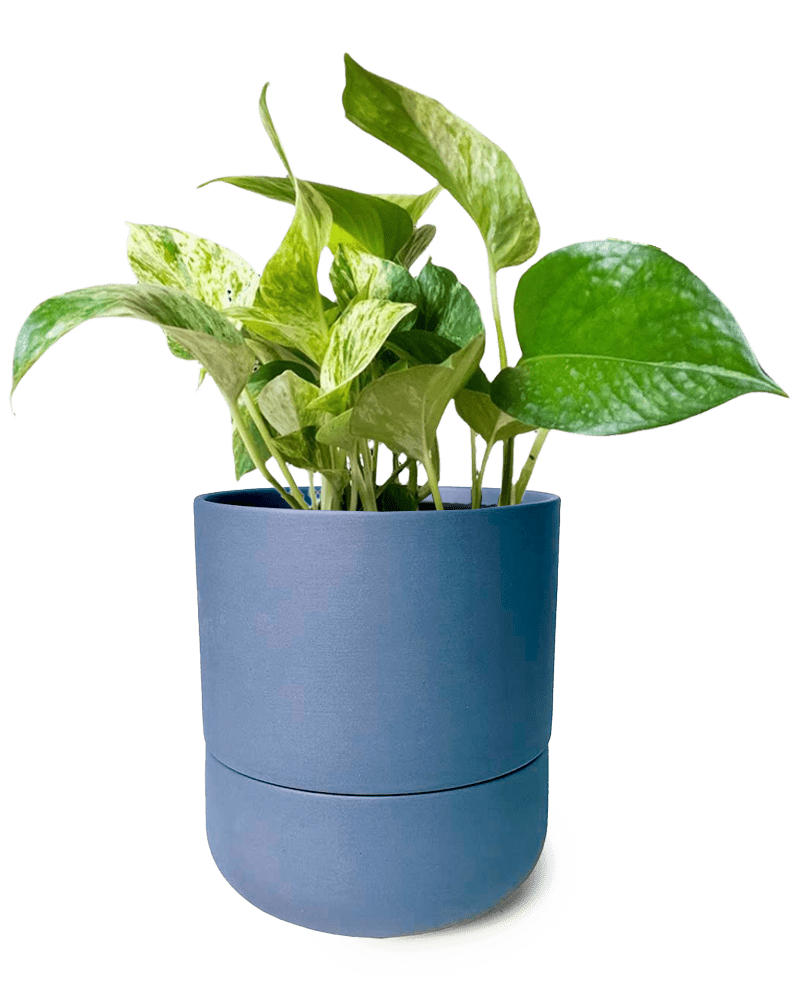
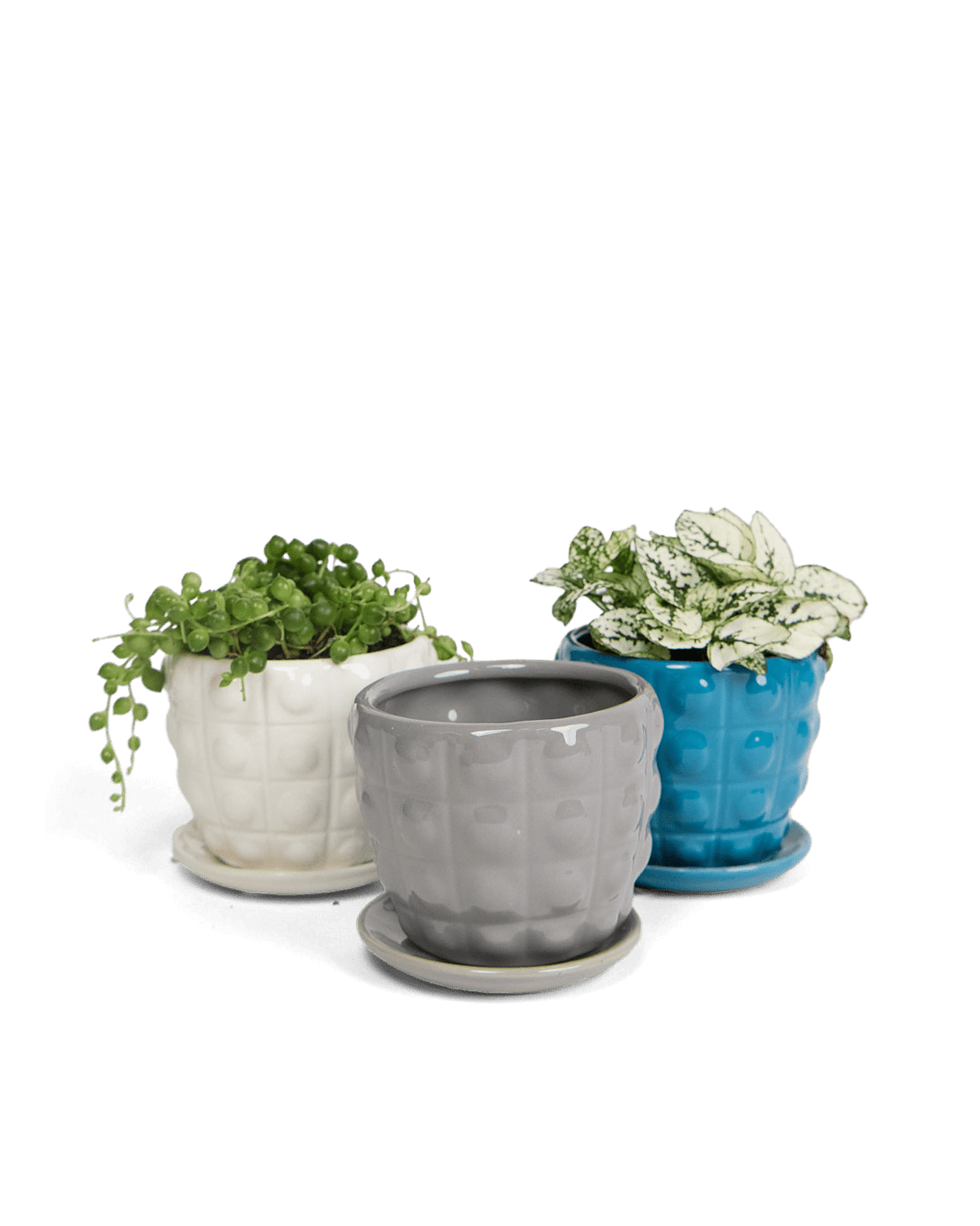
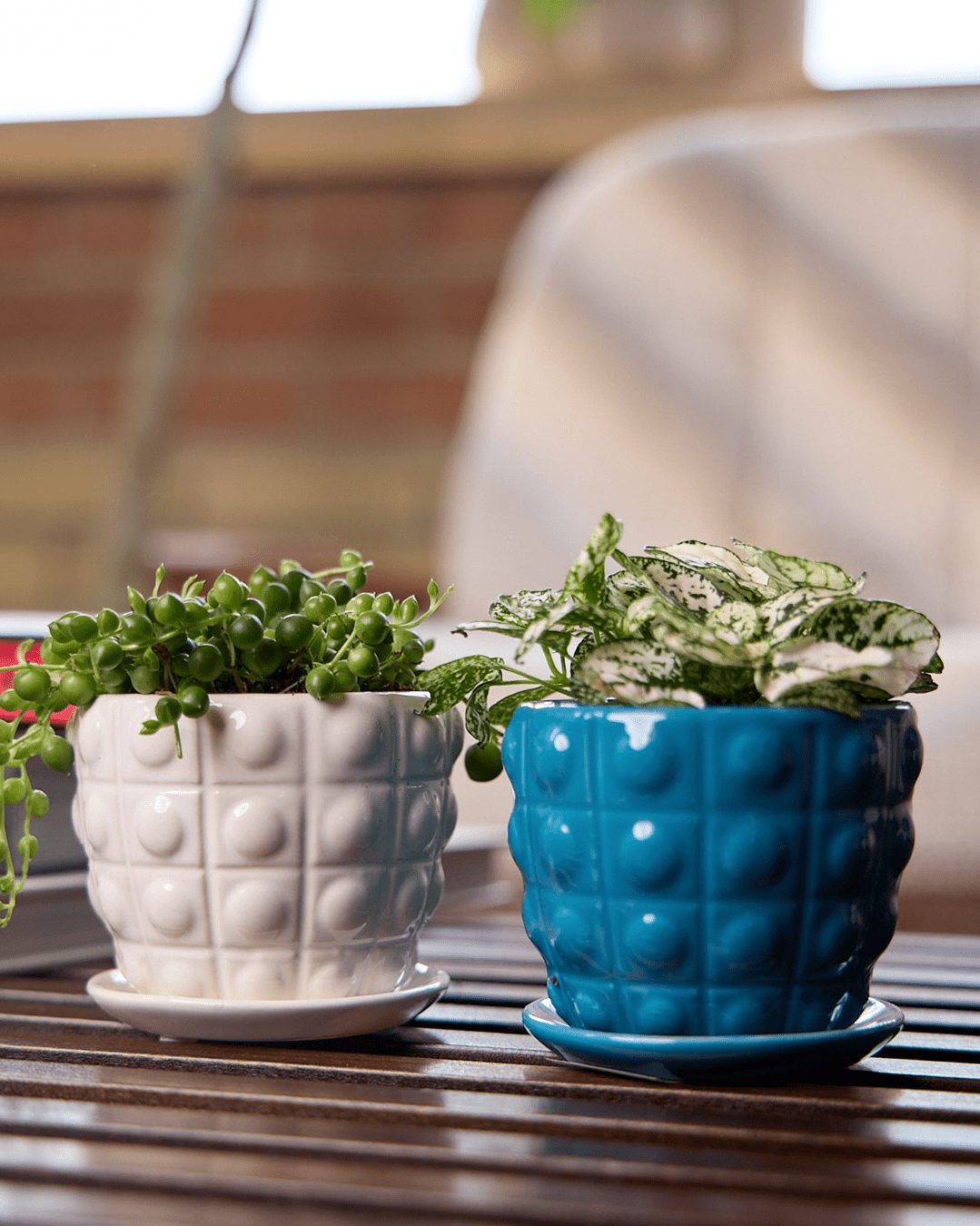
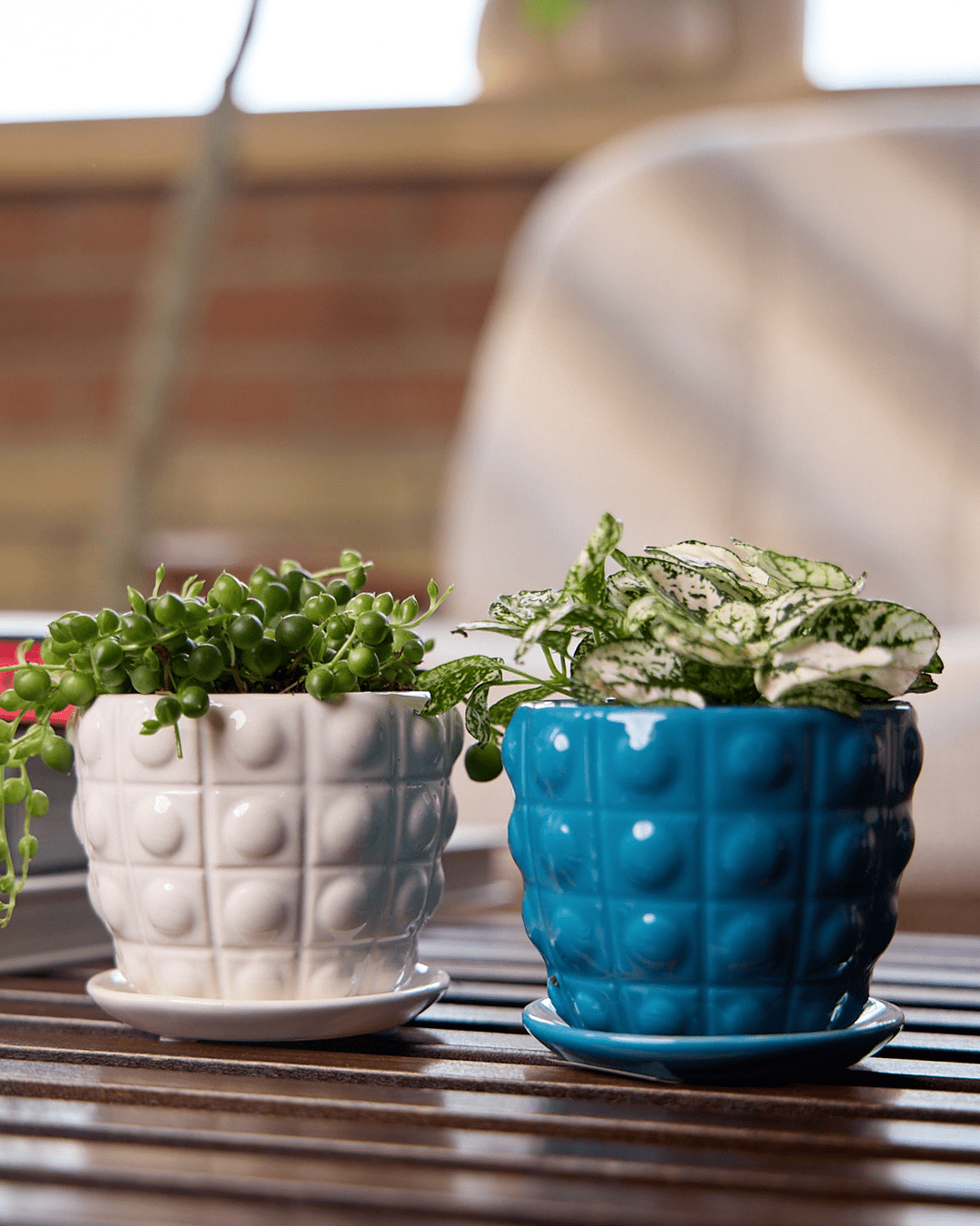
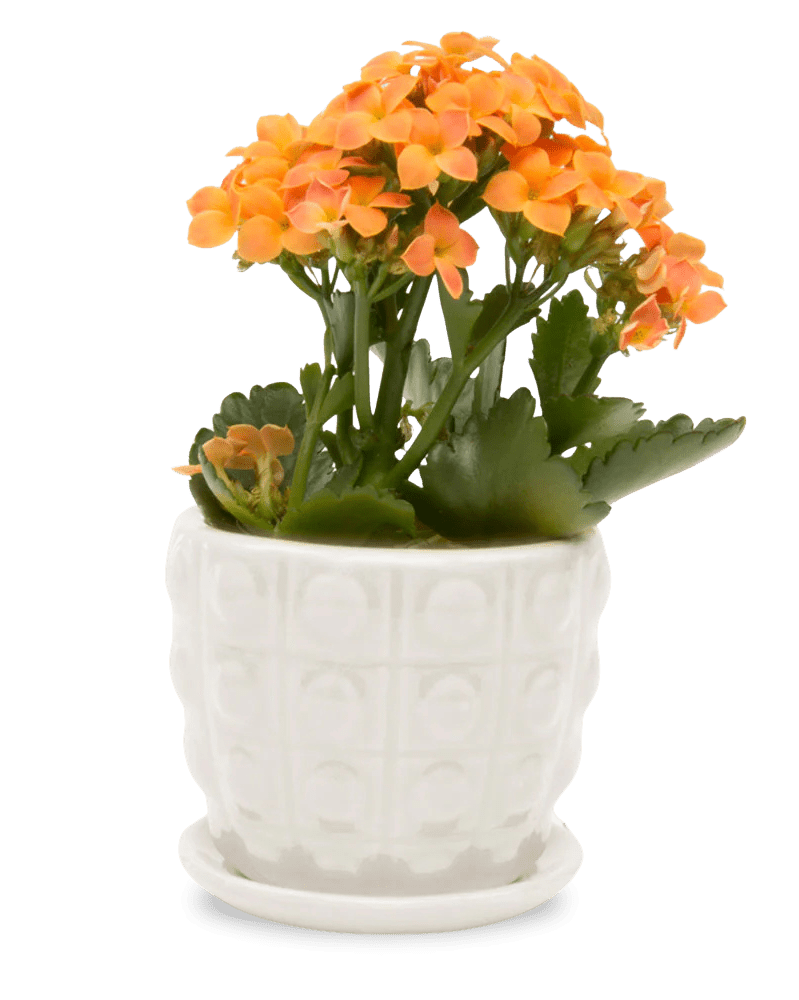
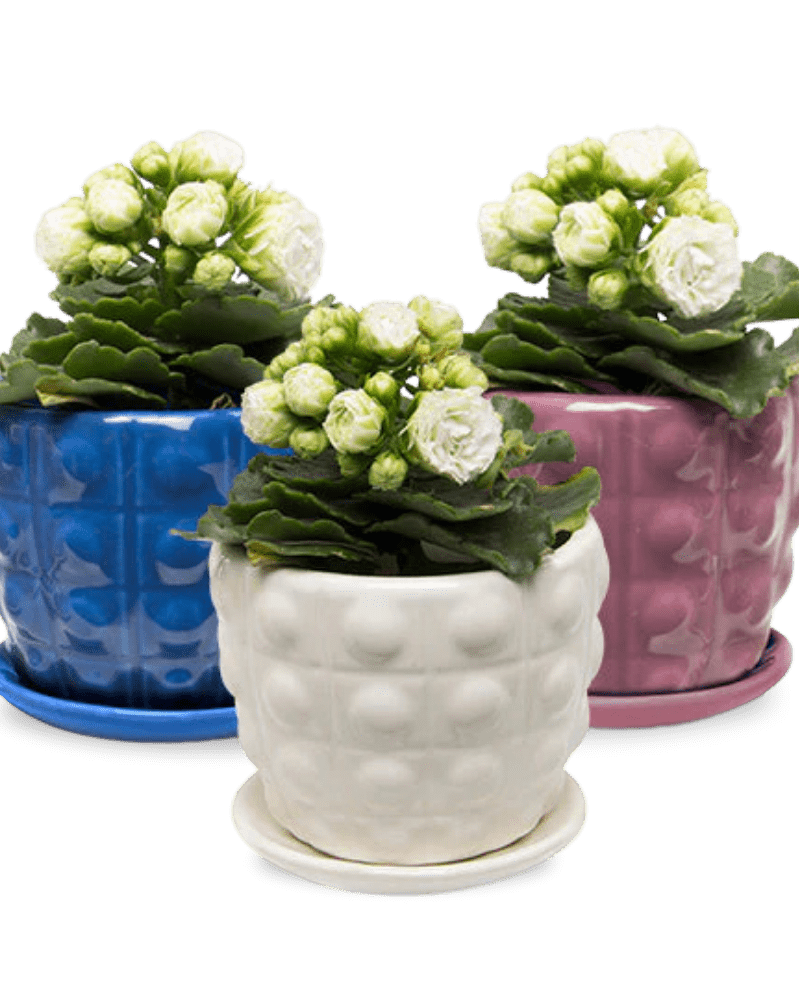
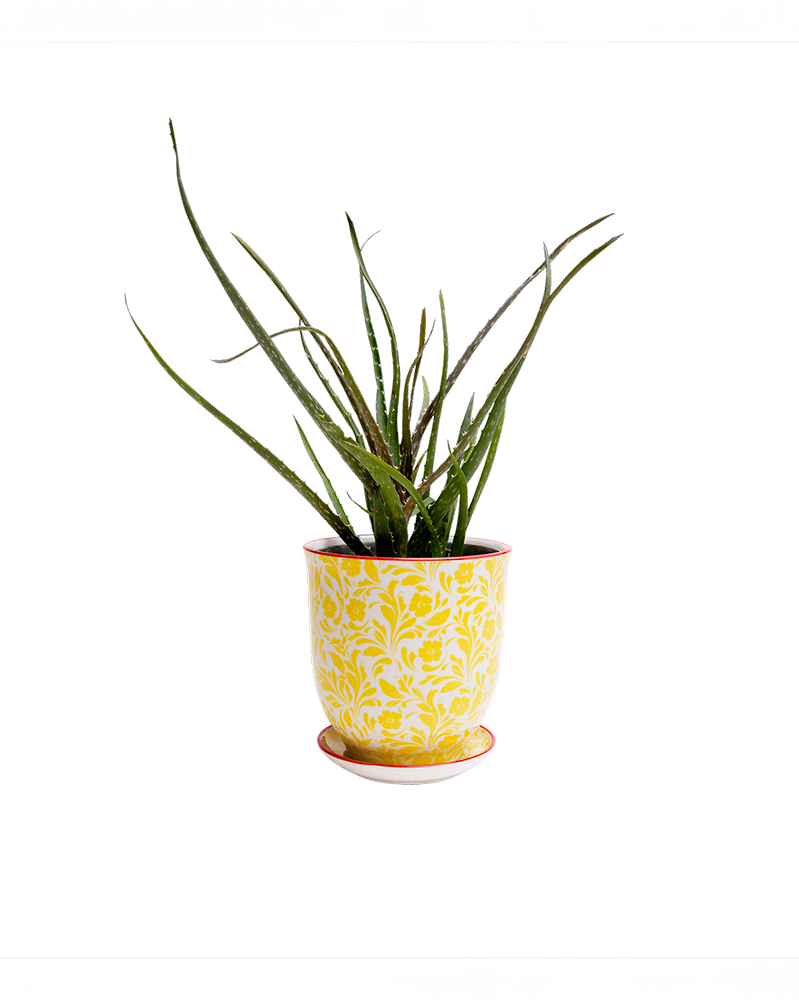
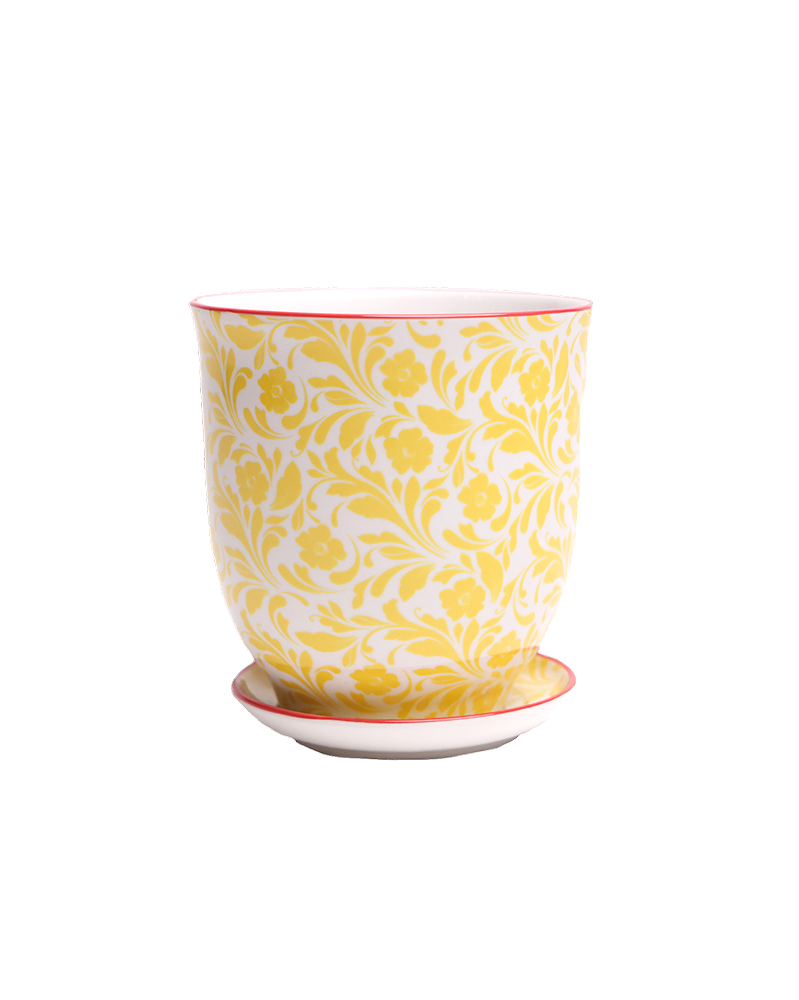
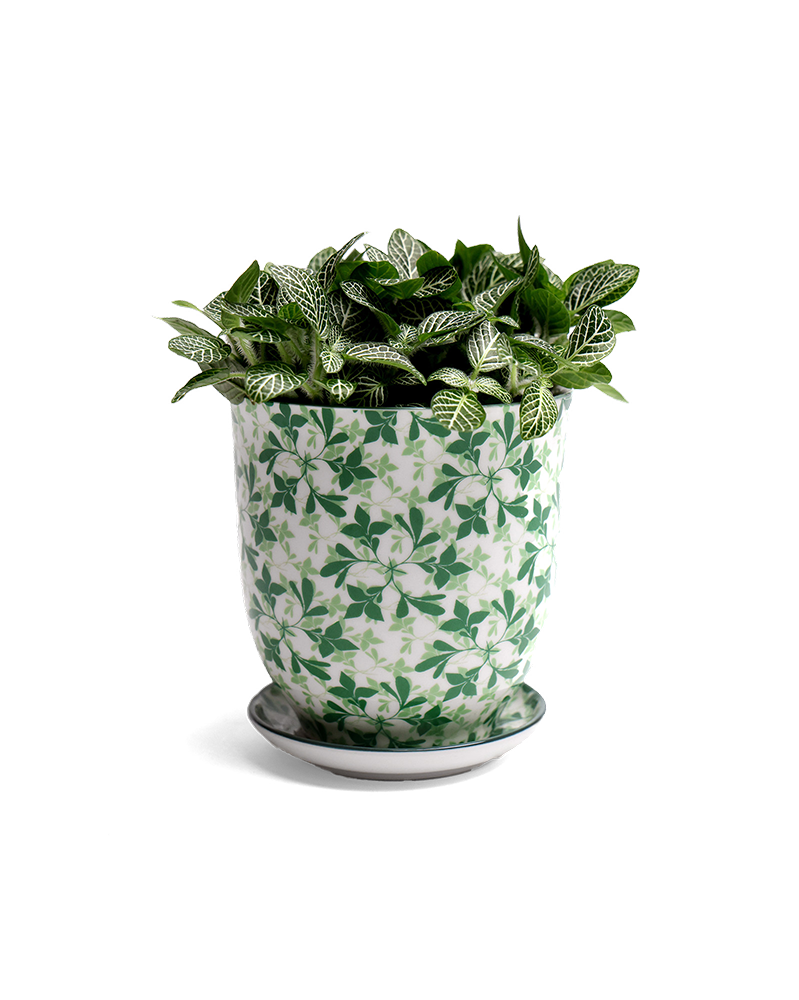
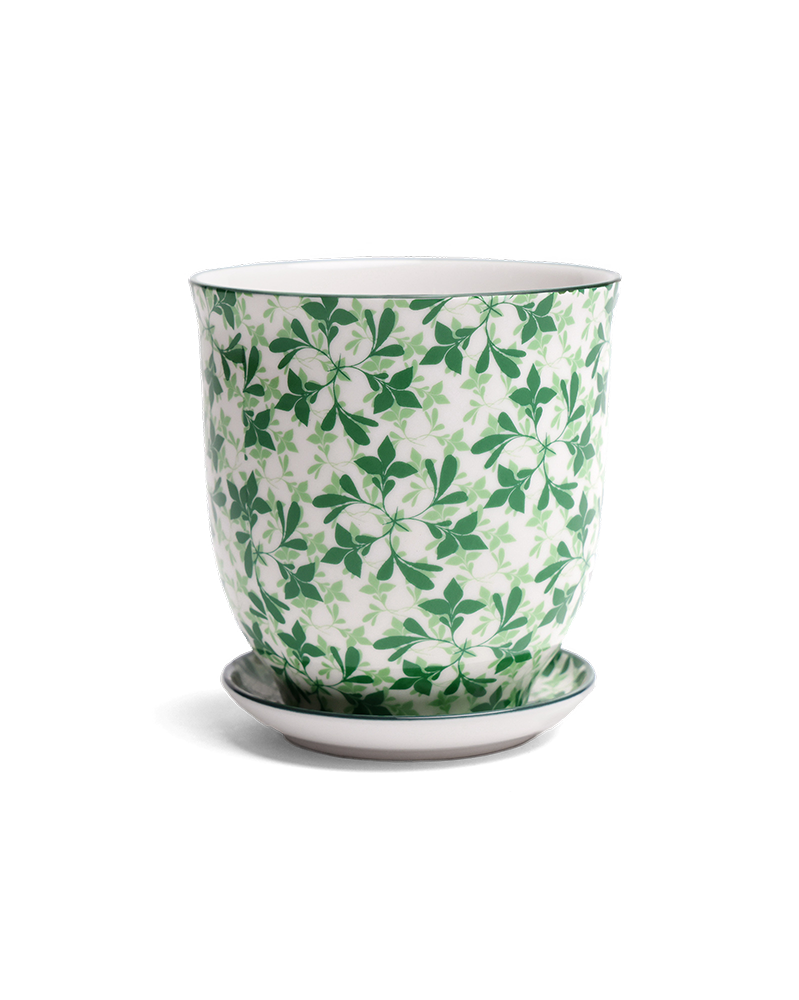
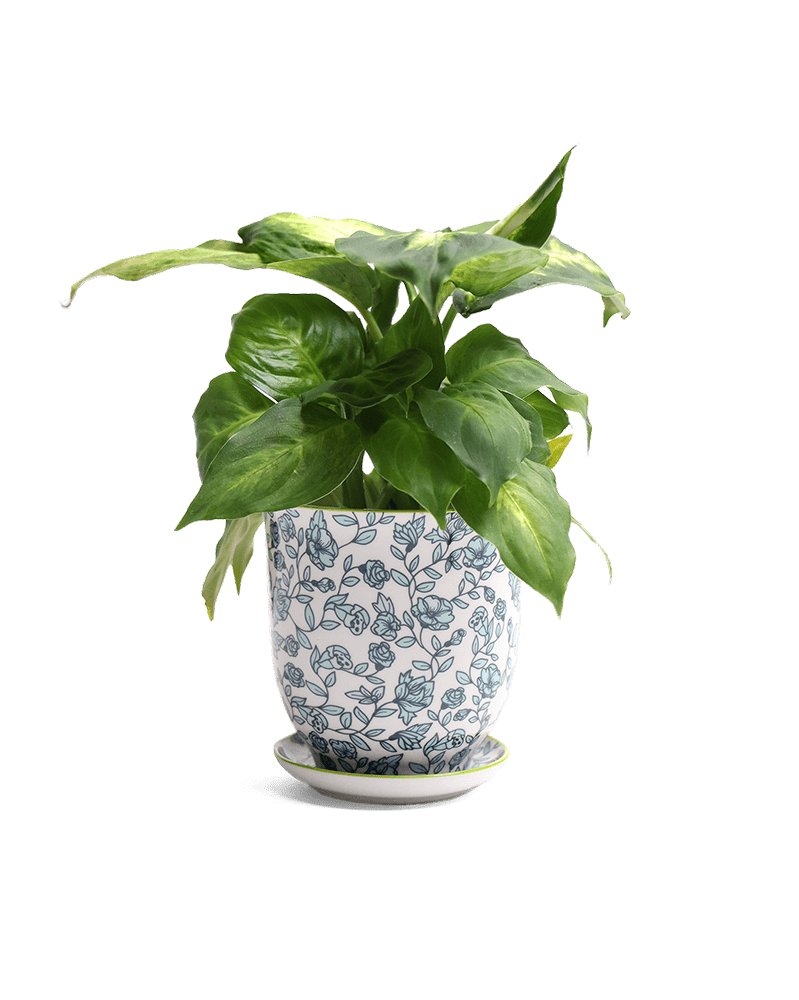
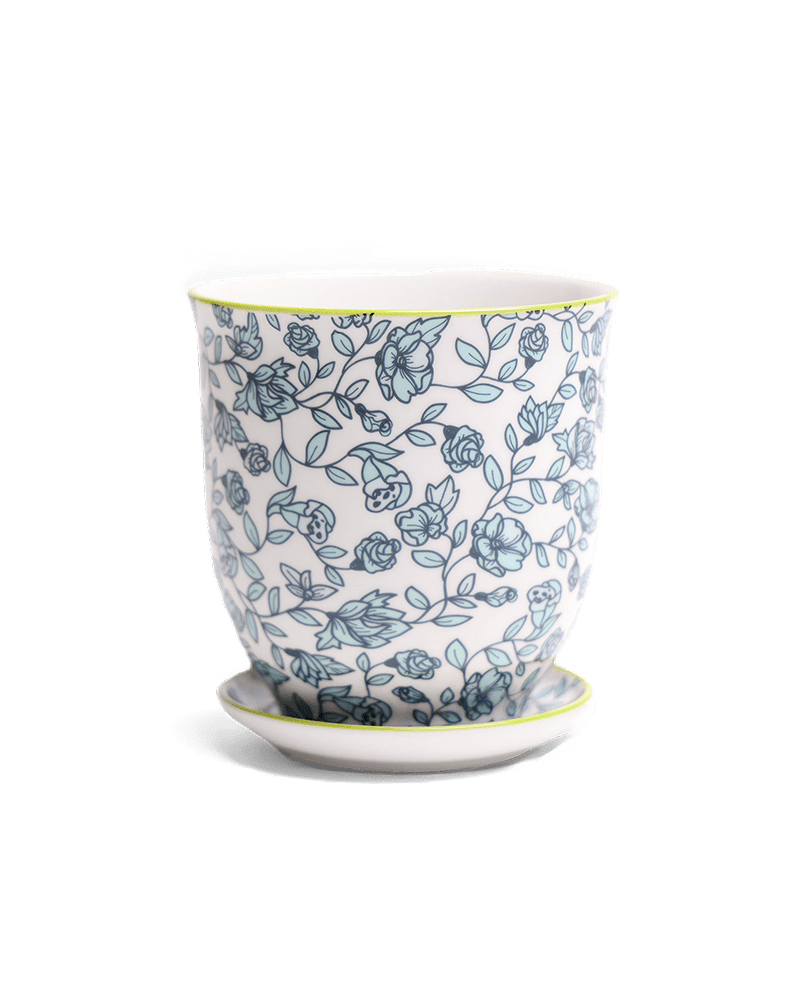
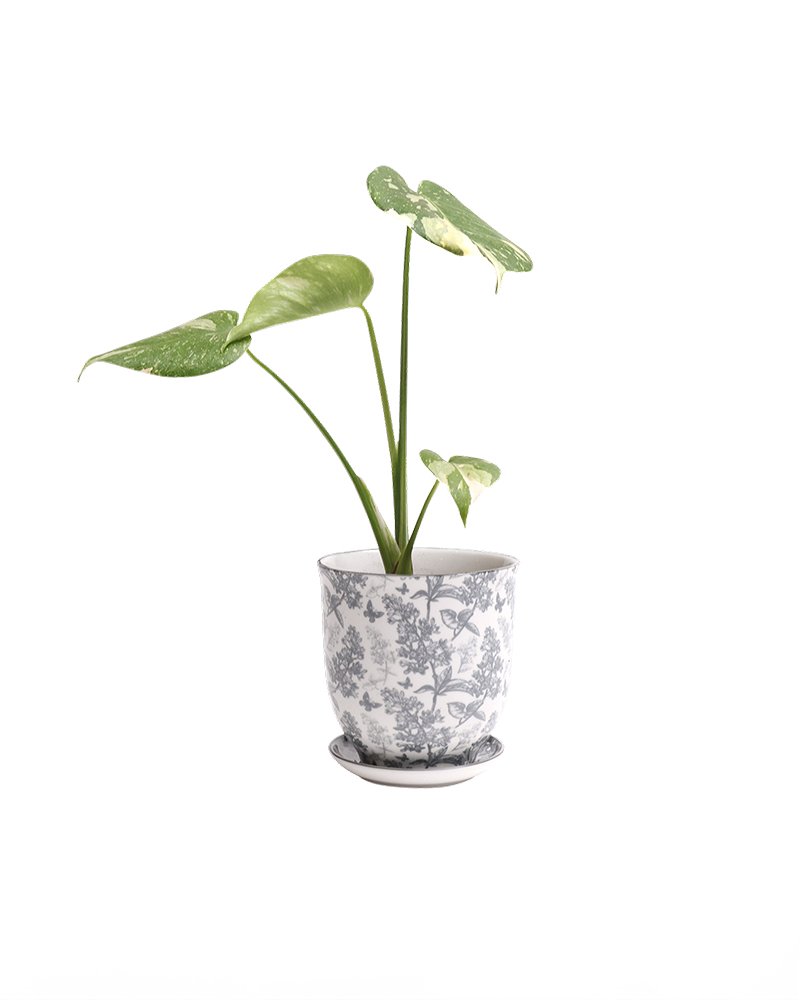
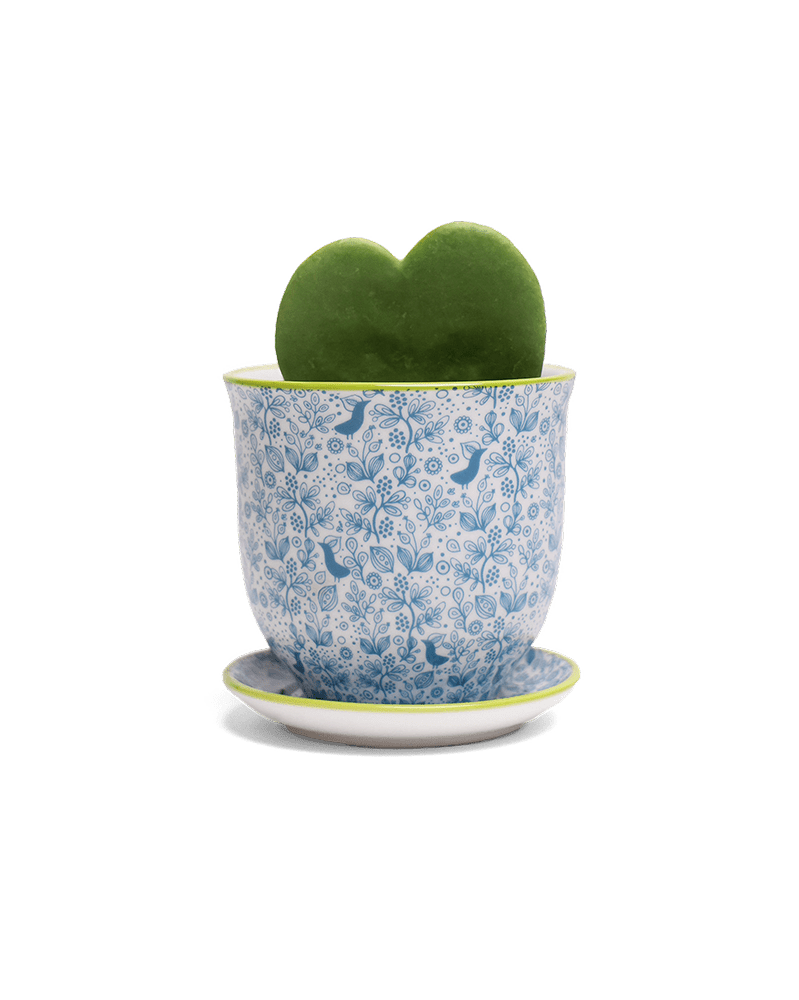
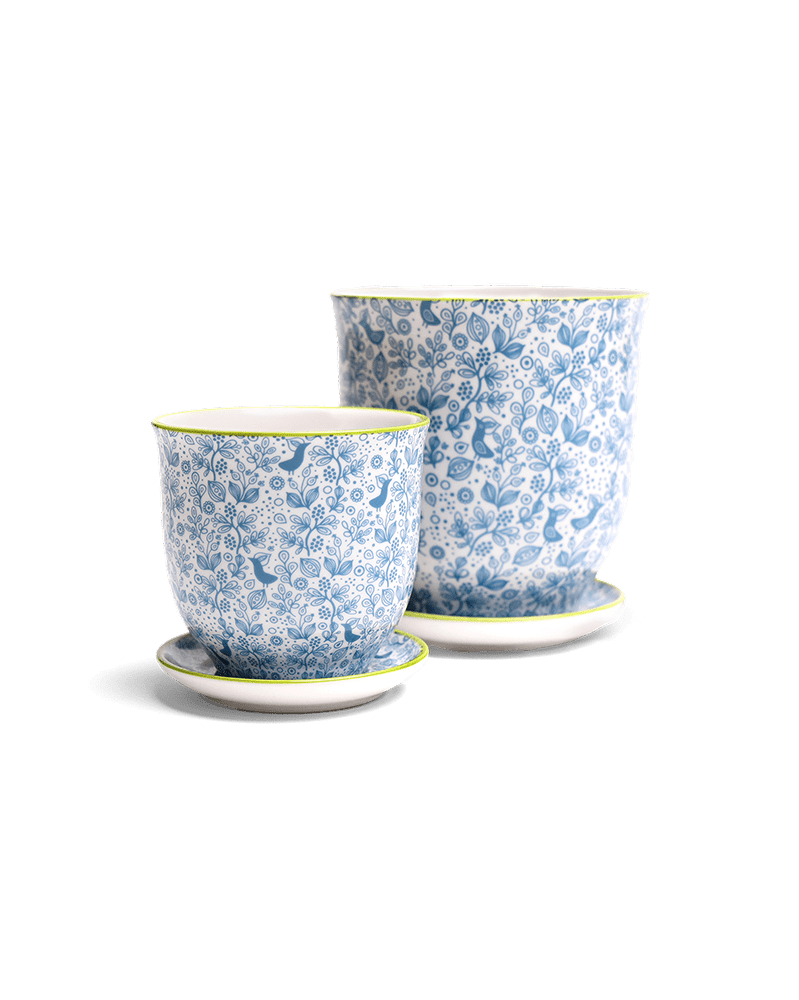
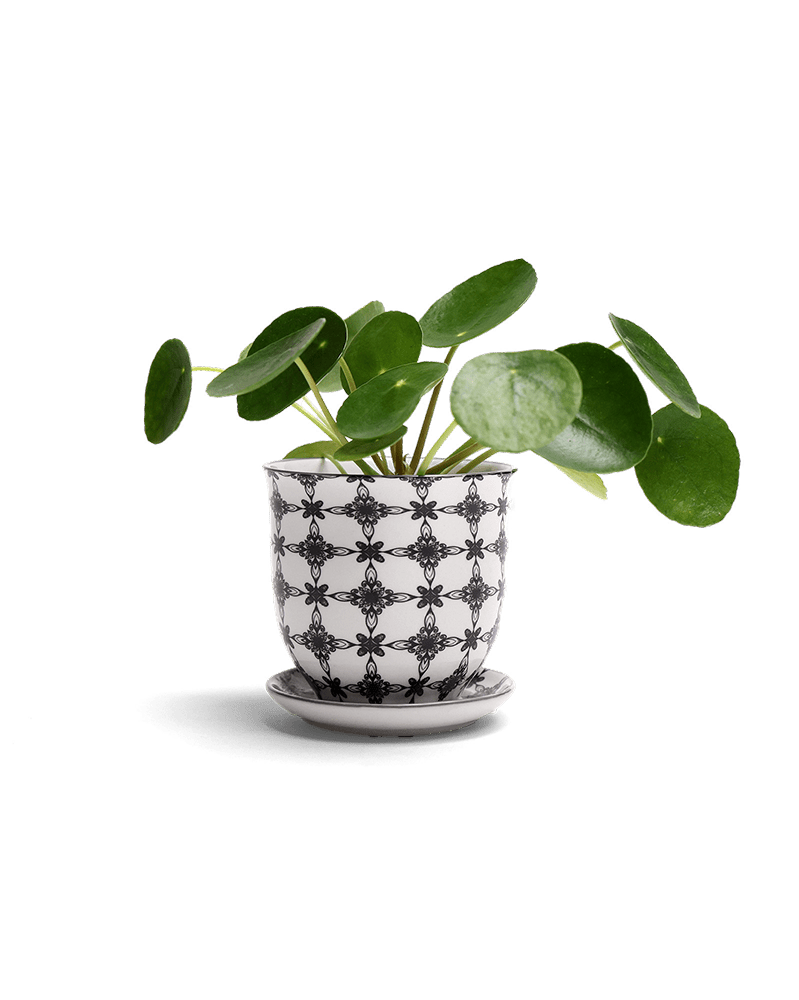
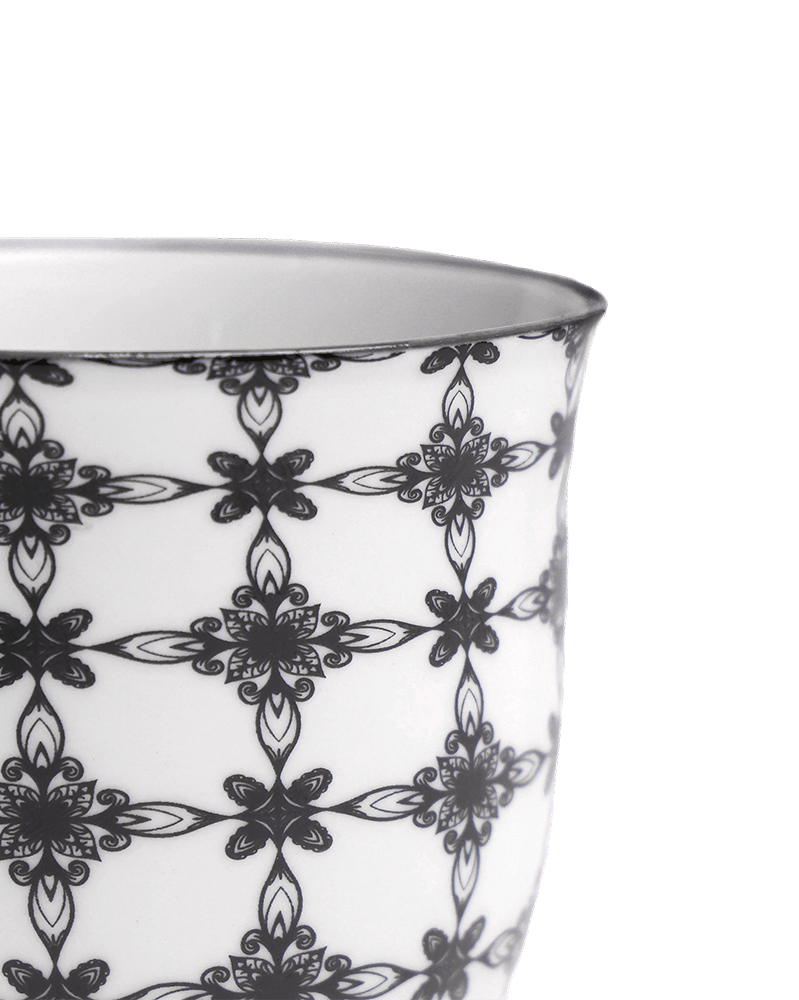
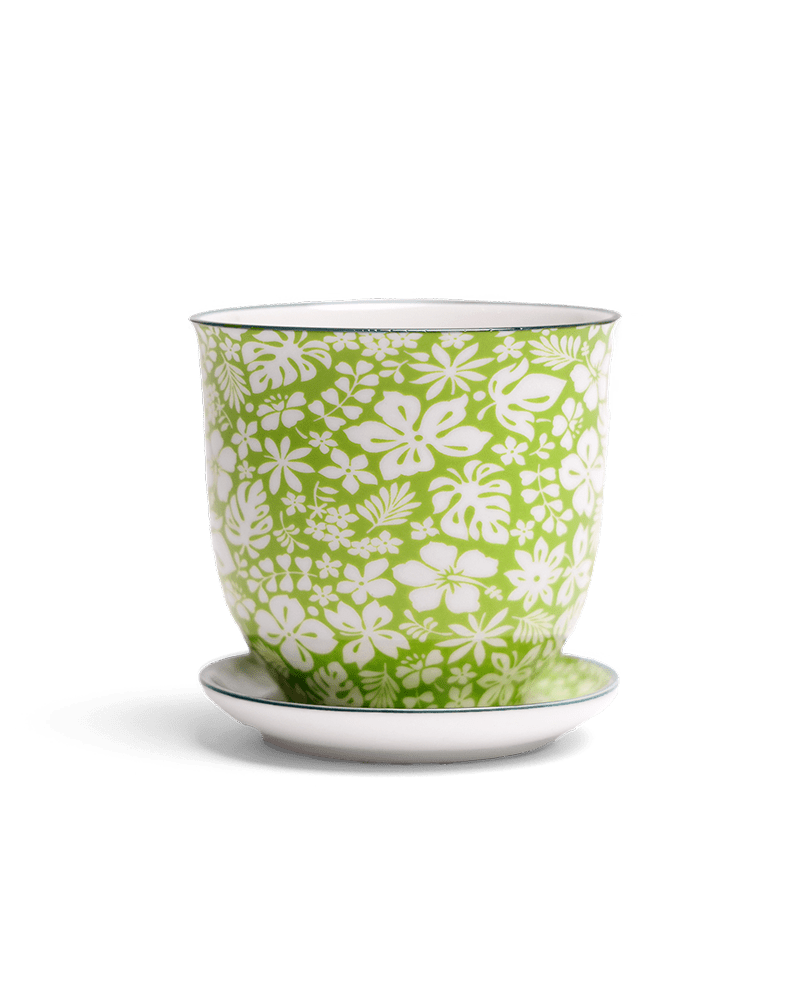
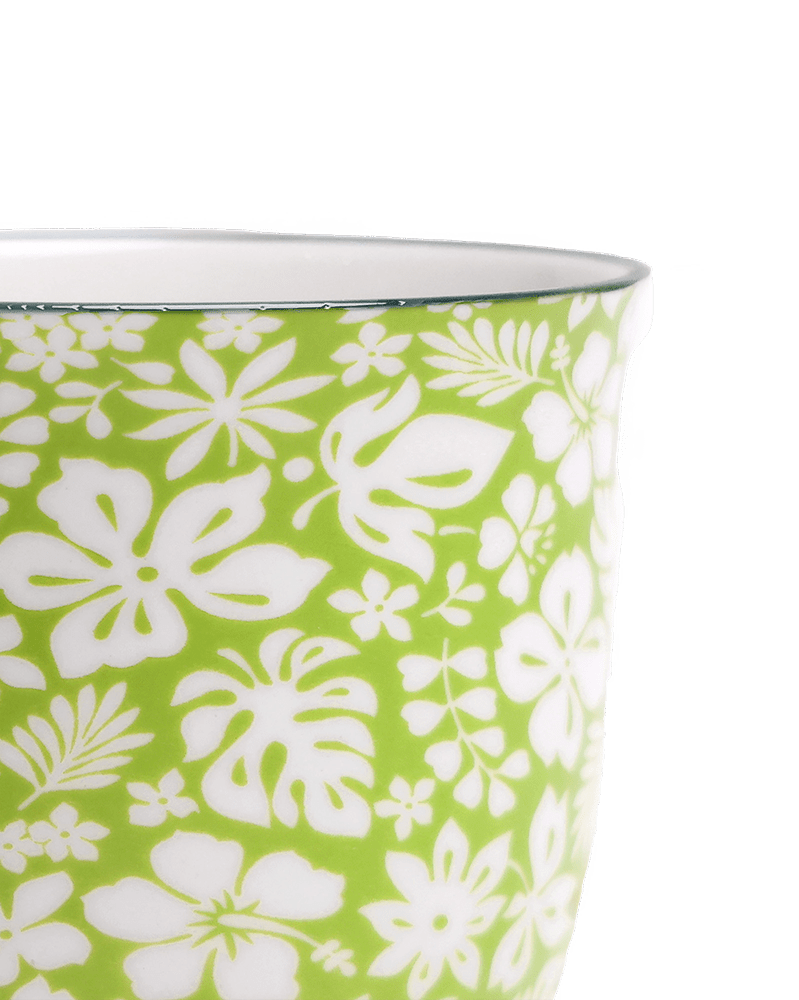
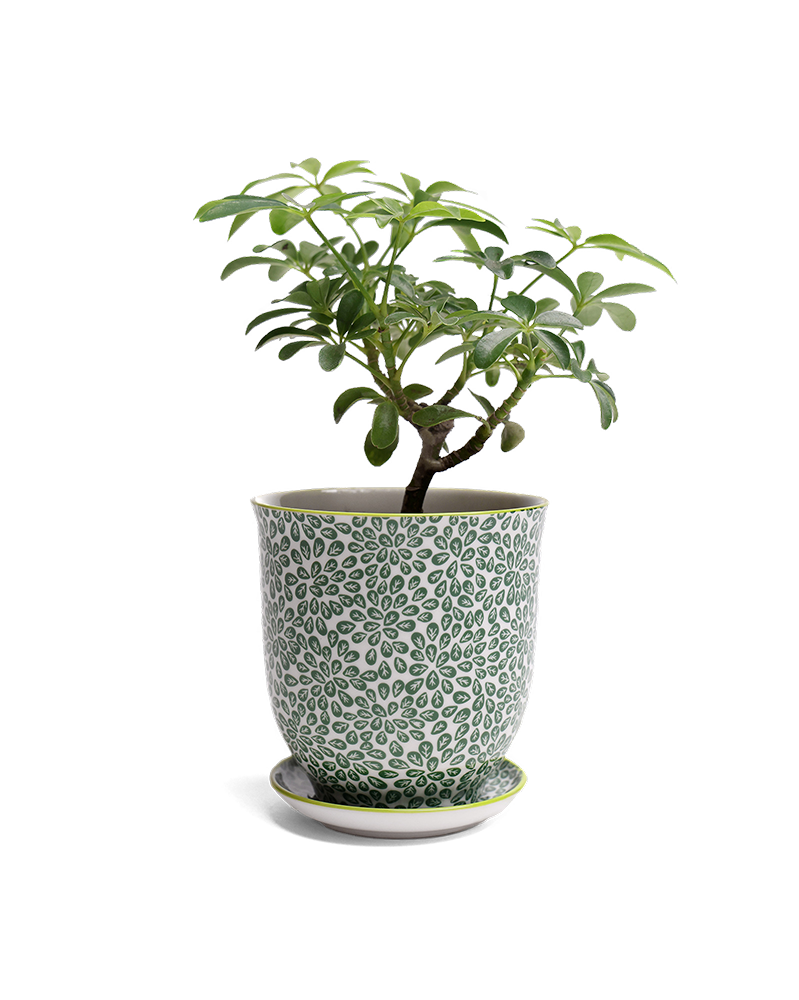
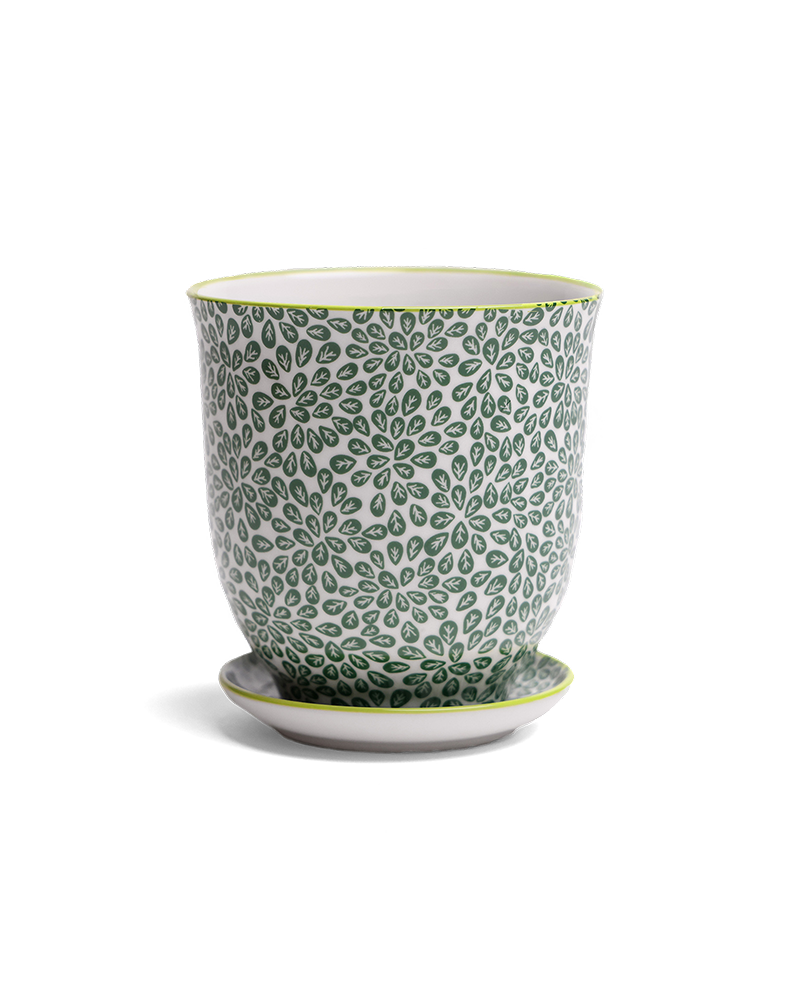
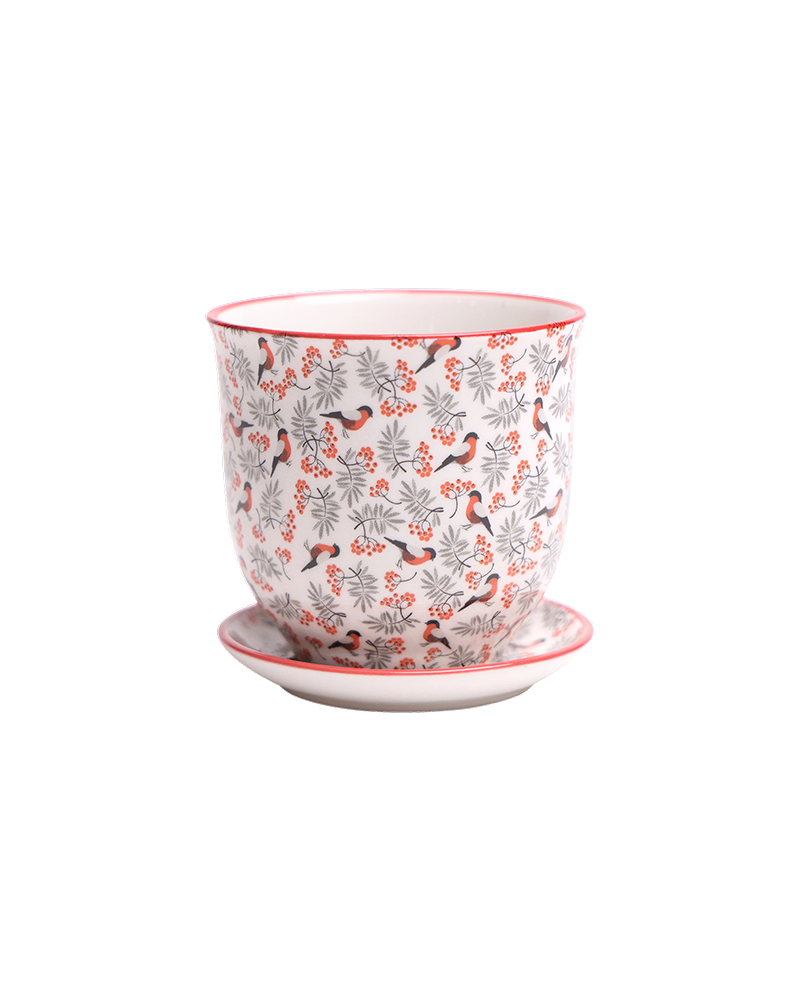
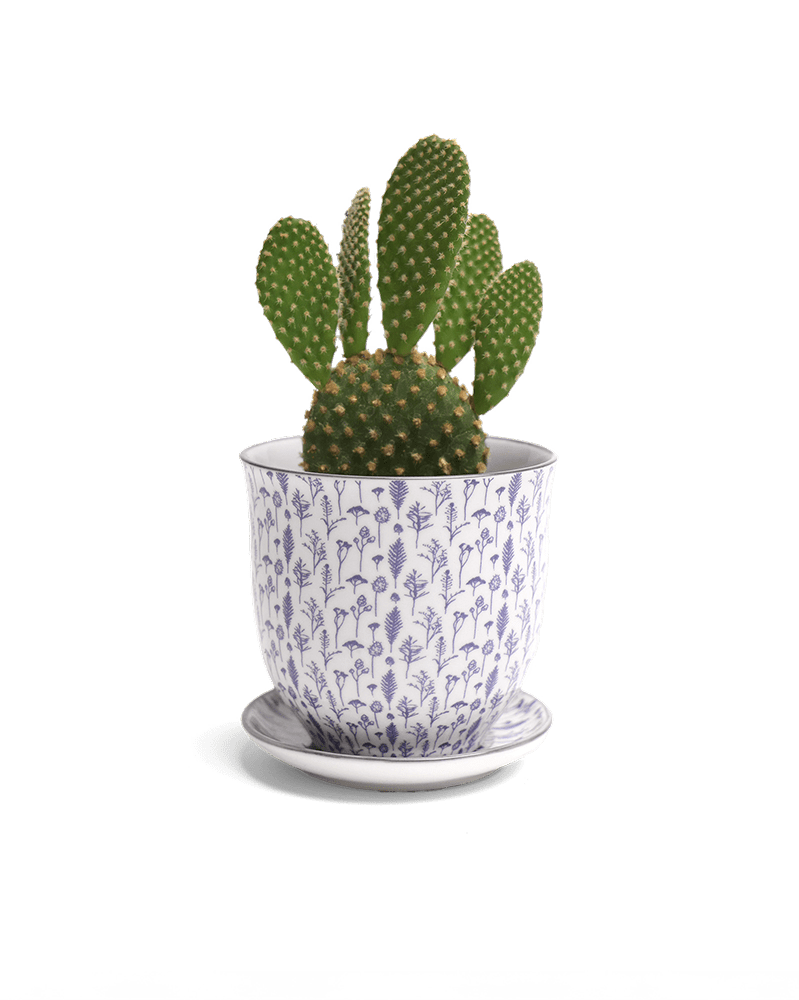
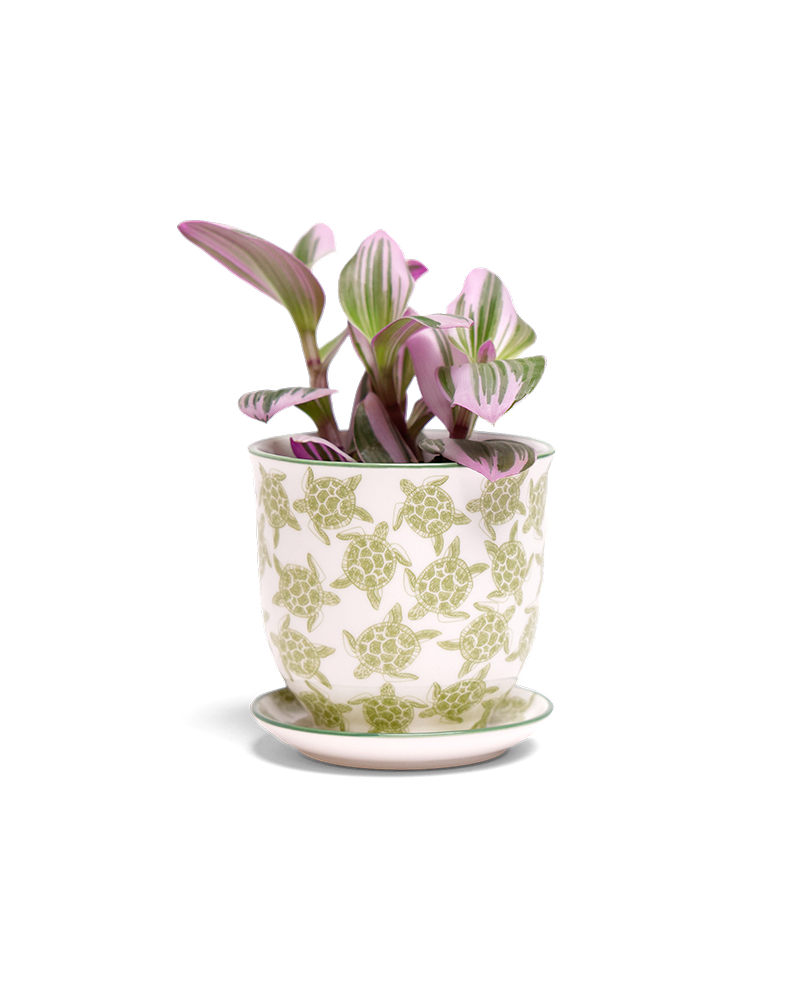
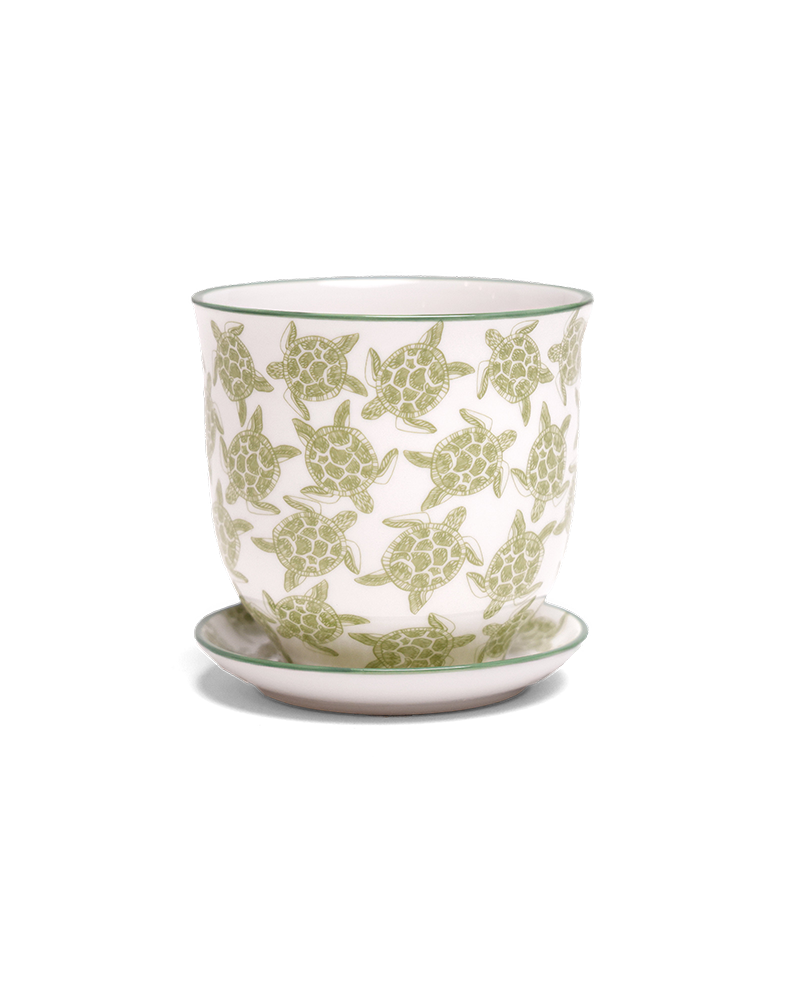
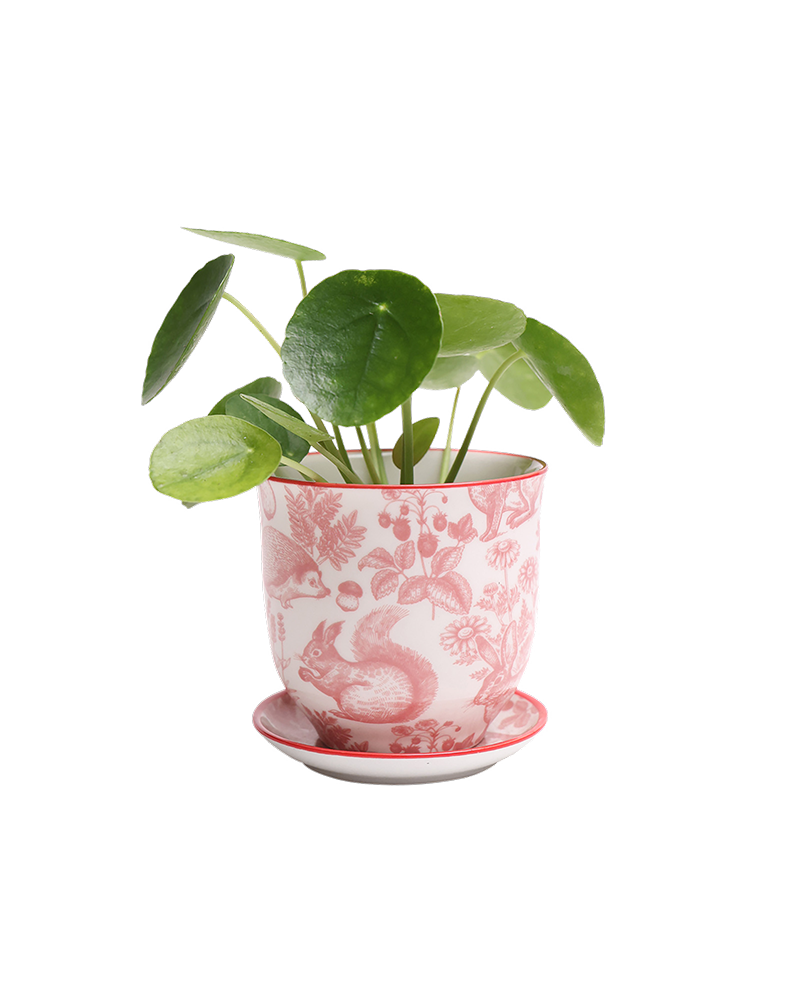
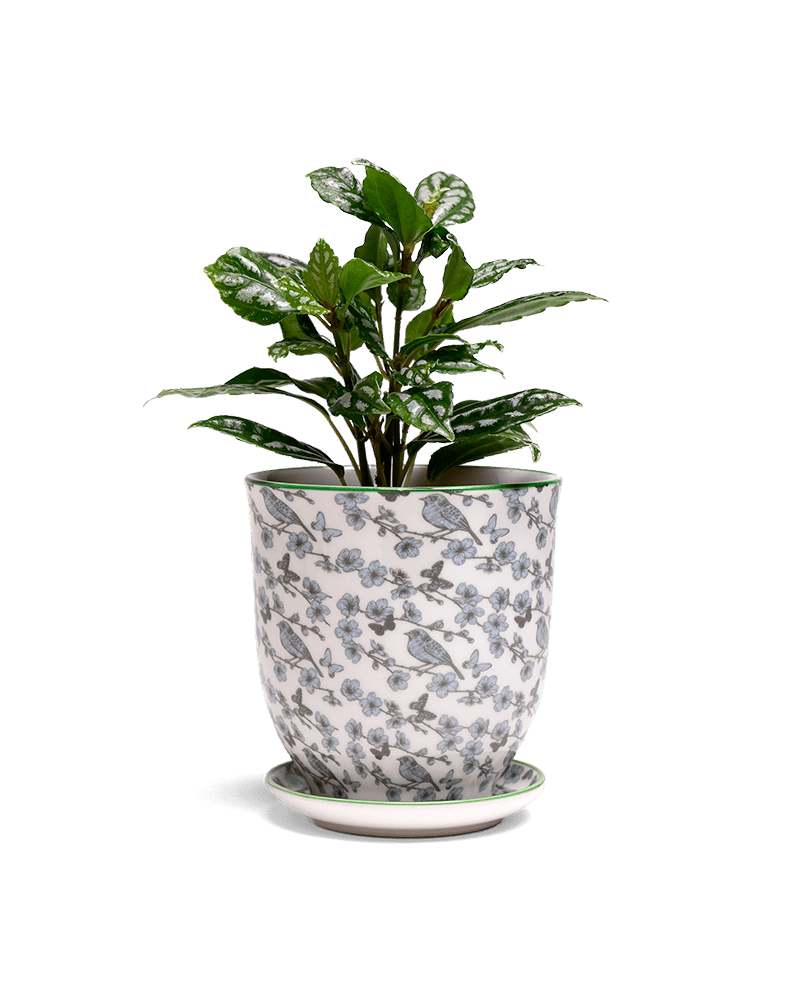
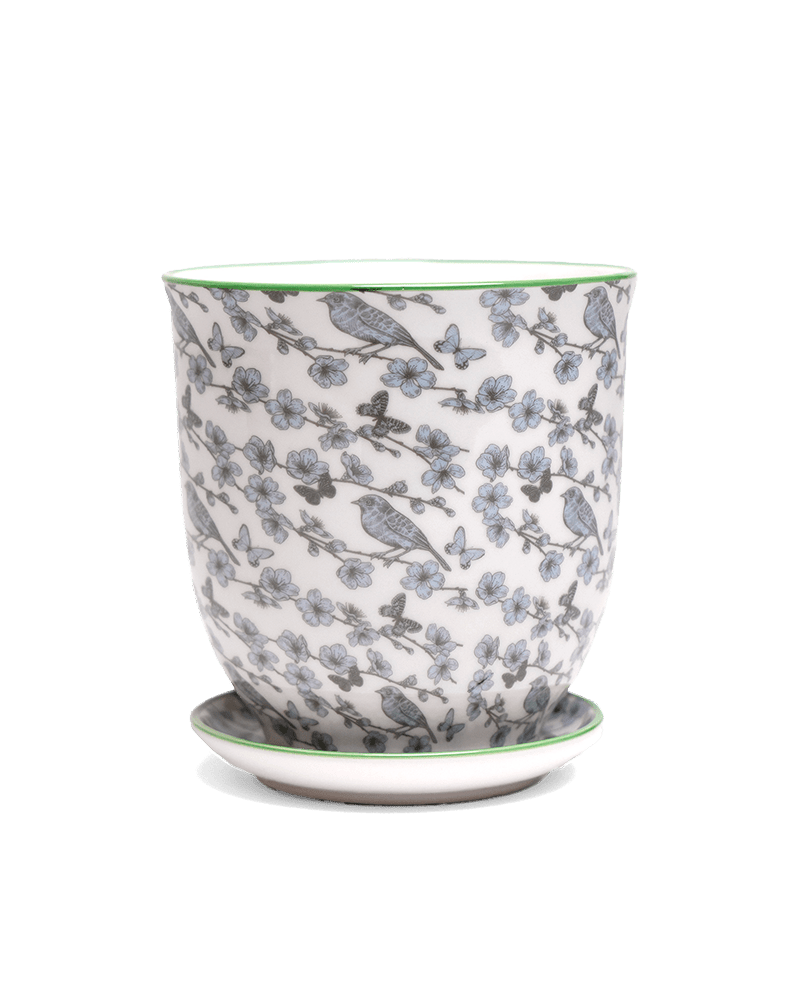
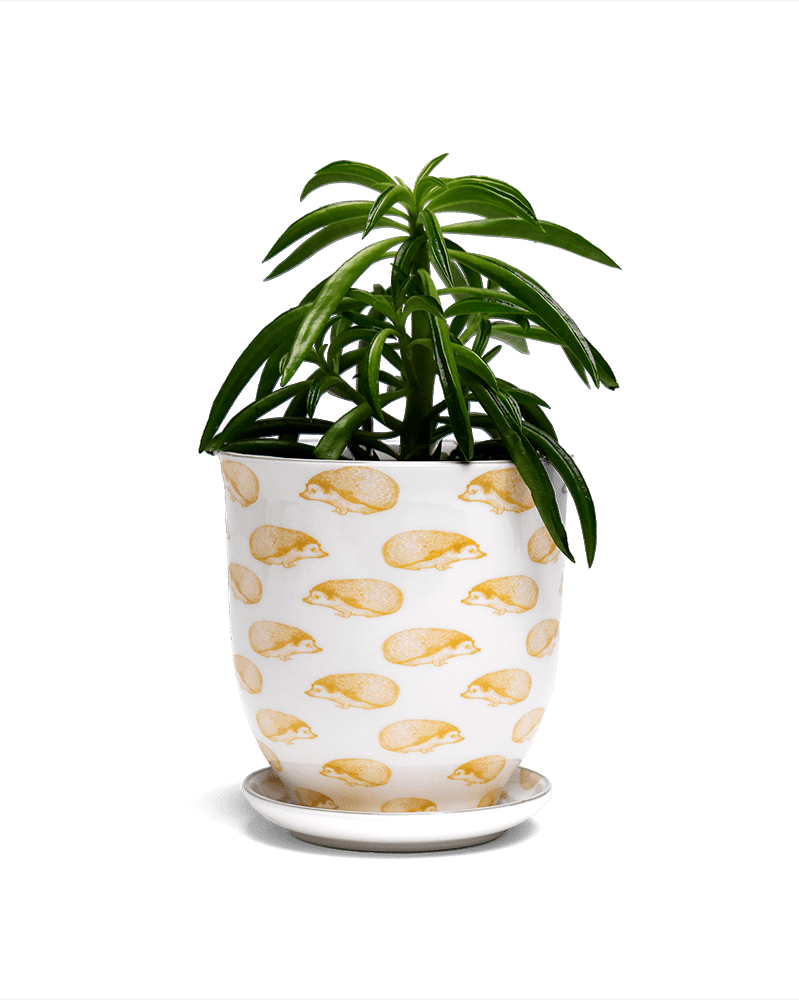
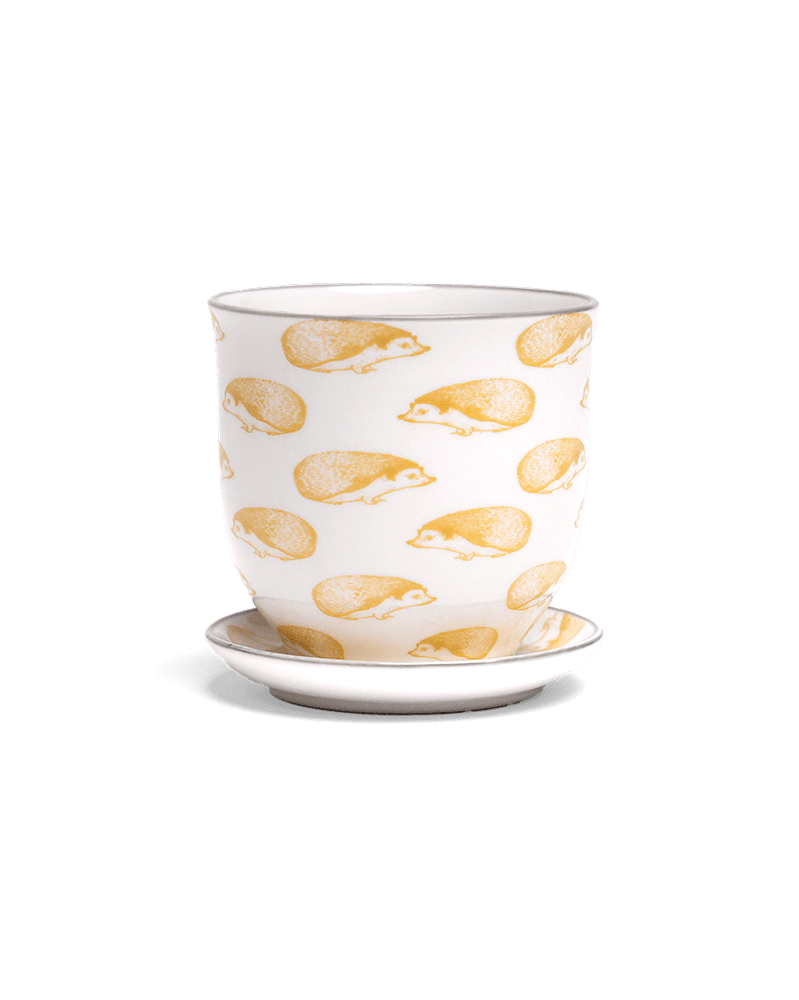
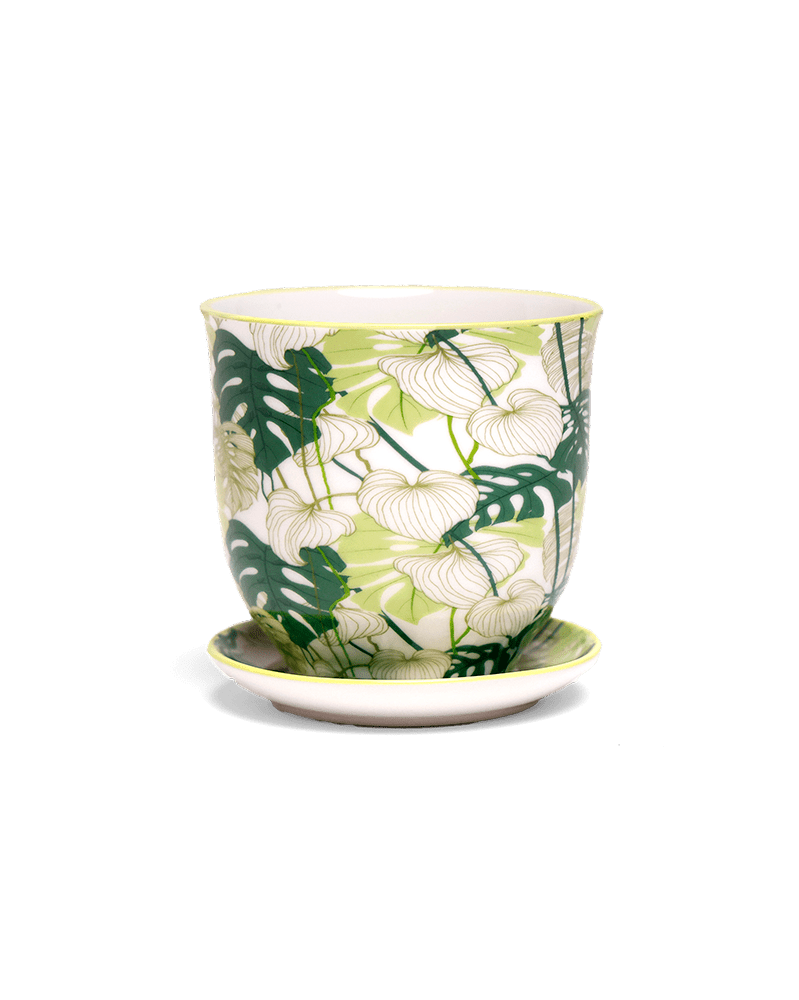
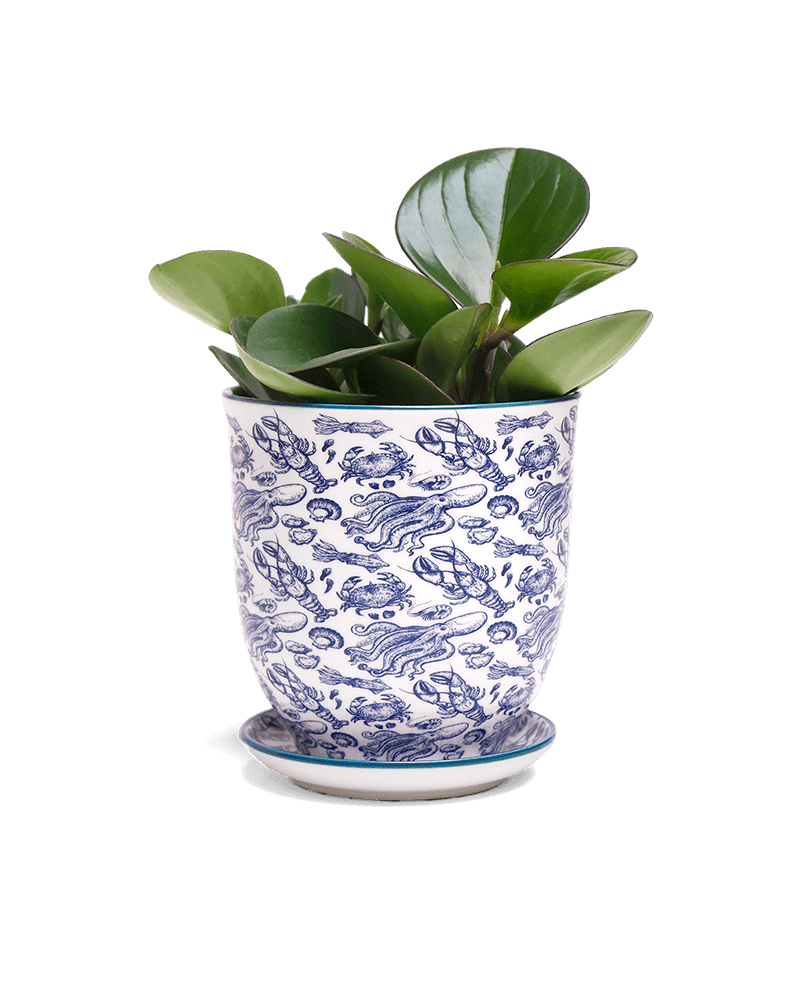
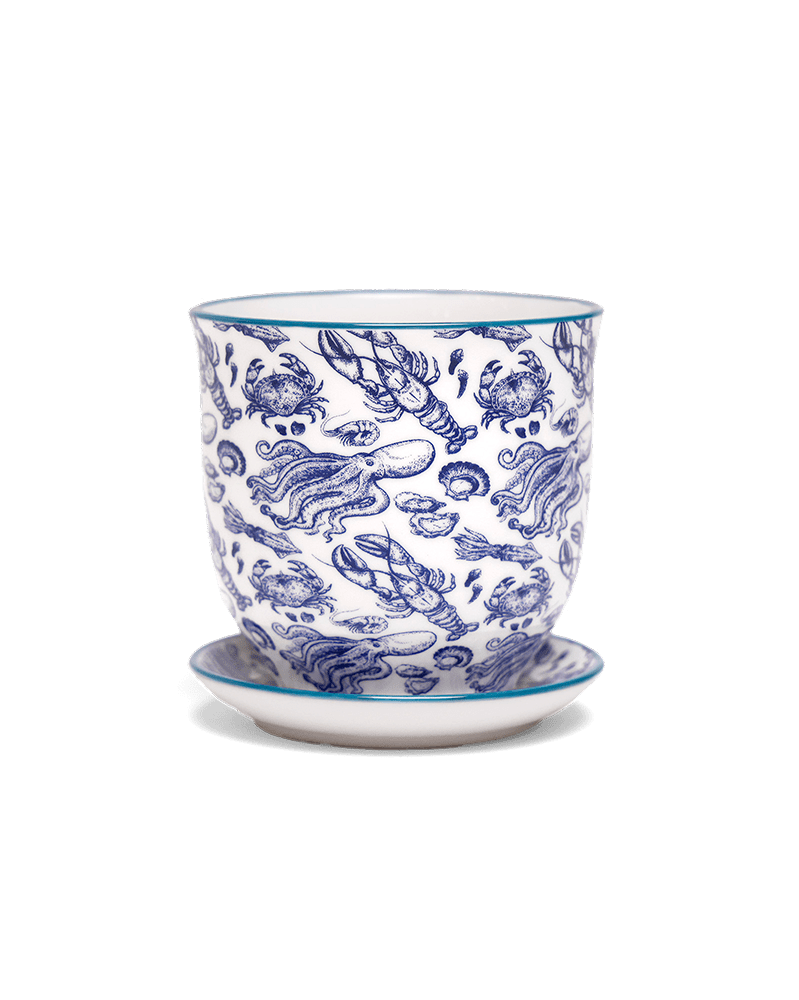
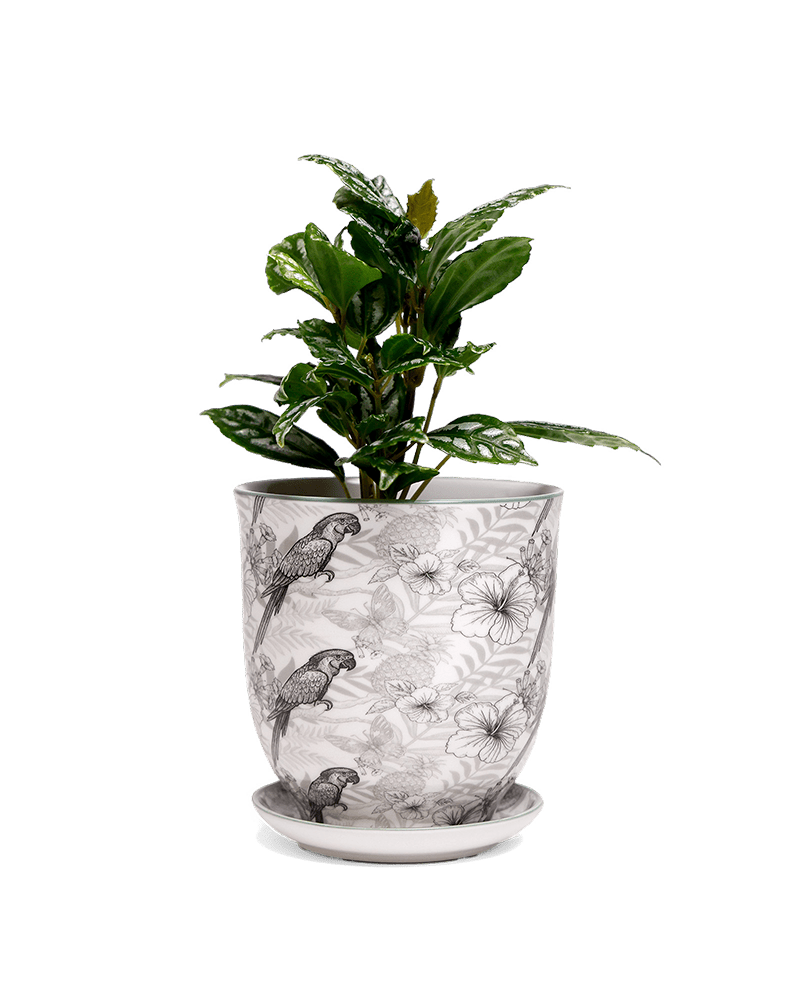
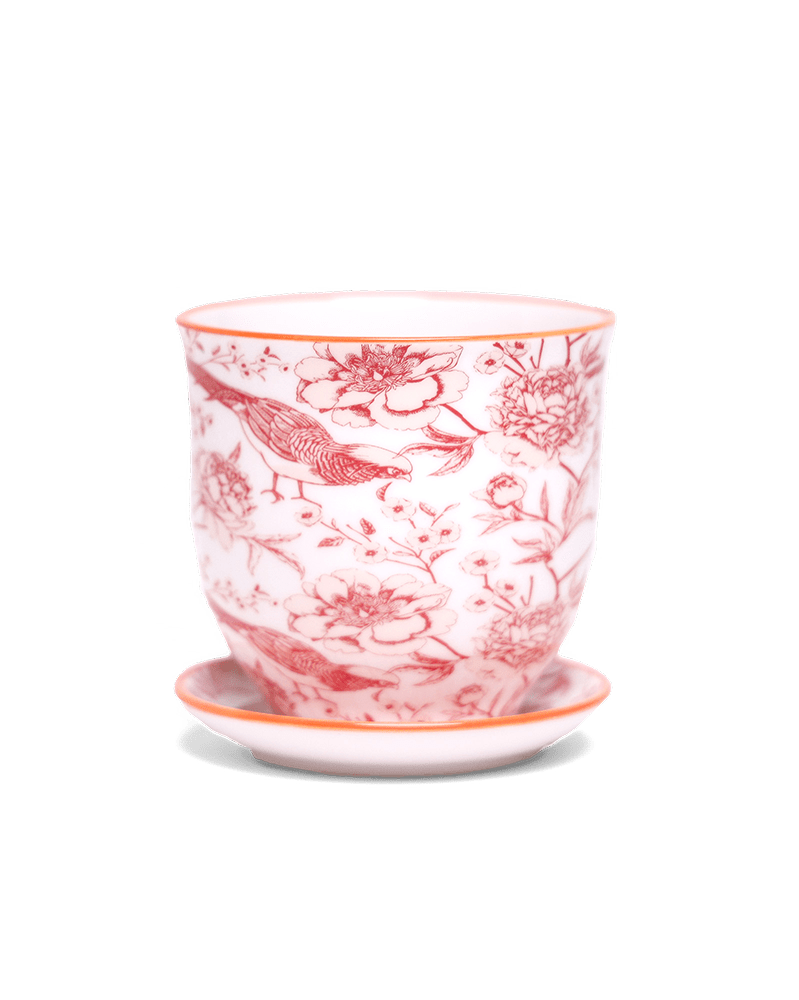
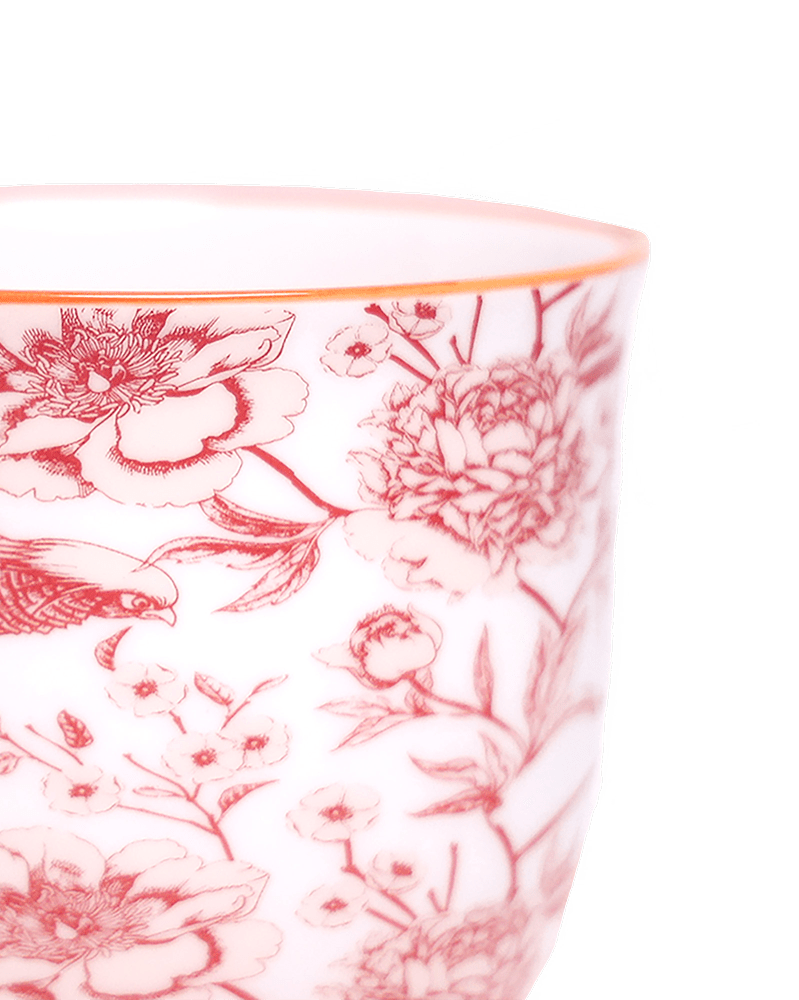
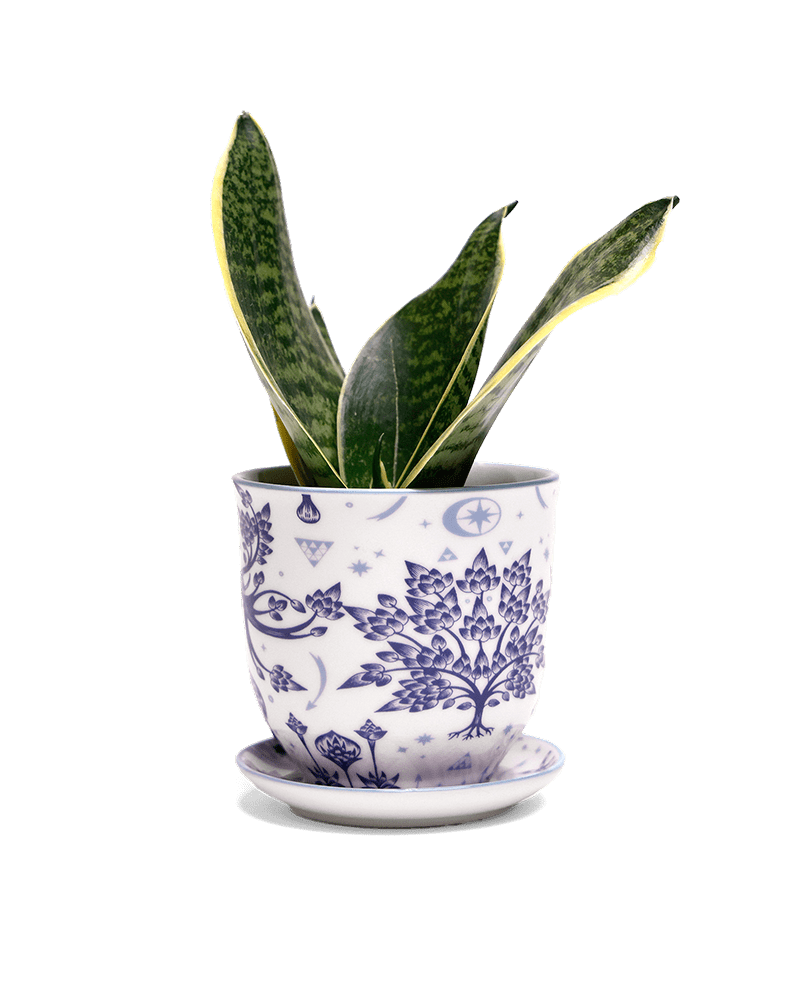
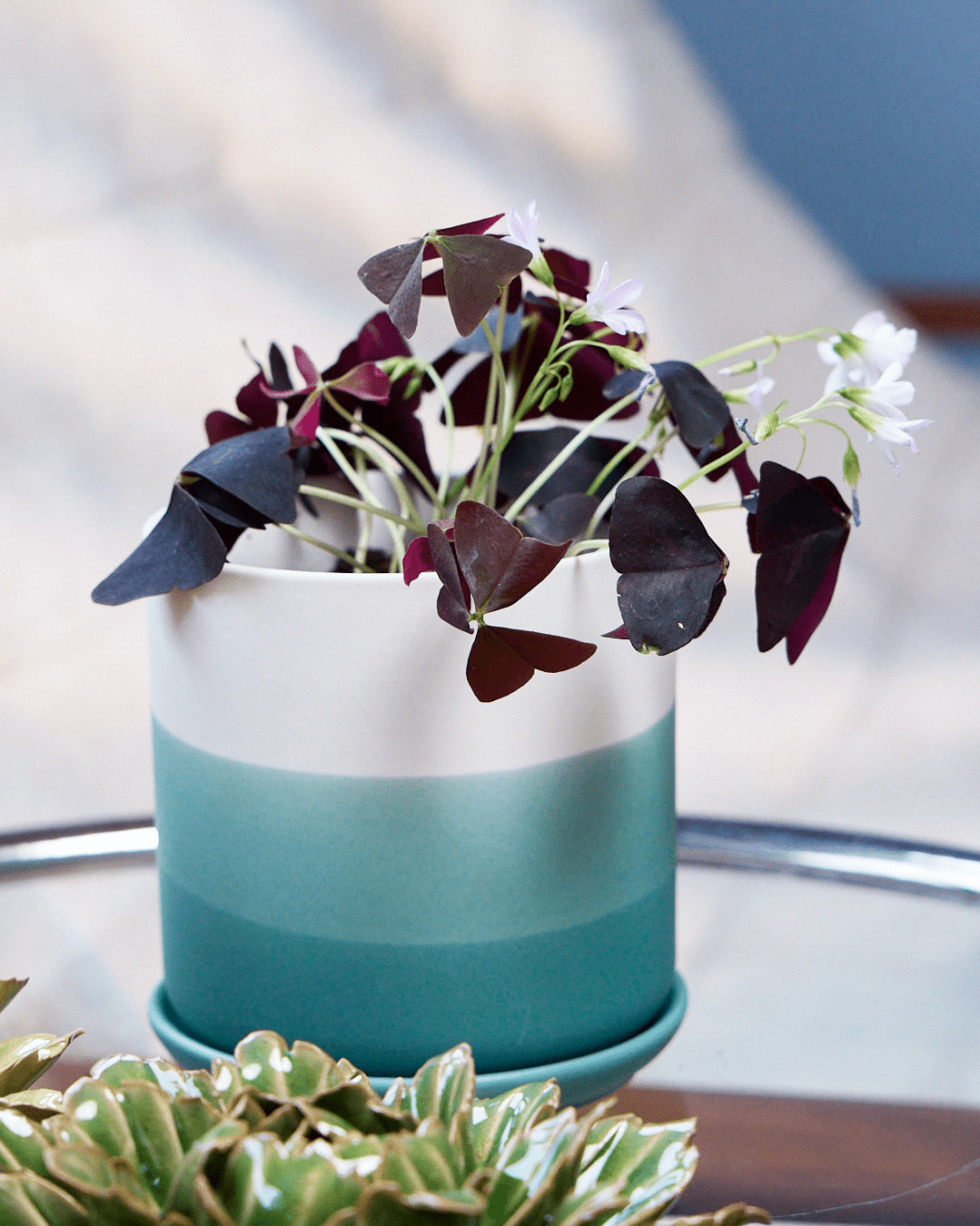
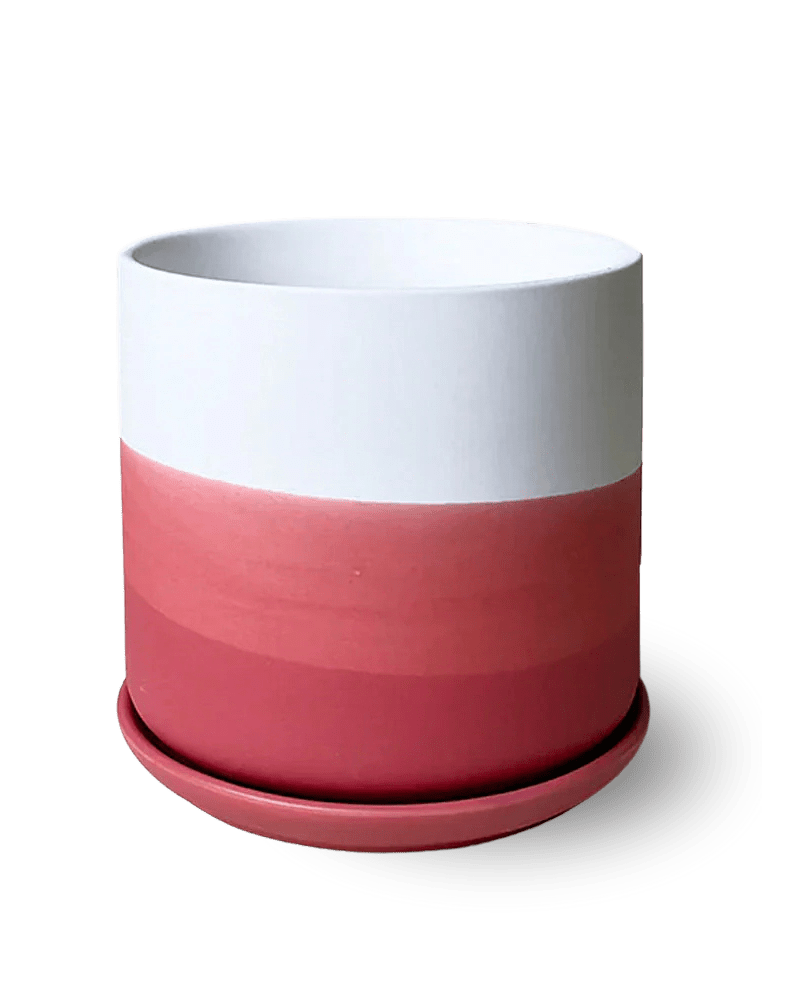
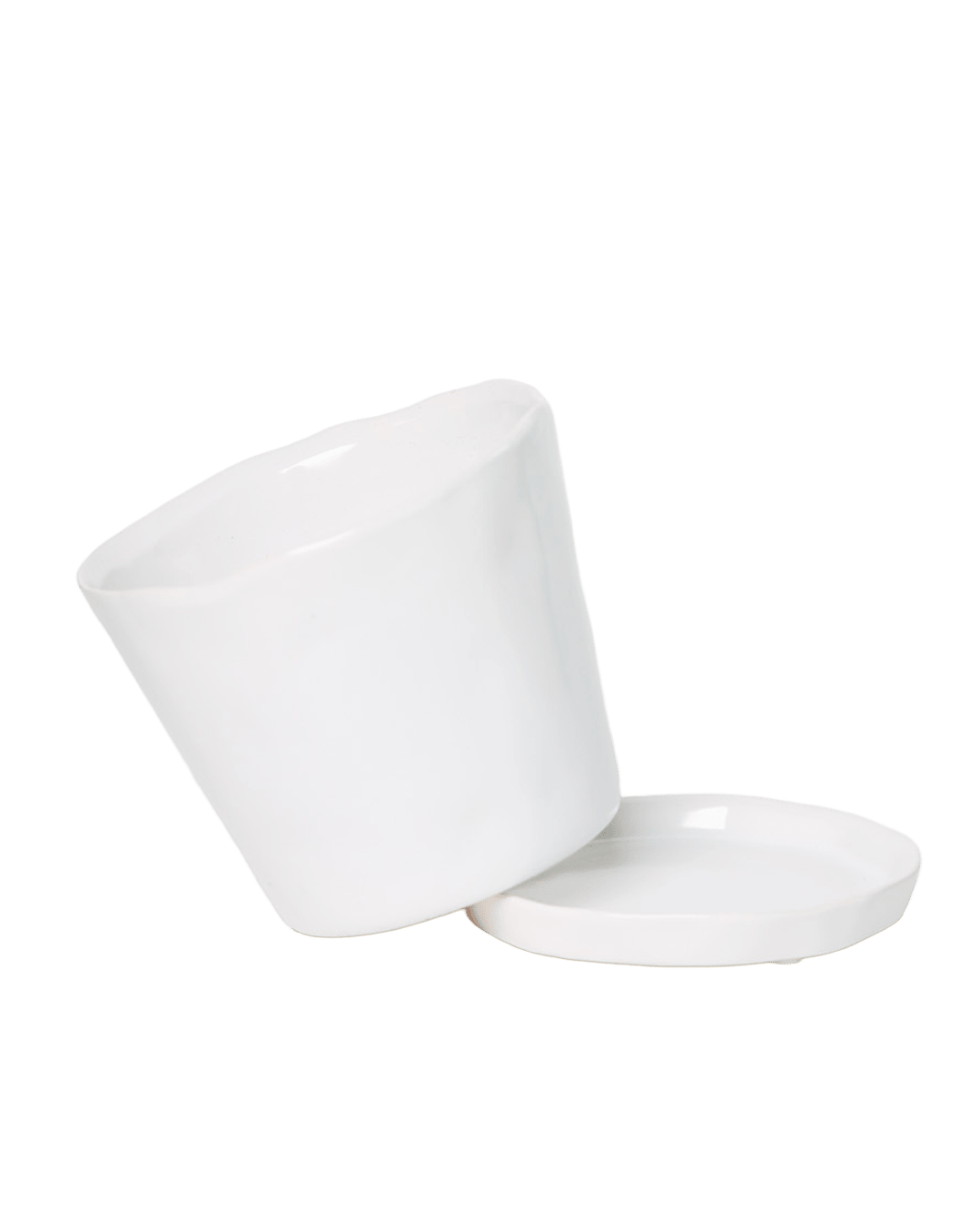
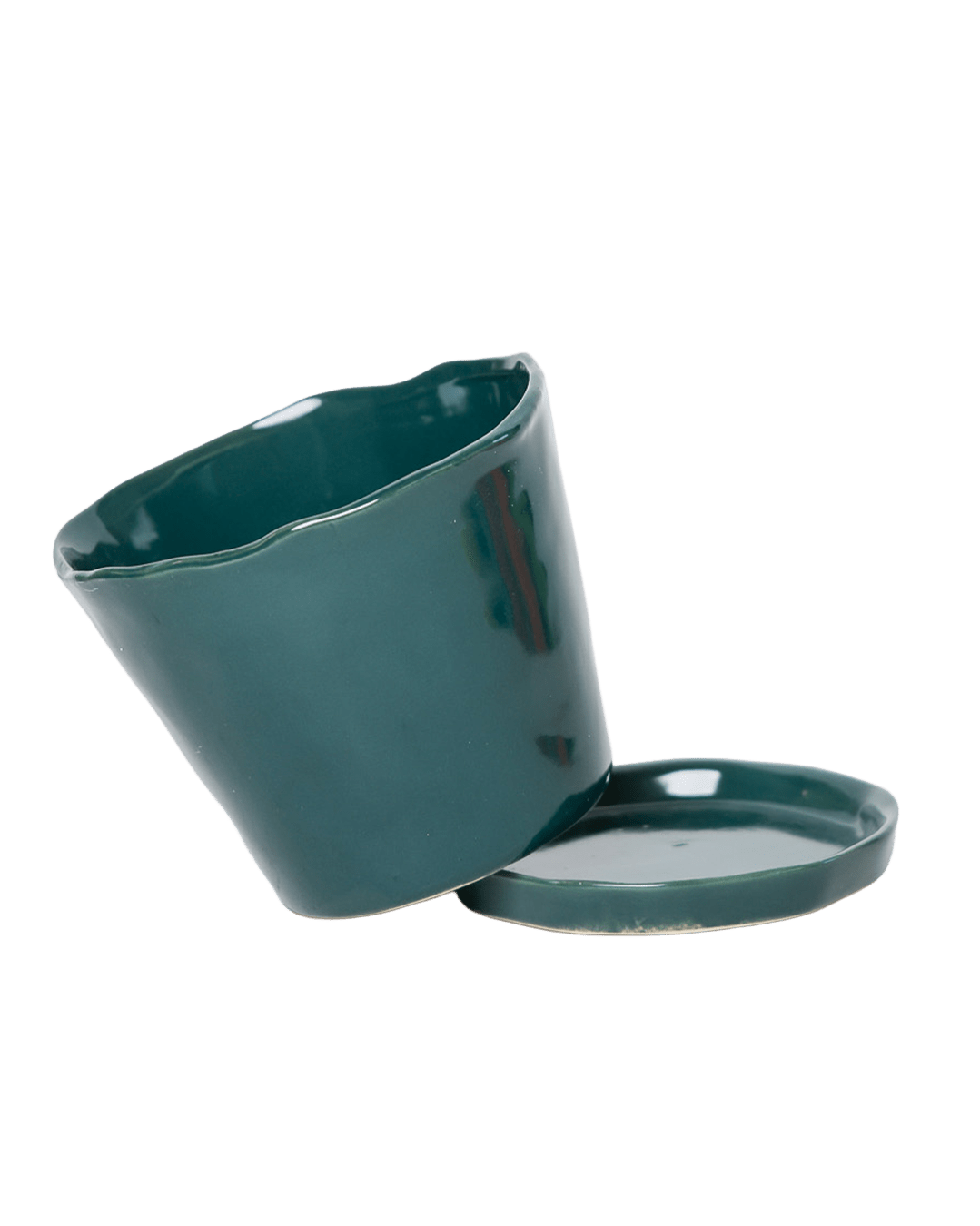
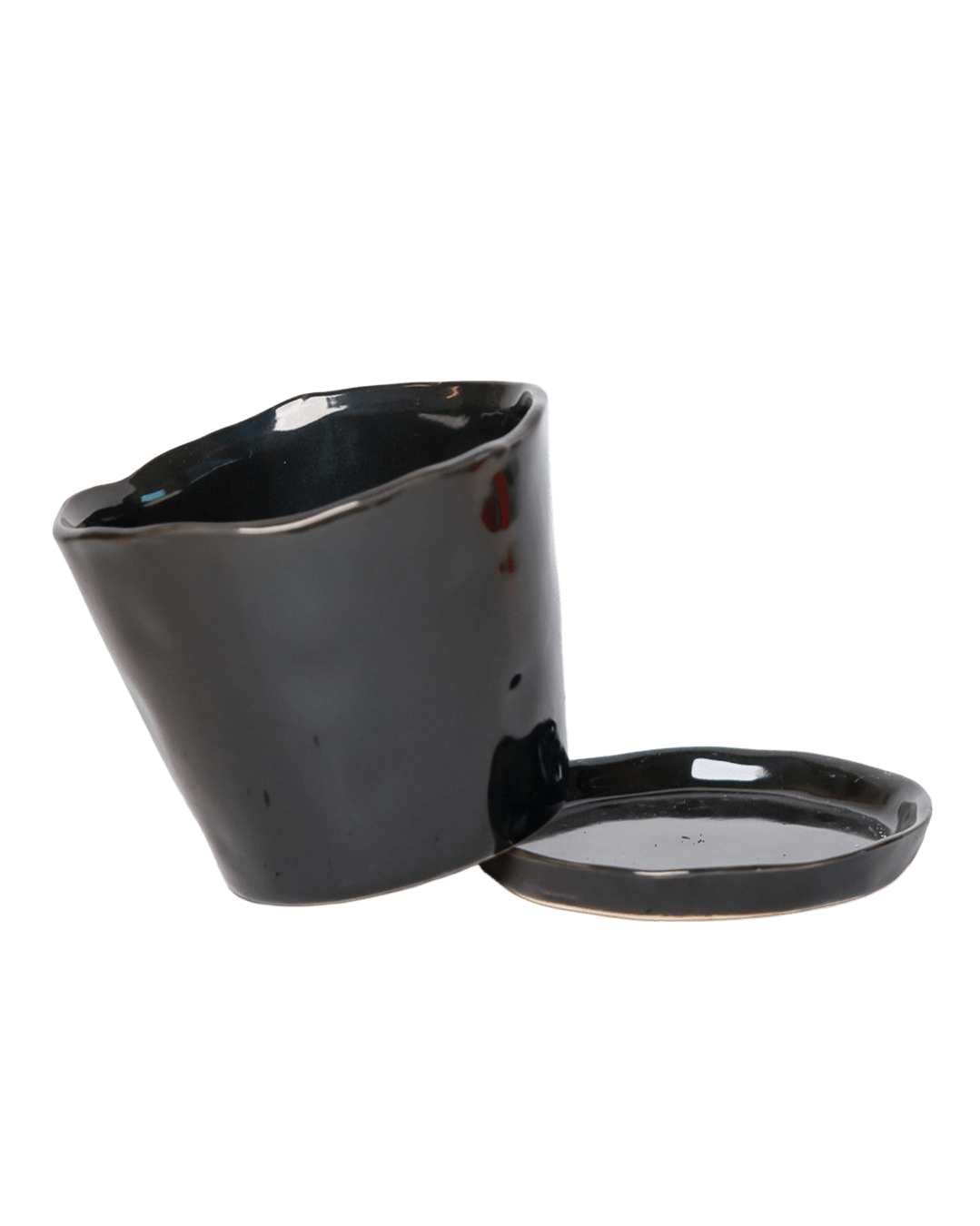
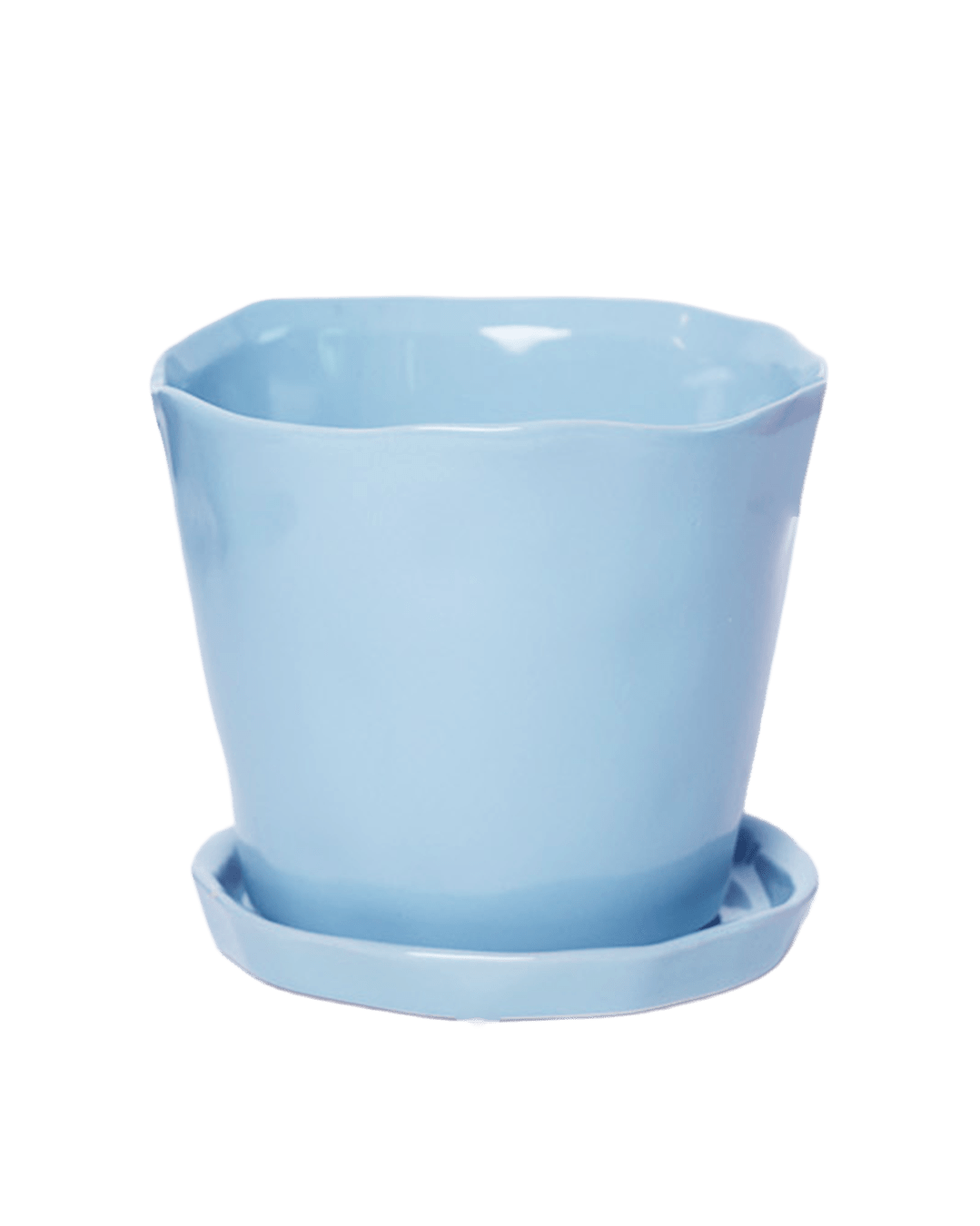
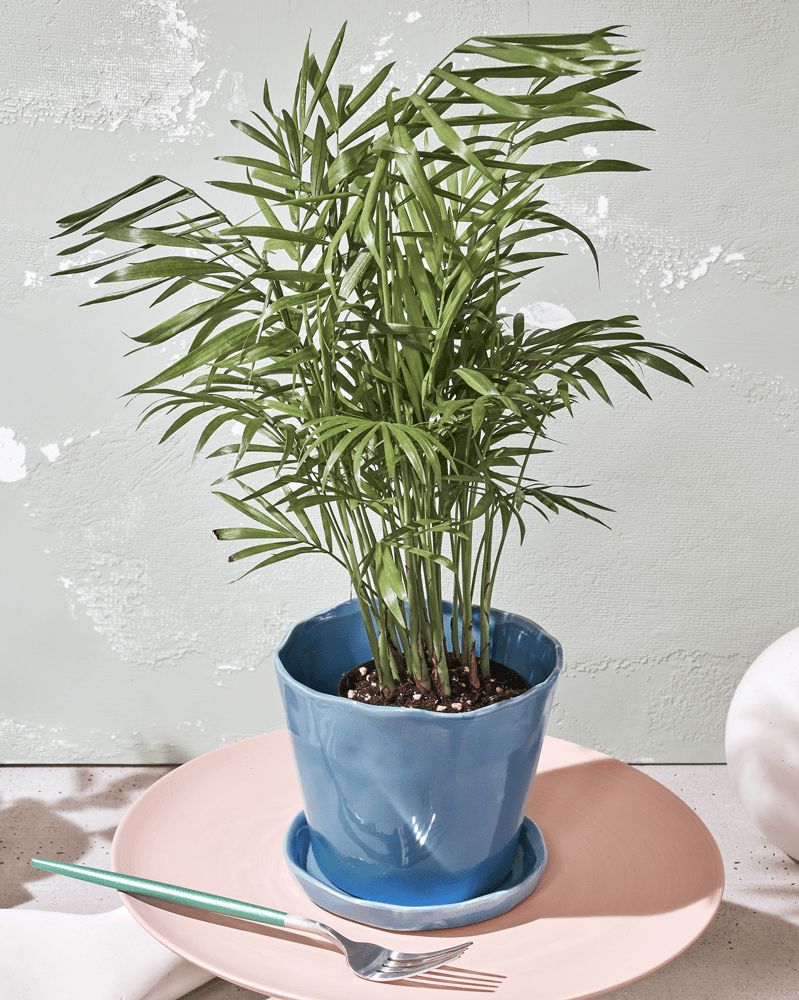
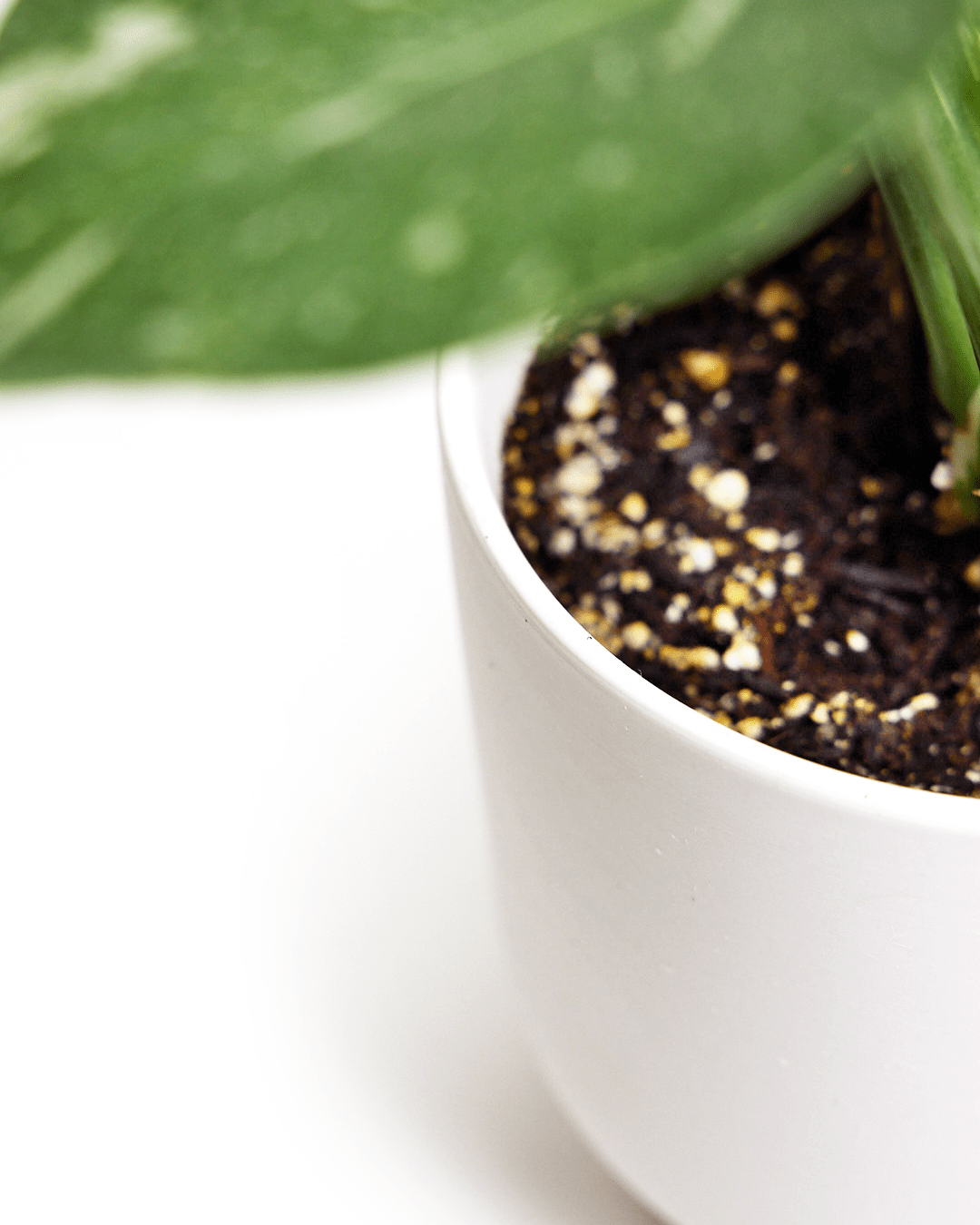
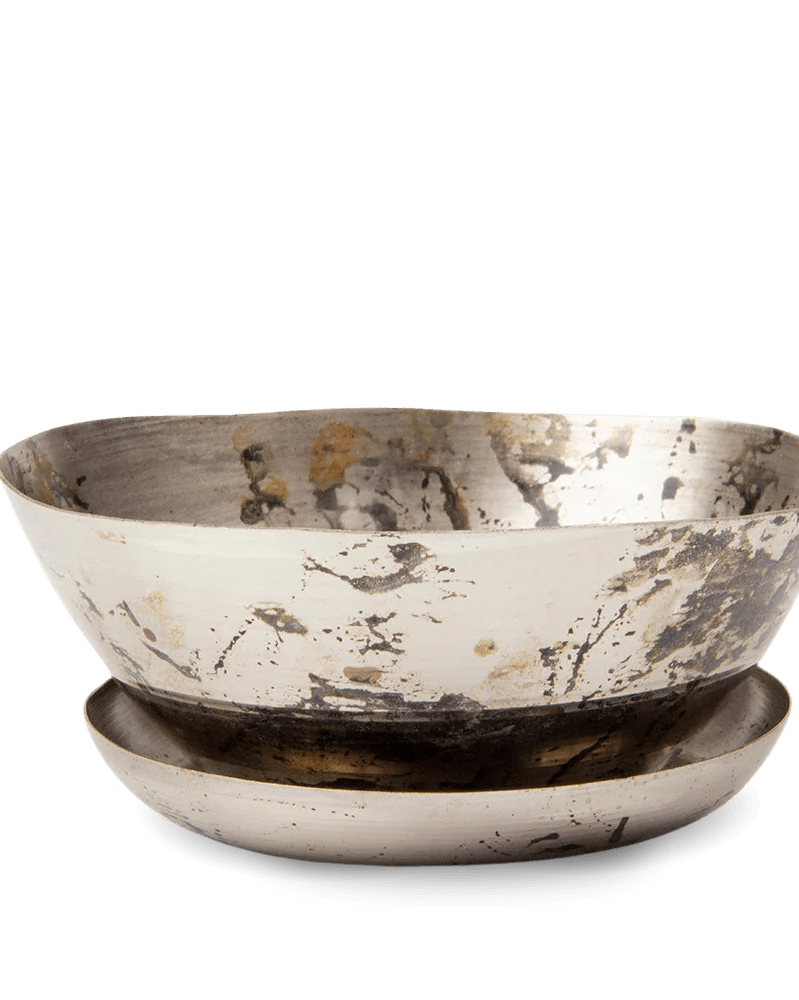
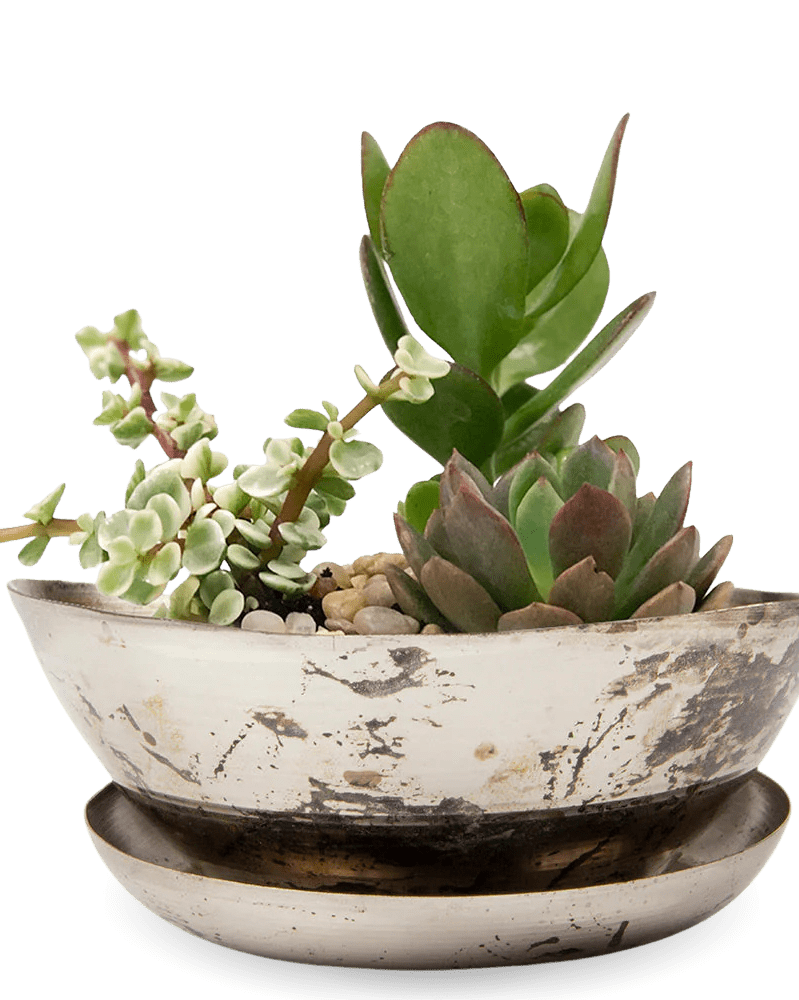
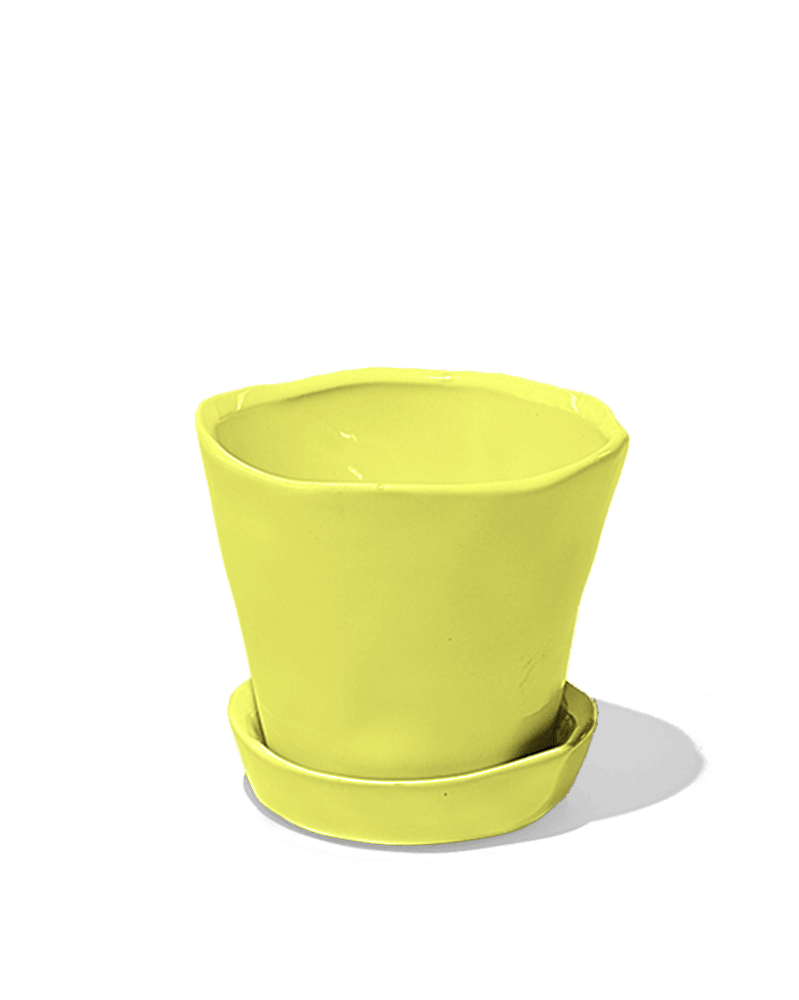
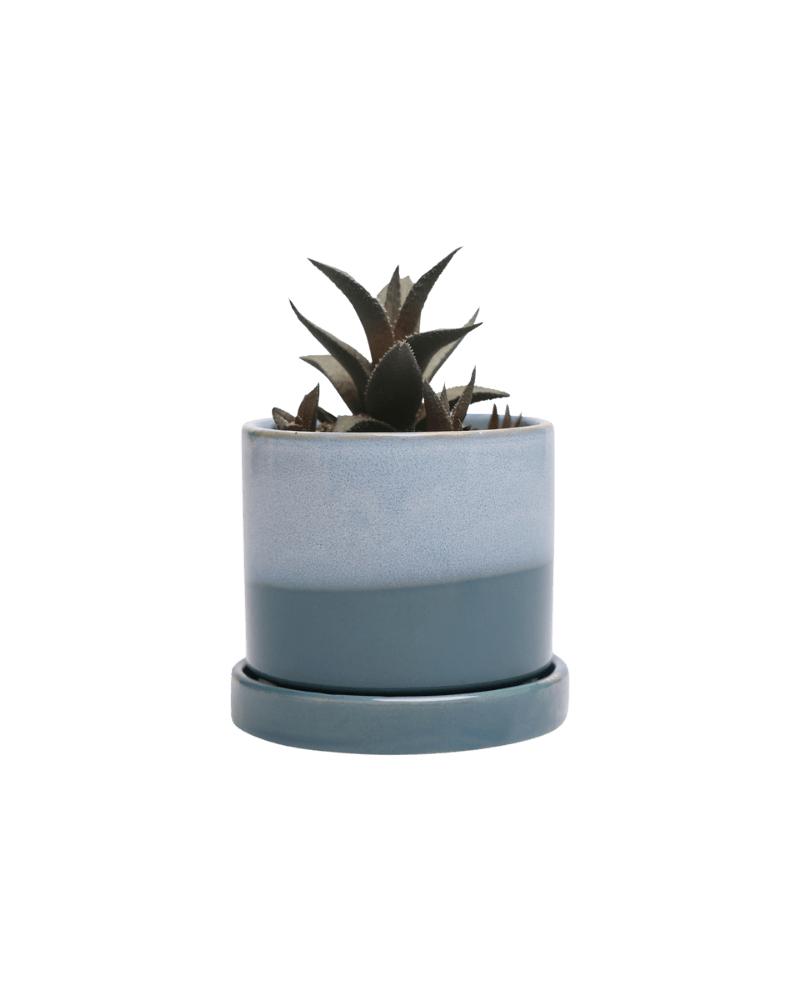
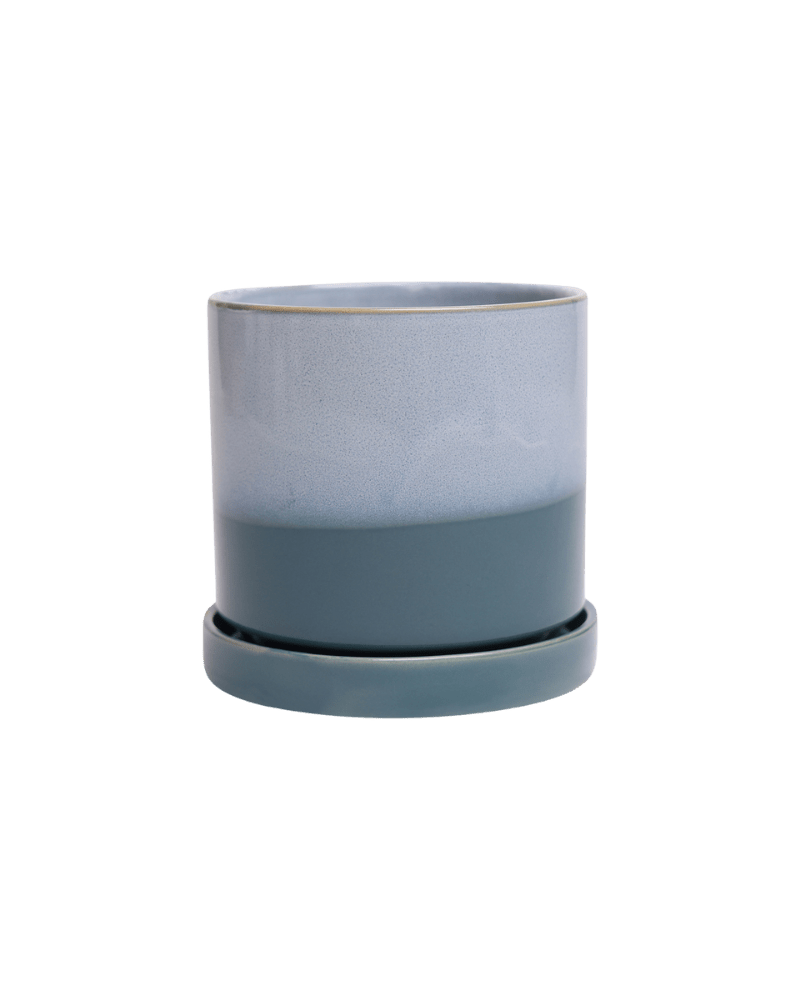
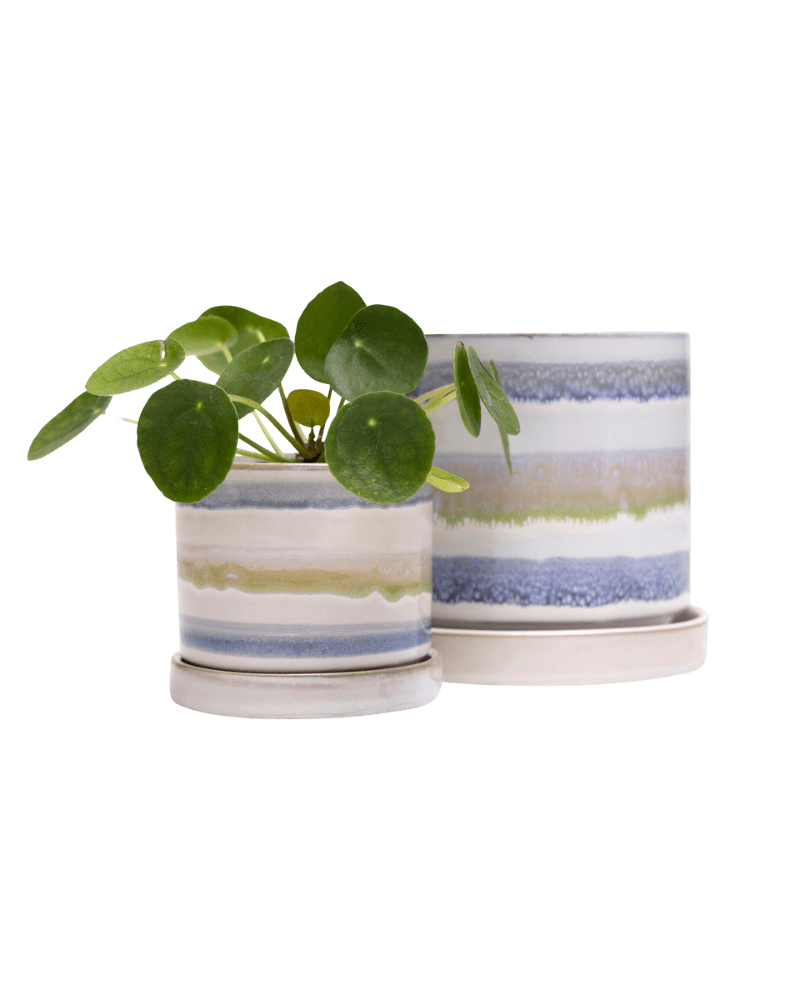
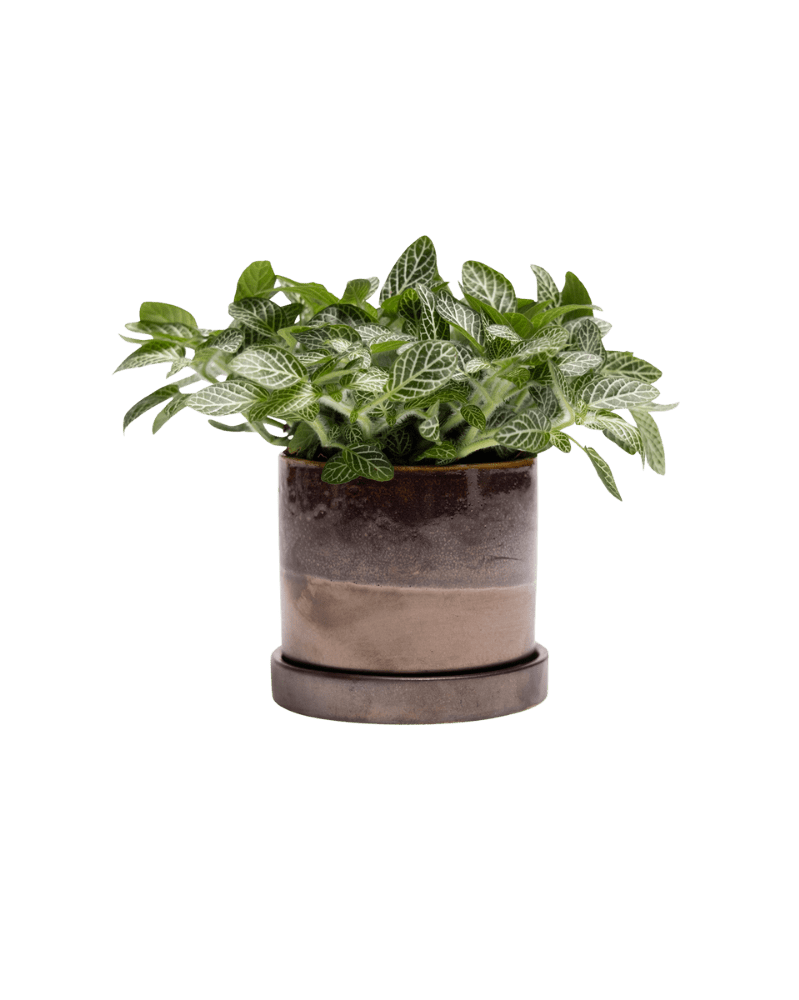
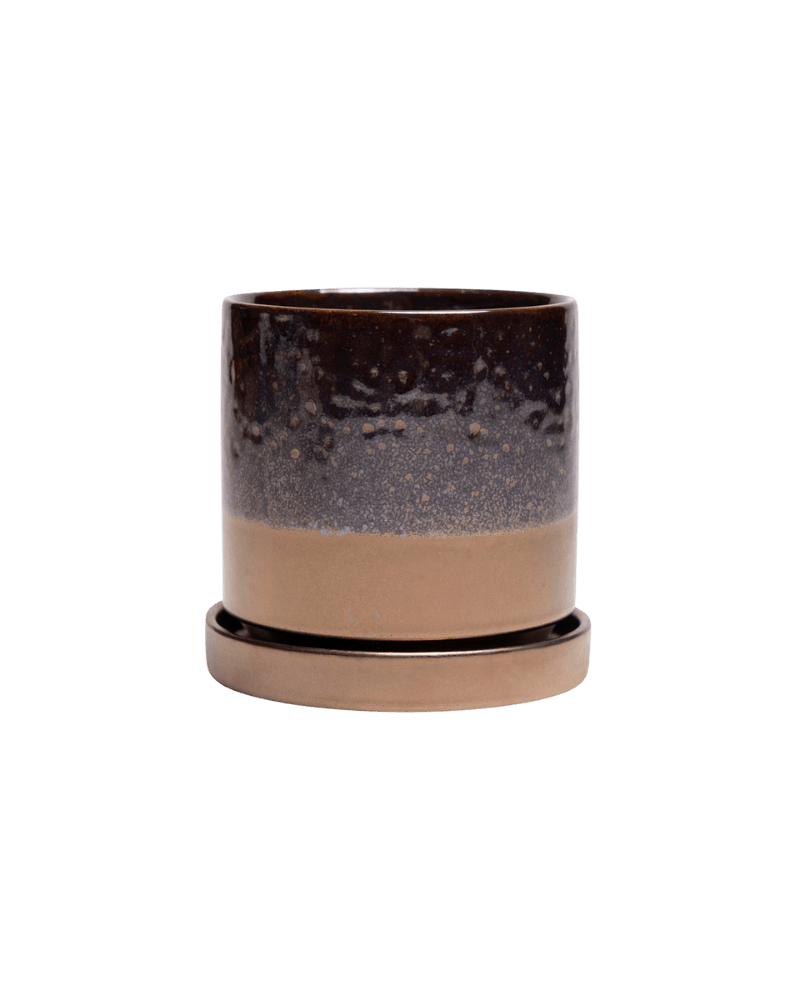
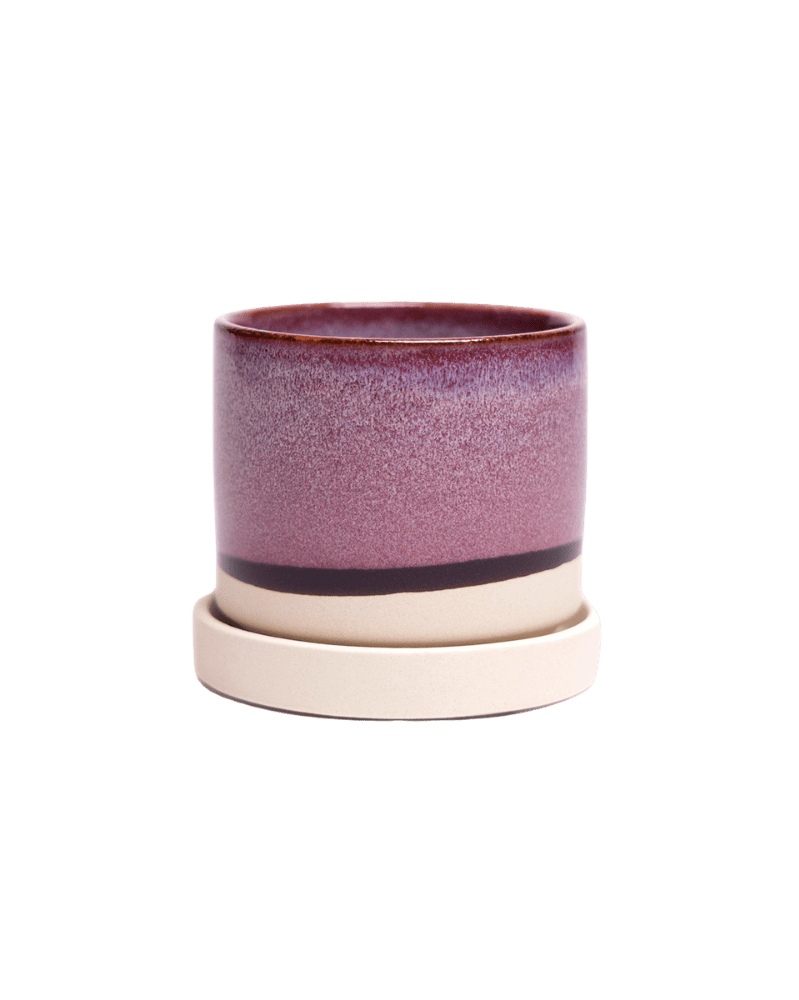
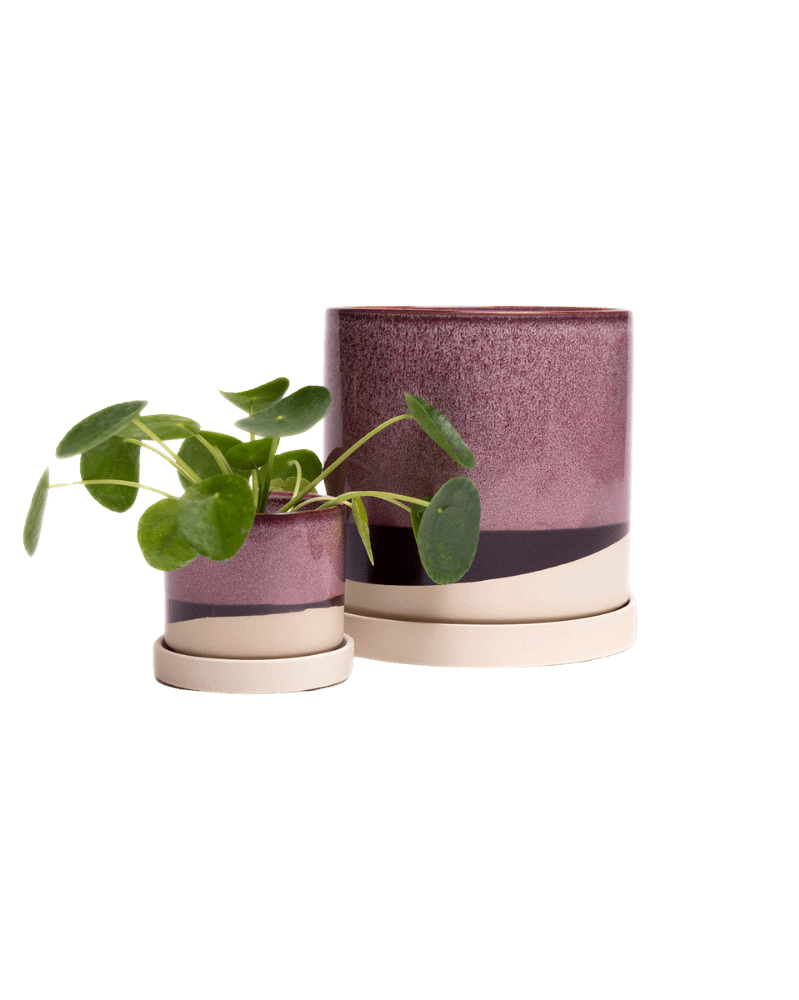
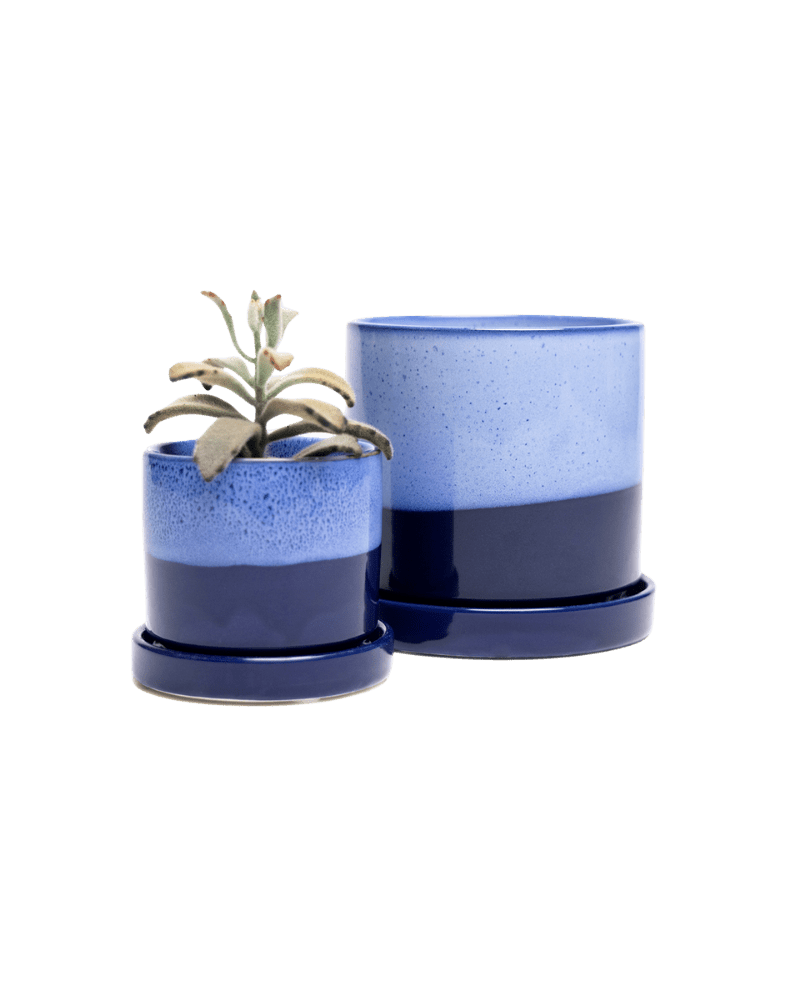
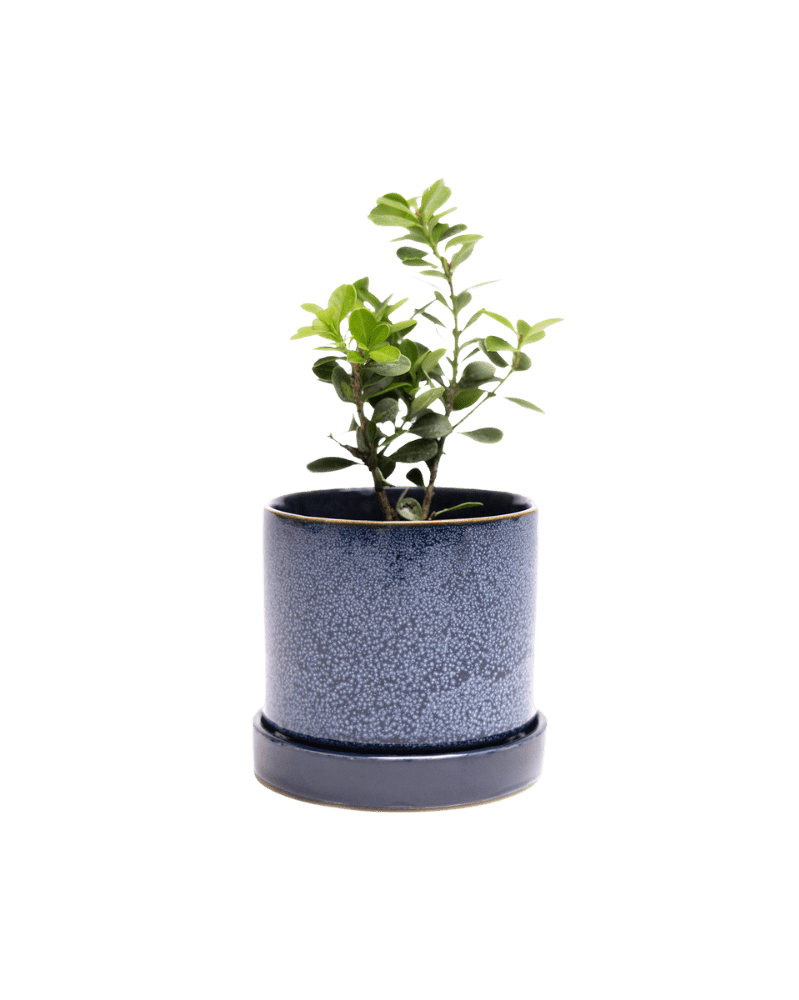
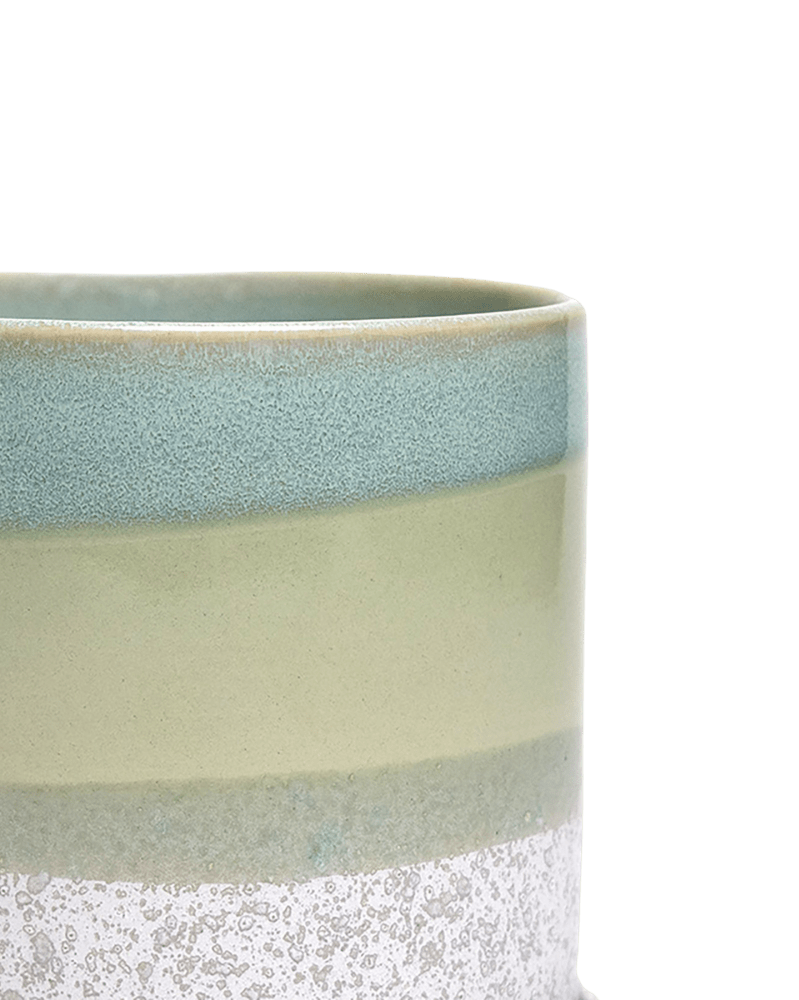
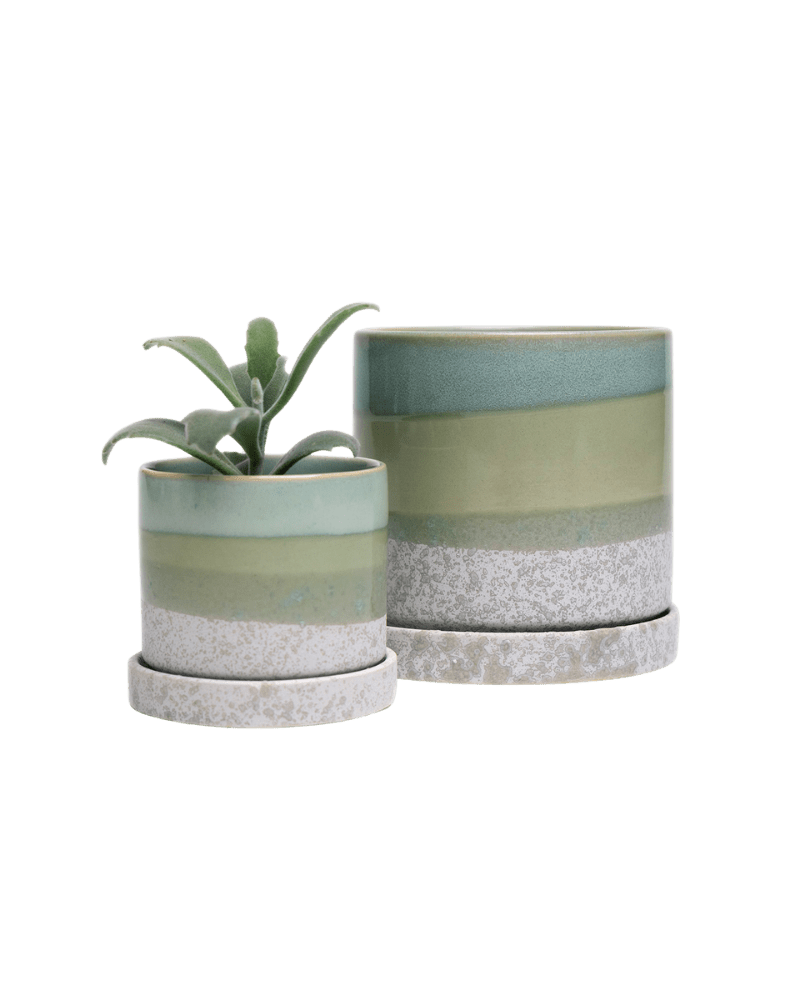
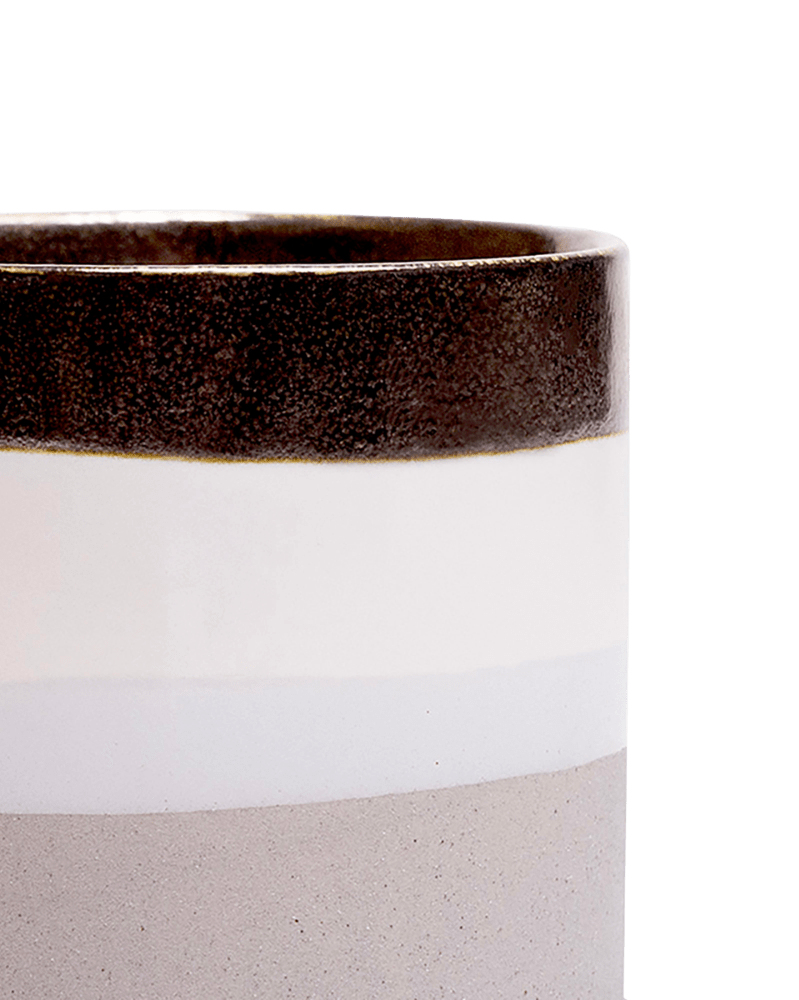
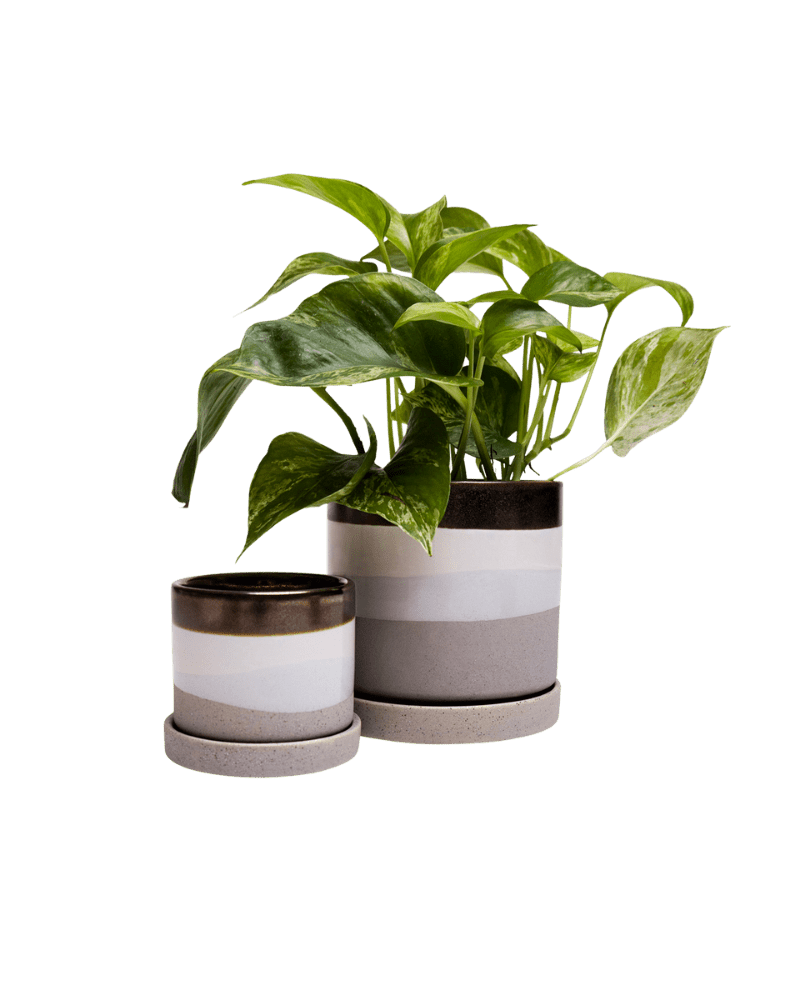
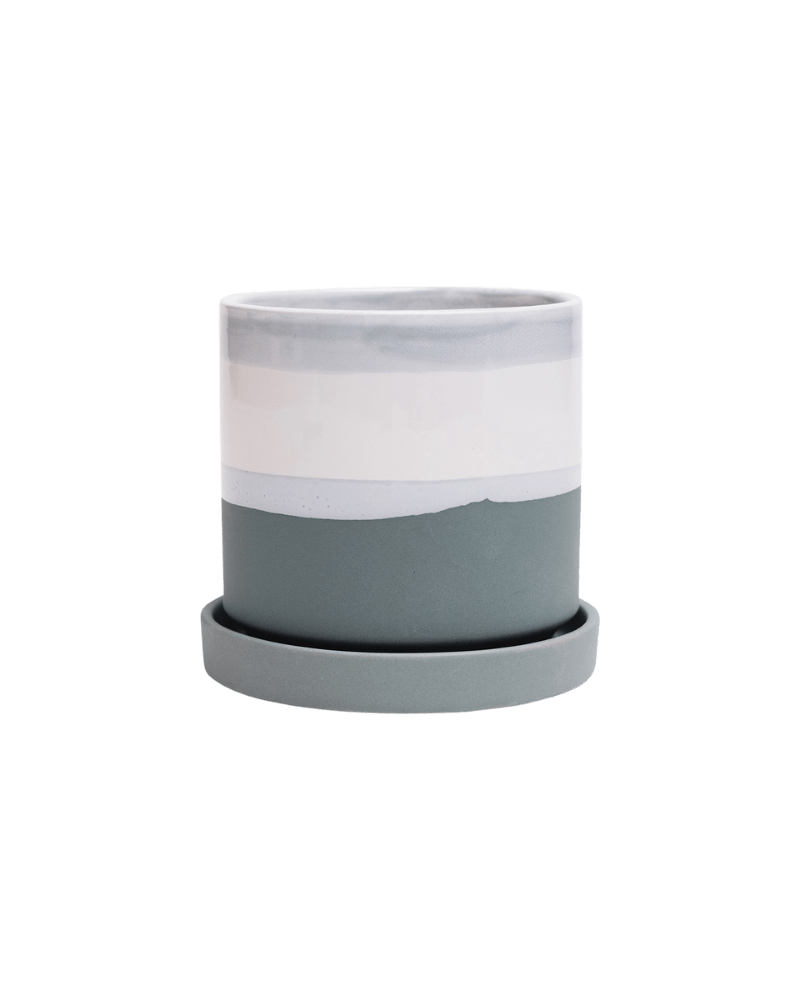
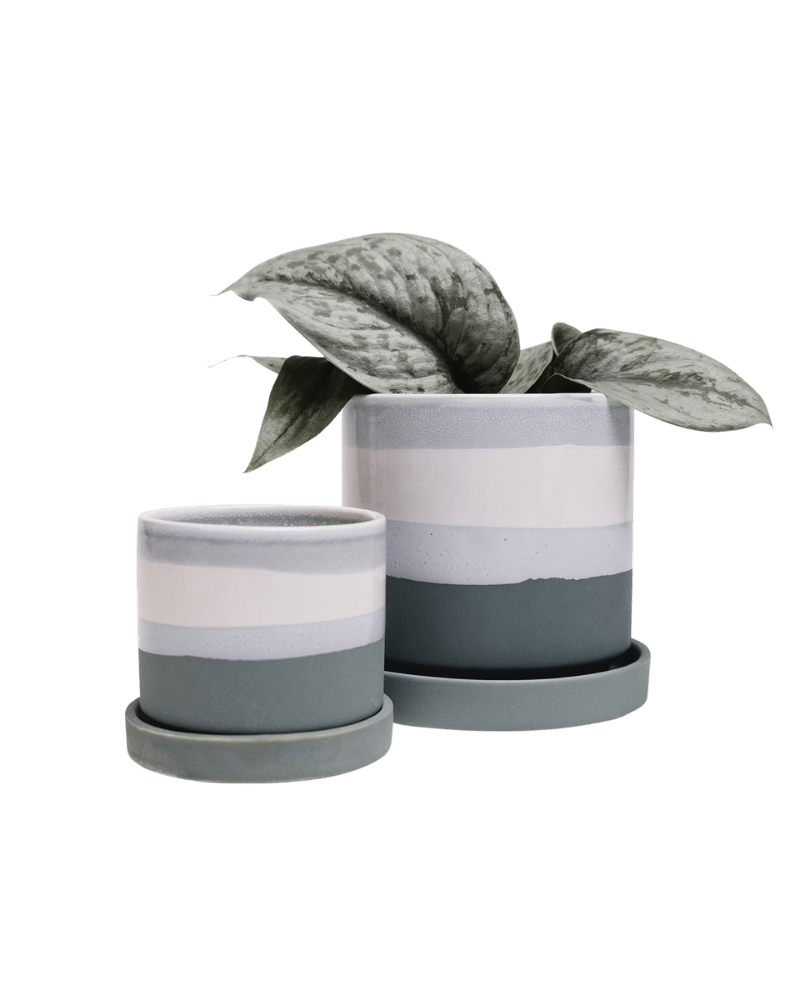
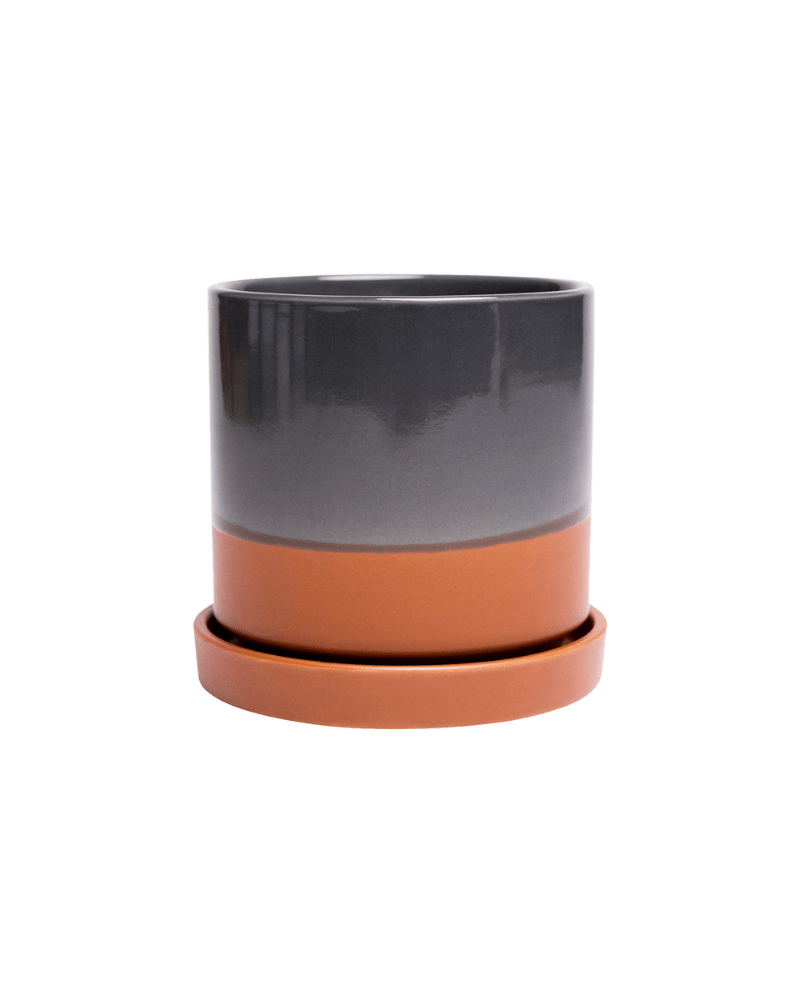
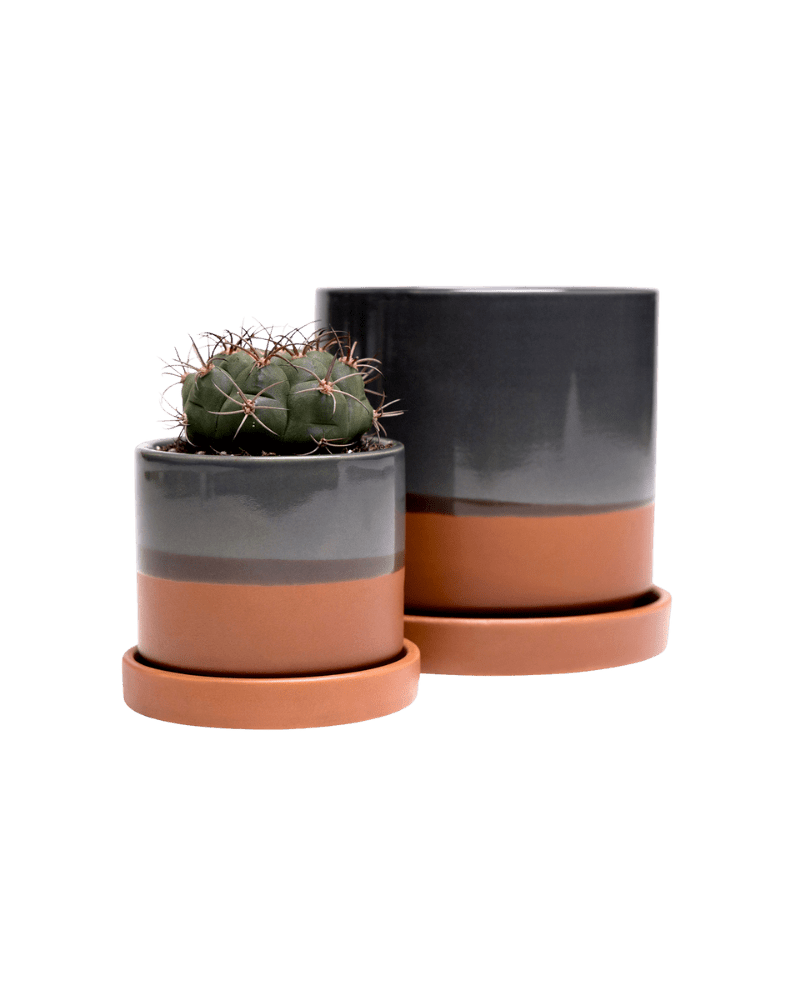
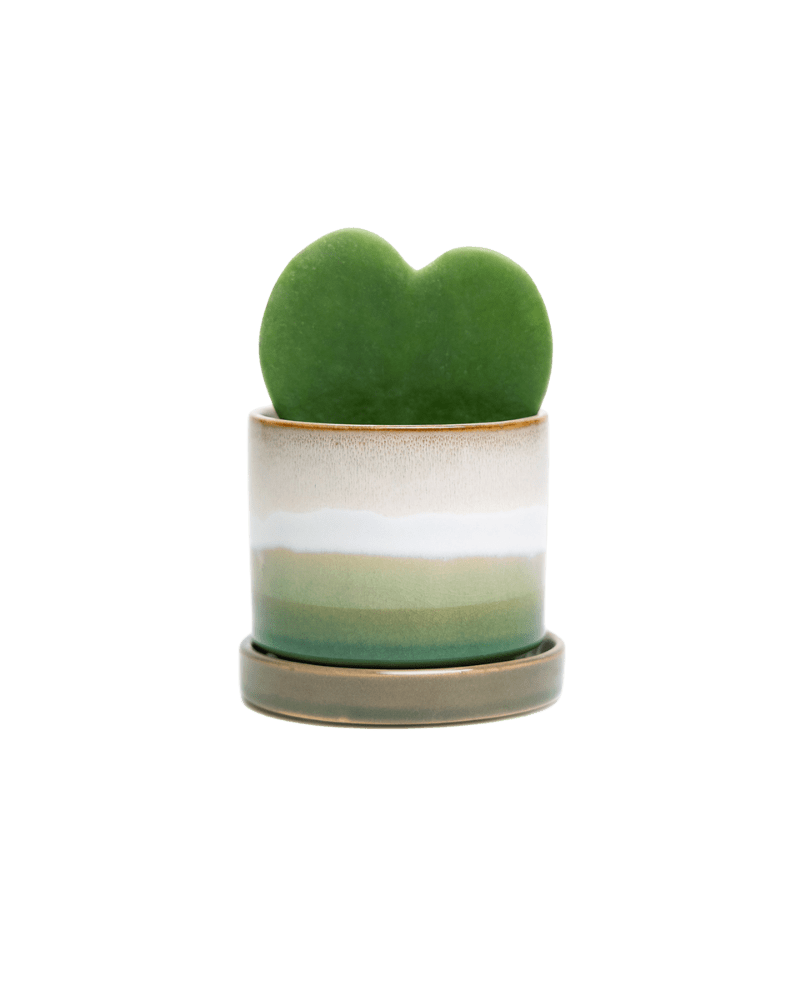
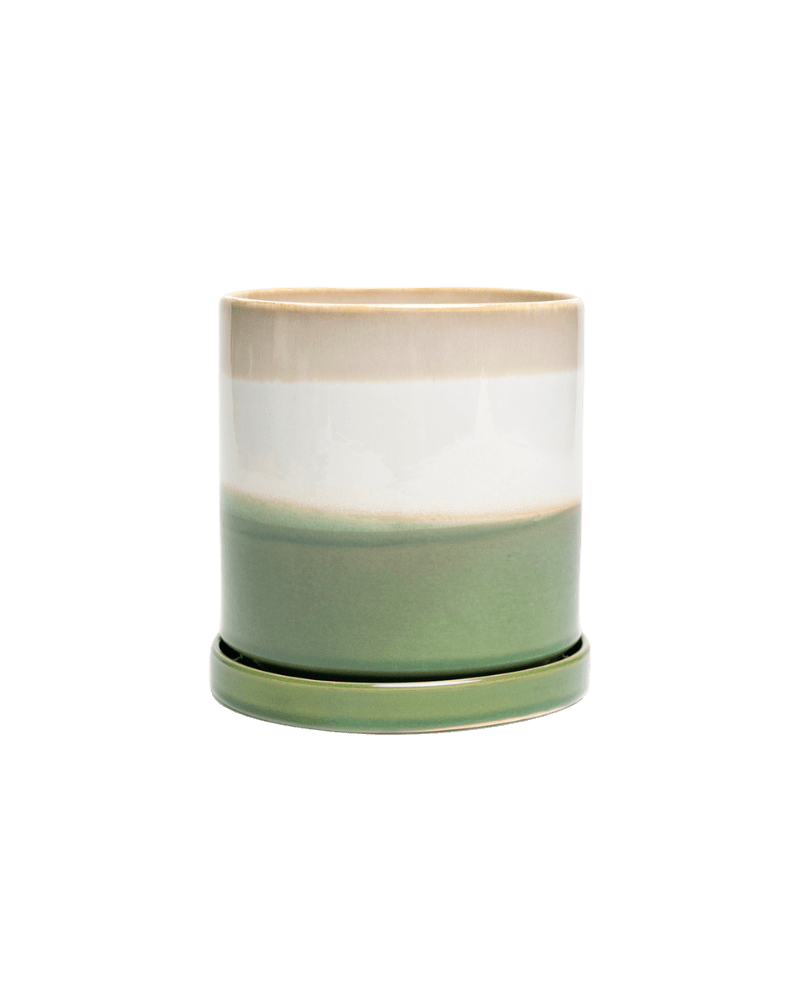
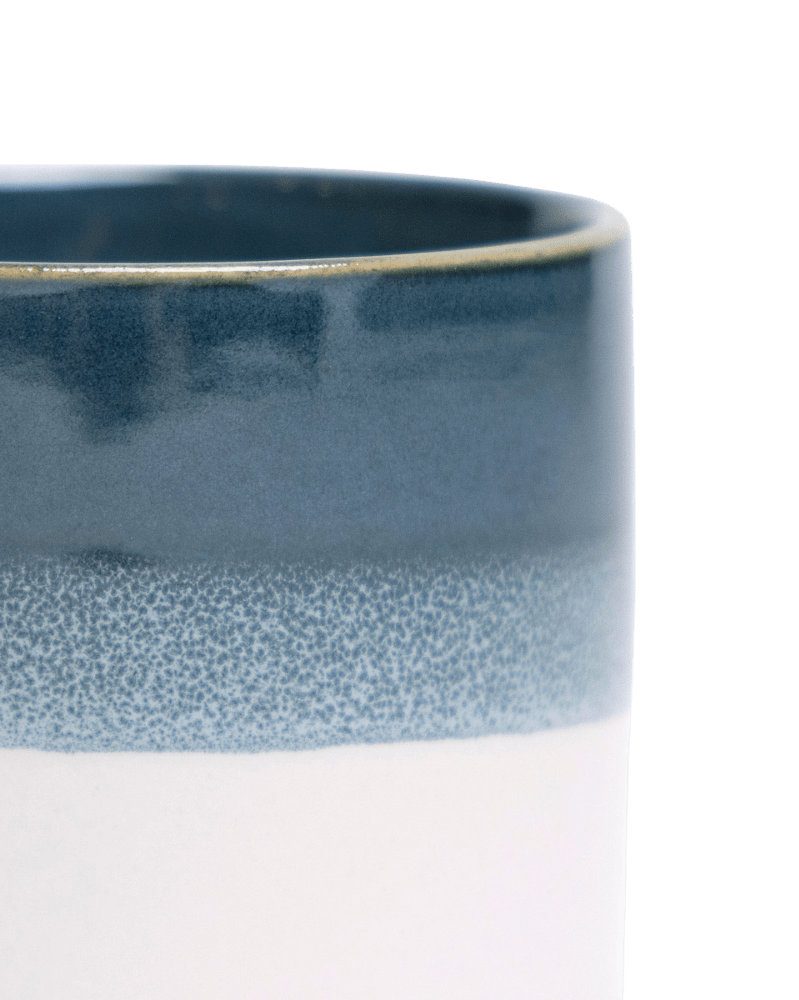
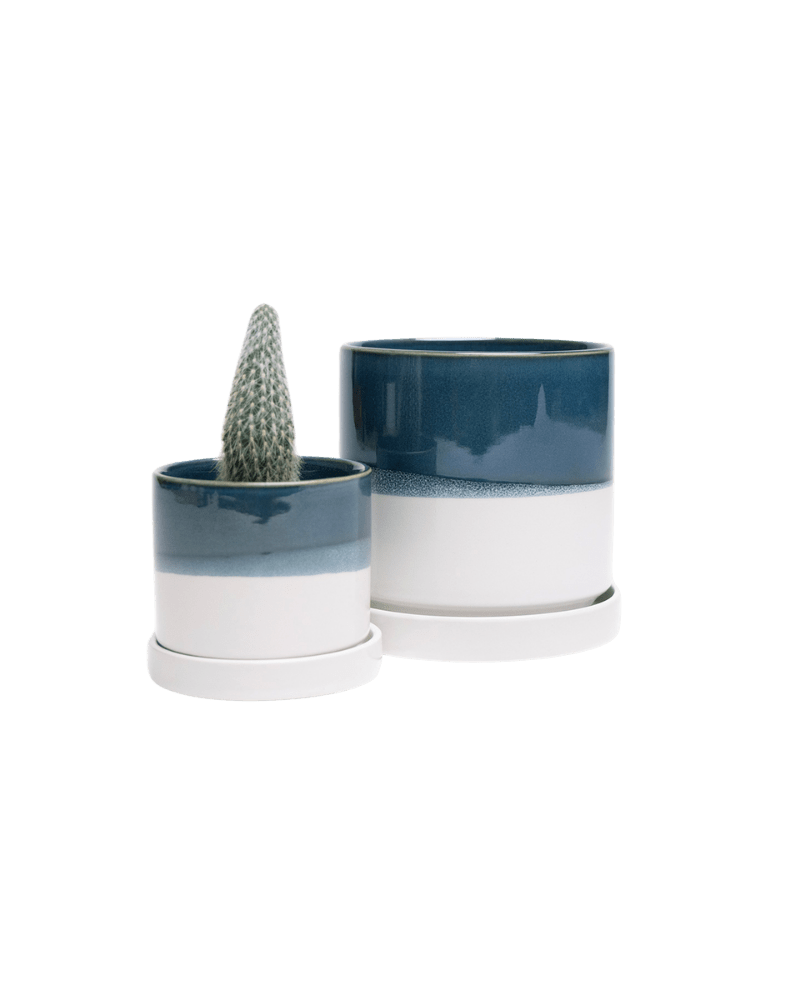
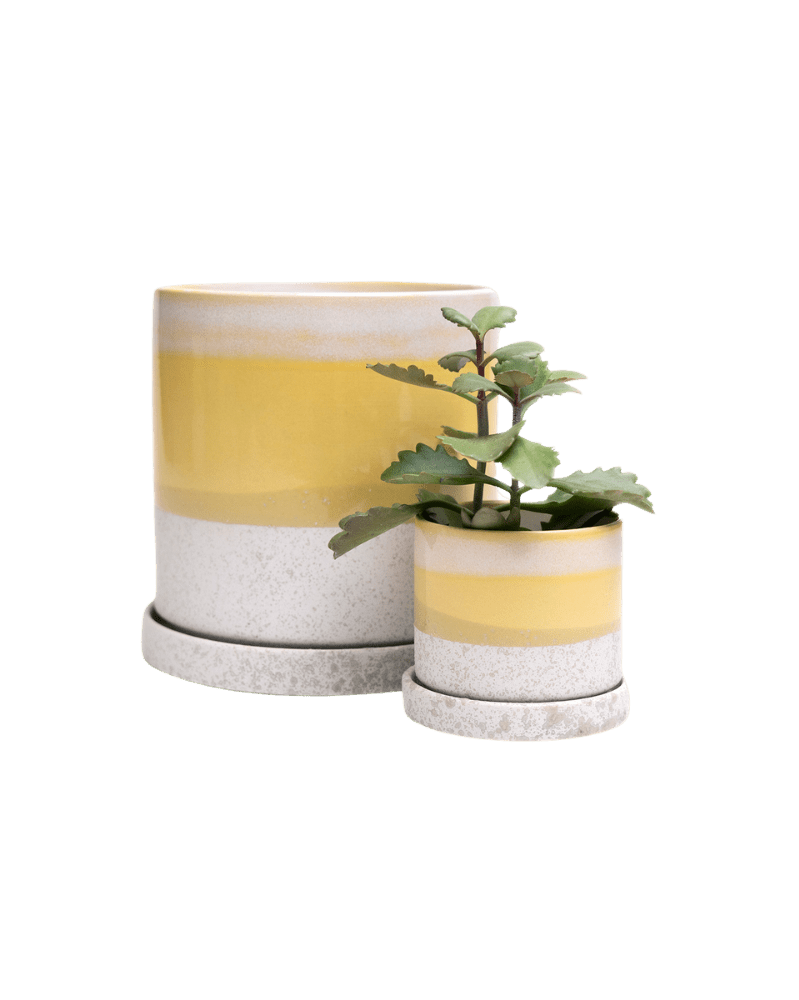
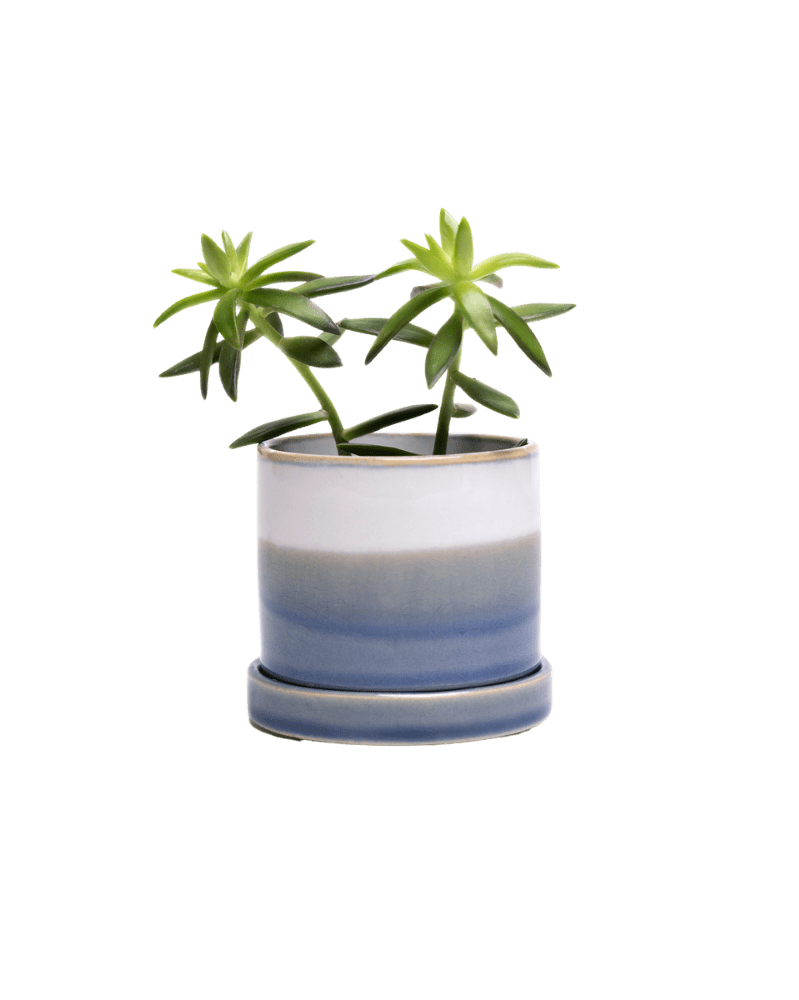
The best pot for a peperomia is small, has genuine drainage, and does not contain significantly more soil than the root system can currently use. We use the white Virago in the 3 inch for peperomias specifically. It is proportioned for a plant that grows wide rather than tall, it drains, and it does not create the excess moisture conditions that cause root rot.
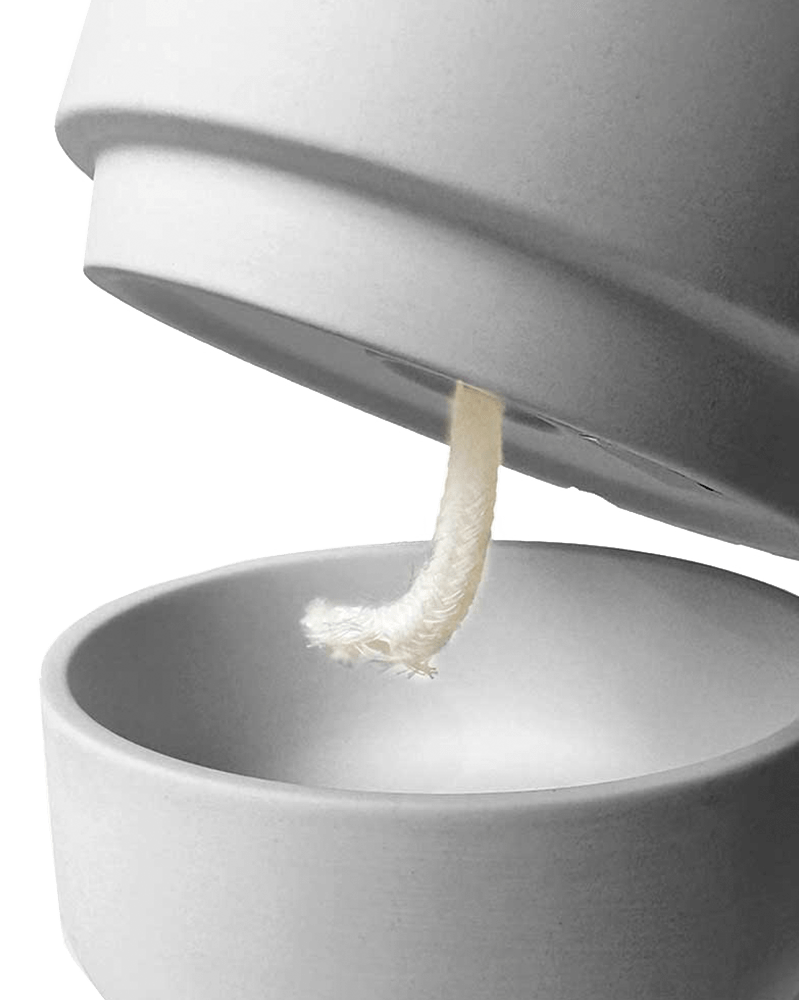
Size up only when roots emerge from the drainage hole. The plant will tell you when it is ready. Every Chive pot with drainage ships with a functional drainage hole — not decorative, not optional. We have never made it otherwise.
What to Put on the Wall Above It
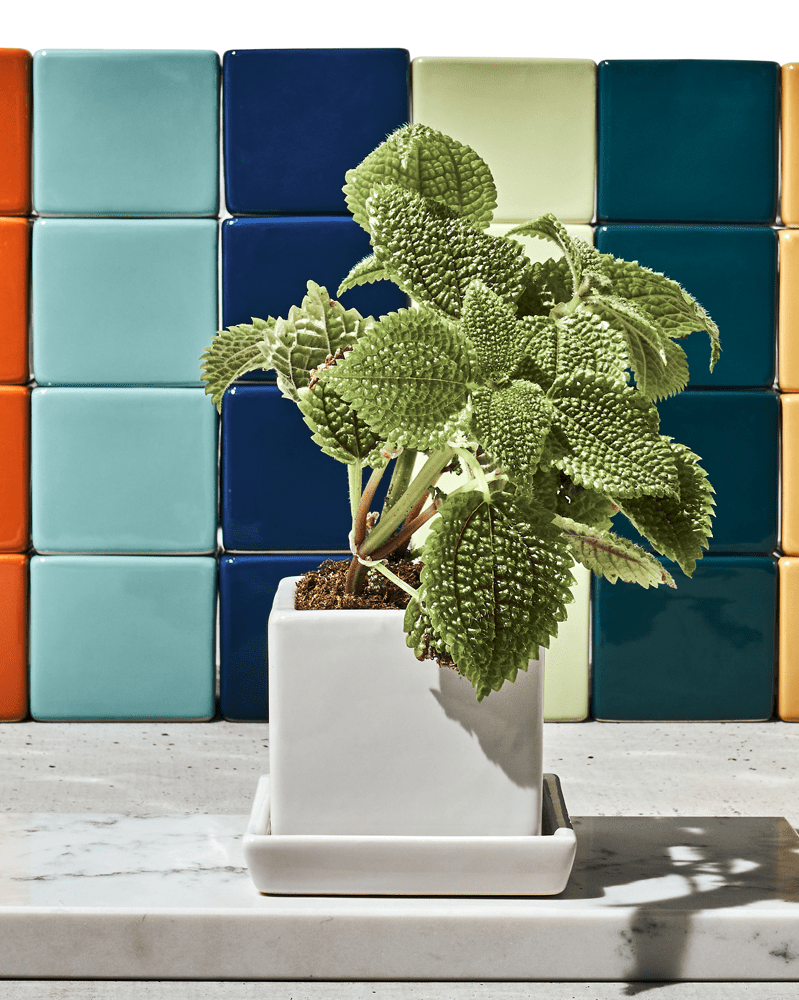
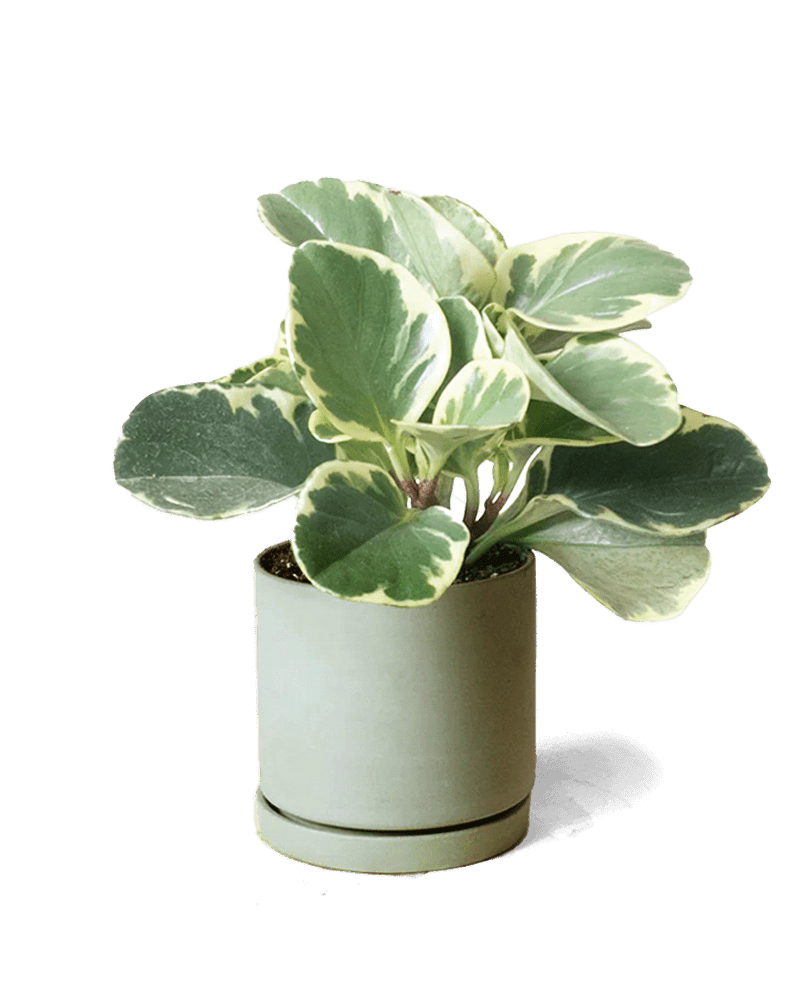
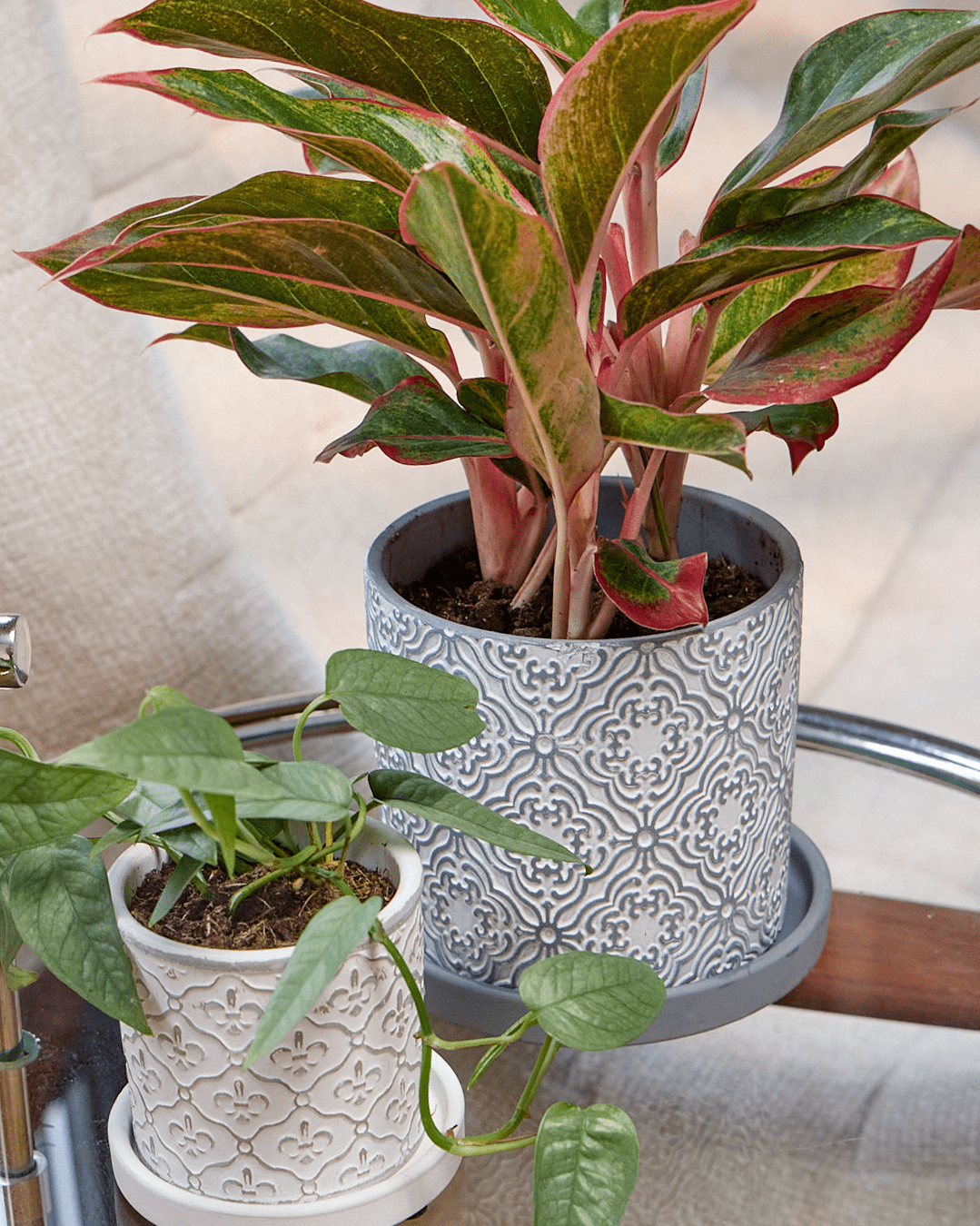
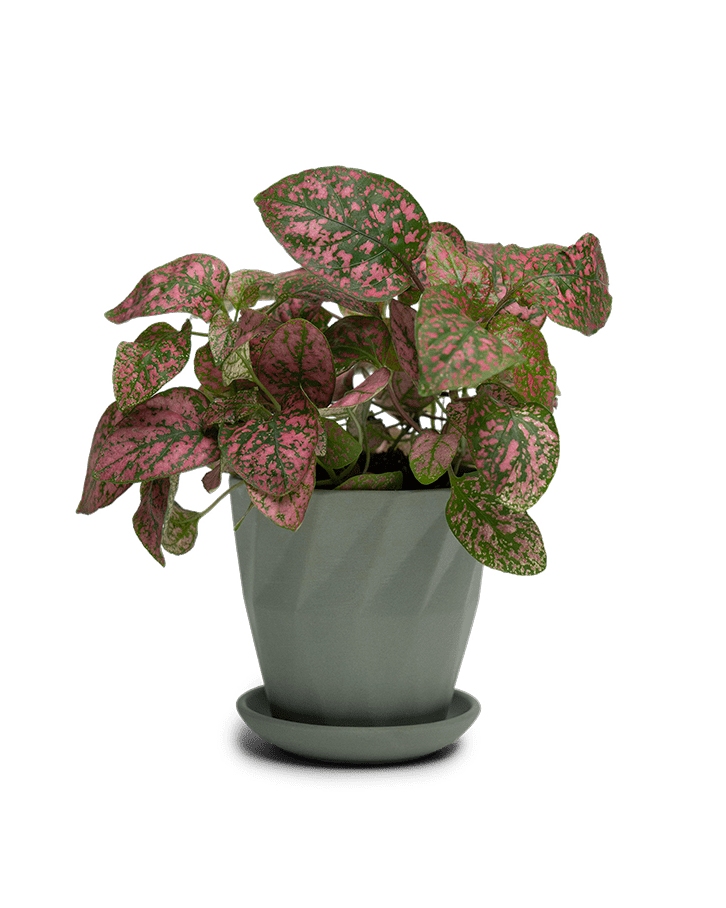
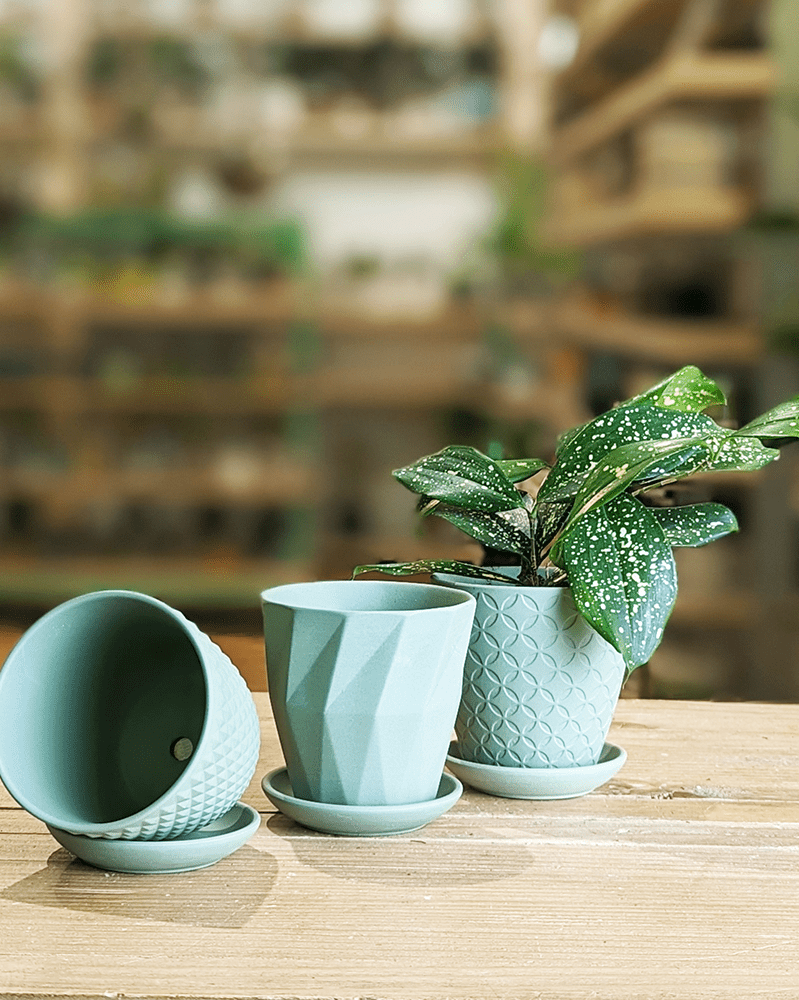
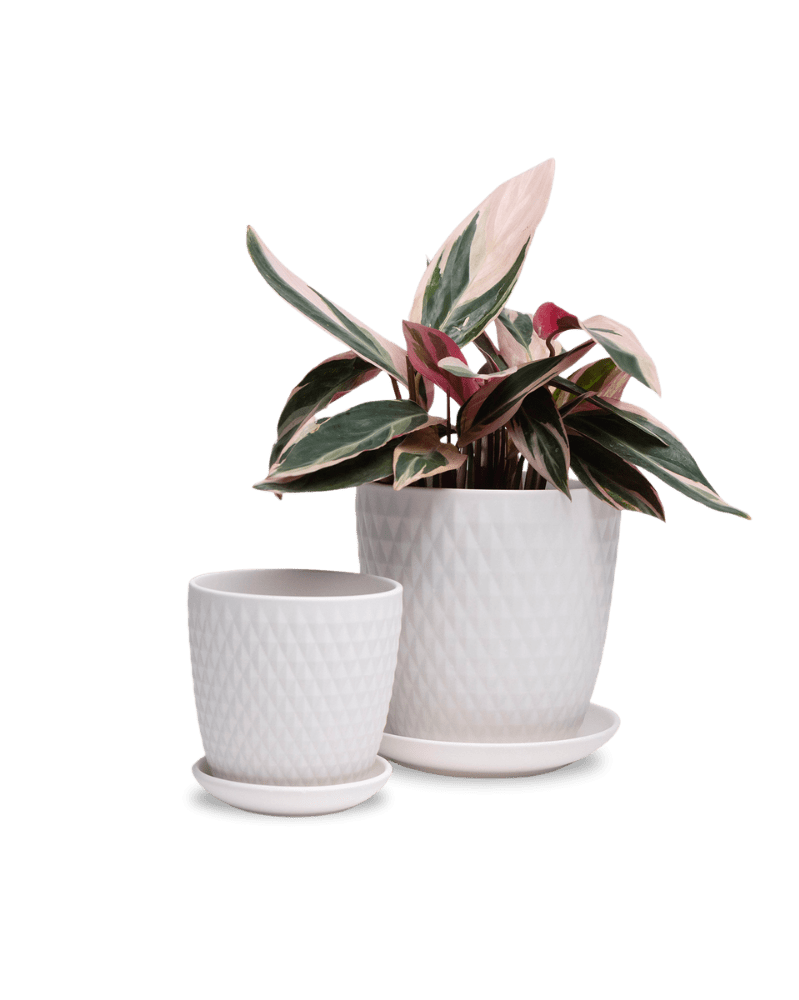
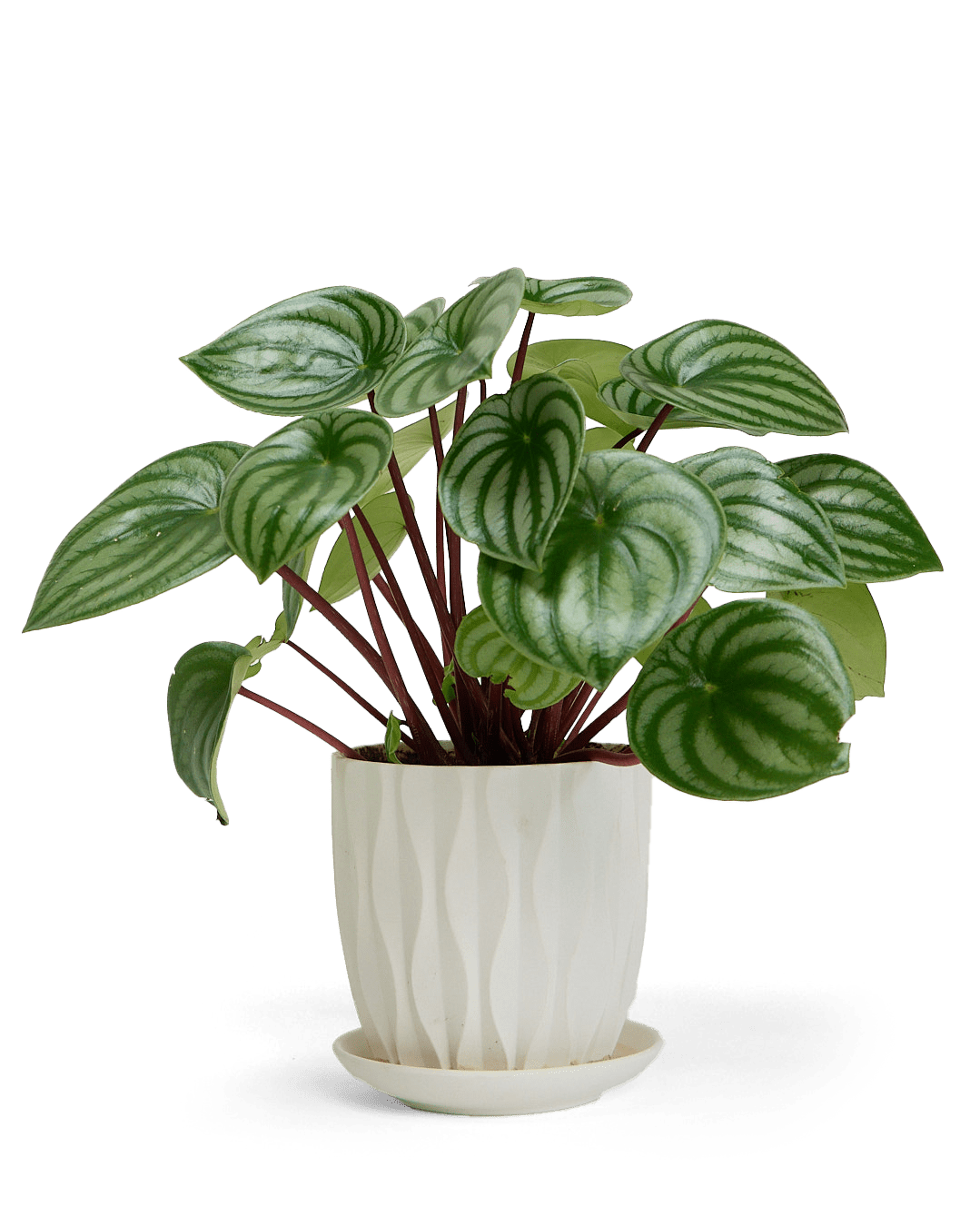
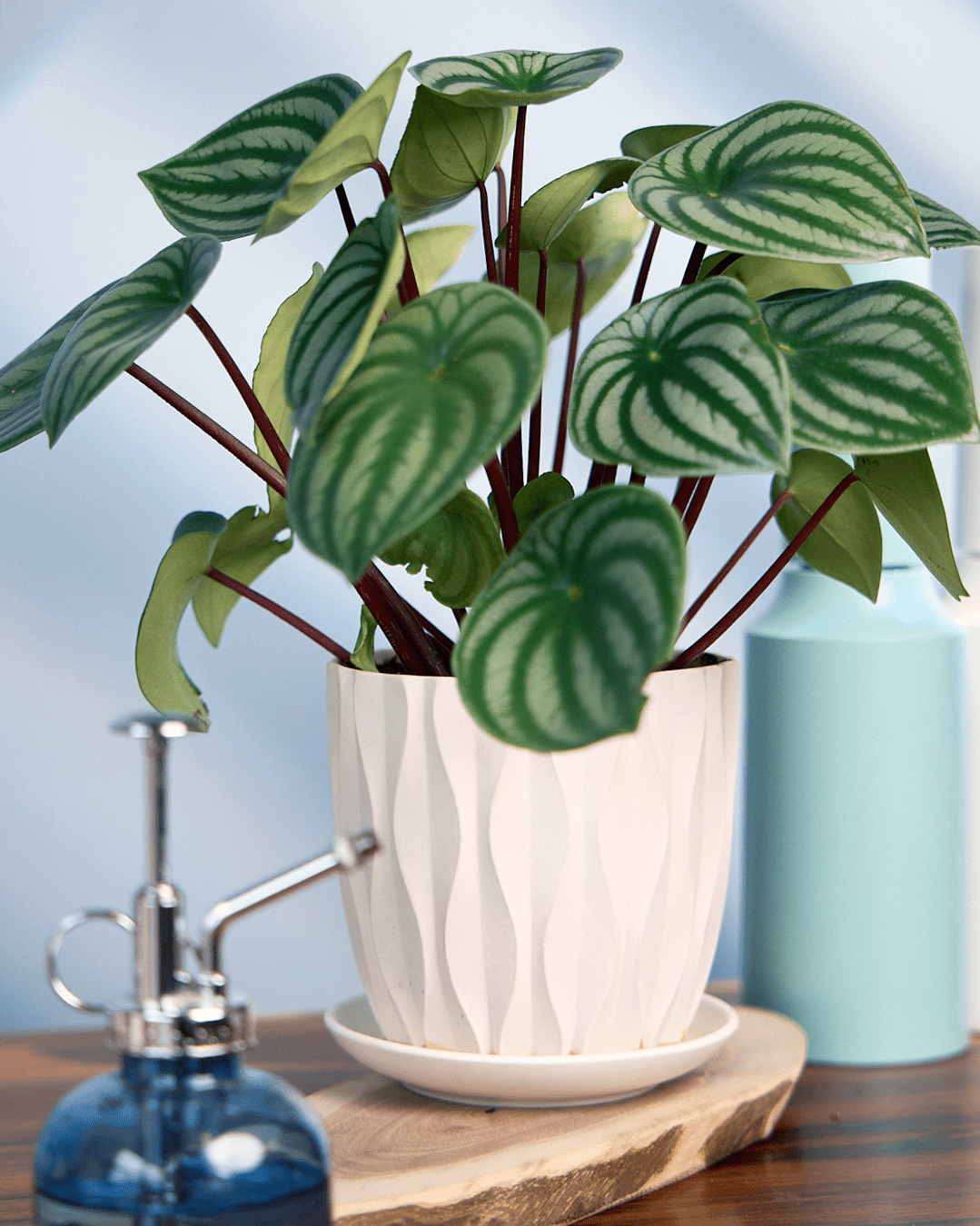
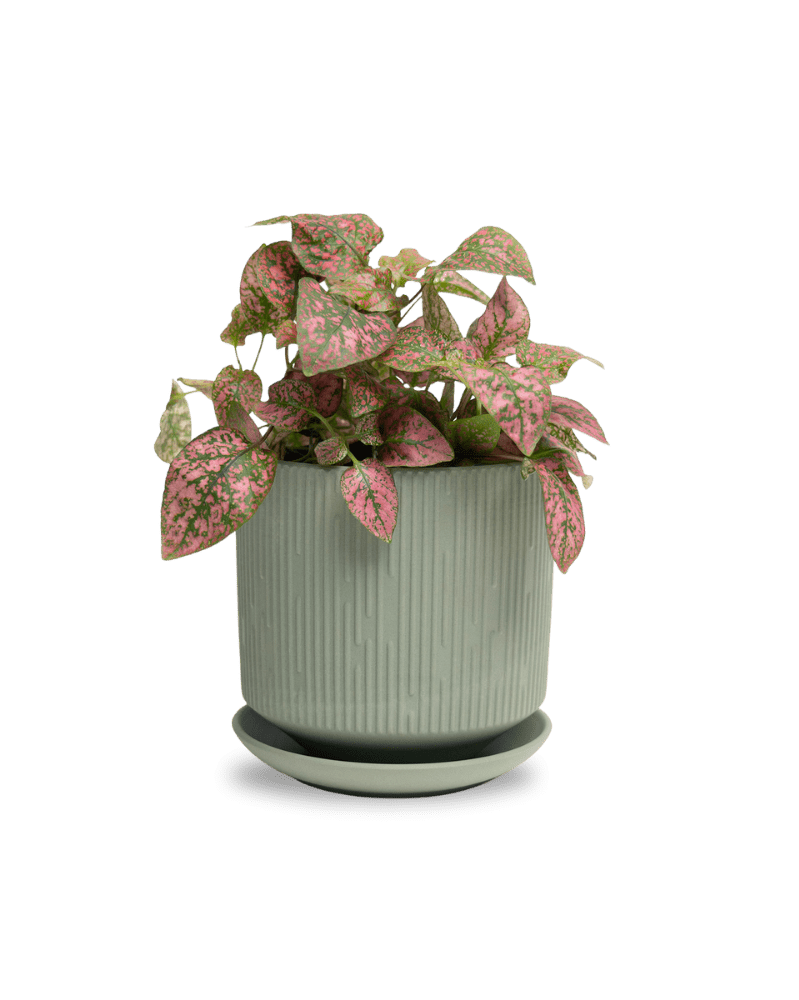
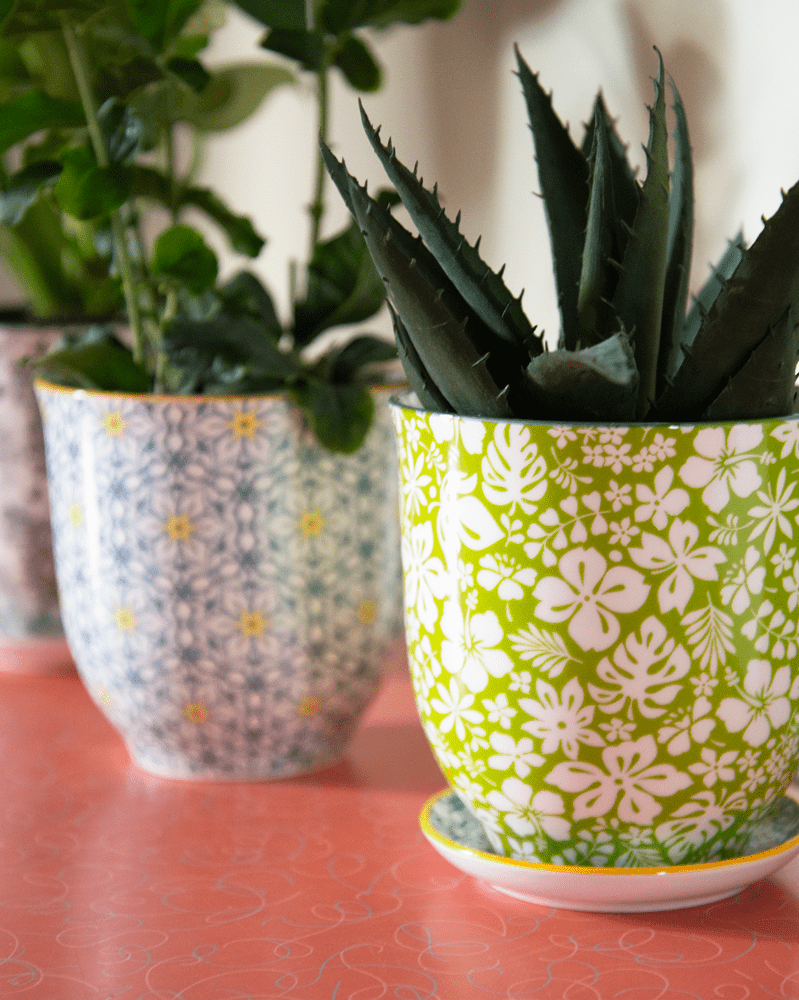
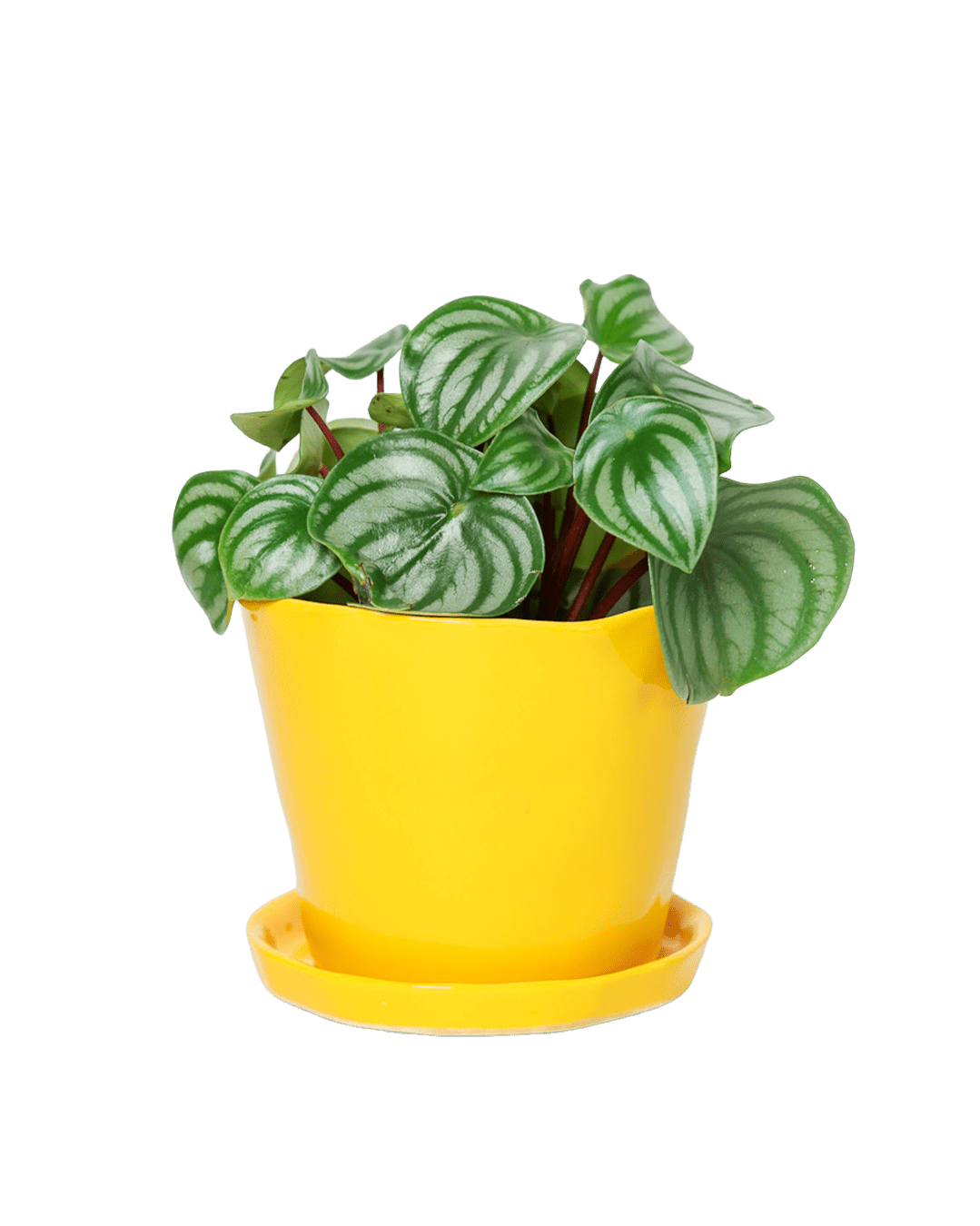
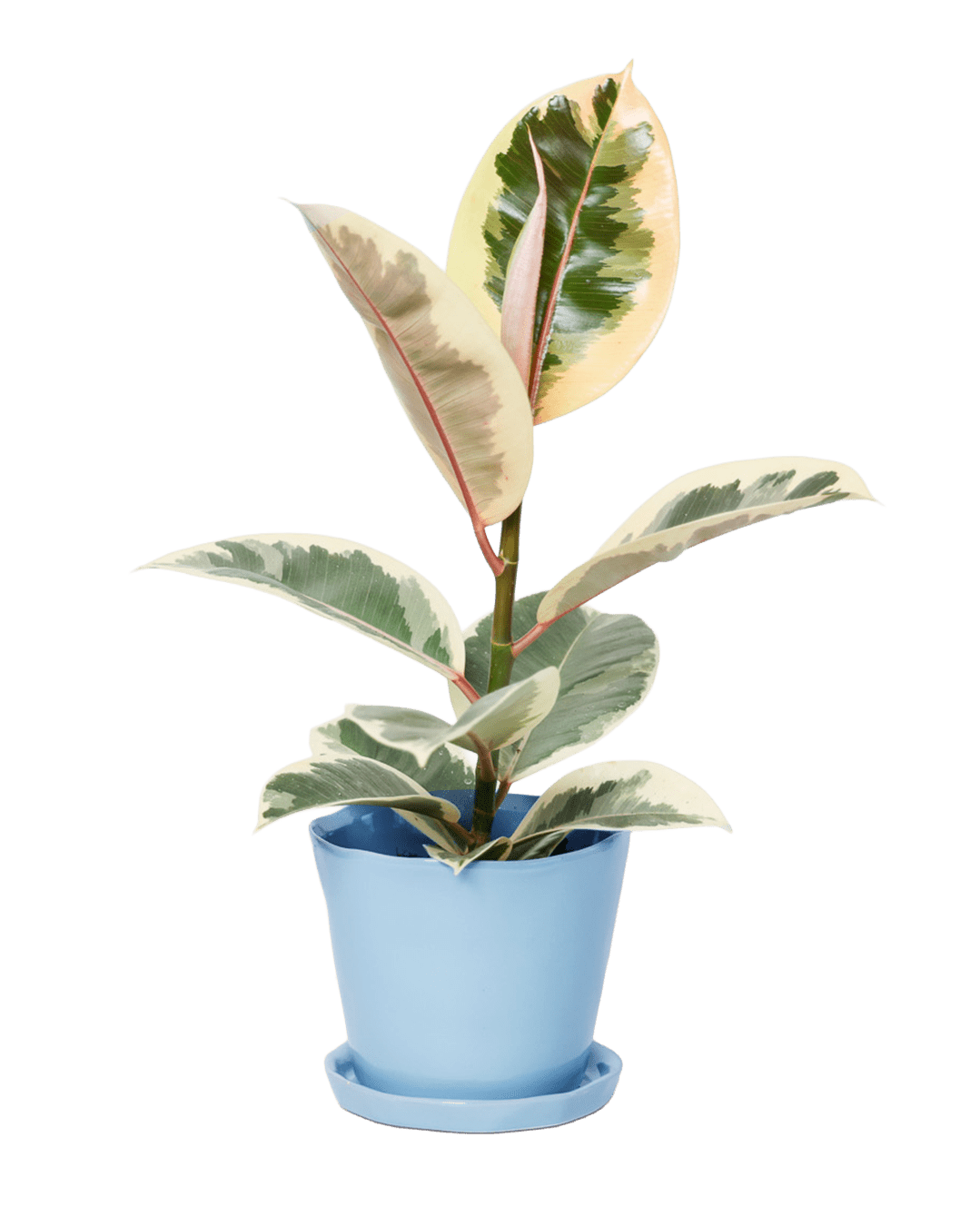
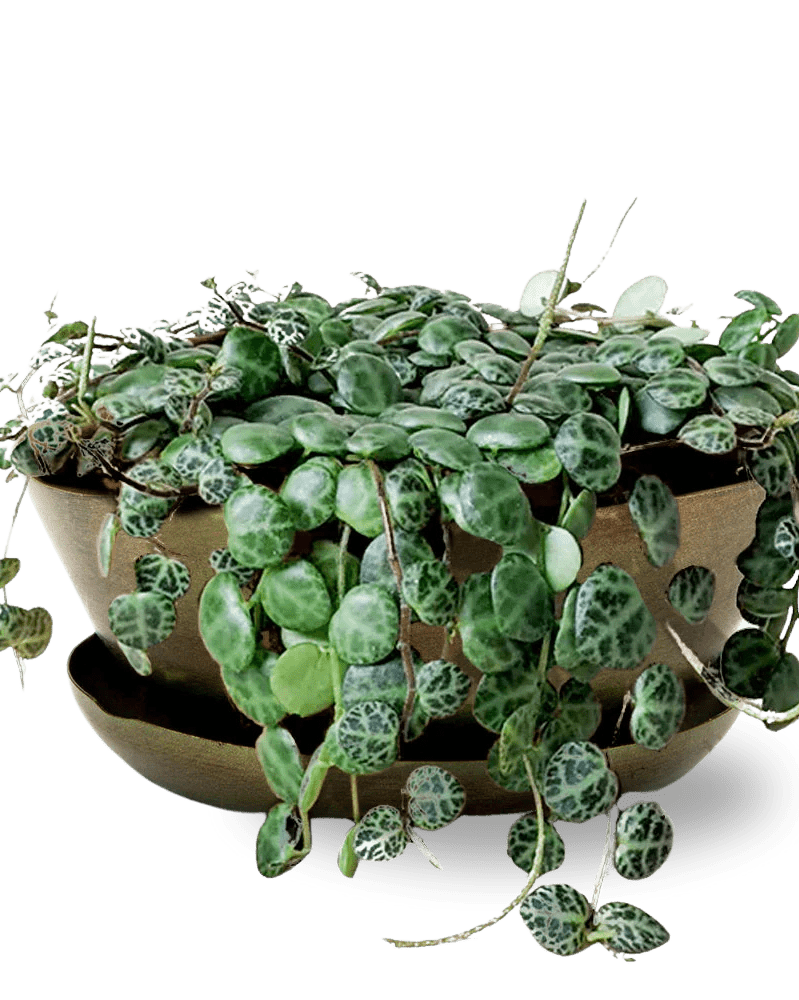
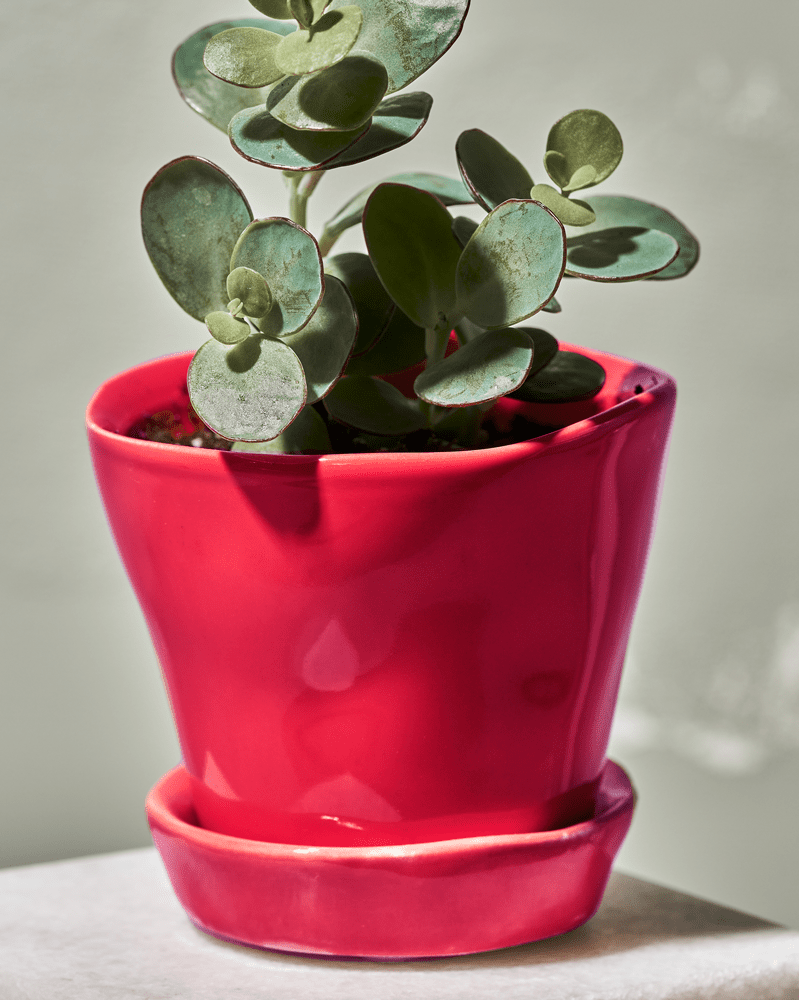
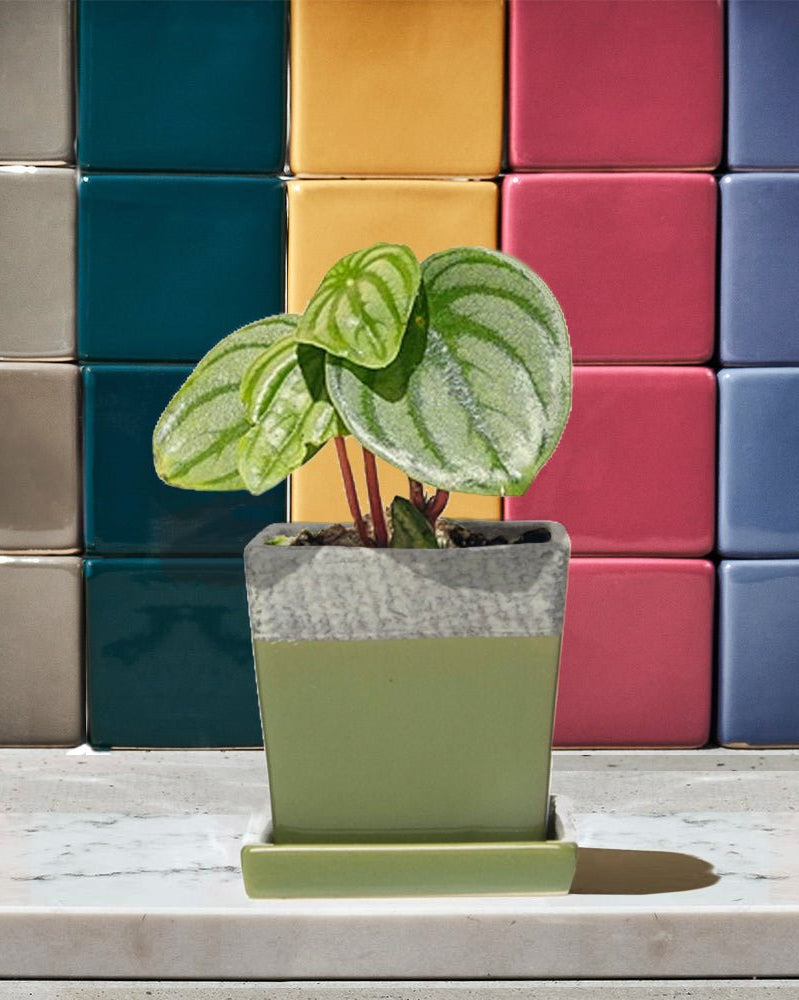
A peperomia on a shelf or windowsill is a small plant with a large personality — the leaf patterns on the watermelon variety, the deep burgundy undersides of the caperata, the glossy rounds of the obtusifolia. Our smaller ceramic flowers — the 3 and 4 inch sizes from the English Garden and France collections — work here precisely because they do not overwhelm a small plant but extend its presence up the wall.
If you are unsure where to start, the English Garden collection has the warmest palette and the broadest range. It works with almost everything and requires no decision more difficult than which wall.
We design and make ceramic plant pots since 1999. We have watched the peperomia move quietly through our customers' homes, producing cuttings and new plants with a generosity that the more demanding houseplants do not approach and would probably find excessive. Our ceramic pots are stocked in the Getty Museum, the Art Institute of Chicago, the Royal Ontario Museum, the Art Gallery of Ontario, the New York Botanical Garden, the Parrish Museum in the Hamptons, and more than 200 institutions worldwide. The white Virago is what we use for peperomias. It is the right size, it drains, and it has never once made propagation more complicated than it needs to be.