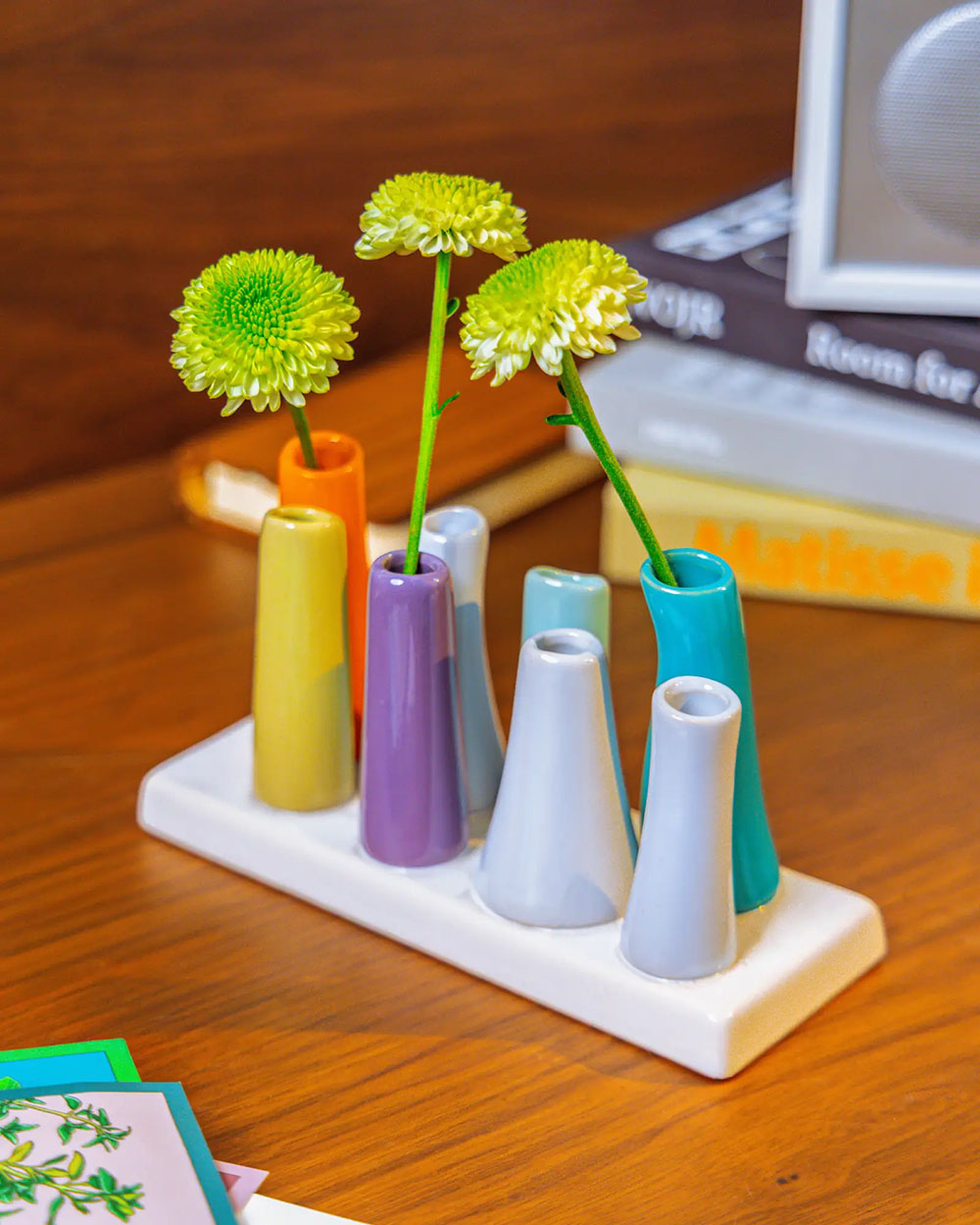
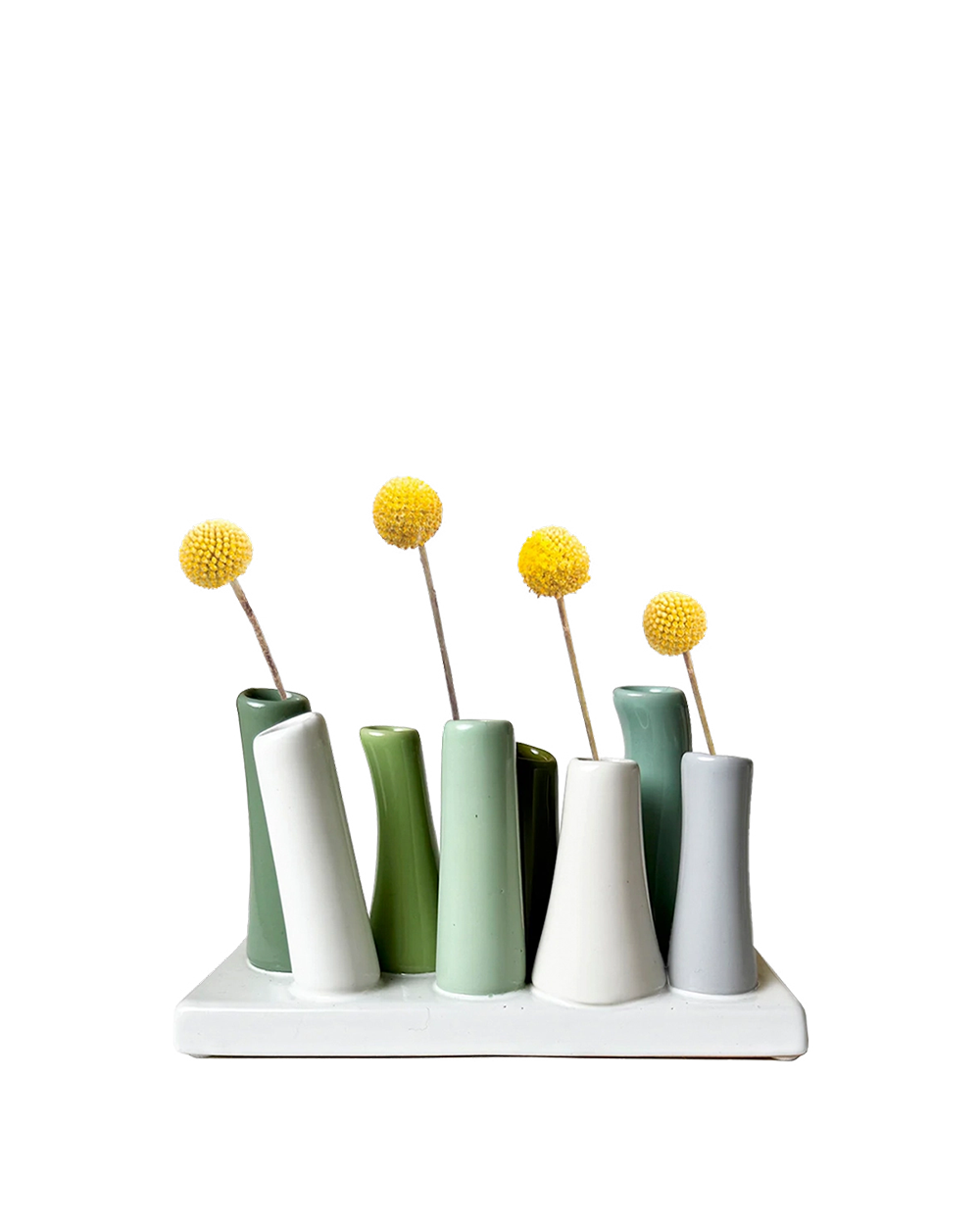
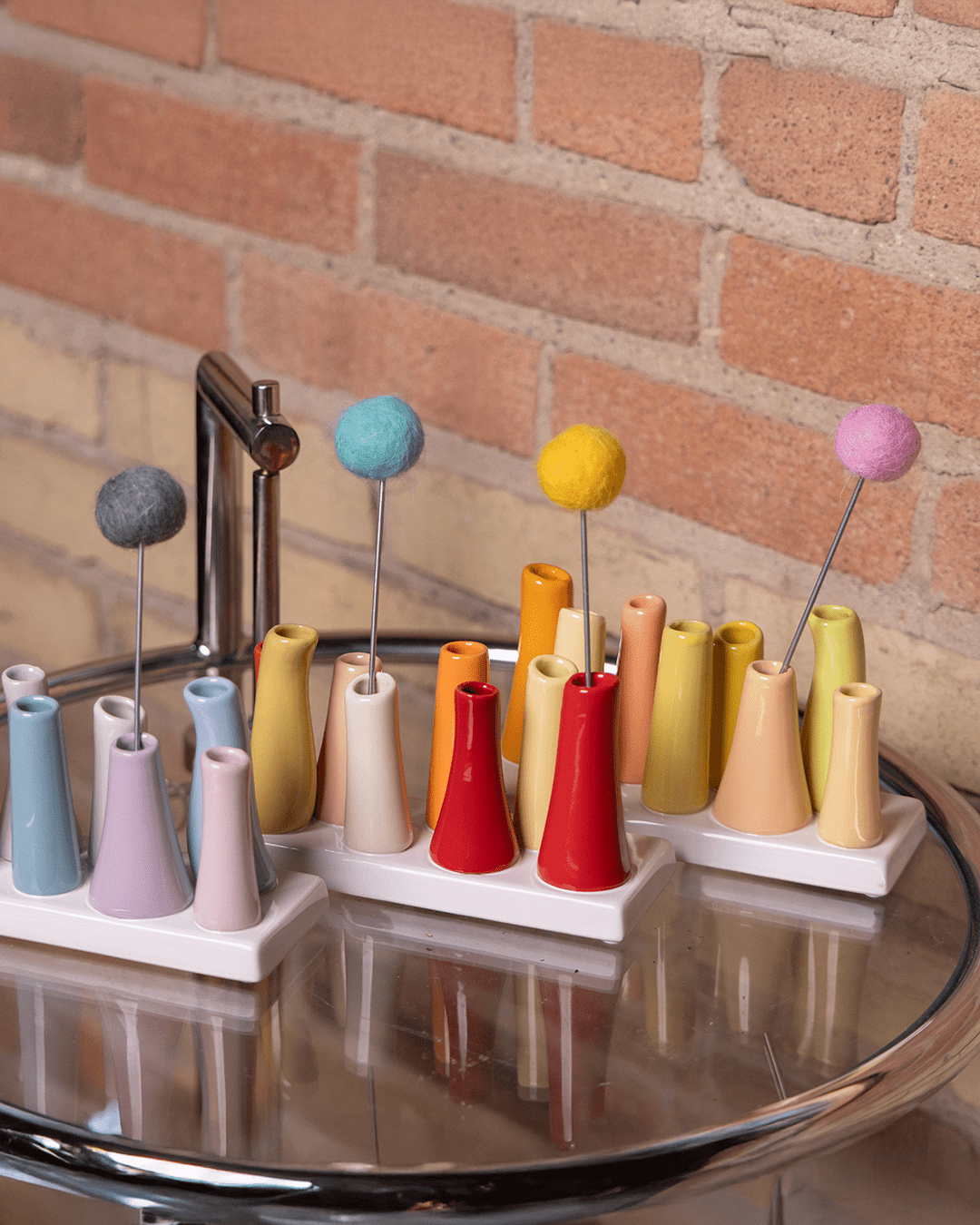
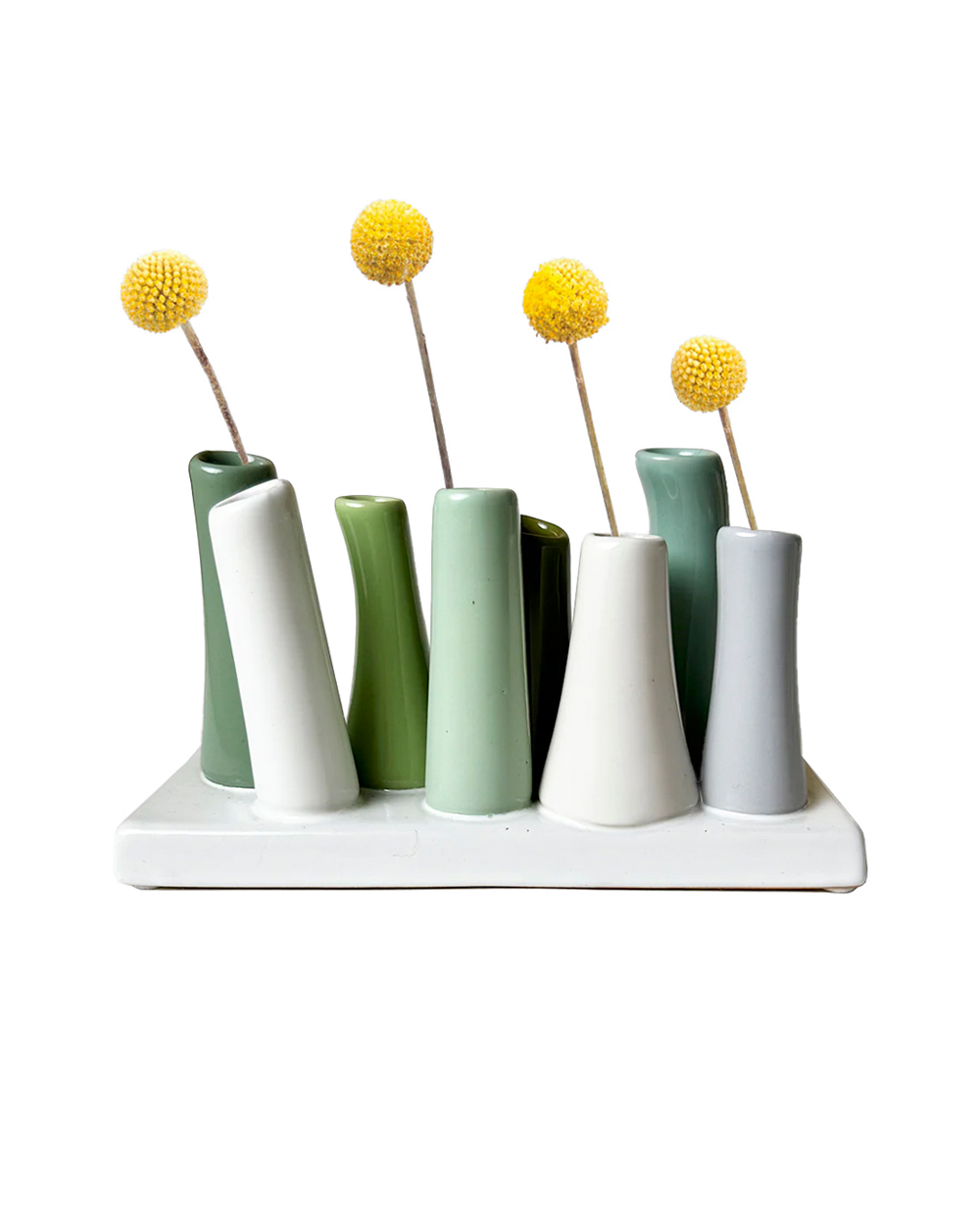
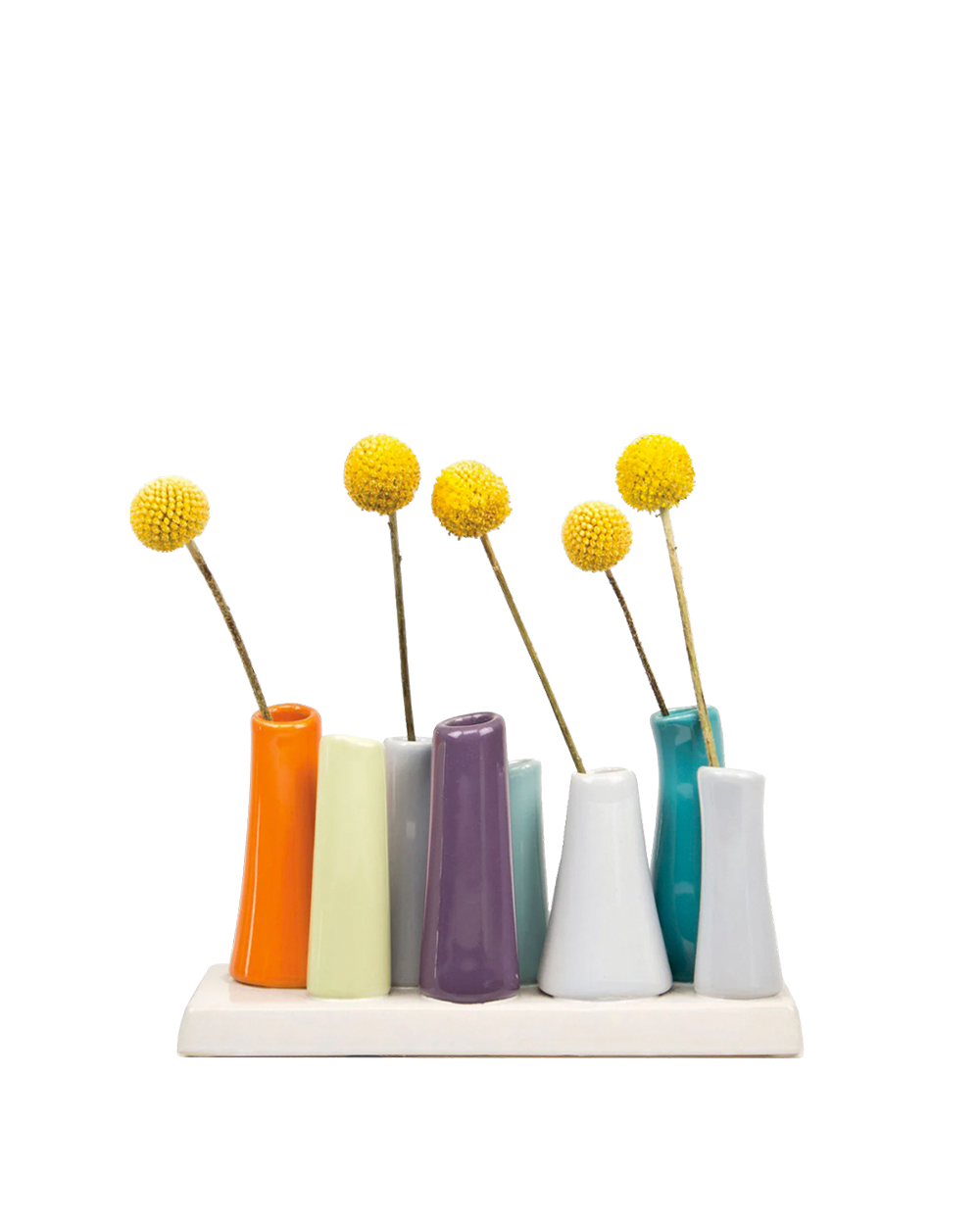
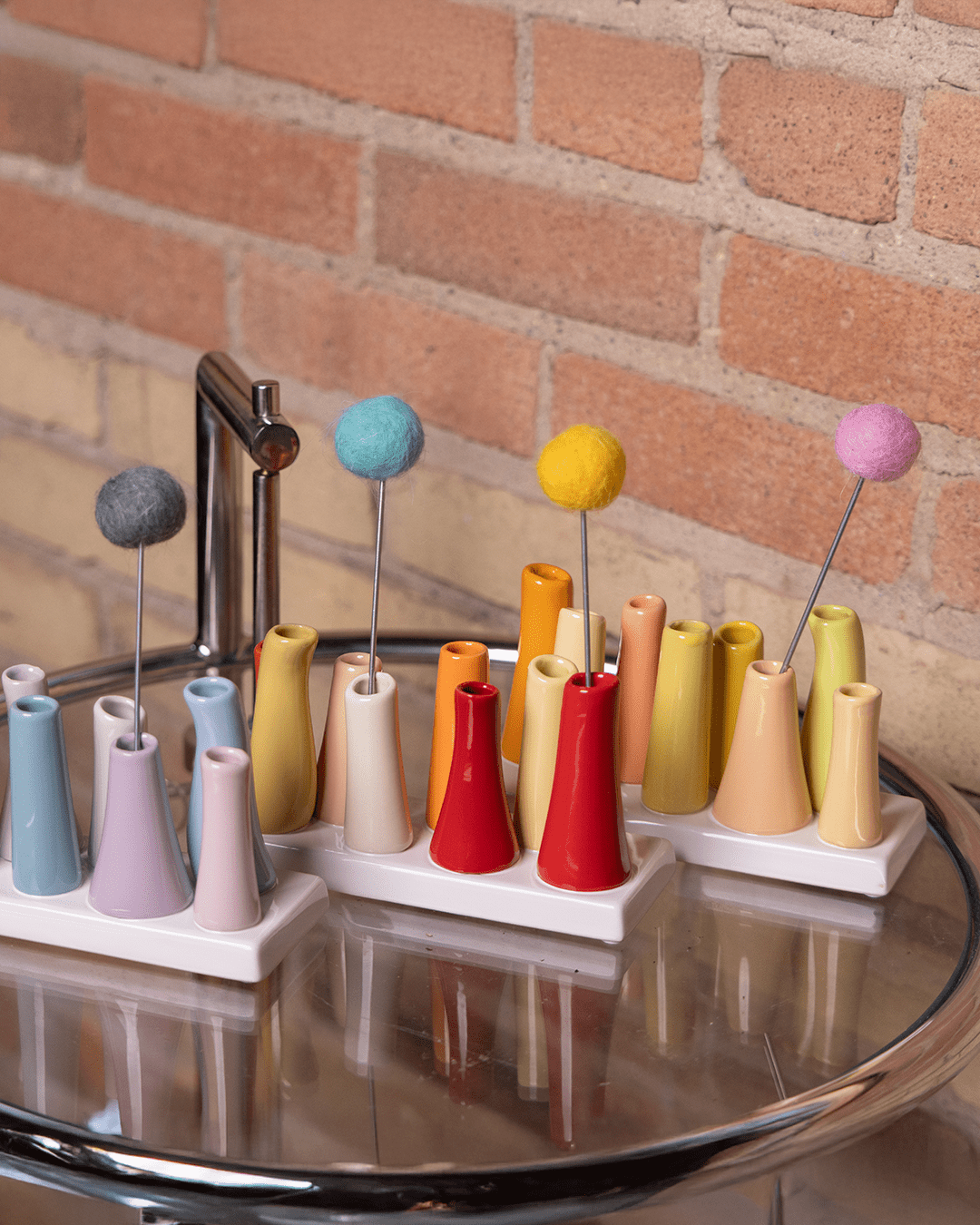
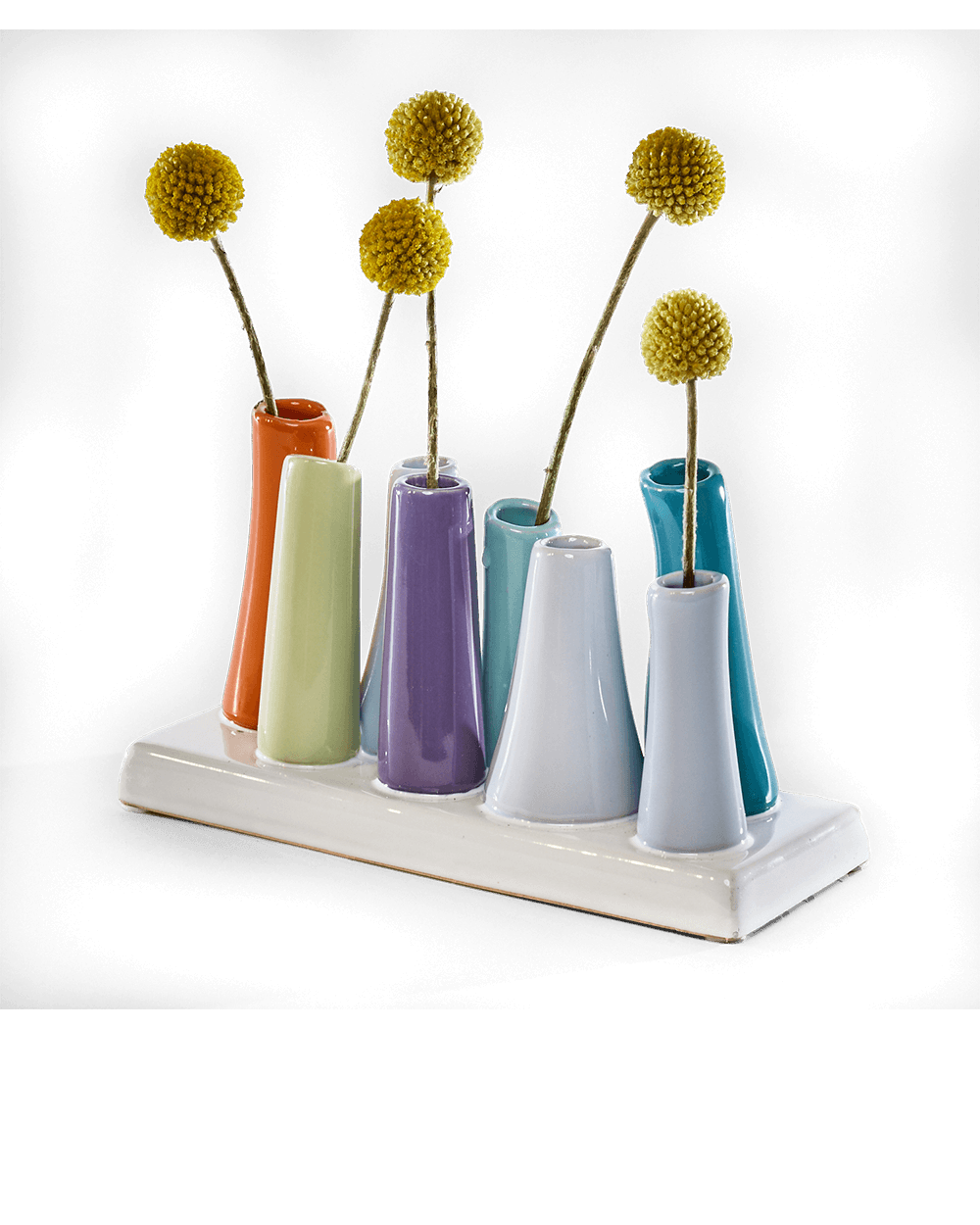
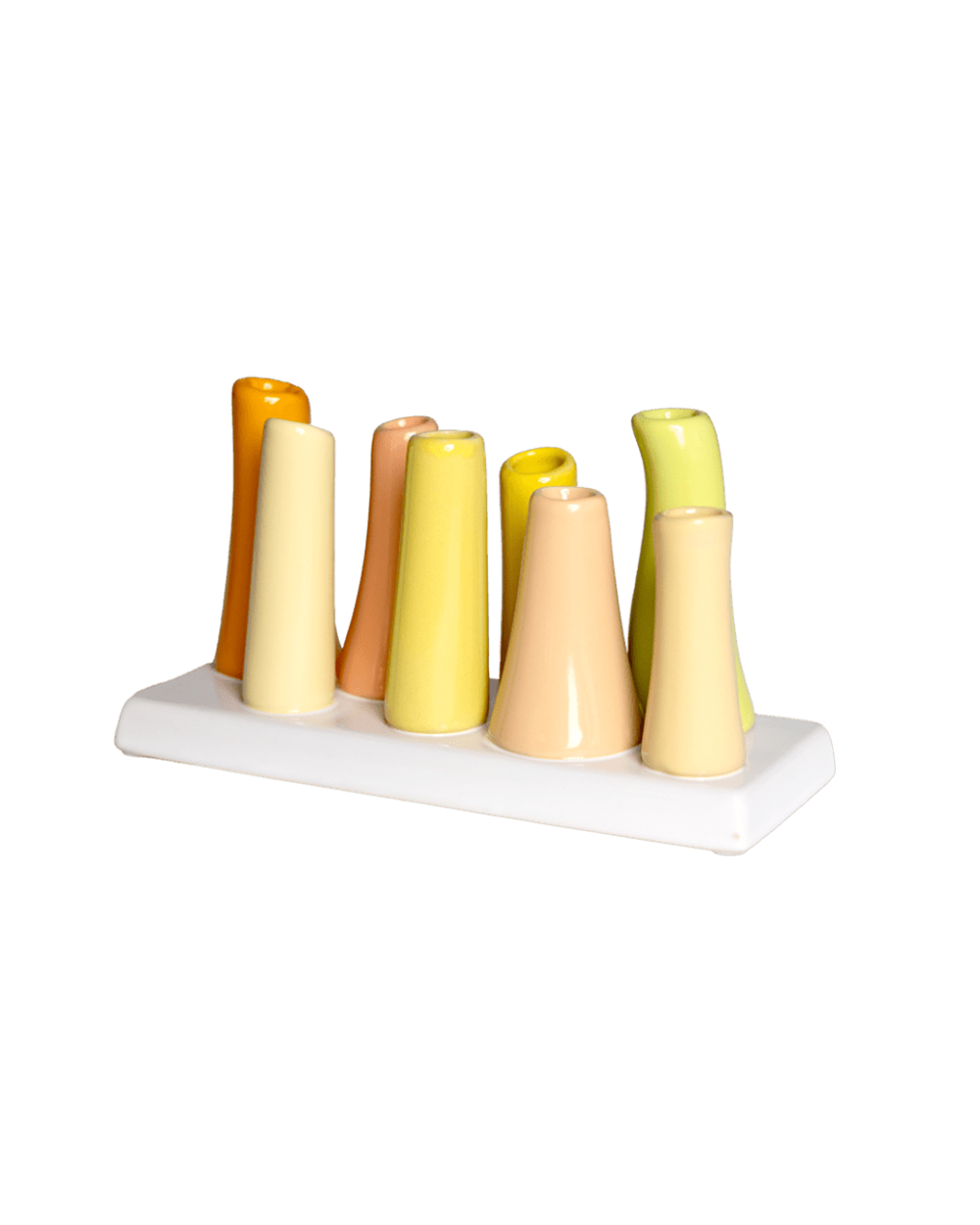
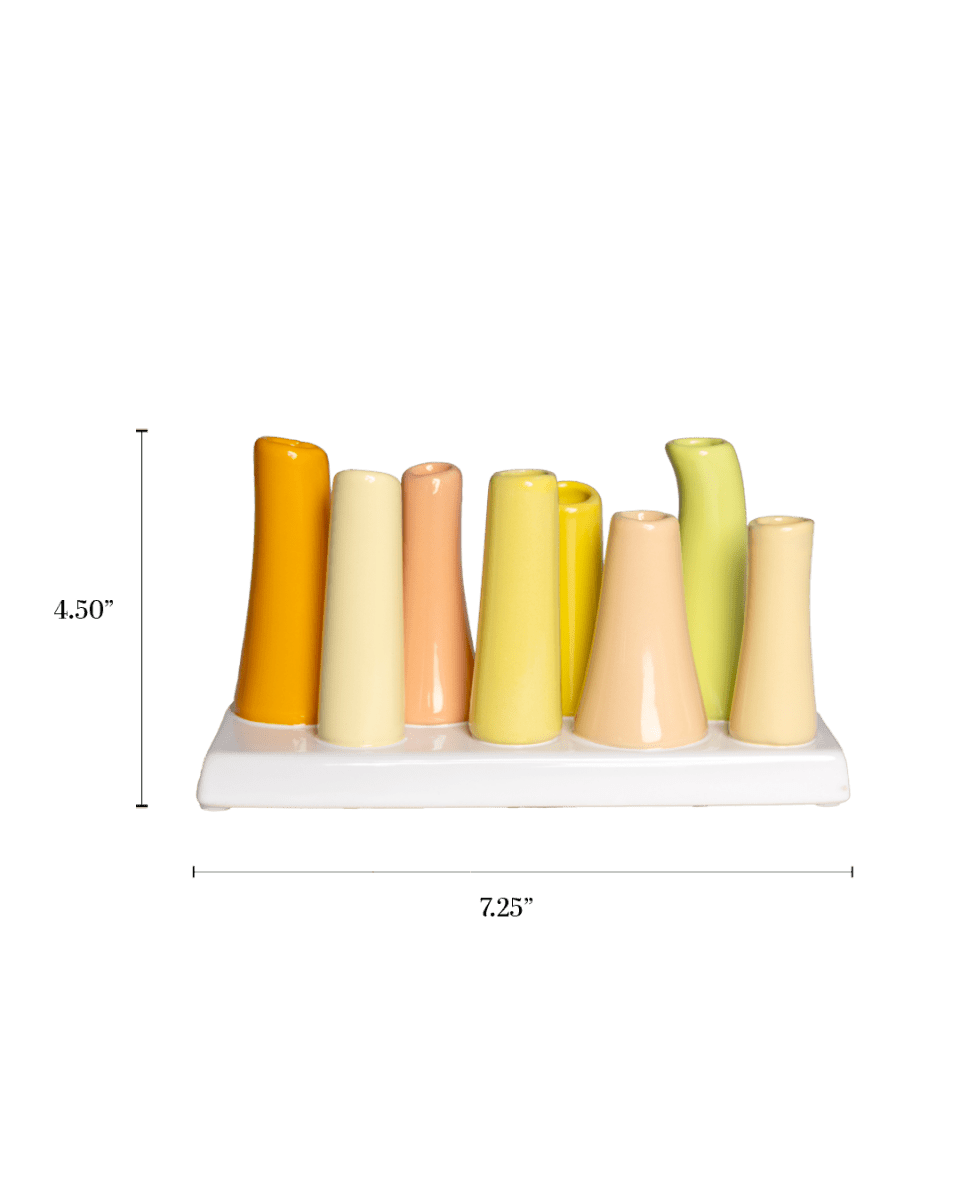
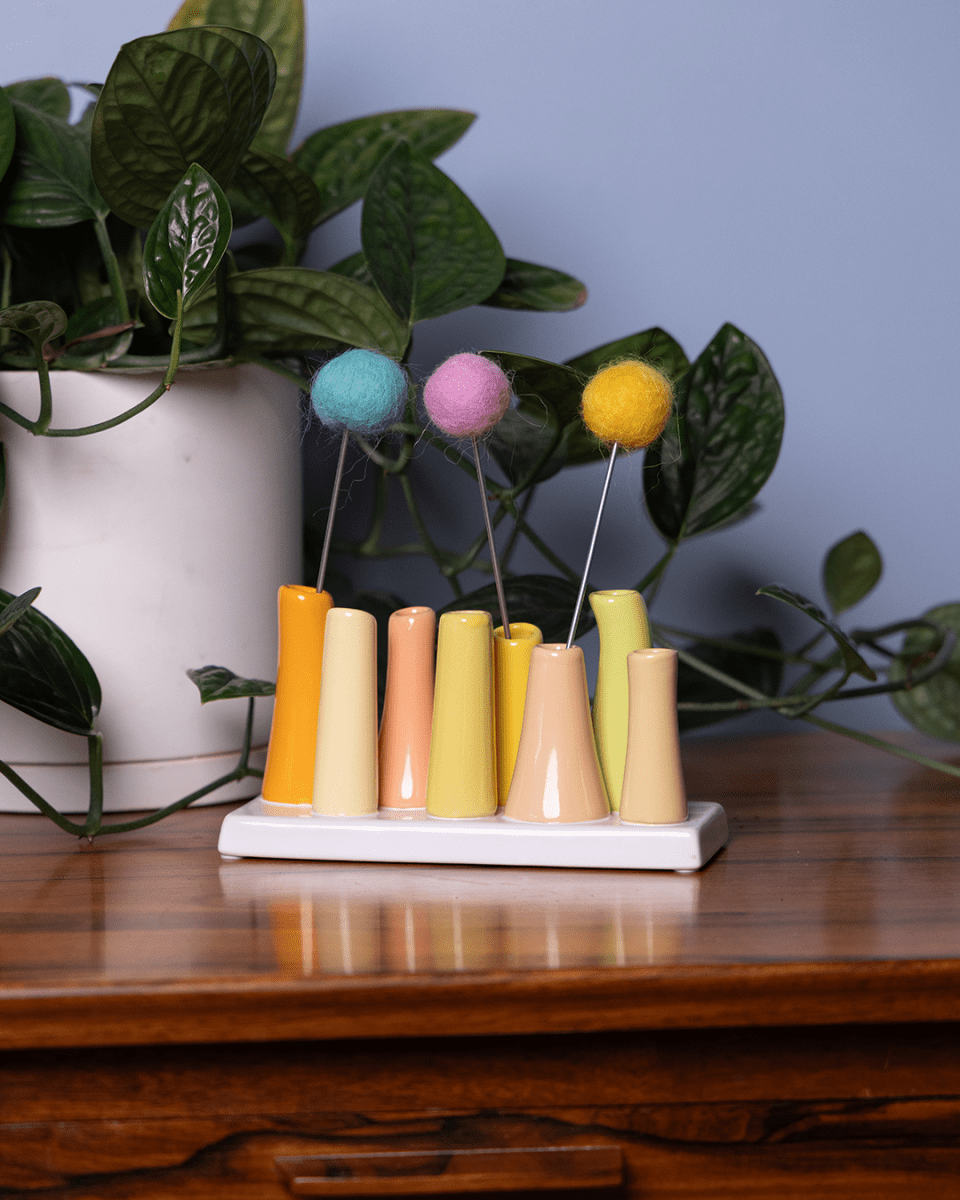
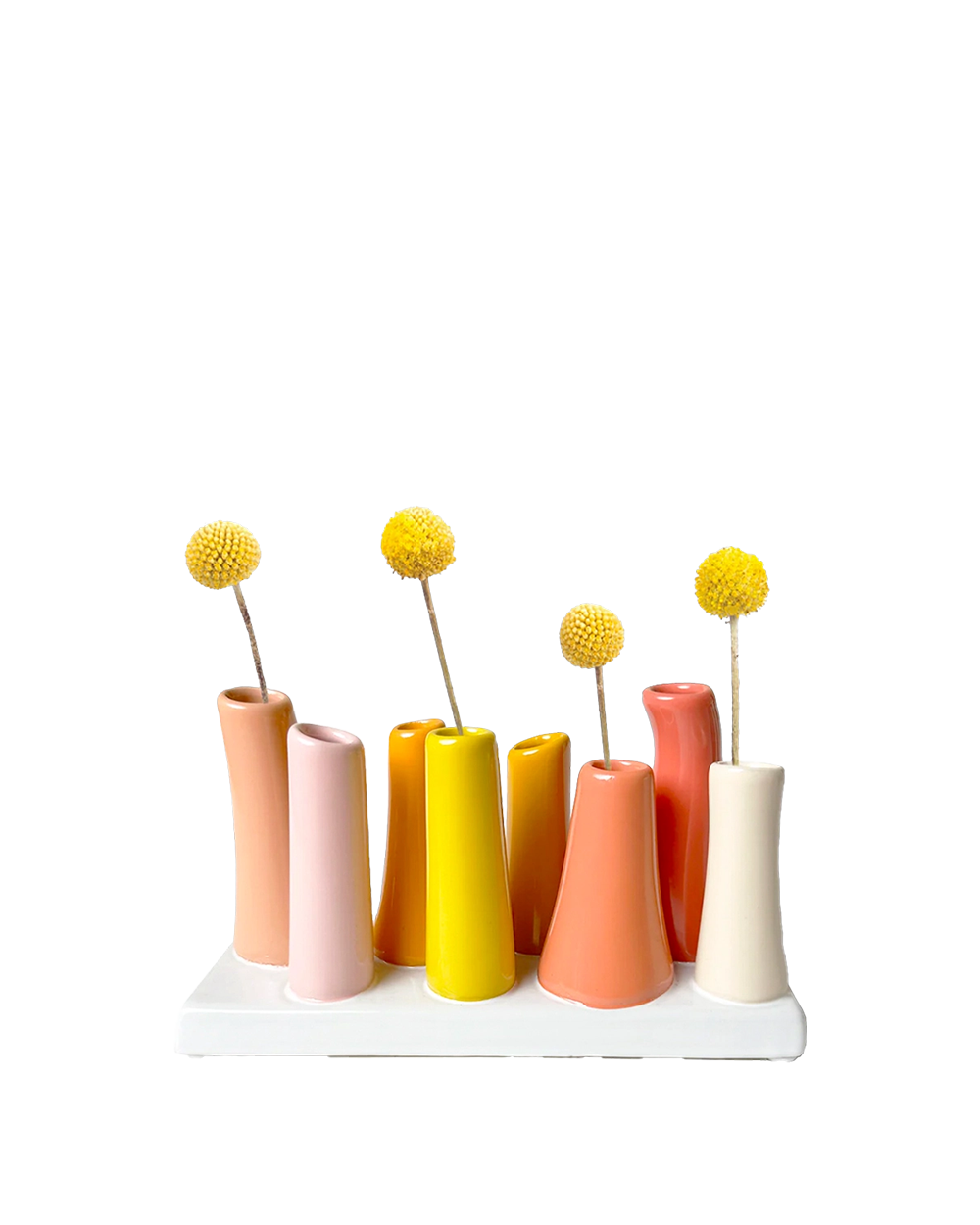
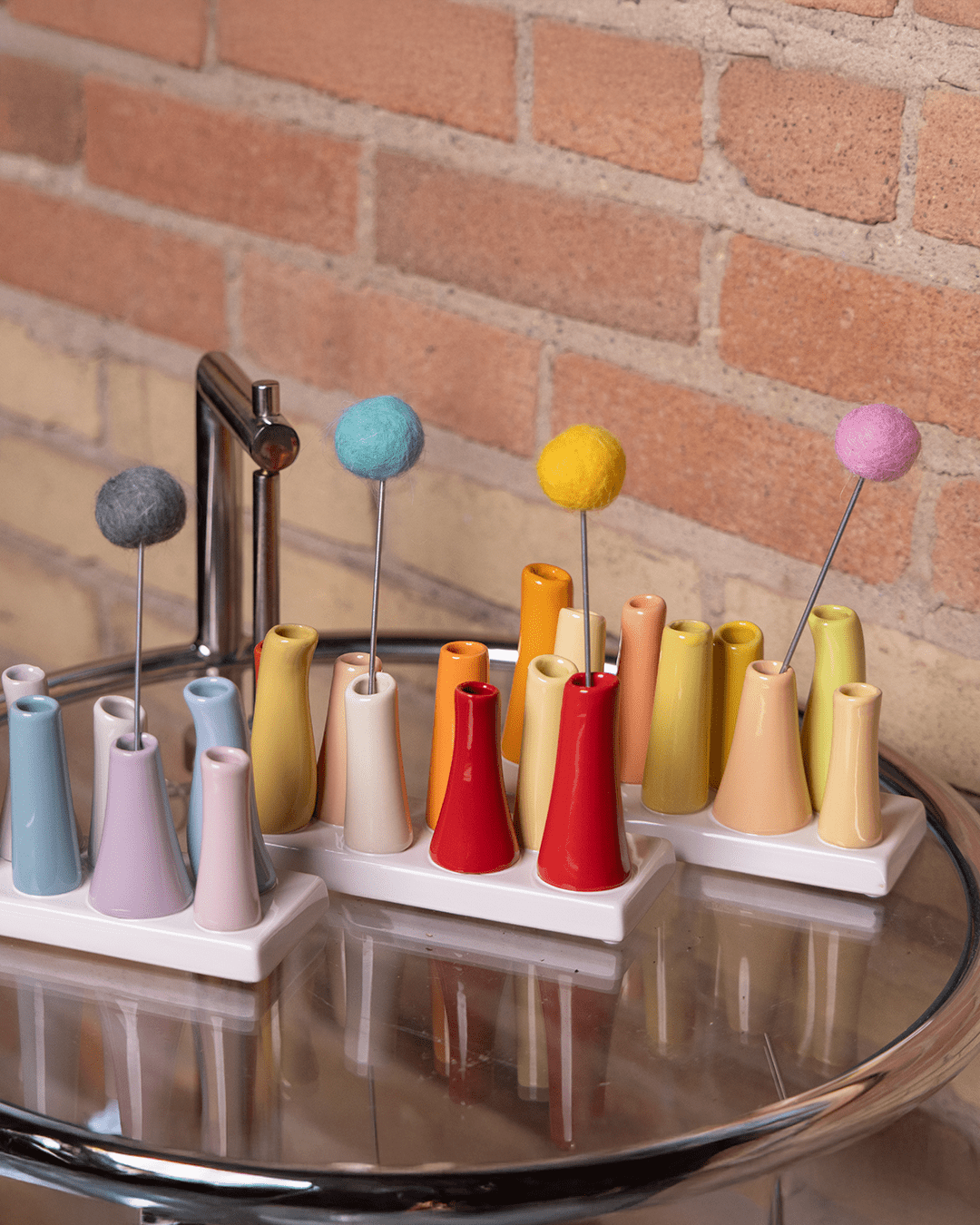
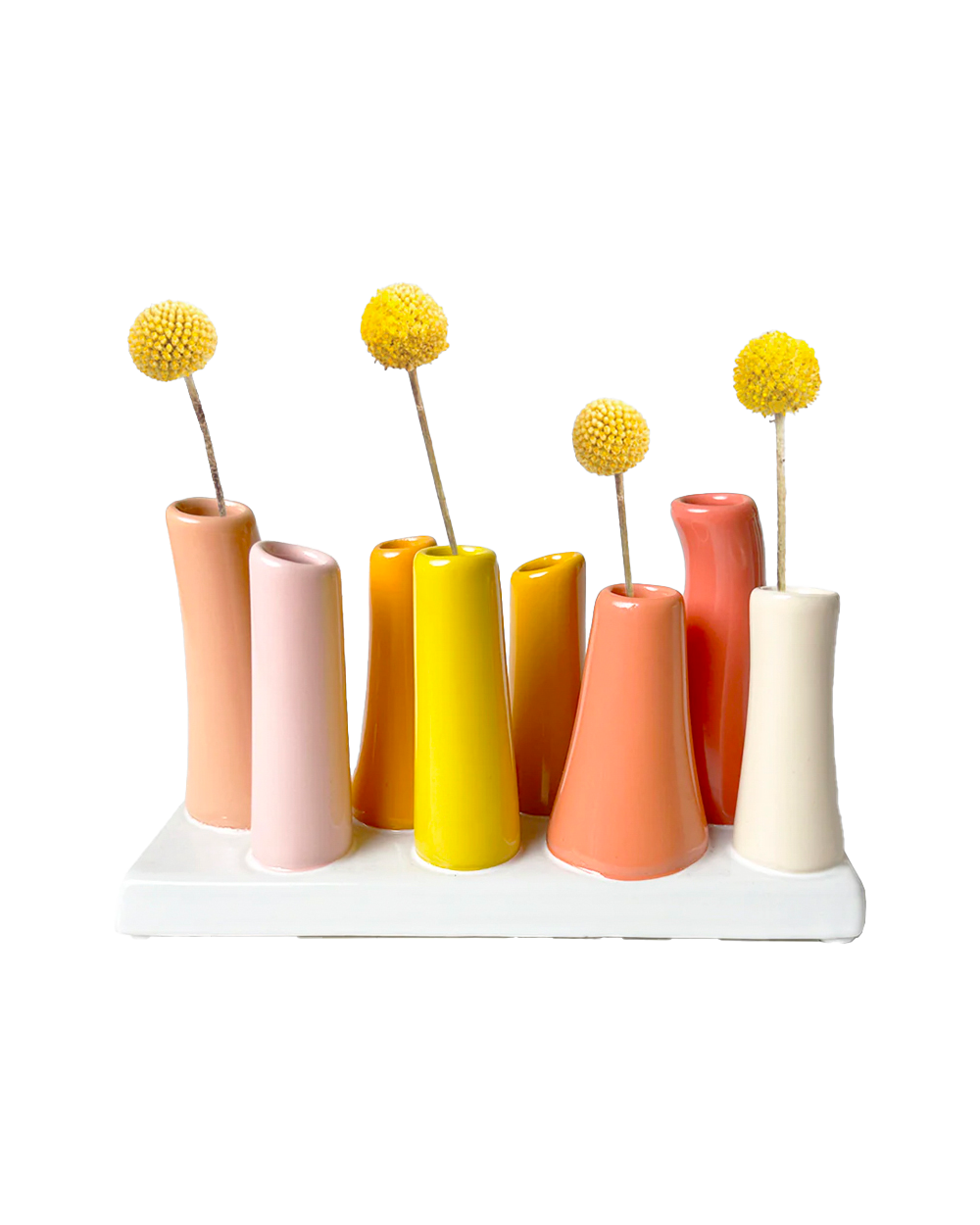
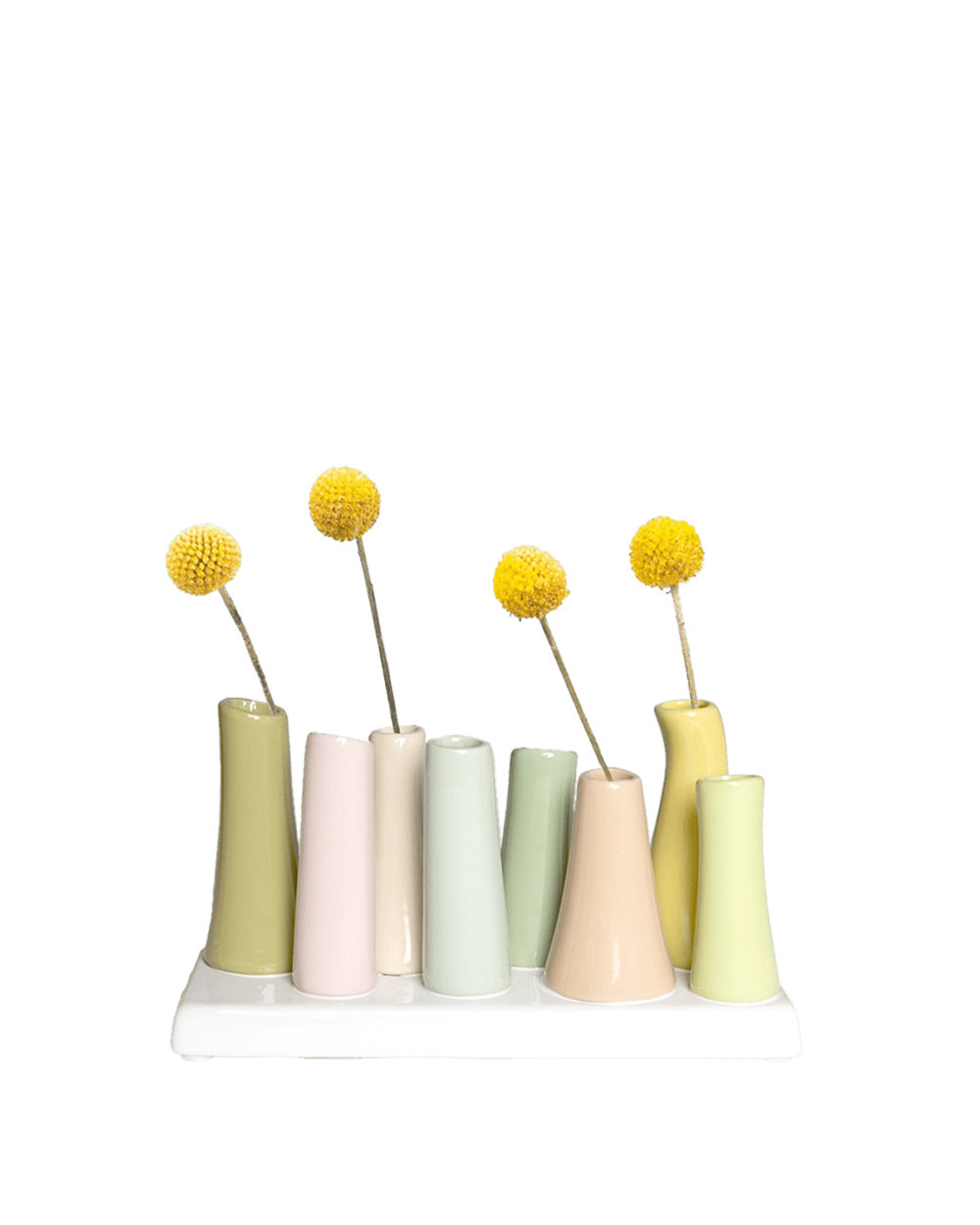
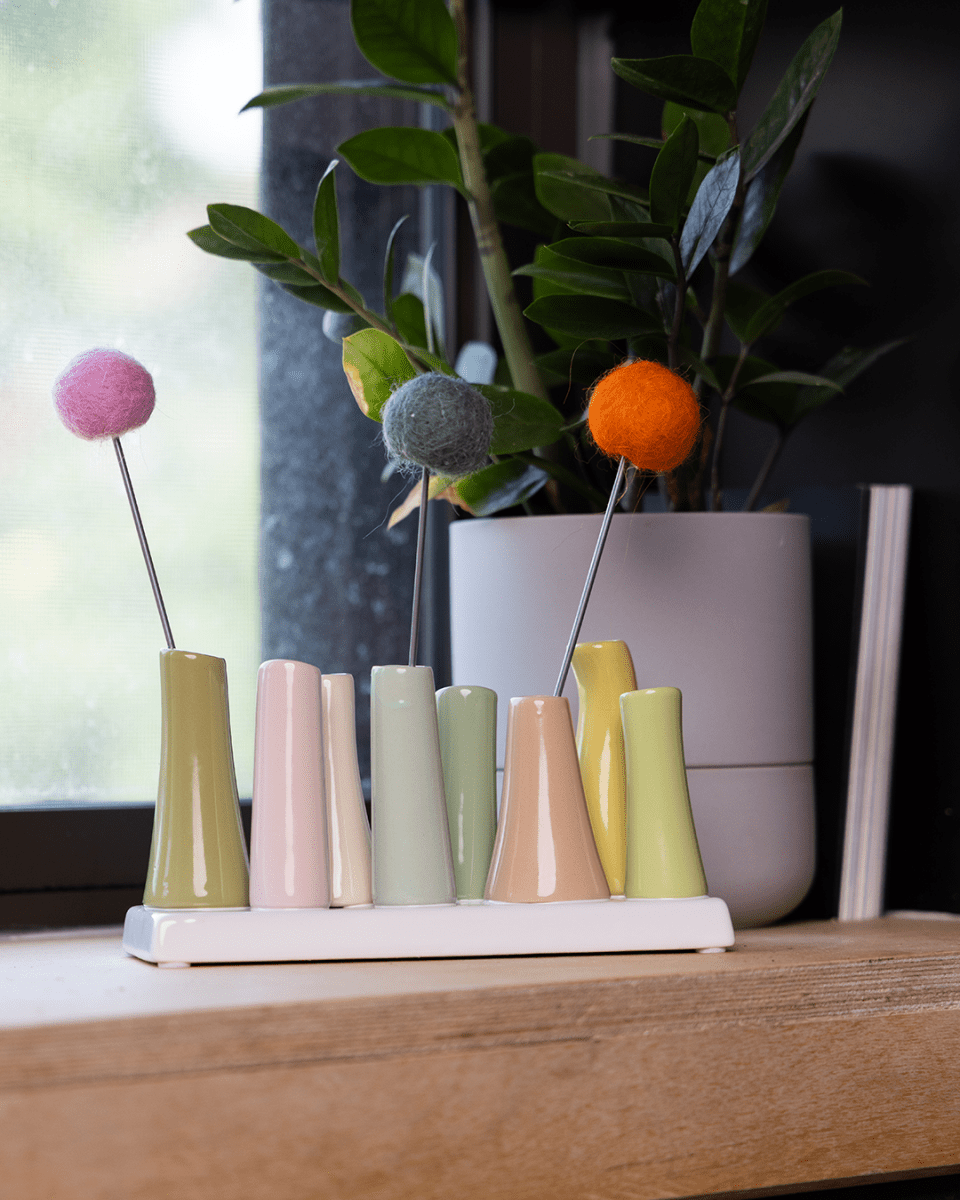
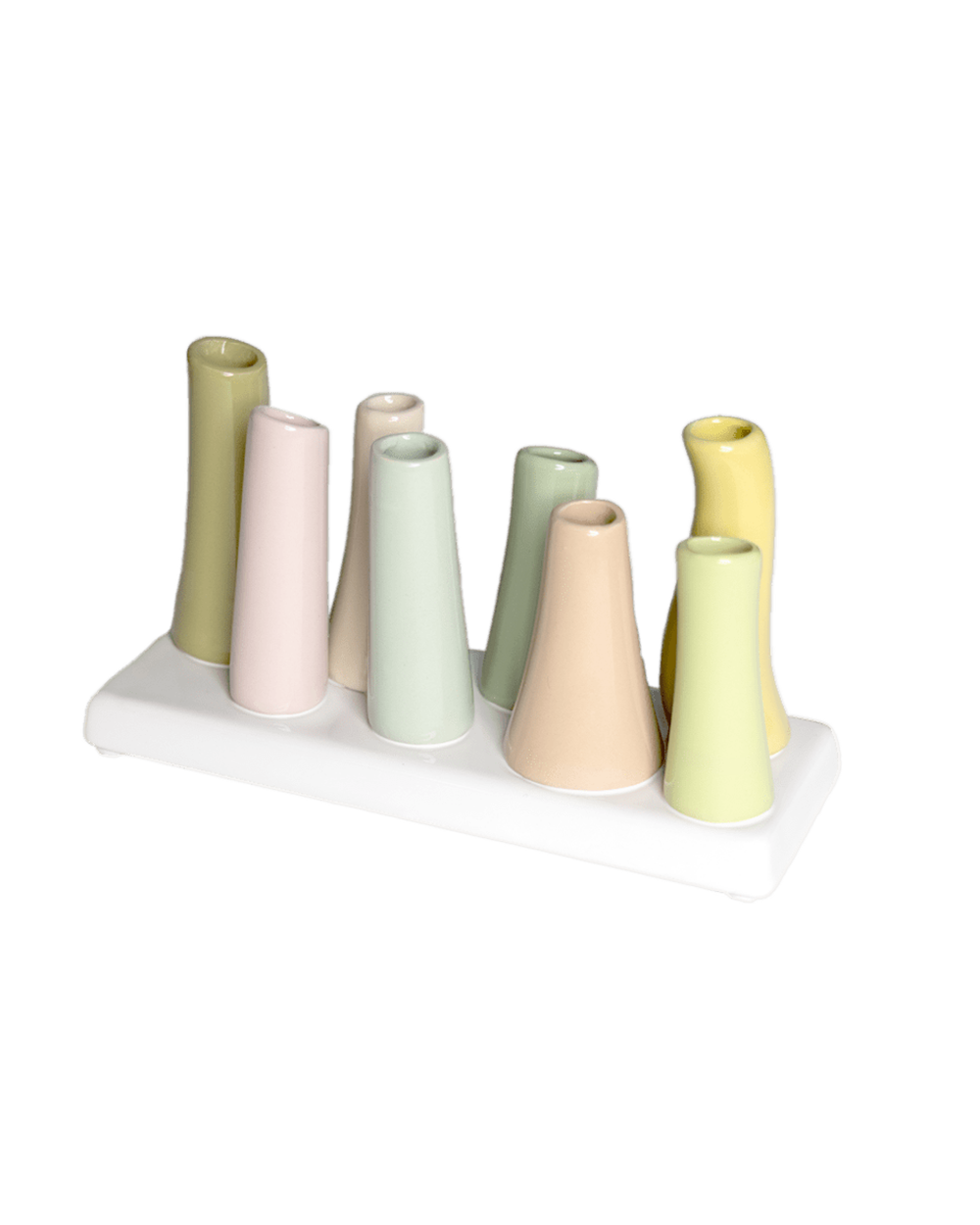
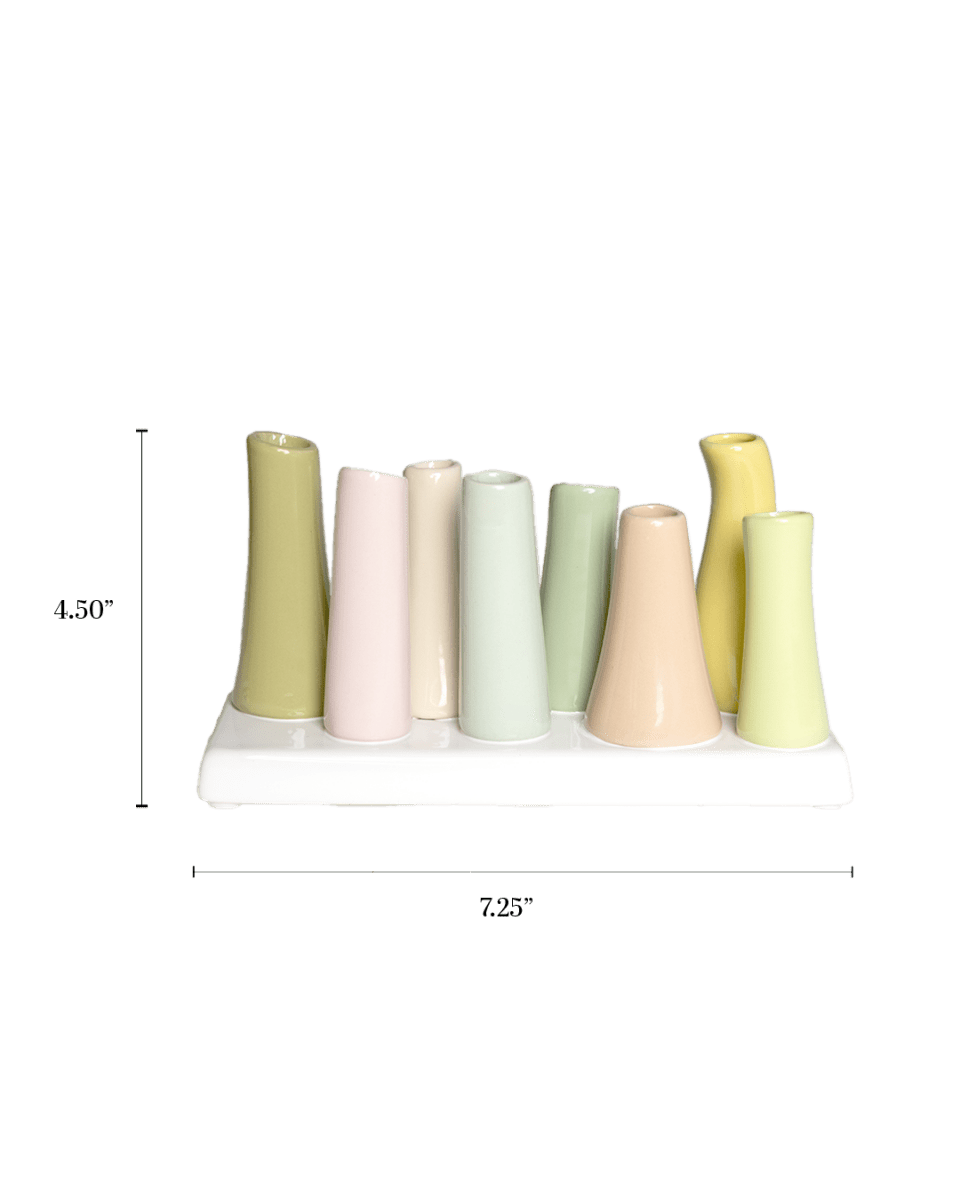
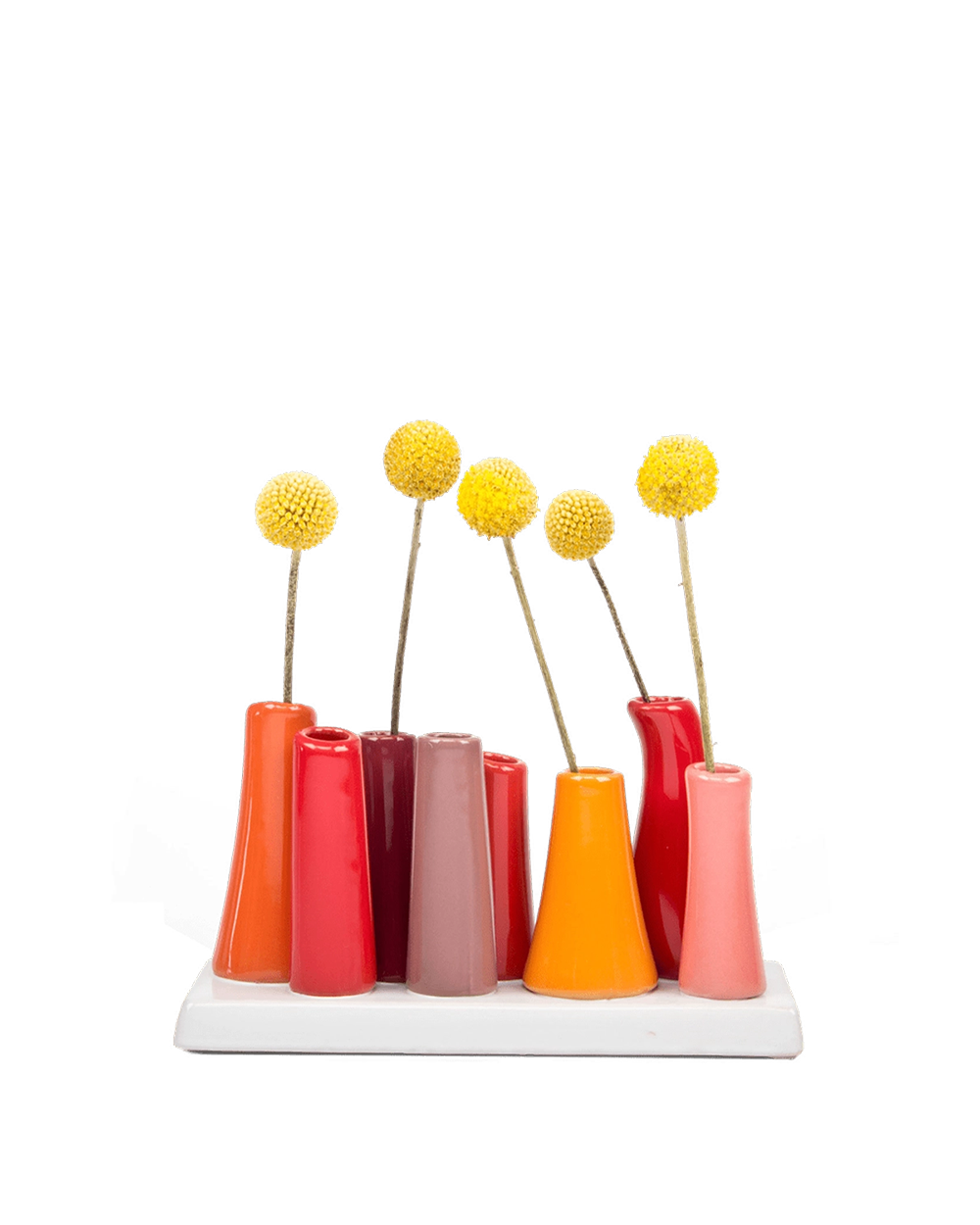
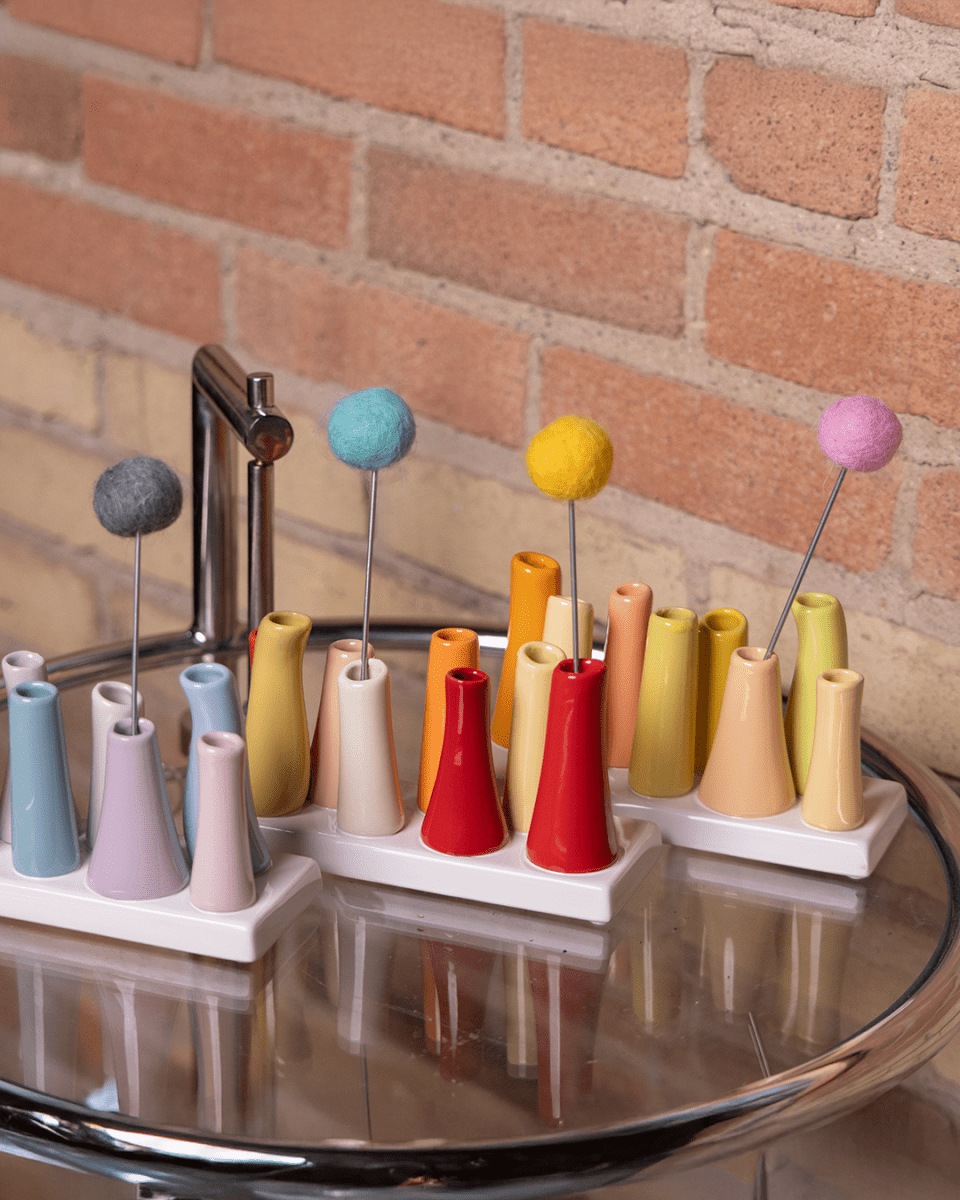
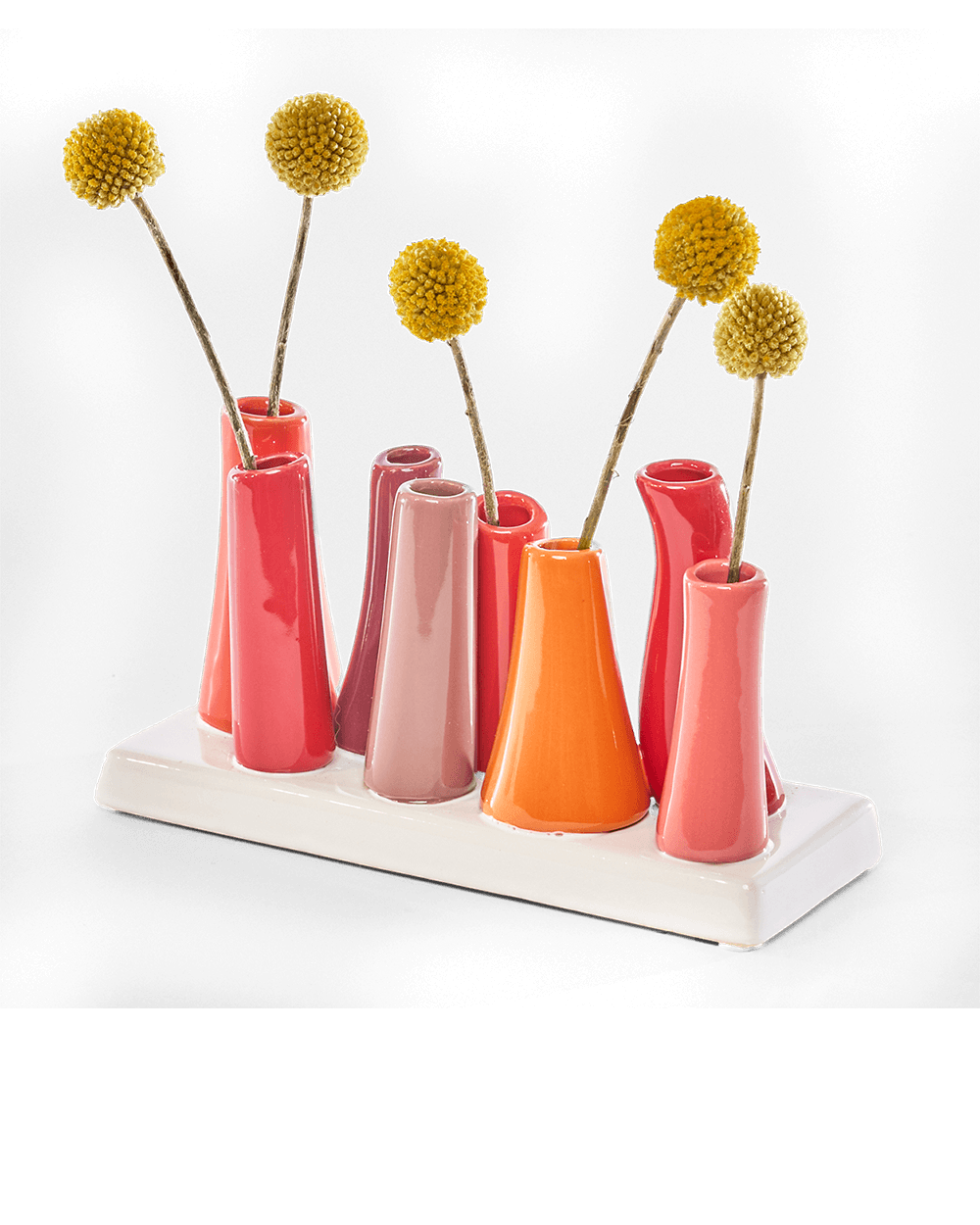
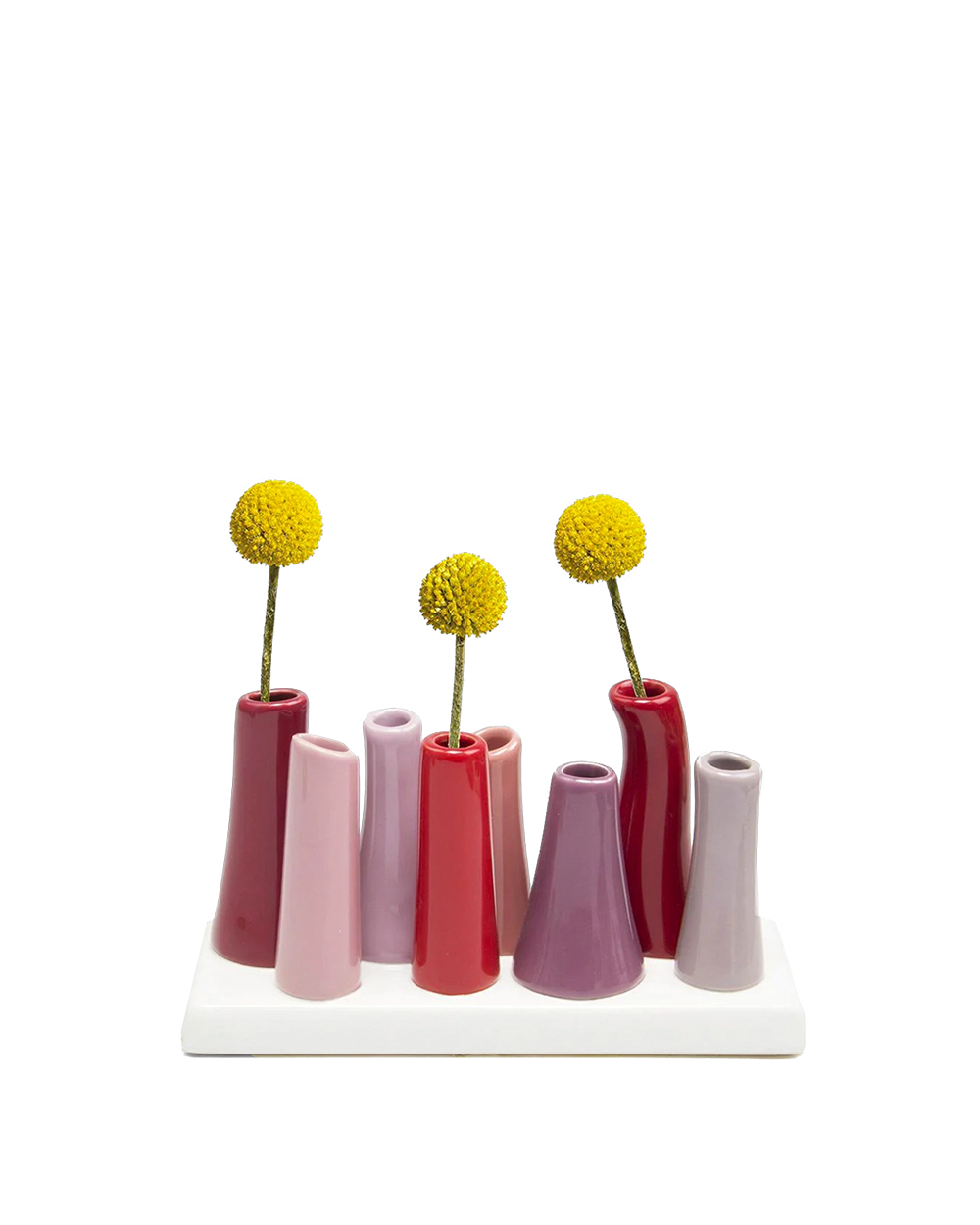
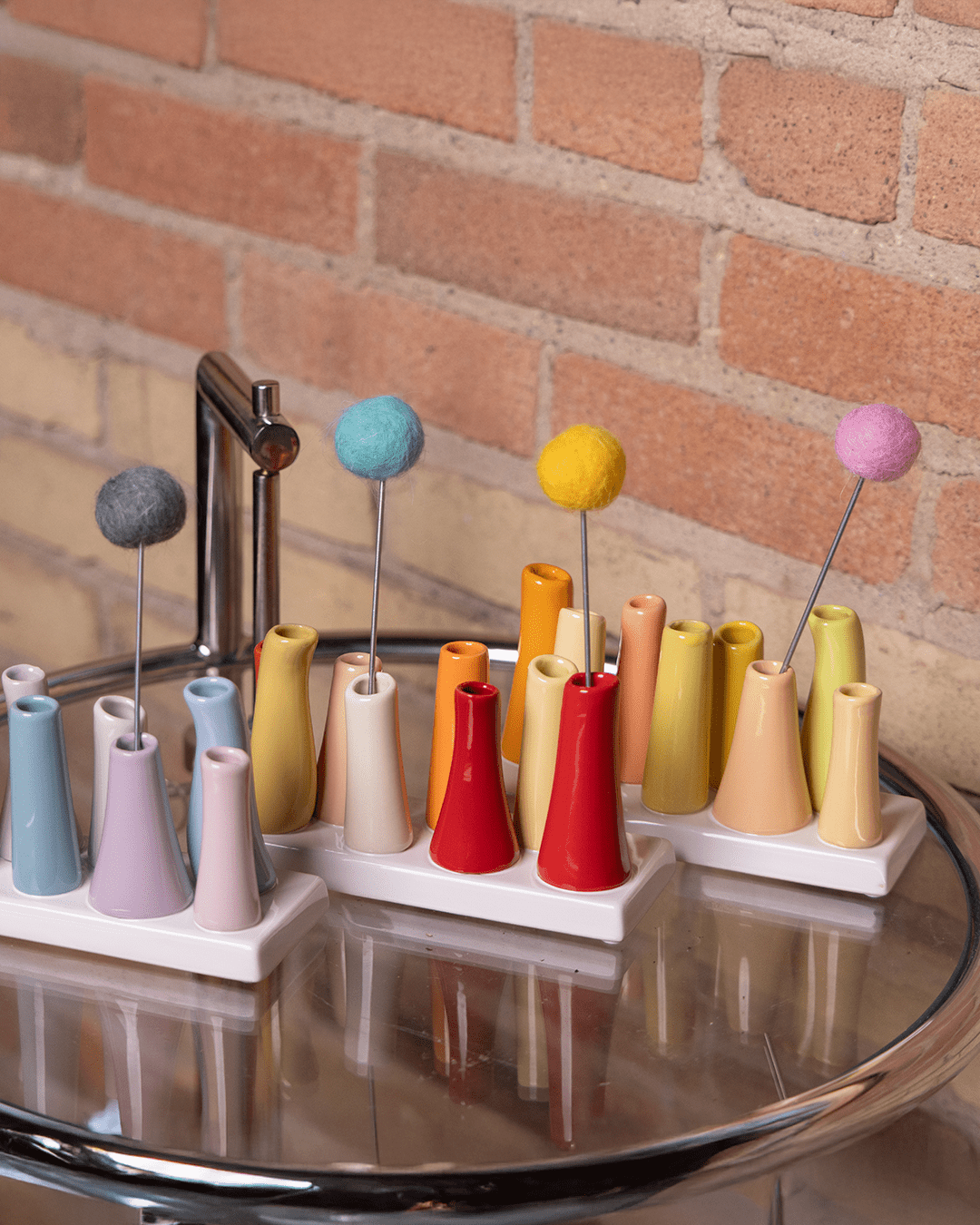
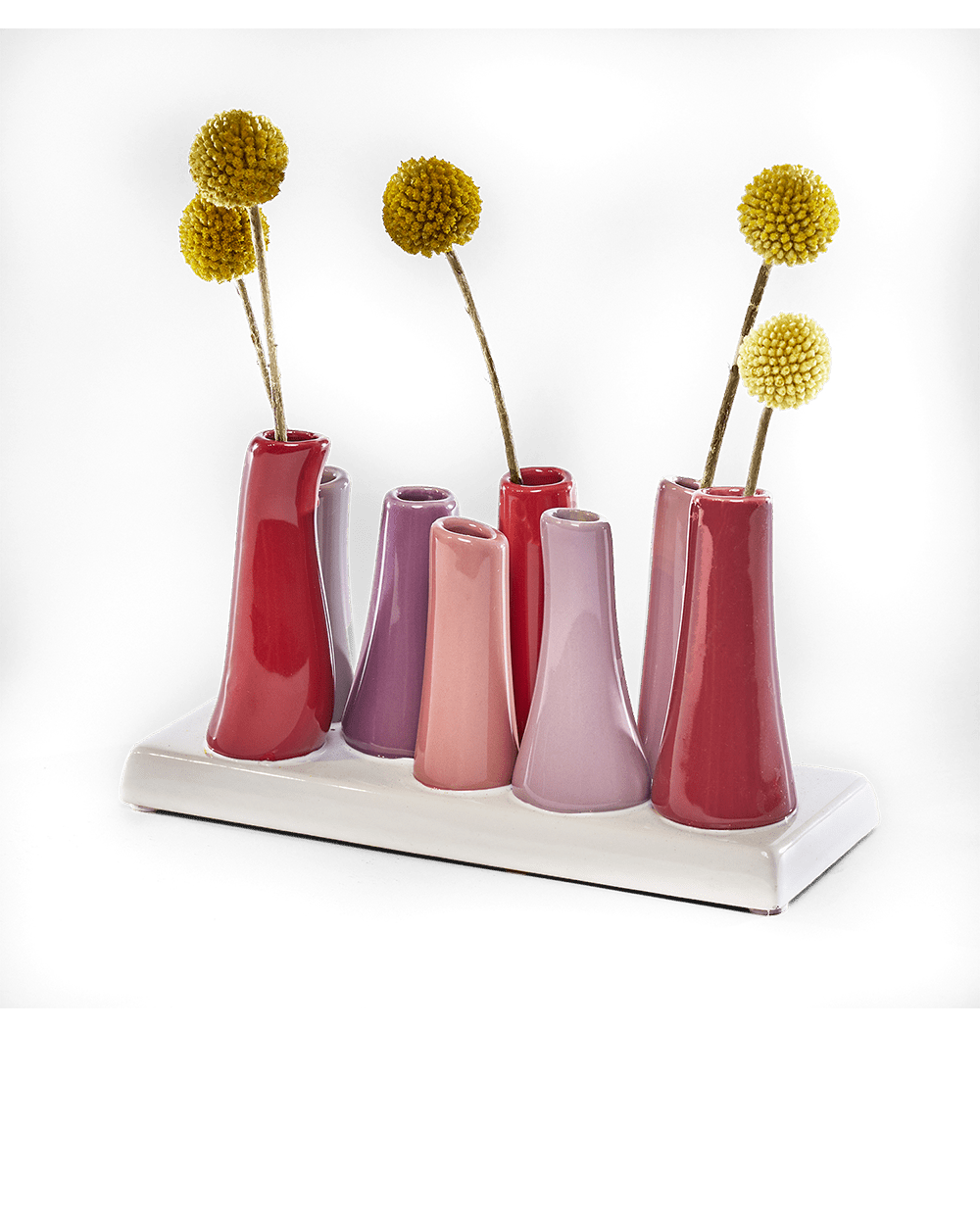
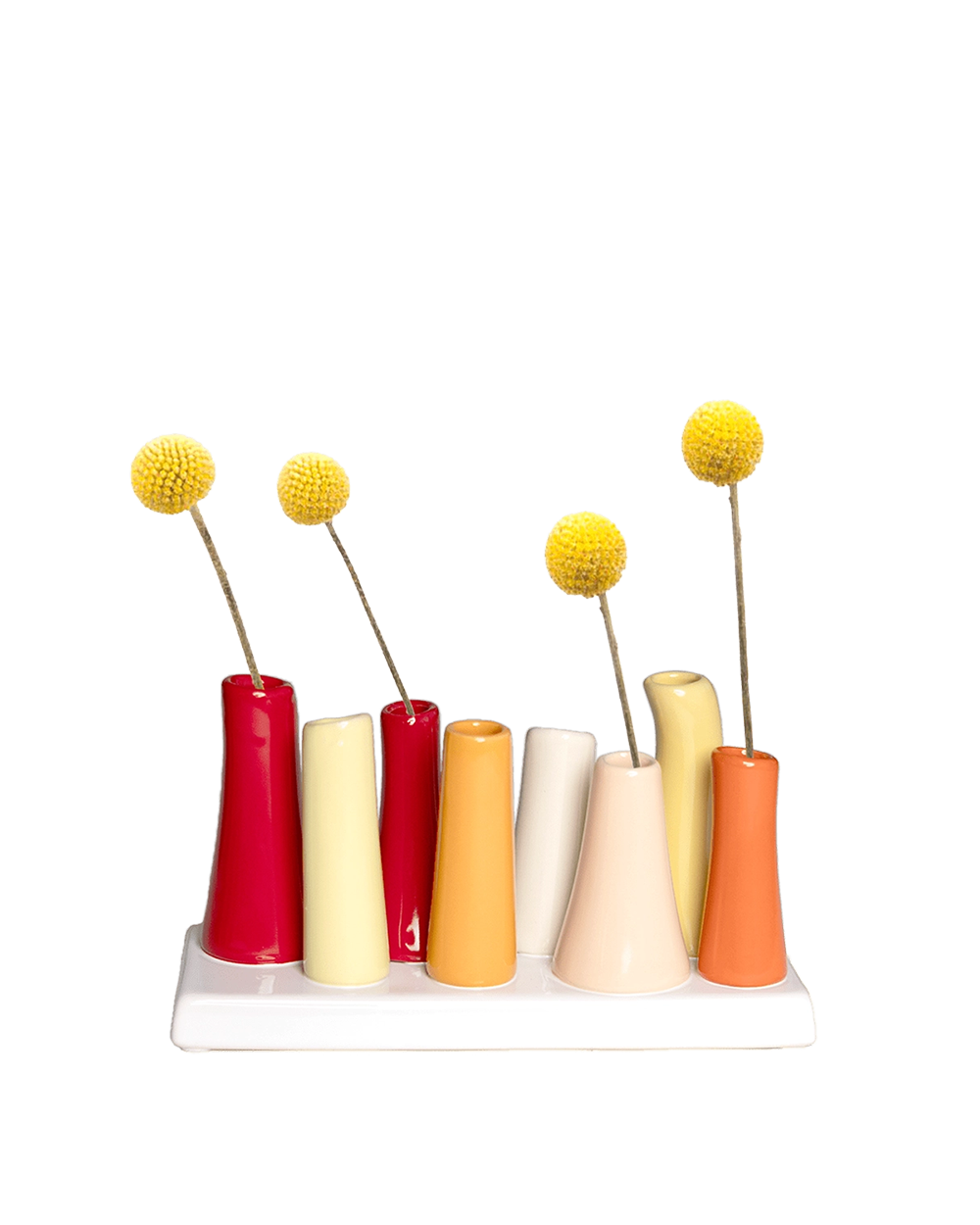
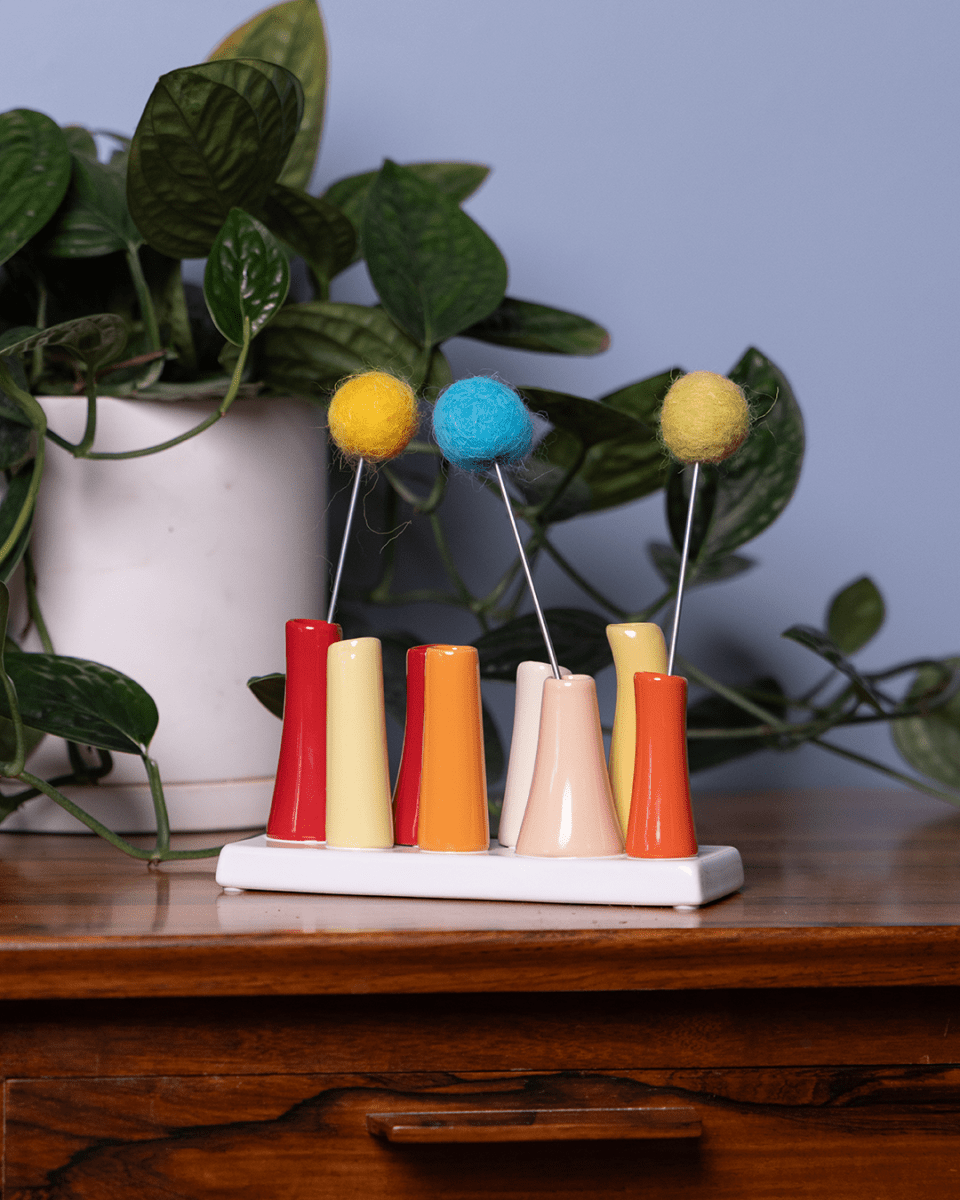
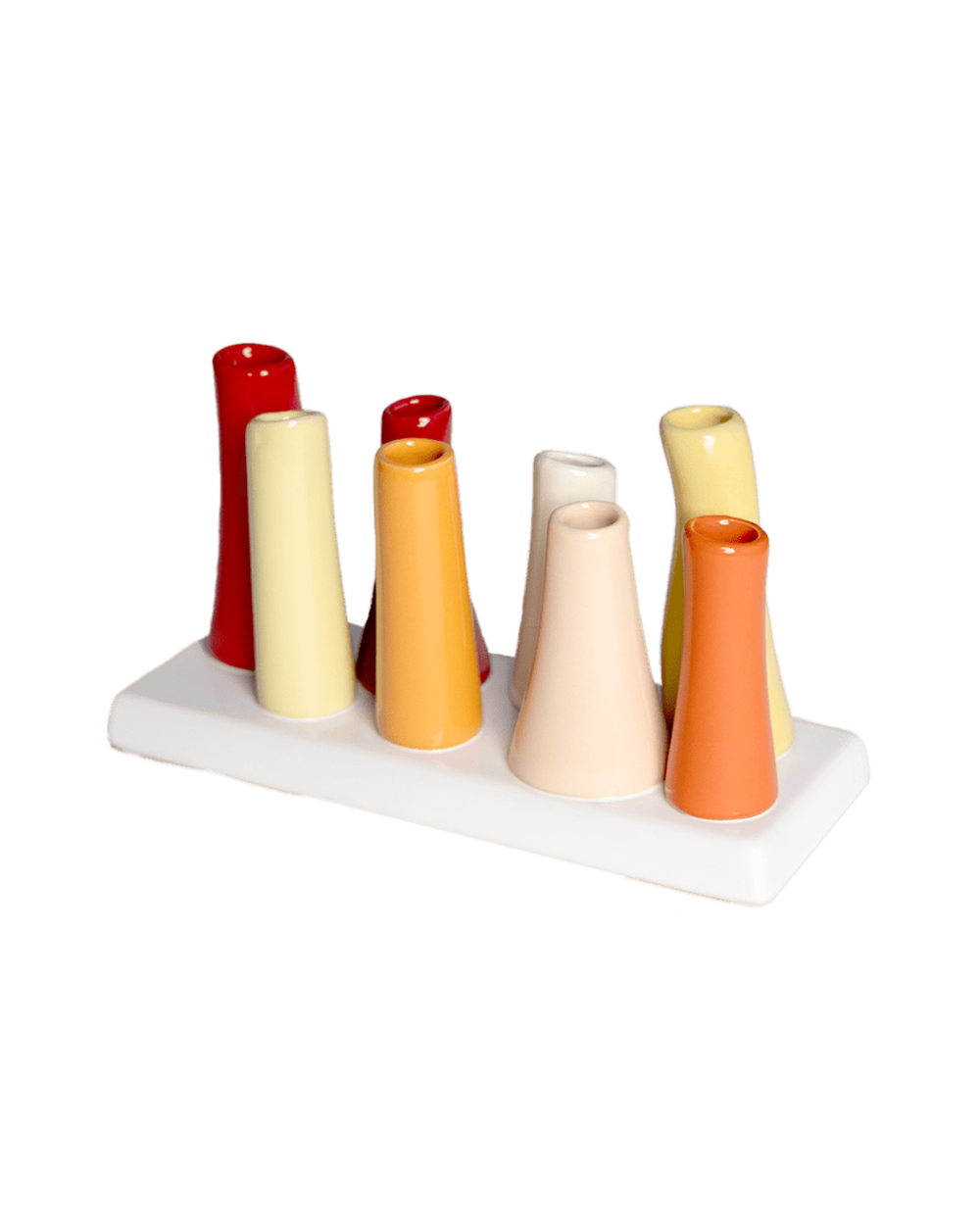
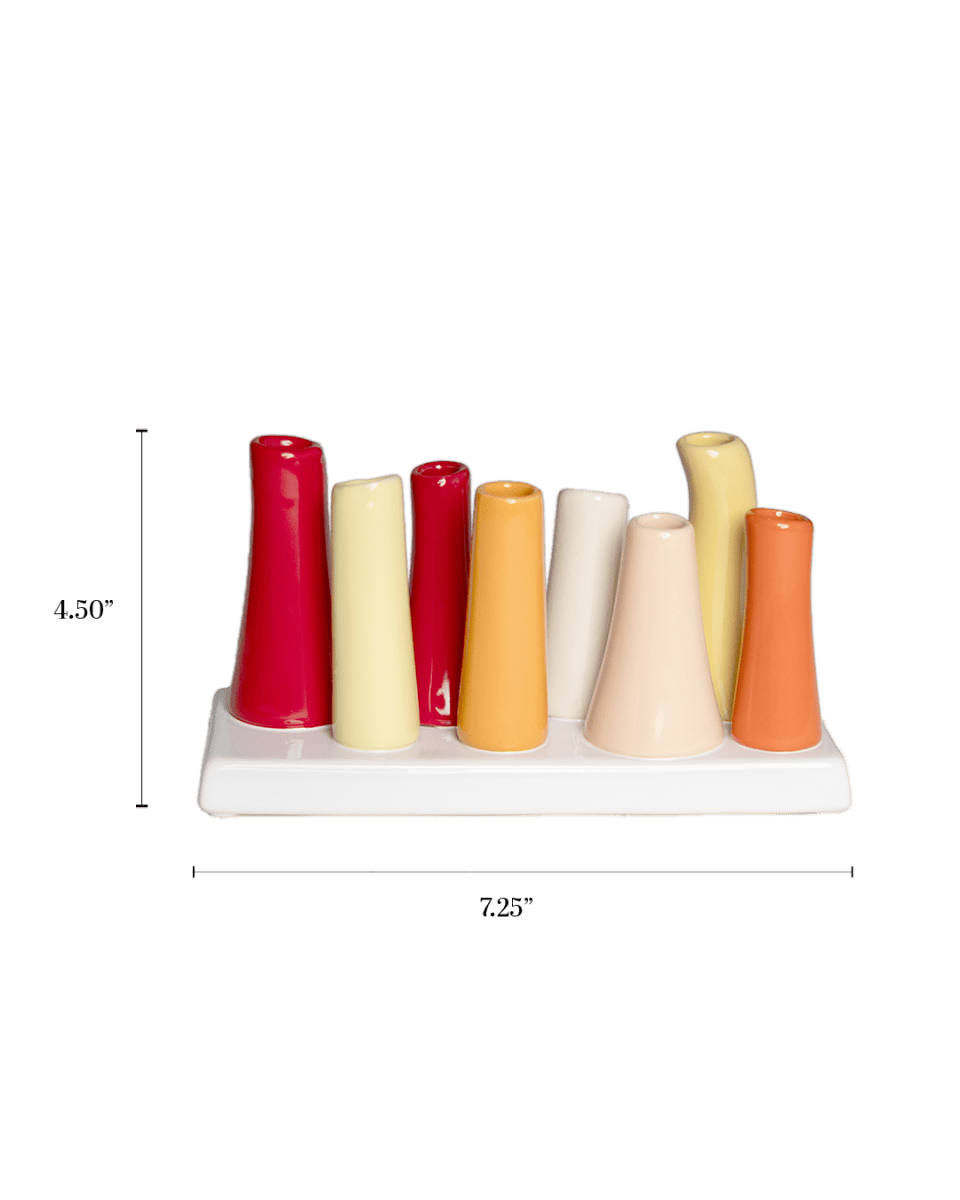
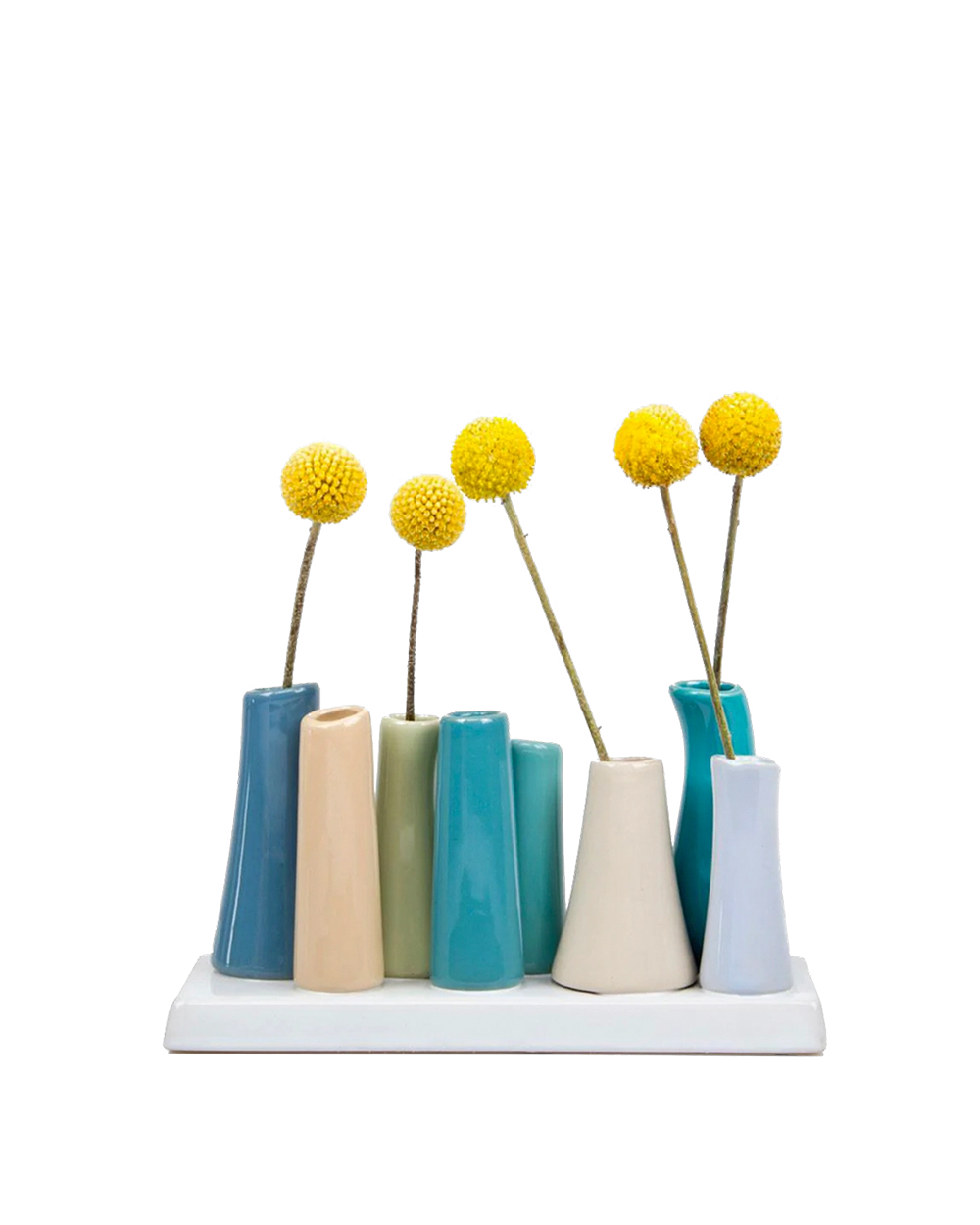
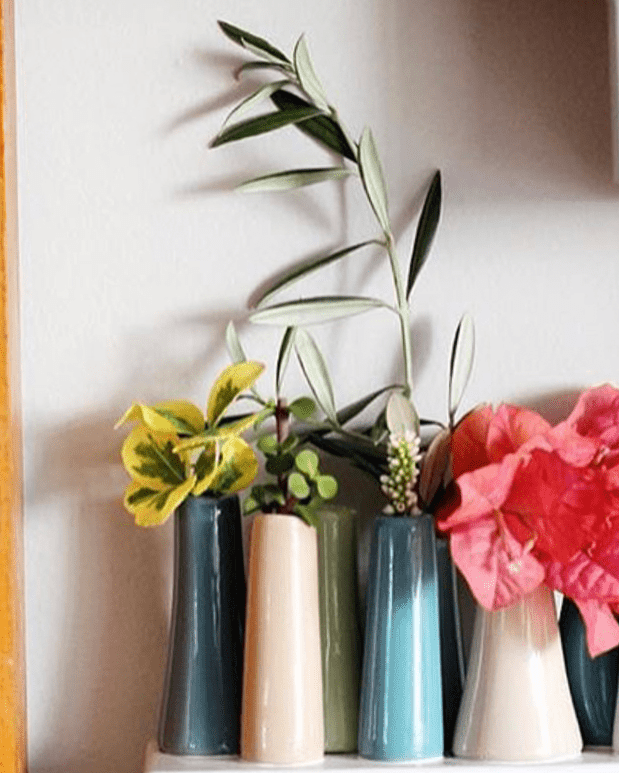
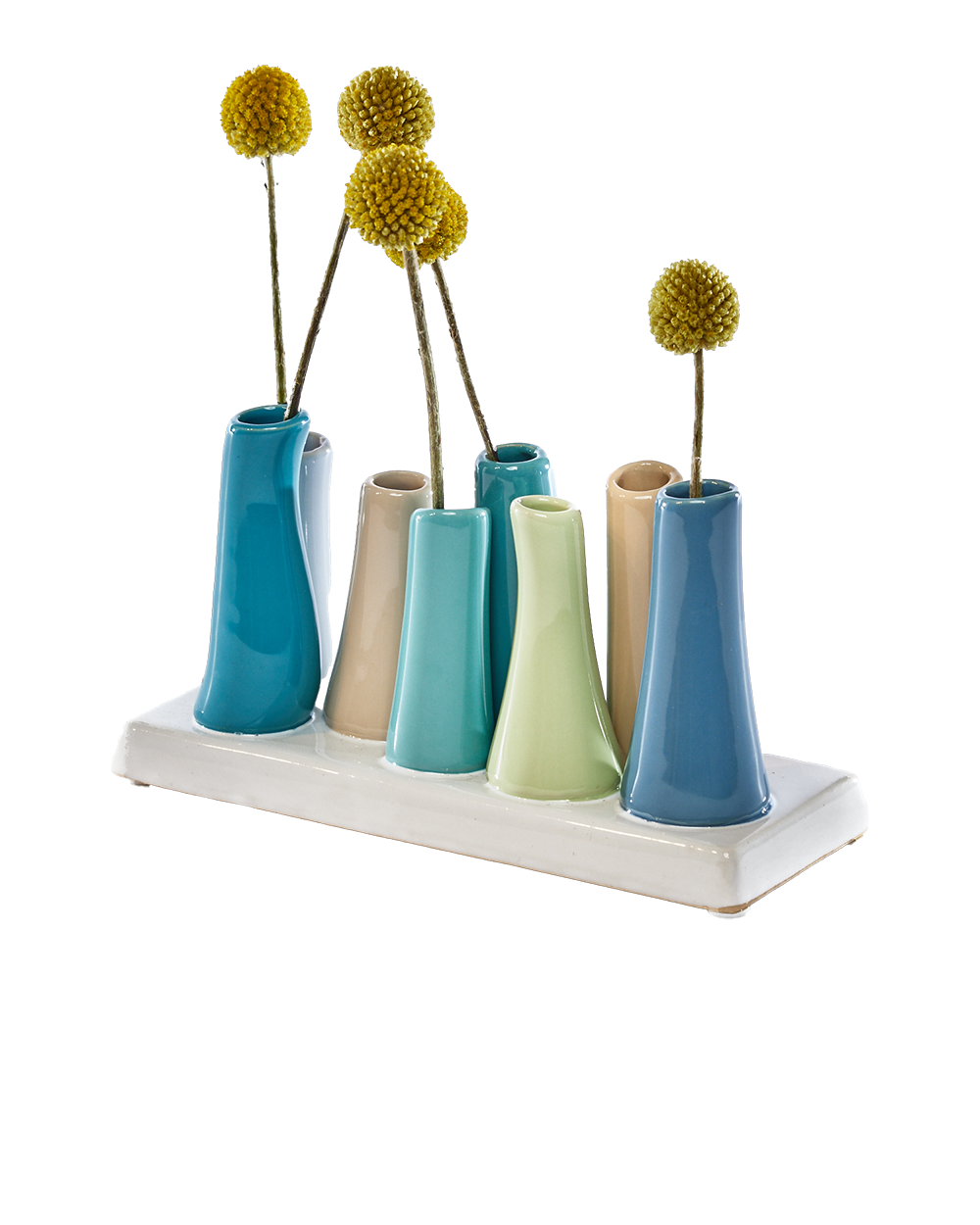
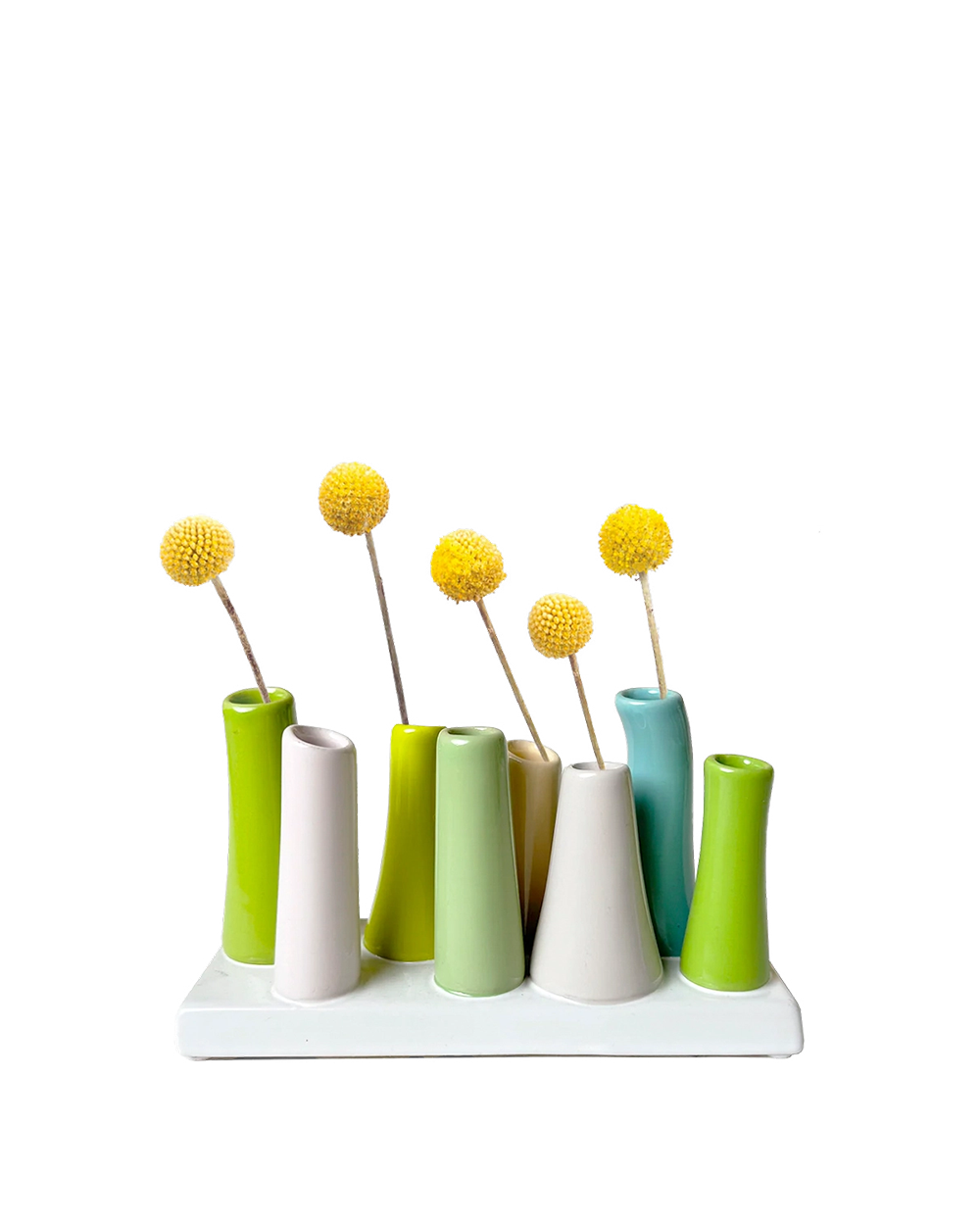
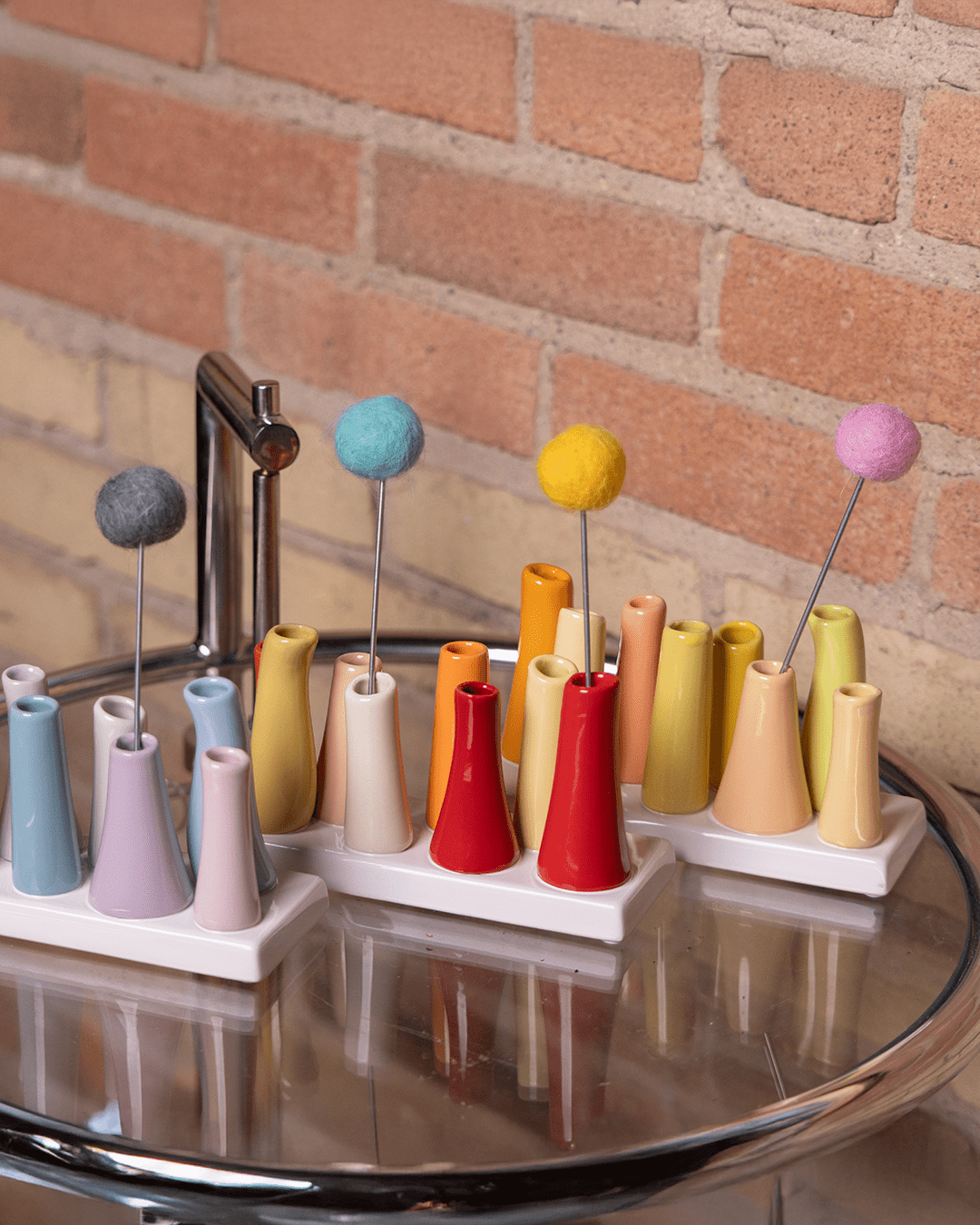
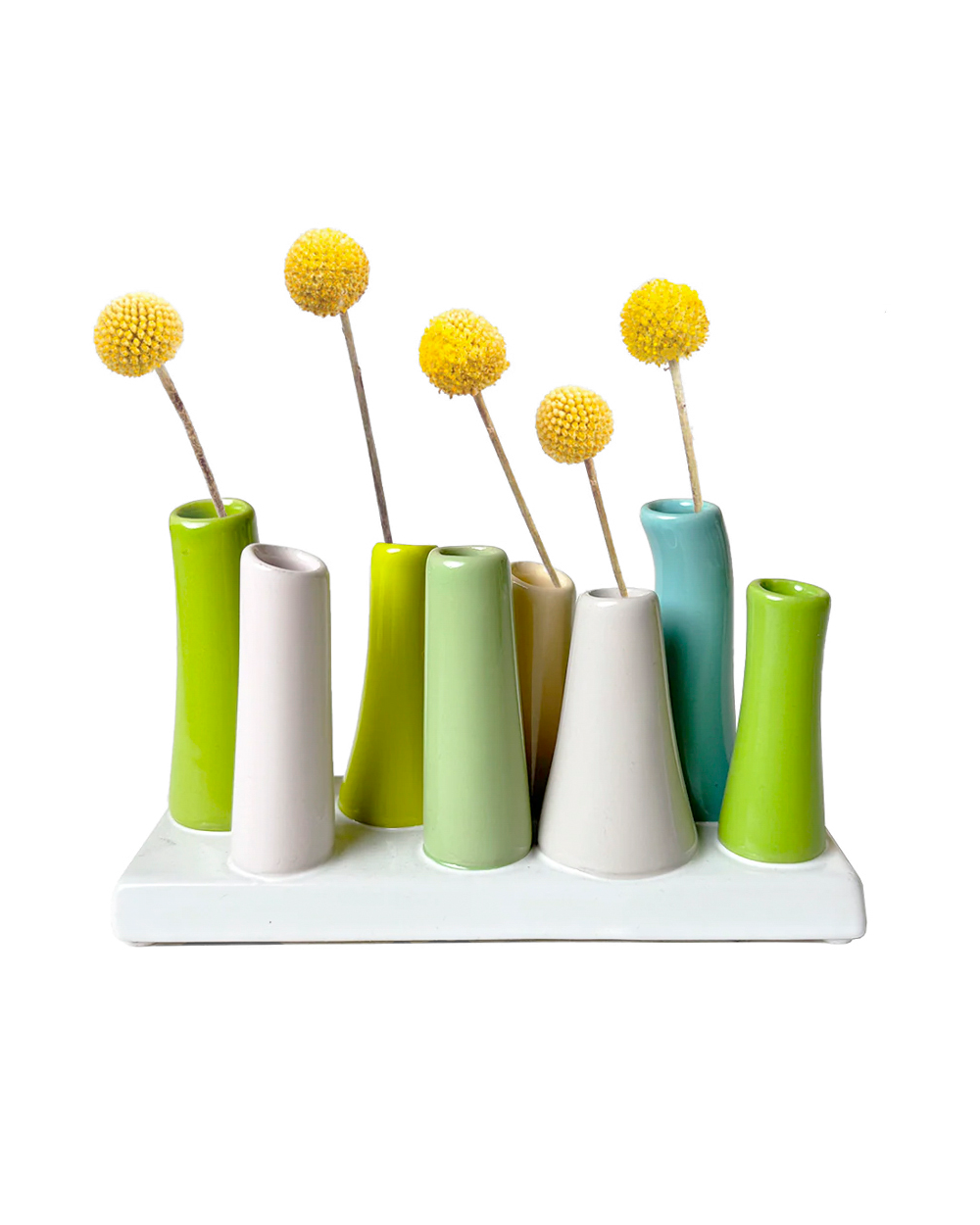
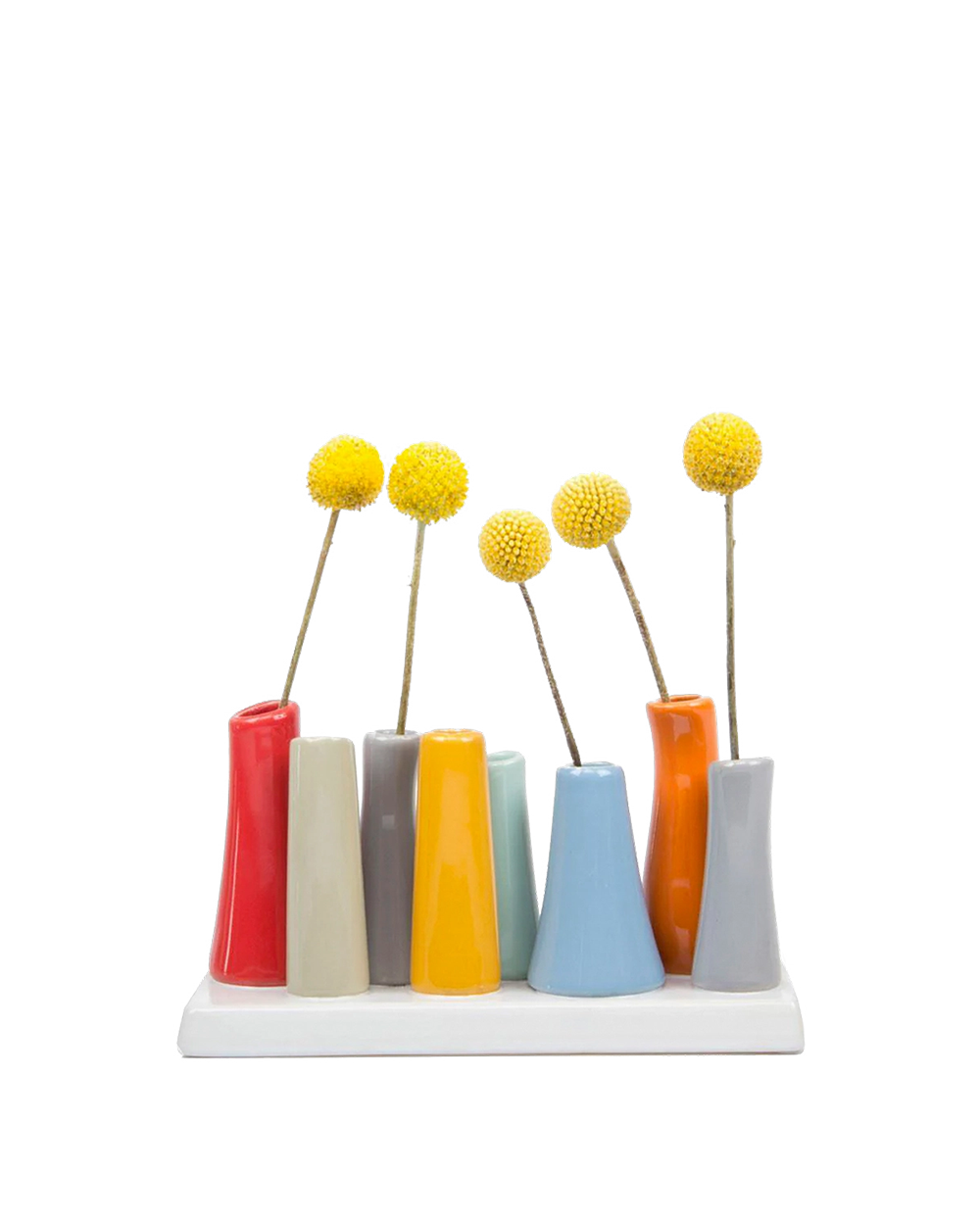
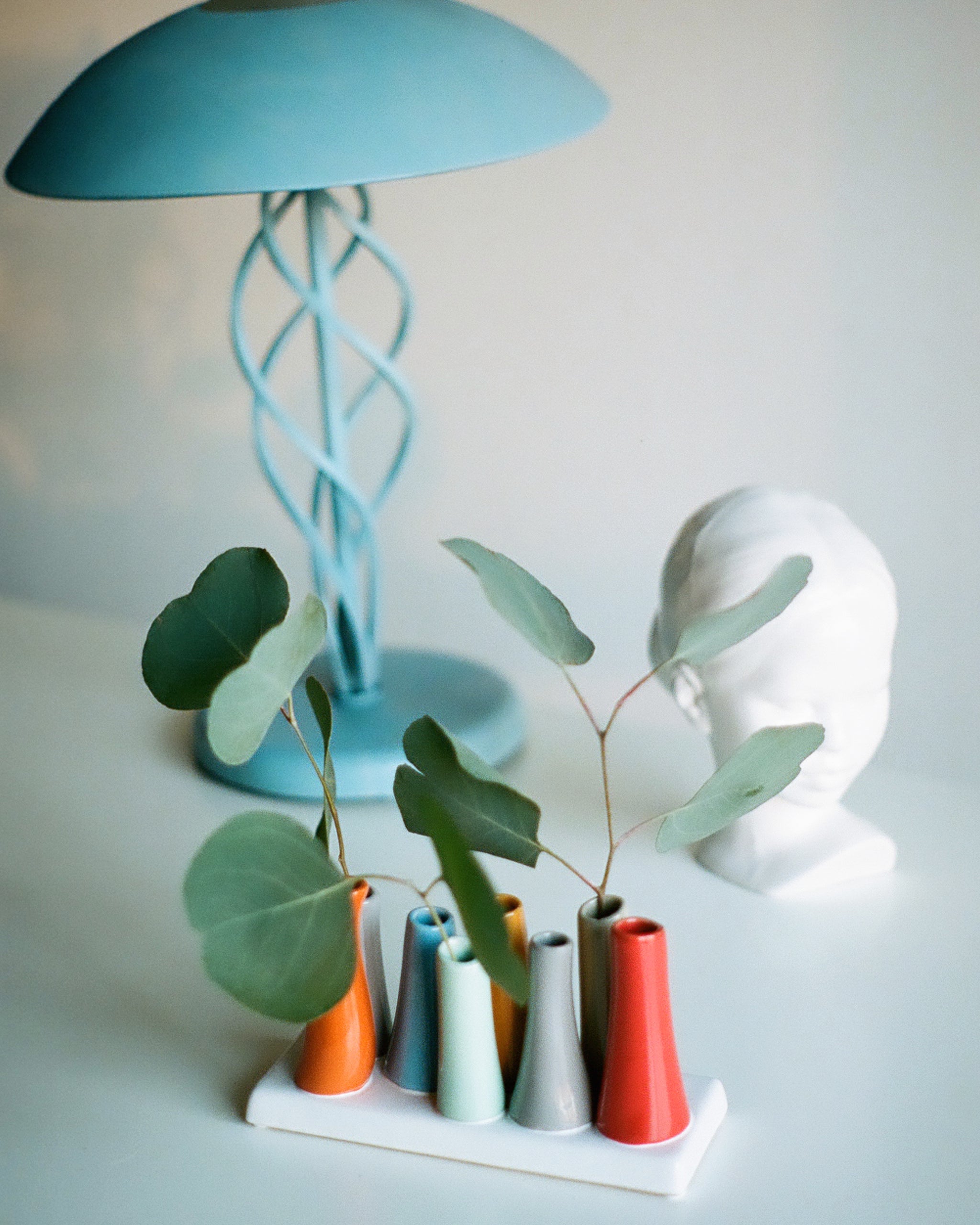
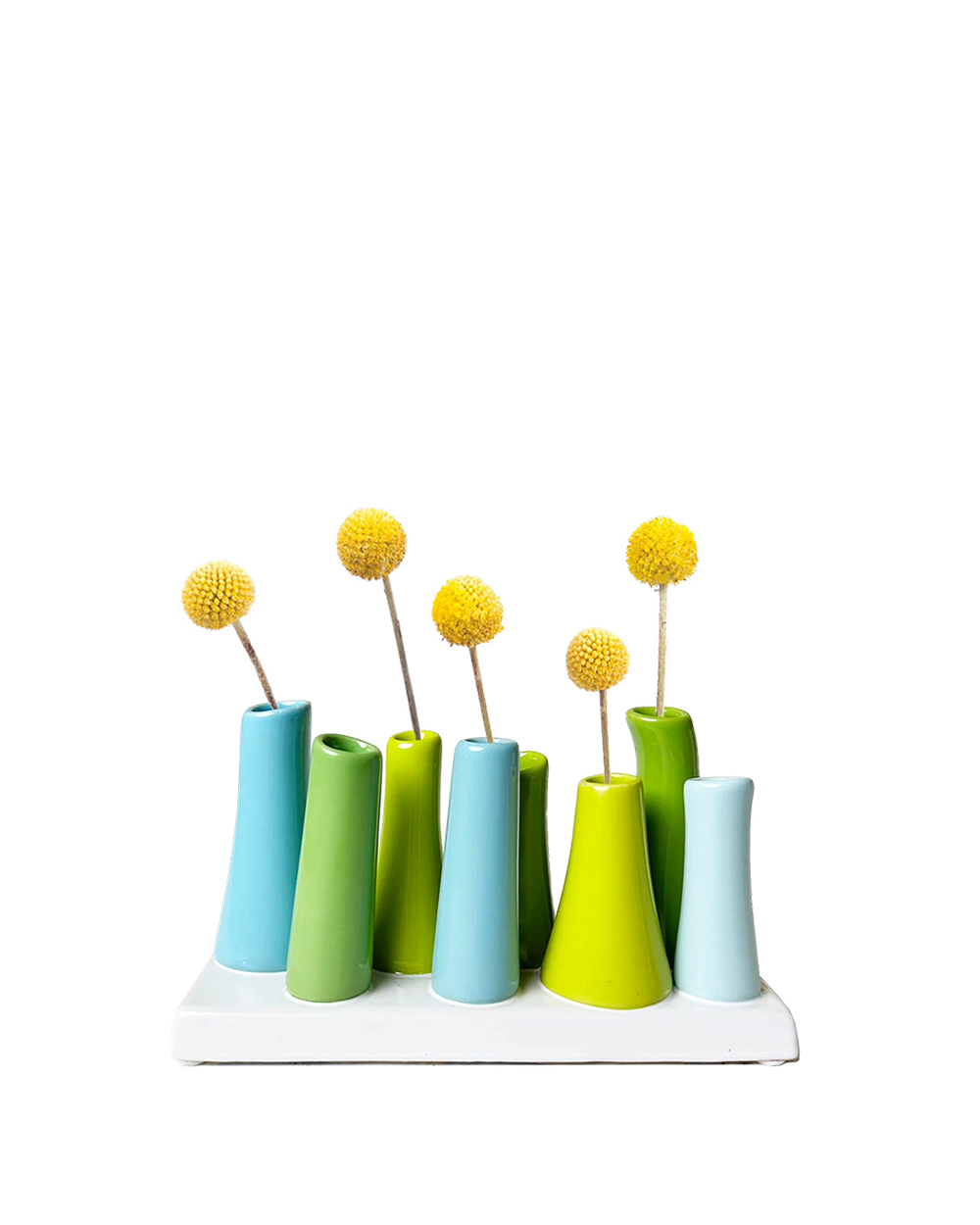
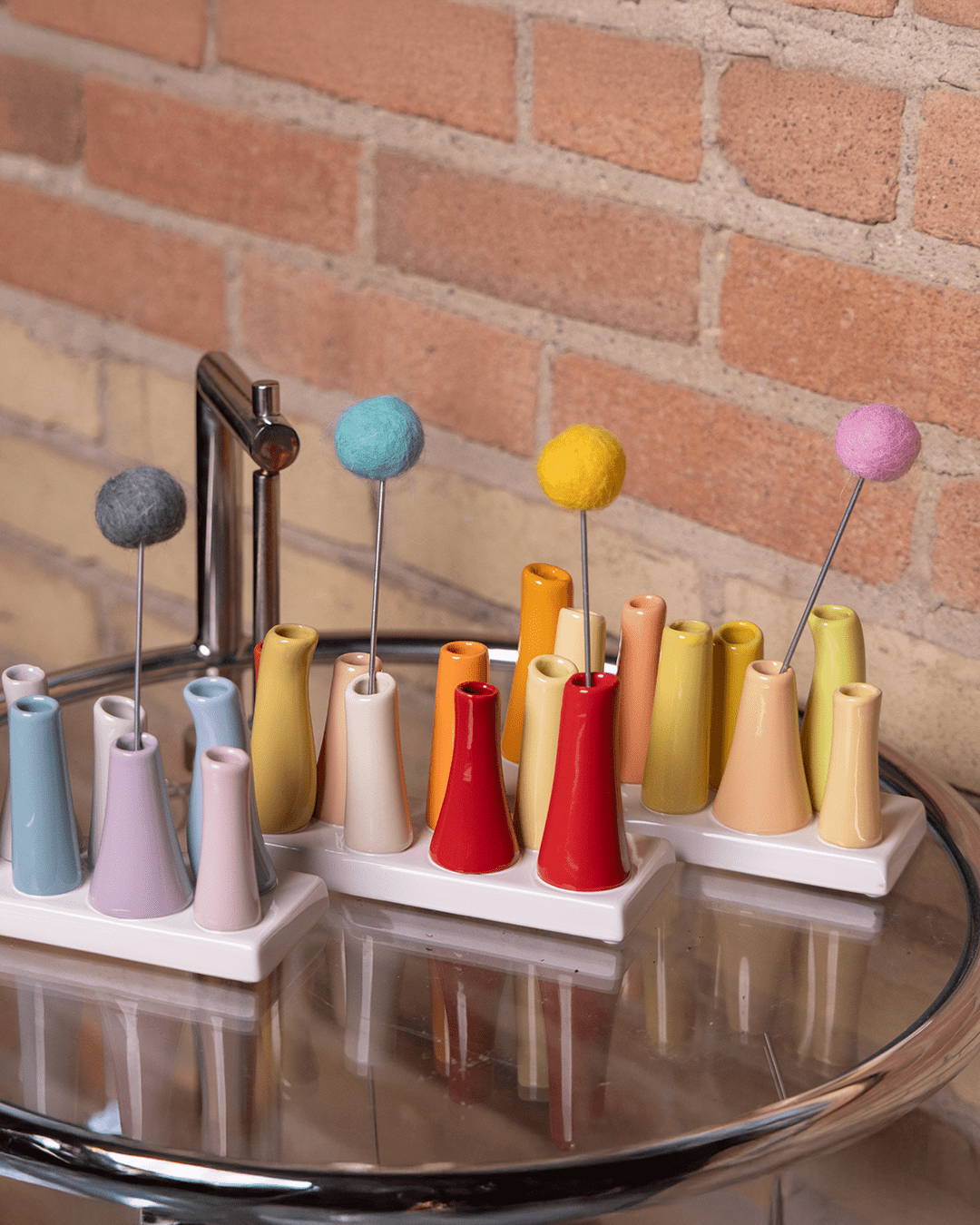
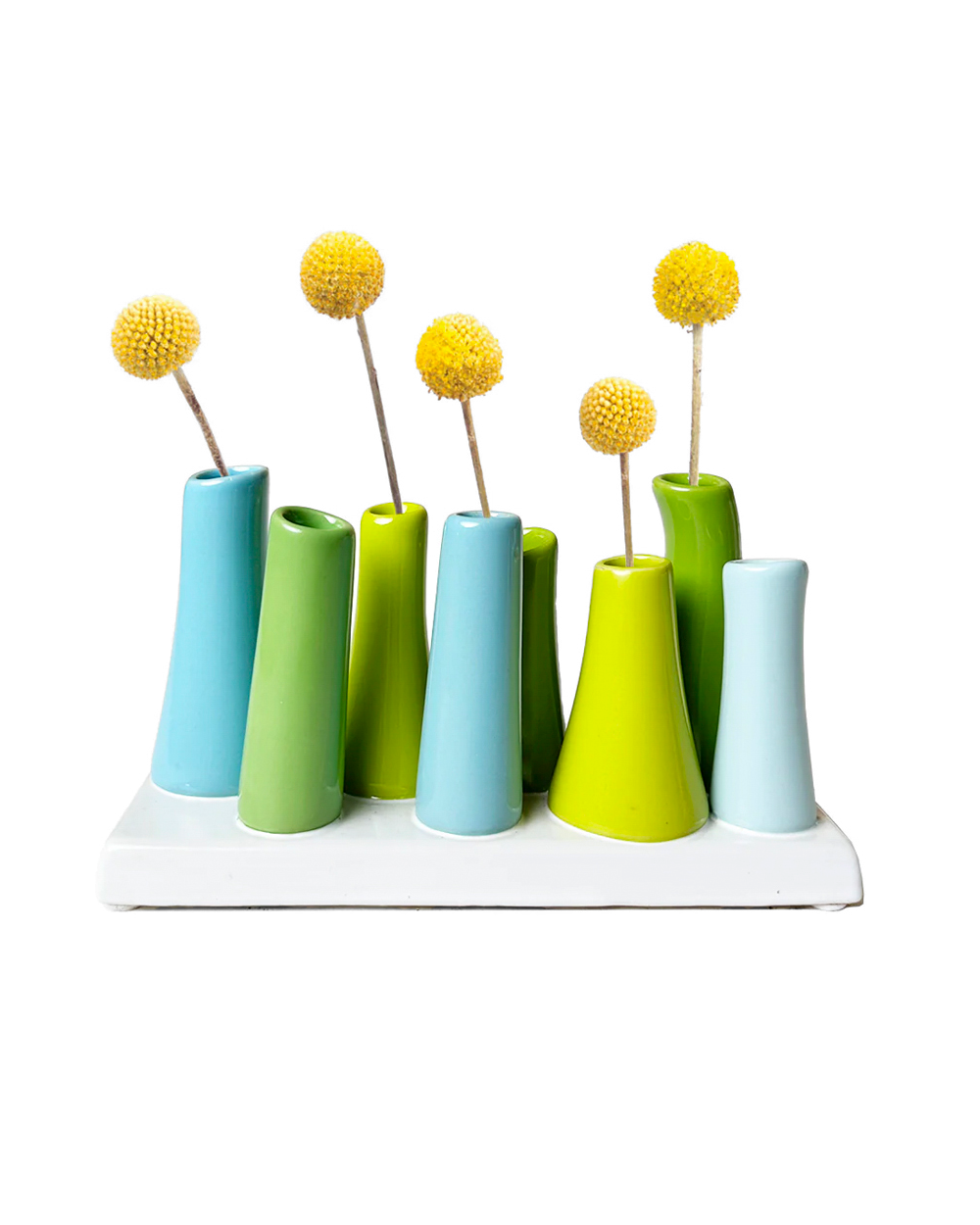
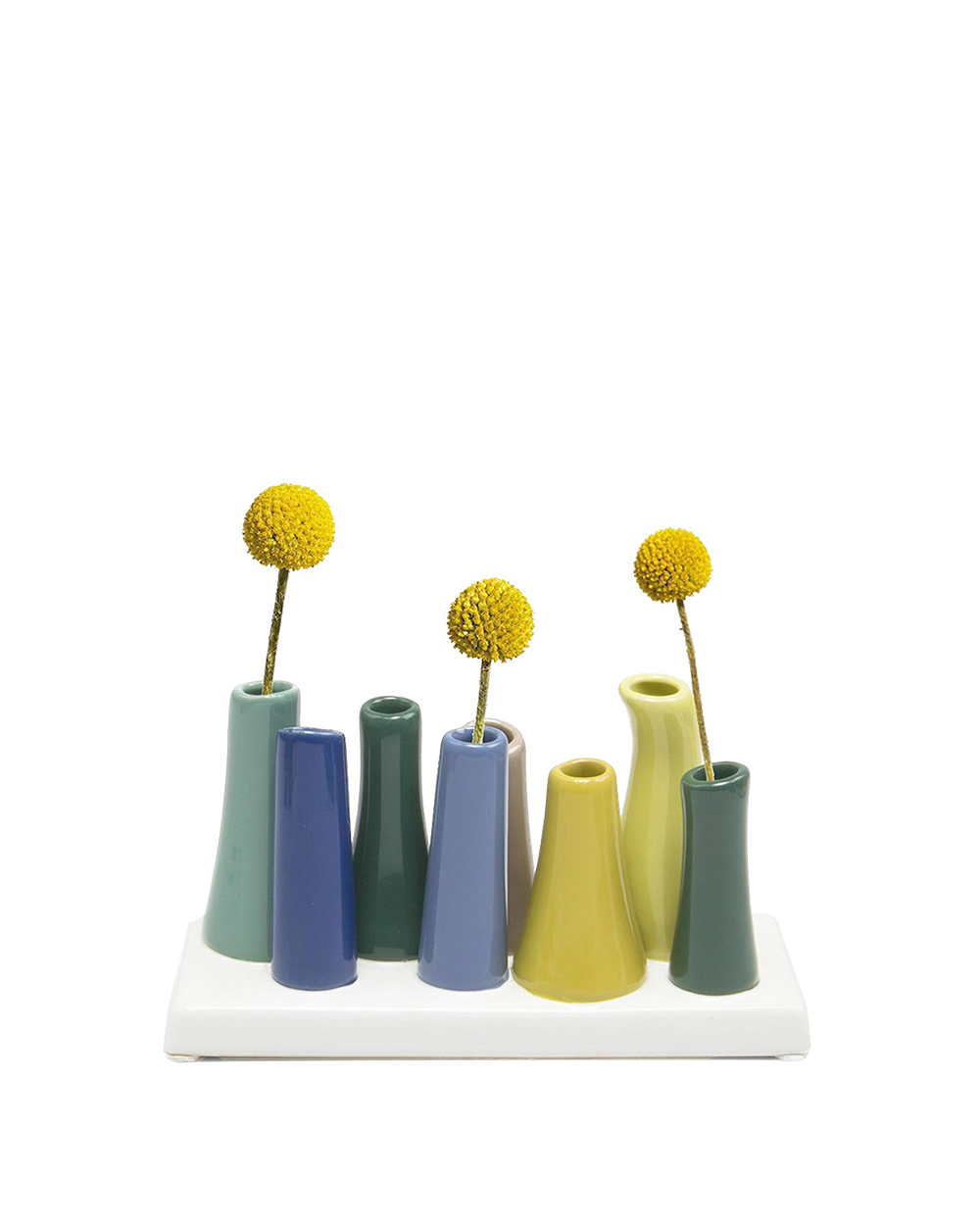
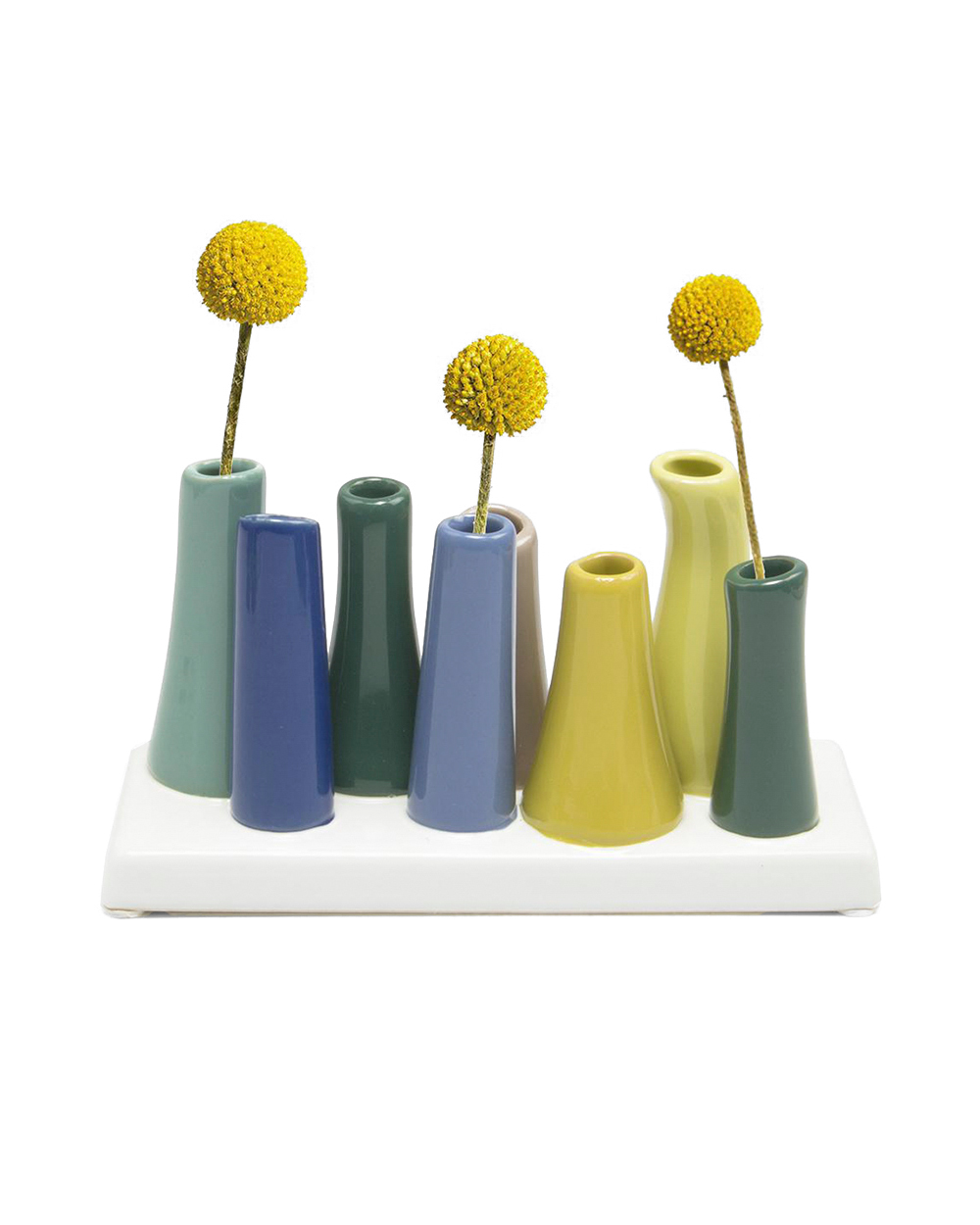
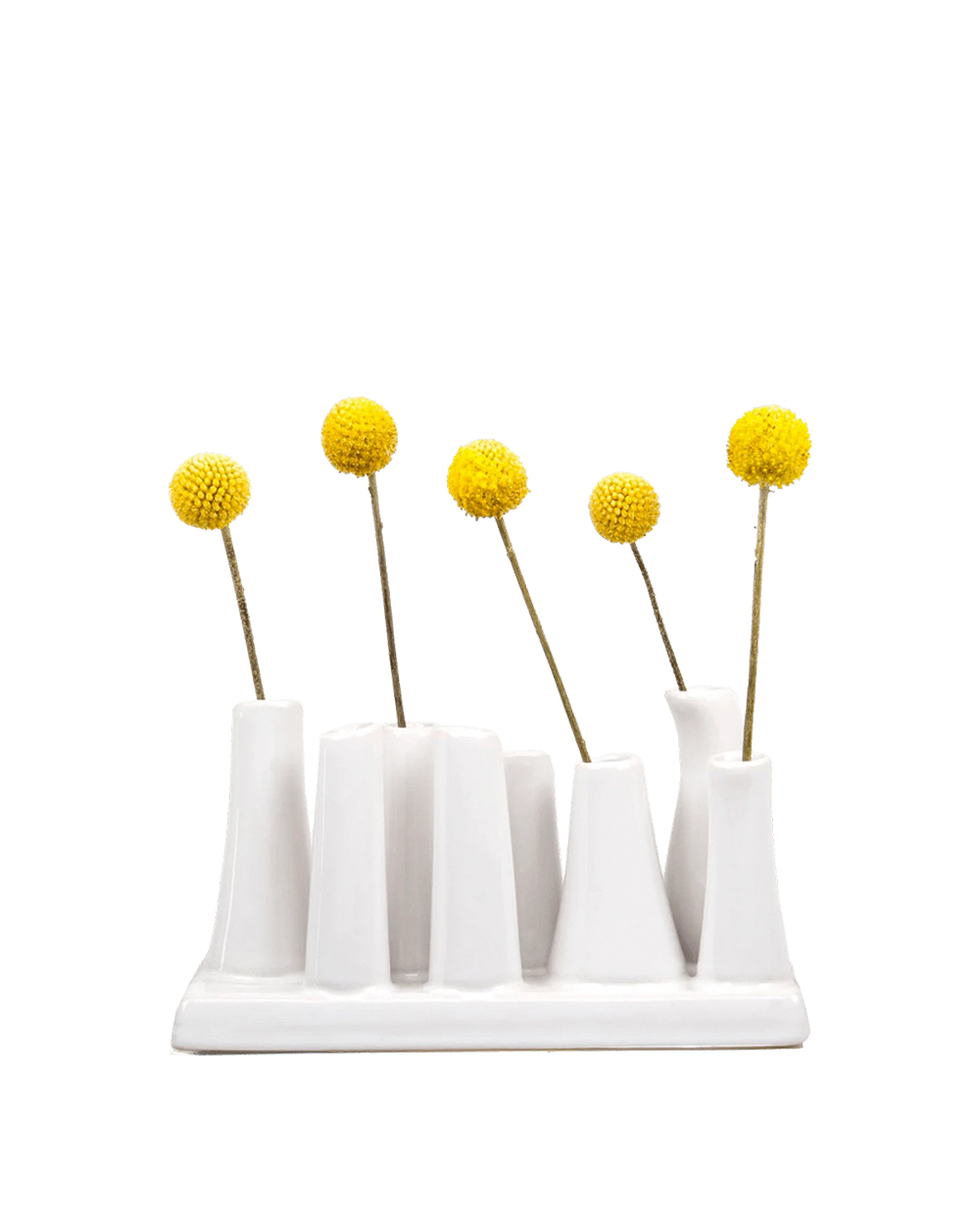
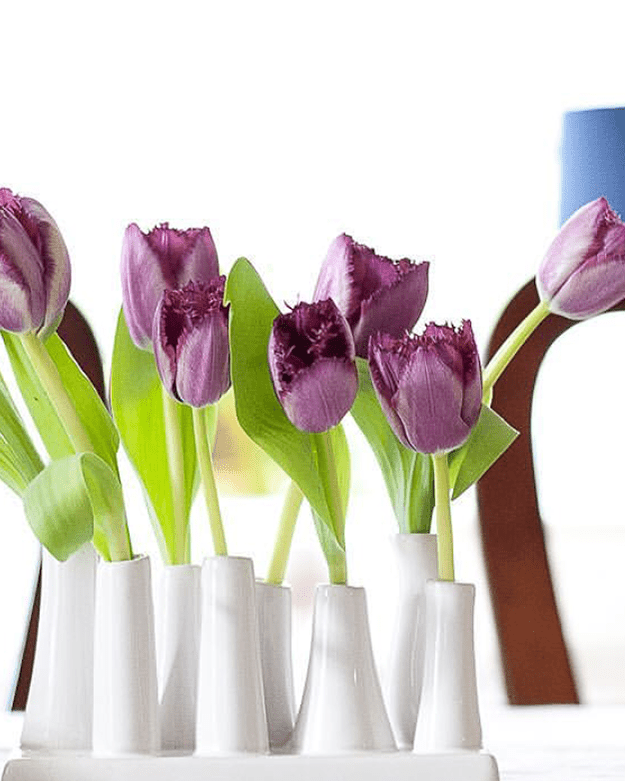
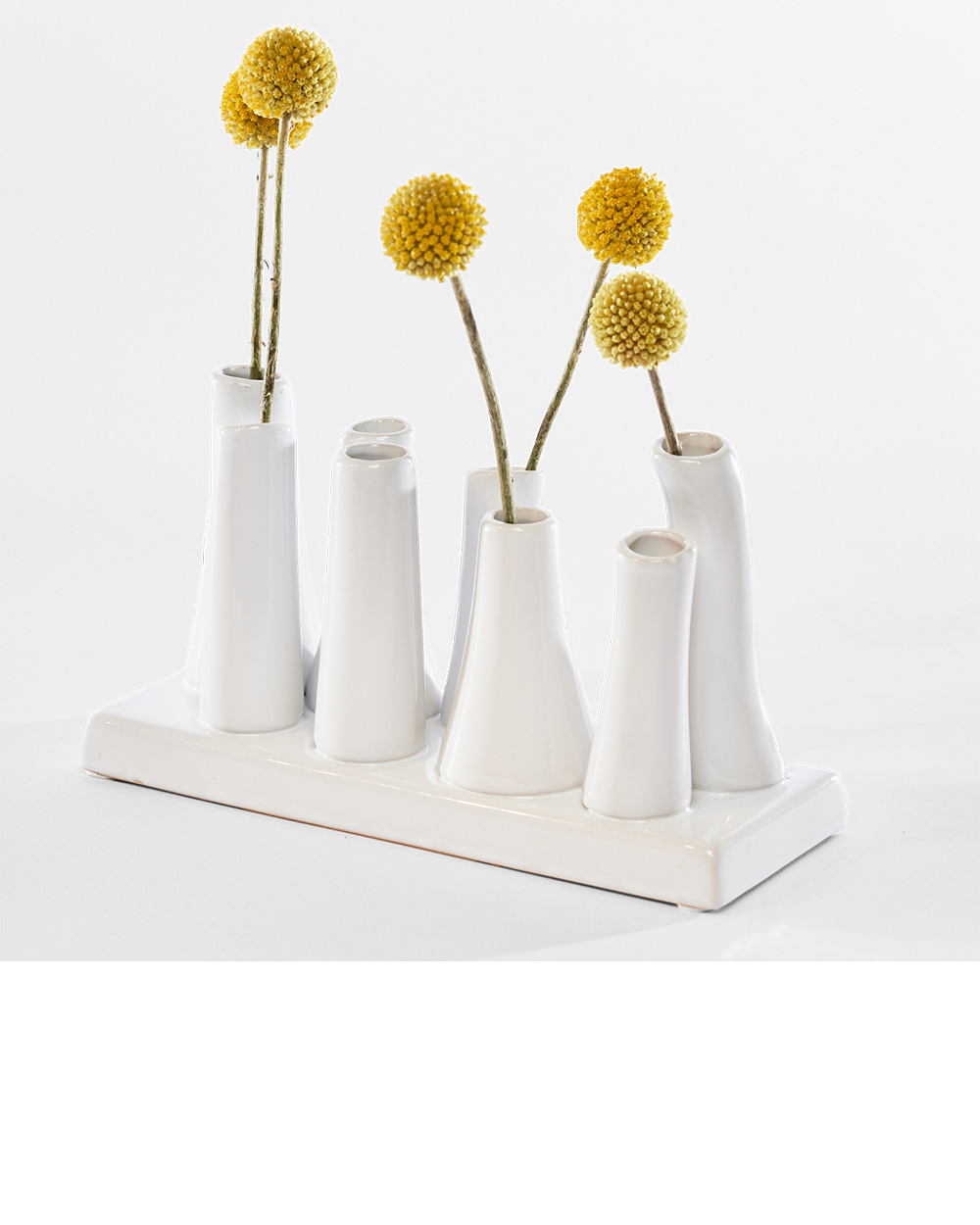
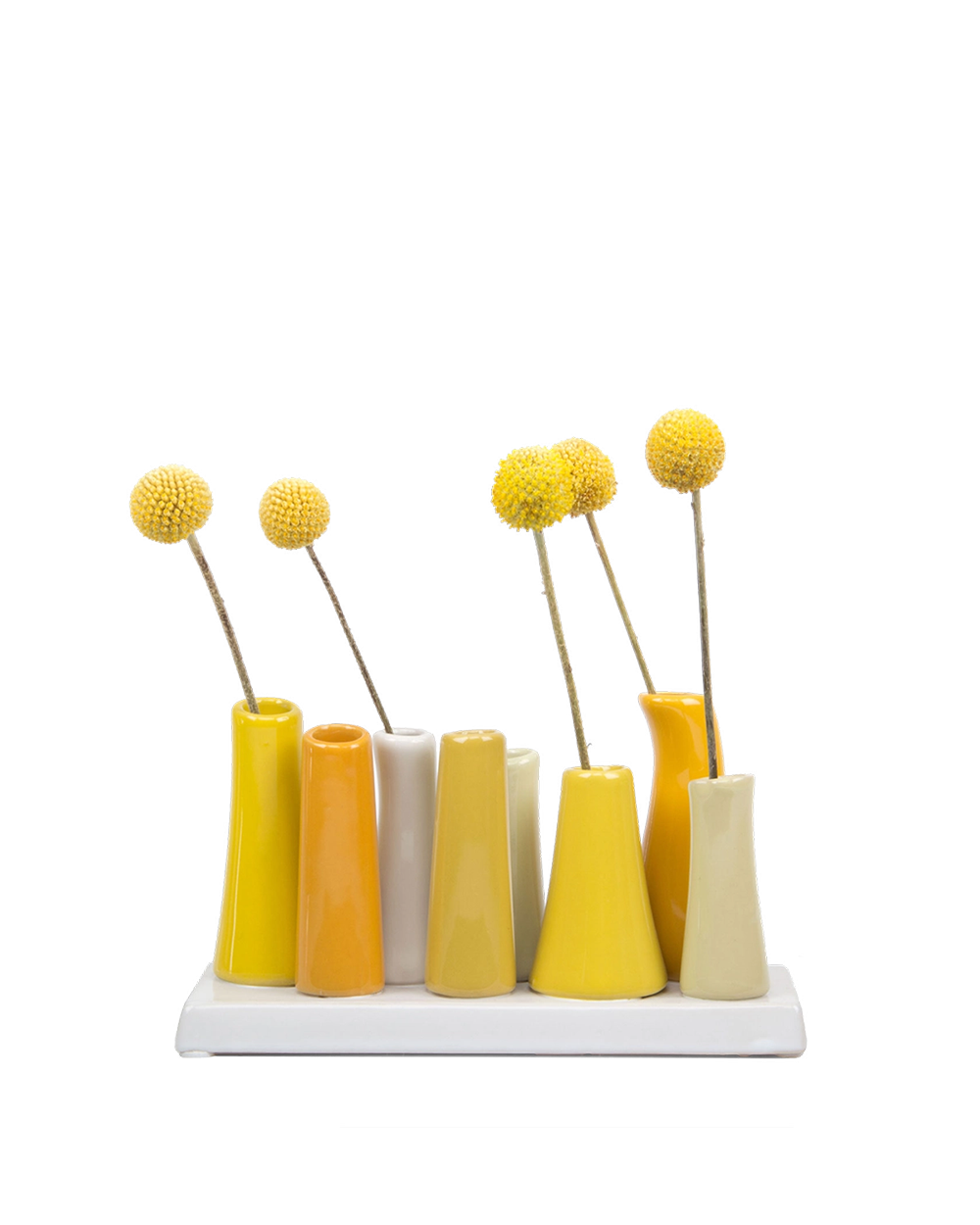
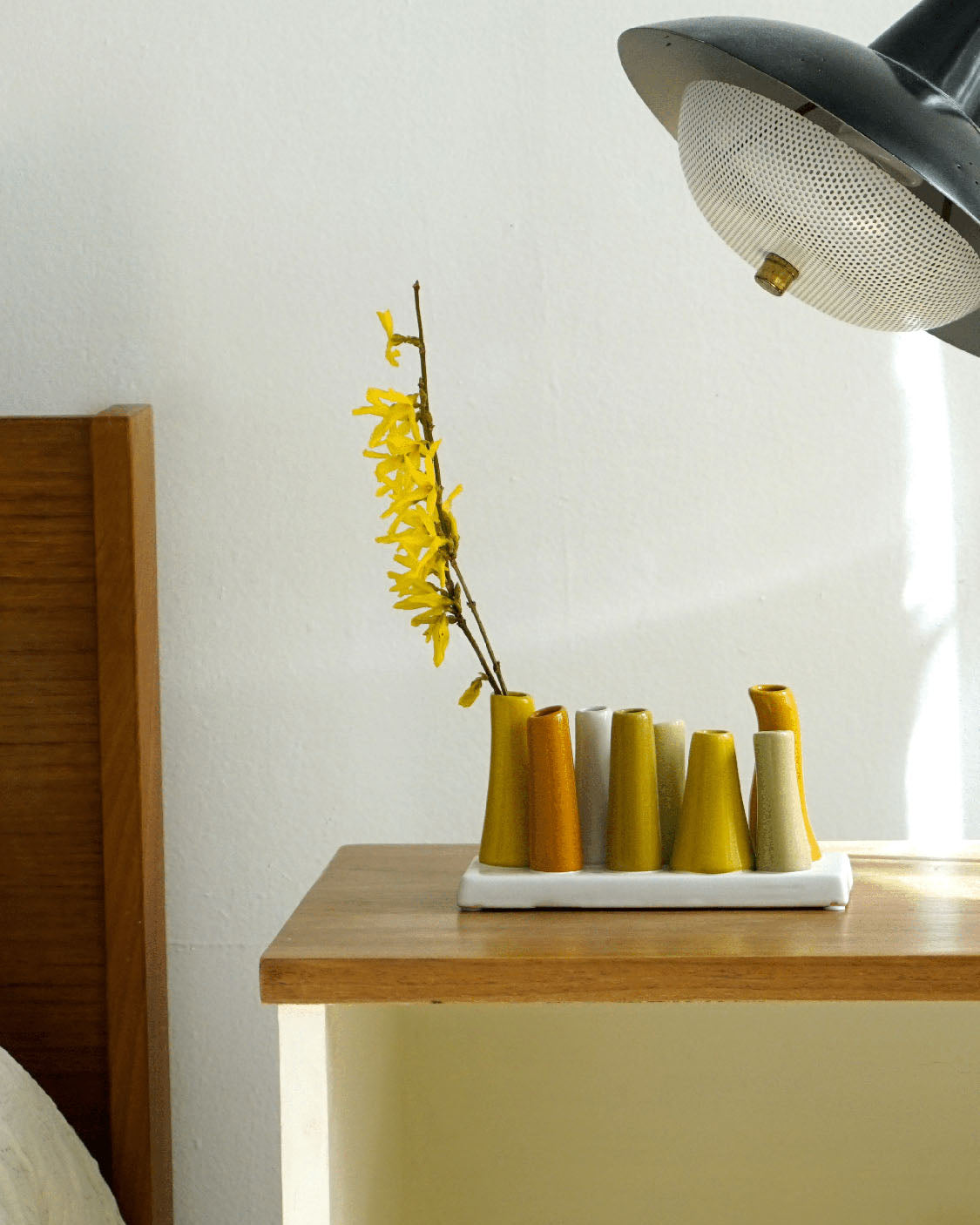
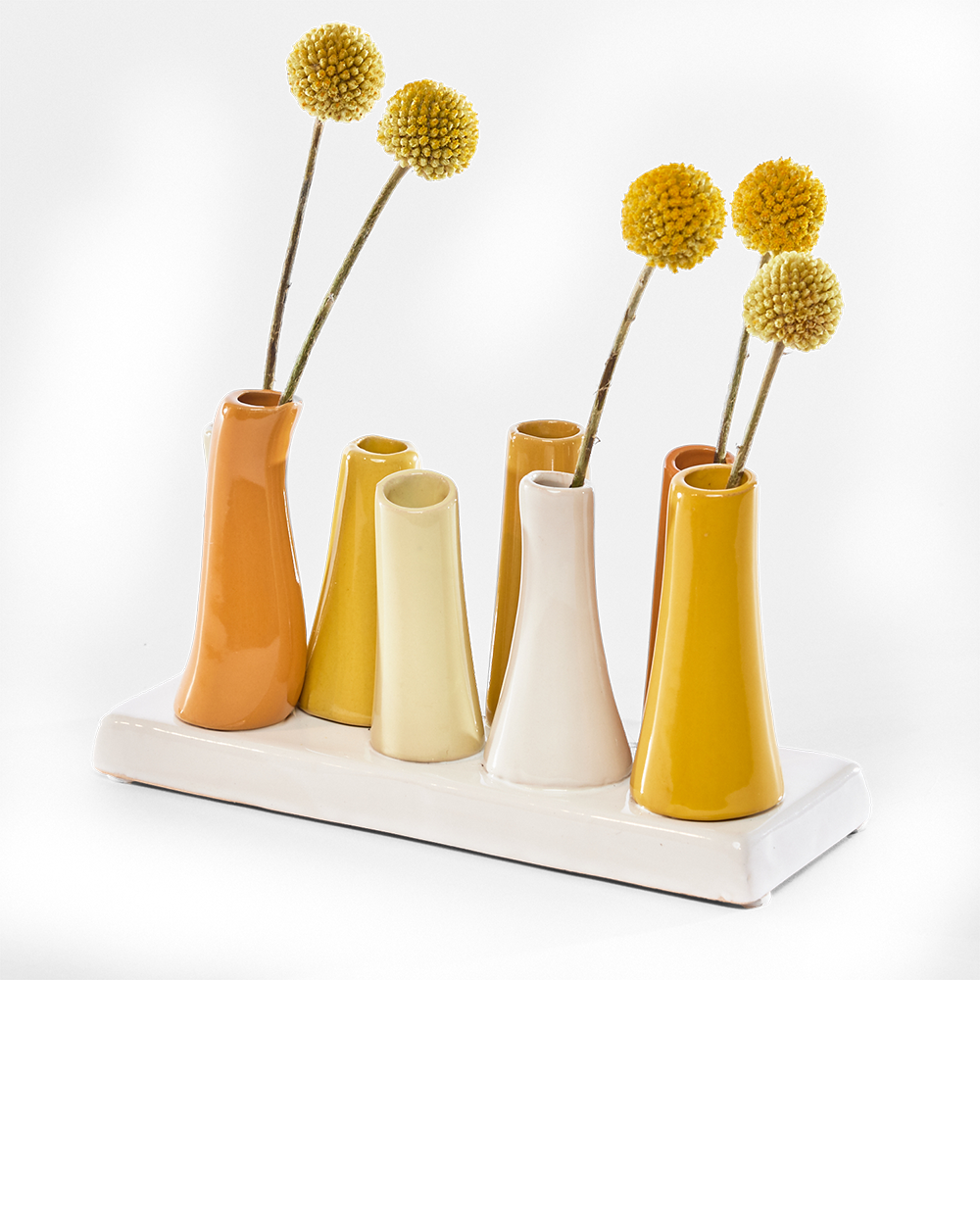
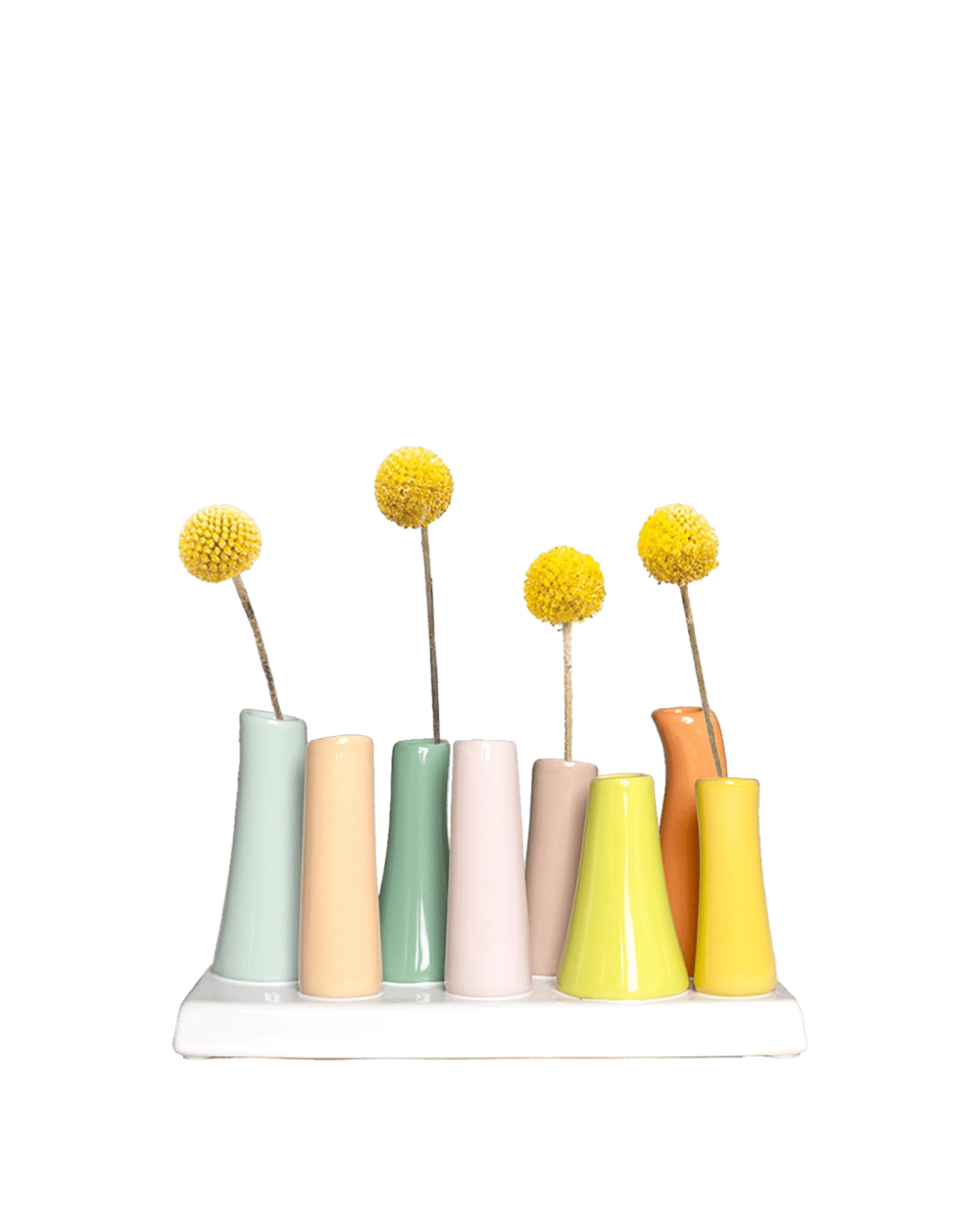
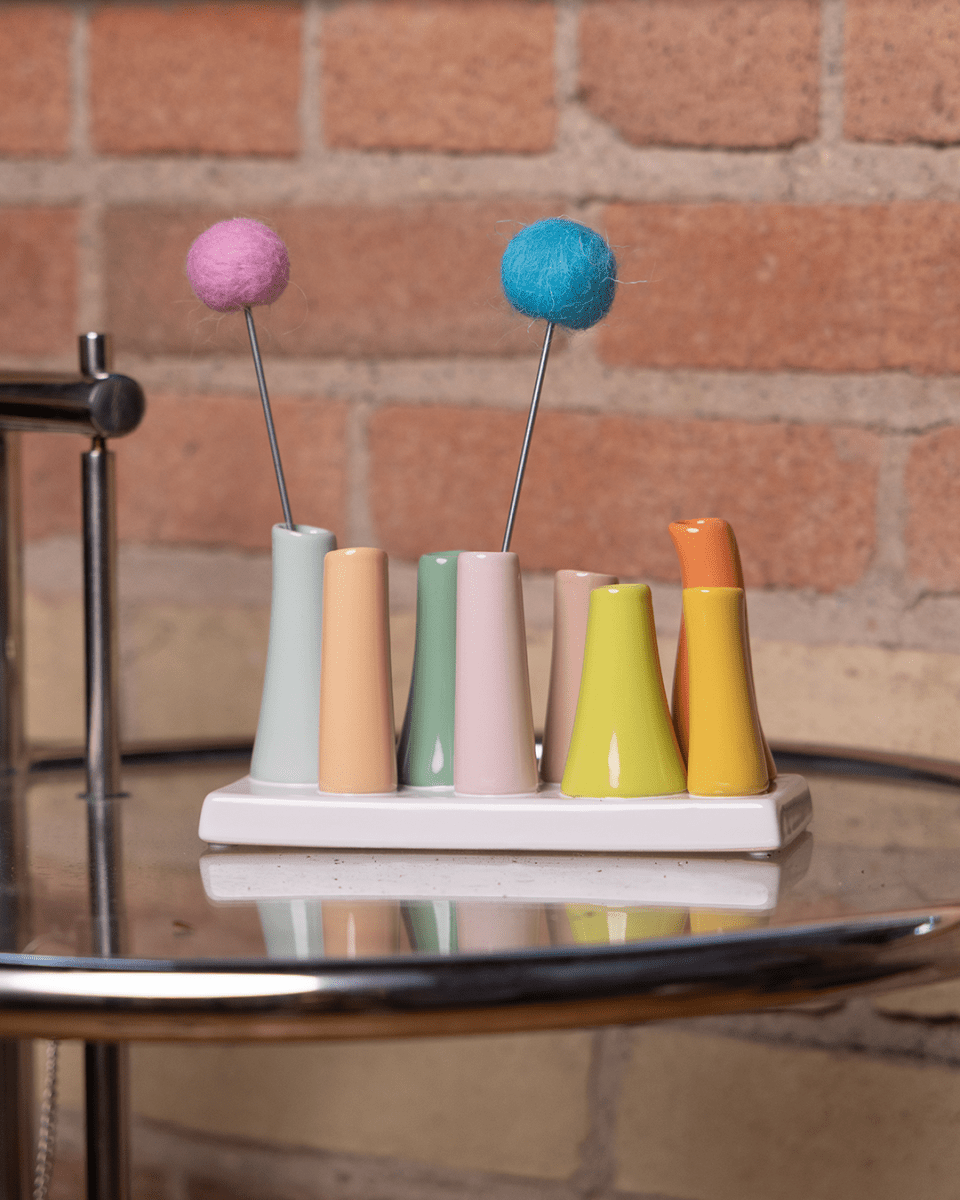
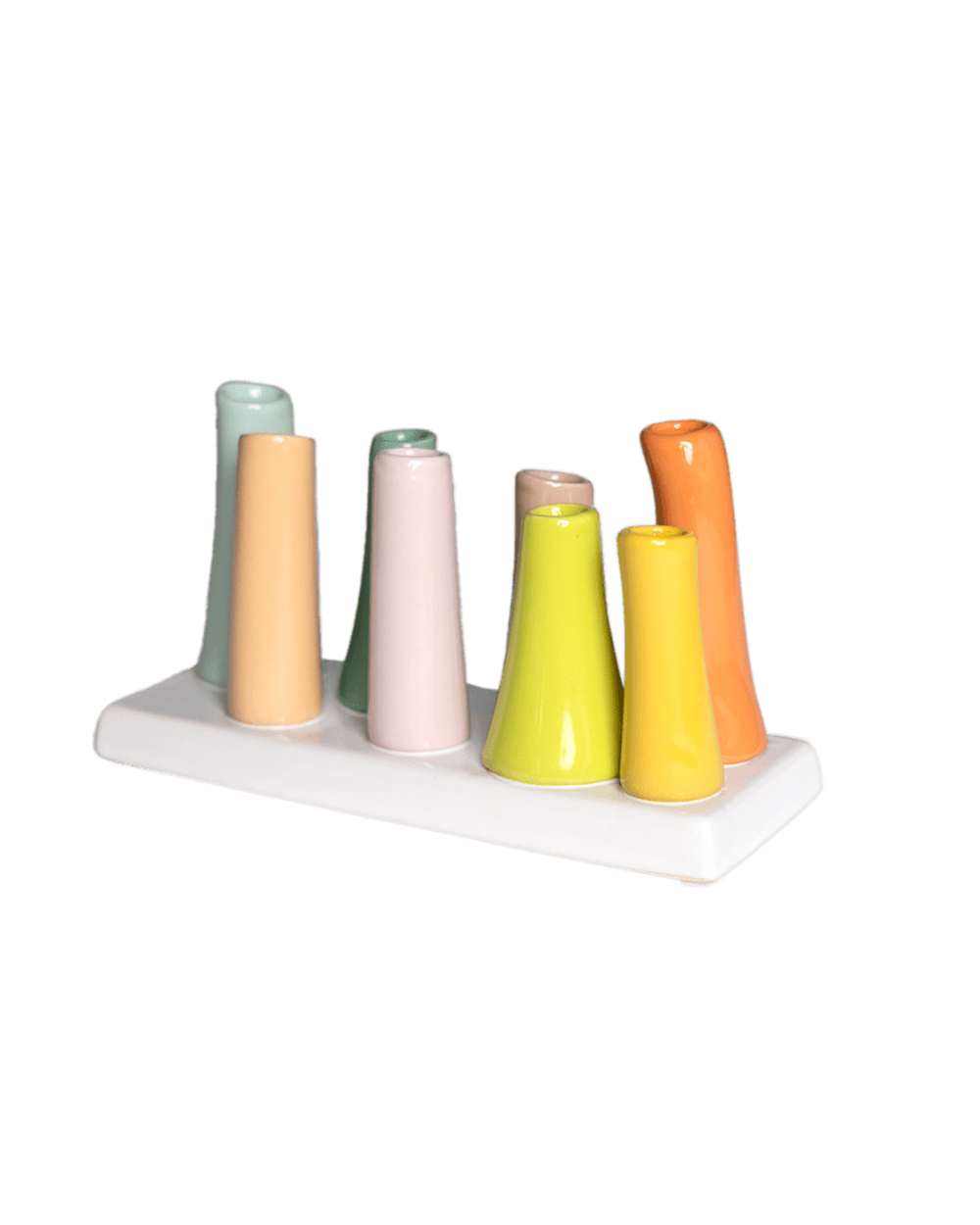
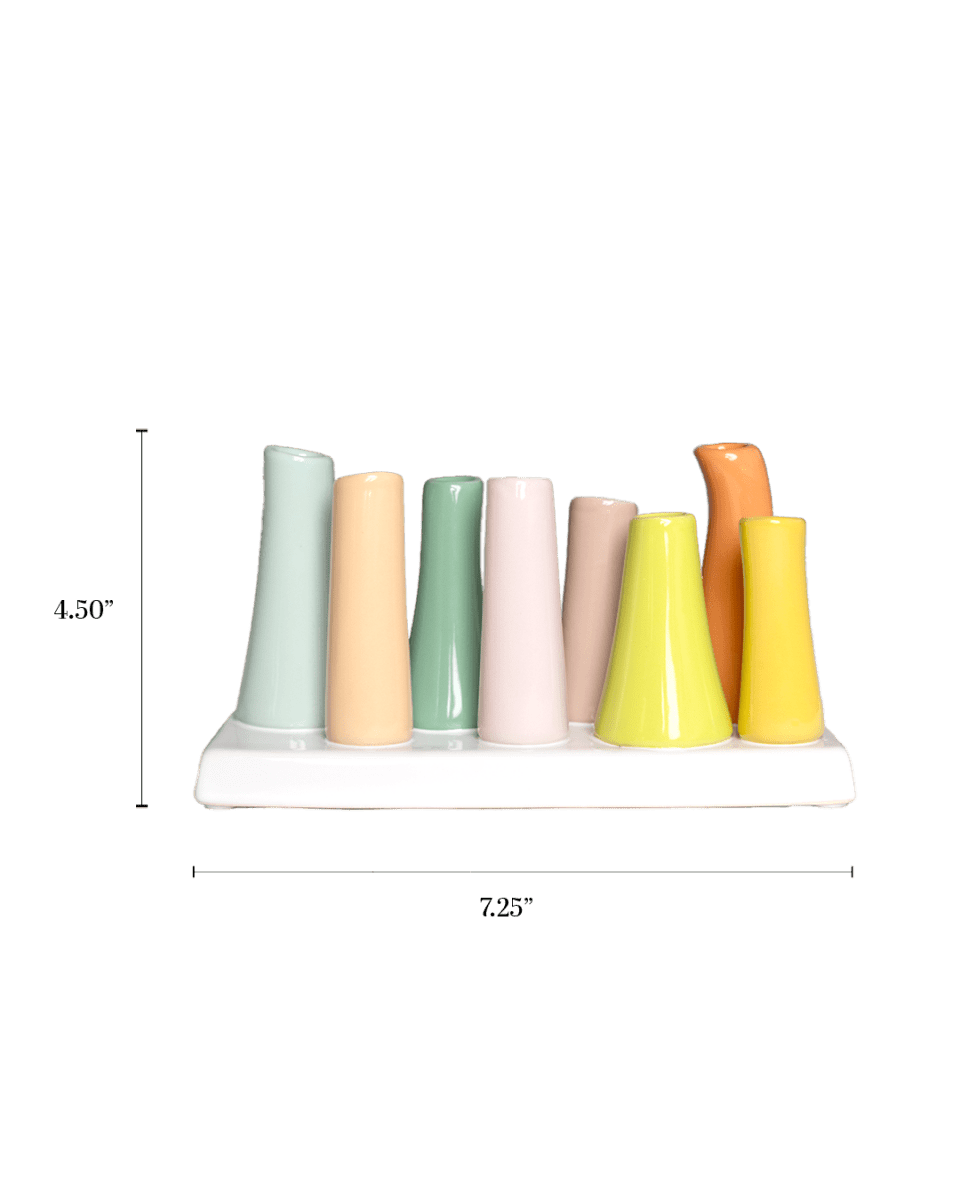
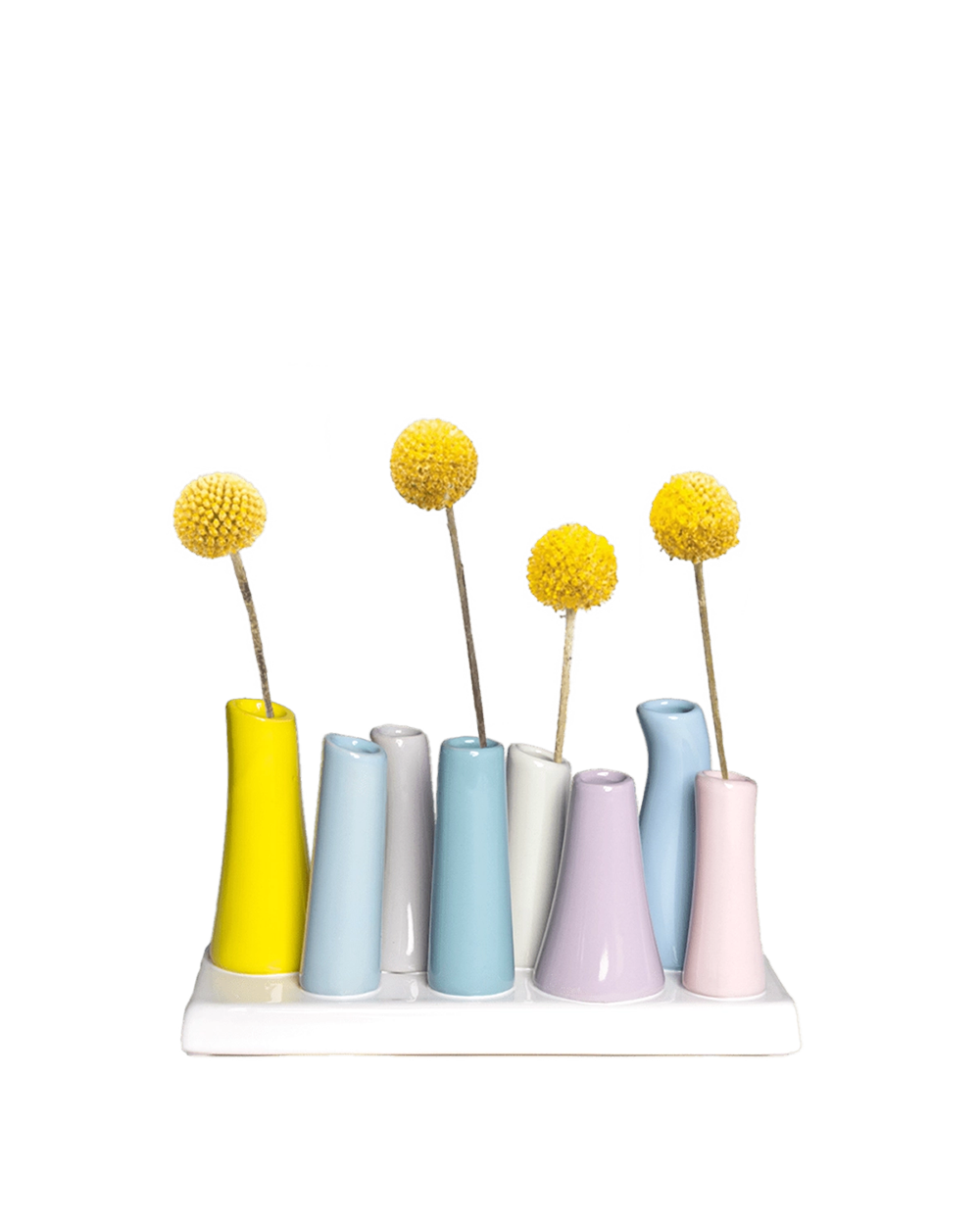
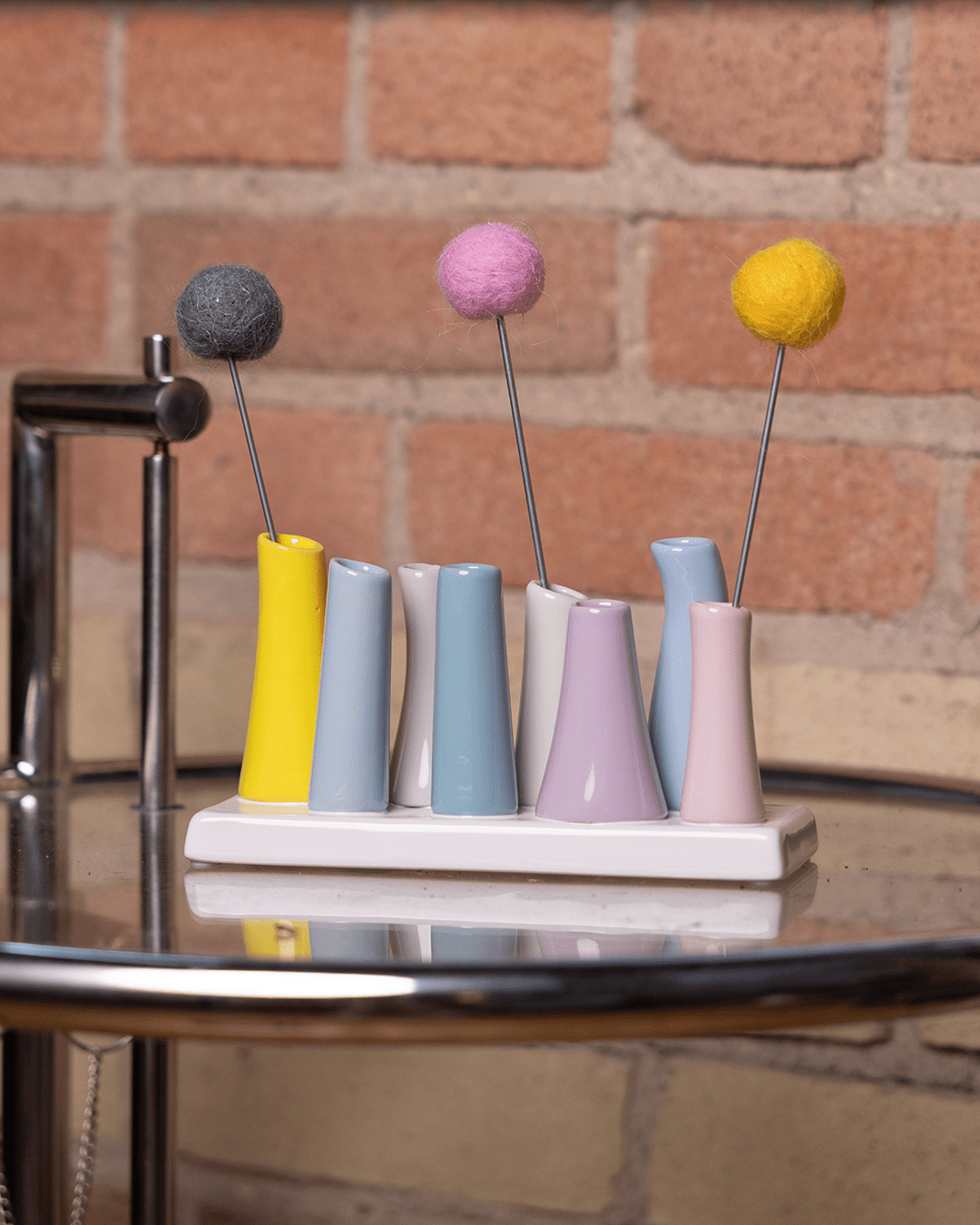
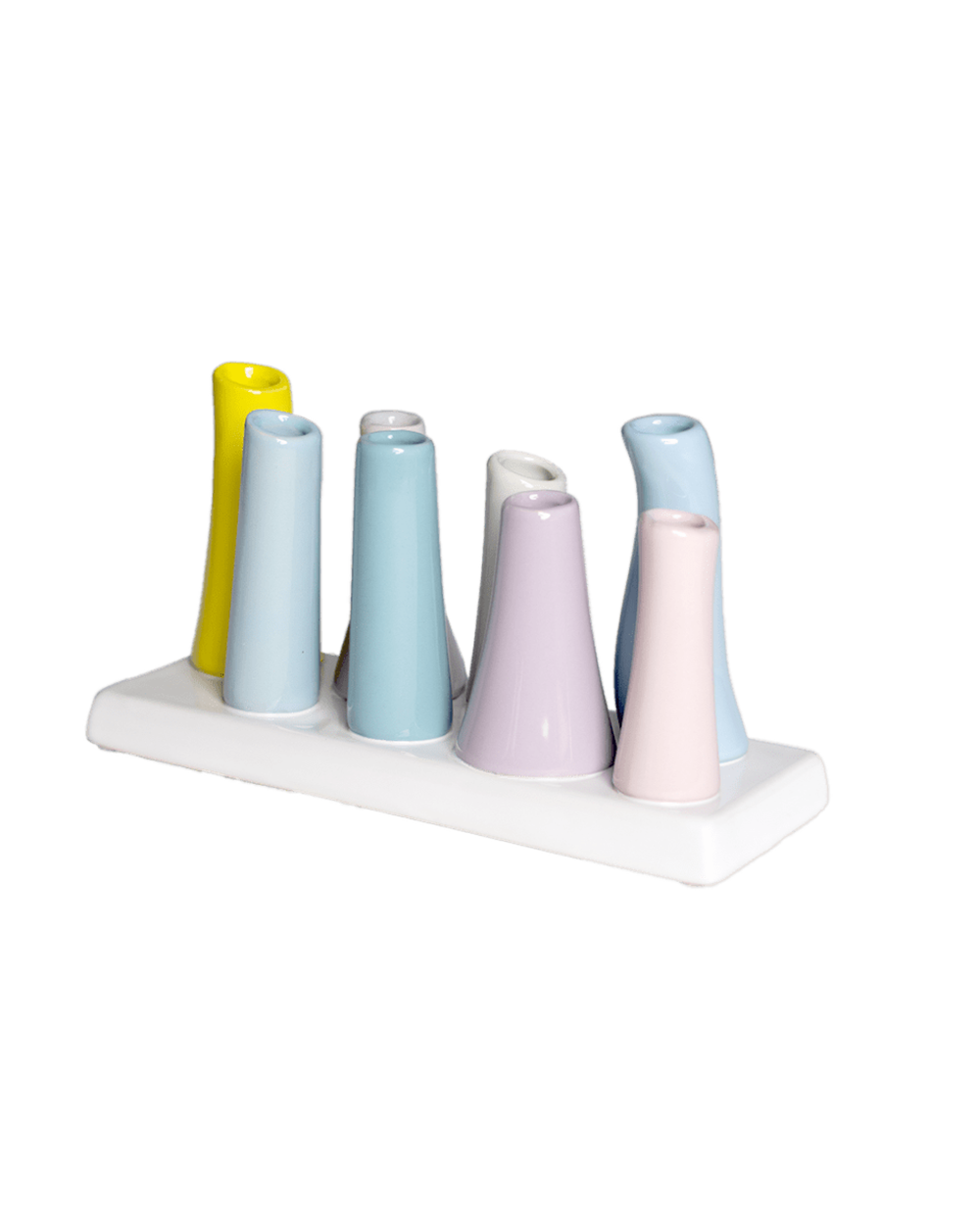
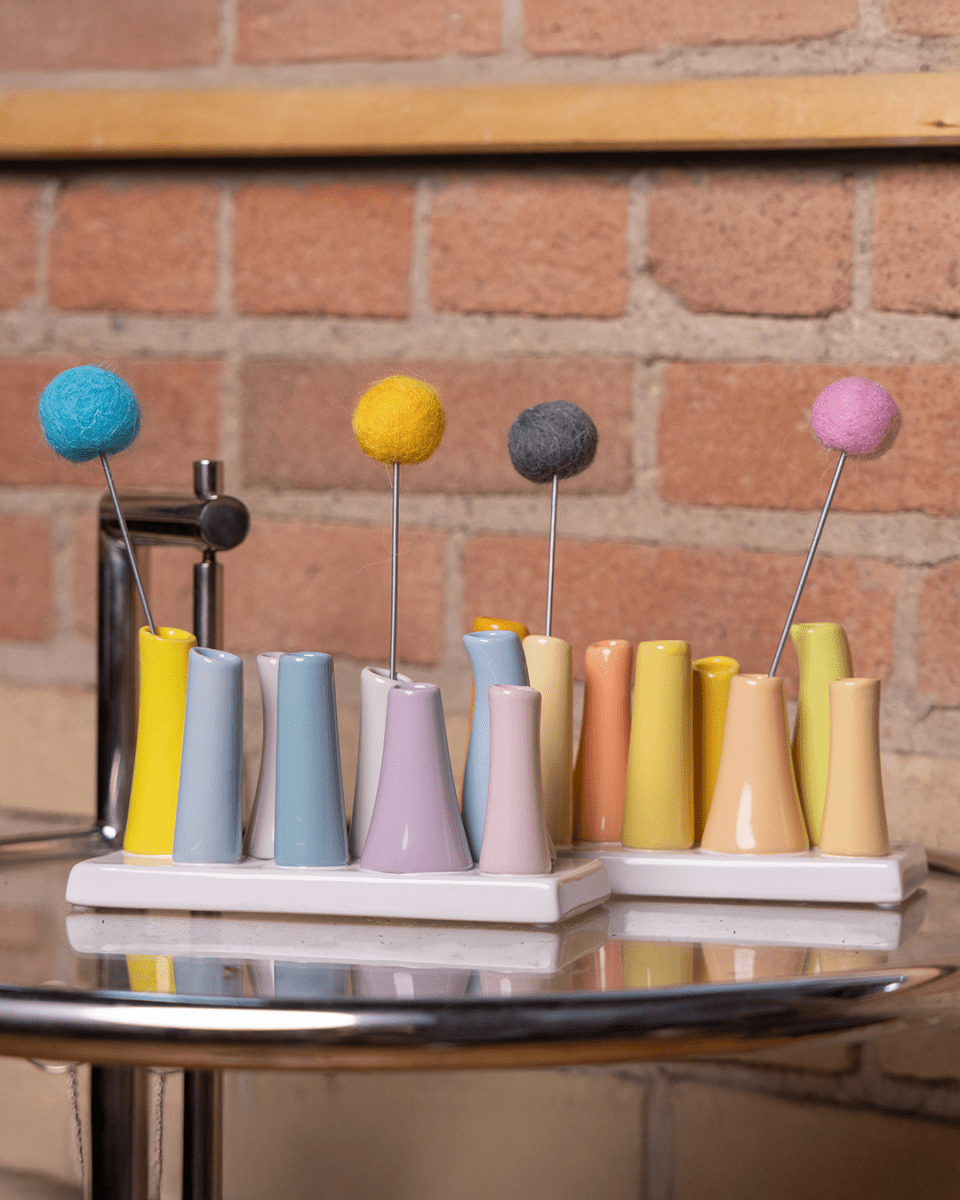
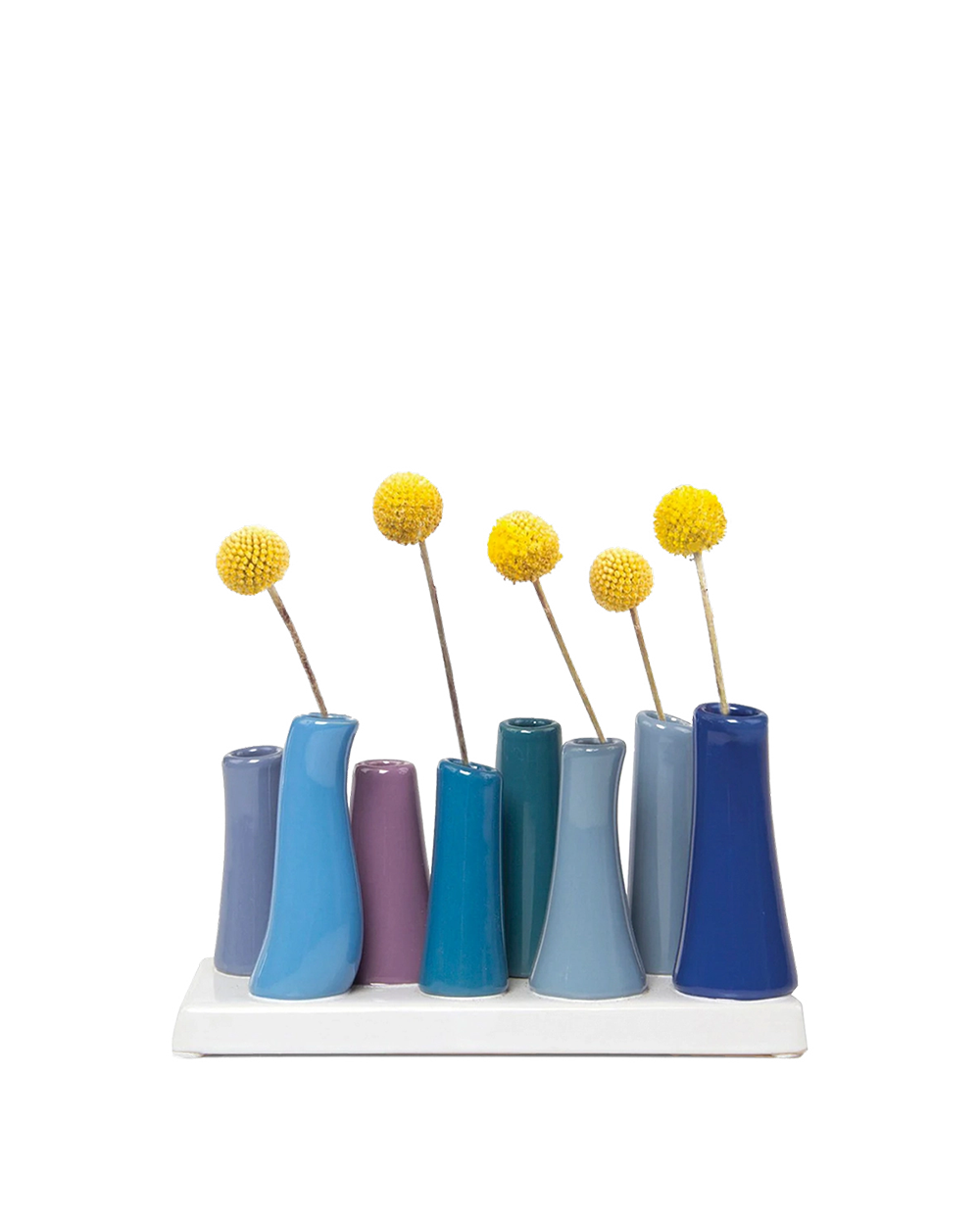
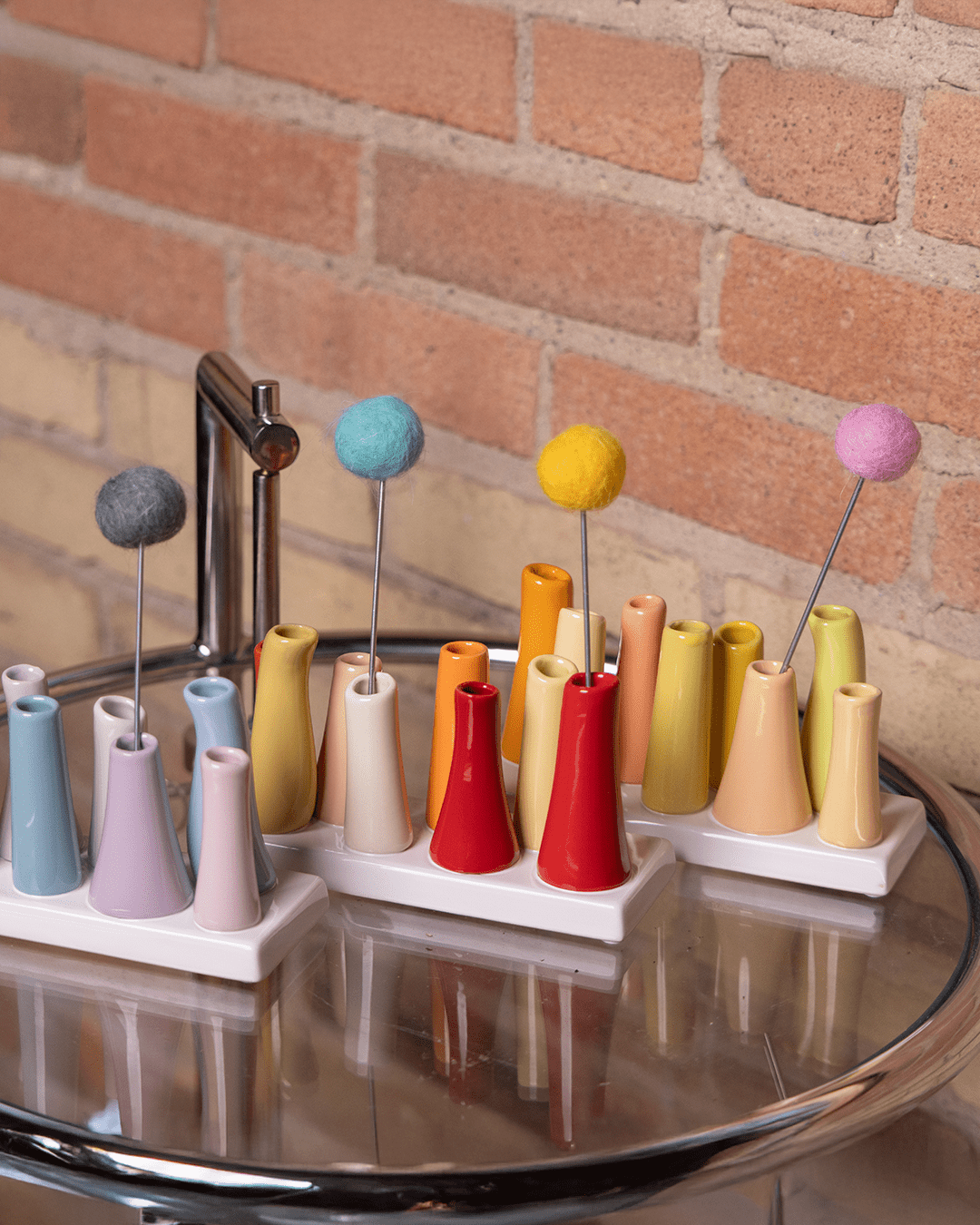
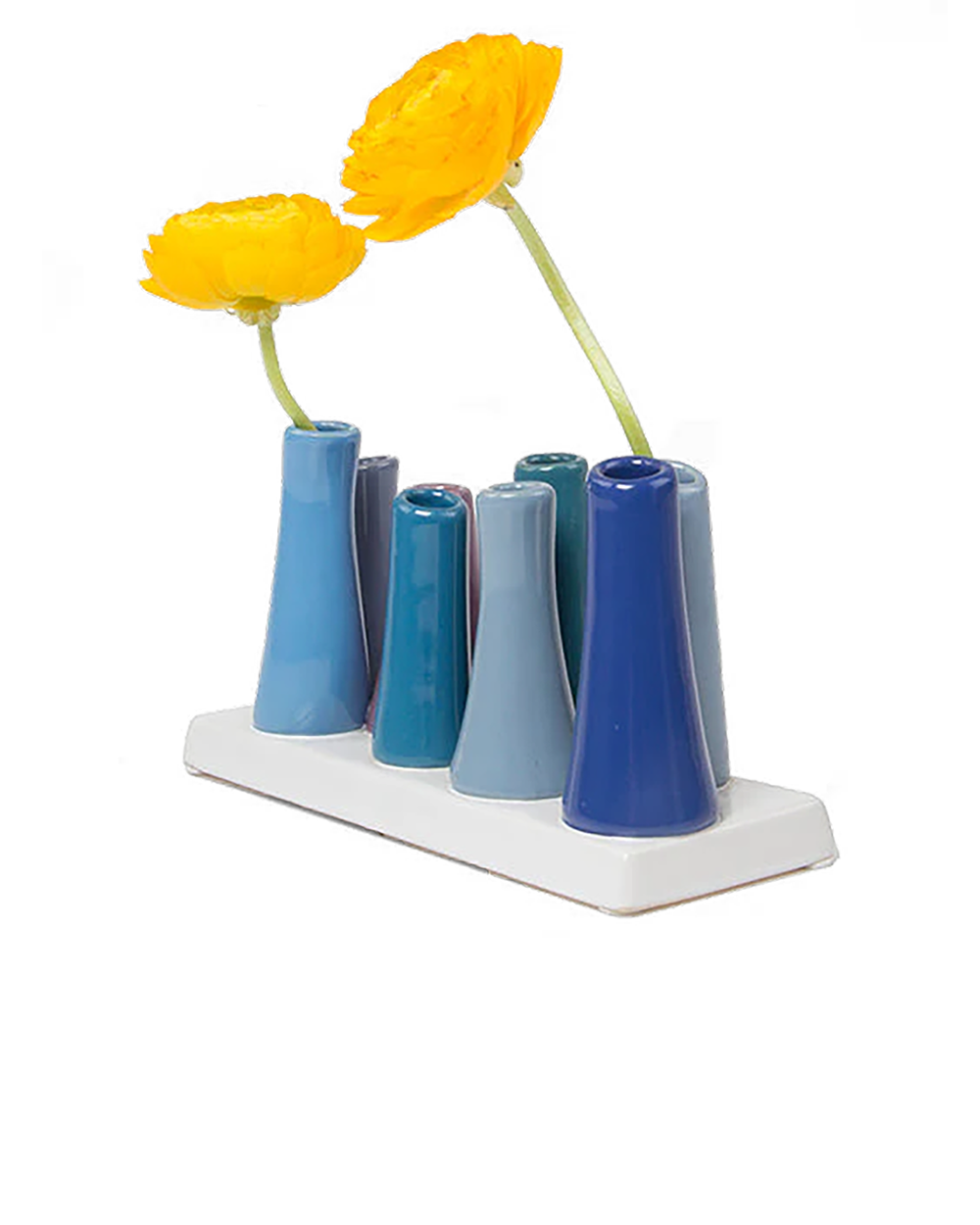
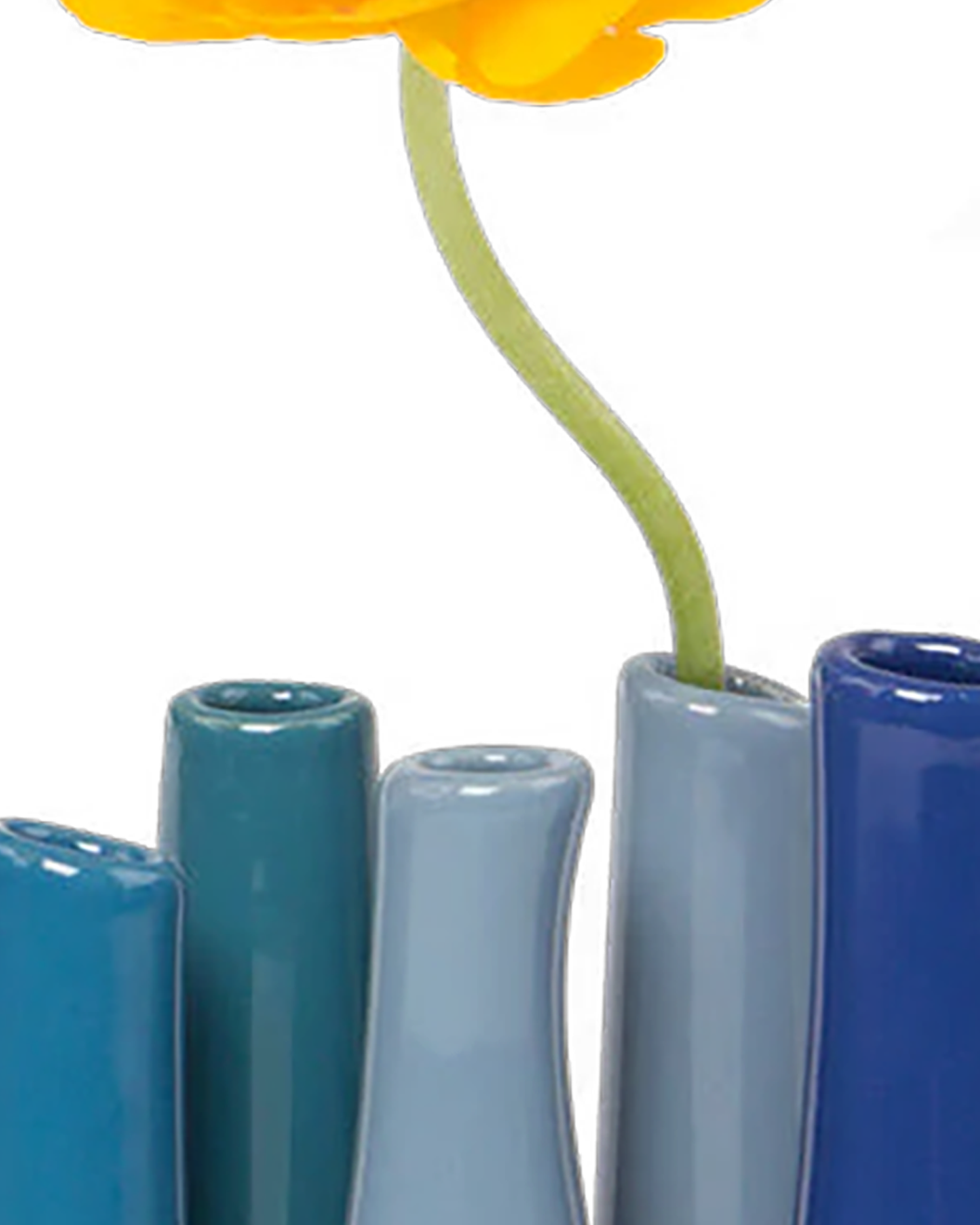
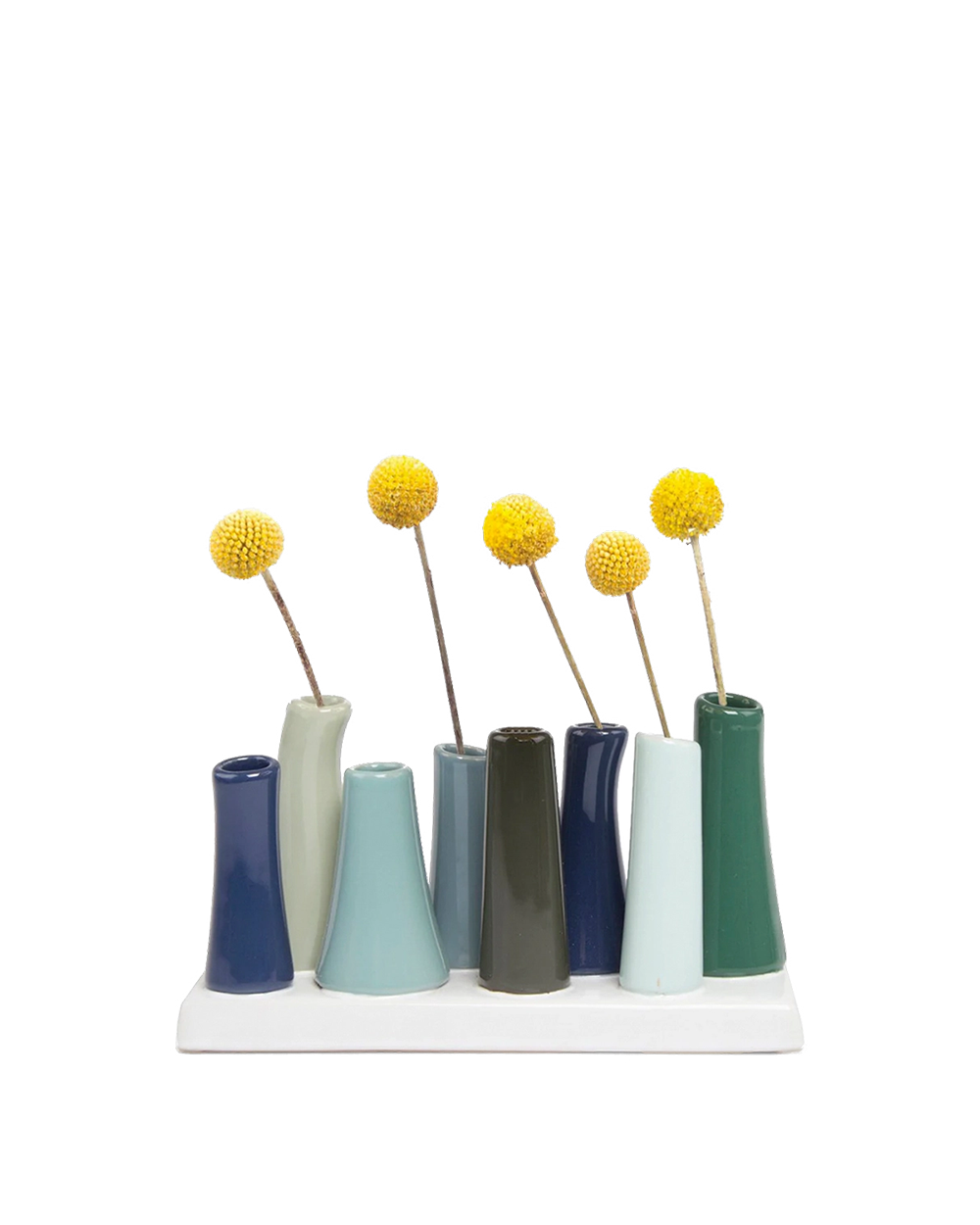
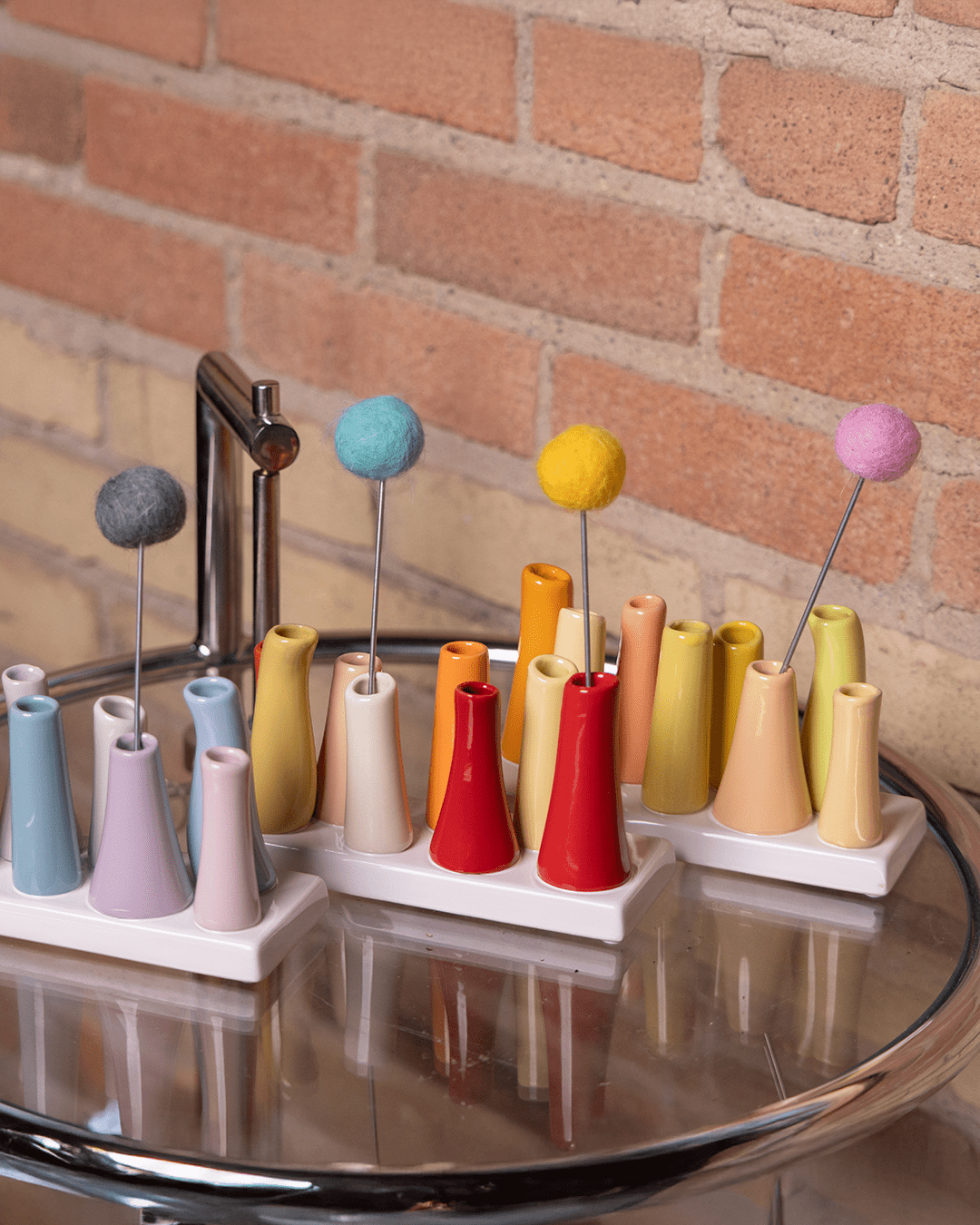
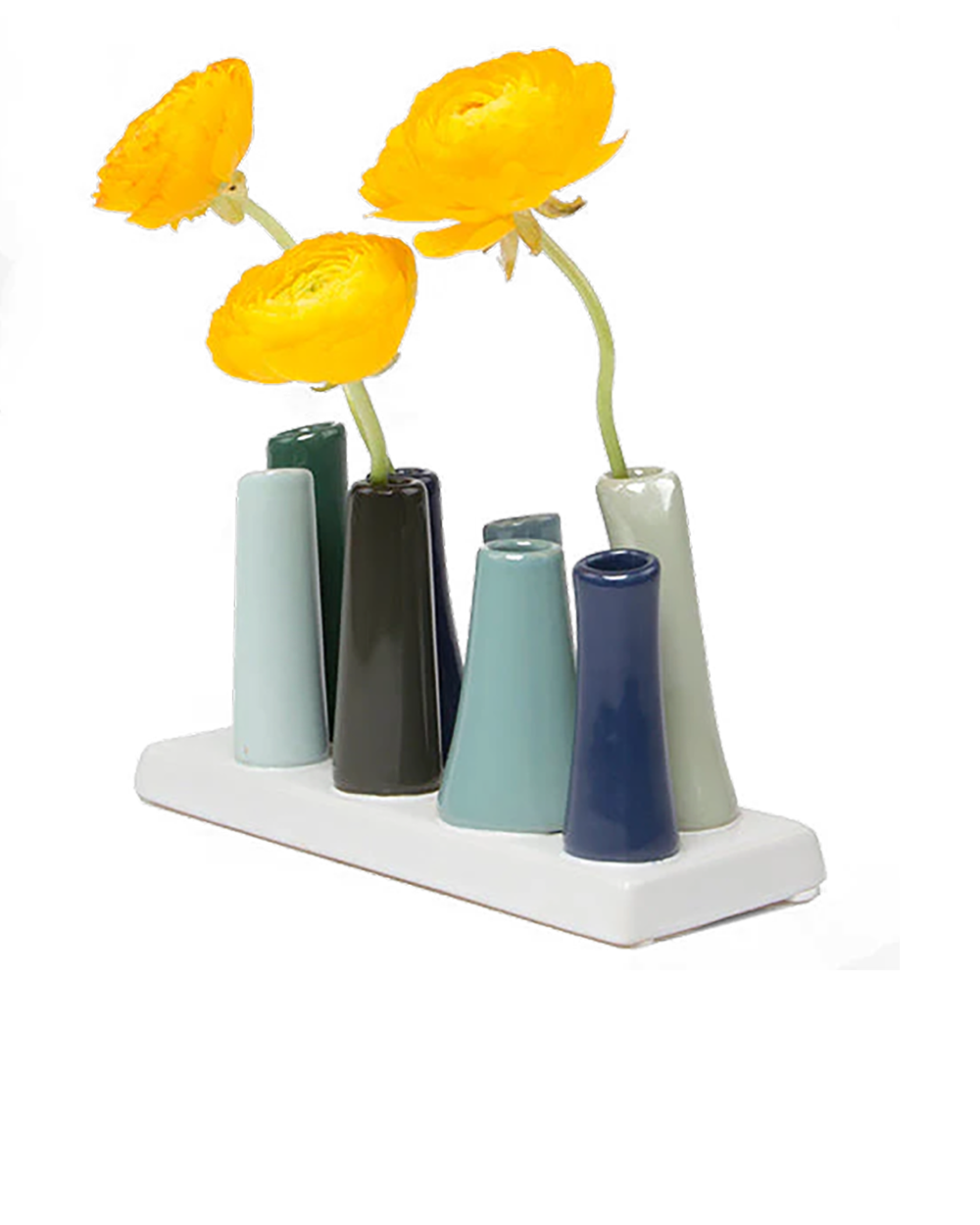
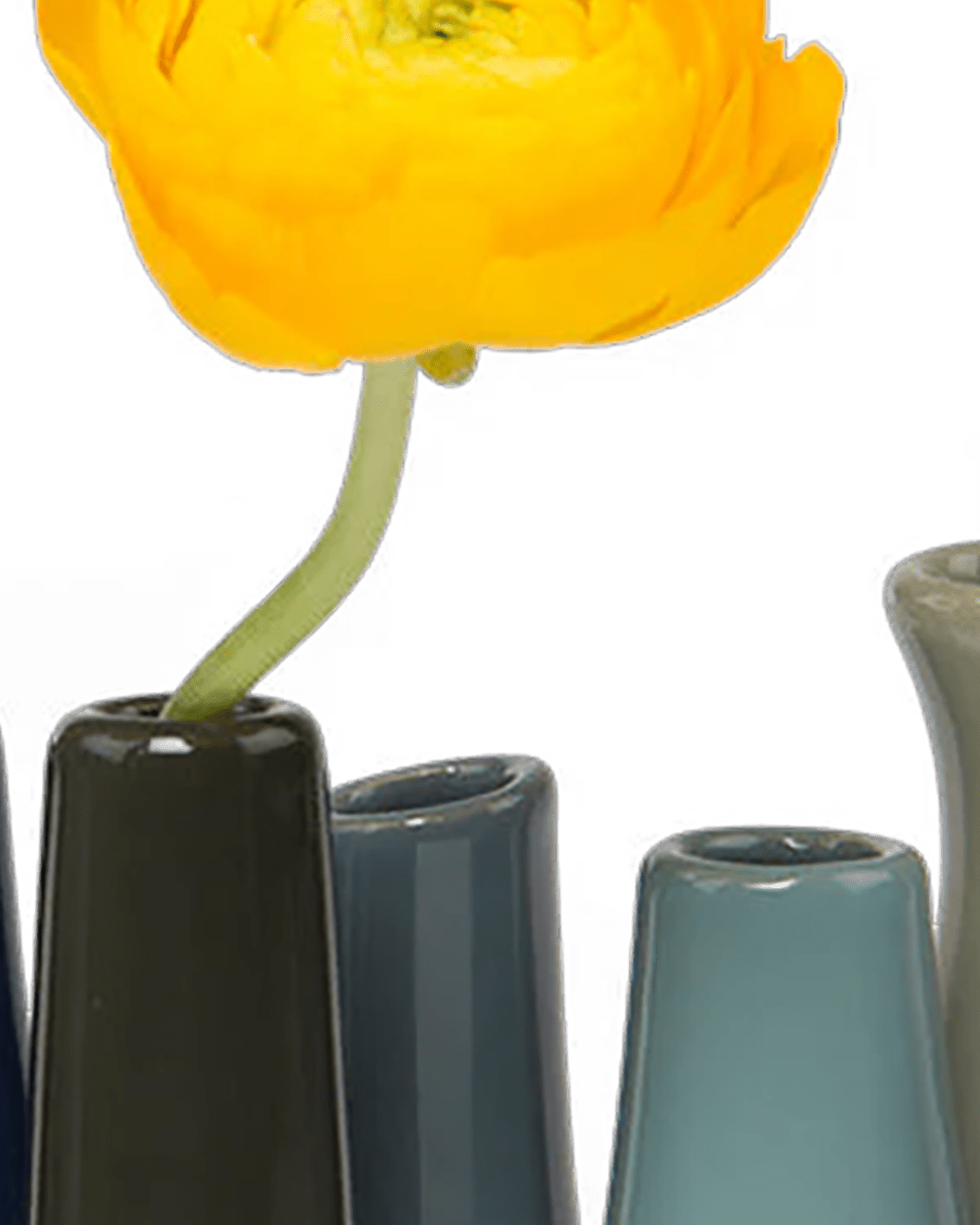
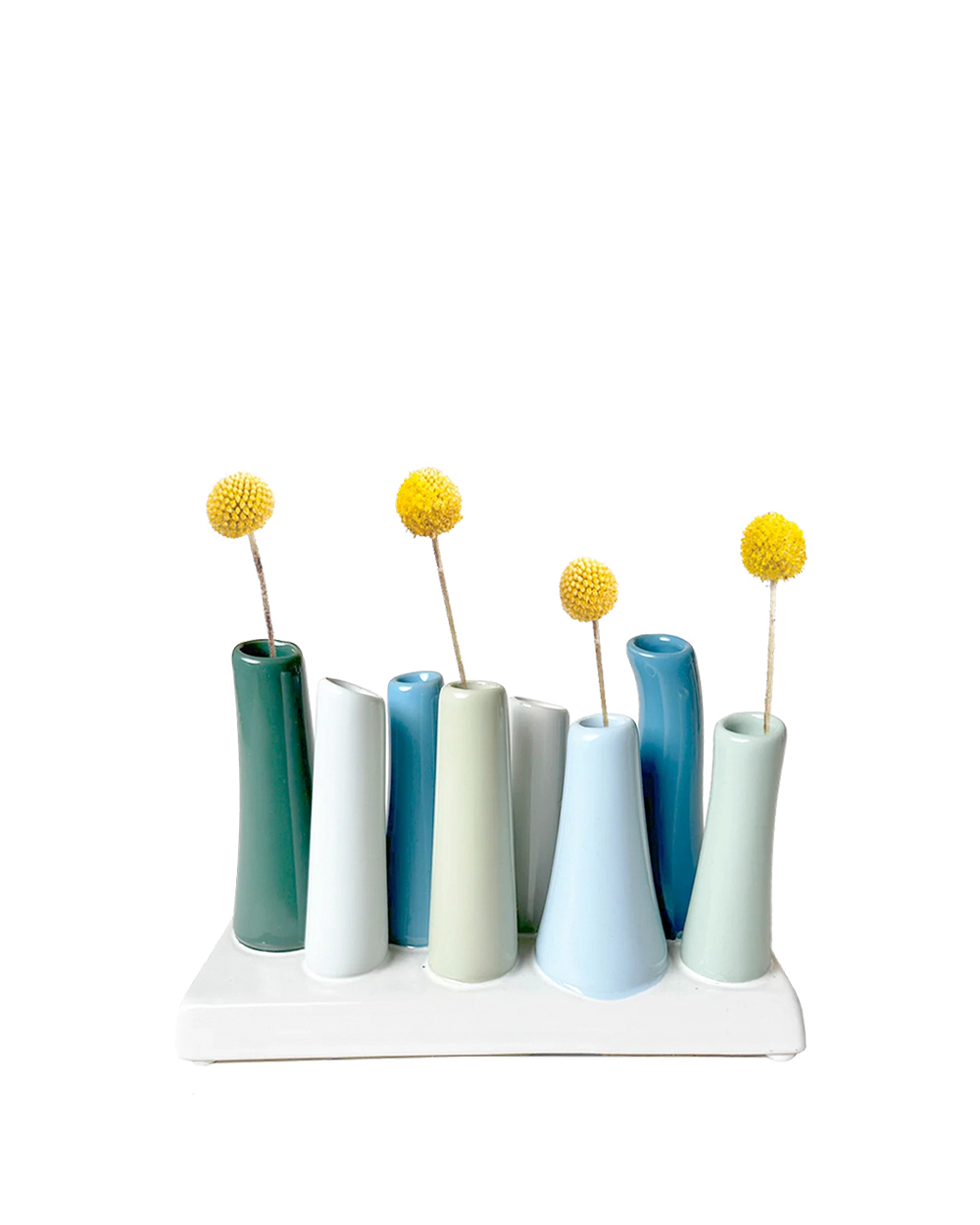
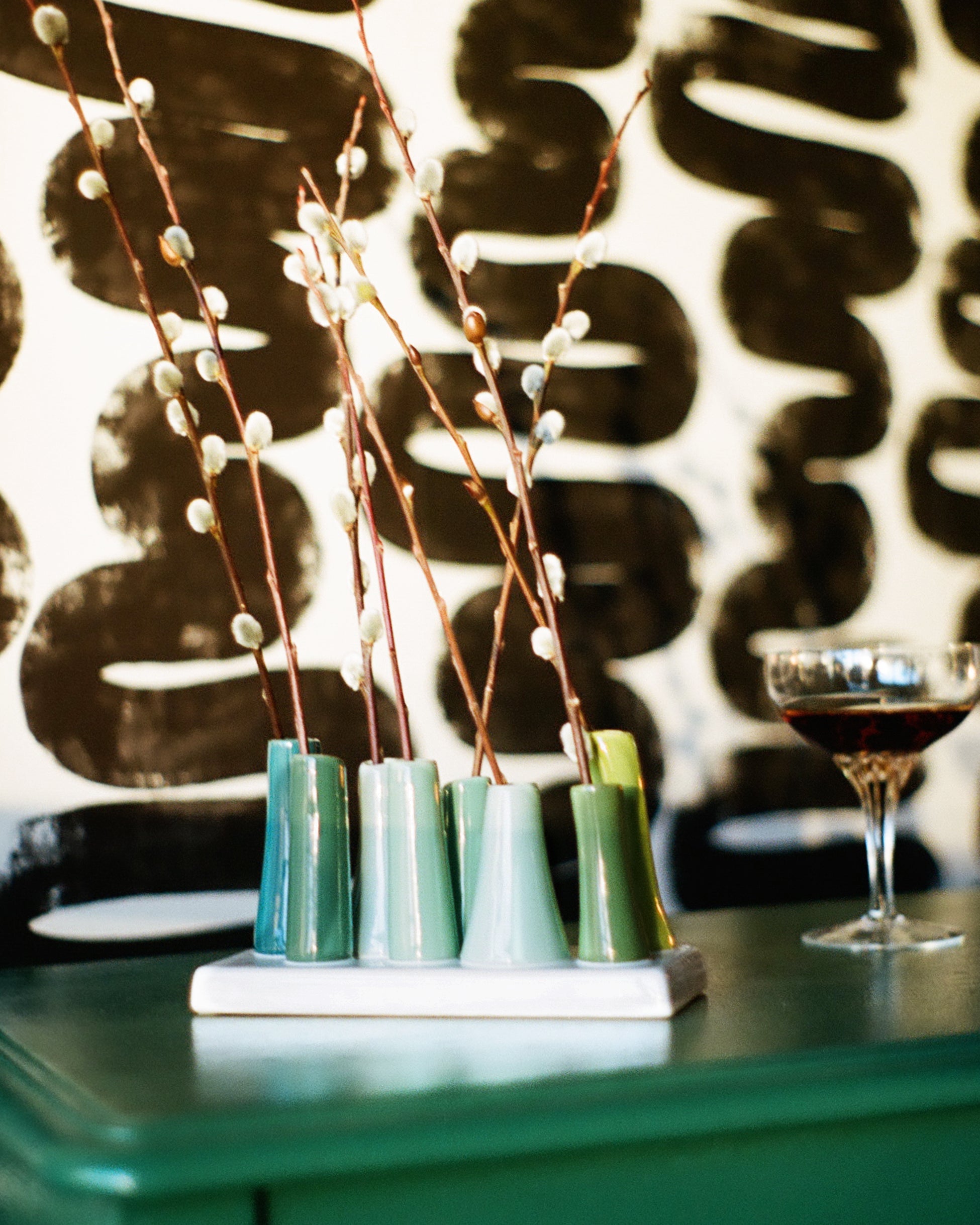
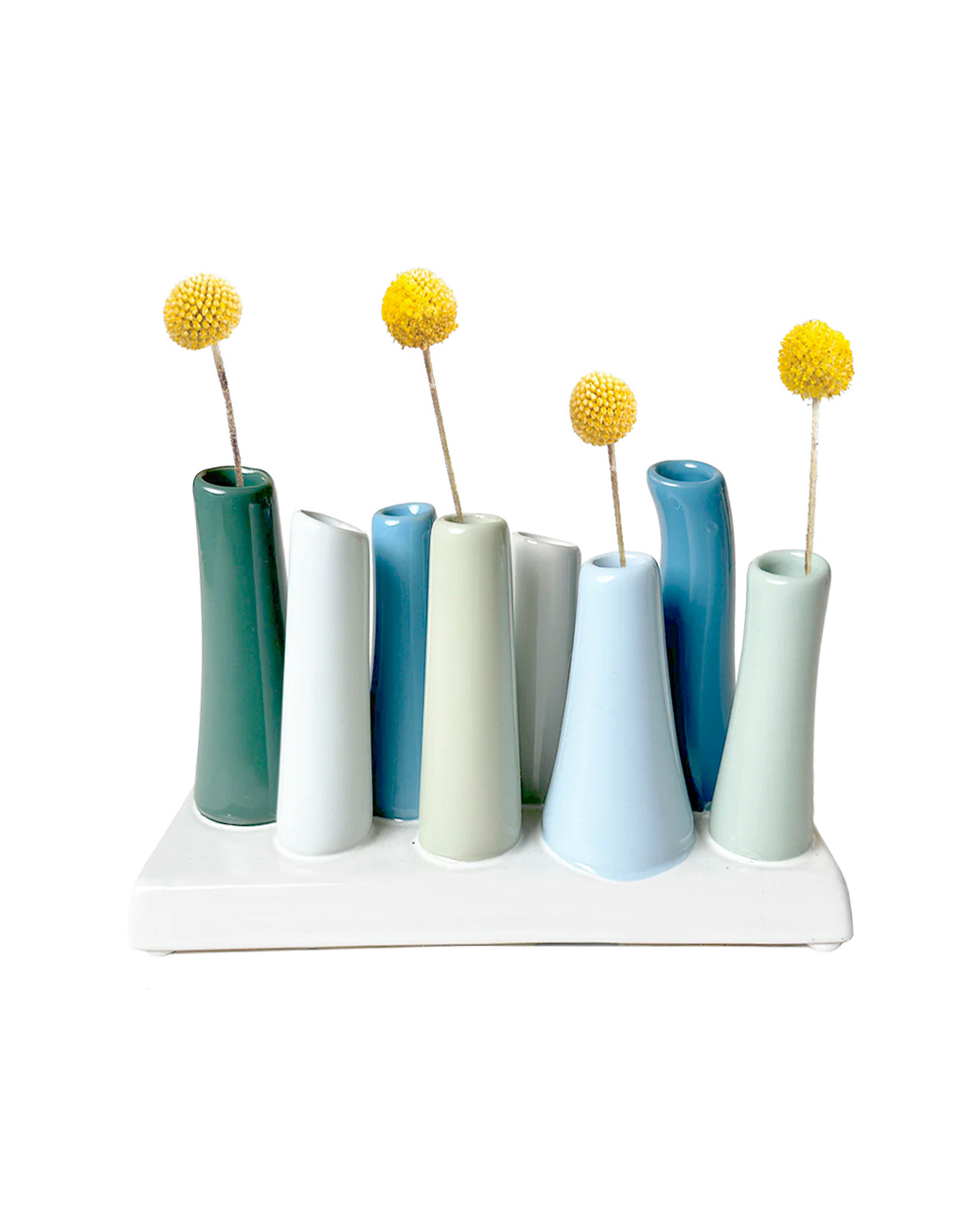
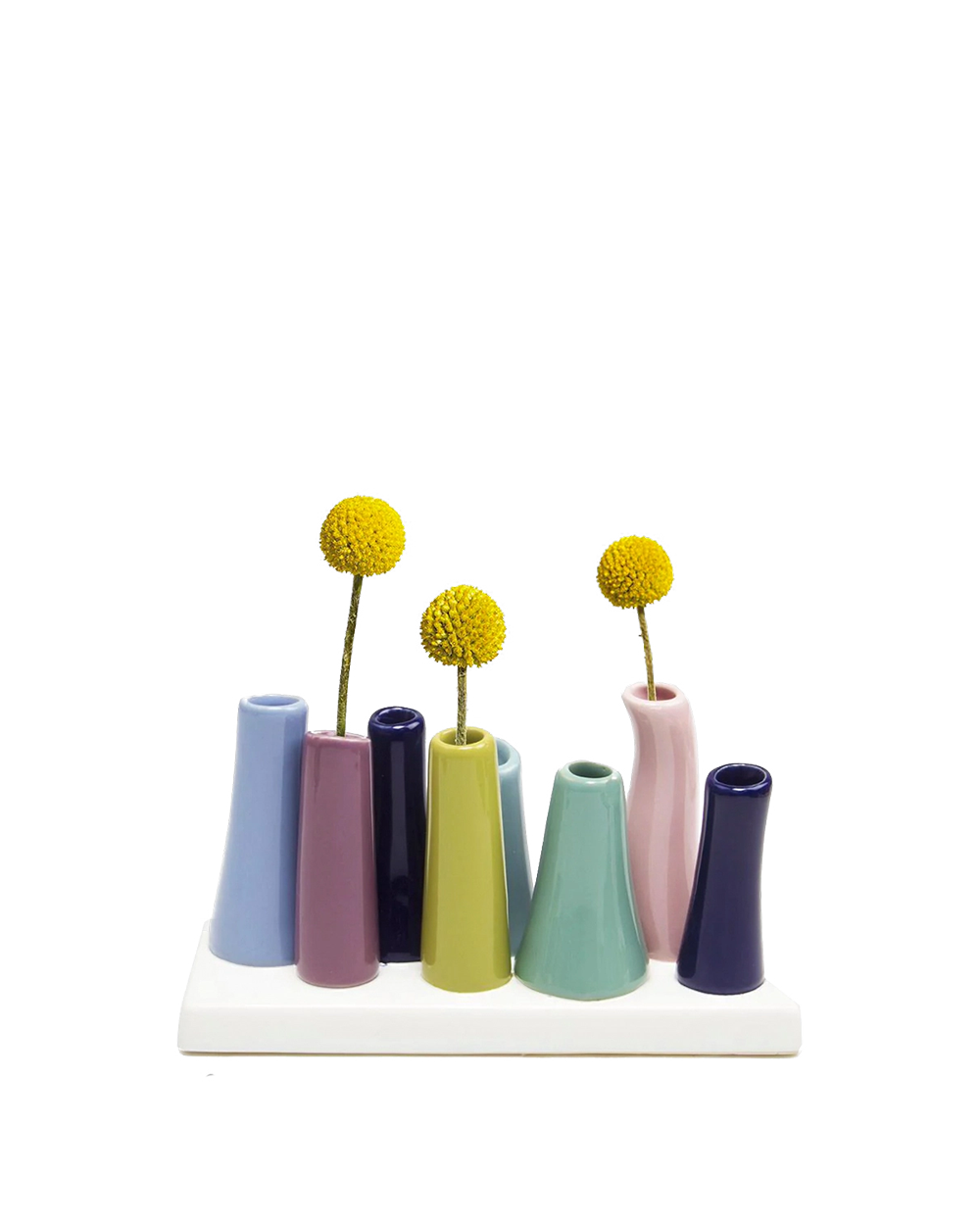
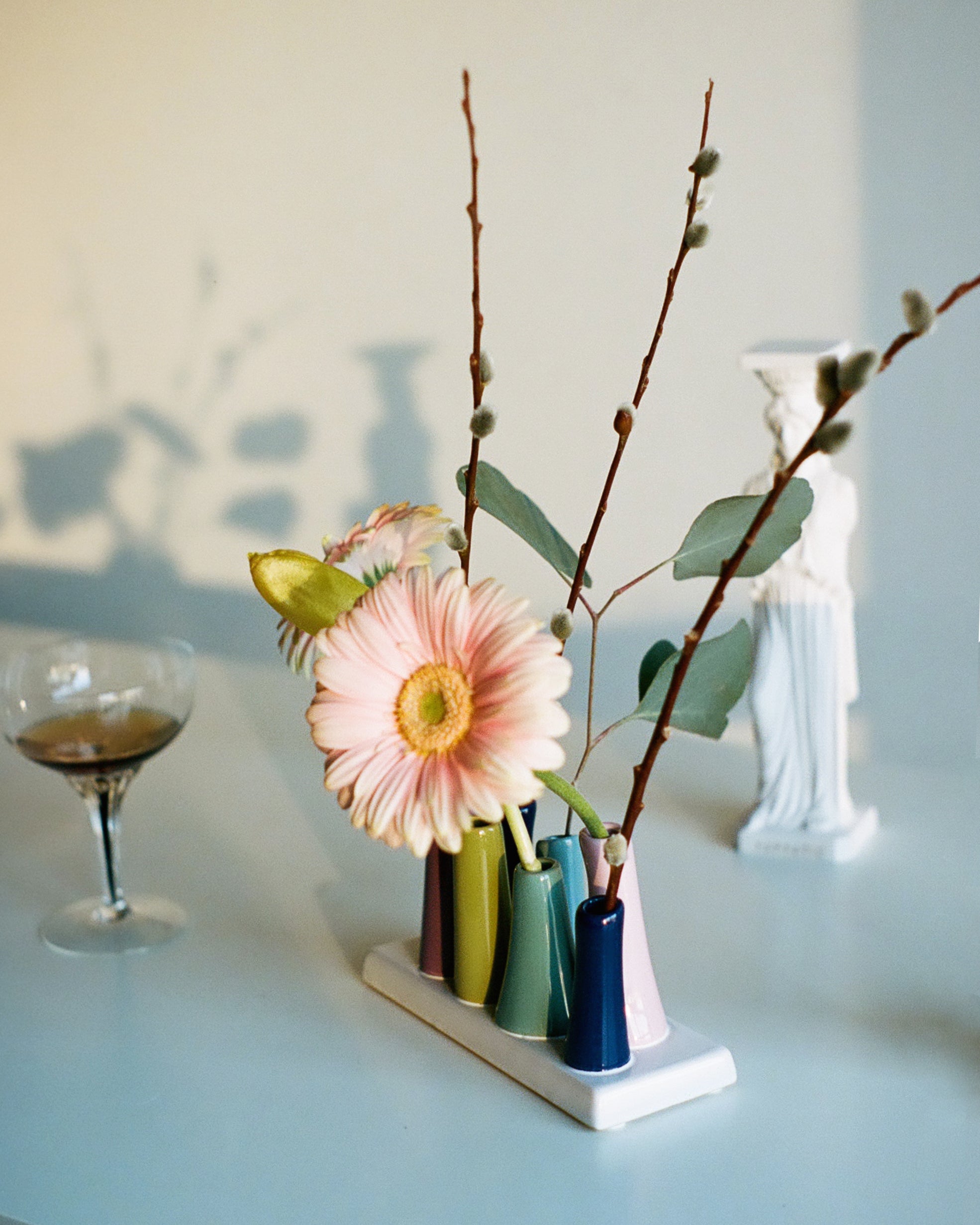
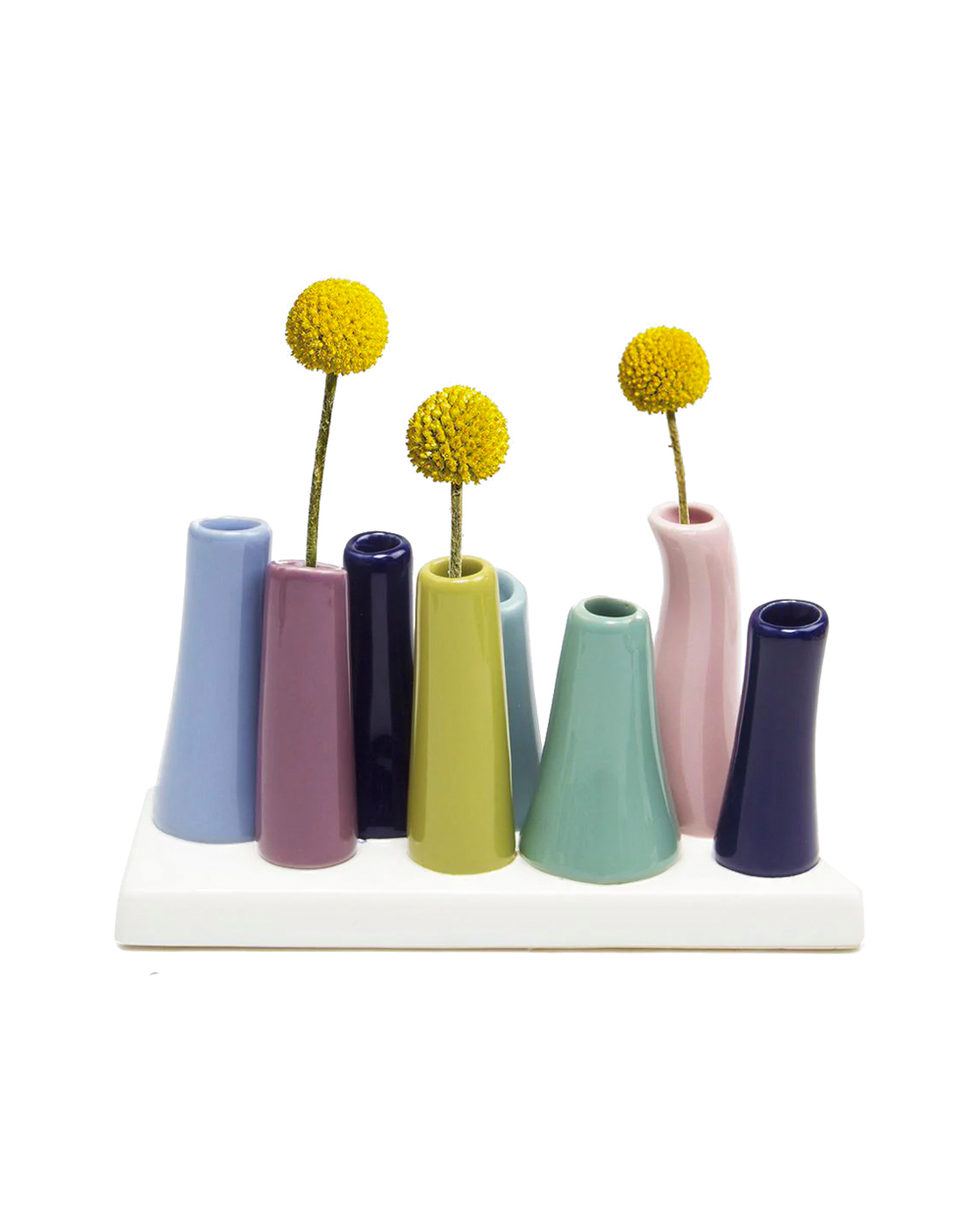
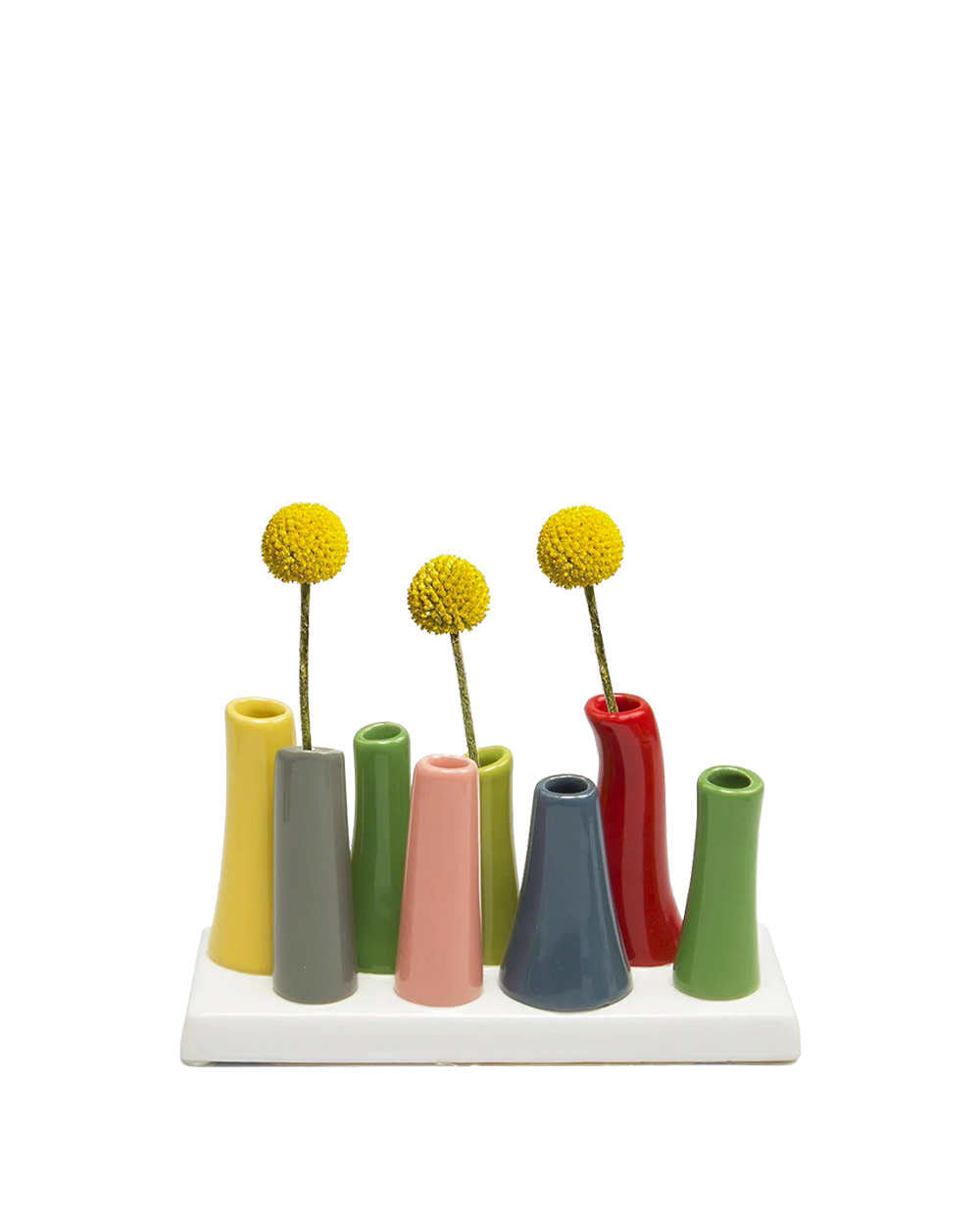
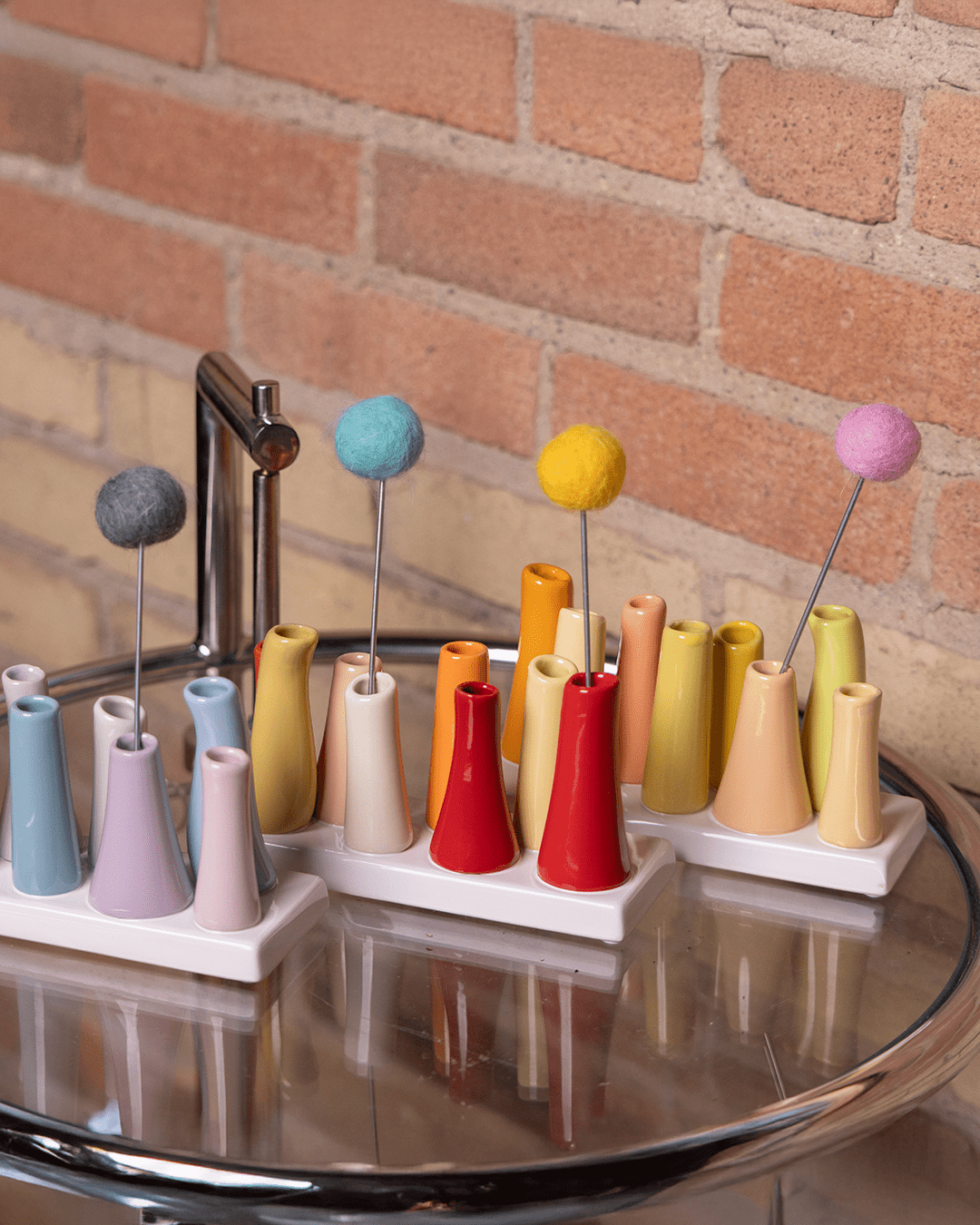
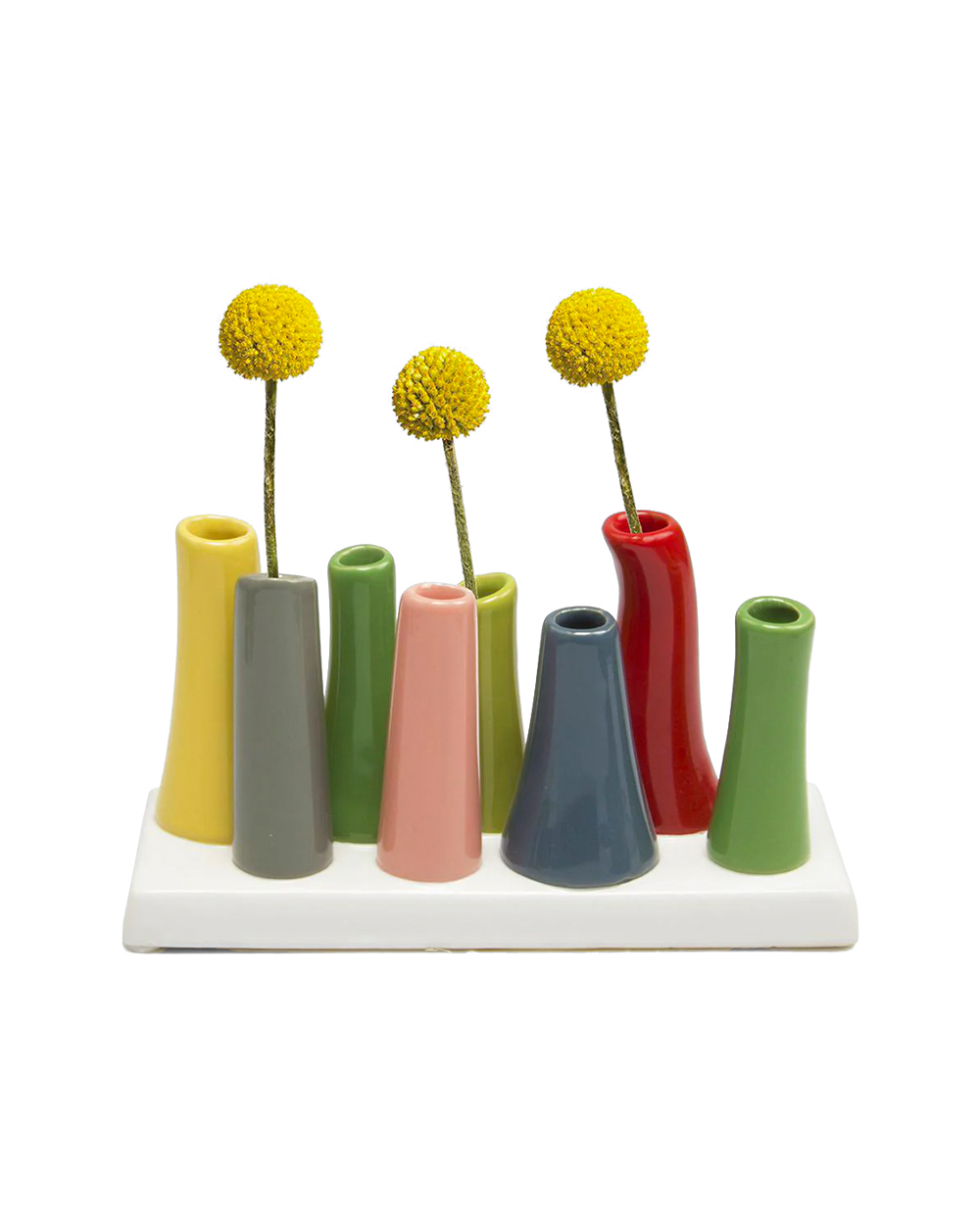
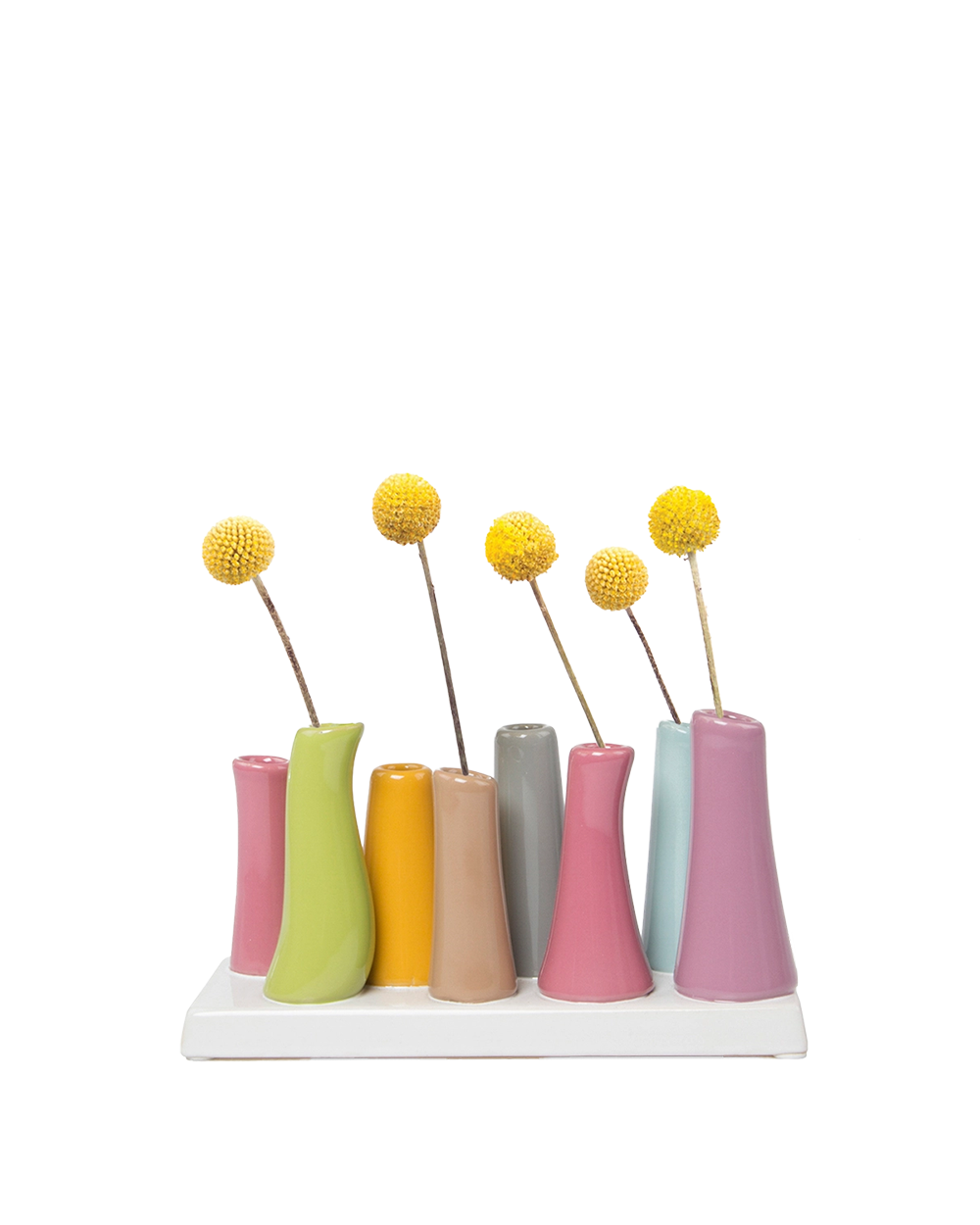
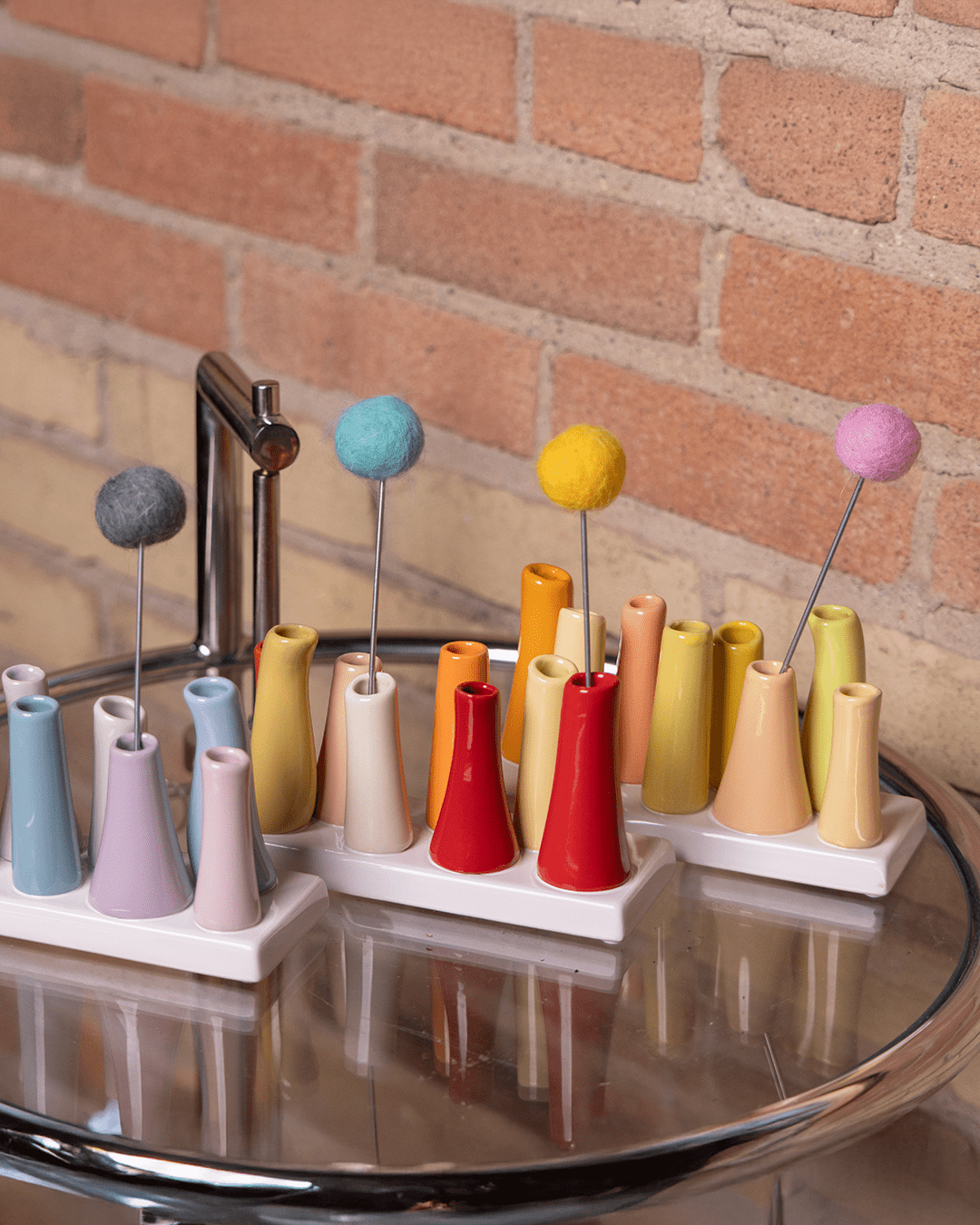
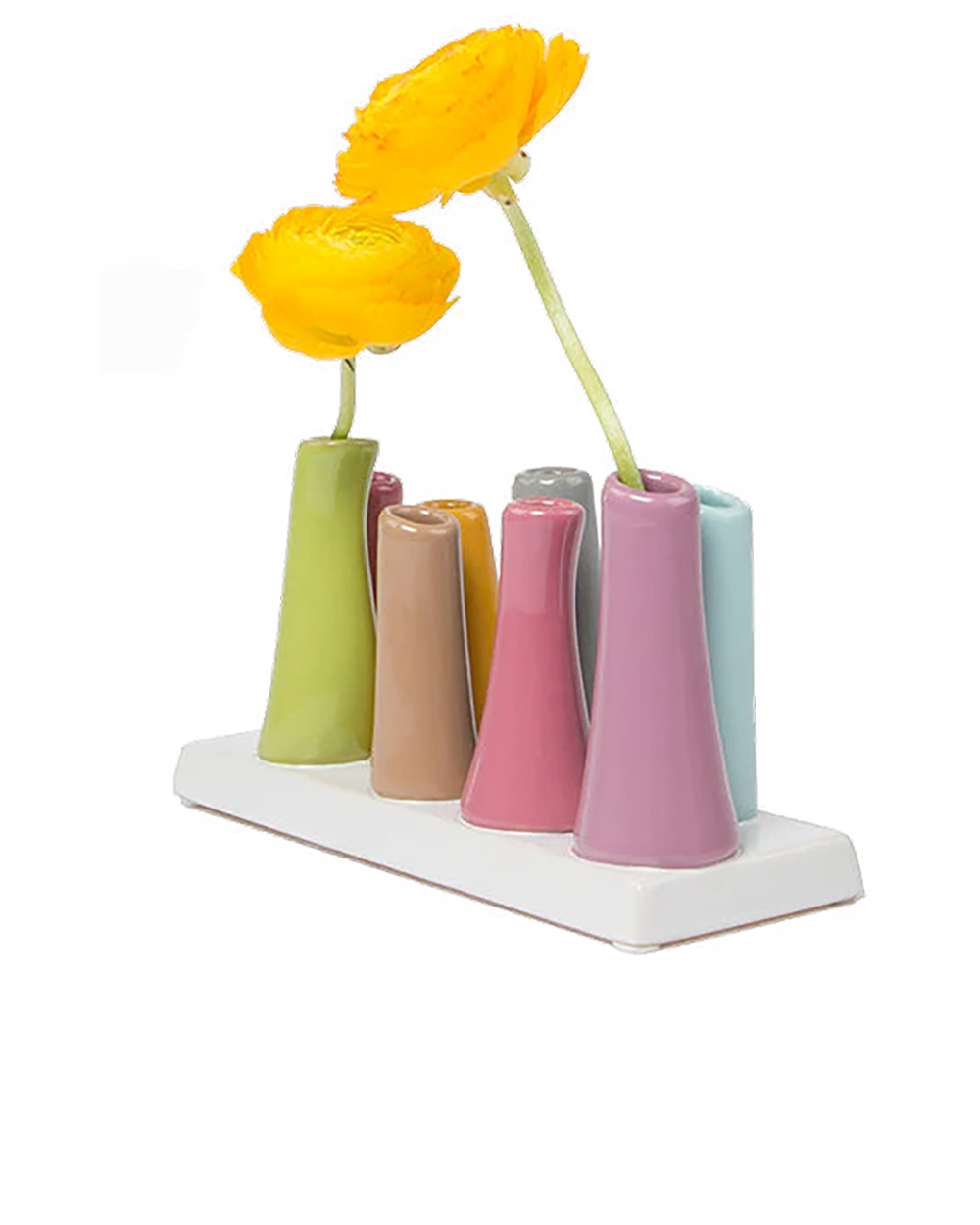
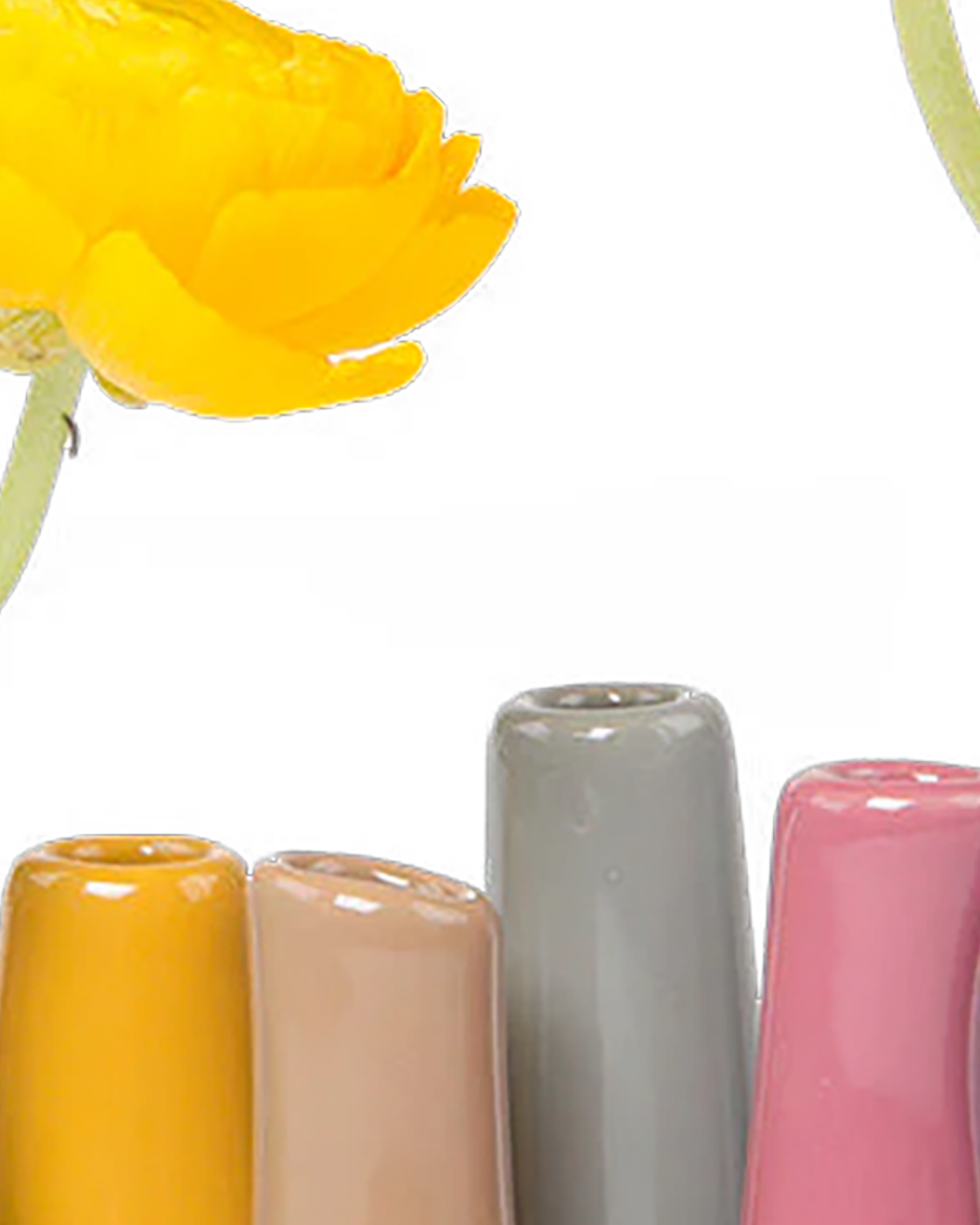
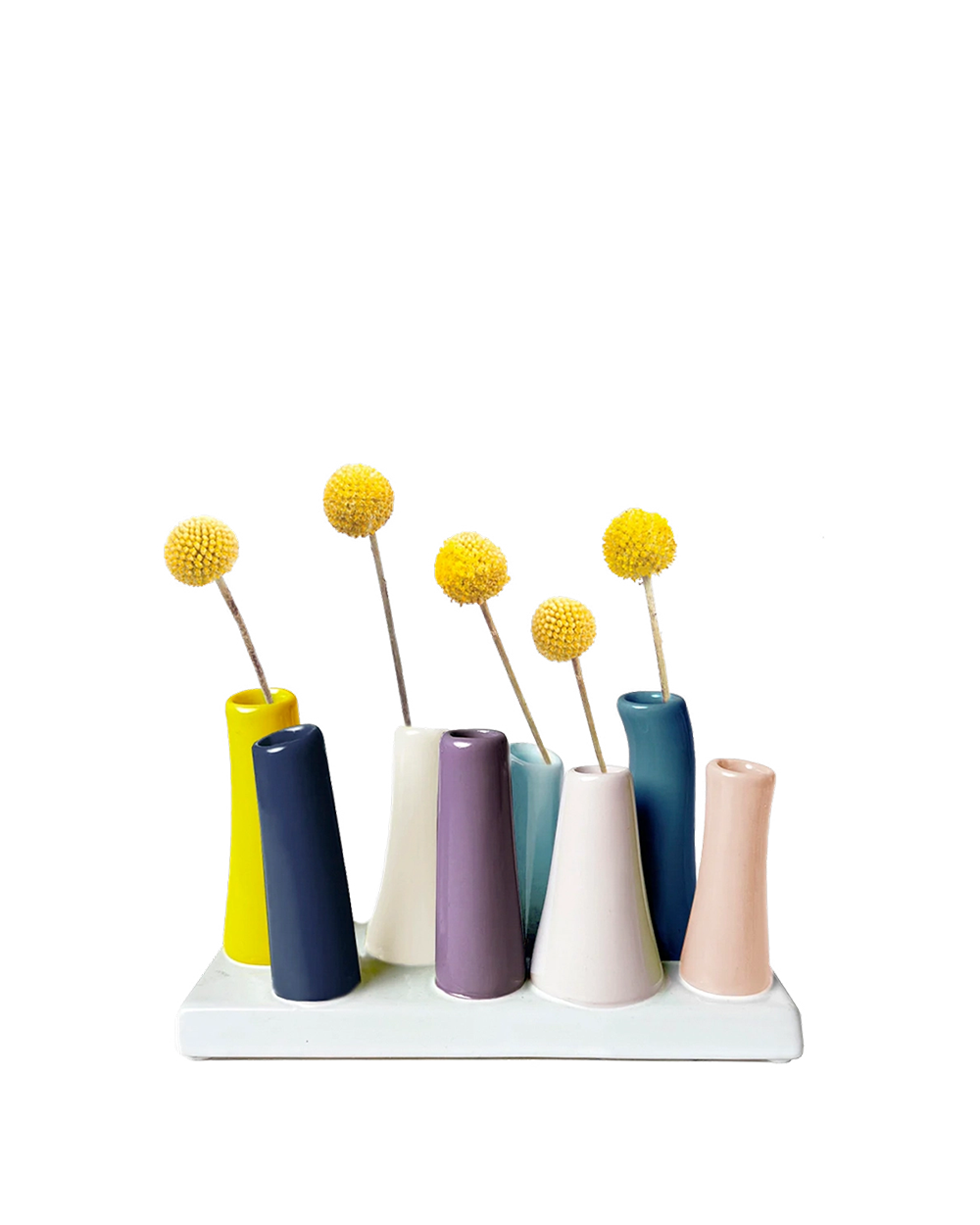
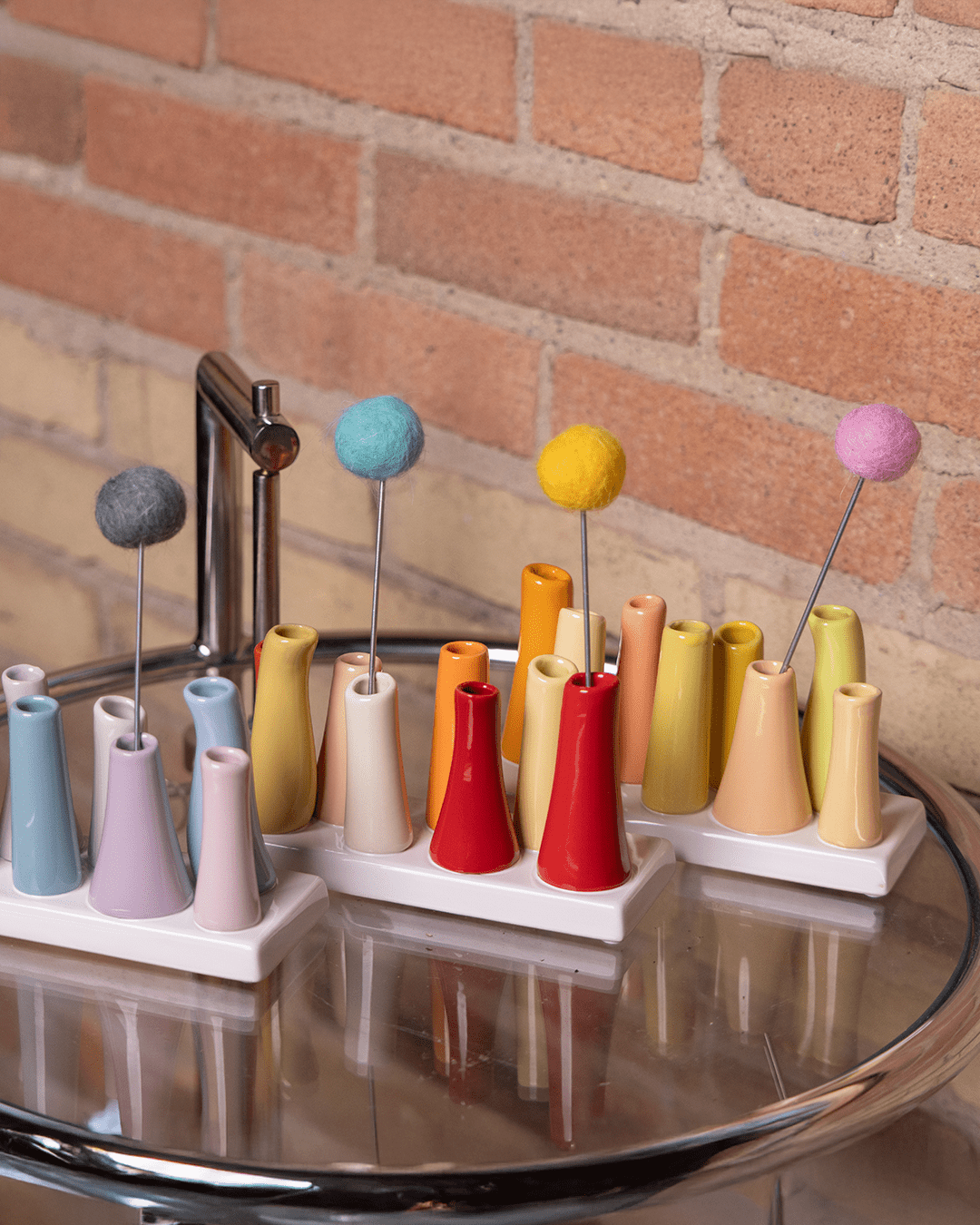
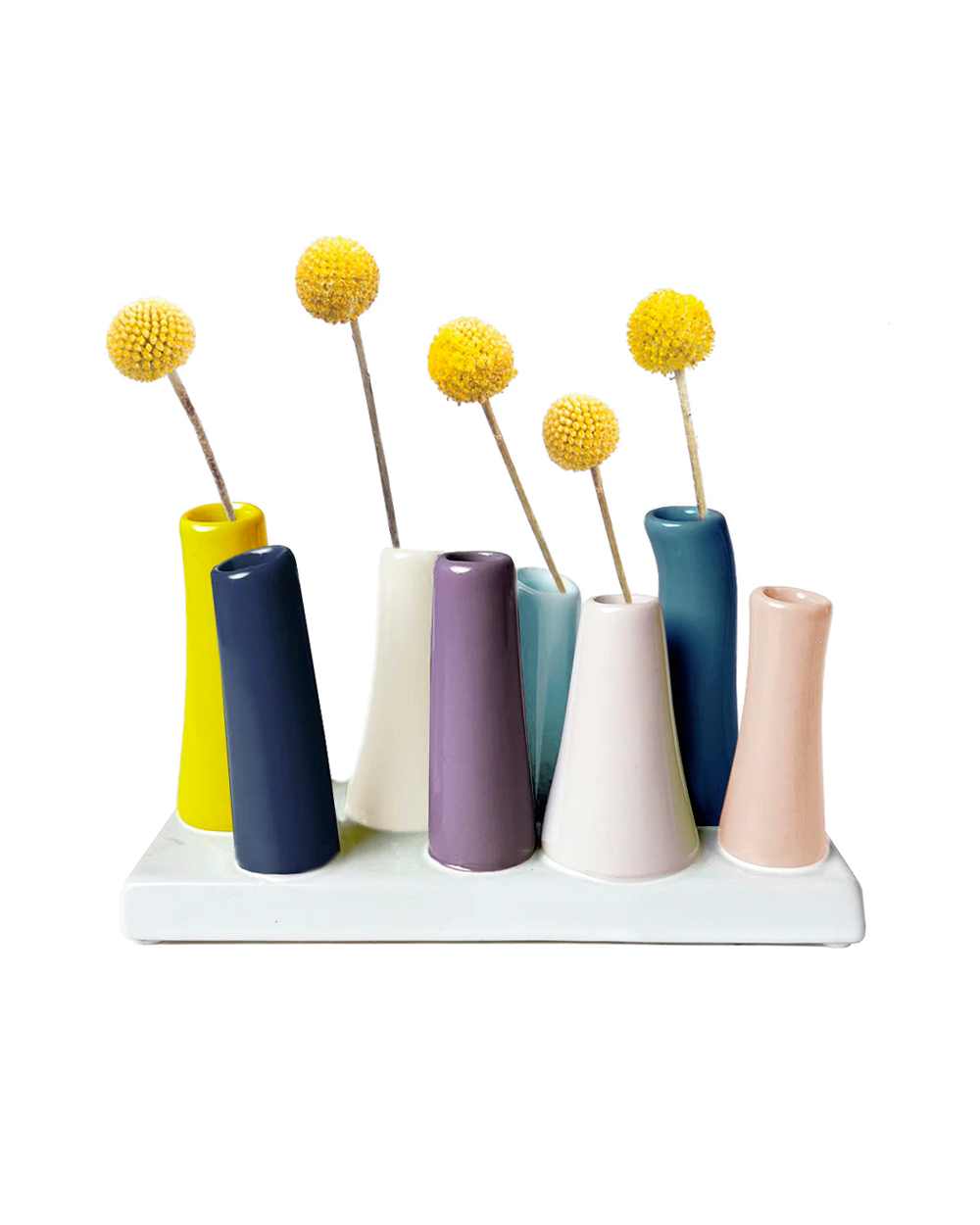
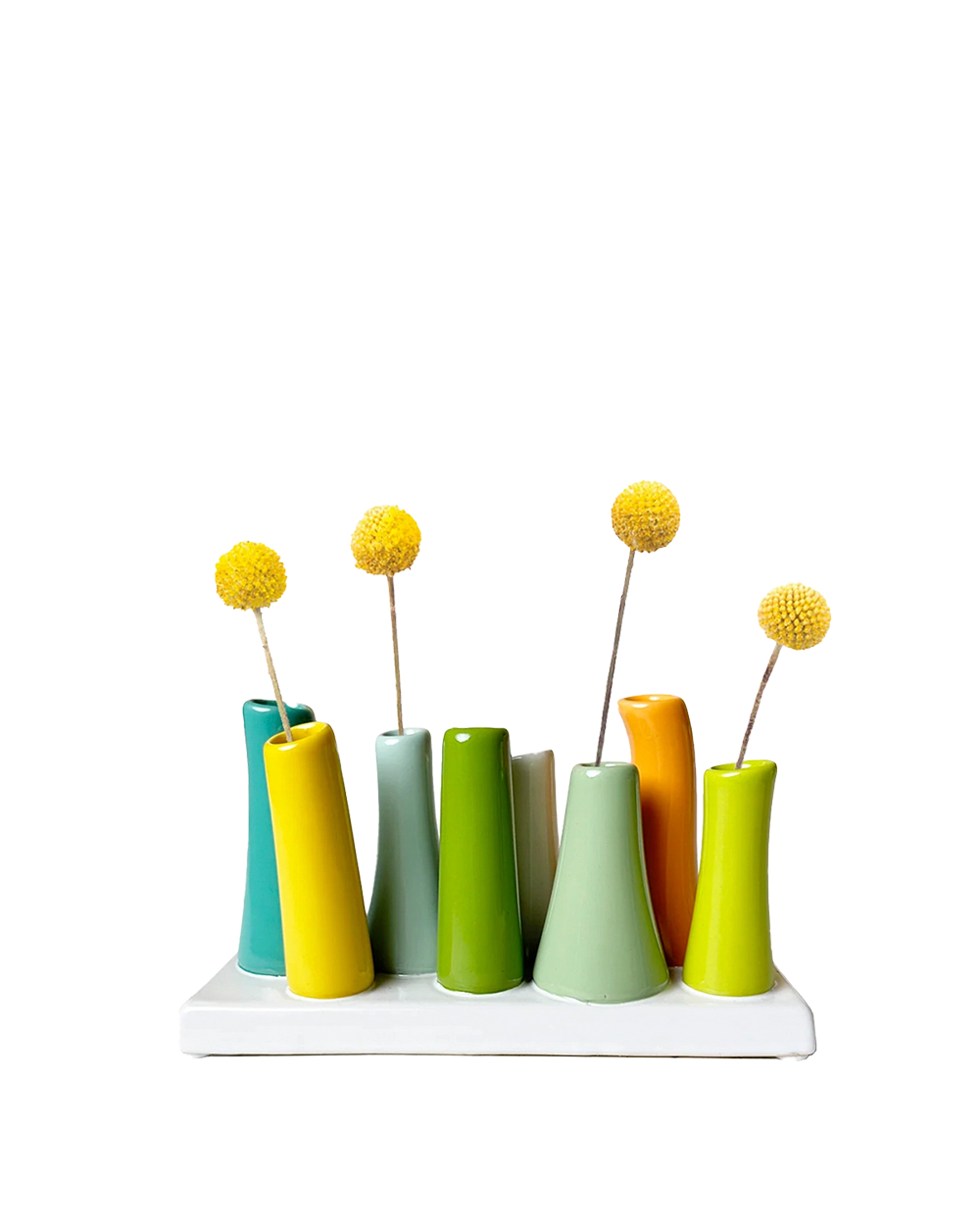
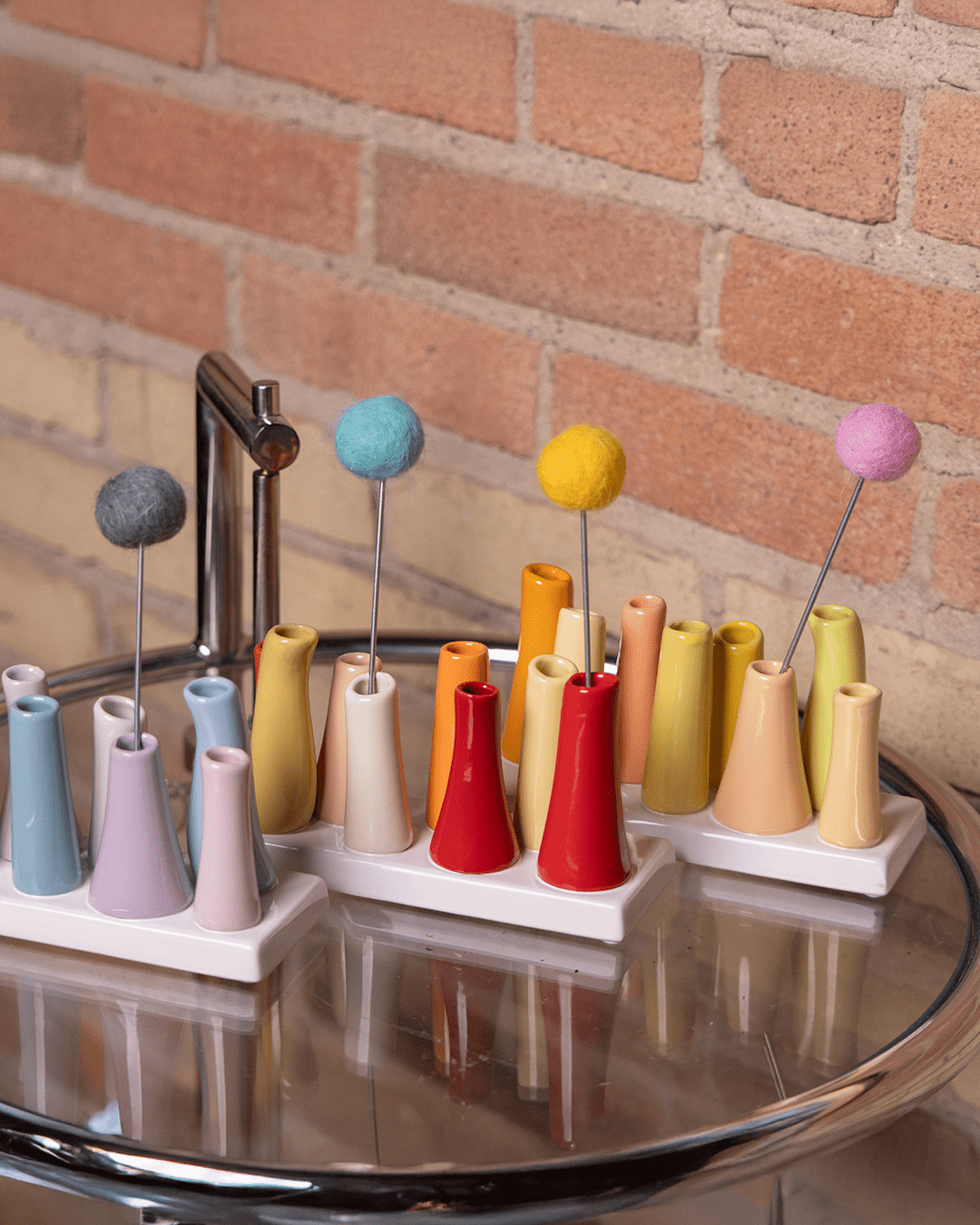
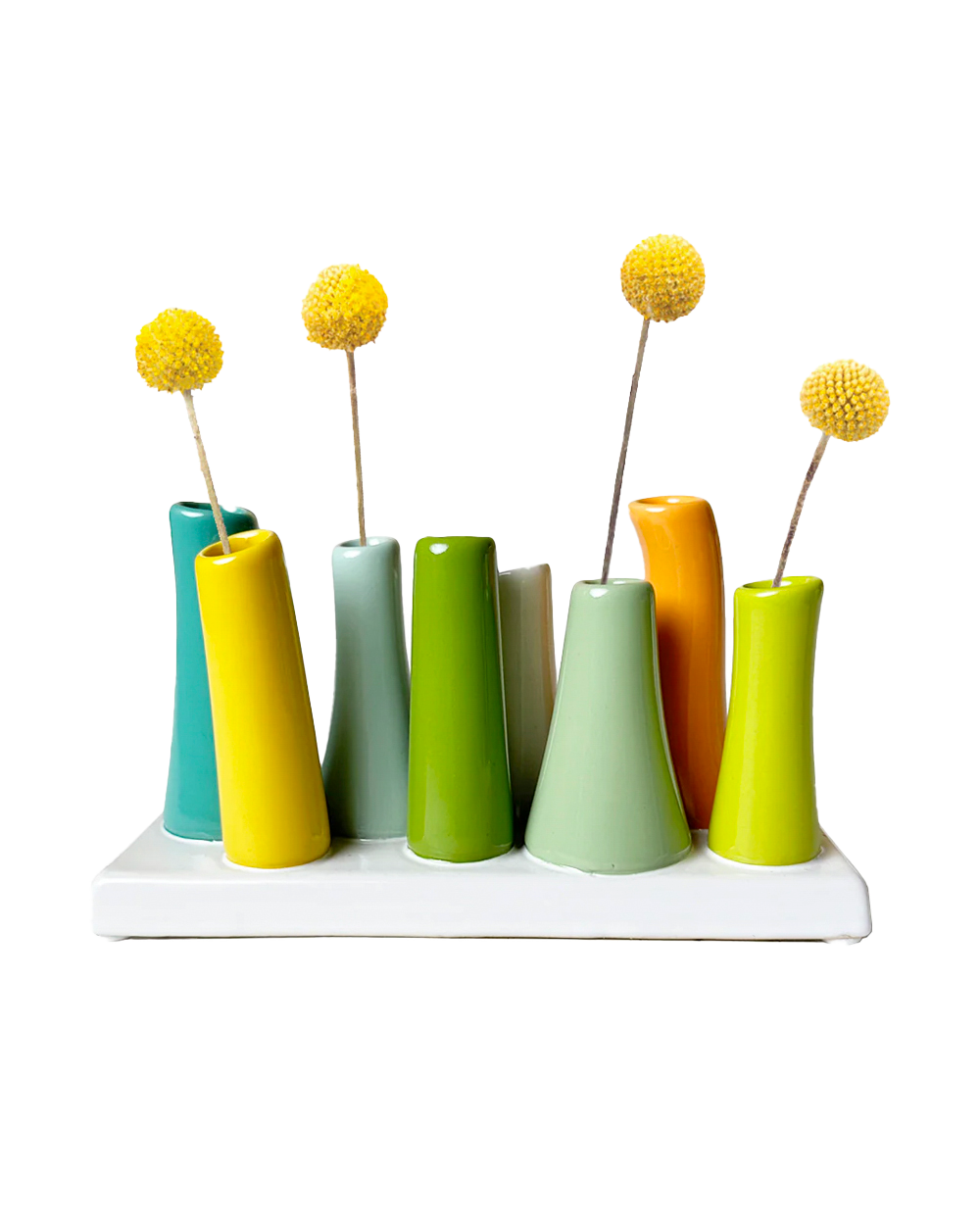
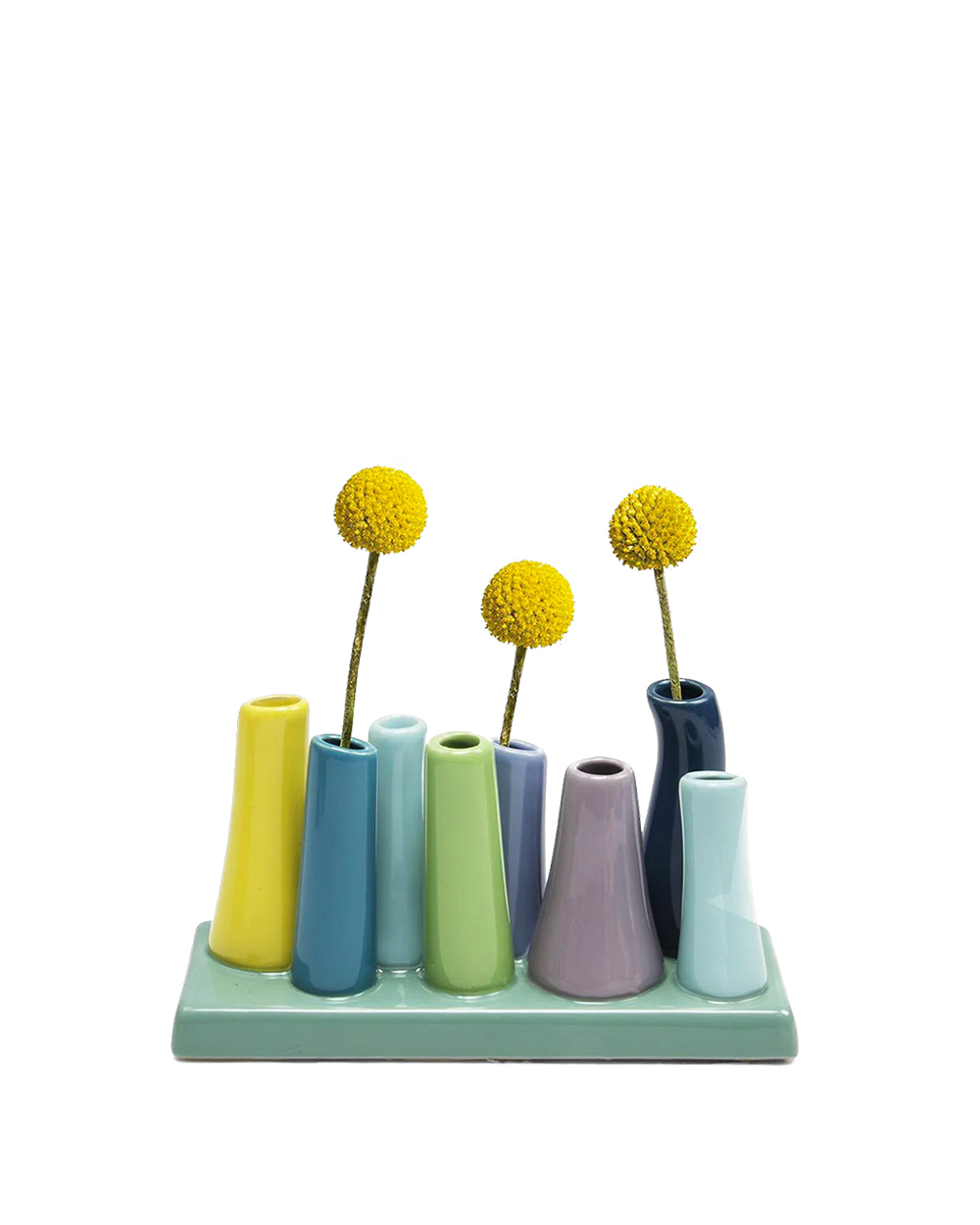
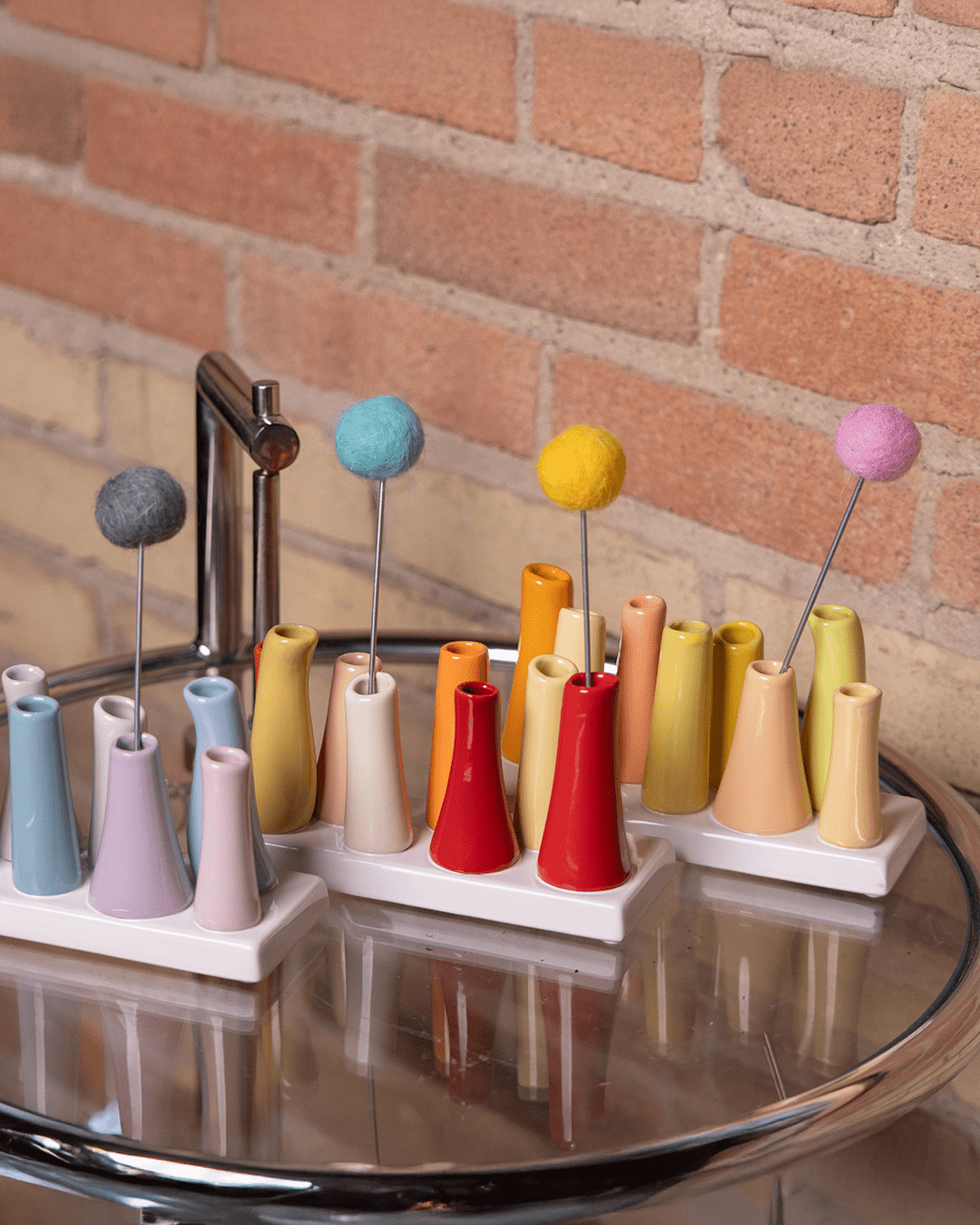
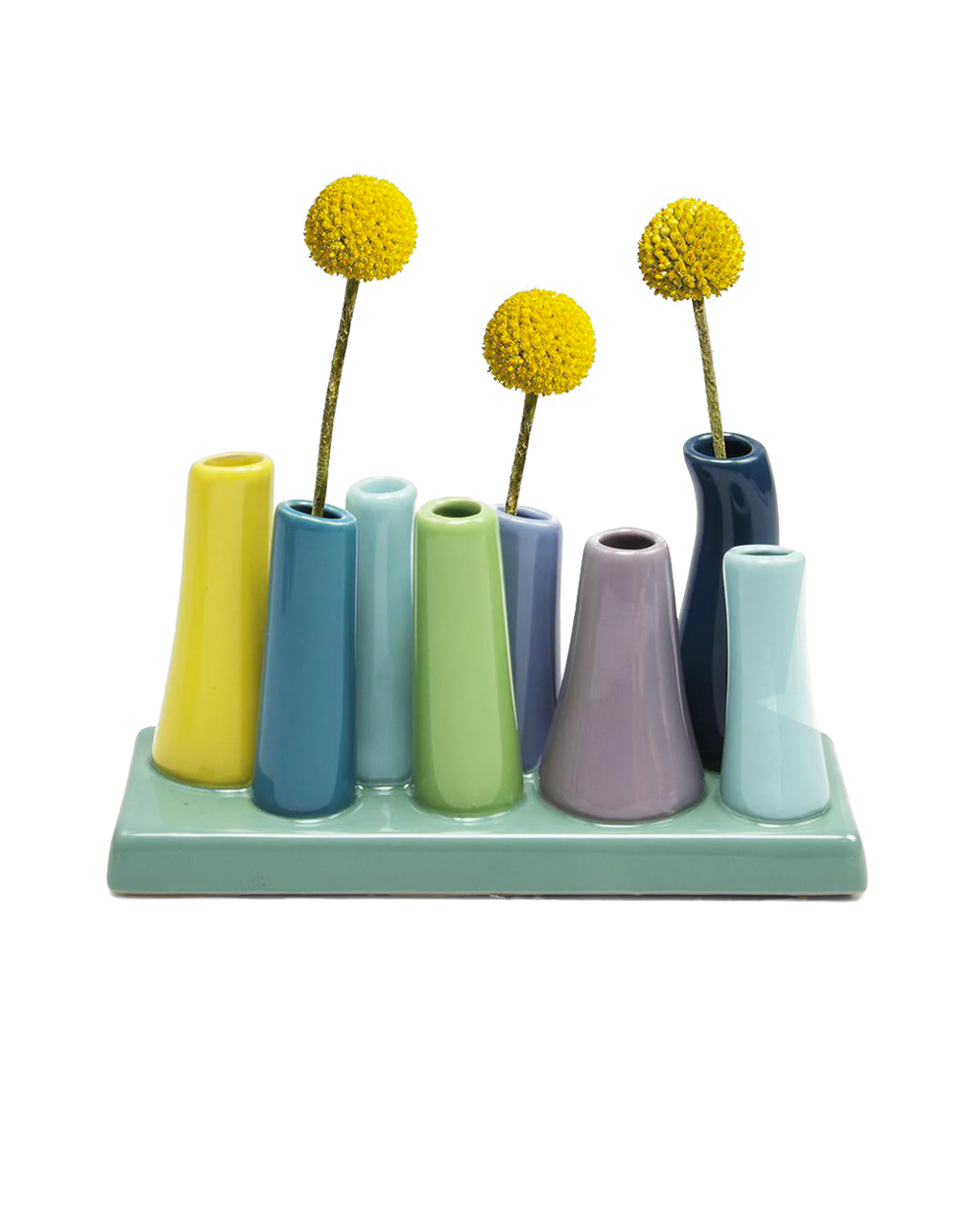
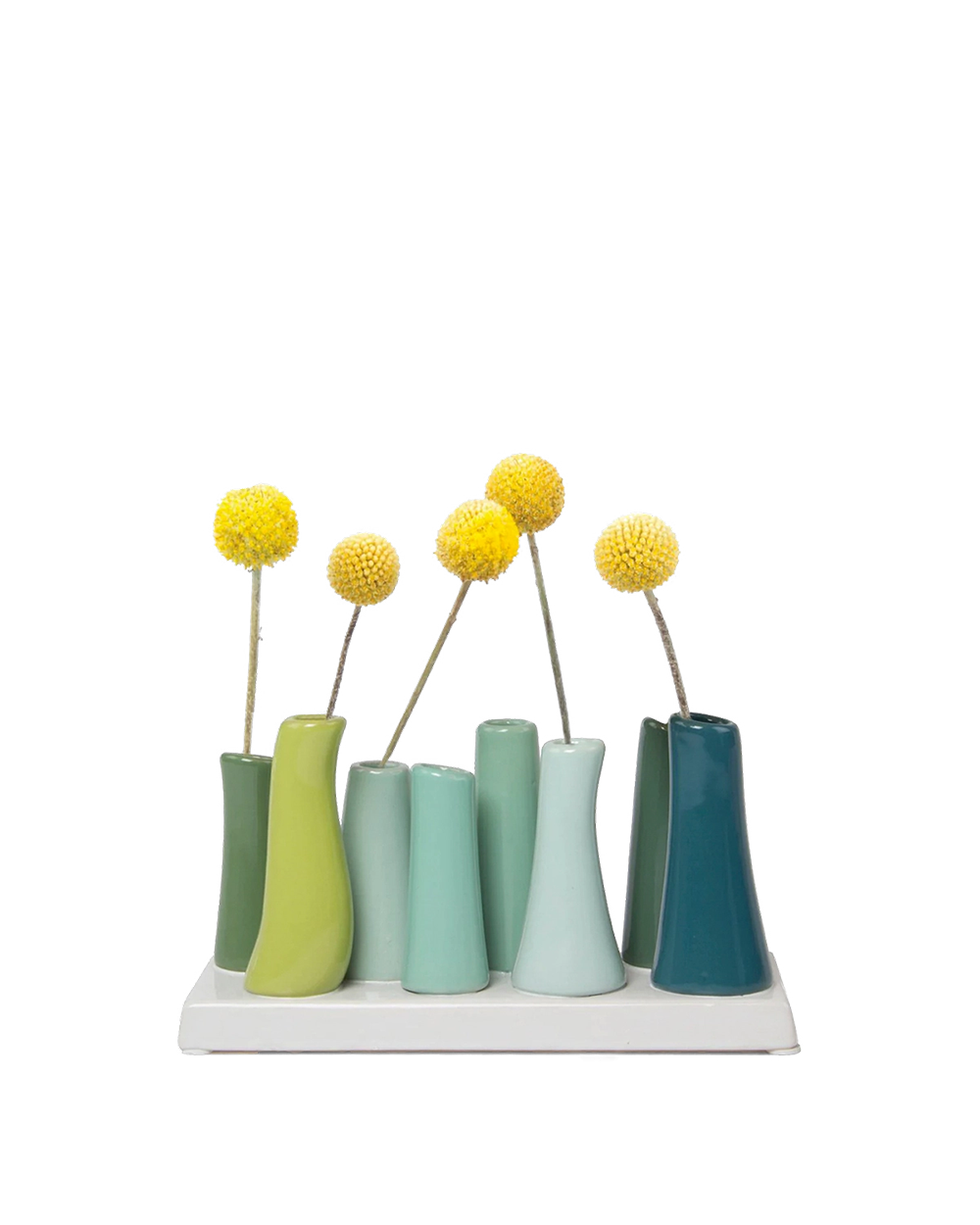
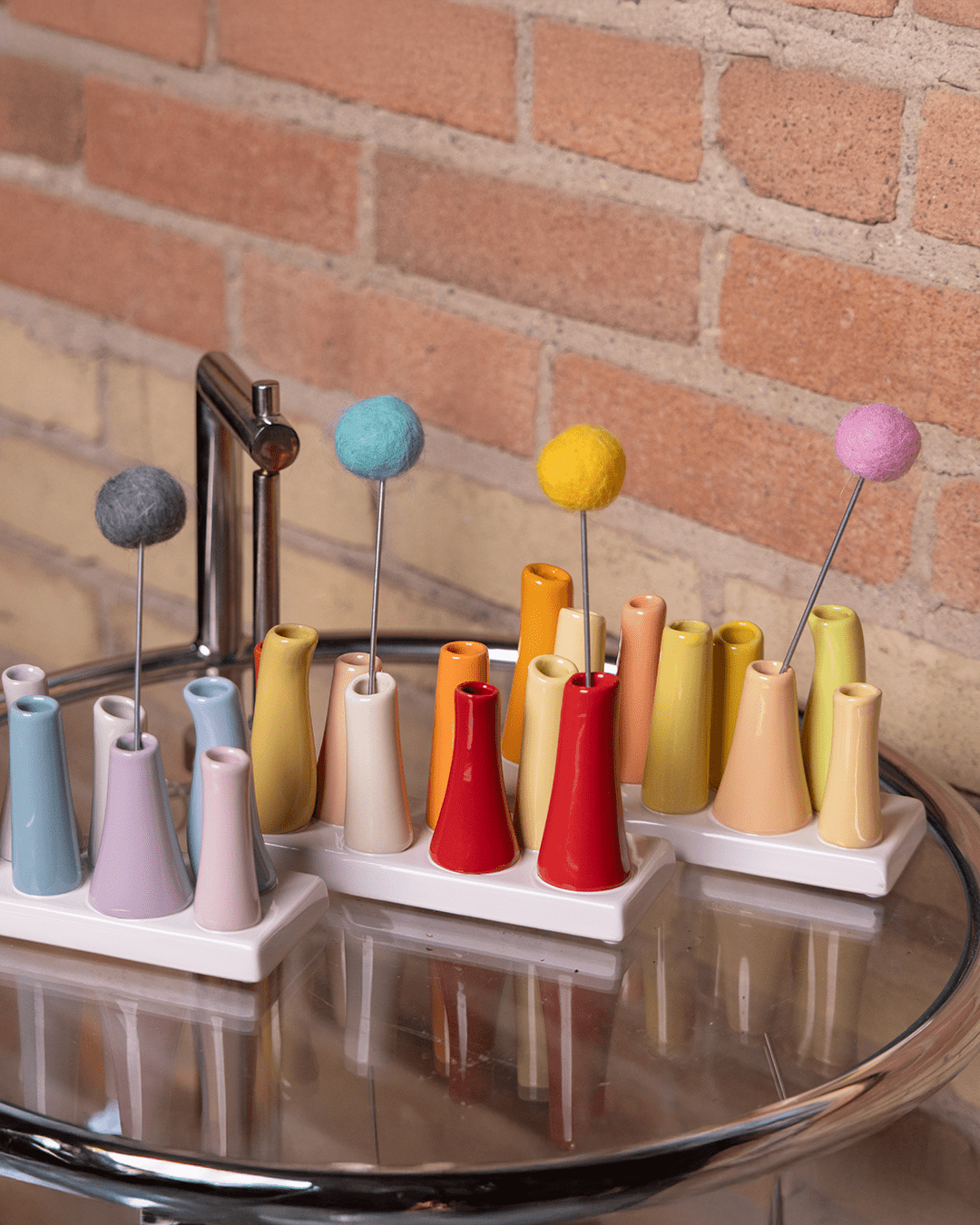
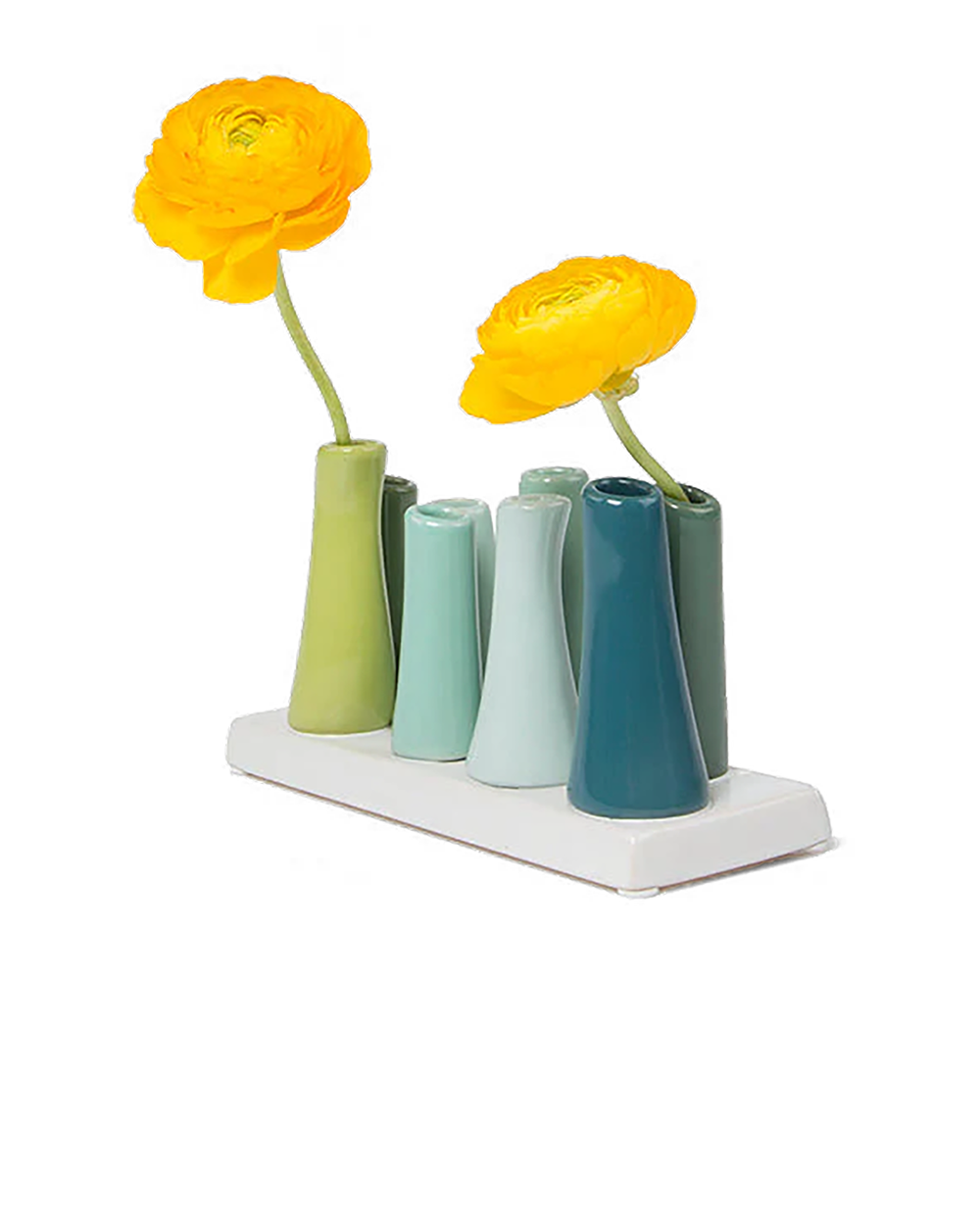
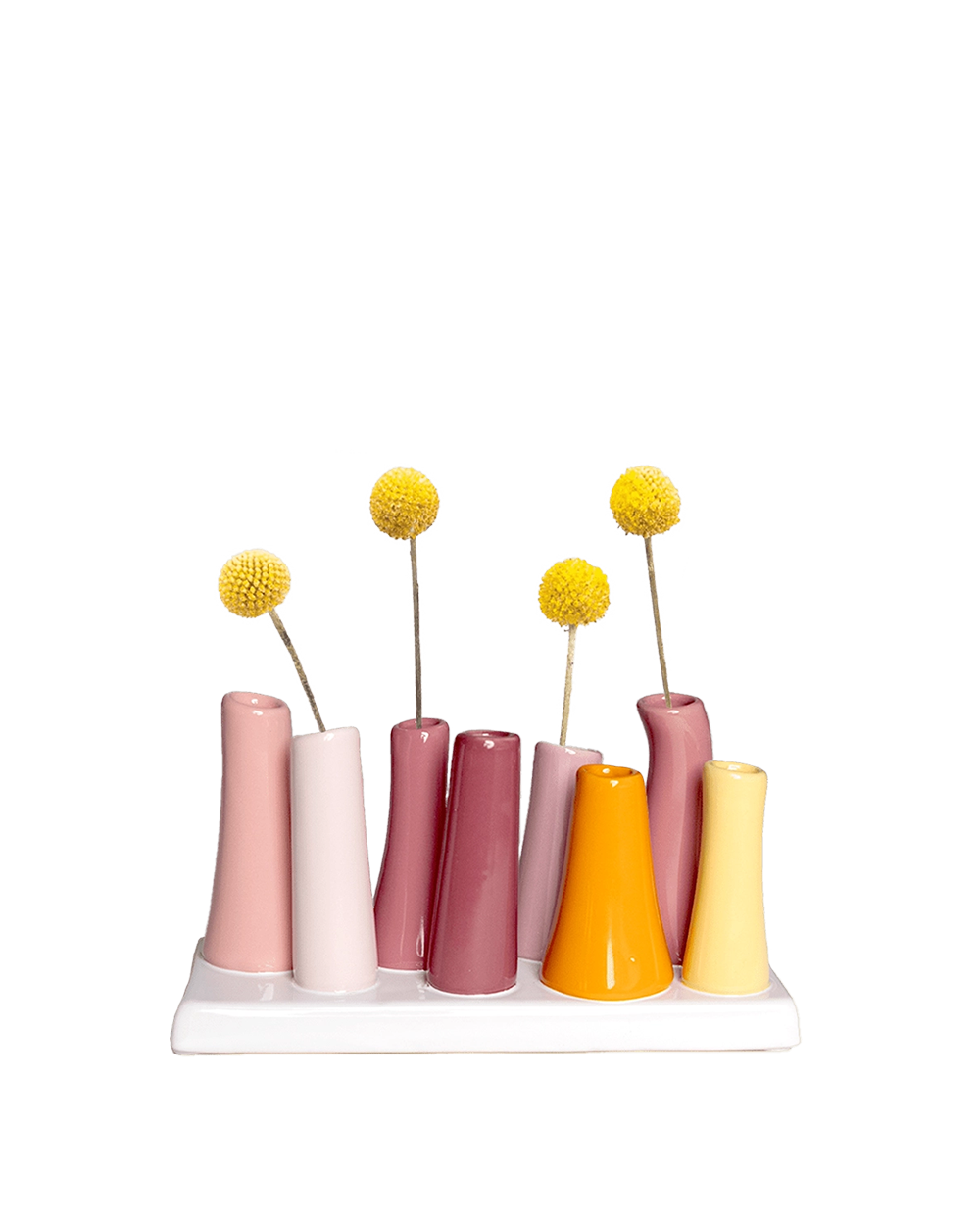
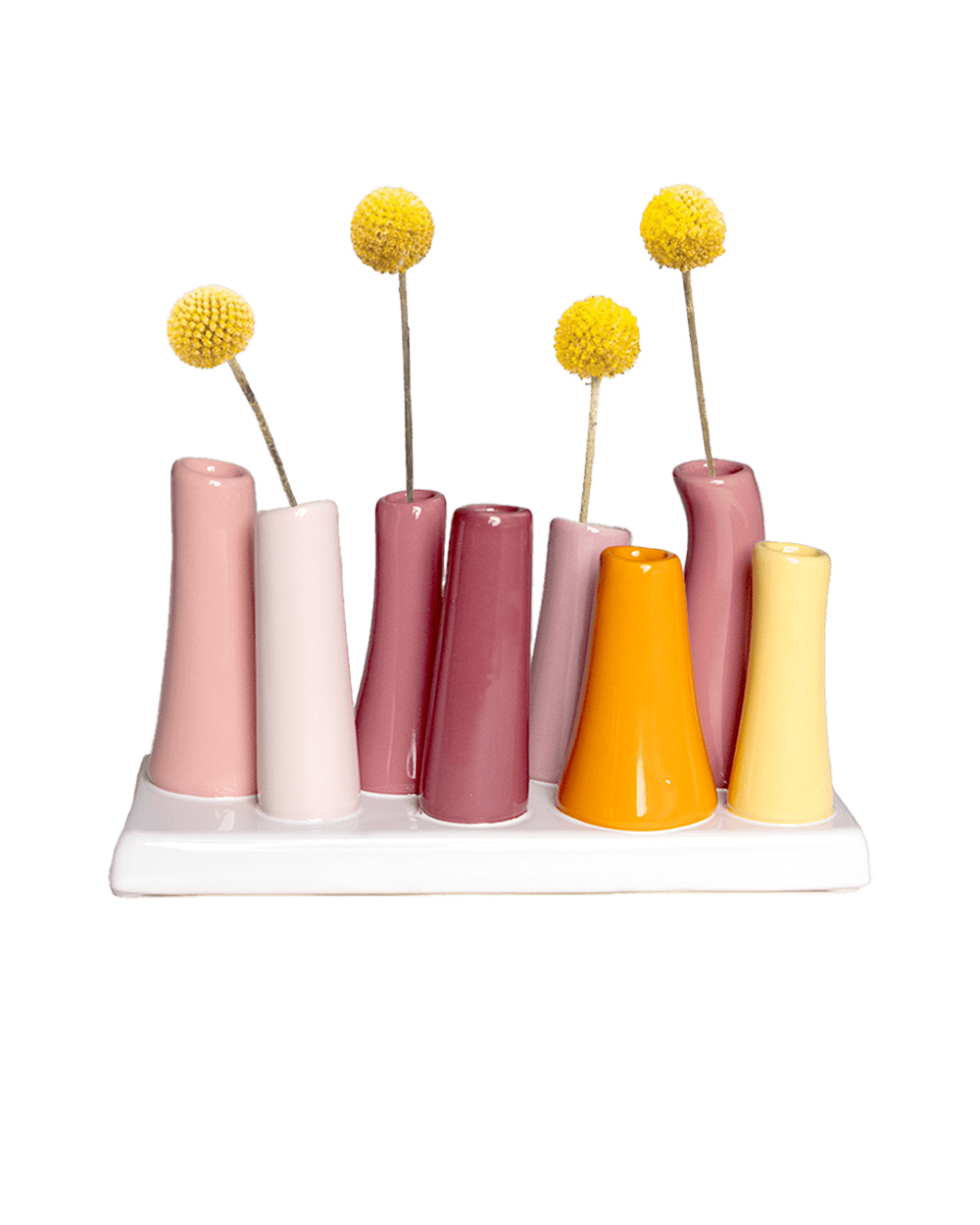
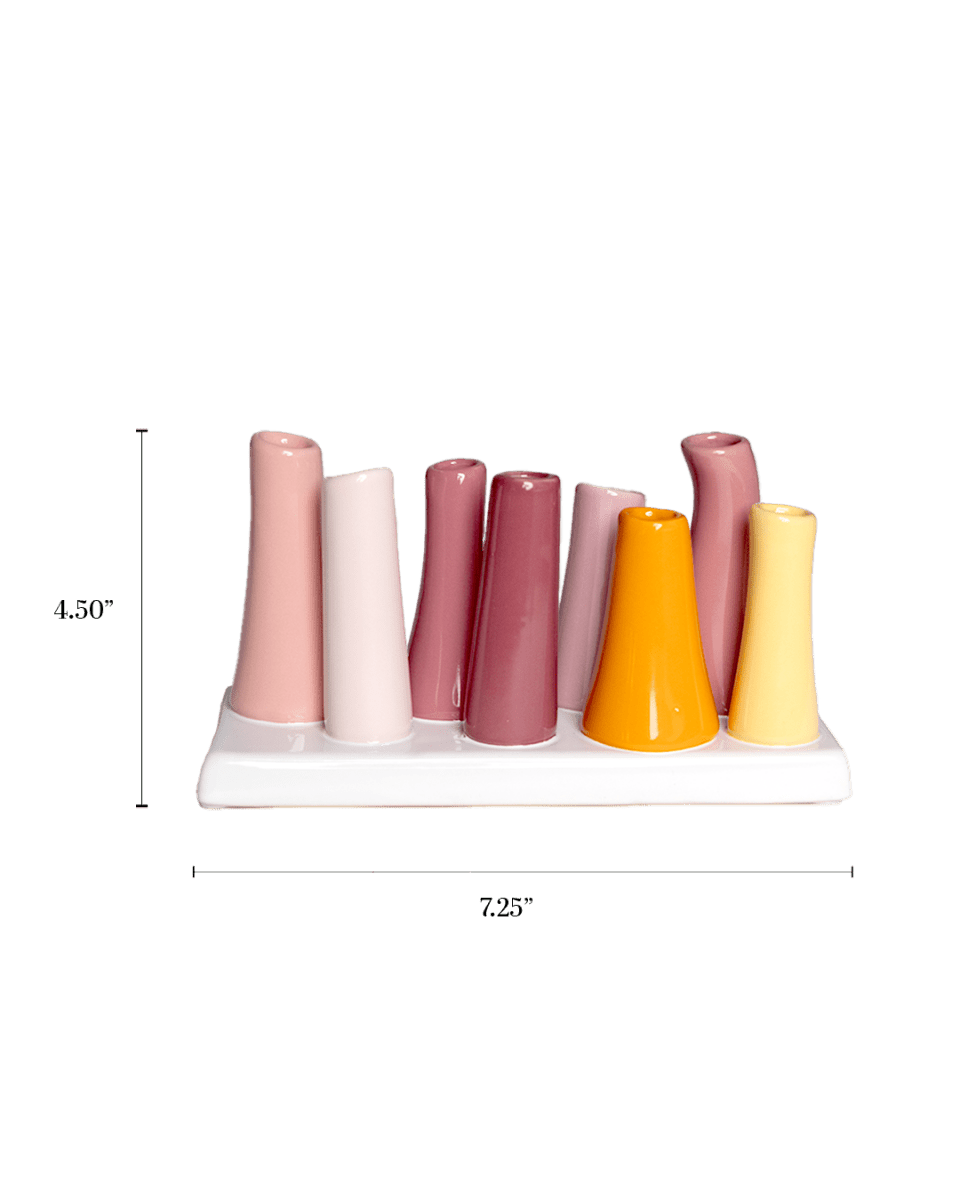
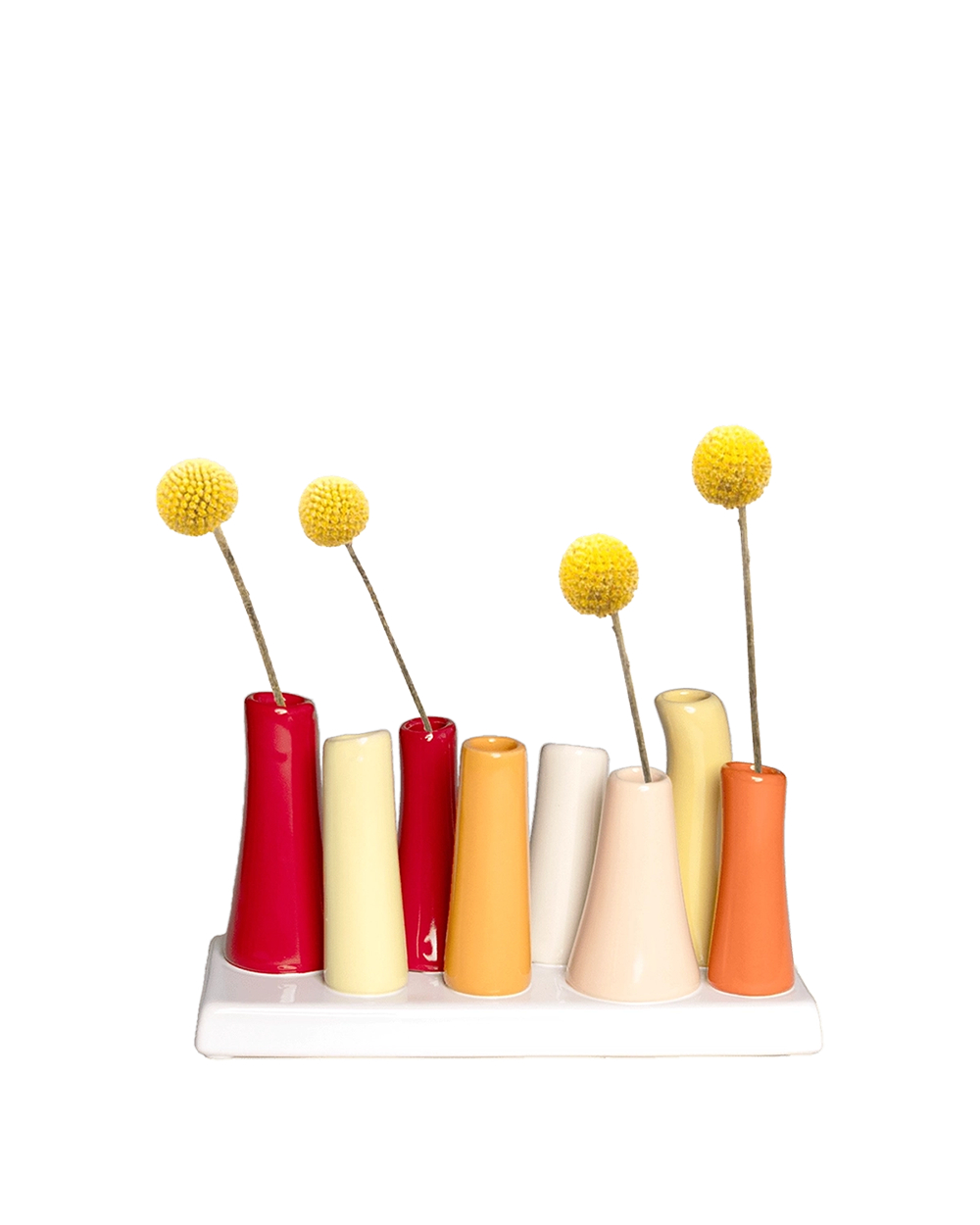
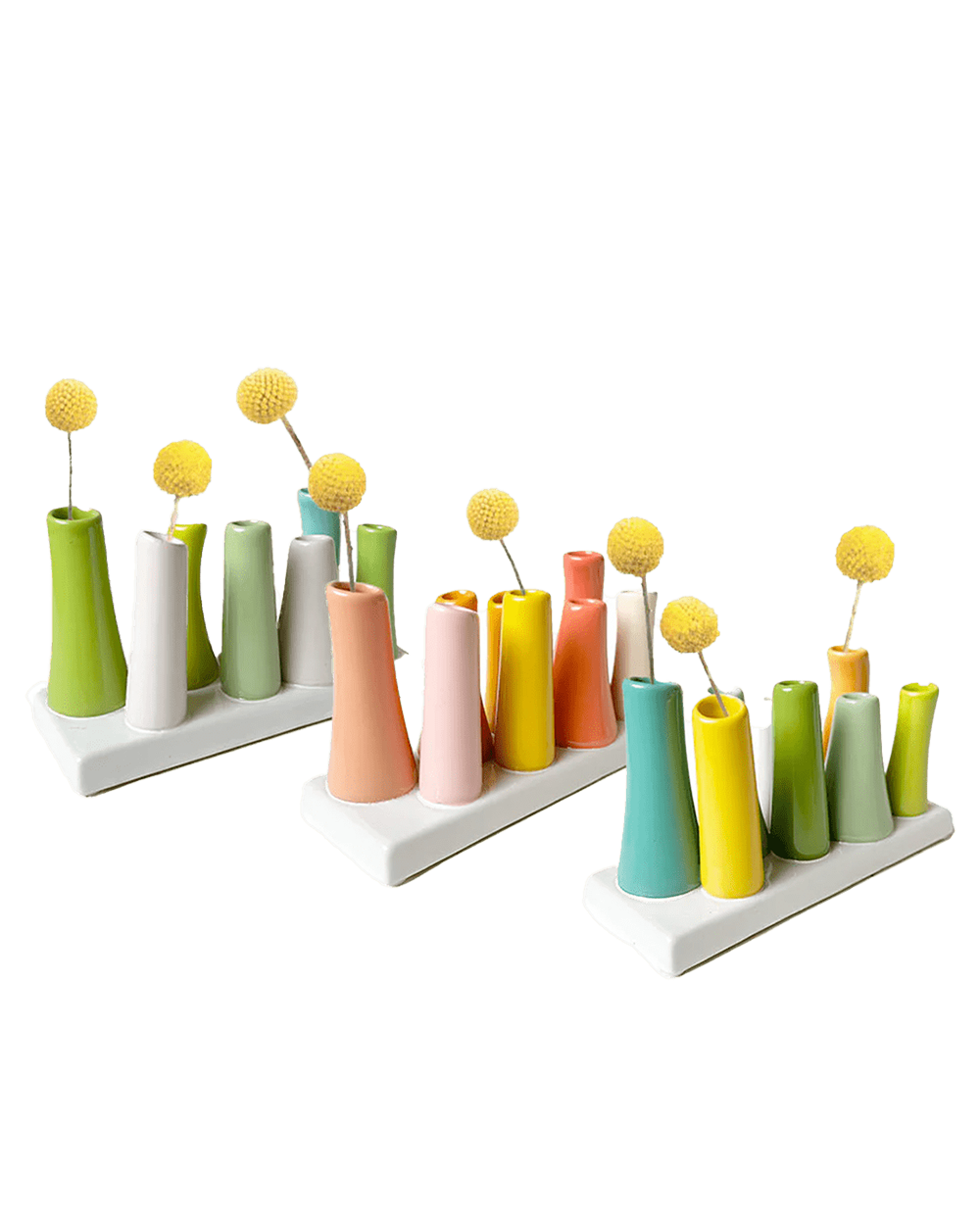
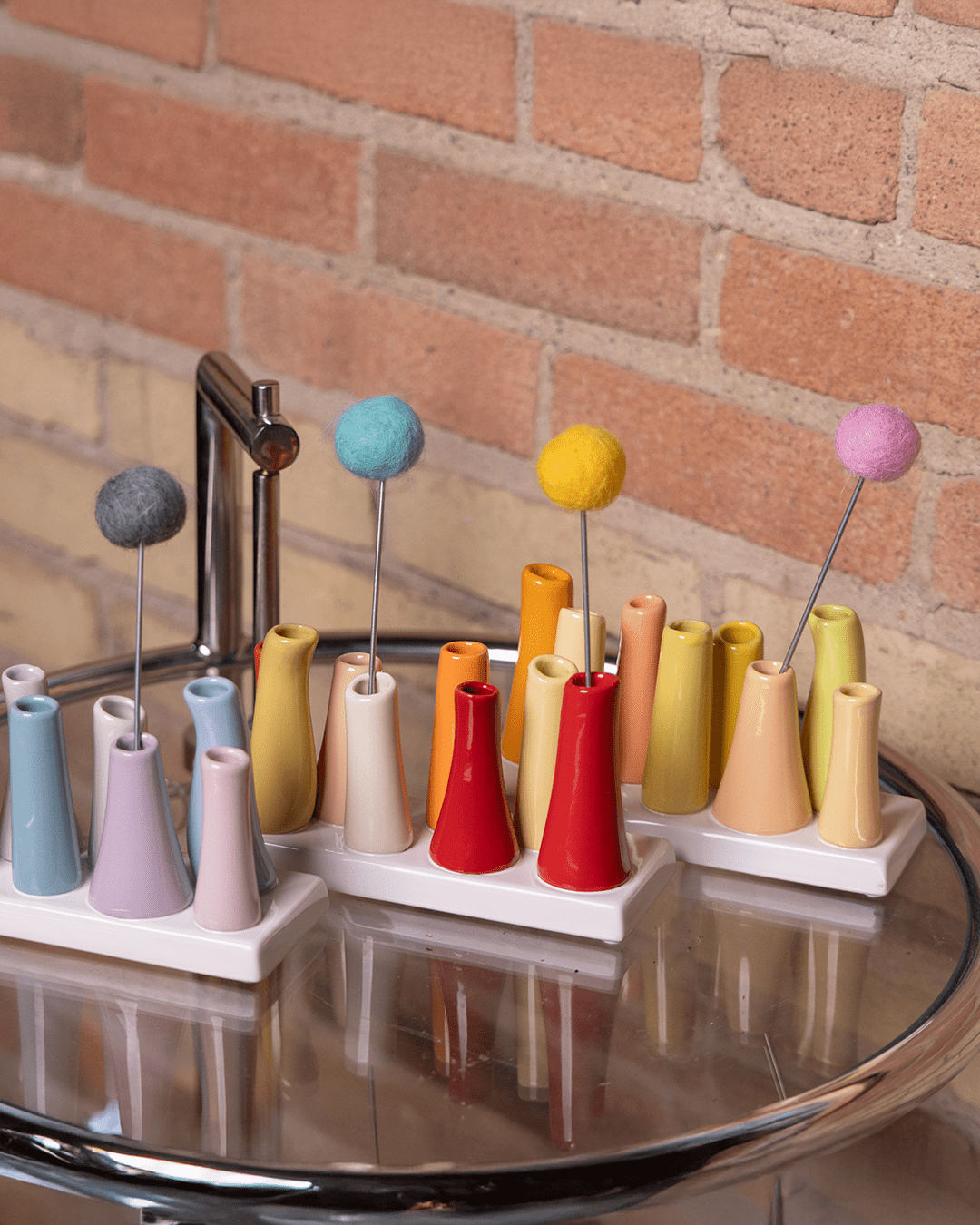
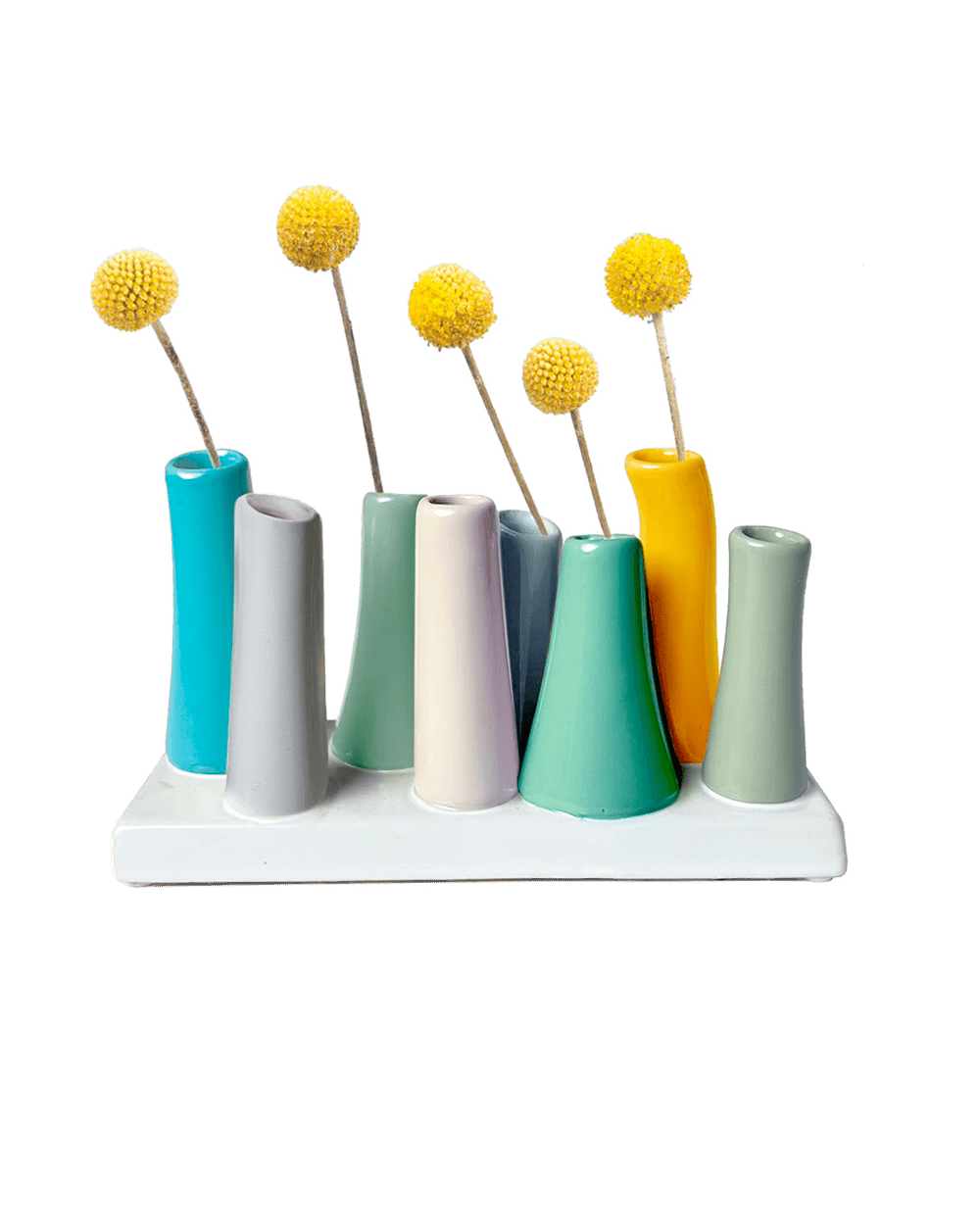
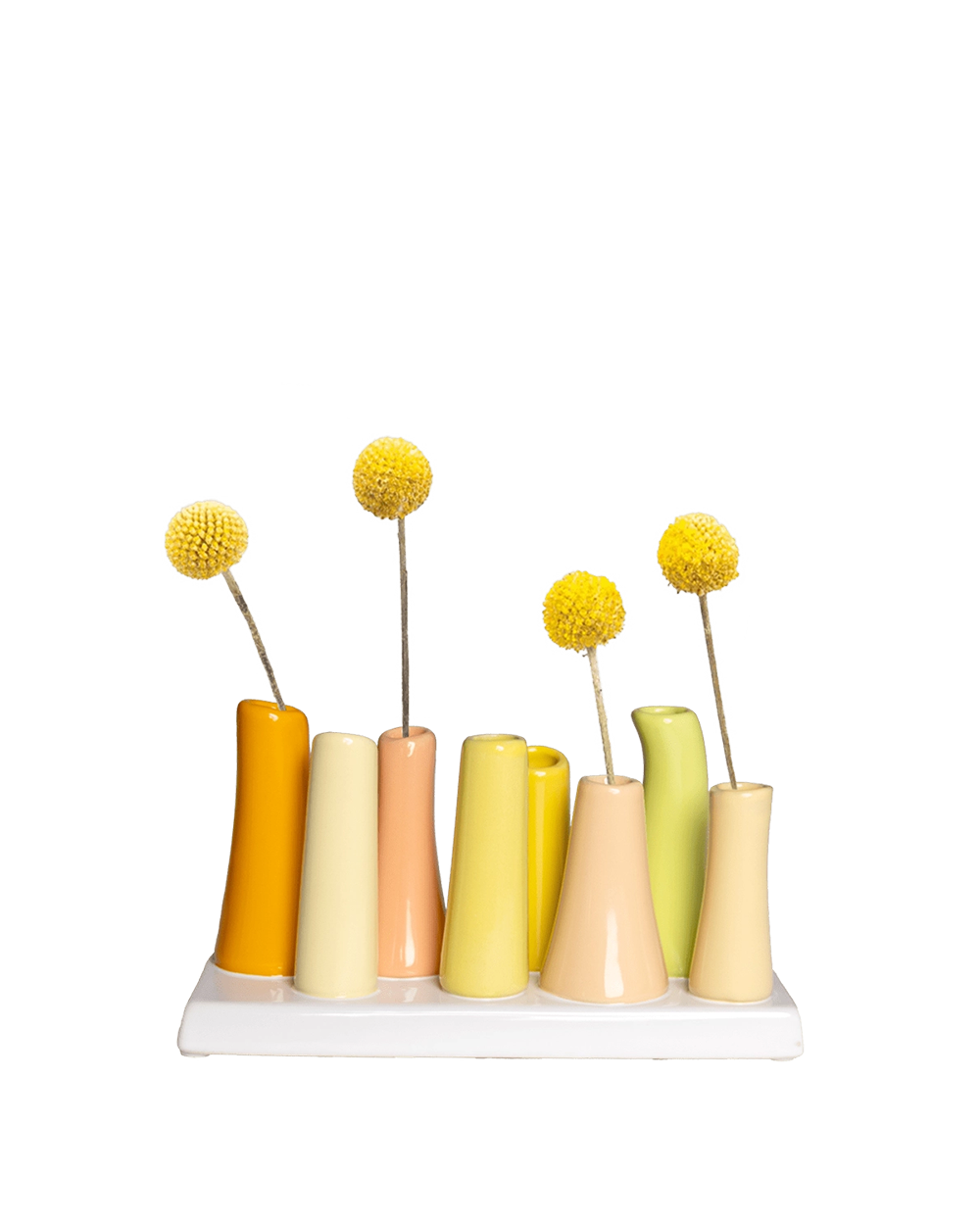
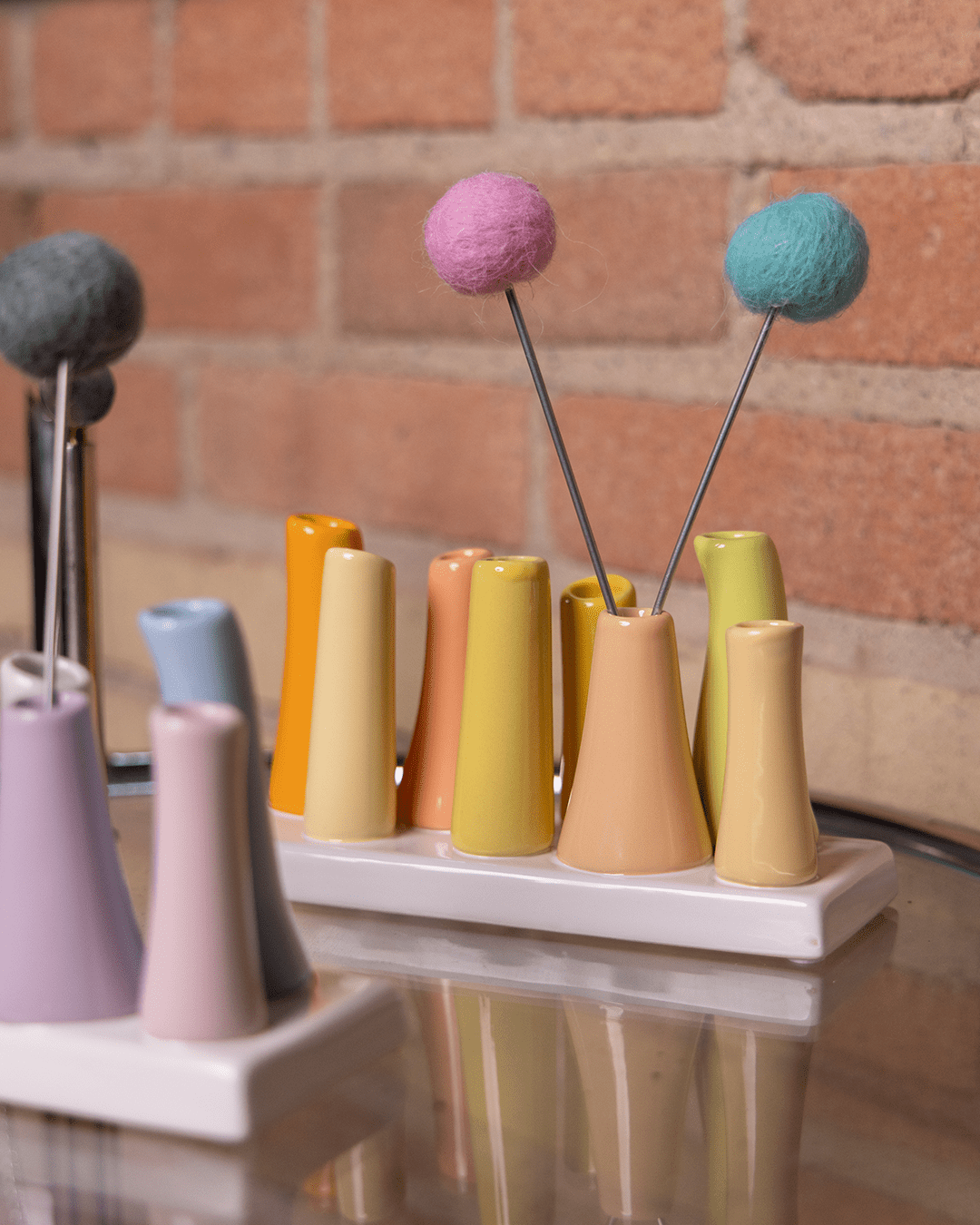
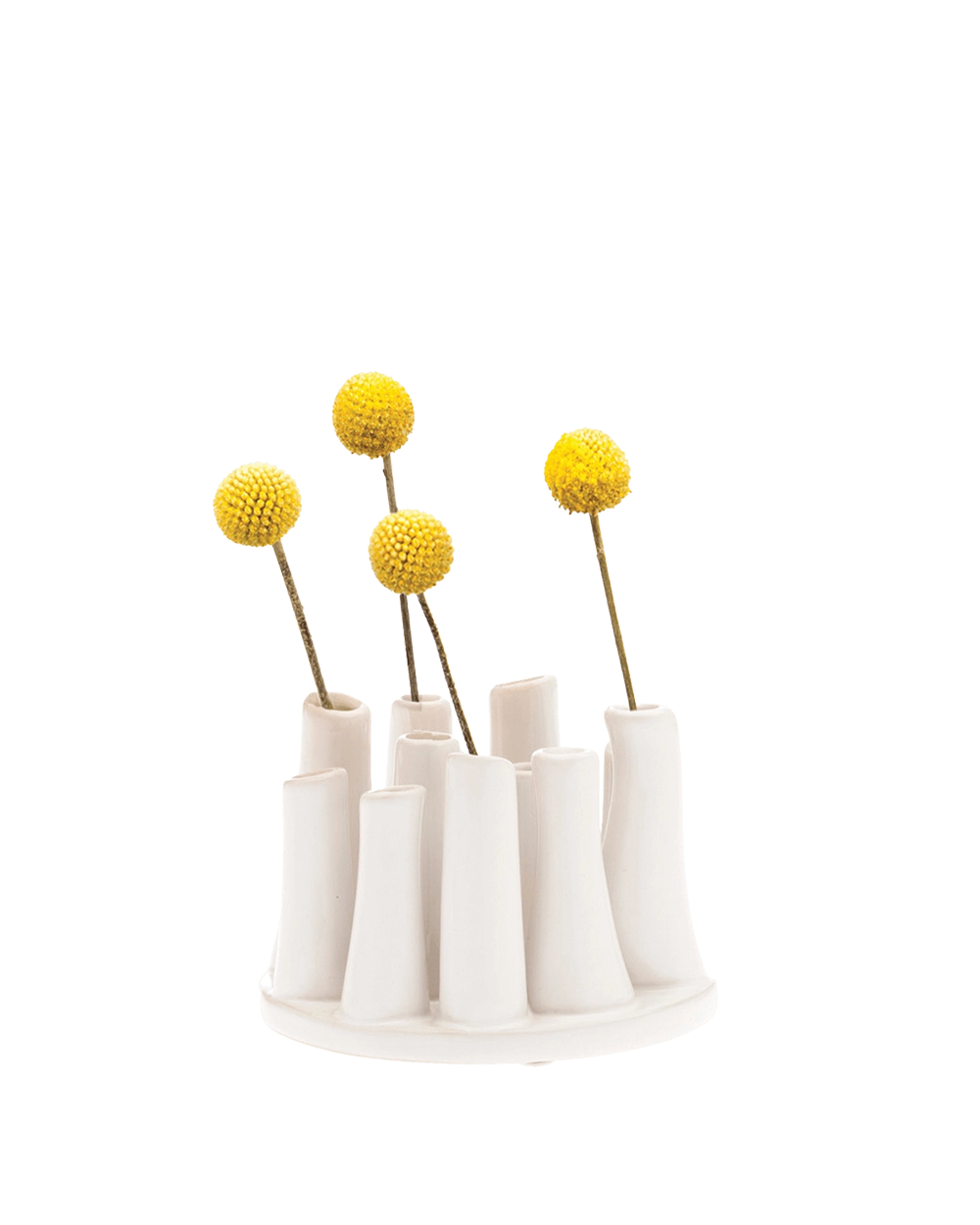
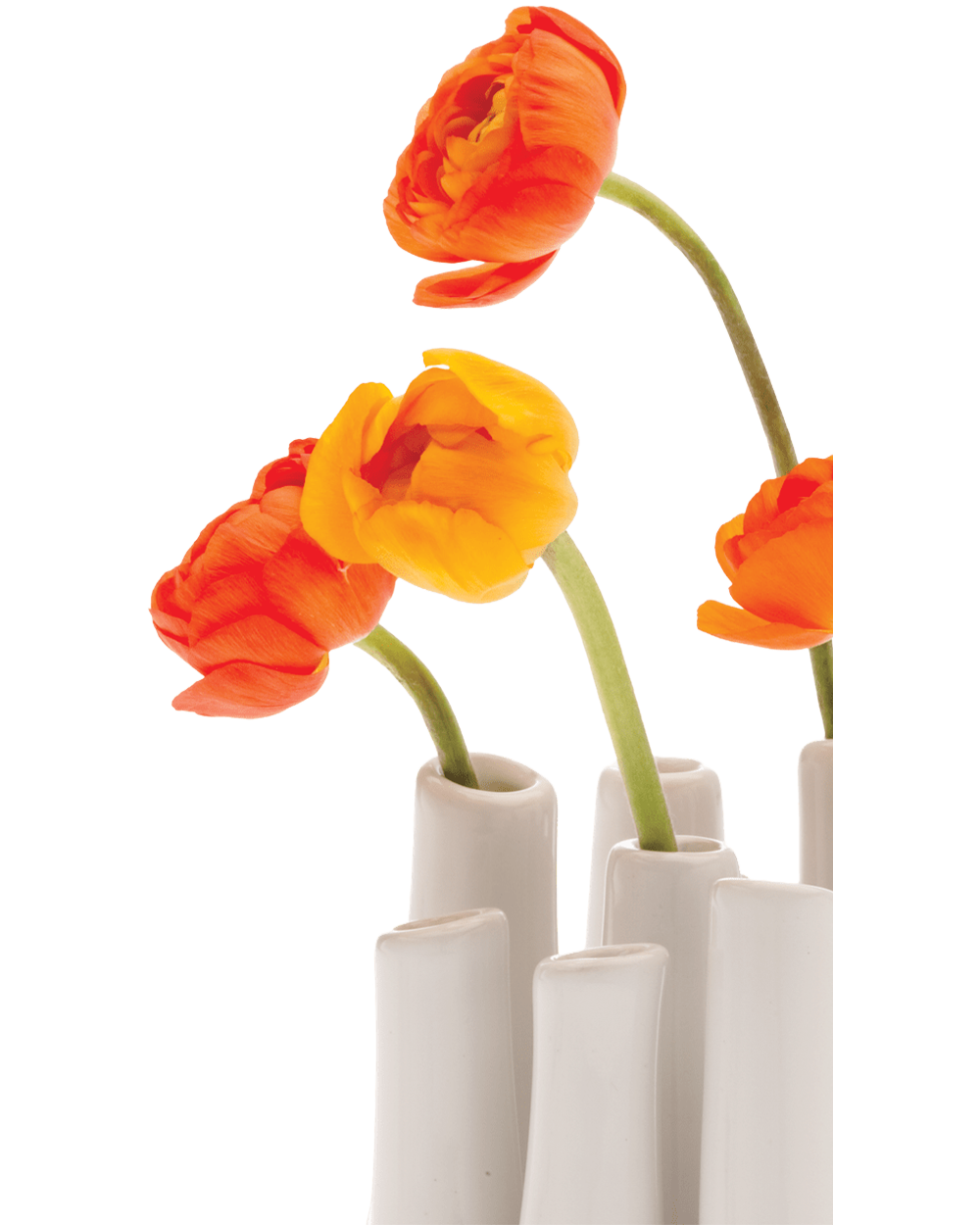
Pooley Magenta 8 Tube Ceramic Flower Vase - Close up of styled decorative vases with an arrangement of flowers for a table or desk setting

Pooley Bud Vase

One stem per tube. One opinion per flower.

Bud vases hold one to three stems; the Pooley multiplies that idea into a system — individual glass tubes set in a hand-built ceramic base, so each flower stands alone while the group reads as one arrangement. It doubles as a propagation station for cuttings rooting in water.

Multi-stem bud vases · Doubles as propagation station · In the Getty Museum & SFMOMA · Designed in Toronto, made by hand · Ships gift-ready to 40+ countries
Filters
Sort by

The Pooley solves the problem most bud vases only manage: what to do when you have five good stems and no interest in a formal arrangement. Each glass tube holds one flower at its own height, the ceramic base staggers them automatically, and the composition happens by placement rather than technique. Rectangular Pooleys run a line down a table; the Pooley Round keeps a lower profile for shorter garden cuts. Every base is shaped by hand at the studio, which is why no two carry their glaze quite the same way.

The second job is the one the design fell into. The same individual tubes that isolate flowers also isolate cuttings — pothos, philodendron, mint — each with its own clean water supply, roots visible through the glass the whole way down. A communal propagation jar breeds tangles; the Pooley breeds plants. It is the rare object that works as a vase in May and a nursery in November, and both the Getty Museum and SFMOMA carry it, which suggests the museums noticed the same thing.

Chive ceramic pooley bud vase in white, styled with fresh pink flowers, on a red bench.

Modern Bud Vase

A modern bud vase strips the category to its logic: a small opening, a stable base, and nothing decorative that doesn't earn its place. The Pooley reads as modern because the design is entirely structural — the tubes are the aesthetic. Glaze color does the personality work; the geometry stays quiet. If the mid-century rule is that an object should explain its own function on sight, the Pooley passes from across the room.

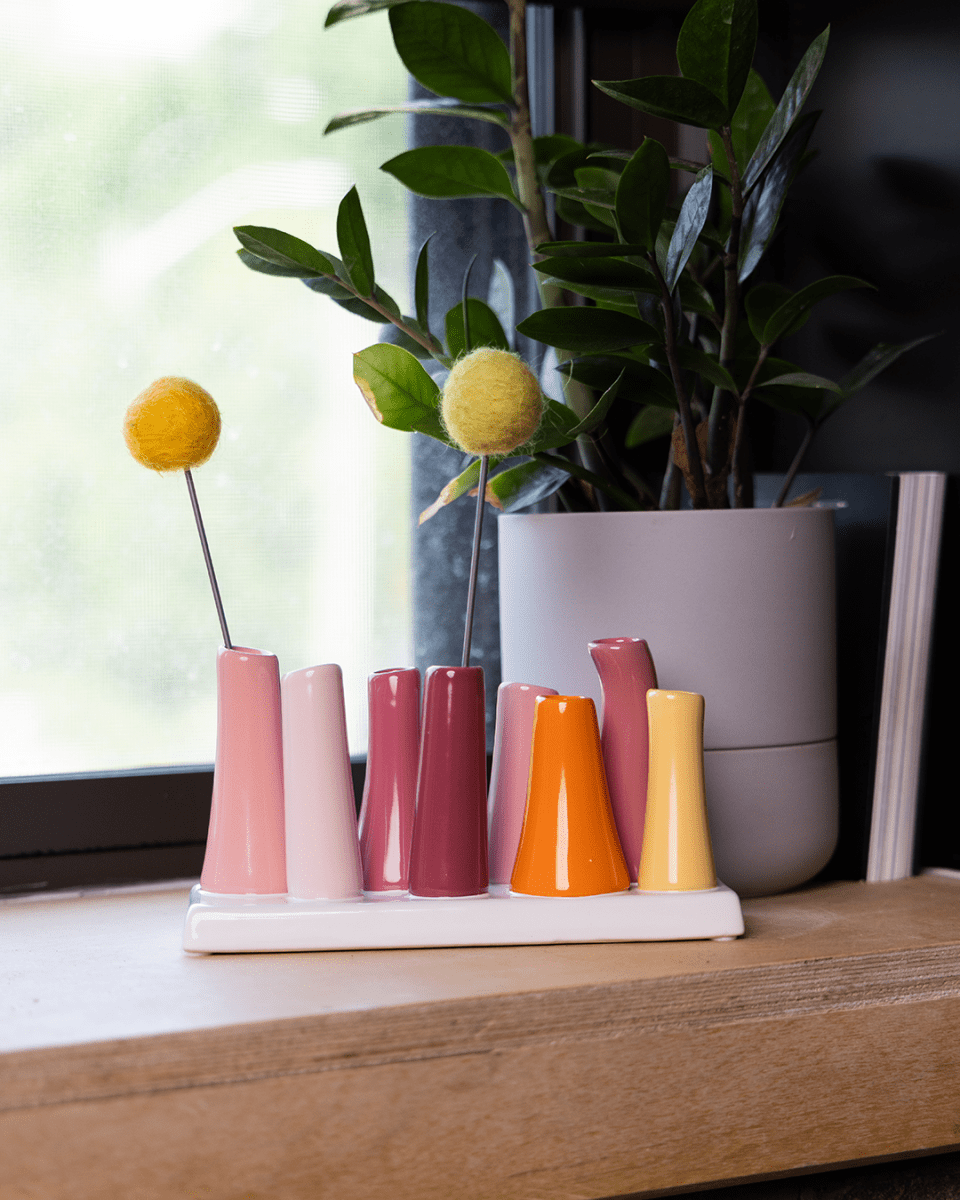
Chive ceramic pooley bud vase in color orange, styled with fresh flowers, on a wood desk.

Propagation Station

A propagation station suspends a cutting in water with the node submerged and the leaves clear, and the Pooley's tubes do this with more grace than the usual windowsill jar. Each cutting gets private water — no root tangling, no shared rot risk — and the glass turns the whole process into something worth watching. When roots reach an inch or two, pot the cutting and refill the tube. The station never retires; it just rotates stock.

Chive Studio has designed the Pooley in Toronto since 2004, each ceramic base shaped by hand, and both the Getty Museum and SFMOMA carry it — museum shops being a reasonable referee of small objects. Studio work sits in 200+ institutions worldwide, and every Pooley ships gift-ready to 40+ countries.

Reviewed by Jessie Duenas, Chive designer · Updated August 2026

How to Arrange Flowers in a Bud Vase

Jessie Duenas
Bud vase arrangements follow one rule: one stem, cut at an angle, in a narrow-neck vase filled 80% with water. Strip the lower leaves, set it down, and the whole thing takes fiv...
Read more

Frequently asked questions about the Pooley Vase

What is a bud vase and what makes the Pooley different?

A bud vase holds one to three stems — the Pooley takes that concept and arranges multiple individual tubes in a ceramic base, so each stem stands alone while the group reads as a single arrangement. What is a bud vase in most collections is a small vessel. In the Pooley, it is a system: a few sprigs of flowers, anywhere from one to eight, each in its own tube at its own height. One stem per tube. One opinion per flower. The arrangement happens automatically.

How does a propagation station help cuttings root faster in water?

A propagation station suspends cuttings in water with the stem submerged and the node visible — roots develop in the water while you watch. The Pooley’s individual glass tubes work as propagation vessels because each cutting gets its own water supply rather than competing in a shared jar. Roots form in clean, still water. Crowding slows the process. Separation speeds it. The glass is transparent because the show is the whole point.

When should you use a single flower vase instead of arrangements?

When the flower is good enough to stand alone — a single flower vase gives one stem the entire stage, which suits specimen blooms, garden-picked stems, and the mornings when the garden produced exactly one thing worth cutting. The Pooley’s individual tubes are designed for this: one stem per opening, no filler required. A bouquet is a chorus. A single stem is a solo. Both require a venue that fits the performance.

What fits in a mini vase besides a single flower stem?

A herb sprig, a cutting rooting in water, a birthday candle that nobody asked you to keep, a single pencil in a household that has lost every pen — a mini vase is a container of last resort for any object between three and eight inches tall that has nowhere else to go and no other champion in the home. The intended use is a single flower. The actual use is whatever the household decides at nine on a Wednesday morning, and the mini vase absorbs the assignment without complaint because complaints require a mouth it does not have and a union it has not yet organised. We design the vase. You determine the mandate.

What flowers work best in a bud vase?

Stems with strong verticals — ranunculus, anemones, single roses, garden-cut dahlias. Bud vase flowers work best when each stem can carry a tube on its own without leaning or crowding. The Pooley’s individual openings stagger the heights automatically, so each bloom gets its own altitude. One stem per tube. The arrangement builds itself. The best flowers for bud vases are the ones confident enough to stand alone, and most flowers manage this when given the chance.

Why does a round vase suit short-stemmed garden flowers so well?

A round vase cradles short stems at the rim rather than letting them slide to the bottom — the circular opening supports casual, loose arrangements that garden cuts naturally form. The Pooley Round holds stems in individual tubes at a lower profile than the rectangular Pooley. Short-stemmed flowers do not need height. They need width and a vessel that agrees with them. The round form agrees without negotiation.

Which plants that propagate in water grow best in glass tubes?

Pothos, philodendron, tradescantia, and mint — plants that propagate in water with visible node development root reliably in the Pooley’s individual glass tubes. Each cutting gets its own water supply, which prevents the tangled root competition that slows a communal jar. The glass lets you monitor root growth daily. Watching a cutting root in real time is the closest gardening comes to live performance. The tube is the theatre. The root is the show.

How do you style colored bud vases across a longer table?

Space them evenly at eight-to-twelve-inch intervals, alternating or grouping colours — colored bud vases across a table create a rhythm that a single centrepiece cannot. Each Pooley holds its own stems, so the visual line extends the full table length without requiring one large arrangement. Odd numbers read better than even. Three or five Pooleys across a runner looks intentional. Four looks like somebody ran out. Seven looks like a commitment. All numbers are welcome. The odd ones just photograph better.

2004 Making ceramics since
200+ Institutions worldwide

RHS Chelsea Flower Show2026 4-star booth award recipient
2 x 5-star booth award — winner
Exhibiting since 2013

About Chive Studio

Chive Studio has designed ceramic wall flowers in Toronto since 2004, and the Pooley carries the same hand-built logic into stemware. The wider vases hub holds every shape in one place, the glass vases collection covers wall pieces and cylinders, and a flower frog does for wide dishes what the Pooley's tubes do for stems.

Learn more about Chive Studio →

Chive in the Press →