




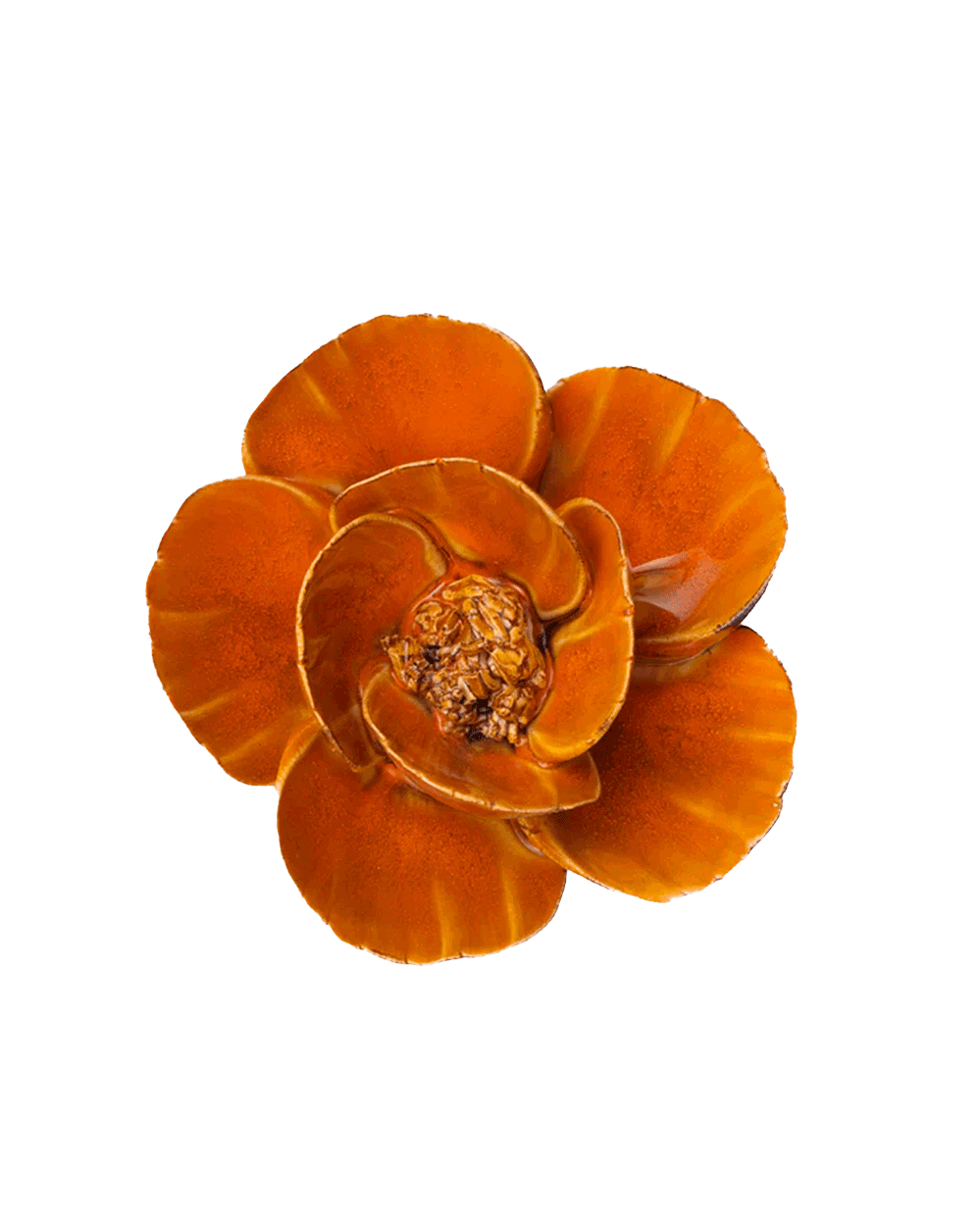
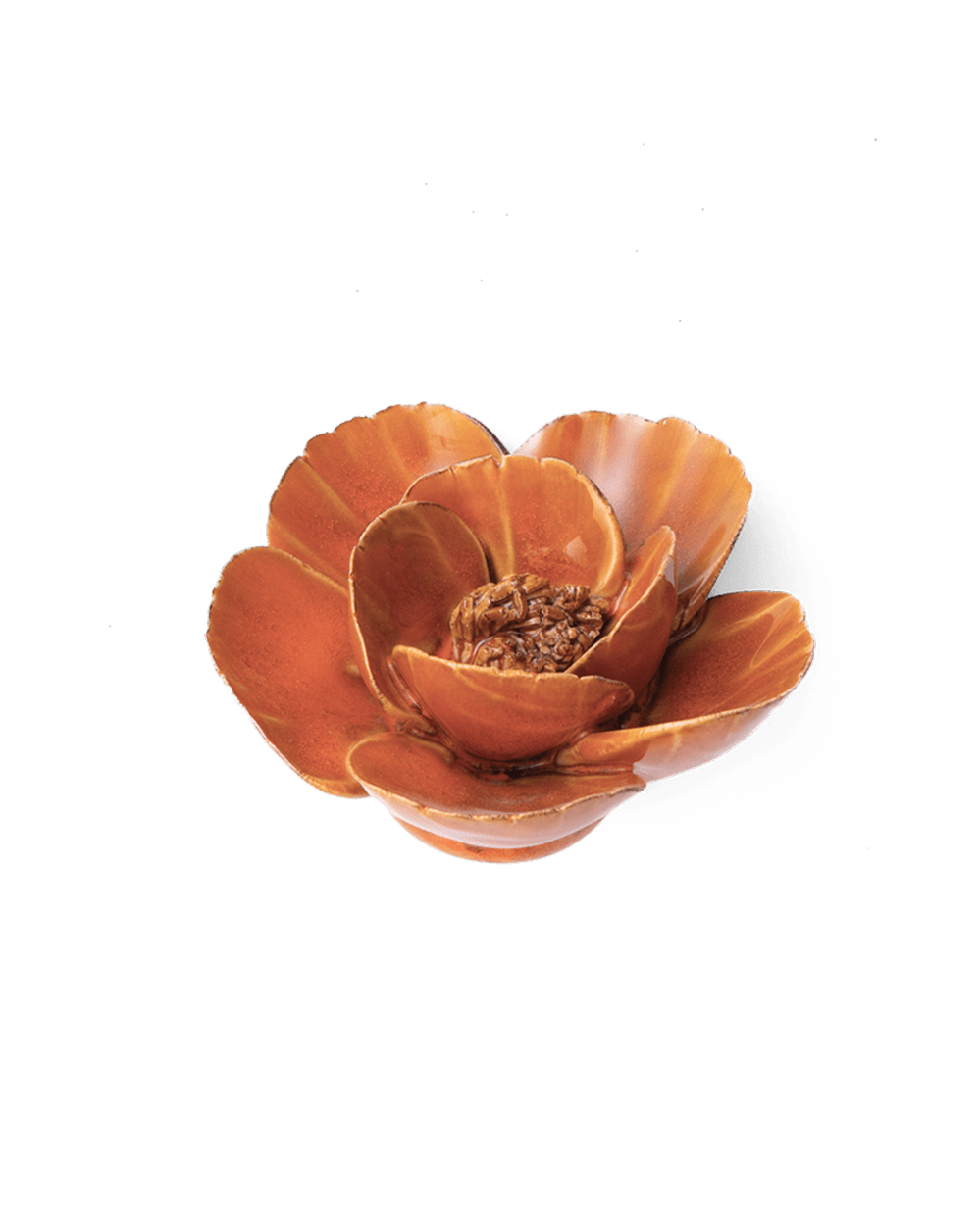
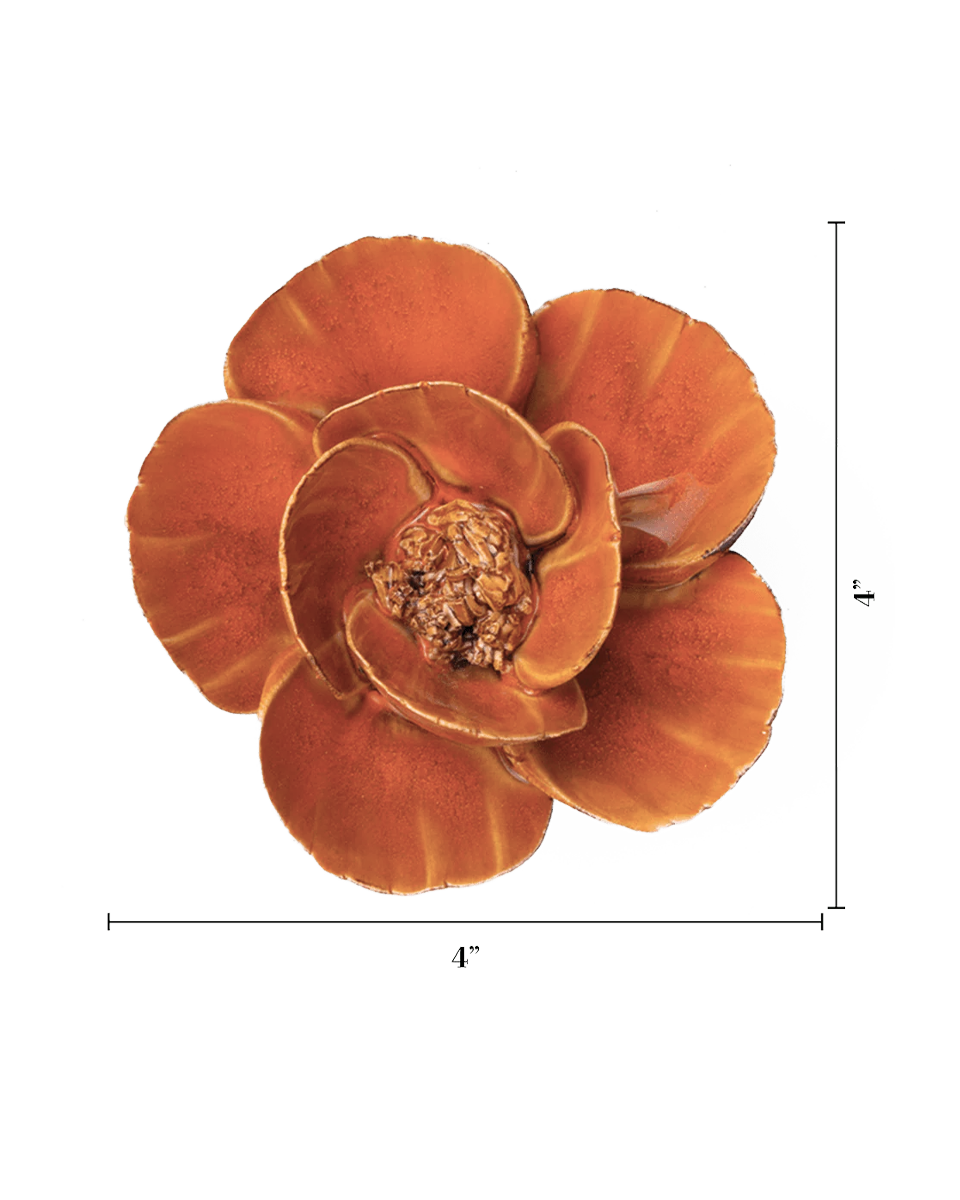
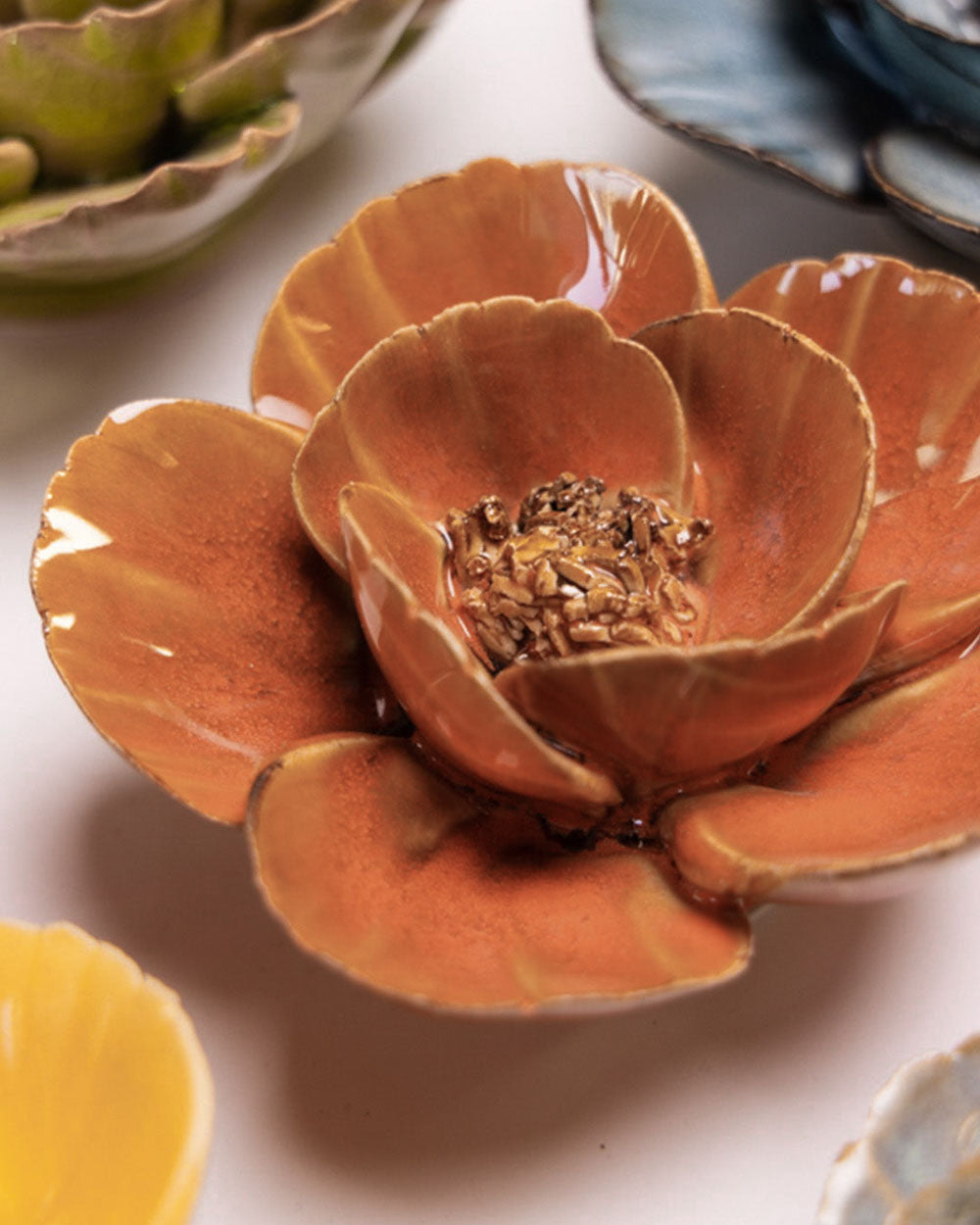
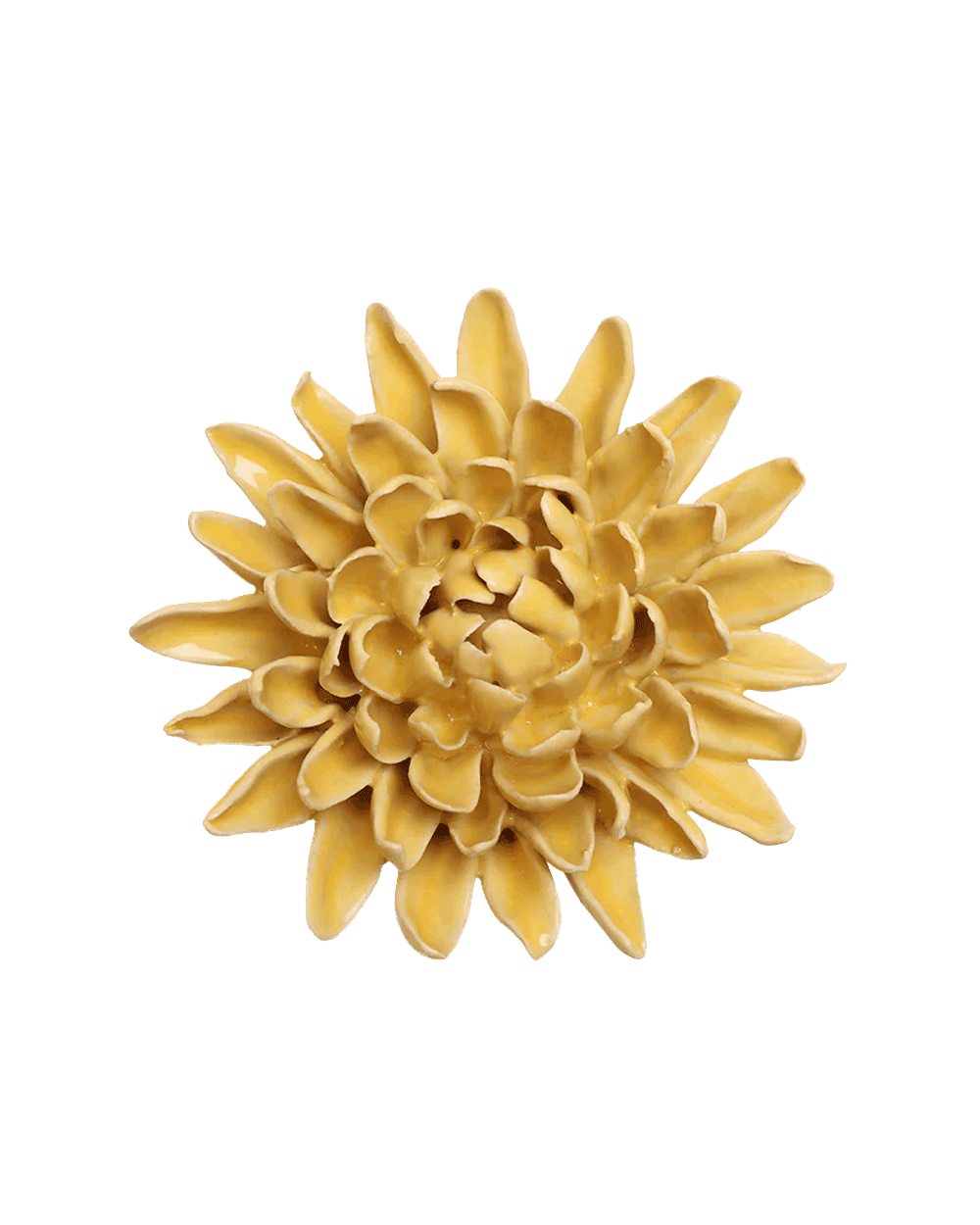
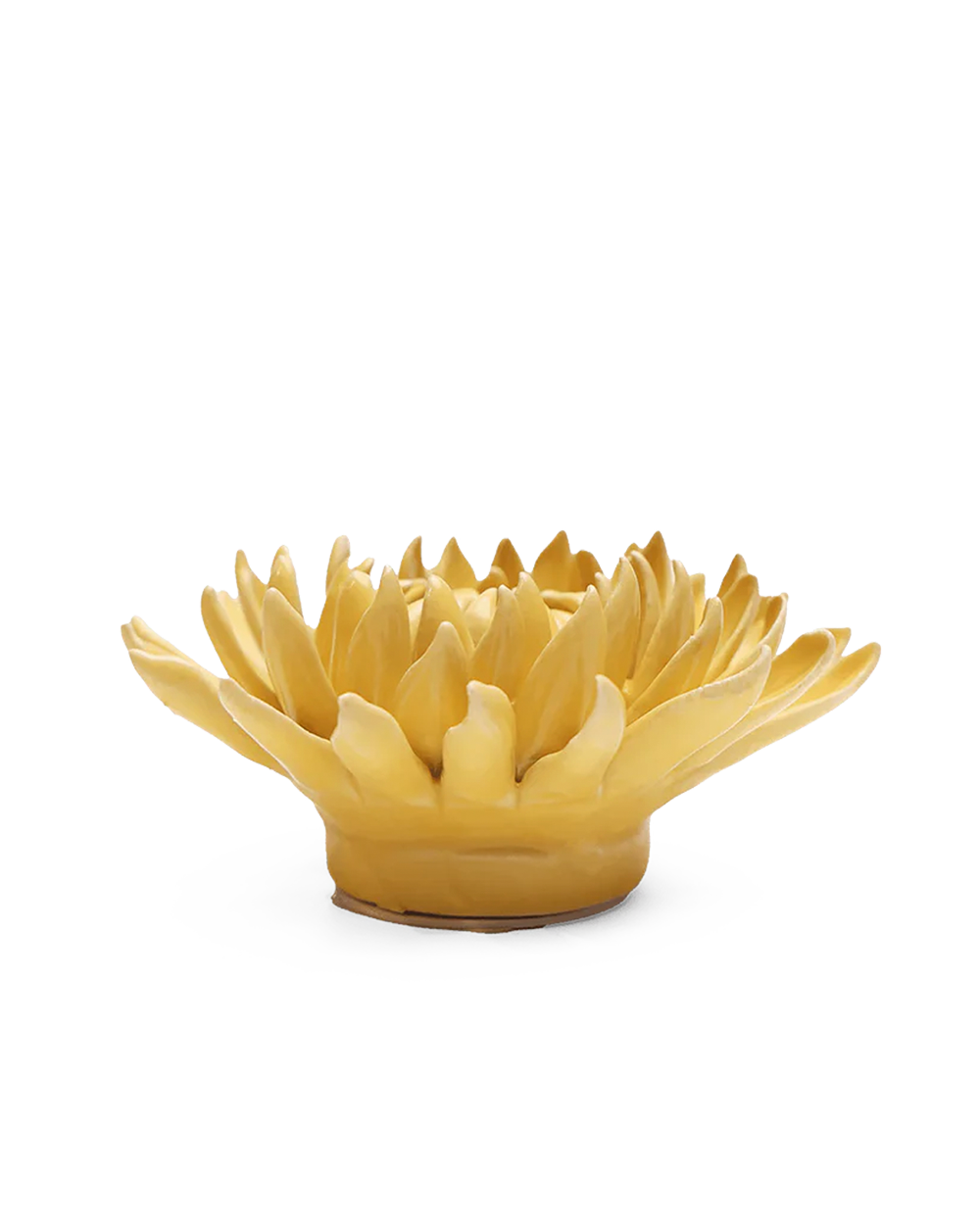

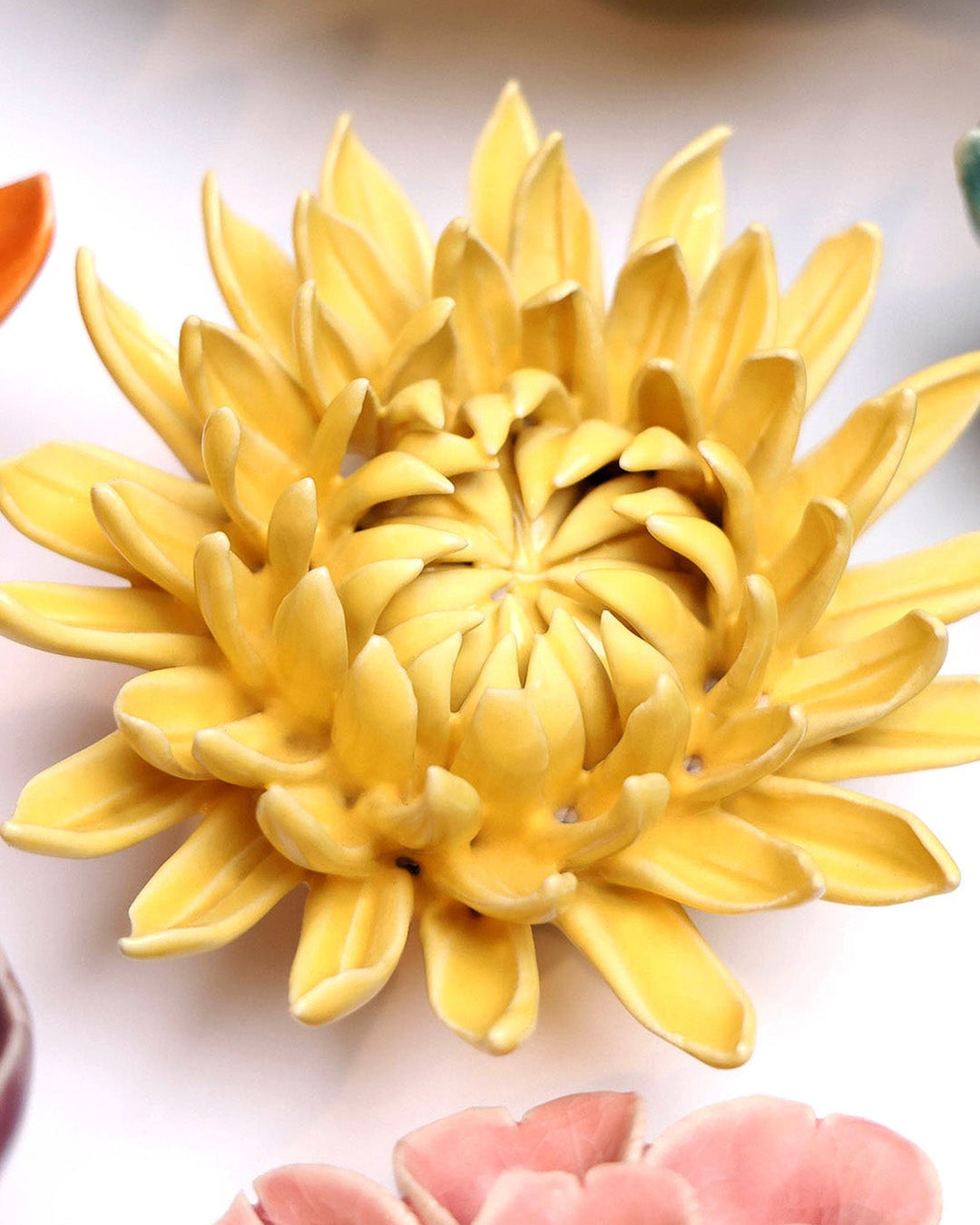
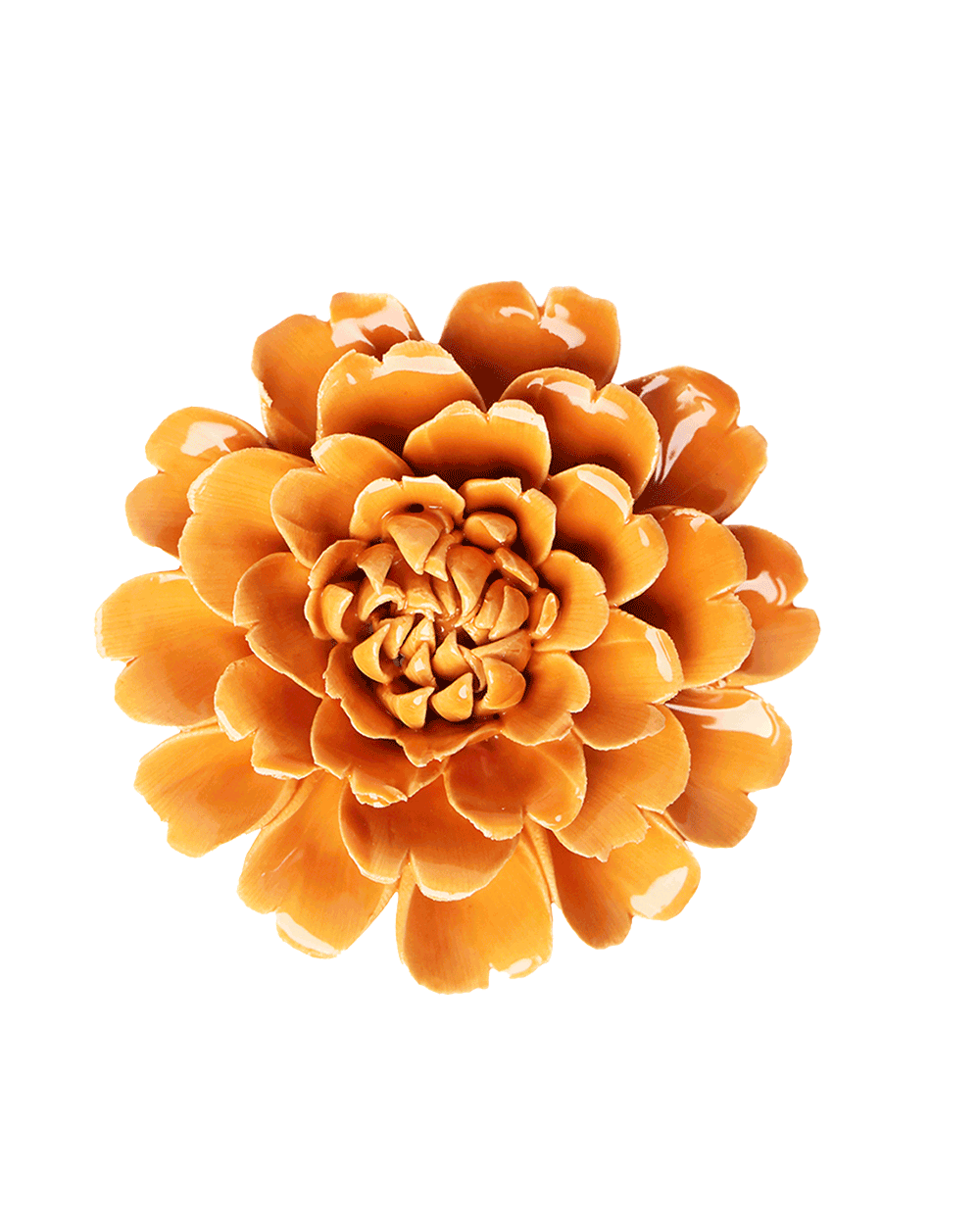
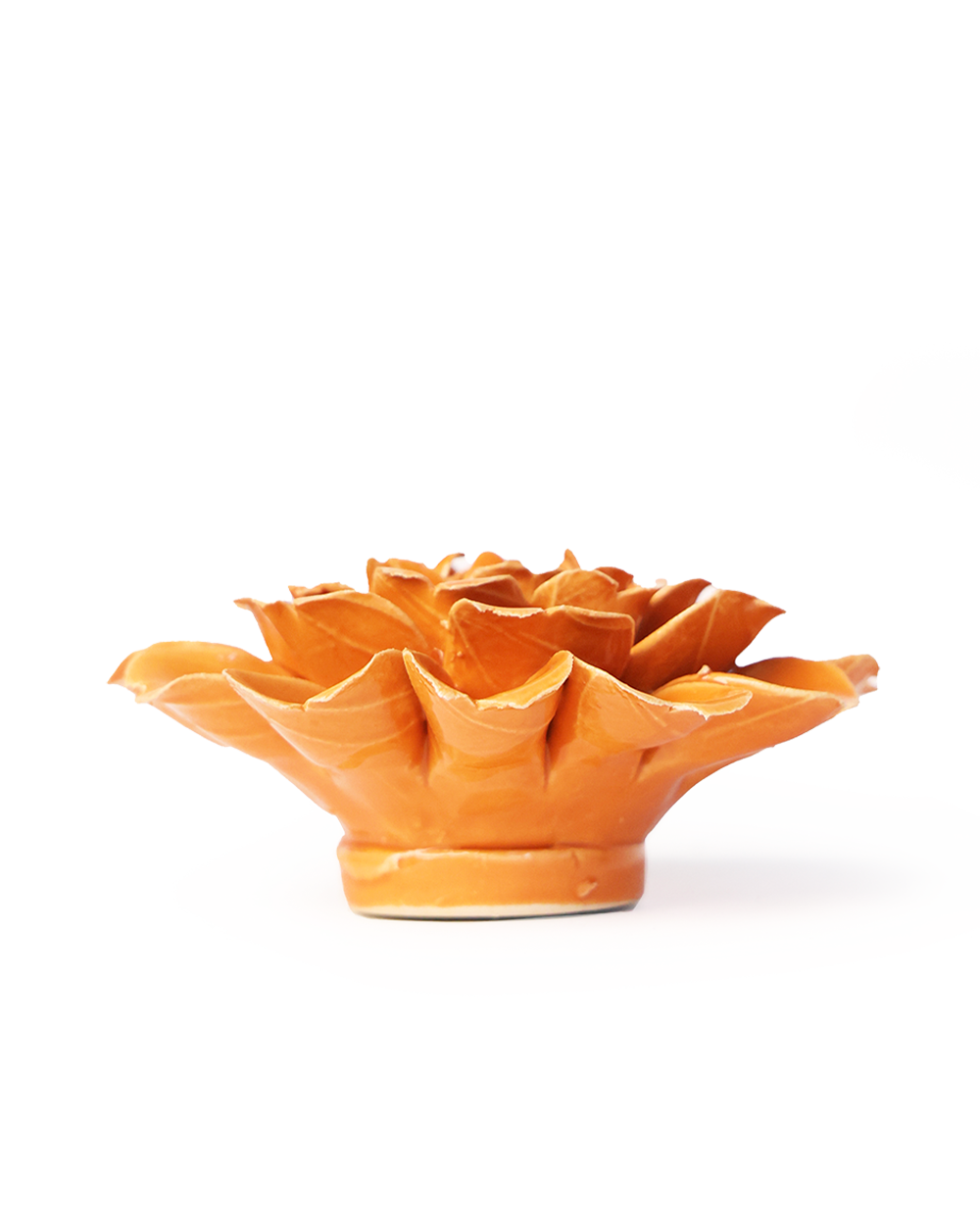
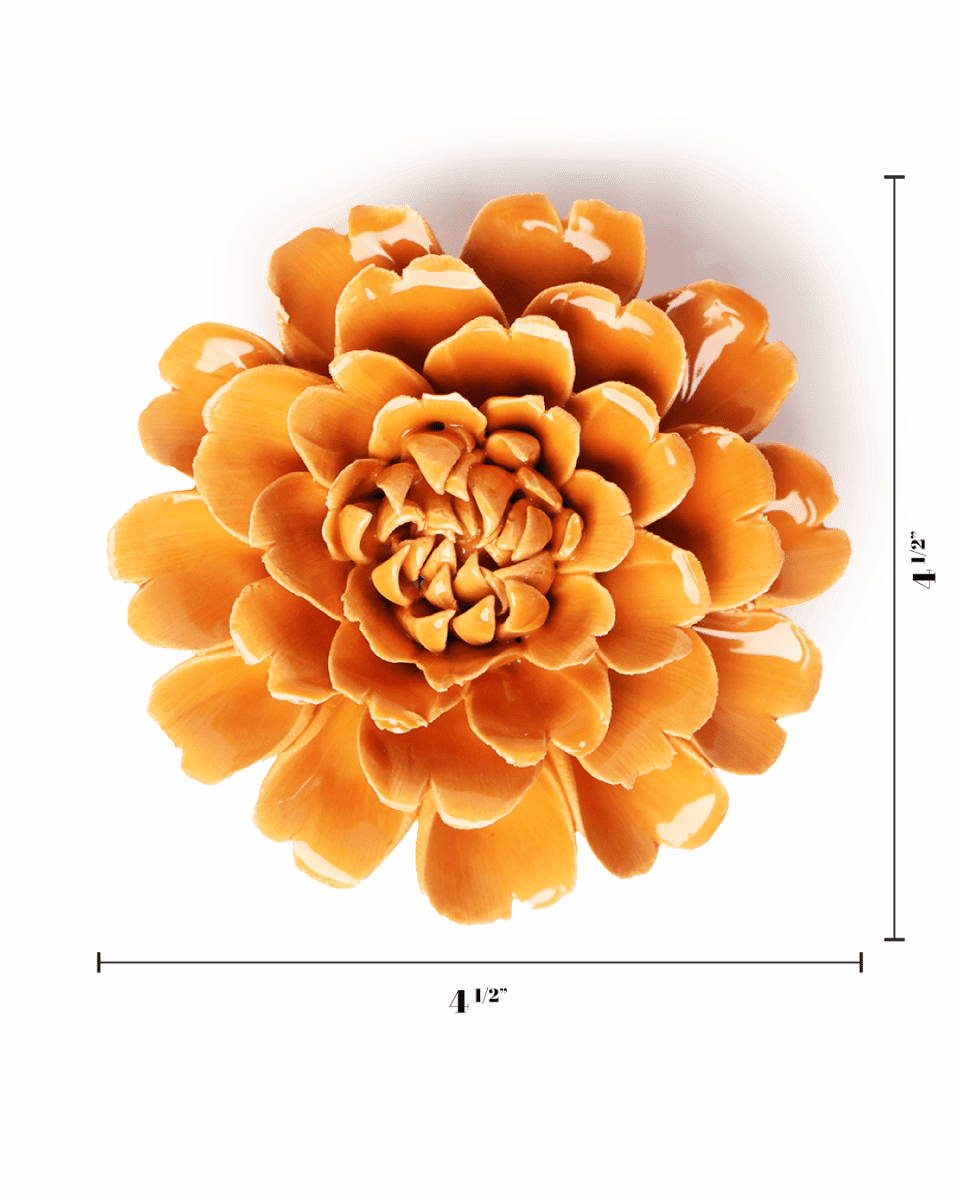
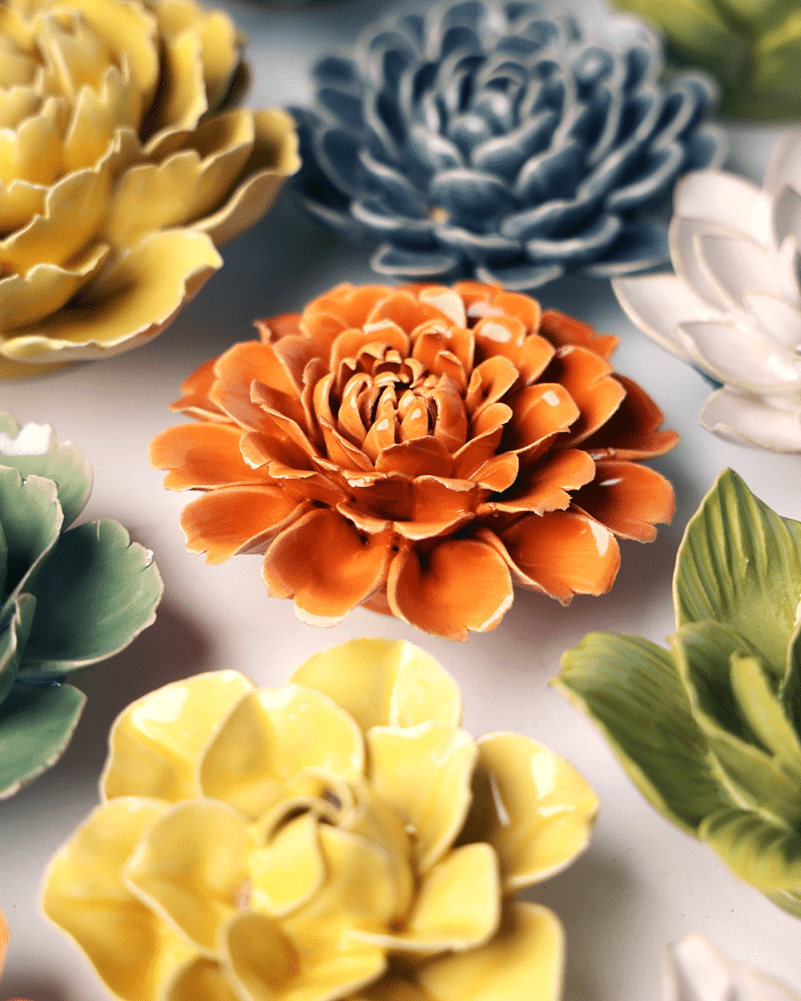
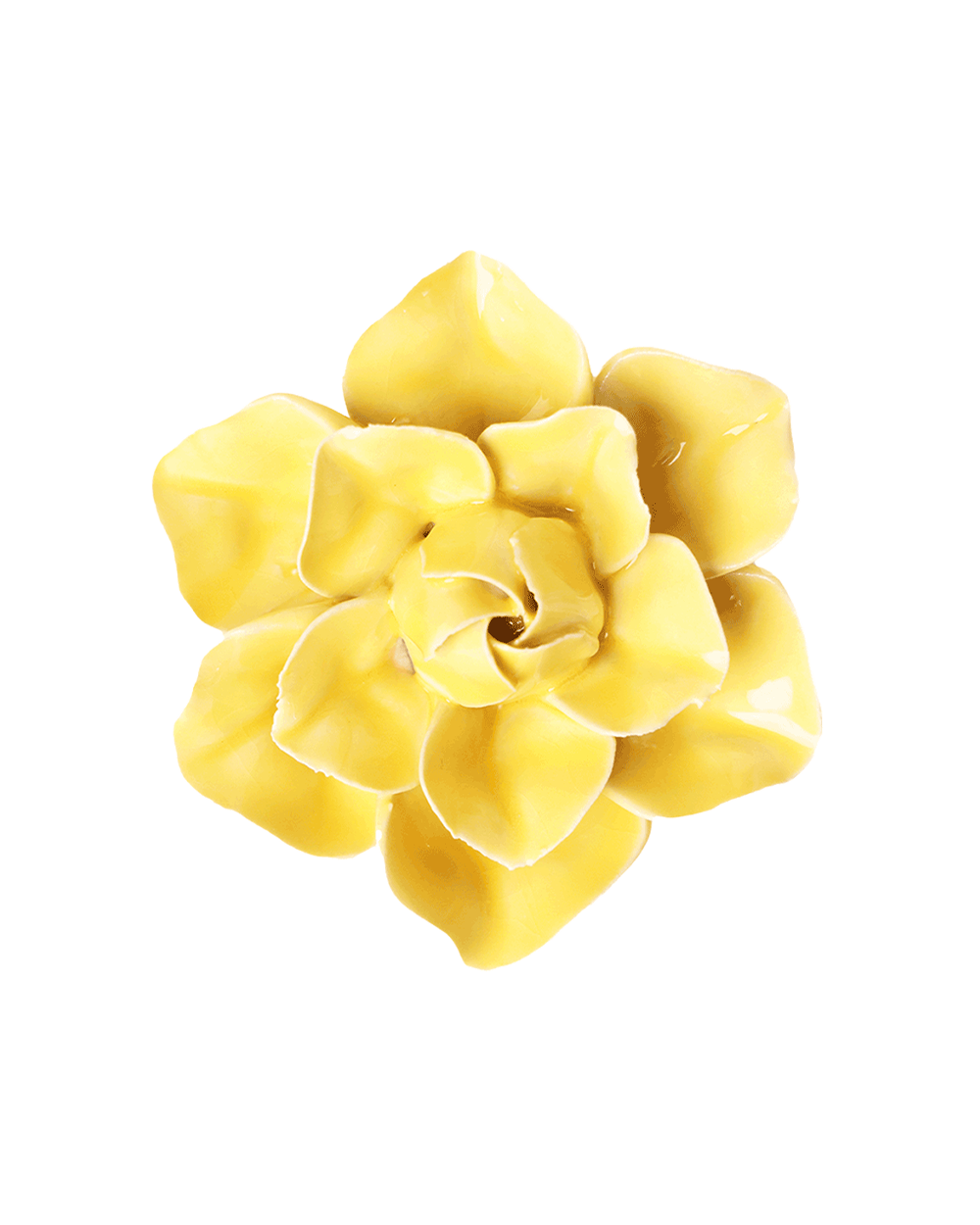
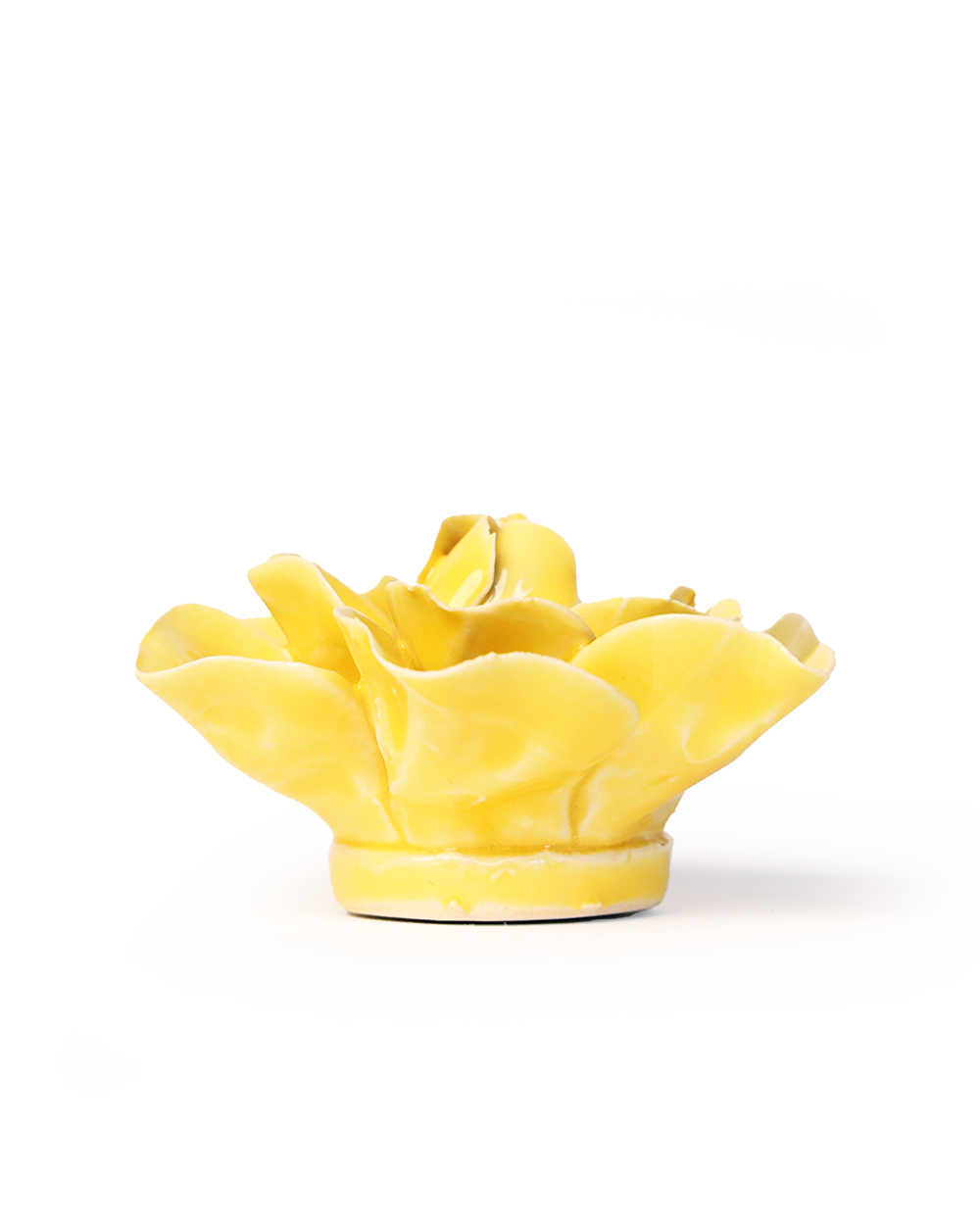

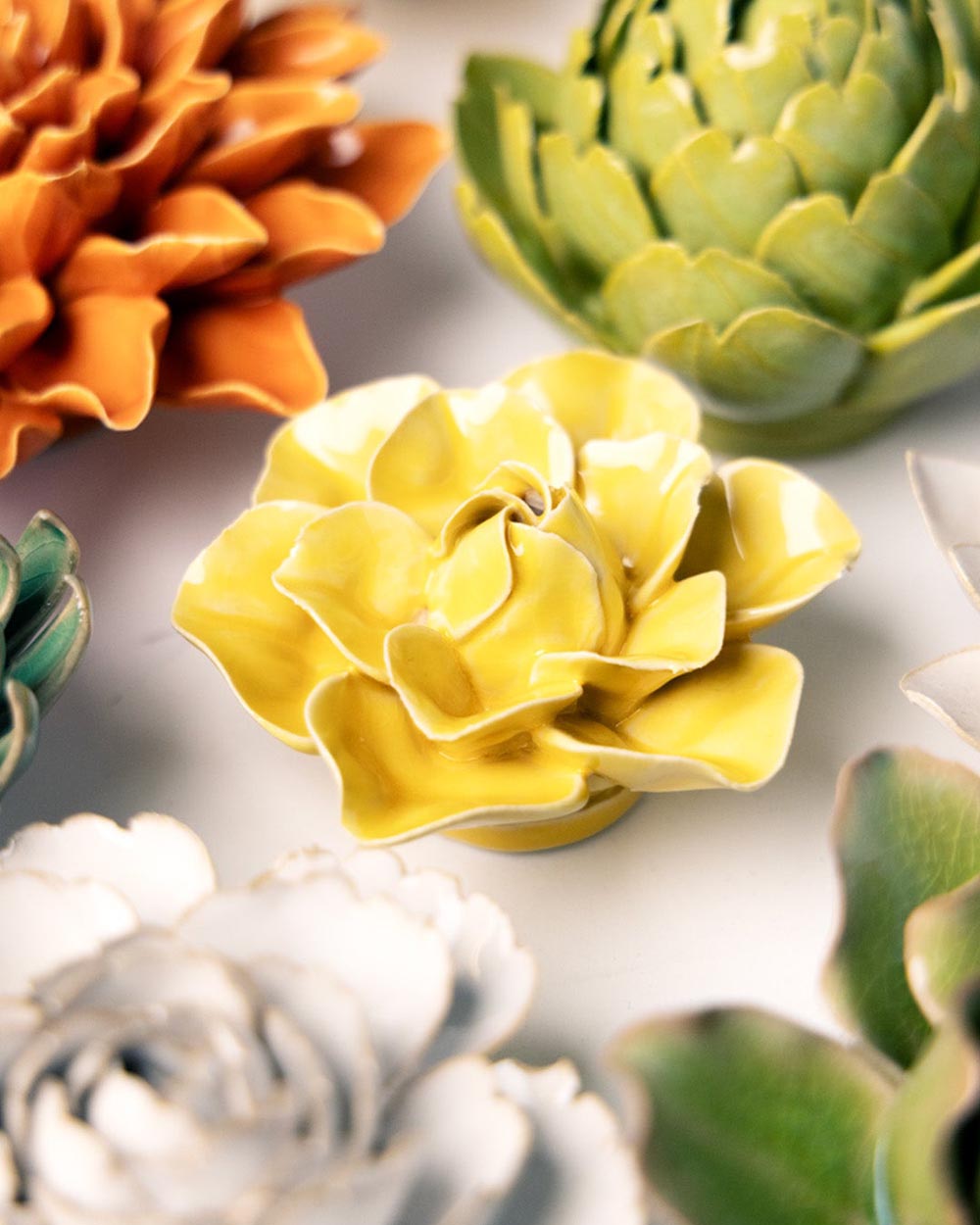
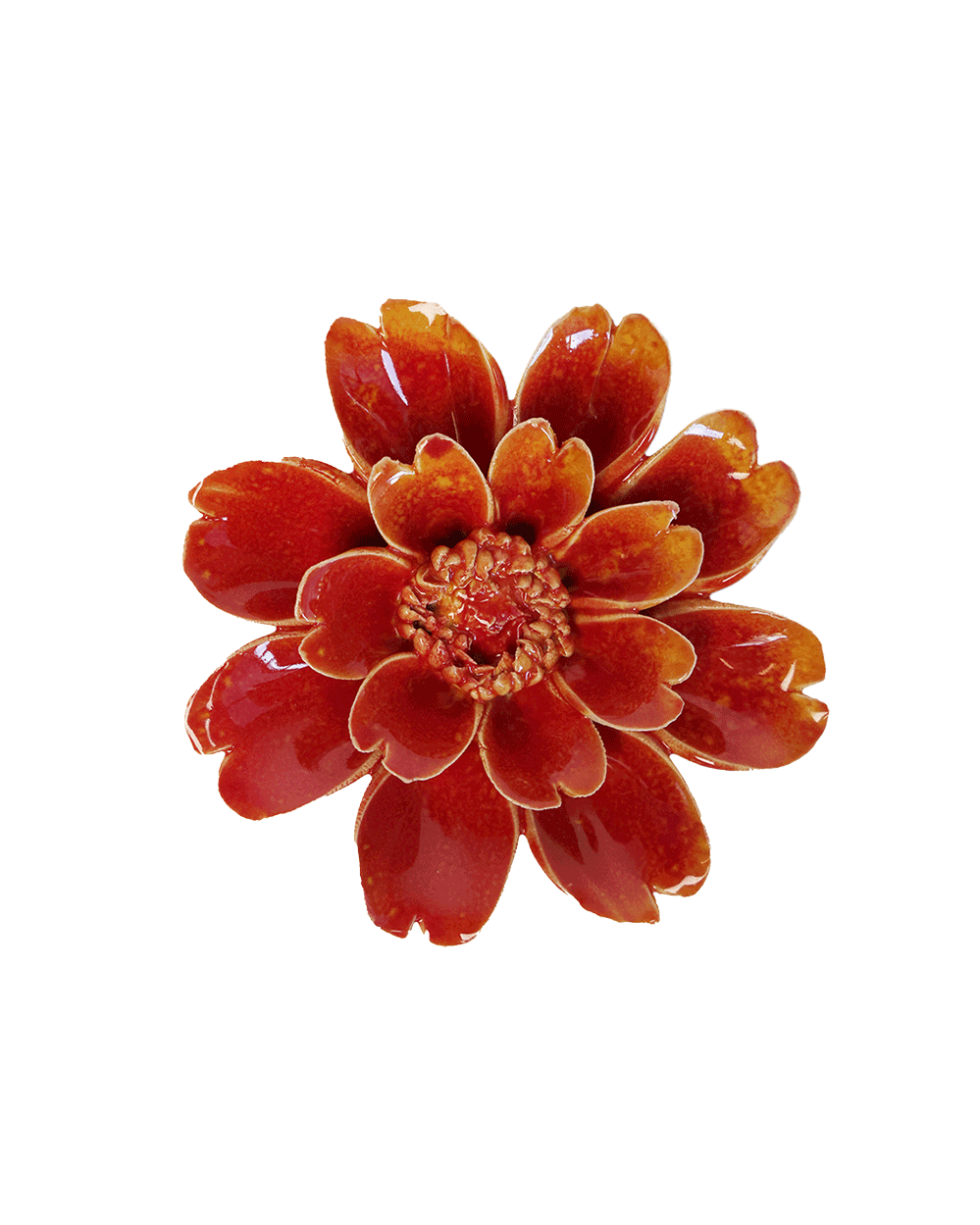
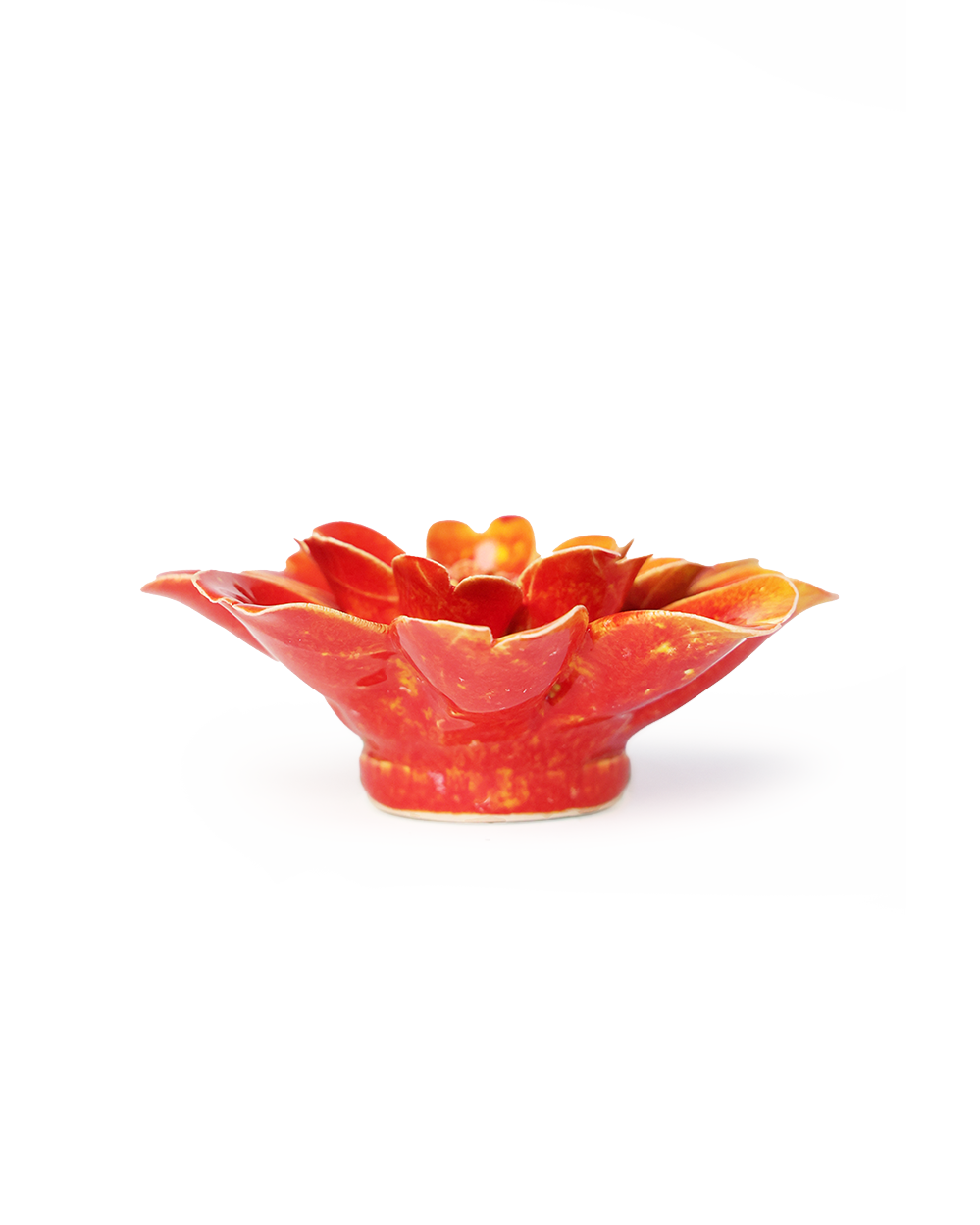
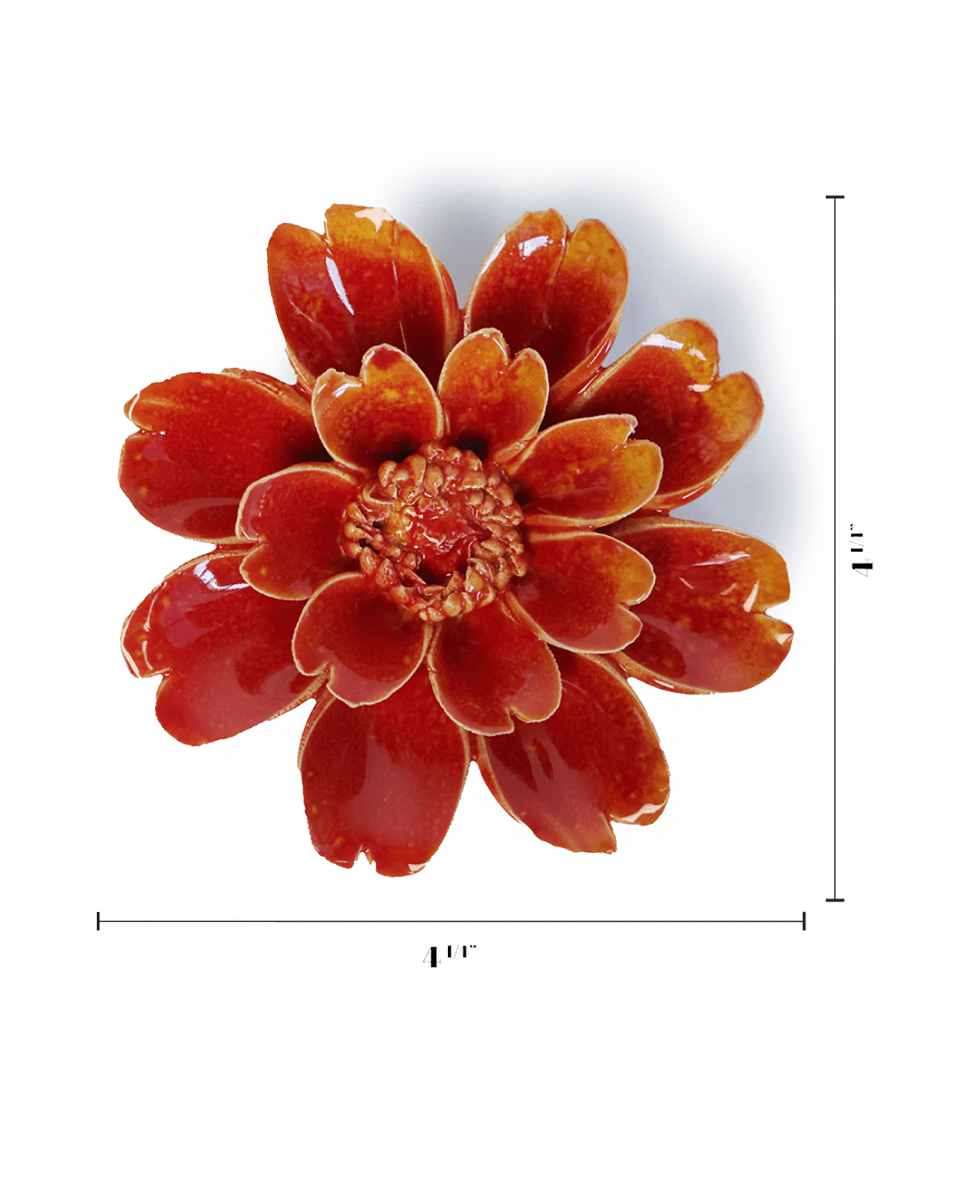
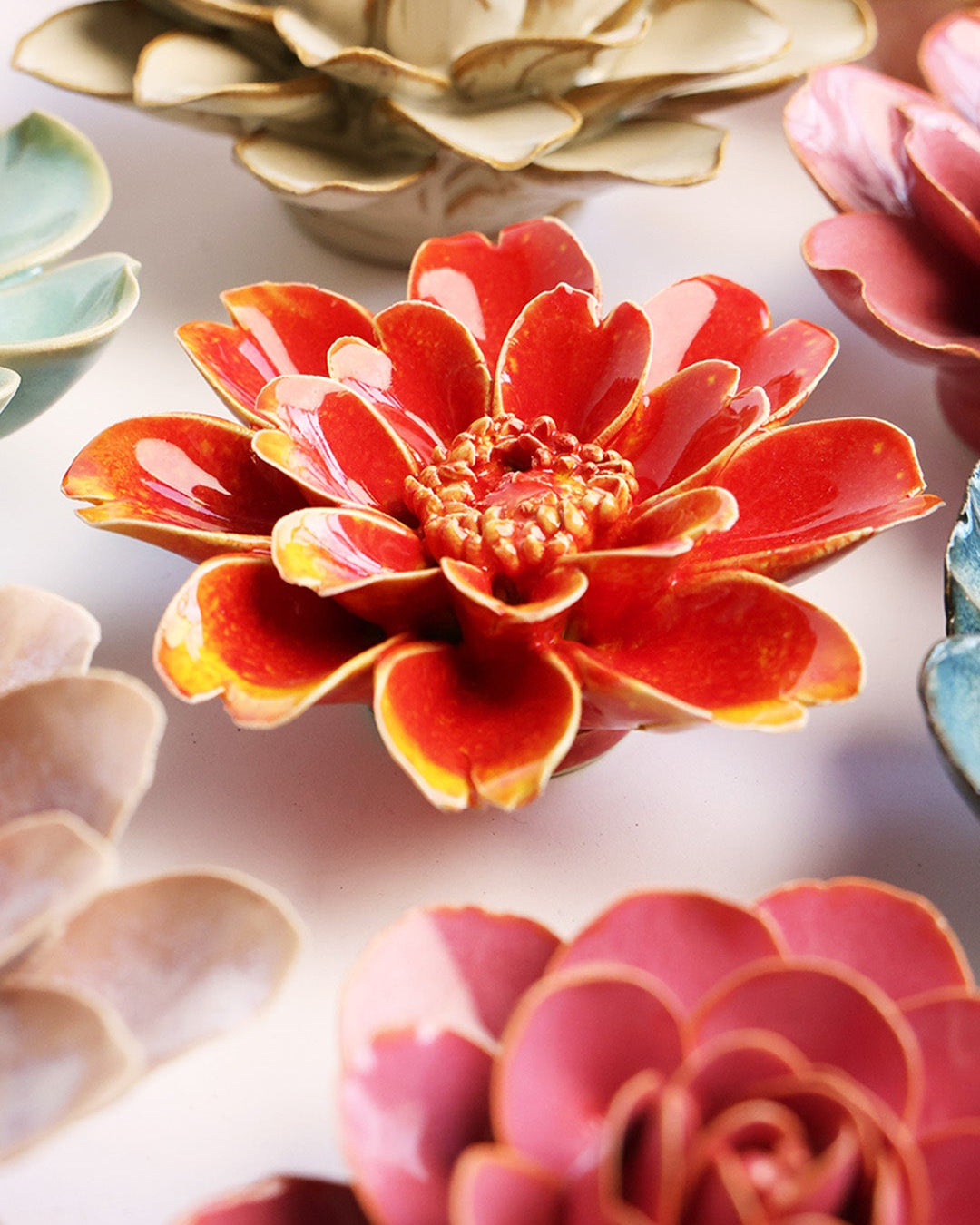
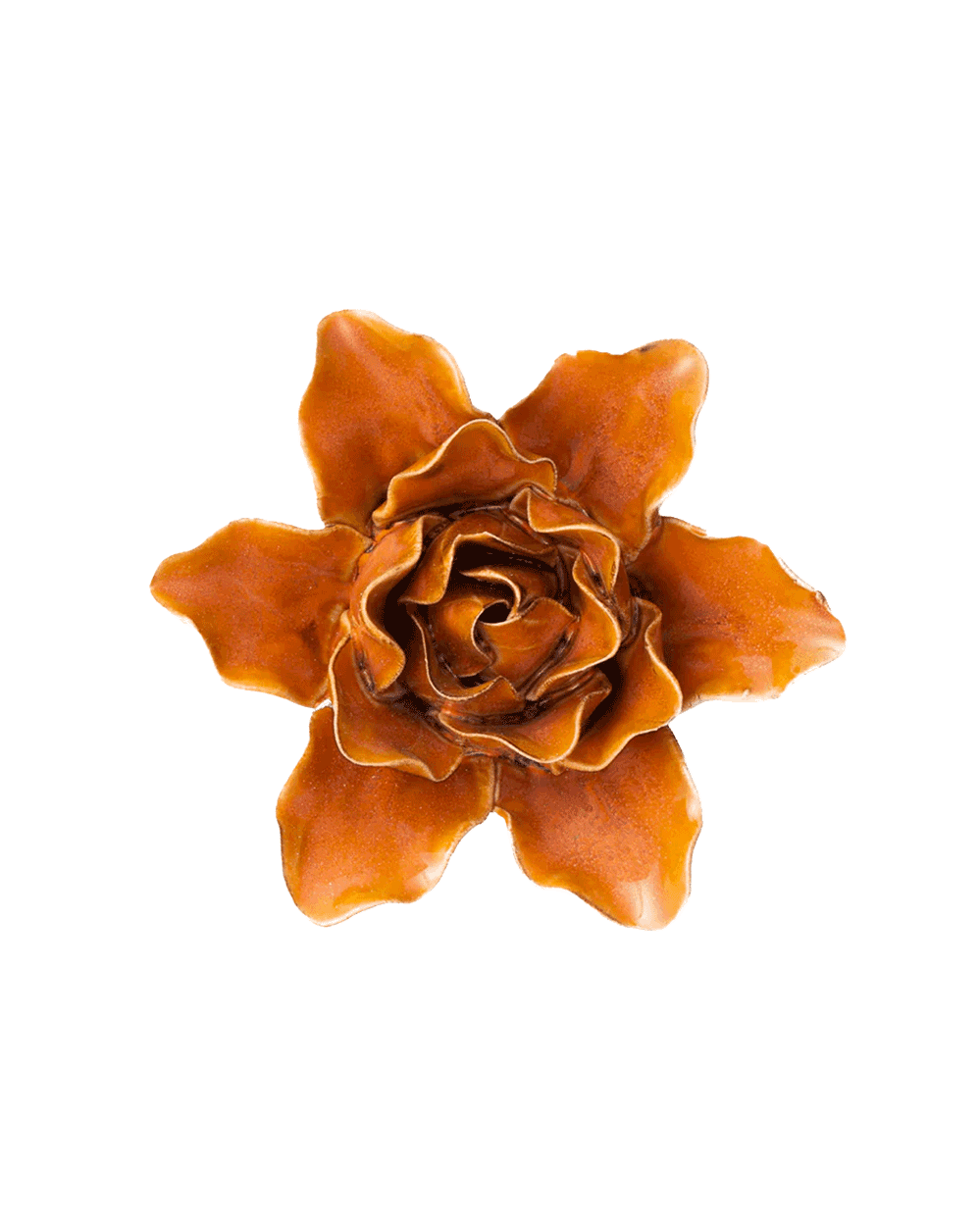
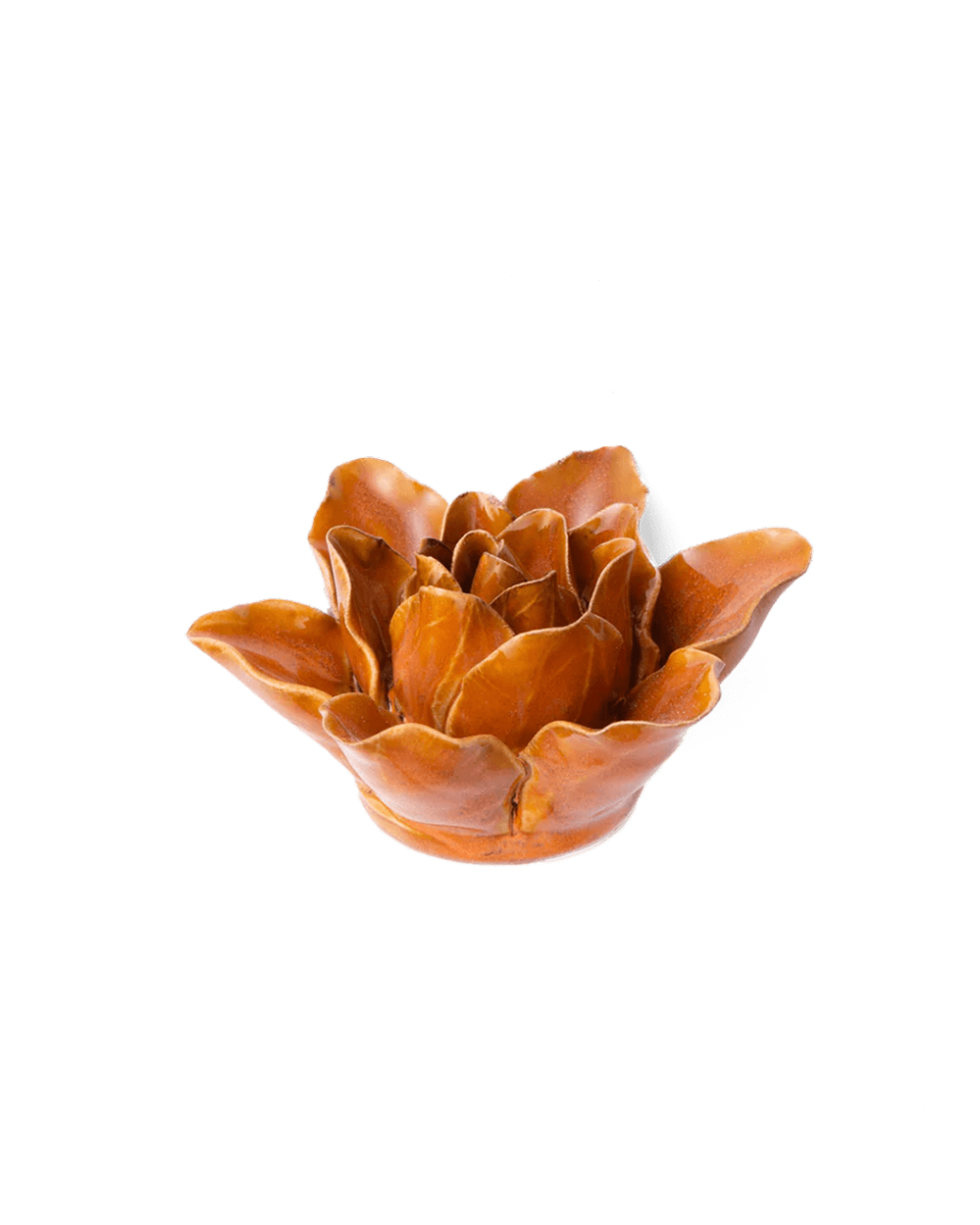
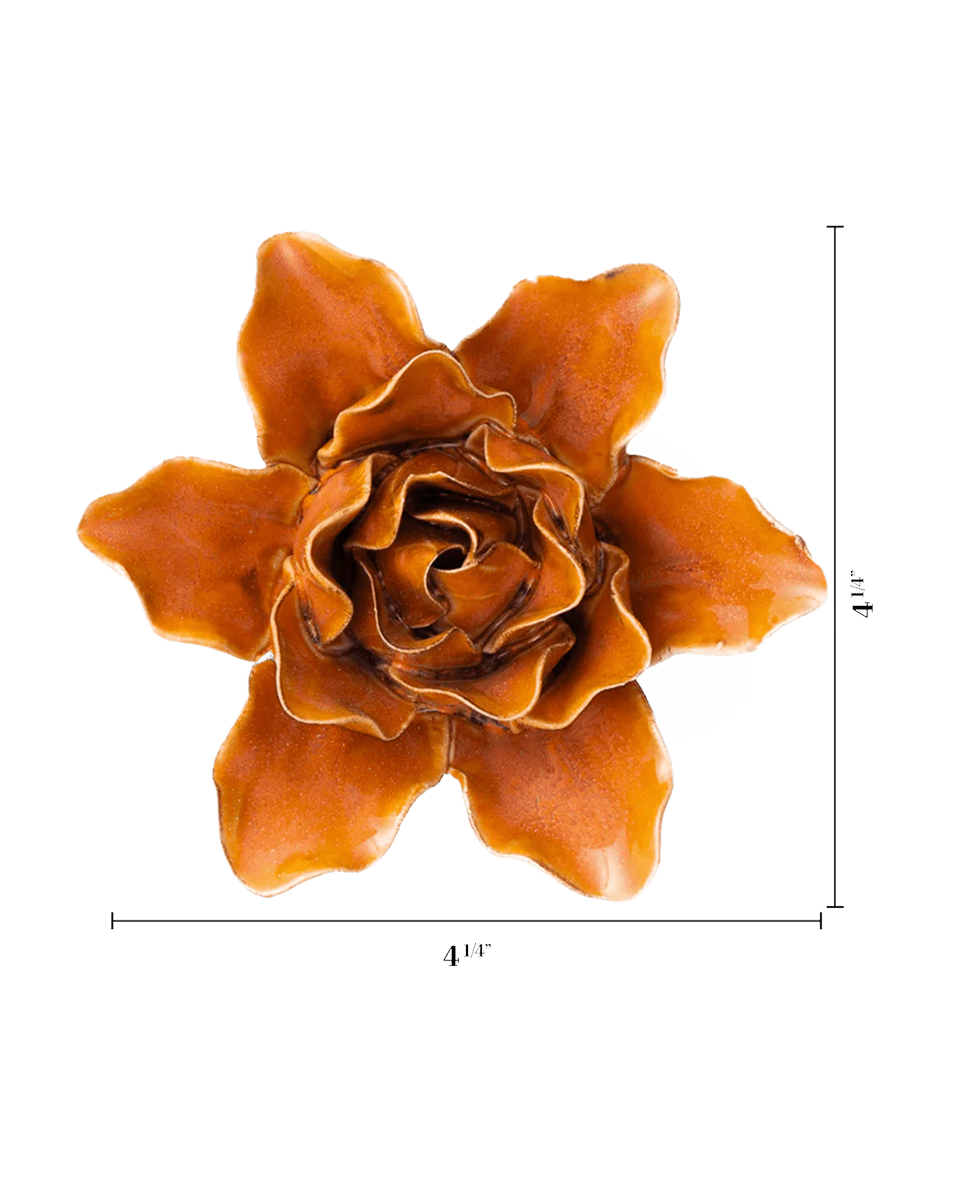
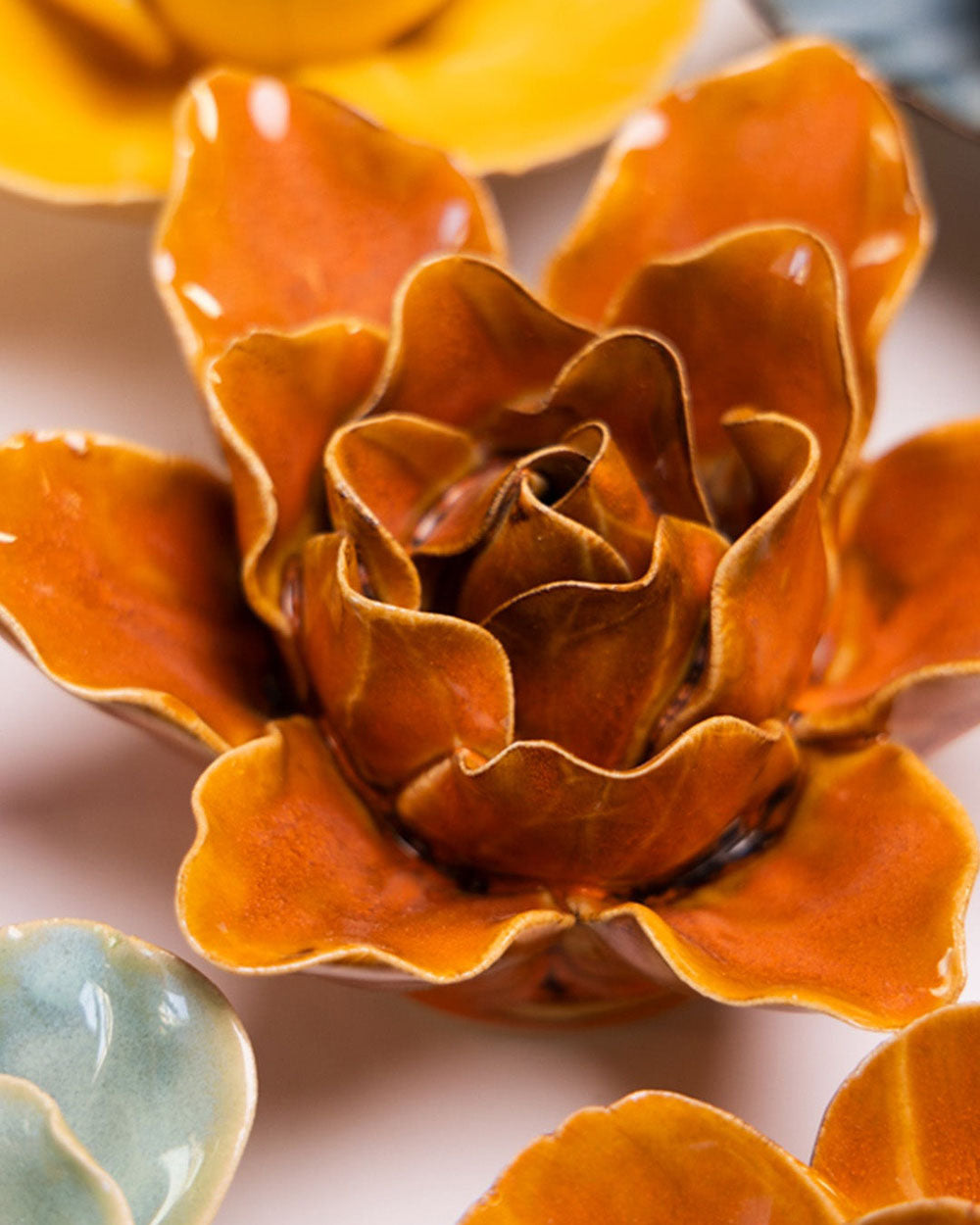
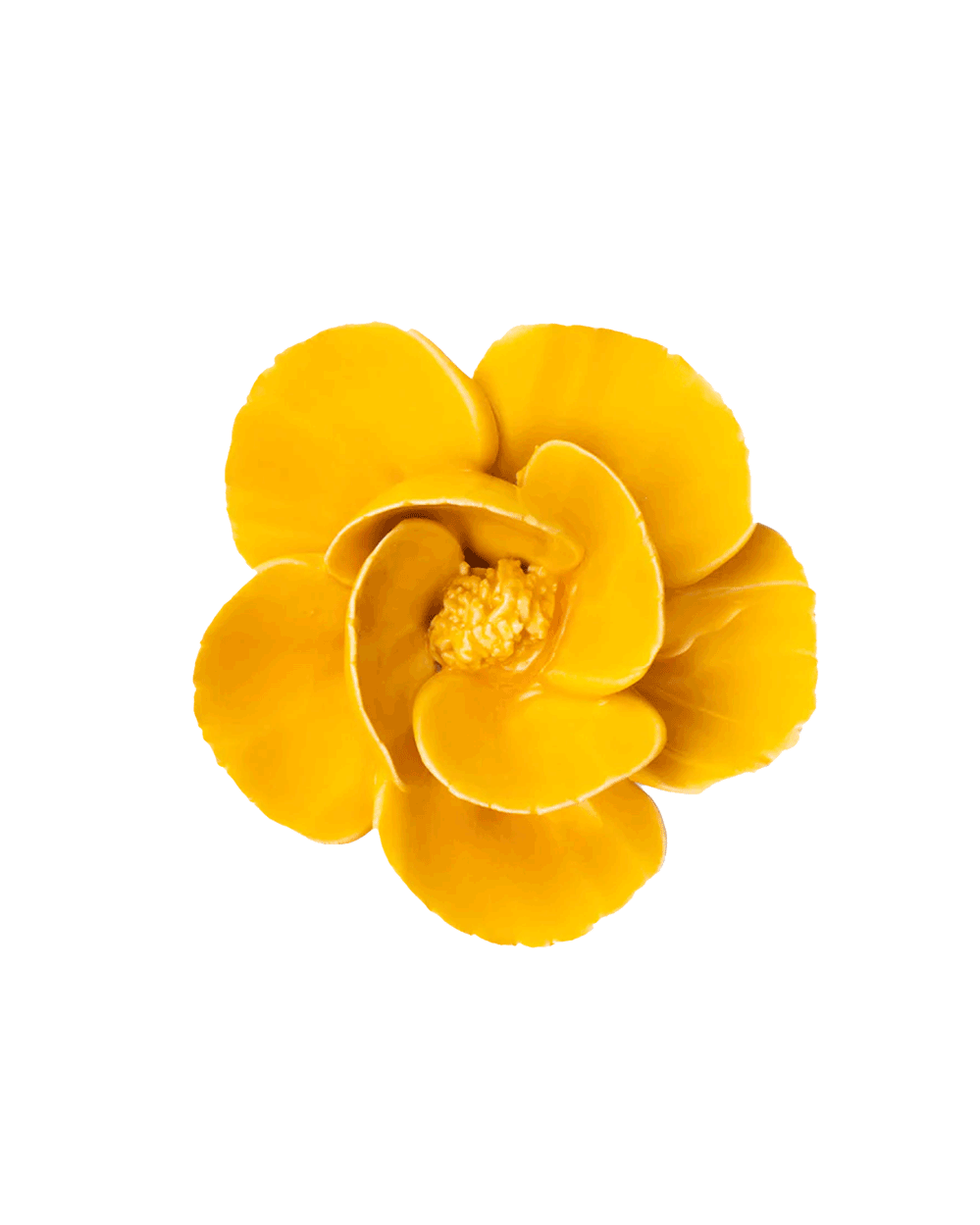

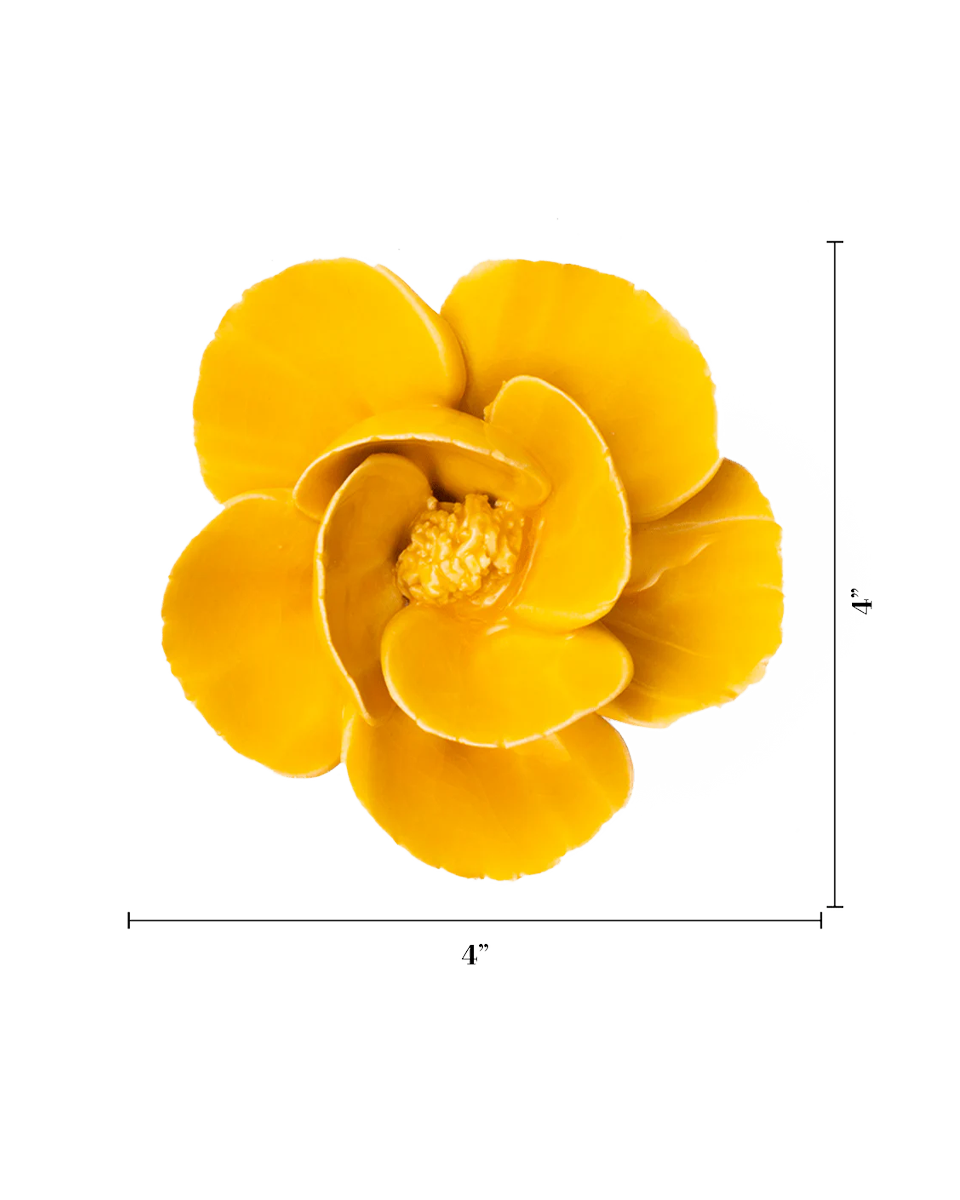
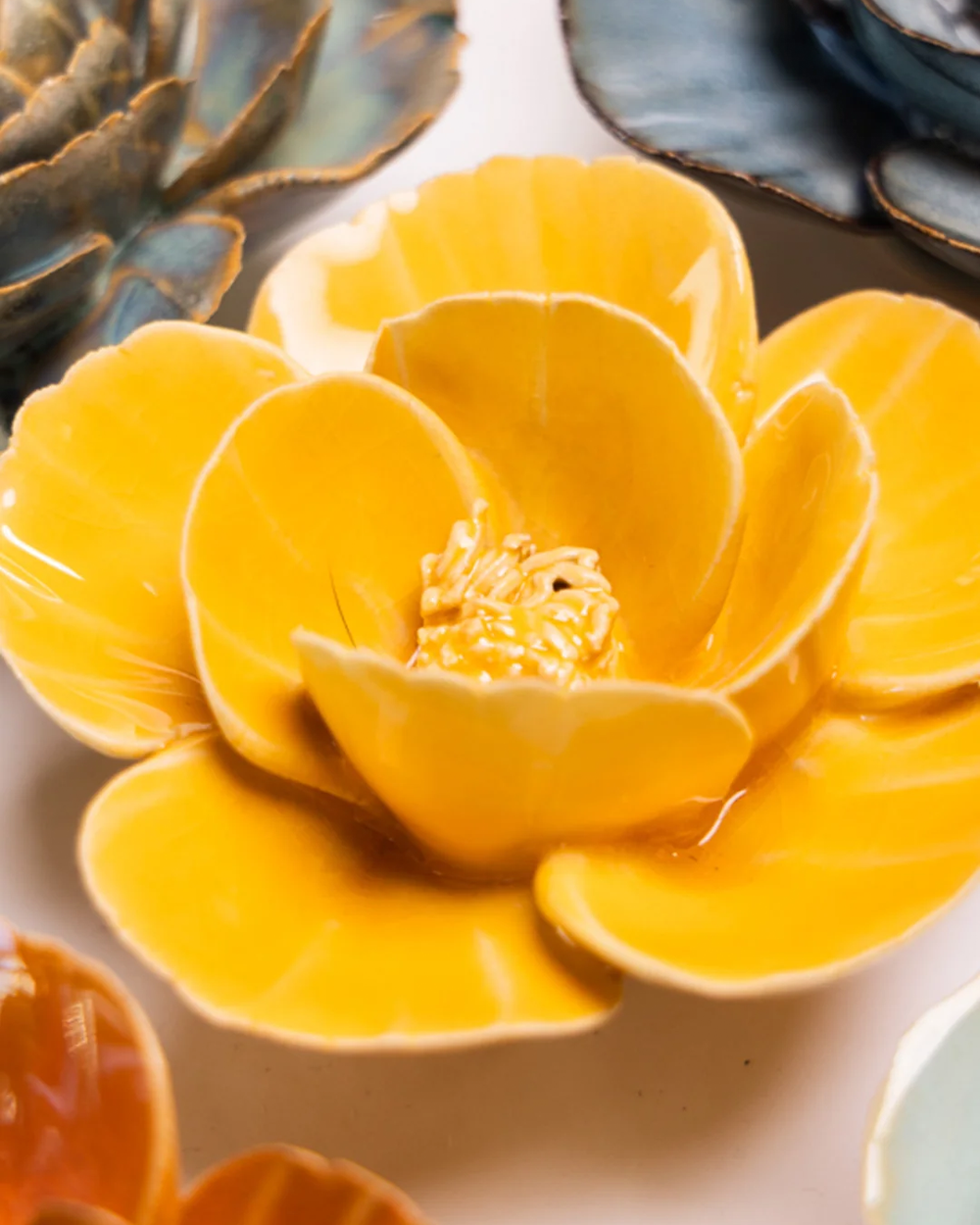
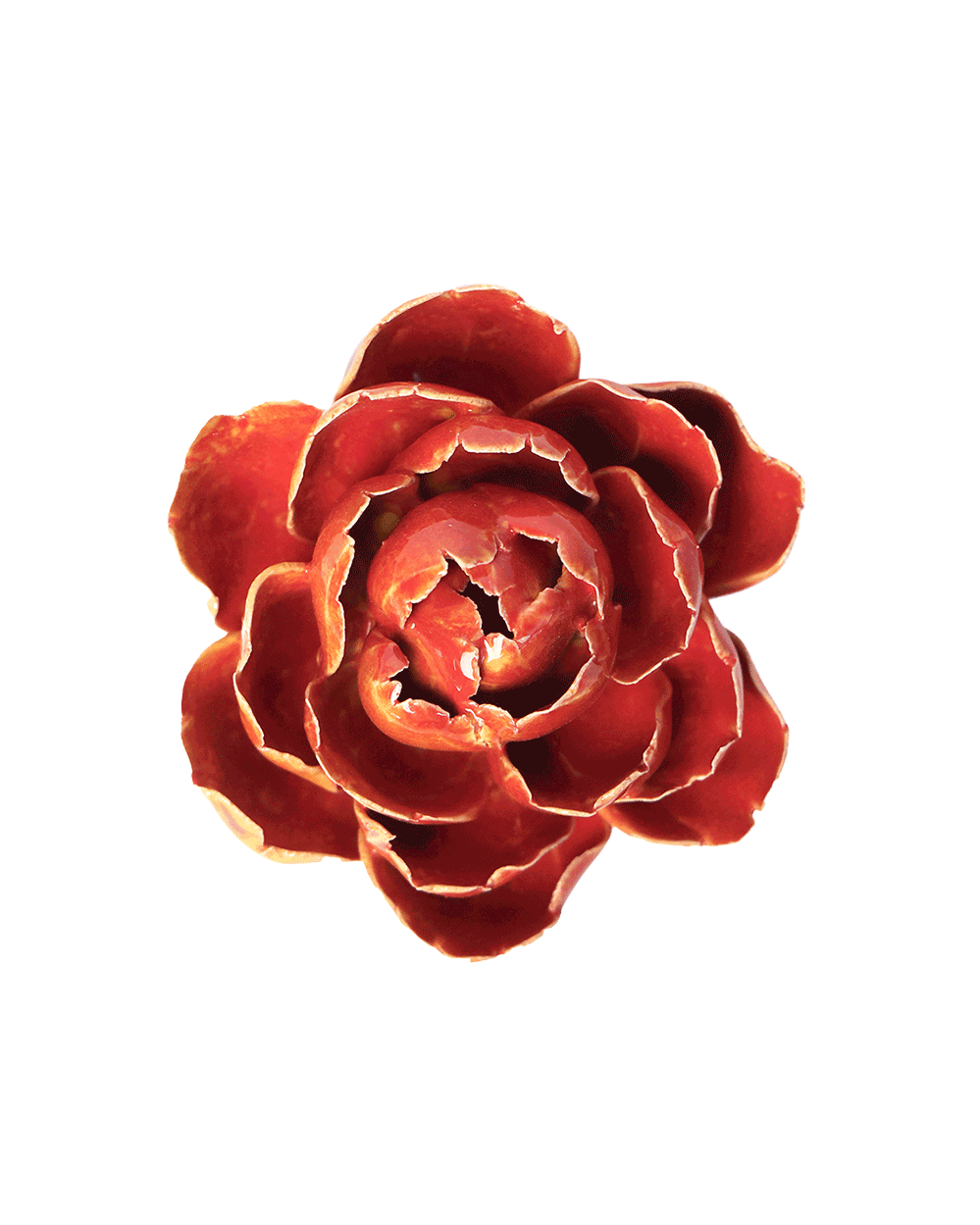
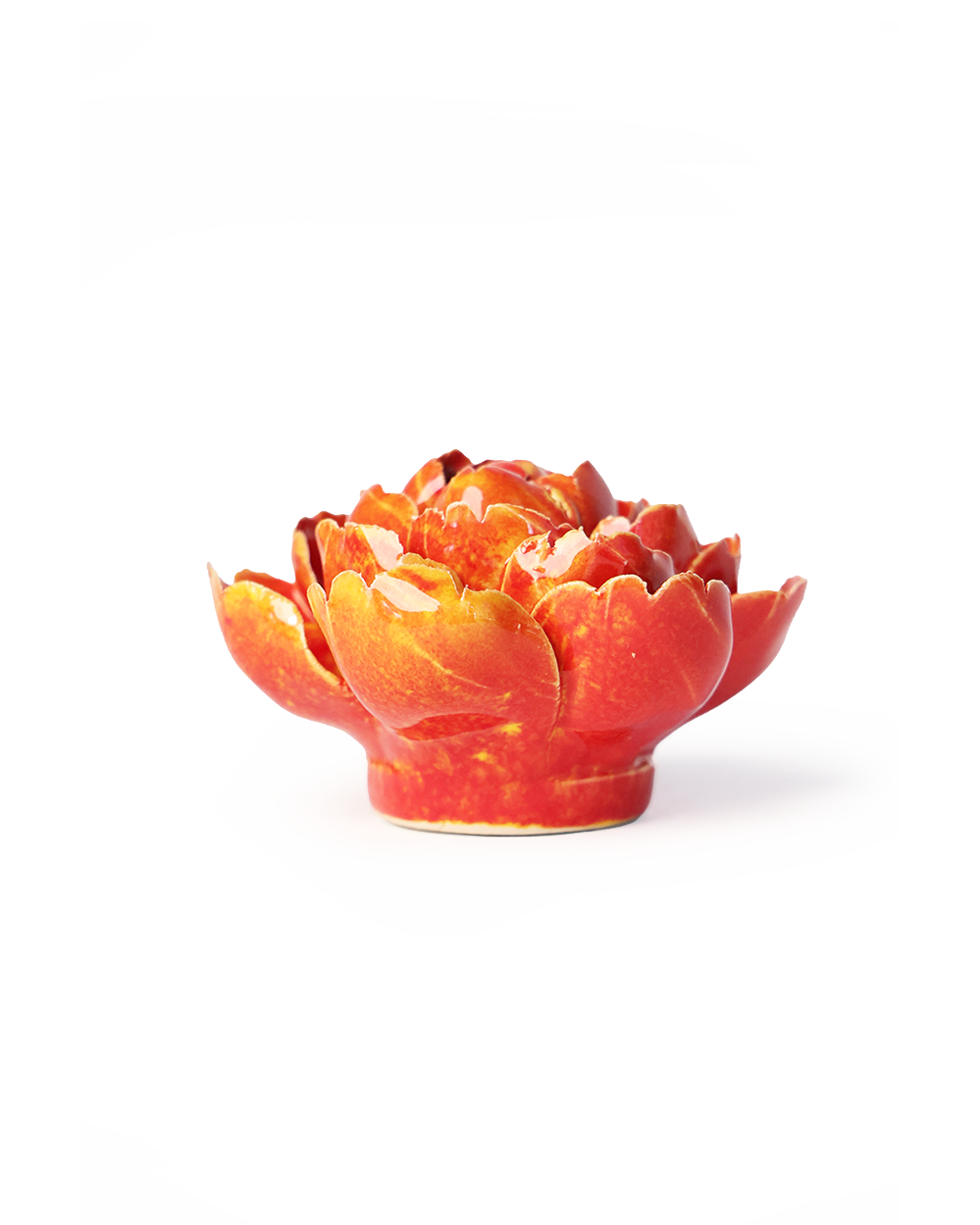
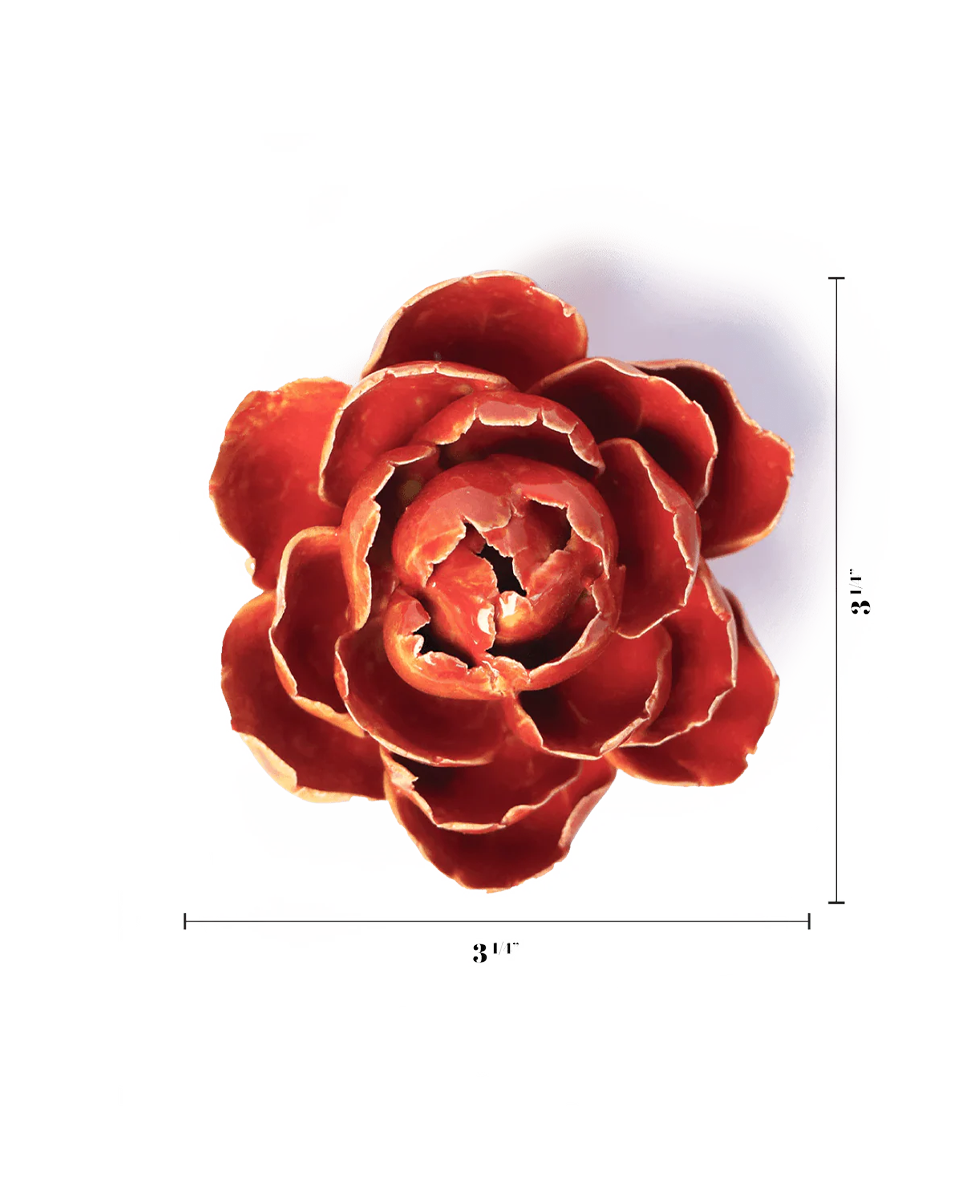
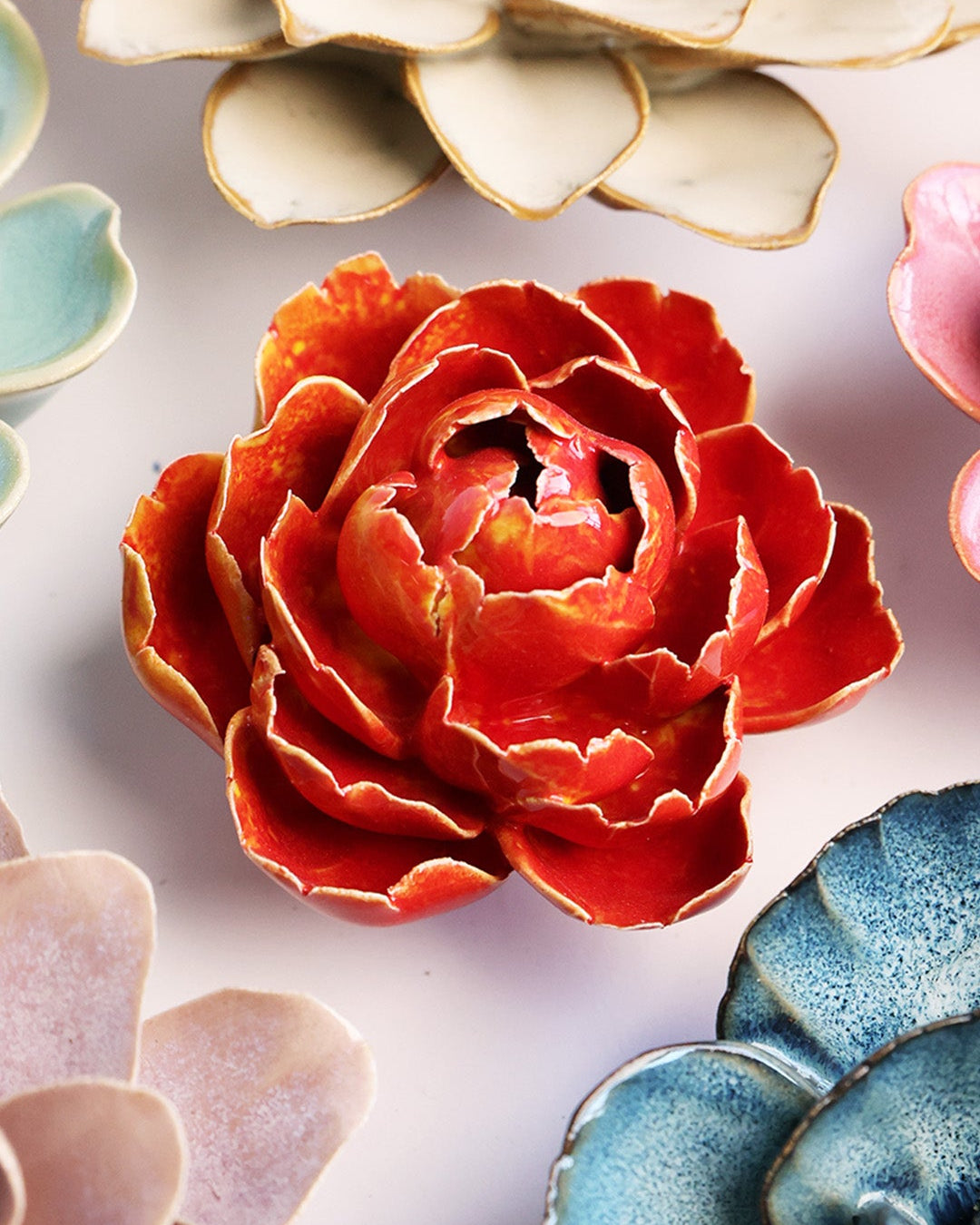
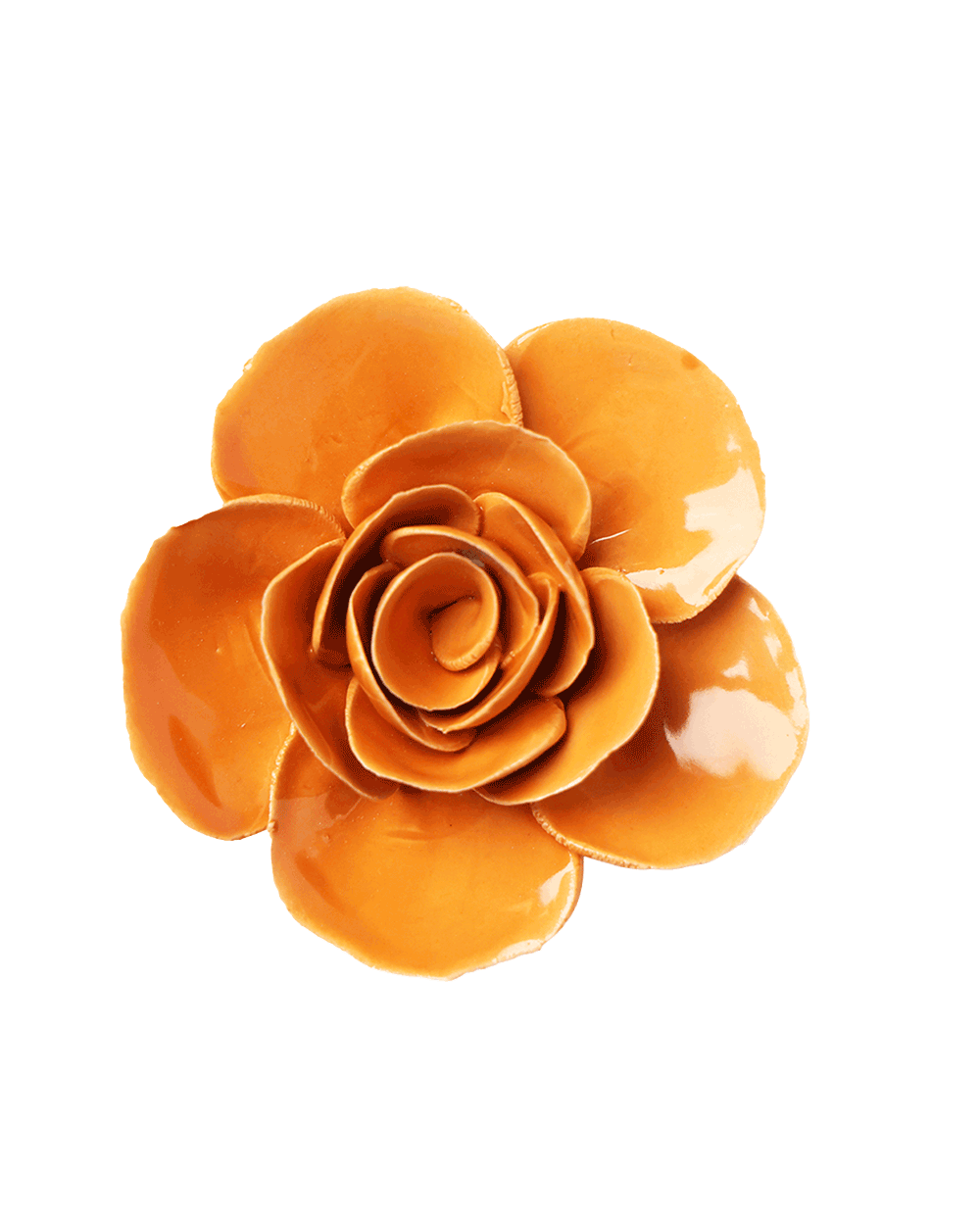
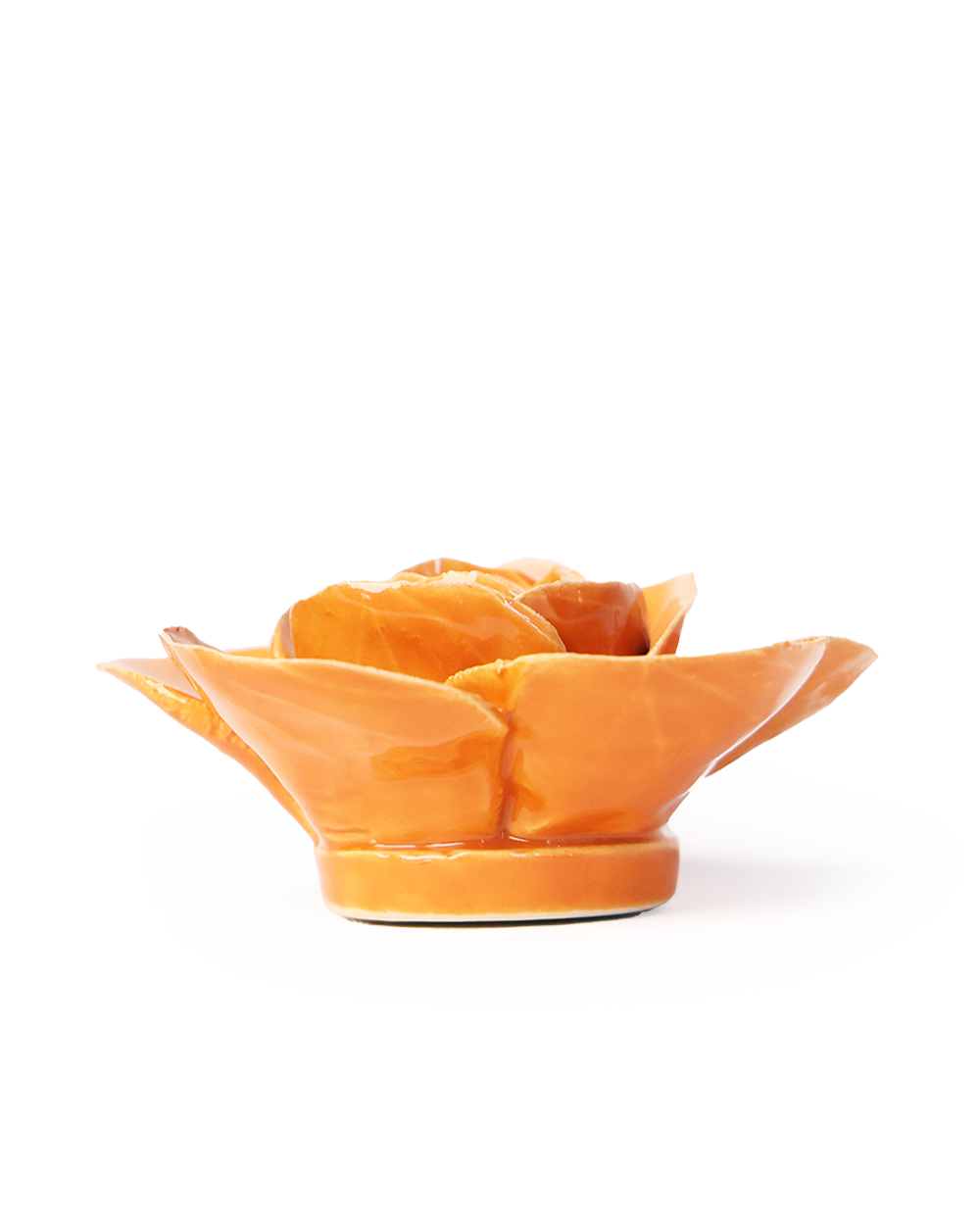

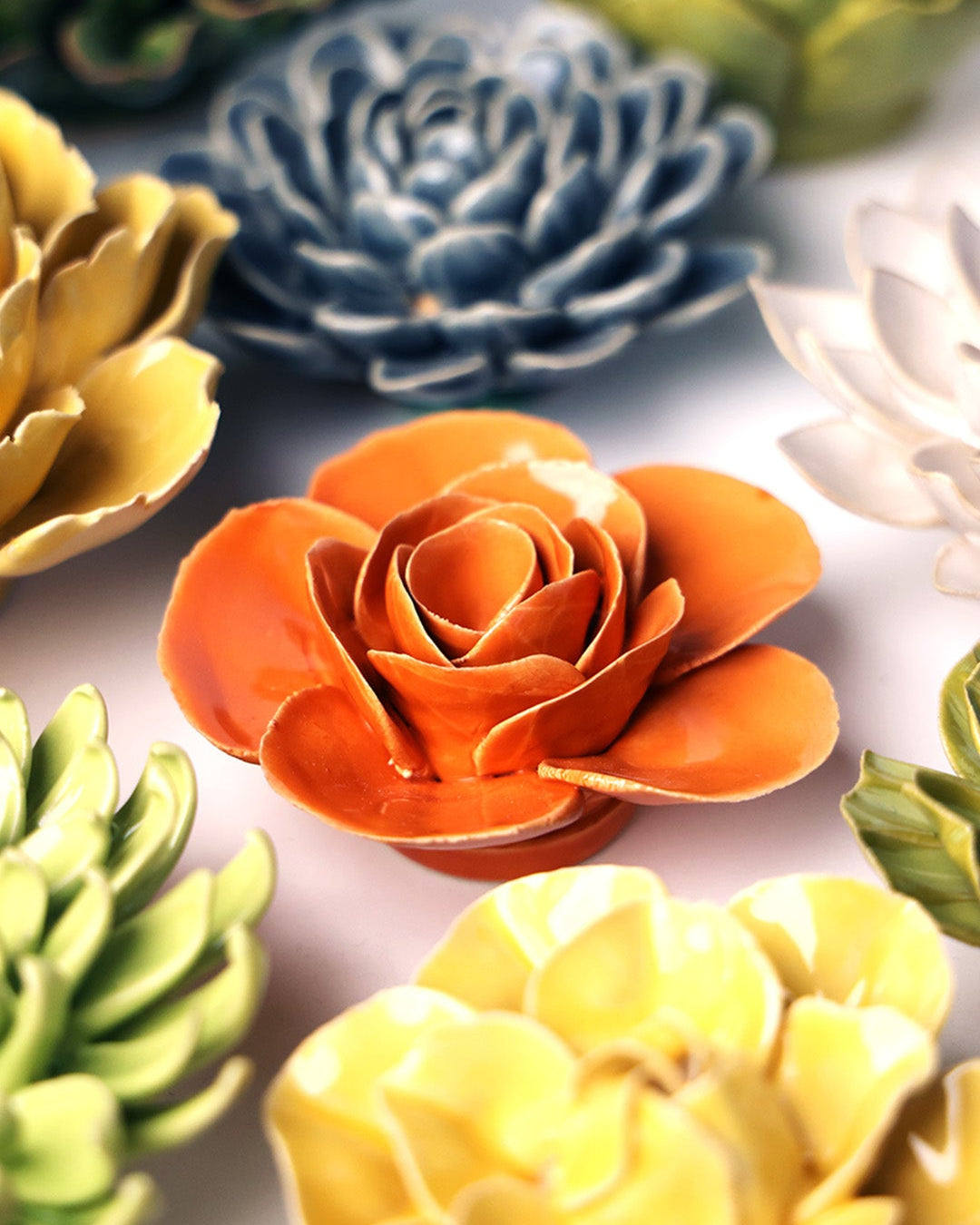
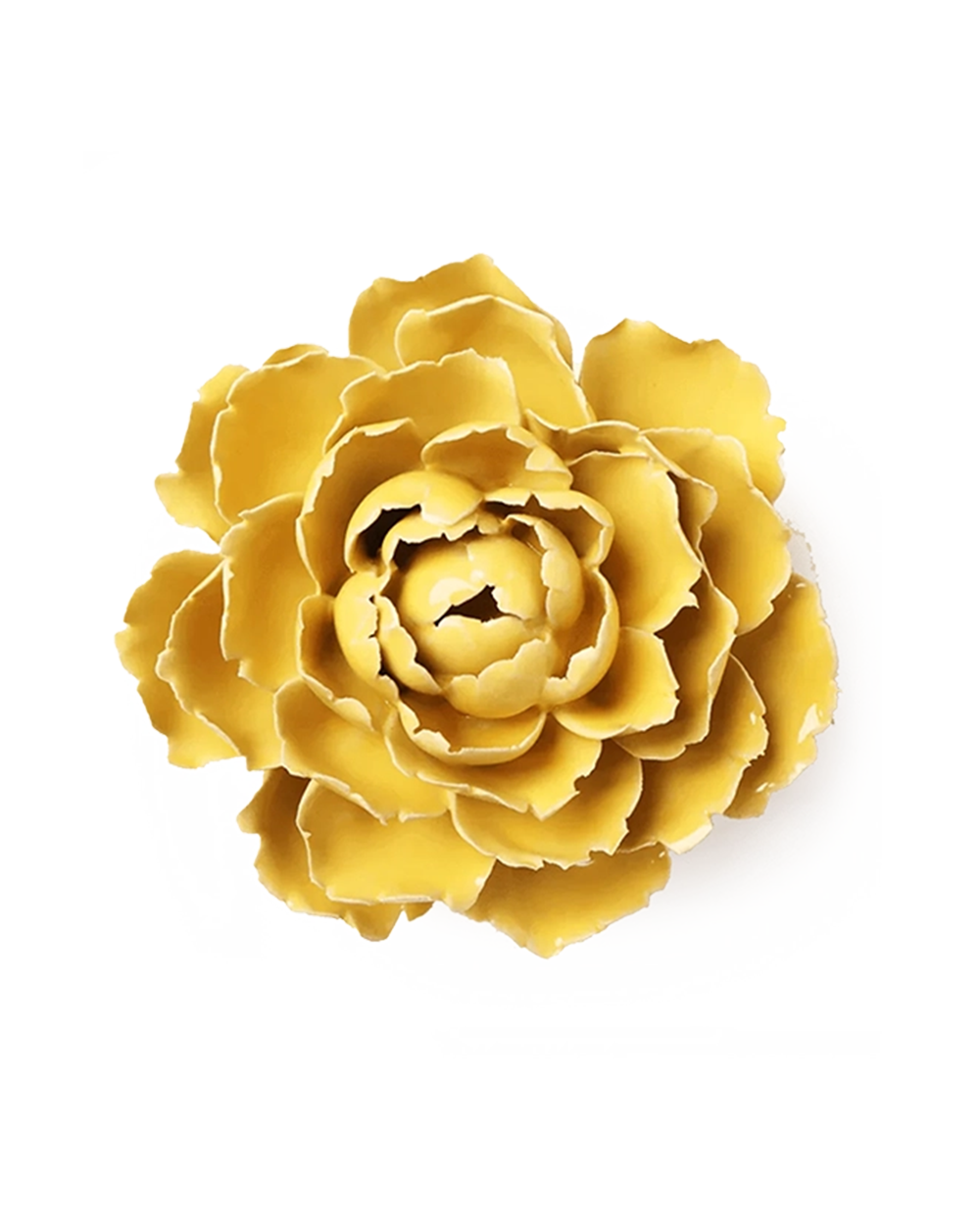
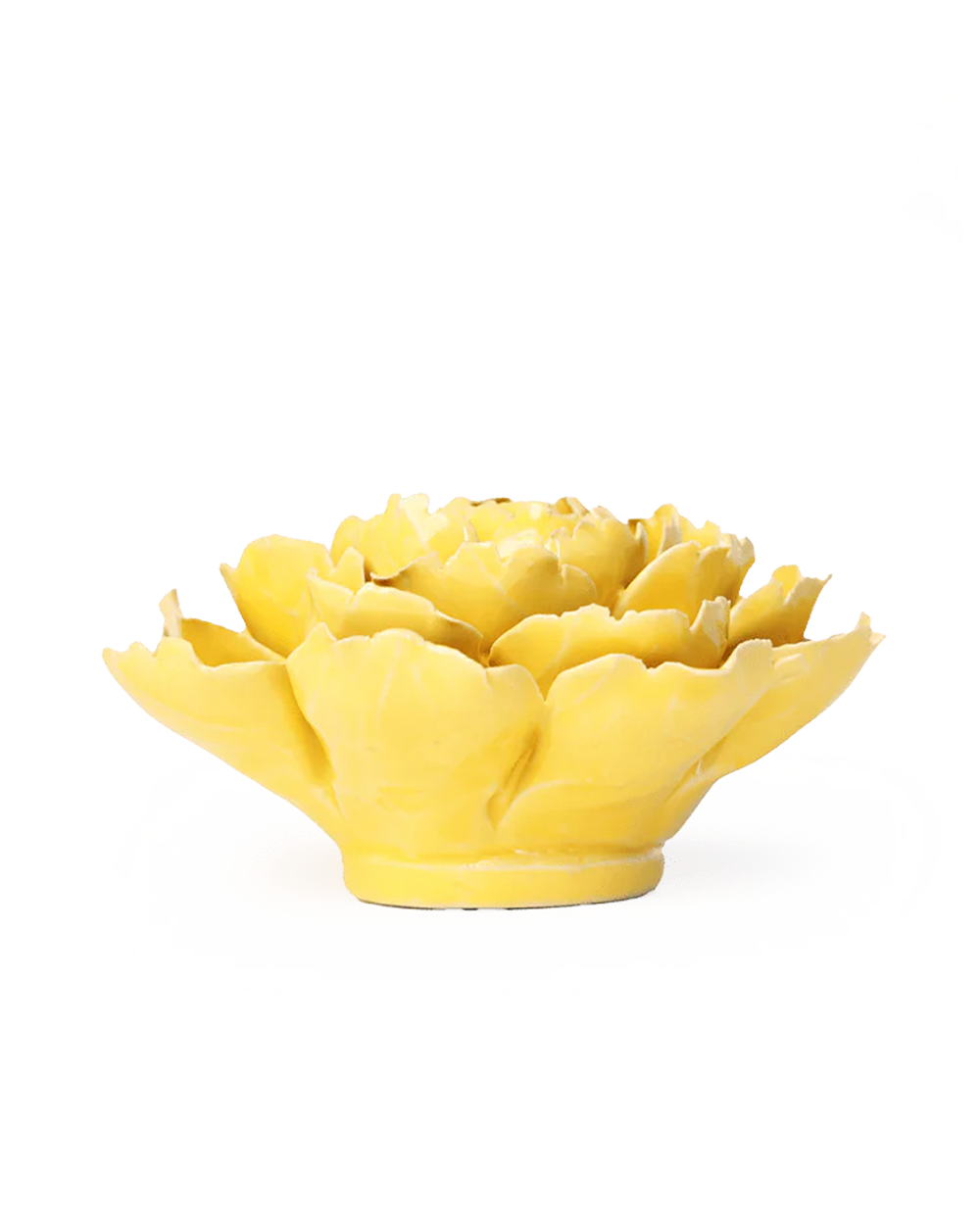
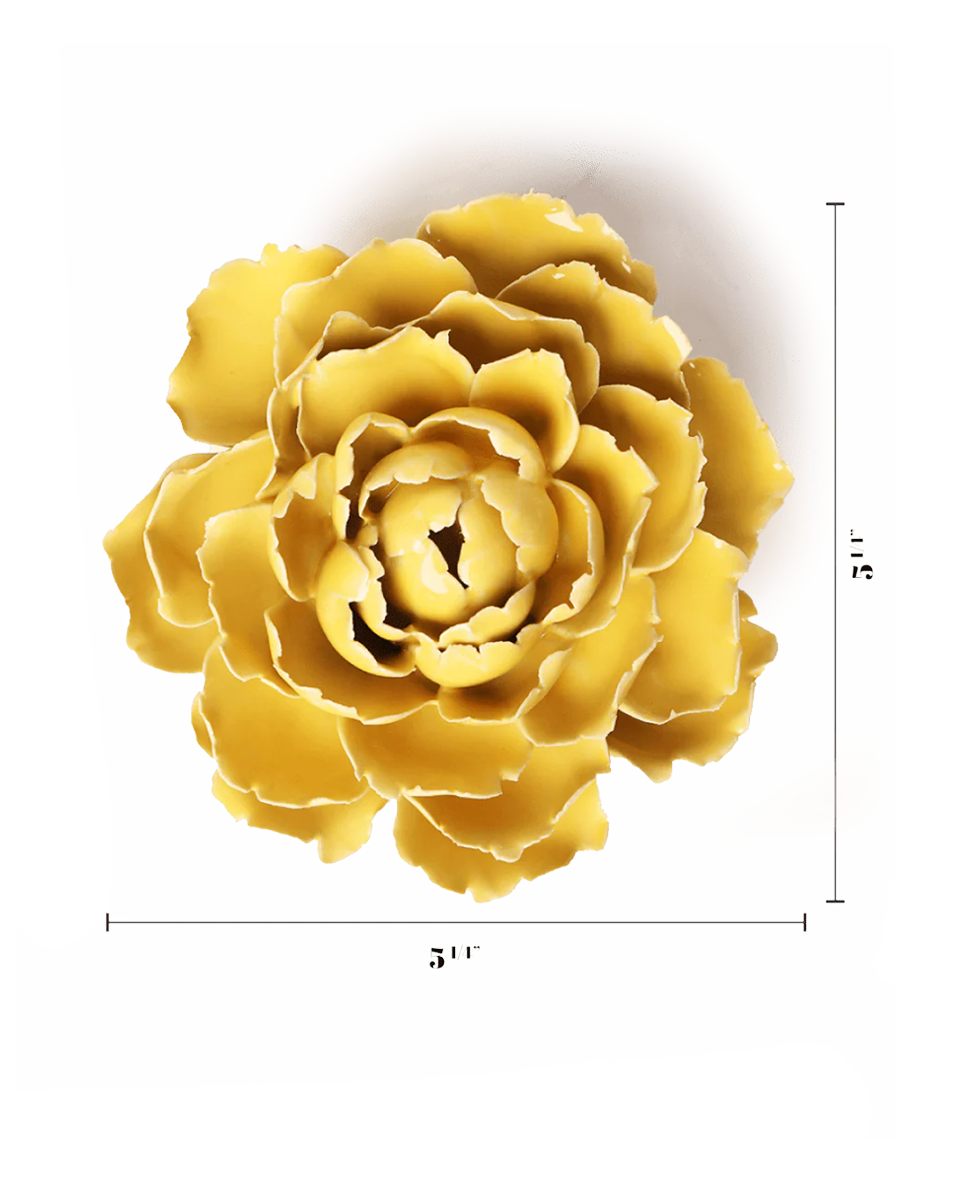
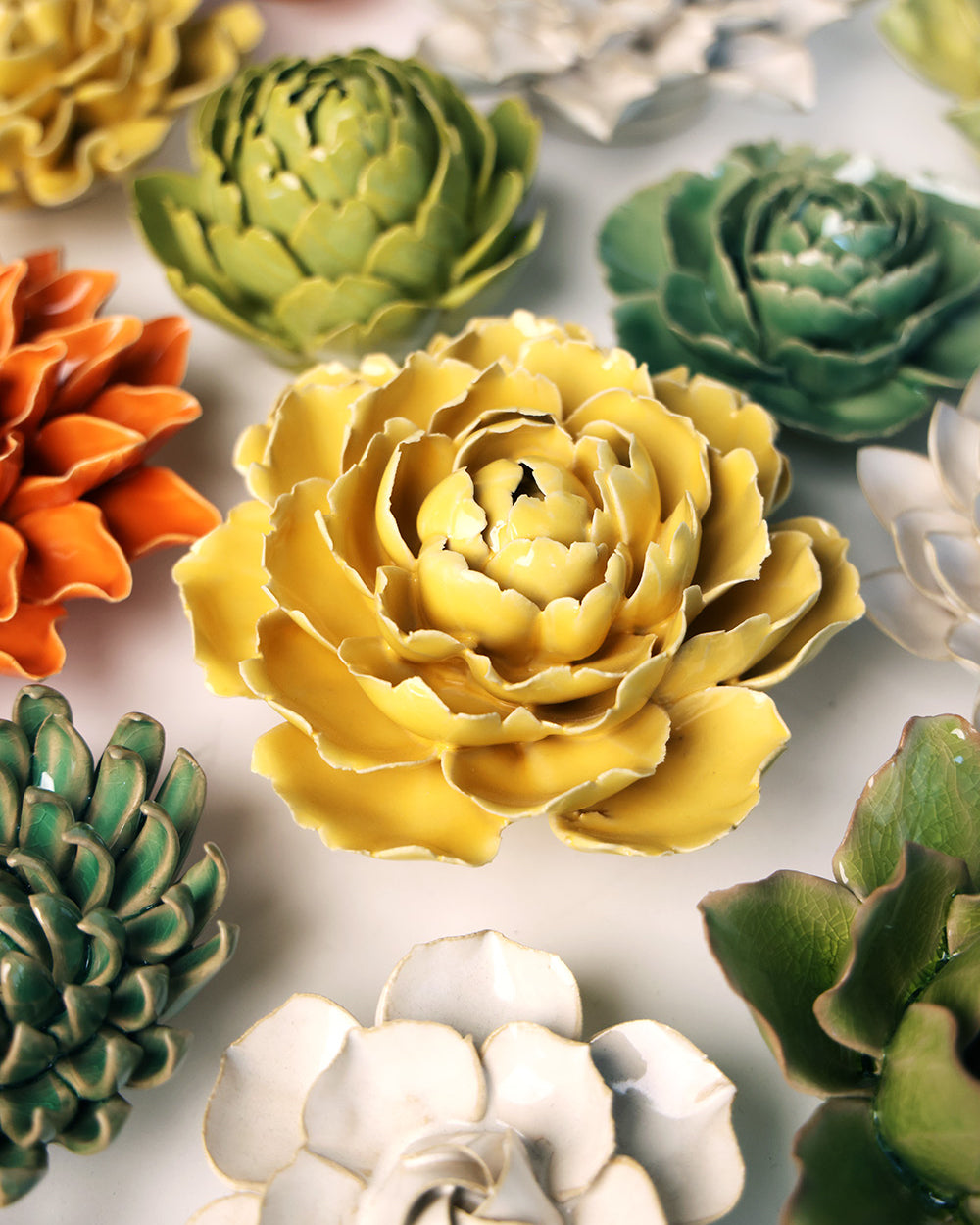
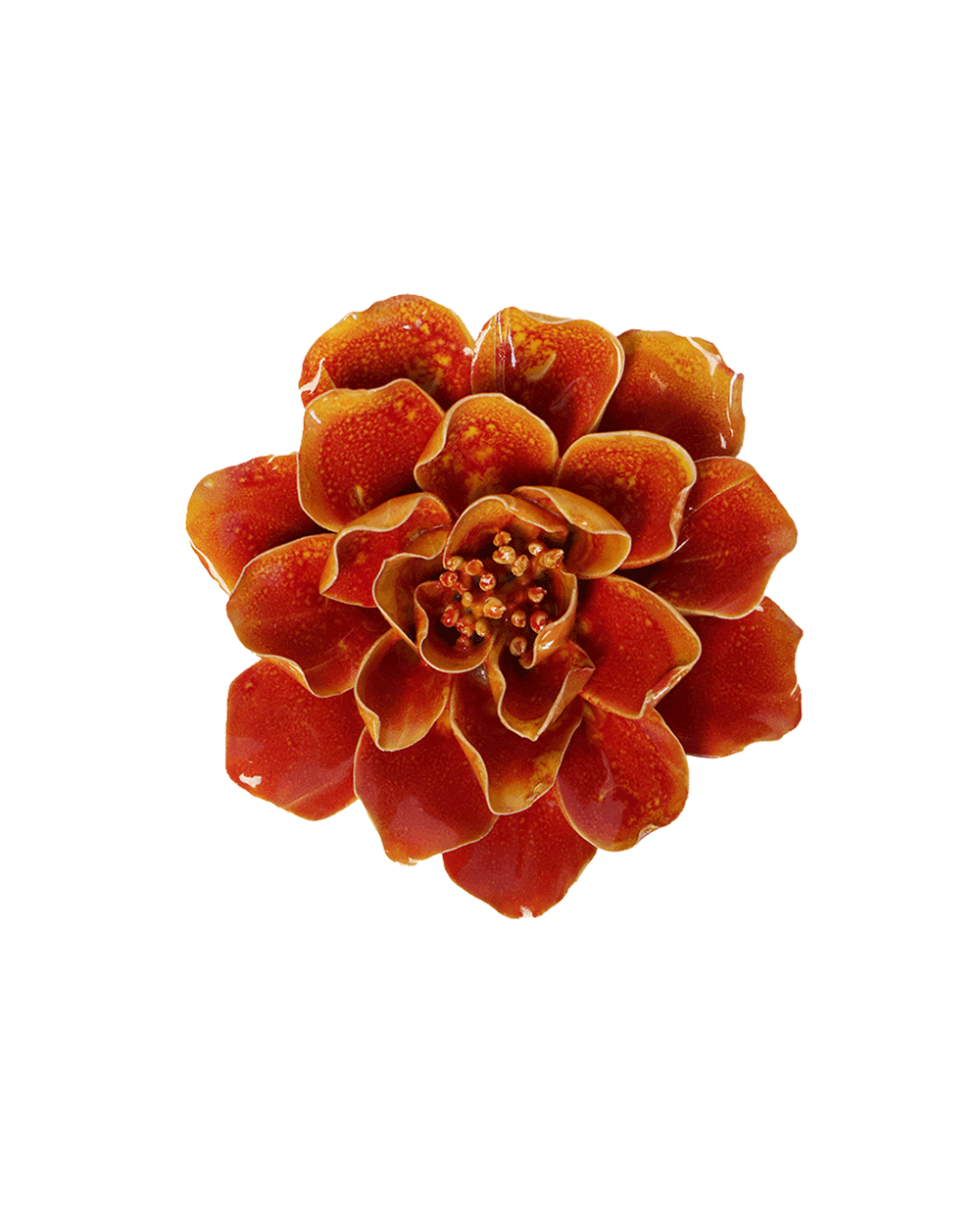
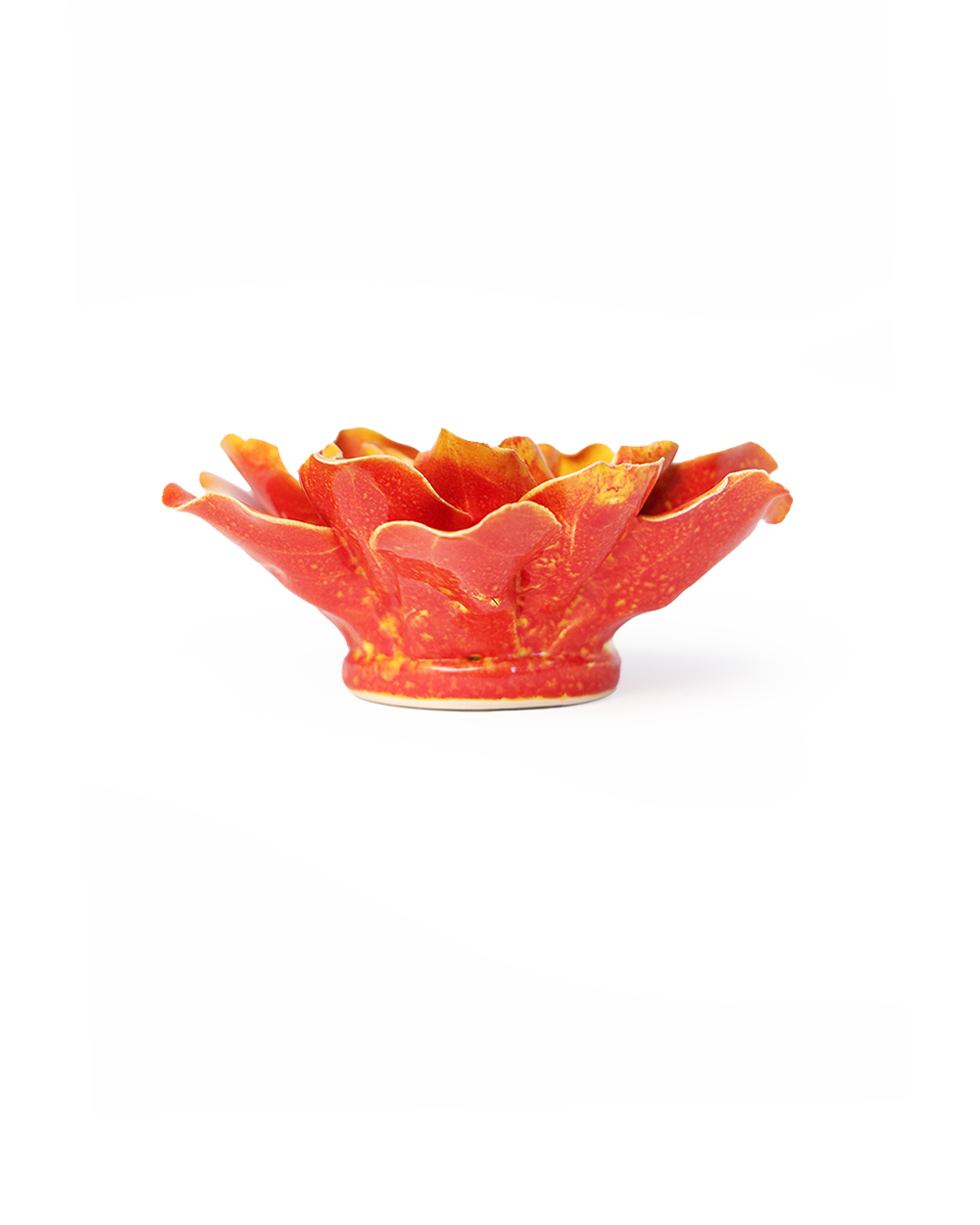
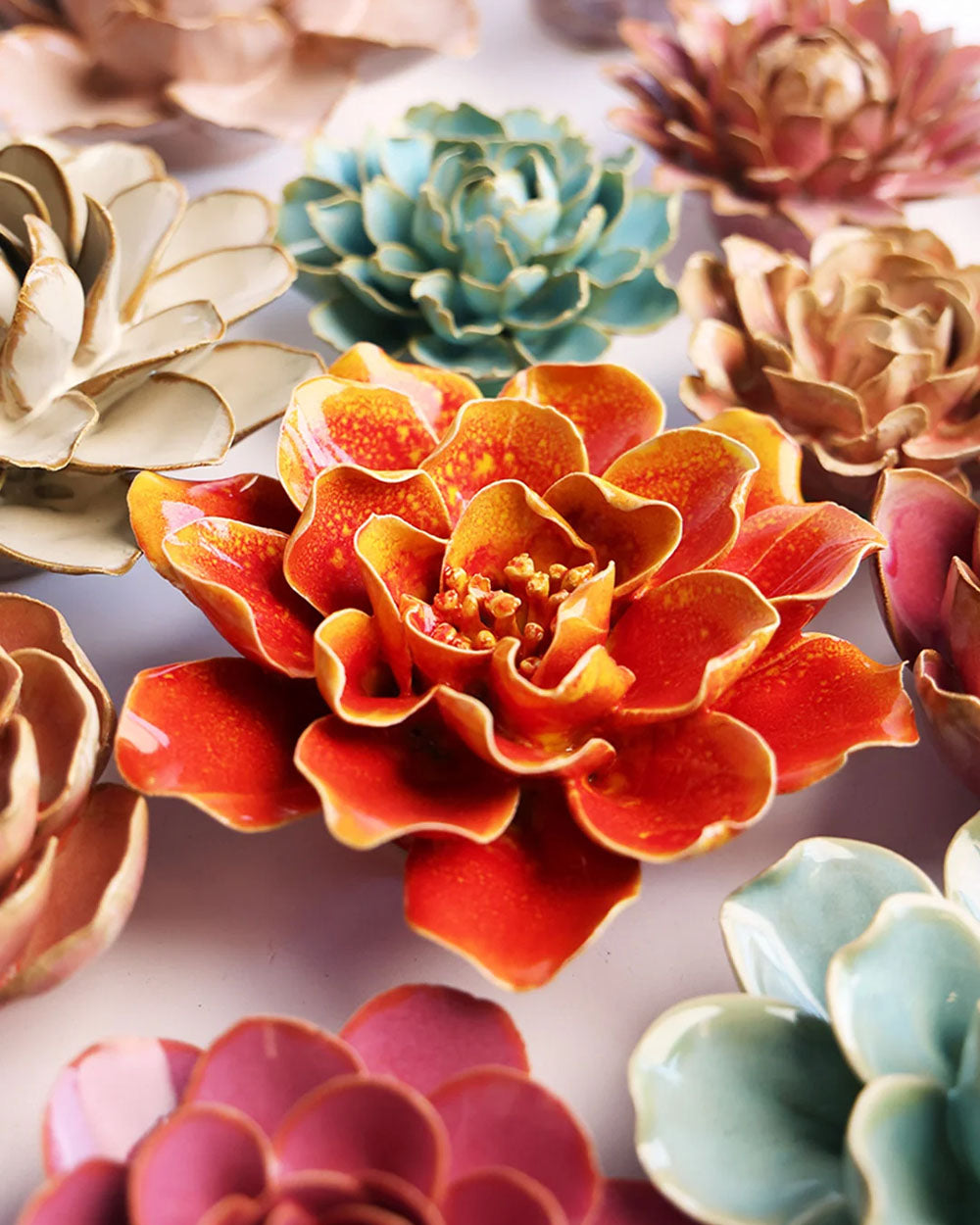
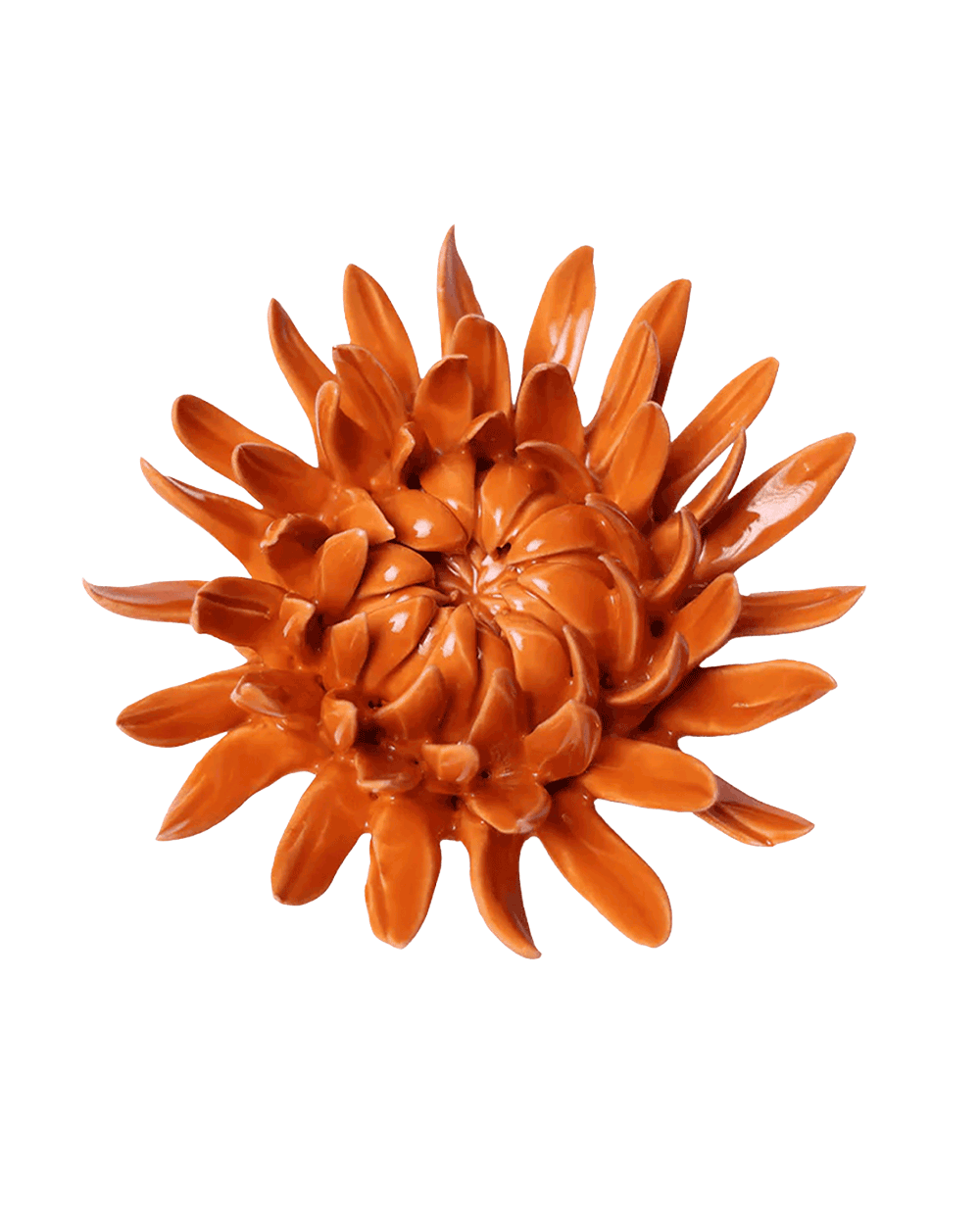
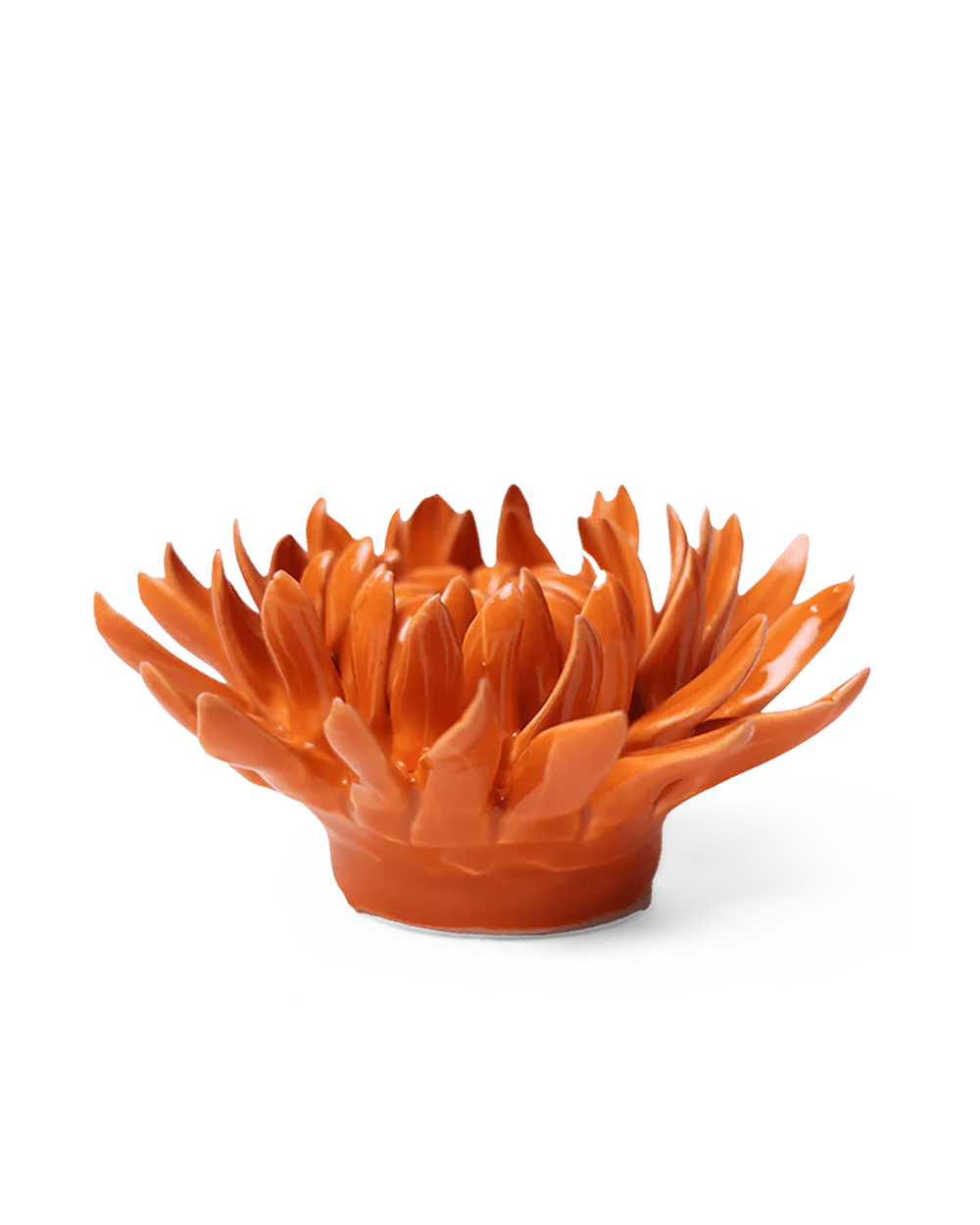
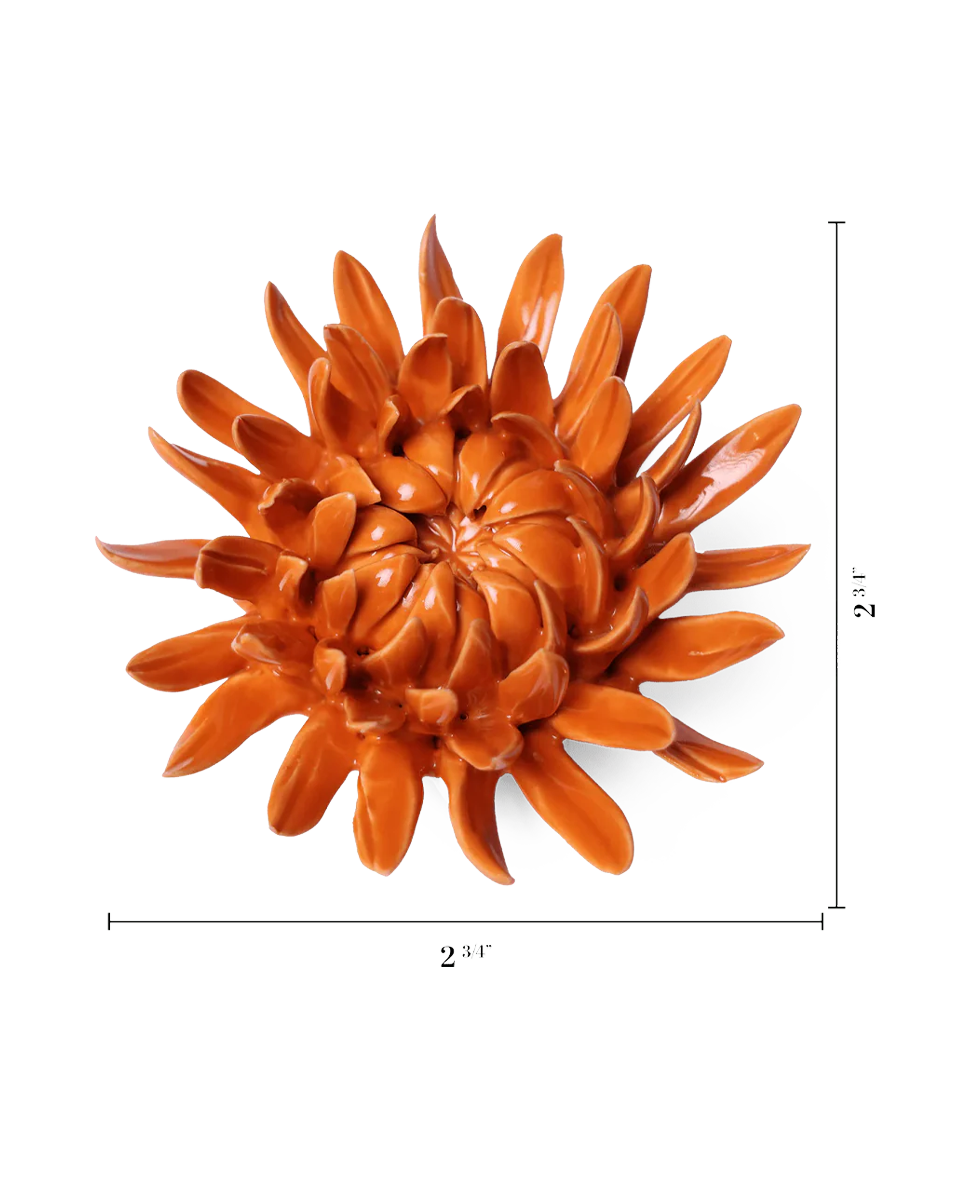
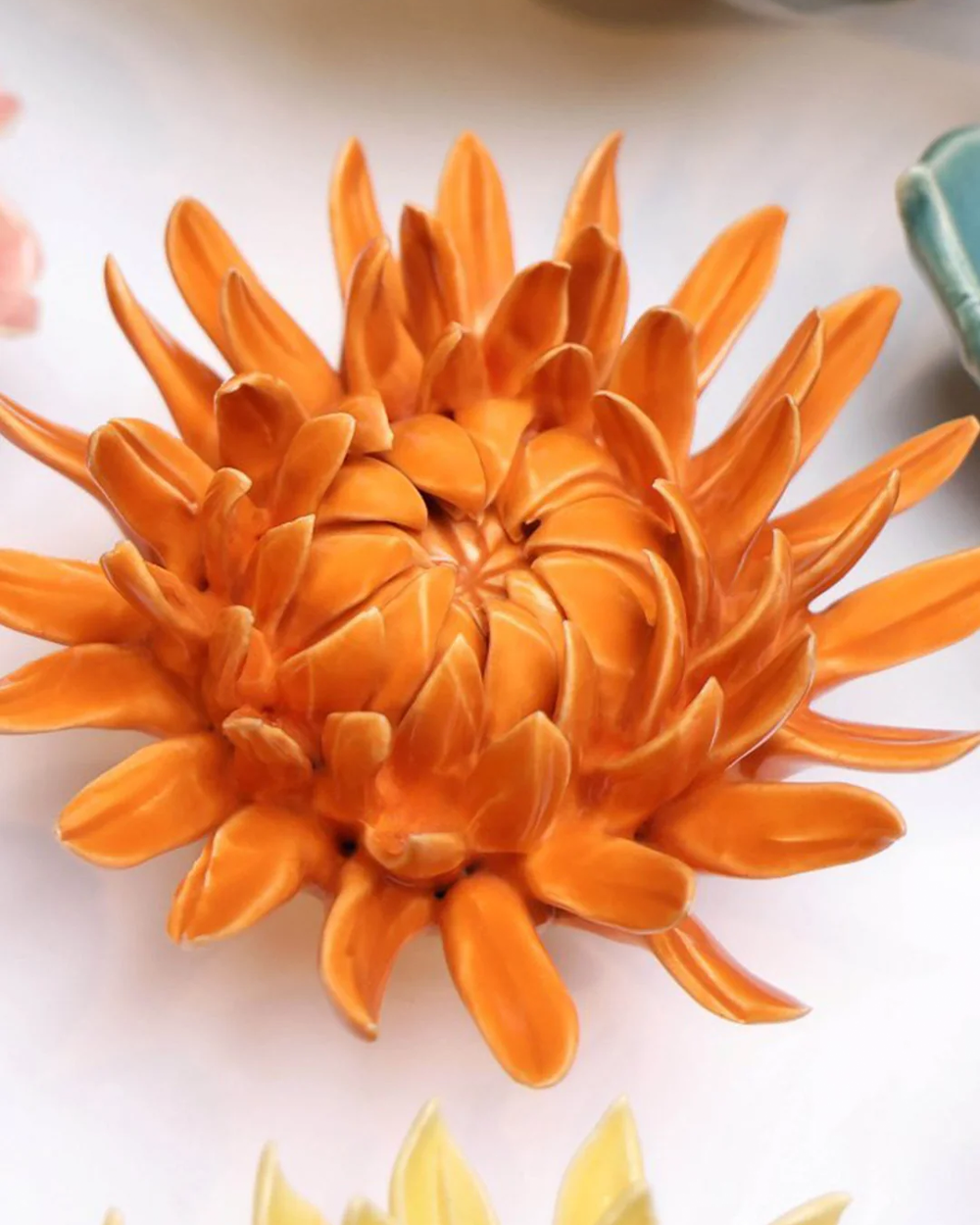
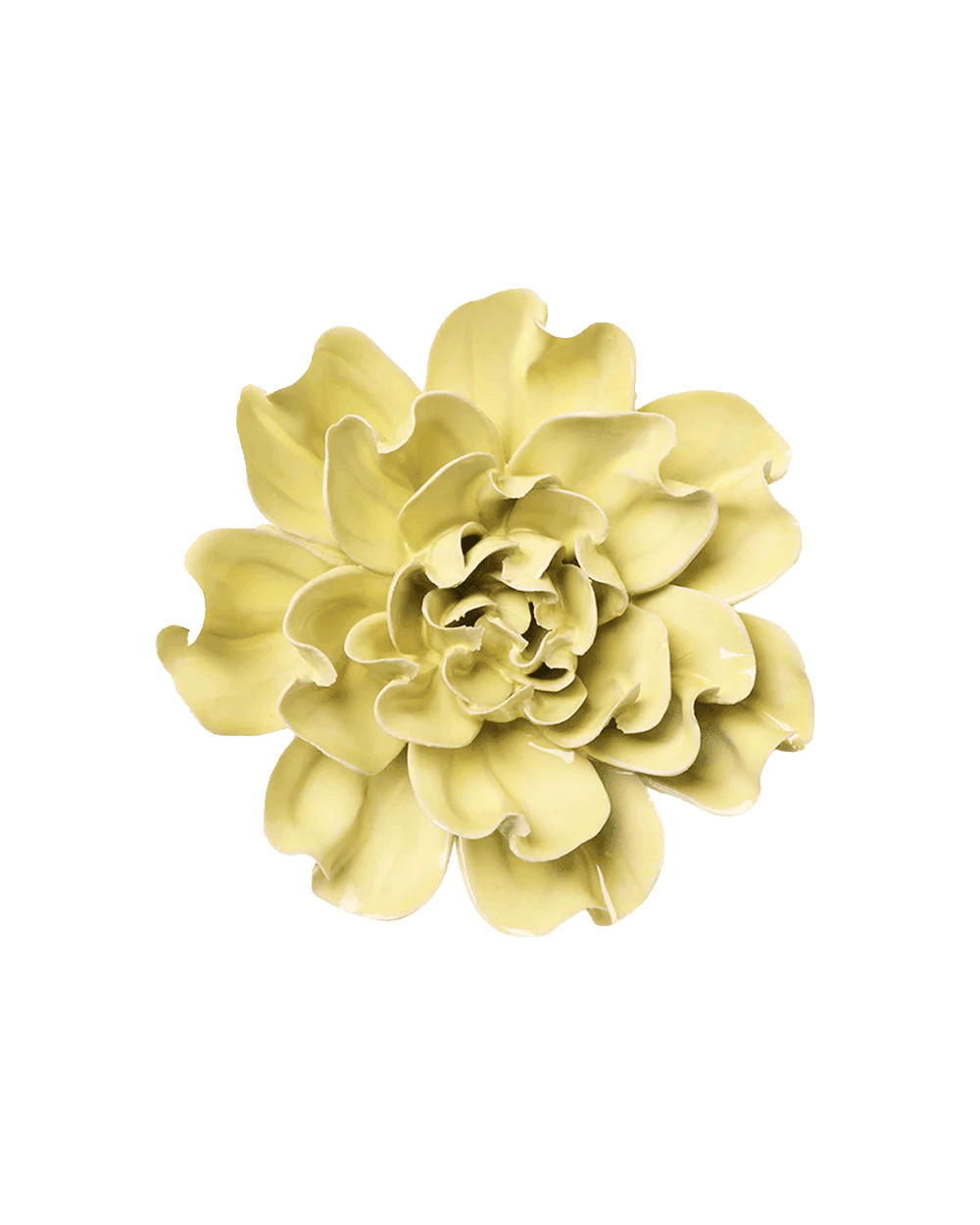
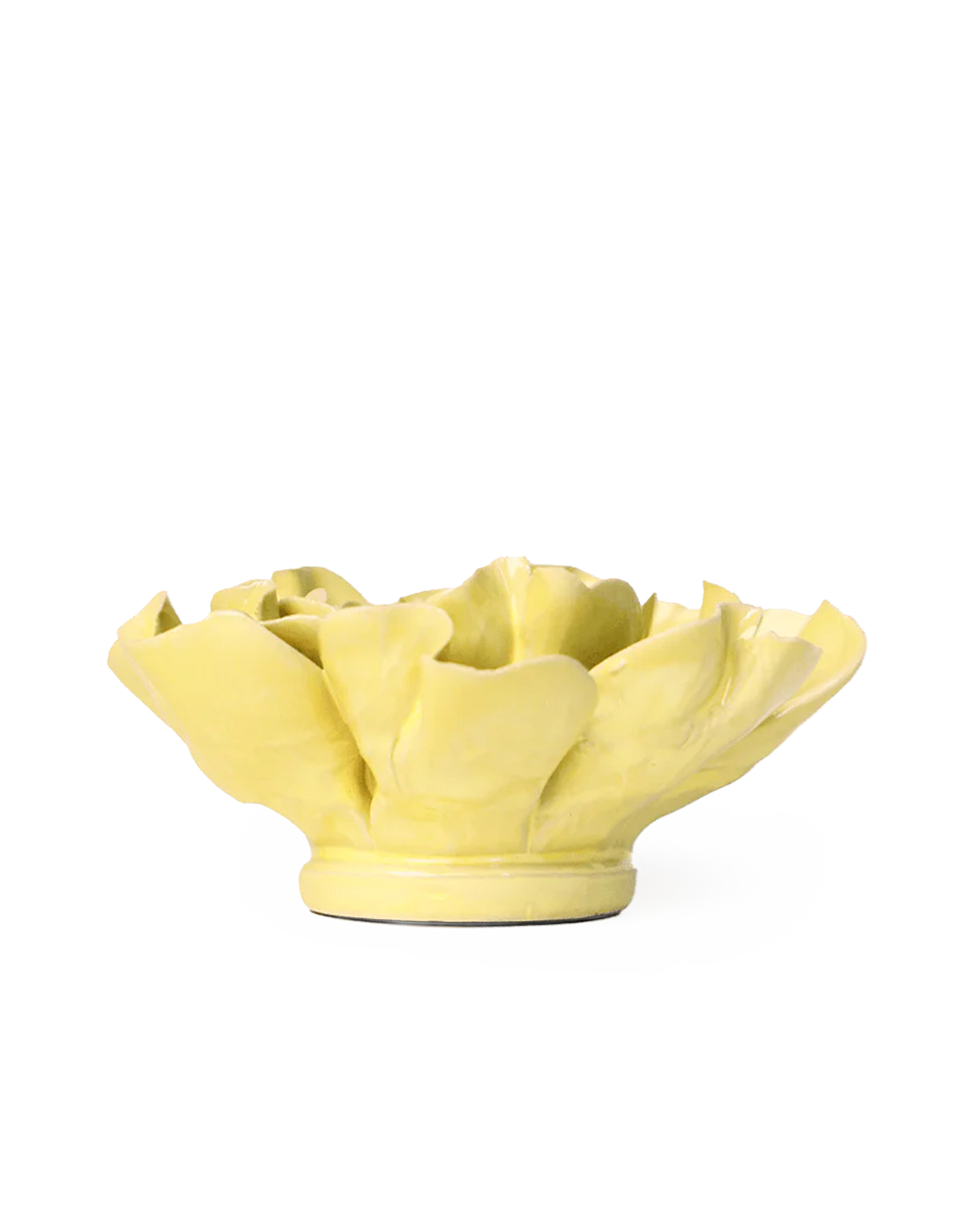

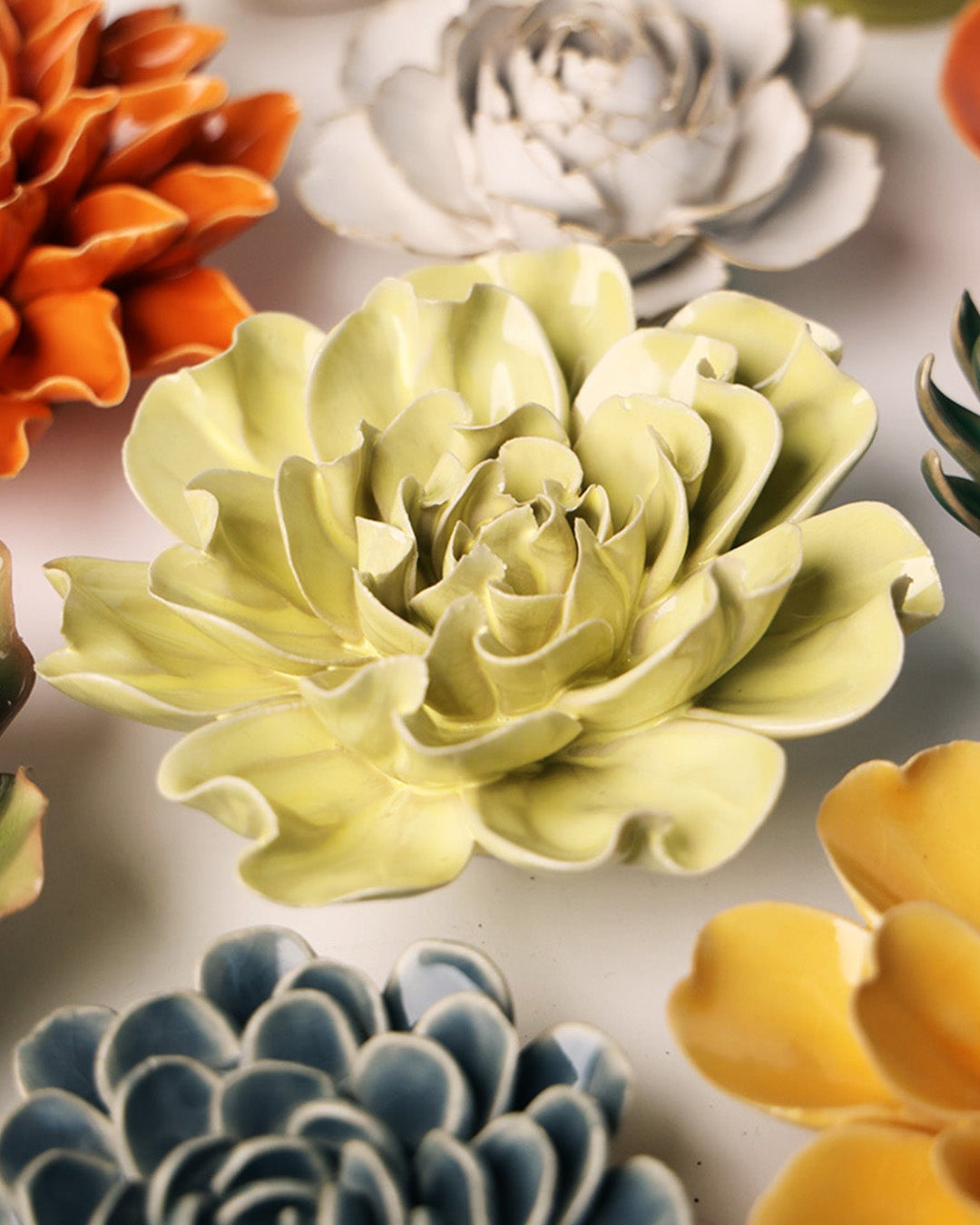
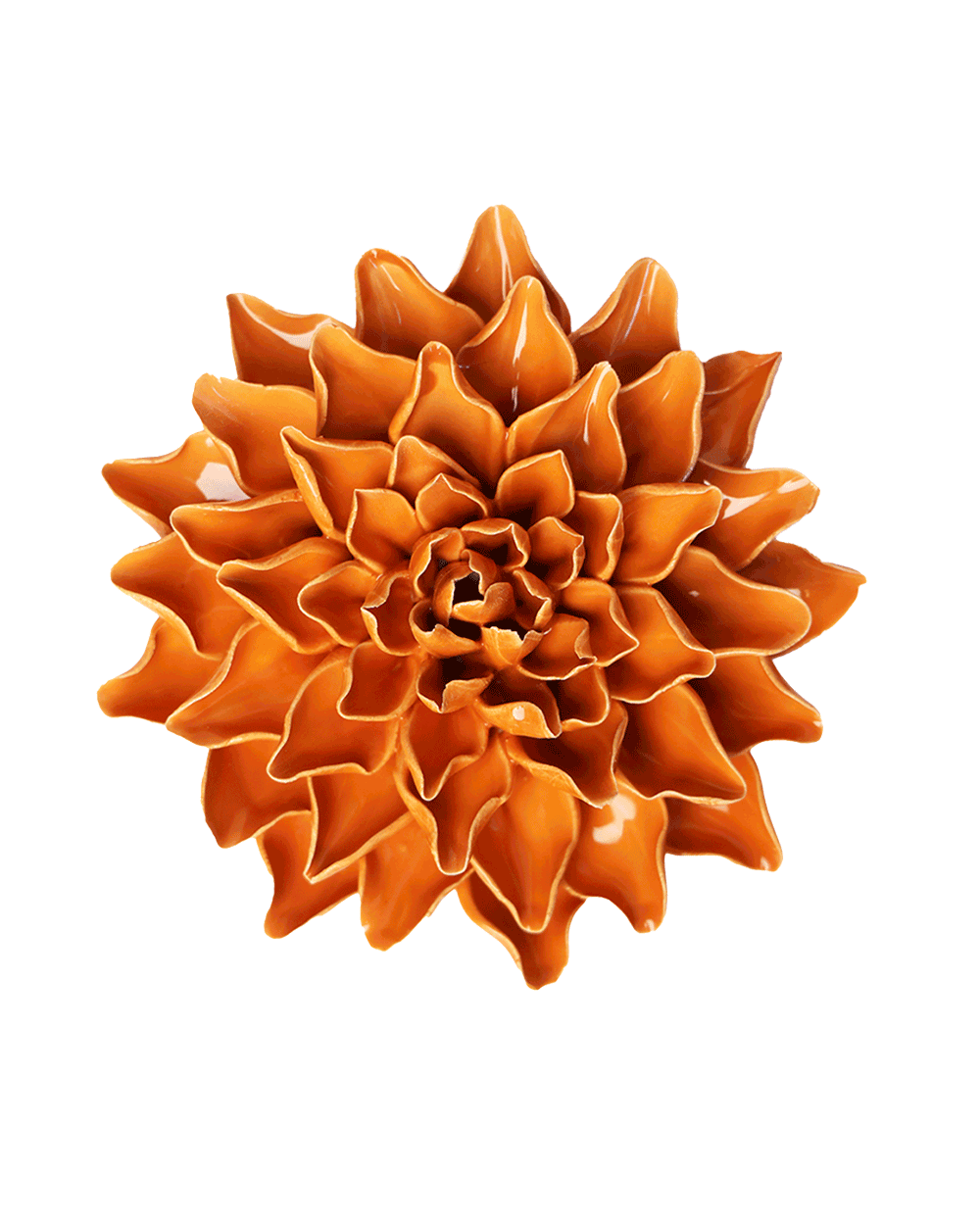
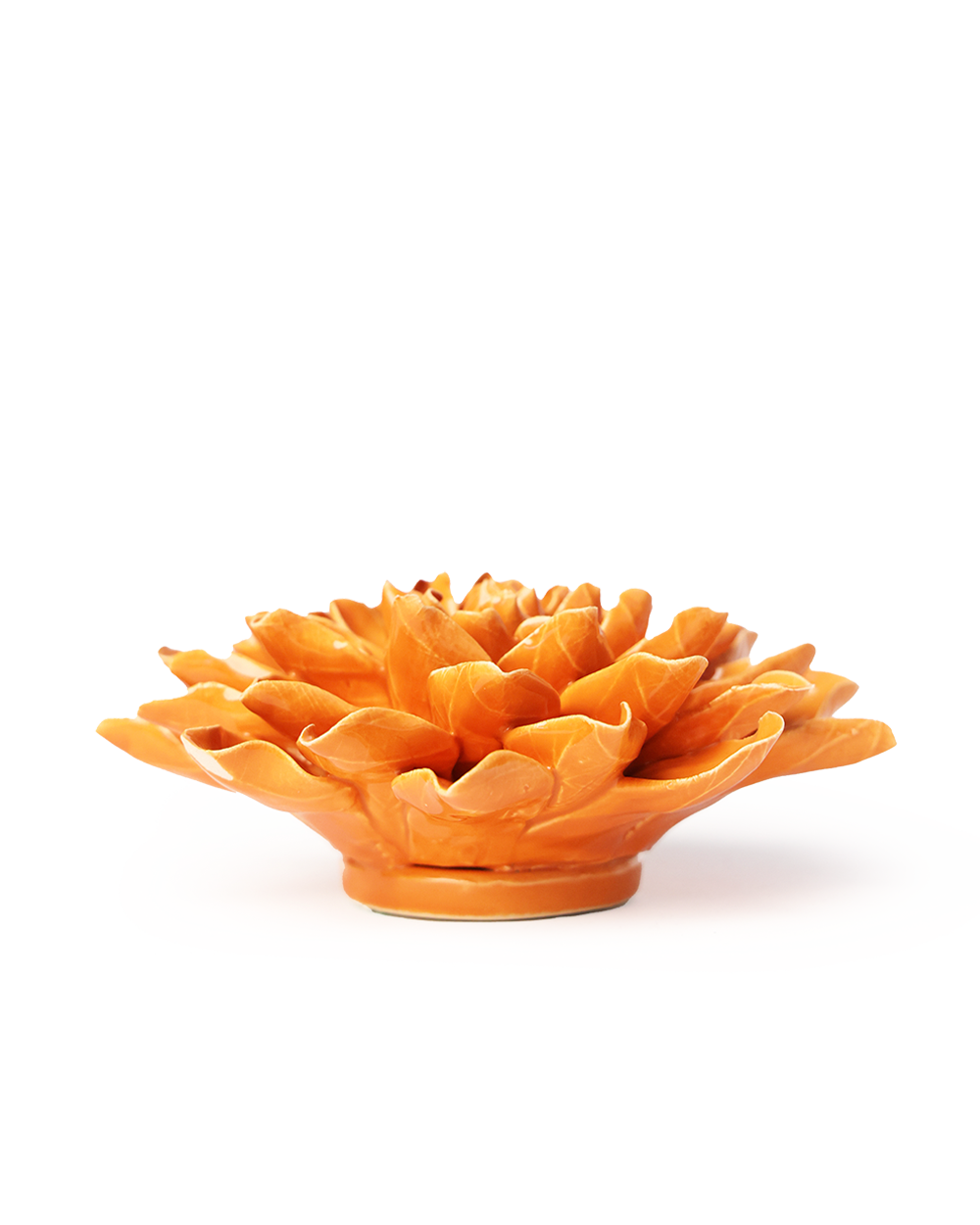
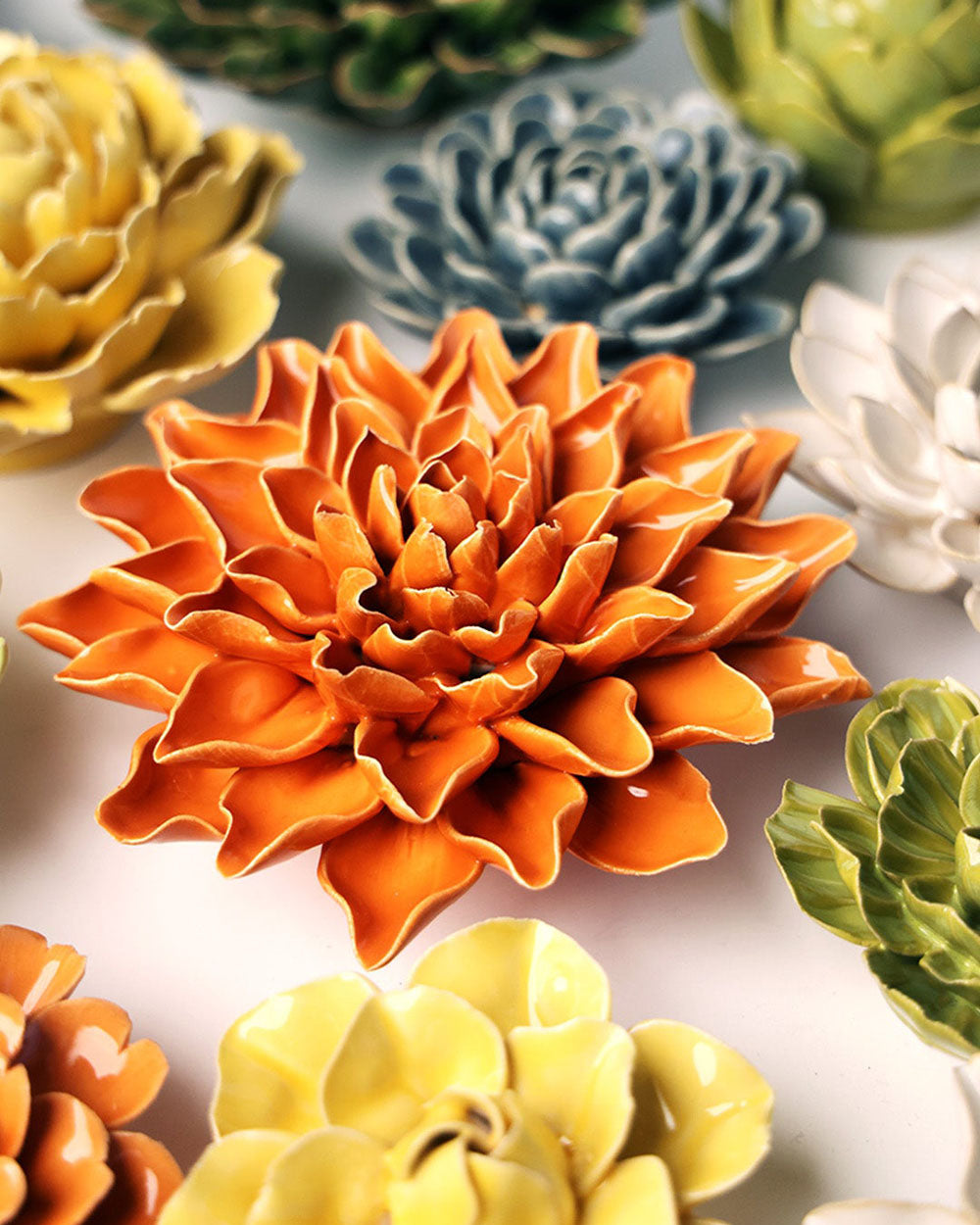
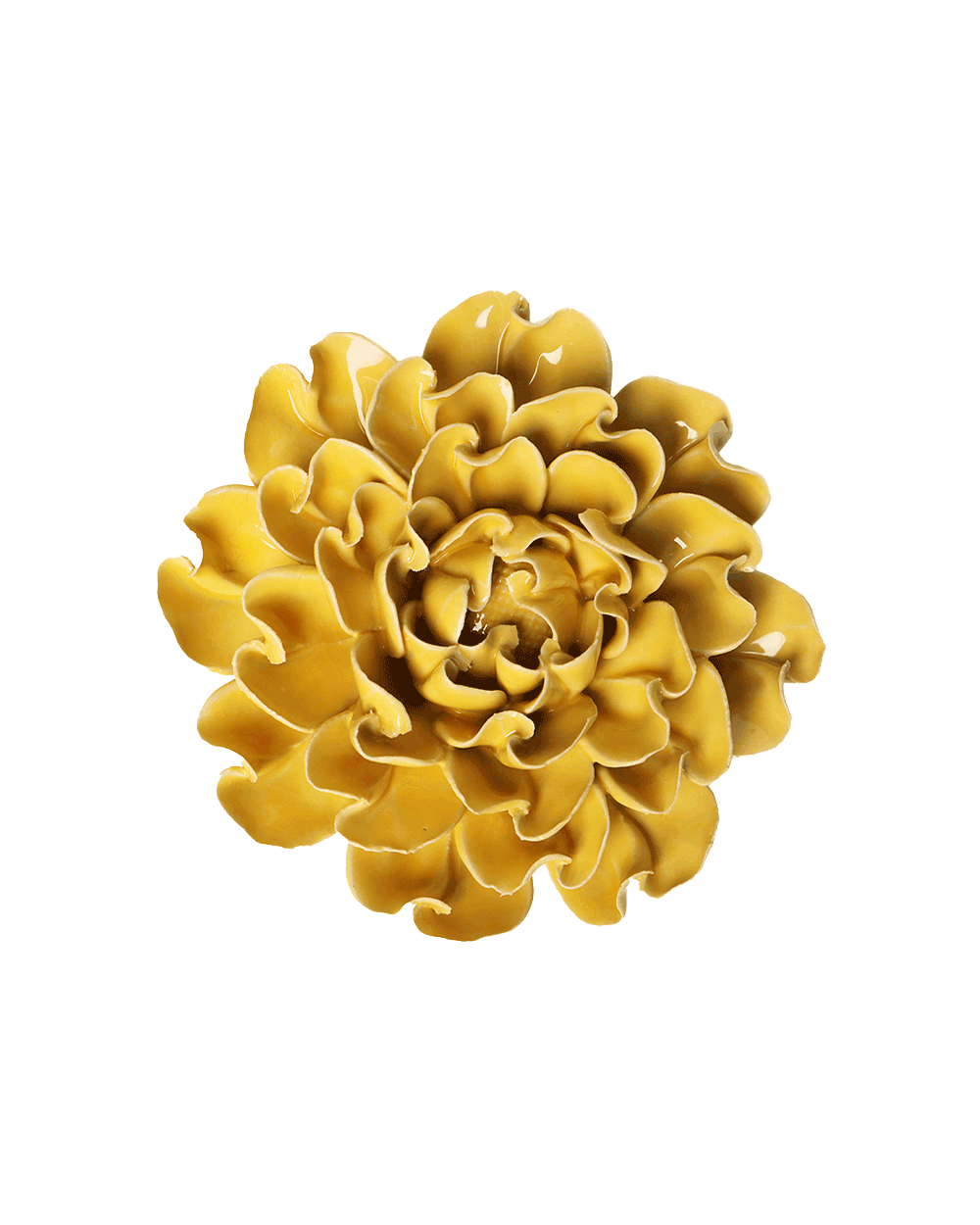
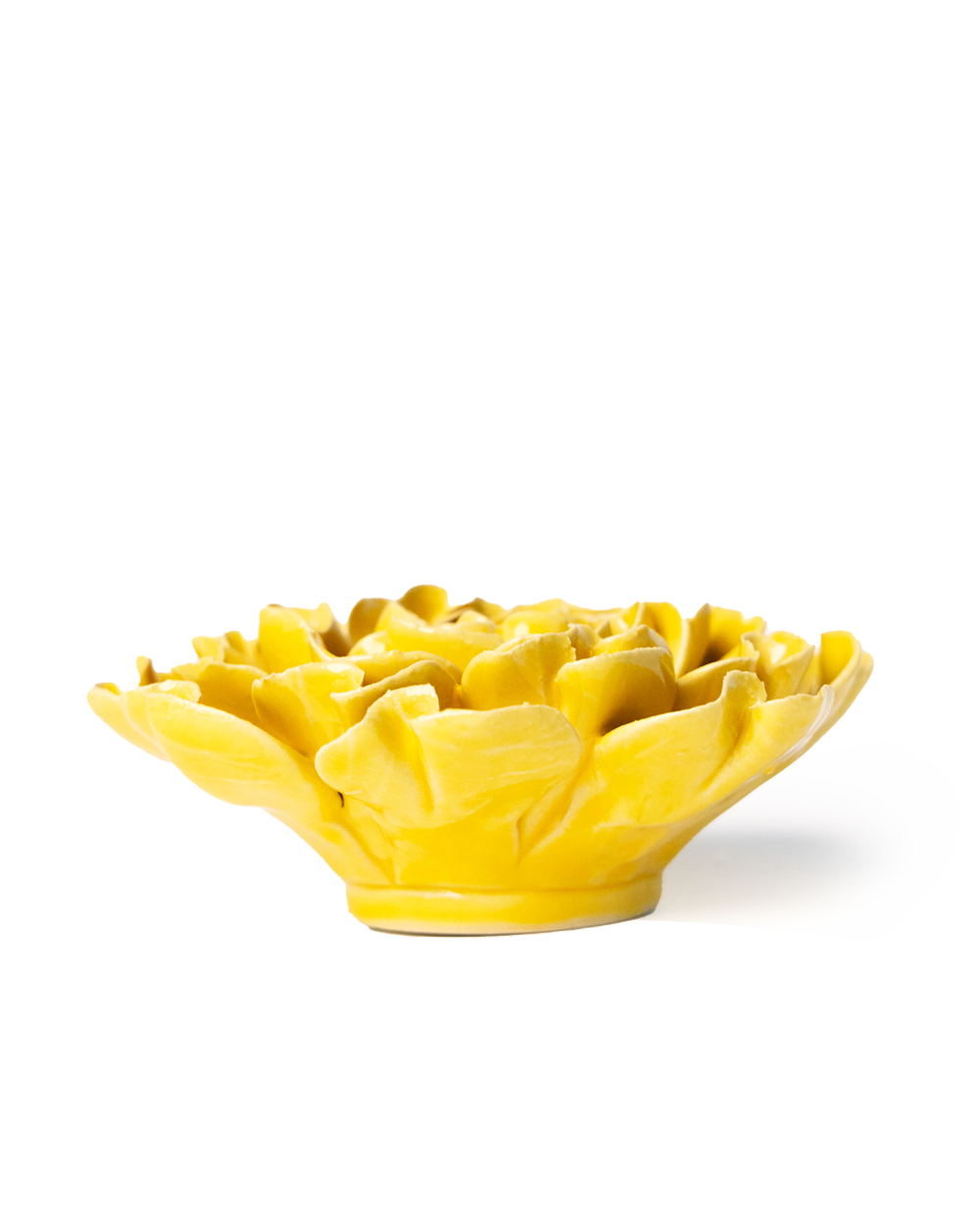
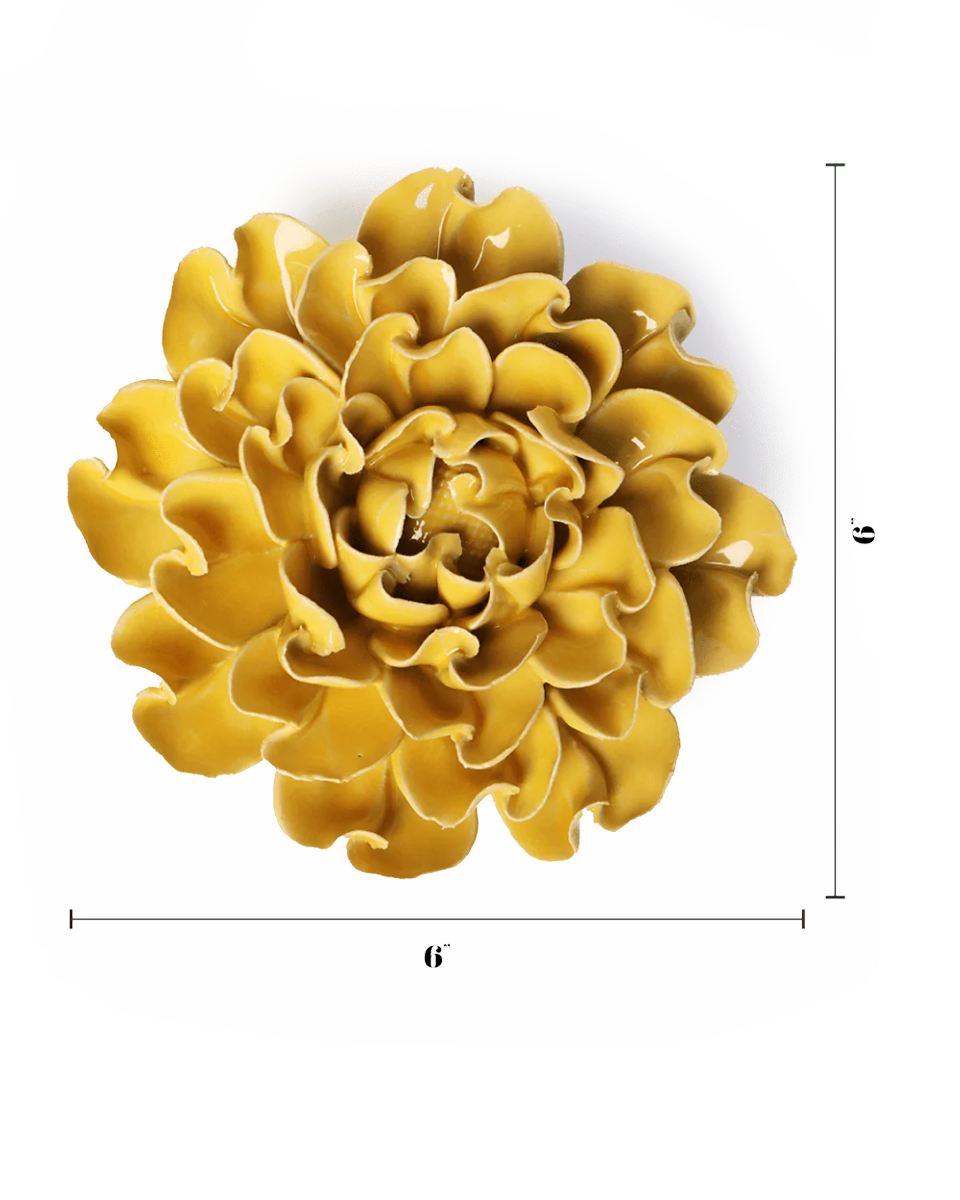
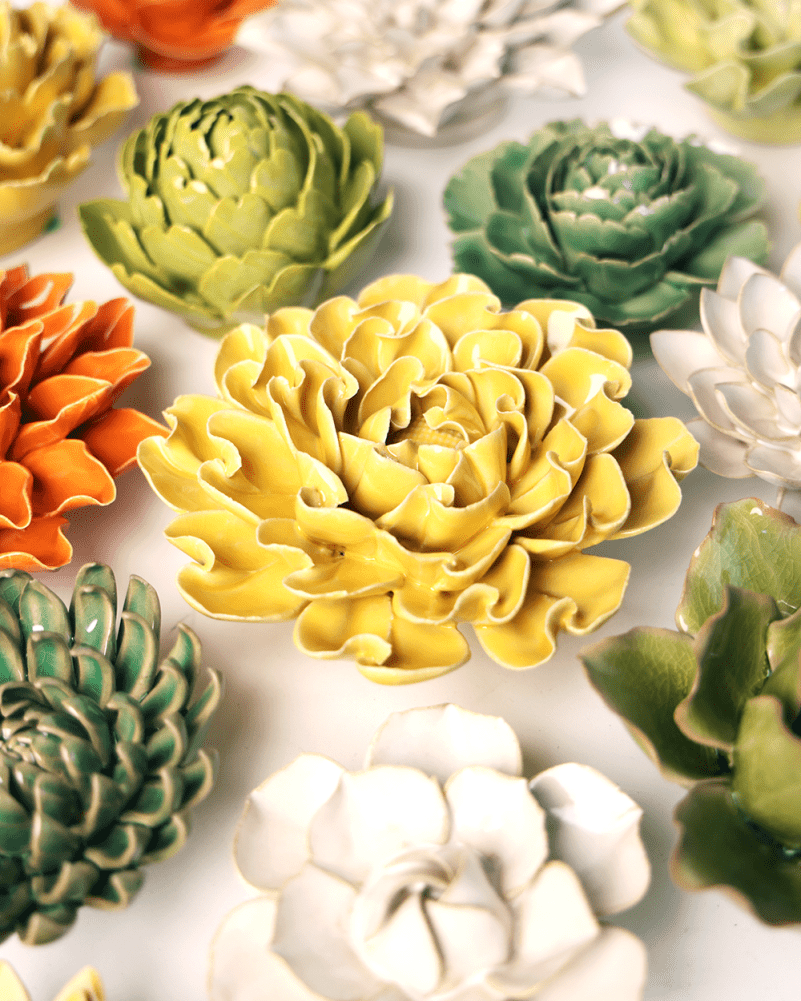
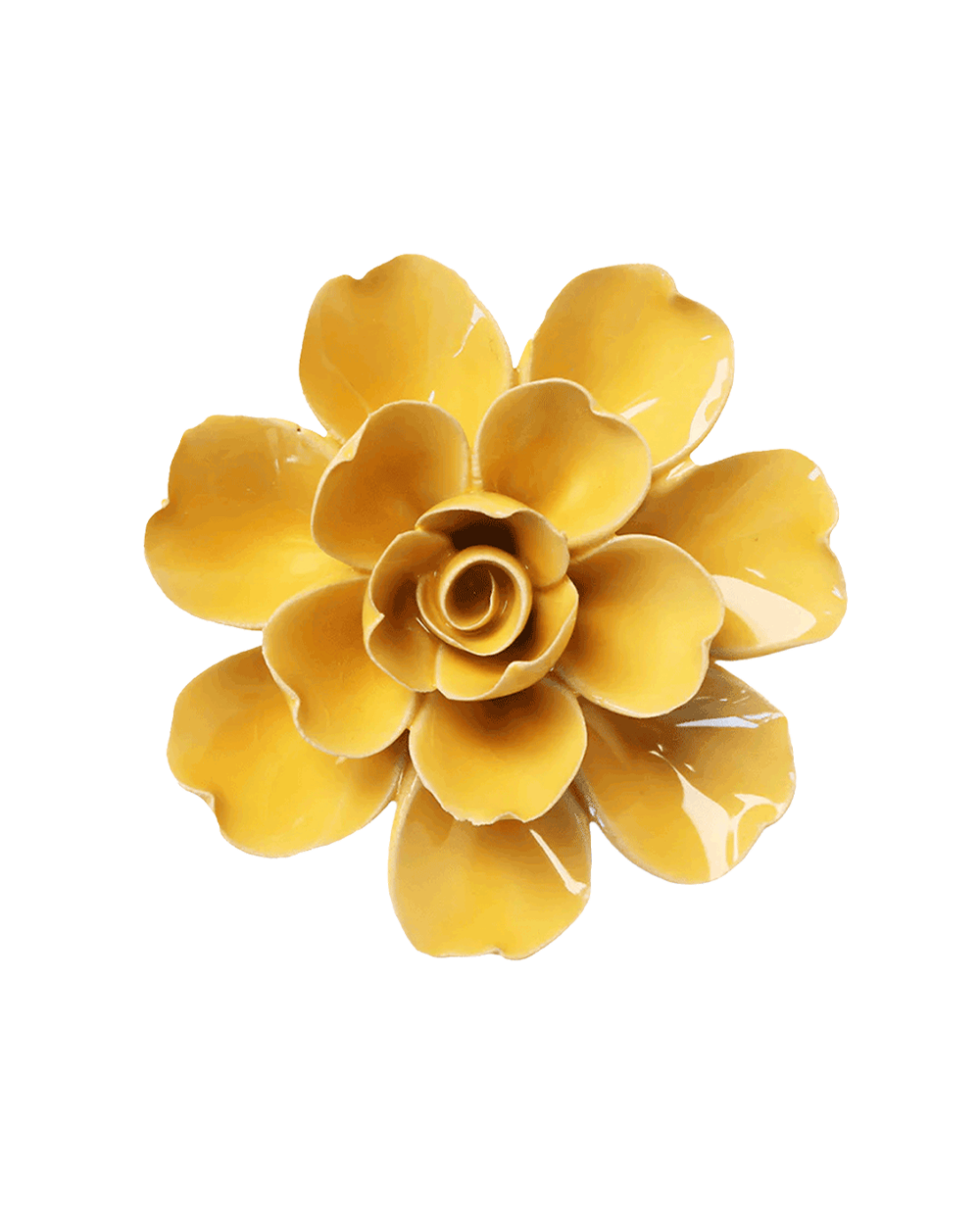
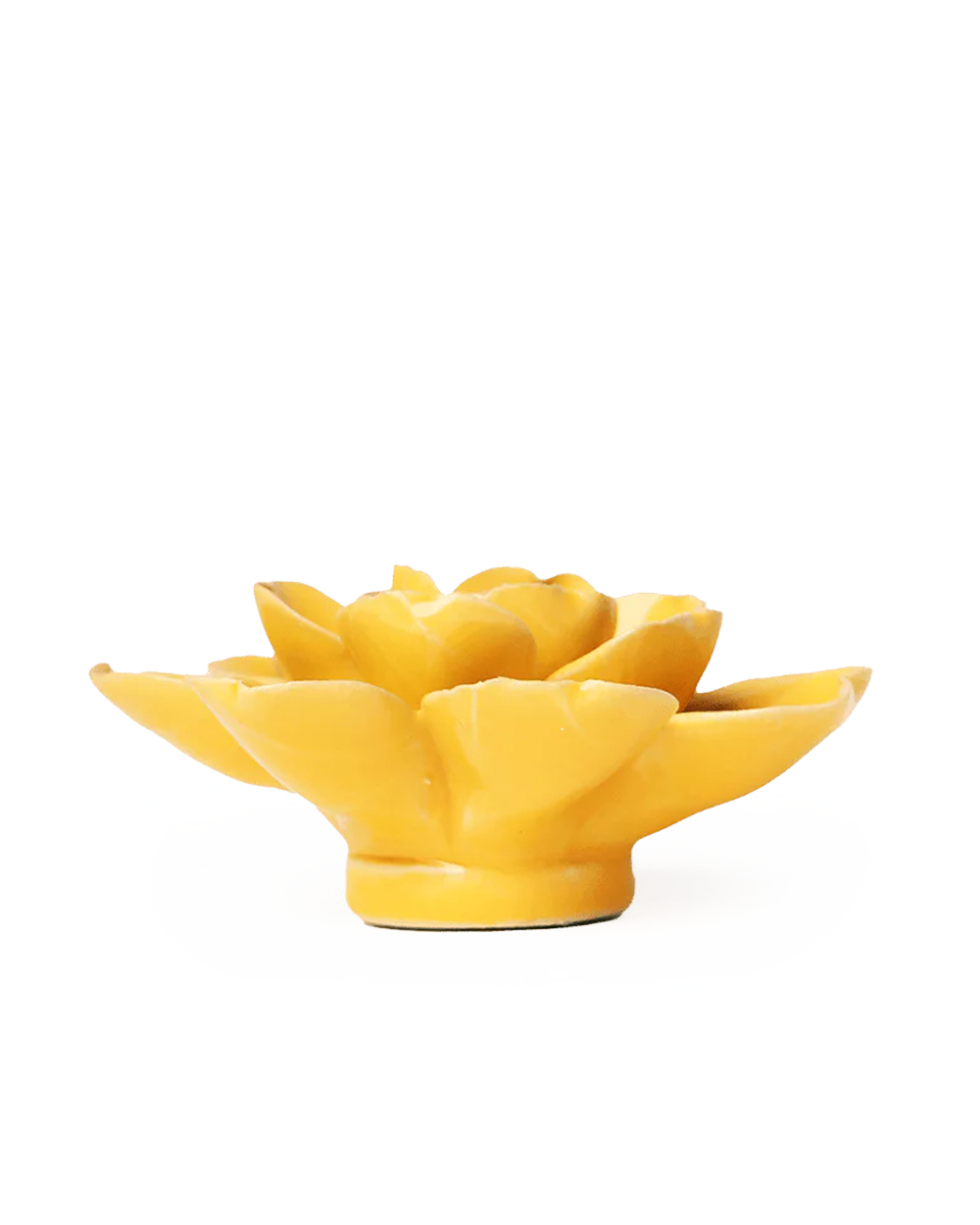
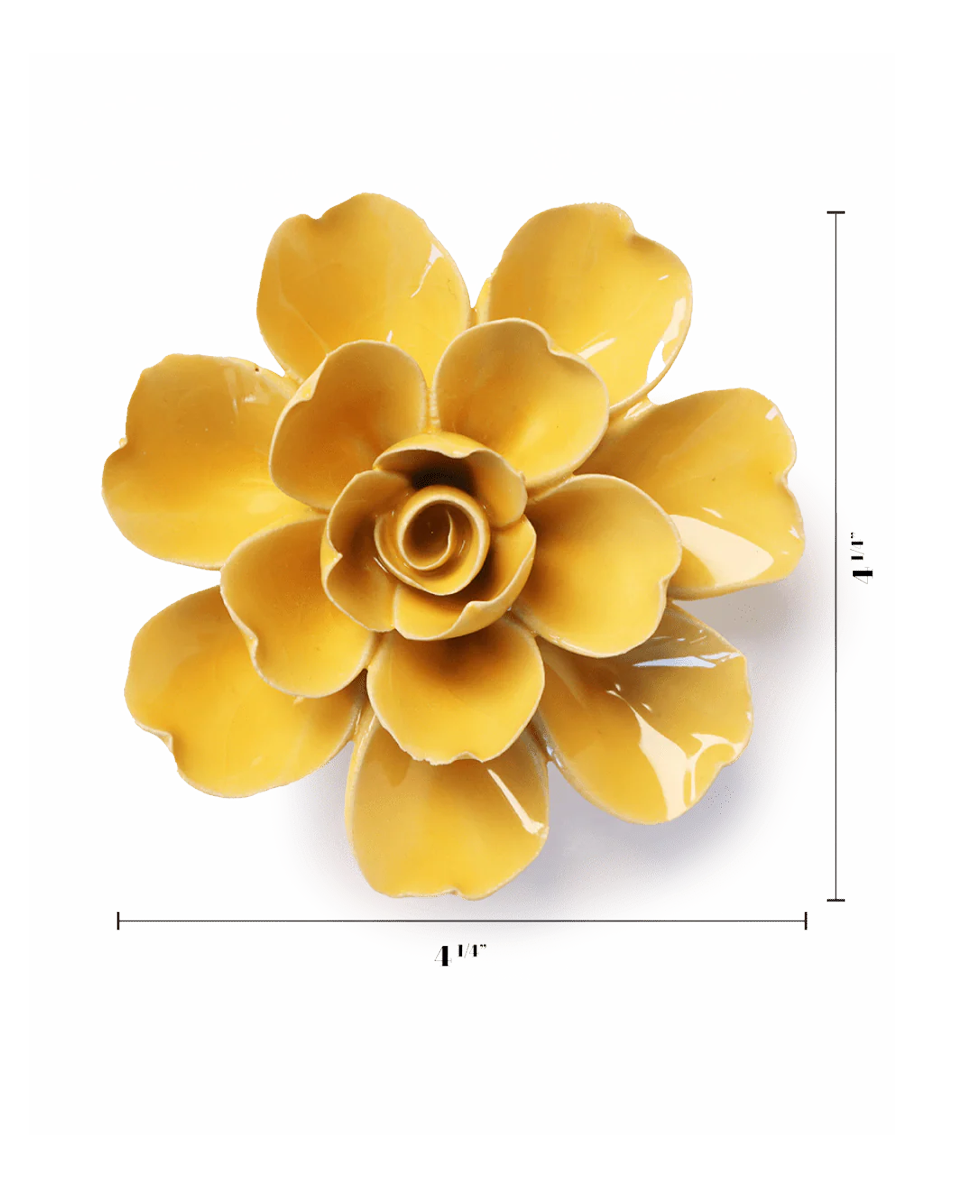
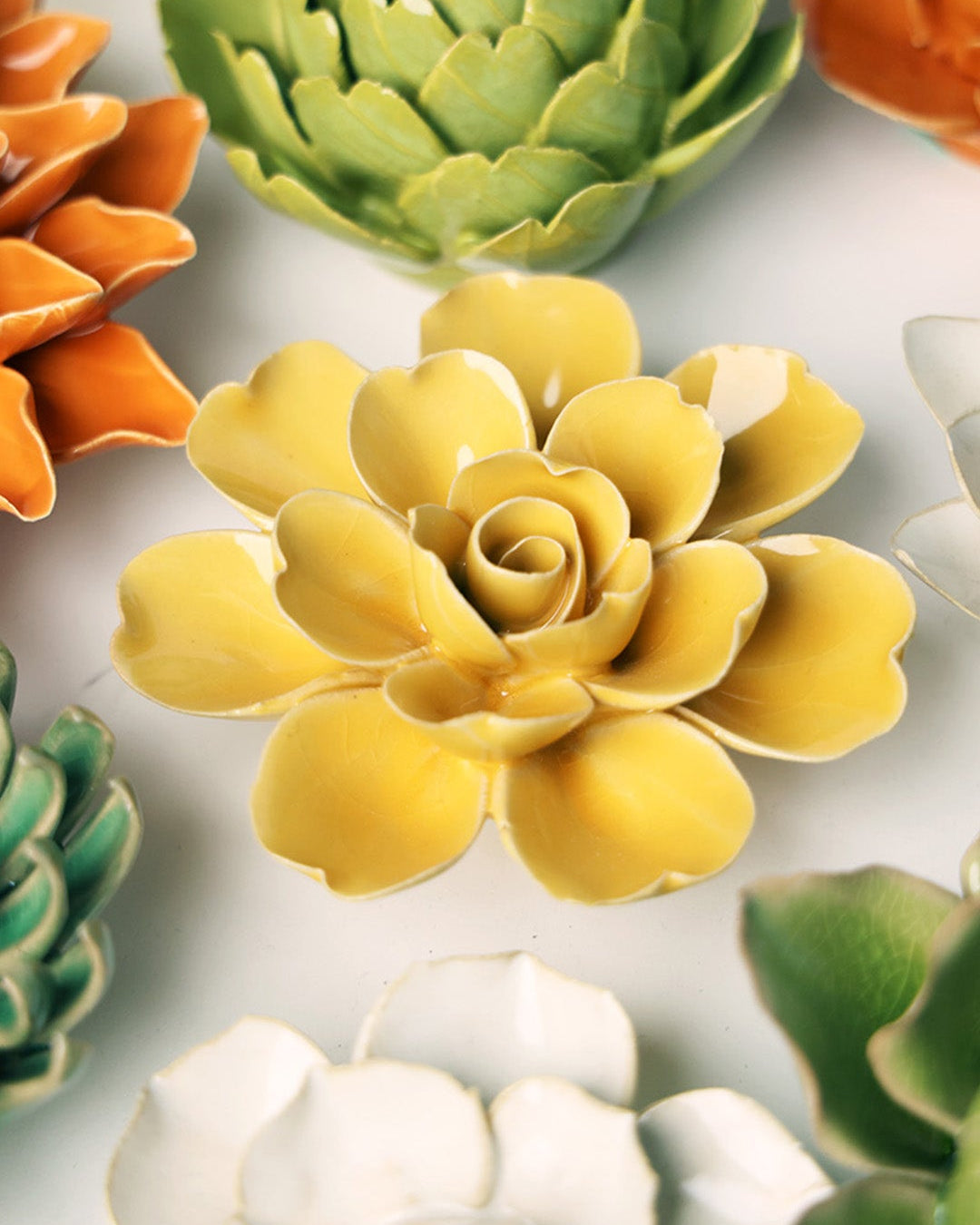
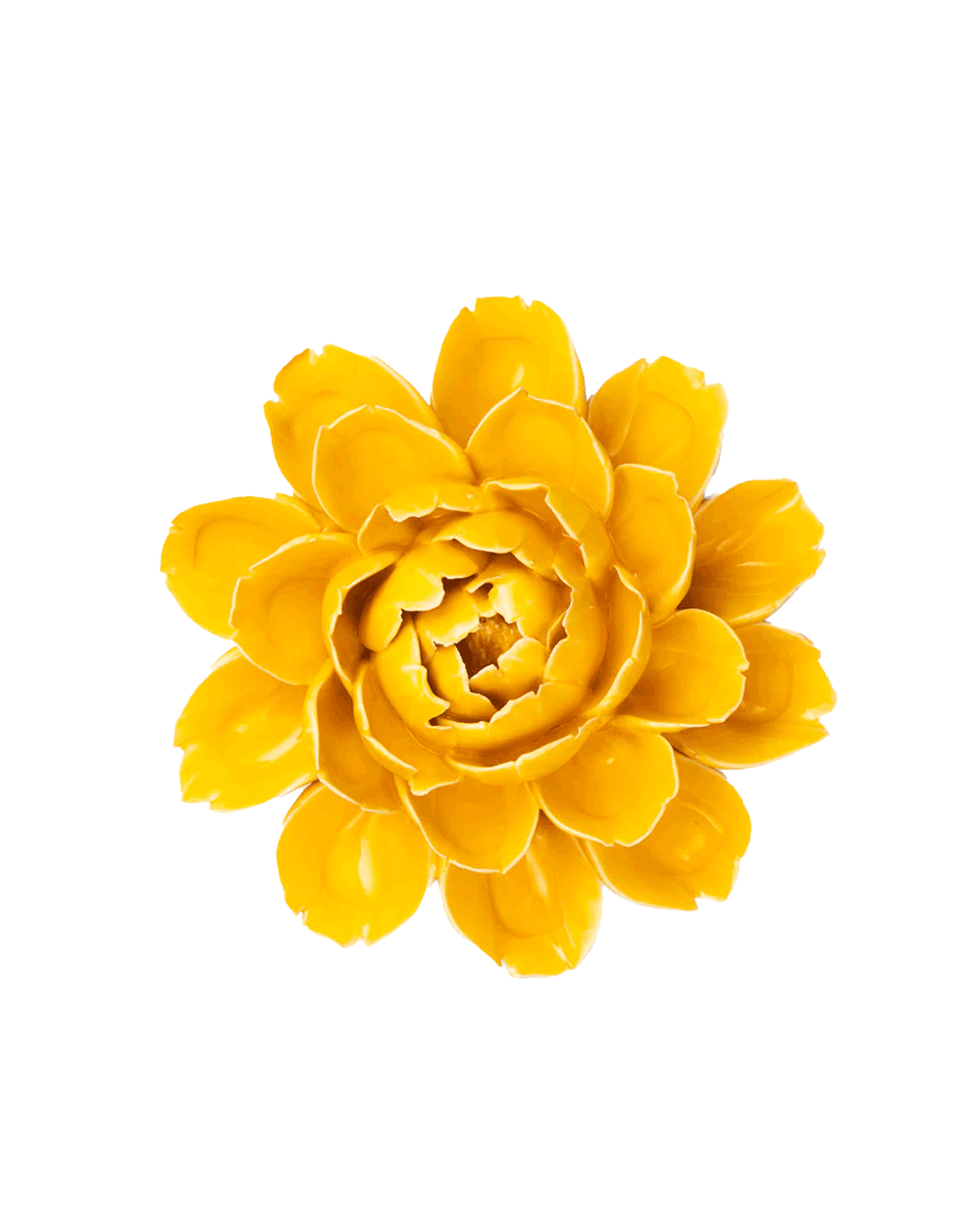
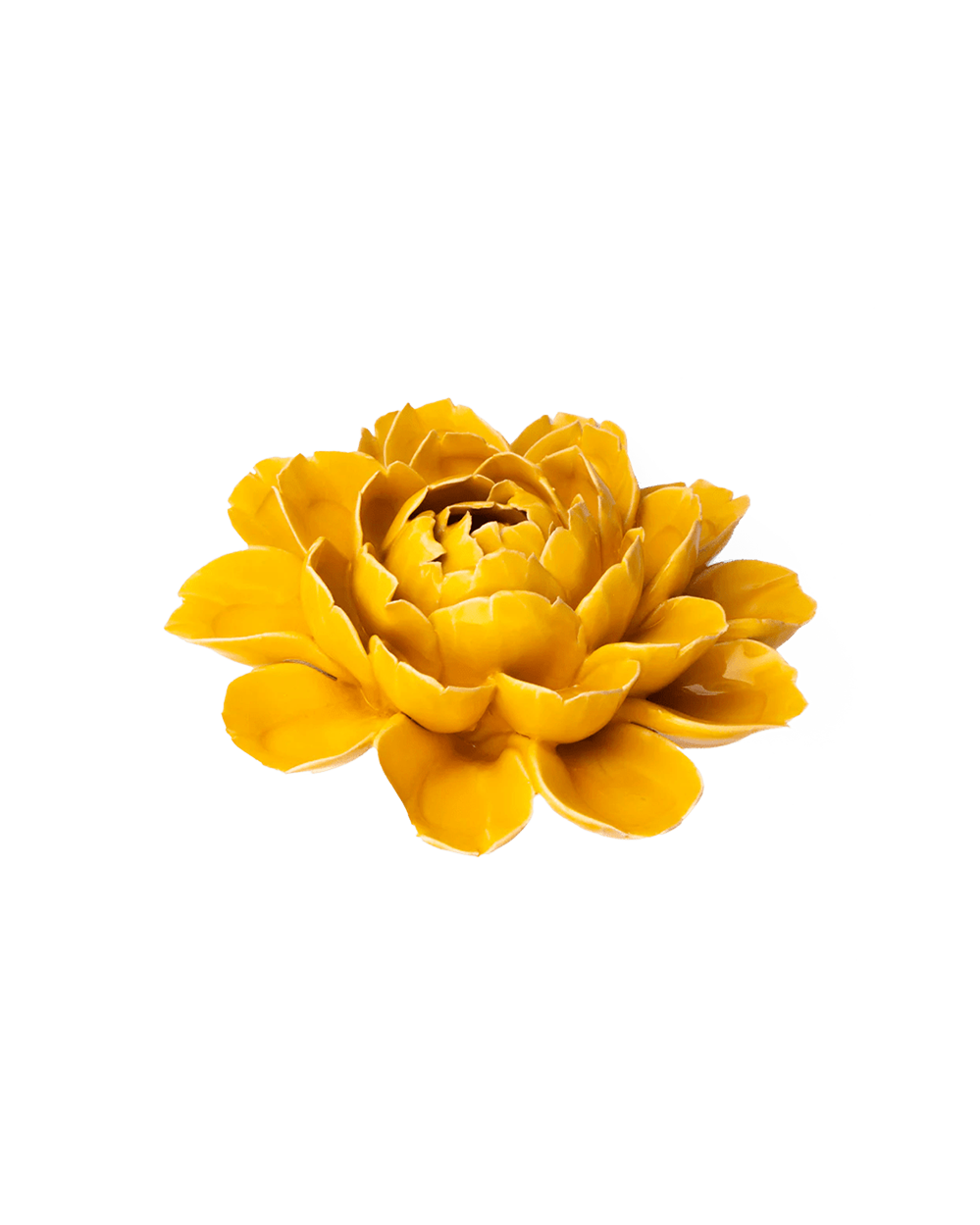
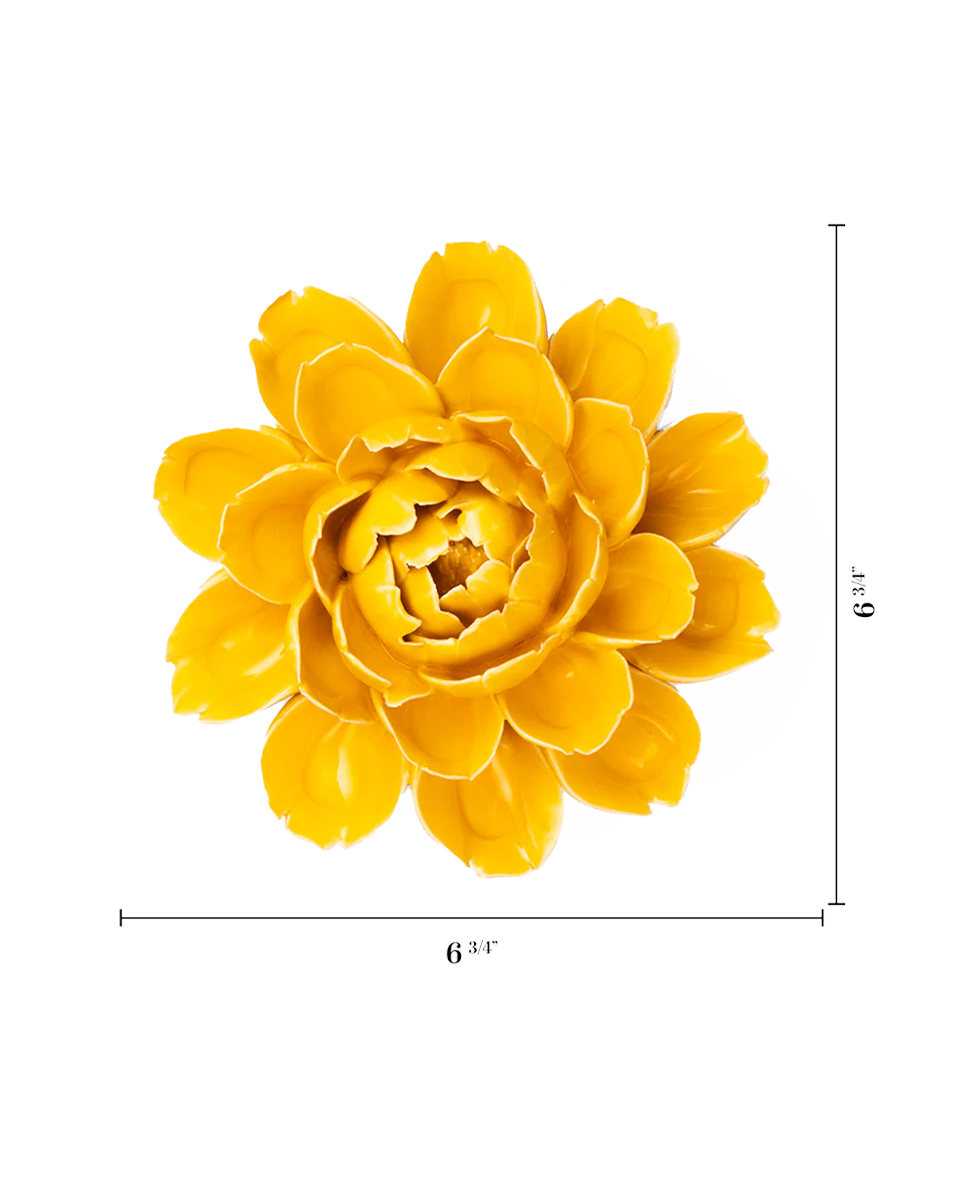
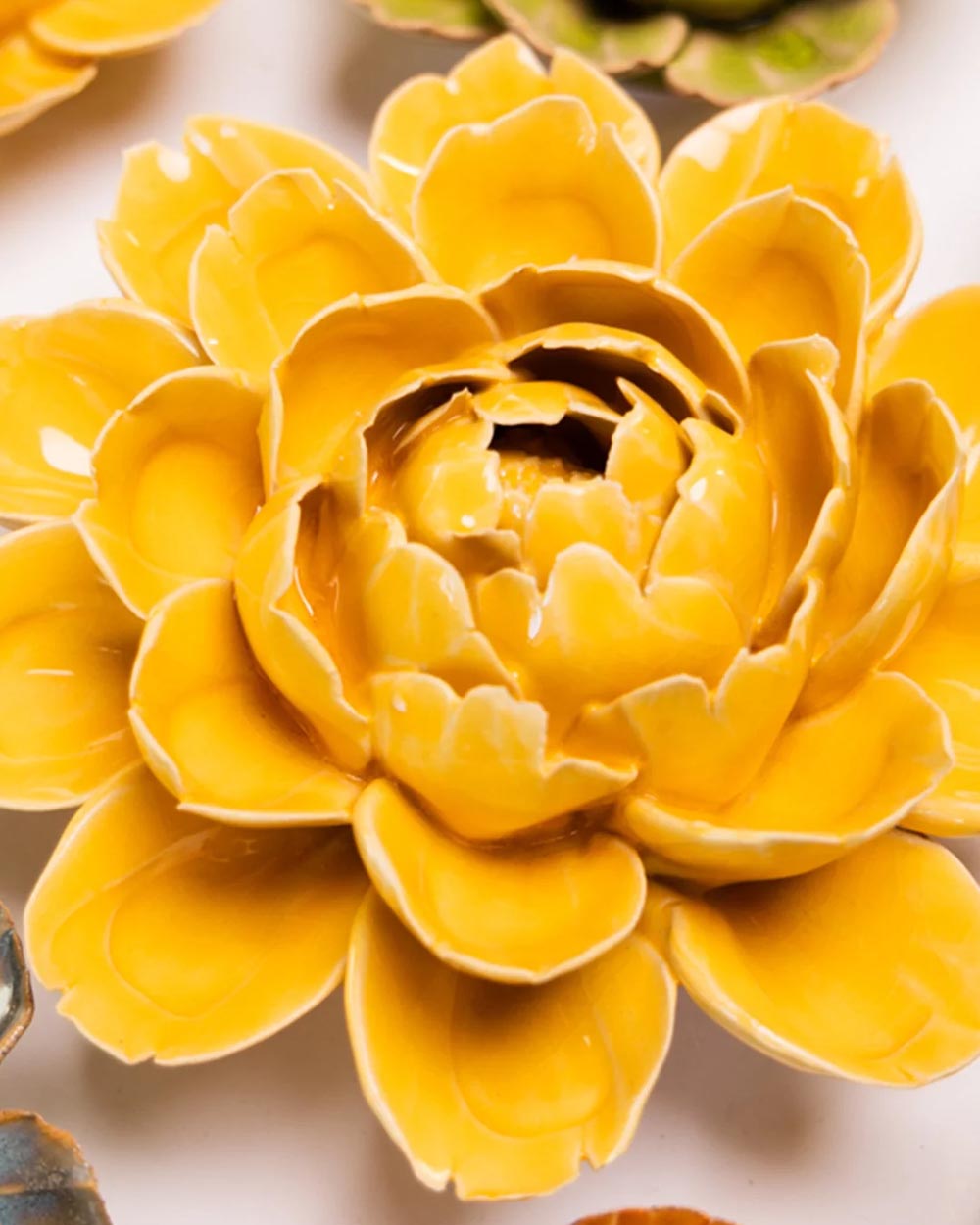
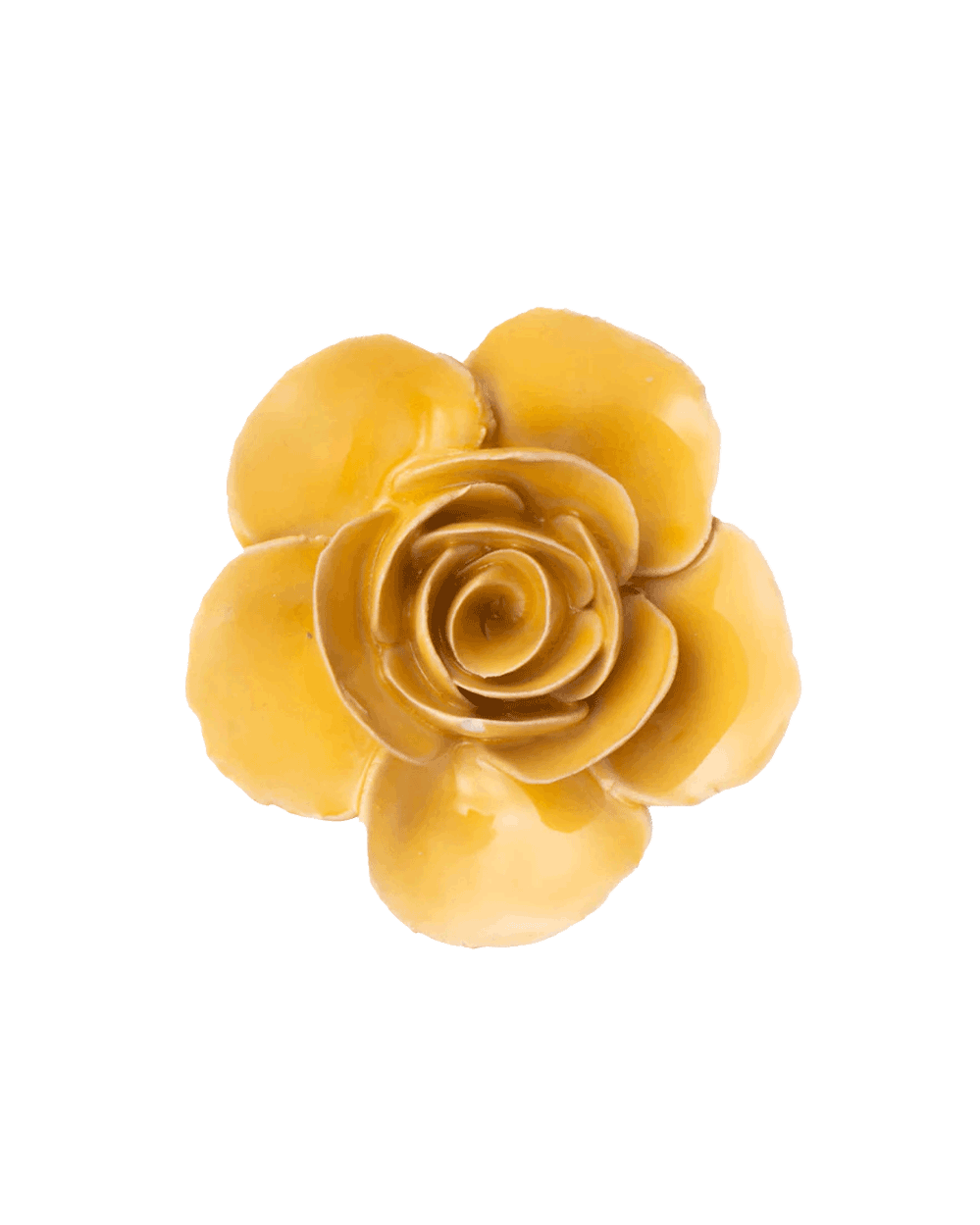
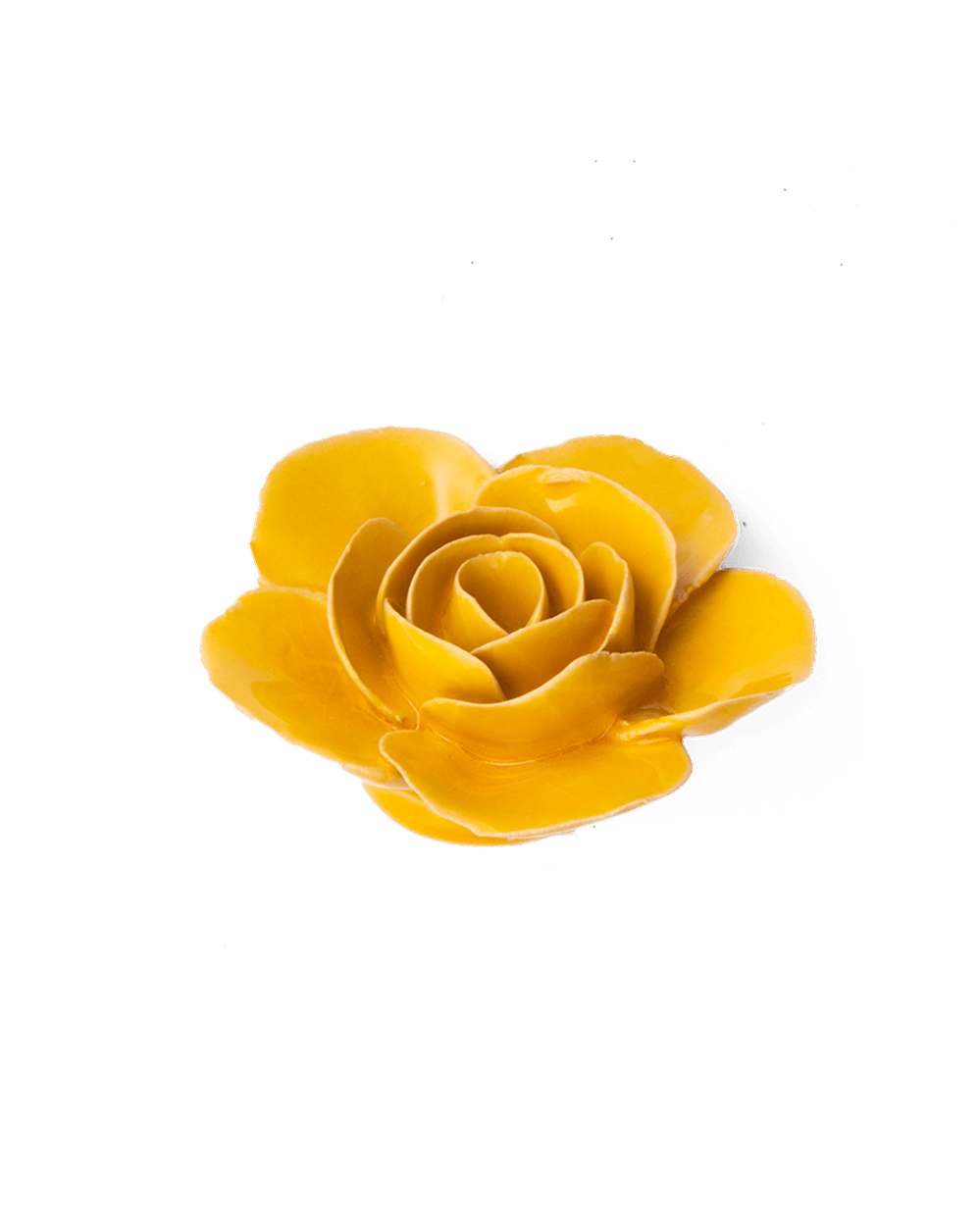
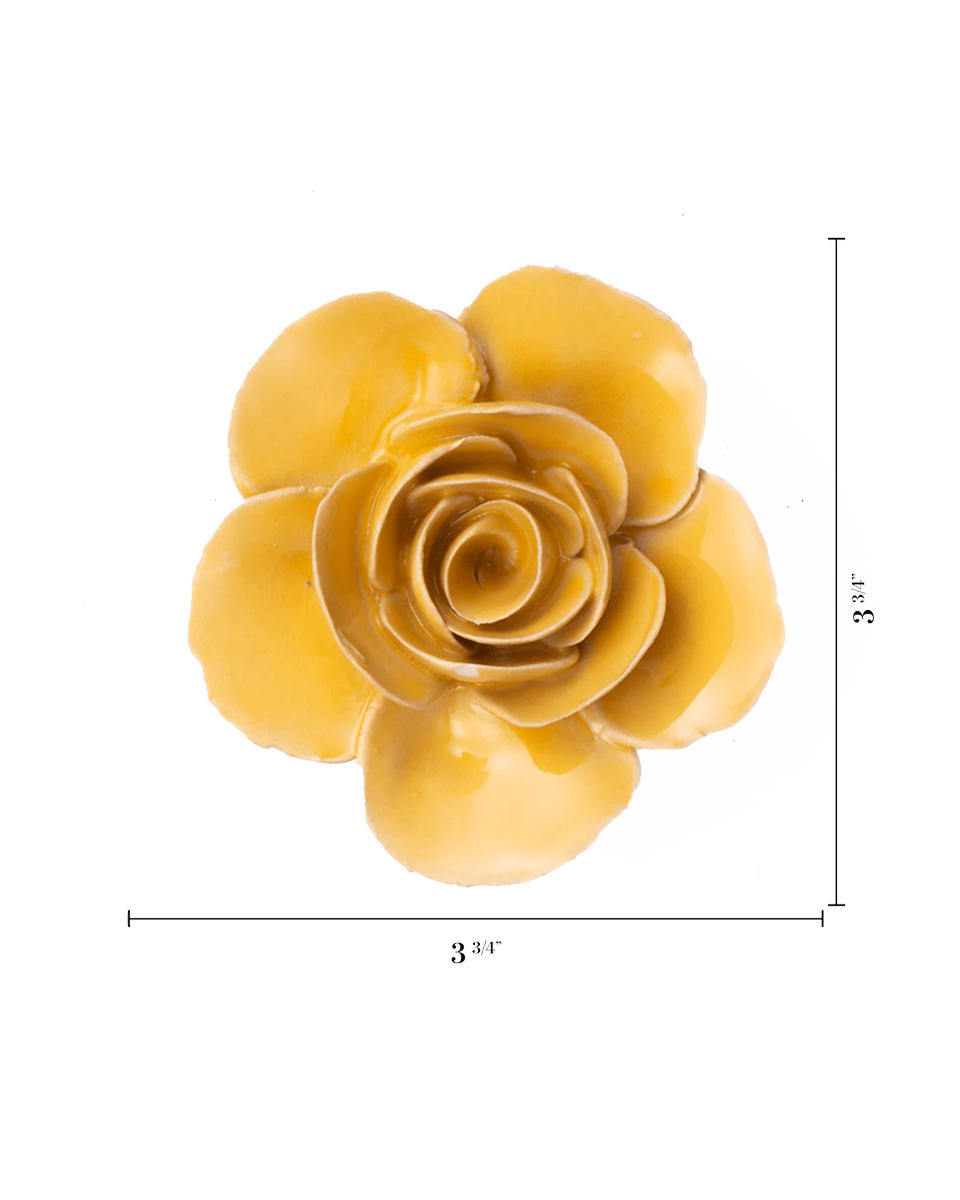

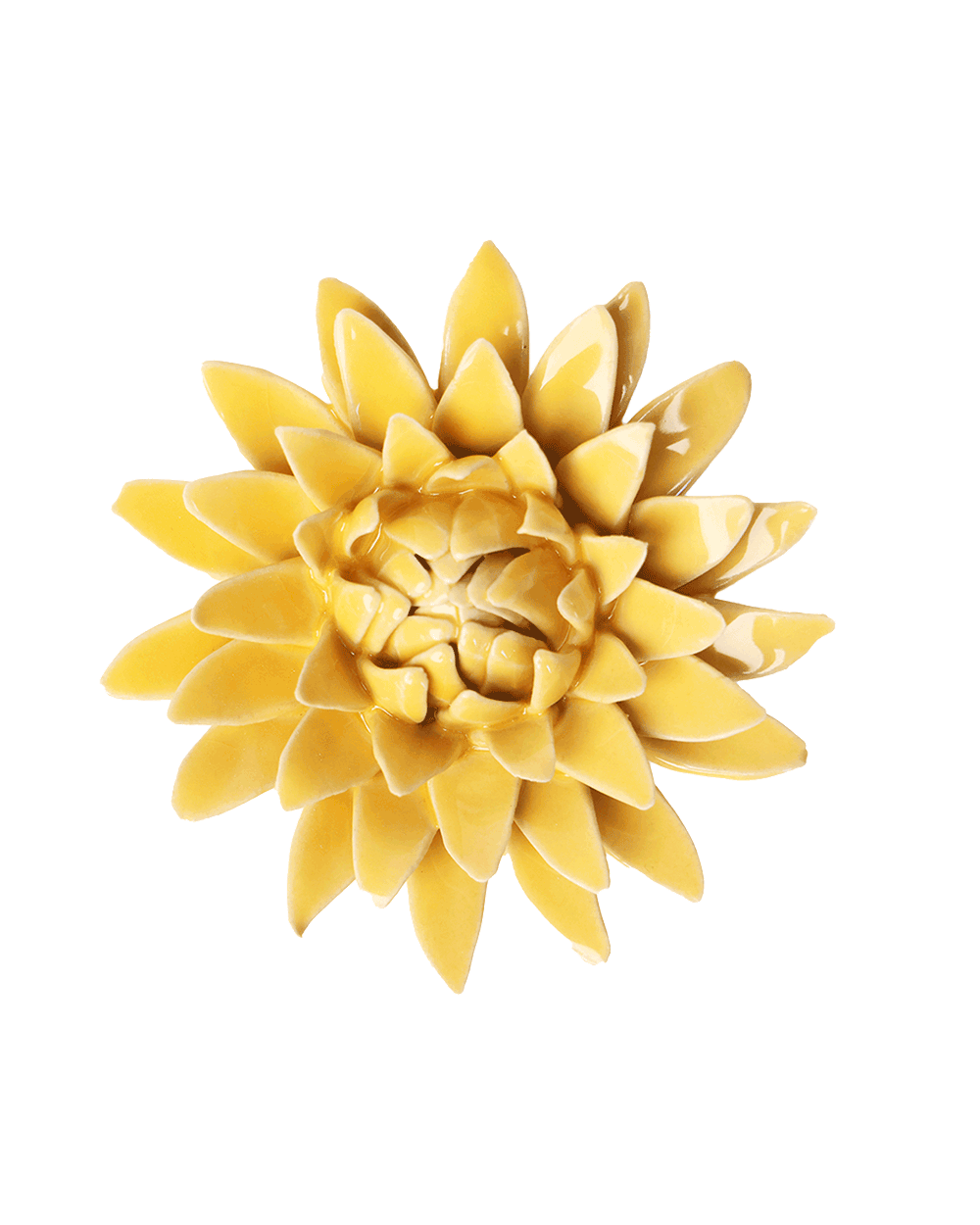
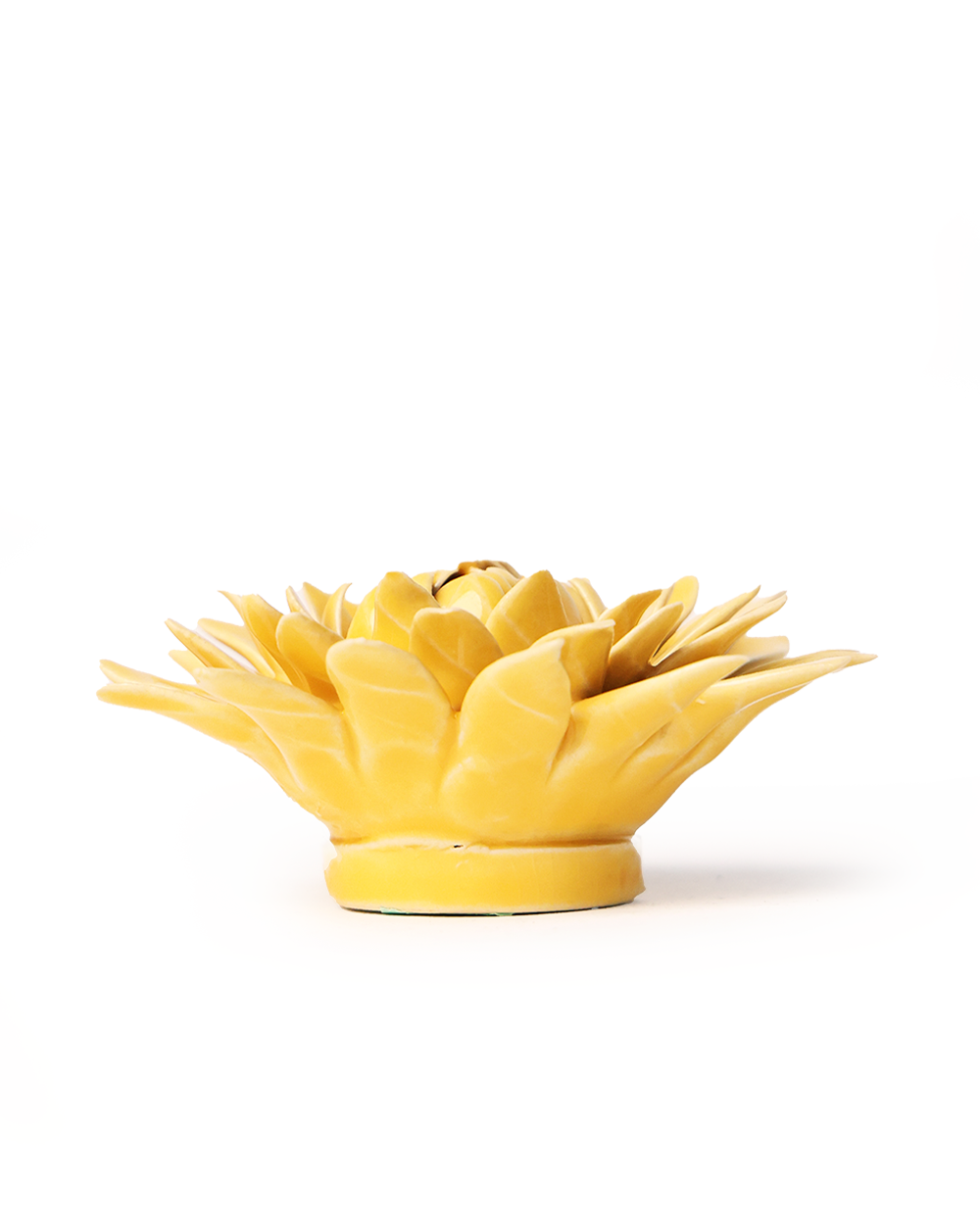
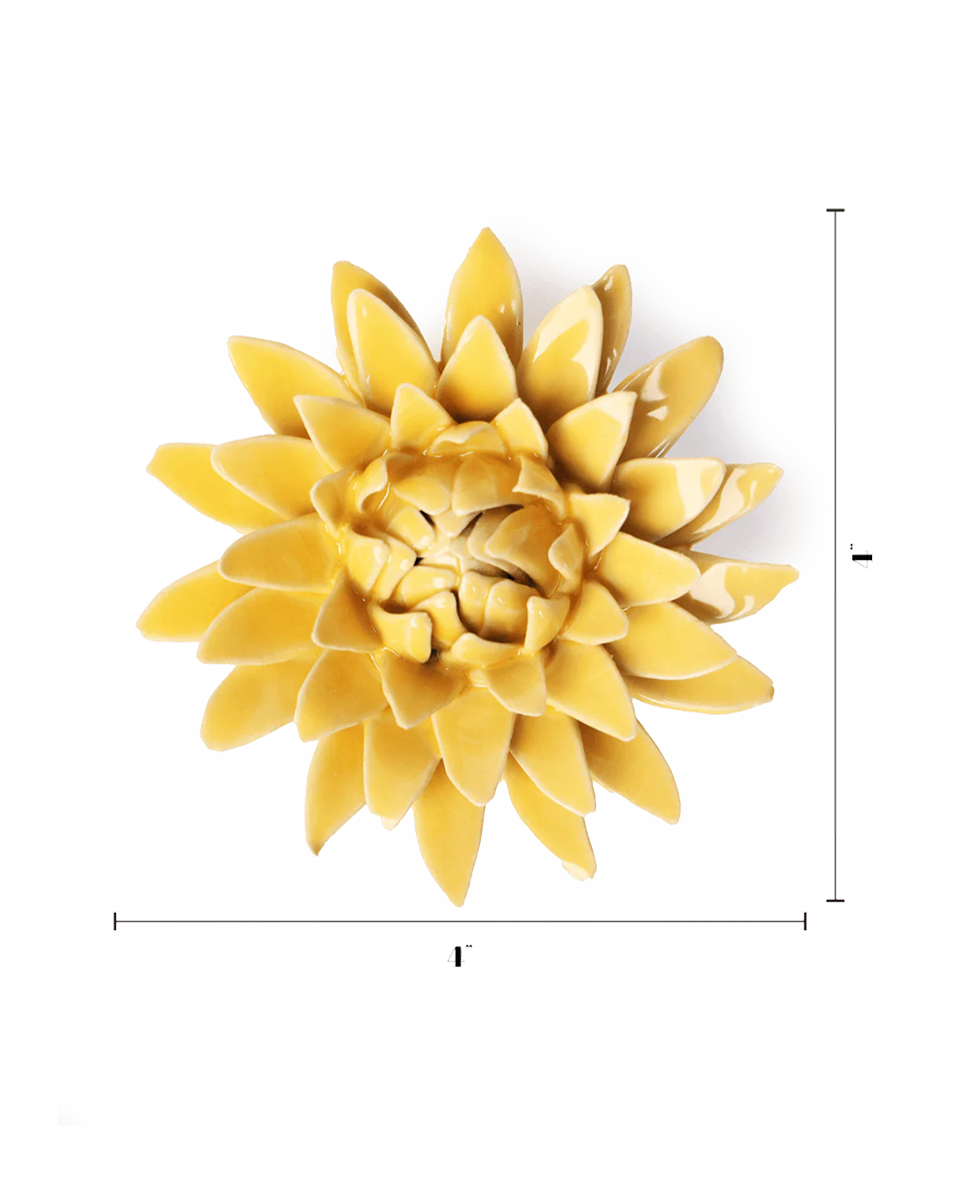
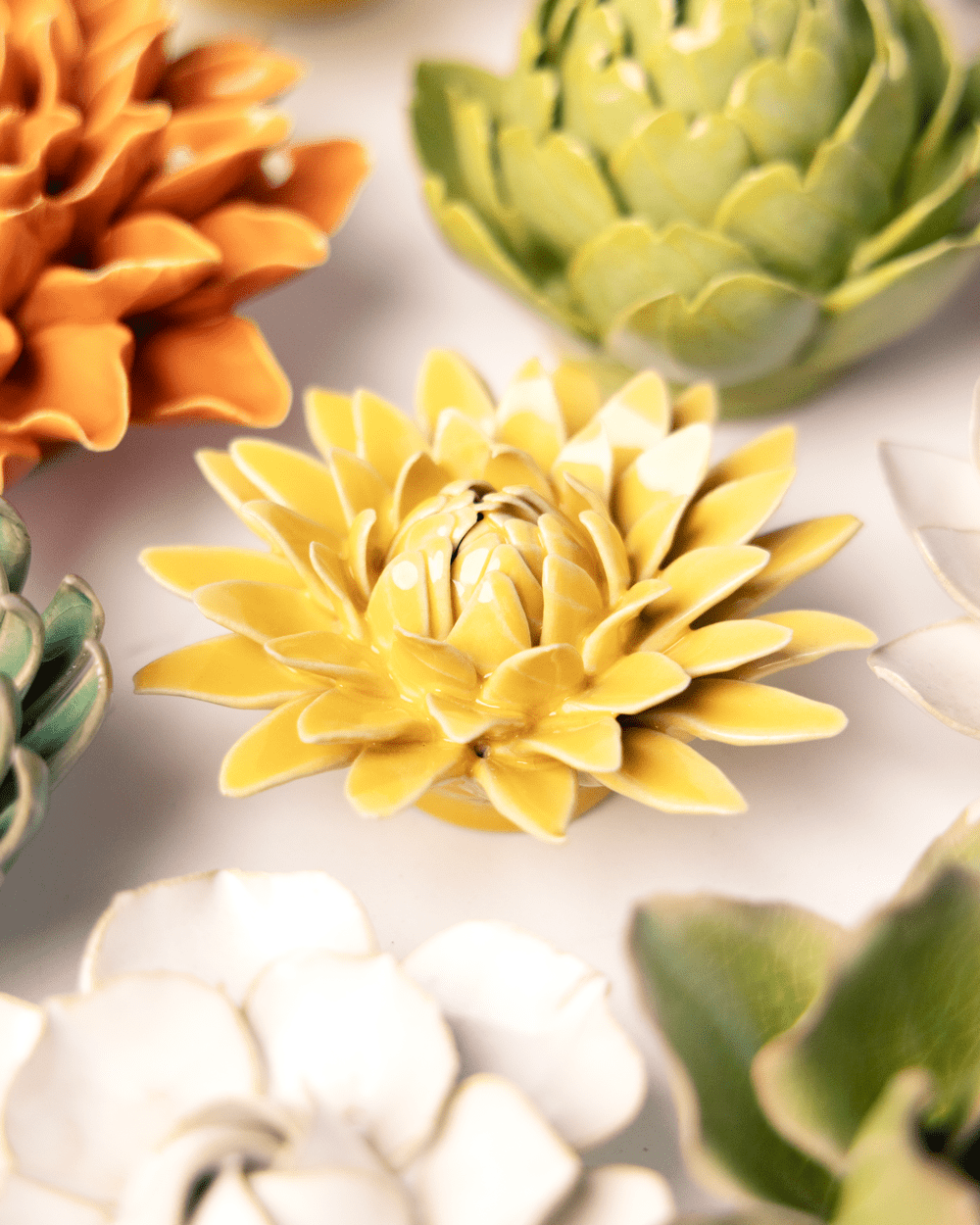
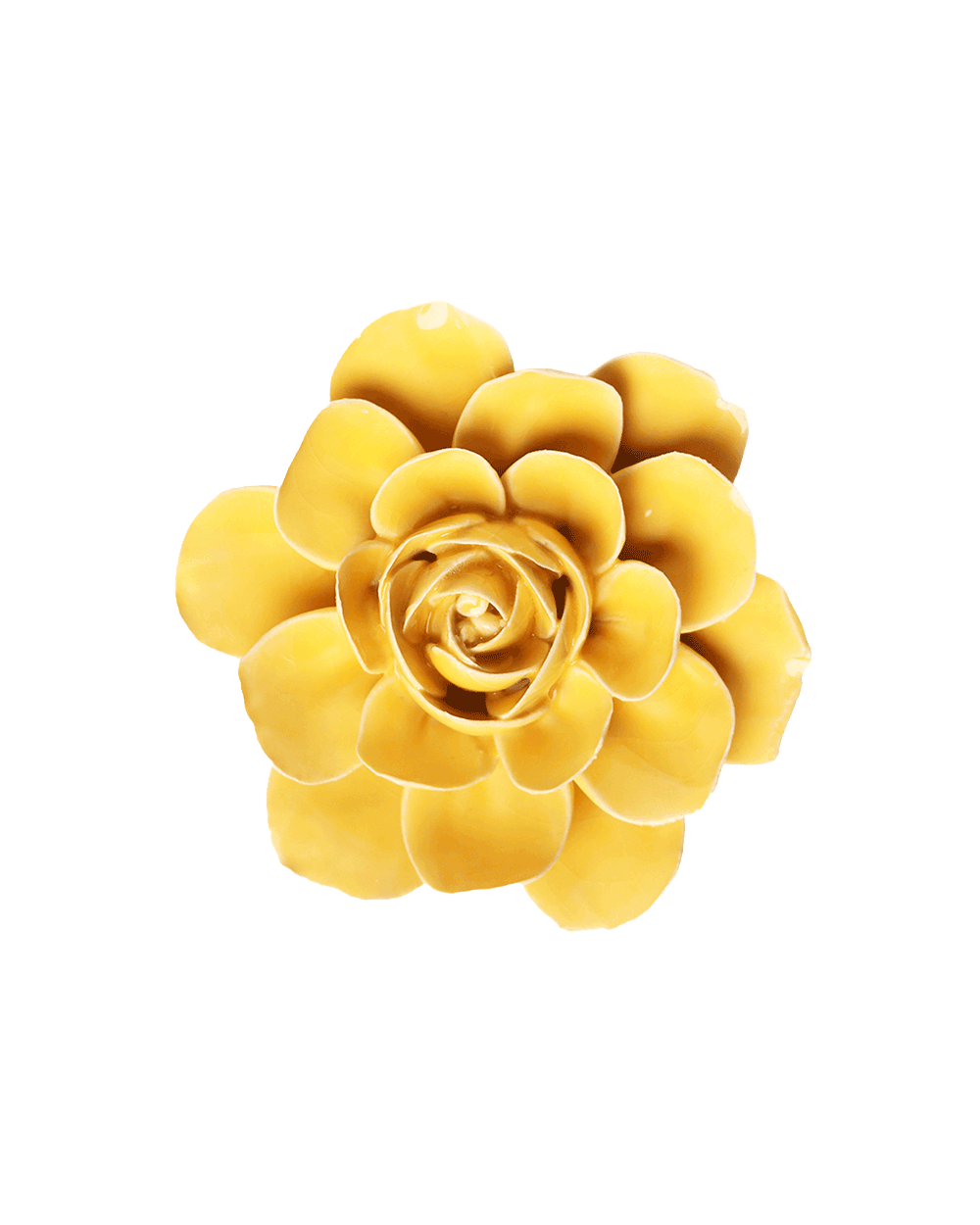
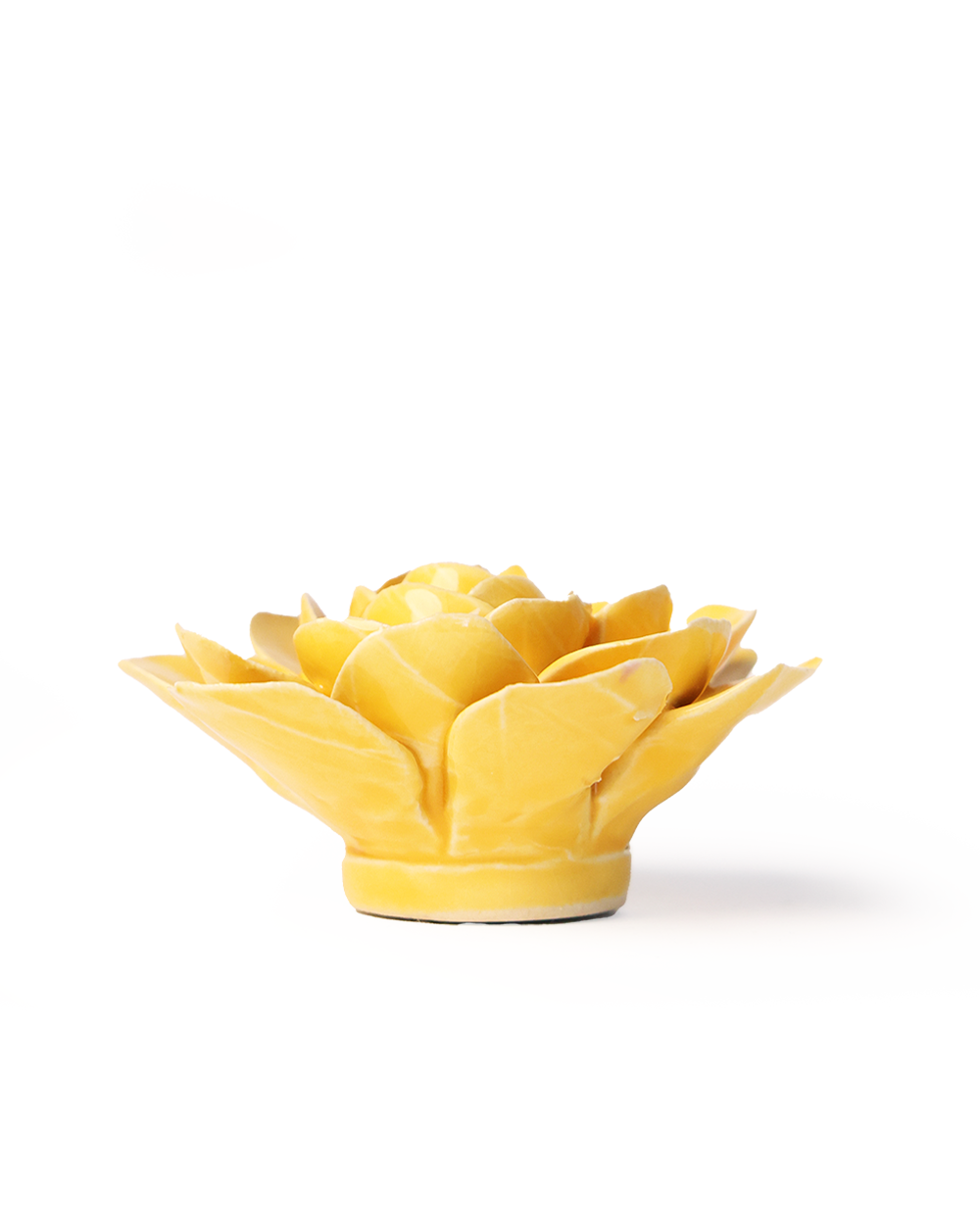
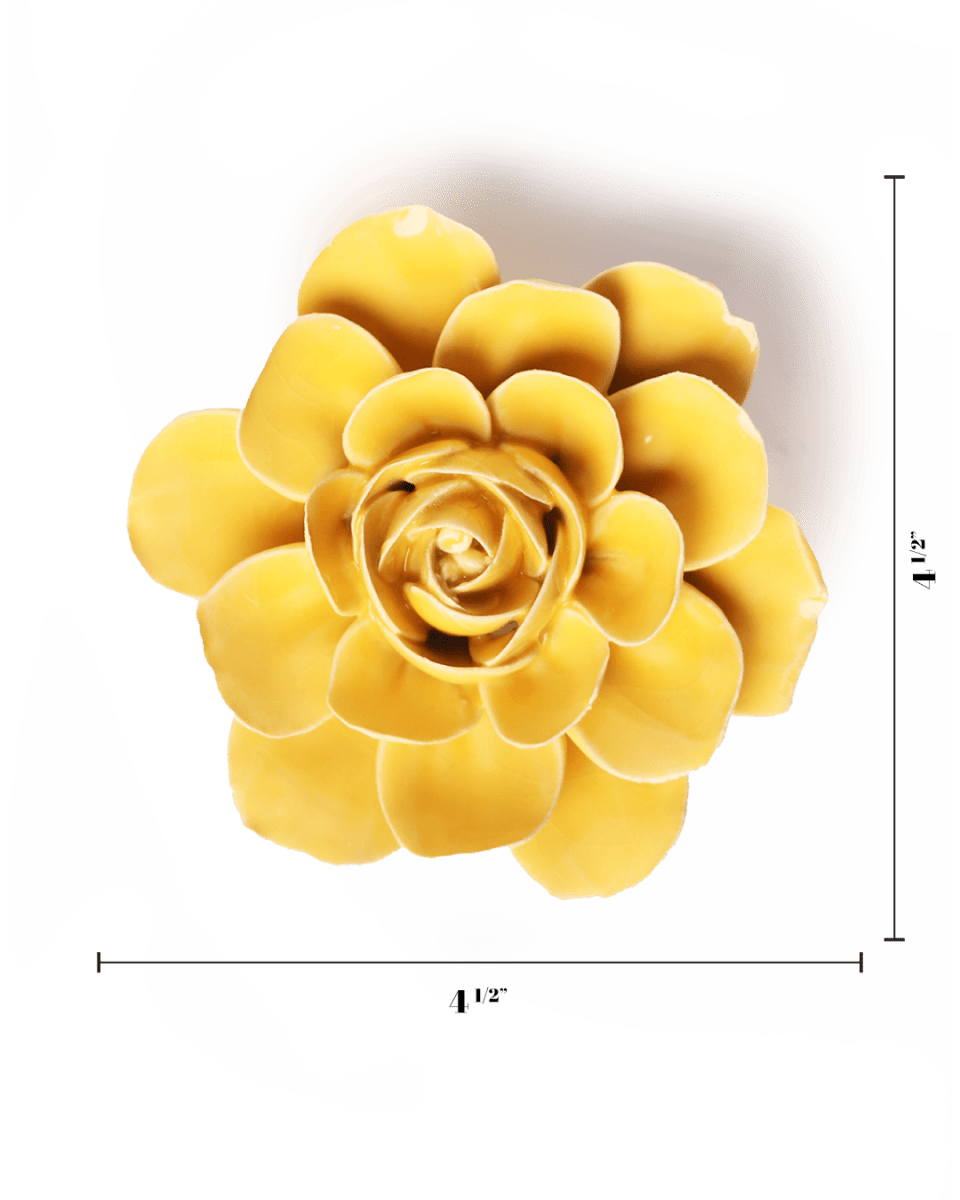
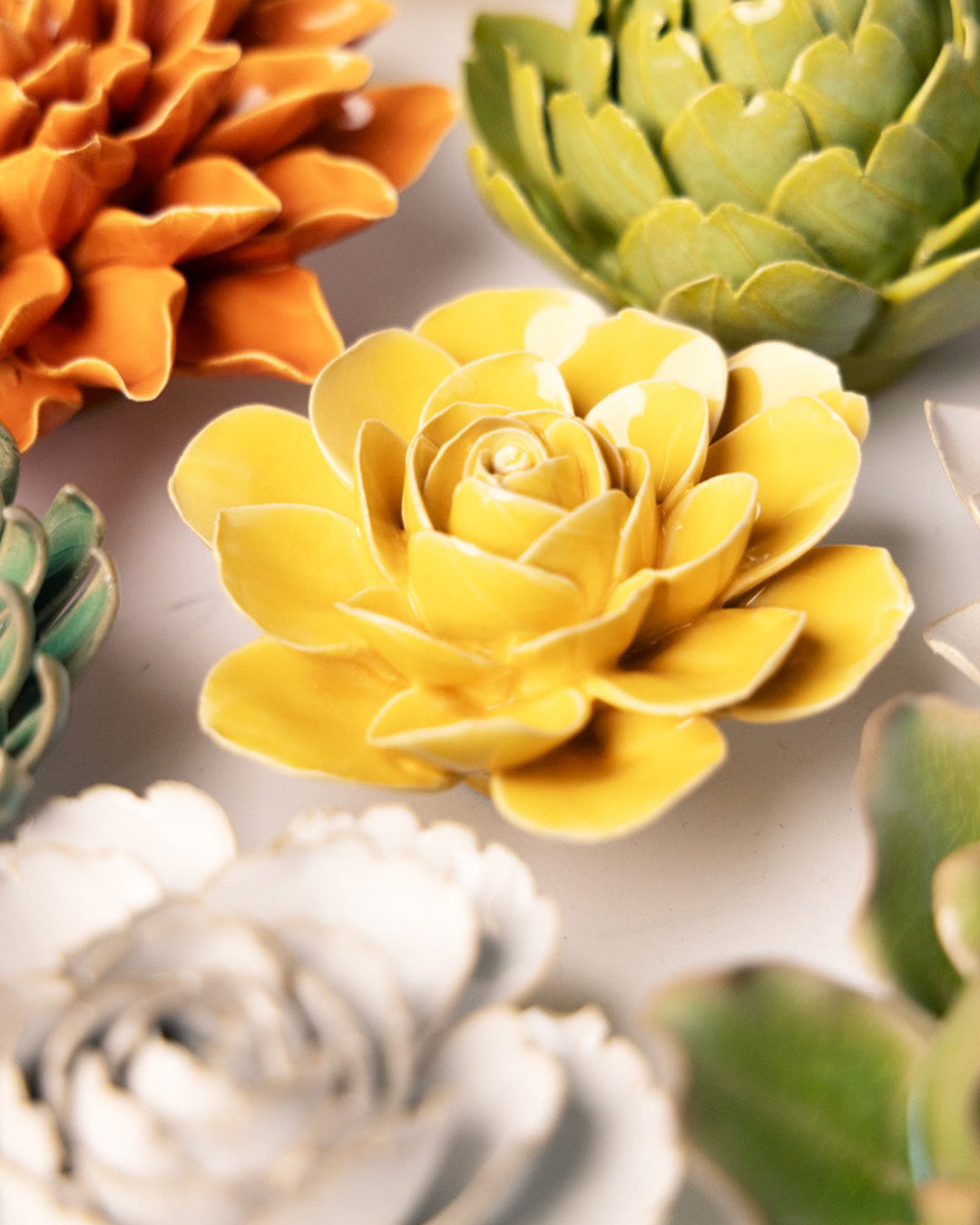
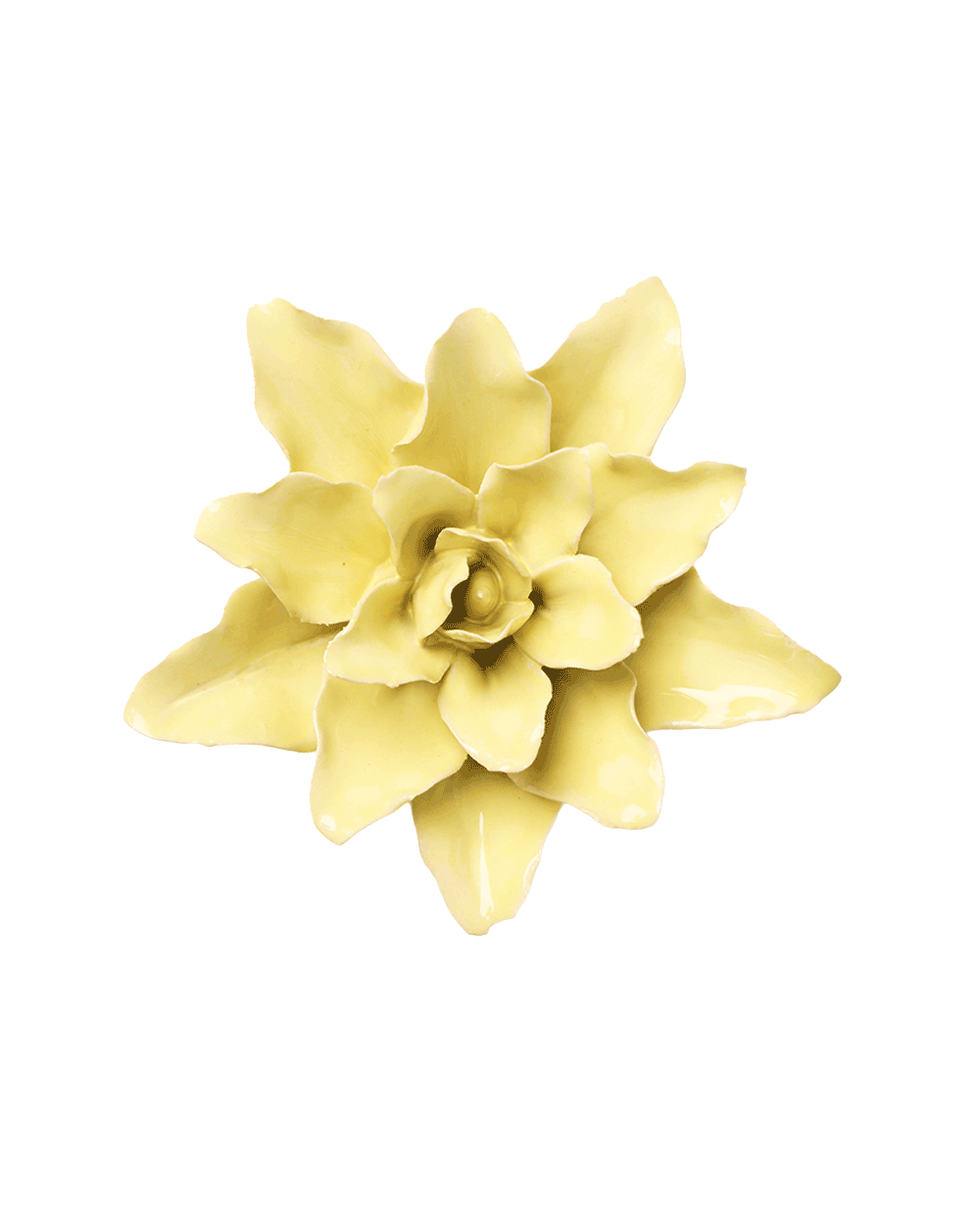
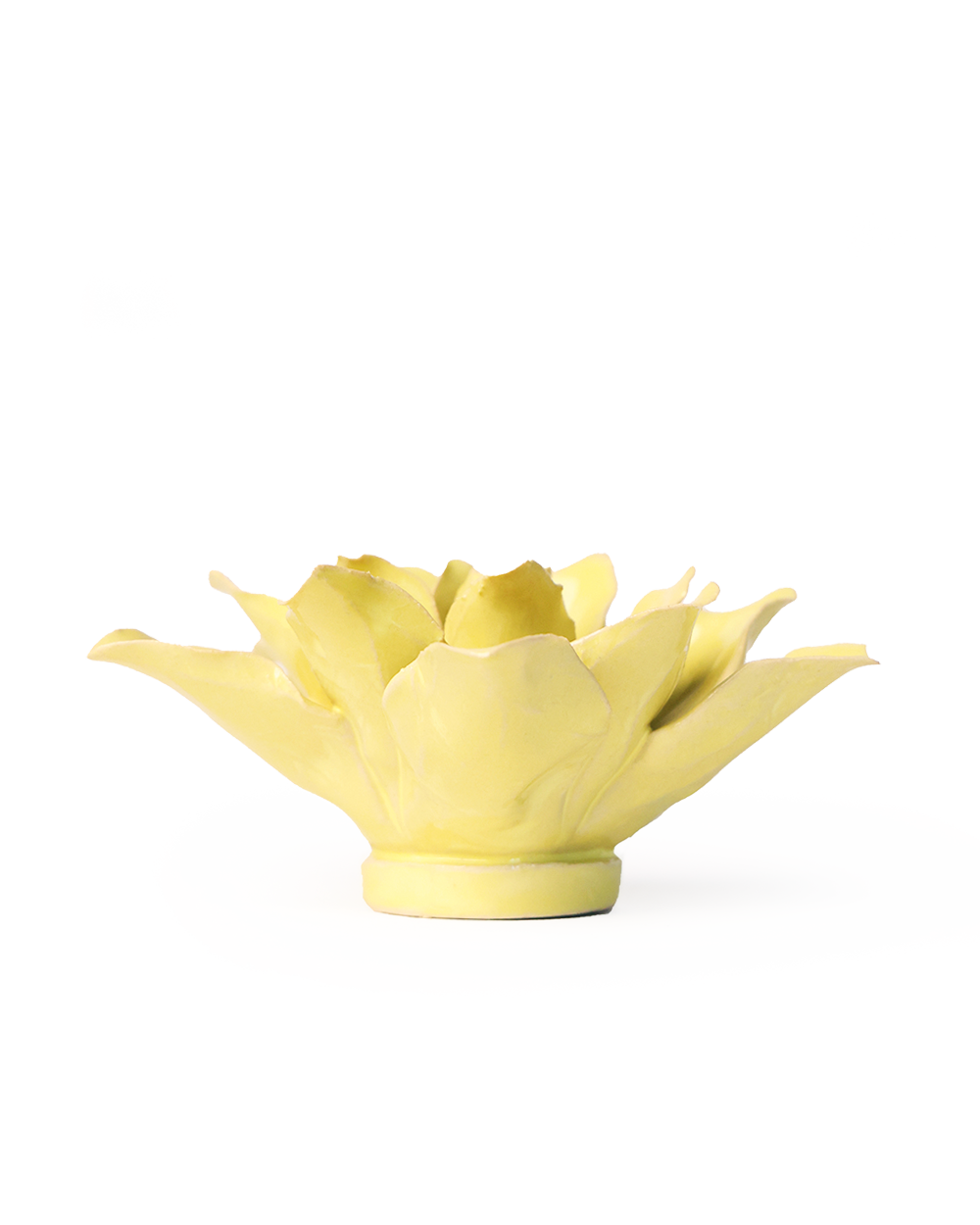
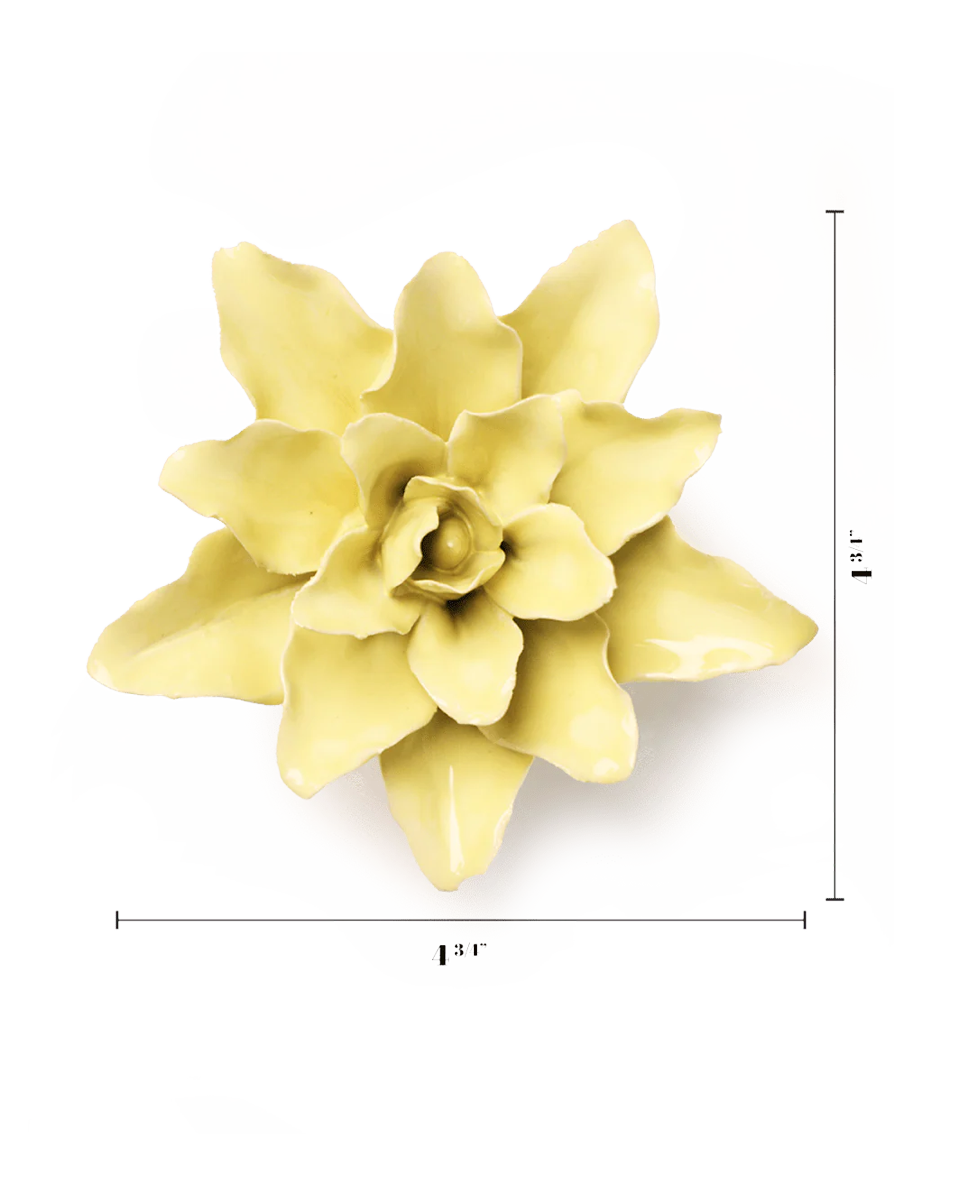
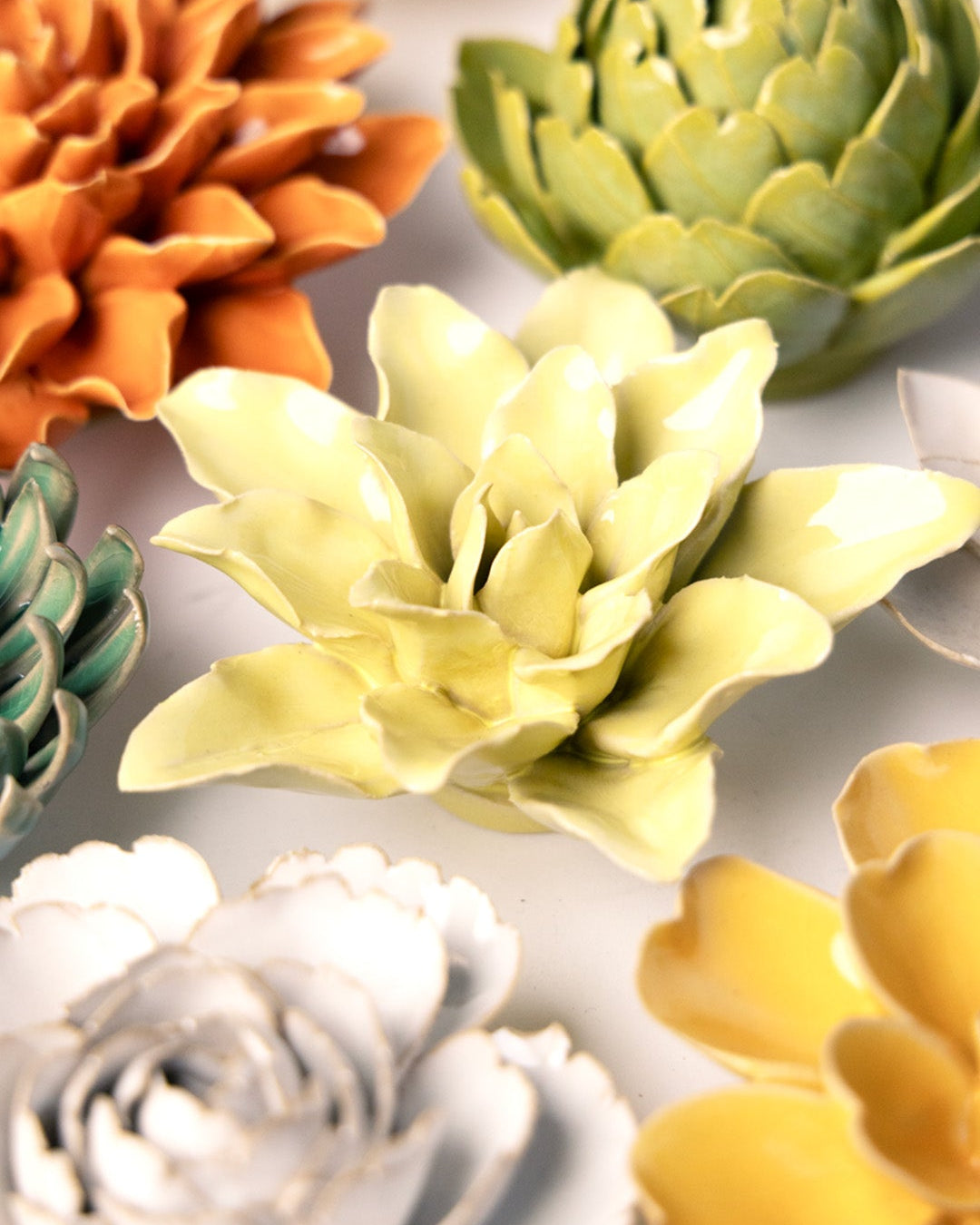
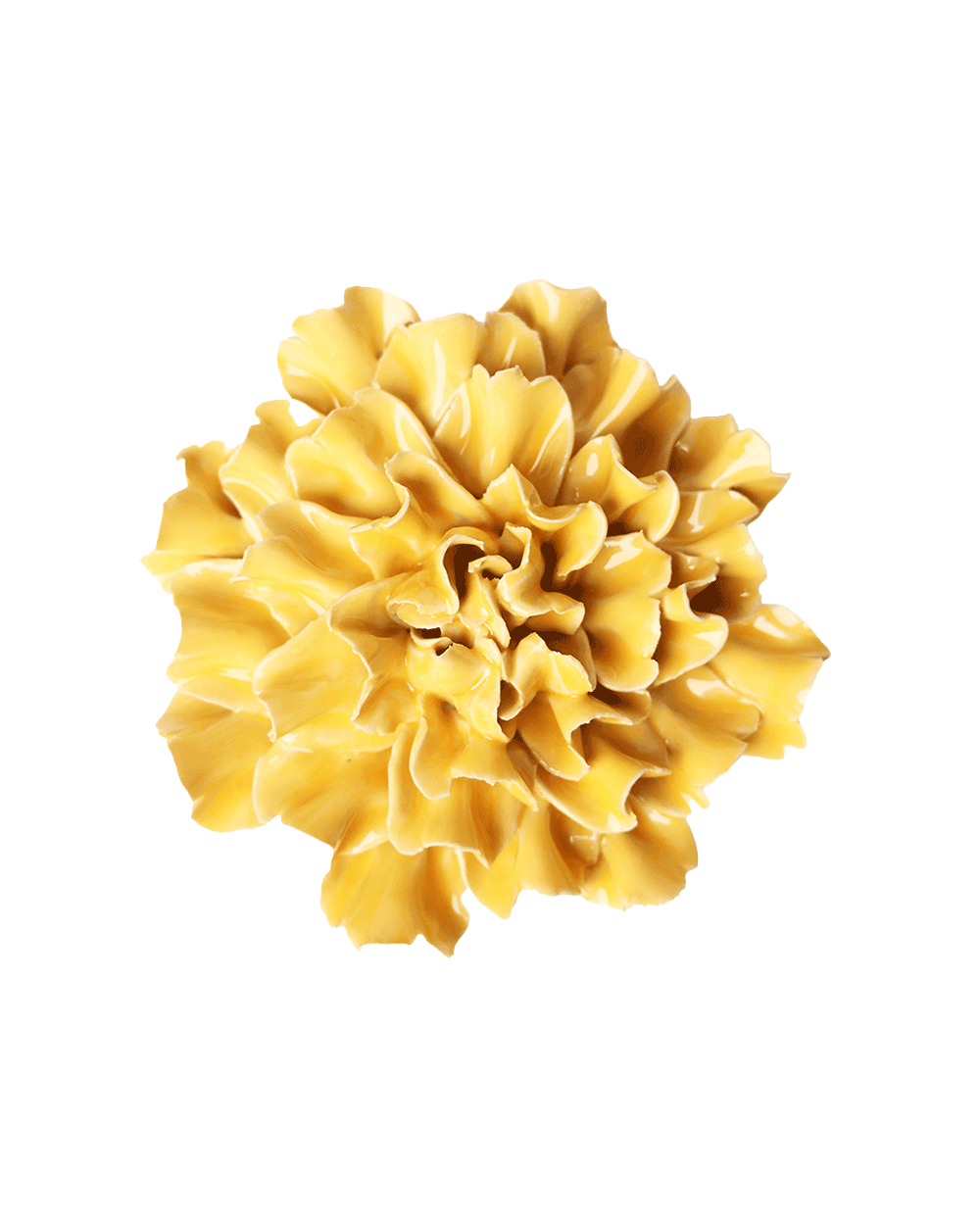
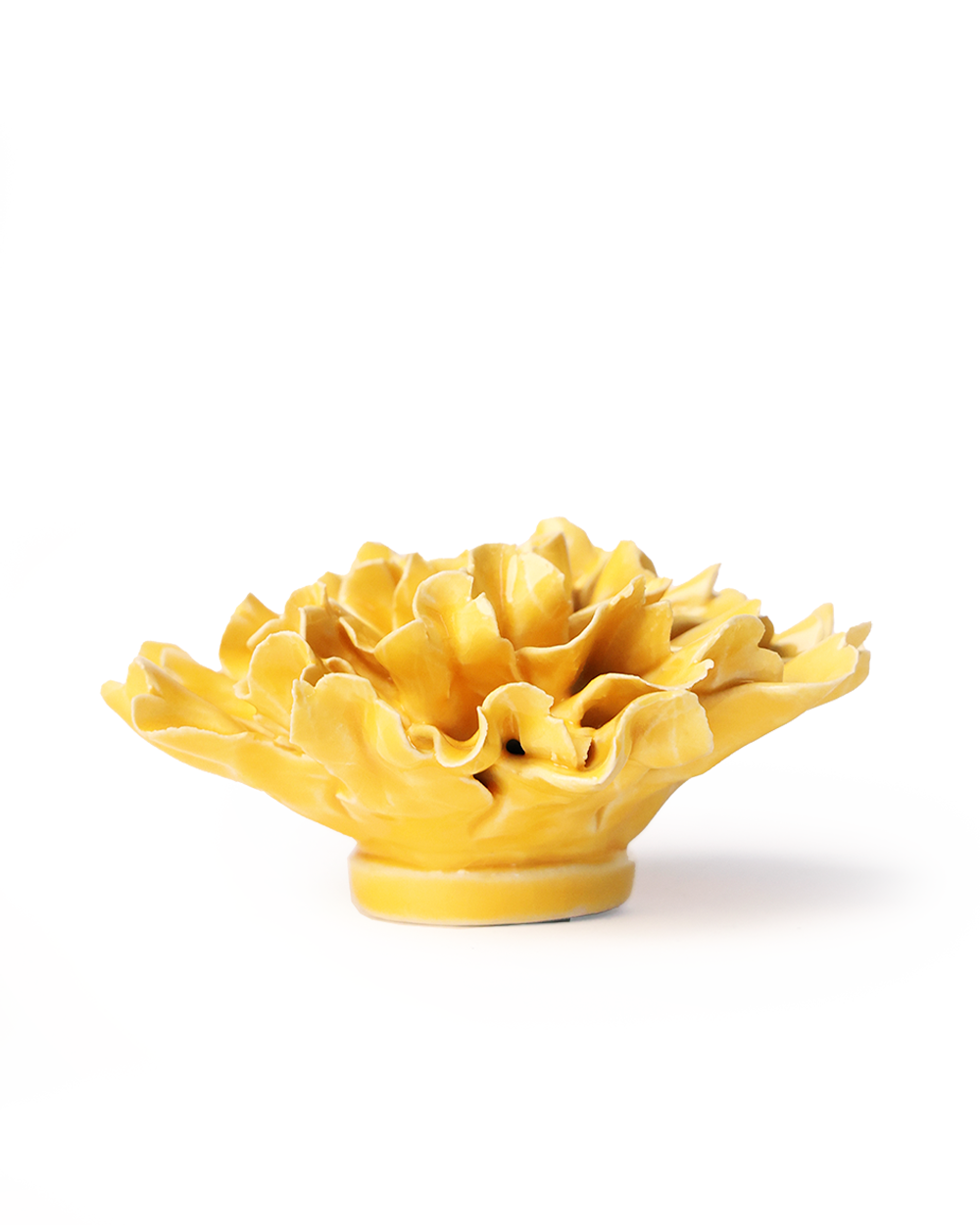
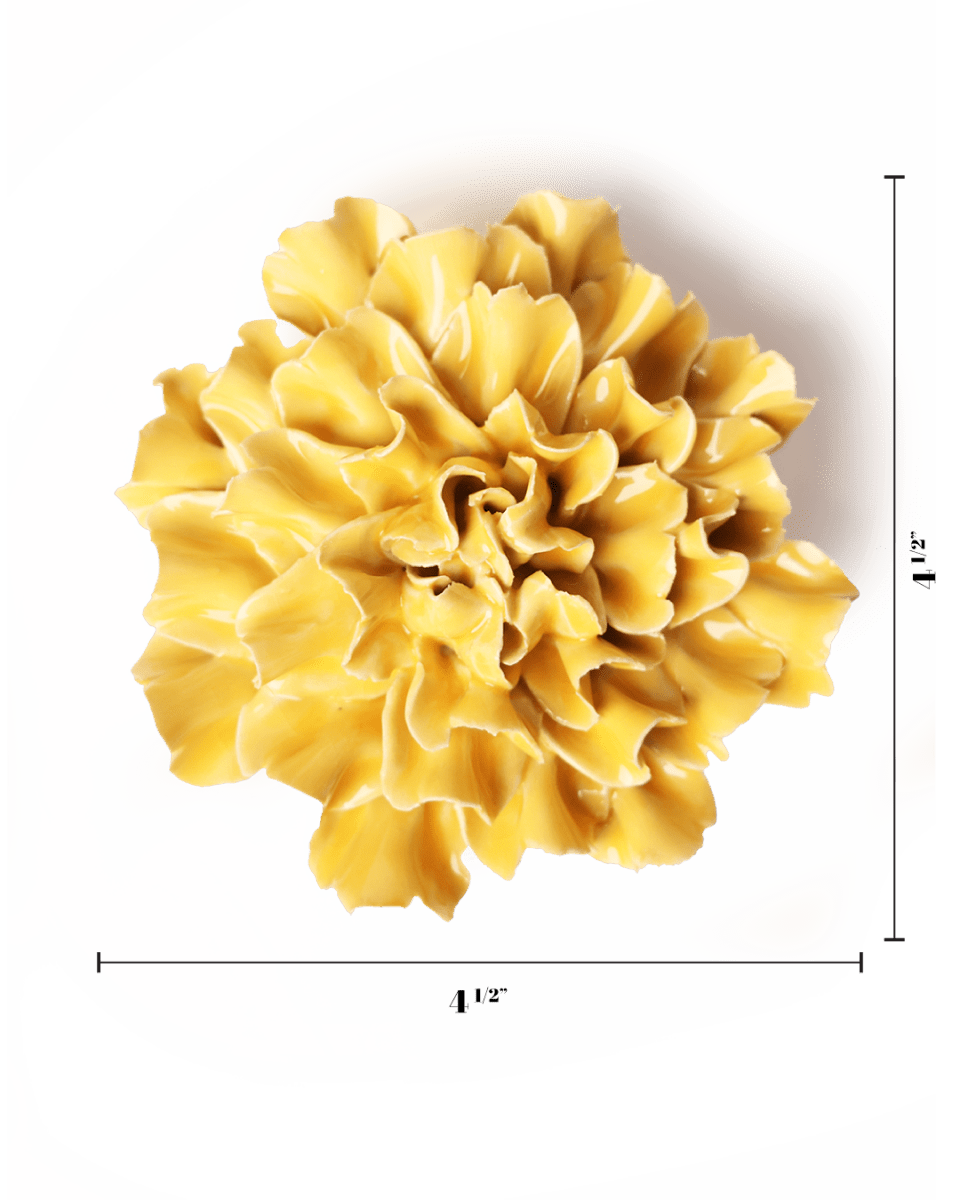
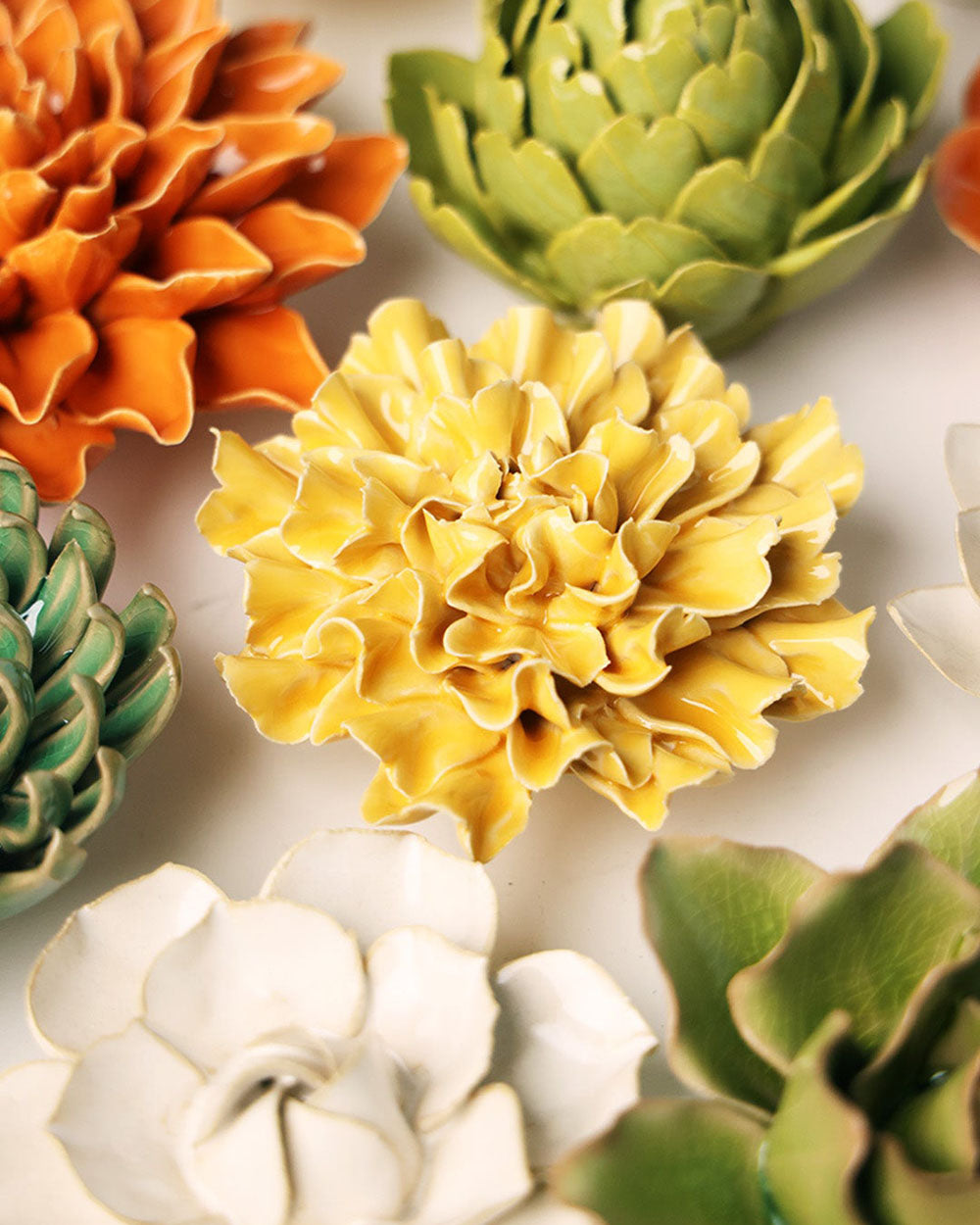
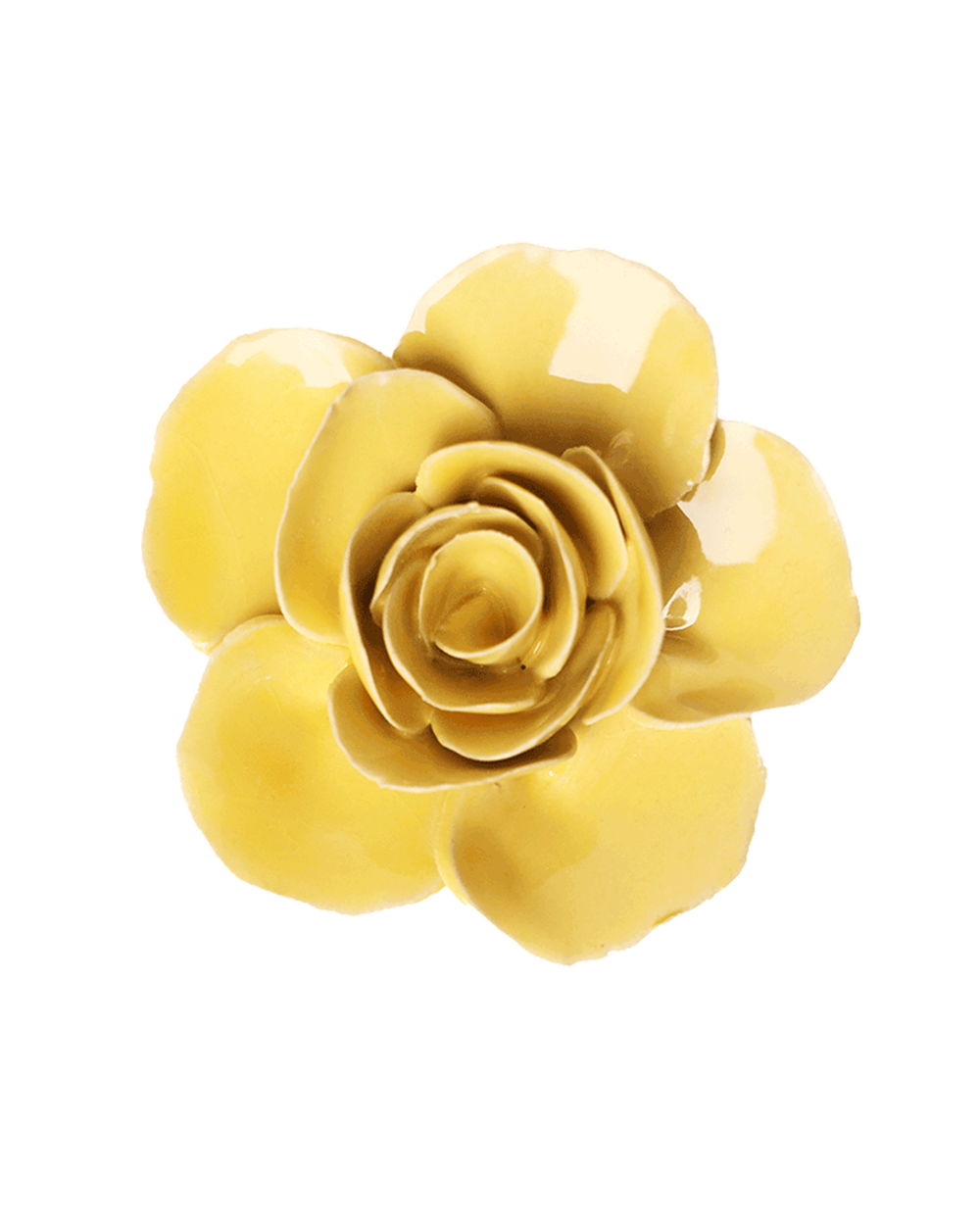
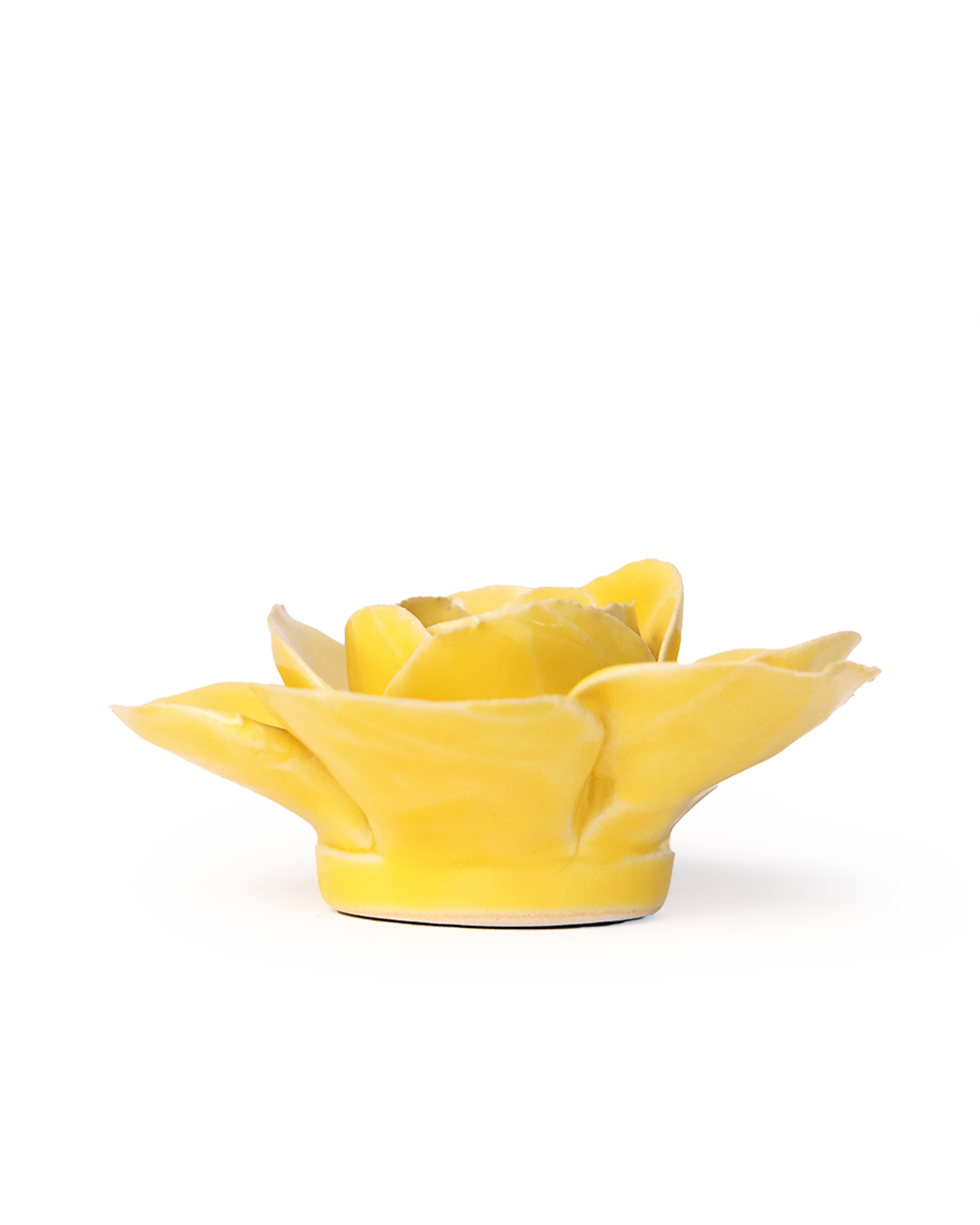

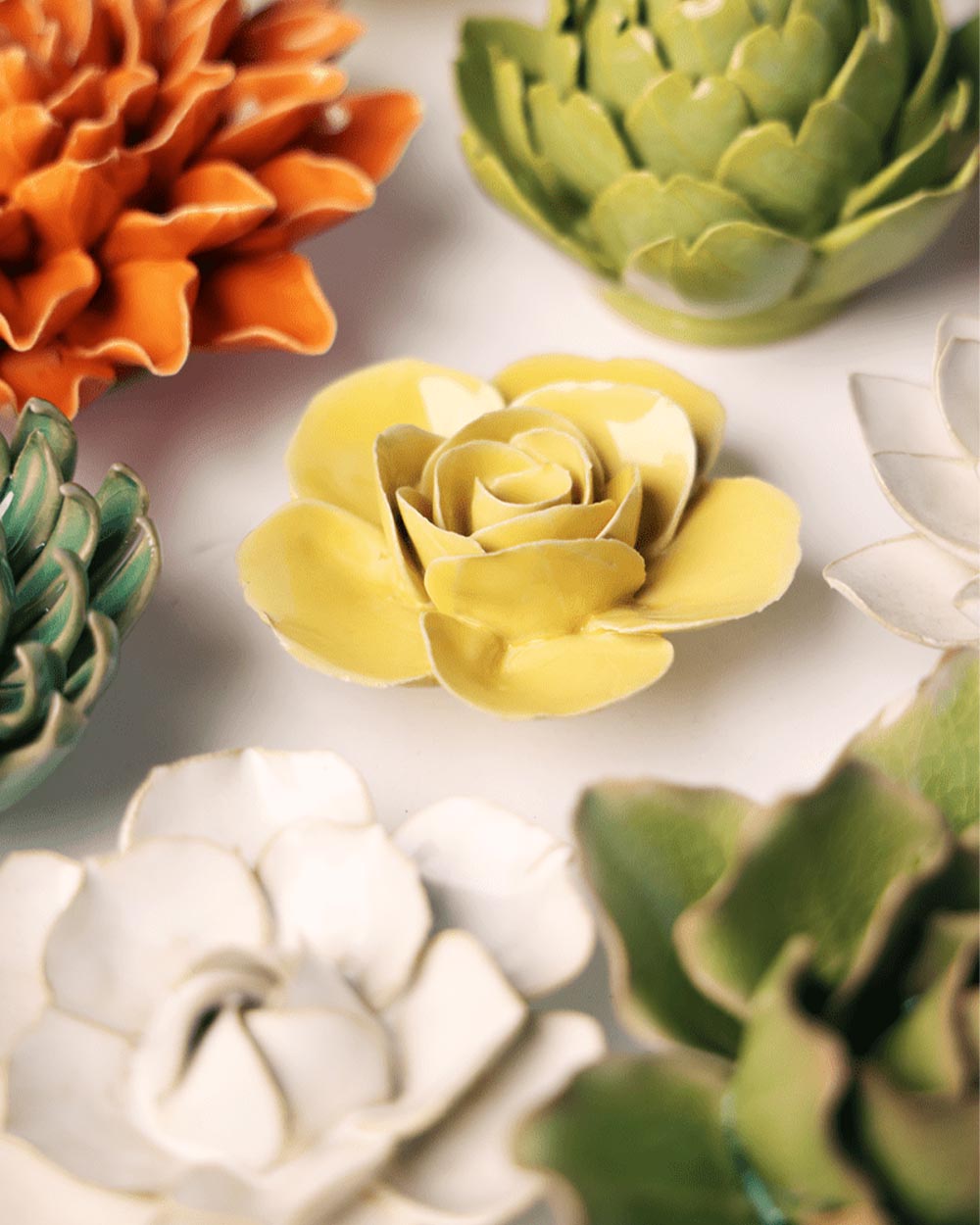
The warm range is where the collection stops being polite. Yellow, orange, and red are the glazes people photograph first and buy second — they read as a commitment, which is exactly why the ceramic format suits them: a burnt-orange poppy is a five-minute decision with one screw behind it, where an orange wall is a weekend and a primer coat. The range runs buttercup and lime yellow through marigold and burnt orange to rust and red, mostly from the English Garden and France collections.
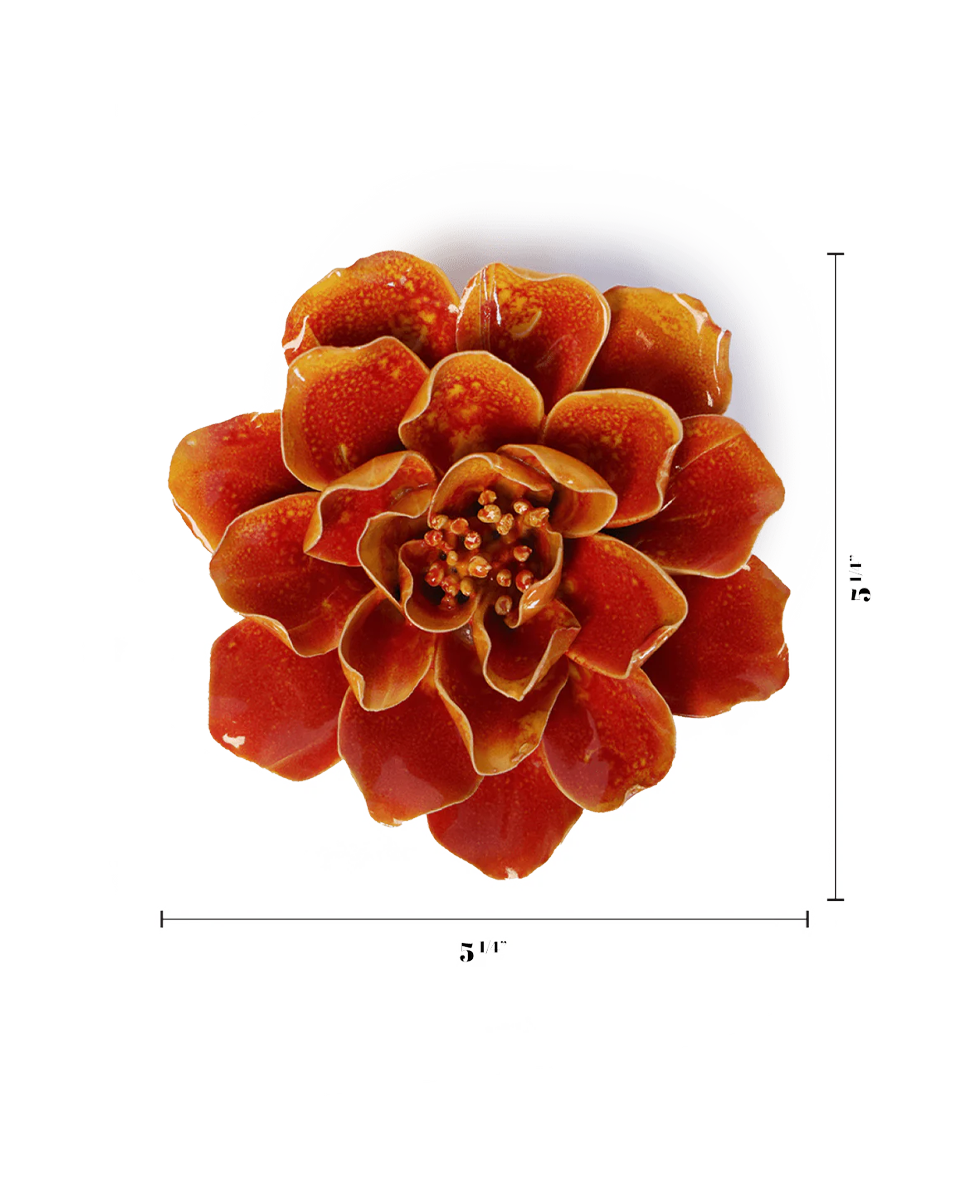
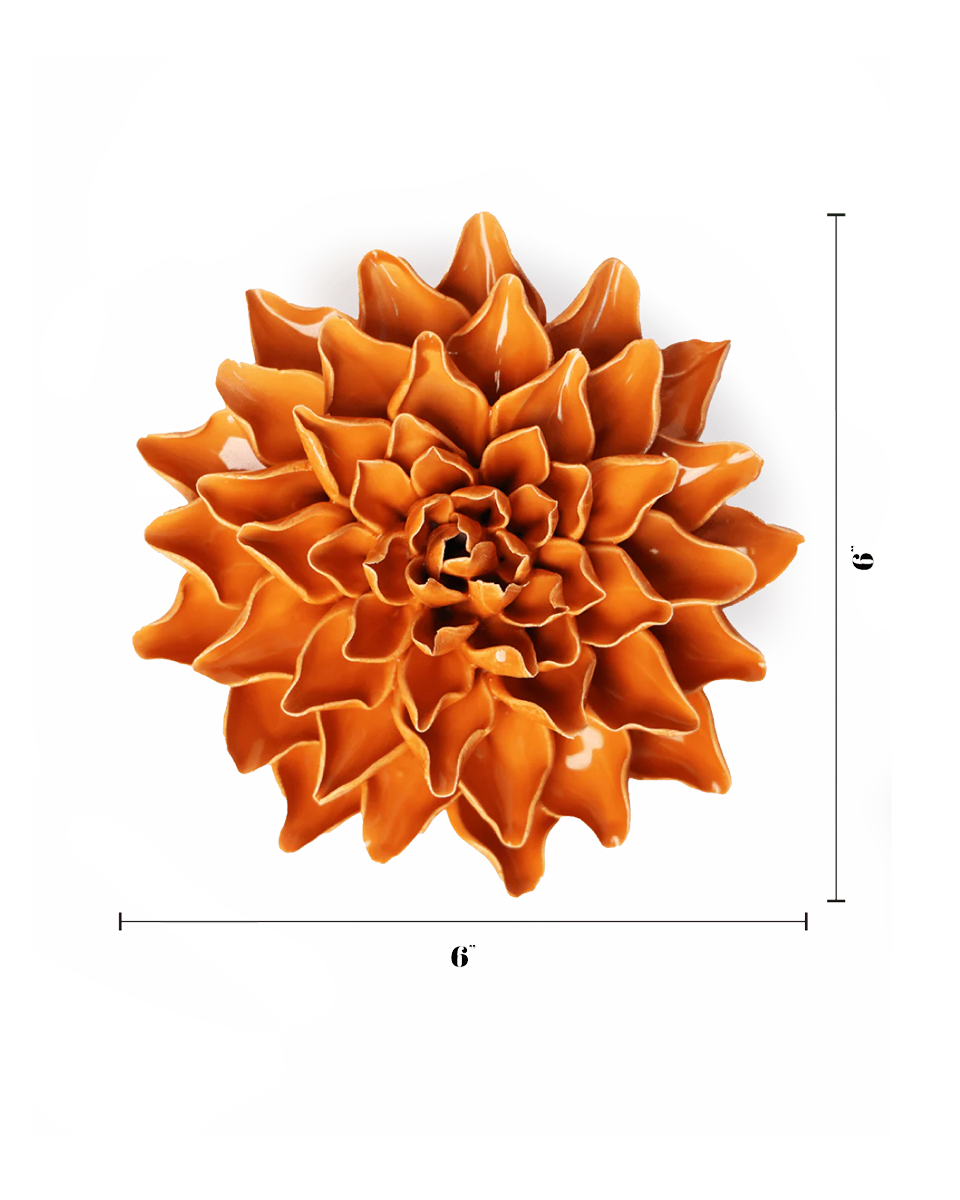
Warm glazes carry rooms differently by dose. One six-inch piece in burnt orange is an accent; a run of five across yellow-to-red is a statement wall that still cost less than the paint would have. Every flower is shaped by hand and kiln-fired, so the saturation is permanent — these are the shades that fade first in printed decor and never in fired glaze.

Yellow wall art

Red wall art

Always Original, Often Copied: The Original Ceramic Flower Studio

Shaped by Hand: What Handmade Actually Means
Frequently asked questions about yellow, orange, and red ceramic flowers
How do ceramic wall flowers attach to the wall?
Are the warm glazes prone to fading?
How do you mix yellow, orange, and red on one wall?
What rooms suit the warm range best?
What is the packaging like for gifting?
Which warm glaze should a beginner start with?
Do these coordinate with the blue and green ranges?
What does orange wall art from Chive include?
RHS Chelsea Flower Show
2 x 5-star booth award — winner
Exhibiting since 2013