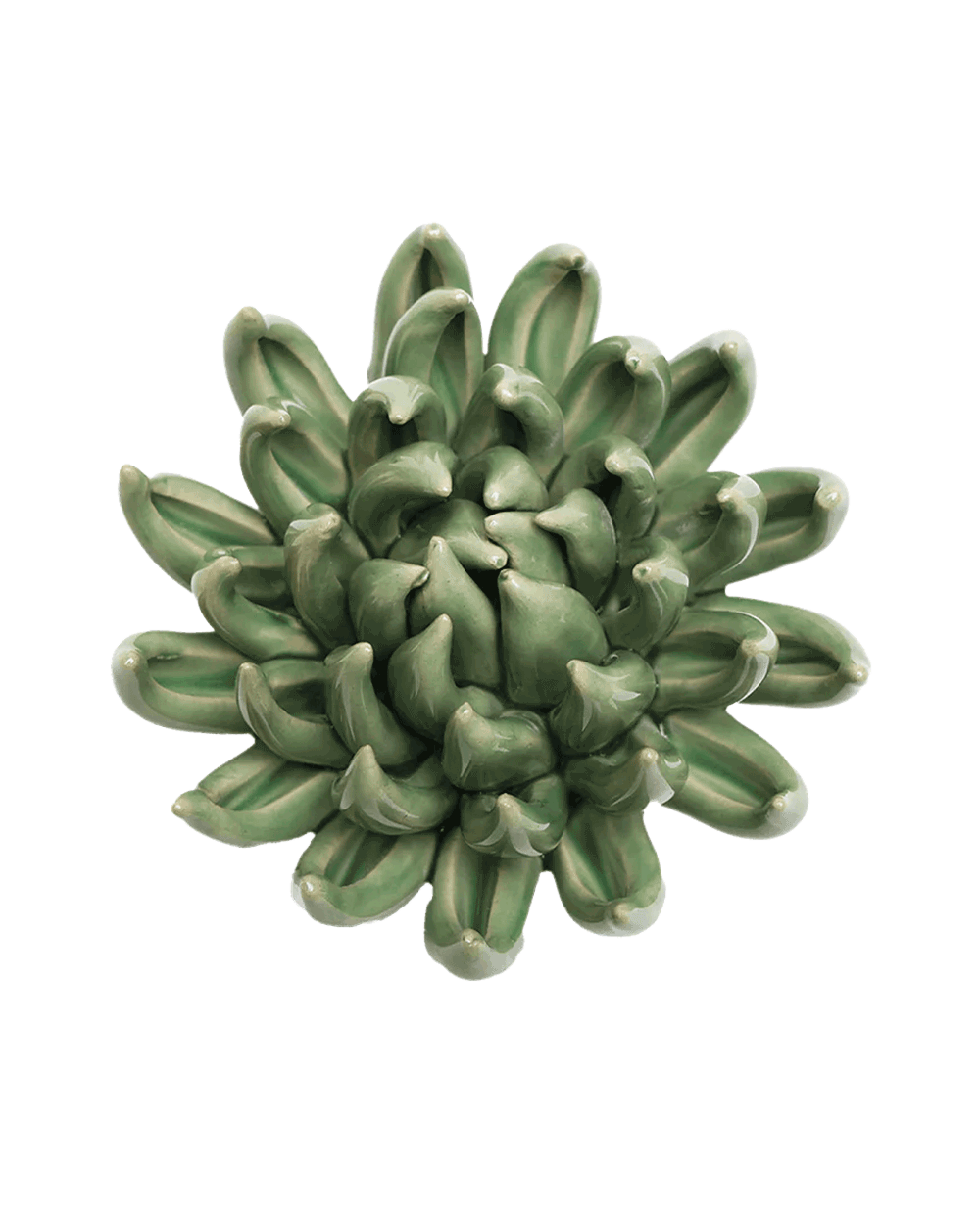
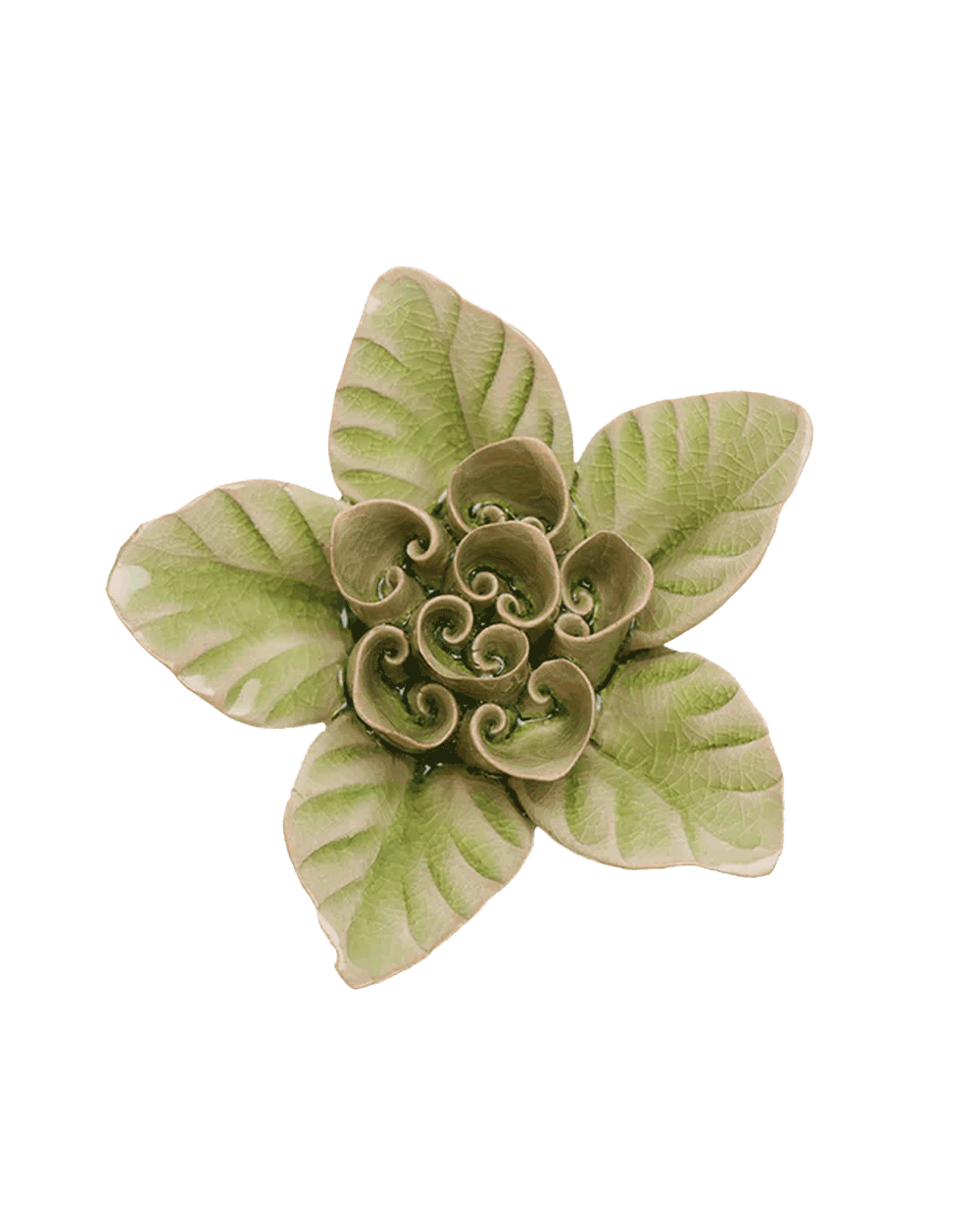
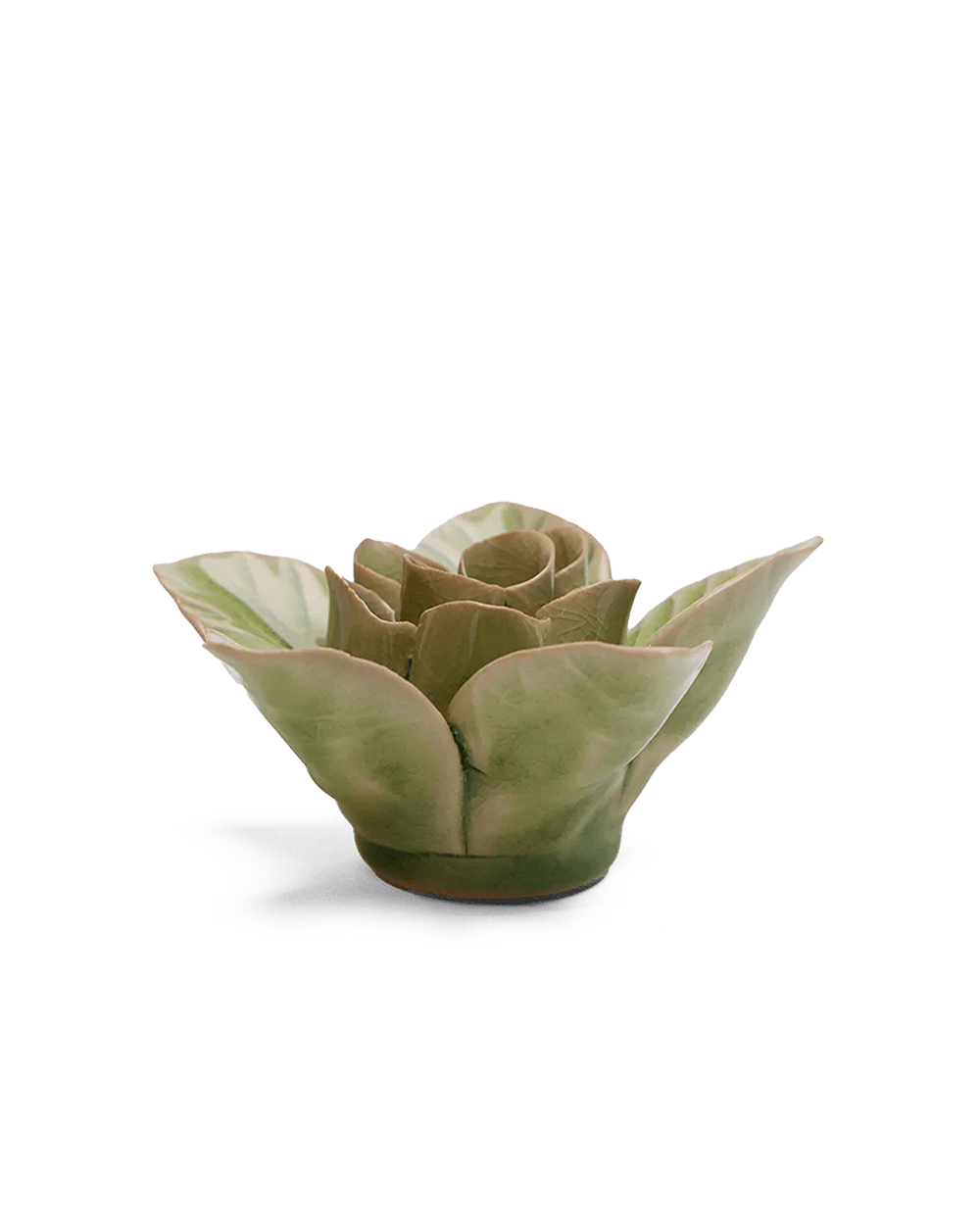
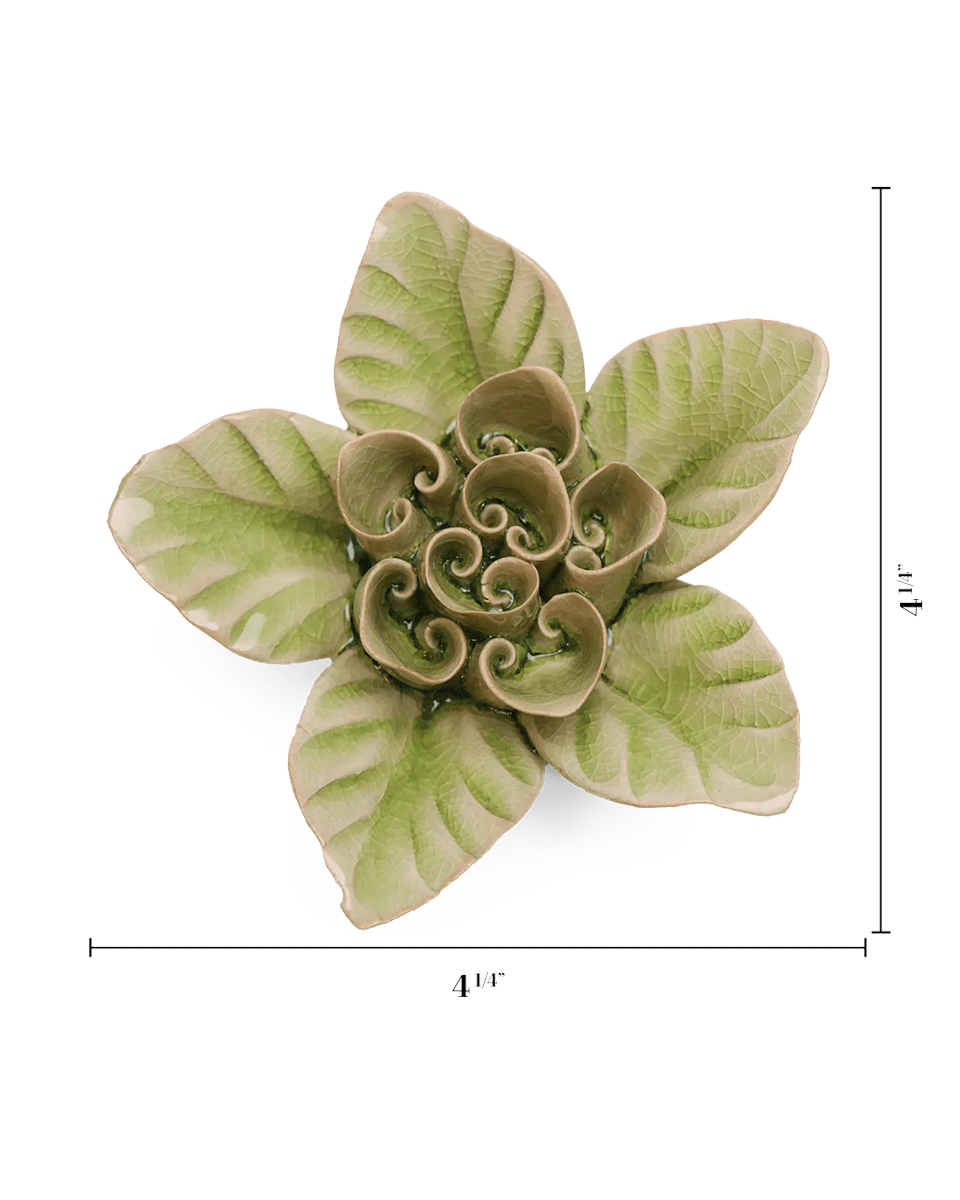
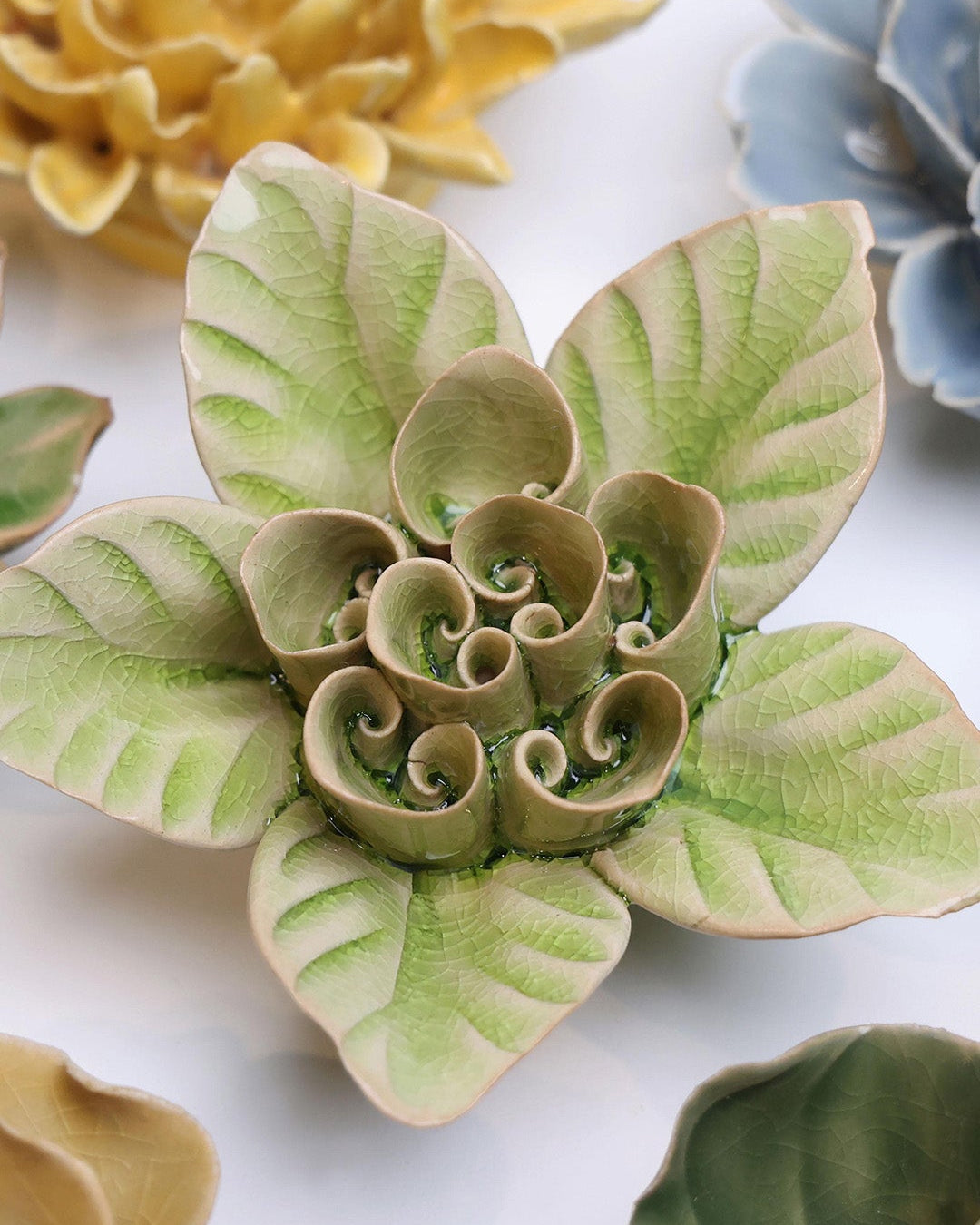
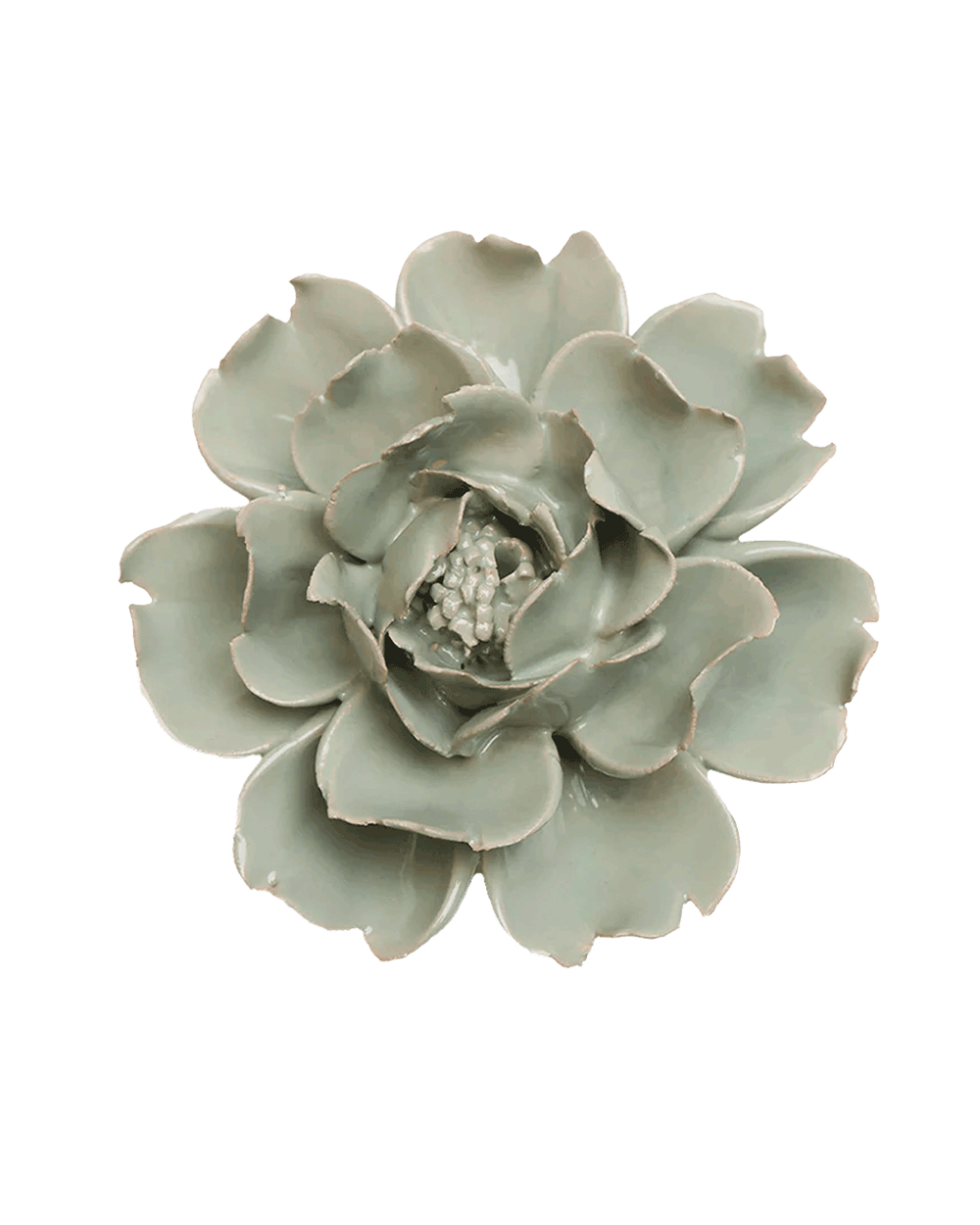
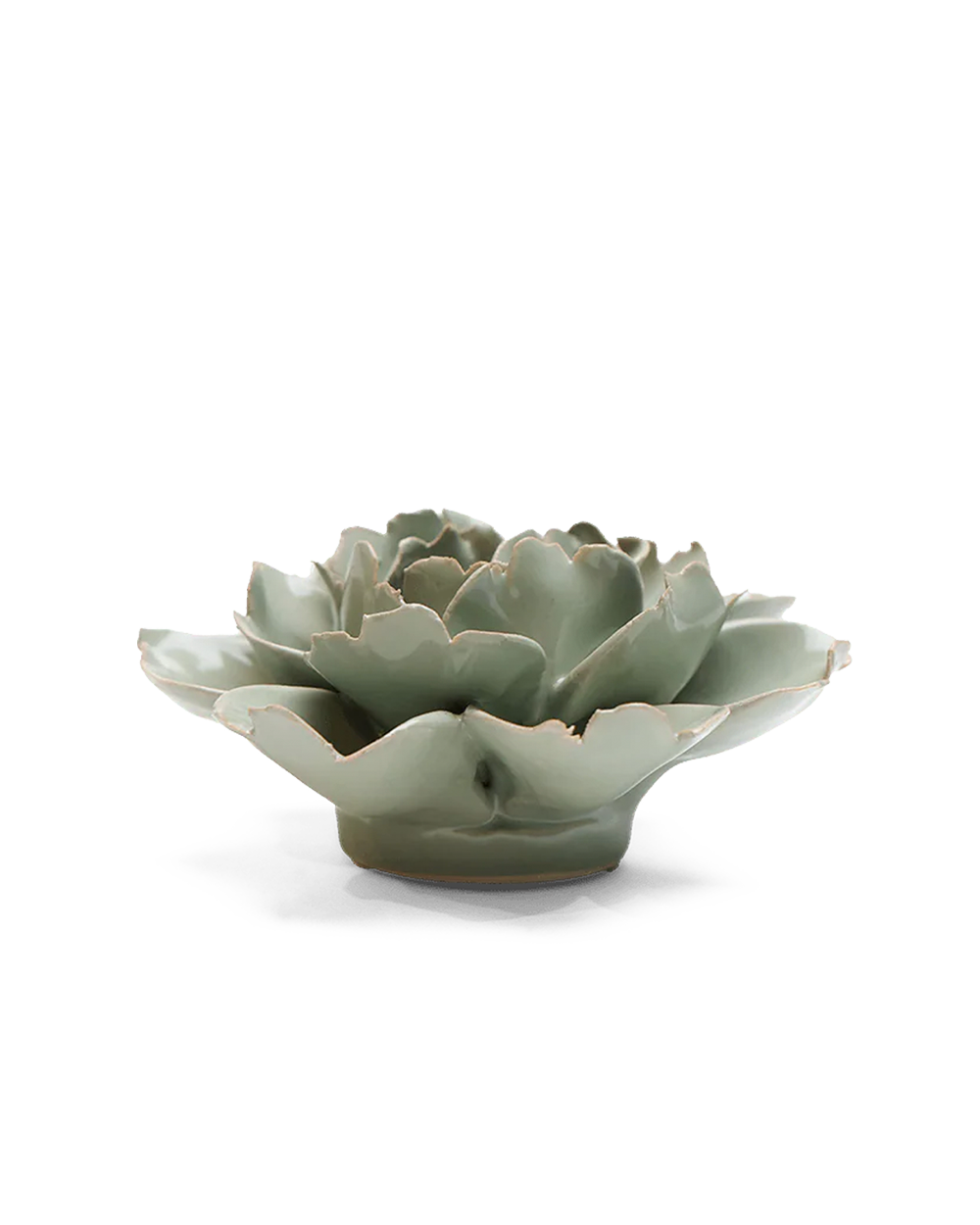
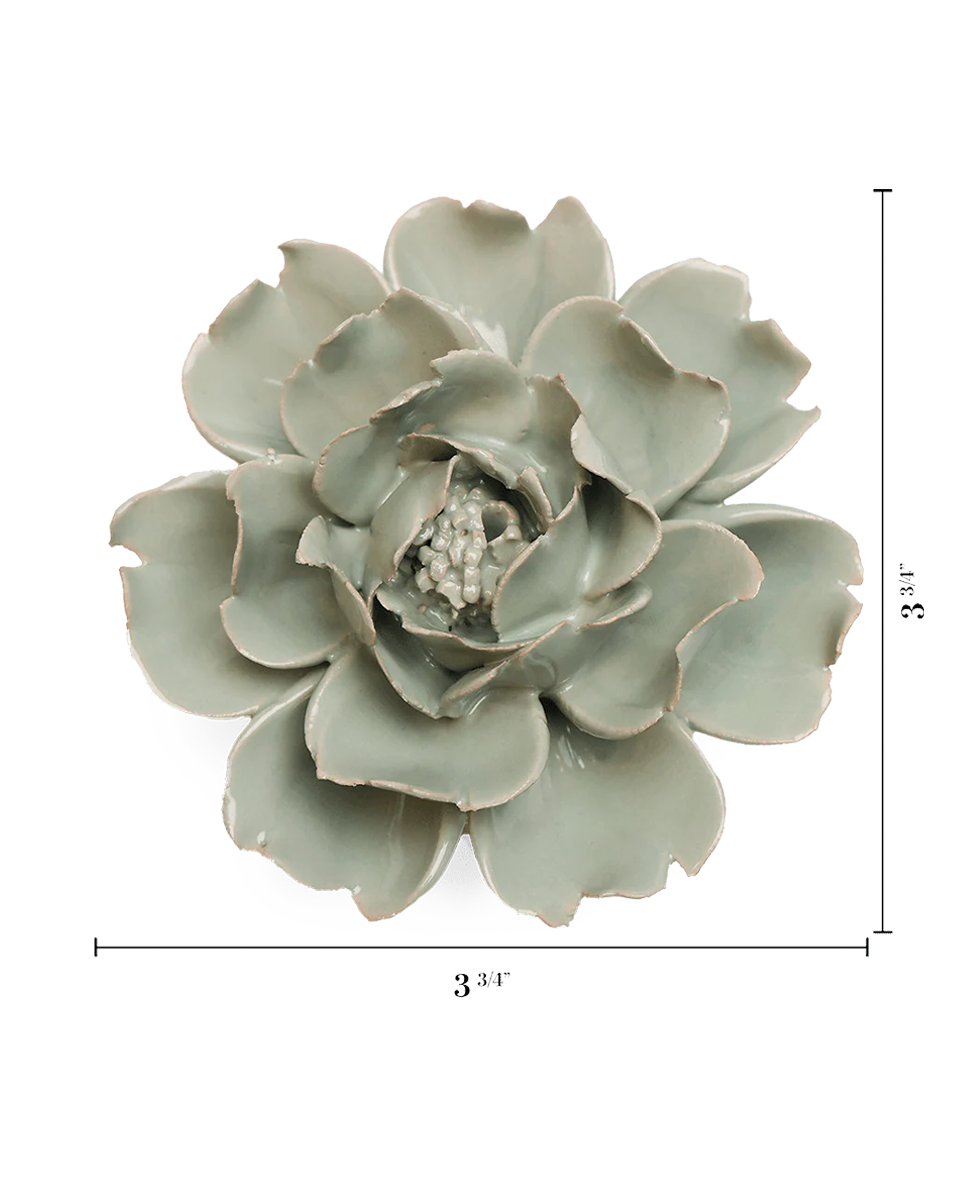
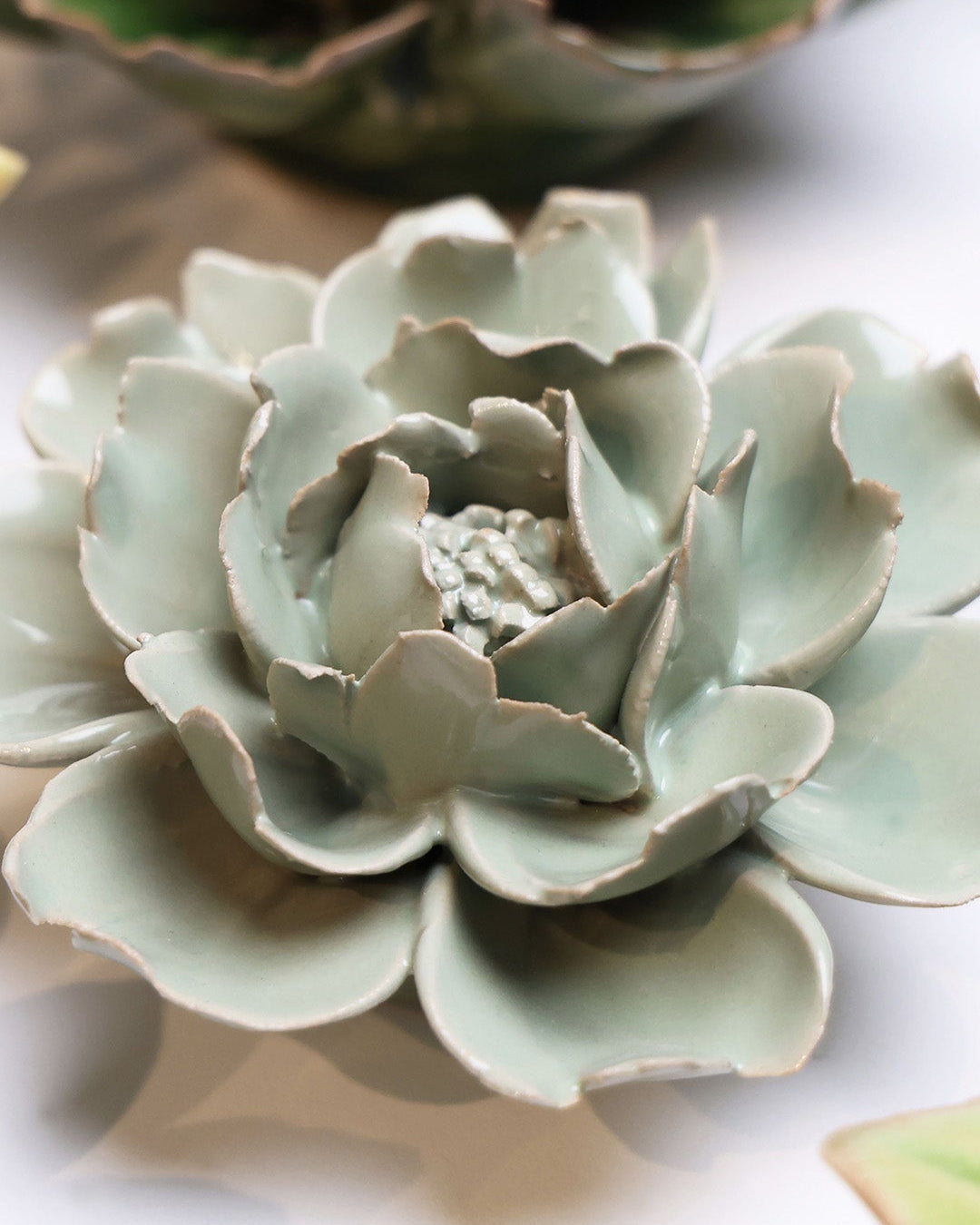
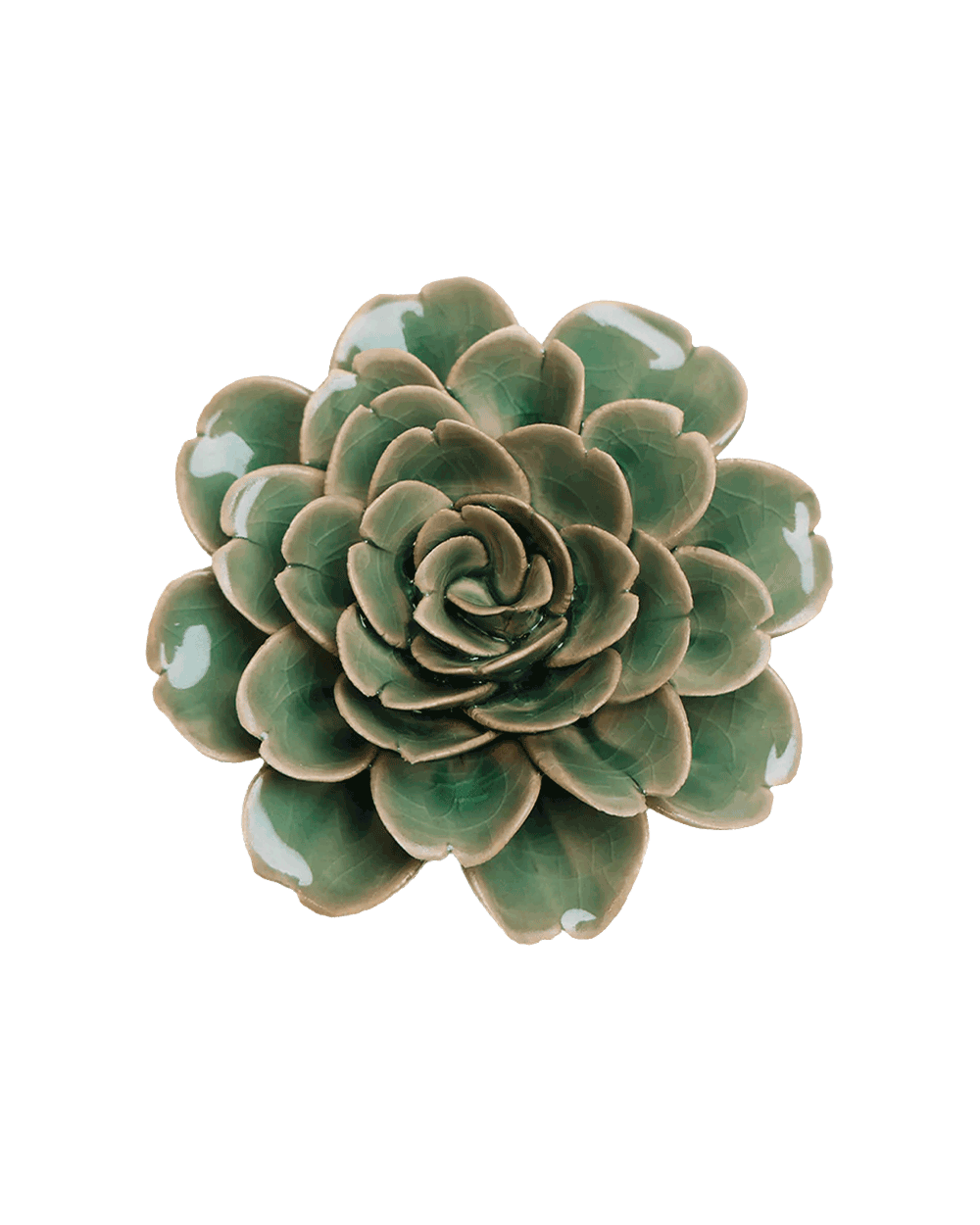
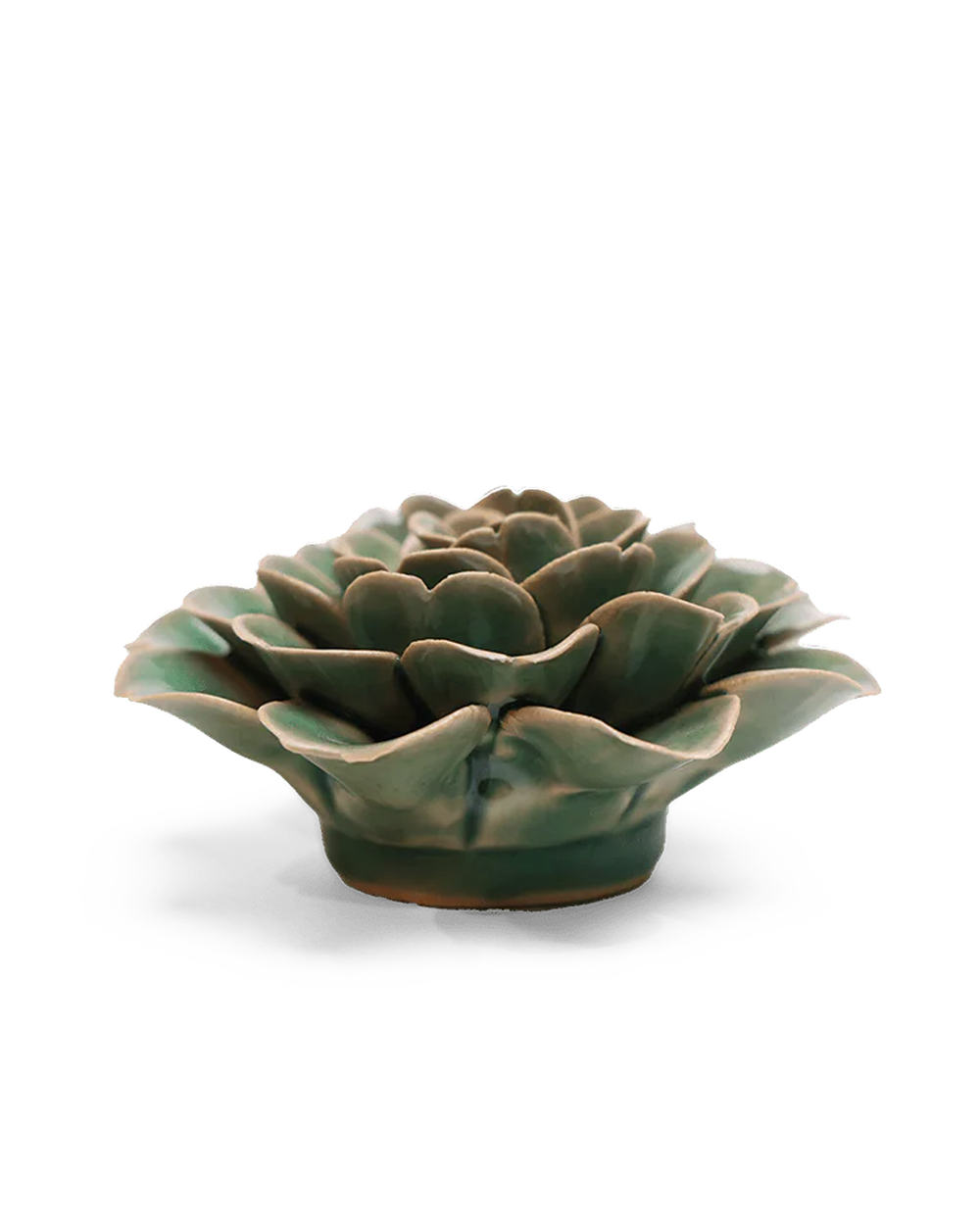
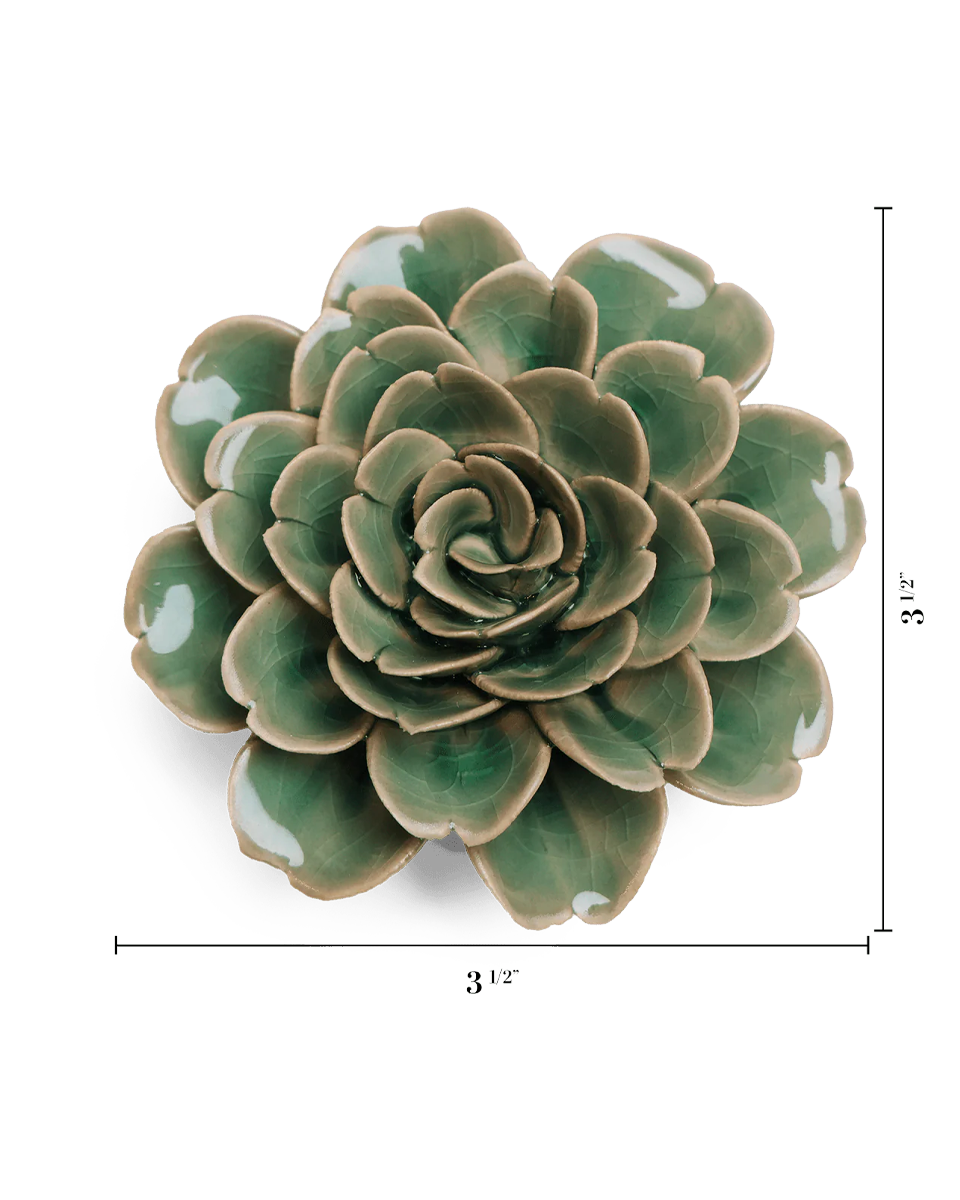
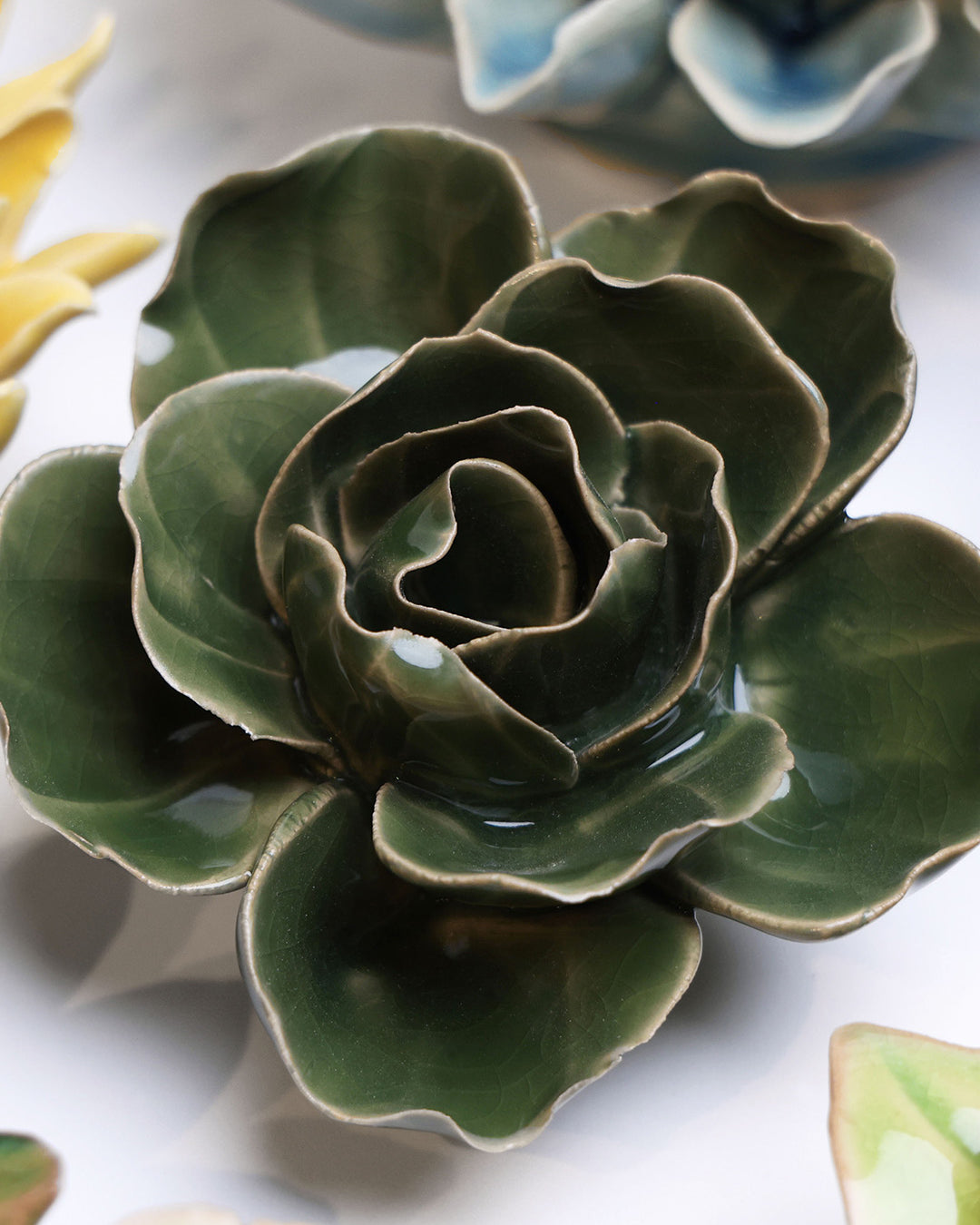
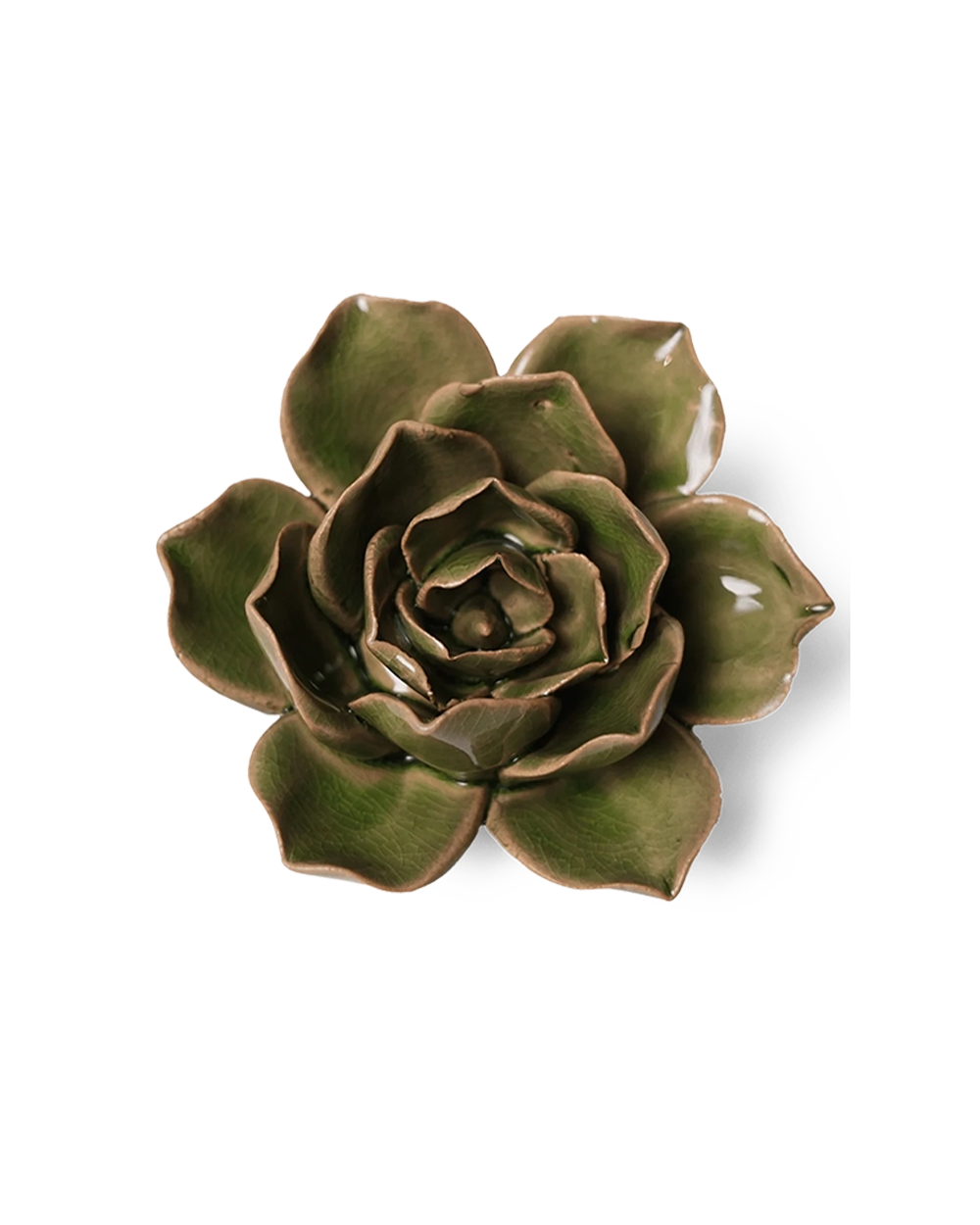
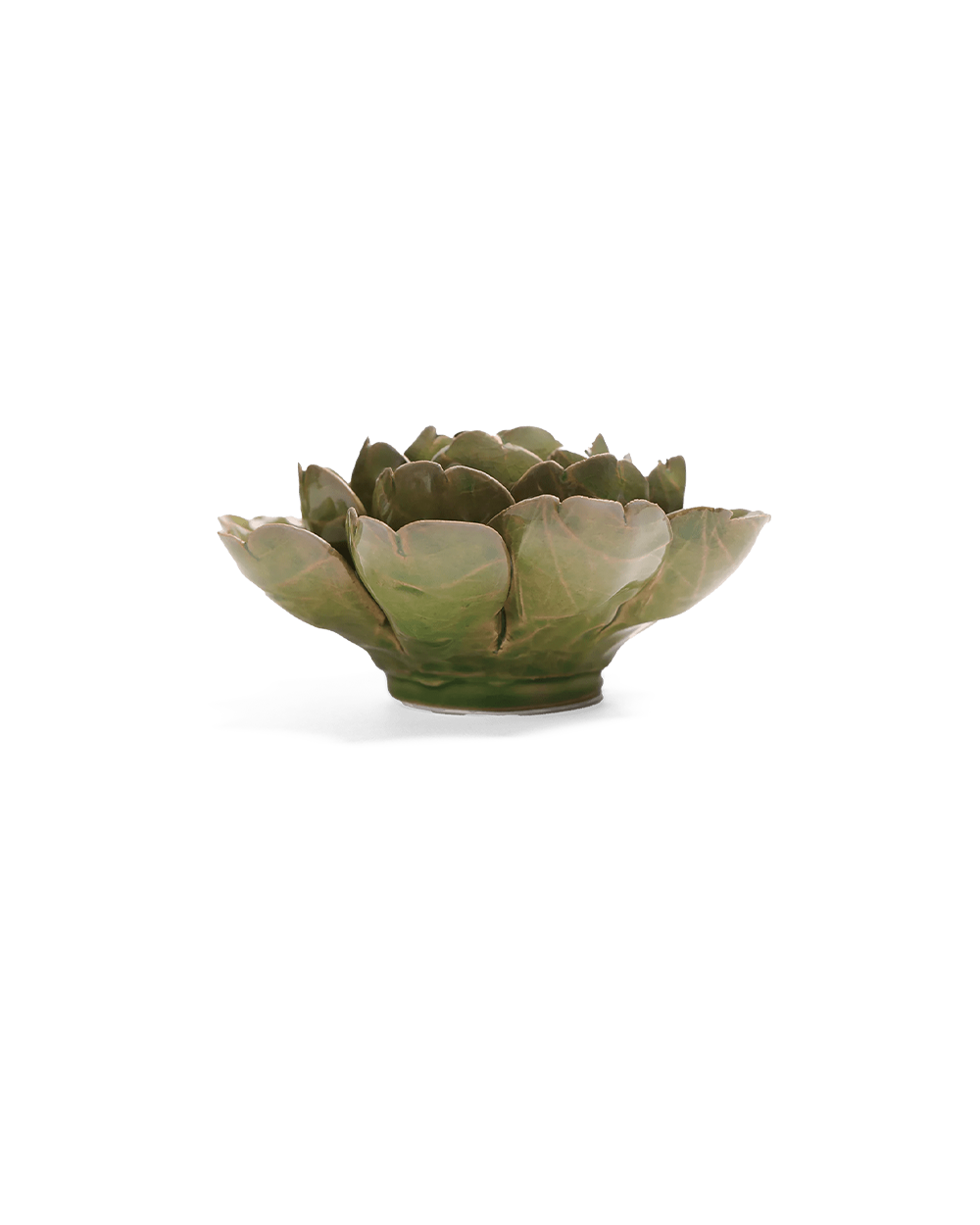
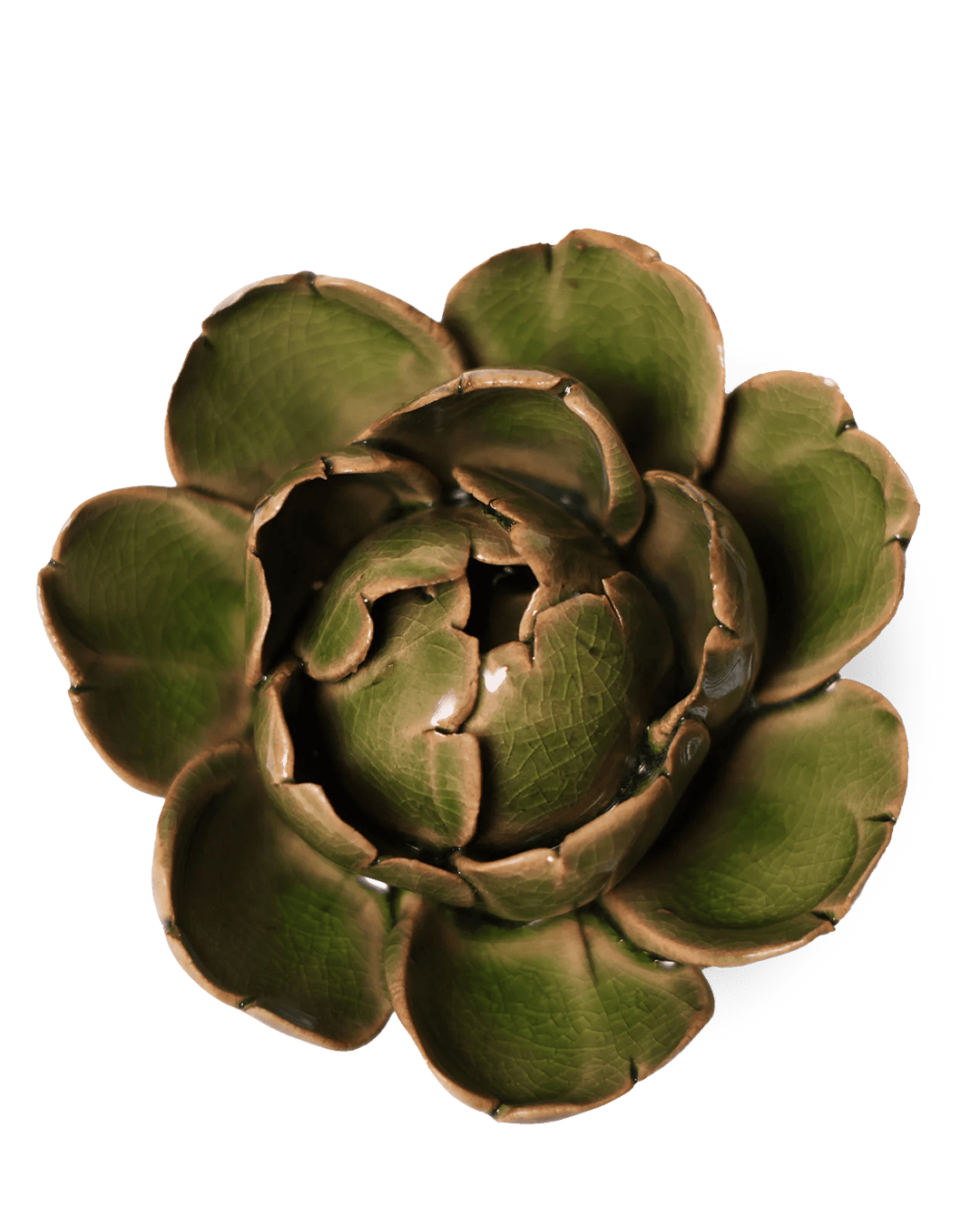
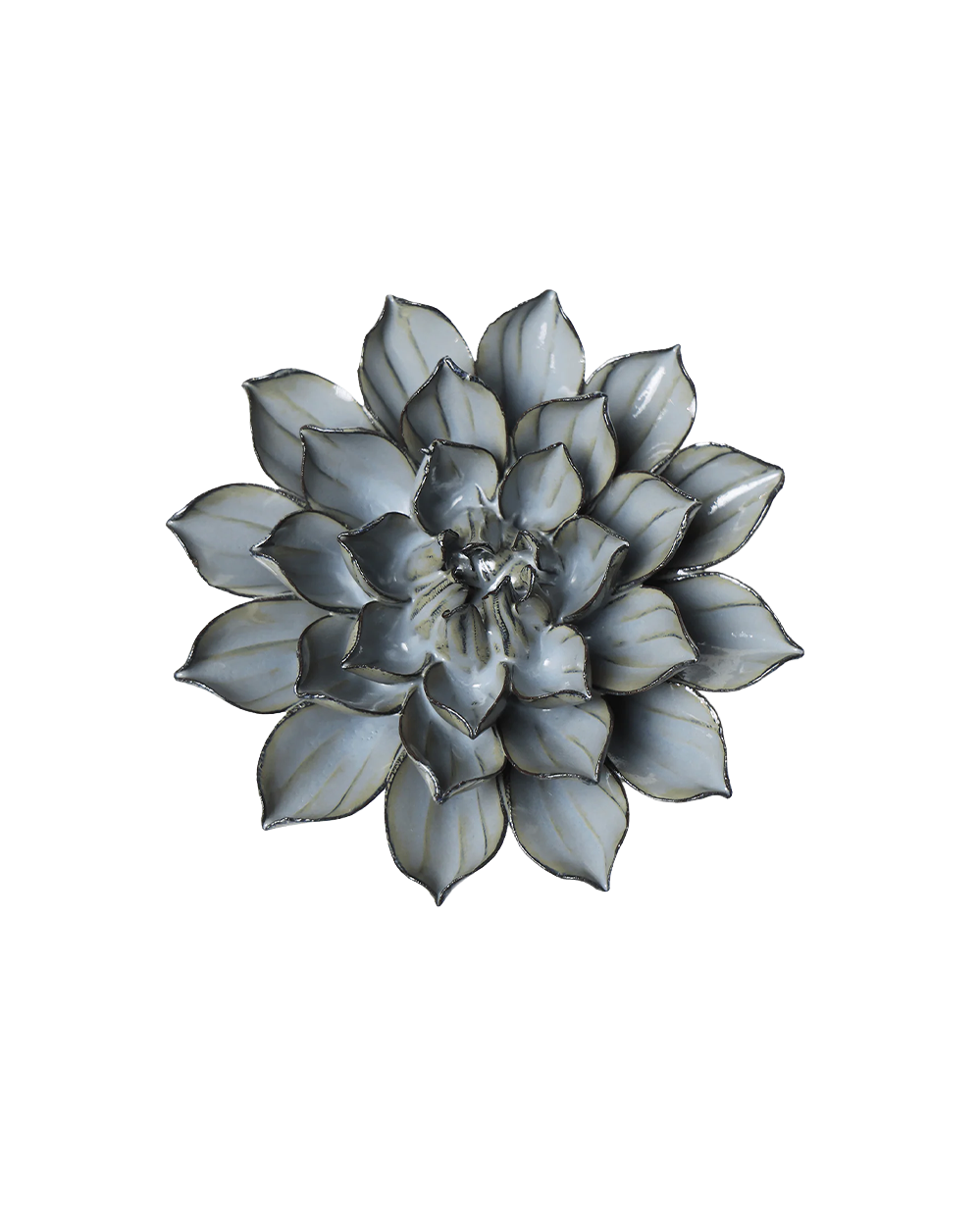
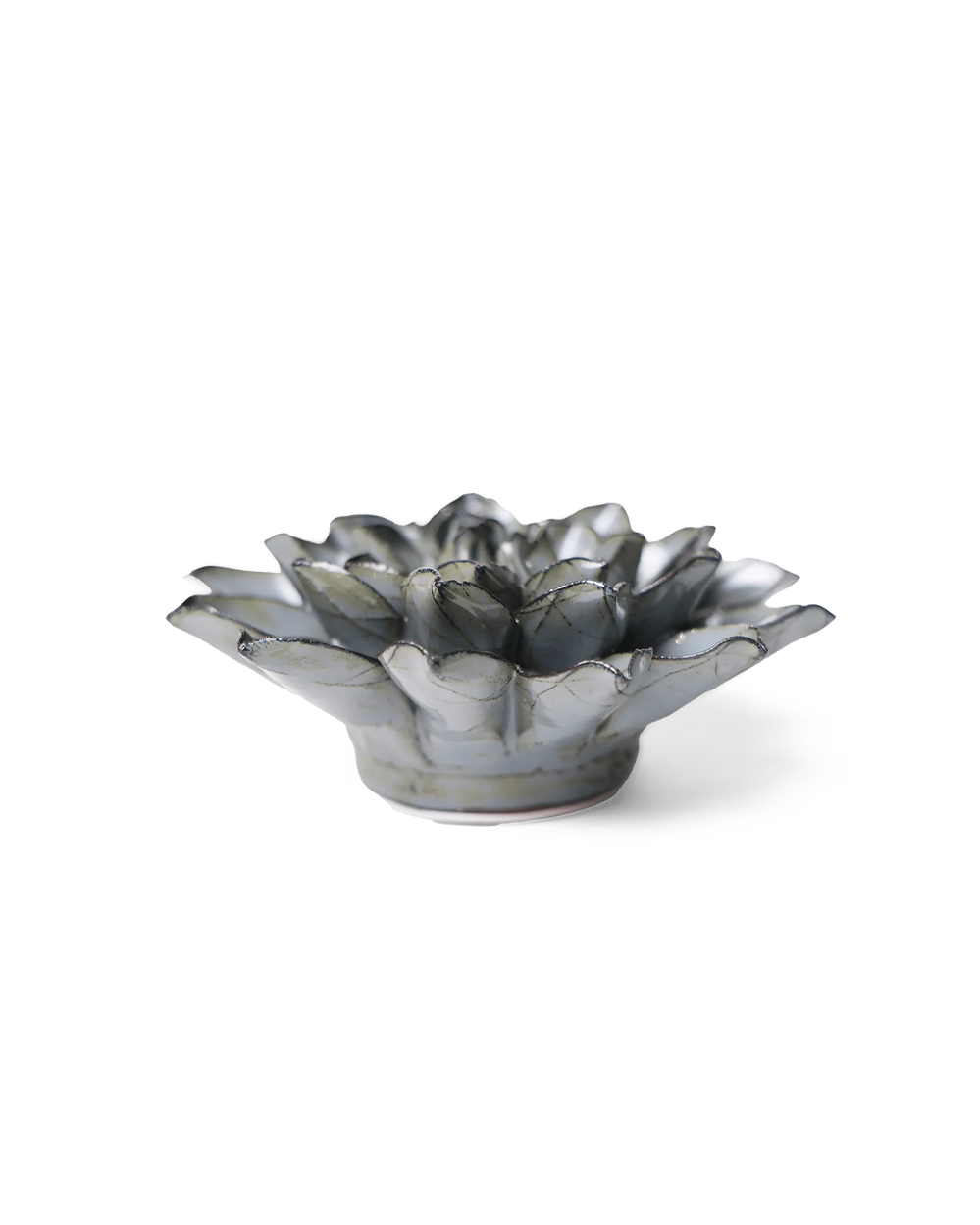
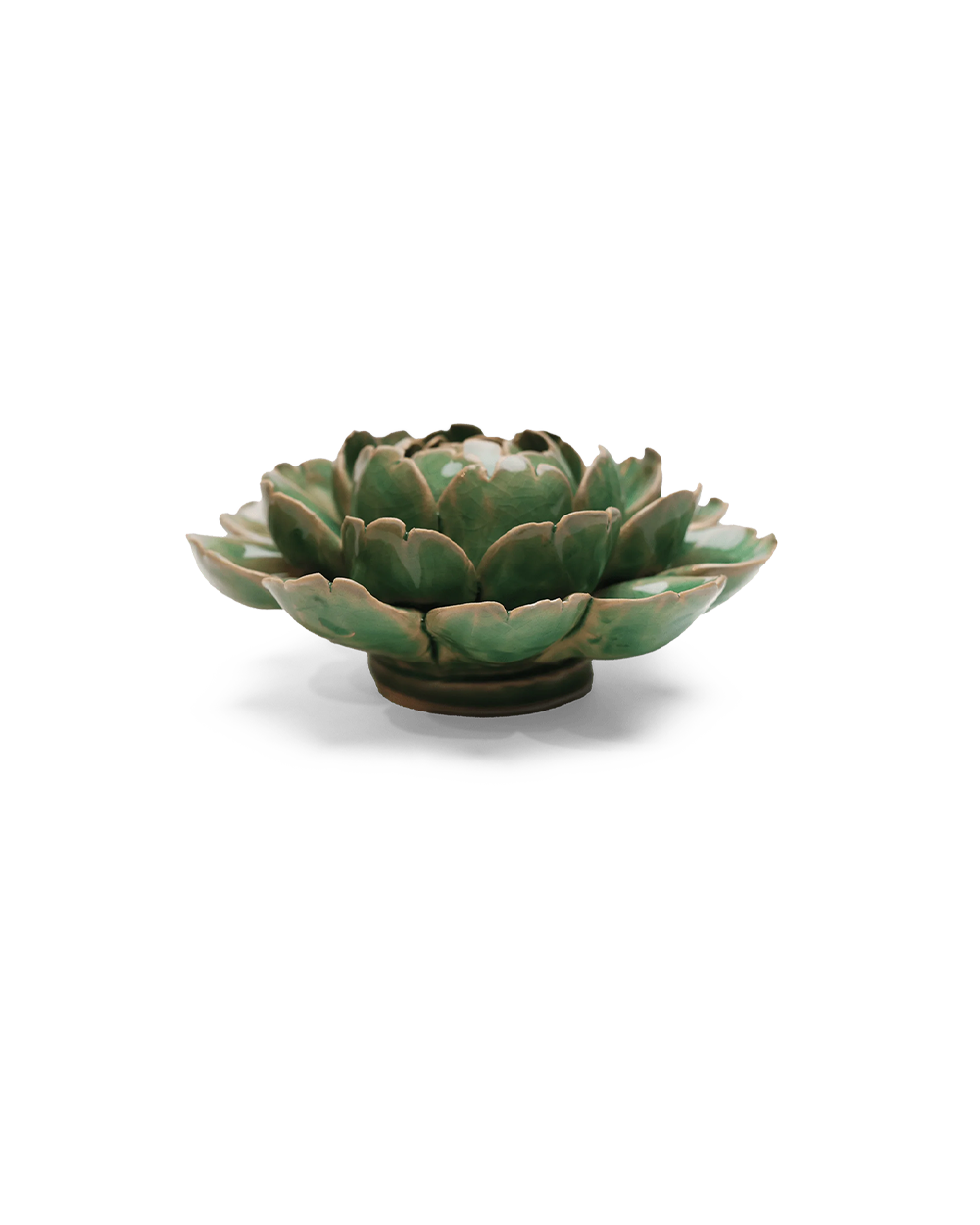
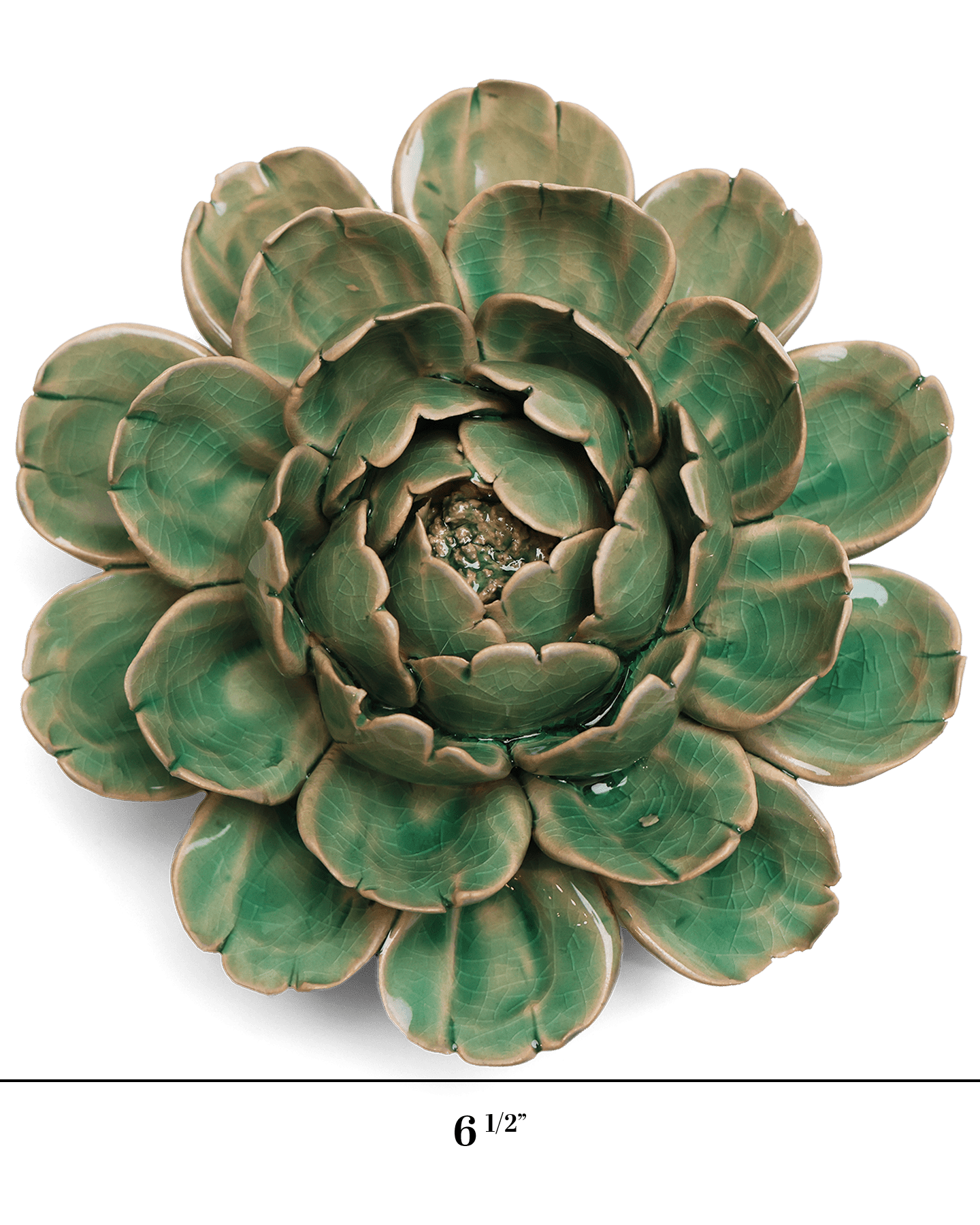
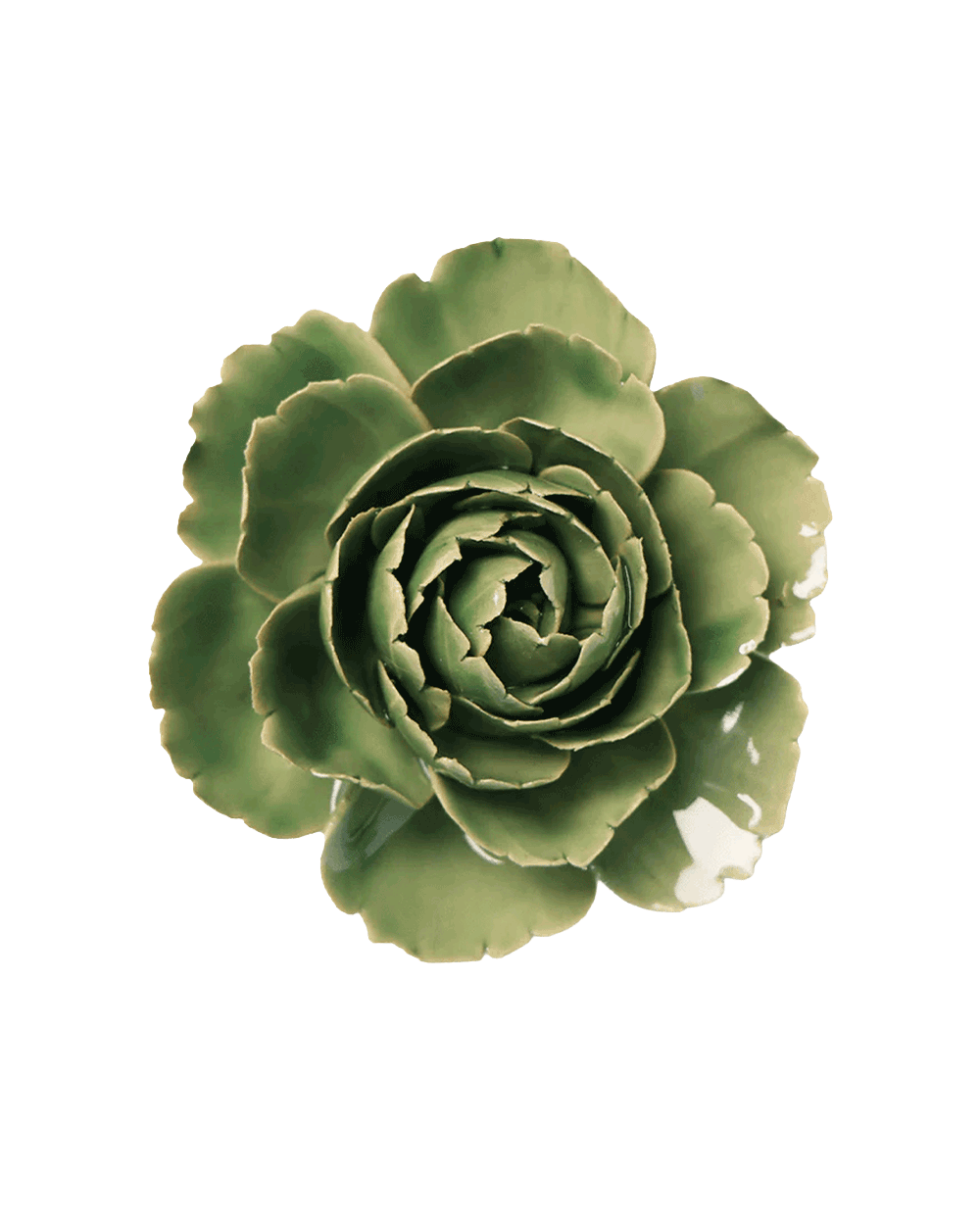
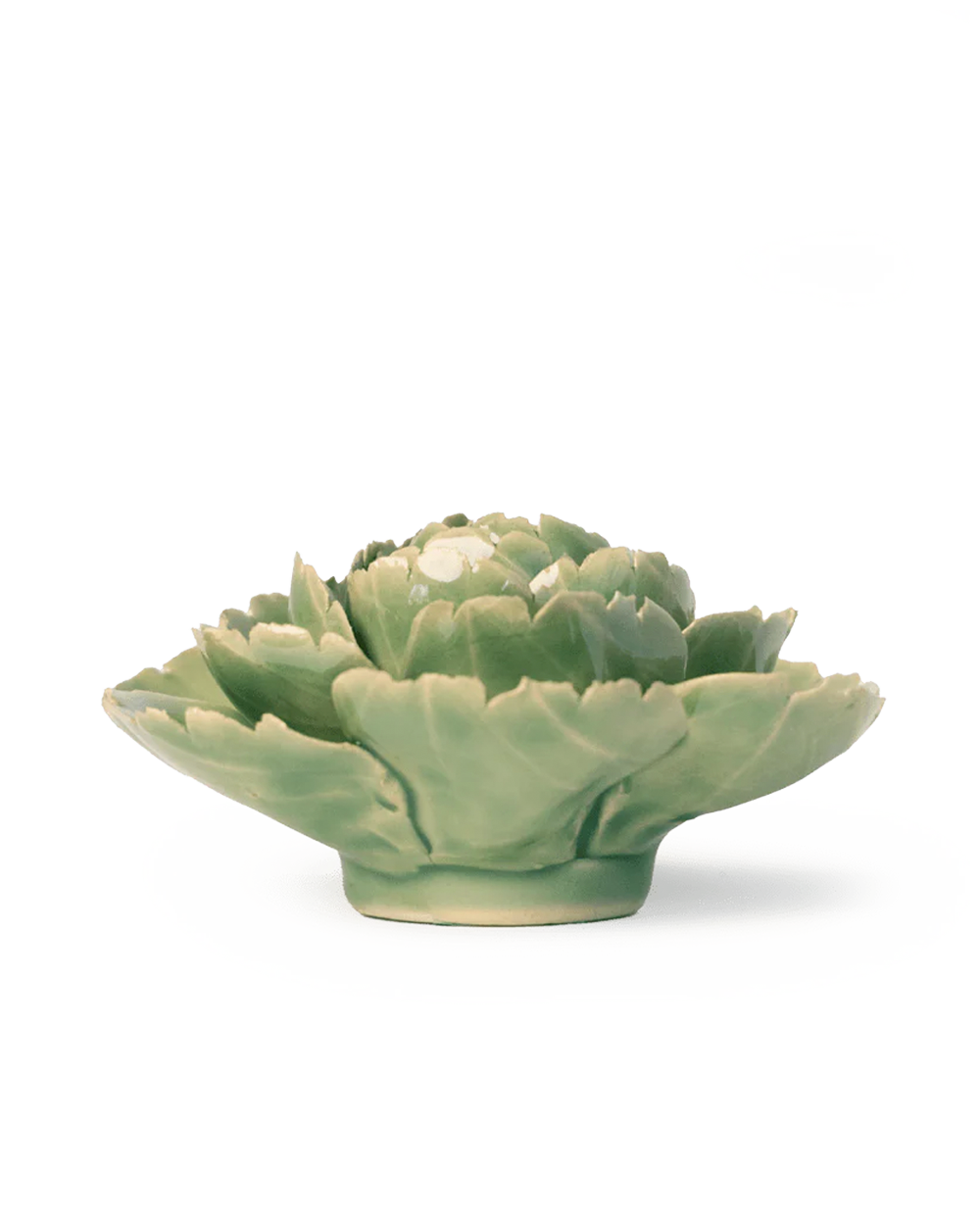
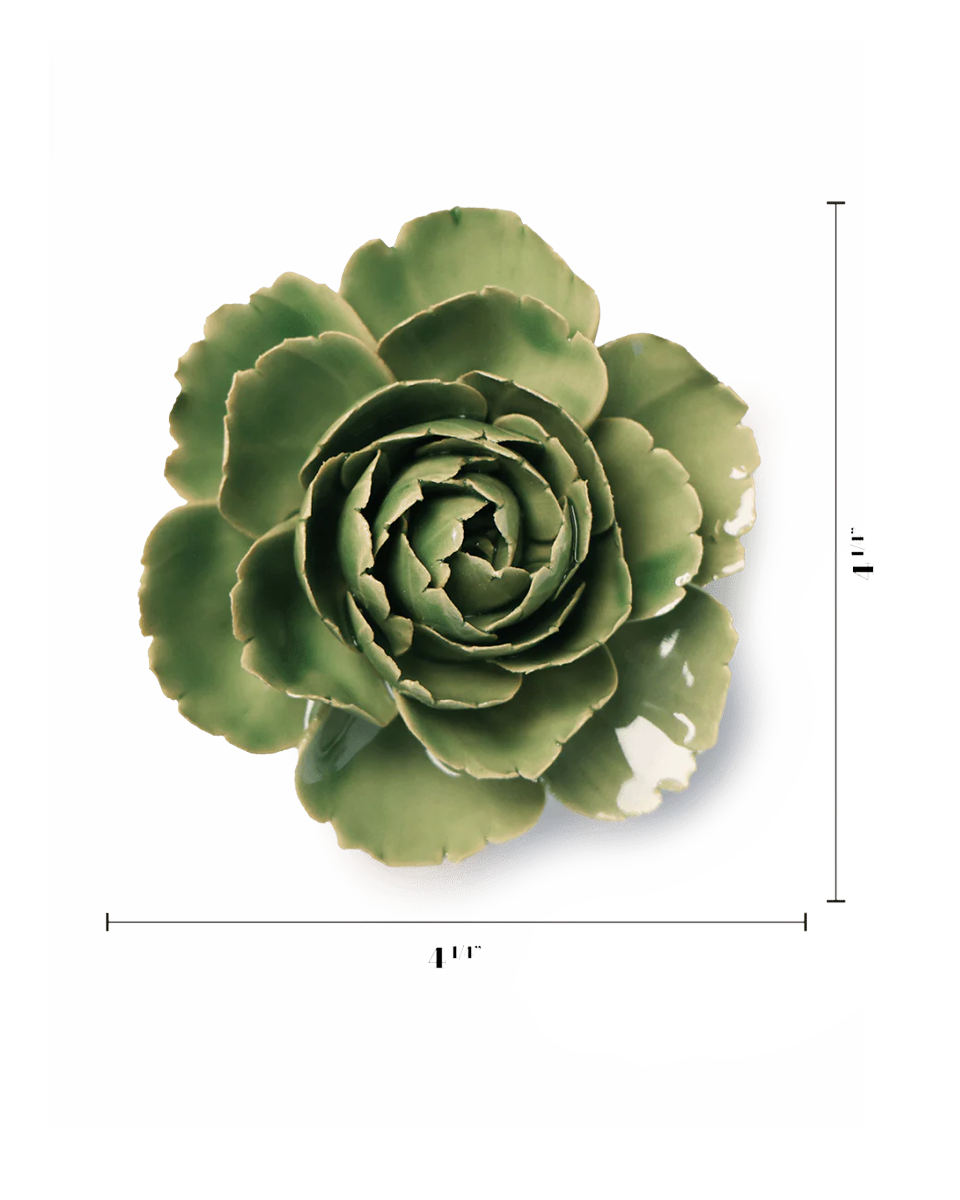
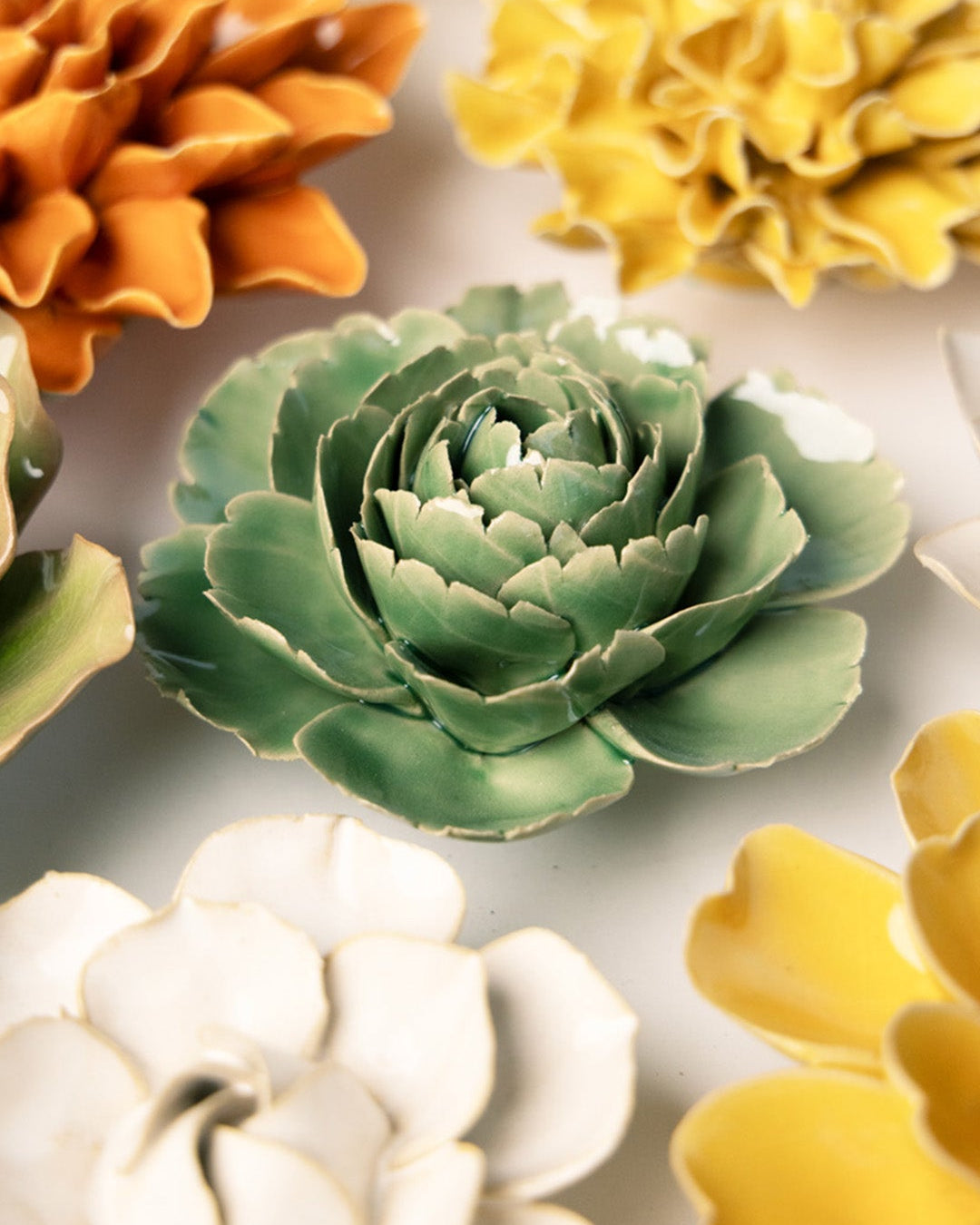
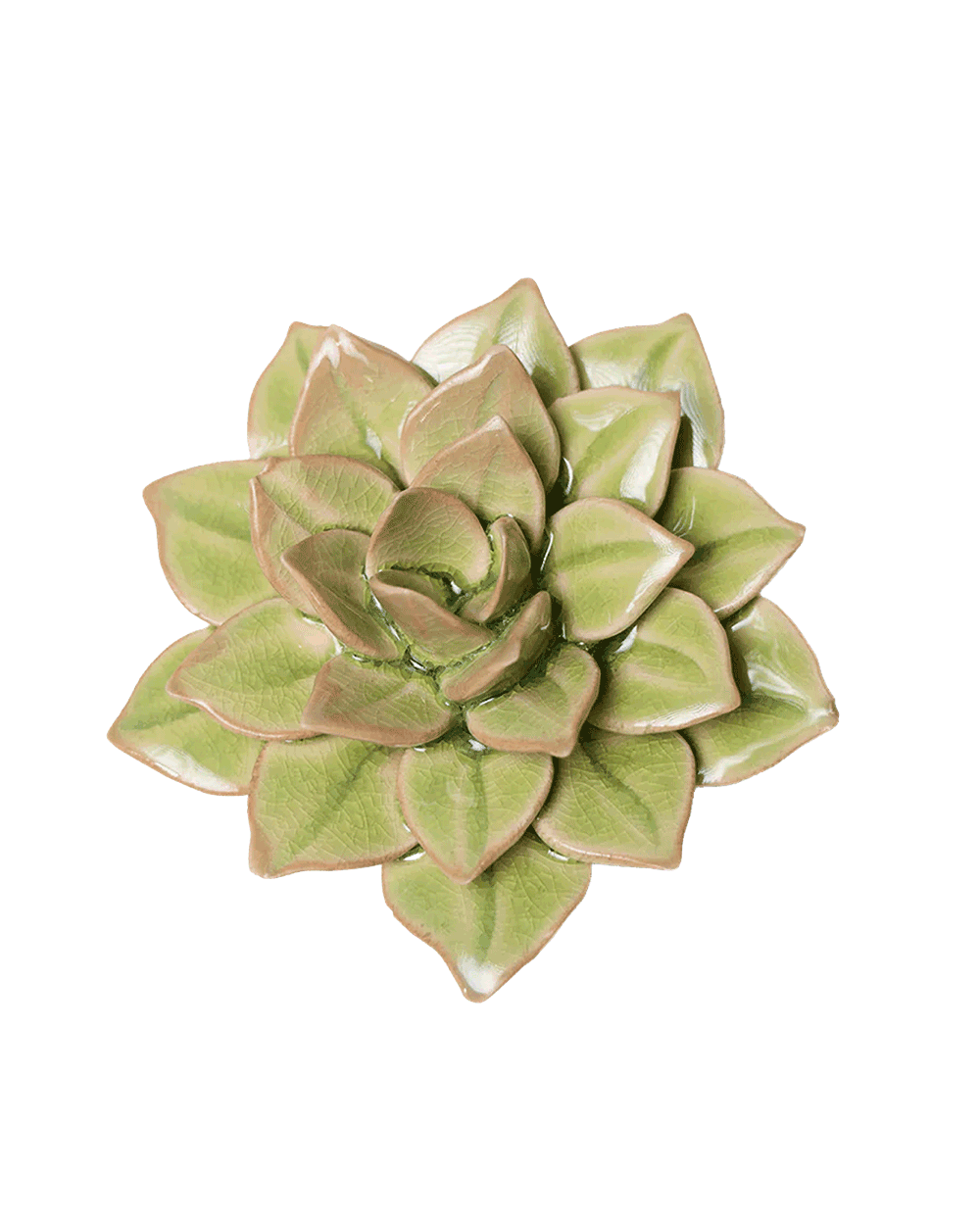
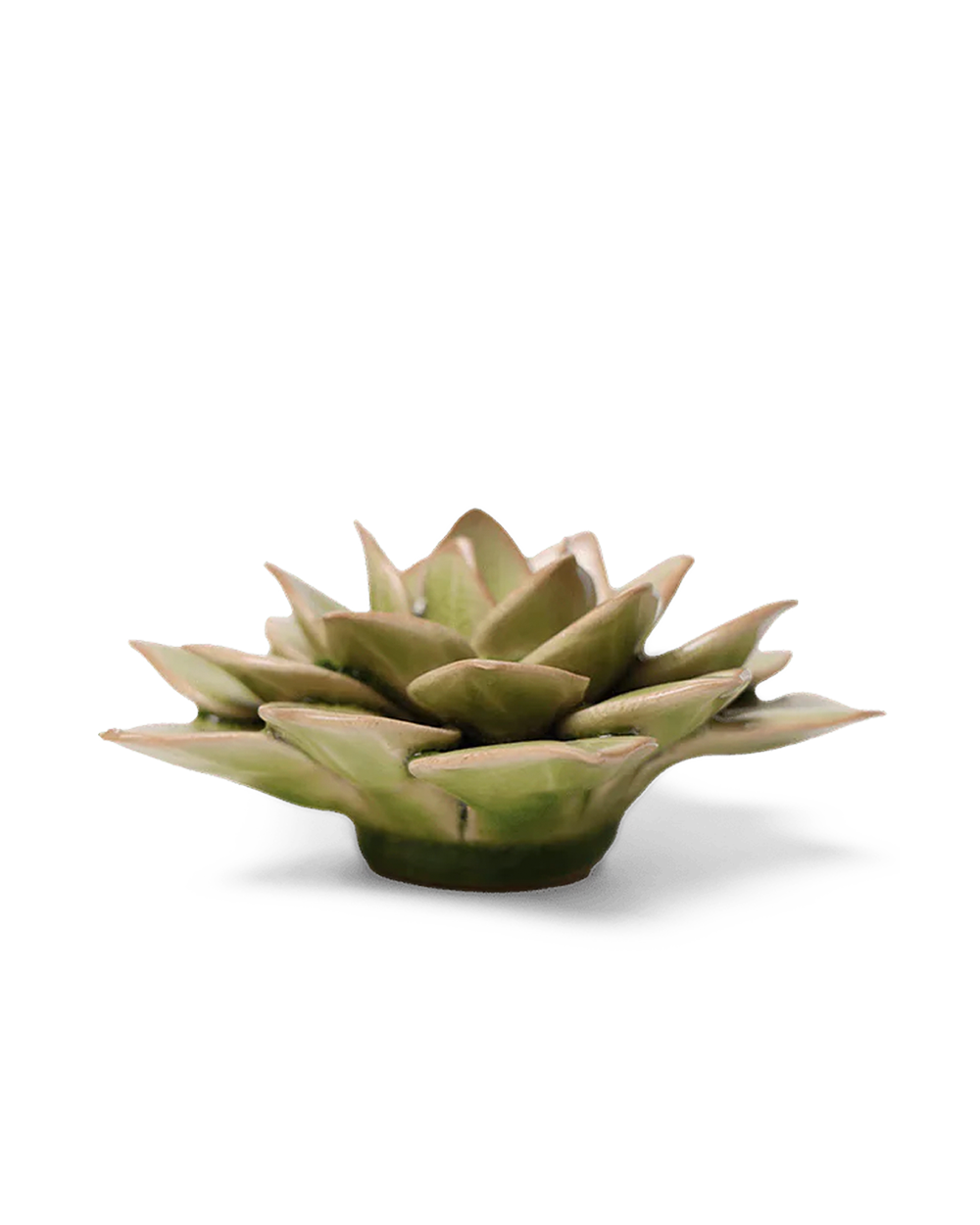
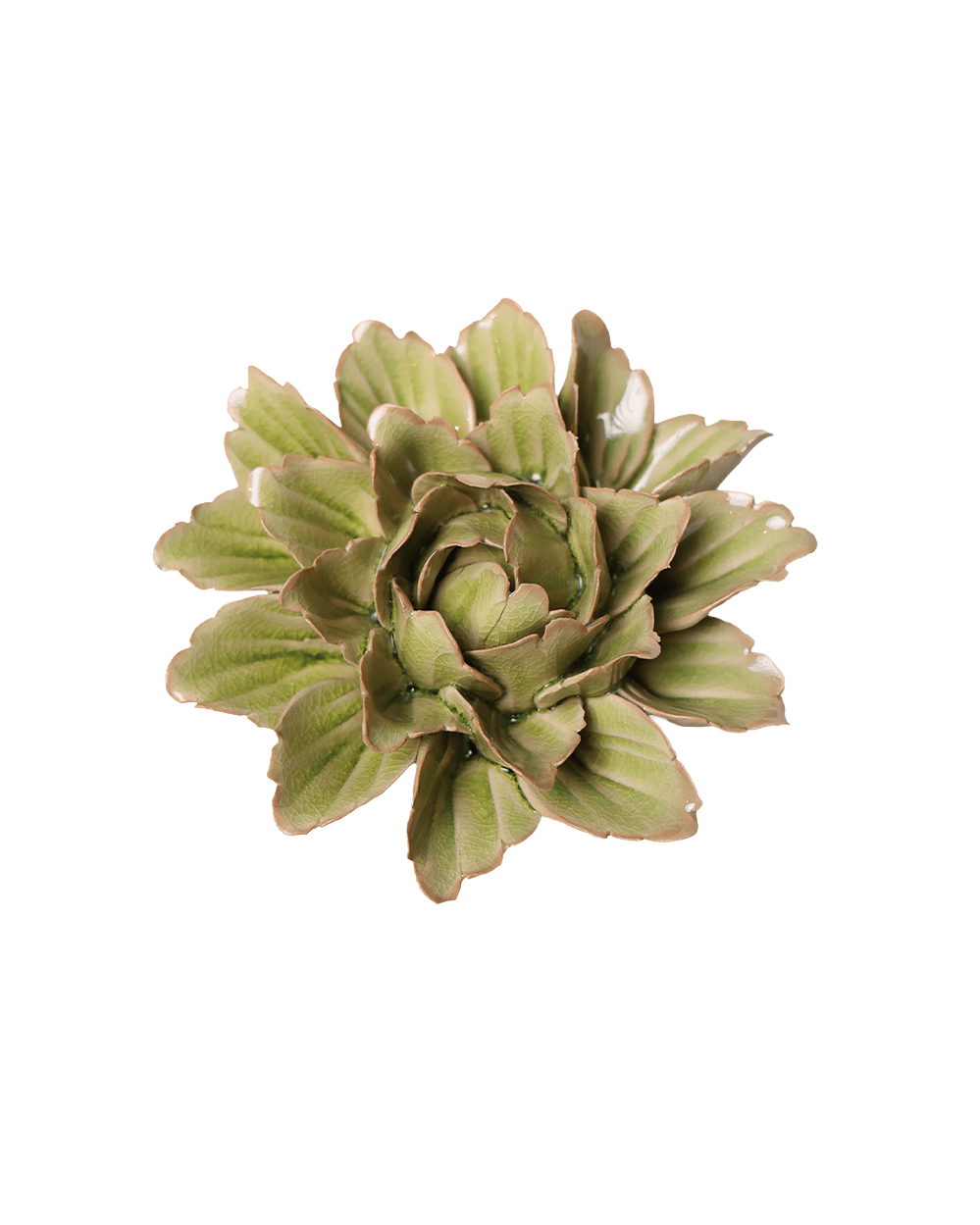
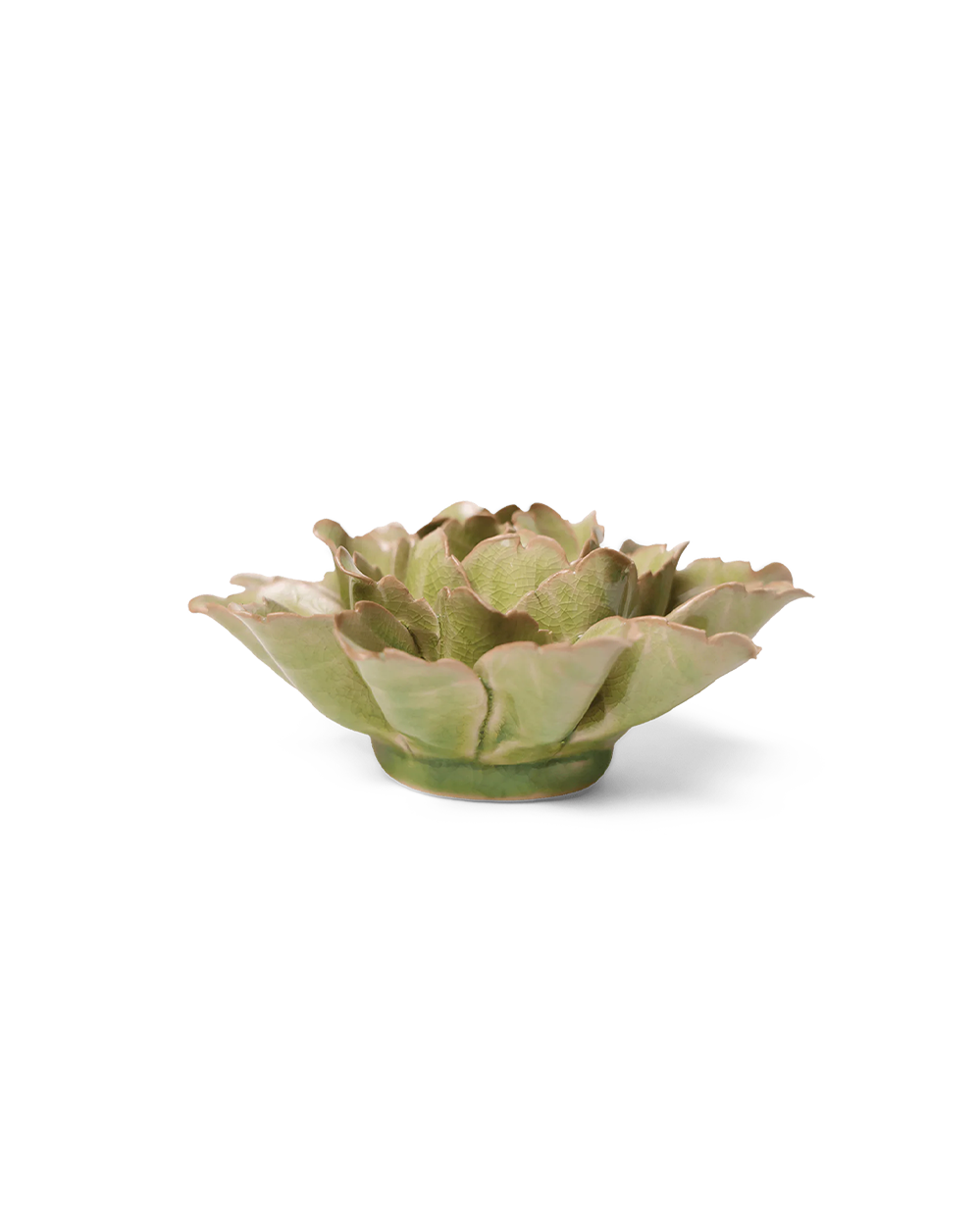
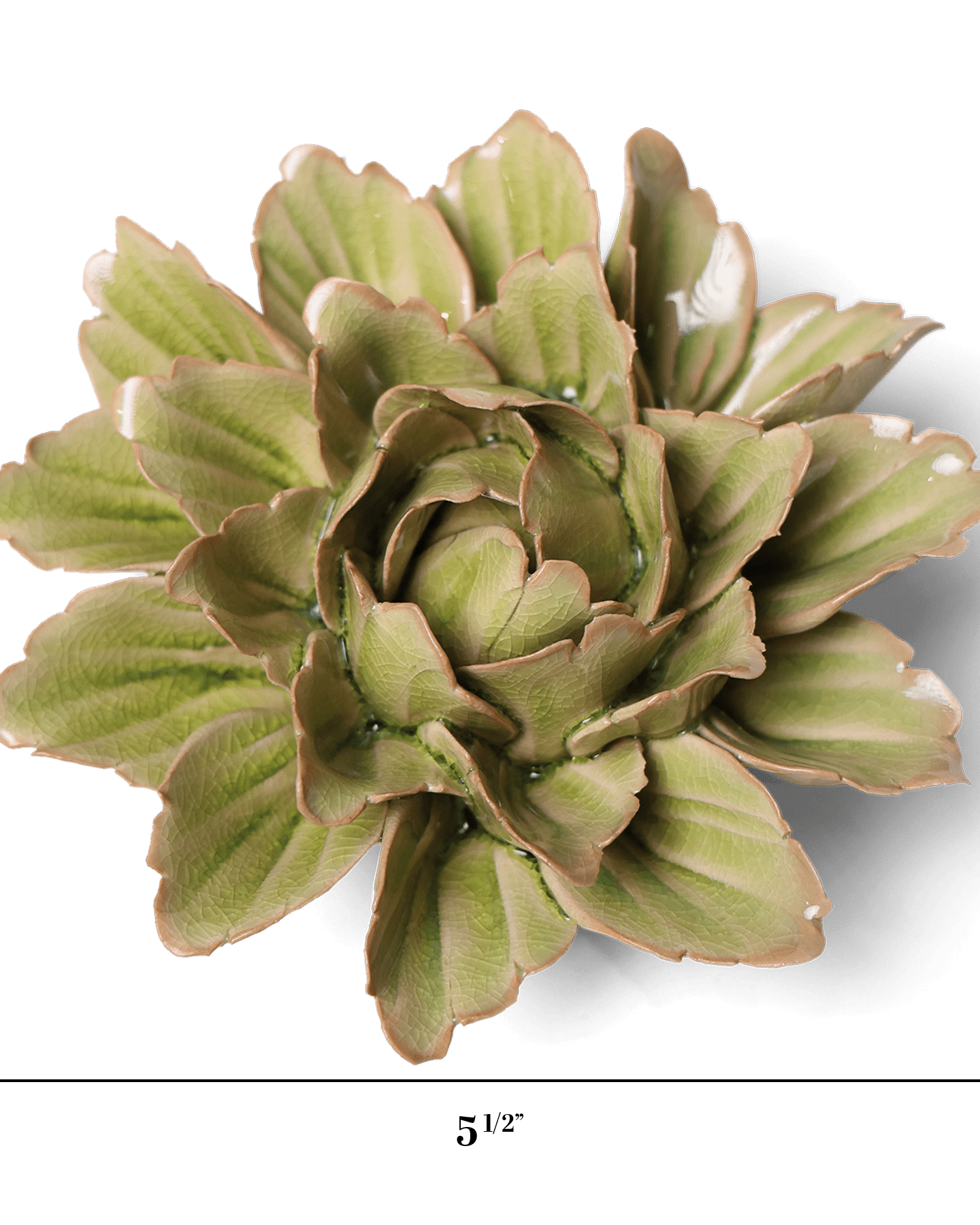
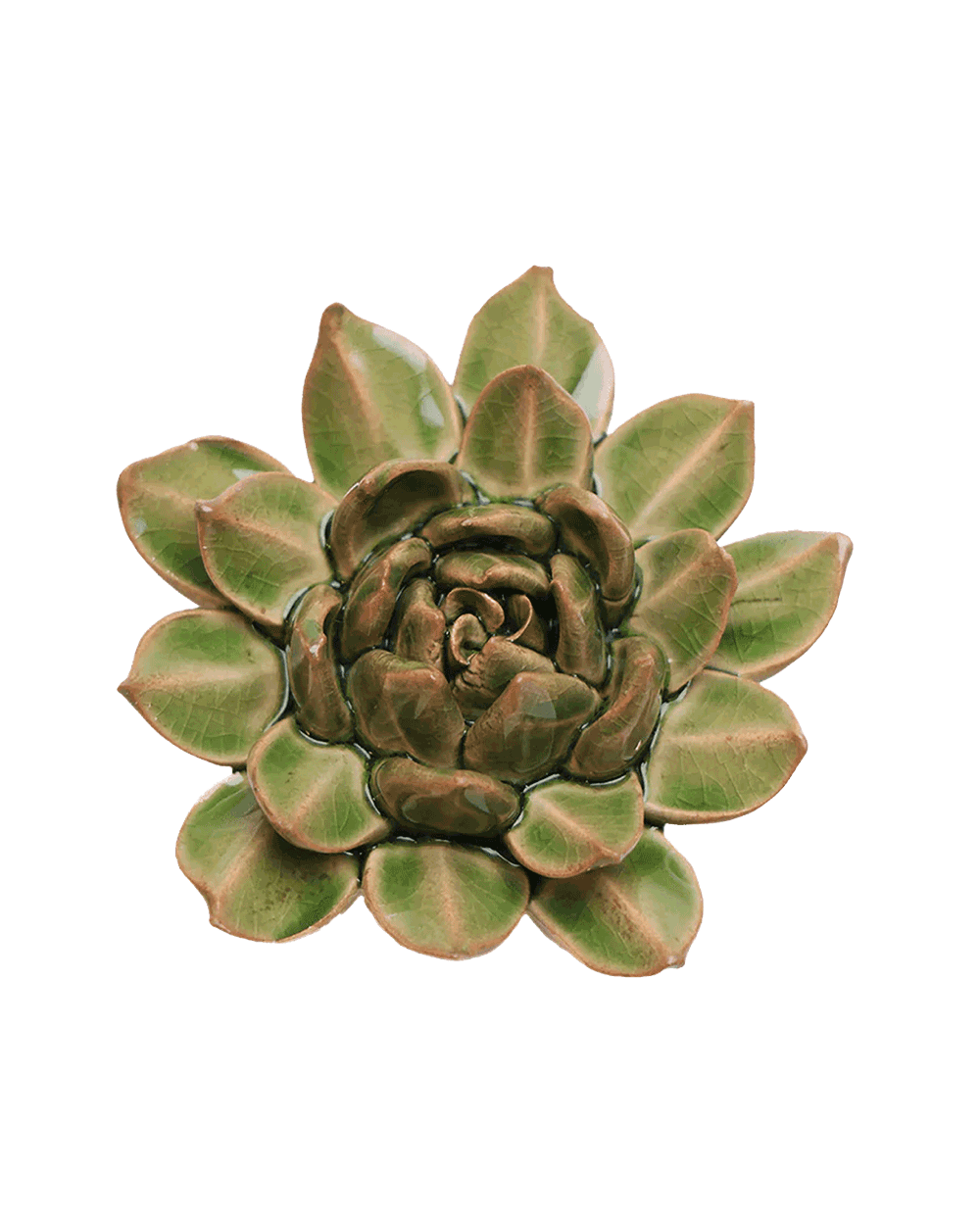
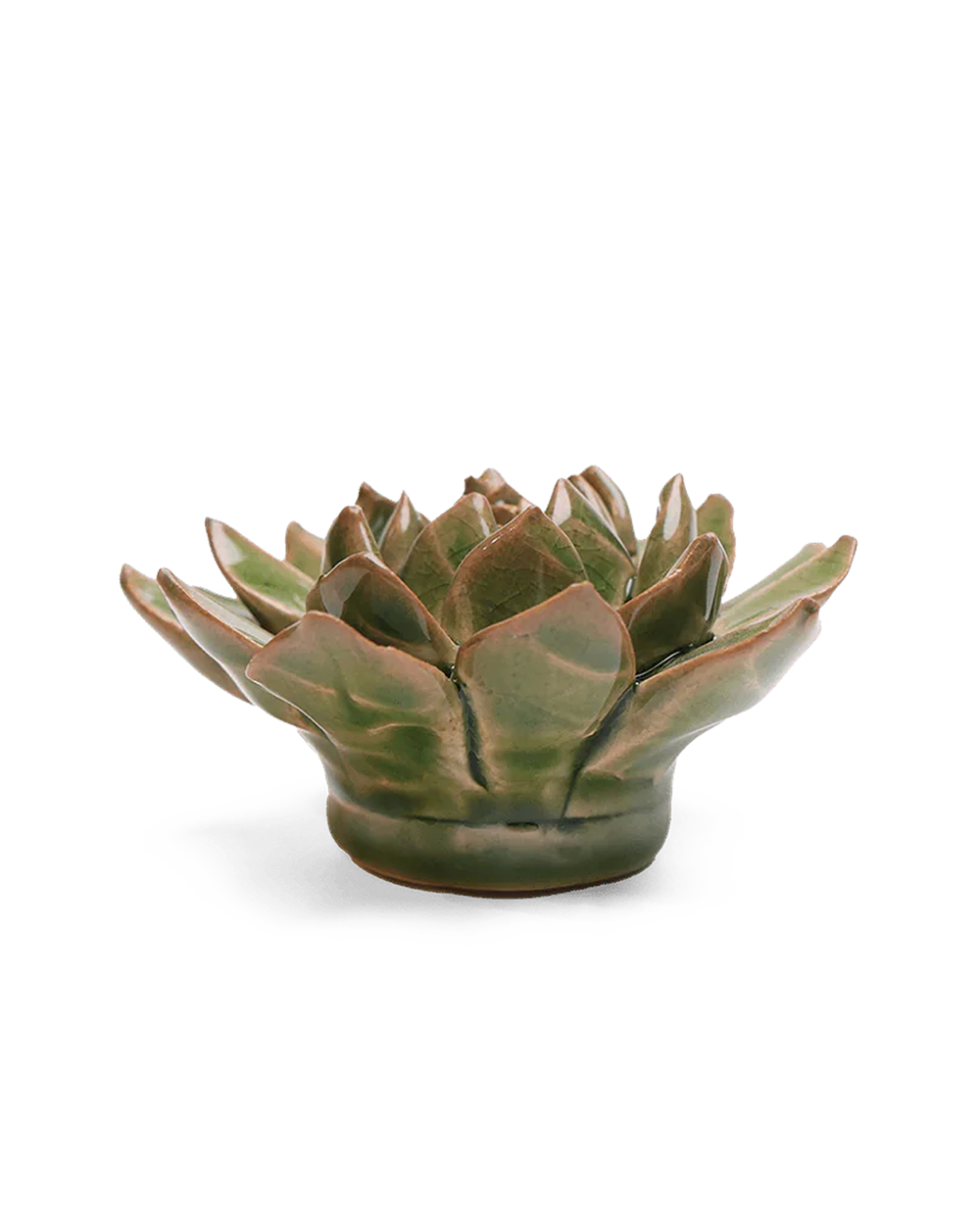
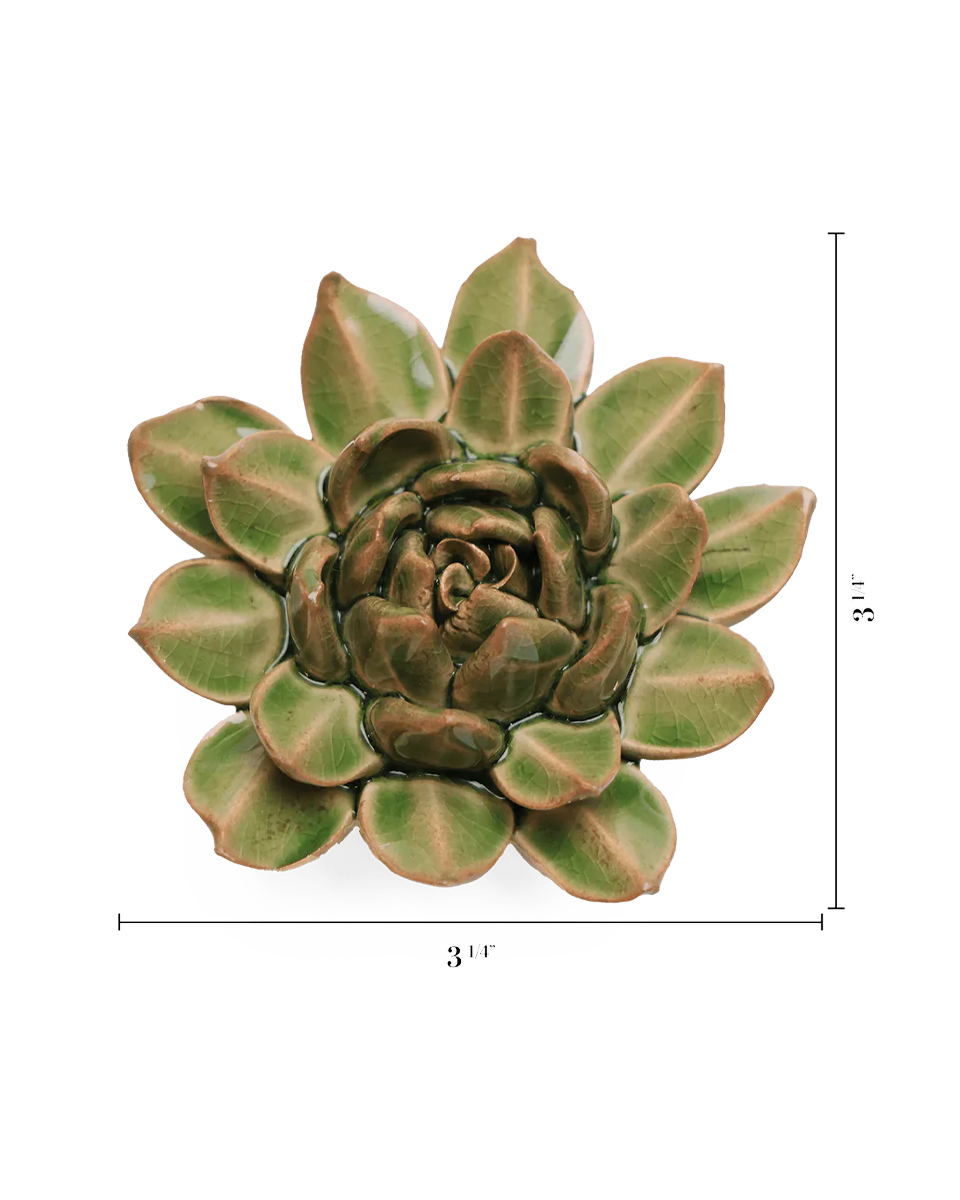
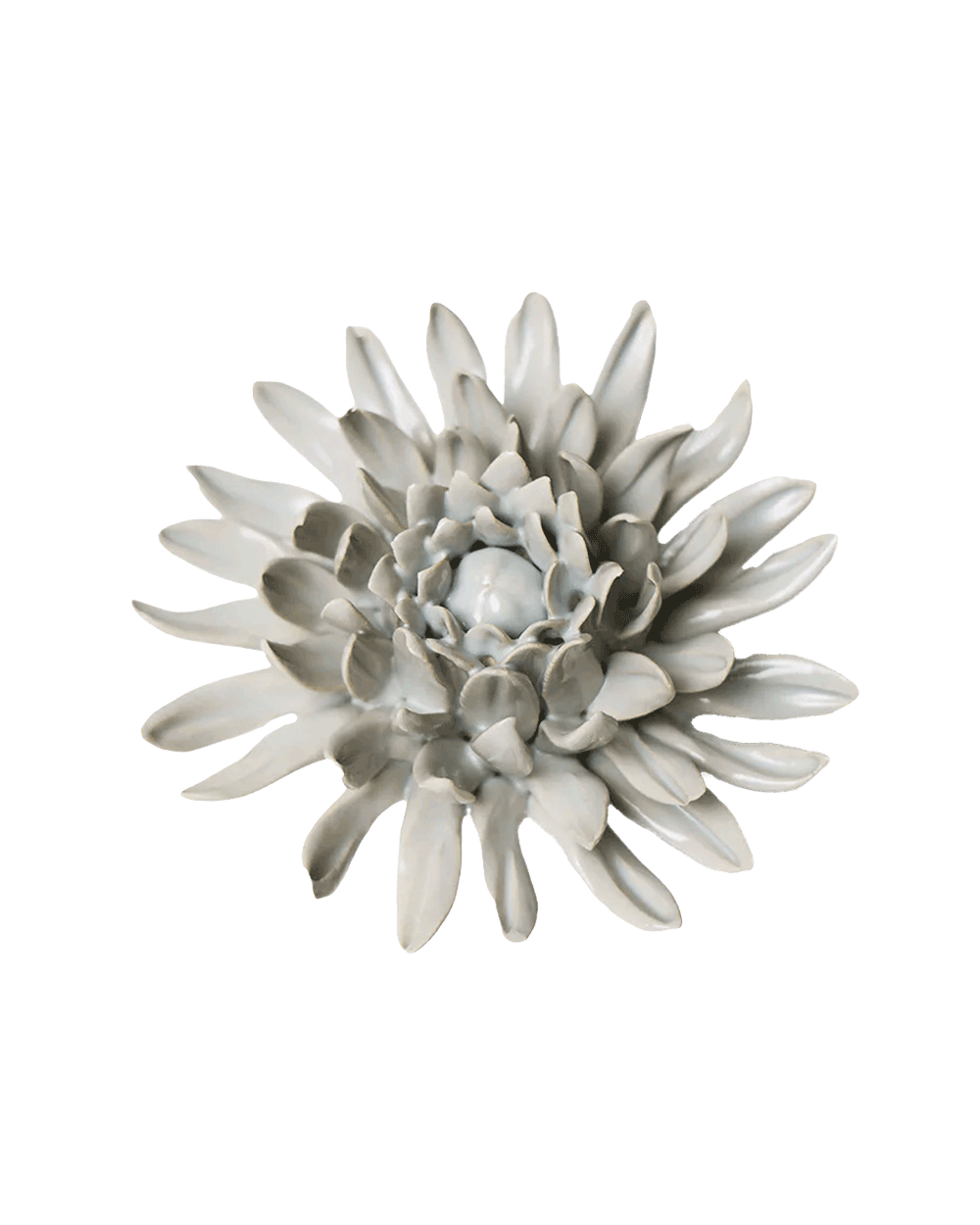
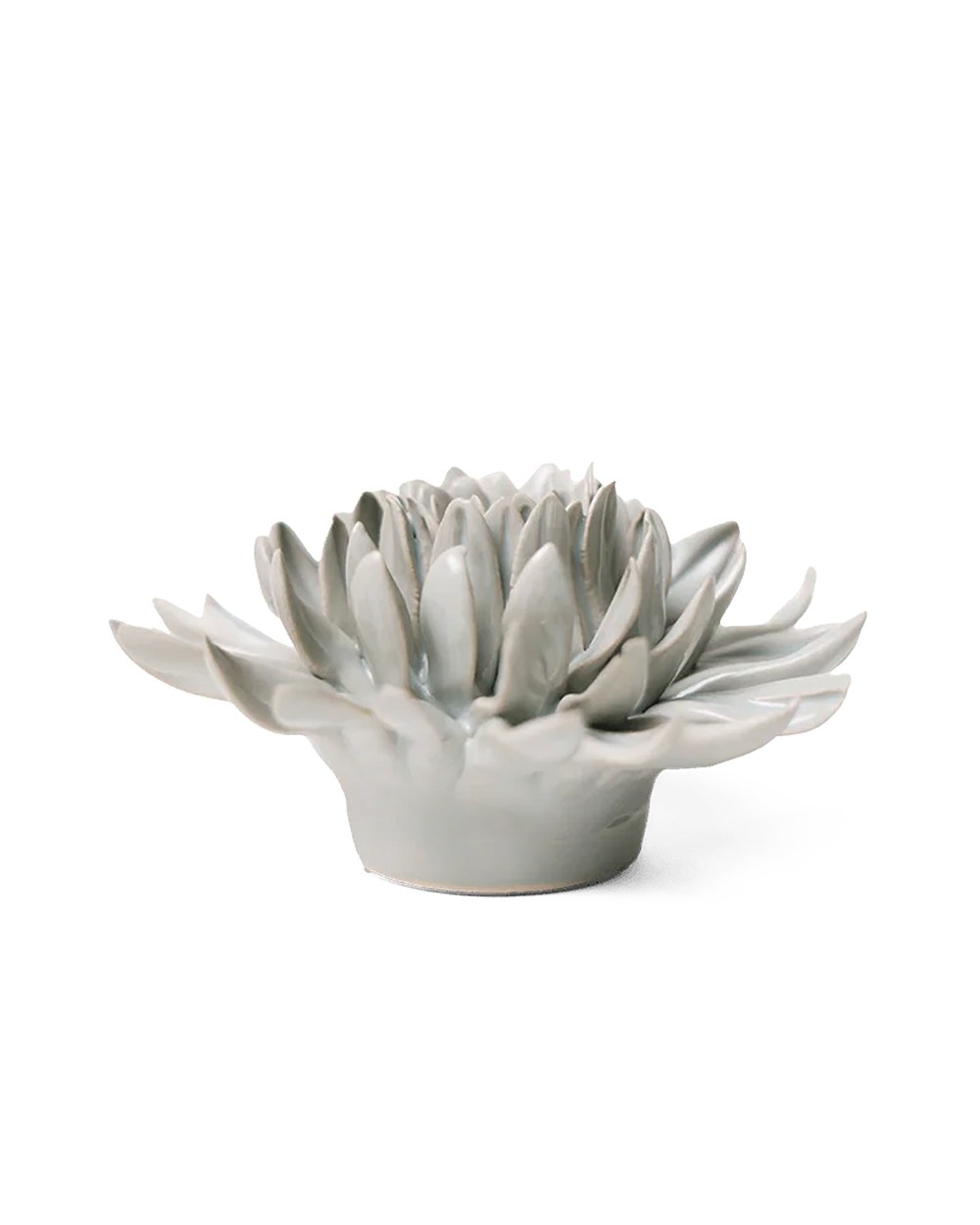
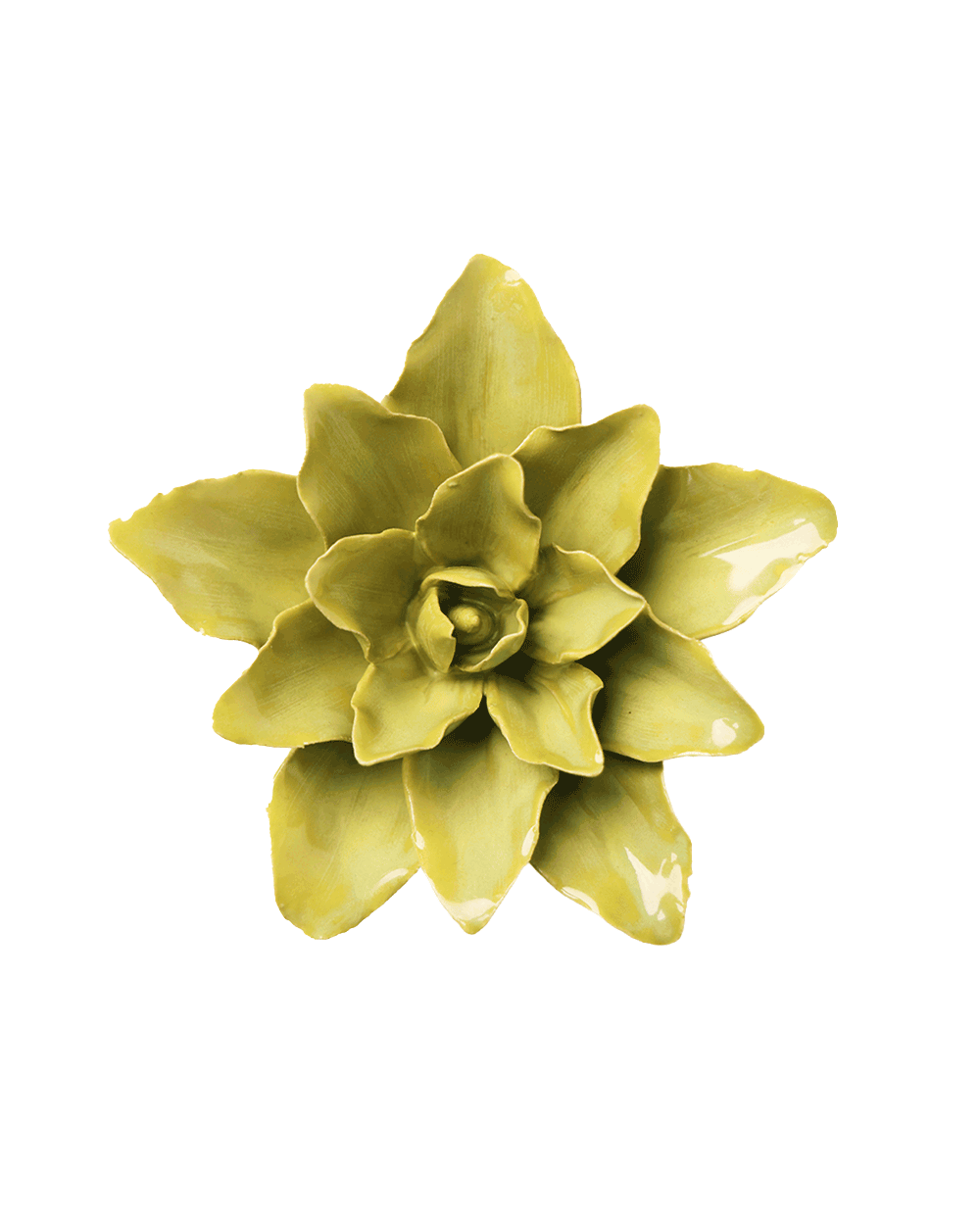
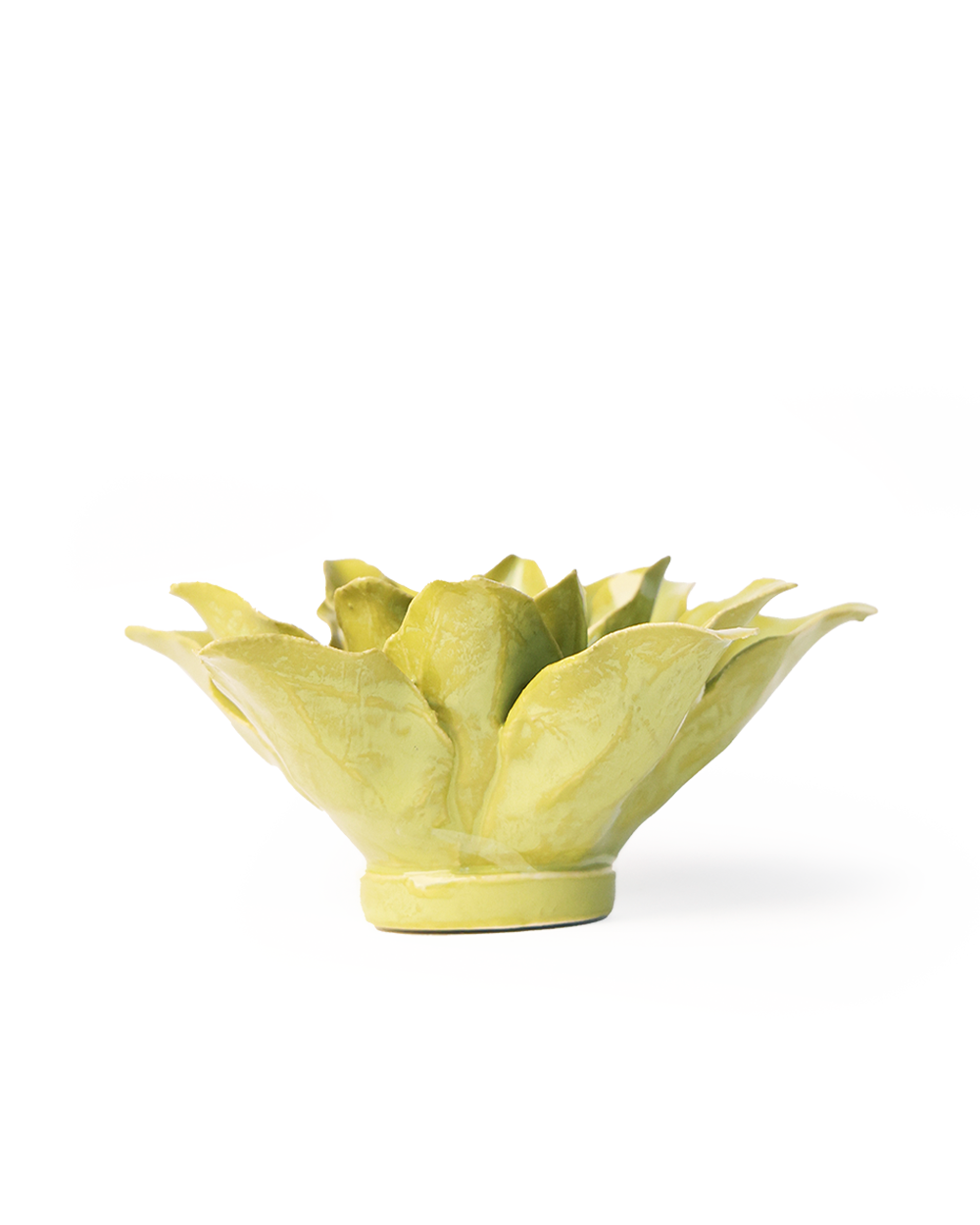
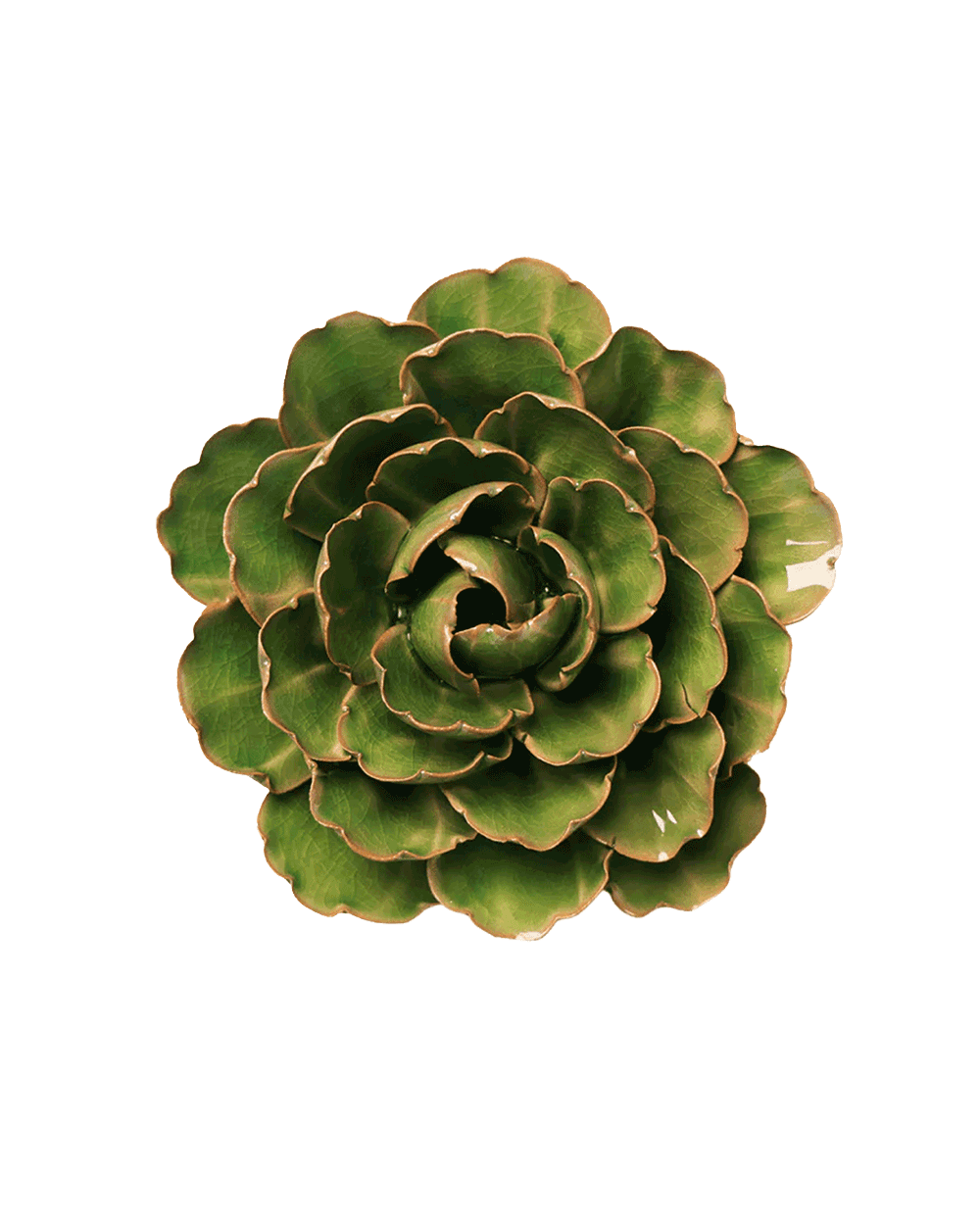
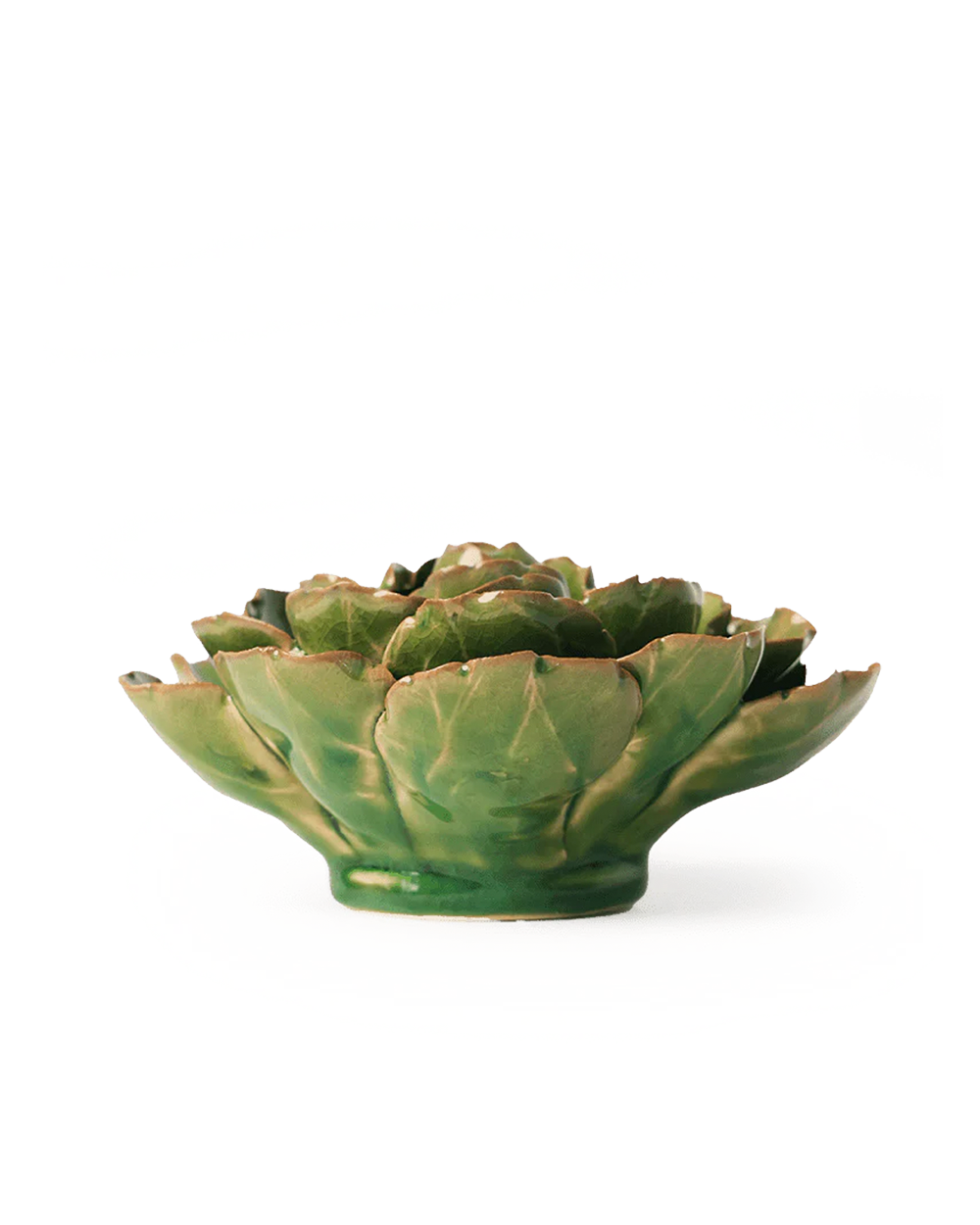
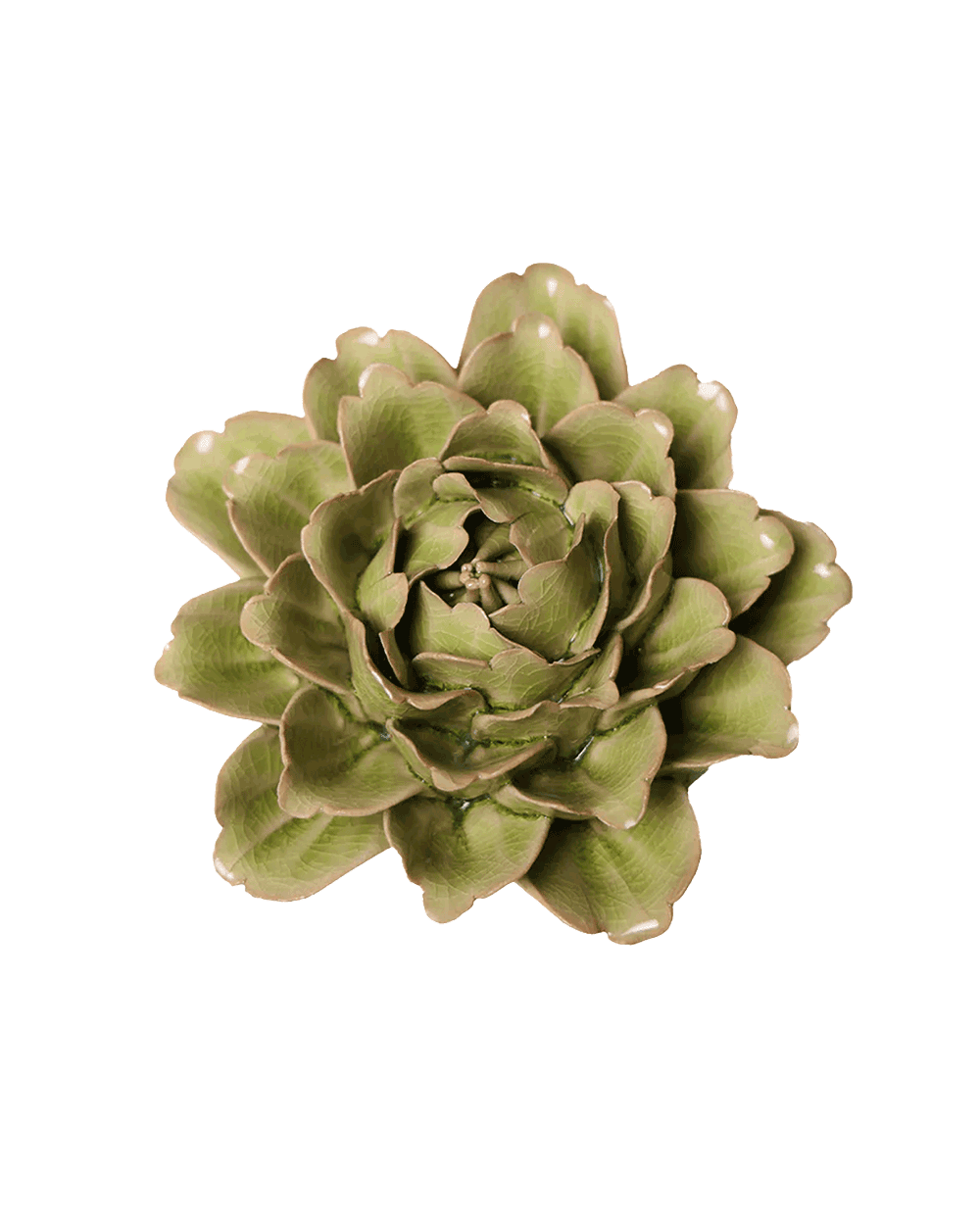
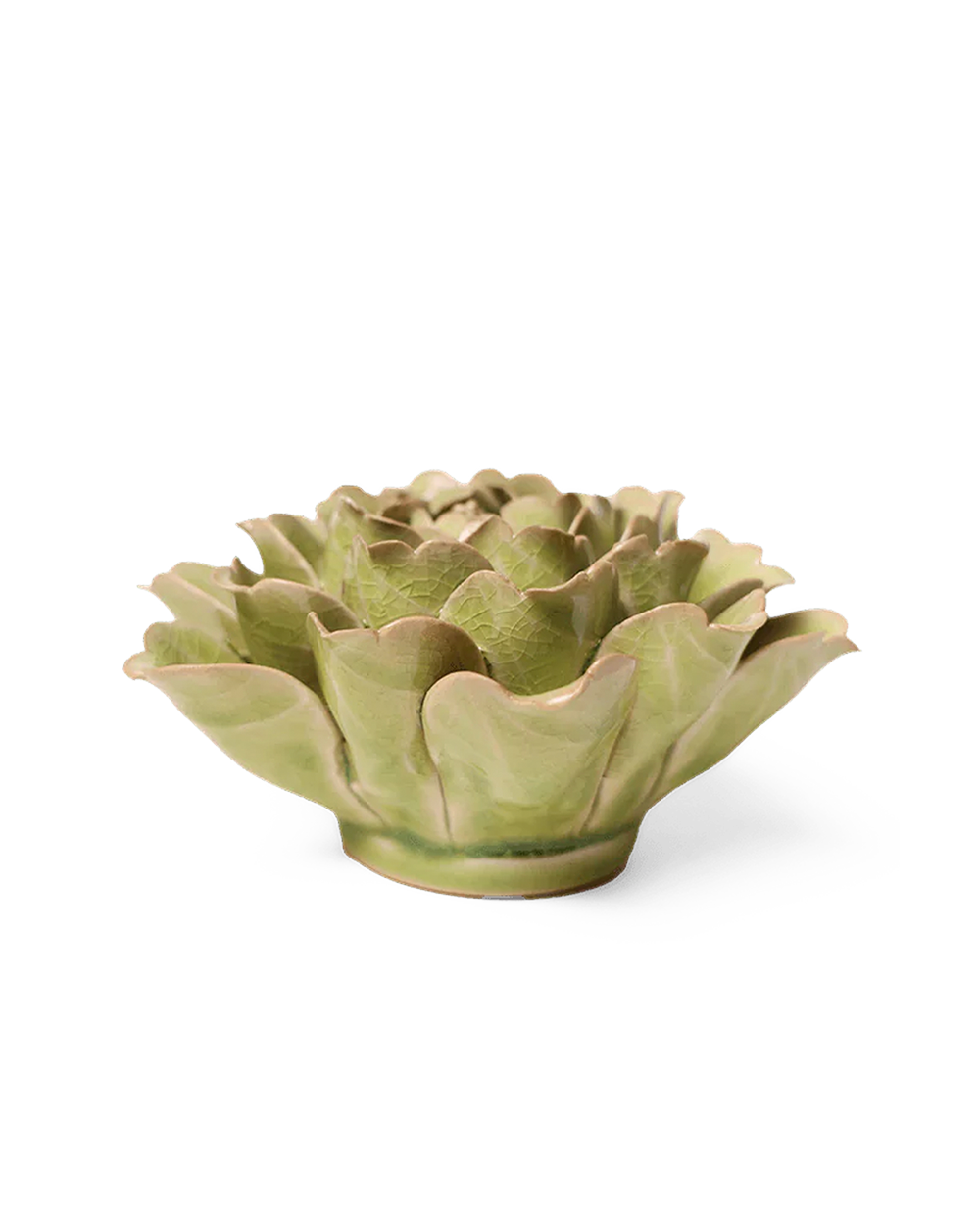
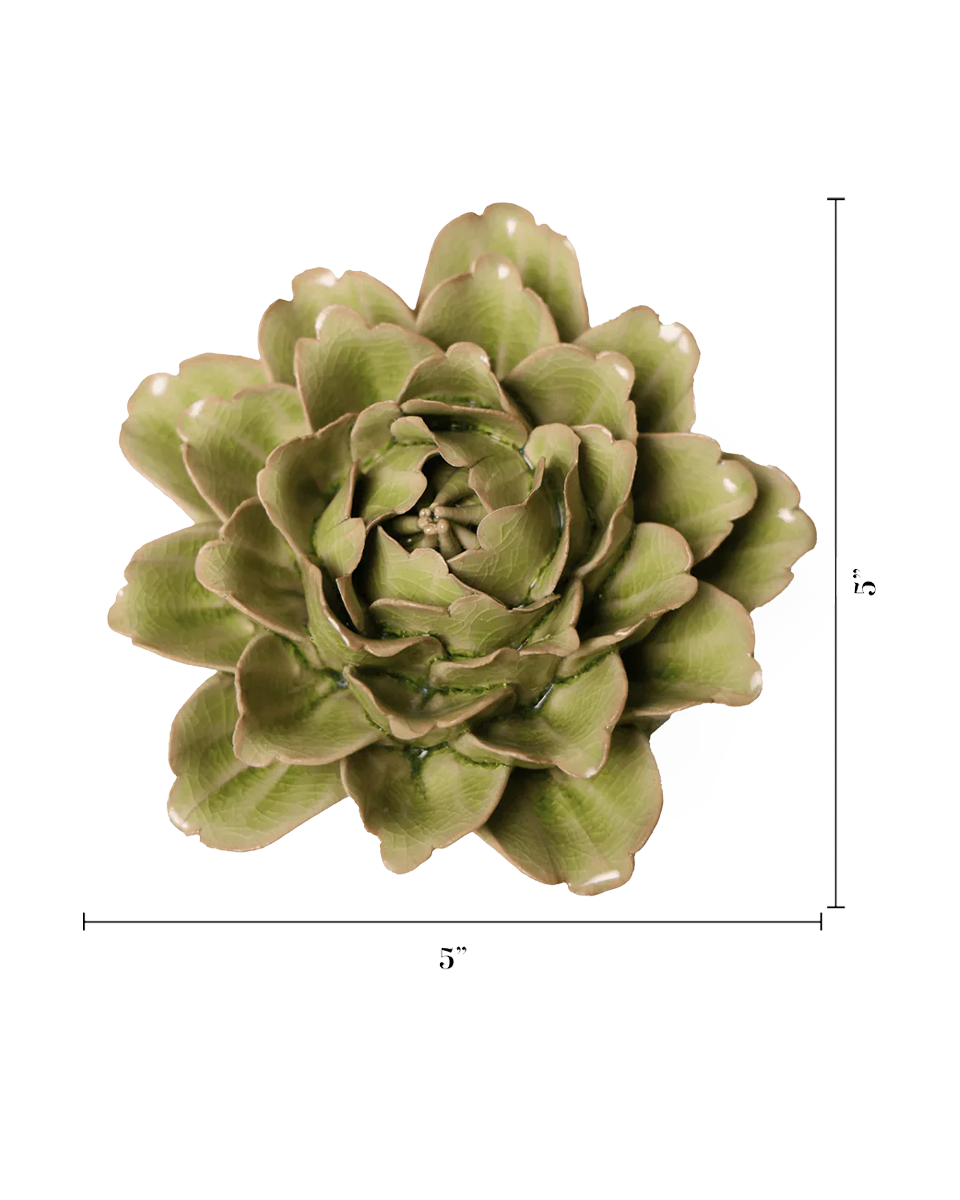
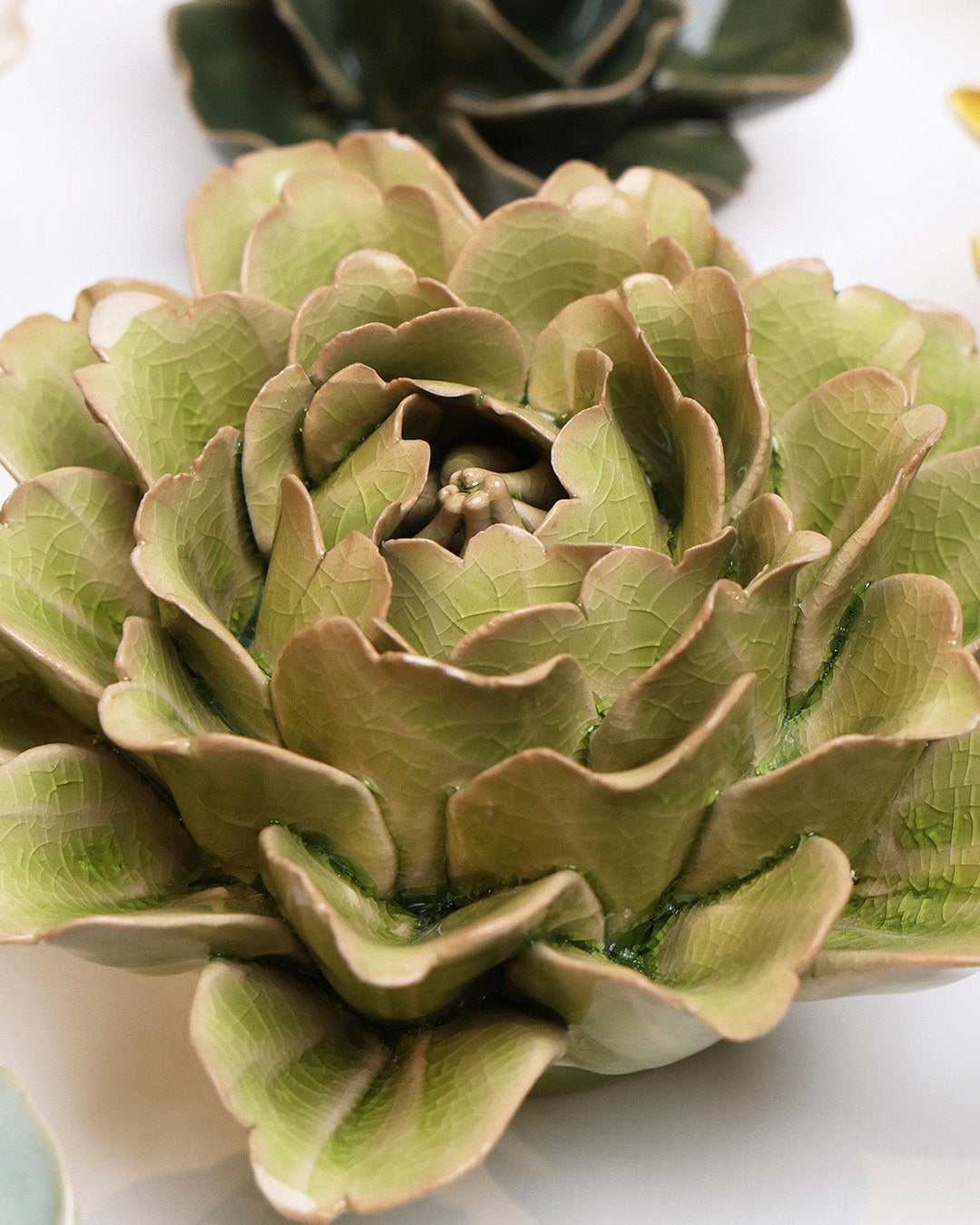
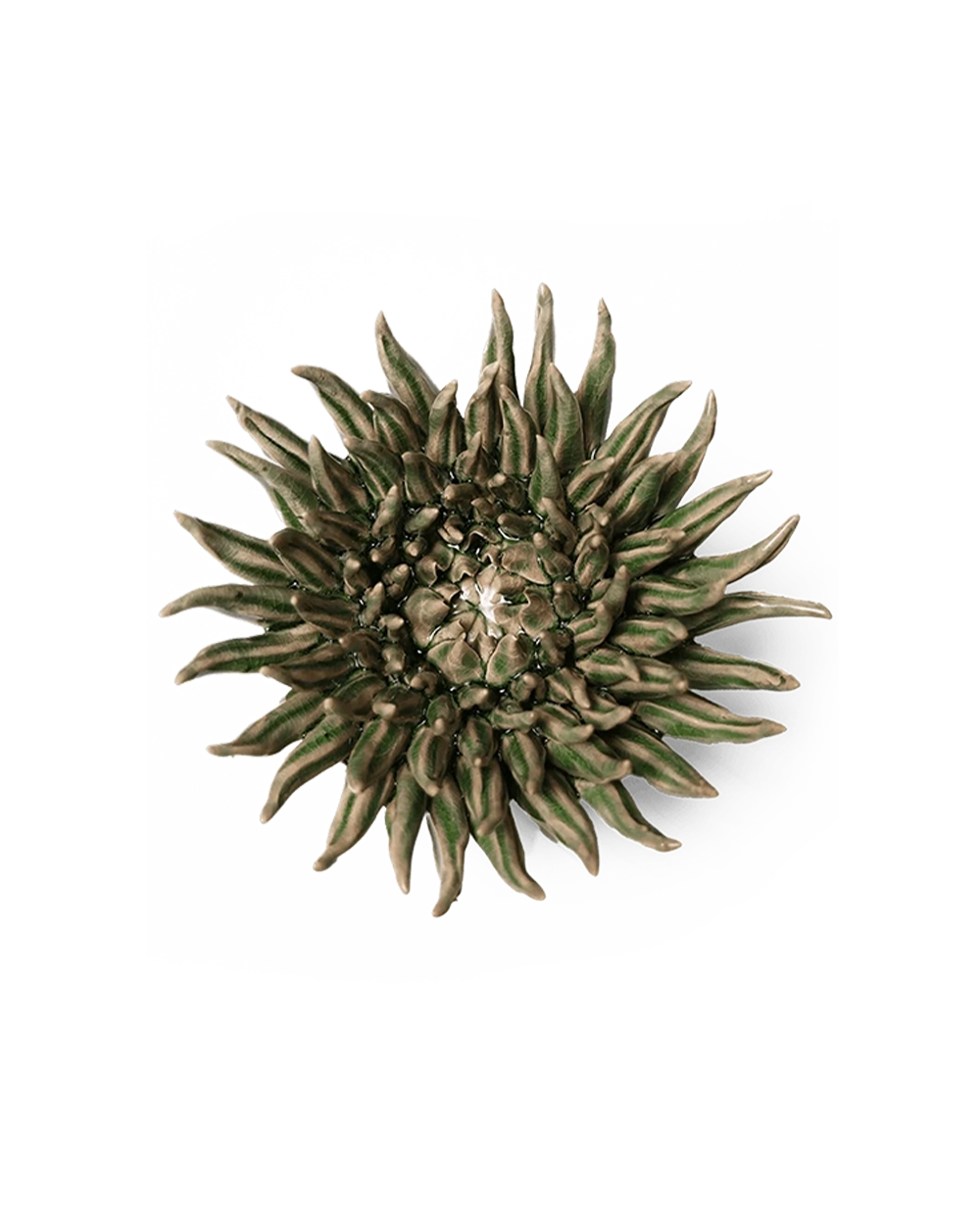
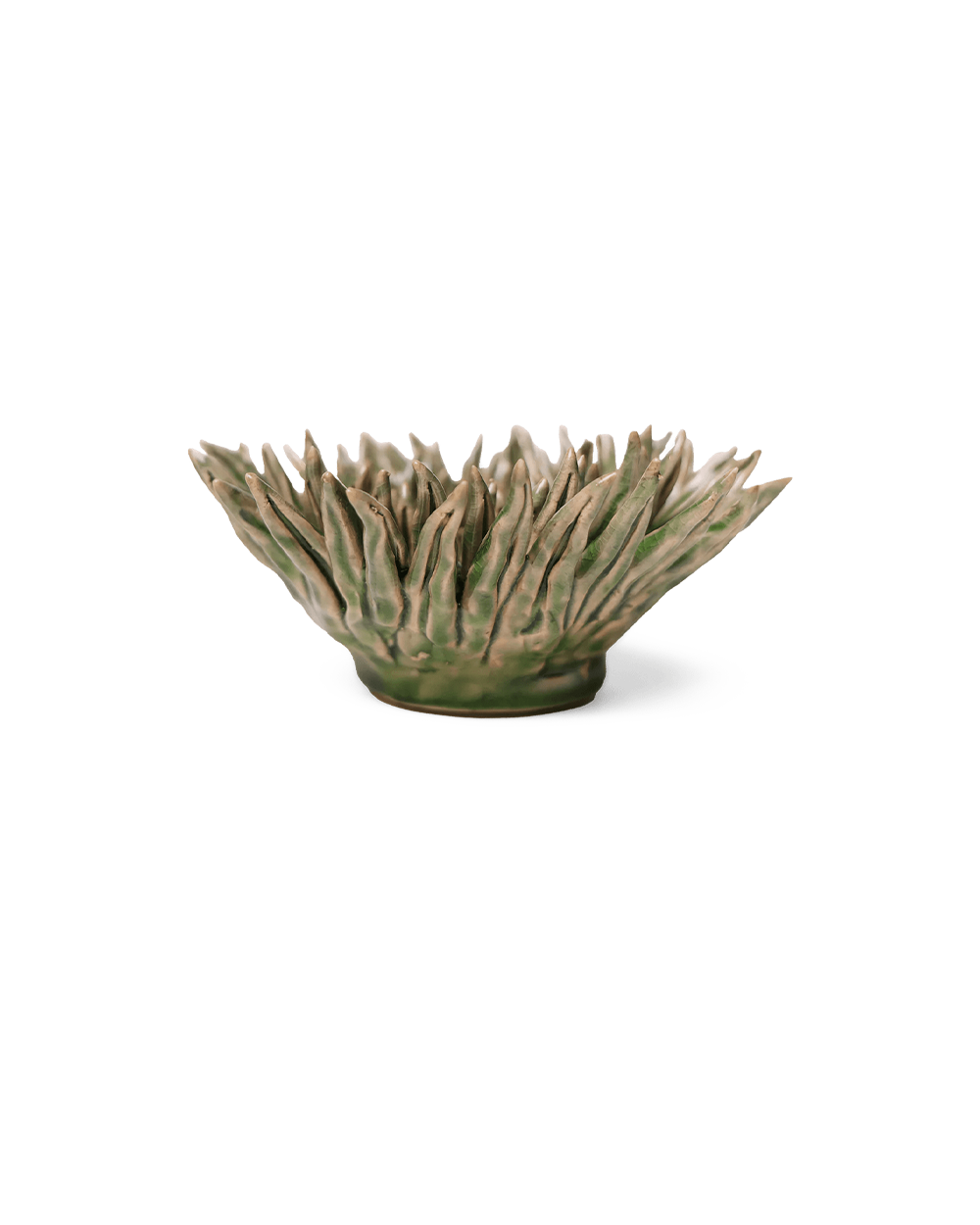
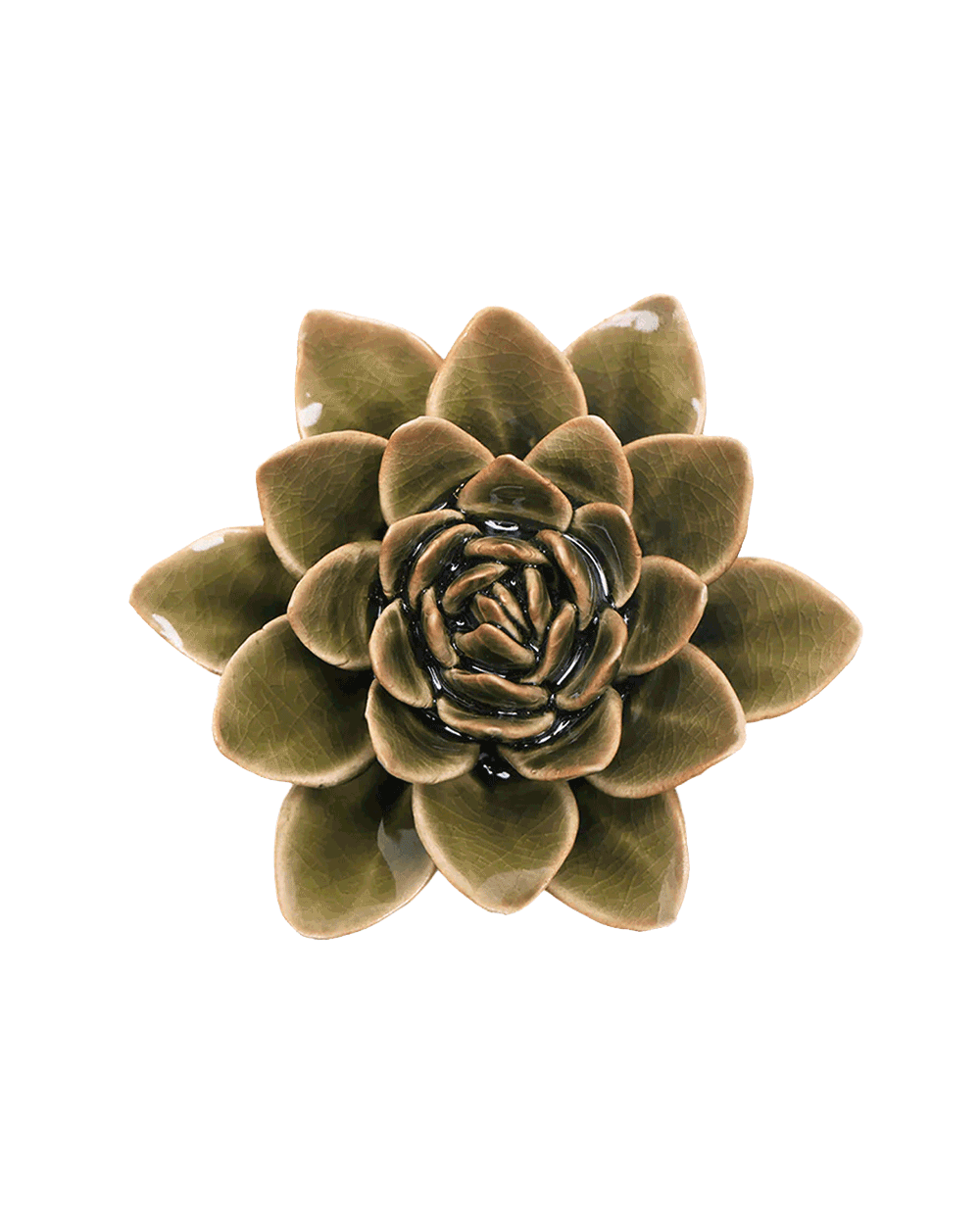
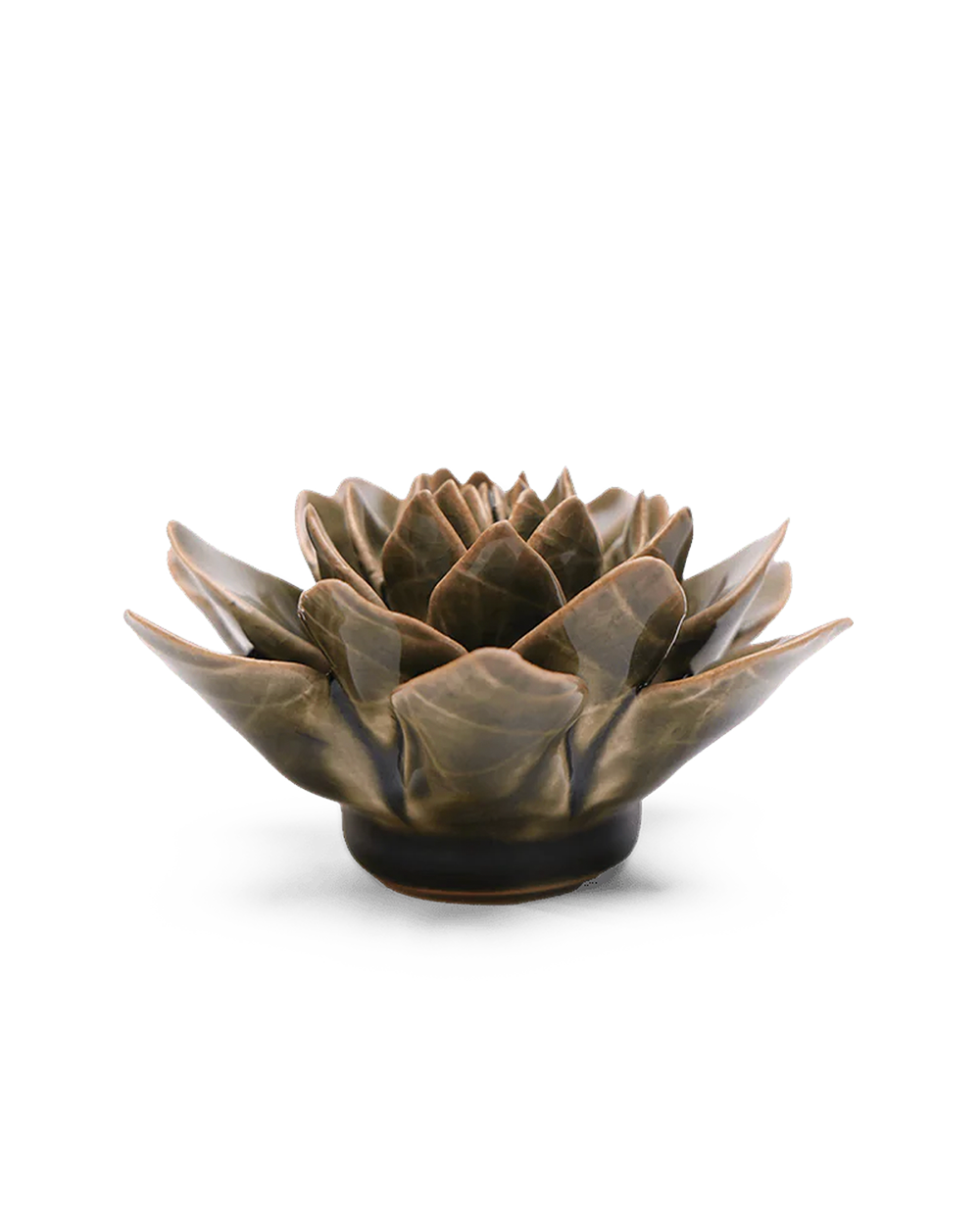
Green Ceramic Flowers

Kitchen wall decor that has never once asked to be watered.

Filters
Out of stock
Size
Color
Flower Filter
Sort by


Chive Studio artisan sculpting a ceramic flower by hand attaching clay petals on a wood slab workbench — handmade without molds since 1999

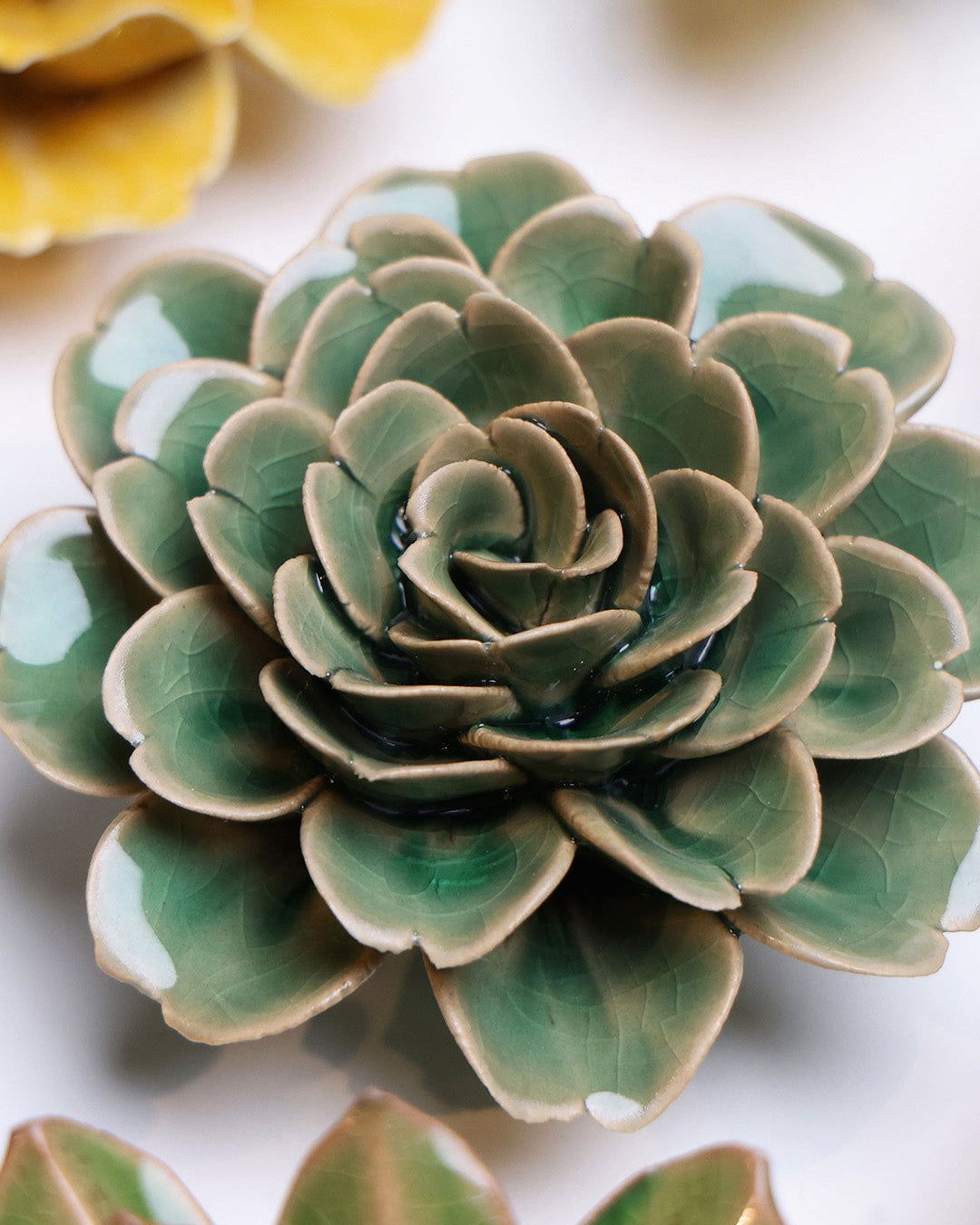
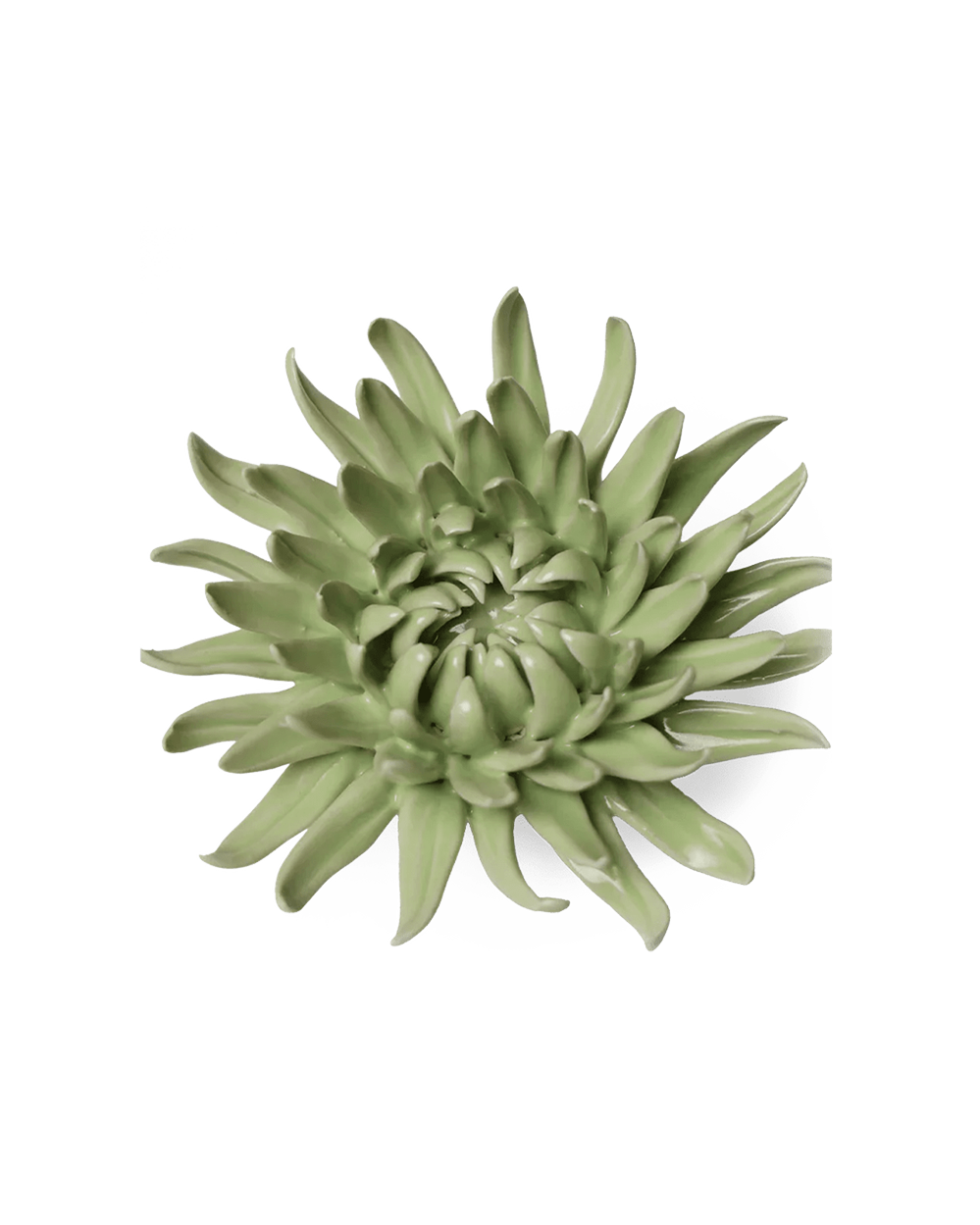
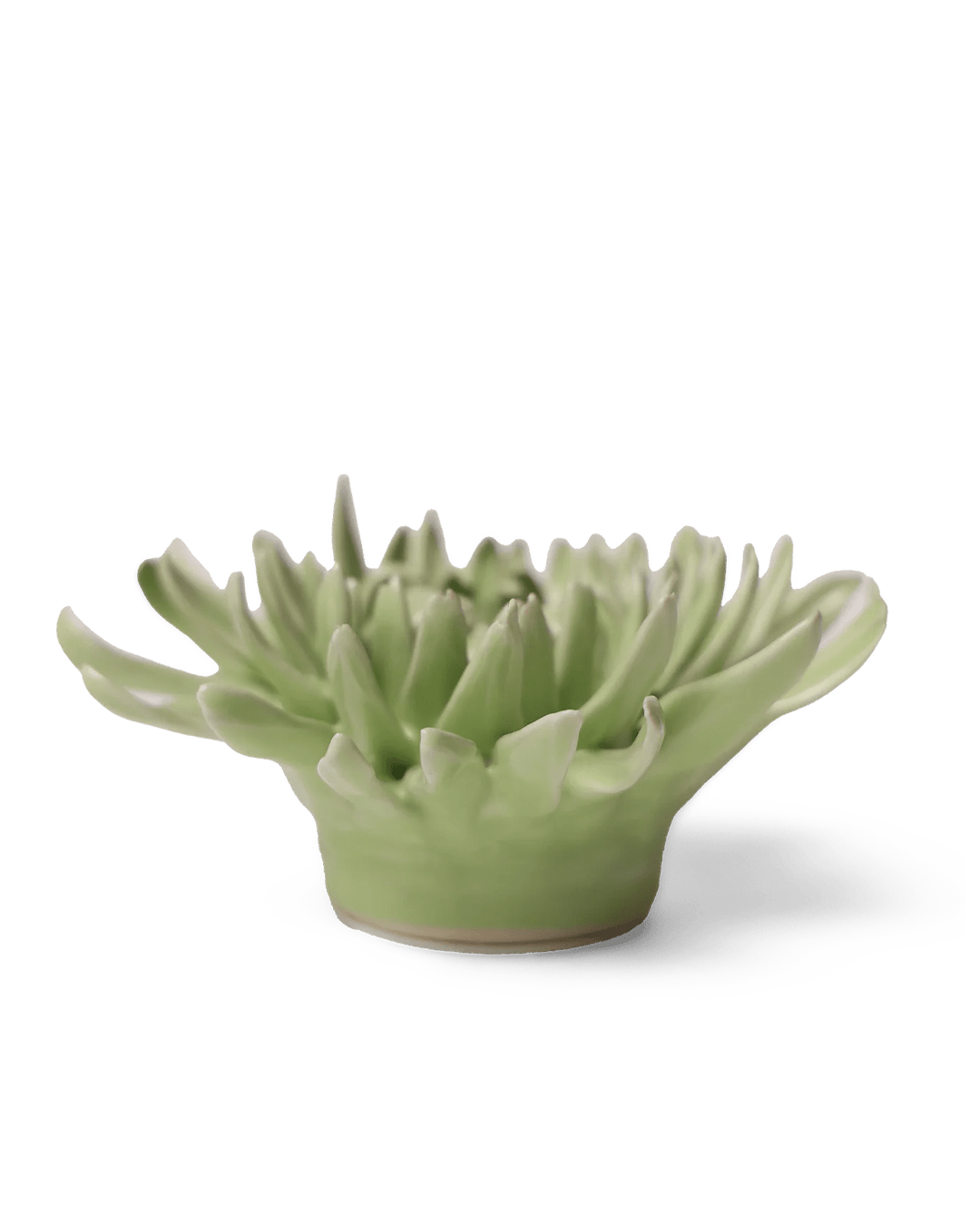
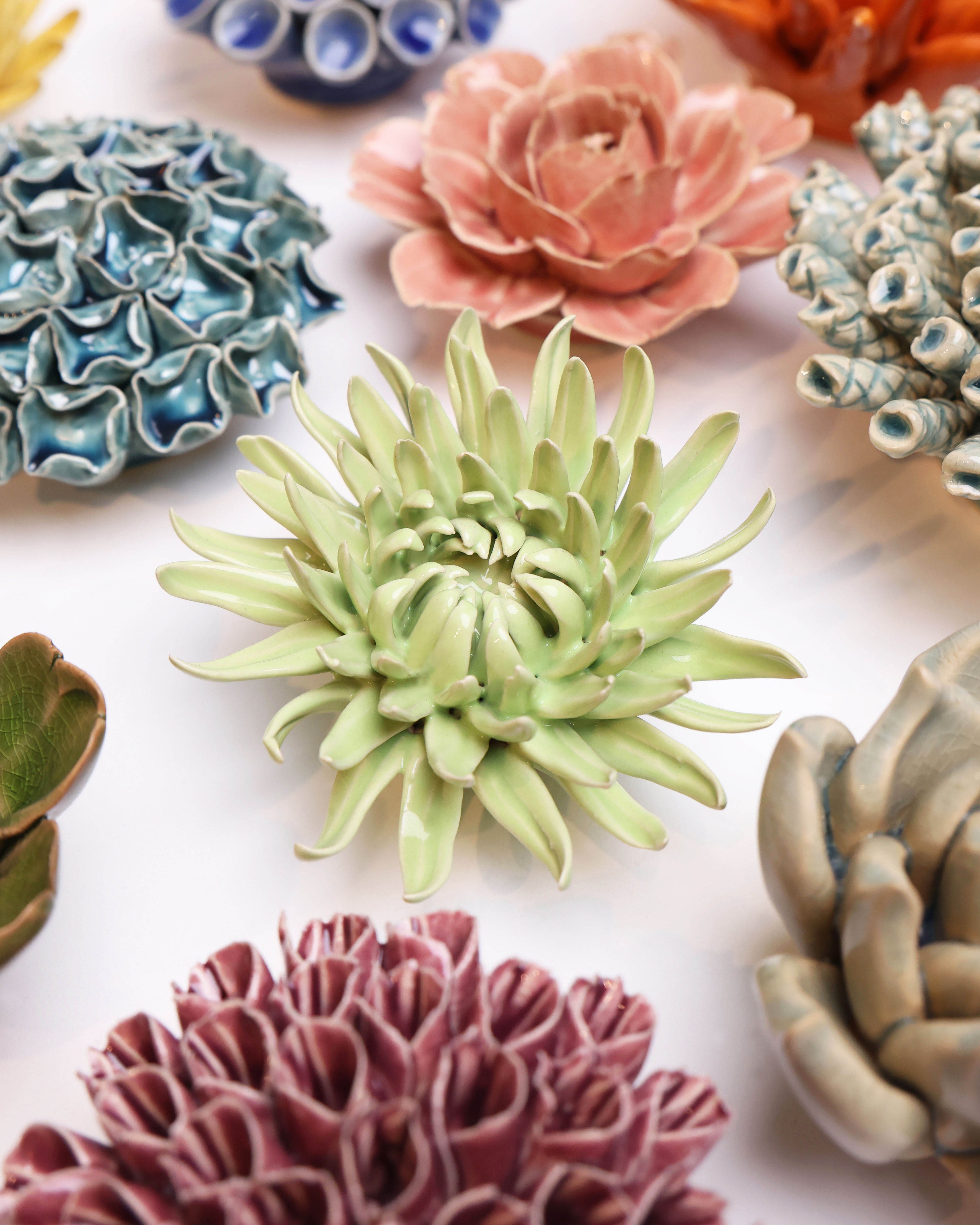
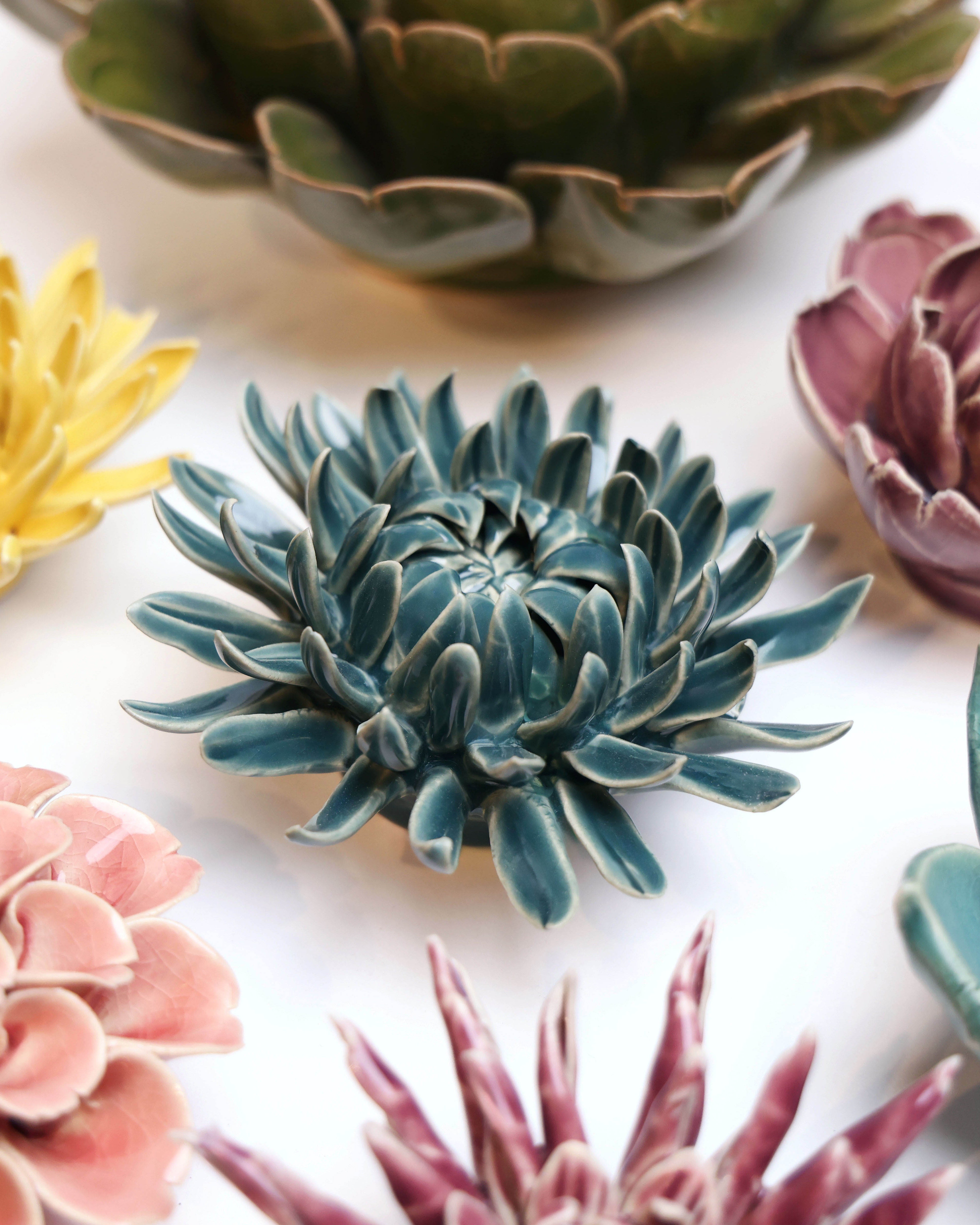
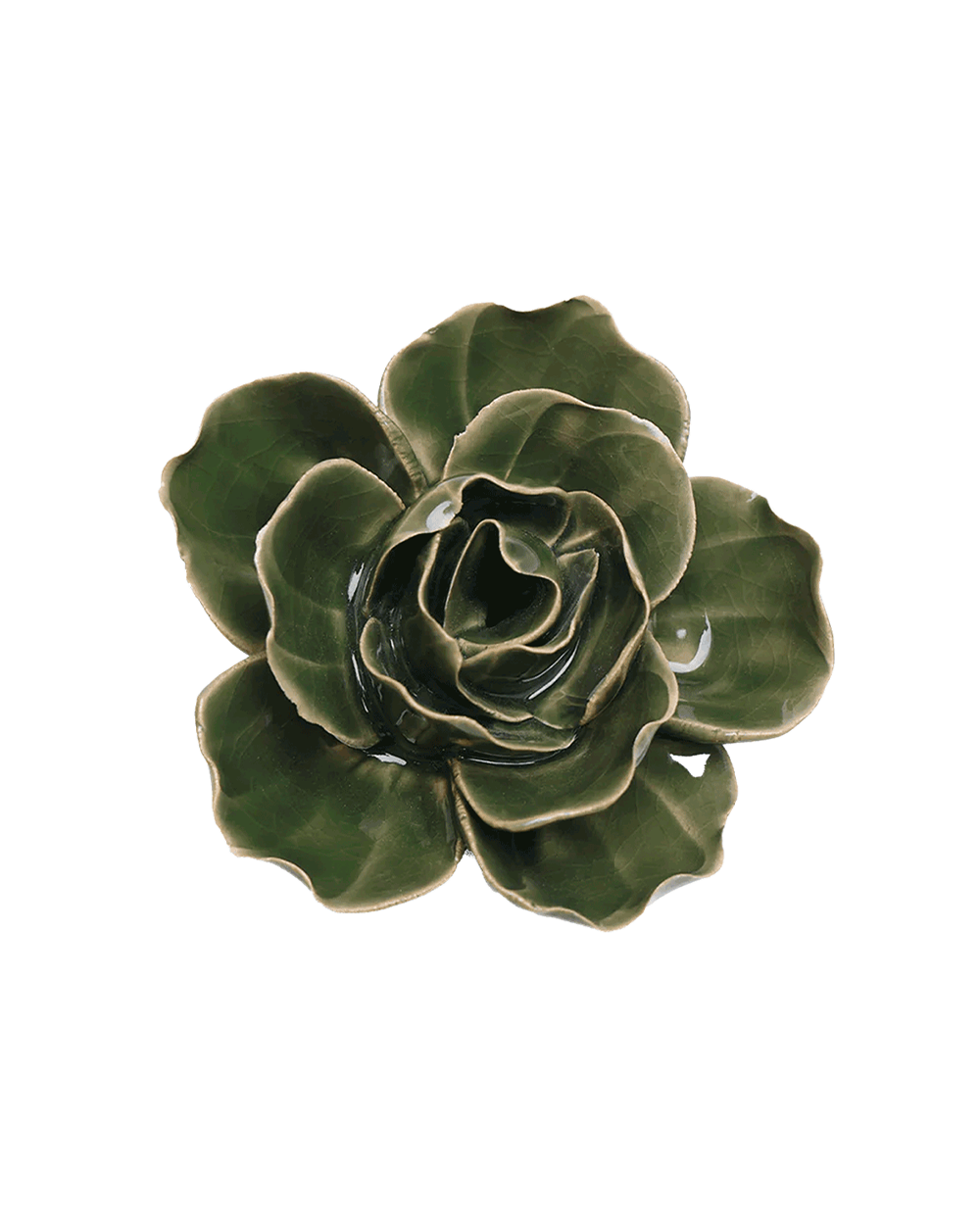
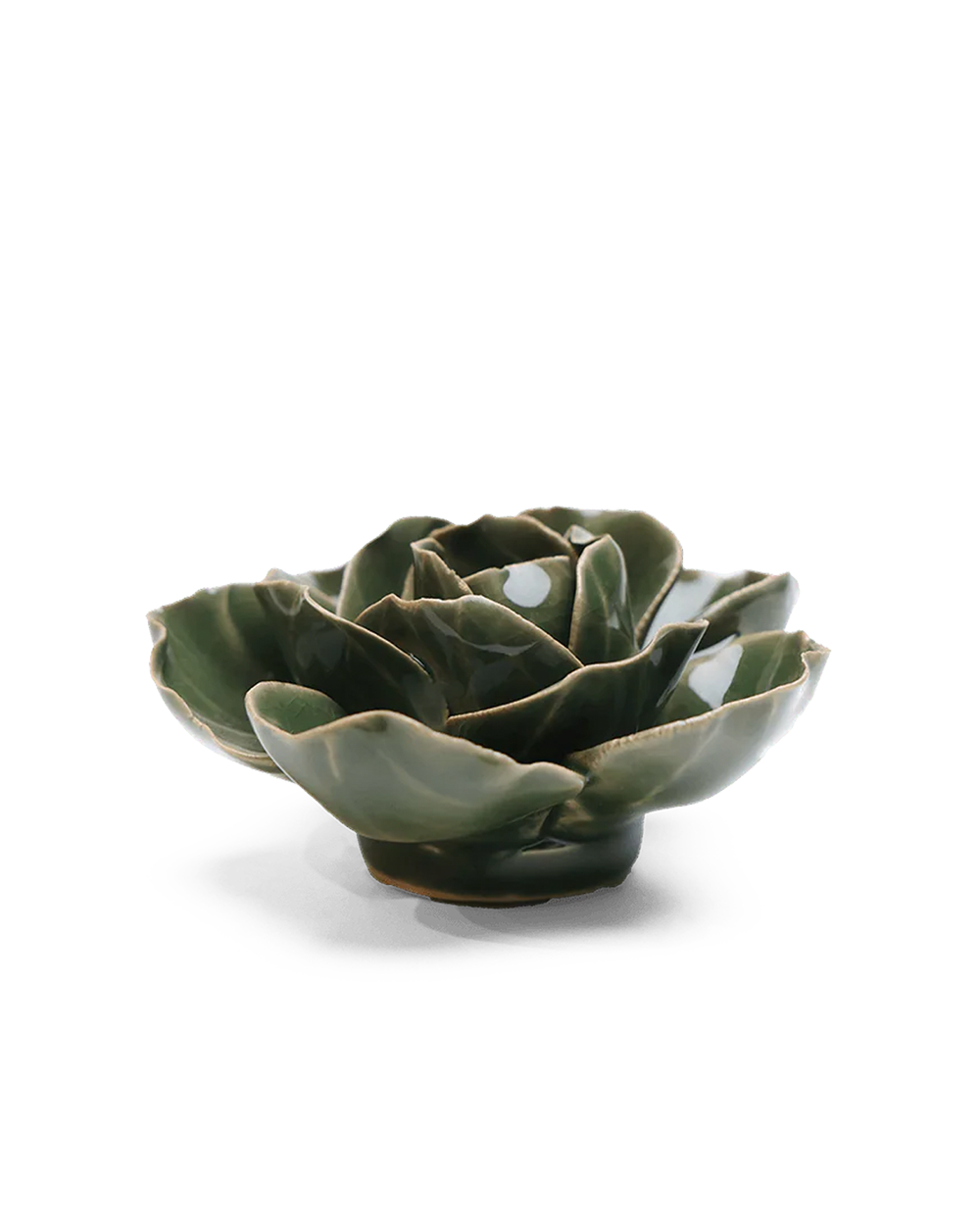
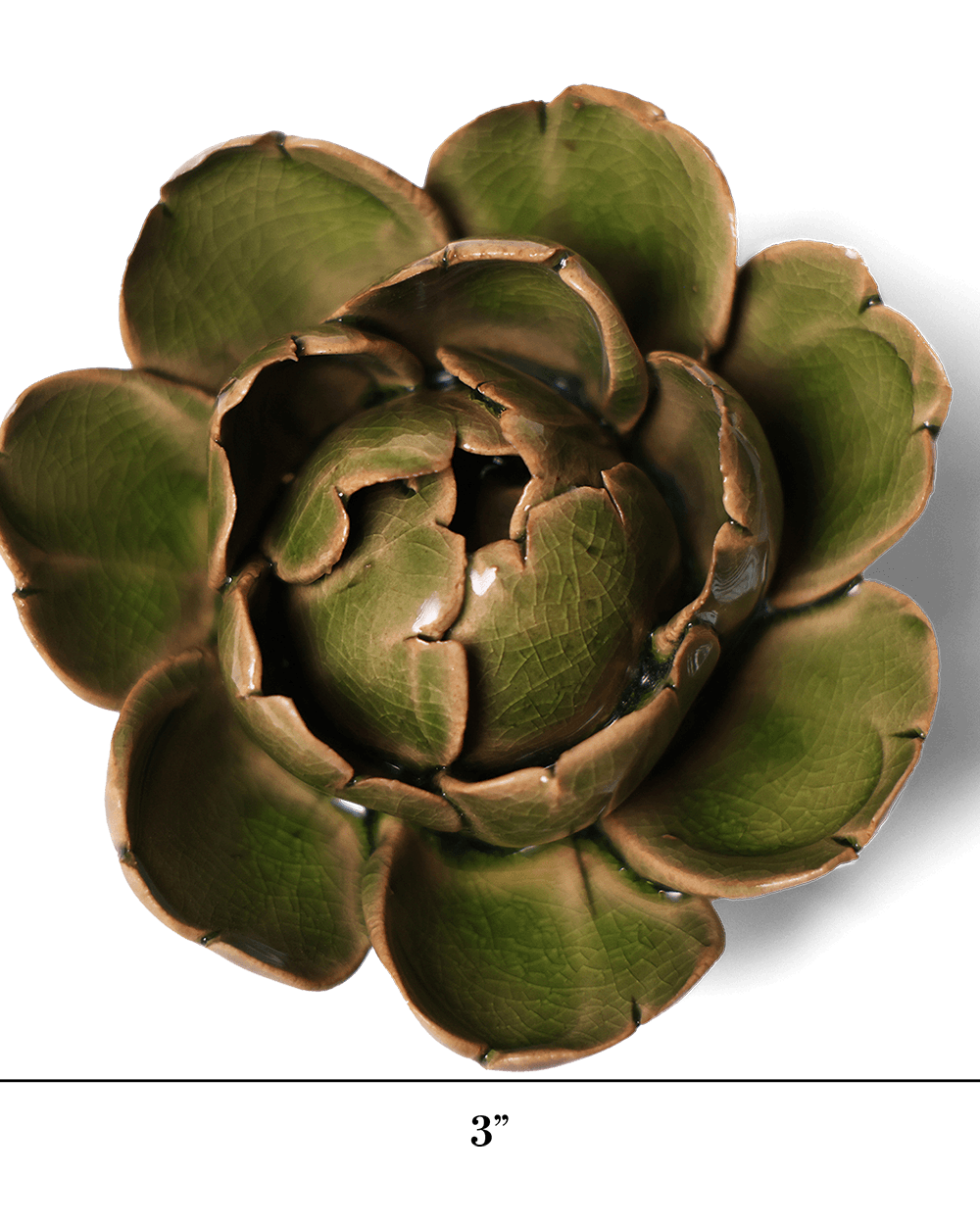
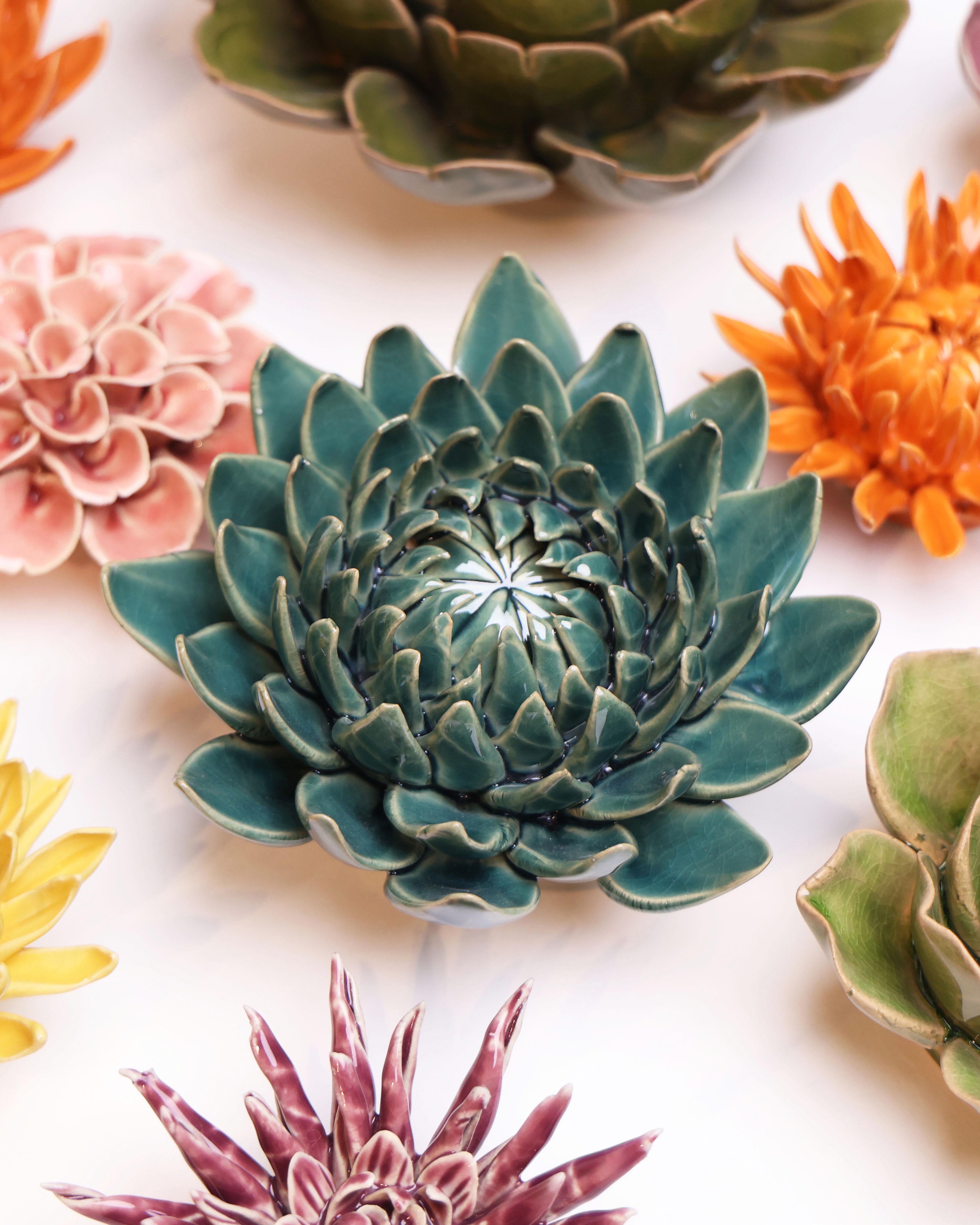
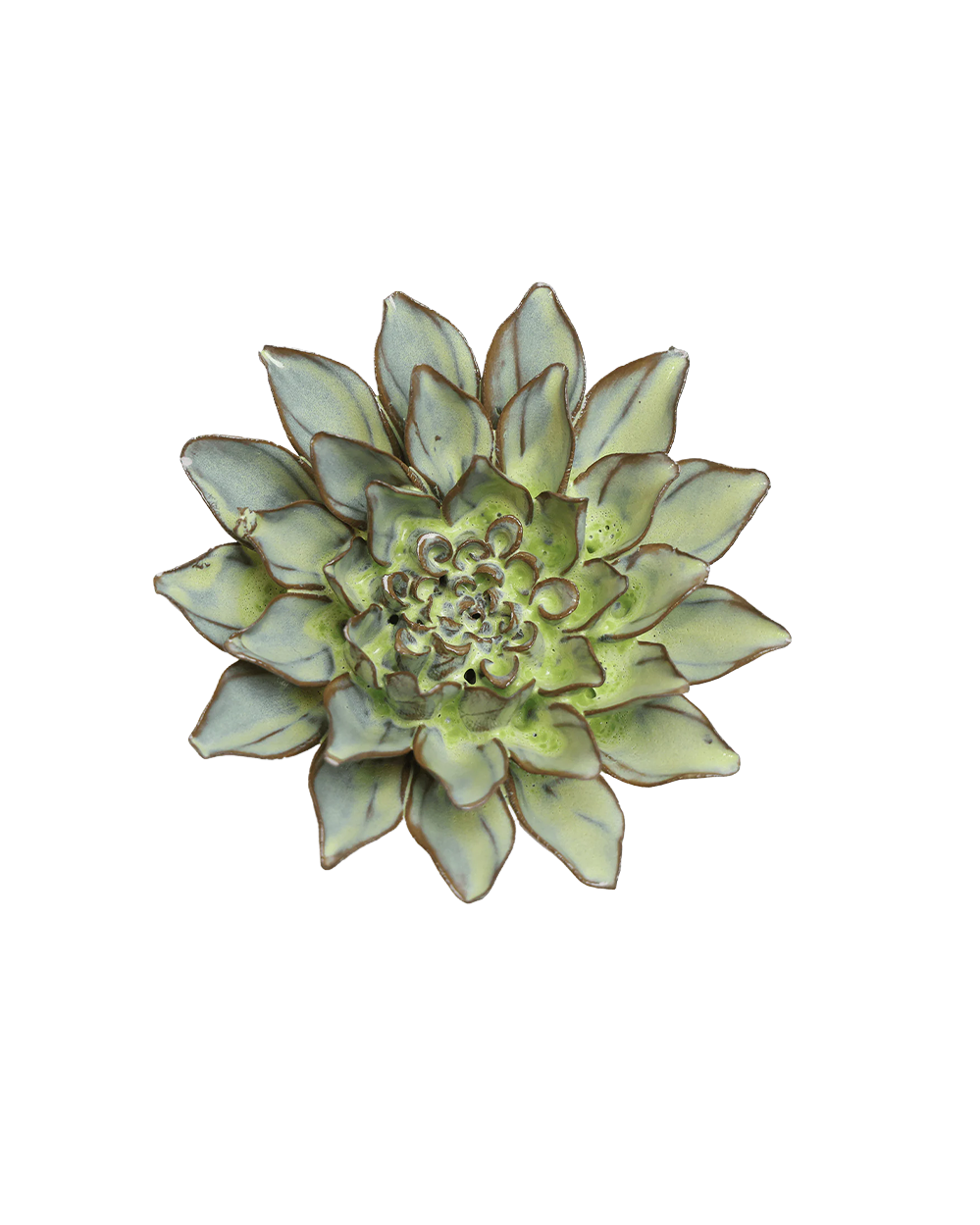
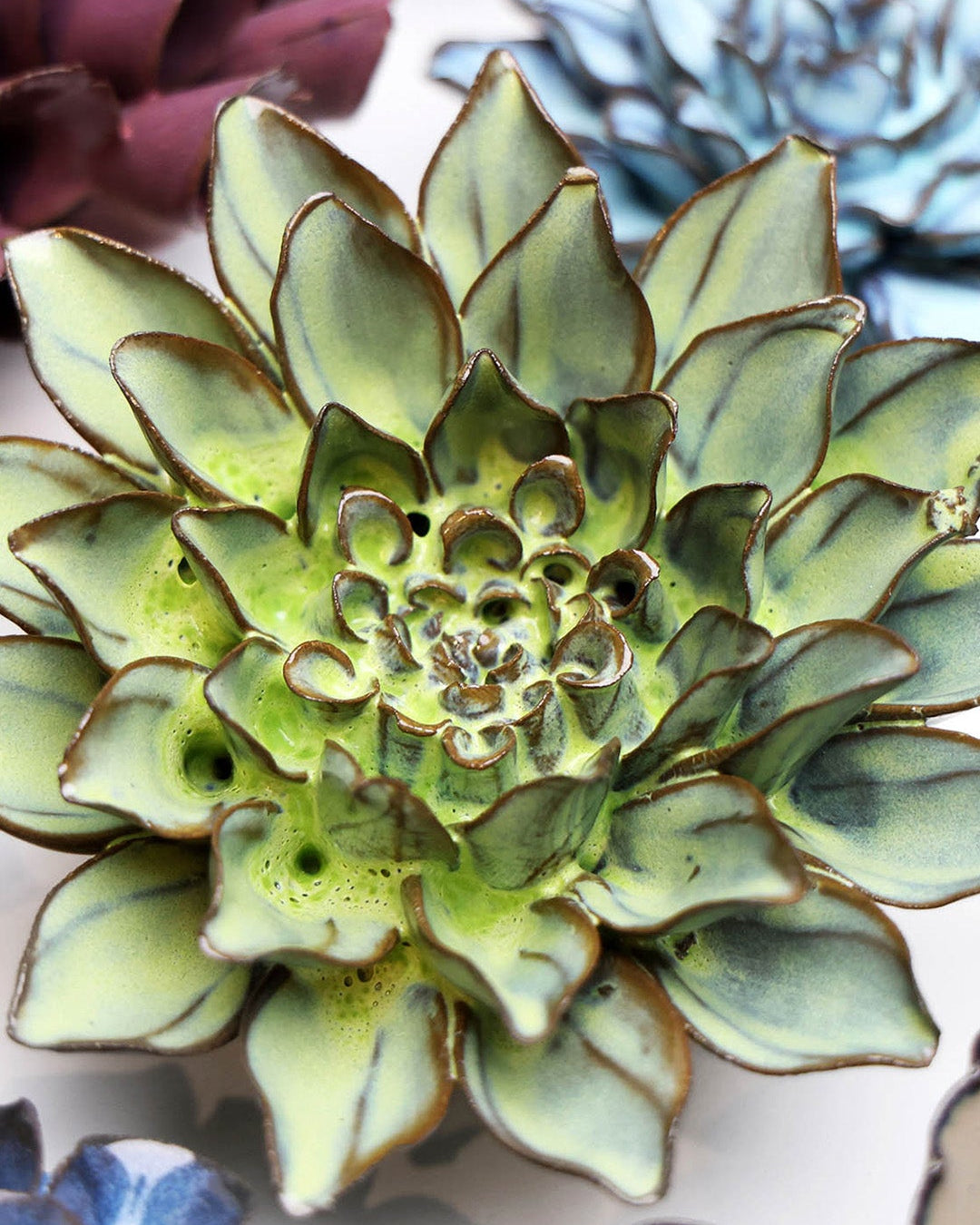
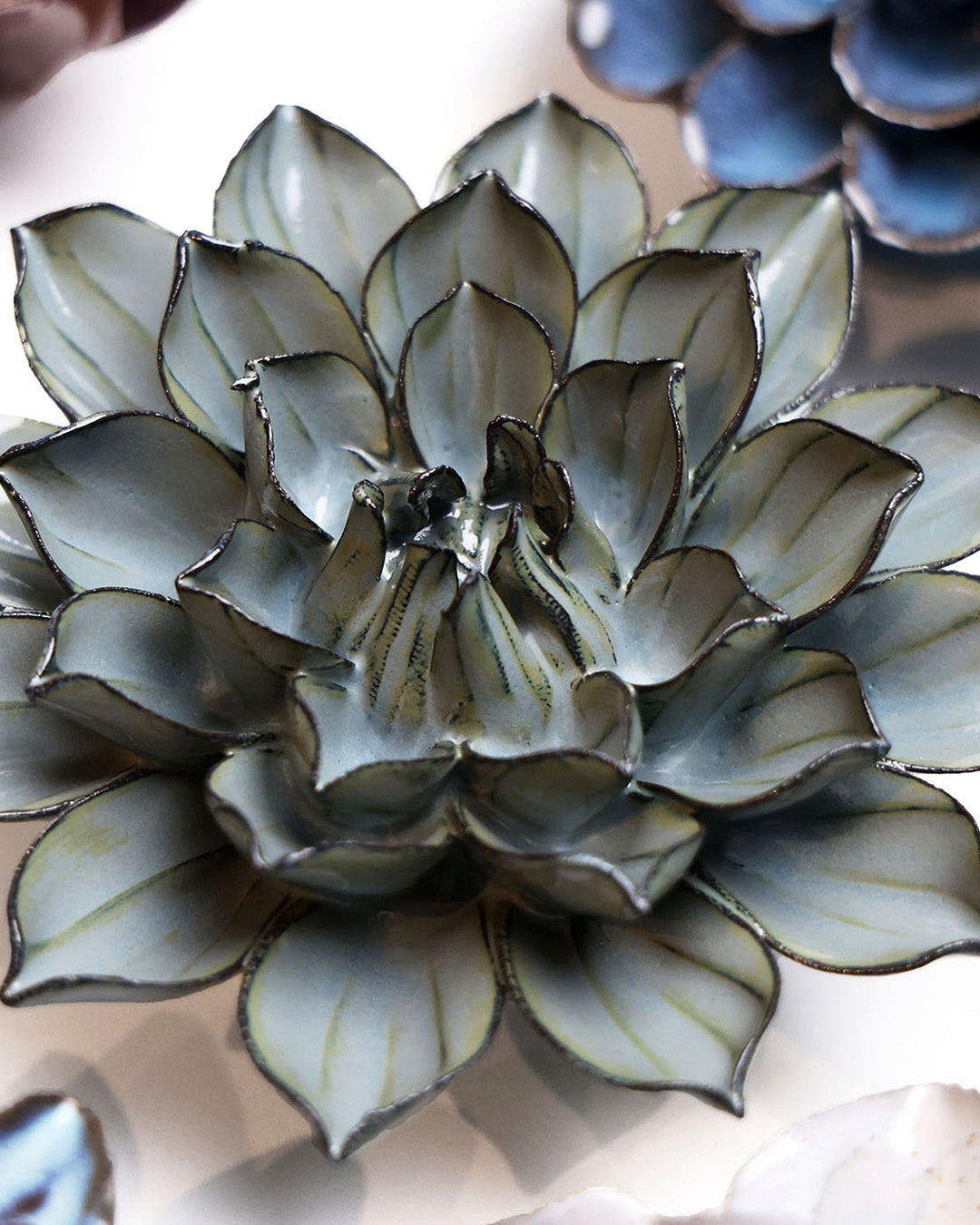
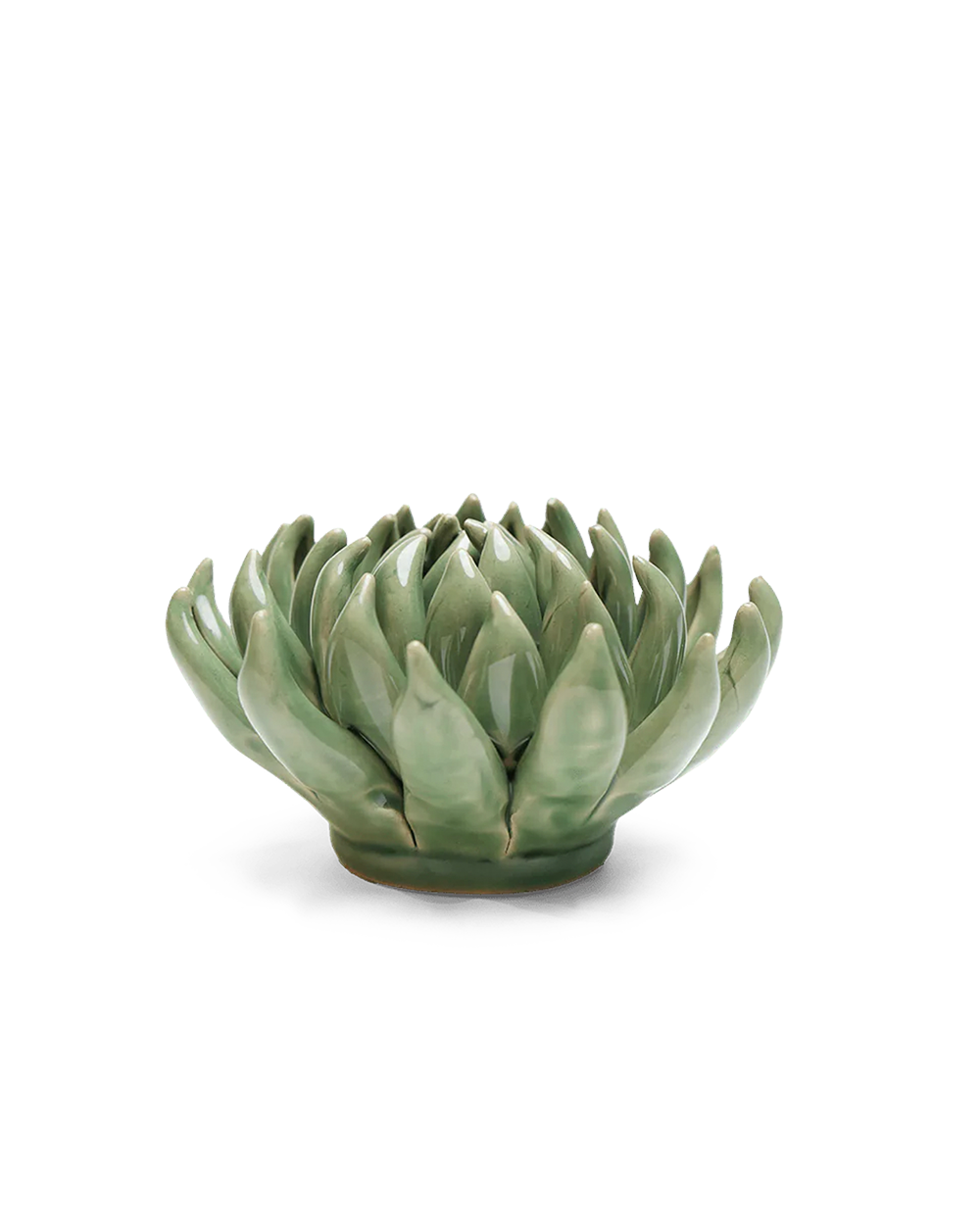
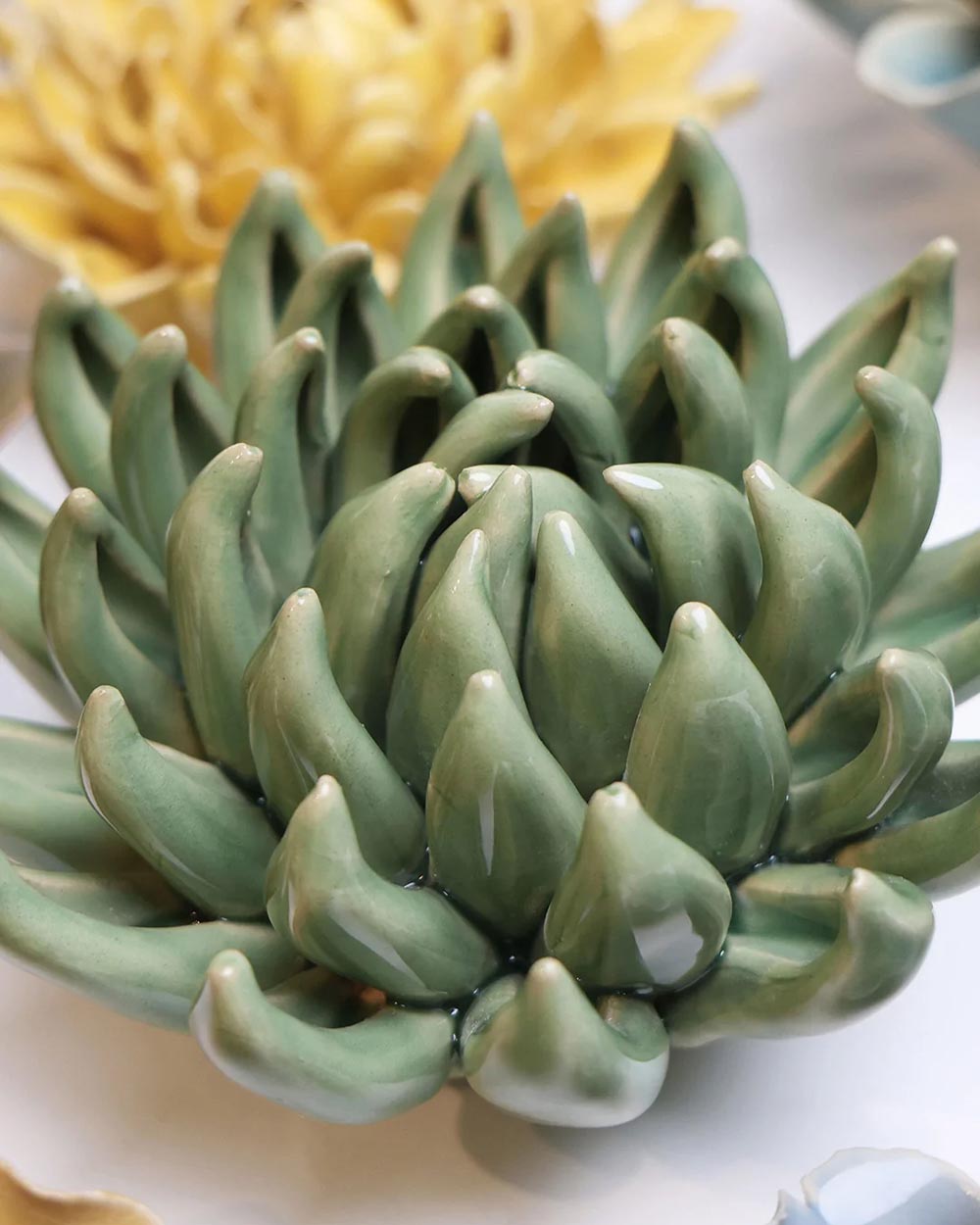
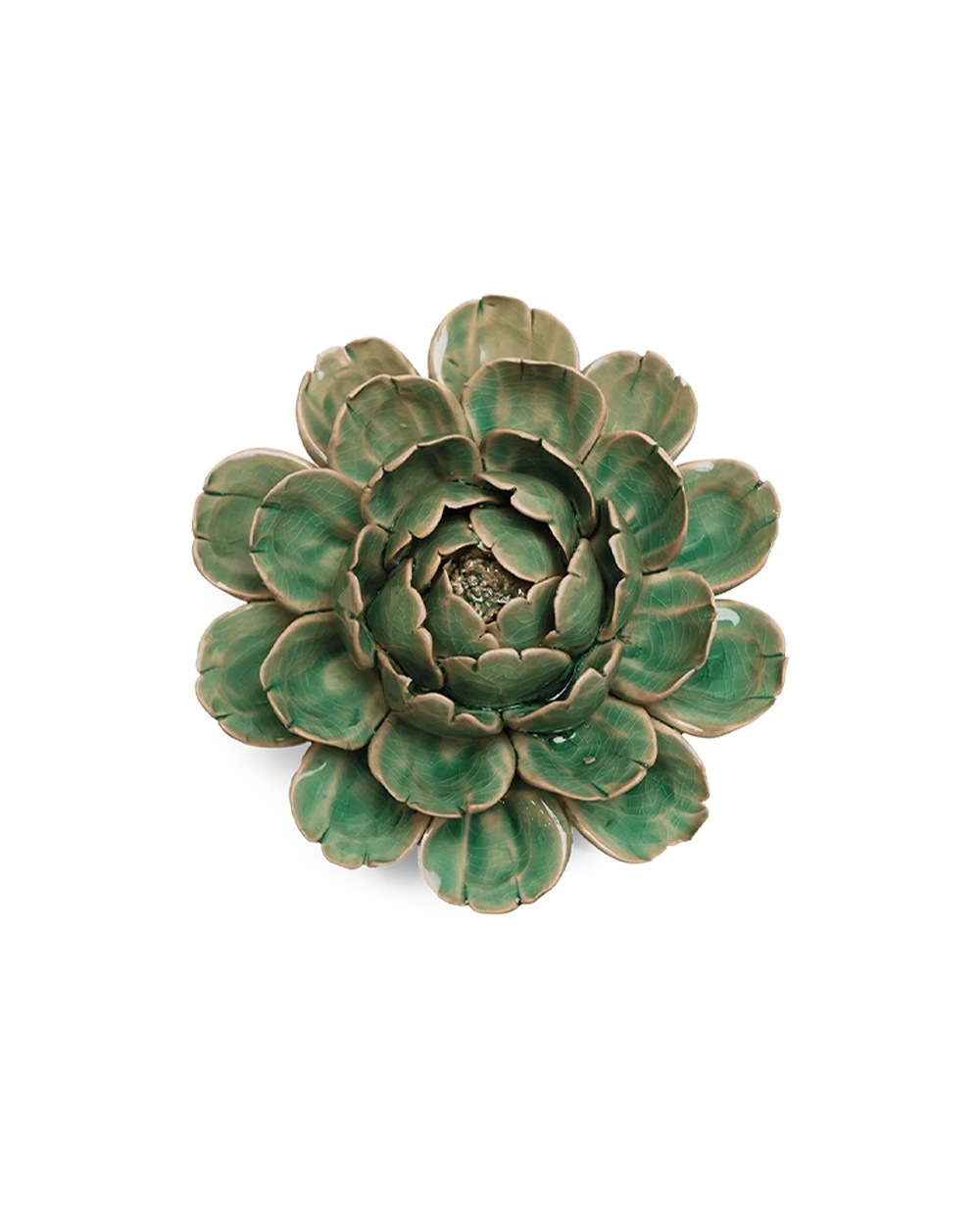
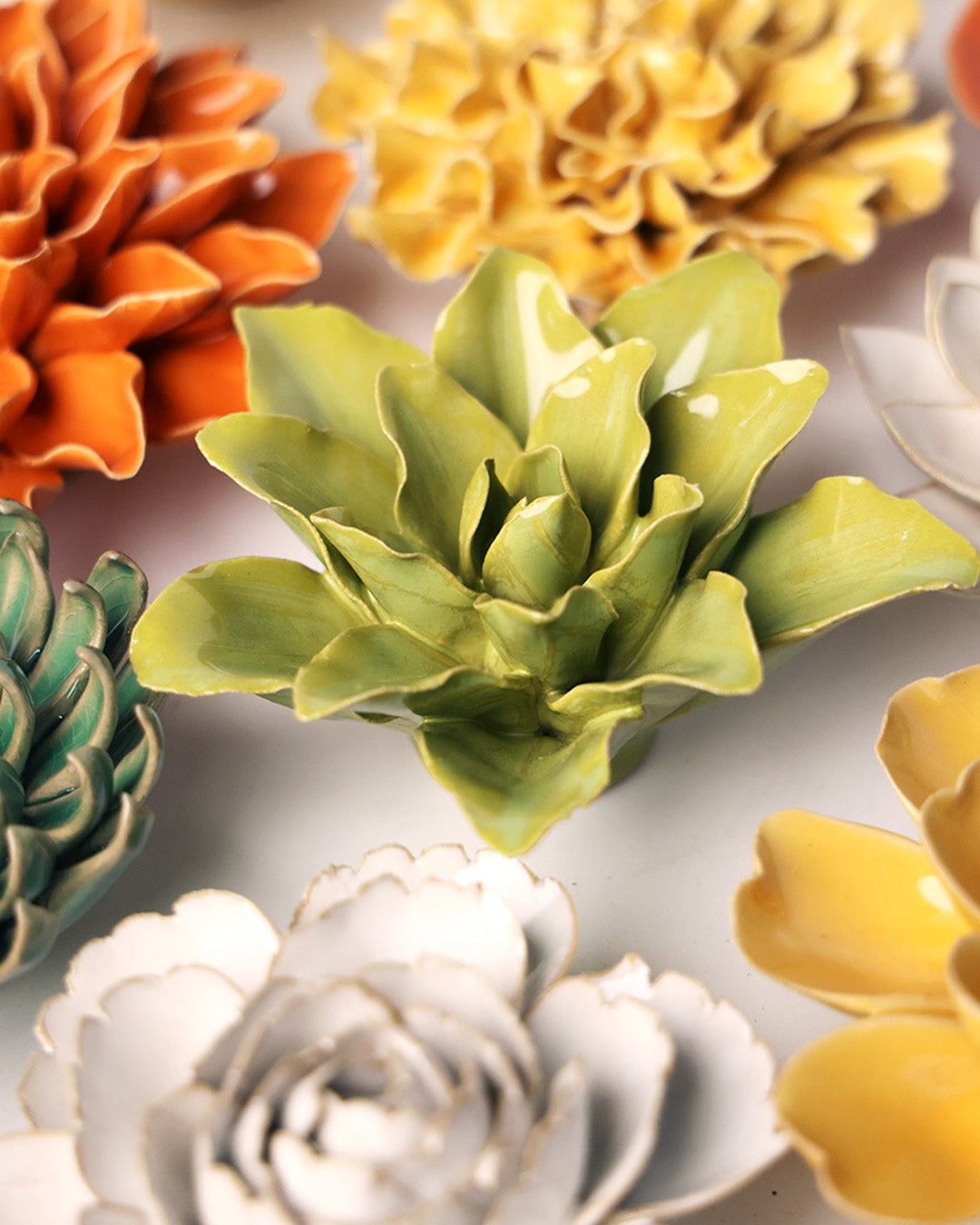
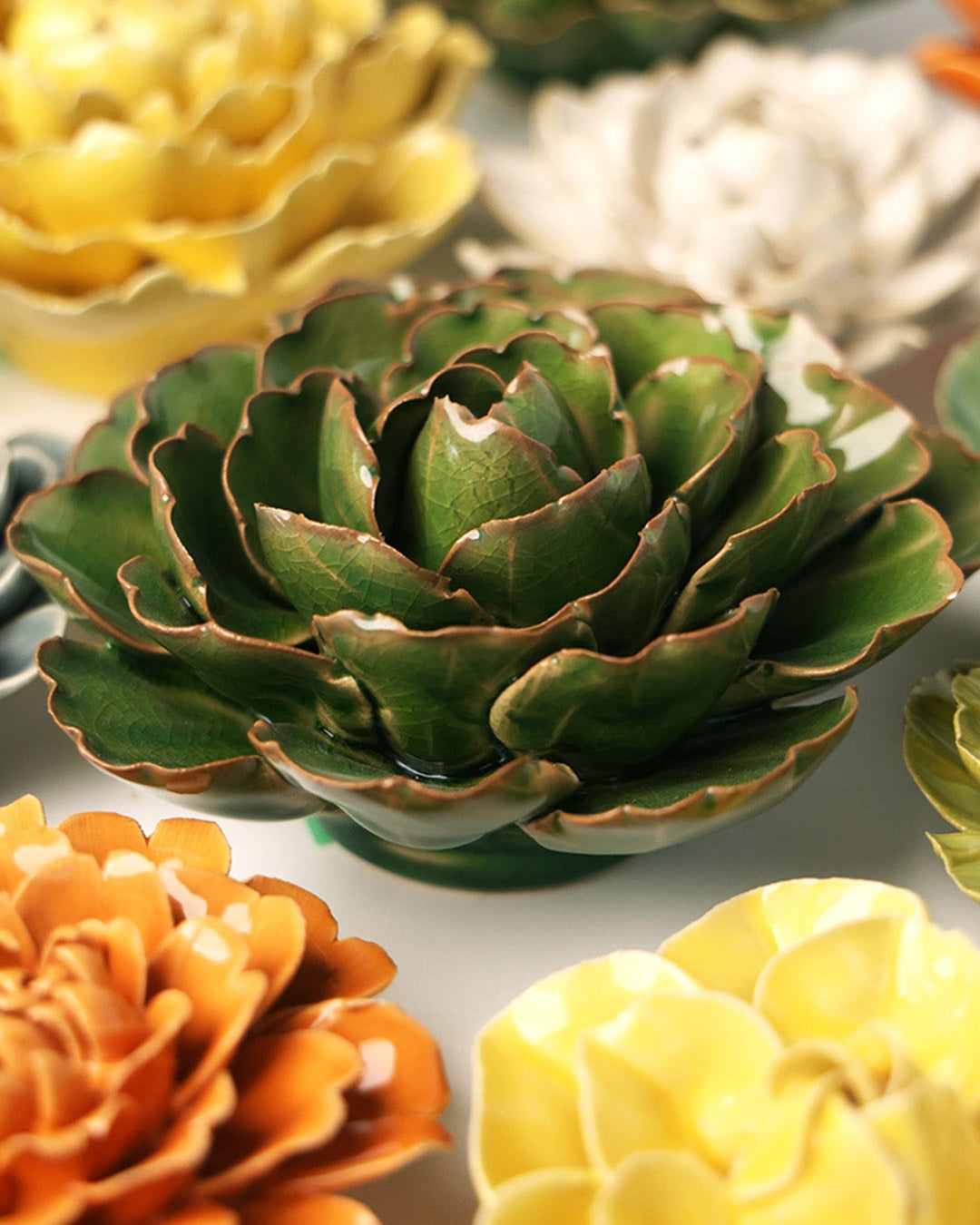
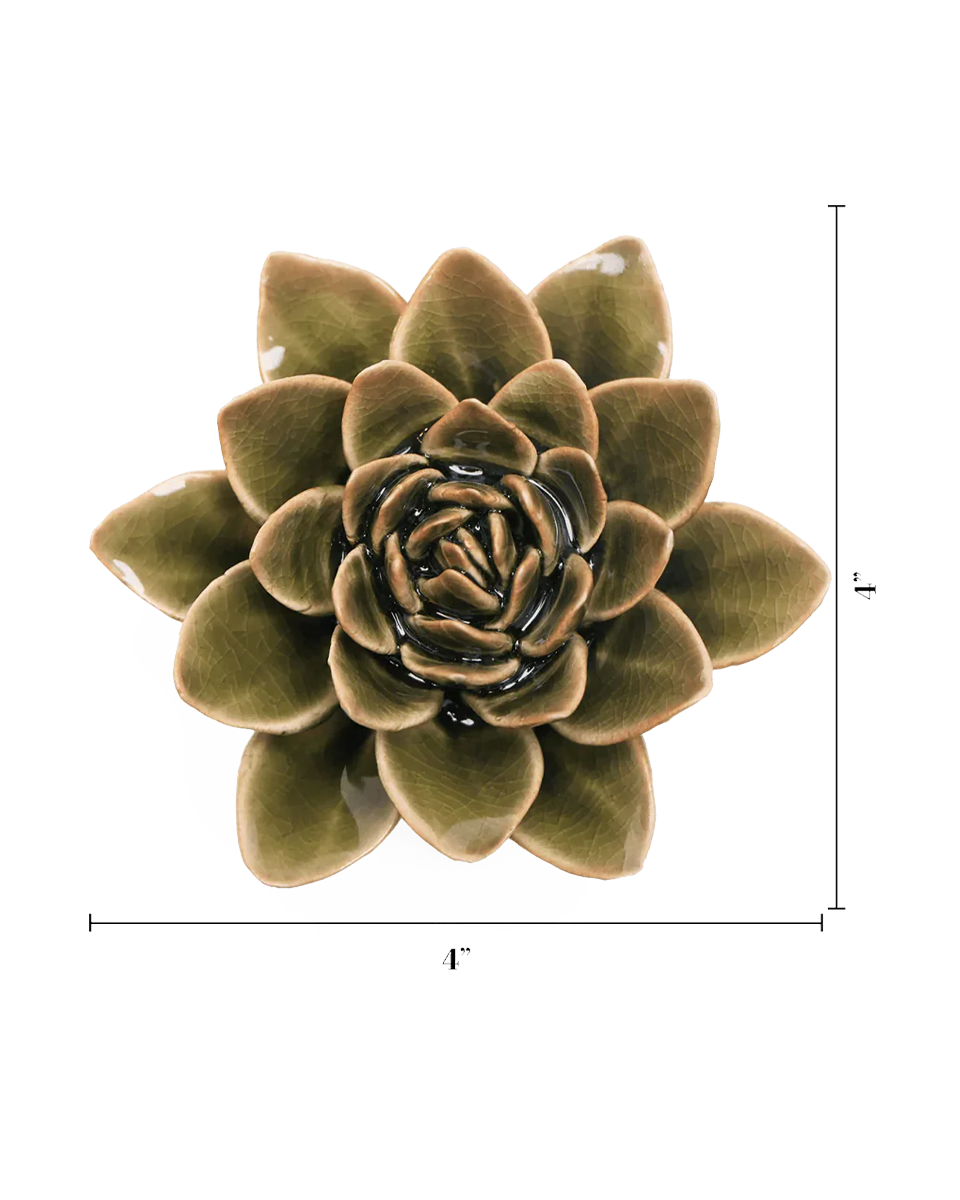
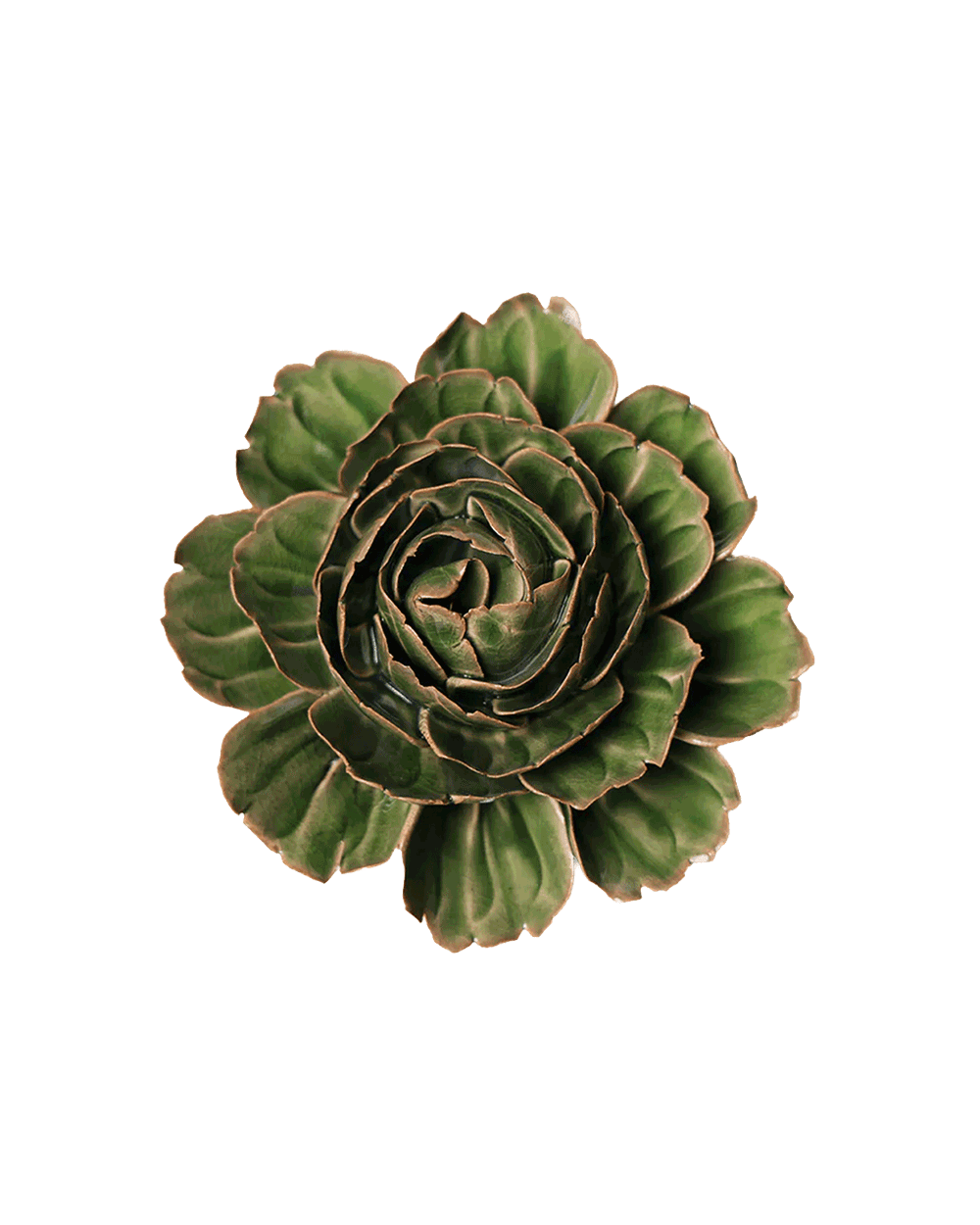
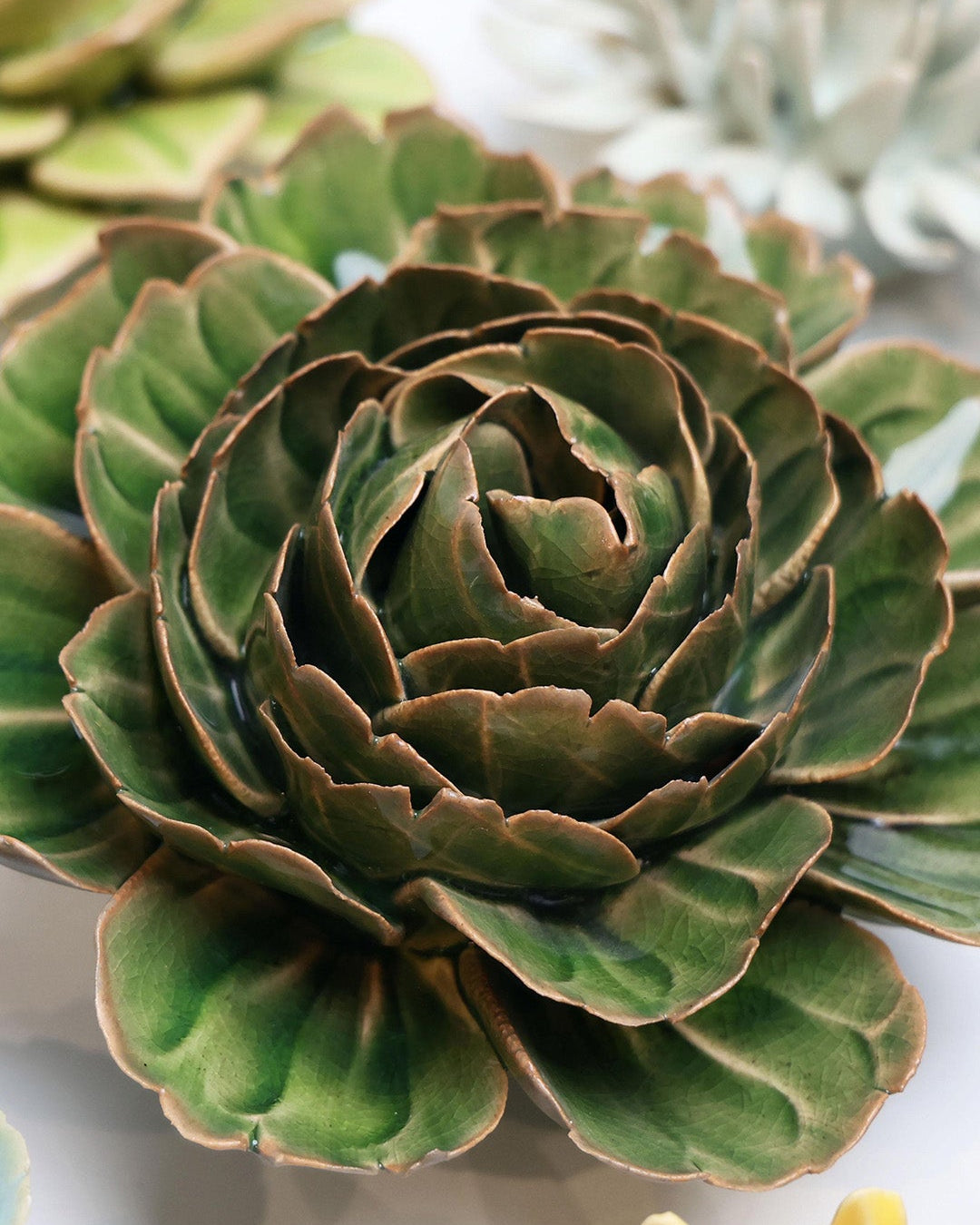
The green glaze range at Chive Studio includes sage, avocado, forest green, dark green, gray-green, and matcha — each a separate color that arrived through a separate glaze process. Avocado is not sage. Matcha is not gray-green. The distinction matters to the studio and, it turns out, matters equally to the people buying them. If you have been looking for a specific green that plant-adjacent home decor tends to flatten into one category: it has been separated here.

Green ceramic wall flowers are a consistent best-seller for kitchens and rooms with plants — not because green flowers match plants, but because people who own plants tend to already have opinions about color and make good decisions. The avocado and sage glazes are the most popular for kitchen installations. For anyone building a wall arrangement that includes green: green works alongside every other glaze in the Chive range. The New York Botanical Garden stocks Chive, which suggests the plant experts agree.

Frequently Asked Questions

Are ceramic flowers good for kitchen wall decor?

Ceramic is one of the few materials that holds up in kitchen environments without requiring any special treatment. Kiln-fired ceramic does not absorb cooking odors, does not react to humidity or temperature fluctuations, and does not fade under artificial lighting over time. The green ceramic flowers from Chive Studio mount on a wall with a single screw and can be wiped clean with a damp cloth if needed. They will look the same in ten years as they do the day they arrive, which is a reasonable standard for anything on a kitchen wall.

What shades of green are available in the ceramic flower collection?

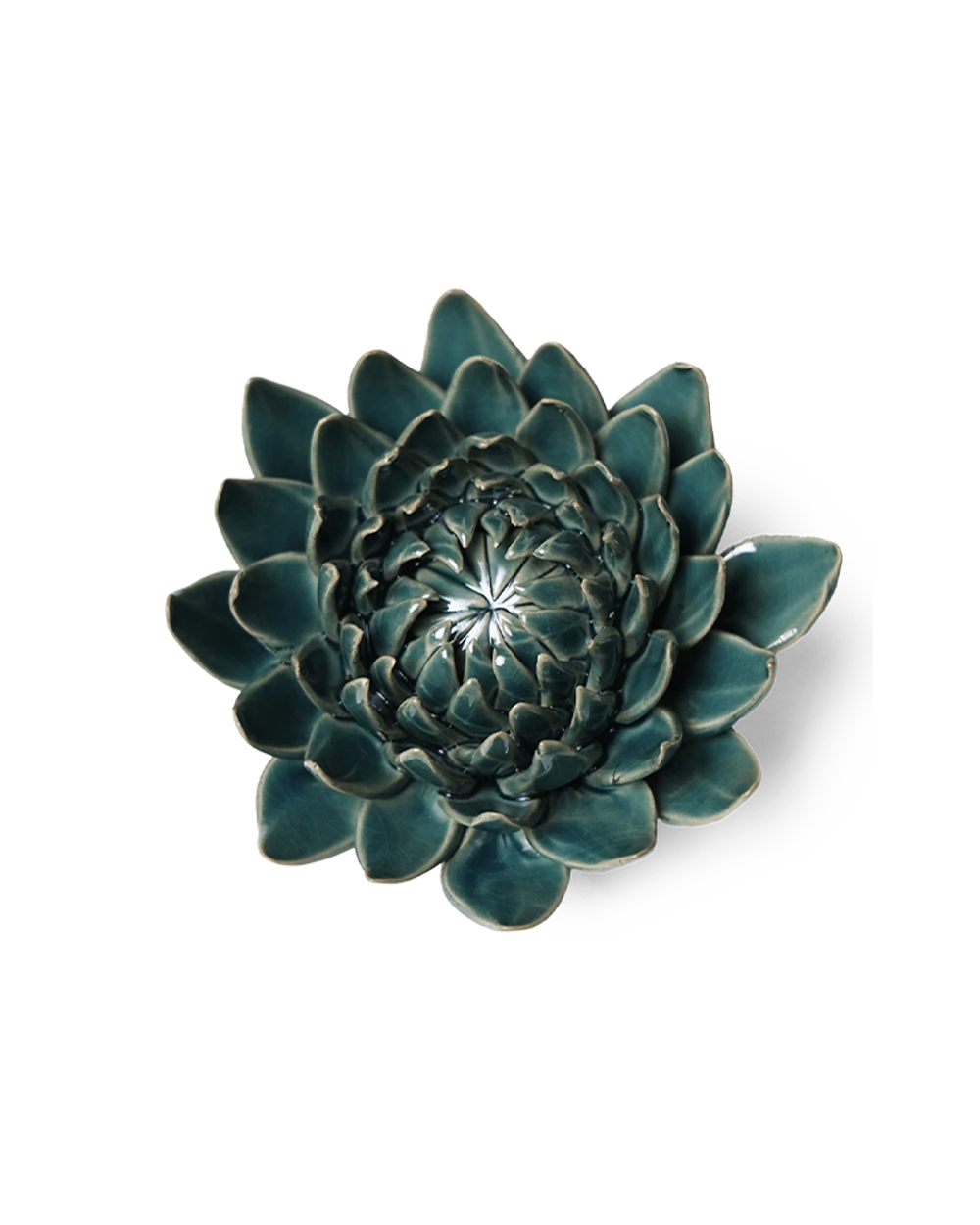
The green ceramic flower range spans soft sage, mint, celadon, avocado, forest green, and deeper olive tones across the English Garden, Coastal, and Japan collections. Each glaze is kiln-fired, which means the color is part of the object rather than applied to the surface. The Japan Collection includes an avocado green glaze developed over multiple kiln runs to reach its specific depth. The English Garden collection includes sage and soft green ranunculas and anemones. All green shades in the range work together on the same wall — any combination sits alongside any other.

How does the wall-mounting system work?

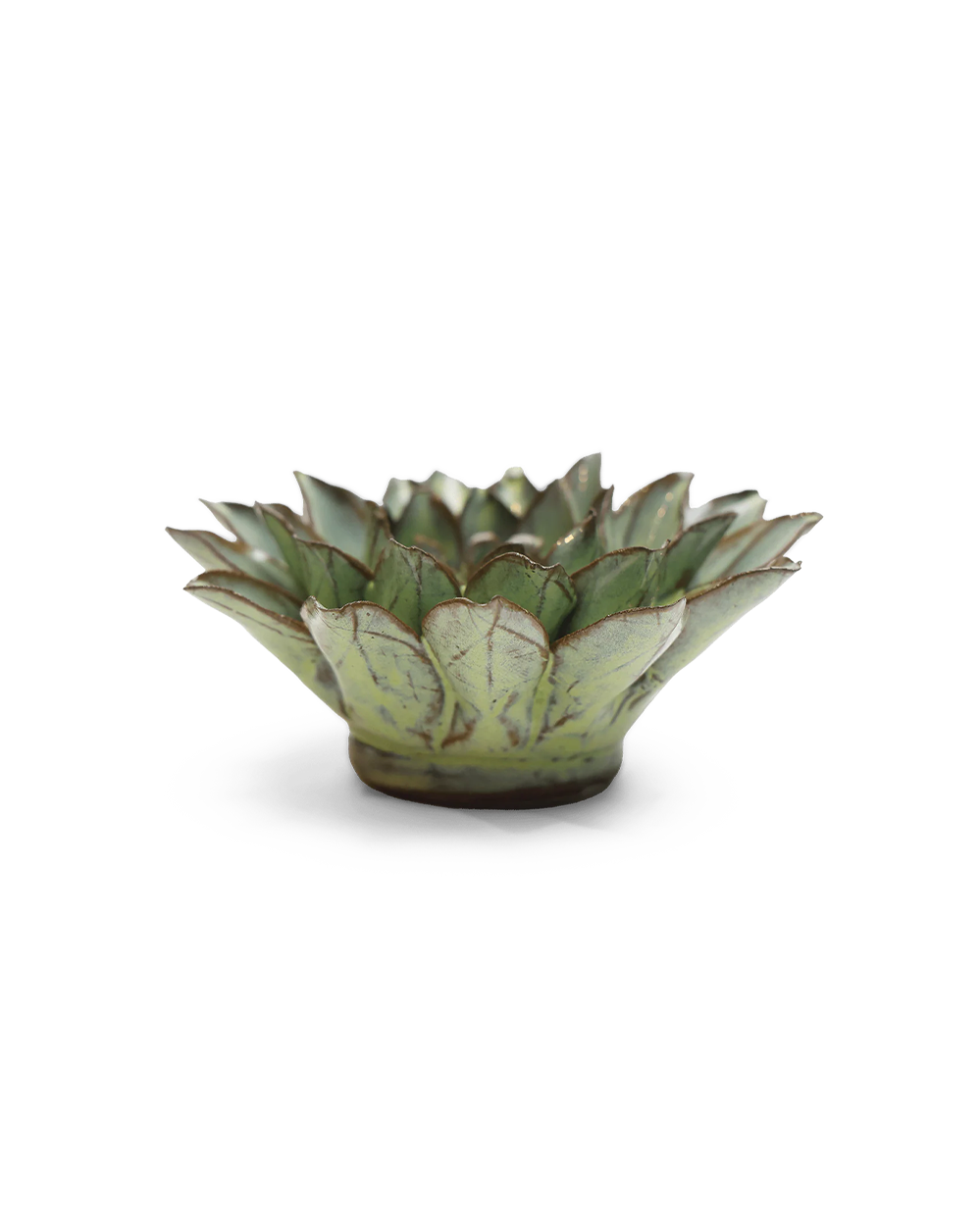
Each ceramic flower has a keyhole fitting on the back. You put a small screw in the wall — one screw per flower — and hang the flower on it. The whole process takes approximately 90 seconds. The screw and wall anchor are included. No tools required beyond a screwdriver. The flowers do not shift or tilt after hanging. If you decide to move them, you remove one screw and fill a small hole. It is genuinely this straightforward, which surprises people who have previously dealt with picture-hanging hardware.

Can green ceramic flowers be mixed with other colors and collections?

Yes — the Chive color system was developed over twenty-five years specifically so that any combination works together. Green designs from the English Garden collection sit alongside Japan Collection avocado and forest green without clashing. Sage and mint pair with white, cream, and ivory designs from the Coastal collection in ways that most people find immediately workable. Any color from any Chive collection can go on the same wall as any green design. This is not a claim made speculatively — it is the result of a coordinated color development process that has been running since 1999

What size green ceramic flowers work best in a kitchen?

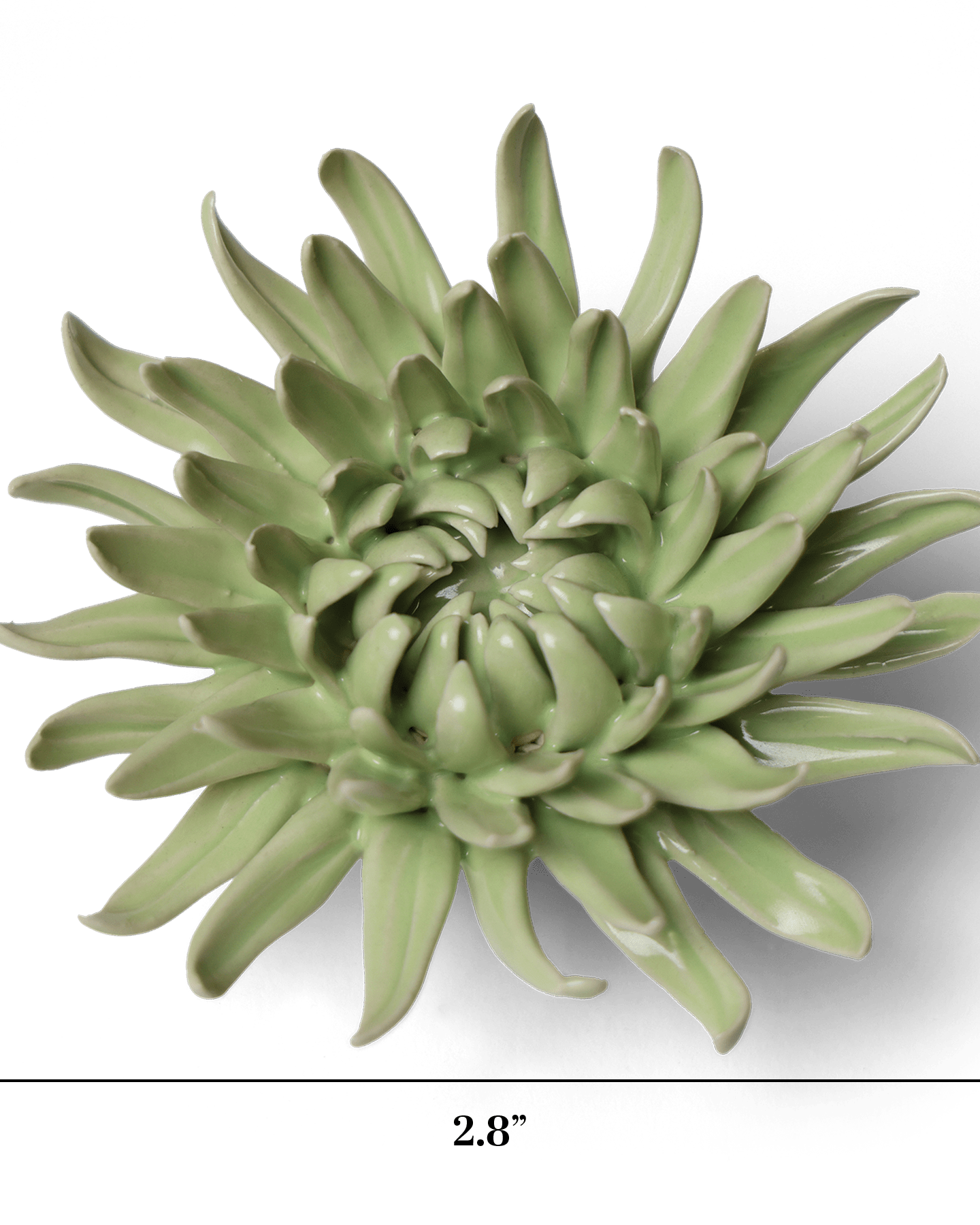
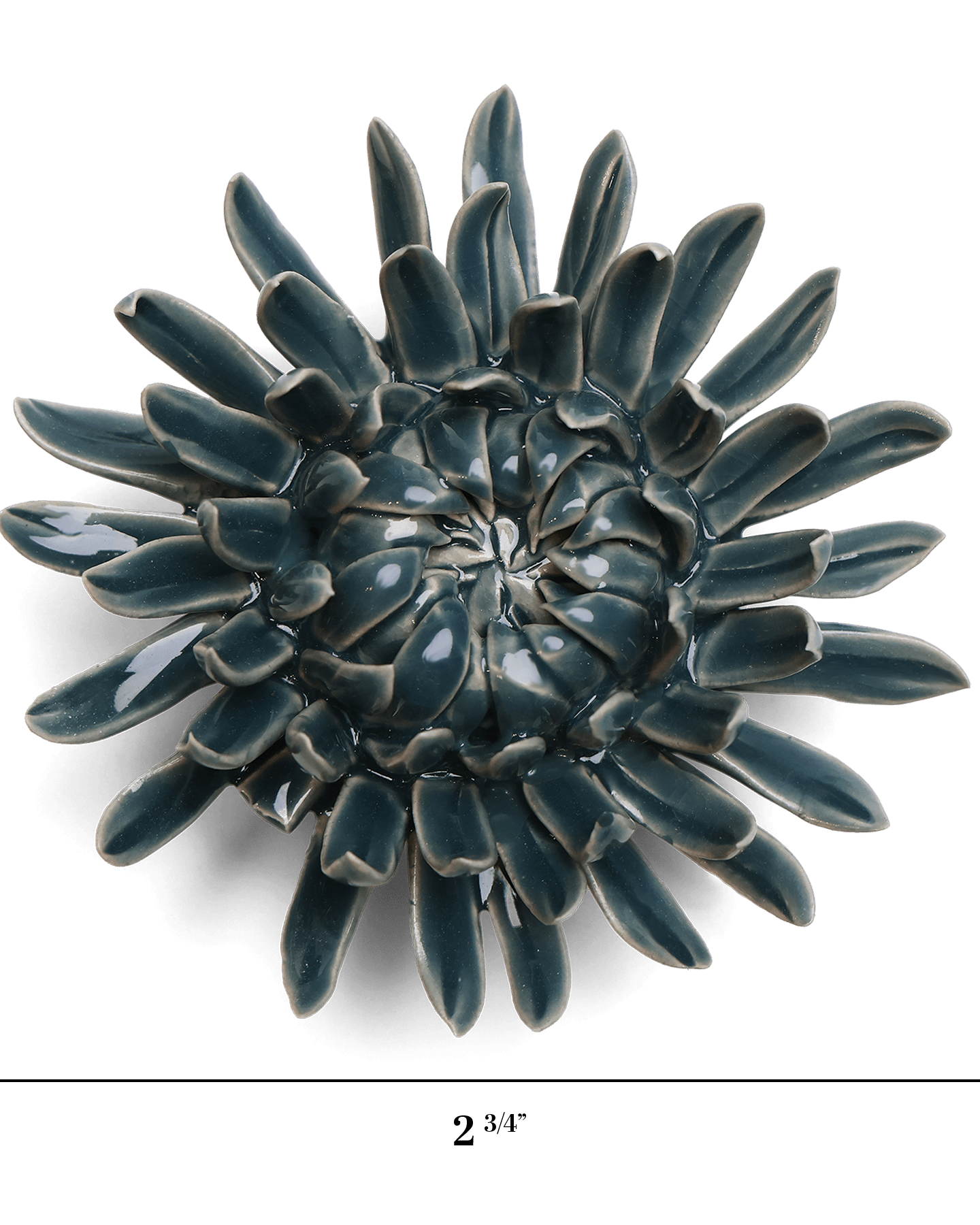
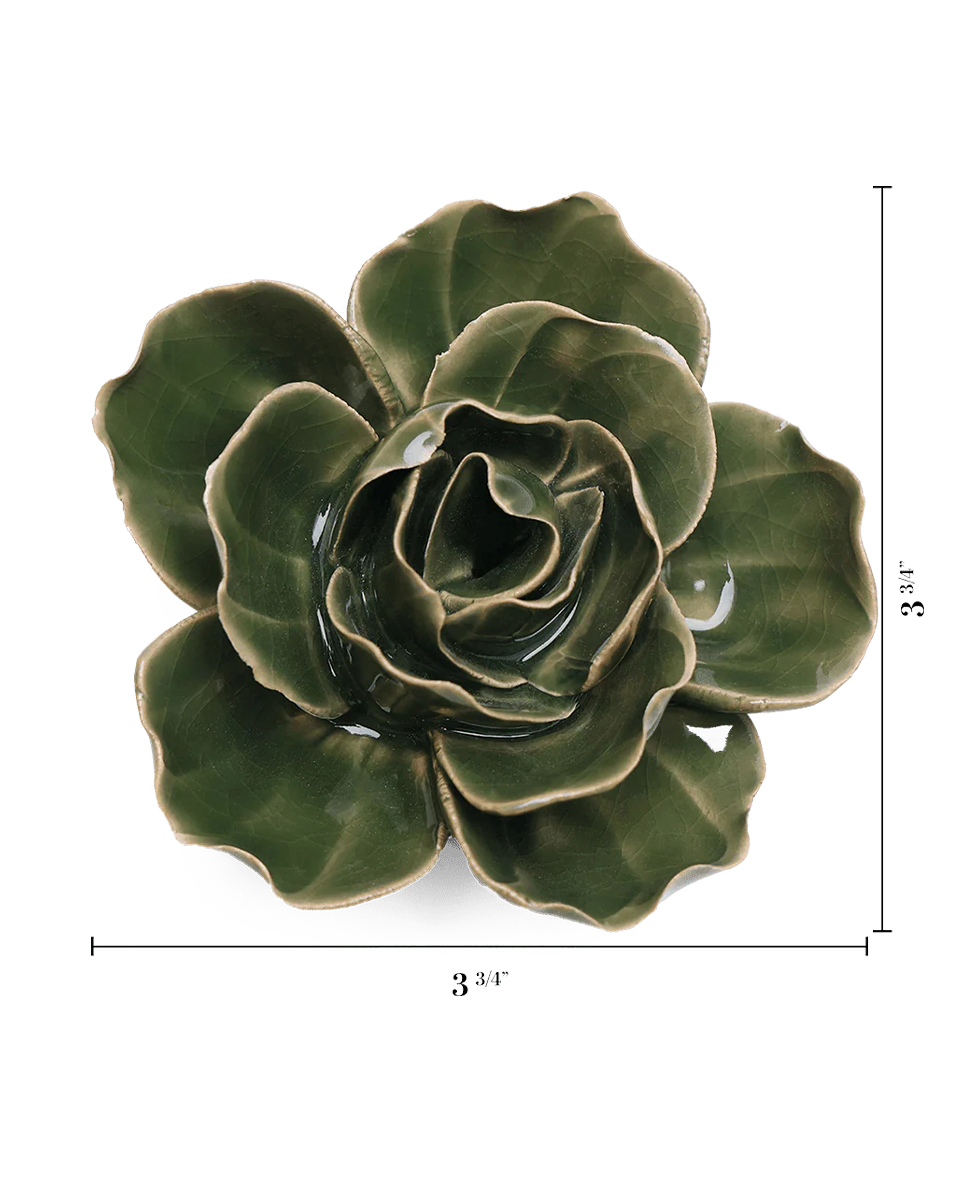
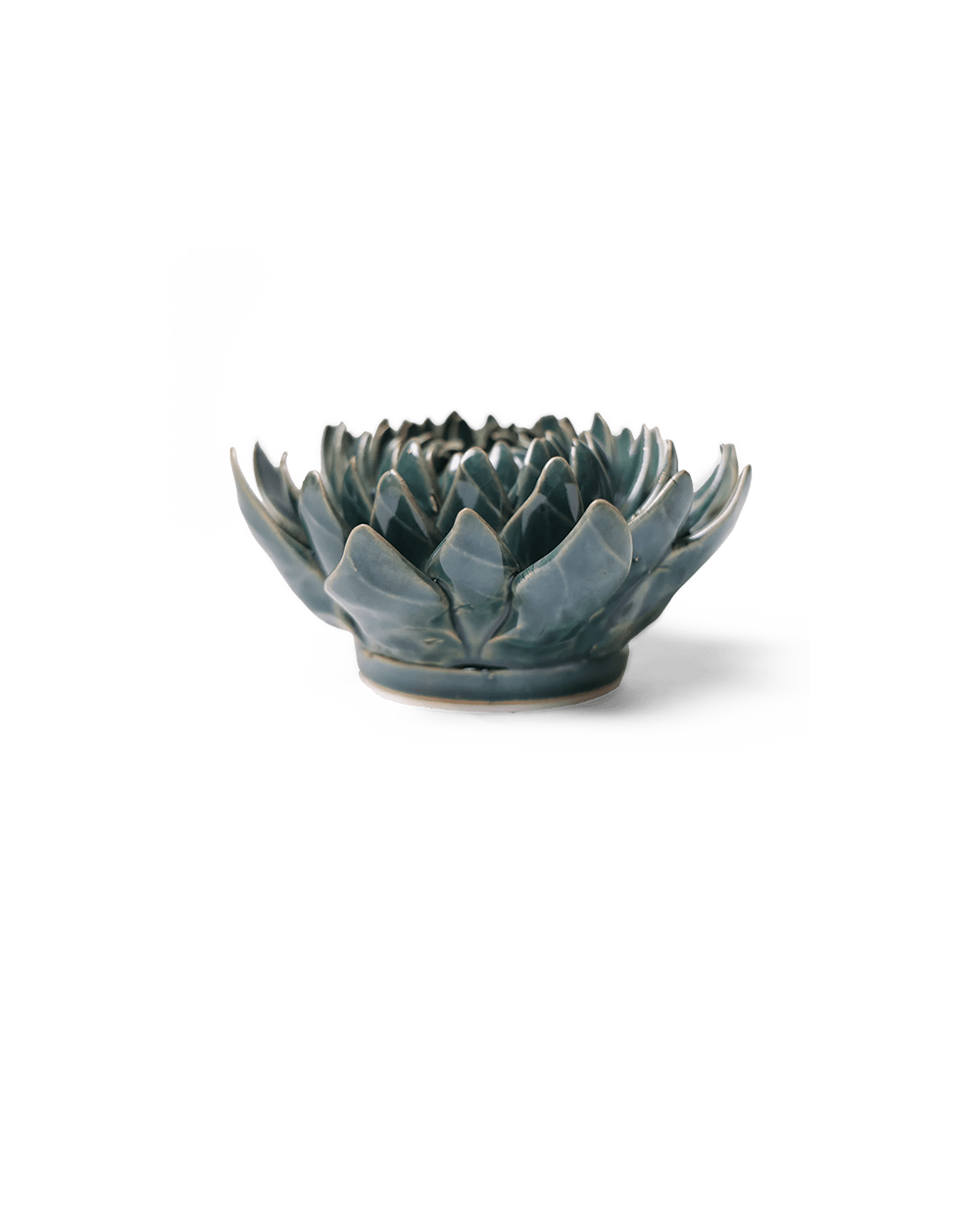
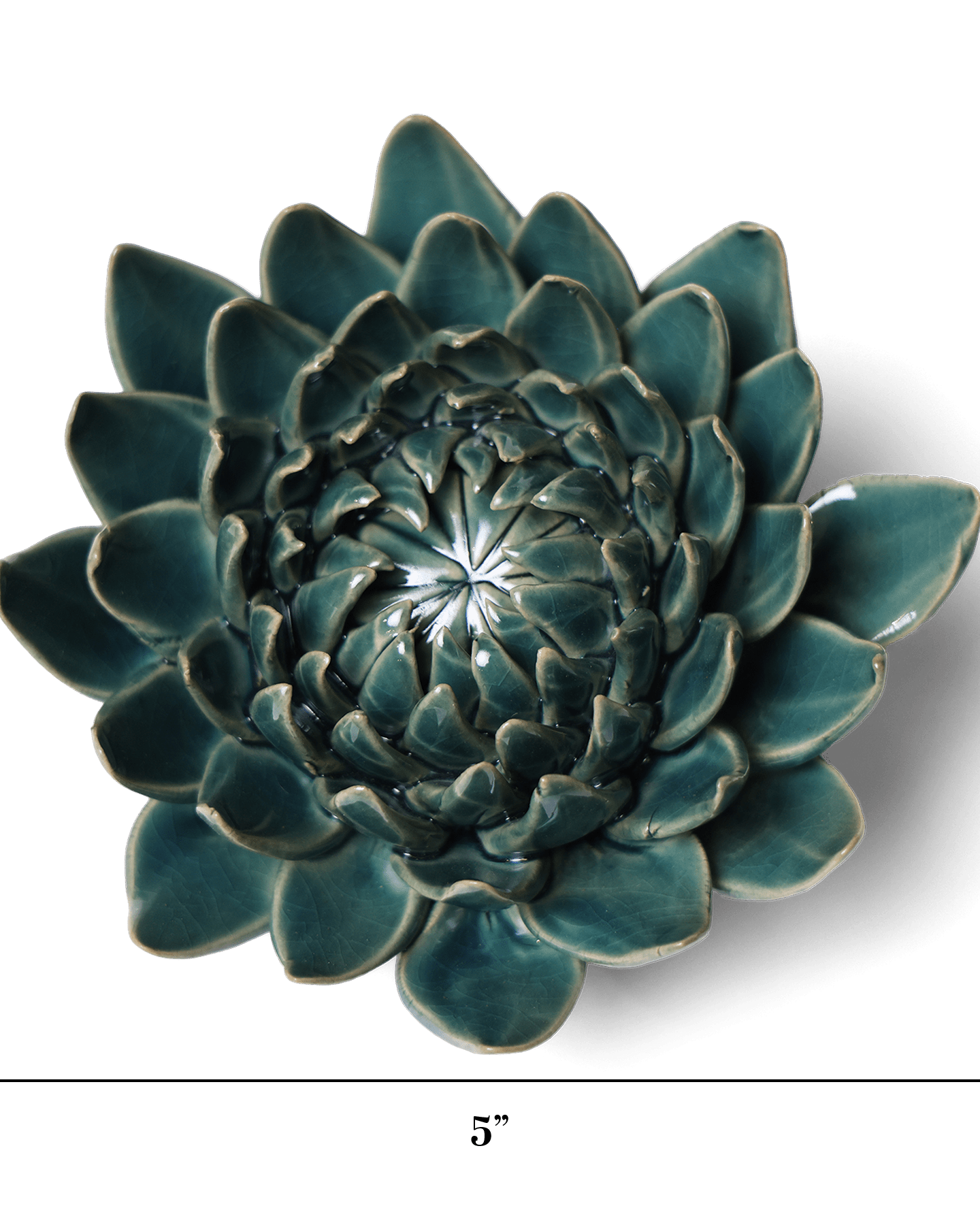
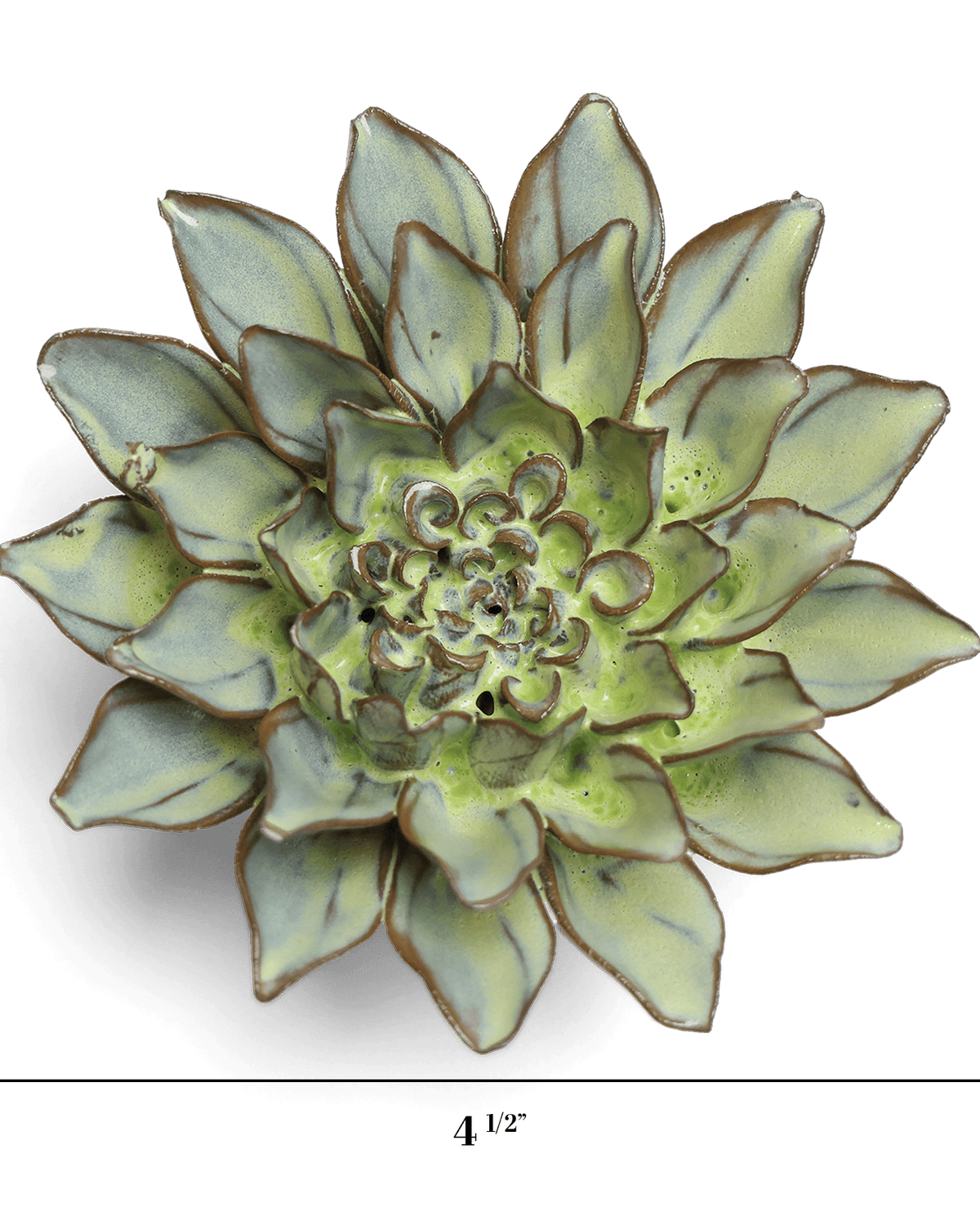
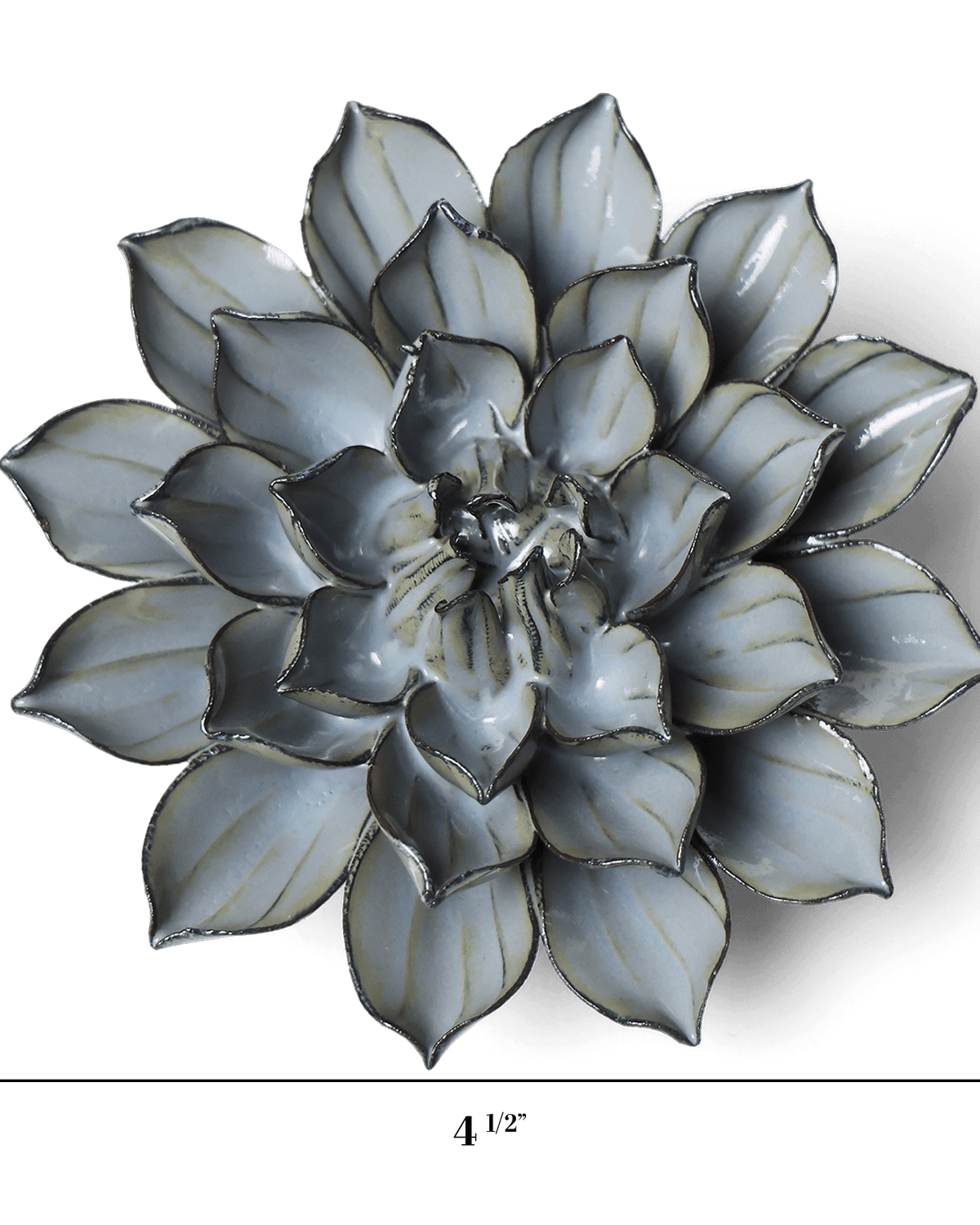
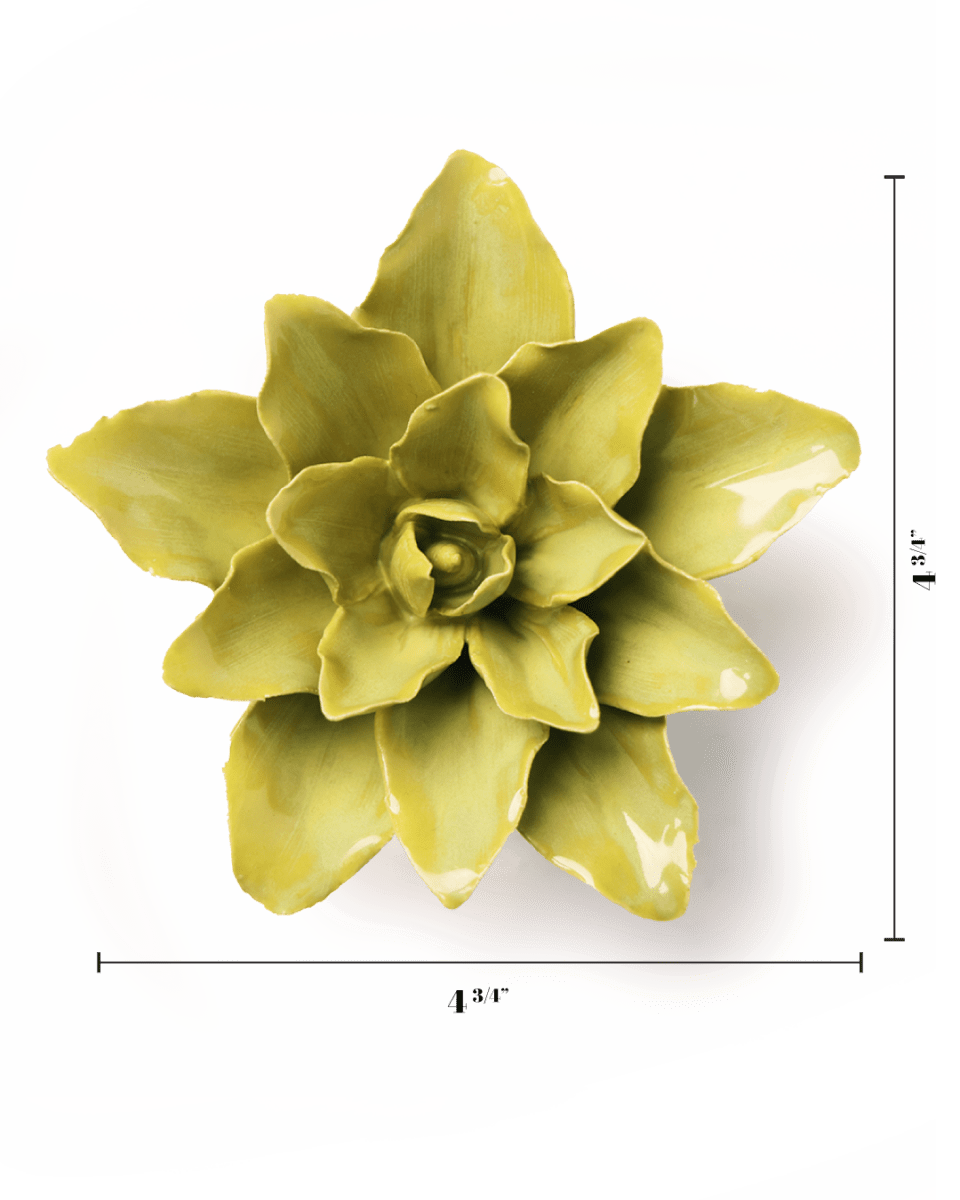
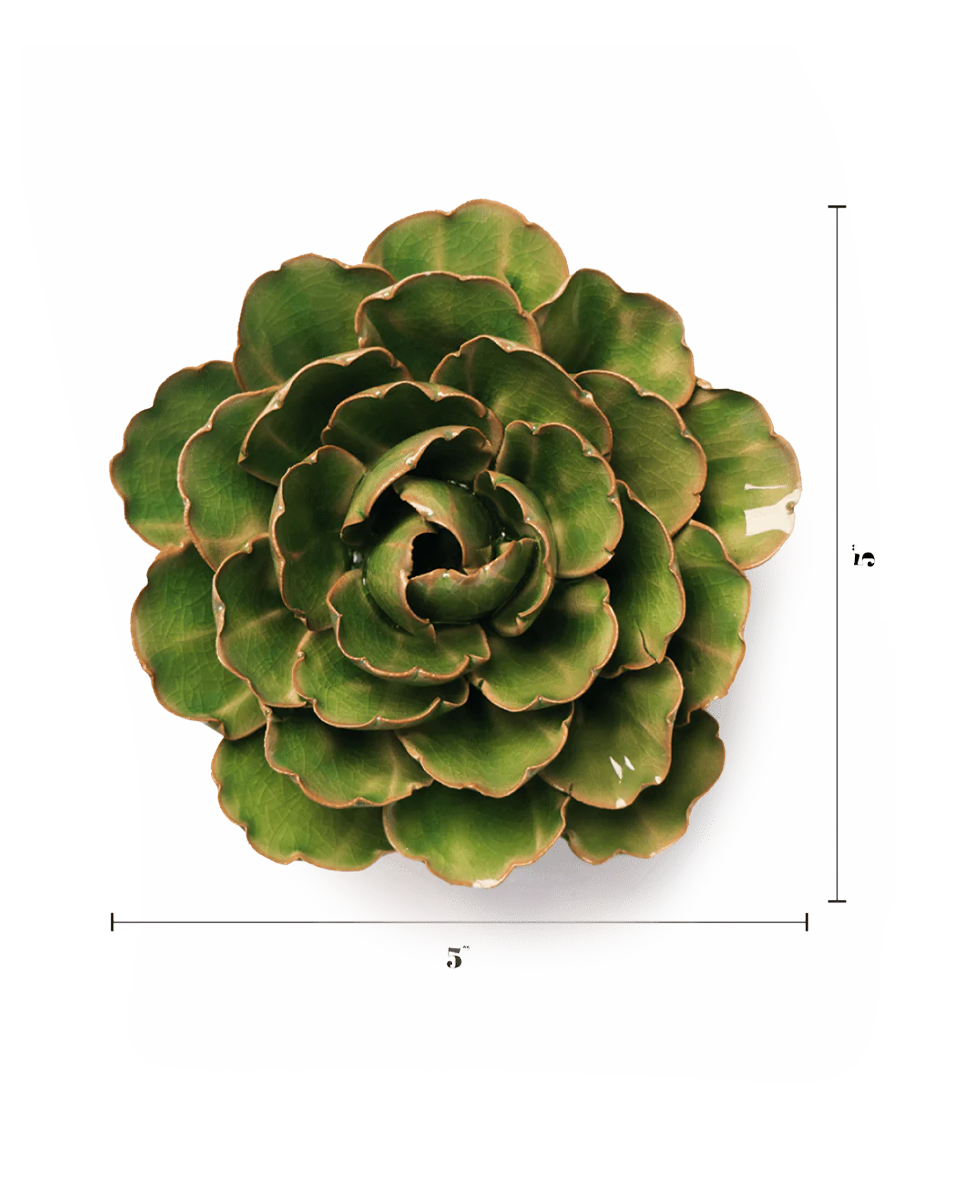
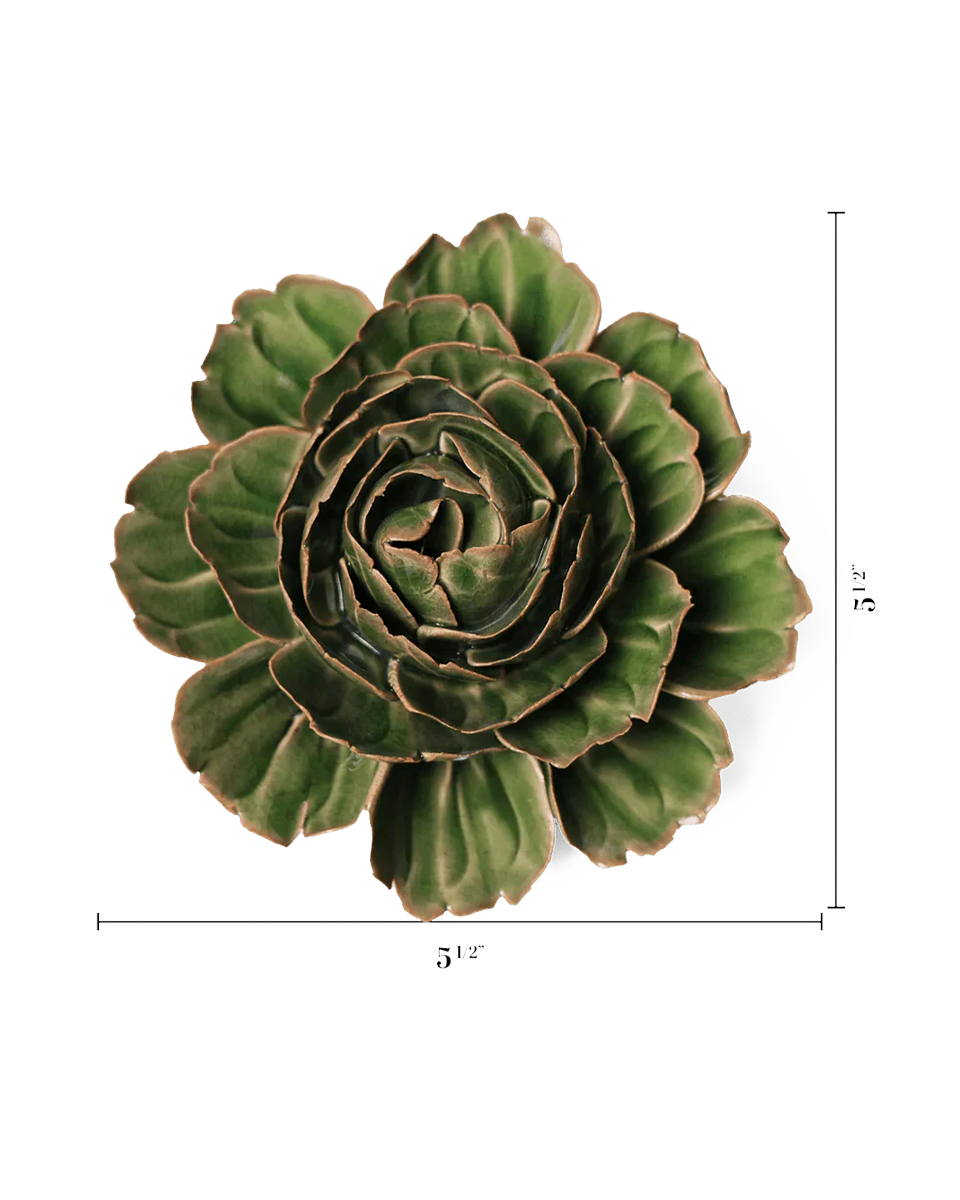
The 4-inch and 5-inch designs are the most commonly used for kitchen wall arrangements — substantial enough to register from across the room without crowding the wall space. A grouping of three to five 4-inch and 5-inch designs works well above a counter, beside a window, or on a stretch of wall between cabinets. The 3-inch designs work as accent additions to an existing grouping. The 6-inch designs are for kitchen walls with enough space for a statement piece — above a range hood or on a larger feature wall where a single anchor piece works better than a grouping.

Where do Chive green ceramic flowers end up in the world?

In the gift shops of the New York Botanical Garden, the Chicago Botanic Garden, the Denver Botanic Gardens, the Brooklyn Botanic Garden, the Norfolk Botanical Garden, and the Santa Barbara Botanic Garden, among others. Also on the walls of a significant number of kitchens belonging to people who received them as gifts or bought them after seeing them in a botanical garden gift shop. The botanical garden buyers who stock the green range are institutions whose entire purpose involves green. They chose to carry Chive's version of it, which is a more specific endorsement than it might initially appear.

Are green ceramic flowers a good gift for someone who loves plants?

Green ceramic wall flowers are an excellent gift for someone who loves plants and already has all the plants they need. They require no watering, no light, no repotting, and no seasonal adjustments. The green glaze range — sage, avocado, forest, mint — reads as plant-adjacent without being a plant, which is a distinction that people who have received too many plants in their lifetime tend to appreciate. They are handmade in a studio whose work is in the New York Botanical Garden and the Chicago Botanic Garden. The gift-ready packaging means no additional wrapping is required.

Do green ceramic flowers fade or change color over time?

No. Kiln-fired ceramic glazes do not fade. The color is fused into the ceramic at high temperature during the firing process — it is not a coating, a stain, or a finish applied to the surface afterward. Sunlight, humidity, cooking steam, and time do not affect it. The sage or avocado ceramic flower on your kitchen wall in fifteen years will be the same color as the day it arrived. This is one of the reasons ceramic is the correct material for kitchen wall decor, as opposed to fabric prints, watercolors, or wood finishes, which have varying and generally unpredictable relationships with kitchen environments over time.