Lantern Glass Unique Flower Vase

Regular price $35.25
Sizes
Hand Blown Glass
Dishwasher safe cleaning
30-day return policy

Build the Arrangement That Looks Harder Than It Was

Pick a vase to anchor the shelf, then add the rest until it reads as curated instead of collected.


The lantern vase and the Jaffa were drawn in the same year in the same room, they arrive in almost identical sizes, and people who own both mix them up constantly. The difference is not the measurements. It is what goes inside: the Jaffa suspends a bulb over water, while a lantern shaped vase in blue glass takes cut stems and is fairly particular about which ones. Freesia, muscari, sweet peas, a baby cymbidium orchid; those work, because a coloured vessel wants flowers that are pale or small or both. Send a red gerbera in and the two will fight, and neither of them wins. As a glass lantern flower vase it comes in two heights, the larger able to carry some stem length and the smaller better bought in a pair. Elsewhere in the range the glass gets out of the way — this one does not, and that is the reason to own it.

Product detail

Product Detail:

  • Material: Glass
  • Glaze finish: Translucent
  • Year Designed: 2020
Dimension
  • Large: 4.5 inches diameter, 5 inches tall
  • Medium: 3.75 inches diameter, 4 inches tall
Vase Care Instructions

All glass vases in this collection are dishwasher safe for easy cleaning, with one exception: mercury glass vases should be hand-washed only. The silvered mercury finish is a delicate coating rather than a solid color, and dishwasher heat and detergent can dull or strip it over time.

For standard glass vases, just load it in with the rest of the dishes — no special care needed. For mercury glass pieces, wash gently with warm water and mild soap, and dry with a soft cloth rather than letting it air dry with water spots.

Rinse and dry after each use, especially if flower food or cut-stem residue was in the water, so nothing lingers and clouds the glass.

Flowers that Love this Vase
  • Buttercup
  • Aster
  • Alstroemeria
  • Rose
  • Calendula
  • Nigella
  • Delphinium
  • Muscari
  • Hydrangea
  • Blanket Flower

Quick Guide to Building a Floral Arrangement

  1. Pick your vase first
  2. Start with your anchor flower.
  3. Build in odd numbers.
  4. Add height, then fill.
  5. Greenery does the quiet work.
  6. Cut stems at an angle, underwater if you can.
  7. Step back before you decide it's done.

Shipping & returns

Shipping

  • Free shipping: Orders $200+ within the US
  • Standard: 5–8 business days, Express 2–3 business days (at checkout)
  • International Ships: to 40 countries — rates at checkout
  • Packaging Ships: in outer box to protect gift box

View full shipping policy →

Returns

We accept returns within 30 days of delivery on unused items in original packaging. If your piece arrives damaged, contact us within 7 days with a photo and we will replace it at no charge.

View full return policy →

Wholesale Inquires

Have a cool shop? Know someone that does?

Find Chive on Faire →

Lantern Glass Unique Flower Vase - Chive Ceramics Studio - Vases - Chive US

A Florist Told Us It Was Hard to Use — The Lantern

A florist told us, politely and at some length, that this vase was hard to use. Not badly made, not the wrong size: hard to use, which is a worse review and a more useful one. Her complaint was specific. Blue takes something out of a warm flower, she said, and most of what arrives in a shop on a Tuesday is warm, so anybody working at speed will reach for a clear vessel every time and leave this one on the shelf. Todd asked what did work in it. She wrote four things down on the back of an invoice, thought about it, and added a fifth. Sweet peas, muscari, freesia, a baby cymbidium orchid, and white anything at all. That list has been on the product page ever since, more or less verbatim, because she was right and because a list of five flowers is more honest than a sentence claiming the vase suits everything. Some pieces are general purpose. This one has a range, and saying so has never cost us a sale that we know about. It has probably saved a number of returns, and it certainly saved us an argument with somebody who handles more flowers in a week than this studio does in a year.

Chive Studio trimming tulip stems with scissors on a wooden surface, with white, purple, and pink tulips arranged nearby.
How to Cut Flowers Like a Pro:

A (Mostly) Simple Guide to Cutting Your Flowers

So, you’re making an arrangement? Let’s ensure it lives long enough to impress someone—even if it's just you.

  1. Scrub the Scissors: Wash your shears first. Your flowers do not want a side of Dorito dust.
  2. Cut at 45°: Snip stems at an angle. It gives them a straw instead of making them chug from the bottle.
  3. Trim Underwater (Fancy Mode): Cut them submerged to block air bubbles. It’s extra, but they didn’t ask to suffocate.
  4. Ditch Submerged Leaves: Strip anything below the waterline. Unless you are actively going for a swamp aesthetic.
  5. Snip Again if Stale: If they sat out on the counter, trim them again. They need a fresh start (don’t we all?).
  6. Swap the Water: Change it and trim the stems every few days so they don't die immediately.

Voilà! You are now a domestic deity. Go take your Instagram photo before you forget to water them.

Pro Tip: The light does half the work.

Glass catches and bends light in a way ceramic can't. Set the arrangement somewhere it'll get some late afternoon sun, even for an hour, and the water and stems start doing something a solid vase never will.

Perfect Pairs for Any Shelf
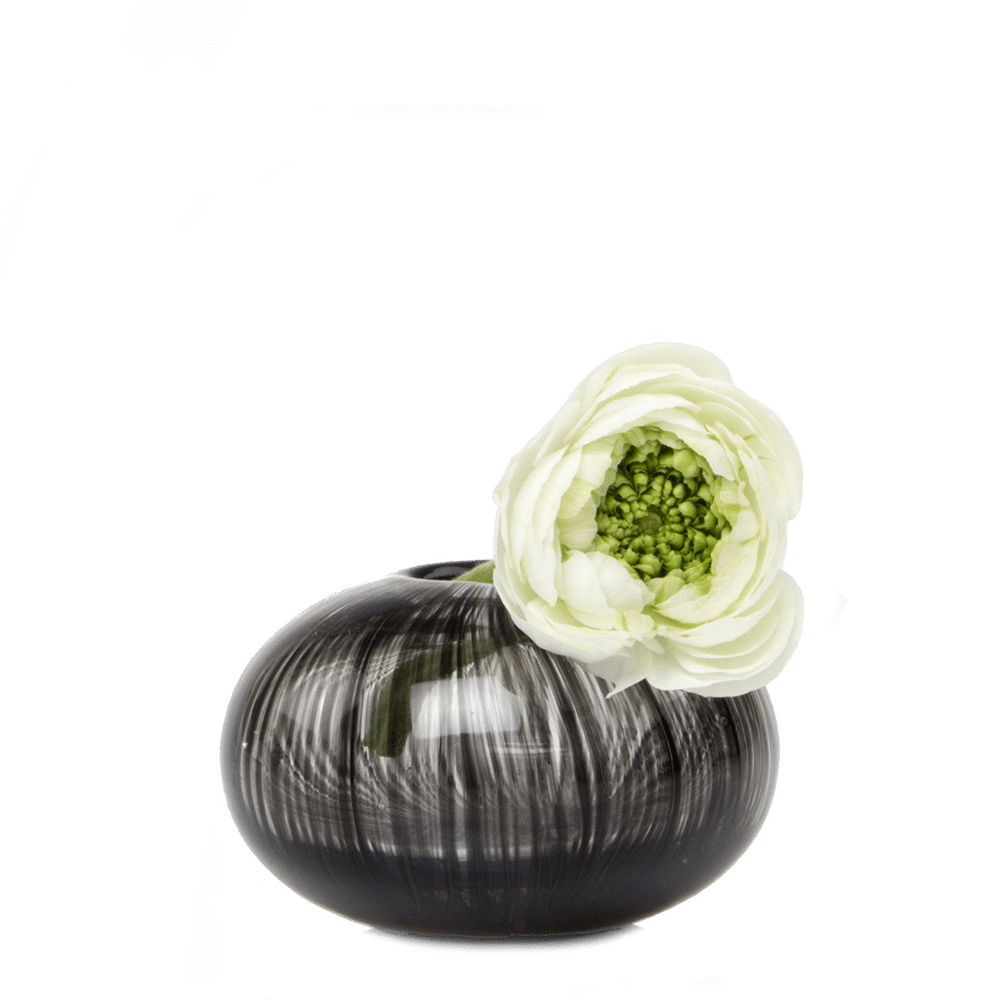
Ligne Glass Modern Flower Vase - Chive Ceramics Studio - Vases - Chive Ceramics Studio

Every Stem Visible Below The Waterline
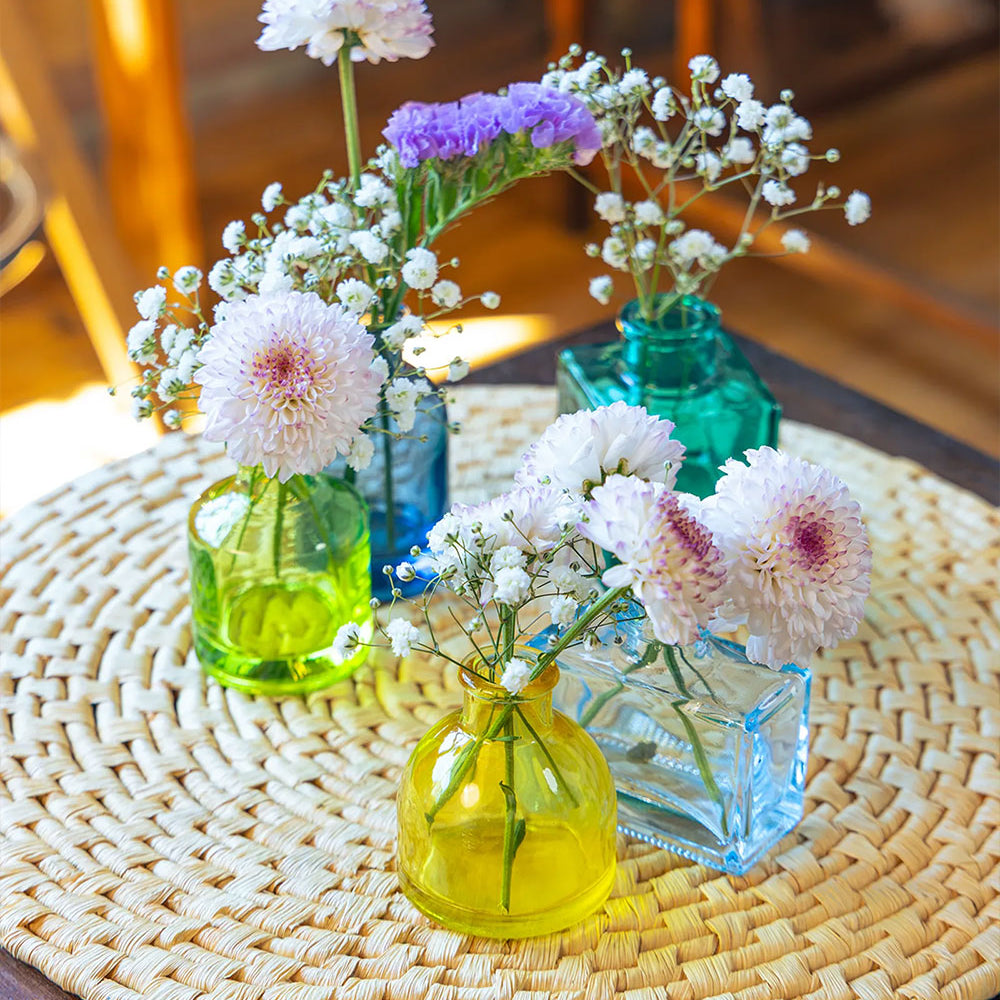
The glass vases at Chive come out of the same studio habit that produced everything else here: design the object once, correctly, then resist every opportunity to complicate it. Each one holds stems. None of them hides anything.

The only blue we currently make, and the only closed form, which together make this the piece least willing to disappear behind its contents. Where a clear upright vessel is wanted instead, the Ligne Glass Vase stands next along and shows every stem below the water line.

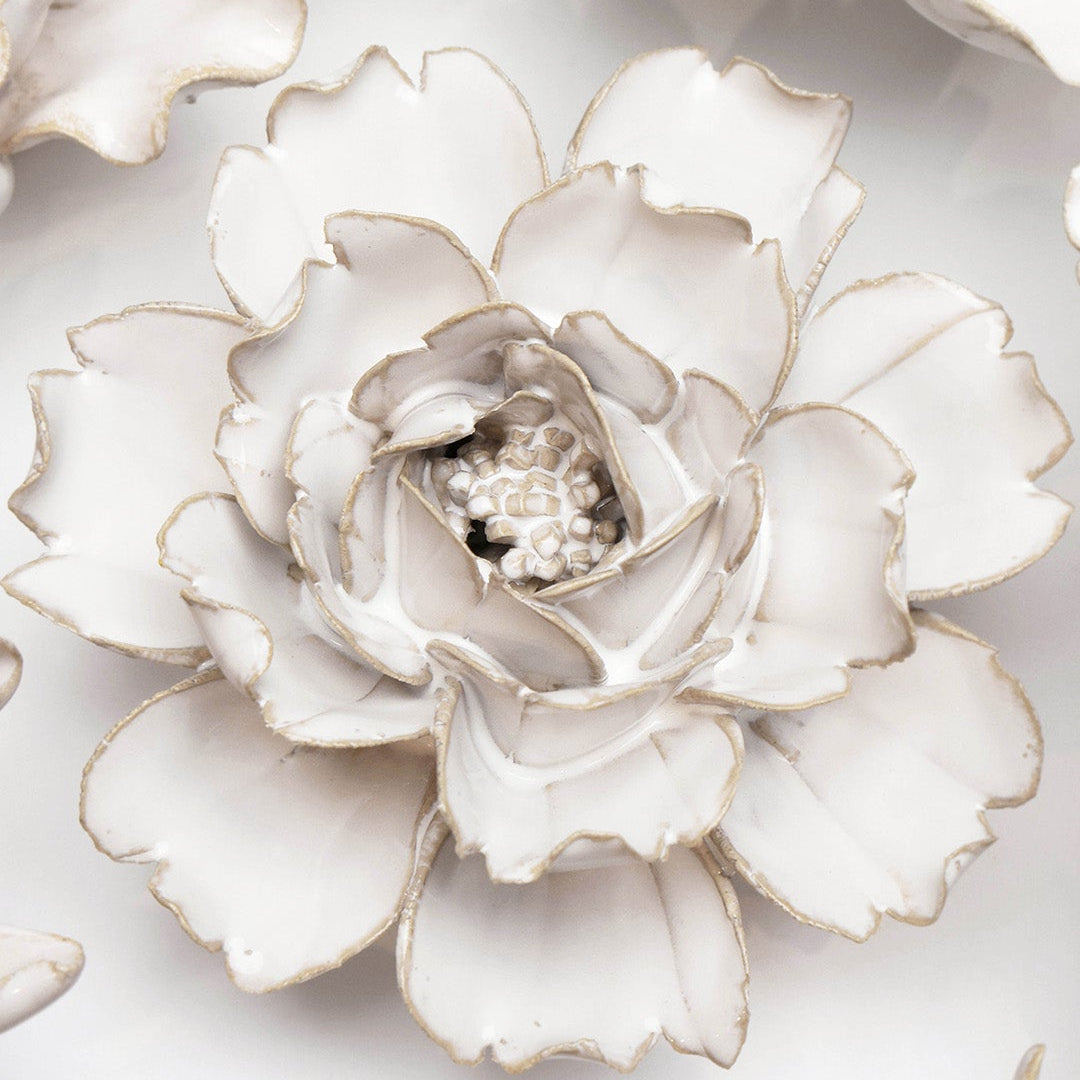
Chive Loft glass bud vase set in assorted shapes and colors on a table mat, each styled with flowers.

A Narrowing That Does The Florist's Job
Every Chive vase is built around one decision about how flowers should stand, then finished by hand until that decision reads as obvious.

For this shape the decision was the neck. Draw the body wide and then bring the opening back in, and four or five stems will stand upright on their own with no support inside the vessel and nothing stretched across the top of it. The narrowing does what a florist would otherwise have to improvise. It also means a modest handful looks like plenty. Open forms in the glass range make you work harder.

Ivory Rose ceramic wall flower styled on wall — Coastal Collection — Chive Studio Toronto

The Pale Bloom This Colour Has Been Asking For
A Pearlescent Rose is the pale bloom this colour has been asking for since 2020, and it has the additional merit of never going over. Blue glass wants something white in front of it. Hang the ceramic rose above the shelf and the pairing holds all year. No cutting, no water, no fortnight of decline.


Corrected by the People Who Use It Daily

Since 2004 the most reliable criticism this studio receives has come from people who use the objects professionally rather than from anyone who buys one. Florists, event people, the staff of shops that stock us: they handle forty vessels a week and their patience for a shape that fights them is nil. So we ask, and then we write down what they say even when it contradicts a decision we were pleased with. Several designs have been altered on that evidence and at least two were dropped for it. Everything here is designed and produced in the same building, so a correction can reach the bench in a fortnight. Compliments are pleasant. Complaints are actionable.


Inside the Chive Design Studio

Low maintenance, high impact. Let's make home styling look easy.

The Best 10 Styles of Vases

Jessie Duenas
The glorious world of flower vases! Because nothing says "I have my life together" quite like a carefully chosen vessel for your soon-to-be-wilting flora. Gather 'round, fell...
Read the full story

Wedding Centerpiece Vases: The Planning Guide Nobody Gives You

Jessie Duenas
Wedding centerpiece vases work best small and plural — three to seven per table, one to three stems each. A fifteen-table reception needs roughly seventy-five vases and 100 to 1...
Read the full story

Frequently asked questions

What is a lantern vase and when would you actually use one?

A lantern vase has a body that swells outward and then closes back toward a shorter neck, which is roughly the outline of an old carriage lamp. The narrow top does the work: four or five stems stand upright in it with no support mechanism at all, and because the body is wider than the opening a small handful reads as generous. Use it when flowers are scarce. It flatters a short supply.

Which stems suit the Lantern vase's opening and proportions best?

Slender and pale, for two unrelated reasons. The neck is narrow, so anything with a thick base occupies a share that nothing else can then use, and the glass is blue, which competes with a strong warm tone and loses. Muscari, nigella, buttercup, alstroemeria and a white rose all sit well. Hydrangea works in the larger size only. Red anything will fight it.

Is the Lantern vase sized for a windowsill or a mantel?

Both, depending which of the two sizes you take. The larger stands roughly a fifth taller than the medium and carries a wider bowl with it, which suits a mantel where there is some depth behind the object. The medium is the windowsill one, narrow enough that a blind still closes over it. Neither is a floor piece. Both fit a shelf.

What glass quality can you expect from the Lantern vase?

Even blue through the body with a deliberate gradient at the shoulder, where the wall thickens as the form turns inward and the tone deepens accordingly. That variation is a property of the shape rather than a fault, and it is the clearest evidence that you are looking at tinted stock and not a sprayed finish. The lip is rolled, not cut. Nothing on it is printed.

Does the Lantern vase need special care between flower arrangements?

One habit, and it is a habit rather than a technique: rinse it out every time the flowers change, whether or not it appears to need it. Blue glass conceals the state of its own interior, so the visual cue that tells you a vessel has gone past acceptable is simply not available in here. So work to a schedule rather than to what you can see. The colour removed the feedback.

How do you group the Lantern vase with other Chive pieces?

With clear or with white, and with nothing else coloured. This is the only blue currently in the range, so it has no relatives here, and standing it beside another tinted piece starts an argument that neither of them wins. A pale porcelain vessel to one side is the reliable answer. Two Lanterns together also work, one of each size. That pairing was intended.

How does the Lantern vase compare with the Ligne vase in person?

The difference is colour and closure. The Ligne is a clear upright form that shows you everything in it, stems below the water line included; this is blue and drawn inward at the top, so what you get is a silhouette and a tone rather than a full view. In photographs the two of them look about the same size. Held together, this one is rounder.

Why is it called the Lantern vase and what's the story?

The outline is a lantern's: a body that widens and then draws back in toward the top. The form was not chosen for the resemblance, though. It was chosen because a closing neck will hold four or five stems upright with no internal support and no tape across the mouth. The name was the shortest accurate description available. Nobody laboured over it.

Ceramic astronaut vase with flowers styled on shelf — Chive Studio Toronto
Behind the Studio

The story behind the Chive astronaut vases

The story of Laika, Félicette, a solar eclipse in New York, and a space bar that ordered a hundred vases a month until it closed.