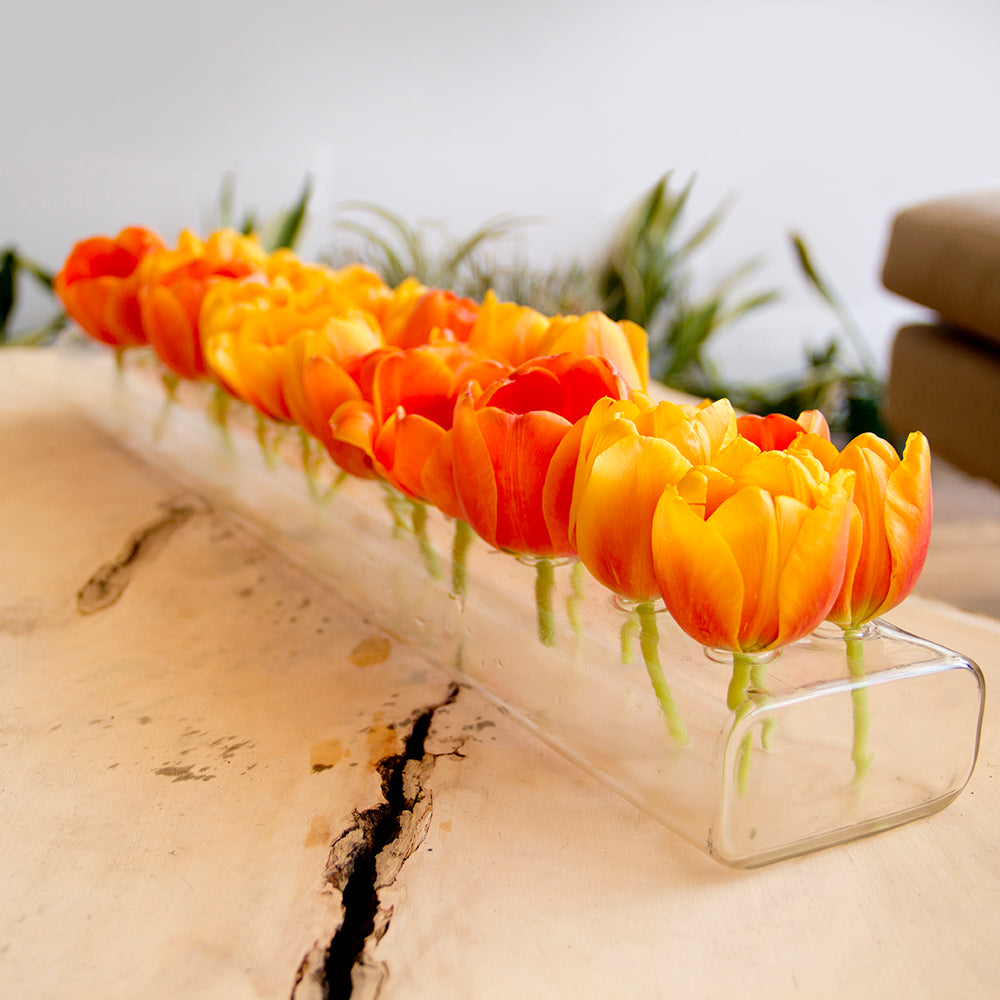
Rectangle Flute Glass Modern Clear Flower Vase

Regular price $19.80
Sizes
Hand Blown Glass
Dishwasher safe cleaning
30-day return policy

Build the Arrangement That Looks Harder Than It Was

Pick a vase to anchor the shelf, then add the rest until it reads as curated instead of collected.


The Rectangle Flute is a rectangle vase built as a row of separate bores in one long body, and it is the best thing we make. Every version measures 4 inches wide and 2 inches tall. Only the length moves: 5 inches for the four-hole, 8 for the eight, 24 for the twenty-four. That constant is what lets three lengths sit on one table without reading as three different products. As a flute vase it borrows from the table runner rather than from the vase, being a long low object made to travel down the middle of a table, which is why it works as one of the few low wedding centerpieces guests can genuinely see over. Along its length each bore takes one stem, so the arrangement becomes a line instead of a bunch. Cut everything to a similar height and the row reads as one piece. The longer the version, the less the table needs anything else on it.

Product detail

Product Detail:

  • Material: Glass
  • Glaze finish: Translucent
  • Year Designed: 2003
Dimension
  • 4-Hole: 5 inches long, 4 inches wide, 2 inches tall
  • 8-Hole: 8 inches long, 4 inches wide, 2 inches tall
  • 24-Hole: 24 inches long, 4 inches wide, 2 inches tall
Vase Care Instructions

All glass vases in this collection are dishwasher safe for easy cleaning, with one exception: mercury glass vases should be hand-washed only. The silvered mercury finish is a delicate coating rather than a solid color, and dishwasher heat and detergent can dull or strip it over time.

For standard glass vases, just load it in with the rest of the dishes — no special care needed. For mercury glass pieces, wash gently with warm water and mild soap, and dry with a soft cloth rather than letting it air dry with water spots.

Rinse and dry after each use, especially if flower food or cut-stem residue was in the water, so nothing lingers and clouds the glass.

Flowers that Love this Vase
  • Cosmos
  • Lavender
  • Daisy
  • Snapdragon
  • Celosia
  • Allium
  • Nasturtium
  • Scabiosa
  • Tweedia
  • Pansy

Quick Guide to Building a Floral Arrangement

  1. Pick your vase first
  2. Start with your anchor flower.
  3. Build in odd numbers.
  4. Add height, then fill.
  5. Greenery does the quiet work.
  6. Cut stems at an angle, underwater if you can.
  7. Step back before you decide it's done.

Shipping & returns

Shipping

  • Free shipping: Orders $200+ within the US
  • Standard: 5–8 business days, Express 2–3 business days (at checkout)
  • International Ships: to 40 countries — rates at checkout
  • Packaging Ships: in outer box to protect gift box

View full shipping policy →

Returns

We accept returns within 30 days of delivery on unused items in original packaging. If your piece arrives damaged, contact us within 7 days with a photo and we will replace it at no charge.

View full return policy →

Wholesale Inquires

Have a cool shop? Know someone that does?

Find Chive on Faire →

Rectangle Flute Glass Modern Clear Flower Vase - Chive Ceramics Studio - Vases - Chive Ceramics Studio

Ten million views, one hand - The Flute 24

In 2021 somebody filmed a twenty-four hole Flute being loaded, one stem at a time, from an armful of supermarket flowers, and that video has now been watched more than ten million times.

I have watched a good deal of it myself, in the way you examine a photograph of your own house. Nothing happens. A hand comes in from the left, puts a stem in a hole, and leaves. Twenty-four times. The appeal, as far as I can reconstruct it, is that the piece does the arranging and the person filming clearly does not know how to arrange anything, and by stem nineteen it has become obvious that this does not matter.

What ten million views did for us commercially is a shorter story: some, briefly, and mostly to people who wanted the four-hole. What it did for me was harder to shake. We had spent years explaining that the spacing removes the decisions, and a stranger demonstrated it in ninety seconds without a word of explanation and without meaning to prove anything at all.

I still cannot arrange flowers. Neither, on the evidence, can the person in the video. The Flute has never required either of us to learn, and ten million people appear to have found that reassuring.

Chive Studio trimming tulip stems with scissors on a wooden surface, with white, purple, and pink tulips arranged nearby.
How to Cut Flowers Like a Pro:

A (Mostly) Simple Guide to Cutting Your Flowers

So, you’re making an arrangement? Let’s ensure it lives long enough to impress someone—even if it's just you.

  1. Scrub the Scissors: Wash your shears first. Your flowers do not want a side of Dorito dust.
  2. Cut at 45°: Snip stems at an angle. It gives them a straw instead of making them chug from the bottle.
  3. Trim Underwater (Fancy Mode): Cut them submerged to block air bubbles. It’s extra, but they didn’t ask to suffocate.
  4. Ditch Submerged Leaves: Strip anything below the waterline. Unless you are actively going for a swamp aesthetic.
  5. Snip Again if Stale: If they sat out on the counter, trim them again. They need a fresh start (don’t we all?).
  6. Swap the Water: Change it and trim the stems every few days so they don't die immediately.

Voilà! You are now a domestic deity. Go take your Instagram photo before you forget to water them.

Pro Tip: The light does half the work.

Glass catches and bends light in a way ceramic can't. Set the arrangement somewhere it'll get some late afternoon sun, even for an hour, and the water and stems start doing something a solid vase never will.

Perfect Pairs for Any Shelf
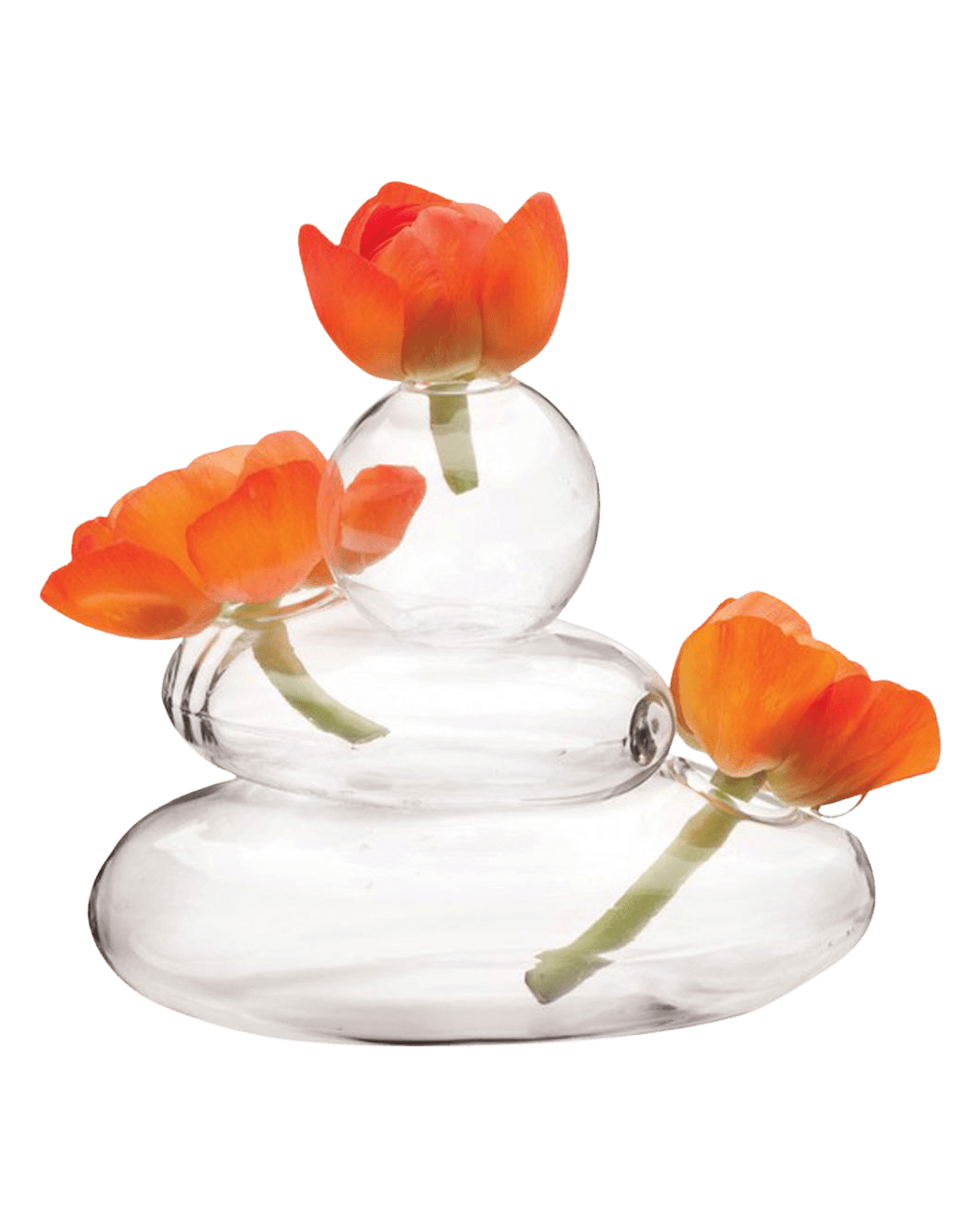
Rockpile Glass Modern Clear Flower Vase - Chive Ceramics Studio - Vases - Chive Ceramics Studio

A Straight Line's Opposite Number

The glass vases at Chive come out of the same studio habit that produced everything else here: design the object once, correctly, then resist every opportunity to complicate it. Each one holds stems. None of them hides anything. The Rectangle Flute is the clearest case in the range, because the arrangement is entirely determined by where the openings were put. For the same logic applied to an irregular cluster instead of a straight line, the Rockpile Glass Vase is next.

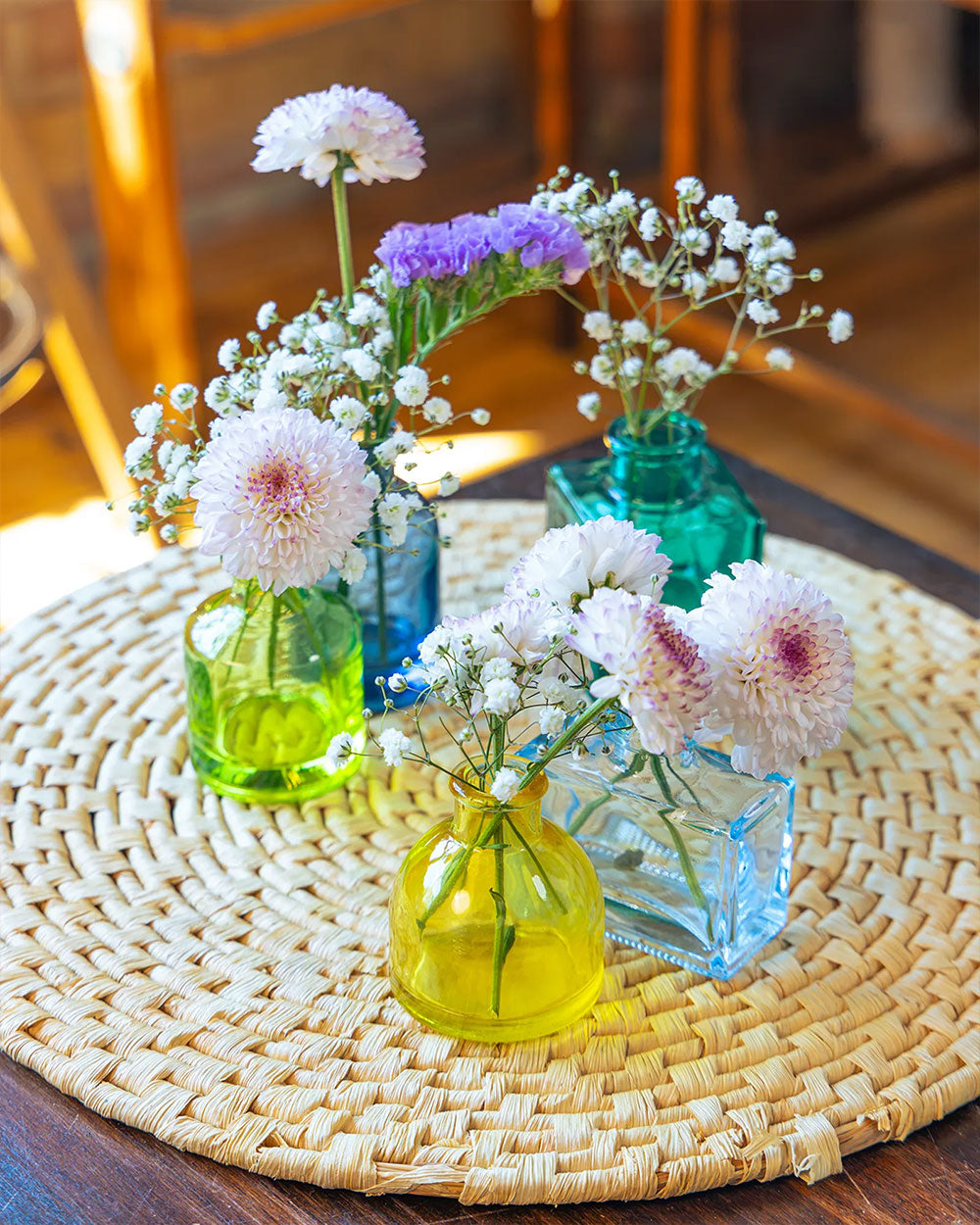
Chive Loft glass bud vase set in assorted shapes and colors on a table mat, each styled with flowers.

One Good Decision Beats Several Adjustable Ones
Every Chive vase is built around one decision about how flowers should stand, then finished by hand until that decision reads as obvious. Here the decision was the line: individual openings pitched along a single straight vessel, far enough apart that a stem in each clears its neighbours and close enough that the piece reads as one object rather than a tray of small vases. Length varies and nothing else does. The rest of the glass vases collection was built on the same principle, which is that one good decision beats several adjustable ones.

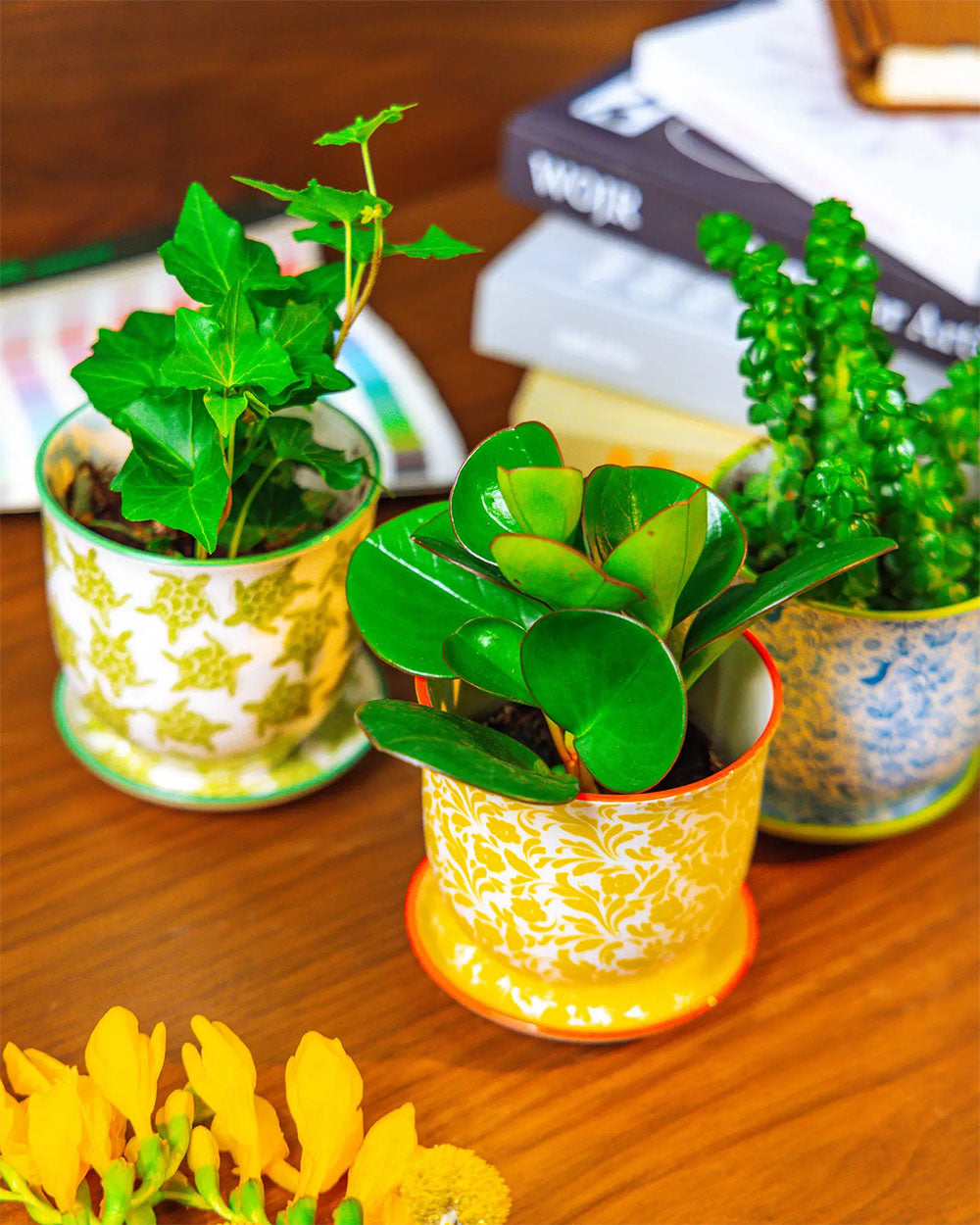
Chive Liberté small planters in yellow flowers, turtles, and blue birds prints, styled with a peperomia, ivy, and succulent.

Something Cut, Something Growing

Set the 3-inch Liberte porcelain pot at one end and the table is doing two contradictory jobs at once. A vase holds water deliberately and a pot with drainage lets it straight out, which is the difference between something cut and something growing. Cut stems down the centre, one living plant at the end. The pot outlasts the flowers by several years.


Same Benches, Same Pitch

The same benches have been turning these out for over two decades, which is longer than most of the people currently standing at them have worked here. Chive opened in 2004, and this design was already in the catalogue and already selling, and it went on to land on the O List, which is the sort of thing a small studio mentions for a decade afterward and we are no exception. What matters more is the continuity. The tooling, the pitch of the openings and the wall section have not been redrawn, so a piece bought this year sits alongside one bought at the very beginning without any visible difference between them.


Inside the Chive Design Studio

Low maintenance, high impact. Let's make home styling look easy.

The Best 10 Styles of Vases

Jessie Duenas
The glorious world of flower vases! Because nothing says "I have my life together" quite like a carefully chosen vessel for your soon-to-be-wilting flora. Gather 'round, fell...
Read the full story

Wedding Centerpiece Vases: The Planning Guide Nobody Gives You

Jessie Duenas
Wedding centerpiece vases work best small and plural — three to seven per table, one to three stems each. A fifteen-table reception needs roughly seventy-five vases and 100 to 1...
Read the full story

Frequently asked questions

What is a rectangle vase and where does it work best?

A rectangle vase is a straight-sided vessel longer than it is deep, built to run along a surface rather than stand on a point of it. This version suits a table centre, a mantel, or a windowsill where a round vase simply wastes the length available to it. Depth stays at 4 inches and height at 2 throughout. Only the run changes.

What is a flute vase and why the 24-hole design?

A flute vase holds each stem in its own separate bore rather than in one shared reservoir, so the stems cannot cross or lean together. Twenty-four of them exists because that is roughly the length of a dining table centre, and a stem every inch produces a continuous line instead of a series of gaps. Fewer openings than that leave visible interruptions. Twenty-four reads as one thing.

Why choose low wedding centerpieces guests can talk over easily?

Because a centrepiece taller than a seated shoulder turns a round table into two conversations. At 2 inches high nothing here interrupts a sightline, so eight people can talk across rather than around, which is the single most common complaint about wedding tables afterward. Guests remember whether they could hear each other. They rarely remember the flowers.

Is the Flute 24 vase's glass surface prone to marks or scratches?

Marks are more likely than scratches, and the cause is length. Two feet of glass gets picked up with two hands, slid rather than lifted when a table is crowded, and set down on a corner first, so the underside collects fine abrasion from surfaces rather than from use. The glass itself is thick and unfinished on top. Lift from both ends, never one.

How do you clean the Flute 24 vase without damaging the finish?

Whole, under running water, rather than bore by bore. Twenty-four openings cannot be reached individually by anything you own, so the method is to flood the piece from a tap at an angle, let it fill and overflow through every hole, then tip it end over end to drain. Stand it on edge on a towel afterward. Nothing needs to go inside it.

How many bud vase centerpieces do round tables usually need?

Judge it by diameter rather than by guest count. A 60-inch round takes a cluster of five to seven small vessels in the middle, or a single low run if the table is long rather than round, and the useful rule is that the arrangement should occupy about a third of the diameter and no more. Leave honest room for plates and glasses. Crowding reads as effort.

What are easy wedding centerpiece ideas for round tables?

Keep the height under ten inches and repeat one idea rather than staging a scene. A low cluster of small vessels, a shallow bowl of floating heads, a run of candles at different heights with foliage laid flat between them: all three survive a room with poor lighting and guests who move the furniture. Buy flowers in one colour and vary the shape instead. Simple repeats photograph better than mixed arrangements.

What design tradition does the Flute 24 vase draw from?

From the runner, not from the vase at all. A long low object laid along the centre of a dining surface predates any centrepiece convention, and historically it was textile: something that defined the middle without occupying it. This borrows that job and adds a function, holding cut stems at intervals across the identical footprint. What it inherited was a horizontal habit. Vases rarely have one.

Ceramic astronaut vase with flowers styled on shelf — Chive Studio Toronto
Behind the Studio

The story behind the Chive astronaut vases

The story of Laika, Félicette, a solar eclipse in New York, and a space bar that ordered a hundred vases a month until it closed.