Radish Vegetable Seeds Packet

Regular price $4.95

Vacuum Sealed
NON-GMO
Seed Pack Guarantee

Radish seeds for the kitchen garden that intends to actually produce radish this year. Radish is the vegetable that grows while you are still deciding what else to plant.

Radish is the fastest vegetable in the garden -- ready in 20-30 days and the ideal crop for impatient beginners. Each packet is hermetically vacuum-sealed -- removing the oxygen that causes standard paper seed packets to lose germination viability within approximately one year. State law requires a 3-year viability label on sealed packaging. NASA research on hermetic seed storage indicates viability of up to 10 years under proper conditions. Every packet is non-GMO and germination-tested at independent third-party labs before it earns its Japanese woodblock print artwork.

Seed specifications
  • Material: Seed
  • Botanical name: Raphanus sativus L.
  • Plant family: Brassicaceae
  • Plant type: Annual
  • Seed type: Open-pollinated
  • USDA Hardiness Zones: 2–11
  • Packet contents: 100 seeds
  • Packaging: Hermetically vacuum-sealed
  • Non-GMO: Yes
  • Seed viability: Up to 10 years (sealed) / 4–5 years (unsealed, ideal conditions)
  • Difficulty: Easy/Beginners
Sowing & growing guide

Quick Sowing Guide:

  • When to sow: 3–6 weeks before last frost
  • Sowing depth: ½ inch (1.25 cm)
  • Initial spacing: 1 inch apart
  • Row spacing: 6–8 inches
  • Days to germination: 3–7 days
  • Light: Full sun
  • Water: Consistent moisture.
  • Soil: Loose, well-draining.
  • Days to harvest: 21–30 days

Start Growing: Step-by-step sowing and growing guide

About vacuum sealing

Why Vacuum-Sealed Seeds Last Longer

Standard paper seed packets are permeable to oxygen and moisture -- the two primary causes of seed degradation. Most paper-packaged seeds begin losing germination viability after approximately one year, contributing to significant garden-industry waste: packets purchased, not planted, expired, discarded. Shido Seeds are hermetically vacuum-sealed. The packet does not expire quietly in a drawer. It waits.

About the Packaging

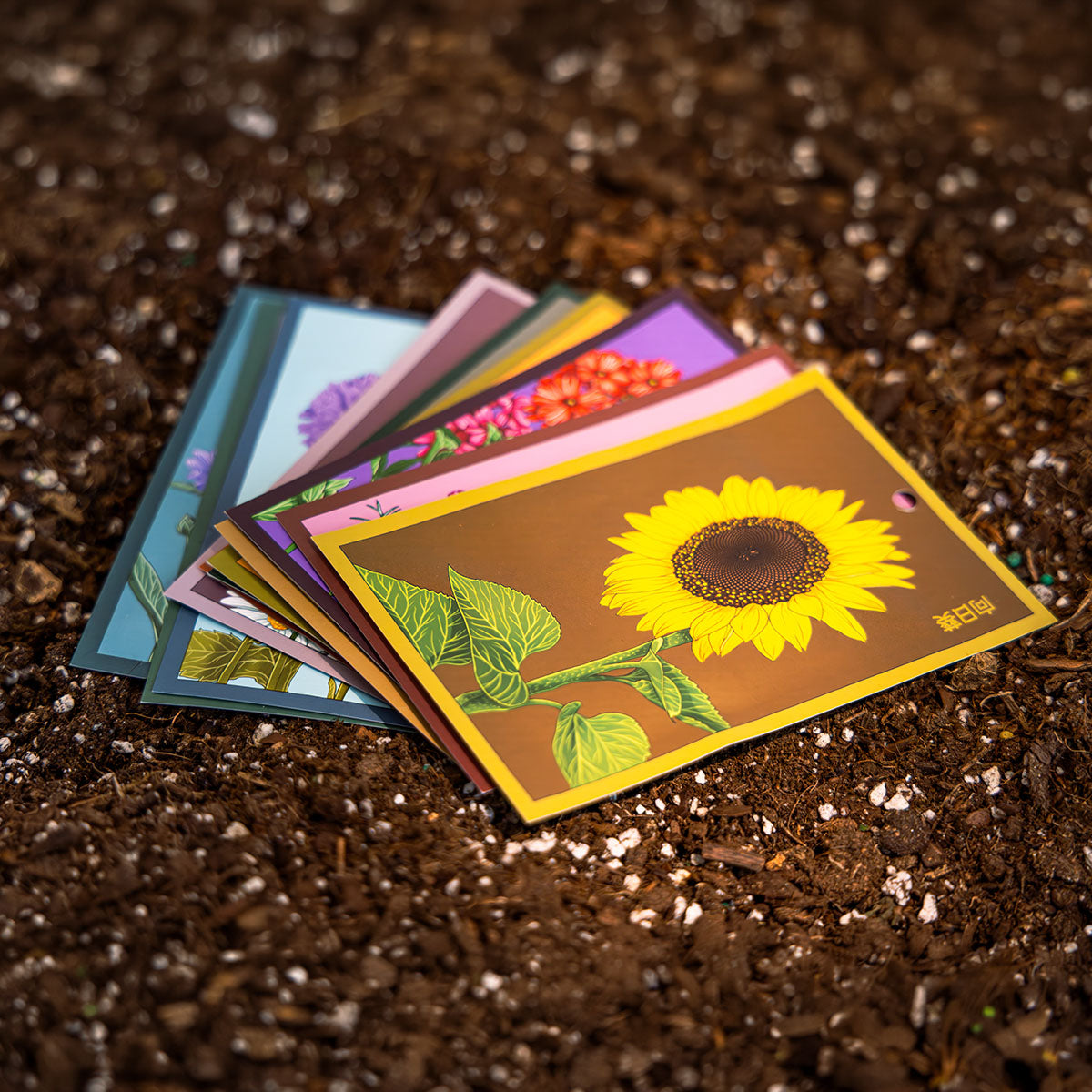
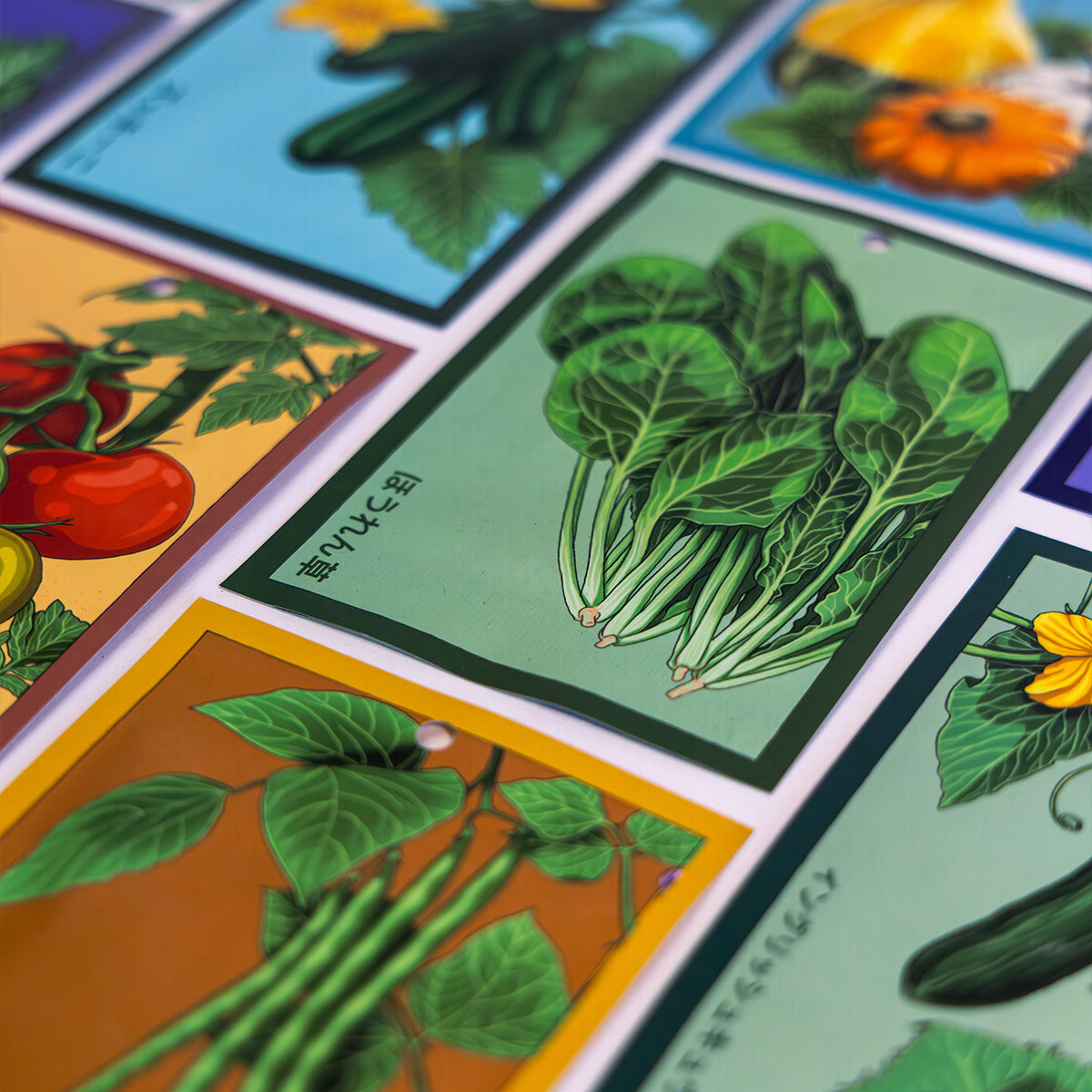
Every Shido seed packet is illustrated in the style of Japanese 1910s woodblock printing -- designed and drawn in-house by Chive, that has been exhibiting at the Chelsea Flower Show in London every year and does not, as a matter of principle, sell to big-box retailers. Customers collect the packets as a series. This was not the original plan.

Shipping & returns

Shipping

  • Free shipping: Orders $200+ within the US
  • Standard: 5–8 business days, Express 2–3 business days (at checkout)
  • International Ships: to 40 countries — rates at checkout
  • Packaging Ships: in outer box to protect gift box

View full shipping policy →

Returns

We accept returns within 30 days of delivery on unused items in original packaging. If your piece arrives damaged, contact us within 7 days with a photo and we will replace it at no charge.

View full return policy →

Satisfaction Guarantee

We stand by the quality of our flower seed packets! Every Shido seed packet is lab-tested for germination before it ships. If your seeds do not perform to the stated germination rate under correct growing conditions, contact us and we will replace or refund. Guaranteed!

Wholesale Inquires

Have a cool shop? Know someone that does?

Find Chive on Faire →

Radish Horticultural Specifications

Botanical

Raphanus sativusL.

Plant Type

Annual

Light

Full sun

Water

Consistent moisture.

Soil

Loose, well-draining.

Depth

½ inch (1.25 cm)

Germination

3–7 days

USDA Zone

2–11

Mature Height

6–12 inches (tops/foliage)

Harvest

21–30 Days

Getting to know your Radish

Raphanus sativushas been under cultivation for roughly four thousand years, which makes it one of the oldest domesticated vegetables on record. The Egyptians grew it before the pyramids were built. The Greeks had multiple named varieties before most European vegetables existed as distinct crops. What the radish figured out early, and has not changed since, is that speed is the product. Spring varieties produce a harvestable root in 21 to 30 days — faster than any other root vegetable, and faster than many lettuces. The catch is that speed requires cool soil, consistent moisture, and thin spacing. Give it those three things and the radish will do everything else without asking for help.

Tip: Use radishes as a row marker for slow-germinating crops

Sow radish seeds in the same row as carrots, parsnips, or beets. By the time the radishes are ready to harvest, the slower crops are established and the radishes have "opened up" the row. This technique has been used in kitchen gardens for centuries and is still one of the most practical uses of a fast-growing crop.

History & origin

~4,000 Years Ago

Radish first cultivated in Southeast Asia or the eastern Mediterranean — botanical historians debate the exact origin. Wild forms of Raphanus raphanistrum (wild radish) are found in both regions. Ancient Egyptians grew radishes extensively before the construction of the pyramids — hieroglyphic records from approximately 2,780 BCE document radish cultivation alongside garlic and onion.

Ancient Greece & Rome

Greeks valued radish highly — Theophrastus described multiple varieties. Roman agriculturalist Columella documented several cultivars in the 1st century CE. Greek physician Dioscorides recommended radishes for digestive complaints. Romans used radish for both food and as a medicinal plant.

Han Dynasty (~200 BCE)

Large-rooted radish varieties well-established in China. From China, daikon cultivation spread to Korea and Japan, where it became central to culinary traditions.

Edo Period, Japan (1603–1868)

Daikon radish became a dietary staple in Japan, valued as both food and medicine. Japanese varieties developed into the long white daikon now grown worldwide.

16th Century CE

Radish introduced to England and France. European cultivation diversified into the small round spring varieties that dominate Western kitchen gardens today.

Today

One of the most widely cultivated root vegetables in the world. Hundreds of named varieties grown across every continent except Antarctica. Fast growth and adaptability make it one of the most common introductory crops for new gardeners.

Culinary uses & nutritional information

What parts are edible

  • Root: Raw in salads, sliced in crudités, pickled (Japanese tsukemono, Korean kkakdugi), cooked in stews and stir-fries. The primary reason radish is grown.
  • Leaves / greens: Young leaves edible raw (spicy, slightly rough texture). Older leaves best cooked — sauté or add to soups. Higher nutritional value than the root (more vitamin C, flavonoids, polyphenols).
  • Flowers: White or pink flowers with spicy flavor. Use raw in salads. Appear when plant bolts — harvest them before they go to seed if root quality is already lost.
  • Seed pods: Young green seedpods edible raw — crisp, peppery. Some cultivars (R. sativus caudatus, the "rat-tail radish") are grown specifically for pods rather than roots.
  • Sprouts / microgreens: Radish sprouts are one of the most nutritionally dense microgreens available. High in sulforaphane and glucosinolates. 4–6 day grow time.

Nutritional data

  • Calories: 16 kcal
  • Carbohydrates: 3.40 g
  • Protein: 0.68 g
  • Total fat: 0.10 g
  • Dietary fiber: 1.6 g
  • Vitamin C: 14.8 mg (25% RDA) — higher in pink/red varieties
  • Folates: 25 µg (6% RDA)
  • Potassium: 233 mg
  • Cholesterol: 0 mg
  • Glucosinolates: Present in root, leaf, sprout — highest
Shido Vegetable and Flower Seeds Vacuum sealed for peak freshness

Step-by-Step Sowing & Growing Guide

Spring crop (most common)

Step 1: Timing - Sow directly outdoors 3–6 weeks before your average last frost date. Radish tolerates light frosts. Soil just needs to be workable — not frozen. In mild climates (zones 8–11) radish can be grown as a winter crop sown in autumn.

Step 2: Soil preparation - Loosen soil to at least 6 inches deep. Remove rocks and compacted clumps — these cause forked or misshapen roots. Work in mature compost. Avoid fresh manure and high-nitrogen fertilizers, which drive leaf growth at the expense of root development.

Step 3: Sowing - Sow seeds ½ inch deep, 1 inch apart in rows spaced 6–8 inches apart. Cover loosely and water gently. Do not soak. Seeds germinate in 3–7 days at 55–75°F.

Step 4: Thinning - Thin to 1–2 inches apart once seedlings are 1 inch tall (approximately 7–10 days after germination). Crowded radishes do not form good roots. Thinnings are edible — use them in salads.

Step 5: Ongoing care - Keep soil consistently moist. Mulch to retain moisture and keep soil cool. Water at soil level. Inconsistent watering causes cracking and pithiness. No fertilizing needed if compost was added at planting.

Step 6: Harvest - Spring radish matures in 21–30 days. Check roots by pushing soil aside — harvest at 1 inch diameter before they become pithy or woody. Do not leave in ground past maturity. Harvest promptly and store in the refrigerator.


Getting Started

Materials needed to sow

  • Shido Radish Seeds: Keep sealed until ready to sow. Store in a cool, dry place away from direct sunlight.
  • Garden bed or container: In-ground beds, raised beds, or containers all work. Minimum 6 inches of soil depth for spring radish. 12+ inches for daikon.
  • Loose, well-draining soil: Sandy loam is ideal. Clay or compacted soil causes forked, misshapen roots. Amend with mature compost if needed.
  • Garden fork or trowel: For loosening soil to at least 6 inches deep before sowing. Rocks and clumps must be removed.
  • Rake: For creating a level, fine-textured seedbed. Radish seeds are small — a rough surface leads to uneven sowing depth.
  • Watering can or hose with gentle setting: Seeds need gentle watering after sowing. A hard stream will wash seeds out of position or compact the surface.
  • Garden marker or stake: Mark sowing date and row. Radish succession sowing requires knowing exactly when each row went in.
  • Ruler or sowing guide: For maintaining ½ inch sowing depth and 1 inch spacing consistently across the row.

Optional but useful

  • Row cover or horticultural fleece: Extends the sowing season in cold climates. Keeps soil 2–4°F warmer for earlier spring sowing. Also deters flea beetles — the most common radish pest.
  • Mature compost: Work in before sowing to improve fertility and soil structure. Do not use fresh manure — excess nitrogen drives leaf growth at the expense of root development.
  • Mulch: Applied after germination to retain soil moisture and keep soil cool. Straw, shredded leaves, or wood chip all work. Keep mulch off the crowns of seedlings.
  • Soil thermometer: Useful for confirming soil is in the 55–75°F germination range, especially for early spring sowing.
  • pH test kit: Radish prefers pH 6.0–7.0. Below 6.0 increases clubroot risk. Simple paper test strips are sufficient.
  • Verte RX plant vitamins: Not required for germination, but useful from the seedling stage onward. Formulated for the post-germination window when root systems are establishing and nutrient demand increases.

For harvest and storage

  • Garden gloves: Optional. Radish leaves have fine hairs that irritate some skin.
  • Harvest basket or trug: For collecting roots at harvest. Radishes should be harvested promptly — they deteriorate quickly in the ground past peak maturity.
  • Refrigerator storage bag or damp cloth: Freshly harvested radish keeps best refrigerated, wrapped in a damp cloth or in a perforated bag. Remove tops before storing — greens draw moisture from the root.
  • Scissors or kitchen shears: For removing tops cleanly without bruising the root. Greens can be washed and cooked separately.

Companion plants, pests & diseases

Companion planting

Good companions

  • Carrot — row marker; radishes open soil as they grow
  • Lettuce — same cool-season timing; neither competes
  • Peas — radishes deter aphids from climbing pea plants
  • Spinach — radishes attract leaf miners away from spinach
  • Cucumber & squash — repels cucumber beetles, squash borers
  • Tomatoes — deters spider mites when planted nearby
  • Nasturtium — improves radish growth and flavor
  • Chervil — said to improve radish flavor
  • Beets, melons, parsnip — compatible timing and root depth

Poor companions / avoid

  • Brassica family members (broccoli, cabbage, kale) — same family, share diseases including clubroot; rotate away from all brassicas
  • Hyssop — inhibits radish growth
  • Any heavy-feeding tall plant that blocks sun — radish needs 6+ hours direct light

Pests

Flea beetles: Tiny holes in leaves. Most common pest on radish seedlings. Row covers until established. Interplant with trap crops. Diatomaceous earth around base.

Cabbage root fly (root maggots): Larvae tunnel into roots. Plants wilt suddenly. Crop rotation is the primary defense — do not grow brassicas in the same bed for 3+ years. Companion planting with onions or chervil helps deter.

Slugs and snails: Seedling damage at soil level. Beer traps, copper tape, diatomaceous earth. Most problematic in wet springs.

Aphids: Cluster on young growth. Strong water spray. Ladybugs and lacewings are natural predators.

Diseases

Clubroot: Swollen, distorted roots; wilting. No cure — affected plants must be removed. Caused by soil-borne fungus Plasmodiophora brassicae. Strict crop rotation (minimum 4 years). Raise soil pH to 7.2+ with lime — clubroot thrives in acid soils.

Downy mildew: Yellow patches on upper leaf surface; grey fungal growth beneath. Affects overcrowded plants in humid conditions. Ensure good air circulation; avoid overhead watering.

White blister (Albugo): White powdery pustules on leaves. Same conditions as downy mildew. Remove affected leaves.

Damping off: Seedlings collapse at soil line. Caused by overwatering or poorly draining soil. Use clean seed-starting mix; do not overwater.

Fungal leaf spot: Brown or grey spots on leaves. Reduce leaf wetness; water at base.

Tip: Radish as a pest trap and soil tool

Beyond eating them, radishes are one of the most functional companion plants in the kitchen garden. The large white daikon varieties are used as "tillage radishes" or "tillage turnips" — their deep taproots break up compacted clay soil and decompose over winter, improving drainage without digging. Smaller radishes planted near tomatoes and cucumbers actively repel flea beetles and cucumber beetles. Several studies confirm radishes attract leaf miners away from adjacent spinach plants. The edible crop and the pest-control function happen simultaneously, which is the kind of efficient growing radish has been doing for 4,000 years.


Seeds worth keeping

What makes Shido Seeds different

Shido Seeds are designed by Chive Studio, a ceramic design company. We are not a seed conglomerate. We do not sell through big-box retailers. Each variety in the catalog was selected because it is worth growing — not because it ships well in bulk or photographs well in marketing materials.

Every packet is germination-tested at an independent third-party lab before it earns its woodblock illustration. The vacuum seal removes the oxygen that causes standard paper packets to degrade. The stated germination rate is a floor, not a marketing figure.

If something goes wrong, contact us. We will make it right.

Chive Shido seed packets with botanical illustrations on a peg rack, showing cherry blossom, tomato, and eggplant designs.

The credentials behind the packet

Shido Seeds are designed and packaged by Chive Studio, a ceramic design company that has exhibited at the RHS Chelsea Flower Show for 14 consecutive years. Chive products are stocked at the New York Botanical Garden, Brooklyn Botanic Garden, Chicago Botanic Garden, Denver Botanic Gardens, Longwood Gardens, and 200+ botanical institutions and garden gift shops worldwide. Shido is the seed line Chive designed for the same customer: someone who wants objects that are well-made, honestly described, and built to last longer than expected.


Are Ceramic Pots Good for Plants?

Todd Newgren
Ceramic pots for plants outperform plastic on drainage, weight, and longevity — when they have a drainage hole. Chive has spent 25 years getting that detail right, and the pots ...
Read more

Pruning Leaves: The Subtle Art of Plant Haircuts

Lexi Bertolas
One might think that plants simply grow without much intervention, but gardeners know better. Just like an unruly teenager's haircut, plants need regular pruning to maintain the...
Read more
Verte Rx Shiny Leaves for Plants - Chive Ceramics Studio - Chive Ceramics Studio

The seed is the start. Verte RX handles the rest.

Most seedlings fail not from bad seed but from soil that runs out of what the plant needs before the plant can find it. Verte RX is a liquid plant vitamin formulated for exactly that window — the weeks after germination when the root system is establishing and the margin between thriving and stalling is narrowest.