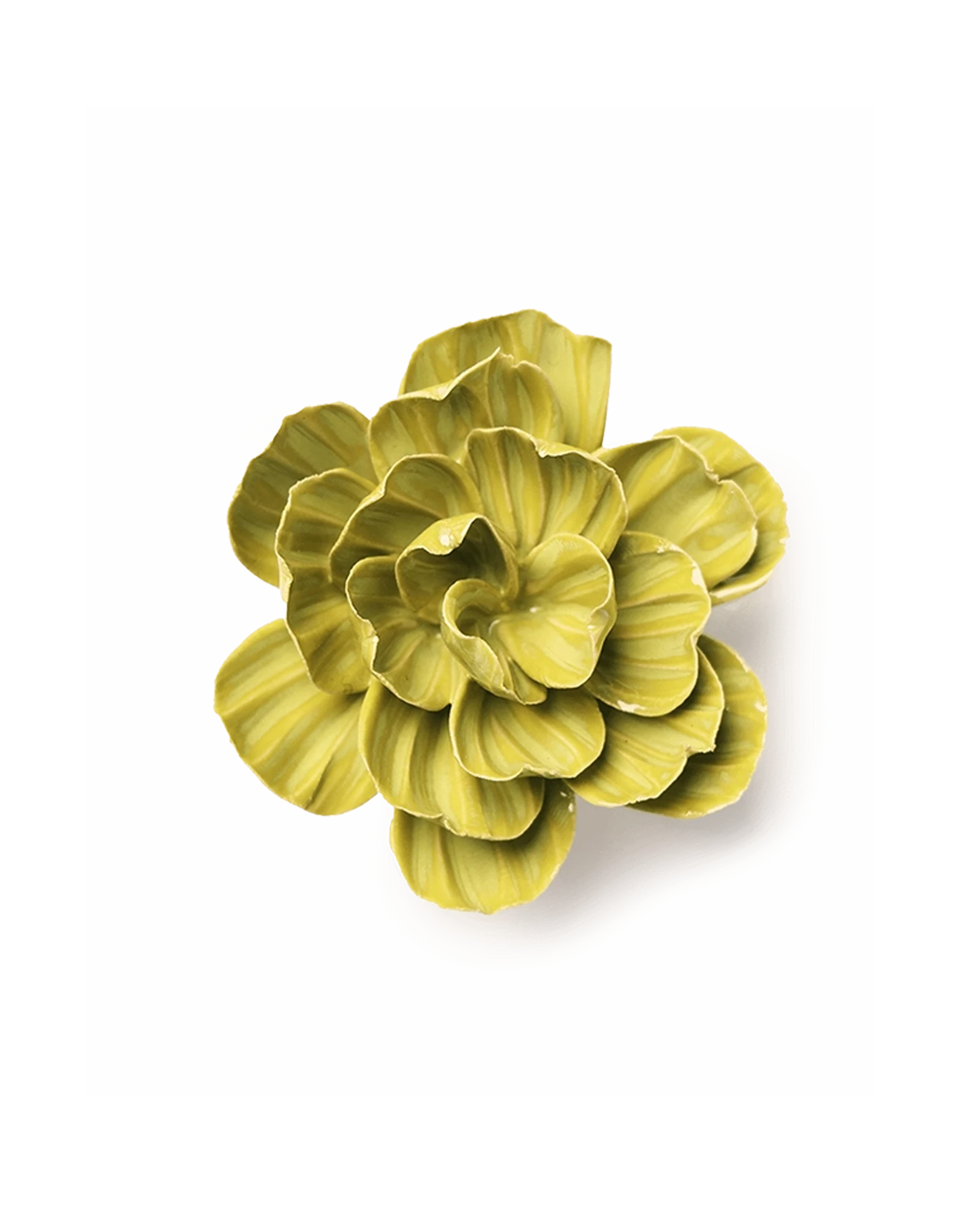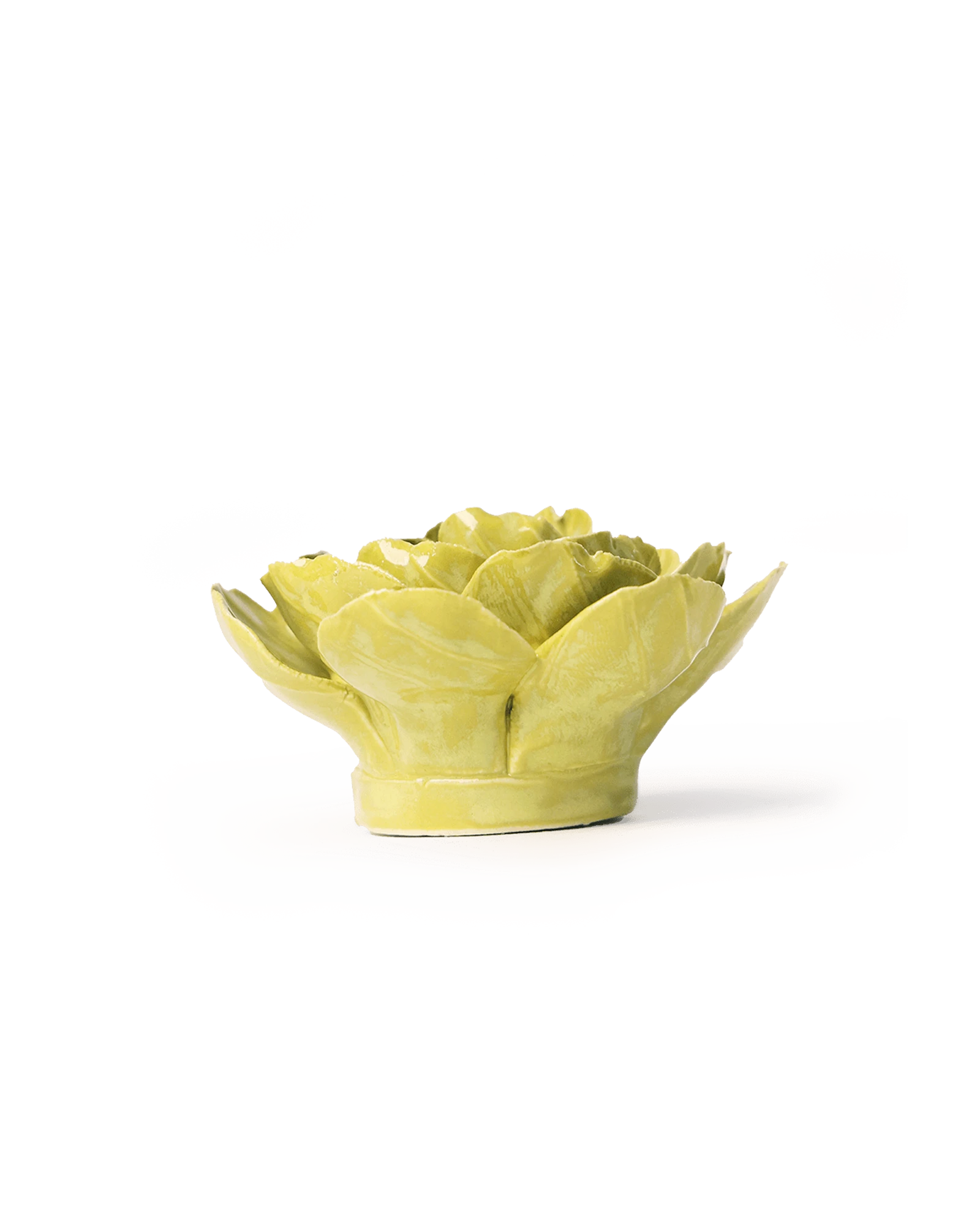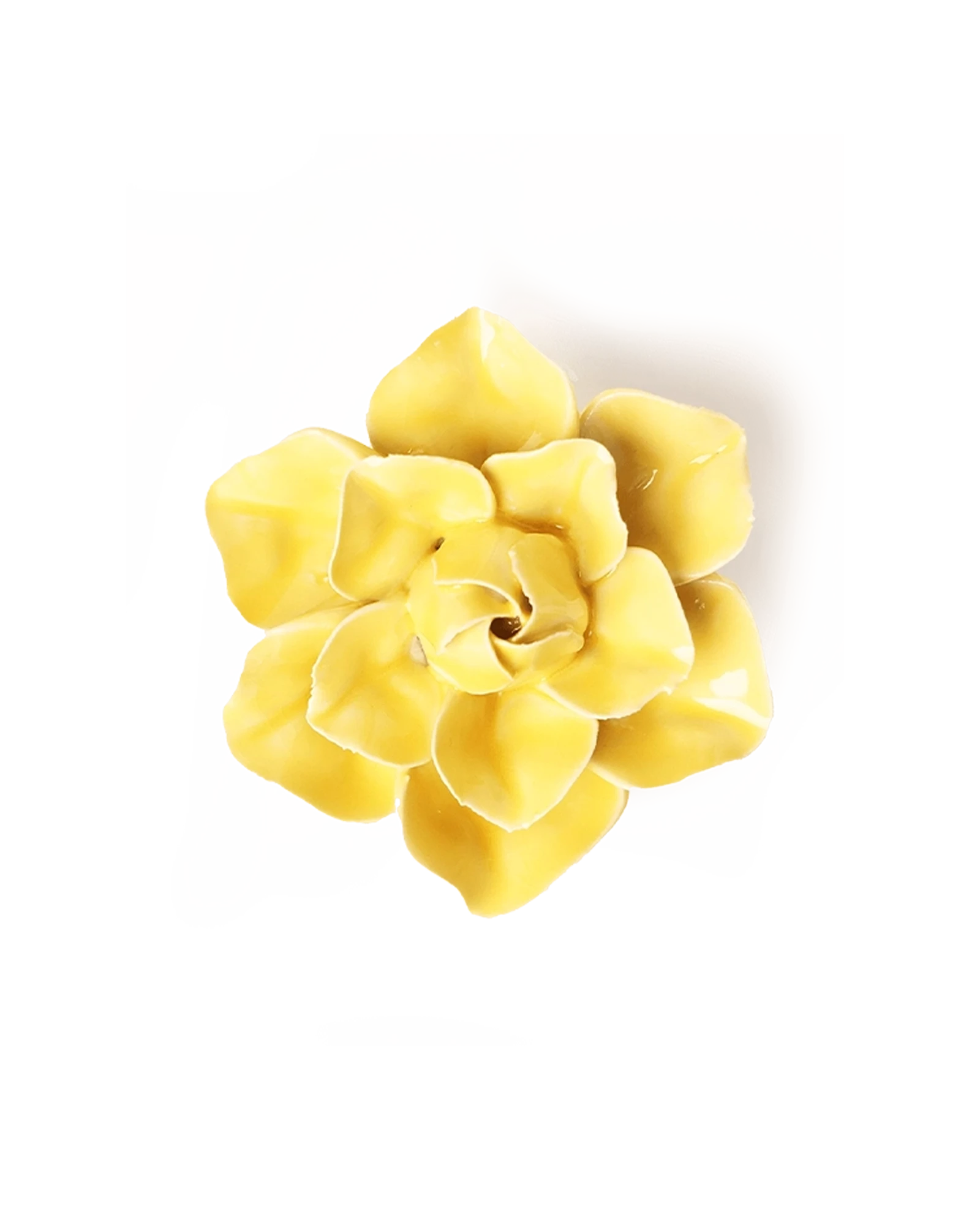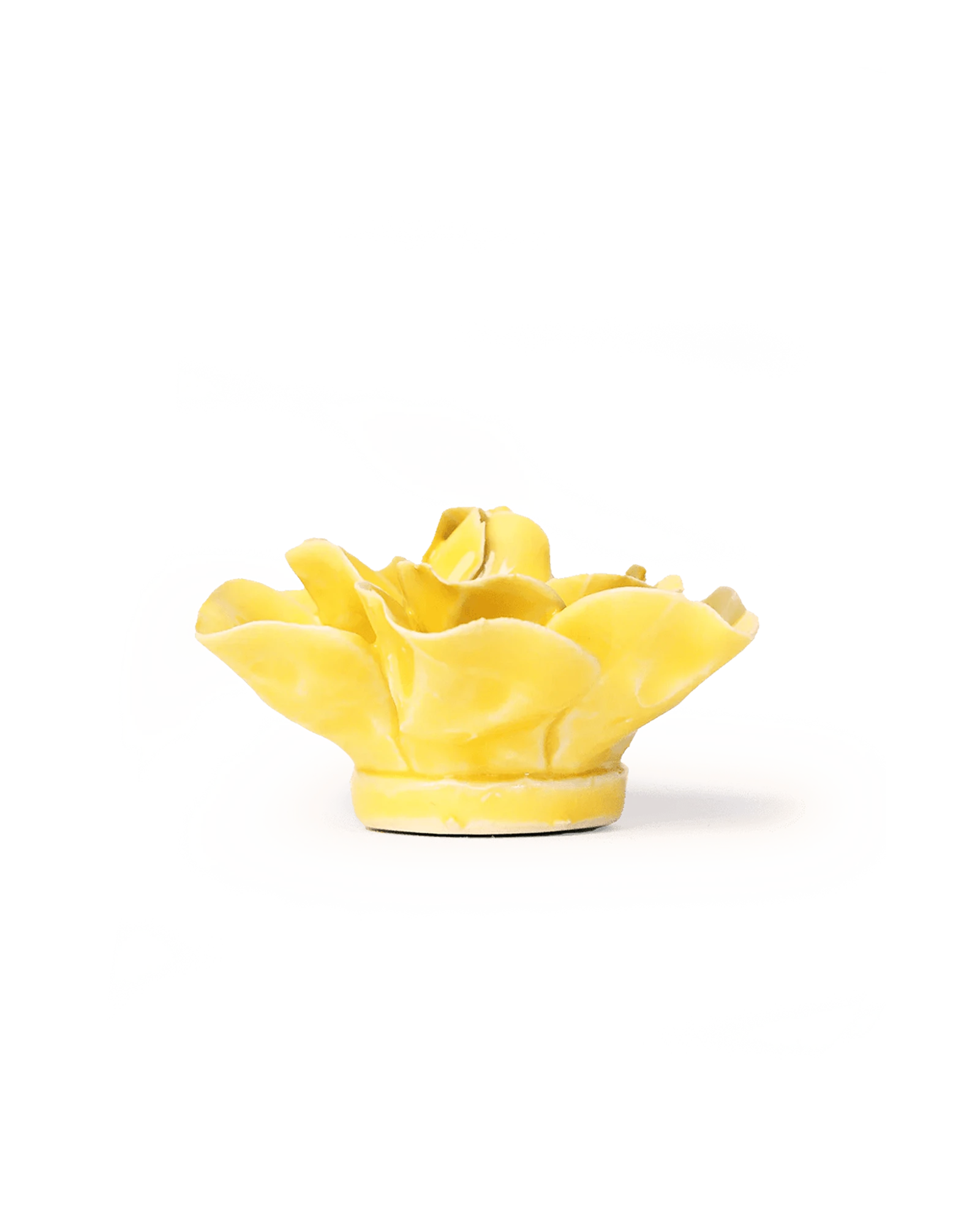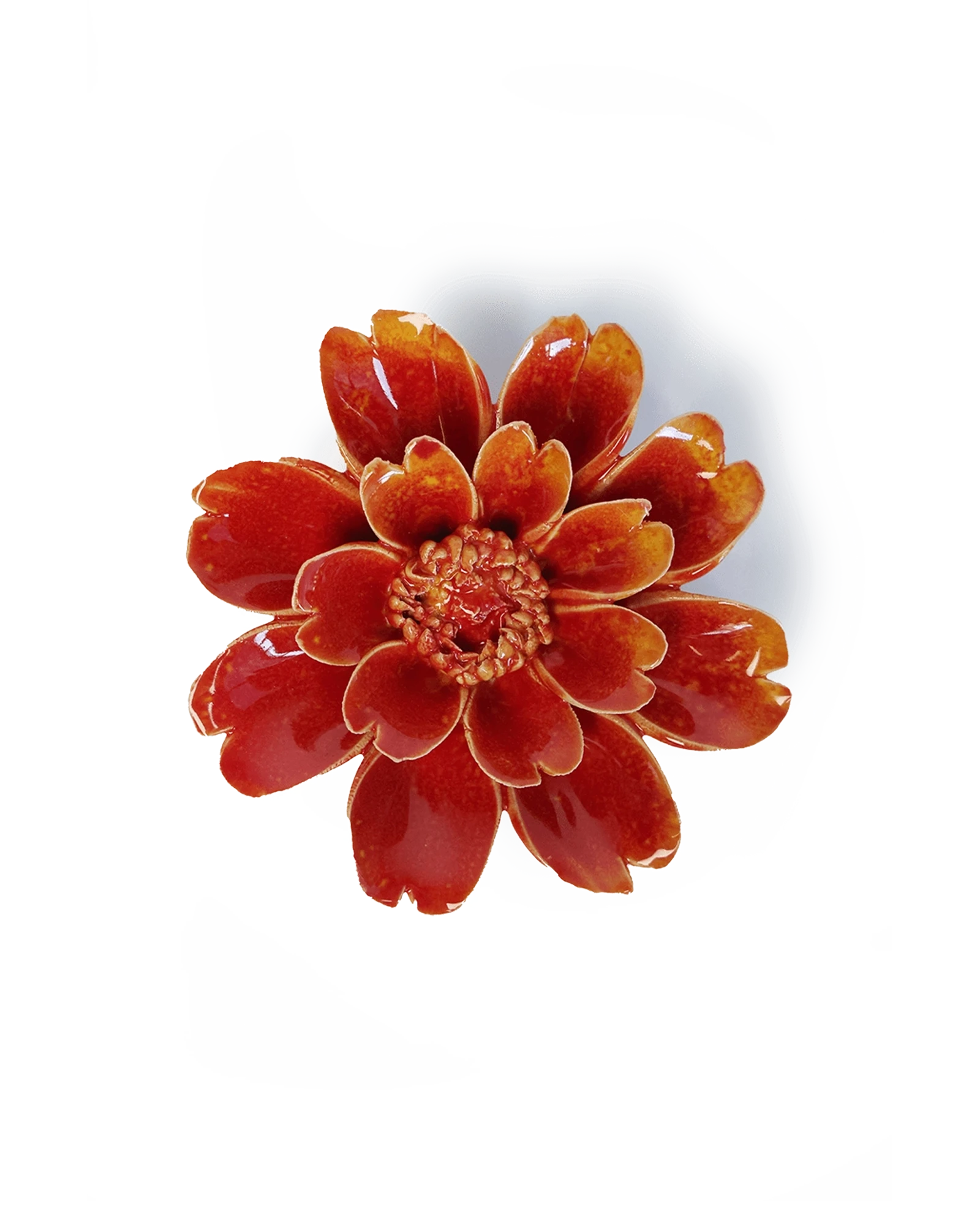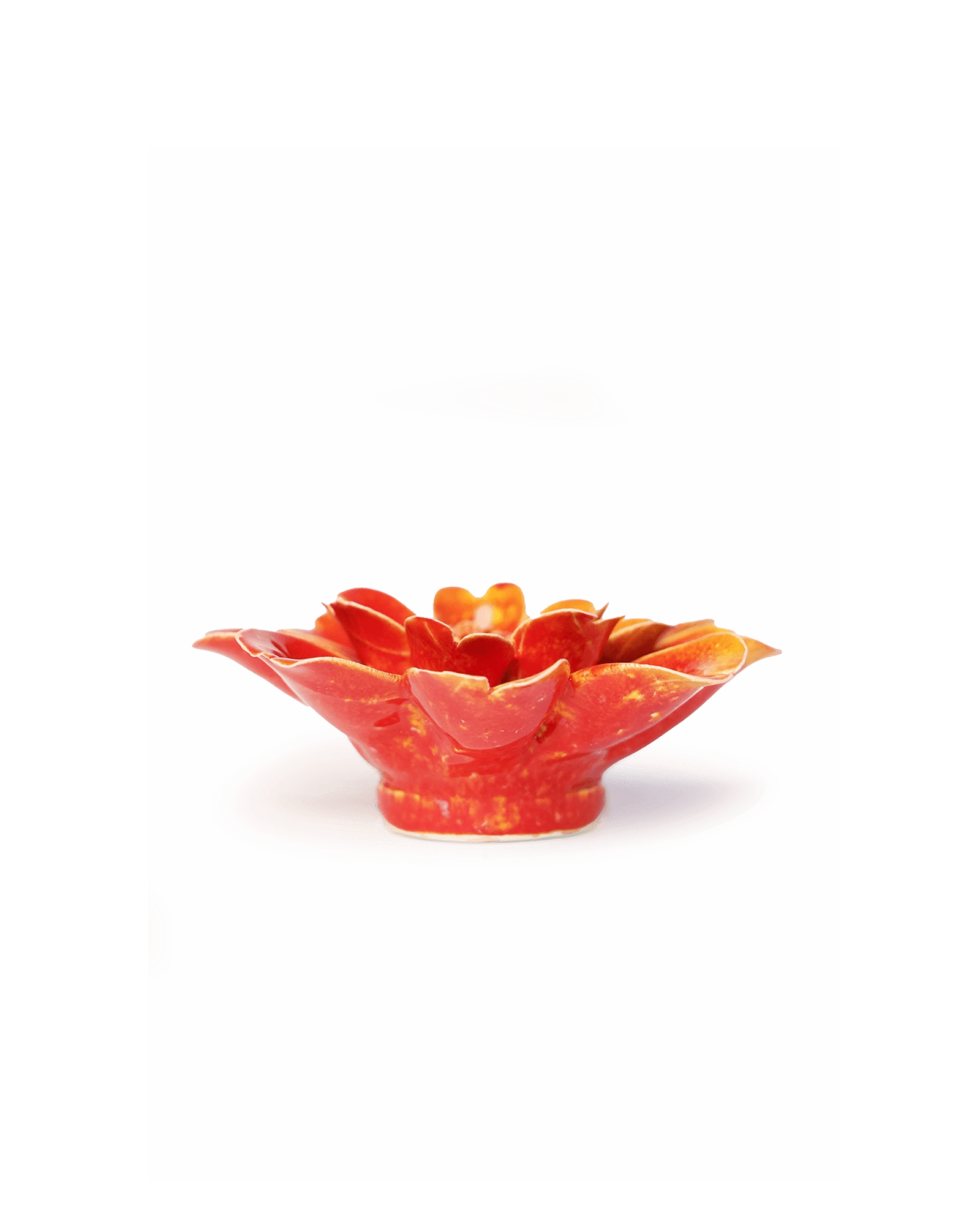
Chive Studio artisan shaping handmade ceramic flowers by hand without molds — Toronto since 1999
Chive Studio · Craft · Since 1999

25 Years of Making Handmade Ceramic Flowers by Hand. 

Handmade is one of those words that has been used so many times it has lost most of its meaning. We are going to give it back.

Handmade ceramic flowers can mean two different things, and the difference is significant. It can mean a human placed clay into a mold and pressed it, which is a process assisted by machinery and produces consistent, identical results. Or it can mean a human shaped the clay by hand, without a mold, making decisions about form, curvature, and surface as they go. Chive Studio has been making handmade ceramic wall flowers in Toronto since 1999. We have never used molds. This is not a marketing distinction. It is the reason the finished pieces look the way they do.

Twenty-five years is long enough to have made the other choice many times and declined. Molds would be cheaper. They would be faster. They would produce consistent, identical results at scale. We make the same number of pieces either way. We have chosen to make fewer, more slowly, without molds, and we consider this correct.

What does handmade without molds actually mean? Every Chive ceramic flower is individually shaped by hand from clay. No two pieces are exactly identical. The petal curvature, glaze depth, and surface texture vary between pieces because a person made each one, making their own micro-decisions throughout. This is different from mold-pressed ceramics, where the form is fixed in advance and every piece is a copy of the same shape.

Artisan handsculpting ceramic petals — handmade by Chive Studio Toronto since 1999
Each piece shaped by hand. No two exactly alike. On walls in Toronto and in the Getty Museum since 1999.

What Happens When You Remove the Mold

A mold fixes the form in advance. Every piece that comes out of it is a copy of the same shape — identical petal positions, identical surface, identical dimensions. This is useful for production efficiency and not much else. The result is a ceramic that looks like a ceramic. Competent. Consistent. Unremarkable.

When you remove the mold, the ceramicist makes the form. They decide how far a petal extends, how it curves at the tip, how the surface meets the glaze. They make these decisions differently on different days, at different speeds, in different conditions. The result is a piece that looks like it was made by a person, because it was. The glaze sits differently on a hand-shaped surface than on a pressed one. The depth is different. The way light moves across it is different.

Museum gift shop buyers know what handmade looks like. They have seen enough mass-produced ceramics to recognise the difference immediately. What they saw in Chive was a ceramic flower that had been made by a person, not a process. — Chive Studio

This is why the RHS Chelsea Flower Show has awarded Chive the 5-star booth rating — the highest given — for thirteen consecutive years. The judges at Chelsea are not impressed by volume. They are impressed by standard. The standard is visible in a piece made without molds in a way it is not visible in a piece made with them.

Handmade ceramic wall flower on clean background — Gotlan curated collection — handmade by Chive Studio Toronto
The surface variation on a hand-shaped piece is not an inconsistency. It is the proof that a person made it.

The 25-Year Standard and Why It Has Not Changed

Chive's English Garden ceramic flower collection and the Japan Collection are made using the same process as the first pieces made in 1999. The studio is in Toronto. The hands are different. The process is the same.

This is not nostalgia. It is the recognition that the process produces a result that a faster, cheaper, mold-assisted process does not. The Getty Museum in Los Angeles stocks Chive. The Art Gallery of Ontario, the Royal Ontario Museum, SFMOMA, the Art Institute of Chicago. The New York Botanical Gardens has been a customer for over ten years. The Rock & Roll Hall of Fame. The Andy Warhol Museum. Chihuly Garden and Glass. These institutions have procurement standards. They have gift shop buyers whose job is to recognise quality. They have been reordering for years.

What mold-free production produces that mold-assisted production cannot

  • Glaze depth — the glaze moves into hand-shaped surface variations differently than it moves across a uniform pressed surface
  • Visual distinctiveness — each piece is the specific object shaped on a specific day, not a copy of a master form
  • Institutional credibility — museum buyers recognise it, horticultural judges score it, the 5-star Chelsea award is the external proof
  • Longevity — the kiln-fired glaze is fused to a hand-shaped surface, not painted onto a pressed one, and does not fade or chip under normal conditions
  • The feeling of ownership — you own the piece that was made, not a copy of the piece that was designed

The birth flower ceramic collection — twelve flowers, one for each month — follows the same standard. The same studio. The same hands. The same process that has been used since 1999, always original, often copied, never interested in the copy. Ceramic plant pots with drainage from the same studio, made the same way.

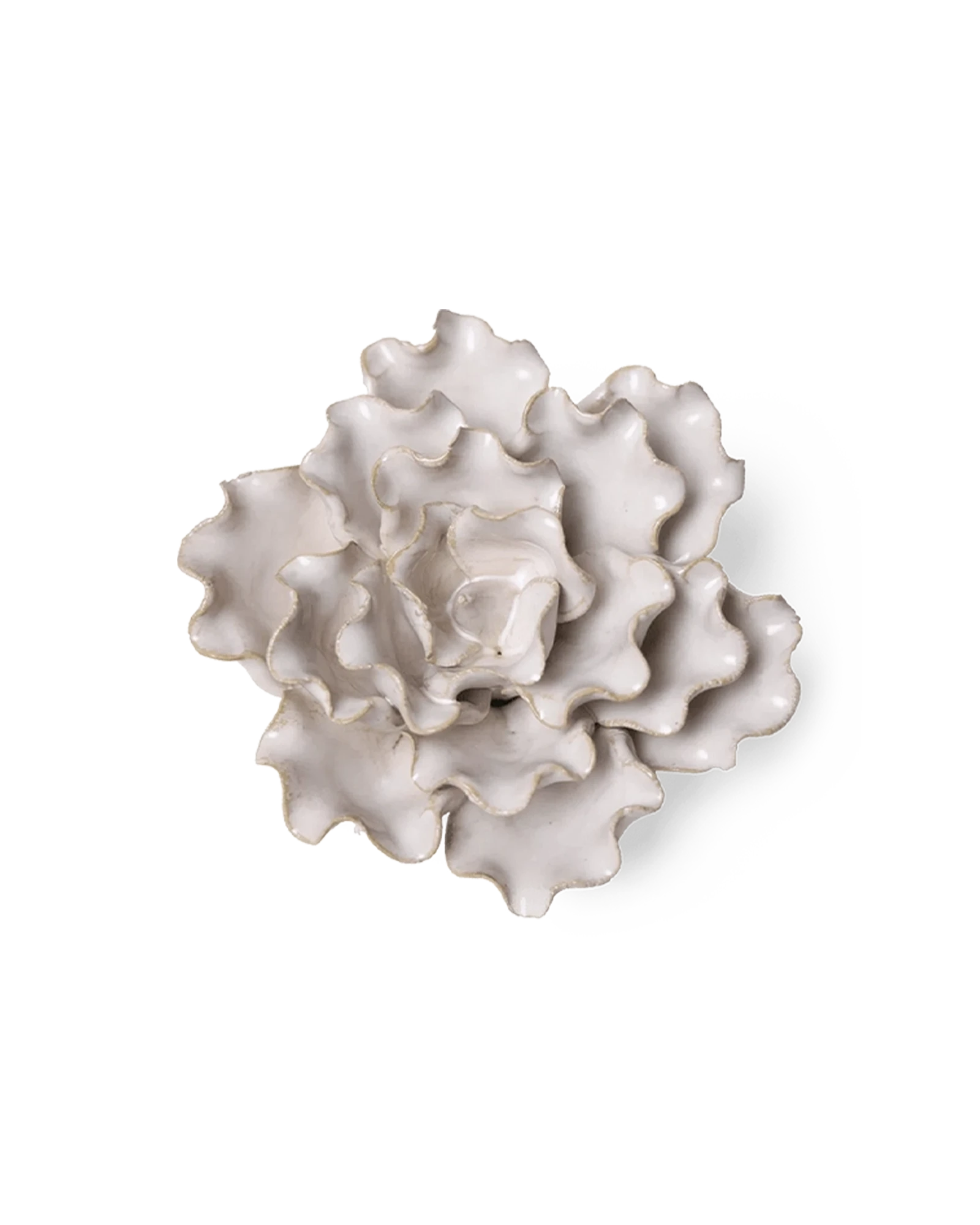
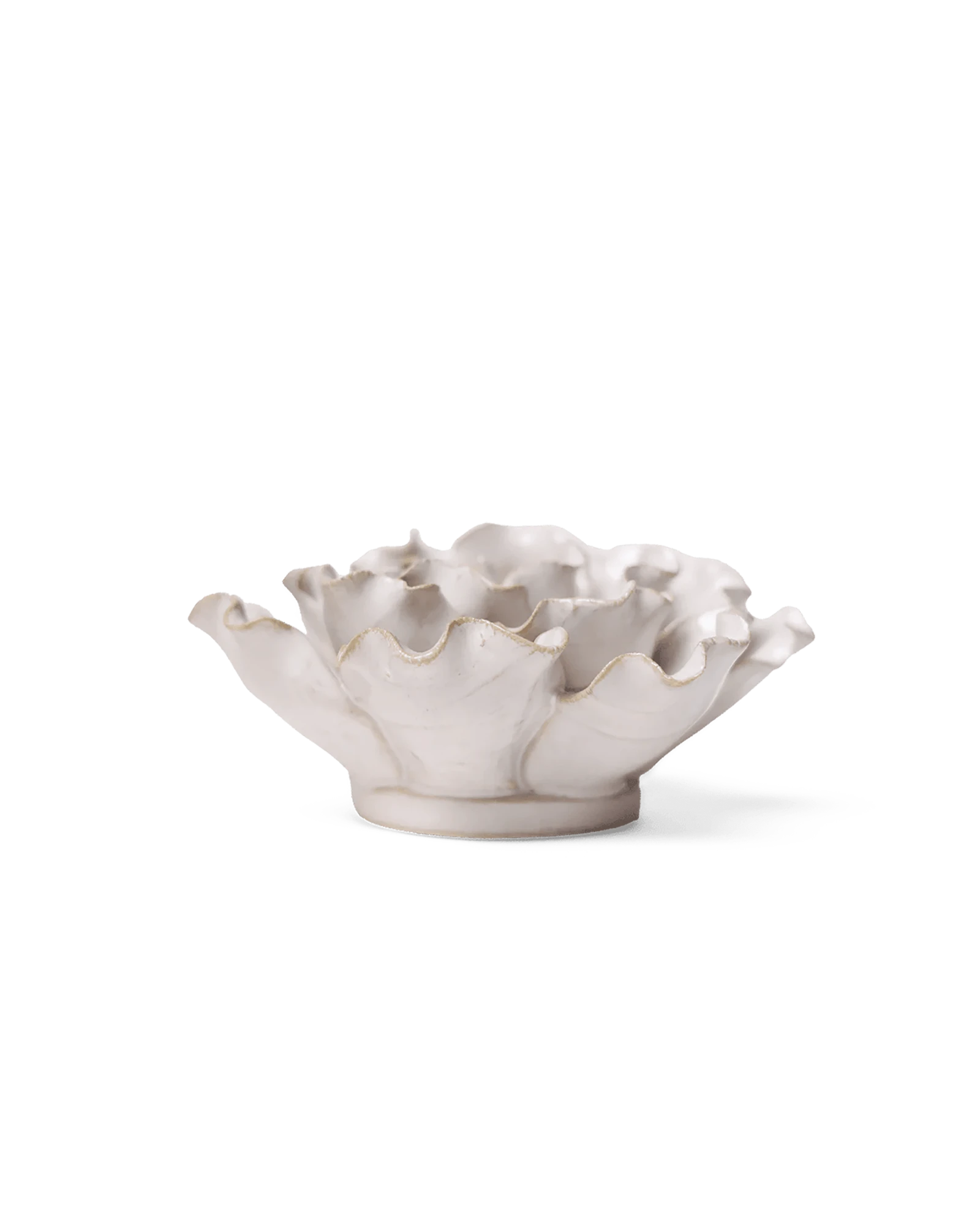
Meigetsuin - 6 Piece Set - Chive Ceramics Studio - Ceramic Flower Sets - Chive Ceramics Studio

About Chive Studio

Chive Studio has been designing and handmaking ceramic flowers, ceramic plant pots, and vases in Toronto since 1999 — always original, often copied. Our ceramic flowers are stocked in the Getty Museum, the Art Gallery of Ontario, the Royal Ontario Museum, SFMOMA, the Art Institute of Chicago, the New York Botanical Gardens, Denver Botanic Gardens, the Museum of Fine Arts Boston, Longwood Gardens, the Chicago Field Museum, Monterey Bay Aquarium, the Rock & Roll Hall of Fame, the Andy Warhol Museum, Chihuly Garden and Glass, and more than 200 art galleries, museum shops, and botanical institutions worldwide.

We have exhibited at the RHS Chelsea Flower Show for thirteen consecutive years, receiving the 5-star booth award — the highest rating given. Featured by Oprah's O List, Dwell, GQ, House Beautiful, Martha Stewart, and InStyle. Studios in Toronto, Los Angeles, and London. Warehouses in Toronto, Rotterdam, New York, and Birmingham. Ships to over 40 countries. We design everything we sell, support independent retailers exclusively, and have never sold to big-box retailers.


Frequently Asked Questions

What does handmade ceramic mean?

Handmade ceramic means each piece is individually shaped by hand rather than pressed into or poured into a mold. At Chive Studio, every ceramic flower has been shaped by hand without molds since 1999. This produces natural variation between pieces — no two are exactly identical — and a glaze depth that a molded surface cannot replicate.

Why does Chive make ceramic flowers without molds?

Because the quality of the finished piece is different. Hand-shaping without molds allows the ceramicist to make micro-decisions about petal curvature, surface texture, and clay thickness that a mold fixes in advance. The result is glaze depth, surface variation, and visual quality that people with trained eyes — museum gift shop buyers, horticultural judges — recognise immediately.

How long has Chive been making ceramic flowers without molds?

Since 1999. Twenty-five-plus years of continuous mold-free production in Toronto. The process used in the first year is the process used today. Chive has never introduced molds at any point in the studio's history and does not intend to.

What is the difference between handmade and mold-pressed ceramic flowers?

Mold-pressed ceramics are formed by placing clay into a pre-made form and pressing or pouring. Every piece that comes out is a copy of the same shape. Handmade without molds means each piece is individually shaped, producing natural variation in petal position, surface texture, and glaze depth. The difference is visible when you hold both. It is also visible to museum buyers and horticultural judges, which is the more commercially relevant observation.

Are handmade ceramic flowers more expensive than mold-pressed ones?

Yes. Hand-shaping without molds takes longer and produces fewer pieces per day than mold-assisted production. This is reflected in the price. The alternative is a product that photographs similarly and is noticeably different in person. Chive has made the same calculation for twenty-five years and arrived at the same answer.

Will my handmade ceramic flower look exactly like the photo?

It will look like the photo — same glaze, same colours, same form — but each specific piece will vary slightly from the others in its run. This is visible in the glaze depth and subtle surface variation. The piece you receive is the specific piece that was shaped on a specific day. Not a copy of a sample. The sample.

Why do museum gift shops choose Chive ceramic flowers over alternatives?

Museum buyers select on quality, provenance, and institutional fit. The hand-shaped, mold-free construction of Chive ceramic flowers produces a standard that is recognisable to trained buyers. The 25-year track record, the RHS Chelsea Flower Show 5-star booth award for thirteen consecutive years, and the sustained reorder history from institutions including the Getty, SFMOMA, and the Art Institute of Chicago are the externally verifiable evidence of that standard.

How are Chive ceramic flowers made step by step?

Each piece is hand-shaped from clay without molds, glazed in botanical colours, and kiln-fired at high temperature. The kiln firing fuses the glaze to the clay permanently — it does not fade, chip, or peel under normal conditions. A keyhole mount is set into the back of each piece for wall hanging. The process has not changed since 1999.