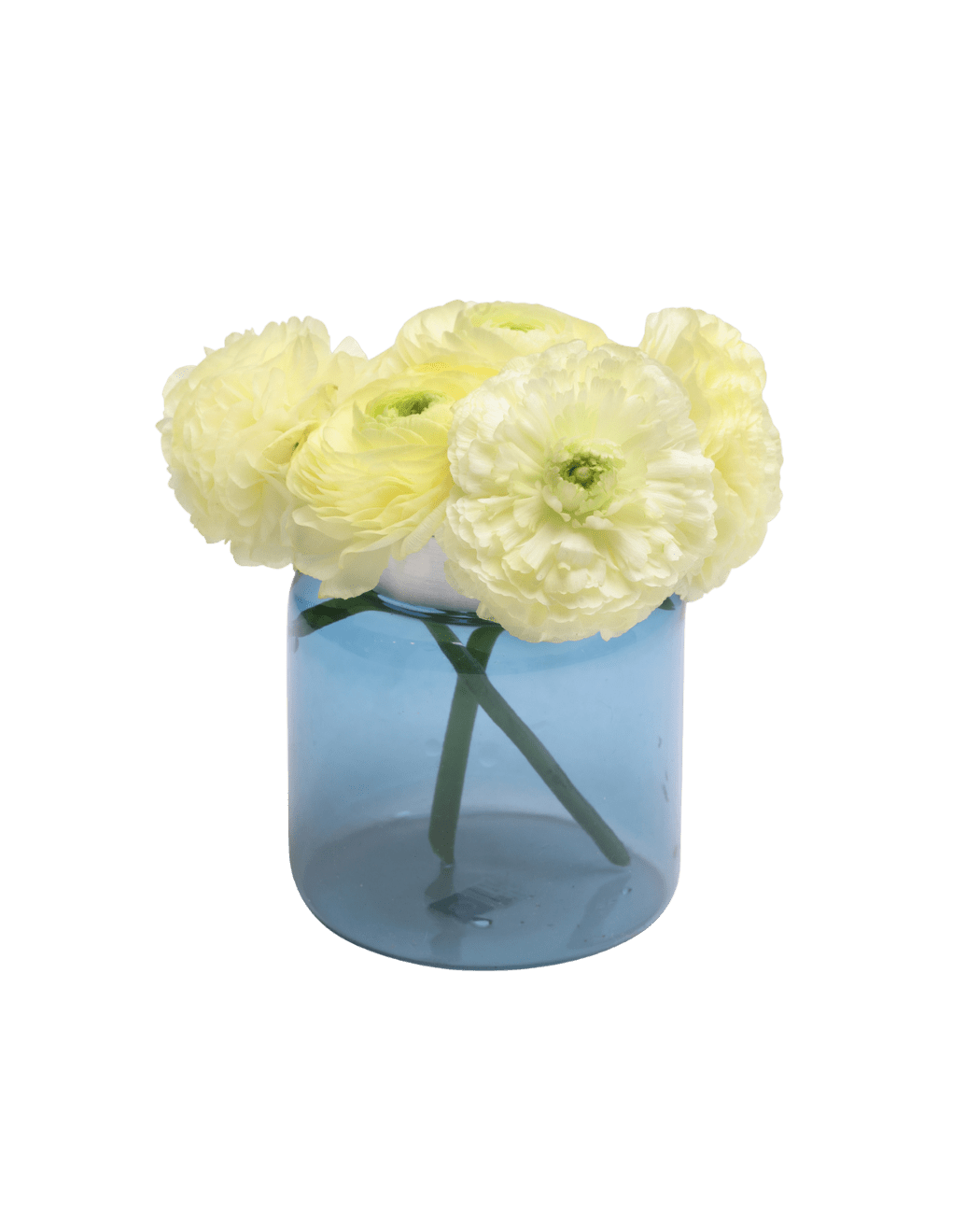
Jar Glass Modern Flower Vase

Regular price $21.50
Hand Blown Glass
Dishwasher safe cleaning
30-day return policy

Build the Arrangement That Looks Harder Than It Was

Pick a vase to anchor the shelf, then add the rest until it reads as curated instead of collected.


The Jar is a blue glass vase, and the naming conversation behind it lasted roughly as long as this sentence. Somebody set the thing on a table. It was a jar. It was glass. It held flowers. The name went into the file before anyone broke for lunch, and I have decided that counts as nerve rather than fatigue, though I was in the room and cannot rule out fatigue. As a blue flower vase it earns both halves of the phrase honestly, because the color lives in the glass itself rather than in a coating, so the water reads blue along with the walls. Three inches across, three and a half tall. Low enough to sit on a sill without blocking the view, deep enough that a single short stem stands instead of leaning. Every jar vase leaves the bench shaped by hand at Chive Ceramics Studio here, one piece at a time.

Product detail

Product Detail:

  • Material: Glass
  • Glaze finish: Translucent
  • Year Designed: 2020
Dimension
  • 7.62 cm (3") diameter, 8.89 cm (3.5") height
Vase Care Instructions

All glass vases in this collection are dishwasher safe for easy cleaning, with one exception: mercury glass vases should be hand-washed only. The silvered mercury finish is a delicate coating rather than a solid color, and dishwasher heat and detergent can dull or strip it over time.

For standard glass vases, just load it in with the rest of the dishes — no special care needed. For mercury glass pieces, wash gently with warm water and mild soap, and dry with a soft cloth rather than letting it air dry with water spots.

Rinse and dry after each use, especially if flower food or cut-stem residue was in the water, so nothing lingers and clouds the glass.

Flowers that Love this Vase
  • Lily
  • Zinnia
  • Sweet Pea
  • Lavender
  • Veronica
  • Coreopsis
  • Statice
  • Feverfew
  • Hydrangea
  • Blanket Flower

Quick Guide to Building a Floral Arrangement

  1. Pick your vase first
  2. Start with your anchor flower.
  3. Build in odd numbers.
  4. Add height, then fill.
  5. Greenery does the quiet work.
  6. Cut stems at an angle, underwater if you can.
  7. Step back before you decide it's done.

Shipping & returns

Shipping

  • Free shipping: Orders $200+ within the US
  • Standard: 5–8 business days, Express 2–3 business days (at checkout)
  • International Ships: to 40 countries — rates at checkout
  • Packaging Ships: in outer box to protect gift box

View full shipping policy →

Returns

We accept returns within 30 days of delivery on unused items in original packaging. If your piece arrives damaged, contact us within 7 days with a photo and we will replace it at no charge.

View full return policy →

Wholesale Inquires

Have a cool shop? Know someone that does?
Find Chive on Faire →

Jar Glass Modern Flower Vase - Chive Ceramics Studio - Vases - Chive US

It Is A Jar. It Is Glass. It Holds Flowers.

The blue was not a marketing decision, or at least nobody framed it as one at the time. We had been making this shape clear for years and it kept photographing like a drinking glass, which it more or less is. Someone suggested colour. Someone else pointed out that coloured glass is harder to control, because the tone shifts with wall thickness and wall thickness shifts with how fast you work, and the reply to that was a shrug. So we did it anyway, then spent an unreasonable stretch of weeks getting the batch consistent enough that two pieces from one run would look related. They still are not identical. I have stopped apologising for this. What surprised me was the water. Fill a coloured vessel and the liquid picks up the tone, so a white ranunculus is standing in blue rather than beside it, and the portion of stem below the waterline goes a shade that stems are not. People notice that before they notice anything else about the piece. A woman in Vermont wrote to say she keeps hers filled with plain tap water and nothing else, purely for the colour of the light coming through, and I have thought about that letter more than about most of our reviews. Nobody has ever once mentioned the shape.

Chive Studio trimming tulip stems with scissors on a wooden surface, with white, purple, and pink tulips arranged nearby.
How to Cut Flowers Like a Pro:

A (Mostly) Simple Guide to Cutting Your Flowers

So, you’re making an arrangement? Let’s ensure it lives long enough to impress someone—even if it's just you.

  1. Scrub the Scissors: Wash your shears first. Your flowers do not want a side of Dorito dust.
  2. Cut at 45°: Snip stems at an angle. It gives them a straw instead of making them chug from the bottle.
  3. Trim Underwater (Fancy Mode): Cut them submerged to block air bubbles. It’s extra, but they didn’t ask to suffocate.
  4. Ditch Submerged Leaves: Strip anything below the waterline. Unless you are actively going for a swamp aesthetic.
  5. Snip Again if Stale: If they sat out on the counter, trim them again. They need a fresh start (don’t we all?).
  6. Swap the Water: Change it and trim the stems every few days so they don't die immediately.

Voilà! You are now a domestic deity. Go take your Instagram photo before you forget to water them.

Pro Tip: The light does half the work.

Glass catches and bends light in a way ceramic can't. Set the arrangement somewhere it'll get some late afternoon sun, even for an hour, and the water and stems start doing something a solid vase never will.

Perfect Pairs for Any Shelf
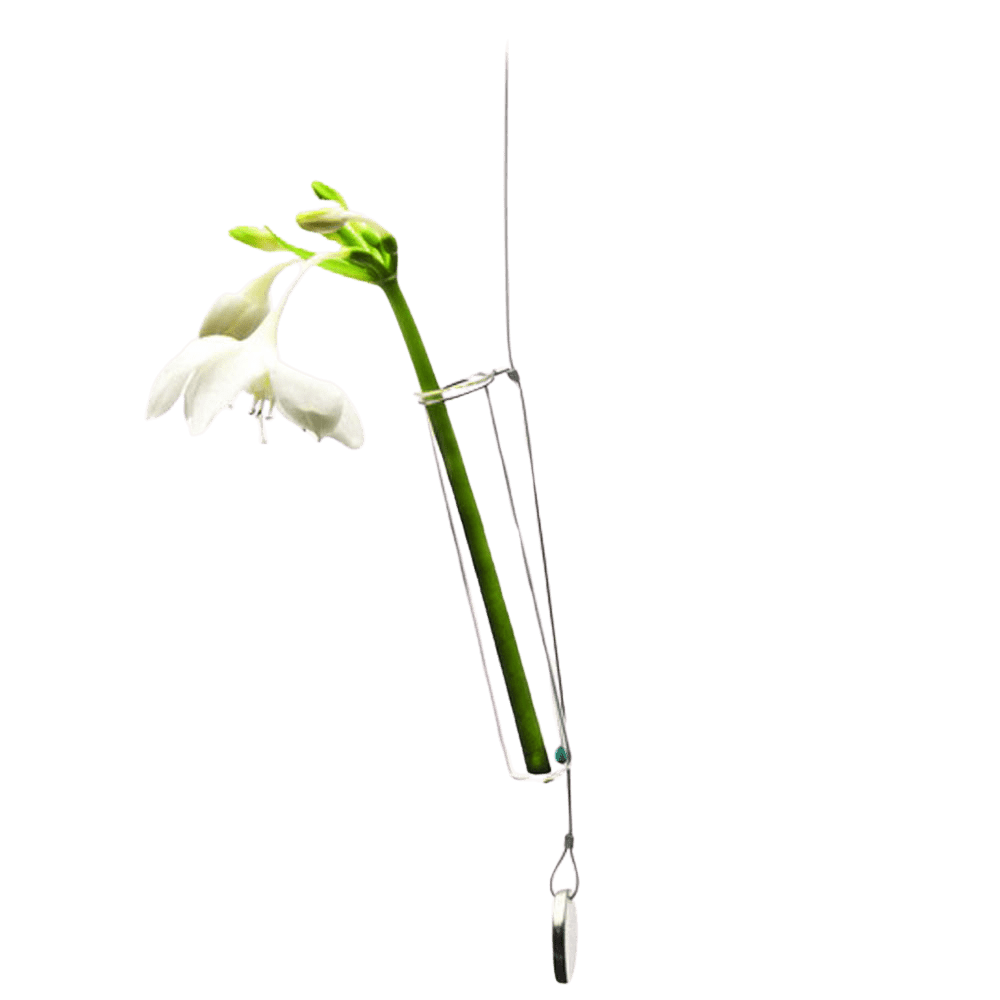
Bolbo Hanging Glass Modern Clear Flower Vase - Chive Ceramics Studio - Vases - Chive US

The Opposite Argument, Suspended On A Cord
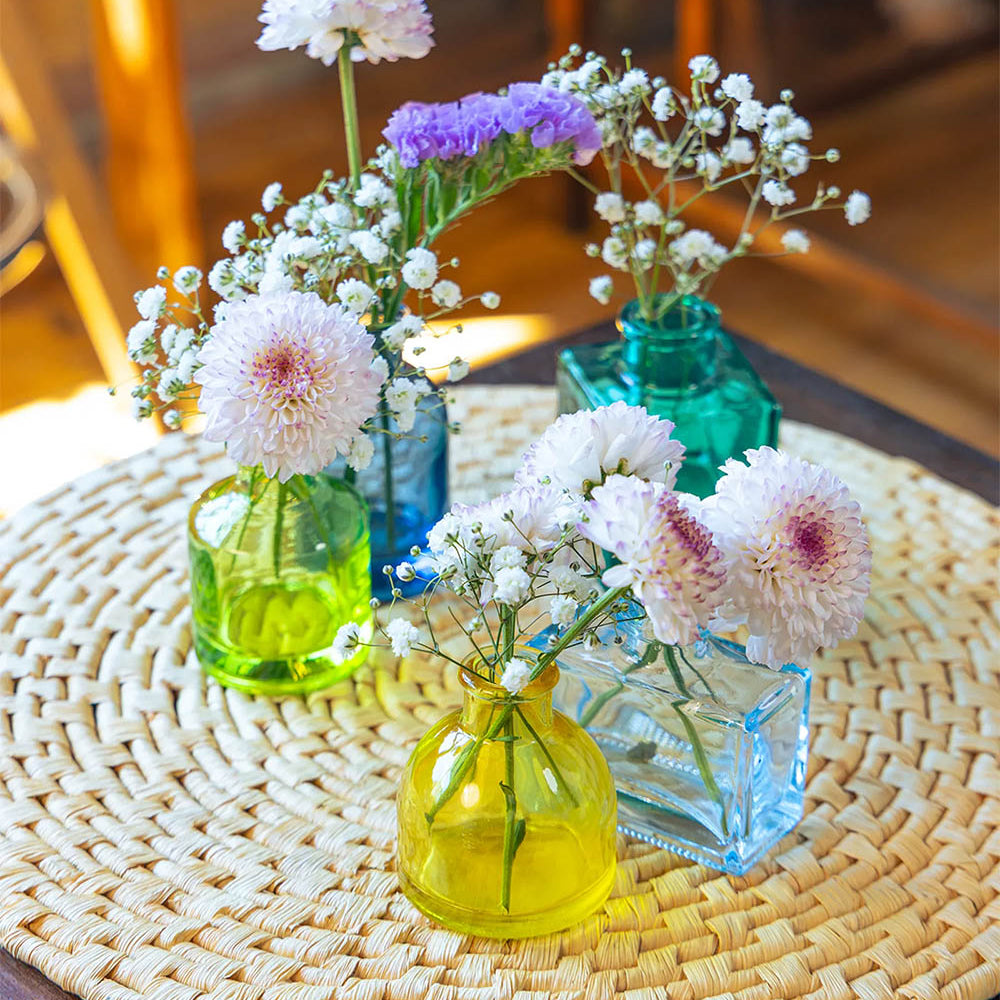
The glass vases at Chive come out of the same studio habit that produced everything else here: design the object once, correctly, then resist every opportunity to complicate it. Each one holds stems. None of them hides anything. The Jar applies that habit to a short, coloured, entirely unmysterious object. For the opposite argument, vertical and clear and suspended on a cord, see the Bolbo Hanging Glass Vase.

Chive Loft glass bud vase set in assorted shapes and colors on a table mat, each styled with flowers.

The Least Glamorous, Most Used Category
Every Chive vase is built around one decision about how flowers should stand, then finished by hand until that decision reads as obvious. Across the glass vases collection that decision is usually about height, and the range divides cleanly: suspended pieces, wall-mounted pieces, tall narrow towers, and short wide vessels of this kind. Short is the least glamorous category and by some distance the most used, because most flowers arriving in a house were cut for a bouquet and finish too low for anything ambitious. Begin there and work upward.

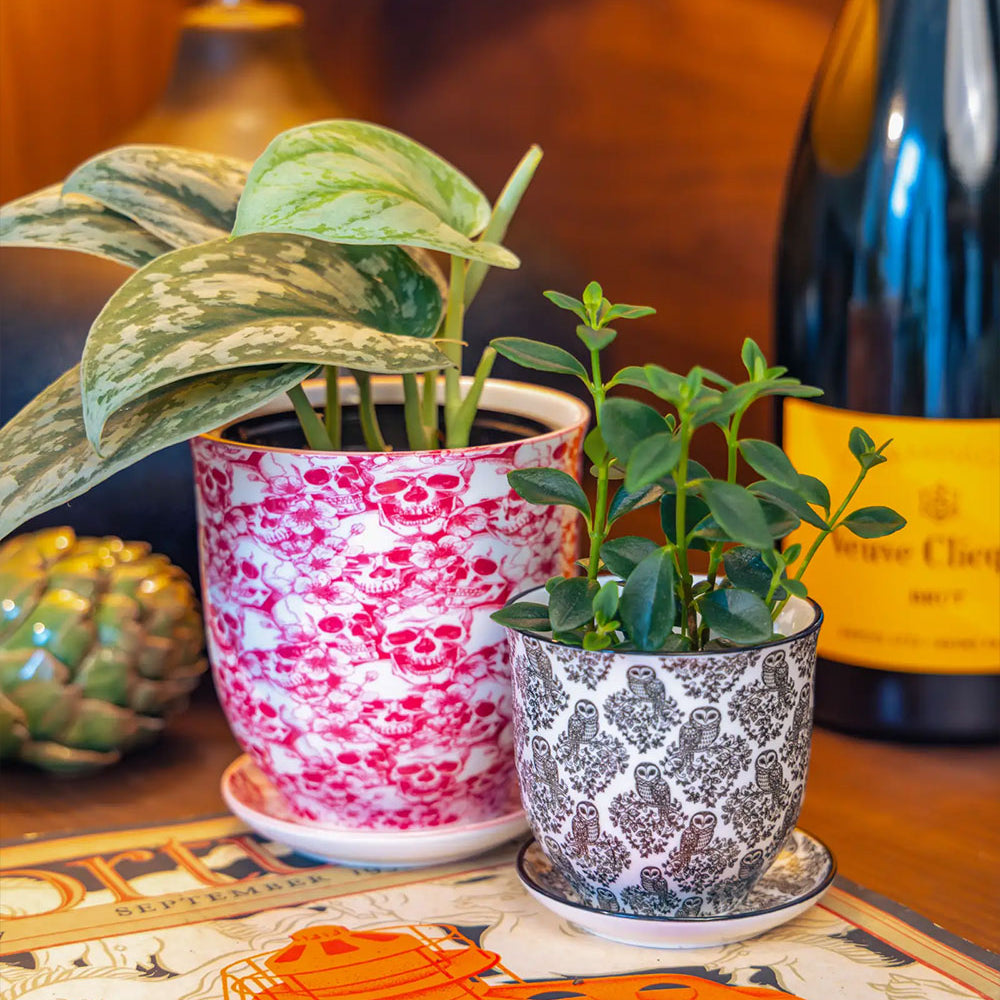
Chive Liberté planters in skull and black owls prints, styled with a silver satin pothos and peperomia on a kitchen table.

Both Measuring Three Inches Across

Set the Liberté 3-Inch Pot on the same shelf and the pairing makes immediate sense: one holds something growing, the other holds something cut, and both measure three across, so the shelf reads deliberate rather than accidental. White porcelain against blue glass. That is the entire trick.


Designed Once, Correctly

Chive started in 2004 with a short line of ceramic pieces and a rule that has survived every expansion since: make the object properly, then leave it alone. Colour arrived later and it arrived in-house, because sending glass out to be tinted meant accepting somebody else's palette and somebody else's tolerance for drift. Neither appealed much. Two decades on, the catalogue runs to hundreds of pieces across ceramic, glass and porcelain, and the deciding question at the bench has not moved. Does it work? Does it need anything further? When the answer to the second one is no, it ships. That is a shorter list of criteria than most companies our size operate under, and we have never found a convincing reason to lengthen it.


Inside the Chive Design Studio

Low maintenance, high impact. Let's make home styling look easy.


Frequently asked questions

Why would you choose a blue glass vase like the Jar vase?

Because the colour sits inside the glass instead of on top of it. A sprayed tint chips at the rim, scratches under a scrubbing sponge and turns patchy in a sunny window. Pigment melted into the batch does none of those things. You also get the tone reading through the water, which flatters pale petals in a way clear walls cannot. It will not rub off.

What single flowers look striking on their own in the Jar?

Anything with a head worth isolating. A single lily opens wide enough to occupy the whole opening and asks for nothing beside it. Zinnia and blanket flower earn their place the same way, one bloom carrying the entire job. A hydrangea head sits low and spreads across the rim as though cut for the purpose. Feverfew is the exception and wants four stems. One flower usually suffices.

How tall is the Jar vase and what space does it need?

The mouth is a three-inch circle and the body rises three and a half above whatever it is standing on, which places it firmly in the short vessel category. That matters more than it sounds. It clears the sightline over a dining table, tucks beneath a wall cabinet, and occupies a windowsill without stealing the view. Where a mug fits, this fits.

How is the Jar vase's glass finish made at the studio?

The blue goes in at the melt, never afterwards. Metal oxide enters the molten batch, the whole gather takes the colour, and the piece is then blown and worked while the material is still moving. That is why the tone deepens where the wall thickens toward the base and lifts as it approaches the rim. No two finish identically. Depth, not coating.

What is the safest way to wash the Jar vase at home?

Warm water, a drop of dish soap, a soft bottle brush. Skip the dishwasher, where thermal shock and rack rattle account for most of the breakages we hear about. For mineral rings left behind by hard water, half a cup of white vinegar standing overnight lifts them without abrasives. Dry using a lint-free cloth to prevent spotting. Nothing harsher is required.

Which rooms suit the Jar vase's shape and scale best?

Rooms where something low earns its keep. On a dining table it sits under the sightline so people can talk across it. A bathroom suits it, since humidity that warps timber does nothing here. On a kitchen sill the light passes through the wall and the tone shifts hour by hour. Bedside tables suit it as well, being small enough not to crowd a lamp. Small rooms, small vessel.

Does the Jar vase pair well with the Bolbo vase on display?

They contradict each other usefully. This one is squat, weighted, coloured and firmly planted on a surface, whereas the Bolbo hangs from a cord, runs seventeen long and carries a lone stem in clear glass. Put both in one room and the eye travels between low and high rather than settling anywhere. Matching pairs look purchased. Contrast looks chosen.

What was the original idea behind the Jar vase's form?

There was no original idea, which is the honest answer and not a modest one. Somebody wanted a squat vessel with a wide mouth for stems trimmed too short to use elsewhere, made one, and it turned out to be the thing people kept picking up. The form preceded the reasoning, as it often does around here. We reverse-engineered a justification afterwards.

Ceramic astronaut vase with flowers styled on shelf — Chive Studio Toronto
Behind the Studio

The story behind the Chive astronaut vases

The story of Laika, Félicette, a solar eclipse in New York, and a space bar that ordered a hundred vases a month until it closed.