Chimney Glass Modern Flower Vase

Regular price $44.00
Colors: Blue
Sizes
Hand Blown Glass
Dishwasher safe cleaning
30-day return policy

Build the Arrangement That Looks Harder Than It Was

Pick a vase to anchor the shelf, then add the rest until it reads as curated instead of collected.


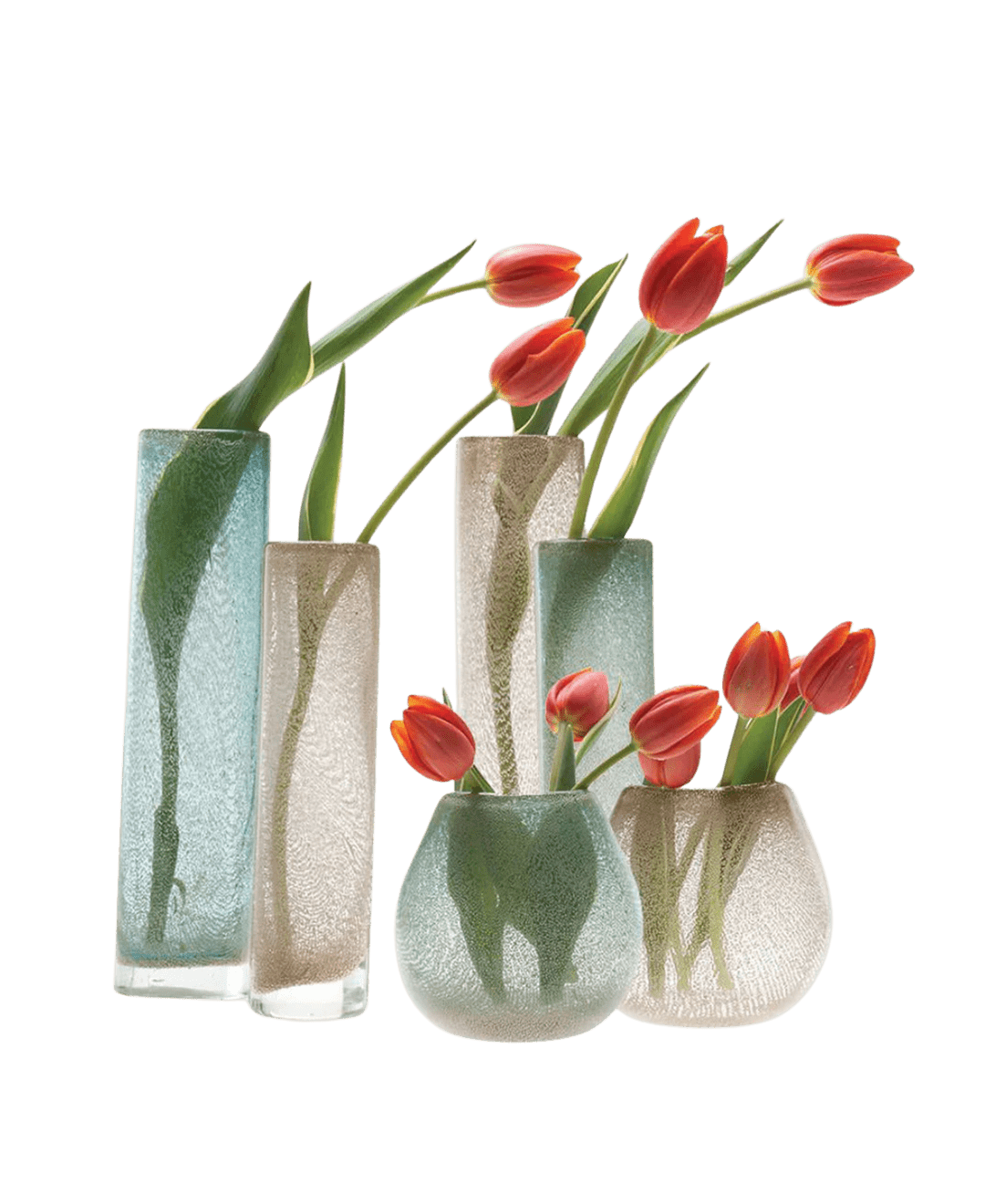
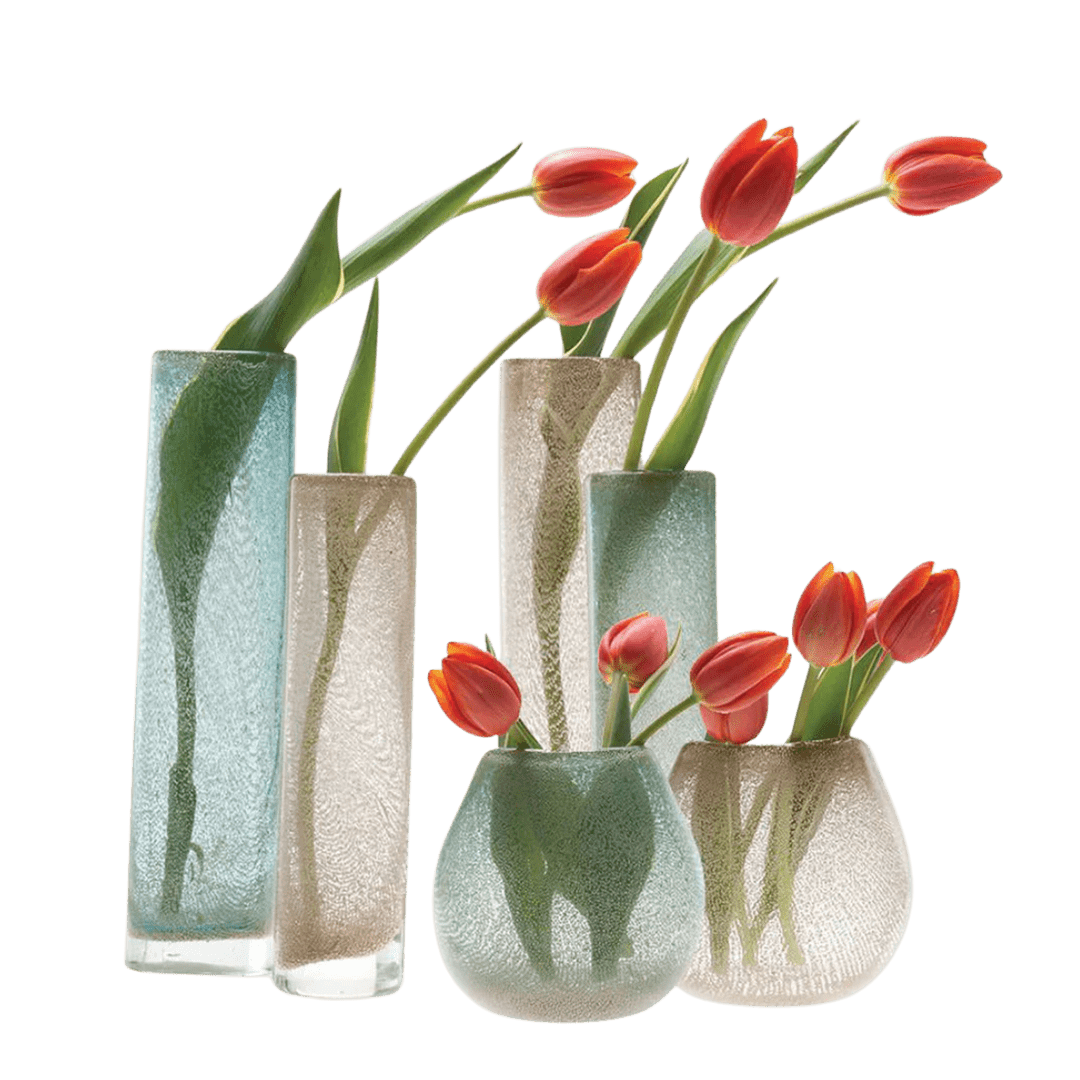
The Chimney vase is where this studio shows off, and I will not dress that up as anything more principled than it is. Its surface reads rough from across a room, all ridges and shadow, the kind of texture that makes people reach out before they have asked what the thing is for, and then it turns out smooth under the hand, which throws them every single time. It throws me too, and I have handled hundreds. As a stacked glass vase the form repeats up its length, so what could have read as a plain tube instead looks assembled, deliberate. Any tall narrow glass vase this slim needs that. Three sizes exist: the large at nine and three quarter inches, the small at eight, a squat pot version standing four. Nothing is machine-finished, because those ridges are cut and closed by hand at Chive Ceramics Studio quietly, each ridge worked on its own, over a bench that has seen worse.

Product detail

Product Detail:

  • Material: Glass
  • Glaze finish: Translucent
  • Year Designed: 2013
Dimension
  • Large: 6.35 cm (2.5") diameter, 24.77 cm (9.75") height
  • Pot: 7.62 cm (3") diameter, 10.16 cm (4") height
  • Small: 5.08 cm (2") diameter, 20.32 cm (8") height
Vase Care Instructions

All glass vases in this collection are dishwasher safe for easy cleaning, with one exception: mercury glass vases should be hand-washed only. The silvered mercury finish is a delicate coating rather than a solid color, and dishwasher heat and detergent can dull or strip it over time.

For standard glass vases, just load it in with the rest of the dishes — no special care needed. For mercury glass pieces, wash gently with warm water and mild soap, and dry with a soft cloth rather than letting it air dry with water spots.

Rinse and dry after each use, especially if flower food or cut-stem residue was in the water, so nothing lingers and clouds the glass.

Flowers that Love this Vase
  • Poppy
  • Chrysanthemum
  • Sweet Pea
  • Alstroemeria
  • Bouvardia
  • Strawflower
  • Queen Anne's Lace
  • Gomphrena
  • Hydrangea
  • Borage

Quick Guide to Building a Floral Arrangement

  1. Pick your vase first
  2. Start with your anchor flower.
  3. Build in odd numbers.
  4. Add height, then fill.
  5. Greenery does the quiet work.
  6. Cut stems at an angle, underwater if you can.
  7. Step back before you decide it's done.

Shipping & returns

Shipping

  • Free shipping: Orders $200+ within the US
  • Standard: 5–8 business days, Express 2–3 business days (at checkout)
  • International Ships: to 40 countries — rates at checkout
  • Packaging Ships: in outer box to protect gift box

View full shipping policy →

Returns

We accept returns within 30 days of delivery on unused items in original packaging. If your piece arrives damaged, contact us within 7 days with a photo and we will replace it at no charge.

View full return policy →

Wholesale Inquires

Have a cool shop? Know someone that does?
Find Chive on Faire →

Chimney Glass Modern Flower Vase - Chive Ceramics Studio - Vases - Chive Ceramics Studio

It Reads Rough. It Feels Smooth.

Never solicit opinions from an Englishman called Alex. This is advice I offer freely and at some personal cost, because it is how a perfectly dignified ribbed column ended up being known permanently as a chimney. He said it in passing, over a bench, while holding one up against a window, and by the time anybody thought to object the word had spread through the studio and attached itself. Names are like that. They do not require consent from the person who made the object. I have tried, at intervals across more than a decade, to introduce something more considered, and each attempt has died within the week because everybody already knows what to call it and nobody enjoys relearning a name for an item they can already picture. Alex has since moved to Bristol and, as far as I know, has no idea any of this happened. He was not being clever. That is the aggravating part. He was describing what he saw and he was, irritatingly, right about it. Every so often somebody new joins the studio, hears the name, and asks whether it is a reference to something. It is not. It is a man from Kent looking at a tall object with ridges on it and saying the first accurate word that occurred to him.

Chive Studio trimming tulip stems with scissors on a wooden surface, with white, purple, and pink tulips arranged nearby.
How to Cut Flowers Like a Pro:

A (Mostly) Simple Guide to Cutting Your Flowers

So, you’re making an arrangement? Let’s ensure it lives long enough to impress someone—even if it's just you.

  1. Scrub the Scissors: Wash your shears first. Your flowers do not want a side of Dorito dust.
  2. Cut at 45°: Snip stems at an angle. It gives them a straw instead of making them chug from the bottle.
  3. Trim Underwater (Fancy Mode): Cut them submerged to block air bubbles. It’s extra, but they didn’t ask to suffocate.
  4. Ditch Submerged Leaves: Strip anything below the waterline. Unless you are actively going for a swamp aesthetic.
  5. Snip Again if Stale: If they sat out on the counter, trim them again. They need a fresh start (don’t we all?).
  6. Swap the Water: Change it and trim the stems every few days so they don't die immediately.

Voilà! You are now a domestic deity. Go take your Instagram photo before you forget to water them.

Pro Tip: The light does half the work.

Glass catches and bends light in a way ceramic can't. Set the arrangement somewhere it'll get some late afternoon sun, even for an hour, and the water and stems start doing something a solid vase never will.

Perfect Pairs for Any Shelf
Chimney Glass Modern Flower Vase - Chive Ceramics Studio - Vases - Chive Ceramics Studio

Knocked Out Of Shape On Purpose

The glass vases at Chive come out of the same studio habit that produced everything else here: design the object once, correctly, then resist every opportunity to complicate it. Each one holds stems. None of them hides anything. Height is this one's whole argument, delivered in a column of stacked ribs. If the counterargument interests you, something squat and knocked out of shape on purpose, the Dent Glass Vase is waiting.

The Case For Refusing To Disappear

Every Chive vase is built around one decision about how flowers should stand, then finished by hand until that decision reads as obvious. Texture is what separates this end of the glass vases collection from the plain clear pieces beside it. A smooth cylinder disappears against a wall and does its job invisibly, which is sometimes exactly right. A ribbed one catches light along every ridge and refuses to disappear anywhere. Neither approach is better. They simply want different rooms, and most homes have both.

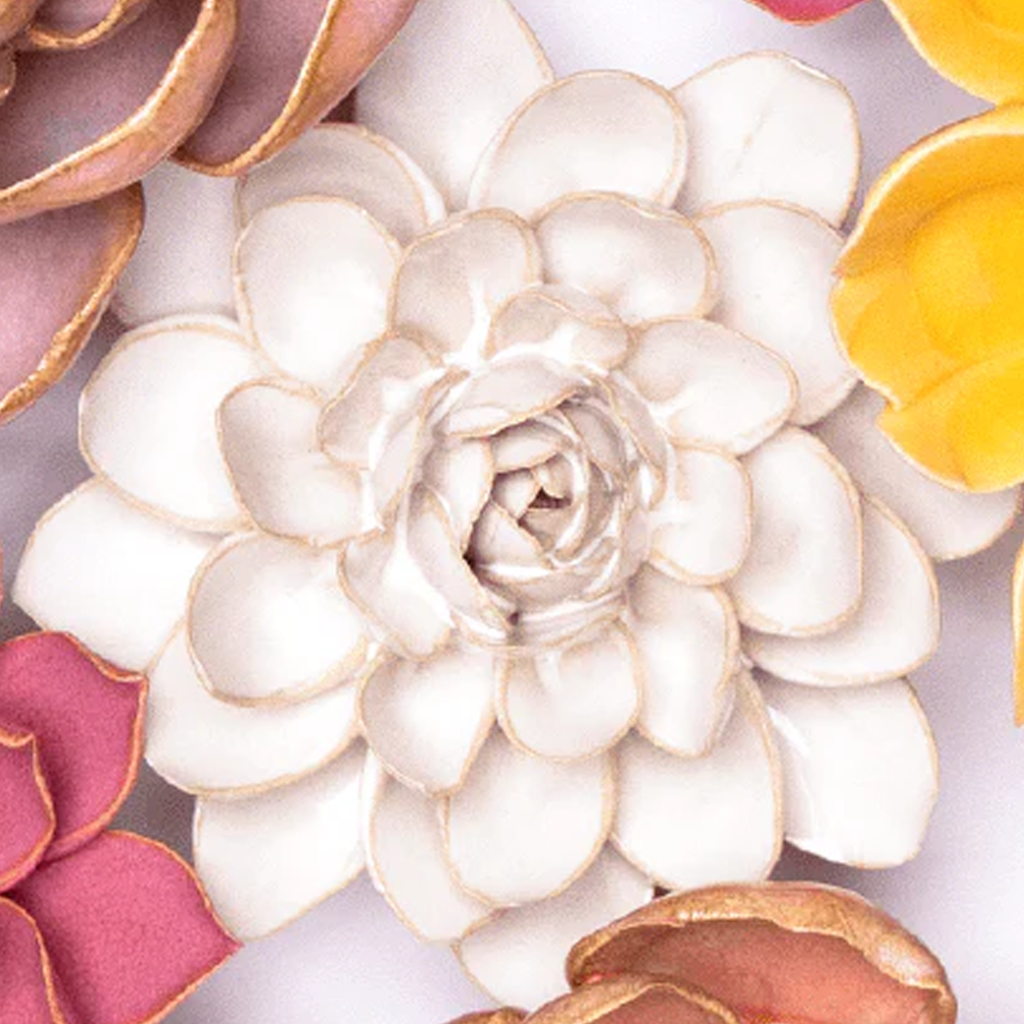
Chive handmade ceramic snowdrop wall flower hanging on a white wall, ivory petals, keyhole mount

One Permanent Stem, One Seasonal

Pair it with the January Birth Flower Snowdrop if the shelf needs something that does not wilt. A ceramic snowdrop stays upright through February while everything cut has given up, and the ribbed column gives it height it would never manage alone. One permanent stem, one seasonal. The shelf never looks empty.


Finish Is The Slow Part

Surface finish has occupied a disproportionate amount of Chive's attention since 2004, largely because it is the thing customers respond to first and describe last. People will pick up a piece, turn it over, run a thumb across it, and buy it without once mentioning the texture that made them do all three. So we keep working on it. Ribbing, tooling, grit, gloss, the deliberate roughness that turns smooth under a hand: each of these takes longer to get right than any silhouette ever does. It is invisible labour by definition. Nobody notices finish until it is wrong, at which point they notice very little else and will tell you about it at length.


Inside the Chive Design Studio

Low maintenance, high impact. Let's make home styling look easy.

The Best 10 Styles of Vases

Jessie Duenas
The glorious world of flower vases! Because nothing says "I have my life together" quite like a carefully chosen vessel for your soon-to-be-wilting flora. Gather 'round, fell...
Read the full story

Wedding Centerpiece Vases: The Planning Guide Nobody Gives You

Todd Newgren
Wedding centerpiece vases work best small and plural — three to seven per table, one to three stems each. A fifteen-table reception needs roughly seventy-five vases and 100 to 1...
Read the full story

Frequently asked questions

What makes the Chimney a genuinely useful vase at home?

It gives height without width, which is rarer than it sounds. Most tall vessels widen as they climb and end up demanding a surface all to themselves, whereas this holds a two-and-a-half-inch diameter the whole way up and still reaches nearly ten. On a crowded shelf that difference decides whether a vase fits at all. Vertical, not bulky.

How many flower stems does the Chimney vase comfortably display?

The large takes five or six comfortably before the neck starts crowding, the small manages three, and the squat pot version handles a short dense bunch of maybe eight stems cut low. Sweet pea and bouvardia suit the taller pair because they carry height without weight. Hydrangea belongs in the squat pot version rather than either column. Match the bulk to the body.

Will the Chimney vase fit on a narrow shelf or ledge?

The small one will, at two across, which is narrower than most picture ledges are deep. The large is equally slim but reaches close to ten, so a shelf directly above it becomes the limitation rather than the ledge itself. The pot version is wider and lower and belongs on an open surface. Check what sits overhead.

Is the Chimney vase's glass surface prone to marks or scratches?

Less than a plain piece would be, which is the quiet advantage of ribbing. Ridged glass breaks up reflections, so fingerprints, smears and the faint scuffs that any object collects over years simply do not register from a normal viewing distance. Smooth vessels display every one of them. Texture quietly forgives years of ordinary handling. Plain glass never does.

How do you clean the Chimney vase without damaging the finish?

Work along the grooves rather than across them, using a soft brush that can sit down inside a ridge. Anything scrubbed crosswise skates over the tops and leaves the valleys untouched, which is why ribbed pieces look clean and smell otherwise. Hot water and ordinary soap will handle everything else. Follow the ribs, not your instinct.

How do you style the Chimney vase on open shelving?

Stagger the three sizes rather than lining them up level, because ribbed verticals in a row read as a fence. Set the tall one toward the back where a wall can catch the shadow it throws, and let the pot sit forward. Odd numbers settle better than even ones. Three of them agree immediately. Two argue.

Is the Chimney vase larger or smaller than the Dent vase?

Considerably larger, and shaped to the opposite purpose. The Dent is a three-inch cube of a thing that sits low and holds a handful of short stems, where this climbs to nearly ten and takes length. Standing together they exaggerate each other, which is the reason to own both. Tall beside squat, ribbed beside dented.

What design tradition does the Chimney vase draw from?

Optic ribbing, which predates this studio by several centuries. The ridges are formed in the glass while it is molten rather than ground into the surface afterwards, so they run soft-edged instead of sharp and the whole wall stays one continuous thickness. Cut crystal does the reverse and feels it. We wanted the look without the edges.

Ceramic astronaut vase with flowers styled on shelf — Chive Studio Toronto
Behind the Studio

The story behind the Chive astronaut vases

The story of Laika, Félicette, a solar eclipse in New York, and a space bar that ordered a hundred vases a month until it closed.