
Cauliflower Vegetable Seeds Packet

Regular price $4.95

Vacuum Sealed
NON-GMO
Seed Pack Guarantee

Build Your Garden With These Shido Seeds

Choose a seed packet as your starting point, then round out the bed with these for that thrown-together-but-somehow-perfect harvest.


Cauliflower seeds for the kitchen garden that intends to actually produce cauliflower this year. Cauliflower requires more care than most vegetables and makes a point of this throughout the growing season.

Cauliflower is a demanding brassica that produces a dense white curd and rewards consistent attention with a reliable harvest. Each packet is hermetically vacuum-sealed -- removing the oxygen that causes standard paper seed packets to lose germination viability within approximately one year. State law requires a 3-year viability label on sealed packaging. NASA research on hermetic seed storage indicates viability of up to 10 years under proper conditions. Every packet is non-GMO and germination-tested at independent third-party labs before it earns its Japanese woodblock print artwork.

Seed specifications
  • Material: Seed
  • Botanical name: Brassica oleracea var. botrytis
  • Genus: Brassica
  • Plant family: Brassicaceae
  • Species: Oleracea
  • Plant type: Annual
  • Pollination type: Vegetable
  • USDA Hardiness Zones: 2-11
  • Packet contents: ≈ 50 Seeds
  • Packaging: Hermetically vacuum-sealed
  • Non-GMO: Yes
  • Seed viability: Up to 10 years (sealed) / 4–5 years (unsealed, ideal conditions)
  • Difficulty: Moderate - Recreational Gardener
Sowing & growing guide

Quick Sowing Guide:

  • When to sow: 6-8 wks before last frost for a spring crop, mid-summer for a fall crop
  • Sowing depth: 1/4 in
  • Initial spacing: 12-18 in
  • Row spacing: 24-36 in
  • Days to germination: 7-10 days
  • Light: Full sun
  • Water: Consistent moisture
  • Soil: Moist, fertile, well-drained
  • Harvest: 75-100 days

Start Growing: Step-by-step sowing and growing guide

About vacuum sealing

Why Vacuum-Sealed Seeds Last Longer

Standard paper seed packets are permeable to oxygen and moisture -- the two primary causes of seed degradation. Most paper-packaged seeds begin losing germination viability after approximately one year, contributing to significant garden-industry waste: packets purchased, not planted, expired, discarded. Shido Seeds are hermetically vacuum-sealed. The packet does not expire quietly in a drawer. It waits.

About the Packaging

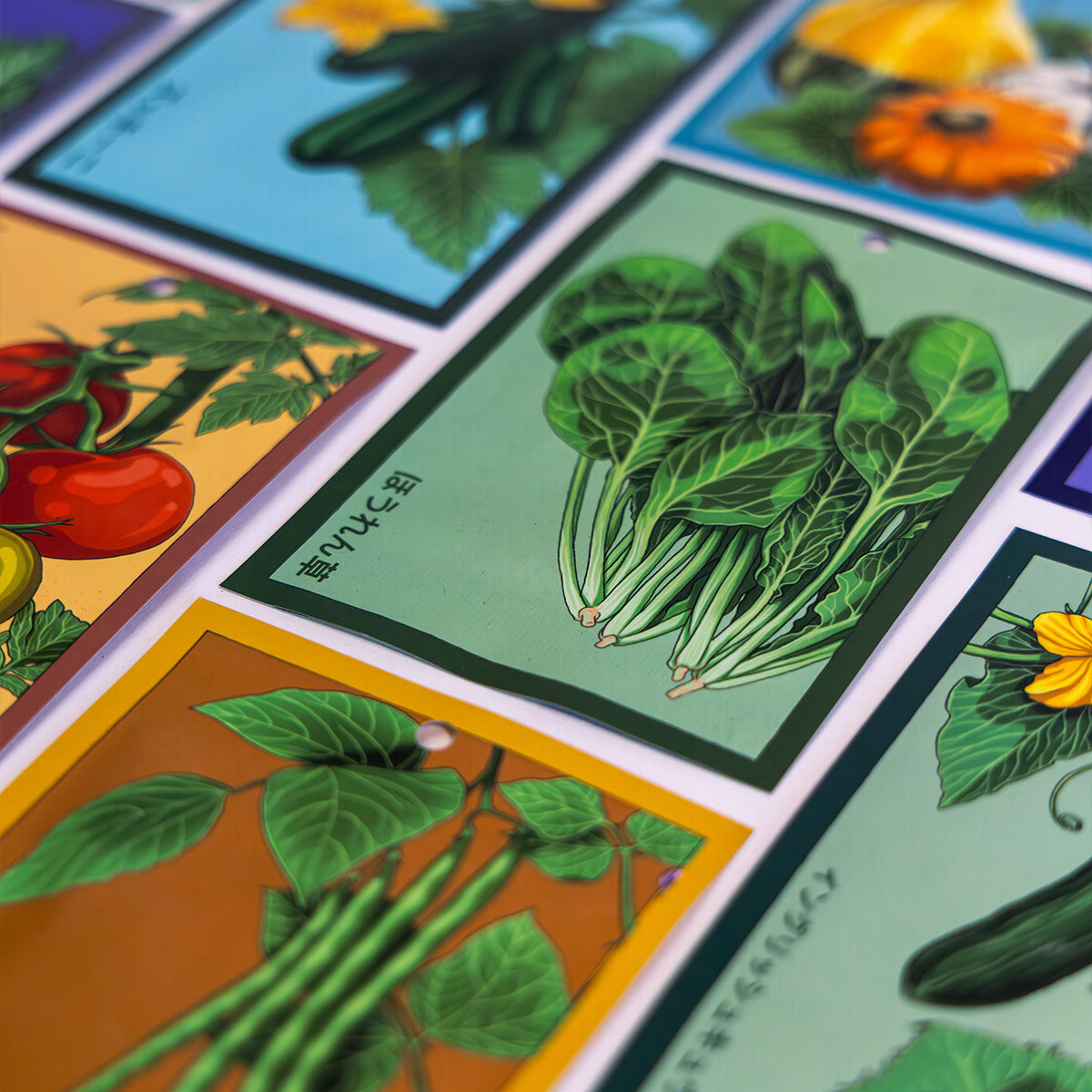
Every Shido seed packet is illustrated in the style of Japanese 1910s woodblock printing -- designed and drawn in-house by Chive, that has been exhibiting at the Chelsea Flower Show in London every year and does not, as a matter of principle, sell to big-box retailers. Customers collect the packets as a series. This was not the original plan.

Shipping & returns

Shipping

  • Free shipping: Orders $200+ within the US
  • Standard: 5–8 business days, Express 2–3 business days (at checkout)
  • International Ships: to 40 countries — rates at checkout
  • Packaging Ships: in outer box to protect gift box

View full shipping policy →

Returns

We accept returns within 30 days of delivery on unused items in original packaging. If your piece arrives damaged, contact us within 7 days with a photo and we will replace it at no charge.

View full return policy →

Satisfaction Guarantee

We stand by the quality of our flower seed packets! Every Shido seed packet is lab-tested for germination before it ships. If your seeds do not perform to the stated germination rate under correct growing conditions, contact us and we will replace or refund. Guaranteed!

Wholesale Inquires

Have a cool shop? Know someone that does?

Find Chive on Faire →

Radish Horticultural Specifications

Botanical

Brassica oleracea var. botrytis

Plant Type

Annual

Light

Full sun

Water

Consistent moisture

Soil

Moist, fertile, well-drained

Depth

1/4 in

Germination

7-10 days

USDA Zone

2-11

Mature Height

18-24 in

Harvest

75-100 days


Getting to know your Cauliflower

Cauliflower is a cool-season vegetable in the Brassicaceae family, prized for its compact, edible white curds that form at the center of the plant. It grows best in nutrient-rich, well-drained soil with full sun, and it needs consistent moisture along with genuinely cool temperatures to avoid bolting before the head has a chance to fully develop. The curds themselves grow protected within a canopy of surrounding leaves, which shield them from direct sun exposure and help preserve that classic pale white color gardeners expect, though some varieties depart from tradition entirely with orange, purple, or green curds instead. Cauliflower is a heavy feeder, asking for ample nitrogen and phosphorus to reliably form a dense head rather than a loose, disappointing one. It tends to be a bit more demanding to grow well than some of its brassica relatives, rewarding a gardener's patience and attention rather than forgiving neglect. In the kitchen, cauliflower shows up everywhere from steamed side dishes to roasted centerpieces, and it's become a popular stand-in for rice or flour in lower-carb cooking, which has only broadened its appeal well beyond the traditional vegetable tray. Patience pays off more here than with most of its brassica relatives. A little extra care goes a long way with this one.


History & origin

Ancient Mediterranean & Near East

Cauliflower (Brassica oleracea var. botrytis) was developed from wild cabbage relatives, with early cultivation documented in the eastern Mediterranean and Near East.

12th Century, Spread via Arab Agriculture

Cauliflower spread through the Arab world and into Spain and Italy during the medieval period, with detailed cultivation techniques documented by Arab agricultural writers.

16th Century, France

Cauliflower became particularly associated with French cuisine after its introduction there in the 16th century, prized by French royal courts and later broader French culinary tradition.

Today

Widely grown worldwide, and increasingly popular in recent years as a low-carbohydrate substitute ingredient in various reimagined dishes.

Shido Vegetable and Flower Seeds Vacuum sealed for peak freshness

Step-by-Step Sowing & Growing Guide

Getting Started

Annual, notably sensitive to stress

Step 1: Timing - Start indoors 6-8 weeks before last frost for spring, or start mid-summer for a more reliable fall crop -- this plant is highly sensitive to heat and temperature swings during head formation.

Step 2: Soil - Rich, fertile, well-drained loam, pH 6.0-7.0.

Step 3: Sowing - ¼-½ inch deep. Germination takes 7-10 days.

Step 4: Transplant - 18-24 inches apart, rows 24-36 inches.

Step 5: Blanch white varieties - Tie outer leaves over the developing head to block sunlight and prevent yellowing -- purple and orange types skip this step.

Step 6: Harvest - Cut once the head is fully formed and still tight, before curds separate or turn grainy -- unlike broccoli, there's typically no meaningful second harvest.

Before you start

Materials needed to sow

  • Seed trays or garden bed: Start indoors for spring, or mid-summer for a generally more reliable fall crop, given this plant's sensitivity to heat swings.
  • Twine or clips, ready for later: Needed to tie outer leaves over the head to blanch white-type varieties -- purple and orange types skip this step.

Materials for harvest and storage

  • A knife: For cutting the head with a few protective leaves attached.
  • Basket: For collecting the harvest.
  • Refrigerator, short-term: Cauliflower doesn't keep as long as cabbage.

Tip: Cut once the head is fully formed and still tight, before curds separate or turn grainy -- unlike broccoli, there's typically no meaningful second harvest, so timing this one cut well matters more.

Growth Requirements

Light:

  • Requires full sun (6+ hours of direct sunlight per day).

Soil:

  • Prefers rich, well-draining, loamy soil with a pH of 6.0-7.0.
  • Add organic matter like compost or aged manure before planting.

Watering:

  • Needs consistent moisture, about 1-1.5 inches per week.
  • Avoid overwatering, which can cause root rot.

Temperature & Climate:

  • Best growing temperatures: 60-75°F (15-24°C).
  • Can tolerate light frost, but extreme heat can cause poor head formation (buttoning).

Fertilization:

  • Use a balanced fertilizer (10-10-10 or organic compost) at planting.
  • Side-dress with nitrogen fertilizer every 3-4 weeks for optimal growth.

Maintenance

Watering:

  • Keep the soil evenly moist, but avoid soggy conditions.
  • Mulch with straw or compost to retain moisture and regulate soil temperature.

Fertilization:

  • Feed with a balanced fertilizer (10-10-10) every 3-4 weeks.
  • Apply calcium-rich amendments to prevent hollow stems or tip burn.

Blanching (For White Cauliflower):

  • To keep the curd white, tie outer leaves over the head when it reaches 2-3 inches in diameter.

Harvesting and Seed Collection

  1. When to Harvest:
    Cauliflower is ready 60-100 days after planting, depending on variety.
    Harvest when the head is 6-8 inches in diameter and firm.
    Cut the head at the base with a sharp knife, leaving a few outer leaves attached.
  2. Storing Cauliflower:
    Store in the refrigerator for up to 2 weeks.
    Can be blanched and frozen for long-term storage.
  3. Saving Seeds:
    Allow plants to flower and set seed in their second year.
    Collect dried seed pods, store in a cool, dry place, and replant next season.

Troubleshooting and common mistakes

  • Skipping blanching on white varieties — tying outer leaves over the developing head blocks sunlight and prevents yellowing/discoloration -- purple and orange types don't need this step
  • Temperature swings during head formation — the most common cause of small or 'buttoned' (premature, undersized) heads
  • Expecting a second harvest — unlike broccoli, cauliflower typically produces no meaningful side shoots after the main head is cut

Culinary uses & nutritional information

What it's used for

1. Culinary Uses:

  • Consumed raw in salads, roasted, steamed, stir-fried, or mashed.
  • Used as a low-carb alternative (e.g., cauliflower rice, pizza crust, and cauliflower steaks).
  • Pickled or fermented for preservation.

2. Nutritional Benefits:

  • Rich in vitamin C, vitamin K, fiber, and antioxidants.
  • Supports digestion, immunity, and heart health.

3. Companion Planting:

  • Grows well with celery, onions, spinach, and beets.
  • Avoid planting near strawberries or tomatoes, which may compete for nutrients.

What parts are edible

  • Head (curd): The primary and essentially only harvest -- unlike broccoli, this plant typically doesn't produce meaningful side shoots afterward.
  • Leaves: Edible, and the leaves that wrap around the developing head are sometimes roasted separately.

Nutritional data

Raw cauliflower, per 100g

Calories: 25 kcal

  • Carbohydrates: 5 g
  • Protein: 1.9 g
  • Total fat: 0.3 g
  • Dietary fiber: 2 g
  • Vitamin C: 48.2 mg (54% RDA)
  • Folates: 57 µg (14% RDA)
  • Potassium: 299 mg
  • Cholesterol: 0 mg
  • Choline: cauliflower is one of the more notable vegetable sources of this less-discussed nutrient

Companion plants, pests & diseases

Companion planting

Good companions

  • Onions, garlic, herbs, beets, celery — general brassica companion pairing
  • Spinach — benefits from cauliflower's light shade

Poor companions / avoid

  • Strawberries, tomatoes, pole beans — documented poor pairing
  • Other brassicas — shared pests/disease within rotation window

Pests

  • Cabbage worms, cabbage loopers — chew large holes in leaves
  • Aphids, flea beetles — standard brassica pest pressures

Diseases

  • Clubroot, black rot, downy mildew, alternaria leaf spot — standard brassica fungal pressures -- cauliflower is notably less forgiving of stress than broccoli or cabbage during head formation

Pro Tip

For large, tender cauliflower heads, practice blanching by tying the outer leaves over the developing curd when it’s about 2–3 inches in diameter. This protects it from sun exposure, preventing discoloration and bitterness.

Seeds worth keeping

What makes Shido Seeds different

Shido Seeds are designed by Chive Studio, a ceramic design company. We are not a seed conglomerate. We do not sell through big-box retailers. Each variety in the catalog was selected because it is worth growing — not because it ships well in bulk or photographs well in marketing materials.

Every packet is germination-tested at an independent third-party lab before it earns its woodblock illustration. The vacuum seal removes the oxygen that causes standard paper packets to degrade. The stated germination rate is a floor, not a marketing figure.

If something goes wrong, contact us. We will make it right.

Plants that Grow together look good together...even if they are ceramic

Its Closest Brassica Relative
For a nearly identical growing challenge with a different color entirely, the Broccoli shares cauliflower's demanding nature and its place in the same plant family.

Vegetable Shido Seeds packets — by Chive Studio Toronto

The Rest of the Vegetable Garden

Part of the broader Shido vegetable seed lineup, where demanding crops sit next to considerably easier ones.

Buttercup Yellow Gay Paree Peony - Chive Ceramics Studio - Ceramic Flowers - Chive Ceramics Studio

White That Never Needs Shielding From the Sun

Cauliflower's curds need protection to stay pale, but Chive's Ivory Stargazer Lily keeps its color under any light without any extra effort.

Chive Shido seed packets with botanical illustrations on a peg rack, showing cherry blossom, tomato, and eggplant designs.

The credentials behind the packet

Cauliflower already asks more of a gardener than most of its brassica relatives, demanding real attention to timing and moisture that a more forgiving crop simply doesn't require. That makes seed reliability matter more here, not less, since a demanding season shouldn't also carry the risk of a packet that fails to germinate. Every Shido Seeds packet gets sealed against oxygen for exactly that reason, a step well beyond what a typical paper envelope offers once it's been sitting a while. Cauliflower gets that same standard as every other vegetable in the line, since a crop this particular about its conditions deserves seed that isn't the thing letting it down. Getting cauliflower right takes real patience from the gardener; the seed shouldn't be part of that struggle.


Plant Care, Simplified with Chive

Keep it alive, keep it thriving. Let's make plant parenthood look easy.

Do Seeds Expire? How Long Do Seeds Last | Shido

Todd Newgren
Seeds don't expire — they lose viability as oxygen depletes stored energy, and vacuum sealing is the fix. Chive's Shido Seeds are vacuum-sealed, germination-tested, and stocked ...
Read more

Are Seed Packets GMO? The Honest Answer

Todd Newgren
Are seed packets GMO? No—home garden seed packets, Shido included, are never genetically modified, since GMO seed is only made for large-scale commercial crops. The non-GMO badg...
Read more

Frequently asked questions

What is the best way to grow cauliflower seeds?

Cauliflower asks for nutrient-rich, well-drained soil, full sun, and genuinely consistent moisture — inconsistent watering or a sudden temperature swing is the most common reason a head bolts prematurely instead of forming properly. Cooler, more stable growing conditions overall tend to produce the most reliable, evenly formed heads. Mulching around the base also helps retain the steady soil moisture cauliflower depends on to avoid stress-related bolting.

Why does cauliflower turn yellow instead of staying white?

Direct sun exposure on the developing curd causes yellowing, which is why gardeners often tie the surrounding leaves loosely over the head to block light and preserve that classic pale color as it matures. This technique, sometimes called blanching, is optional for the colored varieties, which don't need light protection the same way.

What colors does cauliflower come in besides white?

Beyond the traditional white, some varieties produce orange, purple, or green curds, each with a slightly different flavor profile despite the shared growing requirements. Purple varieties in particular tend to carry a slightly sweeter, milder flavor than the standard white type. Each colored variety still needs the same basic growing conditions as the traditional white type despite the visual difference.

Why is cauliflower harder to grow than broccoli?

Cauliflower is generally less forgiving of temperature swings and inconsistent moisture than broccoli, and the curd itself needs protection from direct sun that broccoli's more open flower heads don't require in the same way. That extra sensitivity is really the main reason cauliflower has a reputation for being trickier to grow well.

Does cauliflower need a lot of fertilizer?

Yes, more than many vegetables — it's a heavy feeder that benefits from ample nitrogen and phosphorus to support the kind of steady growth that produces a dense, well-formed head rather than a loose one. Side-dressing with additional fertilizer partway through the season often makes a visible difference in head size.

How long do cauliflower seeds last?

Vacuum-sealed Shido Seeds packets remain viable for up to 10 years when stored properly, compared to roughly one year for a typical paper seed packet. Given how much cauliflower already depends on getting timing right, starting with seed that's actually reliable removes one major variable. That reliability matters most for a crop this sensitive to timing, where a weak start is hard to recover from later.

Can cauliflower be grown in a small garden?

Yes, though each plant needs reasonable spacing to develop a full-sized head, so a small garden may only accommodate a handful of plants rather than a large row. Choosing a smaller or more compact variety can help make the most of limited garden space. That's usually enough room for a handful of well-spaced plants to each form a proper, full-sized head.

Is this seed germination-tested?

Yes — every Shido Seeds packet, cauliflower included, is tested at independent third-party labs before it reaches a shelf, given how much this particular crop depends on reliable germination timing. That extra scrutiny matters most for a crop this sensitive to timing, where a weak germination rate would compound an already demanding season.

Verte Rx Shiny Leaves for Plants - Chive Ceramics Studio - Chive Ceramics Studio

The seed is the start. Verte RX handles the rest.

Most seedlings fail not from bad seed but from soil that runs out of what the plant needs before the plant can find it. Verte RX is a liquid plant vitamin formulated for exactly that window — the weeks after germination when the root system is establishing and the margin between thriving and stalling is narrowest.