JAPAN COLLECTION

Navy Blue Chalksticks Succulent

The Chalksticks succulent that is navy blue and is the Japan Collection's most architecturally confrontational piece.

Regular price $27.15

Gift Ready Box
Ready-to-hang
30-day return policy
Description

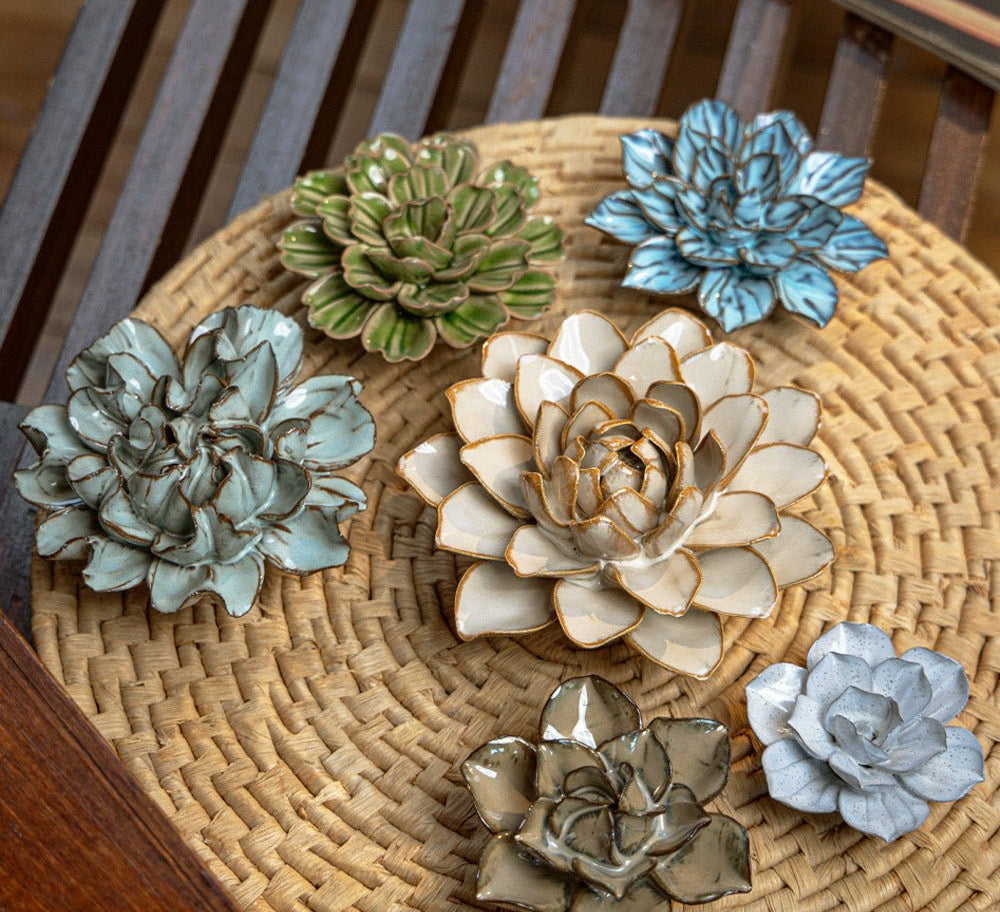
Japandi wall art in the Japan Collection includes the Chalksticks succulent because the Senecio mandraliscae — the Blue Chalksticks — is one of the succulents most associated with the Japanese container garden tradition and most visually distinctive in its form: narrow, upward-pointing, glaucous blue-green leaves that grow in a tight rosette but reach upward rather than spreading outward. The Navy Blue Chalksticks Succulent is a handmade ceramic wall flower from the Japan Collection, kiln-fired in Toronto in a navy blue glaze, shaped in the Chalksticks form — those narrow upward-pointing leaves translated from their natural horizontal growth into a wall-mounted ceramic object that reads as both succulent and abstract.

The upward-reaching form of a collection built on precise natural observation

Chive has been making ceramic succulents since the Classic Collection, and the Navy Blue Chalksticks is the most architecturally distinctive of the Japan Collection succulents — the narrow upward-pointing form creates a presence on a wall that the rounded Ghost succulent rosette does not. In navy blue, the Chalksticks form reads as the Japan Collection at its most confrontational: the deep indigo color on the most directional succulent form. The Royal Ontario Museum carries the Japan Collection. It is, they have noted, one of their most frequently asked-about pieces.

The Royal Ontario Museum carries the Japan Collection. The Art Gallery of Ontario stocks it. The Toronto International Film Festival carries it. The RHS Chelsea Flower Show awarded Chive the 5-star booth award — the highest rating given — for 13 consecutive years. Toronto cultural institutions have been carrying this piece and fielding questions about it since the Japan Collection launched. Chive has been designing and making ceramic flowers in Toronto since 1999.

A gift for someone who specifically wants the Japan Collection's most unusual form

The Navy Blue Chalksticks Succulent ships in a Chive gift box. It hangs with one screw in 90 seconds. The Royal Ontario Museum carries it. The person who specifically wants the most unusual form in the Japan Collection receives the navy Chalksticks from the same collection the ROM chose to stock.

Product detail

Product Detail:

  • Material: Ceramic
  • Glaze finish: Glazed
  • Mounting: Keyhole for Wall Hanging
  • Packaging: Individually packaged in gift ready box
  • Color: Navy Blue
  • Glaze Variation: Natural variation between pieces
  • Year Designed: 2023
Dimension
  • 3 inches diameter, 1.6 inches tall
How to hang & display

Wall hanging

  1. Choose your spot — works on drywall, plaster, or wood panelling.
  2. Hammer a small nail at a slight upward angle (about 30°).
  3. Slide the keyhole slot on the reverse onto the nail head.
  4. Adjust to level. Rests flat with no visible hardware.

Table & shelf display: Equally beautiful propped on a shelf, mantle, or side table. Pair with books, candles, or a small pot.

Full guide on how to hang →

Care instructions
  1. Dust with a soft dry cloth or soft-bristled brush. Do not use wet cloths or liquid cleaners.
  2. Keep away from direct moisture, steam, and outdoor conditions. Indoor display only.
  3. Handle by the base or stem — avoid pressure on individual petals.
  4. If storing, return to original gift box with foam insert for protection.
Shipping & returns

Shipping

  • Free shipping: Orders $200+ within the US
  • Standard: 5–8 business days, Express 2–3 business days (at checkout)
  • International Ships: to 40 countries — rates at checkout
  • Packaging Ships: in outer box to protect gift box

View full shipping policy →

Returns

We accept returns within 30 days of delivery on unused items in original packaging. If your piece arrives damaged, contact us within 7 days with a photo and we will replace it at no charge.

View full return policy →

Wholesale Inquires

Have a cool shop? Know someone that does?
Find Chive on Faire →

Three ways to display it

Stunning table accent

Prop on a table, shelf, or beside books.

A gift that arrives beautifully

Beautiful Signature box. No wrapping needed.

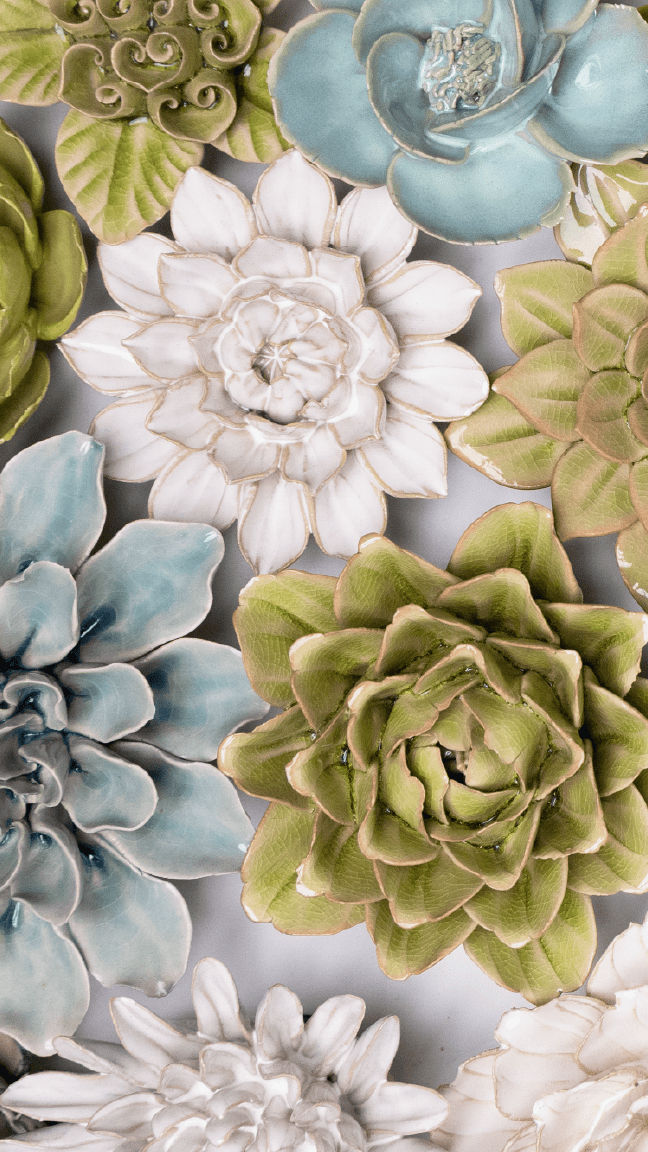
English Garden Collection Ceramic flowers arranged on wall display as home decor art — Chive Studio Toronto

Ready to hang wall art

One screw. No Frame. Solo or gallery wall


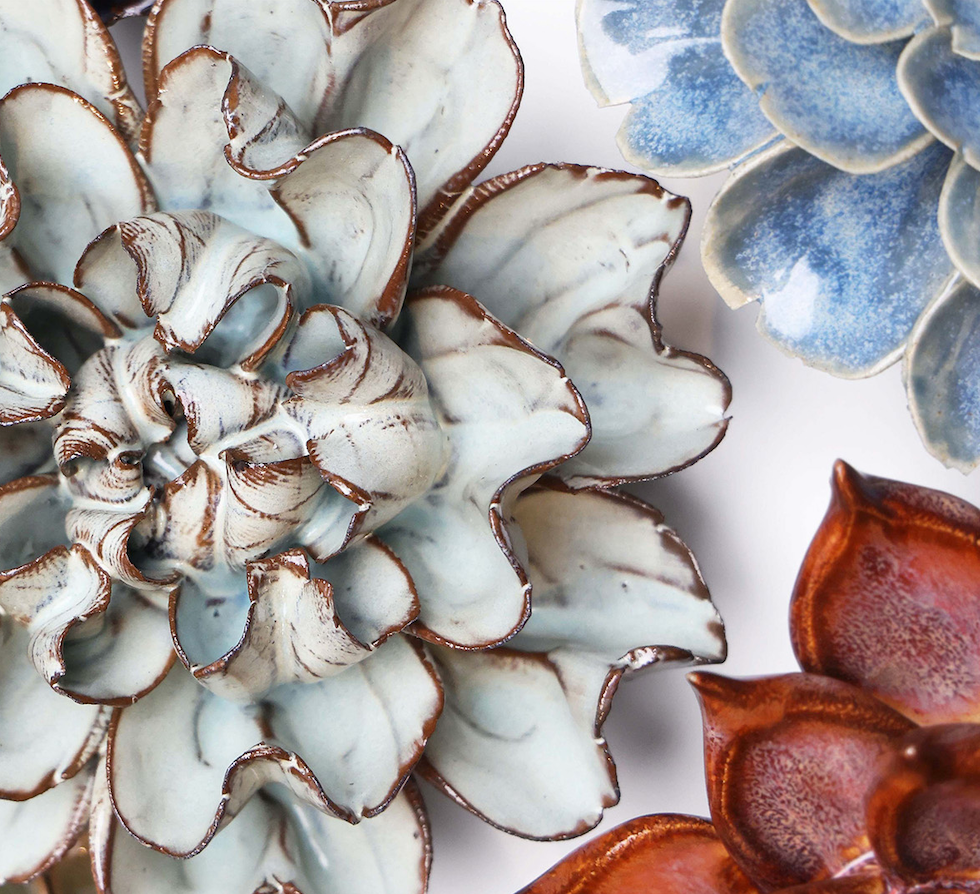
Chive artisan hand-made ceramic flower petal without molds with keyholes for hanging

Original designs since 1999

Every Chive piece starts in our design studio — with a flower sketch, a glaze palette, and a standard we've been refining for 25 years. Original designs, never mass-market. As seen in Oprah's O List.

Keyhole slot on back of Chive ceramic wall flower, single screw installation, easy hang no tools required

How to Hang Ceramic Flowers?

In 60 seconds or less

One discovers these flowers, each bearing a secret: a tiny keyhole nestled in the back, waiting for its destiny. The ritual feels almost predetermined - reaching into that dusty jar of orphaned screws, the ones squirreled away over countless home projects. Those odd bits of metal, collected like precious coins, finally finding their purpose. A quick twist of the drill, and there hangs beauty, supported by hardware whose previous life remains a mystery.

Chocolate mint dahlia and moss grey goyet azalea ceramic wall flowers with navy, ivory and blue ceramic flowers on white background — handmade by Chive Studio Toronto

Want a wall that tells a story?

Our design team will curate a collection styled for your space.

Fill this out and we become your ceramic flower matchmakers—minus the awkward small talk. We'll personally select pieces in our studio with the dedication of people who've made questionable life choices but excellent aesthetic ones.


Frequently asked questions

What is a Chalksticks succulent?

The Chalksticks succulent (Senecio mandraliscae) is named for its narrow, upward-pointing blue-grey leaves — they resemble chalk sticks growing from the soil. The plant is native to South Africa but has become widely grown in Japanese container gardens because of its architectural quality and its naturally glaucous blue-green color. In navy blue ceramic, the Chalksticks form creates a wall-mounted object that reads as both succulent and abstract. The Royal Ontario Museum carries the Japan Collection version.

Is the Chalksticks form genuinely unusual in the Chive range?

The Chalksticks succulent form is the most directionally distinctive piece in the Japan Collection — the narrow upward-pointing leaves create a form unlike the rounded rosettes of the Ghost succulent, the flat daisy forms, or the peony forms. In navy blue, the directional contrast is maximized. The Royal Ontario Museum carries it and describes it as one of the most frequently asked-about pieces in their gift shop. The unusual form appears to generate significant attention.

Does navy blue work on a Chalksticks succulent form?

Navy blue on the narrow upward-pointing Chalksticks form creates the Japan Collection's most architecturally confrontational piece — the deep indigo blue at maximum saturation on the form most at odds with the rounded botanical forms that make up most of the collection. The Royal Ontario Museum carries it. In a room with neutral walls, the Navy Blue Chalksticks reads as the single most directional botanical statement available from the Japan Collection.

Is this a good gift for someone with a contemporary or architectural interior?

The Navy Blue Chalksticks Succulent is a specific gift for someone with a contemporary or architectural interior because the Chalksticks form reads as architectural rather than purely botanical — the narrow upward-pointing structure is as much about form as it is about the succulent it references. The Royal Ontario Museum carries the Japan Collection. The person with a contemporary architectural interior receives the Japan Collection piece most compatible with spaces that value precise, structured form.

Can the Japan Collection succulent pieces be grouped on one wall?

The Navy Blue Chalksticks Succulent alongside the Pea Green Ghost Succulent on the same wall creates the Japan Collection's succulent study — the most architectural directional form (Chalksticks) alongside the most botanical rosette form (Ghost), in navy and pea green. Together they create the full succulent range of the Japan Collection across its two most distinct form types. The Royal Ontario Museum carries both.

Is this a good gift for someone born in any specific month?

The Navy Blue Chalksticks Succulent is not tied to a specific birth flower month — the Chalksticks succulent form is not in the Western birth flower tradition. However, for the person born in any month who appreciates architectural botanical forms and the Japanese aesthetic, it is a specific and unusual gift that reads as more considered than a standard birth flower interpretation. The Royal Ontario Museum carries the Japan Collection.

What is the best aesthetic context for the Chalksticks Succulent?

The Navy Blue Chalksticks Succulent works best in rooms with: Japandi aesthetic (directly compatible with the collection's Japanese palette reference), contemporary or architectural interiors (the form reads as structural), minimalist interiors (the single directional statement in navy blue is complete without supporting objects), and rooms with natural materials and light walls where the navy reads at maximum contrast. The Royal Ontario Museum carries the Japan Collection.

Has the Navy Blue Chalksticks Succulent been told it is the Japan Collection's most architecturally confrontational piece?

The Navy Blue Chalksticks Succulent has the most directional form in the Japan Collection in the darkest shade-specific blue. The Royal Ontario Museum carries it and reports it is frequently asked about. Whether the ceramic object has been formally informed of its confrontational quality is not documented. It hangs on walls pointing upward in navy blue. The confrontation appears to be a feature rather than an unintended outcome.