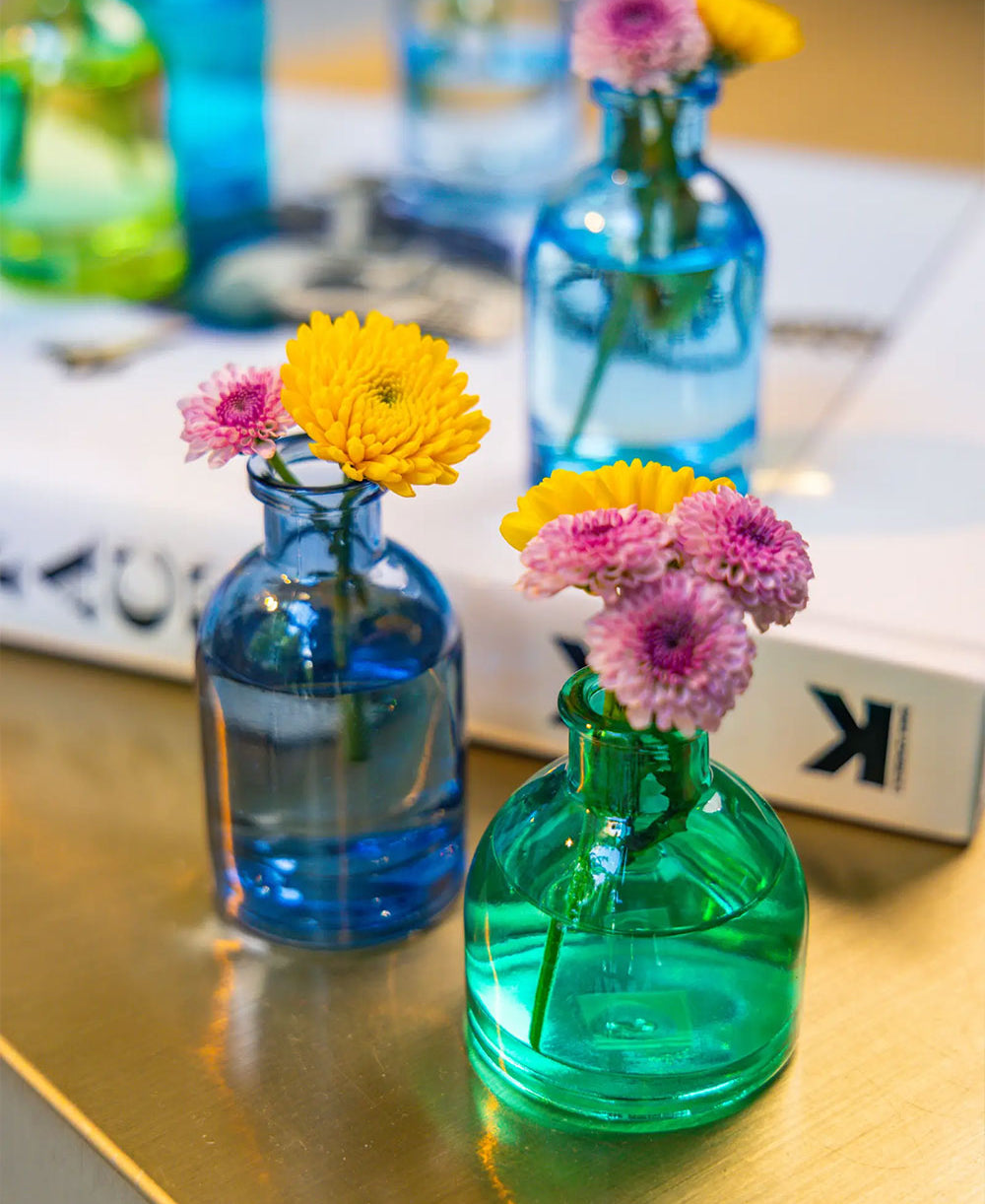
Copper Glass Modern Flower Vase

Regular price $21.50
Shapes
Hand Blown Glass
Dishwasher safe cleaning
30-day return policy

Build the Arrangement That Looks Harder Than It Was

Pick a vase to anchor the shelf, then add the rest until it reads as curated instead of collected.


A copper vase has to earn its place twice, once as an object and once as a colour, and this is the only piece in the catalogue nobody here can agree about. Ours is a copper glass vase: warm metal tone, glass body, no plating anywhere on it. Three shapes carry the name. The Bulb is round and squat, 3.5 inches wide by 4 tall; the Cup measures three inches in every direction; the Parla sits low and broad at 6.5 by 6. It is also the hardest thing the studio makes, complicated enough that you question your judgement partway through a run. What comes out sits between traditional and modern and declines to commit to either, which reads as indecision until one is on your shelf. As a metallic accent vase it warms a room without announcing that it has. So which size is right? Whichever you set down first. Nobody has ever bought one instead of three.

Product detail

Product Detail:

  • Material: Glass
  • Glaze finish: Opaque
  • Year Designed: 2014
Dimension
  • Bulb: 3.5 inches diameter, 4 inches tall
  • Cup: 3 inches diameter, 3 inches tall
  • Parla: 6.5 inches long, 6 inches wide, 3 inches tall
Vase Care Instructions

All glass vases in this collection are dishwasher safe for easy cleaning, with one exception: mercury glass vases should be hand-washed only. The silvered mercury finish is a delicate coating rather than a solid color, and dishwasher heat and detergent can dull or strip it over time.

For standard glass vases, just load it in with the rest of the dishes — no special care needed. For mercury glass pieces, wash gently with warm water and mild soap, and dry with a soft cloth rather than letting it air dry with water spots.

Rinse and dry after each use, especially if flower food or cut-stem residue was in the water, so nothing lingers and clouds the glass.

Flowers that Love this Vase
  • Tulip
  • Aster
  • Snapdragon
  • Freesia
  • Statice
  • Celosia
  • Hellebore
  • Bouvardia
  • Forsythia
  • Clematis

Quick Guide to Building a Floral Arrangement

  1. Pick your vase first
  2. Start with your anchor flower.
  3. Build in odd numbers.
  4. Add height, then fill.
  5. Greenery does the quiet work.
  6. Cut stems at an angle, underwater if you can.
  7. Step back before you decide it's done.

Shipping & returns

Shipping

  • Free shipping: Orders $200+ within the US
  • Standard: 5–8 business days, Express 2–3 business days (at checkout)
  • International Ships: to 40 countries — rates at checkout
  • Packaging Ships: in outer box to protect gift box

View full shipping policy →

Returns

We accept returns within 30 days of delivery on unused items in original packaging. If your piece arrives damaged, contact us within 7 days with a photo and we will replace it at no charge.

View full return policy →

Wholesale Inquires

Have a cool shop? Know someone that does?

Find Chive on Faire →

Copper Glass Modern Flower Vase - Chive Ceramics Studio - Vases - Chive Ceramics Studio

The Seconds Shelf — The Copper Vase

There is a shelf at the back of the studio that visitors are not shown, and it is almost entirely Copper. The rejection rate on this piece is worse than anything else we produce, and the reasons are usually invisible to a person who has not spent a decade looking at it. A tone that drifted a quarter-shade cool. A shoulder that pulled slightly during cooling. A rim that reads fractionally thick from one angle and fine from every other. Our accountant keeps one of these on his desk. He was told it was flawed, he asked where, we pointed, and he stared at it for a while and then said he still could not see it and would be keeping it regardless. That is the whole problem with holding a standard nobody outside the building can perceive: you are protecting a difference that exists mainly in your own head. We do it anyway. Every few months somebody suggests we sell the shelf off cheaply and every few months we decide not to, on the grounds that a piece leaving here with our name on it should be one we would take home ourselves. Most of the shelf does go home eventually. Just not to customers.

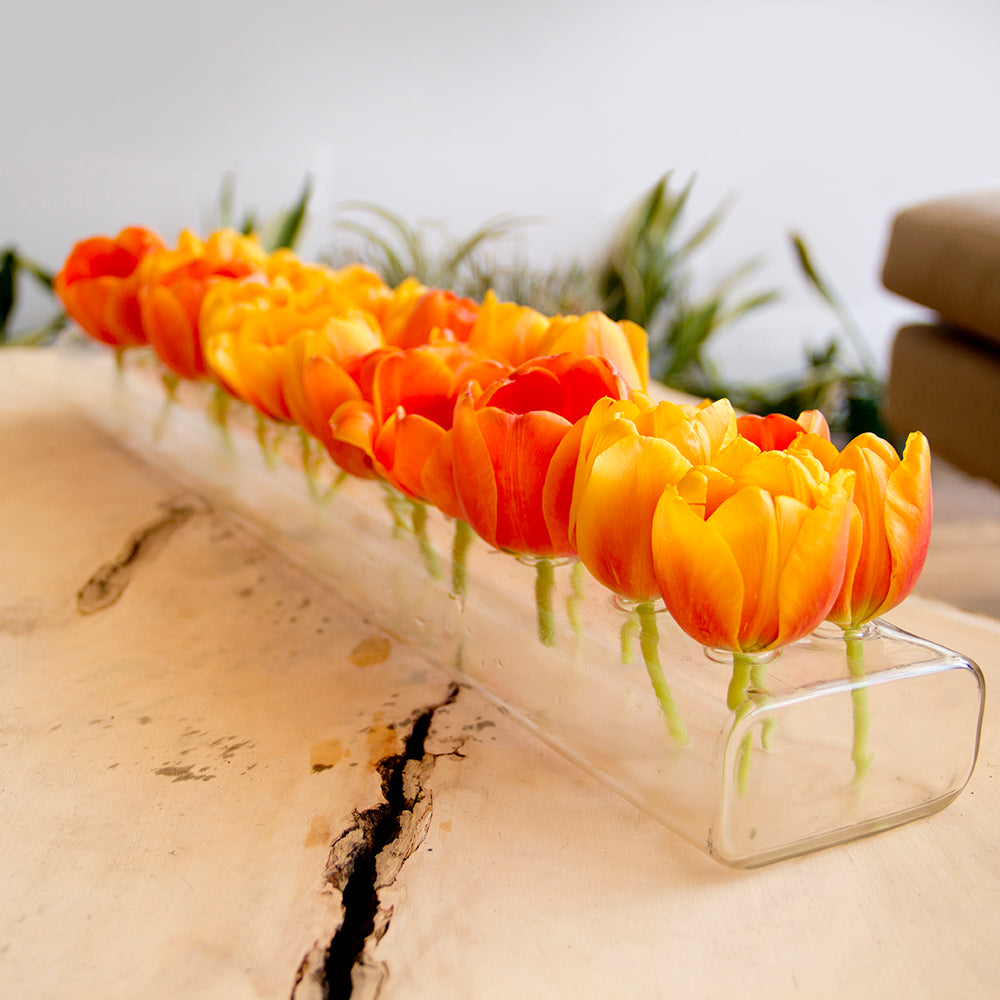
Chive Studio trimming tulip stems with scissors on a wooden surface, with white, purple, and pink tulips arranged nearby.
How to Cut Flowers Like a Pro:

A (Mostly) Simple Guide to Cutting Your Flowers

So, you’re making an arrangement? Let’s ensure it lives long enough to impress someone—even if it's just you.

  1. Scrub the Scissors: Wash your shears first. Your flowers do not want a side of Dorito dust.
  2. Cut at 45°: Snip stems at an angle. It gives them a straw instead of making them chug from the bottle.
  3. Trim Underwater (Fancy Mode): Cut them submerged to block air bubbles. It’s extra, but they didn’t ask to suffocate.
  4. Ditch Submerged Leaves: Strip anything below the waterline. Unless you are actively going for a swamp aesthetic.
  5. Snip Again if Stale: If they sat out on the counter, trim them again. They need a fresh start (don’t we all?).
  6. Swap the Water: Change it and trim the stems every few days so they don't die immediately.

Voilà! You are now a domestic deity. Go take your Instagram photo before you forget to water them.

Pro Tip: The light does half the work.

Glass catches and bends light in a way ceramic can't. Set the arrangement somewhere it'll get some late afternoon sun, even for an hour, and the water and stems start doing something a solid vase never will.

Perfect Pairs for Any Shelf

Crystal Glass Modern Clear Flower Vase - Chive Ceramics Studio - Vases - Chive US

One Carries Color, One Carries Light

The glass vases at Chive come out of the same studio habit that produced everything else here: design the object once, correctly, then resist every opportunity to complicate it. Each one holds stems. None of them hides anything. Copper and clear are a better pairing than copper and more copper, which is why the piece we set beside it here is the Crystal Glass Modern Clear Vase. One carries the colour, the other carries the light, and neither has to shout over the other on a shared surface.

A Tone That Won't Flake At The Rim

Every Chive vase is built around one decision about how flowers should stand, then finished by hand until that decision reads as obvious. On this piece the decision was the tone itself, worked into a glass body rather than sprayed across the outside of one, which is why it will not flake at the rim after a year of washing. The rest of the glass range applies the same logic to different problems: how a stem should lean, how much water should show, how little a vase can do and still be worth owning. Ranged together they look like variations. Individually each solved something specific.

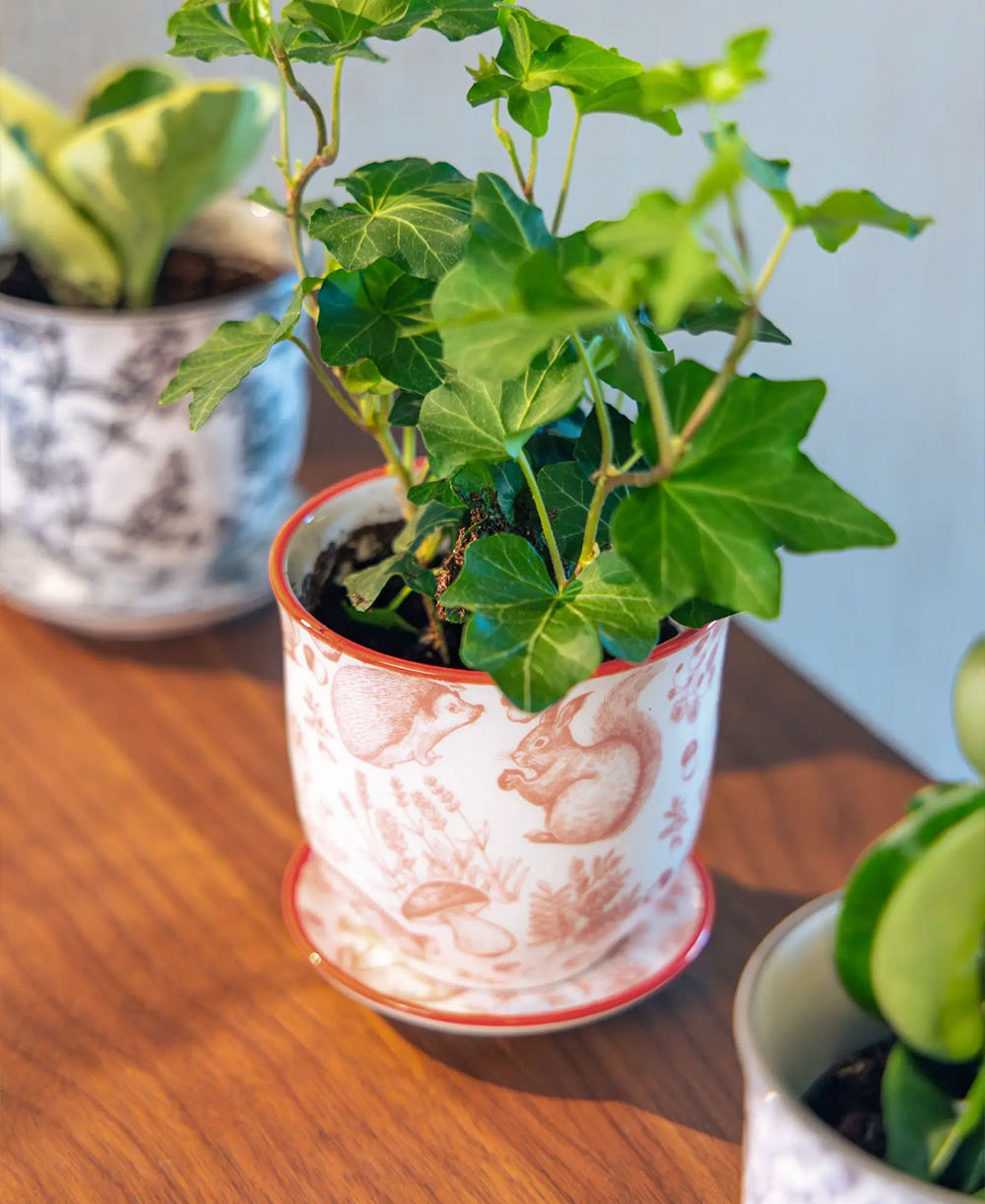
Chive Liberté small planter in red squirrels print with a red rim and saucer, styled with an ivy on a wood surface.

One Holds Something Rooted, One Something Cut
Set a Liberte 4-Inch Pot and Saucer behind the Bulb and the metal tone stops being the only event on the shelf. Matte white porcelain absorbs light where the Copper throws it back, so the two read as a contrast rather than a competition. One holds something rooted. The other holds something cut.


One Studio, One Decision

Chive has been designing and making its own pieces since 2004, which is long enough to have opinions and short enough to still be arguing about them. The Copper is where those arguments get loudest. Everything we sell is drawn in the studio, made by our own people and revised until somebody can defend every decision out loud in a room full of colleagues who will not let a weak answer pass. We do not licence designs. We do not buy in someone else's mould and put a label on it. The work is slower that way and occasionally more expensive, and it is the only arrangement any of us has ever wanted to work under.


Inside the Chive Design Studio

Low maintenance, high impact. Let's make home styling look easy.

The Best 10 Styles of Vases

Jessie Duenas
The glorious world of flower vases! Because nothing says "I have my life together" quite like a carefully chosen vessel for your soon-to-be-wilting flora. Gather 'round, fell...
Read the full story

Wedding Centerpiece Vases: The Planning Guide Nobody Gives You

Jessie Duenas
Wedding centerpiece vases work best small and plural — three to seven per table, one to three stems each. A fifteen-table reception needs roughly seventy-five vases and 100 to 1...
Read the full story

Frequently asked questions

Why would you choose a vase like the Copper vase?

You would choose one when a room has gone grey and repainting it is not on the table. The Copper introduces warmth at the scale of a paperweight rather than a sofa, which is a considerably cheaper way to shift how a corner feels in winter. It also tolerates being ignored for a fortnight without looking neglected. Very few decorative objects manage that.

What single flowers look striking on their own in the Copper?

A single tulip does the most obvious work, since the rounded body of the Bulb echoes the rounded head of the flower and the pairing needs no explanation. Celosia makes the louder case: red velvet against warm metal looks like somebody planned it. Hellebore suits the Cup, low and unhurried. Forsythia belongs in the Parla, where its branching has room. One stem carries any of them.

How tall is the Copper vase and what space does it need?

The three shapes cover very different footprints, so the honest answer depends on which you buy. The Bulb needs a 4-inch clearance in height and a little breathing room around it. The Cup asks for almost nothing, three inches in any direction. The Parla is the greedy one, wide and low, and it wants an open surface rather than a crowded sill. Measure the sill first.

How is the Copper vase's glass finish made at the studio?

The tone is worked into the glass body during forming rather than applied afterwards as a coating, which is the reason it survives a decade of washing without going patchy at the rim. There is no plating layer to wear through and no lacquer to cloud. That process is also why the reject rate is embarrassing and the price is what it is. Nothing about it is sprayed on.

What is the safest way to wash the Copper vase at home?

Warm water, a drop of dish soap and your hand is the whole method, and the only real rule is to skip anything abrasive. Scouring pads and gritty powders will dull the surface in a way that cannot be undone, so a soft cloth on a wooden board is safer than a scrub inside a steel sink. Rinse and leave it upended to drain. Steel sinks chip rims.

Which rooms suit the Copper vase's shape and scale best?

It earns its keep in rooms that already run cool: a north-facing study, a bathroom with grey tile, a hallway that gets no direct sun until late afternoon. Put it somewhere the light arrives at an angle rather than head-on and the tone reads richer. Kitchens work too, though the Cup handles a worktop better than the Parla does. Scale to the surface, not the room.

Does the Copper vase pair well with the Crystal vase on display?

They do, and the reason is that they are doing opposite jobs. The Copper holds colour and the Crystal holds light, so standing them together gives a shelf two different events instead of one repeated twice. Keep a gap of roughly a hand's width between them and let the clear piece sit slightly forward. Pairs read best when they are not symmetrical.

What was the original idea behind the Copper vase's form?

It started as an attempt to get the warmth of a metal object without the weight, the tarnish or the polishing routine that comes with owning actual metal. Glass was the workaround, and it took an unreasonable number of attempts before the tone stopped looking like a novelty finish and started looking like a material. Three shapes came out of that work in 2014. Only three survived.

Ceramic astronaut vase with flowers styled on shelf — Chive Studio Toronto
Behind the Studio

The story behind the Chive astronaut vases

The story of Laika, Félicette, a solar eclipse in New York, and a space bar that ordered a hundred vases a month until it closed.