
Desert Rose Indoor Houseplant Seeds Packet

Regular price $4.95
Vacuum Sealed
NON-GMO
Seed Pack Guarantee

Build Your Garden With These Shido Seeds

Choose a seed packet as your starting point, then round out the bed with these for that thrown-together-but-somehow-perfect harvest.


Desert rose seeds grow into a sculptural succulent shrub with a swollen trunk that takes years to develop, prized as much for form as for flower. Shido desert rose seeds are non-GMO and hermetically vacuum-sealed — a patient route into a windowsill plant most people only see in photos — while standard paper-packed seeds lose germination viability within approximately one year.

The swollen, sculptural trunk takes years to develop, and the plant treats overwatering at any stage of that development as a personal insult. Full sun and an occasional deep soak are all it asks for, and it repays that minimal attention with flowers vivid enough to look painted on. Difficulty and beauty are apparently not mutually exclusive, a lesson most of the border has yet to absorb. It blooms in cycles rather than constantly, taking brief. Every packet ships germination-tested at independent third-party labs before packaging.

Seed specifications
  • Material: Seed
  • Botanical name: Adenium Obesum
  • Genus: Adenium
  • Plant family: Apocynaceae
  • Species: obesum
  • Plant type: Perennial Succulent
  • Pollination type: House Plant
  • USDA Hardiness Zones: 11–12 (houseplant elsewhere)
  • Packet contents:
  • Packaging: Hermetically vacuum-sealed
  • Non-GMO: Yes
  • Seed viability: Up to 10 years (sealed) / 4–5 years (unsealed, ideal conditions)
  • Difficulty: Expert - Advanced Grower
Sowing & growing guide

Quick Sowing Guide:

  • When to sow: Any time indoors
  • Sowing depth: 1/4 in (soak seed 6-8 hrs first)
  • Initial spacing: 6-12 in
  • Row spacing: N/A (grown individually in pots)
  • Days to germination: 14-21 days (with bottom heat)
  • Light: Full sun
  • Water: Low, allow to dry between waterings
  • Soil: Well-drained, gritty cactus-mix soil

Start Growing: Step-by-step sowing and growing guide

About vacuum sealing

Why Vacuum-Sealed Seeds Last Longer

Standard paper seed packets are permeable to oxygen and moisture -- the two primary causes of seed degradation. Most paper-packaged seeds begin losing germination viability after approximately one year, contributing to significant garden-industry waste: packets purchased, not planted, expired, discarded. Shido Seeds are hermetically vacuum-sealed. The packet does not expire quietly in a drawer. It waits.

About the Packaging

Every Shido seed packet is illustrated in the style of Japanese 1910s woodblock printing -- designed and drawn in-house by Chive, that has been exhibiting at the Chelsea Flower Show in London every year and does not, as a matter of principle, sell to big-box retailers. Customers collect the packets as a series. This was not the original plan.

Shipping & returns

Shipping

  • Free shipping: Orders $200+ within the US
  • Standard: 5–8 business days, Express 2–3 business days (at checkout)
  • International Ships: to 40 countries — rates at checkout
  • Packaging Ships: in outer box to protect gift box

View full shipping policy →

Returns

We accept returns within 30 days of delivery on unused items in original packaging. If your piece arrives damaged, contact us within 7 days with a photo and we will replace it at no charge.

View full return policy →

Satisfaction Guarantee

We stand by the quality of our flower seed packets! Every Shido seed packet is lab-tested for germination before it ships. If your seeds do not perform to the stated germination rate under correct growing conditions, contact us and we will replace or refund. Guaranteed!

Wholesale Inquires

Have a cool shop? Know someone that does?

Find Chive on Faire →

Radish Horticultural Specifications

Botanical

Adenium Obesum

Plant Type

Perennial Succulent

Light

Full sun

Water

Low, allow to dry between waterings

Soil

Well-drained, gritty cactus-mix soil

Depth

1/4 in (soak seed 6-8 hrs first)

Germination

14-21 days (with bottom heat)

USDA Zone

11–12 (houseplant elsewhere)

Mature Height

2-6 ft tall / 1-3 ft wide

Harvest

3-5 years to first bloom


The Story Behind This Packet

Desert Rose seeds have been part of the Shido lineup since the collection first opened, grown into a sculptural succulent shrub with a swollen trunk that takes years to develop, prized as much for form as for flower. Every packet is illustrated in the style of early-1900s Japanese woodblock printing, drawn in-house rather than licensed, which means the artwork on this packet exists nowhere else. The seeds themselves are hermetically vacuum-sealed, a packaging choice that has as much to do with the garden as the growing does: a standard paper packet starts losing viability within about a year, while a vacuum seal holds that line for years longer, so the packet in a drawer is still a packet worth planting whenever the moment actually arrives. Shido treats the seed itself as worth that extra step, on the theory that a gardener who buys desert rose seeds deserves a packet that is still viable whenever they finally get around to using it, not just the season they bought it.


History & origin

Native Range

Adenium obesum is native to the arid Sahel regions of Africa — from Senegal and Mauritania to Sudan — as well as tropical and subtropical eastern and southern Africa and the Arabian Peninsula.

1775, Yemen

First described by Swedish naturalist Peter Forsskål during the Danish expedition to Arabia, based on specimens collected near Aden. He classified it as a type of oleander, naming it Nerium obesum.

1819, Germany

Botanists Johann Jacob Roemer and Josef August Schultes recognized the plant belonged to its own genus and reclassified it as Adenium obesum — the genus name a Latinization of "Aden," the Yemeni port city near the original collection site.

Common Name Origin

The genus name nods to its Arabian origins, while "obesum" — Latin for "fat" — refers to the thick, swollen caudex that stores water. The common name "Desert Rose" comes from its rose-like, trumpet-shaped blooms set against its harsh desert habitat.

20th Century to Today

Long valued in its native range for medicinal use, and its toxic sap historically used on poison arrows. Widely embraced by collectors through the 1900s for bonsai cultivation, prized for the sculptural, gnarled shape its caudex develops with age. Today it's a popular succulent houseplant worldwide, capable of living for decades.

Shido Vegetable and Flower Seeds Vacuum sealed for peak freshness

Step-by-Step Sowing & Growing Guide

Getting Started

Step 1: Seed prep - Soak seeds in warm water for 6-8 hours to soften the seed coat.

Step 2: Timing - Sow any time indoors; consistent warmth matters more than season.

Step 3: Soil - Well-drained, gritty cactus-mix soil.

Step 4: Sowing - Sow 1/4 inch deep, using bottom heat (77-86°F) to speed germination.

Step 5: Germination - 14-21 days with bottom heat.

Step 6: Patience - Expect several years of slow growth before the first bloom; the swollen caudex develops gradually with age.

Before you start

Materials needed to sow

  • Container of warm water: For the necessary 6-8 hour seed soak before sowing.
  • Seed trays or small pots with drainage: For sowing.
  • Heat mat: Bottom heat of 77-86°F meaningfully speeds germination.
  • Gritty, cactus-specific soil mix: Standard potting soil holds too much moisture for this plant.

Materials for harvest and storage

  • Sharp, clean pruners: For shaping growth or removing damaged branches.

Tip: Wear gloves when pruning, since the sap is toxic and can irritate skin.

Growth Requirements

Light:

  • Full sun.

Soil:

  • Very well-drained, gritty soil, similar to a cactus mix — critical for preventing rot in the swollen caudex base.

Watering:

  • Water sparingly, allowing soil to dry between waterings.
  • Reduce watering significantly in winter, when the plant may drop leaves and enter a rest period.

Temperature & Climate:

  • Prefers warm conditions, 65-90°F.
  • Frost-tender — protect from temperatures below 50°F.

Fertilization:

  • Light feeding during the active summer growing season; little to none needed during winter dormancy.

Maintenance

Safety Note:

  • The sap is toxic if ingested and can irritate skin — keep away from children and pets, and wear gloves when pruning or repotting.

Soil:

  • Very well-drained, gritty soil, similar to a cactus mix — the swollen caudex (base) is prone to rot in soil that holds too much moisture.

Watering:

  • Water sparingly, allowing soil to dry between waterings; reduce watering significantly in winter when the plant may drop leaves and rest.

Pruning:

  • Prune to shape after the main growing season; many growers prune specifically to encourage a more pronounced, sculptural caudex over time.

Feeding:

  • Light feeding during the active summer growing season; little to none needed in winter dormancy.

Seasonal Care:

  • Frost-tender — bring indoors or into a greenhouse well before any cold weather arrives if grown outdoors seasonally.

Troubleshooting and common mistakes

  • Overwatering: By far the most common way to lose this plant — always let soil dry out fully between waterings.
  • Using a heavy, moisture-retentive potting mix: Regular potting soil holds too much water for this plant's needs; a gritty, cactus-specific mix is essential.
  • Expecting fast growth or quick bloom: Desert rose grown from seed is slow-growing and may take several years to flower.

What it's used for

1. Decorative Uses:

  • A sculptural, swollen-trunked specimen plant with striking pink or red trumpet-shaped flowers

2. Practical Benefits:

  • Very low water needs once established, suited to gardeners who travel or prefer minimal-maintenance plants

3. Garden & Landscape Uses:

  • A striking container or patio specimen in warm, frost-free climates

4. Novelty & Educational Value:

  • A popular subject for bonsai-style training given its naturally sculptural caudex (swollen base) — collectors specifically prune and shape this feature over time
  • Worth flagging clearly: the sap is toxic, which matters for placement around children and pets

Companion plants, pests & diseases

Companion planting

Good companions

  • Other succulents and cacti — shares the same low-water, high-light care needs in mixed container displays

Poor companions / avoid

  • Moisture-loving houseplants — overwatering to accommodate thirstier neighbors is the most common way to lose desert rose to root or caudex rot

Pests

  • Mealybugs: White, cottony clusters in leaf joints. Dab with isopropyl alcohol on a cotton swab.
  • Spider mites: Fine webbing on undersides of leaves, worse in hot, dry indoor air.
  • Scale insects: Small, brown, immobile bumps on stems. Scrape off or treat with horticultural oil.

Diseases

  • Root and caudex rot: Soft, blackened roots and caudex, overwhelmingly from overwatering or poor drainage — the single biggest risk to this plant. Allow soil to dry fully between waterings.
  • Leaf spot: Dark, irregular spots on foliage in overly humid conditions. Remove affected leaves and improve airflow.

Pro Tip

Soak seeds in warm water for 6–8 hours before planting to soften the seed coat and speed up germination—then give them bottom heat (25–30°C/77–86°F) with a heat mat for best results.

Seeds worth keeping

What makes Shido Seeds different

Shido Seeds are designed by Chive Studio, a ceramic design company. We are not a seed conglomerate. We do not sell through big-box retailers. Each variety in the catalog was selected because it is worth growing — not because it ships well in bulk or photographs well in marketing materials.

Every packet is germination-tested at an independent third-party lab before it earns its woodblock illustration. The vacuum seal removes the oxygen that causes standard paper packets to degrade. The stated germination rate is a floor, not a marketing figure.

If something goes wrong, contact us. We will make it right.

Plants that Grow together look good together...even if they are ceramic
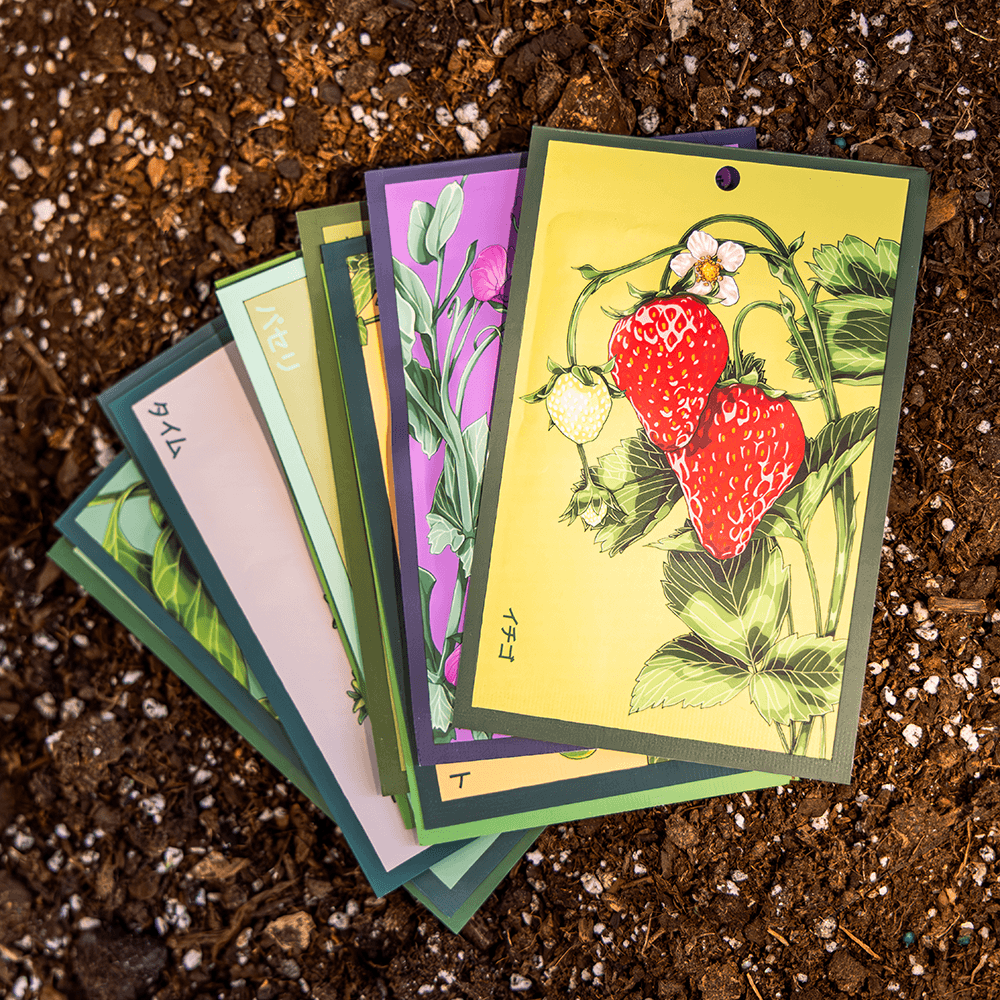
More From the Shido Garden
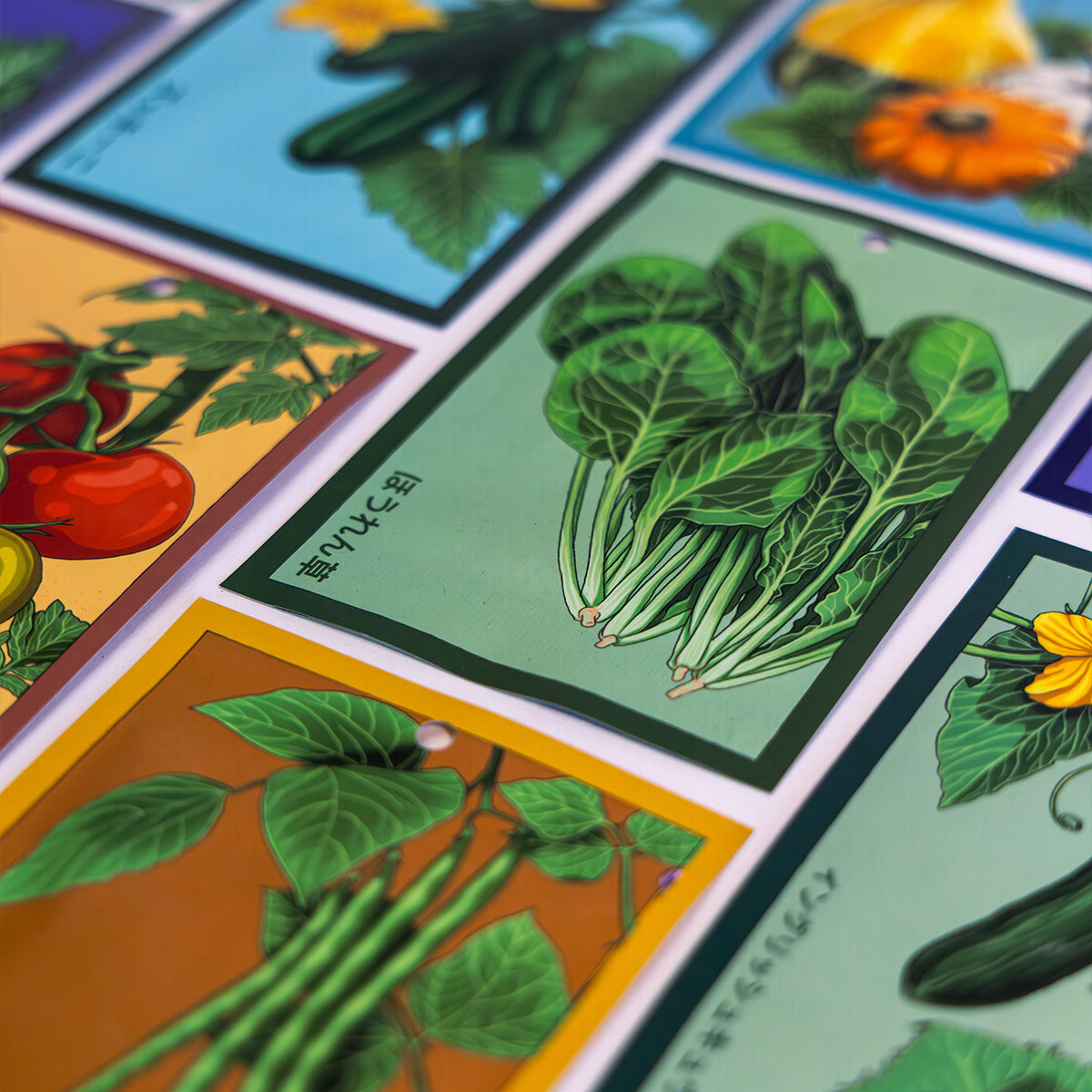
Every Shido variety belongs to a wider garden of vacuum-sealed packets, each illustrated in-house. If desert rose suits your garden, Dewflower offers a related but distinct character worth growing alongside it.

Vegetable Shido Seeds packets — by Chive Studio Toronto

Explore the Full Flower Seeds Collection

Shido Seeds spans flowers, vegetables, herbs, houseplants, and fruit & berry varieties, all sealed for lasting germination. Explore the Shido Seed Flowers Collection for more varieties that share desert rose's easy-care approach to the garden.

April Birth Flower - Daisy ceramic wall flower styled on wall — Birth Flower Collection — Chive Studio Toronto

Ceramic Flowers That Never Wilt

Chive also makes ceramic flowers that never need water, sun, or a growing season of their own. Growing Desert Rose means waiting out a season; Chive's Ivory Stargazer Lily skips the wait entirely.

Chive Shido seed packets with botanical illustrations on a peg rack, showing cherry blossom, tomato, and eggplant designs.

The credentials behind the packet

Chive Studio started as a ceramics workshop and grew, one collection at a time, into seeds, vases, and everything else now carrying its name. Shido Seeds is the newest branch of that same tree, built on the belief that a seed packet deserves the same attention to material and design as a ceramic vase does. That is why every variety, desert rose included, ships vacuum-sealed rather than paper-packed, and why the packaging is illustrated rather than merely printed.


Plant Care, Simplified with Chive

Keep it alive, keep it thriving. Let's make plant parenthood look easy.

Nobody grows one dahlia. This is what nobody tells you.

Ryan Hearst
How to grow dahlias from seed: start indoors 6–8 weeks before last frost, transplant after frost, and expect first blooms in late summer. Nobody warns you that one bloom is all ...
Read more

Are Seed Packets GMO? The Honest Answer

Todd Newgren
Are seed packets GMO? No—home garden seed packets, Shido included, are never genetically modified, since GMO seed is only made for large-scale commercial crops. The non-GMO badg...
Read more

Frequently asked questions

How long do desert rose seeds last in the packet?

Desert rose seeds stay viable far longer than a standard paper packet allows. Shido seals every packet hermetically, removing the oxygen and moisture that cause paper-packed seeds to lose germination viability within about a year. That difference matters most for a gardener who buys ahead of a season rather than the week they plant, since a vacuum-sealed packet is still good years after a paper one would have quietly failed.

Is desert rose easy to grow from seed?

Desert Rose grows into a sculptural succulent shrub with a swollen trunk that takes years to develop, prized as much for form as for flower, and most gardeners find it manageable from seed once they know what it actually wants. It is not a fussy plant so much as a specific one, with its own timing and its own preferences, and once those are respected it tends to perform reliably rather than dramatically.

Can desert rose seeds be started indoors?

Yes, desert rose seeds can be started indoors under a grow light or on a bright windowsill several weeks before the outdoor season begins, then hardened off gradually before transplanting. Starting indoors gives the plant a head start on a shorter growing season and lets a gardener control moisture and temperature more precisely than an outdoor bed allows.

Are desert rose seeds non-GMO?

Yes. Every packet of Shido desert rose seeds is non-GMO, sourced and packaged without any genetic modification at any stage. That commitment runs across the entire Shido Seeds catalog, not just this variety, and it is one of the reasons the seeds are vacuum-sealed rather than paper-packed: the extra step protects a seed that was already grown to a higher standard than the packet price might suggest.

What is the best time of year to plant desert rose seeds?

Timing depends on your climate, but most gardeners plant desert rose seeds once the risk of a hard frost has passed and the soil has had a chance to warm. Cooler-climate gardeners often start seeds indoors a few weeks earlier to compensate for a shorter outdoor season. Checking your specific USDA zone against the packet's sowing notes is the most reliable way to time it correctly for your particular garden.

Does desert rose attract pollinators to the garden?

Many gardeners choose desert rose seeds specifically for the pollinator activity it brings in, since a blooming garden tends to draw bees, butterflies, and other visitors that a bare bed simply does not. Desert Rose fits comfortably into that role alongside most of the flowering varieties in the Shido lineup, adding both color and activity to a border without requiring any special pollinator-specific care on your part.

How much sun does desert rose need to thrive?

Most Shido flower varieties, desert rose included, perform best with several hours of direct sun each day, though tolerance varies by species and garden conditions can shift that somewhat. A spot that gets strong morning light and a bit of afternoon shade often works well as a middle ground for gardeners unsure of their exact conditions, and the packet's specific guidance is worth checking before choosing a permanent spot.

What makes Shido desert rose seeds different from a standard seed packet?

The seed inside is the same species you would find anywhere, but the packaging is not: Shido seals every packet hermetically rather than in ordinary paper, which is why the seeds hold their germination rate for years longer than a standard packet manages. Shido is sold at the RHS Chelsea Flower Show, where Chive has been exhibiting since 2013.

Verte Rx Shiny Leaves for Plants - Chive Ceramics Studio - Chive Ceramics Studio

The seed is the start. Verte RX handles the rest.

Most seedlings fail not from bad seed but from soil that runs out of what the plant needs before the plant can find it. Verte RX is a liquid plant vitamin formulated for exactly that window — the weeks after germination when the root system is establishing and the margin between thriving and stalling is narrowest.