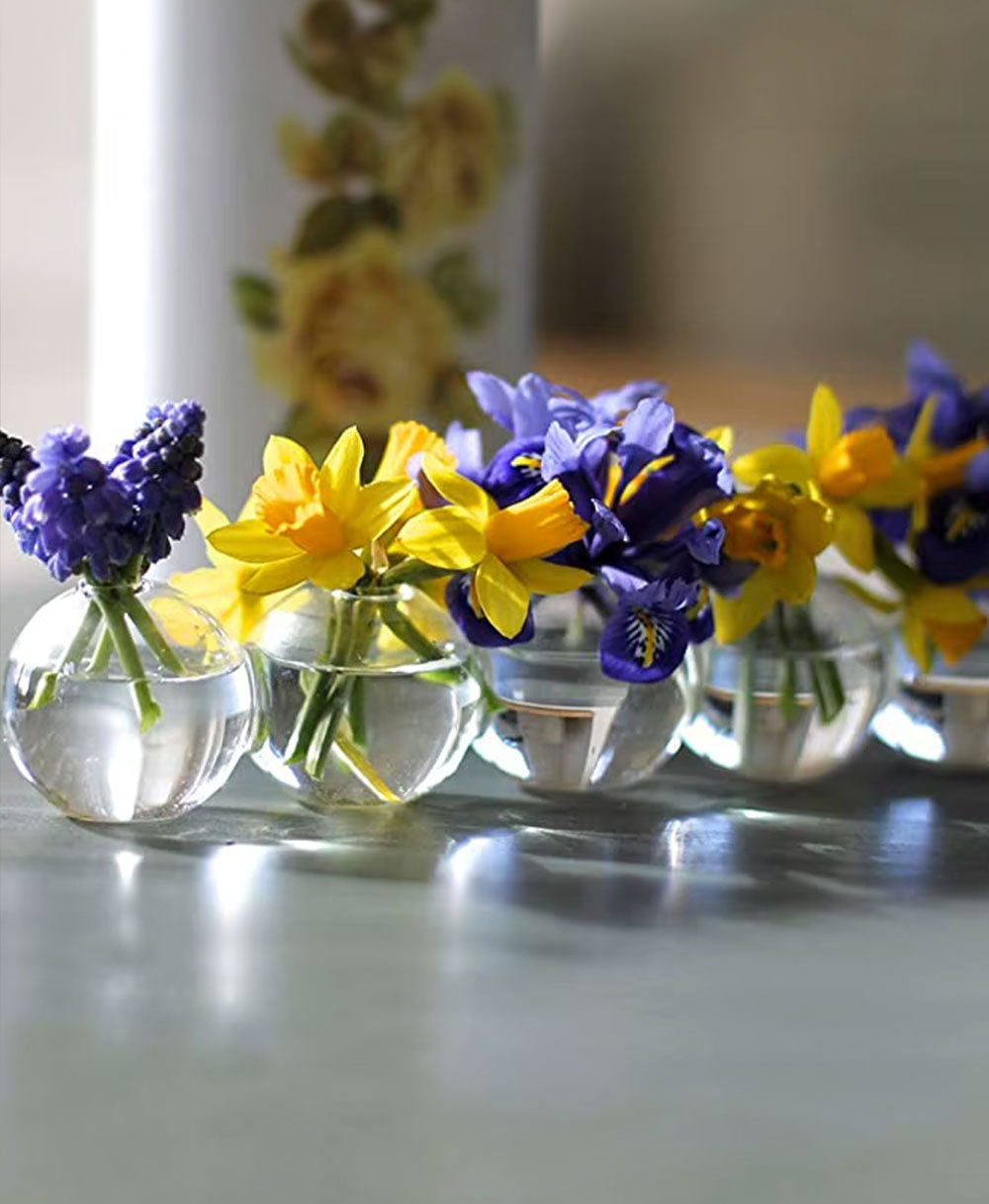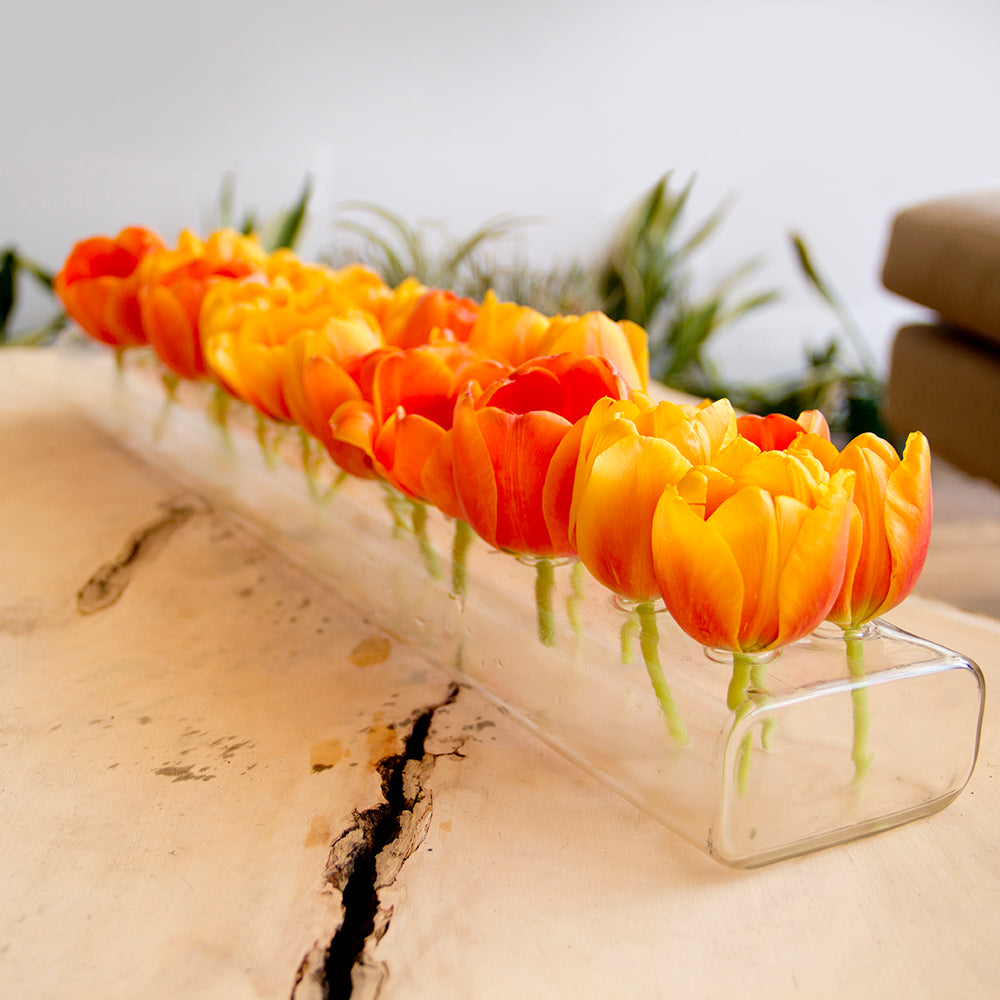
Test Tube Glass Modern Clear Flower Vase

Regular price $22.00
Hand Blown Glass
Dishwasher safe cleaning
30-day return policy

Build the Arrangement That Looks Harder Than It Was

Pick a vase to anchor the shelf, then add the rest until it reads as curated instead of collected.


A footed vase lifts its opening clear of the surface, and here that lift is doing more work than it looks like it is doing. Cut a stem short instead of leaving it long and elegant, someone here explained to me slowly, and the flower will last roughly three times as long. The Footed Tube is a footed tube vase built around exactly that instruction: narrow reservoir, minimal footprint, a raised base so the arrangement does not advertise itself as an act of calculated cruelty. Three configurations exist, one lying flat at four inches for a sill, one standing eight inches on its feet, one gripping window glass by suction. Its lab glass vase proportions were borrowed from a rack of laboratory tubing and never revised. We call them flower savers around here. You throw out sad bouquets on day four, the same person said afterward, and you never had to.

Product detail

Product Detail:

  • Material: Glass
  • Glaze finish: Translucent
  • Year Designed: 2005.0
Dimension
  • Flat: 4 inches long, 1 inch wide, 0.5 inches tall
  • Glass w/ Feet: 8 inches long, 1 inch wide, 2 inches tall
  • Suction: 1 inch diameter, 4 inches tall
Vase Care Instructions

All glass vases in this collection are dishwasher safe for easy cleaning, with one exception: mercury glass vases should be hand-washed only. The silvered mercury finish is a delicate coating rather than a solid color, and dishwasher heat and detergent can dull or strip it over time.

For standard glass vases, just load it in with the rest of the dishes — no special care needed. For mercury glass pieces, wash gently with warm water and mild soap, and dry with a soft cloth rather than letting it air dry with water spots.

Rinse and dry after each use, especially if flower food or cut-stem residue was in the water, so nothing lingers and clouds the glass.

Flowers that Love this Vase
  • Aster
  • Iris
  • Buttercup
  • Tulip
  • Gomphrena
  • Stock
  • Dianthus
  • Chamomile
  • Pussy Willow
  • Kangaroo Paw

Quick Guide to Building a Floral Arrangement

  1. Pick your vase first
  2. Start with your anchor flower.
  3. Build in odd numbers.
  4. Add height, then fill.
  5. Greenery does the quiet work.
  6. Cut stems at an angle, underwater if you can.
  7. Step back before you decide it's done.

Shipping & returns

Shipping

  • Free shipping: Orders $200+ within the US
  • Standard: 5–8 business days, Express 2–3 business days (at checkout)
  • International Ships: to 40 countries — rates at checkout
  • Packaging Ships: in outer box to protect gift box

View full shipping policy →

Returns

We accept returns within 30 days of delivery on unused items in original packaging. If your piece arrives damaged, contact us within 7 days with a photo and we will replace it at no charge.

View full return policy →

Wholesale Inquires

Have a cool shop? Know someone that does?

Find Chive on Faire →

Test Tube Glass Bud Vases - Chive Ceramics Studio - Vases - Chive US

The Science Teachers — The Footed Tube

We get letters from science teachers about this one, which was not in any plan. The first arrived about four years in from a woman teaching year seven somewhere in the Midlands, who had bought six for her classroom windowsill on the grounds that they looked like the equipment already in her cupboard and would therefore not be stolen. She was correct. She then wrote again the following term to say she had used them to demonstrate capillary action with celery and food dye, and that the demonstration worked better in our glass than in the school's own tubes because the wall was clearer and the base stopped the whole thing toppling when a child leaned on the bench. There are now, by our count, at least a dozen classrooms running these as a teaching aid, which means this object has quietly acquired a second career that none of us designed for it and none of us can take any credit for whatsoever. It is the happiest accident in the catalogue. The letters live in a folder in the office and we have kept every single one of them since that first envelope arrived, including the two that contained corrections to our own product page.

Chive Studio trimming tulip stems with scissors on a wooden surface, with white, purple, and pink tulips arranged nearby.
How to Cut Flowers Like a Pro:

A (Mostly) Simple Guide to Cutting Your Flowers

So, you’re making an arrangement? Let’s ensure it lives long enough to impress someone—even if it's just you.

  1. Scrub the Scissors: Wash your shears first. Your flowers do not want a side of Dorito dust.
  2. Cut at 45°: Snip stems at an angle. It gives them a straw instead of making them chug from the bottle.
  3. Trim Underwater (Fancy Mode): Cut them submerged to block air bubbles. It’s extra, but they didn’t ask to suffocate.
  4. Ditch Submerged Leaves: Strip anything below the waterline. Unless you are actively going for a swamp aesthetic.
  5. Snip Again if Stale: If they sat out on the counter, trim them again. They need a fresh start (don’t we all?).
  6. Swap the Water: Change it and trim the stems every few days so they don't die immediately.

Voilà! You are now a domestic deity. Go take your Instagram photo before you forget to water them.

Pro Tip: The light does half the work.

Glass catches and bends light in a way ceramic can't. Set the arrangement somewhere it'll get some late afternoon sun, even for an hour, and the water and stems start doing something a solid vase never will.

Perfect Pairs for Any Shelf
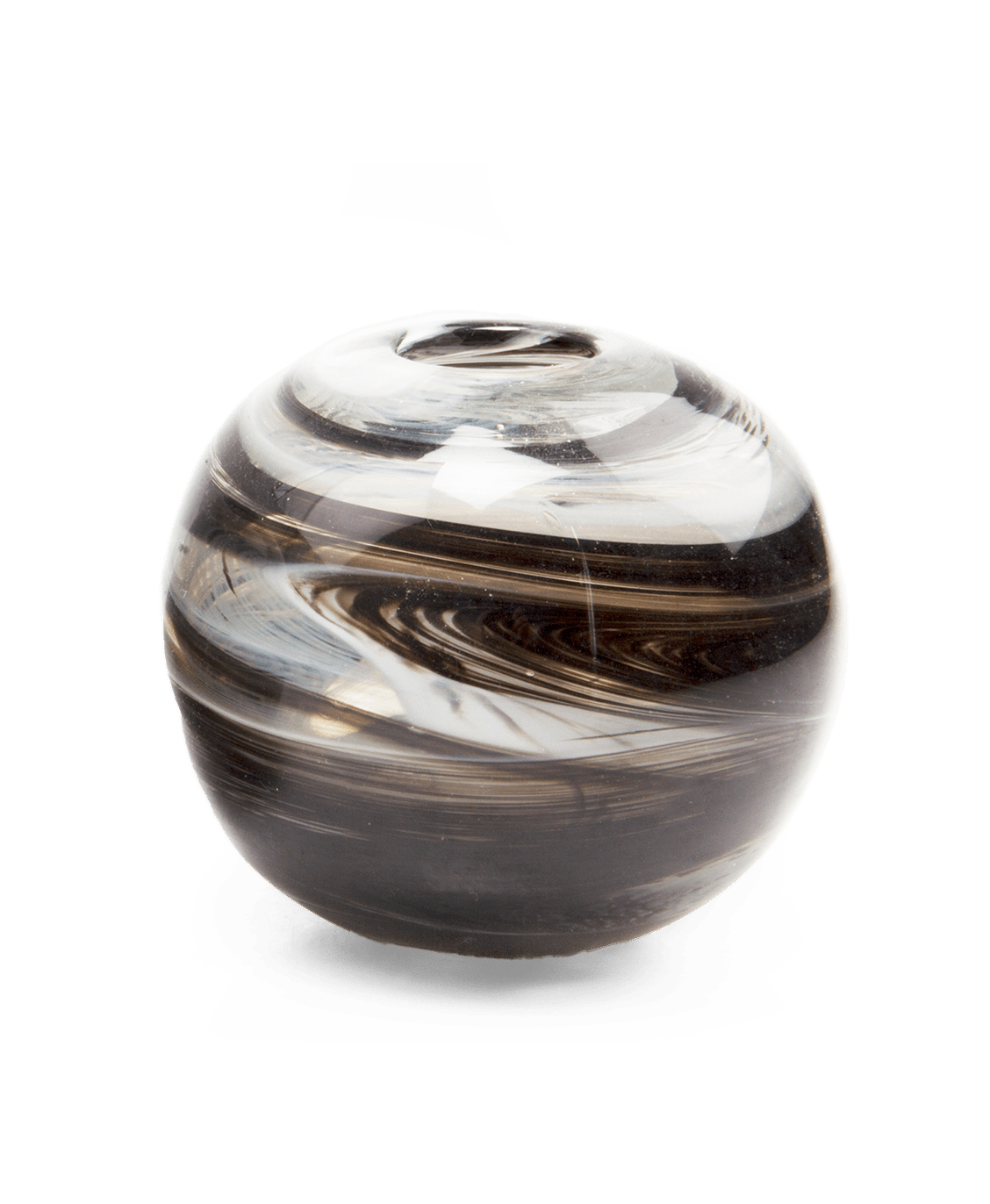
Fuzzle Glass Modern Vase - Chive Ceramics Studio - Vases - Chive US

Laboratory-Plain Versus Anything But

The glass vases at Chive come out of the same studio habit that produced everything else here: design the object once, correctly, then resist every opportunity to complicate it. Each one holds stems. None of them hides anything. The natural companion here is the Fuzzle Glass Modern Vase, which takes an entirely opposite view of what a small glass container should look like when it is standing empty. One is laboratory-plain. The other is anything but, and both hold a short stem perfectly well.

Built So The Base Lifts It Clear

Every Chive vase is built around one decision about how flowers should stand, then finished by hand until that decision reads as obvious. The decision behind this one was that a flower lives longer on a short stem, so the vessel had to be shallow and the base had to lift it clear. Every other piece in the glass range answers a different question and arrives somewhere unrecognisable as a result: a printed cube, a recycled bottle, a fourteen-inch column, a wall bracket. Nobody drew them as a set. They only look related because the same handful of people kept applying the same stubbornness to unrelated problems.

White, Lacy, Genuinely Underrated

Sow Carrot Vegetable Seeds and leave a few in the ground past their season. Carrot flowers are umbels, white and lacy, and they belong in something small and clinical rather than something ornate. Thin the row, keep six, and cut the flowers in the second year.


Borrowed From Objects That Were Never Decorative

Since 2004 a fair number of the pieces drawn in this studio have started life as something with no decorative intention whatsoever: laboratory tubing, industrial fittings, hardware, packing. Borrowing proportions from objects designed purely to work is a shortcut to something honest, because nobody styled them and there is nothing to strip away. The job then is restraint, which means resisting the urge to soften an outline until it looks retail. Everything here leaves the building having been drawn, built and signed off under one roof by people who will happily tell you which arguments they lost along the way. Two decades of that has produced a catalogue with very little decoration in it and a reasonable amount of quiet competence. This one they mostly won.


Inside the Chive Design Studio

Low maintenance, high impact. Let's make home styling look easy.

Wedding Centerpiece Vases: The Planning Guide Nobody Gives You

Jessie Duenas
Wedding centerpiece vases work best small and plural — three to seven per table, one to three stems each. A fifteen-table reception needs roughly seventy-five vases and 100 to 1...
Read the full story

Frequently asked questions

What is a footed vase and what sets the Footed Tube apart?

Any vessel raised on a foot qualifies, and the foot is usually there for looks. Here it is structural: lifting a shallow reservoir clear of the surface lets you cut a stem right down without the flower head sitting on the table. Short stems draw water faster and last far longer. Three separate fittings share the same design. Only one has feet.

Can the Footed Tube vase hold dried stems as well as fresh?

It handles both, and dried material is arguably the better use, since there is no water to go cloudy and nothing to replace every fortnight. Pussy willow and kangaroo paw will stand in it indefinitely and look deliberate rather than neglected. The only real limitation is weight, because a heavy dried bundle will pull a narrow tube straight over. Chamomile dries well too.

How much water does the Footed Tube vase hold when filled?

Not much, and that is the whole design rather than an oversight, because a shallow reservoir is what forces a short stem. Expect a few tablespoons in the flat fitting and a little more in the footed one. That means topping up every second day in a warm room. Check it more often than you would a deep vase.

Why was glass chosen for the Footed Tube vase's construction?

Because a stem needs watching. The entire premise depends on somebody noticing when the water has dropped or gone cloudy, and an opaque vessel hides both until the flower has already given up. Glass makes neglect visible on day two rather than day six. It also matches the laboratory reference honestly. Ceramic would have been a costume.

Can you remove hard water marks from the Footed Tube vase easily?

You can, and vinegar is the answer rather than any dedicated product. Half water, half white vinegar, leave it standing for an hour, then run a narrow brush through and rinse thoroughly. Deposits that have been building for a year may need two rounds of the same treatment. Do not reach for anything abrasive. Scratched glass clouds permanently.

Where does the Footed Tube vase look best in a modern room?

It suits a room with hard surfaces and few ornaments, which is where its plainness stops reading as plain and starts reading as chosen. A concrete or stone counter, a plywood desk, a metal shelf. The suction fitting puts it on a window where the light comes through the water. Anywhere cluttered will swallow it.

Should you choose the Footed Tube vase or the Fuzzle vase first?

Start with the Footed Tube, since it teaches the short-stem habit and the Fuzzle has no need to. Once you have watched a cut flower last three weeks instead of five days you will not go back, and the Fuzzle then becomes a second purchase rather than a first. The order genuinely matters with these two. Learn the habit first.

When did the Chive studio team design the Footed Tube vase?

It came out of the studio in 2005, one year after Chive started and early enough that we were still borrowing shapes from whatever was on the bench rather than drawing from scratch. A tray of lab tubes happened to be sitting there. The proportions came out right first time, which almost never happens, so nothing was changed afterwards. Twenty-one years later it is still made the same way.

Ceramic astronaut vase with flowers styled on shelf — Chive Studio Toronto
Behind the Studio

The story behind the Chive astronaut vases

The story of Laika, Félicette, a solar eclipse in New York, and a space bar that ordered a hundred vases a month until it closed.