Minute Small Ceramic Pot with Drainage Hole and Saucer — Green Blue
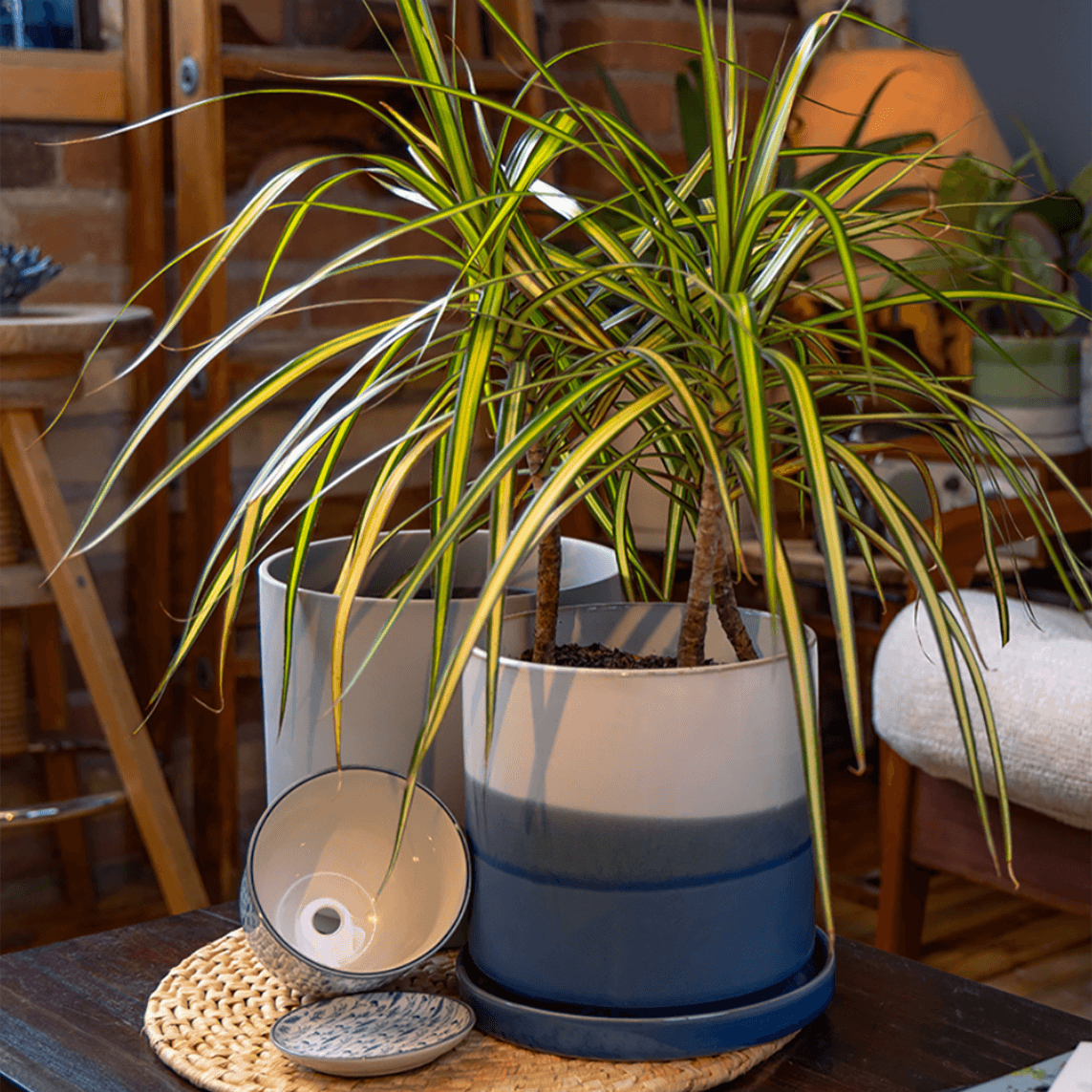
Years ago, we designed 4 lines of pots, in 8 different colors. They were just okay, so we never ran them. One day, we had an idea - we grabbed the best two pieces from each line and placed them together. We loved the vibe. And that’s why we call it 'minute', that's how long it took to produce the best line we've ever made.
Product detail
Product detail
- Color:
- Material: Ceramic
- Glaze finish: Glazed
- Finish variation: Natural variation between pieces
- Drainage: Drainage hole — included on all sizes
- Saucer: Matching saucer included
- Year Designed: 2017
Dimension
Dimension
- 3 inches diameter, 3 inches tall
- Fits most standard 3" nursery transplants
- Saucer diameter: approximately 3.5 inches
- Weight: approximately 0.78 lbs (pot + saucer)
Also available in:
Plants that love this pot
- Succulents and cacti
- Pothos
- Peperomia
- Haworthia
- Hoya
- African violet
- Fittonia (nerve plant)
Potting a Plant in a Minute
- Place a 1-inch layer of small stones or LECA pebbles at the bottom of the pot. Optional, but it helps with airflow.
- Add well-draining potting mix appropriate to your plant. Not garden soil. We know your grandmother used garden soil. She was wrong about this one thing.
- Transplant from the nursery pot, leaving about ½ inch at the top for watering — in a 3-inch pot, every bit of space counts.
- Set the pot on the matching saucer.
- Water thoroughly until water runs out the drainage hole into the saucer. Empty the saucer once the plant has absorbed what it needs. This is the entire system.
Which pot size for my plant? →
Repotting guide →
Pot Care instructions
- Dishwasher-safe. Can also be hand-washed with warm soapy water and a soft cloth.
- The glaze is dipped and kiln-fired — it is sealed, durable, and not looking for trouble. No special cleaning products required.
- For pots with saucers empty the saucer periodically. Standing water in the saucer defeats the purpose of having a drainage hole, which is a thing we feel strongly about.
- Not frost-safe. Designed for indoor use. A covered outdoor shelf in temperate weather is fine. Freezing temperatures are not.
- Handle by the body of the pot, not the rim, when moving with a plant inside.
Shipping & returns
Shipping & returns
Shipping
- Free shipping: Orders $200+ within the US
- Standard: 5–8 business daysExpress2–3 business days (at checkout)
- International Ships: to 40 countries — rates at checkout
- Packaging Ships: in outer box to protect gift box
Returns
We accept returns within 30 days of delivery on unused items in original packaging. If your piece arrives damaged, contact us within 14 days with a photo and we will replace it at no charge.
Wholesale Inquires
Wholesale Inquires
Have a cool shop? Know someone that does?
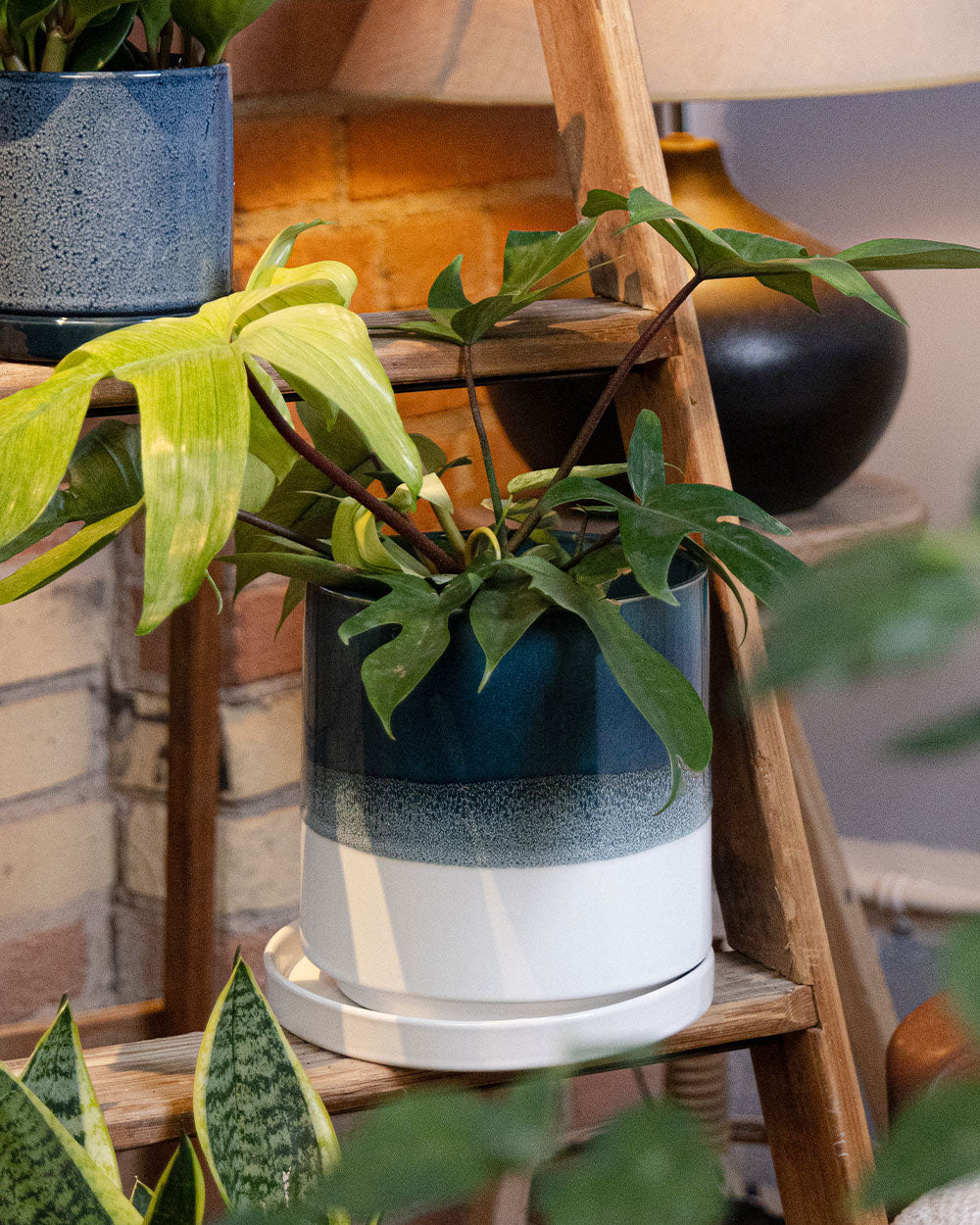
Minute Small Ceramic Pot with Drainage Hole and Saucer — Green Blue
Customers are saying
Pots So Good, Even Your Plants Will Thank You
✔ Pots with Drainage Plants, like tiny optimistic swimmers without the ability to doggy-paddle, appreciate pots with drainage holes. Water without escape routes becomes their chlorophyll-filled coffin.
✔ We've done this for a while Twenty-one years of pot designing creates the kind of expertise that makes clay tremble with anticipation, like dogs hearing a treat bag rustle.
✔ Premium Glazes Those German glazes transform ordinary clay into botanical perfection. Like tiny European vacations for your petunias—minus the jet lag and sauerkraut breath.
✔ We've done it all They've assembled a motley crew of materials—porcelain cozying up to resin, wood flirting with iron, stoneware and bisque porcelain exchanging glances. Like inviting both royalty and peasants to the same dinner party. Perfection ensues.
✔ Easy to Clean These miracle pots dance through dishwashers like Broadway performers taking curtain calls. The audience? Sparkling clean kitchenware, standing in ovation.
5.0 / 5.0
36 reviews5.0 / 5.0
3 reviews5.0 / 5.0
8 reviews4.78 / 5.0
9 reviews5.0 / 5.0
12 reviews5.0 / 5.0
1 review1.0 / 5.0
1 review5.0 / 5.0
1 review4.25 / 5.0
4 reviews5.0 / 5.0
2 reviews5.0 / 5.0
4 reviews5.0 / 5.0
2 reviews5.0 / 5.0
1 review5.0 / 5.0
4 reviews4.0 / 5.0
1 review4.96 / 5.0
128 reviews4.91 / 5.0
75 reviews4.8 / 5.0
5 reviews
Why Drainage Holes Matter (and Why Most Pots Don't Have Them)
Roots drown. Not dramatically, not all at once, but water sitting at the bottom of a pot with nowhere to go will rot the roots of almost any plant you put in it, and the plant will decline in a way that looks like fifty other problems before it looks like the actual problem.
A drainage hole is not a design afterthought. Every Chive pot has one, sized to move water through without losing soil. It is, as far as we are concerned, the minimum condition for a pot that works.
Water Has Nowhere to Go in a Sealed Pot
A pot without a drainage hole holds water at the root zone. Roots sitting in standing water cannot access oxygen. They suffocate, then rot. A drainage hole gives excess water an exit. That single opening is the difference between a thriving indoor plant and one that looks fine until it suddenly, completely isn't.
Root Rot Is the Leading Cause of Houseplant Death
Most houseplants do not die from neglect. They die from overwatering in pots that cannot drain. Root rot is silent — the plant looks healthy above soil while the root system collapses below. By the time the leaves show symptoms, the damage is done. A drainage hole does not prevent overwatering, but it gives the plant a fighting chance when you water too generously.
The Saucer Is Part of the System, Not an Afterthought
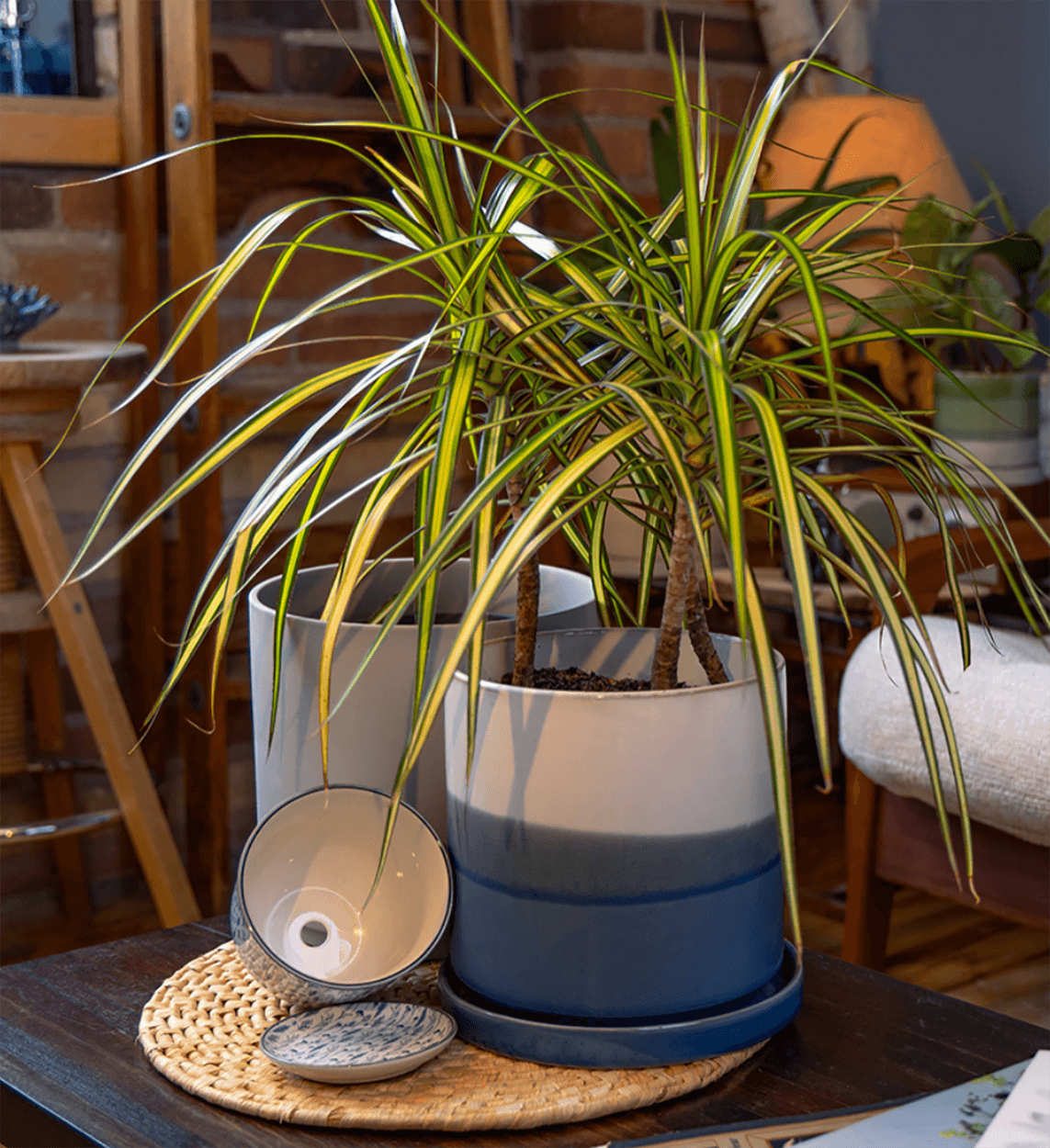
Every Minute pot ships with a matching ceramic saucer. The saucer catches what drains through, keeps surfaces dry, and lifts cleanly away for emptying. No separate trip to find a saucer that fits. No drip trays that don't match. The drainage system is complete out of the box.
The Ultimate Repotting Guide
For those who have killed a plant. Or several. Or, frankly, many.
Before you put a plant into the Minute, you have to get it out of the nursery pot — a process that ends badly more often than any gardening influencer will admit. We wrote a full guide: when to repot (early spring, and not when you're feeling impulsive in October), which soil to use, how to tell your plant is root-bound, and how to avoid the three mistakes that kill perfectly healthy plants within a week of a well-intentioned repotting.
It is the guide we wish someone had handed us twenty-five years ago. It is written by people who have personally committed most of the errors in it.
Chosen by the New York Botanical Garden and Others Who Knew What They Were Looking At
Every Chive pot starts as a sketch that gets argued about at considerable length. We have been doing this for twenty-five years. We are, it turns out, constitutionally incapable of making something we don't mean.
We've never fully understood why botanical gardens keep choosing our pots, except that people who run botanical gardens have spent their careers watching things grow at whatever pace they grow, and have developed, as a result, a very low tolerance for objects pretending to be something they're not. A Chive pot is what it is. The botanical gardens figured this out before most people did, which is either a compliment to them or an indictment of everyone else. We're not going to decide.
Fourteen consecutive RHS Chelsea Flower Show 5-star booth awards, the highest rating given. Stocked at Kew Gardens, the Chicago Botanic Garden. Shown at Chelsea and the Philadelphia Flower Show. We ship to over 40 countries, which continues to surprise us a little.
Plant Tips from Chive Studio
Quick tips, straight answers, and the occasional reminder that overwatering kills more houseplants than neglect does.
Plants for Small Spaces: A Guide to Compact Greenery for Condos & Apartments
The pot is sorted. Now what goes in it?
Shido seeds come vacuum-sealed, non-GMO, and packaged well enough that people keep the packets after the seeds are gone. Which is either a design success or a problem, depending on how you look at it.
Your new pot is waiting.