Misty Ceramic Flower Vase - Mauve

Regular price $24.35
Size
Fully Glazed
Dishwasher safe cleaning
30-day return policy

Build Your Effortless Arrangements With These:

Choose a vase as your anchor, then round out the shelf with these for that thrown-together-but-somehow-perfect look.


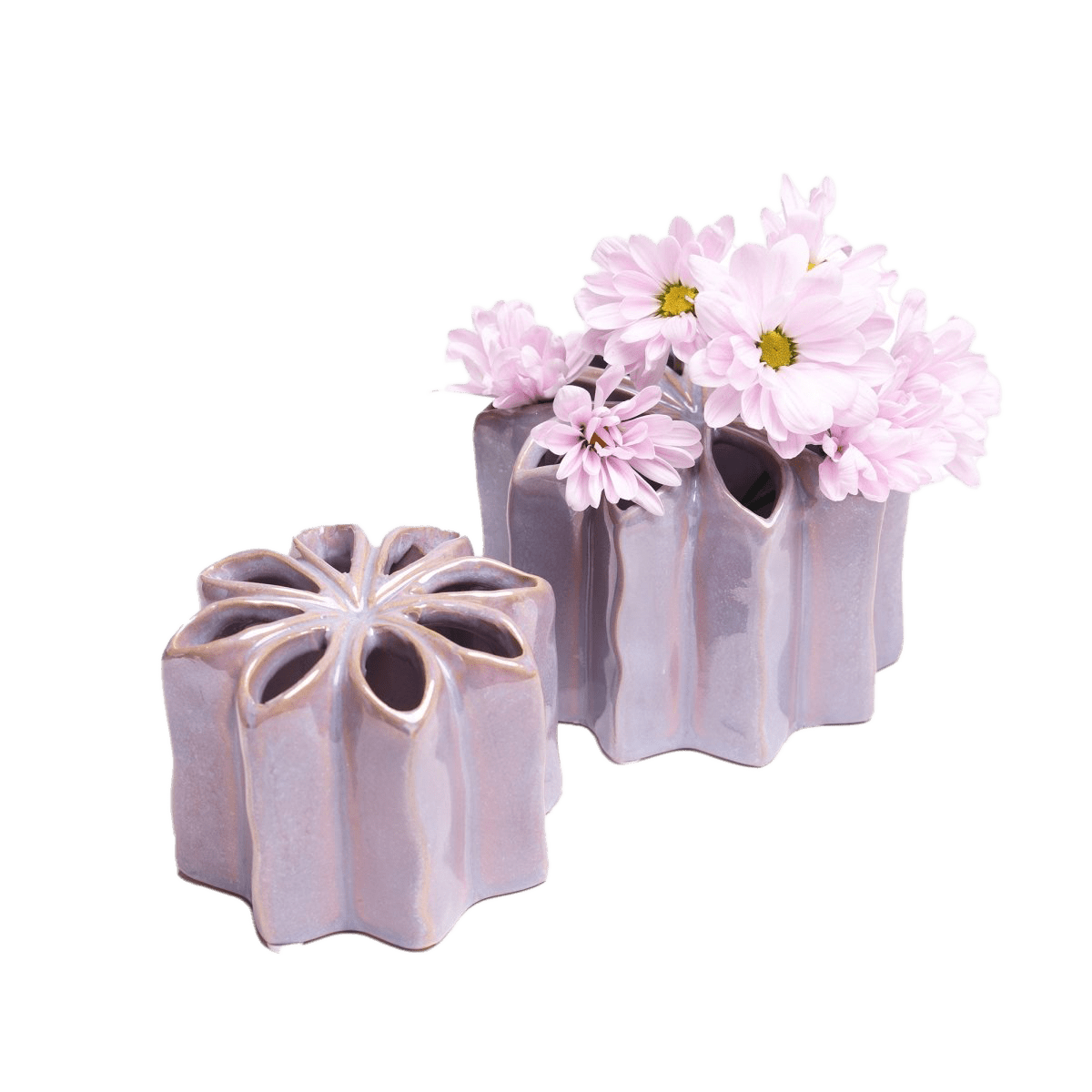
The Misty is a purple vase in glazed ceramic, built as a star shaped vase whose top opens into a ring of petal-shaped holes, one stem to each. The mauve glaze pools lilac in the hollows and thins to a warm tan wherever the clay rises, so every ridge and rim gets drawn in a second color. The fluted sides lean slightly out of true, which keeps the piece from looking like a gelatin dessert. Designed in 2024, the Misty treats flower arranging as a seating chart: a few spray chrysanthemums, a sweet pea, perhaps one scabiosa, each assigned a seat and forbidden to wander. The shorter piece reads as a centerpiece with its petal top on view; the taller one lets stems climb and hides the architecture underneath. Both look finished with three stems and look like an argument with ten. Mauve keeps the mood soft and slightly foggy. The name was not a stretch.

Product detail
  • Vase Type:
  • Material: Ceramic
  • Glaze finish: Glazed
  • Water Resistance: Watertight
  • Year Designed: 2024
Vase Care Instructions

Every ceramic vase in this collection is dishwasher safe on the top rack, making cleanup between arrangements as simple as loading it in with the rest of the dishes. The glazed surface holds up fine to regular washing, so there's no need to hand-wash unless you'd prefer to.

If you're cleaning a piece with painted or sculpted detail, a gentler cycle or a quick hand-wash with warm water and mild soap will help keep the finish looking sharp for longer. Either way, rinse and dry after each use — especially if flower food or cut-stem residue was in the water — so nothing lingers and clouds the glaze.

No special sealants, no periodic maintenance. Wash it, dry it, put flowers back in it.

Flowers that Love this Vase
  • Spray Chrysanthemum
  • Sweet Pea
  • Scabiosa
  • Lisianthus
  • Cosmos
  • Anemone
  • Ranunculus
  • Astrantia
  • Feverfew
  • Statice

Quick Guide to Building a Floral Arrangement

  1. Pick your vase first
  2. Start with your anchor flower.
  3. Build in odd numbers.
  4. Add height, then fill.
  5. Greenery does the quiet work.
  6. Cut stems at an angle, underwater if you can.
  7. Step back before you decide it's done.

Shipping & returns

Shipping

  • Free shipping: Orders $200+ within the US
  • Standard: 5–8 business days, Express 2–3 business days (at checkout)
  • International Ships: to 40 countries — rates at checkout
  • Packaging Ships: in outer box to protect gift box

View full shipping policy →

Returns

We accept returns within 30 days of delivery on unused items in original packaging. If your piece arrives damaged, contact us within 7 days with a photo and we will replace it at no charge.

View full return policy →

Wholesale Inquiries

Have a cool shop? Know someone that does?
Chive Wholesale →

Misty Ceramic Flower Vase - Chive US Wholesale

A Seating Chart for Stems: The Misty in Mauve

Most vases accept whatever you push into them and then sulk about it. The Misty prefers to be consulted. Its top is drawn like a flower seen from above, a ring of petal-shaped openings around a center where the ridges meet, and every opening holds a single stem upright at its own small angle. Arranging becomes a seating chart rather than a wrestling match. Put a spray chrysanthemum in one seat, a sweet pea in the next, leave a gap where the eye needs rest, and the composition finishes itself before you have found the scissors. The body below is a fluted star, its ridges soft rather than sharp, the walls leaning slightly as if listening. In mauve the glaze pools lilac in the hollows and thins to a warm tan along every rim and ridge, which outlines the whole form in a second color without anyone reaching for a brush. Pale pink flowers sink into it gently. Deeper burgundy blooms stand forward and make the mauve look intentional, which it is. The shorter piece suits a coffee table where the openings stay on view; the taller one lets stems climb and keeps the plan hidden underneath. Either way, guests assume a florist was involved. Let them.

Chive Studio trimming tulip stems with scissors on a wooden surface, with white, purple, and pink tulips arranged nearby.

A (Mostly) Simple Guide to Cutting Your Flowers

So, you’re making an arrangement? Let’s ensure it lives long enough to impress someone—even if it's just you.

  1. Scrub the Scissors: Wash your shears first. Your flowers do not want a side of Dorito dust.
  2. Cut at 45°: Snip stems at an angle. It gives them a straw instead of making them chug from the bottle.
  3. Trim Underwater (Fancy Mode): Cut them submerged to block air bubbles. It’s extra, but they didn’t ask to suffocate.
  4. Ditch Submerged Leaves: Strip anything below the waterline. Unless you are actively going for a swamp aesthetic.
  5. Snip Again if Stale: If they sat out on the counter, trim them again. They need a fresh start (don’t we all?).
  6. Swap the Water: Change it and trim the stems every few days so they don't die immediately.

Voilà! You are now a domestic deity. Go take your Instagram photo before you forget to water them.

Pro Tip: Keep It Short and Sweet!

When it comes to flower stems, shorter is better. Not only do shorter stems look chic in arrangements, but they also help your blooms last longer. Why? Because the shorter the stem, the less distance water has to travel to keep those petals perky. It’s like giving your flowers a shorter commute—less stress, fewer breakdowns.

Perfect Pairs for Any Shelf
Misty Ceramic Flower Vase - Chive US Wholesale

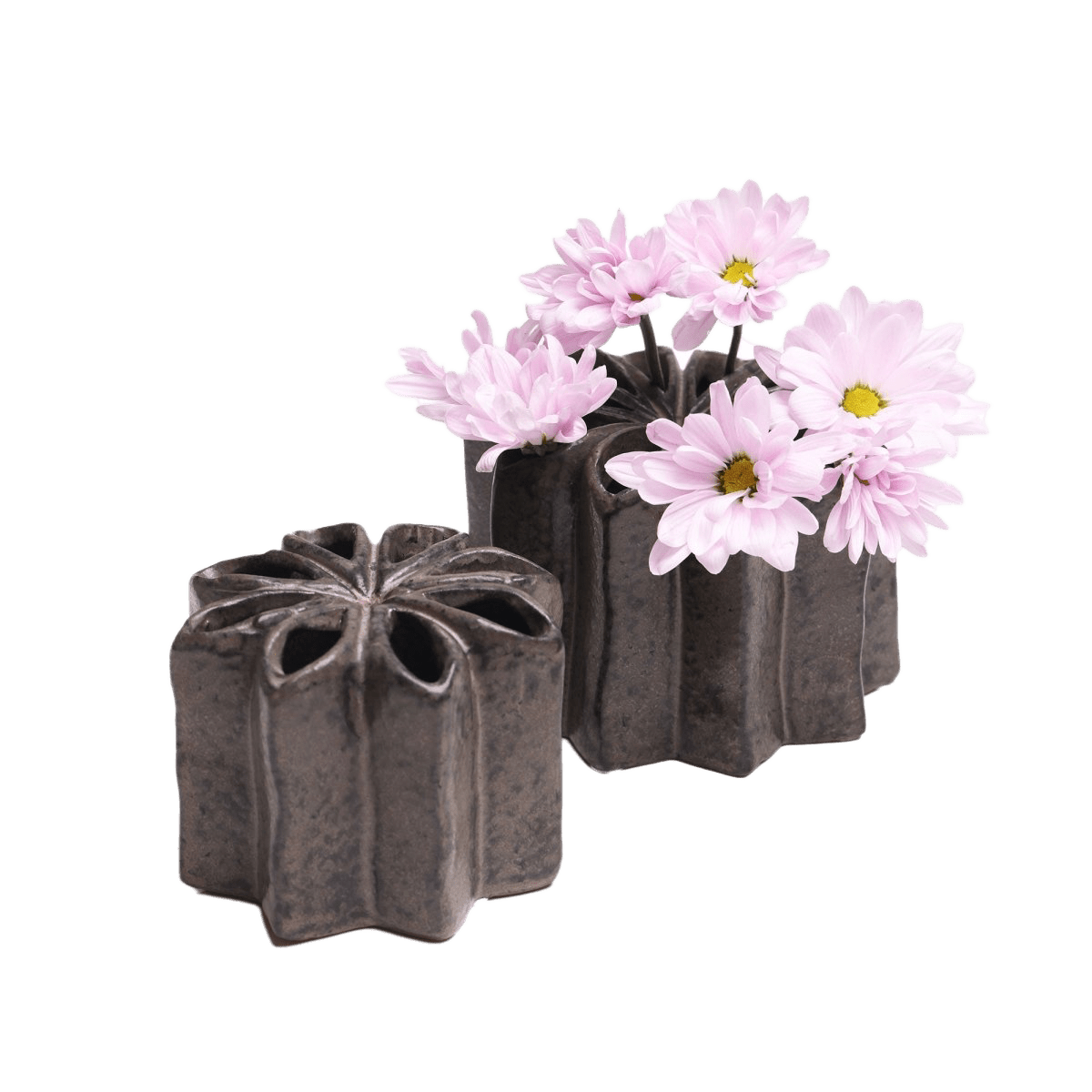
Misty Vase in Gunmetal

The ceramic vases at Chive come out of the same studio habit that produced everything else here: design the object once, correctly, then resist every opportunity to complicate it. Each one holds stems. None of them holds back. The Misty in mauve has a darker twin. The Misty Vase in Gunmetal keeps the same star shaped body and petal openings under a metallic glaze, for rooms that would rather the vase read as hardware than as a soft pastel. Same shape, different mood.

Chive ceramic pooley bud vase in color scout blue, styled with fresh flowers, on a red bench.

The Ceramic Vases Collection

Every Chive vase is built around one decision about how flowers should stand, then finished by hand until that decision reads as obvious. The Misty decided that each stem deserves its own opening, then dressed the decision in mauve so it would not seem strict. Elsewhere in the lineup, vases take armfuls, pairs, or one dramatic stem, and each makes its own case for how a table should look. Somewhere in the lineup is the shape your shelf has been waiting for. Shop the Ceramic Vases collection.

Rose Quartz Pink Strawflower mounted on a gallery wall, Chive Ceramics Studio

Blush Pink Strawflower Wall Art

A vase of fresh stems keeps a schedule; a ceramic flower does not. The Blush Pink Strawflower Wall Art hangs above the Misty and holds its color all year, blush against mauve, so the wall stays in bloom on the weeks the vase sits empty. One arrangement rotates with the season. The other stays.


Chive Studio at Chelsea Flower Show displaying ceramic pooley vases of different colors.

Chive Since 2004: Over Two Decades of Choosing Color

Chive has been designing ceramics since 2004, and over two decades of that work points to one reliable lesson about color: the safe choice is rarely the one people keep. Mauve is not a safe choice. It sits between pink and gray and refuses to commit to either, which is exactly why it works next to flowers. It flatters pale petals, steadies loud ones, and still looks deliberate on a shelf with nothing in it at all. The Misty was designed as one of the quieter members of the vase lineup, a piece meant to hold a few stems well rather than many stems loudly. Every piece is finished by hand, so the tan edges fall a little differently on each one. Mauve forgives very little. Neither do we.


Inside the Chive Design Studio

Low maintenance, high impact. Let's make home styling look easy.

Wedding Centerpiece Vases: The Planning Guide Nobody Gives You

— Jessie Duenas
Wedding centerpiece vases work best small and plural — three to seven per table, one to three stems each. A fifteen-table reception needs roughly seventy-five vases and 100 to 1...
Read the full story

The Best 10 Styles of Vases

— Jessie Duenas
The glorious world of flower vases! Because nothing says "I have my life together" quite like a carefully chosen vessel for your soon-to-be-wilting flora. Gather 'round, fell...
Read the full story

Frequently asked questions

Why choose the Misty as a purple vase for fresh flowers?

The Misty is a purple vase that does the arranging for you: its petal-shaped openings hold each stem upright and apart, so three or four flowers look composed without any technique. The mauve glaze sits between pink and gray, which flatters pale blooms and calms bright ones. The star shaped body keeps the piece interesting when the openings stand empty. It earns its shelf either way.

Which flowers suit the petal openings of the Misty purple vase?

Flowers with slim, sturdy stems and a single good face suit the Misty best, such as spray chrysanthemums, sweet peas, scabiosa, and lisianthus. Each opening takes one stem, so choose blooms that look complete on their own rather than fillers that depend on a crowd. Soft pinks blend into the mauve, while burgundy and cream stand out against it. Cast for contrast.

How tall is the Misty mauve vase, and where does it fit?

Current measurements for each Misty size are listed in the specification panel on this page, which is kept in step with production. In practice, the shorter piece sits low enough for a dining table where guests still need to see each other, and the taller one suits a console, mantel, or deep windowsill. Measure the shelf before choosing a size. Then choose.

How is the mauve glaze on the Misty vase finished?

The mauve glaze on the Misty is a glazed ceramic finish that pools lilac in the hollows and thins to a warm tan along the rims and ridges. That color shift follows the shape of each piece, so the star outline and the petal openings are drawn in a second tone. Because every piece is finished by hand, no two break exactly alike. Yours will be its own.

How should you clean a star shaped vase like the Misty?

Hand washing is the simplest way to clean a star shaped vase like the Misty: warm water, a drop of mild soap, and a slim bottle brush reach into each petal opening. Rinse well, then stand the vase upside down to drain and dry. Skip abrasive pads, which can dull a glaze over time. Change the water every few days. Stems notice.

Which rooms and tables suit the Misty mauve vase best?

The Misty in mauve suits dining tables, bedside tables, and bathroom counters, anywhere a small arrangement can be seen from slightly above. Its petal openings are the point, so it looks best below eye level. In a bedroom, the color reads restful rather than sweet. On a dining table, it gives guests something to study besides the person explaining cryptocurrency. Seat it accordingly.

Can the mauve Misty vase be displayed alongside the gunmetal one?

Yes, the mauve and gunmetal Misty vases display well together because they share the same star shaped body and petal openings in opposite moods. Set them a hand's width apart, one with pale flowers and one with deeper tones, and the pairing reads as a set rather than a duplicate. The contrast does most of the work. Let it.

What idea shaped the star form of the Misty vase?

The Misty was designed around one idea: a vase that looks like a flower before any flowers go in. The star outline and fluted sides suggest petals in profile, while the top opens like a bloom seen from above. Fresh stems complete the picture rather than create it, which is why the piece looks finished even when empty. It starts as the flower.

Ceramic astronaut vase with flowers styled on shelf — Chive Studio Toronto
Behind the Studio

The story behind the Chive astronaut vases

The story of Laika, Félicette, a solar eclipse in New York, and a space bar that ordered a hundred vases a month until it closed.