Sisken Ceramic Bud Vase For Flowers

Regular price $23.50
Colors: Rose Gold
Sizes
Fully Glazed
Dishwasher safe cleaning
30-day return policy

Build Your Effortless Arrangements With These:

Choose a vase as your anchor, then round out the shelf with these for that thrown-together-but-somehow-perfect look.


The Sisken vase is a ceramic songbird with a stem opening along its back, made to hold a single flower at the angle a perched bird carries its tail. It exists because two bestseller lists collided: the studio sold a great many tube vases and a great many birds, and somebody finally asked what would happen if the two were introduced. The answer, since 2019, is this silver-glazed bird bud vase, which took to the arrangement immediately and now outsells both of its parents on good months. A songbird vase earns its keep the way real birds do, by making a room feel inhabited rather than staged. One rose, one ranunculus, one anything rescued from the yard, and the Sisken looks after it. Keep it low, on a shelf or console, where a bird would actually choose to sit. Artisans shape these pieces by hand, and no two silver glazes land exactly alike.

Product detail
  • Vase Type:
  • Material: Ceramic
  • Glaze finish: Glazed
  • Water Resistance: Watertight
  • Year Designed: 2019
Vase Care Instructions

Every ceramic vase in this collection is dishwasher safe on the top rack, making cleanup between arrangements as simple as loading it in with the rest of the dishes. The glazed surface holds up fine to regular washing, so there's no need to hand-wash unless you'd prefer to.

If you're cleaning a piece with painted or sculpted detail, a gentler cycle or a quick hand-wash with warm water and mild soap will help keep the finish looking sharp for longer. Either way, rinse and dry after each use — especially if flower food or cut-stem residue was in the water — so nothing lingers and clouds the glaze.

No special sealants, no periodic maintenance. Wash it, dry it, put flowers back in it.

Flowers that Love this Vase
  • Alstroemeria
  • Baby's Breath
  • Aster
  • Calla Lily
  • Chamomile
  • Astrantia
  • Bouvardia
  • Sea Holly
  • Forsythia
  • Pansy

Quick Guide to Building a Floral Arrangement

  1. Pick your vase first
  2. Start with your anchor flower.
  3. Build in odd numbers.
  4. Add height, then fill.
  5. Greenery does the quiet work.
  6. Cut stems at an angle, underwater if you can.
  7. Step back before you decide it's done.

Shipping & returns

Shipping

  • Free shipping: Orders $200+ within the US
  • Standard: 5–8 business days, Express 2–3 business days (at checkout)
  • International Ships: to 40 countries — rates at checkout
  • Packaging Ships: in outer box to protect gift box

View full shipping policy →

Returns

We accept returns within 30 days of delivery on unused items in original packaging. If your piece arrives damaged, contact us within 7 days with a photo and we will replace it at no charge.

View full return policy →

Wholesale Inquires

Have a cool shop? Know someone that does?

Find Chive on Faire →

Two bestsellers, one bird — The Sisken

The Sisken went through more prototypes than any bird has a right to demand. The problem was the angle: a real songbird carries its tail at a precise tilt, and a vase that gets the tilt wrong reads as a pigeon with ambitions, which nobody wanted on a console. The studio sculpted, fired, and rejected version after version until the stem opening along the back sat at the exact pitch a perched bird would hold, so that whatever flower it carries appears to grow out of the posture rather than get stuffed into it. Then came the glaze debates. Rose, silver, and white survived; several livelier candidates did not, on the grounds that an object this figurative needs a finish that behaves itself. The result rewards close attention without demanding it. From across a room it is a bird. From a foot away it is a vessel with a waterline and a job. Guests routinely fail to notice the flower is real until they touch it, and the studio has decided to count this confusion as a compliment. It works alone on a shelf, or in a loose flock of two or three, staggered the way actual birds space themselves out along a wire.

Chive Studio trimming tulip stems with scissors on a wooden surface, with white, purple, and pink tulips arranged nearby.

A (Mostly) Simple Guide to Cutting Your Flowers

So, you’re making an arrangement? Let’s ensure it lives long enough to impress someone—even if it's just you.

  1. Scrub the Scissors: Wash your shears first. Your flowers do not want a side of Dorito dust.
  2. Cut at 45°: Snip stems at an angle. It gives them a straw instead of making them chug from the bottle.
  3. Trim Underwater (Fancy Mode): Cut them submerged to block air bubbles. It’s extra, but they didn’t ask to suffocate.
  4. Ditch Submerged Leaves: Strip anything below the waterline. Unless you are actively going for a swamp aesthetic.
  5. Snip Again if Stale: If they sat out on the counter, trim them again. They need a fresh start (don’t we all?).
  6. Swap the Water: Change it and trim the stems every few days so they don't die immediately.

Voilà! You are now a domestic deity. Go take your Instagram photo before you forget to water them.

Pro Tip: Keep It Short and Sweet!

When it comes to flower stems, shorter is better. Not only do shorter stems look chic in arrangements, but they also help your blooms last longer. Why? Because the shorter the stem, the less distance water has to travel to keep those petals perky. It’s like giving your flowers a shorter commute—less stress, fewer breakdowns.

Perfect Pairs for Any Shelf
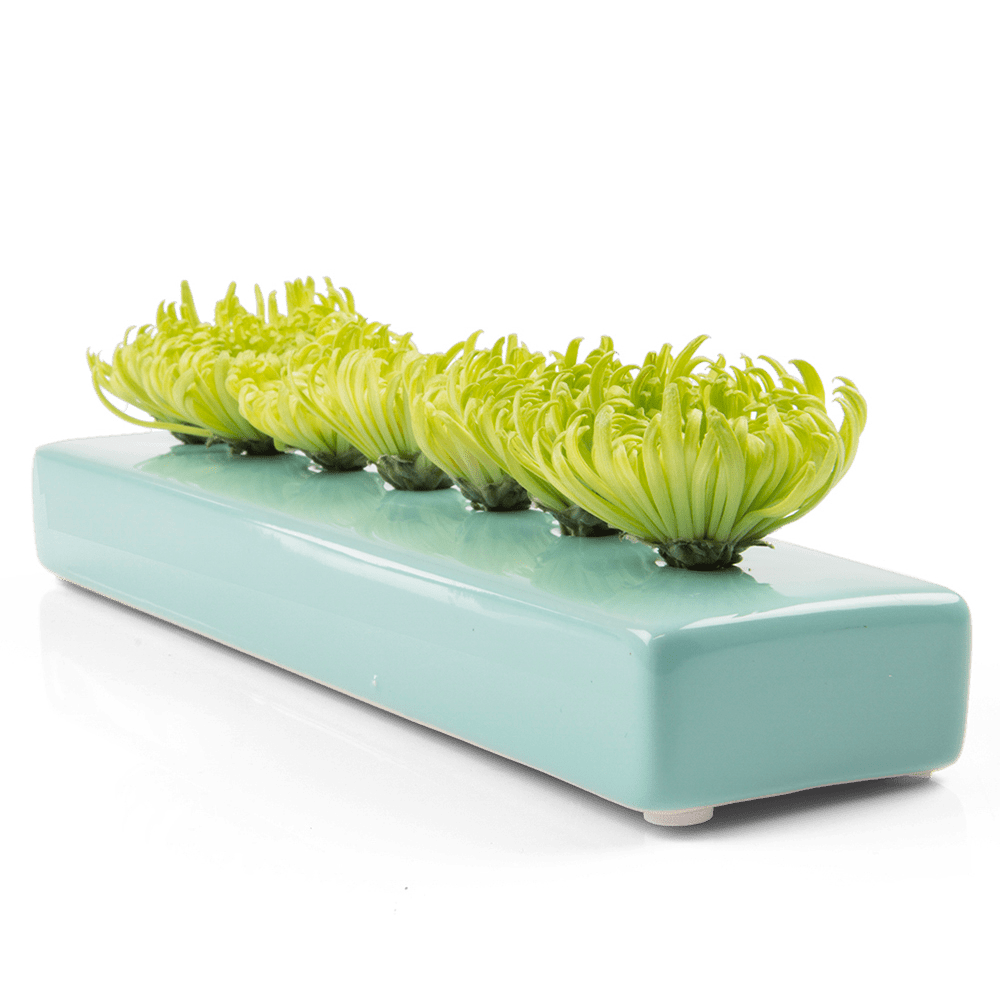
Sizen Ceramic Bud Vase For Flowers - Chive Ceramics Studio - Vases - Chive US
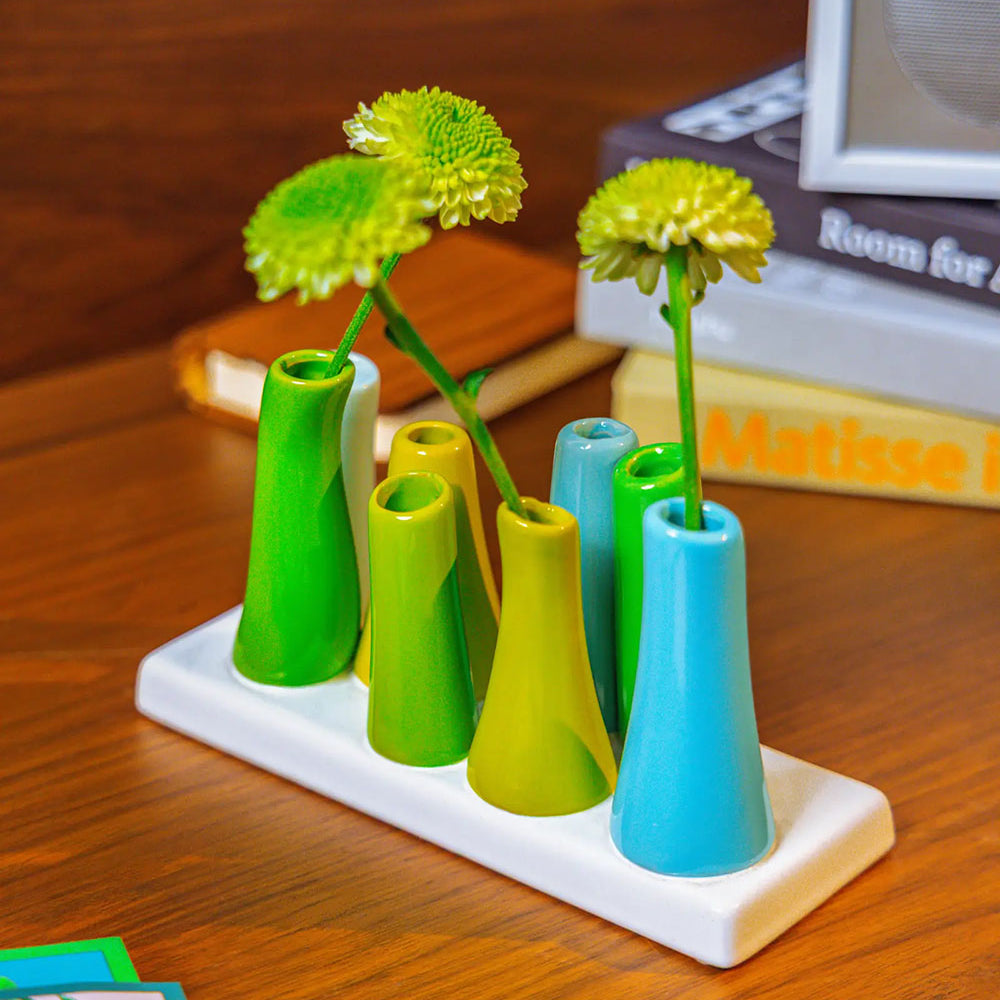
Sizen Ceramic Bud Vase

The ceramic vases at Chive come out of the same studio habit that produced everything else here: design the object once, correctly, then resist every opportunity to complicate it. Each one holds stems. None of them holds back. The Sisken is that habit wearing feathers. When the shelf wants a companion piece with a wilder glaze and a quieter shape, the Sizen Ceramic Bud Vase sits well beside it.

Chive ceramic pooley bud vase in color scout blue, styled with fresh flowers, on a wood desk.

The Ceramic Vases Collection

Every Chive vase is built around one decision about how flowers should stand, then finished by hand until that decision reads as obvious. For the Sisken, the decision was the tilt — a back opening pitched like a perched bird's tail, so the stem seems to grow from the posture itself. Cluster two or three at different heights and the shelf starts to feel like a wire at dusk. Explore every Ceramic Vase.

Spiderflower Shido Candle

A bird on the shelf deserves an evening shift. Light the Spiderflower Shido Candle a foot away and the Sisken picks up the flicker on its silver glaze, which is the closest a ceramic bird comes to preening. Coconut-soy wax burns clean, the scent stays polite, and the shelf earns a second act after sunset. Blow it out. The bird stays.


Chive Studio at Chelsea Flower Show displaying ceramic pooley vases of different colors.

A Catalog Built By Collision — Chive

The Chive catalog has never grown by roadmap. Since 2004, it has grown by collision — one design bumping into another, a customer request bumping into a prototype nobody had plans for, two bestsellers bumping into each other in a meeting and producing a third. The studio keeps every stage of the work in one place, from first sketch to final firing, precisely so those collisions can happen; ideas that live in separate buildings never meet. What ships is whatever survives contact with the whole room: the sculptors, the glaze bench, the person who packs boxes and has opinions. It is a slow way to build a catalog and the only way this one could exist.


Inside the Chive Design Studio

Low maintenance, high impact. Let's make home styling look easy.

Wedding Centerpiece Vases: The Planning Guide Nobody Gives You

Todd Newgren
Wedding centerpiece vases work best small and plural — three to seven per table, one to three stems each. A fifteen-table reception needs roughly seventy-five vases and 100 to 1...
Read the full story

The Best 10 Styles of Vases

Jessie Duenas
The glorious world of flower vases! Because nothing says "I have my life together" quite like a carefully chosen vessel for your soon-to-be-wilting flora. Gather 'round, fell...
Read the full story

Frequently asked questions

What should you look for when buying a sisken vase online?

Look for three things: a fully glazed interior, so the bird holds water without seeping; honest photos of the back opening, since that angle decides how a stem sits; and glaze colors shown in daylight rather than studio lighting. This Sisken publishes all three, in rose, silver, and white. A bird vase bought on silhouette alone often disappoints. Check the details first.

What flowers work best in the Sisken vase from Chive?

Single stems with modest heads: a spray rose, a sweet pea, chamomile, or anything that would plausibly balance where a bird sits. The back opening pitches the stem at the angle of a raised tail, so flowers with a natural arc settle in gracefully while rigid stems can look conscripted. Cut short and lean the bloom toward the head. The bird handles the composition.

What are the Sisken vase's dimensions for shelf or table display?

The Sisken is songbird-sized on purpose — bud-vase scale that sits comfortably on a standard shelf, a console edge, or a stack of books without overhang. This listing carries the exact figures for your shelf math. As a rule, anywhere an actual bird could perch, the Sisken fits with clearance for one stem above. Measure the stem, not just the bird.

Does ceramic keep flower water fresher in the Sisken vase?

It helps. The glazed ceramic body is opaque, and darkness slows the algae growth that clouds water in clear glass on a sunny shelf. Ceramic also insulates against quick temperature swings, which stressed stems notice. None of this replaces changing the water, but it stretches the interval and keeps the interior easier to rinse. Fresh water still wins. Ceramic buys time.

How often should you change the water in the Sisken vase?

Every two to three days for most stems, daily in warm weather or for heavy drinkers like ranunculus. The opening is small, so the reservoir is modest and freshness matters more than in a large vase. Tip out the old water, rinse the glazed interior, refill cool, and re-trim the stem a fingertip's length. Thirty seconds, twice a week. The flower repays it.

Can the Sisken vase anchor a dining table or entryway console?

Yes, with the right supporting cast. Solo on a large table it reads as a detail rather than an anchor, so give it a flock — two or three Siskens at staggered spacing hold a console the way birds hold a wire. On a dining table, one bird plus low candles keeps sightlines clear. One is charming; three are a composition. Small objects anchor through repetition.

Which holds more stems, the Sisken vase or the Sizen vase?

Neither wins on volume — both are single-stem specialists by design. The real difference is temperament: the Sisken is figurative, a bird with a stem in its tail, while the Sizen is a classic bud form wearing an unpredictable multicolour glaze. Pick the Sisken for personality, the Sizen for surface. Stem count is a tie. Character is the tiebreaker.

Who designed the Sisken vase and what inspired its shape?

The Chive studio team designed it in 2019, after noticing that its tube vases and its bird figures topped the bestseller list side by side and wondering, half seriously, what a merger would produce. Prototypes chased one detail — the tail angle of a genuinely perched bird — until the stem opening sat right. The inspiration was the sales report. The craft came after.

Ceramic astronaut vase with flowers styled on shelf — Chive Studio Toronto
Behind the Studio

The story behind the Chive astronaut vases

The story of Laika, Félicette, a solar eclipse in New York, and a space bar that ordered a hundred vases a month until it closed.