Sprocket Glass Modern Watering Container - Green

Fresh green glass that makes the can itself look like part of the garden.

Regular price $33.75
Thoughtfully Designed
Ships worldwide
30-day return policy

Give Your Plants What They're Missing:

Start with the pot, then build out the shelf with the tools that keep what's in it actually thriving.


Finding a good watering can for indoor plants that actually blends into a crowded plant shelf seems like it should be straightforward, but most watering tools read as tools — plastic, utilitarian, designed for a garden shed rather than a living room. The Sprocket in green sidesteps the problem by being glass, translucent, and colored to match the foliage it sits among.

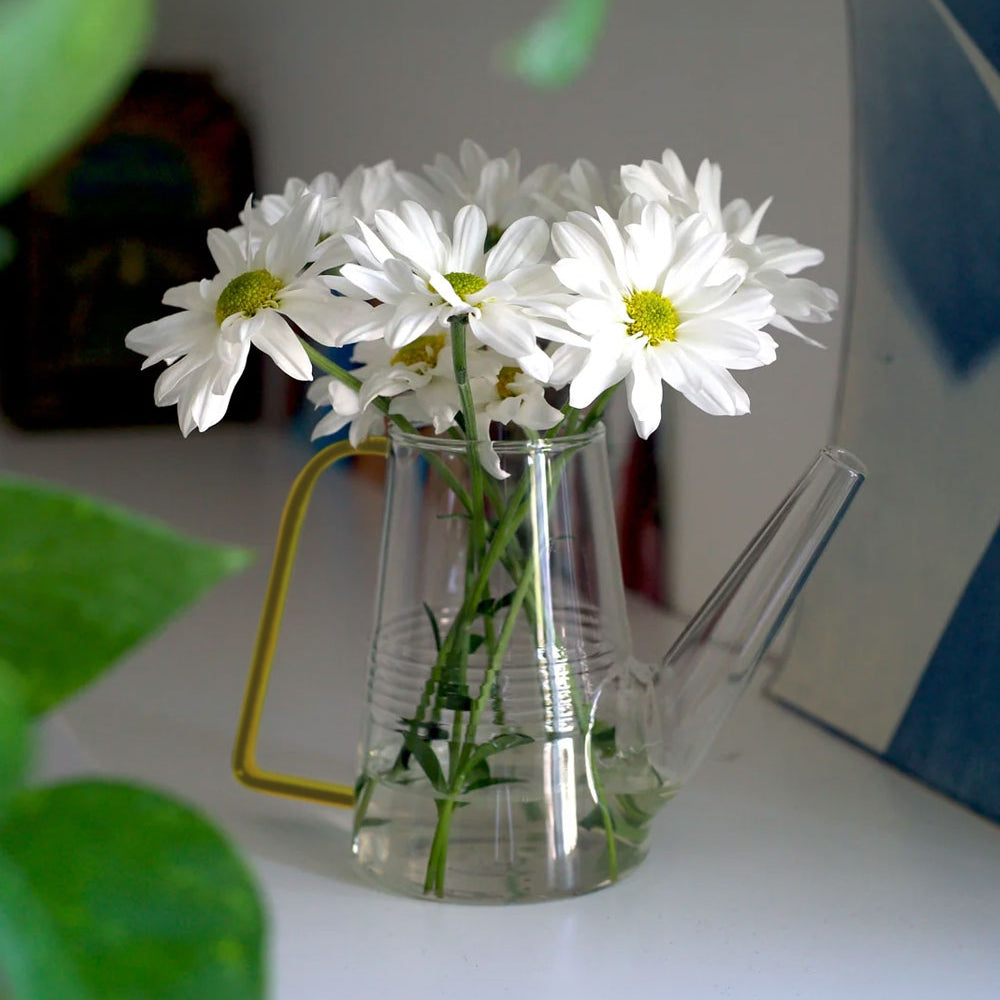
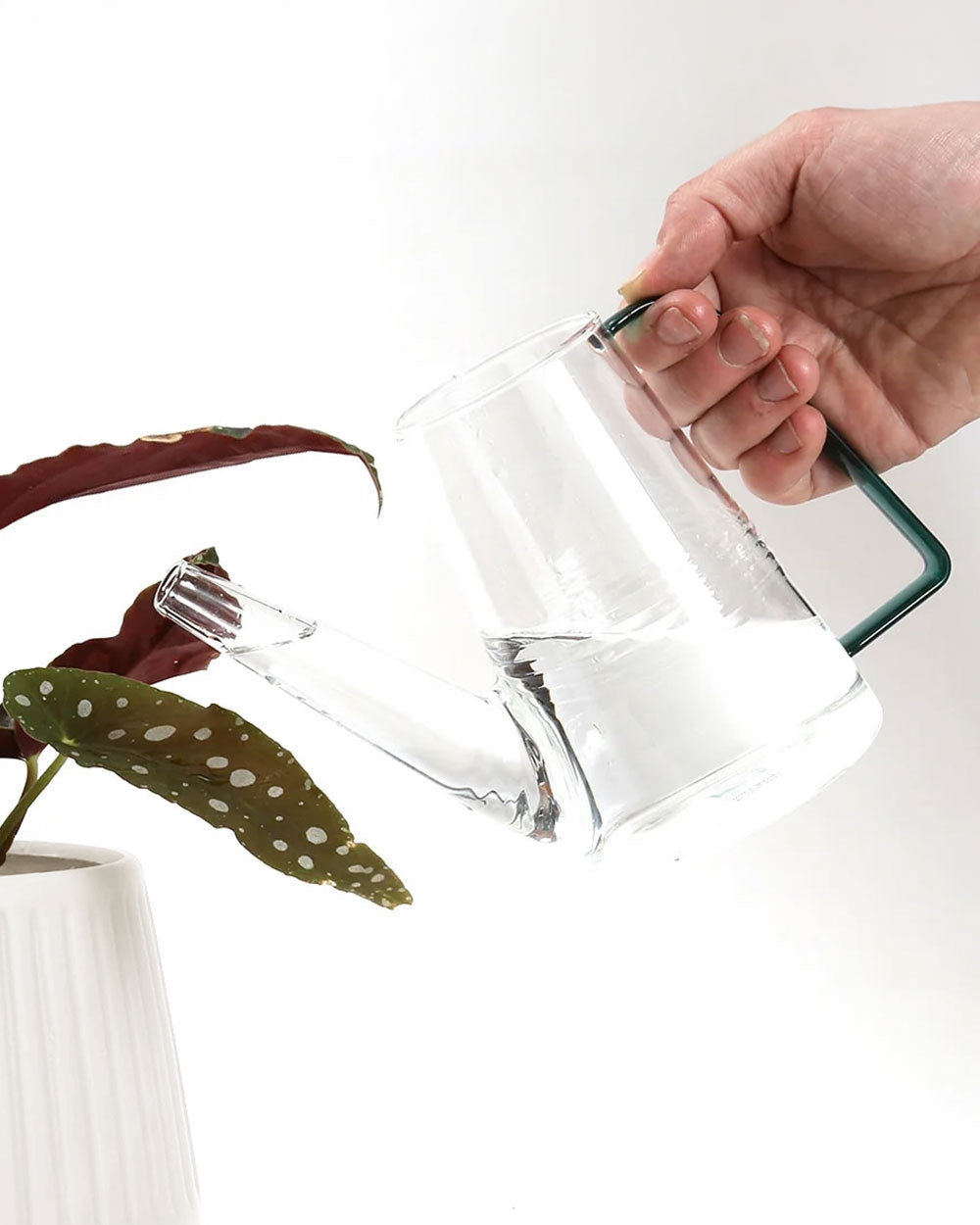
Compact enough for a windowsill, light enough to carry one-handed between rooms, and shaped so it doubles as a bud vase when watering day is over and cut flowers take priority instead. The green glass lets you see the water level without lifting or tilting, and the smaller capacity suits a desk or a tight shelf cluster rather than a full-house watering circuit. Three colors across the Sprocket range, and the green is the one that vanishes into a collection of potted plants like it grew there alongside them.

Product detail
  • Material: Glass
  • Year Designed: 2019
Shipping & returns

Shipping

  • Free shipping: Orders $200+ within the US
  • Standard: 5–8 business days, Express 2–3 business days (at checkout)
  • International Ships: to 40 countries — rates at checkout
  • Packaging Ships: in outer box to protect gift box

View full shipping policy →

Returns

We accept returns within 30 days of delivery on unused items in original packaging. If your piece arrives damaged, contact us within 7 days with a photo and we will replace it at no charge.

View full return policy →

Wholesale Inquires

Have a cool shop? Know someone that does?
Find Chive on Faire →

Why the Sprocket Belongs on a Plant Shelf

A green glass watering vessel on a plant shelf achieves something no ceramic or metal tool can: it disappears. The tinted glass echoes the color of the leaves around it, and the translucent body lets light pass through rather than blocking it, so the container reads as part of the arrangement rather than an interruption. That camouflage effect is why the green Sprocket works on a crowded windowsill where every object competes for visual attention — it opts out of the competition. Practically, glass brings a transparency advantage that opaque materials forfeit. Water level is visible at every angle without lifting, tilting, or guessing. You know when to refill, you know when to stop pouring, and you never tilt an empty container at a thirsty plant. The compact shape earns its spot on tight shelves: shorter than a ceramic jug, lighter when full, and narrow enough to sit between two pots without displacing either. Portability matters when plants live in scattered locations — a desk, a bathroom, a kitchen sill — and a heavy ceramic jug discourages the trip. The dual-purpose opening accepts cut stems as easily as it accepts a slow watering pour: a sprig of mint, a single daisy, a stem of lavender turn the Sprocket into a bud vase without modification. Green glass filters light warmly, casts a botanical tint on a white surface, and does not fade because the color lives in the glass itself.

Pro Tip: Let It Drain All the Way Through

A quick splash on top rarely reaches the actual root ball. Water slowly until it runs freely out the drainage hole, then let the pot sit for a few minutes before returning it to its saucer — soggy roots sitting in runoff undo the whole point of watering properly in the first place.

Perfect Pairs for Any Shelf

Warmth in Glass

Yellow glass is the warm option in the Sprocket family — the same compact shape and translucent wall in a finish that catches morning light and casts a golden glow on a white shelf. If the green blends into foliage, the Sprocket Yellow stands apart from it, adding a pop of warmth that pairs with terracotta and brass accents.

Jessie Ceramic Watering Jug - Chive Ceramics Studio - Tools & Accessories - Chive US

Station by Station

The Sprocket handles a windowsill; the broader watering can collection handles the house. Ceramic jugs for the kitchen counter, porcelain for the plant table, glass for the desk — each tool matched to a station. Browse the full lineup for the tool that completes the system.

Blue Grey Gerbera Daisy ceramic wall flower styled on a white table with other flowers — Chive Studio

A Garden Palette on the Wall

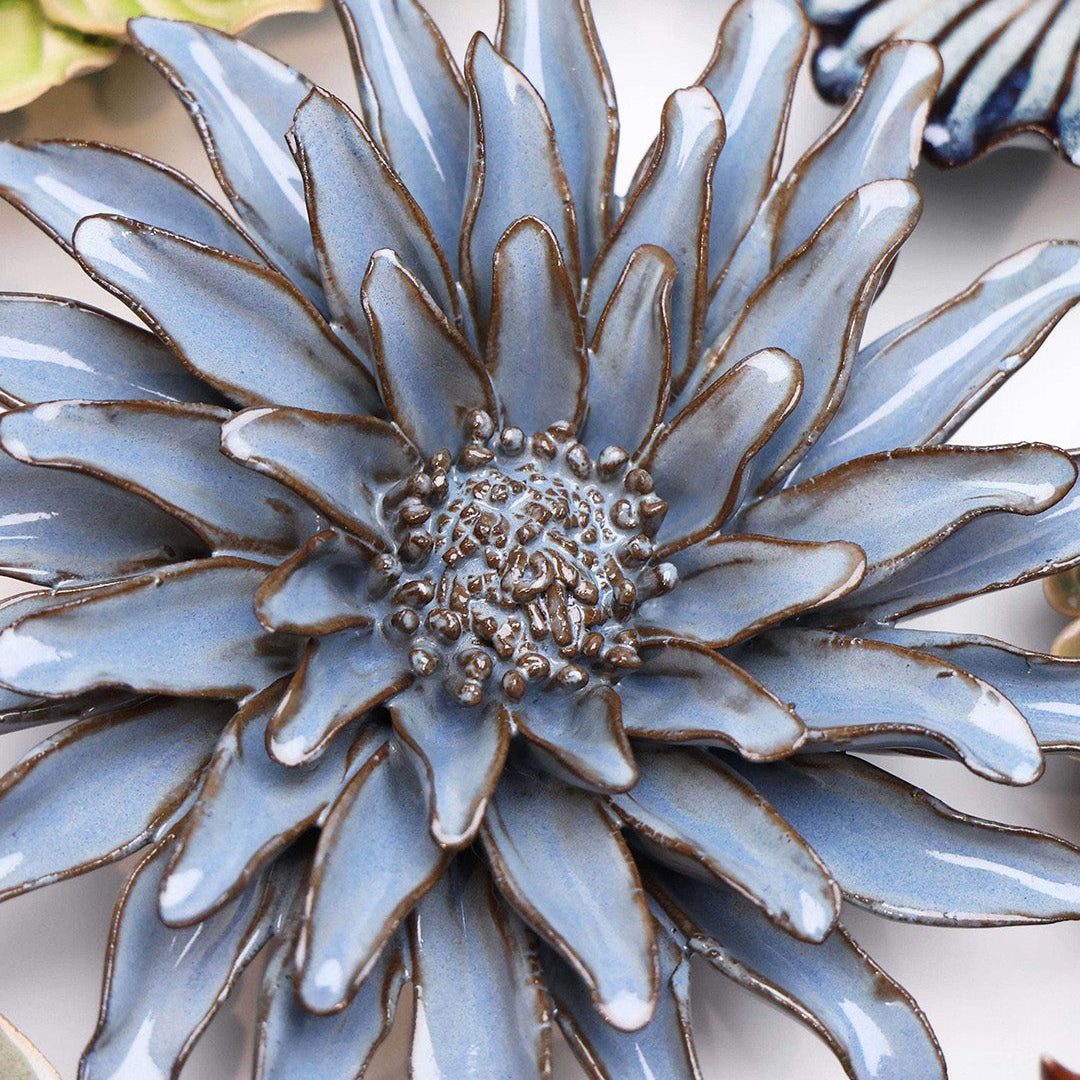
A blue daisy in ceramic on the wall introduces a cool counterpoint above a green shelf — porcelain, hand-shaped, and mounted with a single keyhole fitting. The blue against green echoes a garden palette translated indoors, and the ceramic daisy adds sculptural depth that a flat shelf of pots alone cannot provide.


Watering Is a Design Problem, Not a Plumbing One

A studio that has made ceramic flowers and glass vases by hand since 2004 doesn't design a watering container that looks like a watering can — it designs one that looks like everything else in its catalog. That instinct has been validated at Chelsea Flower Show, refined after a Philadelphia Flower Show exhibition, and carried to thousands of shops through wholesale. The green Sprocket is what happens when a flower and vase company decides watering is a design problem, not a plumbing one.


Plant Care, Simplified with Chive

Keep it alive, keep it thriving. Let's make plant parenthood look easy.

Begonia Care: The Complete Guide

Ryan Hearst
Begonia plant care requires bright indirect light, consistent watering, and a pot that drains. Chive has been designing ceramic pots with real drainage for over two decades. Her...
Read the full story

How to Repot a Plant: Watch for the Linen

Todd Newgren
How to repot a plant comes down to three signs, one rule, and one soil decision that most people get wrong. Chive Studio has been making drainage pots since 2004. The neighbor i...
Read the full story

Frequently asked questions

What is a good watering can for indoor plants?

A good watering can for indoor plants is compact enough to store visibly, pours at a pace the soil can absorb, and fits the scale of indoor pots rather than outdoor beds. The Sprocket was built to that brief: a glass container that sits on a windowsill, pours slowly, and blends with the plants around it. My previous indoor watering tool was an old sports bottle with the cap off, which technically worked and spiritually failed.

Is glass a good material for an indoor watering can?

Glass shows the water level — an advantage that sounds minor until you've tilted an empty opaque vessel at a thirsty plant and felt the specific embarrassment of pouring nothing. Beyond visibility, glass is non-porous, non-reactive, odor-proof, and cleans with a simple rinse. The only trade-off is weight-to-fragility, and the Sprocket's compact shape keeps the center of gravity low enough that tipping requires actual effort.

Does the Sprocket need a saucer underneath it?

No saucer needed — glass doesn't sweat at room temperature the way a cold drink does, and the base is smooth, flat, and kind to wood surfaces. Mine has lived directly on a walnut shelf for months without leaving a mark. The one caution: if you fill it with genuinely cold water on a humid day, give the outside a quick wipe before setting it down, same as you would any glassware.

How much water does the glass watering can hold?

Sixteen to twenty ounces — a small watering can built for a tight grouping of two or three plants rather than a whole-house circuit. The smaller capacity is the point: this is the vessel that lives among the plants it serves, not across the house. I water three succulents and an aloe on the same shelf where the Sprocket sits, and one fill handles all four with a few ounces left over.

Can I see how much water is left through the glass?

The green glass is translucent from every angle — water level, clarity, and even the color of liquid fertilizer are all visible without lifting the container. It's the one advantage I refuse to give up after switching from ceramic: knowing how much water remains before committing to a pour removes every bit of guesswork from the process.

Does it come in three colors and is the glass actually colored?

The Sprocket family runs three shades, and the coloring method matters: pigment is incorporated while the glass is still molten, making the green inseparable from the material itself. There's no coating to scratch through and no film to cloud with washing. Hold it up to a window and the tint stays even from lip to base — the reliable signature of through-body colored glass versus the painted imitation.

Can the glass Sprocket go in the dishwasher, or does it need hand washing?

The Sprocket is dishwasher safe — top rack, normal cycle. Because the color is in the glass rather than on it, there's nothing for detergent or heat to degrade. I alternate between the dishwasher and a quick hand rinse depending on how motivated I feel, and the glass has shown zero cloudiness or color shift after months of both approaches.

Is the Sprocket container more compact than the Jessie or Duenas?
Yes — noticeably. The Sprocket sits at roughly half the height and a fraction of the weight of either ceramic option, which makes it the natural fit for desks, windowsills, and shelf cubbies where a twelve-inch or fifteen-inch jug simply won't go. Capacity drops accordingly, so the Sprocket is a station tool rather than a circuit tool — it stays where the plants are, and you fill it at the nearest tap.

Verte Rx Plant Food and Vitamin Collection - Chive Ceramics Studio - Chive Ceramics Studio

The seed is the start. Verte RX handles the rest.

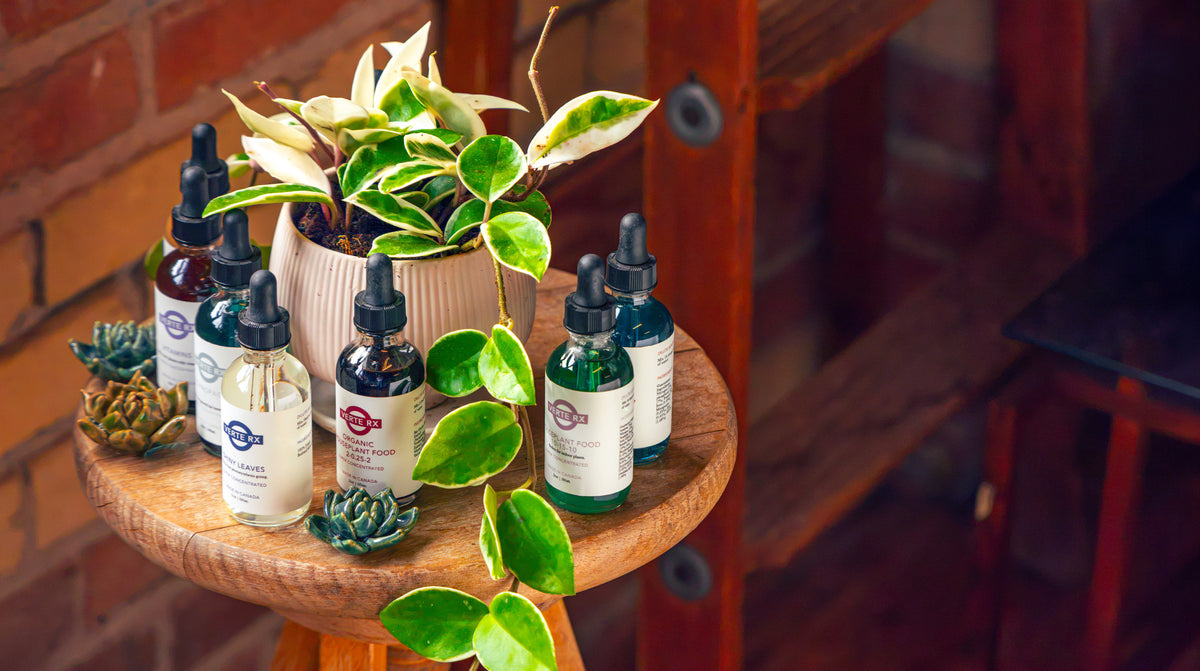
Most seedlings fail not from bad seed but from soil that runs out of what the plant needs before the plant can find it. Verte RX is a liquid plant vitamin formulated for exactly that window — the weeks after germination when the root system is establishing and the margin between thriving and stalling is narrowest.