
Tarragon Herb Seeds Packet

Regular price $4.95

Vacuum Sealed
NON-GMO
Seed Pack Guarantee

Build Your Garden With These Shido Seeds

Choose a seed packet as your starting point, then round out the bed with these for that thrown-together-but-somehow-perfect harvest.


Tarragon seeds grow Russian tarragon, the vigorous perennial cousin of the French kind, hardy in zones 3–8 and honest about what it is. Shido tarragon seeds are non-GMO and hermetically vacuum-sealed — anyone learning how to grow tarragon from seed should know French tarragon produces no viable seed at all — while paper packets lose germination viability within a year. What sprouts here is the Russian variety: milder, faster, and entirely suited to kitchen work. My friend Bernadette spent years believing her cuttings-only French plant made her superior, until her Russian tarragon out-produced it four to one and she quietly and permanently stopped mentioning France. The anise note is softer, the plant itself is far tougher, and the béarnaise still works. Every lot is germination-tested at independent third-party labs before packaging, so the rate printed on this packet is verified in a lab, never merely estimated.

Seed specifications
  • Material: Seed
  • Botanical name: Artemisia Dracunculus
  • Genus: Artemisia
  • Plant family: Asteraceae
  • Species: Dracunculus
  • Plant type: Perennial
  • Pollination type: Herb
  • USDA Hardiness Zones: 3-8
  • Packet contents: ≈ 100 Seeds
  • Packaging: Hermetically vacuum-sealed
  • Non-GMO: Yes
  • Seed viability: Up to 10 years (sealed) / 4–5 years (unsealed, ideal conditions)
  • Difficulty: Moderate - Recreational Gardener
Sowing & growing guide

Quick Sowing Guide:

  • When to sow: 6-8 wks before last frost
  • Sowing depth: Surface sow, barely cover
  • Initial spacing: 12-18 in
  • Row spacing: 24-36 in
  • Days to germination: 14-21 days
  • Light: Full sun to part shade
  • Water: Moderate
  • Soil: Well-drained, sandy or loamy soil
  • Harvest: 60-90 days

Start Growing: Step-by-step sowing and growing guide

About vacuum sealing

Why Vacuum-Sealed Seeds Last Longer

Standard paper seed packets are permeable to oxygen and moisture -- the two primary causes of seed degradation. Most paper-packaged seeds begin losing germination viability after approximately one year, contributing to significant garden-industry waste: packets purchased, not planted, expired, discarded. Shido Seeds are hermetically vacuum-sealed. The packet does not expire quietly in a drawer. It waits.

About the Packaging

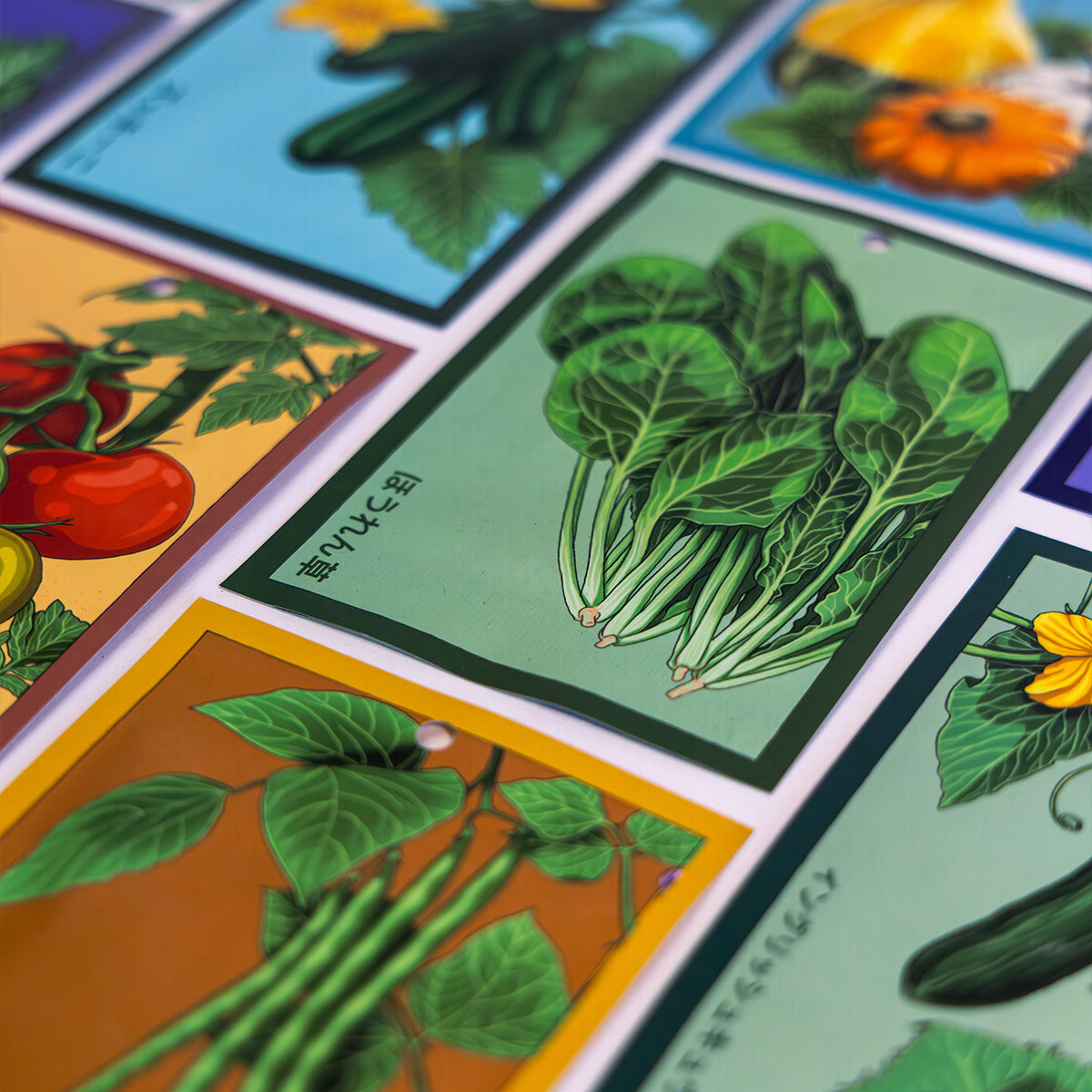
Every Shido seed packet is illustrated in the style of Japanese 1910s woodblock printing -- designed and drawn in-house by Chive, that has been exhibiting at the Chelsea Flower Show in London every year and does not, as a matter of principle, sell to big-box retailers. Customers collect the packets as a series. This was not the original plan.

Shipping & returns

Shipping

  • Free shipping: Orders $200+ within the US
  • Standard: 5–8 business days, Express 2–3 business days (at checkout)
  • International Ships: to 40 countries — rates at checkout
  • Packaging Ships: in outer box to protect gift box

View full shipping policy →

Returns

We accept returns within 30 days of delivery on unused items in original packaging. If your piece arrives damaged, contact us within 7 days with a photo and we will replace it at no charge.

View full return policy →

Satisfaction Guarantee

We stand by the quality of our flower seed packets! Every Shido seed packet is lab-tested for germination before it ships. If your seeds do not perform to the stated germination rate under correct growing conditions, contact us and we will replace or refund. Guaranteed!

Wholesale Inquires

Have a cool shop? Know someone that does?

Find Chive on Faire →

Radish Horticultural Specifications

Botanical

Artemisia Dracunculus

Plant Type

Perennial

Light

Full sun to part shade

Water

Moderate

Soil

Well-drained, sandy or loamy soil

Depth

Surface sow, barely cover

Germination

14-21 days

USDA Zone

3-8

Mature Height

24-36 in

Harvest

60-90 days


Getting to know your Tarragon

Tarragon arrives with a small scandal attached, so let us settle the matter at the door. The famous French tarragon of restaurant legend cannot be grown from seed at all; it is sterile, and it is propagated only by cuttings, and every packet anywhere claiming otherwise is selling you this plant, Russian tarragon, without the courtesy of saying so. We prefer the courtesy. Russian tarragon is its own respectable case: a hardy, vigorous, seed-honest perennial with the same anise-leaning character turned down from a shout to a murmur, and there are serious kitchens, mine among them, that consider the murmur an upgrade. It threads through a vinaigrette without hijacking it. It naps in a compound butter until the chicken wakes it. It survives winters that would kill its celebrated cousin twice over, and it produces so freely from the second month onward that restraint quickly becomes the only real skill involved. Use it in doubled quantities and late in the cooking and it does everything the legend promises. What you lose in pedigree you recover in honesty, hardiness, and a harvest measured by the fistful. The fancy one lives on in specialty catalogs. This one lives on your windowsill, working.


History & origin

Ancient Origins, Central Asia

Native to Siberia and western Asia. The genus name Artemisia honors the Greek goddess Artemis.

8th Century, Moorish Spain

Introduced to Europe via Mediterranean and Middle Eastern trade routes, spreading through Moorish Spain.

13th Century, Naming

The English name derives from the Arabic "tarkhun" by way of the Latin "dracunculus" — "little dragon" — a reference to the plant's serpentine root system and a folk belief that it could treat venomous bites and stings.

17th–18th Century, France

French tarragon became indispensable to classical French cuisine, forming the backbone of béarnaise sauce and the fines herbes blend. Prized for its delicate anise flavor, French tarragon is sterile and must be propagated by division or cuttings rather than seed.

Russian Tarragon, Eastern Europe

A hardier, less aromatic seed-grown variety spread more widely across Russia and Eastern Europe, later forming the basis of the popular Georgian and Russian "Tarkhun" soft drink.

Today

Remains a defining herb of French cuisine, with France still the largest producer and consumer of the culinary (French) variety.

Shido Vegetable and Flower Seeds Vacuum sealed for peak freshness

Step-by-Step Sowing & Growing Guide

Getting Started

Perennial (Russian tarragon, seed-grown)

Step 1: Timing - Start indoors 6–8 weeks before last frost.

Step 2: Soil - Well-drained, loose soil — wet or heavy soil is the main cause of failure. pH 6.5–7.5.

Step 3: Sowing - Surface sow, barely covered. Germination takes 14–21 days at 65–70°F.

Step 4: Transplant - After last frost, 18–24 inches apart, rows 24–36 inches — tarragon spreads by rhizome and fills the space over time.

Step 5: Divide every 2–3 years - Rhizomes become congested and vigor drops if clumps are never split. Dig and divide in spring.

Step 6: Overwinter - In cold climates, cut plants to the ground after the first hard frost. They die back completely and return from the roots the following spring.

Step 7: Harvest - Snip leaves and stem tips through the growing season as needed.

Before you start

Materials needed to sow

  • Seed trays or small pots: For the 6-8 week indoor start.
  • Grow light: For the indoor growing period.
  • Humidity dome: Helps hold moisture during germination.
  • Plant labels: Worth noting that seed-grown tarragon is the milder Russian type, not French -- labeling helps avoid confusion later about which variety is actually growing.

Materials for harvest and storage

  • Scissors: For snipping stem tips.
  • Small basket: For collecting the harvest.
  • Ice cube trays or freezer bags: Tarragon loses a fair amount of flavor when air-dried, so freezing in oil or softened butter keeps it noticeably better.

Tip: Snip stem tips before the plant flowers, when flavor is at its strongest -- flavor drops off once flowering begins.

Growth Requirements

Light:

  • Requires full sun (at least 6-8 hours per day) for optimal growth.

Soil:

  • Prefers well-draining, sandy or loamy soil.
  • Ideal soil pH: 6.5-7.5.

Watering:

  • Drought-tolerant once established, requiring minimal watering.
  • Water moderately, allowing the soil to dry between waterings.

Temperature & Climate:

  • Thrives in temperate climates with warm summers.
  • Can tolerate mild frosts but benefits from mulching in winter.

Fertilization:

  • Does not require heavy fertilization.
  • light application of compost or balanced fertilizer in spring supports growth.

Maintenance

Pruning:

  • Trim tarragon regularly to maintain shape and encourage new growth.
  • Cut back woody stems in early spring to promote vigorous growth.

Mulching:

  • Apply a light layer of mulch around plants to retain moisture and suppress weeds.

Harvesting:

  • Harvest tarragon once the plant is well-established, typically 2-3 months after planting.
  • Cut sprigs in the morning when essential oils are most concentrated.
  • Frequent harvesting promotes continuous leaf production.

Drying Tarragon:

  • Hang tarragon sprigs in a dark, well-ventilated area for 1-2 weeks.
  • Store dried leaves in airtight containers away from heat and moisture.

Freezing Tarragon:

  • Freeze whole sprigs or chop leaves and store in ice cube trays with water or oil.
  • Use frozen tarragon directly in cooking.

Troubleshooting and common mistakes

  • Expecting French tarragon flavor from seed: Seed-grown tarragon is Russian tarragon, which is noticeably milder — a common and unavoidable disappointment worth knowing about before sowing.
  • Overwatering: The single biggest killer of established tarragon plants.
  • Never dividing clumps: Rhizomes get congested after 2–3 years, and vigor drops noticeably if the clump is never split.

Culinary uses & nutritional information

What it's used for

1. Culinary Uses:

  • Fresh leaves are used to flavor fish, chicken, eggs, and salads.
  • Tarragon-infused vinegar and oils enhance dressings and marinades.
  • Pairs well with mustard, lemon, and creamy sauces.

2. Medicinal Benefits:

  • Traditionally used as a digestive aid and appetite stimulant.
  • Contains antioxidant and anti-inflammatory properties.
  • Used in herbal teas to relieve indigestion and promote relaxation.

3. Ornamental and Pollinator Benefits:

  • Works well as a border plant or companion plant in herb gardens.
  • Attracts bees and beneficial insects.

What parts are edible

  • Leaves: The primary edible part, fresh or dried, with a distinctive anise-like flavor. The backbone of béarnaise sauce and the French fines herbes blend; pairs classically with chicken, fish, and eggs.
  • Flowers: Edible, with a mild version of the leaf's anise flavor. Rarely seen on French tarragon, since the variety is sterile and seldom flowers or sets seed — more common on seed-grown Russian tarragon.
  • Stems: Tender young stems can be minced along with the leaves or used to infuse vinegars and oils. Mature stems turn woody and are generally discarded.

Nutritional data

Dried leaf, per 100g

Calories: 295 kcal

  • Carbohydrates: 50.22 g
  • Protein: 22.77 g
  • Total fat: 7.24 g
  • Dietary fiber: 7.4 g
  • Vitamin C: 50 mg (56% RDA)
  • Folates: 274 µg (69% RDA)
  • Potassium: 3,020 mg
  • Cholesterol: 0 mg
  • Potassium (standout): Exceptionally high among dried herbs — again, on a gram-scale realistic serving

Companion plants, pests & diseases

Companion planting

Good companions

  • Potatoes, carrots — low competition for space

Poor companions / avoid

  • Mint, fennel — aggressive spreaders that crowd tarragon's roots over time

Pests

  • Aphids: Tarragon's aromatic oils make it fairly pest-resistant overall; occasional aphid clusters on new growth respond to a strong water spray.
  • Spider mites: Mainly an indoor/dry-condition problem, especially on plants overwintered inside.

Diseases

  • Root rot: By far the most common problem — caused by poor drainage, not by the fungus itself being aggressive. Improve drainage rather than treating chemically.
  • Rust: Occasional, minor. Remove affected foliage.
  • Powdery mildew: Shows up in crowded, humid conditions. Improve air circulation.

Pro Tip

Tarragon thrives in well-draining soil and loves a little neglect—avoid overwatering for the best flavor. Regularly trim the stems to encourage bushy growth, and harvest in the morning for the most aromatic leaves.

Bonus: Divide the plant every few years to keep it thriving!

Seeds worth keeping

What makes Shido Seeds different

Shido Seeds are designed by Chive Studio, a ceramic design company. We are not a seed conglomerate. We do not sell through big-box retailers. Each variety in the catalog was selected because it is worth growing — not because it ships well in bulk or photographs well in marketing materials.

Every packet is germination-tested at an independent third-party lab before it earns its woodblock illustration. The vacuum seal removes the oxygen that causes standard paper packets to degrade. The stated germination rate is a floor, not a marketing figure.

If something goes wrong, contact us. We will make it right.

Plants that Grow together look good together...even if they are ceramic

Mist Like a Modern Human—Not a Thirsty Peasant
Tarragon seasons your dinner; catnip caters someone else's entire evening. The Catnip Flower Seeds Packet has a devoted audience already waiting.

Vegetable Shido Seeds packets — by Chive Studio Toronto

One honest packet leads to another. The full Shido herb seed lineup is labeled the same way.

Buttercup Yellow Gay Paree Peony - Chive Ceramics Studio - Ceramic Flowers - Chive Ceramics Studio

The ceramic Rose Pink King Protea makes the boldest statement on the wall and asks for no growing season at all.

Chive Shido seed packets with botanical illustrations on a peg rack, showing cherry blossom, tomato, and eggplant designs.

The credentials behind the packet

Every catalog needs one entry chosen on principle, and tarragon is ours. When the Shido line was assembled we discovered how routinely seed sellers label Russian tarragon as its unattainable French cousin, and the studio voted to do the opposite: name it plainly and let the plant argue its own case. That instinct is old Chive doctrine; we have signed our work honestly since 2004, glaze flaws and all. The packet's woodblock-style illustration gives the slender leaves the dignified botanical treatment, printed to be kept like the rest of the series. Inside is exactly what the label says. In the seed business, that turns out to be a distinguishing feature.


Plant Care, Simplified with Chive

Keep it alive, keep it thriving. Let's make plant parenthood look easy.

Heirloom vs Hybrid Seeds: What Actually Differs | Shido

Todd Newgren
Heirloom seeds aren't automatically better than hybrid seeds—each suits different goals, from saving seed year to year to fighting off disease. The real difference is genetics, ...
Read more

Are Seed Packets GMO? The Honest Answer

Todd Newgren
Are seed packets GMO? No—home garden seed packets, Shido included, are never genetically modified, since GMO seed is only made for large-scale commercial crops. The non-GMO badg...
Read more

Frequently asked questions

How do you grow tarragon from seed?

To grow tarragon from seed, surface sow onto moist mix, press lightly without burying, and keep it comfortably warm in bright light. This packet is Russian tarragon, the vigorous seed-grown species, and it behaves accordingly: quick to establish, generous almost immediately. Shido's vacuum-sealed packet delivers its verified rate. The plant delivers everything after that.

How long does tarragon take to germinate?

Tarragon takes to germination readily in warm soil, and Russian tarragon wastes no time afterward, building a bushy plant by midsummer from a spring sowing. Thin the seedlings generously and then stand back. The vacuum-sealed Shido packet keeps the rate honest; the species handles all the ambition on its own.

What is the difference between French and Russian tarragon?

The difference between French and Russian tarragon is simple: French is the intense culinary classic but sets no viable seed, so it can only be bought as a plant; Russian, this packet, grows readily from seed with a milder, anise-adjacent flavor. Shido sells the one that seeds honestly rather than pretending otherwise. Use a little more of it. Cook the same things.

Does tarragon come back every year?

Tarragon comes back every year; Russian tarragon is a hardy perennial to zone 3, tougher than its French cousin by a wide margin, dying back in fall and returning reliably each spring. The clump gains ground and vigor for years. From one vacuum-sealed Shido packet you plant a fixture, not a season. Winter is not among its concerns.

Can you grow tarragon in a pot indoors?

You can grow tarragon in a pot indoors on a bright sill, though Russian tarragon grows enthusiastically and appreciates a deep ten-inch container and a firm trim. Cut it often; regular harvest keeps the flavor brightest and the plant polite. Sown from a sealed Shido packet, one pot covers vinaigrettes and butters through the whole indoor season.

How long do tarragon seeds last?

Standard paper-packed tarragon seeds begin losing germination viability after approximately one year. Shido tarragon seeds are hermetically vacuum-sealed, removing oxygen entirely. State law requires a 3-year viability date on sealed packaging. NASA research on hermetic seed storage suggests viability up to ten years in cool, dry conditions. Your Shido packet waits.

What do you cook with fresh tarragon?

Fresh tarragon cooks into vinaigrettes, compound butter, egg dishes, roast chicken, and anything with cream that could stand an anise whisper; add it late, since long heat mutes it. A little threads through a whole dish. These same packets are available at the Philadelphia Flower Show, where Chive exhibited six times, most recently in 2026 after a thirteen-year absence.

Does tarragon grow well in containers?

Tarragon grows well in containers, where its enthusiasm meets a boundary it can respect; a deep pot in full sun keeps the roots happy and the spread supervised. Refresh the soil each spring and divide the clump when it crowds itself. Harvest by the handful, since timid picking wastes the plant. One vacuum-sealed Shido packet fills the pot for years running.

Verte Rx Shiny Leaves for Plants - Chive Ceramics Studio - Chive Ceramics Studio

The seed is the start. Verte RX handles the rest.

Most seedlings fail not from bad seed but from soil that runs out of what the plant needs before the plant can find it. Verte RX is a liquid plant vitamin formulated for exactly that window — the weeks after germination when the root system is establishing and the margin between thriving and stalling is narrowest.