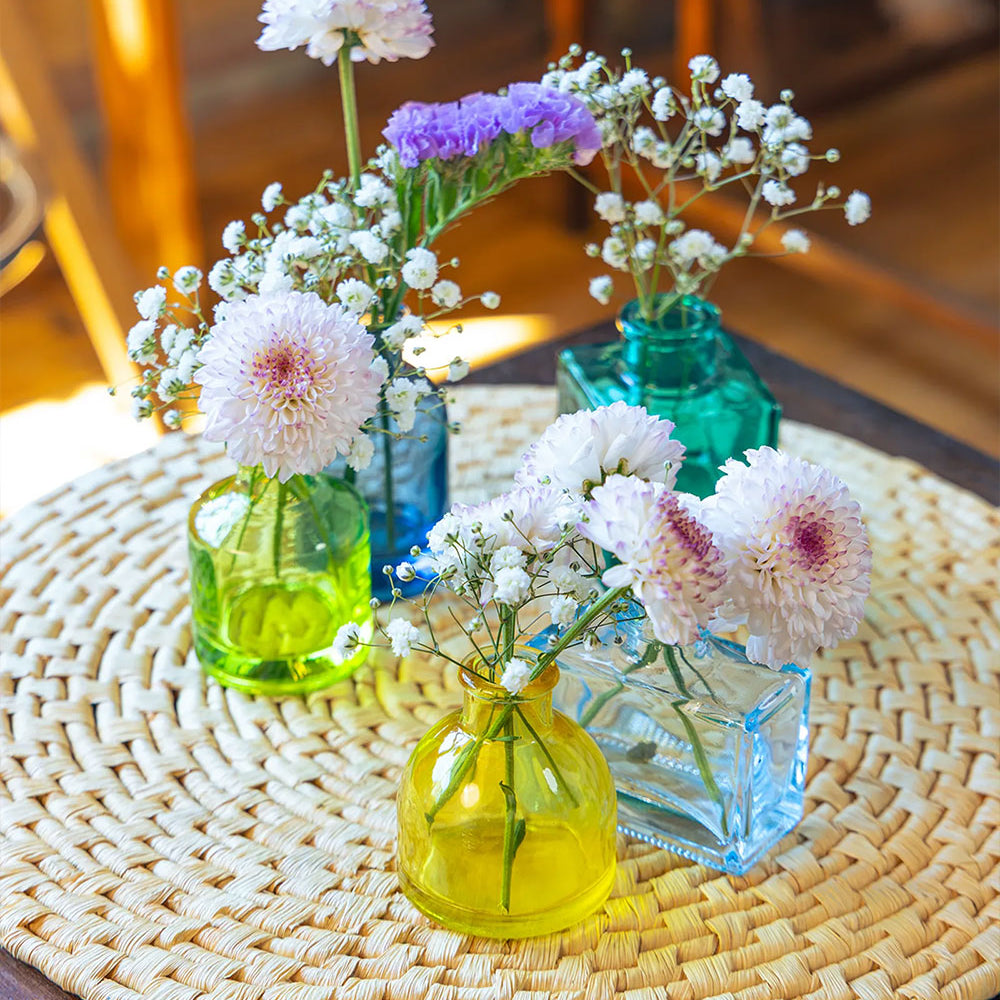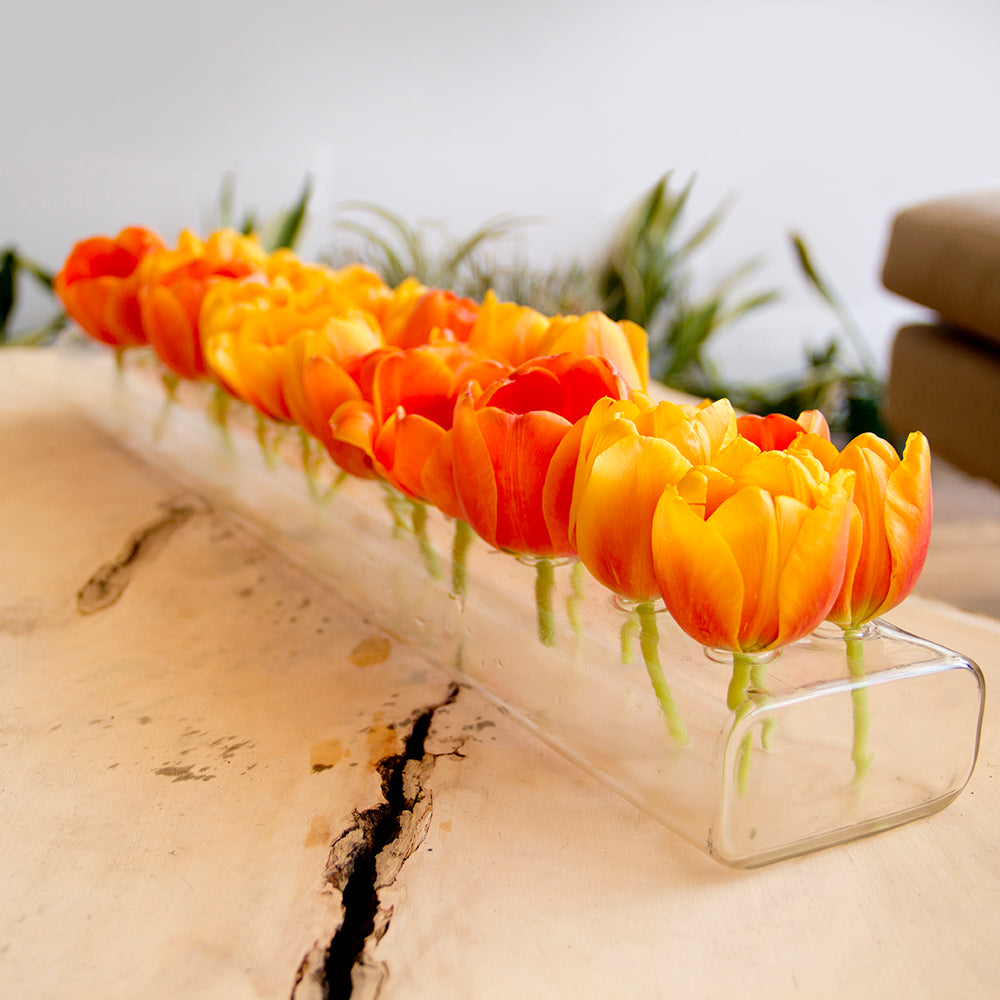
Test Tube Glass Propagation Vase

Regular price $32.50
Sizes
Hand Blown Glass
Dishwasher safe cleaning
30-day return policy

Build the Arrangement That Looks Harder Than It Was

Pick a vase to anchor the shelf, then add the rest until it reads as curated instead of collected.


The Copper Tube is a copper propagation holder in name and colour only, and there is no copper in it anywhere. The finish is a warm metallic tone applied to the stand, chosen because it flatters root systems in a way that chrome does not, and calling it a copper tube vase is a description of what you see rather than what it is made of. We would rather say that plainly than let anybody assume otherwise. Two sizes scale honestly against each other: the large runs 3.75 inches across and 6.5 tall, the medium 2.8 by 4.5, keeping much the same proportion. Glass tubes lift free of the stand for rinsing. As a plant cutting holder it earns its keep in the weeks when a cutting is doing nothing visible, since watching roots travel downward is most of the reward. On a kitchen sill it works hardest.

Product detail

Product Detail:

  • Material: Glass
  • Glaze finish: Translucent
  • Year Designed: 2020
Dimension
  • Large: 3.75 inches diameter, 6.5 inches tall
  • Medium: 2.8 inches diameter, 4.5 inches tall
Vase Care Instructions

All glass vases in this collection are dishwasher safe for easy cleaning, with one exception: mercury glass vases should be hand-washed only. The silvered mercury finish is a delicate coating rather than a solid color, and dishwasher heat and detergent can dull or strip it over time.

For standard glass vases, just load it in with the rest of the dishes — no special care needed. For mercury glass pieces, wash gently with warm water and mild soap, and dry with a soft cloth rather than letting it air dry with water spots.

Rinse and dry after each use, especially if flower food or cut-stem residue was in the water, so nothing lingers and clouds the glass.

Flowers that Love this Vase
  • Gerbera Daisy
  • Chrysanthemum
  • Poppy
  • Aster
  • Craspedia
  • Sweet William
  • Stock
  • Muscari
  • Magnolia
  • Heather

Quick Guide to Building a Floral Arrangement

  1. Pick your vase first
  2. Start with your anchor flower.
  3. Build in odd numbers.
  4. Add height, then fill.
  5. Greenery does the quiet work.
  6. Cut stems at an angle, underwater if you can.
  7. Step back before you decide it's done.

Shipping & returns

Shipping

  • Free shipping: Orders $200+ within the US
  • Standard: 5–8 business days, Express 2–3 business days (at checkout)
  • International Ships: to 40 countries — rates at checkout
  • Packaging Ships: in outer box to protect gift box

View full shipping policy →

Returns

We accept returns within 30 days of delivery on unused items in original packaging. If your piece arrives damaged, contact us within 7 days with a photo and we will replace it at no charge.

View full return policy →

Wholesale Inquires

Have a cool shop? Know someone that does?

Find Chive on Faire →

Test Tube Glass Propagation Vase - Chive Ceramics Studio - Vases - Chive US

Is the copper real - The Copper Tube

We get one email about this piece more than any other, and it is always some version of the same question: is the copper real.

It is not. The stand is finished in a warm metallic tone that reads as copper and contains none of it, and we say so on the listing, and people still write in, which I take as a compliment to whoever chose the finish and a reminder that nobody reads listings.

What I have stopped doing is apologising for it. There was a period where the answer got long and defensive, full of words like inspired and evocative, and it satisfied nobody because everybody could hear the shuffling. The short answer works better. It is the colour, not the metal, and the colour was picked because roots look extraordinary against a warm tone and slightly clinical against a cold one.

Actual copper would also have been the wrong call for a different reason. Copper and standing water have a long complicated relationship, and a vessel where water sits for six weeks while something grows in it is not the place to explore it.

So: not real, entirely deliberate, and better this way for reasons unrelated to cost.

Chive Studio trimming tulip stems with scissors on a wooden surface, with white, purple, and pink tulips arranged nearby.
How to Cut Flowers Like a Pro:

A (Mostly) Simple Guide to Cutting Your Flowers

So, you’re making an arrangement? Let’s ensure it lives long enough to impress someone—even if it's just you.

  1. Scrub the Scissors: Wash your shears first. Your flowers do not want a side of Dorito dust.
  2. Cut at 45°: Snip stems at an angle. It gives them a straw instead of making them chug from the bottle.
  3. Trim Underwater (Fancy Mode): Cut them submerged to block air bubbles. It’s extra, but they didn’t ask to suffocate.
  4. Ditch Submerged Leaves: Strip anything below the waterline. Unless you are actively going for a swamp aesthetic.
  5. Snip Again if Stale: If they sat out on the counter, trim them again. They need a fresh start (don’t we all?).
  6. Swap the Water: Change it and trim the stems every few days so they don't die immediately.

Voilà! You are now a domestic deity. Go take your Instagram photo before you forget to water them.

Pro Tip: The light does half the work.

Glass catches and bends light in a way ceramic can't. Set the arrangement somewhere it'll get some late afternoon sun, even for an hour, and the water and stems start doing something a solid vase never will.

Perfect Pairs for Any Shelf
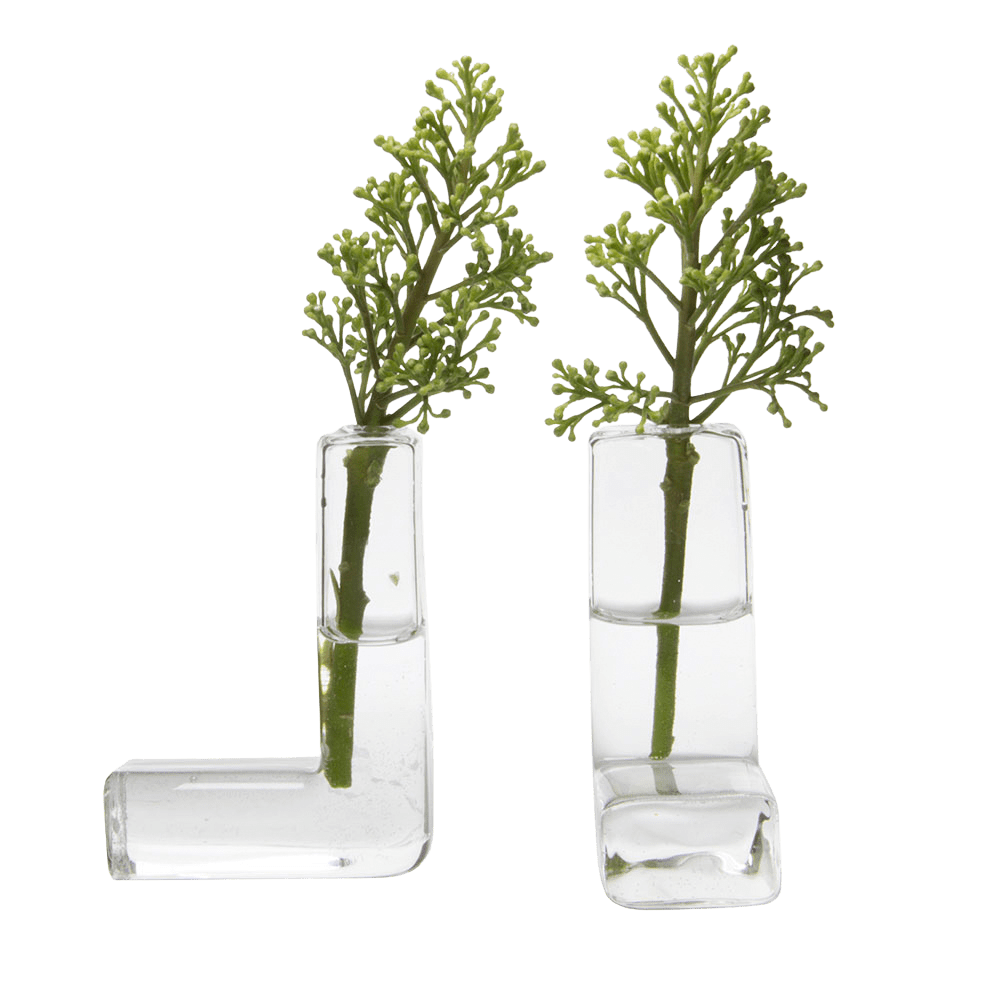
For Plants With Watering Standards

The glass vases at Chive come out of the same studio habit that produced everything else here: design the object once, correctly, then resist every opportunity to complicate it. Each one holds stems. None of them hides anything. This one takes that literally enough to admit its own name is a colour rather than a material. When the same logic gets applied to a right angle rather than a cylinder, the L Glass Vase is where the chain continues.

Chive pastel blue english rose ceramic flower styled with other ceramic flowers  in assorted colors.

Why let your flowers die when they can live forever?

Every Chive vase is built around one decision about how flowers should stand, then finished by hand until that decision reads as obvious. The Copper Tube decided in favour of the root rather than the bloom: clear untinted tubes that come away from the stand entirely, held at a height where a developing root system sits at eye level instead of down in a jar on a sill. The glass is deliberately plain. All the character is in the stand. Every piece in the glass vases collection settles one question this way.

A cutting rooted here has to go somewhere afterward, and a Liberte Pot with drainage is the next step rather than a matching accessory. Roots that developed in water need soil that lets water leave, which is precisely what an undrained decorative pot fails to do. Root it in glass, watch it happen, then move it across. The two objects are consecutive rather than complementary.


We Do Not Plate - Chive Since 2004

We do not plate anything here and never have, which is why the finish on this stand is what it is rather than a thin layer of something more expensive over something cheaper. Plating chips at the edges and then the object spends the rest of its life looking like a worn version of a nicer thing. Chive started in 2004 with a fairly narrow rule about not pretending, and this piece is the awkward test of it: the honest answer costs a sale occasionally to somebody who wanted metal. The finish goes on here, it goes on evenly across the whole stand, and over years of use it wears down gradually rather than flaking off in patches. That is the difference worth paying for.


Inside the Chive Design Studio

Low maintenance, high impact. Let's make home styling look easy.


Frequently asked questions

What should you look for when buying a copper propagation holder online?

Ask first whether the metal is actual metal or a finish, because both are sold under the same wording and the difference matters for water contact. Ours is a finish and we say so. Then check the internal diameter against what you intend to root, since a thick succulent stem will not enter a narrow tube. Fixed tubes cannot ever be cleaned properly. Look for ones that lift out.

What single flowers look striking on their own in the Copper Tube?

Cuttings rather than flowers, which is the honest answer. Pothos, tradescantia, a monstera node with an aerial root already showing, philodendron, and coleus all root readily in standing water and all look better doing it than they will once potted. A single trailing vine over the rim is the whole effect. Flowers work but waste the piece.

What are the Copper Tube vase's dimensions for shelf or table display?

Two sizes that scale honestly rather than inverting. The large measures 3.75 inches across and stands 6.5 tall, while the medium comes in at 2.8 by 4.5, holding roughly the same relationship between the two figures. The larger takes longer cuttings without leaves resting on the surface below. Both suit a standard windowsill.

How is the Copper Tube vase's glass finish made at the studio?

The glass has no finish on it at all, and that is deliberate rather than an omission. Anything applied to the tube would sit between you and the roots, which are the entire reason for the object, so the tubes are left plain and clear and the whole visual decision is made on the stand instead. The metallic tone goes on here at the bench. Nothing is plated over anything.

How often should you change the water in the Copper Tube vase?

Do not change it. This is the one vessel here where a full water change is actively wrong, because developing roots acclimatise to the water they are in and replacing it wholesale sets them back. Top up to the original level as it drops, and refresh completely only if it clouds or smells. Root disturbance costs more than stale water.

Which rooms suit the Copper Tube vase's shape and scale best?

A kitchen, almost always. The requirements are bright indirect light and somewhere you pass several times a day, because propagation rewards being noticed and punishes being forgotten, and a kitchen sill supplies both plus a tap. Bathrooms work perfectly well provided the window is a decent one. A dim shelf roots nothing.

Does the Copper Tube holder complement the Sloth propagator nearby?

They overlap more than they compete. The Sloth propagator holds a single larger cutting in one vessel with a metal frame, while this carries several tubes on one stand, so the Sloth suits one substantial specimen and this suits a batch at different stages. Anybody propagating seriously ends up with several vessels going at once. Running both is not redundant.

What was the original idea behind the Copper Tube vase's form?

In 2020, and the idea was simply to raise the water off the surface. Cuttings had always been rooted here in jam jars on a sill, where the roots sit below eye level and nobody looks at them, and the whole point of the exercise is watching something happen. The rest of the design followed from that decision about height. Lifting the tube changed everything.

Ceramic astronaut vase with flowers styled on shelf — Chive Studio Toronto
Behind the Studio

The story behind the Chive astronaut vases

The story of Laika, Félicette, a solar eclipse in New York, and a space bar that ordered a hundred vases a month until it closed.