Test Tube Glass Bud Vases

Regular price $12.25
Sizes
Hand Blown Glass
Dishwasher safe cleaning
30-day return policy

Build the Arrangement That Looks Harder Than It Was

Pick a vase to anchor the shelf, then add the rest until it reads as curated instead of collected.


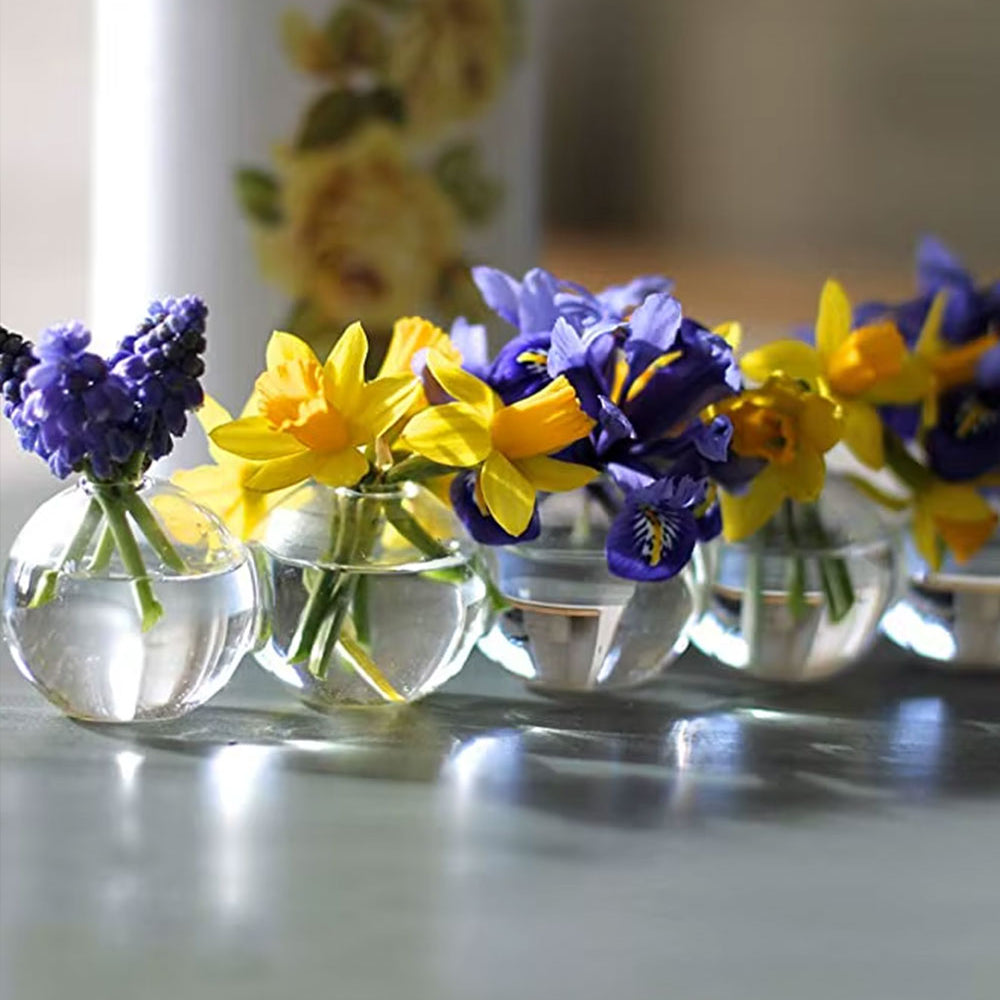
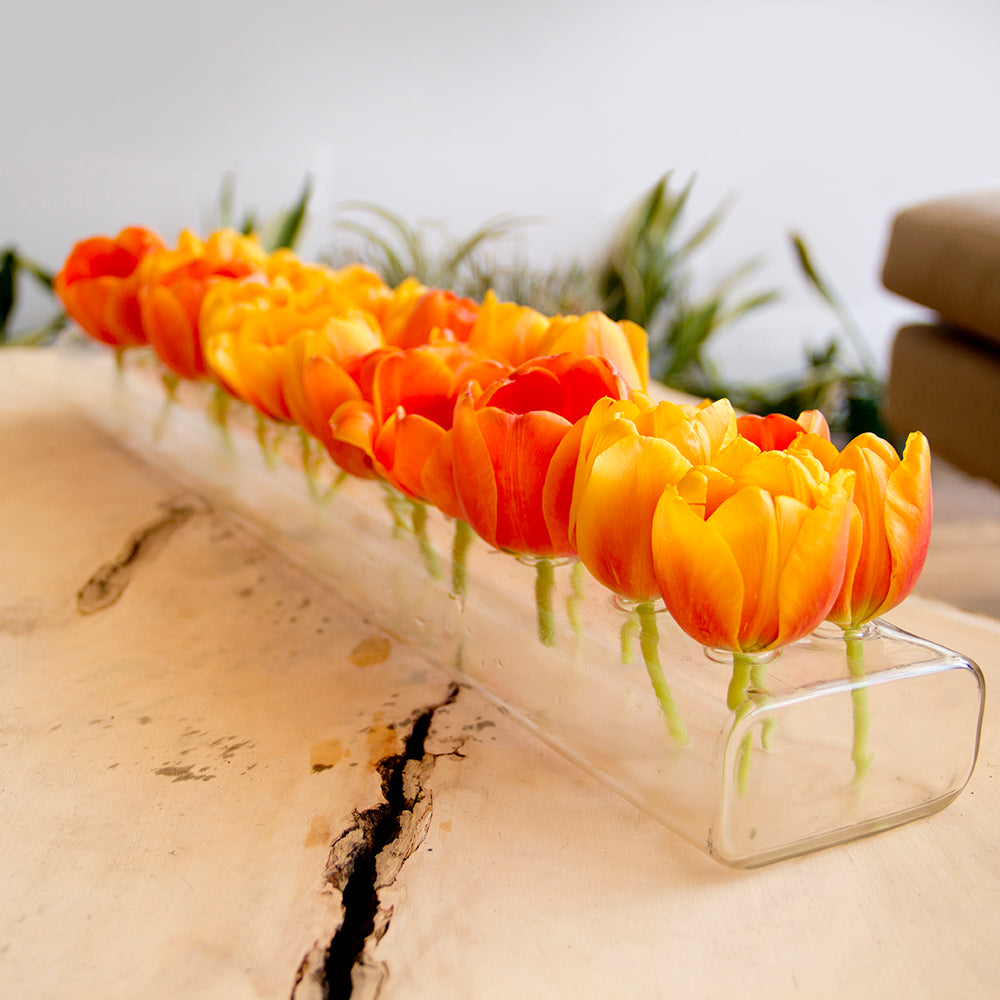
A glass tube vase is barely a vessel at all, and the Tube is really one tube offered three ways to attach it to a room. Every version is an inch wide and the rest of the geometry rotates around that: the flat lies down across 4 inches with a half-inch profile, the footed version spans 8 inches on 2-inch feet, and the suction model runs an inch square and 4 inches up a pane of glass. As a tube bud vase the appeal is that the glass disappears and the stem appears to be doing it unassisted. Being a slim tube flower vase it holds one stem properly rather than three badly. The suction version is the one people underestimate, because a window is the largest unused surface in most rooms and nothing else in this catalogue will mount to it. Flat against a shelf edge it reads as a line rather than an object. Not that anybody buys just one of these.

Product detail

Product Detail:

  • Material: Glass
  • Glaze finish: Translucent
  • Year Designed: 2008
Dimension
  • Flat: 4 inches long, 1 inch wide, 0.5 inches tall
  • Glass w/ Feet: 8 inches long, 1 inch wide, 2 inches tall
  • Suction: 1 inch diameter, 4 inches tall
Vase Care Instructions

All glass vases in this collection are dishwasher safe for easy cleaning, with one exception: mercury glass vases should be hand-washed only. The silvered mercury finish is a delicate coating rather than a solid color, and dishwasher heat and detergent can dull or strip it over time.

For standard glass vases, just load it in with the rest of the dishes — no special care needed. For mercury glass pieces, wash gently with warm water and mild soap, and dry with a soft cloth rather than letting it air dry with water spots.

Rinse and dry after each use, especially if flower food or cut-stem residue was in the water, so nothing lingers and clouds the glass.

Flowers that Love this Vase
  • Tulip
  • Carnation
  • Lavender
  • Orchid
  • Forget-Me-Not
  • Agapanthus
  • Salvia
  • Astilbe
  • Flowering Dill
  • Clematis

Quick Guide to Building a Floral Arrangement

  1. Pick your vase first
  2. Start with your anchor flower.
  3. Build in odd numbers.
  4. Add height, then fill.
  5. Greenery does the quiet work.
  6. Cut stems at an angle, underwater if you can.
  7. Step back before you decide it's done.

Shipping & returns

Shipping

  • Free shipping: Orders $200+ within the US
  • Standard: 5–8 business days, Express 2–3 business days (at checkout)
  • International Ships: to 40 countries — rates at checkout
  • Packaging Ships: in outer box to protect gift box

View full shipping policy →

Returns

We accept returns within 30 days of delivery on unused items in original packaging. If your piece arrives damaged, contact us within 7 days with a photo and we will replace it at no charge.

View full return policy →

Wholesale Inquires

Have a cool shop? Know someone that does?

Find Chive on Faire →

Test Tube Glass Bud Vases - Chive Ceramics Studio - Vases - Chive US

It began as a complaint - The Tube

The suction version exists because of a complaint, which is the origin story of more products here than anybody would like to admit.

A customer in a basement flat wrote to say the vases were lovely and that she had nowhere to put them, and that her only real light came from one high window she could not reach a shelf to. She was not asking us to do anything. She was, I think, simply describing her life to a company that sells vases, which happens far more than anybody outside this job would guess.

We had a suction cup in a drawer from an unrelated project. Somebody stuck a tube to a window with it that afternoon, as a joke, and it stayed there for four months while we all walked past it and slowly stopped finding it funny.

It went into the range the following year. It remains the version stockists order least and customers reorder most, which is a pattern I have learned to read as meaning it photographs badly and works well.

We never told her about any of it. I have drafted that message several times and no version of it reads as anything other than strange, so it sits unsent in a folder.

Chive Studio trimming tulip stems with scissors on a wooden surface, with white, purple, and pink tulips arranged nearby.
How to Cut Flowers Like a Pro:

A (Mostly) Simple Guide to Cutting Your Flowers

So, you’re making an arrangement? Let’s ensure it lives long enough to impress someone—even if it's just you.

  1. Scrub the Scissors: Wash your shears first. Your flowers do not want a side of Dorito dust.
  2. Cut at 45°: Snip stems at an angle. It gives them a straw instead of making them chug from the bottle.
  3. Trim Underwater (Fancy Mode): Cut them submerged to block air bubbles. It’s extra, but they didn’t ask to suffocate.
  4. Ditch Submerged Leaves: Strip anything below the waterline. Unless you are actively going for a swamp aesthetic.
  5. Snip Again if Stale: If they sat out on the counter, trim them again. They need a fresh start (don’t we all?).
  6. Swap the Water: Change it and trim the stems every few days so they don't die immediately.

Voilà! You are now a domestic deity. Go take your Instagram photo before you forget to water them.

Pro Tip: The light does half the work.

Glass catches and bends light in a way ceramic can't. Set the arrangement somewhere it'll get some late afternoon sun, even for an hour, and the water and stems start doing something a solid vase never will.

Perfect Pairs for Any Shelf
Vie Jolie Glass Vintage Flower Vases - Chive Ceramics Studio - Vases - Chive US

Four Shapes Instead Of One Repeated

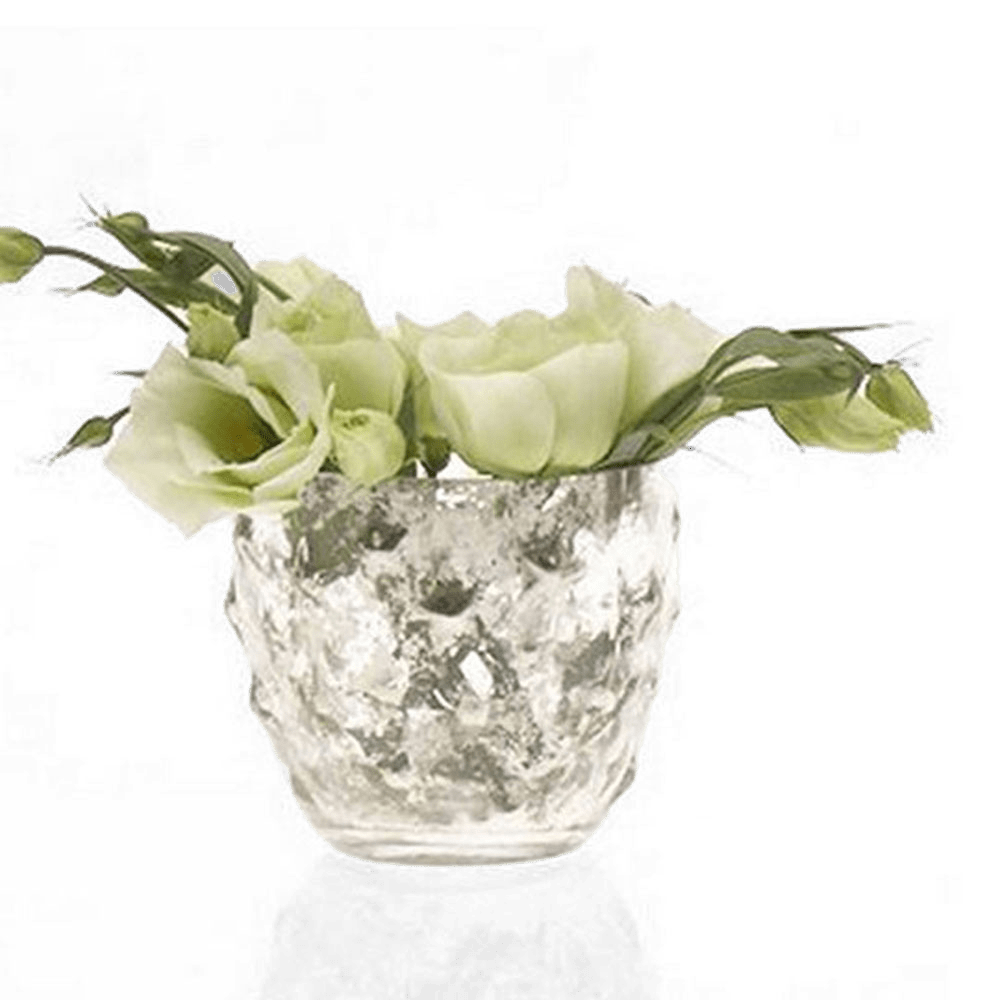
The glass vases at Chive come out of the same studio habit that produced everything else here: design the object once, correctly, then resist every opportunity to complicate it. Each one holds stems. None of them hides anything. The Tube is close to nothing at all, which is the point of it, and the three mounts are the only decision it contains. When four related shapes are wanted instead of one repeated in different fittings, the Vie Jolie Vases follow it.

The Glass Never Changes, Its Relationship Does
Every Chive vase is built around one decision about how flowers should stand, then finished by hand until that decision reads as obvious. With the Tube the decision was mounting rather than form: keep one slender vessel and give it three ways to meet a room, lying along a surface, standing on small feet, or fixed by suction to a pane. The glass never changes. Only its relationship to the architecture does. Every object in the glass vases collection resolves a single question and then declines to revisit it.

Shido Coconut Soy Blend Candle - Chive Ceramics Studio - Candles - Chive Ceramics Studio

The Glass Picks Up The Flame Twice

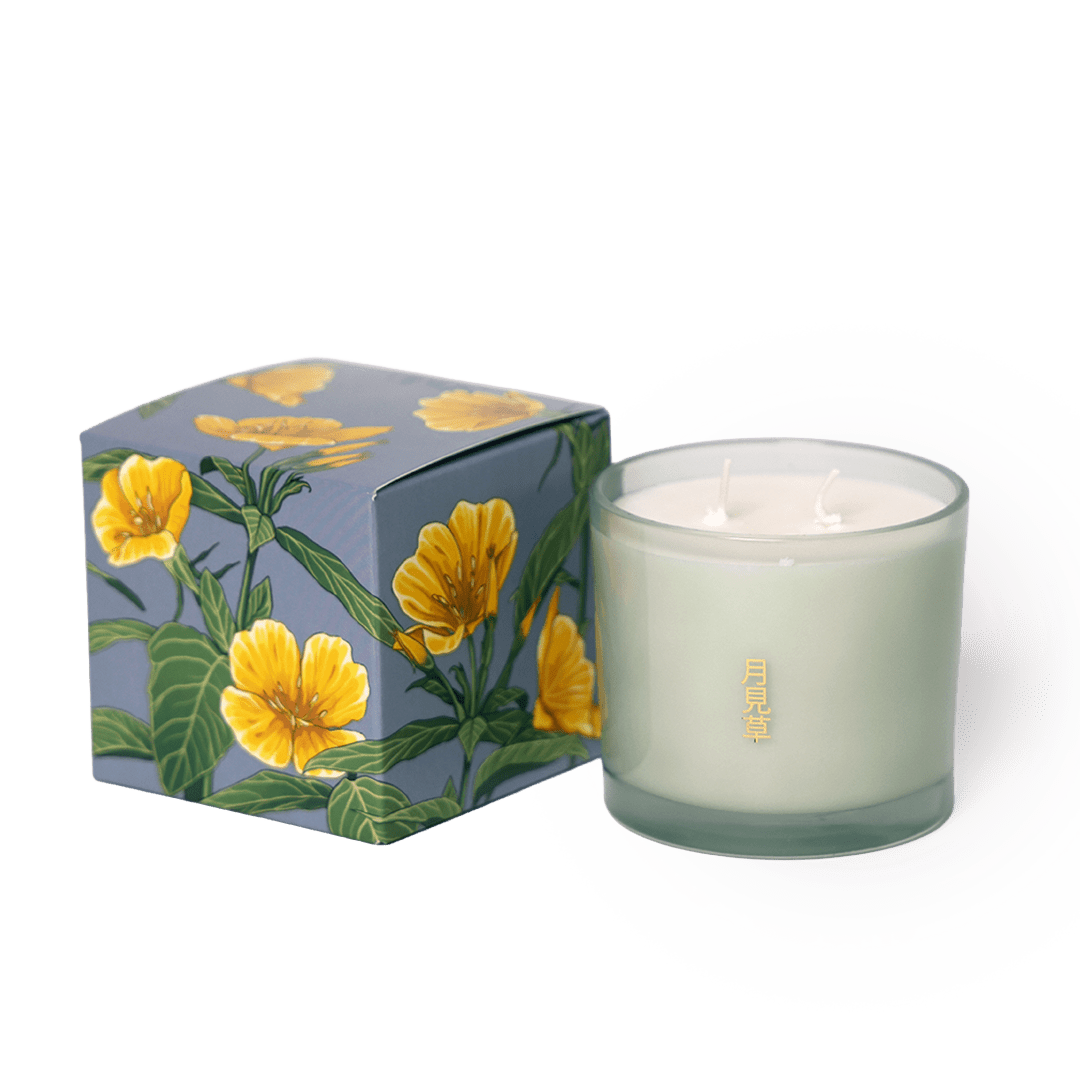
An Evening Primrose Candle belongs on a windowsill for the same reason this does, which is that a window is the one surface in most rooms doing nothing after dark. Fix the suction version to the pane, put the candle on the ledge below, and the glass picks up the flame twice, once directly and once in reflection. Windows are wasted between dusk and bedtime.


Cut and Polished Here

The tooling for this is the oldest still in daily use here, and the tubes are cut and fire-polished on site rather than bought in already finished. Bought tubing arrives with a cut edge somebody else decided was acceptable, and on an object this plain the rim is the only detail there is, so an edge that is merely adequate becomes the whole impression. Chive has cut and finished its own tubing since 2004. A fire-polished rim feels soft under a thumb and looks slightly uneven under a loupe, which is the correct outcome on a handmade object and not one an automated line would ever sign off on. The unevenness is evidence, not a defect.


Inside the Chive Design Studio

Low maintenance, high impact. Let's make home styling look easy.

The Best 10 Styles of Vases

Jessie Duenas
The glorious world of flower vases! Because nothing says "I have my life together" quite like a carefully chosen vessel for your soon-to-be-wilting flora. Gather 'round, fell...
Read the full story

Wedding Centerpiece Vases: The Planning Guide Nobody Gives You

Jessie Duenas
Wedding centerpiece vases work best small and plural — three to seven per table, one to three stems each. A fifteen-table reception needs roughly seventy-five vases and 100 to 1...
Read the full story

Frequently asked questions

What makes the Tube a genuinely useful vase at home?

It goes where a vase cannot. One slender vessel comes with three ways of attaching itself to a room, so the same object lies along a narrow shelf, stands on small feet beside a sink, or fixes with a suction cup directly onto a window. That last option matters in a flat with more glazing than wall. Most homes have an unused vertical surface somewhere.

How many flower stems does the Tube vase comfortably display?

One, and properly, instead of three crammed in. The bore runs an inch across, which takes one stem with room for water and nothing further, and the appeal collapses entirely the moment you force a second in and the two cross. A row of single stems reads better than one crowded bunch. Buy several instead.

Will the Tube vase fit on a narrow shelf or ledge?

Comfortably, since an inch of width is less than almost any shelf on offer. The flat version needs 4 inches of length and stands only half an inch high, which clears the underside of a shelf above it. The footed version wants 8 inches of run. Depth is never the constraint here. Length occasionally is.

Is the Tube vase's glass surface prone to marks or scratches?

The glass is unremarkable in the best sense and the suction cup is the part that ages. Rubber hardens over years and loses grip, particularly in a sunny window, which is exactly where people put it. Check the seal every few months and replace the cup when it stops holding overnight. Glass outlasts the fitting by decades.

How do you clean the Tube vase without damaging the finish?

Easily, because a straight bore is the simplest interior in this catalogue. The tube lifts out of the foot or away from the cup, and once free it is a plain cylinder open at one end, which a pipe cleaner or a narrow brush runs straight through without meeting a shoulder or a curve. Rinse and stand it upright to dry. Nothing traps water.

How do you style the Tube vase on open shelving?

Lay the flat version along the front edge so it registers as a drawn line instead of a standing object. The useful trick on open shelving is that one horizontal element ties several vertical ones together, so a tube laid in front of a row of books does more work than a vase standing among them. Repeat it on two shelves. Consistency beats variety here.

Is the Tube vase larger or smaller than the Vie Jolie vase?

Larger in one direction and much smaller in every other. The footed version runs 8 inches long against the Vie Jolie's 4, but it is an inch wide where the Vie Jolie is 3.5 or 4 square, so one is a line and the other is a block. They also hold differently: a single stem against a short handful. Line them up together and both look better.

What design tradition does the Tube vase draw from?

From the solifleur, the single-stem specimen vase that European households kept for one flower at a time. That convention existed to give a single bloom the attention an arrangement denies it, and the vessel was always deliberately plain so as not to compete. This carries the identical reasoning into a considerably narrower tube. One flower, nothing competing.

Ceramic astronaut vase with flowers styled on shelf — Chive Studio Toronto
Behind the Studio

The story behind the Chive astronaut vases

The story of Laika, Félicette, a solar eclipse in New York, and a space bar that ordered a hundred vases a month until it closed.