
Broccoli Vegetable Seeds Packet

Regular price $4.95

Vacuum Sealed
NON-GMO
Seed Pack Guarantee

Build Your Garden With These Shido Seeds

Choose a seed packet as your starting point, then round out the bed with these for that thrown-together-but-somehow-perfect harvest.


Broccoli seeds for the kitchen garden that intends to actually produce broccoli this year. Broccoli is the vegetable that rewards the patient gardener with a second harvest after the first one is done.

Broccoli is the cool-season brassica that continues producing side shoots long after the central head is harvested. Each packet is hermetically vacuum-sealed -- removing the oxygen that causes standard paper seed packets to lose germination viability within approximately one year. State law requires a 3-year viability label on sealed packaging. NASA research on hermetic seed storage indicates viability of up to 10 years under proper conditions. Every packet is non-GMO and germination-tested at independent third-party labs before it earns its Japanese woodblock print artwork.

Seed specifications
  • Material: Seed
  • Botanical name: Brassica oleracea var. italica
  • Genus: Brassica
  • Plant family: Brassicaceae
  • Species: Oleracea
  • Plant type: Annual
  • Pollination type: Vegetable
  • USDA Hardiness Zones: 2-11
  • Packet contents: ≈ 50 Seeds
  • Packaging: Hermetically vacuum-sealed
  • Non-GMO: Yes
  • Seed viability: Up to 10 years (sealed) / 4–5 years (unsealed, ideal conditions)
  • Difficulty: Moderate - Recreational Gardener
Sowing & growing guide

Quick Sowing Guide:

  • When to sow: 6-8 wks before last frost for a spring crop, mid-summer for a fall crop
  • Sowing depth: 1/4 in
  • Initial spacing: 12-18 in
  • Row spacing: 24-36 in
  • Days to germination: 5-10 days
  • Light: Full sun
  • Water: Consistent moisture
  • Soil: Fertile, moist, well-drained
  • Harvest: 70-100 days

Start Growing: Step-by-step sowing and growing guide

About vacuum sealing

Why Vacuum-Sealed Seeds Last Longer

Standard paper seed packets are permeable to oxygen and moisture -- the two primary causes of seed degradation. Most paper-packaged seeds begin losing germination viability after approximately one year, contributing to significant garden-industry waste: packets purchased, not planted, expired, discarded. Shido Seeds are hermetically vacuum-sealed. The packet does not expire quietly in a drawer. It waits.

About the Packaging

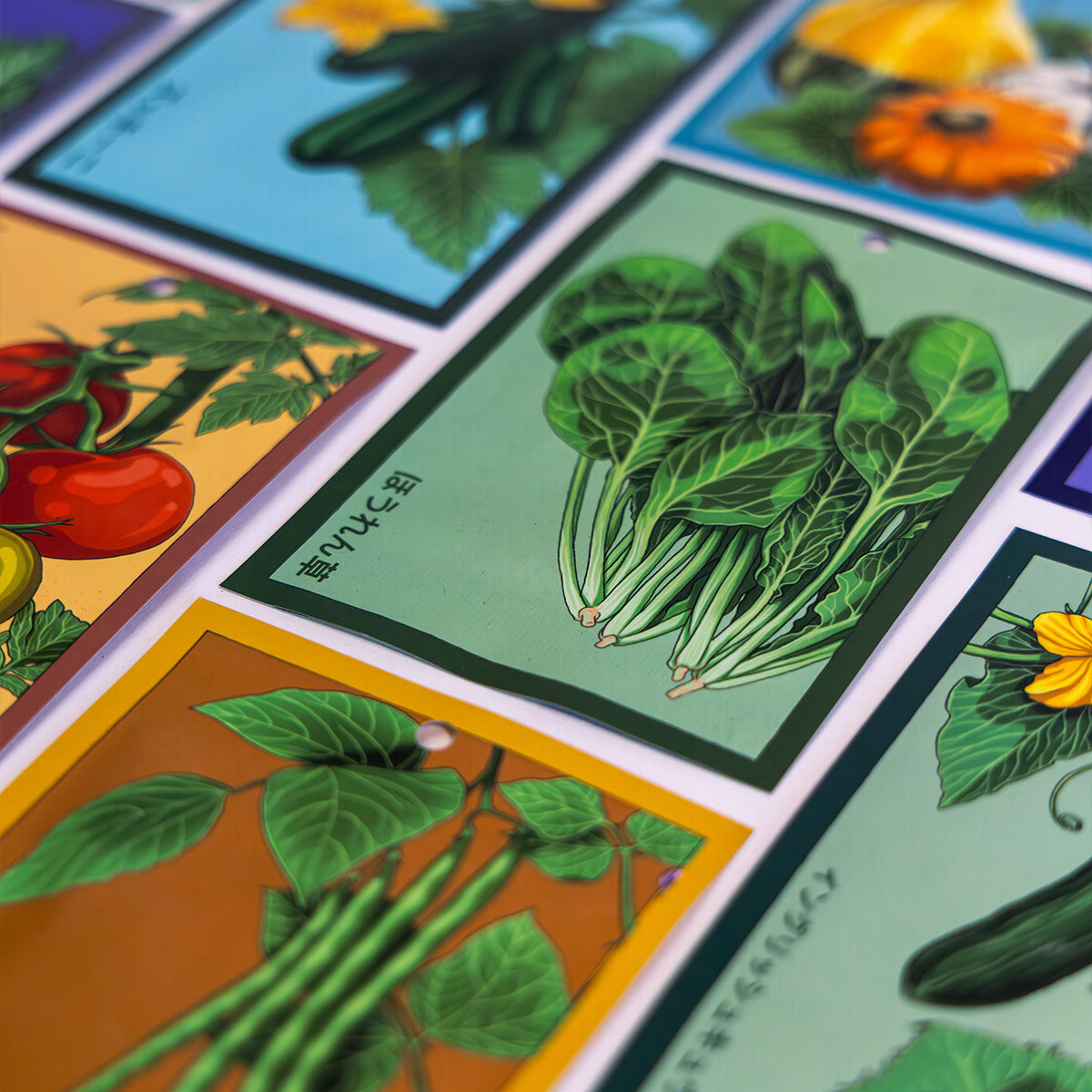
Every Shido seed packet is illustrated in the style of Japanese 1910s woodblock printing -- designed and drawn in-house by Chive, that has been exhibiting at the Chelsea Flower Show in London every year and does not, as a matter of principle, sell to big-box retailers. Customers collect the packets as a series. This was not the original plan.

Shipping & returns

Shipping

  • Free shipping: Orders $200+ within the US
  • Standard: 5–8 business days, Express 2–3 business days (at checkout)
  • International Ships: to 40 countries — rates at checkout
  • Packaging Ships: in outer box to protect gift box

View full shipping policy →

Returns

We accept returns within 30 days of delivery on unused items in original packaging. If your piece arrives damaged, contact us within 7 days with a photo and we will replace it at no charge.

View full return policy →

Satisfaction Guarantee

We stand by the quality of our flower seed packets! Every Shido seed packet is lab-tested for germination before it ships. If your seeds do not perform to the stated germination rate under correct growing conditions, contact us and we will replace or refund. Guaranteed!

Wholesale Inquires

Have a cool shop? Know someone that does?

Find Chive on Faire →

Radish Horticultural Specifications

Botanical

Brassica oleracea var. italica

Plant Type

Annual

Light

Full sun

Water

Consistent moisture

Soil

Fertile, moist, well-drained

Depth

1/4 in

Germination

5-10 days

USDA Zone

2-11

Mature Height

18-24 in

Harvest

70-100 days


Getting to know your Broccoli

Broccoli is a nutrient-rich cool-season vegetable belonging to the Brassicaceae family, producing large, green flowering heads made up of tightly packed buds that are harvested well before they ever have the chance to bloom. The plant prefers full sun, well-drained, fertile soil, and consistent moisture, thriving in the kind of moderate, cool conditions that make it a natural fit for spring and fall planting rather than midsummer heat. Thick, fibrous stems support dark green, lobed leaves that are themselves edible, though most gardeners focus their attention on the central head. Once that main head gets harvested, smaller side shoots typically develop afterward, extending the total harvest period well past what a single cutting would suggest. Broccoli is rich in vitamins C and K along with fiber, and it holds a genuinely versatile place in cuisines worldwide, showing up raw in salads, lightly steamed as a side, or roasted until the edges char slightly. Regular fertilization, particularly with nitrogen, supports the kind of steady growth that produces a dense, well-formed head, and companion planting with onions, carrots, and herbs like dill tends to help keep common pests at a manageable distance without resorting to anything harsher. Few vegetables pull double duty in the garden and the kitchen quite this well.


History & origin

Ancient Mediterranean, Italy

Broccoli (Brassica oleracea var. italica) was developed by Italian growers from wild cabbage relatives, with cultivation dating back over 2,000 years, particularly in the region around Calabria.

Roman Cultivation

Romans cultivated and prized broccoli, considering it a delicacy among their vegetable crops.

18th Century, Introduction to England & America

Broccoli was introduced to England in the 18th century and to the American colonies around the same period, though it remained a relatively obscure vegetable in the United States for a long time afterward.

20th Century American Popularity

Broccoli's popularity in the United States grew significantly through the 20th century, driven partly by Italian immigration and later by nutritional advocacy, becoming a household vegetable staple by the latter half of the century.

Today

One of the most commonly consumed vegetables in the United States and a global crop grown on every populated continent.

Shido Vegetable and Flower Seeds Vacuum sealed for peak freshness

Step-by-Step Sowing & Growing Guide

Getting Started

Annual

Step 1: Timing - Start indoors 6-8 weeks before last frost for spring, or start in early-to-mid summer for a fall crop -- broccoli often performs better in fall, avoiding early-summer heat that triggers bolting.

Step 2: Soil - Rich, fertile, well-drained loam, pH 6.0-7.0.

Step 3: Sowing - ¼-½ inch deep. Germination takes 5-10 days.

Step 4: Transplant - 18-24 inches apart, rows 24-36 inches.

Step 5: Harvest - Cut the central head with several inches of stem while buds are still tight and green -- do not wait for buds to open, which happens fast and turns flavor bitter. Leave the plant in place afterward for continued side-shoot production.

Before you start

Materials needed to sow

  • Seed trays or garden bed: Start indoors for spring, or start in early-to-mid summer for a more reliable fall crop.
  • Grow light (if starting indoors): For strong seedling growth.

Materials for harvest and storage

  • A knife: For cutting the central head with several inches of stem attached.
  • Basket: For collecting the harvest.
  • Refrigerator (short-term) or blanching setup for freezing: For storage beyond a few days.

Tip: Cut the central head while buds are still tight and green, before individual flower buds open -- and leave the plant in place afterward, since most varieties keep producing smaller side shoots for weeks.

Growth Requirements

Light:

  • Requires full sun (at least 6 hours of direct sunlight per day).

Soil:

  • Prefers rich, well-draining soil with a pH of 6.0-7.0.
  • Adding organic compost or aged manure improves fertility.

Watering:

  • Needs consistent moisture, about 1-1.5 inches per week.
  • Avoid overhead watering to prevent fungal diseases.

Temperature & Climate:

  • Ideal growing temperatures range from 55-75°F (13-24°C).
  • Frost-tolerant, but extreme heat can cause premature bolting.

Fertilization:

  • Apply a balanced fertilizer (10-10-10) during early growth.
  • Side-dress with nitrogen-rich compost once heads begin to form.

Maintenance

Watering:

  • Water regularly to keep soil evenly moist but not soggy.
  • Mulch around plants to retain moisture and regulate soil temperature.

Fertilization:

  • Apply a high-nitrogen fertilizer every 3-4 weeks for vigorous growth.

Weeding & Mulching:

  • Keep weeds under control to reduce competition.
  • Mulch with straw or grass clippings to maintain soil health.

Harvesting & Seed Collection

  1. When to Harvest:
    Harvest when broccoli heads reach 6-8 inches in diameter.
    Cut heads before buds open into yellow flowers.
    Use a sharp knife, cutting at an angle to encourage side shoots.
  2. Saving Seeds:
    Allow plants to bolt and flower.
    Collect dried seed pods and store seeds in a cool, dry place.

Troubleshooting and common mistakes

  • Waiting too long once buds are visible — harvest the central head before individual flower buds open (small yellow flowers) -- once open, flavor turns bitter and quality drops fast
  • Removing the plant after the main harvest — most varieties keep producing smaller side shoots for weeks if left in place
  • Growing through early summer heat — broccoli often performs better as a fall crop, avoiding the bolt-triggering heat of early summer

Culinary uses & nutritional information

What it's used for

1. Culinary Uses:

  • Enjoyed raw, steamed, roasted, stir-fried, or blended into soups.
  • Can be pickled, juiced, or incorporated into casseroles and salads.

2. Nutritional Benefits:

  • High in vitamin C, vitamin K, fiber, and antioxidants.
  • Supports immune health, digestion, and bone strength.

3. Companion Planting & Pest Control:

  • Helps repel certain pests when grown near onions, garlic, or marigolds.
  • Beneficial to pollinators when left to flower.

4. Soil Improvement:

  • When composted, broccoli plants return nutrients to the soil.

What parts are edible

  • Central head and buds: The primary harvest, best cut before individual flower buds open.
  • Side shoots: Smaller heads that continue forming after the main head is cut -- a genuine second (and third) harvest from the same plant.
  • Leaves: Edible, though less commonly eaten -- similar in texture and use to collard greens.

Nutritional data

Raw broccoli, per 100g

Calories: 34 kcal

  • Carbohydrates: 6.6 g
  • Protein: 2.8 g
  • Total fat: 0.4 g
  • Dietary fiber: 2.6 g
  • Vitamin C: 89.2 mg (99% RDA) -- nearly a full day's requirement in a single 100g serving
  • Folates: 63 µg (16% RDA)
  • Potassium: 316 mg
  • Cholesterol: 0 mg
  • Sulforaphane: broccoli's most-studied compound, alongside a very high Vitamin K content

Companion plants, pests & diseases

Companion planting

Good companions

  • Onions, garlic, herbs (dill, sage, thyme, rosemary, mint) — general brassica companion pairing
  • Beets, celery — compatible timing, low competition

Poor companions / avoid

  • Strawberries, tomatoes, pole beans — documented poor pairing
  • Other brassicas — shared pests/disease within rotation window

Pests

  • Cabbage worms, cabbage loopers — chew large holes in leaves; handpick or use Bt
  • Aphids, flea beetles — standard brassica pest pressures

Diseases

  • Clubroot — soil-borne, requires long rotation
  • Black rot — V-shaped yellow lesions
  • Downy mildew — named modern hybrids often carry resistance
  • Alternaria leaf spot — dark spots with concentric rings

Pro Tip

To grow tight, healthy broccoli heads, plant in rich, well-drained soil with full sun and keep the soil evenly moist (about 1–1.5 inches of water per week). Feed with a nitrogen-rich fertilizer after transplanting to encourage strong leaf growth.

Bonus: Harvest the main head before the buds start to flower, and keep the plant in the ground—many varieties will produce smaller side shoots for extended harvests!

Seeds worth keeping

What makes Shido Seeds different

Shido Seeds are designed by Chive Studio, a ceramic design company. We are not a seed conglomerate. We do not sell through big-box retailers. Each variety in the catalog was selected because it is worth growing — not because it ships well in bulk or photographs well in marketing materials.

Every packet is germination-tested at an independent third-party lab before it earns its woodblock illustration. The vacuum seal removes the oxygen that causes standard paper packets to degrade. The stated germination rate is a floor, not a marketing figure.

If something goes wrong, contact us. We will make it right.

Plants that Grow together look good together...even if they are ceramic

The Same Family, a Different Color
For the same demanding brassica growing conditions with a paler head, the Cauliflower shares broccoli's care requirements almost exactly.

Vegetable Shido Seeds packets — by Chive Studio Toronto

The Rest of the Vegetable Garden

Explore the rest of Shido's vegetable seeds for other cool-season crops that share broccoli's spring-and-fall growing window.

Buttercup Yellow Gay Paree Peony - Chive Ceramics Studio - Ceramic Flowers - Chive Ceramics Studio

Green That Doesn't Need a Second Harvest

Broccoli's side shoots eventually stop coming, but Chive's Ivory Keiko Peony keeps producing color on a shelf with zero maintenance.

Chive Shido seed packets with botanical illustrations on a peg rack, showing cherry blossom, tomato, and eggplant designs.

The credentials behind the packet

Many gardeners plant broccoli twice in a single year, once in spring and again in fall, which means a single bad packet can cost an entire missed window rather than just one failed attempt. The studio seals oxygen out of every packet specifically to guard against that kind of loss, a step that does more real work than a nicely printed paper envelope ever could. A nutrient-dense staple crop like broccoli deserves seed just as dependable as anything flashier on the shelf. Every vegetable in the line gets that same treatment, since planning two plantings a year only works if the seed actually shows up both times.


Plant Care, Simplified with Chive

Keep it alive, keep it thriving. Let's make plant parenthood look easy.

Nobody grows one dahlia. This is what nobody tells you.

Todd Newgren
How to grow dahlias from seed: start indoors 6–8 weeks before last frost, transplant after frost, and expect first blooms in late summer. Nobody warns you that one bloom is all ...
Read more

Do Seeds Expire? How Long Do Seeds Last | Shido

Todd Newgren
Seeds don't expire — they lose viability as oxygen depletes stored energy, and vacuum sealing is the fix. Chive's Shido Seeds are vacuum-sealed, germination-tested, and stocked ...
Read more

Frequently asked questions

What is the best way to grow broccoli seeds?

Broccoli wants full sun, well-drained fertile soil, and consistent moisture, thriving best in the cooler conditions of spring and fall rather than the height of summer heat. That extended harvest window is one of the more rewarding aspects of growing broccoli rather than a single-cut vegetable. Mulching around the base also helps maintain the steady soil moisture broccoli depends on through its growing season.

Does broccoli produce more than one harvest per plant?

Yes — once the main central head is harvested, smaller side shoots typically develop afterward, extending the total harvest period well past what a single cutting would suggest. They're particularly good in soups and stir-fries, where their milder flavor blends easily with other ingredients. That secondary harvest is often smaller than the main head but still substantial enough to be well worth waiting for.

Can you eat broccoli leaves and stems?

Yes, both are edible — the thick, fibrous stems and dark green leaves are often overlooked, but they're perfectly usable in cooking alongside the more commonly eaten florets. A layer of mulch also helps regulate soil temperature and retain the consistent moisture broccoli prefers. Adding them to a stir-fry or soup is a simple way to use parts of the plant that often get discarded.

How do you address broccoli that bolts too quickly?

Bolting usually results from heat stress or inconsistent watering, so keeping soil moisture steady and planting during cooler windows helps the plant focus energy on head formation instead of rushing toward seed. A layer of mulch also helps regulate soil temperature during unpredictable spring or fall weather swings. A layer of mulch also helps buffer against unpredictable temperature swings during transitional planting windows.

Does broccoli attract specific pests?

It can attract cabbage worms and aphids like other brassicas, and companion planting with onions, carrots, and herbs like dill tends to help keep both at a manageable distance. They're increasingly popular on their own as a quick, nutrient-dense addition to salads and sandwiches. Regularly checking the undersides of leaves helps catch an early infestation before it spreads across the whole plant.

How long do broccoli seeds last?

Vacuum-sealed Shido Seeds packets stay viable for up to 10 years when stored properly, a significant improvement over the roughly one-year shelf life of a standard paper seed packet. That matters in particular for a crop many gardeners plant twice a year, since one bad packet could mean missing an entire window.

What are broccoli sprouts and how are they different?

Broccoli sprouts are the same seed grown for a much shorter period, harvested as tender young shoots rather than allowed to mature into a full head — a different product from the same starting seed, with a more concentrated nutritional profile. Sprouting takes just a few days rather than the full growing season a mature head requires.

Has Chive exhibited this seed line at a flower show?

Chive has shown its seed line at the RHS Chelsea Flower Show, where feedback from professional growers has shaped several varieties in the current catalog. That trade show presence has helped shape several of the varieties currently offered in the broader Shido Seeds catalog. That trade show presence has shaped several varieties currently offered across the broader Shido Seeds catalog.

Verte Rx Shiny Leaves for Plants - Chive Ceramics Studio - Chive Ceramics Studio

The seed is the start. Verte RX handles the rest.

Most seedlings fail not from bad seed but from soil that runs out of what the plant needs before the plant can find it. Verte RX is a liquid plant vitamin formulated for exactly that window — the weeks after germination when the root system is establishing and the margin between thriving and stalling is narrowest.