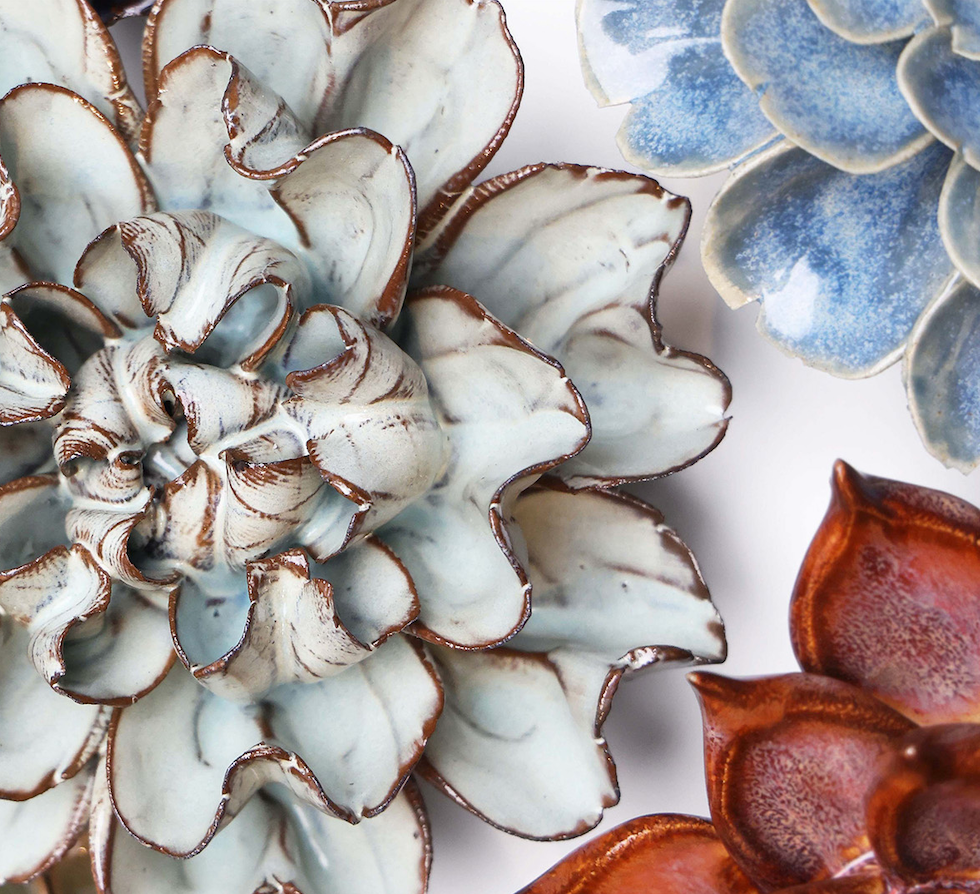
Chestnut Sugarbush Protea

The Sugarbush protea that is chestnut and is the Japan Collection's deepest earthy warm

Regular price $32.15
Gift Ready Box
Ready-to-hang
30-day return policy

Build Your Floral Wall With These:

Designed to cluster naturally, like a wild garden. Choose a flower as your design anchor, then grow your custom floral wall with these companions:


Chestnut is the color of November and of rooms where someone has thought carefully about what the light does at four in the afternoon. The Chestnut Sugarbush Protea is a ceramic wall flower, 3.75 inches across, one screw, no water. The sugarbush form — dense central cone surrounded by pointed bracts — belongs to the authority end of the botanical spectrum and has arrived in chestnut having made no concessions to warmth as a concept. It is warm as a fact. There is a difference and the chestnut glaze understands it completely.

Product detail
  • Material: Ceramic
  • Glaze finish: Glazed
  • Mounting: Keyhole for Wall Hanging
  • Packaging: Individually packaged in gift ready box
  • Color: Chestnut
  • Glaze Variation: Natural variation between pieces
  • Year Designed: 2026
Dimension
  • 3.75 inches diameter, 2 inches tall
How to hang & display

Wall hanging

Works on drywall, plaster, or wood panelling. Drive a small screw at a slight upward angle, leaving the head proud of the wall. Slide the keyhole slot on the back over the screw head, adjust to level. Sits flush — no visible hardware.

No stud? No problem. A drywall anchor rated for the weight works fine.

Displaying a collection

Lay everything out on the floor first. Start with your anchor piece, build outward. Keep 2–3 inches between each piece and aim for the centre of the whole arrangement to land around eye level. Use painter's tape on the wall to map positions before committing to any screws.

Table & shelf display: Equally beautiful propped on a shelf, mantle, or side table. Pair with books, candles, or a small pot.

Full guide on how to hang your ceramic flower →

Care instructions
  1. Dust with a soft dry cloth or soft-bristled brush. Do not use wet cloths or liquid cleaners.
  2. Keep away from direct moisture, steam, and outdoor conditions. Indoor display only.
  3. Handle by the base or stem — avoid pressure on individual petals.
  4. If storing, return to original gift box with foam insert for protection.
Shipping & returns

Shipping

  • Free shipping: On qualifying US orders — threshold shown at checkout
  • Standard: 5–8 business days, Express 2–3 business days (at checkout)
  • International Ships: to 40 countries — rates at checkout
  • Packaging Ships: in outer box to protect gift box

View full shipping policy →

Returns

We accept returns within 30 days of delivery on unused items in original packaging. If your piece arrives damaged, contact us within 7 days with a photo and we will replace it at no charge.

View full return policy →

Wholesale Inquires

Have a cool shop? Know someone that does?
Find Chive on Faire →

Kyoto - Ceramic Flower Curated Collection - Chive Ceramics Studio - Ceramic Flower Sets - Chive Ceramics Studio

The Story Behind This Piece

This piece shares its spiraling bract mold with the Purple Caramel Sugarbush Protea already in the collection, but chestnut asks something different of the same structure. Where the purple-caramel version leans warm and bright across each overlapping bract, chestnut had to hold a deeper, more grounded brown across that same spiral without the whole form reading as simply dark or muddy. We tested chestnut on a flatter test tile first, where it looked like an ordinary brown, then moved it onto the actual bract structure and watched the glaze pool differently into each fold, picking up enough variation to avoid looking flat. Chestnut was not the obvious color for a protea, a flower usually kept in brighter registers. That was, deliberately, the entire point of trying it.


Three ways to display it

Stunning table accent

Prop on a table, shelf, or beside books.

A gift that arrives beautifully

Beautiful Signature box. No wrapping needed.

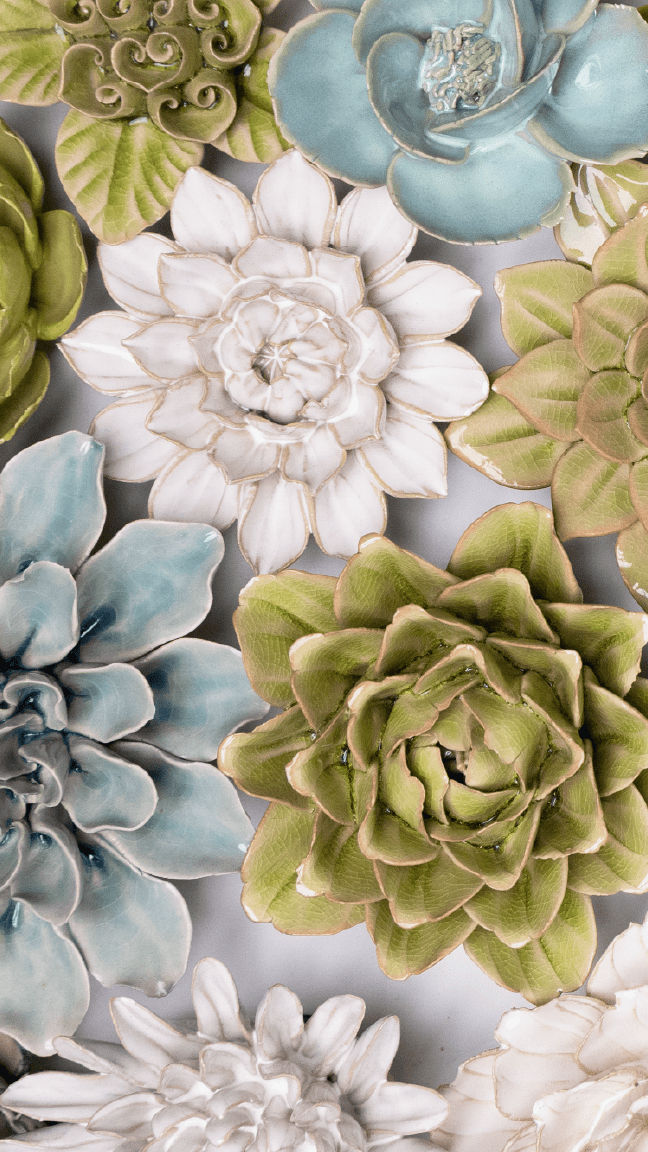
English Garden Collection Ceramic flowers arranged on wall display as home decor art — Chive Studio Toronto

Ready to hang wall art

One screw. No Frame. Solo or gallery wall

Keyhole slot on back of Chive ceramic wall flower, single screw installation, easy hang no tools required

How to hang ceramic wall flowers?

One screw. No contractors. No drama.

One screw. One keyhole on the back. Ninety seconds and it's on the wall. The video shows exactly how it happens — no special hardware, no second holes, no contractor on speed dial. Whether you're hanging one piece or planning a full gallery wall, the hanging guide walks you through both.

Designed to Share the Same Room
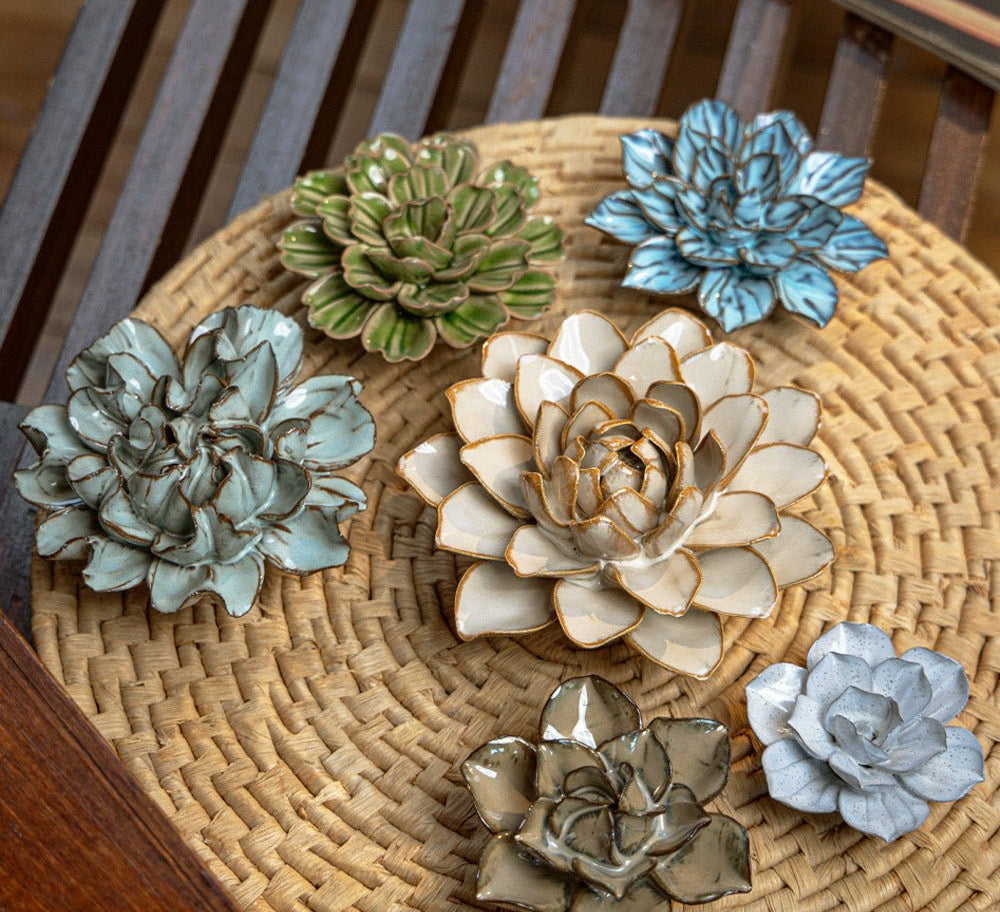
Meigetsuin - 6 Piece Set - Chive Ceramics Studio - Ceramic Flower Sets - Chive Ceramics Studio

Part of the Japan Collection

The Japan collection learned its patience from rooms built around one object instead of a crowded shelf — an off-center bloom, an asymmetrical bract, a glaze left looking unfinished. Every piece trades abundance for one flower a room needs. The Chestnut Sugarbush Protea trades the usual purple-caramel register for a deeper, more grounded brown across every spiraling bract. A deeper brown continues the same grounded register.

Explore the Electric Blue Lexi Cornflower.

Sneak Peek to our New Japan Ceramic Flower Wall Art Collection | Chive

Two Ways to Display

Every Chive ceramic flower works two ways: mounted vertically as a growing gallery wall, or laid flat as a no-water tablescape. The Chestnut Sugarbush Protea's spiraling bracts catch light most dramatically mounted vertically, where the deep brown reads as grounded rather than dark, and settle into a denser, more compact shape laid flat as part of a tablescape. Either way the chestnut glaze holds evenly across every bract, spiral after spiral. Shop the full Japan Collection.

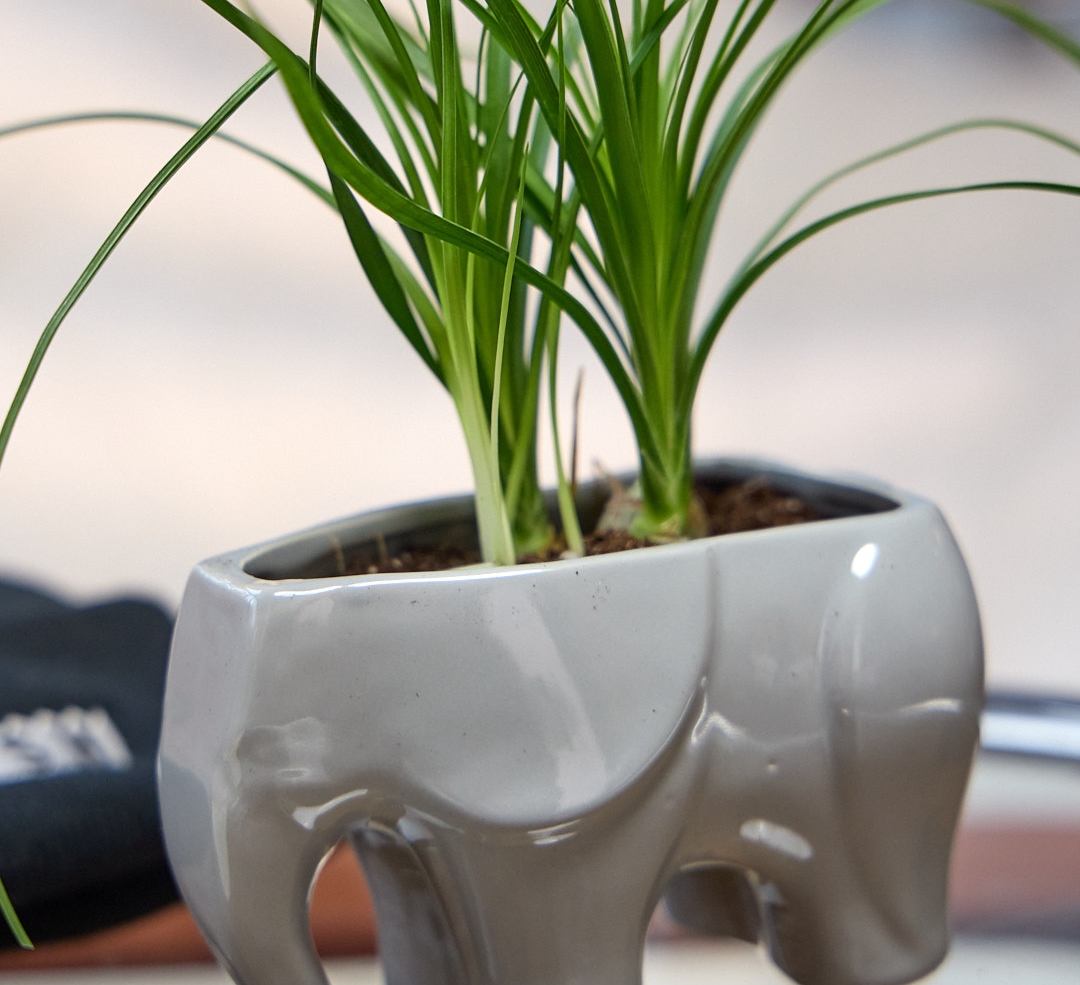
Chive Elephant Grey ceramic elephant shaped planter styled with a plant on a glass table in a bright room.

Complete the Look

An Elephant Plant Pot nearby gives an actual living plant the drainage and root space that fired clay, unlike this protea, genuinely requires to keep growing well over time. Both pieces share a grounded, sculptural weight that anchors a wall or shelf rather than floating on it. Shop the Elephant Plant Pot.


Chive artisan hand-made ceramic flower petal without molds with keyholes for hanging

About Chive Ceramics Studio

Chive occasionally revisits an existing mold with a color the original design never anticipated, and has since 2004, provided the new tone earns its place rather than simply existing as a variant for variety's sake. A spiral bract structure like the sugarbush protea's is a demanding test for any new glaze, since the color has to read correctly across dozens of overlapping surfaces rather than one flat plane. The studio treats a deeper, more grounded tone as a genuinely different design challenge from a brighter one, not an easier version of the same decision. Two decades of testing color against existing structural molds is why a piece like this can share its shape with an earlier design and still feel like its own decision.


Styling ideas and news from Chive Studio

Minimal effort, maximum style. Let’s make your home look like you tried (but not too hard).

How Chive got into the Getty Museum

Todd Newgren
The short version is that we made something good and kept making it better for more than two decades. The longer version involves a trade show, a museum gift shop buyer with exc...
Read the full story

Birth Flowers by Month: The Complete Guide

Todd Newgren
Birth flowers are the flowers assigned to each month of the year, a system with roots in ancient Rome. Chive makes all 12 in ceramic, stocked at the Getty Museum and the New Yor...
Read the full story

Frequently asked questions

How does the Chestnut Sugarbush Protea hang on the wall?

The Chestnut Sugarbush Protea hangs on a single screw using the keyhole mount on the back. The screw, wall anchor, and instructions are included. Installation takes about ninety seconds. The mount sits flush against the wall and leaves no visible hardware. It can be moved without wall damage

What does a protea flower symbolize?

The protea represents courage, resilience, and transformation -- it is one of the oldest flowering plants on earth and has survived conditions that removed most things that existed alongside it. The Sugarbush Protea specifically grows wild in the fynbos of South Africa and carries the same symbolism as the broader genus: a capacity for endurance and a refusal to be simplified. The ceramic version adds chestnut, which is its own kind of endurance

What makes the Chestnut Sugarbush Protea a good client gift?

The Chestnut Sugarbush Protea works as a client gift because it is specific -- it is not a generic object and it does not read like a last-minute decision. The chestnut glaze is warm and unusual, the protea form is architecturally considered, and it ships in a gift box to over forty countries. For clients who have walls and opinions about what goes on them, which is most clients worth having, this is a gift that will be on the wall rather than in a drawer

What room suits the Chestnut Sugarbush Protea?

The Chestnut Sugarbush Protea works particularly well in dining rooms, home offices, and entryways -- rooms where a warm earthy note reads as deliberate rather than accidental. It sits well against white, off-white, warm plaster, and deep grey walls. The chestnut glaze is one of the warmer tones in the Japan Collection, which makes it useful for rooms that lean neutral and want something that does not run cold

What style does the Chestnut Sugarbush Protea suit?

The Chestnut Sugarbush Protea suits organic modern, wabi-sabi, and Japandi interiors well -- the protea form is natural and the chestnut glaze is warm without being aggressive. It also works in traditional and transitional interiors where a botanical form in an unusual color functions as the interesting exception to an otherwise consistent palette. SFMOMA carries Chive ceramics, which is its own answer to the style question

Is the Chestnut Sugarbush Protea a good gift for an interior designer?

The Chestnut Sugarbush Protea is an unusually good gift for an interior designer because it is an object they will have an immediate opinion about, and the opinion will be positive. The chestnut glaze is specific and unusual. The protea form is architecturally serious. It ships gift-ready in a gift box. Interior designers receive a great deal of generic homeware. The Chestnut Sugarbush Protea is none of this

Does the Chestnut Sugarbush Protea come gift-ready?

The Chestnut Sugarbush Protea ships in a gift box included with purchase. No additional wrapping is needed. It ships to over forty countries. The box is designed to be given directly, which either saves time or confirms that the decision was made with some advance notice. Both outcomes are acceptable

Is chestnut a color that exists in nature or did someone name it after the nut?

Both, in the order listed. The chestnut tree produces a nut in a specific brown-red that people named and then used to describe other things of that color, including horses, hair, and apparently now ceramic flowers. The Chestnut Sugarbush Protea is fine with this history. It has been on the walls of SFMOMA. It can contextualize a nut

Chocolate mint dahlia and moss grey goyet azalea ceramic wall flowers with navy, ivory and blue ceramic flowers on white background — handmade by Chive Studio Toronto

To many choices need help?

Our design team will curate a collection styled for your space.

Fill this out and we become your ceramic flower matchmakers—minus the awkward small talk. We'll personally select pieces in our studio with the dedication of people who've made questionable life choices but excellent aesthetic ones.