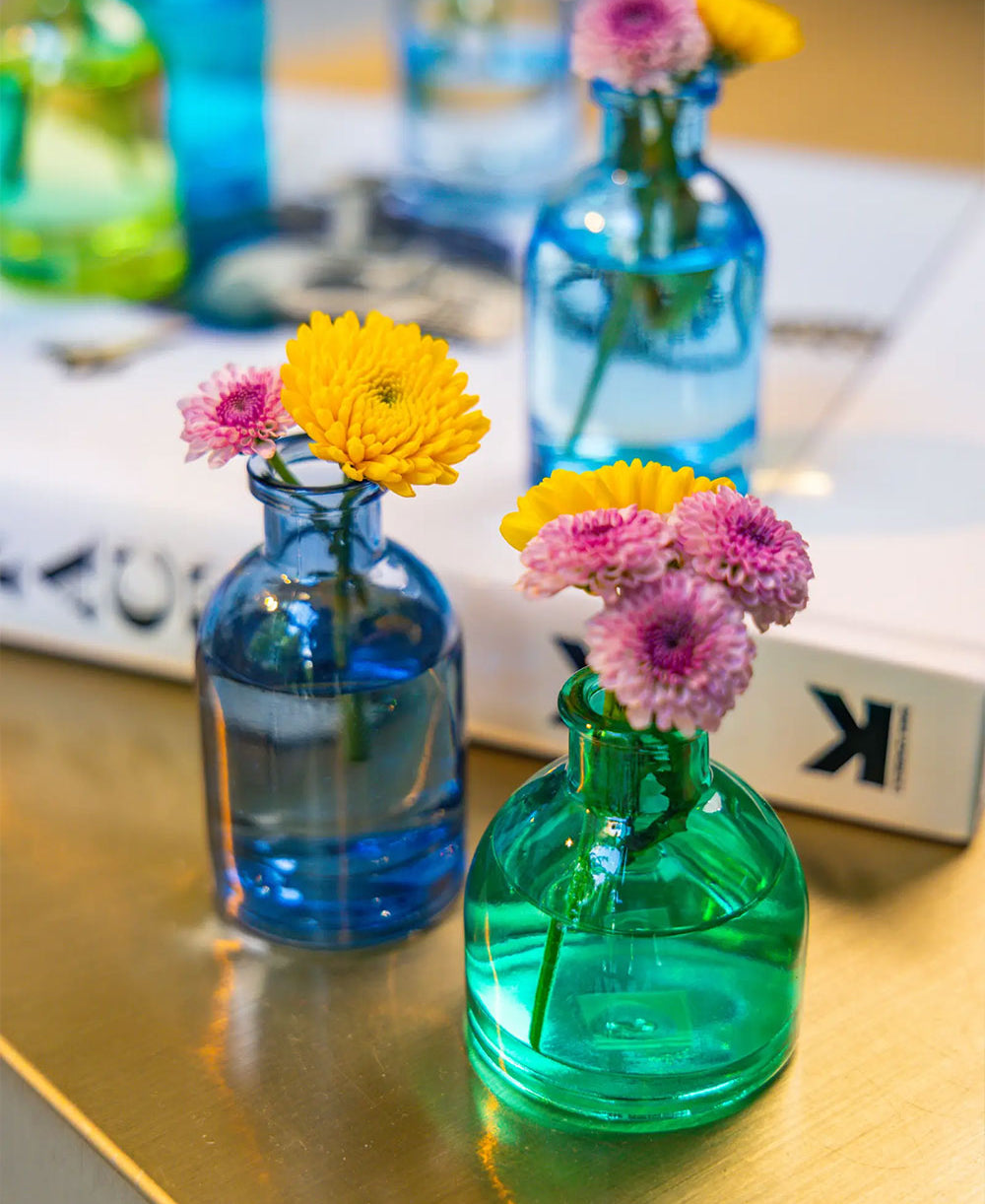
Imperial Glass Boho Flower Vase

Regular price $37.95
Colors: Pearl
Sizes
Hand Blown Glass
Dishwasher safe cleaning
30-day return policy

Build the Arrangement That Looks Harder Than It Was

Pick a vase to anchor the shelf, then add the rest until it reads as curated instead of collected.


The Imperial is an amber vase in matte glass, and matte is the whole character: no gloss sits over the colour, so what you see is the material itself and not a layer on top of it. Light lands on the surface rather than bouncing off, which makes the amber read warm and faintly clouded even at midday. Fingerprints show, and we would rather say so than pretend otherwise; a dry cloth after handling puts it back. As a boho vase it belongs with mismatched things, a stack of books, a dried seed head, a cornflower somebody brought in from a walk. The line was formerly much larger, nine shapes in nine pigments, and this is what remains of it. An imperial vase suits people who would take one considered object over a shelf of near-misses. A survivor of a range that no longer exists, it happens to be the shape we would have kept anyway.

Product detail

Product Detail:

  • Material: Glass
  • Glaze finish: Opaque
  • Year Designed: 2017
Dimension
  • Oval: 4 inches diameter, 3.5 inches tall
  • Tall: 2.5 inches diameter, 6 inches tall
Vase Care Instructions

All glass vases in this collection are dishwasher safe for easy cleaning, with one exception: mercury glass vases should be hand-washed only. The silvered mercury finish is a delicate coating rather than a solid color, and dishwasher heat and detergent can dull or strip it over time.

For standard glass vases, just load it in with the rest of the dishes — no special care needed. For mercury glass pieces, wash gently with warm water and mild soap, and dry with a soft cloth rather than letting it air dry with water spots.

Rinse and dry after each use, especially if flower food or cut-stem residue was in the water, so nothing lingers and clouds the glass.

Flowers that Love this Vase
  • Cornflower
  • Freesia
  • Ranunculus
  • Snapdragon
  • Veronica
  • Astrantia
  • Scabiosa
  • Salvia
  • Tweedia
  • Goldenrod

Quick Guide to Building a Floral Arrangement

  1. Pick your vase first
  2. Start with your anchor flower.
  3. Build in odd numbers.
  4. Add height, then fill.
  5. Greenery does the quiet work.
  6. Cut stems at an angle, underwater if you can.
  7. Step back before you decide it's done.

Shipping & returns

Shipping

  • Free shipping: Orders $200+ within the US
  • Standard: 5–8 business days, Express 2–3 business days (at checkout)
  • International Ships: to 40 countries — rates at checkout
  • Packaging Ships: in outer box to protect gift box

View full shipping policy →

Returns

We accept returns within 30 days of delivery on unused items in original packaging. If your piece arrives damaged, contact us within 7 days with a photo and we will replace it at no charge.

View full return policy →

Wholesale Inquires

Have a cool shop? Know someone that does?

Find Chive on Faire →

Imperial Glass Boho Flower Vase - Chive

The Best of the Nine, Said Quietly — The Imperial

Todd will not usually rank his own work out loud, on the reasonable grounds that it is not his place and that somebody somewhere loves the one he just called third best. This range is the exception. There were nine shapes in it, all in high-end pigment, the sort of family you could build an entire shelf out of by buying variations on a single idea, and he will tell you privately and with no hedging that this was always the best of the nine. Not the best seller. The best. It has the least happening on it, which in a coloured glass object is the hardest thing to achieve, because the temptation with a good pigment is always to cut something into it and prove the depth. The other eight are gone now, along with the works that produced them, which happens in this business more often than anybody in it likes to discuss over dinner. So the ranking became academic. Whoever buys this will never know it had eight siblings, and does not need to, and would probably not care about it either way. It survived on its own merits. He would like the record to show that it deserved to.

Chive Studio trimming tulip stems with scissors on a wooden surface, with white, purple, and pink tulips arranged nearby.
How to Cut Flowers Like a Pro:

A (Mostly) Simple Guide to Cutting Your Flowers

So, you’re making an arrangement? Let’s ensure it lives long enough to impress someone—even if it's just you.

  1. Scrub the Scissors: Wash your shears first. Your flowers do not want a side of Dorito dust.
  2. Cut at 45°: Snip stems at an angle. It gives them a straw instead of making them chug from the bottle.
  3. Trim Underwater (Fancy Mode): Cut them submerged to block air bubbles. It’s extra, but they didn’t ask to suffocate.
  4. Ditch Submerged Leaves: Strip anything below the waterline. Unless you are actively going for a swamp aesthetic.
  5. Snip Again if Stale: If they sat out on the counter, trim them again. They need a fresh start (don’t we all?).
  6. Swap the Water: Change it and trim the stems every few days so they don't die immediately.

Voilà! You are now a domestic deity. Go take your Instagram photo before you forget to water them.

Pro Tip: The light does half the work.

Glass catches and bends light in a way ceramic can't. Set the arrangement somewhere it'll get some late afternoon sun, even for an hour, and the water and stems start doing something a solid vase never will.

Perfect Pairs for Any Shelf
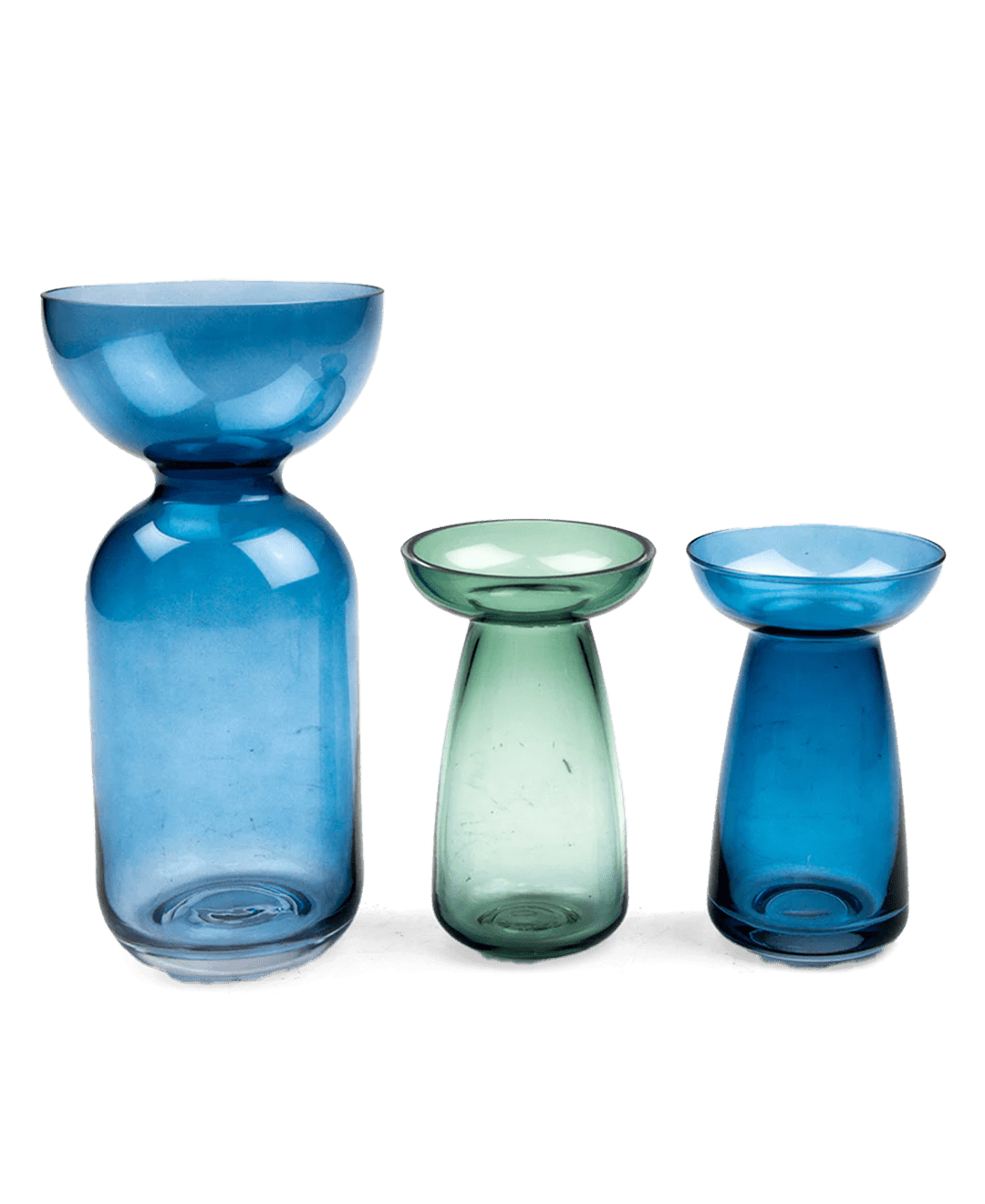
Jaffa Bulb Forcer Glass Flower Vase - Chive Ceramics Studio - Vases - Chive US

A Vessel Built To Disappear

The glass vases at Chive come out of the same studio habit that produced everything else here: design the object once, correctly, then resist every opportunity to complicate it. Each one holds stems. None of them hides anything.

Amber and matte make this the one piece here that is doing something visible with nothing in it. When the requirement is the opposite, meaning a vessel whose entire job is to disappear behind a growing bulb, the Jaffa Bulb Forcer Glass Vase sits one step along the shelf.

Colour Chosen Before The Shape Was Drawn
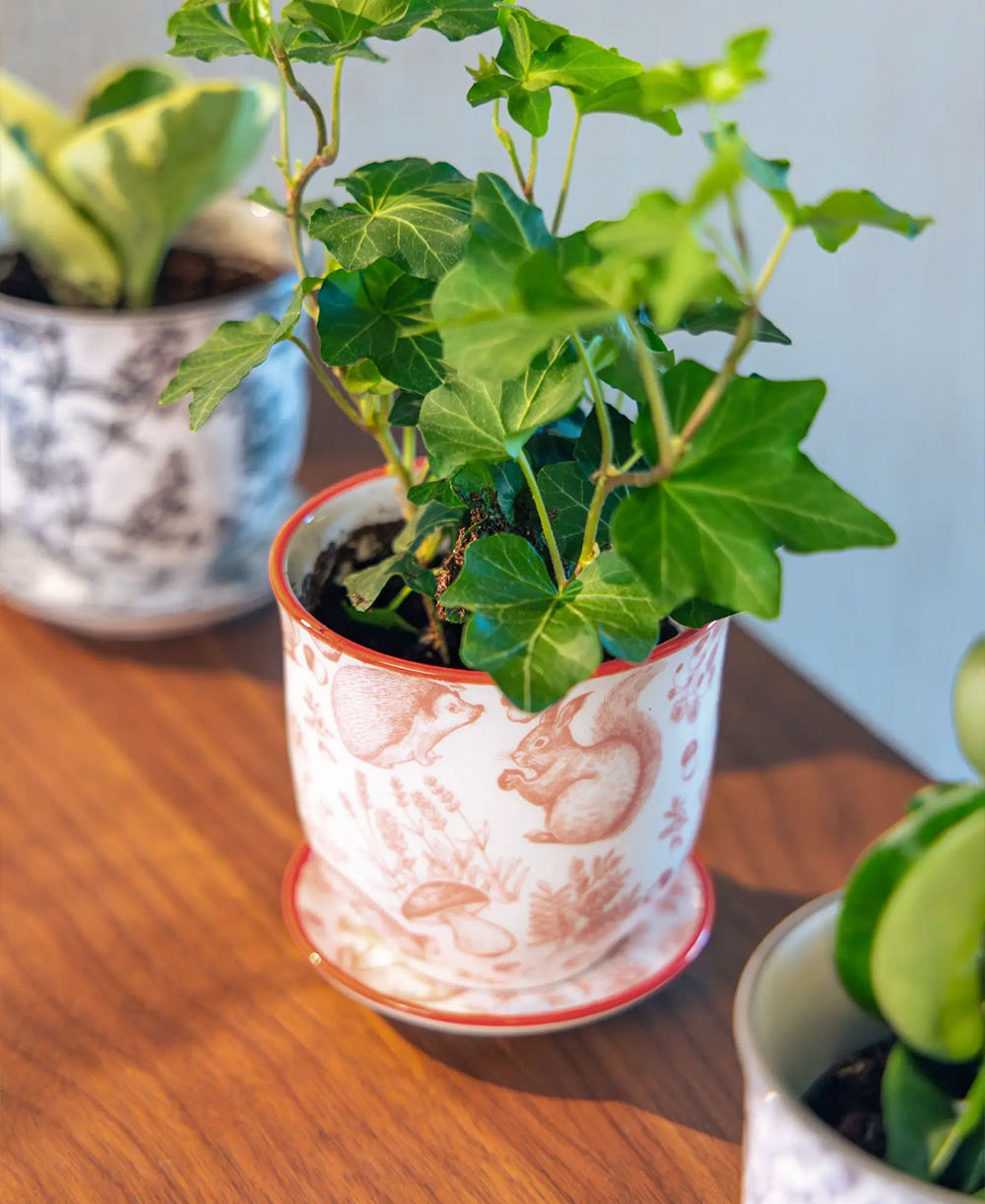
Every Chive vase is built around one decision about how flowers should stand, then finished by hand until that decision reads as obvious.

The decision on this one was colour before form. Amber was chosen first, matte second, and the silhouette drawn afterward to suit both, which is the reverse of how we normally work and shows in the result: a shape with no ornament on it whatsoever, because ornament and a strong tone cannot both lead. Nine variations were drawn. One is still made. The clear pieces in the glass range were argued the other way round.

Chive Liberté small planter in red squirrels print with a red rim and saucer, styled with an ivy on a wood surface.

Colour Is Comparative, Give It Something
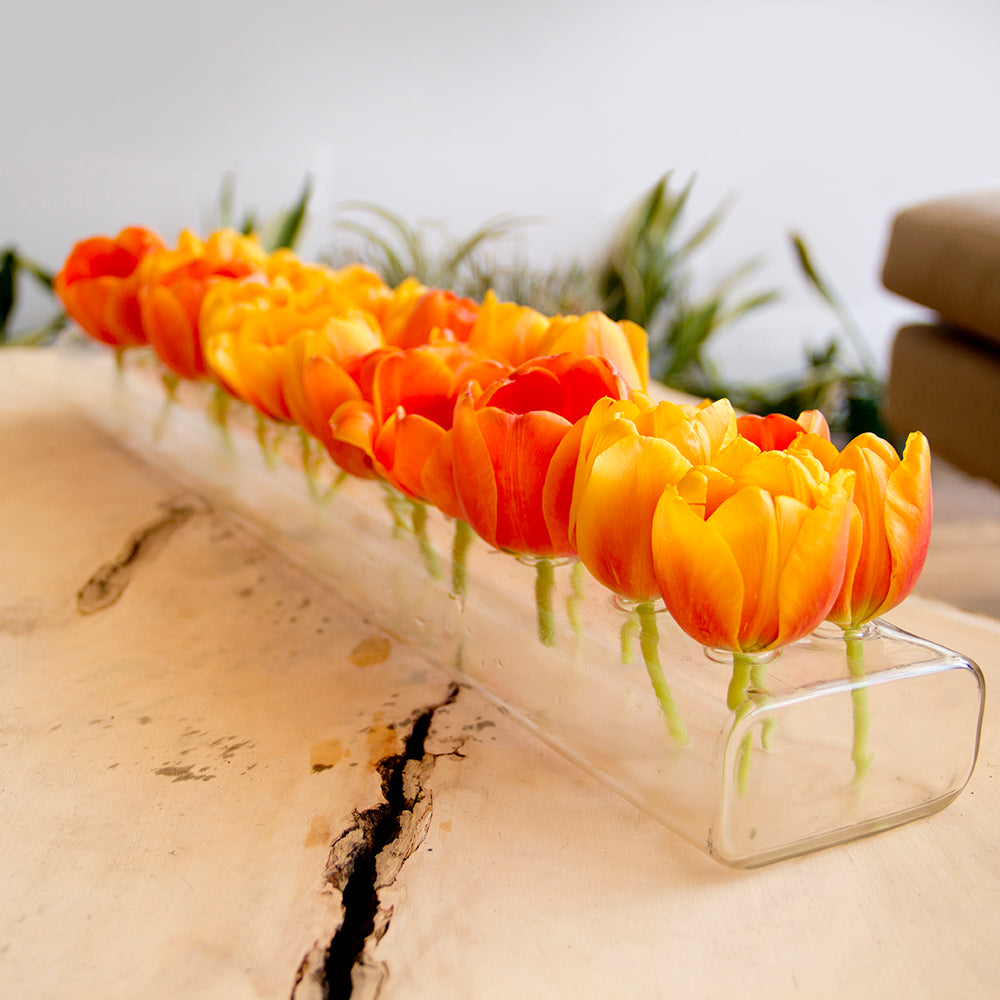
Stand a Liberte Porcelain Pot next to this and the amber gets warmer, because cold white porcelain is what a warm tone needs beside it in order to read as warm at all. On its own the Imperial is simply dark. Beside three inches of white it turns golden. Colour is comparative. Give it something to be compared with.


The Drawing Outlives the Factory

Since 2004 every shape sold under this name has been drawn and specified here, on paper, in this building, by people who then have to defend the drawing to each other. That is the part we own. Where a given piece is produced has varied across twenty-two years, because production partners close, retire and change hands, and this range outlived the works that first made it. The drawing did not close with them. It is still ours, still unaltered, and still specified to the same tolerances it was given in 2017, which is why the shape in your hands is the shape that was approved rather than a version somebody adjusted to make cheaper. Authorship is the durable part. Everything else in the supply chain is weather.


Inside the Chive Design Studio

Low maintenance, high impact. Let's make home styling look easy.

The Best 10 Styles of Vases

Jessie Duenas
The glorious world of flower vases! Because nothing says "I have my life together" quite like a carefully chosen vessel for your soon-to-be-wilting flora. Gather 'round, fell...
Read the full story

Wedding Centerpiece Vases: The Planning Guide Nobody Gives You

Jessie Duenas
Wedding centerpiece vases work best small and plural — three to seven per table, one to three stems each. A fifteen-table reception needs roughly seventy-five vases and 100 to 1...
Read the full story

Frequently asked questions

What makes the Imperial a genuinely useful vase at home?

Colour that works when the vessel is empty, which is most of the year in most houses. Amber under a matte surface stays warm even in flat winter light, so the object holds a shelf on its own without a flower propping it up. Put stems in and they stand in front of a tone instead of in front of nothing. Useful here means it earns the space unoccupied.

How many flower stems does the Imperial vase comfortably display?

Five to seven of something slender, or three with real substance to them. The opening is generous enough that one lone stem falls to the side and looks like an oversight, so this is not a bud vase and does not reward being treated as one. Cornflower, freesia, scabiosa and salvia all sit well as a loose handful. A trio of snapdragons also works. Anything heavy leans.

Will the Imperial vase fit on a narrow shelf or ledge?

On an ordinary bookshelf, comfortably. On a narrow picture ledge it depends on the ledge, and we would sooner admit that than publish a figure nobody here has measured. This is a shelf-scale object and not a floor-scale one: taller than a mug, nowhere near what anyone would call a floor vase, and steady on a flat surface. Hold a hand against the photograph. That is roughly right.

Is the Imperial vase's glass surface prone to marks or scratches?

It shows fingerprints, and pretending otherwise would be silly, because a matte face holds the oil off a hand where a polished one sheds it. Scratching is a separate question. Nothing sits on top of this surface, so there is no layer to scuff through and no finish that can wear away in patches. The only thing that marks it is a warm hand. A dry cloth answers that.

How do you clean the Imperial vase without damaging the finish?

Tepid water, a soft cloth, nothing gritty and nothing containing bleach. The matte texture is the glass surface itself and not a film laid over it, so there is nothing to strip, but it will hold a residue if soap is left to dry on it and that residue shows as a pale bloom. Rinse more thoroughly than feels necessary. Dry it before shelving.

How do you style the Imperial vase on open shelving?

Give it a neighbour of an obviously different height, then leave a gap. Open shelving punishes clusters of similarly sized things, and this tone is strong enough that anything within six inches starts reading as a matching set. Books to one side, nothing on the other, and let the colour carry that section. Dried seed heads suit it better than fresh up there. Empty suits it too.

Is the Imperial vase larger or smaller than the Jaffa vase?

Larger, and taller in particular. The Jaffa is a squat bowl with a neck, sized around a bulb resting in the opening, which holds it to roughly five inches at the largest. This has more body and stands well above that. The two also want opposite contents: one takes a bulb and no cut stems, the other takes cut stems and no bulb. Different jobs, same shelf.

What design tradition does the Imperial vase draw from?

Nineteenth-century pressed and coloured glassware, filtered through the plainer end of mid-century Scandinavian form. The tone comes out of the first tradition and the refusal to decorate out of the second, an odd pairing on paper that settles down in the object itself. What it borrows is warmth and restraint; what it leaves behind is every cut facet and applied handle in the cabinet. Nothing here is ornamented.

Ceramic astronaut vase with flowers styled on shelf — Chive Studio Toronto
Behind the Studio

The story behind the Chive astronaut vases

The story of Laika, Félicette, a solar eclipse in New York, and a space bar that ordered a hundred vases a month until it closed.