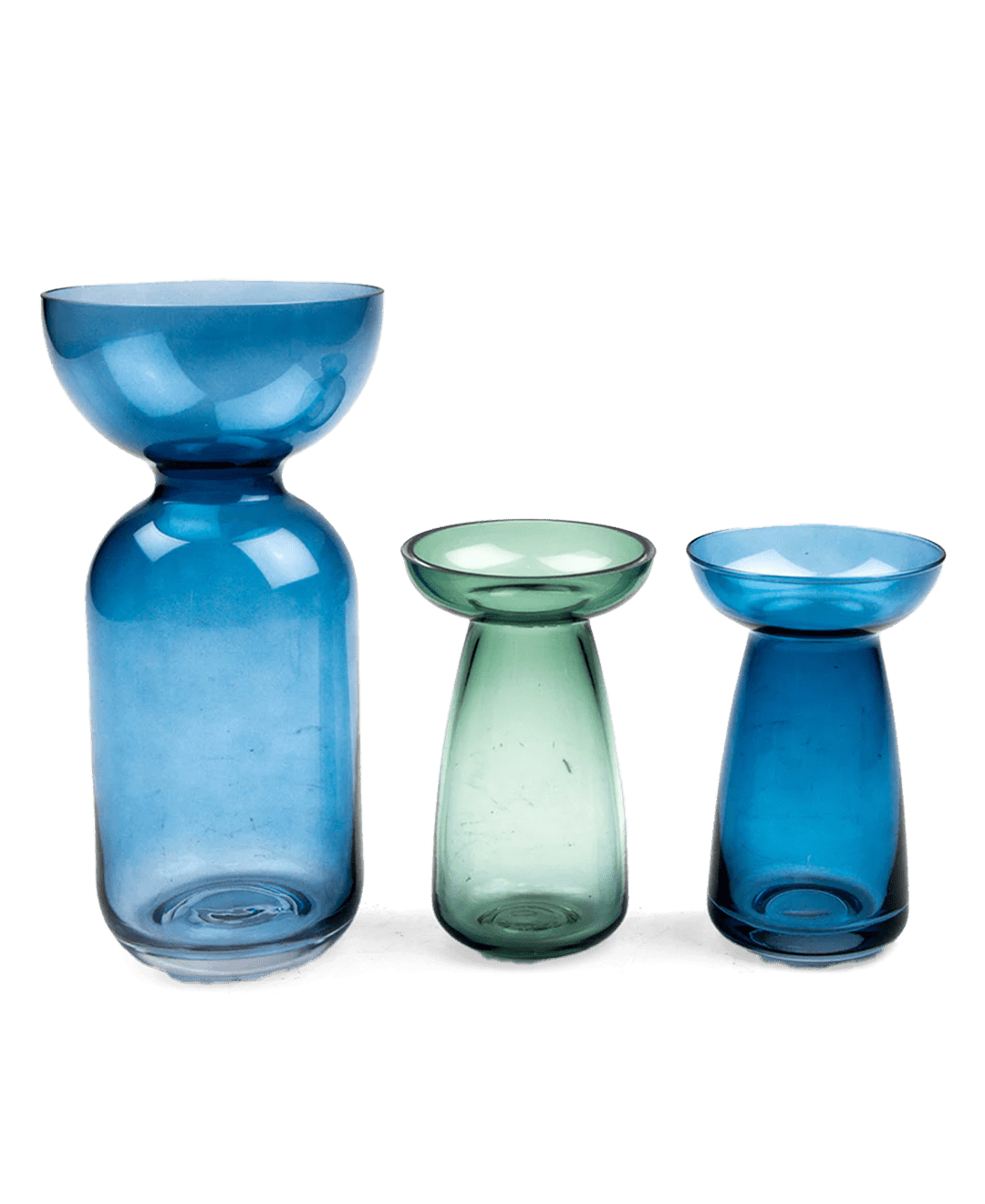
Jaffa Bulb Forcer Glass Flower Vase

Regular price $34.95
Sizes
Hand Blown Glass
Dishwasher safe cleaning
30-day return policy

Build the Arrangement That Looks Harder Than It Was

Pick a vase to anchor the shelf, then add the rest until it reads as curated instead of collected.


A jaffa vase inverts the usual arrangement: nothing gets cut, the bulb sits in the neck, and the roots do their work beneath it in plain water where you can watch them. The large is a 4.5-inch bowl standing 5 inches tall, and the medium steps down in both directions for a smaller bulb. As an amaryllis forcing vase it earns its place on a windowsill in January, when nothing outdoors is cooperating and a bulb in water is the only thing in the building making progress. Todd took this up seriously in the seventies, after learning that an average bulb runs about twenty-two years and can split itself as many as six times. As a bulb starter vase, then, it is not a vessel for one week of flowers. Twenty years on, the same bulb is still yours, and the vase has become the least interesting thing in the whole transaction. 

Product detail

Product Detail:

  • Material: Glass
  • Glaze finish: Translucent
  • Year Designed: 2020
Dimension
  • Large: 4.5 inches diameter, 5 inches tall
  • Medium: 3 inches diameter, 4 inches tall
Vase Care Instructions

All glass vases in this collection are dishwasher safe for easy cleaning, with one exception: mercury glass vases should be hand-washed only. The silvered mercury finish is a delicate coating rather than a solid color, and dishwasher heat and detergent can dull or strip it over time.

For standard glass vases, just load it in with the rest of the dishes — no special care needed. For mercury glass pieces, wash gently with warm water and mild soap, and dry with a soft cloth rather than letting it air dry with water spots.

Rinse and dry after each use, especially if flower food or cut-stem residue was in the water, so nothing lingers and clouds the glass.

Flowers that Love this Vase
  • Aster
  • Marigold
  • Cosmos
  • Rose
  • Lily of the Valley
  • Anthurium
  • Muscari
  • Waxflower
  • Evening Primrose
  • Tweedia

Quick Guide to Building a Floral Arrangement

  1. Pick your vase first
  2. Start with your anchor flower.
  3. Build in odd numbers.
  4. Add height, then fill.
  5. Greenery does the quiet work.
  6. Cut stems at an angle, underwater if you can.
  7. Step back before you decide it's done.

Shipping & returns

Shipping

  • Free shipping: Orders $200+ within the US
  • Standard: 5–8 business days, Express 2–3 business days (at checkout)
  • International Ships: to 40 countries — rates at checkout
  • Packaging Ships: in outer box to protect gift box

View full shipping policy →

Returns

We accept returns within 30 days of delivery on unused items in original packaging. If your piece arrives damaged, contact us within 7 days with a photo and we will replace it at no charge.

View full return policy →

Wholesale Inquires

Have a cool shop? Know someone that does?
Find Chive on Faire →

Jaffa Bulb Forcer Glass Flower Vase - Chive Ceramics Studio - Vases - Chive US

The January Competition Nobody Admits Is a Competition — The Jaffa

Every January the studio forces bulbs, and every January somebody insists this is not a competition. It is a competition. Bulbs appear on windowsills in the first week, unlabelled, and then people begin walking past other people's windowsills on their way to do something else entirely, at a pace that would not hold up under questioning. By the third week there is commentary, some of it unkind. By the fifth week there are accusations of interference, most of them concerning a radiator and one of them, in 2023, substantiated. What nobody says out loud is that the whole thing is a product test running on volunteer labour, because eight or nine of these sitting in the same building under different windows in different rooms will tell you more about where the shoulder wants to sit than any bench test in this building ever has. The heating in a room matters a great deal. The light matters rather less than people think. A bulb that seats a quarter inch too low will announce it by the second week and no earlier. Todd has won twice and will tell you which years, unprompted, at length, to anyone who asks and several who did not. Nobody else keeps records. Allegedly.

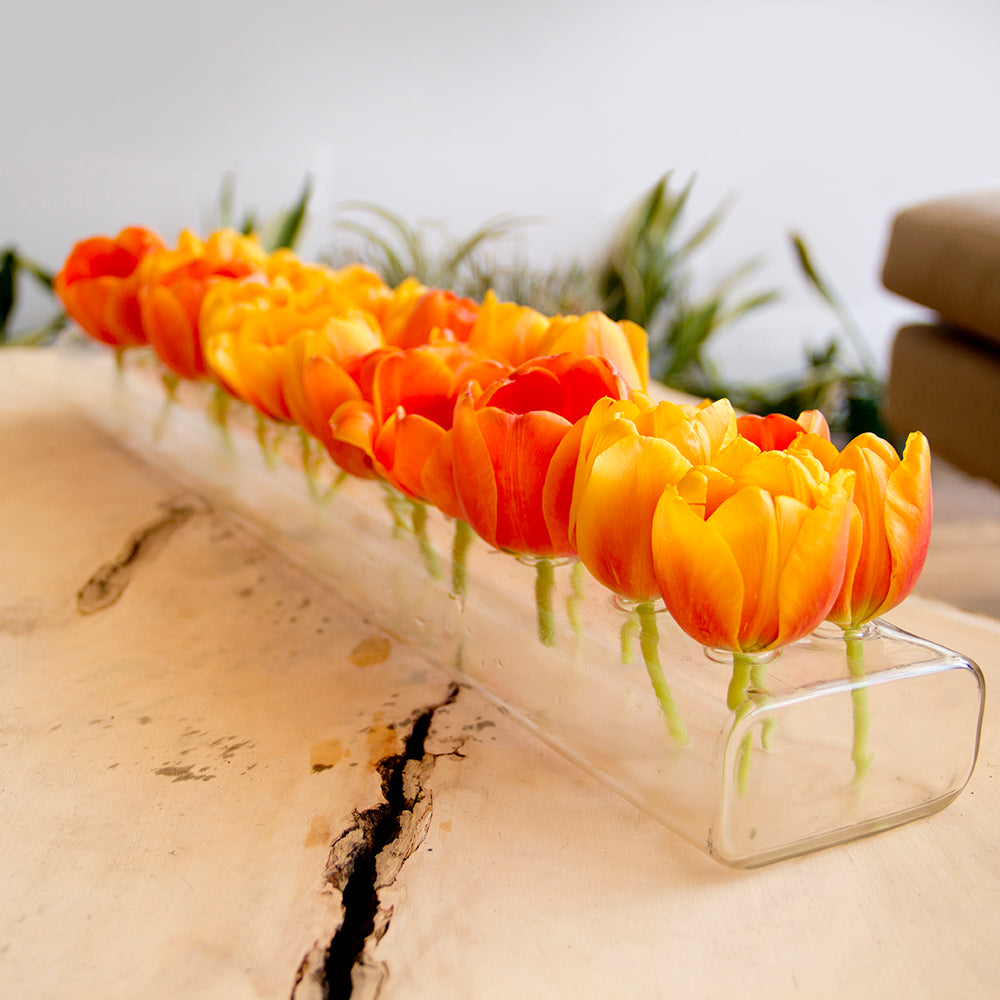
Chive Studio trimming tulip stems with scissors on a wooden surface, with white, purple, and pink tulips arranged nearby.
How to Cut Flowers Like a Pro:

A (Mostly) Simple Guide to Cutting Your Flowers

So, you’re making an arrangement? Let’s ensure it lives long enough to impress someone—even if it's just you.

  1. Scrub the Scissors: Wash your shears first. Your flowers do not want a side of Dorito dust.
  2. Cut at 45°: Snip stems at an angle. It gives them a straw instead of making them chug from the bottle.
  3. Trim Underwater (Fancy Mode): Cut them submerged to block air bubbles. It’s extra, but they didn’t ask to suffocate.
  4. Ditch Submerged Leaves: Strip anything below the waterline. Unless you are actively going for a swamp aesthetic.
  5. Snip Again if Stale: If they sat out on the counter, trim them again. They need a fresh start (don’t we all?).
  6. Swap the Water: Change it and trim the stems every few days so they don't die immediately.

Voilà! You are now a domestic deity. Go take your Instagram photo before you forget to water them.

Pro Tip: The light does half the work.

Glass catches and bends light in a way ceramic can't. Set the arrangement somewhere it'll get some late afternoon sun, even for an hour, and the water and stems start doing something a solid vase never will.

Perfect Pairs for Any Shelf
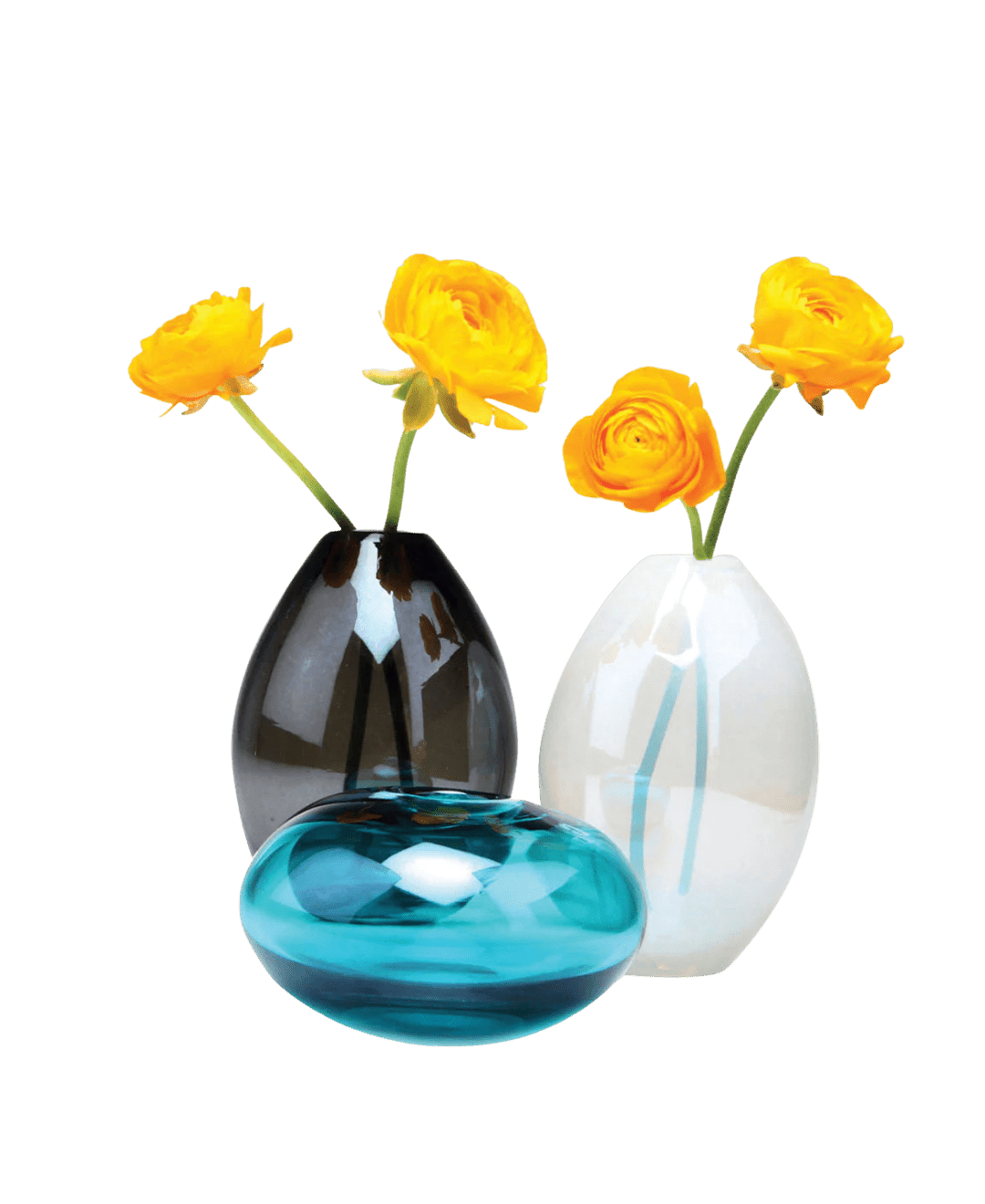
Jordan Glass Modern Flower Vase - Chive Ceramics Studio - Vases - Chive Ceramics Studio

The Vase Doing The Ordinary Job Next Door
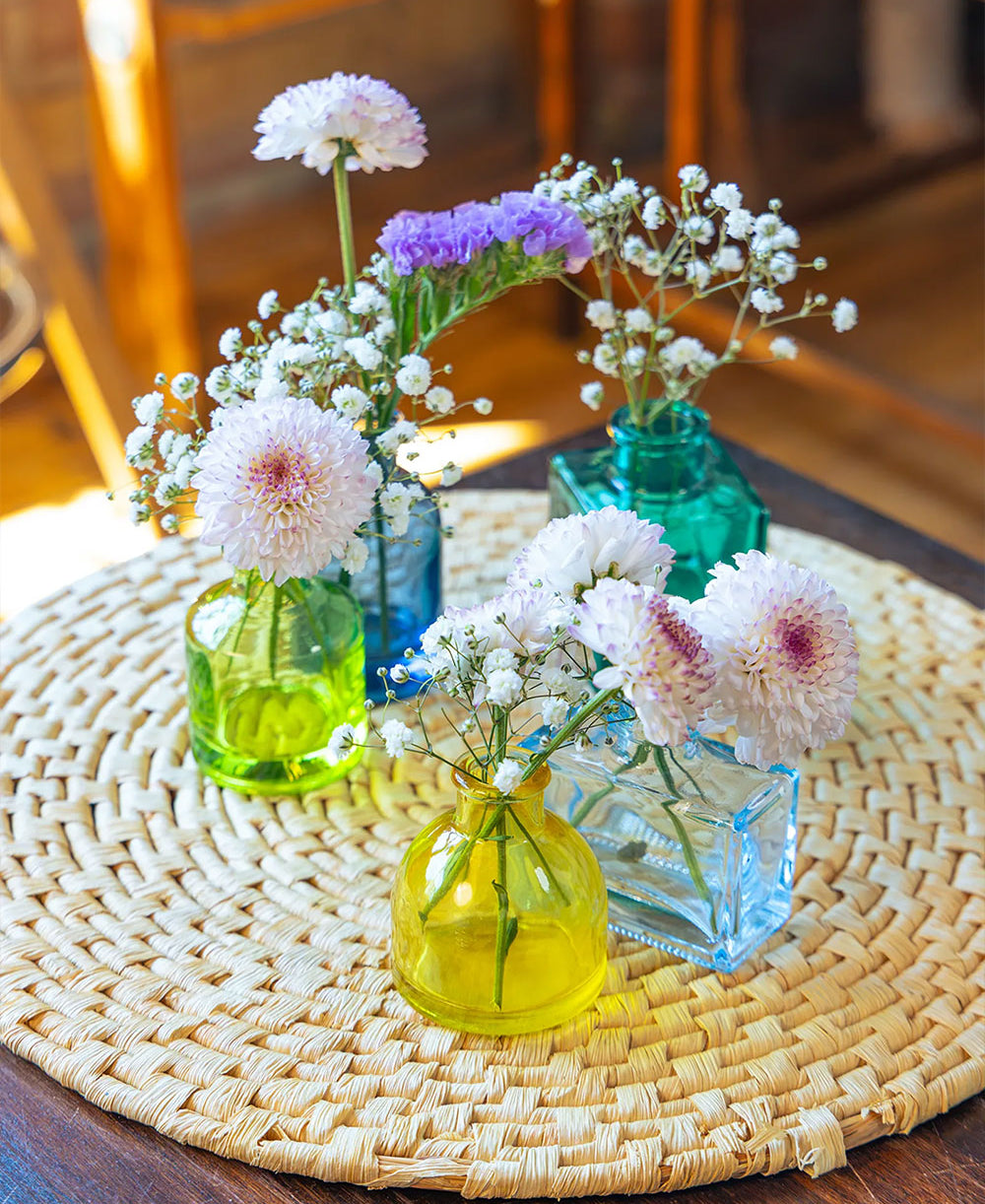
The glass vases at Chive come out of the same studio habit that produced everything else here: design the object once, correctly, then resist every opportunity to complicate it. Each one holds stems. None of them hides anything.

This one holds no stems at all, which makes it the exception above. It carries a bulb instead, and the water is there for roots rather than for anything cut. For a vessel that doing the ordinary job, the Jordan Glass Modern Flower Vase is the shallow oval next door.

Chive Loft glass bud vase set in assorted shapes and colors on a table mat, each styled with flowers.

Judged By Hand Before It Has Cooled

Every Chive vase is built around one decision about how flowers should stand, then finished by hand until that decision reads as obvious.

The decision here concerned the shoulder inside the neck. It must cradle a bulb of unpredictable size so the base rides a fraction above the waterline, because a bulb touching water will rot and a bulb held too high will never send a root down. That tolerance gets judged by hand on each individual piece, before the piece has cooled. The cut-flower half of the glass range has an easier brief.

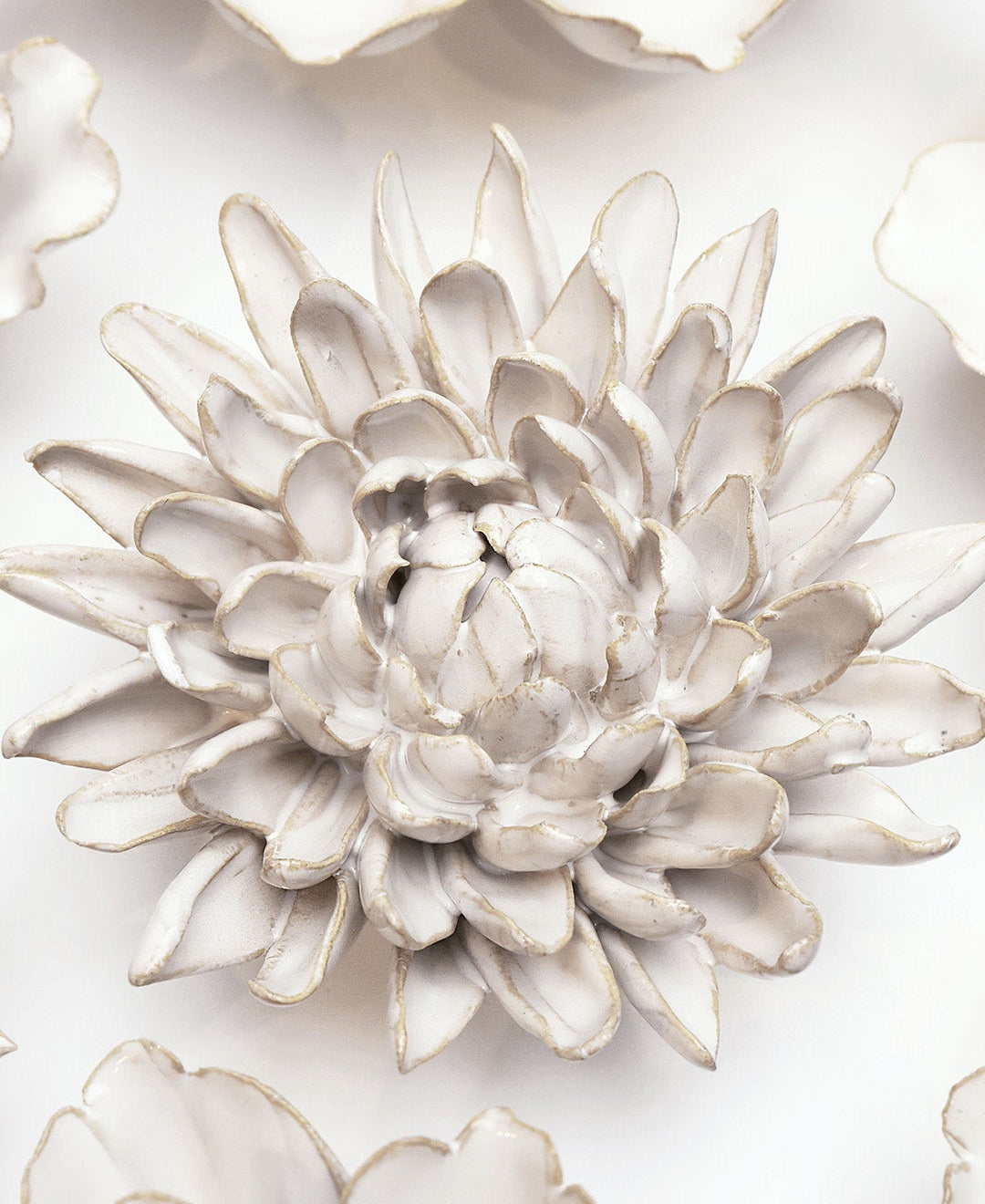
Ivory Chrysanthemum ceramic wall flower styled on wall — Coastal Collection — Chive Studio Toronto

Something In Flower The Entire Time

A Pearlescent Chrysanthemum is the answer to the eight weeks when this vase is technically working and visibly doing nothing. Put the ceramic bloom on the wall above it and something is in flower the entire time. One takes two months and rewards patience. The other opened in a kiln and stays open.


We Make Things That Take Weeks to Do Anything

Since 2004 a fair amount of what leaves this studio does nothing at all for several weeks after it arrives, and that is deliberate. A forcing vase is the clearest case: you buy it, you set it up, and then the entire proposition is waiting, in a house, in winter, with visible progress measured in root length. Objects like that are unfashionable and we keep making them, because the alternative is a catalogue where everything delivers instantly and nothing is worth returning to. Every shape is developed and produced under this roof, at a pace that suits glass rather than a launch calendar. Slow objects need slow production. The two go together more comfortably than anybody would plan.


Inside the Chive Design Studio

Low maintenance, high impact. Let's make home styling look easy.

The Best 10 Styles of Vases

Jessie Duenas
The glorious world of flower vases! Because nothing says "I have my life together" quite like a carefully chosen vessel for your soon-to-be-wilting flora. Gather 'round, fell...
Read the full story

Wedding Centerpiece Vases: The Planning Guide Nobody Gives You

Jessie Duenas
Wedding centerpiece vases work best small and plural — three to seven per table, one to three stems each. A fifteen-table reception needs roughly seventy-five vases and 100 to 1...
Read the full story

Frequently asked questions

Why would you choose a vase like the Jaffa vase?

Because you want the roots as much as the flower. The bulb rests in the neck with its base just just above the water, and for the following two months what you have is a slow, visible root system spreading through the glass before a single thing happens above it. A cut flower gives you one week of interest. This gives you the whole performance.

What single flowers look striking on their own in the Jaffa?

Amaryllis first, because the scale of the bloom against a small glass bowl is faintly ridiculous and entirely worth it. Hyacinth after that, then paperwhite narcissus, then muscari for anyone who prefers restraint. All four are bulbs rather than cut stems, which is the point of the vessel. It will take a cut flower if you insist. It was not drawn for one.

How tall is the Jaffa vase and what space does it need?

Five inches in the large size and four in the medium, with bowl diameters of 4.5 and 3 inches respectively. Add the bulb and whatever it decides to send up, though, and the working figure is nearer eighteen inches by February. That is the number that matters under a windowsill with a blind on it. Leave real headroom, because an amaryllis does not stop politely. Plan for eighteen inches.

How is the Jaffa vase's glass finish made at the studio?

The critical part is the shoulder rather than the surface. The inner neck has to hold a bulb of variable size without pinching it and without letting it slip into the water, and that setting is done by eye while the piece is still hot. Too tight and a large bulb will not sit. Too loose and it drops in and rots. The finish is the easy half.

What is the safest way to wash the Jaffa vase at home?

Soak it, do not attack it. What is inside after a forcing season is root matter and the film that comes with it, and all of that lifts away on its own after an hour standing in tepid water. Anything you might use to scour will reach the wide bowl and miss the neck regardless. So fill it, leave it, come back later and rinse. The soak does the work.

Which rooms suit the Jaffa vase's shape and scale best?

A room you pass through several times a day, since the entire appeal is incremental change and you will miss it otherwise. Kitchen windowsills and hall tables are ideal. A dining room used twice a week is not, because you will walk in one evening and find the thing has bloomed and finished without you. Bright and cool is best. Warm rooms rush it.

Does the Jaffa vase pair well with the Jordan vase on display?

Well, and for reasons beyond both being glass. The Jordan is wide and low and holds cut stems at a shallow angle; this stands upright and holds a bulb. Side by side one runs horizontal and one vertical, and the pale white of the Jordan stops the tint of this one having to compete for attention. Their functions do not overlap at any point in the year. That is what makes the pairing work.

What was the original idea behind the Jaffa vase's form?

To make the water the visible part of it. Traditional forcing glasses are shaped like an hourglass and hide the root mass inside a narrow stem, which struck us as precisely the wrong decision when the roots are the most interesting event in the process. So the bowl was widened and the neck shortened until the root system sits in view. The bulb sits balanced above the surface of it. The rest is just water.

Ceramic astronaut vase with flowers styled on shelf — Chive Studio Toronto
Behind the Studio

The story behind the Chive astronaut vases

The story of Laika, Félicette, a solar eclipse in New York, and a space bar that ordered a hundred vases a month until it closed.