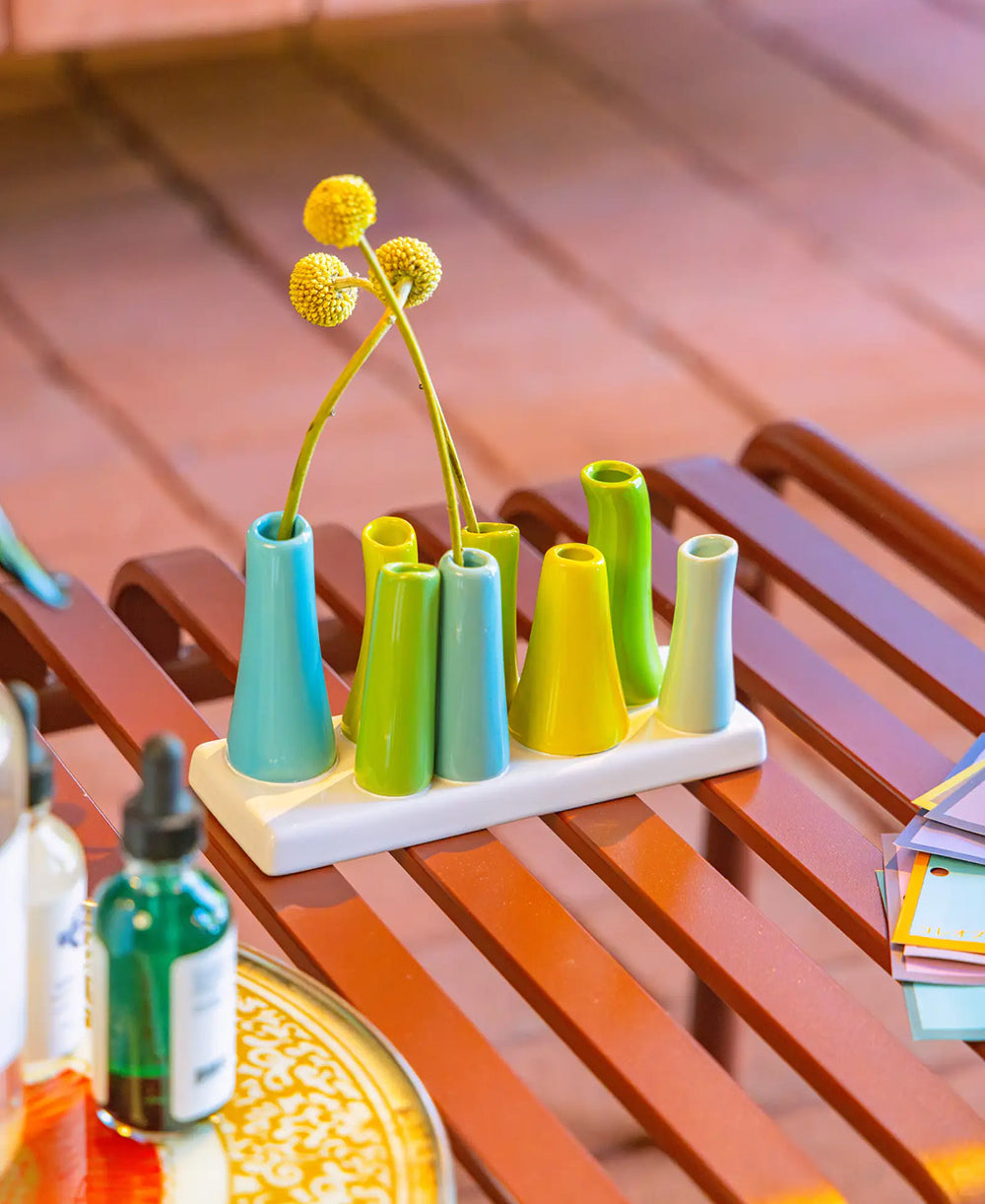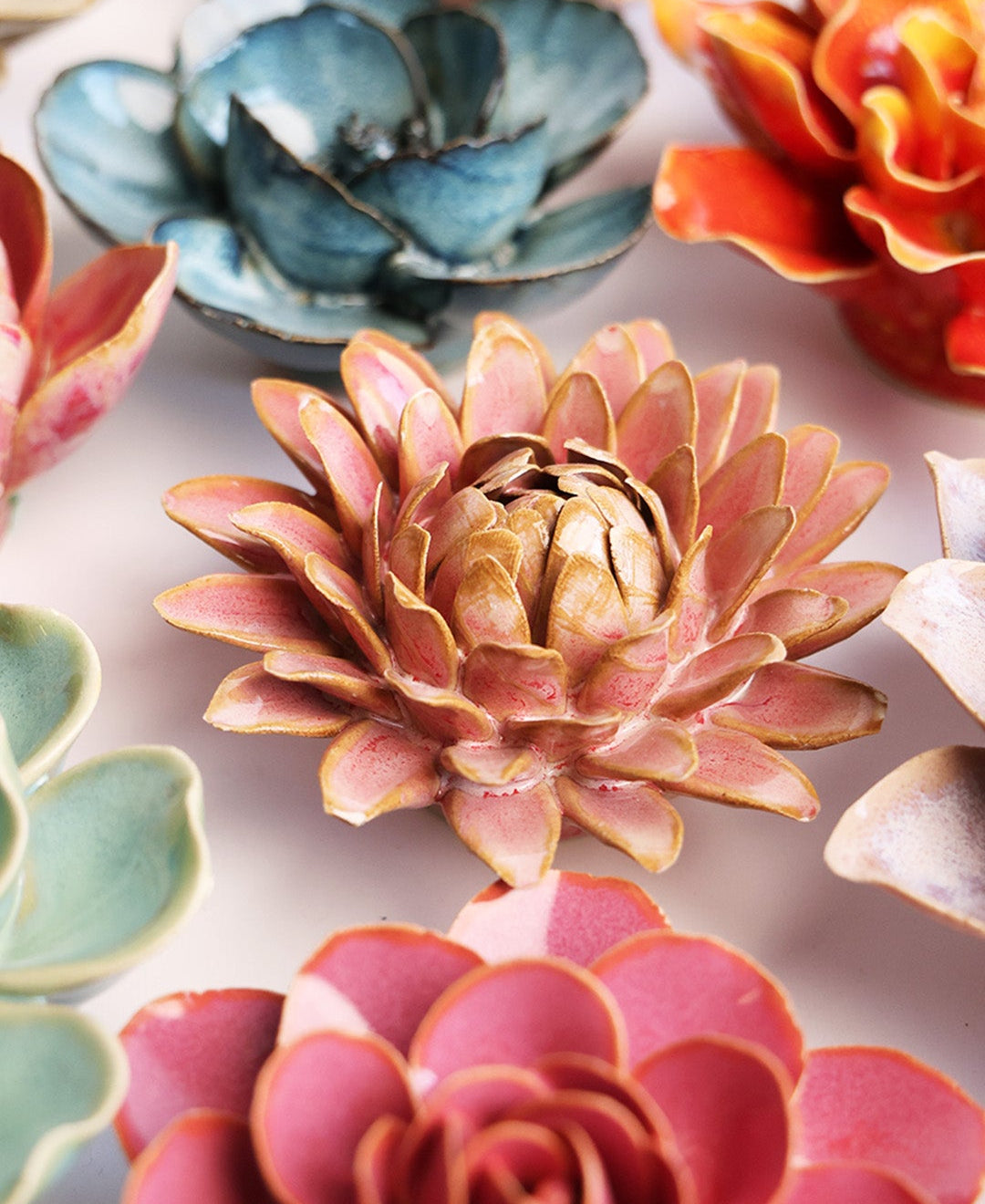
Lotus Ceramic Floral Bud Vase

Regular price $24.35
Colors: White
Sizes
Fully Glazed
Dishwasher safe cleaning
30-day return policy

Build Your Effortless Arrangements With These:

Choose a vase as your anchor, then round out the shelf with these for that thrown-together-but-somehow-perfect look.


The Lotus vase came out of the year everyone in this building became a temporary expert on Japanese design, the way a person reads three articles about Kyoto and starts pronouncing on negative space with total conviction. We are mostly recovered now. This lotus shaped vase is what survived the fever: two or three small conical cups rising from a sculptural half-moon backdrop, the whole object reduced until only the idea remains. Reduction, it turns out, was the entire aesthetic we were all so certain we understood. Made in 2024 in speckled white or green glazed ceramic, the petal ceramic vase silhouette holds one stem per cup, a constraint most arrangements could stand to borrow. On a mantel it reads as sculpture; with stems it reads as sculpture that got lucky. I can no longer define the philosophy. I can tell you the piece still looks right. Shaped by hand at Chive Ceramics Studio until the speckle sits evenly.

Product detail
  • Vase Type:
  • Material: Ceramic
  • Glaze finish: Glazed
  • Water Resistance: Watertight
  • Year Designed: 2024
Dimension
  • 2-Tube: 5.12 inches long, 1.77 inches wide, 3.94 inches tall
  • 3-Tube: 7.09 inches long, 1.97 inches wide, 4.53 inches tall
Vase Care Instructions

Every ceramic vase in this collection is dishwasher safe on the top rack, making cleanup between arrangements as simple as loading it in with the rest of the dishes. The glazed surface holds up fine to regular washing, so there's no need to hand-wash unless you'd prefer to.

If you're cleaning a piece with painted or sculpted detail, a gentler cycle or a quick hand-wash with warm water and mild soap will help keep the finish looking sharp for longer. Either way, rinse and dry after each use — especially if flower food or cut-stem residue was in the water — so nothing lingers and clouds the glaze.

No special sealants, no periodic maintenance. Wash it, dry it, put flowers back in it.

Flowers that Love this Vase
  • Chrysanthemum
  • Dahlia
  • Cornflower
  • Lisianthus
  • Larkspur
  • Tuberose
  • Queen Anne's Lace
  • Foxglove
  • Godetia
  • Hydrangea

Quick Guide to Building a Floral Arrangement

  1. Pick your vase first
  2. Start with your anchor flower.
  3. Build in odd numbers.
  4. Add height, then fill.
  5. Greenery does the quiet work.
  6. Cut stems at an angle, underwater if you can.
  7. Step back before you decide it's done.

Shipping & returns

Shipping

  • Free shipping: Orders $200+ within the US
  • Standard: 5–8 business days, Express 2–3 business days (at checkout)
  • International Ships: to 40 countries — rates at checkout
  • Packaging Ships: in outer box to protect gift box

View full shipping policy →

Returns

We accept returns within 30 days of delivery on unused items in original packaging. If your piece arrives damaged, contact us within 7 days with a photo and we will replace it at no charge.

View full return policy →

Wholesale Inquires

Have a cool shop? Know someone that does?

Find Chive on Faire →

Lotus Ceramic Floral Bud Vase - Chive US Wholesale

Small Theater for Stems — The Lotus

Most vases are, in the end, containers. The Lotus is closer to a theater. The half-moon backdrop does what a stage set does — it frames, it flatters, it tells the audience where to look — and the conical cups hold the cast, one stem each, no understudies waiting anywhere. This changes how you buy flowers. A person with an ordinary vase needs a bouquet; a person with the Lotus needs two or three good stems, chosen the way you would cast a small play. A ranunculus with a bend in its neck stops being a reject and becomes the lead. The backdrop catches its shadow in the afternoon and quietly doubles the performance for free. The two-cup version suits narrow mantels and the kind of minimal shelf that panics when objects multiply; the three-cup version gives you a beginning, a middle, and an end. Speckled white keeps the whole piece quiet, while the green reads botanical before a single stem arrives. Either way the ceramic is glazed smooth, wipes down easily, and holds enough water to keep a short cast hydrated through the week. Small theater, small cast, standing ovation strictly optional. We recommend the aisle seat, by which we mean the mantel.

Chive Studio trimming tulip stems with scissors on a wooden surface, with white, purple, and pink tulips arranged nearby.

A (Mostly) Simple Guide to Cutting Your Flowers

So, you’re making an arrangement? Let’s ensure it lives long enough to impress someone—even if it's just you.

  1. Scrub the Scissors: Wash your shears first. Your flowers do not want a side of Dorito dust.
  2. Cut at 45°: Snip stems at an angle. It gives them a straw instead of making them chug from the bottle.
  3. Trim Underwater (Fancy Mode): Cut them submerged to block air bubbles. It’s extra, but they didn’t ask to suffocate.
  4. Ditch Submerged Leaves: Strip anything below the waterline. Unless you are actively going for a swamp aesthetic.
  5. Snip Again if Stale: If they sat out on the counter, trim them again. They need a fresh start (don’t we all?).
  6. Swap the Water: Change it and trim the stems every few days so they don't die immediately.

Voilà! You are now a domestic deity. Go take your Instagram photo before you forget to water them.

Pro Tip: Keep It Short and Sweet!

When it comes to flower stems, shorter is better. Not only do shorter stems look chic in arrangements, but they also help your blooms last longer. Why? Because the shorter the stem, the less distance water has to travel to keep those petals perky. It’s like giving your flowers a shorter commute—less stress, fewer breakdowns.

Perfect Pairs for Any Shelf
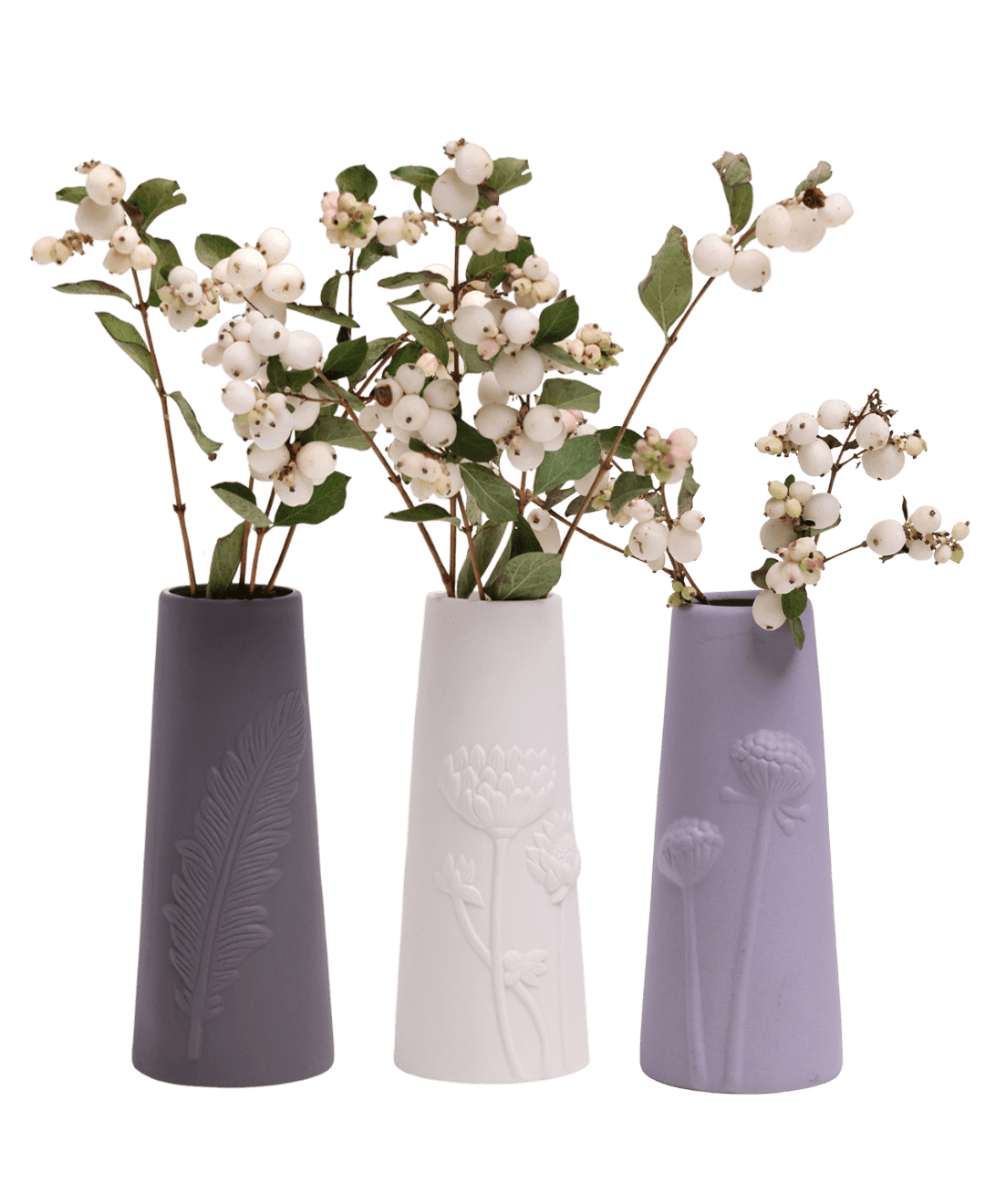
Olmstead Porcelain Bud Vase - Chive Ceramics Studio - Vases - Chive US

Olmstead Porcelain Vase

The ceramic vases at Chive come out of the same studio habit that produced everything else here: design the object once, correctly, then resist every opportunity to complicate it. Each one holds stems. None of them holds back. When the stage set feels like plenty, the Olmstead Porcelain Vase goes the other way entirely — one calm porcelain volume, no theatrics required.

Chive ceramic pooley bud vase in color scout blue, styled with fresh flowers, on a red bench.

The Ceramic Vases Collection

Every Chive vase is built around one decision about how flowers should stand, then finished by hand until that decision reads as obvious. The Lotus decided a single stem per cup was plenty, and built a stage to prove it. The wider family disagrees in every direction — armfuls, pairs, solos at attitude — and the disagreement is the point. Somewhere in the lineup is the exact argument your mantel has been trying to make. Shop the Ceramic Vases collection.

Rose Quartz Pink Strawflower mounted on a gallery wall, Chive Ceramics Studio

Blush Pink Strawflower Wall Art

Casting one stem per cup is a discipline; a flower that never wilts is a loophole. The Blush Pink Strawflower Wall Art mounts a permanent ceramic bloom on the wall above the Lotus, blush against speckle, so at least one performer never misses a show. Everlasting upstairs, rotating cast below. The arrangement runs itself.


Chive Studio at Chelsea Flower Show displaying ceramic pooley vases of different colors.

Two Decades of Subtraction — Chive Since 2004

By 2004 standards — the year this studio started and the yardstick we still use — the Lotus would have seemed almost too quiet to make. It took two decades of subtraction to get here. Early Chive pieces did more: more glaze effects, more silhouette, more argument. Year by year the work shed what it did not need, and the Lotus is where that habit currently rests, a backdrop and a few cups and nothing else to hide behind. Making nothing-else is demanding work; every surface is a first impression because there is no second one. Speckle must sit evenly, cups must align exactly, edges must agree. Reduction forgives no one. We find this clarifying, and we suspect the vase does too.


Inside the Chive Design Studio

Low maintenance, high impact. Let's make home styling look easy.

Wedding Centerpiece Vases: The Planning Guide Nobody Gives You

Todd Newgren
Wedding centerpiece vases work best small and plural — three to seven per table, one to three stems each. A fifteen-table reception needs roughly seventy-five vases and 100 to 1...
Read the full story

The Best 10 Styles of Vases

Jessie Duenas
The glorious world of flower vases! Because nothing says "I have my life together" quite like a carefully chosen vessel for your soon-to-be-wilting flora. Gather 'round, fell...
Read the full story

Frequently asked questions

Why would you choose a lotus vase like the Lotus vase?

Choose it when arranging is the part you dread. The lotus form solves composition structurally — each conical cup takes one stem at a fixed angle, so two or three flowers become a finished piece with zero technique. It's also the rare vase that functions as wall-adjacent sculpture, backdrop included. Buy it for the geometry. Flowers become the bonus.

What single flowers look striking on their own in the Lotus?

One strong stem per cup is the brief, so choose flowers with individual presence: a chrysanthemum's dense head, a dahlia's architecture, a lisianthus with its buds left on. Faces read best angled slightly outward, the way the cups naturally point. Skip fillers entirely — there's no bulk to hide them in. Every stem here is a soloist. Cast accordingly.

How tall is the Lotus vase and what space does it need?

The listing's specification panel keeps the current numbers for the two-cup and three-cup versions, and production details belong there rather than frozen into this page. For planning: both sit comfortably on standard mantels and consoles, with the backdrop adding presence but not much depth — the profile stays shallow by design. Check the specs before committing shelf space. The panel stays accurate.

How is the Lotus vase's ceramic finish made at the studio?

The speckled finish is a glaze effect, not paint: pigment particles disperse through the coat and fire into a permanent constellation, slightly different on every piece. The surface comes out smooth to the touch despite the visual texture, glazed fully across cups and backdrop alike. No two speckle patterns repeat exactly. Yours is singular.

What is the safest way to wash the Lotus vase at home?

Hand washing is the way here — the conical cups are narrow enough that a dishwasher jet mostly misses their interiors anyway. Warm water, a drop of soap, and a slim bottle brush reach everything; rinse and stand it upside down to drain. Skip abrasives on the speckle. Five careful minutes, a few times a season. That's the entire regimen.

Which rooms suit the Lotus vase's shape and scale best?

Mantels first — the backdrop was practically drawn against one, and the shallow profile leaves the ledge usable. Consoles and entry tables take the three-cup version well, where the staggered stems give arriving guests something composed to meet. Bedrooms suit the two-cup: one dresser, two stems, done. Anywhere with a wall behind it wins. The backdrop likes company.

Does the Lotus vase pair well with the Olmstead vase on display?

Naturally — the Olmstead is the quiet porcelain volume the Lotus's theatrics play best against. Set them a hand-width apart rather than touching: one holds a full gathered bunch, the other stages its two or three soloists, and the shelf reads as range rather than repetition. That contrast is what makes the pairing work. Different logics, same hands.

What was the original idea behind the Lotus vase's form?

It came out of the studio's Japanese-design year — the season everyone here briefly believed they understood reduction, and one form actually proved it. The original sketch had more: more cups, more curve, ornament on the backdrop. Everything nonessential burned off draft by draft until only structure remained, and the structure turned out to be the idea. We just held the pencil. Subtraction wrote it.

Ceramic astronaut vase with flowers styled on shelf — Chive Studio Toronto
Behind the Studio

The story behind the Chive astronaut vases

The story of Laika, Félicette, a solar eclipse in New York, and a space bar that ordered a hundred vases a month until it closed.