Pooley 3 Ceramic Vase

Regular price $32.13
Colors: Blue
Sizes
Fully Glazed
Dishwasher safe cleaning
30-day return policy

Build Your Effortless Arrangements With These:

Choose a vase as your anchor, then round out the shelf with these for that thrown-together-but-somehow-perfect look.


The Pooley 3 vase settles an old argument about whether flower arranging is a skill or a piece of equipment. Three ceramic tubes rise from a single base at heights the studio fixed in advance, so this triple bud vase issues instructions rather than invitations: tall stem in back, short stem up front, whatever survived the walk home in the middle. From the doorway the result reads as taste, though it is really architecture, and nobody at the studio plans to point out the difference. A three stem vase this decisive suits people who bought the good shears, watched the tutorials, and still ended up in the kitchen staring down a peony that refused to cooperate. Artisans shape each Pooley 3 by hand at Chive Ceramics Studio, so no two bases carry quite the same finish. The Getty's museum store keeps Chive's Pooley pieces on its shelves, surrounded by objects that took considerably more deliberation to make.

Product detail
  • Vase Type:
  • Material: Ceramic
  • Glaze finish: Glazed
  • Water Resistance: Watertight
  • Year Designed: 2025
Dimension
  • Large: 8 inches in diameter, 3 inches in height
  • Medium: 5 inches in diameter, 3 inches in height
  • Tall: 4 inches in diameter, 7 inches in height
Vase Care Instructions

Every ceramic vase in this collection is dishwasher safe on the top rack, making cleanup between arrangements as simple as loading it in with the rest of the dishes. The glazed surface holds up fine to regular washing, so there's no need to hand-wash unless you'd prefer to.

If you're cleaning a piece with painted or sculpted detail, a gentler cycle or a quick hand-wash with warm water and mild soap will help keep the finish looking sharp for longer. Either way, rinse and dry after each use — especially if flower food or cut-stem residue was in the water — so nothing lingers and clouds the glaze.

No special sealants, no periodic maintenance. Wash it, dry it, put flowers back in it.

Flowers that Love this Vase
  • Lavender
  • Tulip
  • Anemone
  • Cherry Blossom
  • Strawflower
  • Stock
  • Veronica
  • Calendula
  • Blanket Flower
  • Primrose

Quick Guide to Building a Floral Arrangement

  1. Pick your vase first
  2. Start with your anchor flower.
  3. Build in odd numbers.
  4. Add height, then fill.
  5. Greenery does the quiet work.
  6. Cut stems at an angle, underwater if you can.
  7. Step back before you decide it's done.

Shipping & returns

Shipping

  • Free shipping: Orders $200+ within the US
  • Standard: 5–8 business days, Express 2–3 business days (at checkout)
  • International Ships: to 40 countries — rates at checkout
  • Packaging Ships: in outer box to protect gift box

View full shipping policy →

Returns

We accept returns within 30 days of delivery on unused items in original packaging. If your piece arrives damaged, contact us within 7 days with a photo and we will replace it at no charge.

View full return policy →

Wholesale Inquires

Have a cool shop? Know someone that does?

Find Chive on Faire →

Chive Multi-Stem Pooley 3 Large Ceramic Vase syled with fresh flowers on a wood bookshelf.

Three tubes. Zero decisions. — The Pooley 3

There is a specific person the Pooley 3 was built for, and the studio can describe them precisely because most of the studio is them. They own good scissors. They have saved arrangements to a folder. They have stood at the counter moving one stem left, then right, then back to where it started, before abandoning the whole project and putting everything in a drinking glass. The Pooley 3 retires that entire ritual. Its three tubes sit at heights chosen once, by someone whose job it was, so the arrangement is finished the moment the stems go in. There is no composing phase. There is no doubting phase. There is a placing phase, and it lasts eleven seconds. What we did not expect is how people use the leftover attention. They start noticing the flowers themselves — the crook in a tulip's neck, the way an anemone opens by noon and sulks by dinner — instead of auditing their own choices. That, we understood only afterward, was the entire point. The vase does the geometry so you can do the looking. It has never once asked for credit, which is more than can be said for anyone else who fixes your mistakes.

Chive Studio trimming tulip stems with scissors on a wooden surface, with white, purple, and pink tulips arranged nearby.

A (Mostly) Simple Guide to Cutting Your Flowers

So, you’re making an arrangement? Let’s ensure it lives long enough to impress someone—even if it's just you.

  1. Scrub the Scissors: Wash your shears first. Your flowers do not want a side of Dorito dust.
  2. Cut at 45°: Snip stems at an angle. It gives them a straw instead of making them chug from the bottle.
  3. Trim Underwater (Fancy Mode): Cut them submerged to block air bubbles. It’s extra, but they didn’t ask to suffocate.
  4. Ditch Submerged Leaves: Strip anything below the waterline. Unless you are actively going for a swamp aesthetic.
  5. Snip Again if Stale: If they sat out on the counter, trim them again. They need a fresh start (don’t we all?).
  6. Swap the Water: Change it and trim the stems every few days so they don't die immediately.

Voilà! You are now a domestic deity. Go take your Instagram photo before you forget to water them.

Pro Tip: Keep It Short and Sweet!

When it comes to flower stems, shorter is better. Not only do shorter stems look chic in arrangements, but they also help your blooms last longer. Why? Because the shorter the stem, the less distance water has to travel to keep those petals perky. It’s like giving your flowers a shorter commute—less stress, fewer breakdowns.

Perfect Pairs for Any Shelf
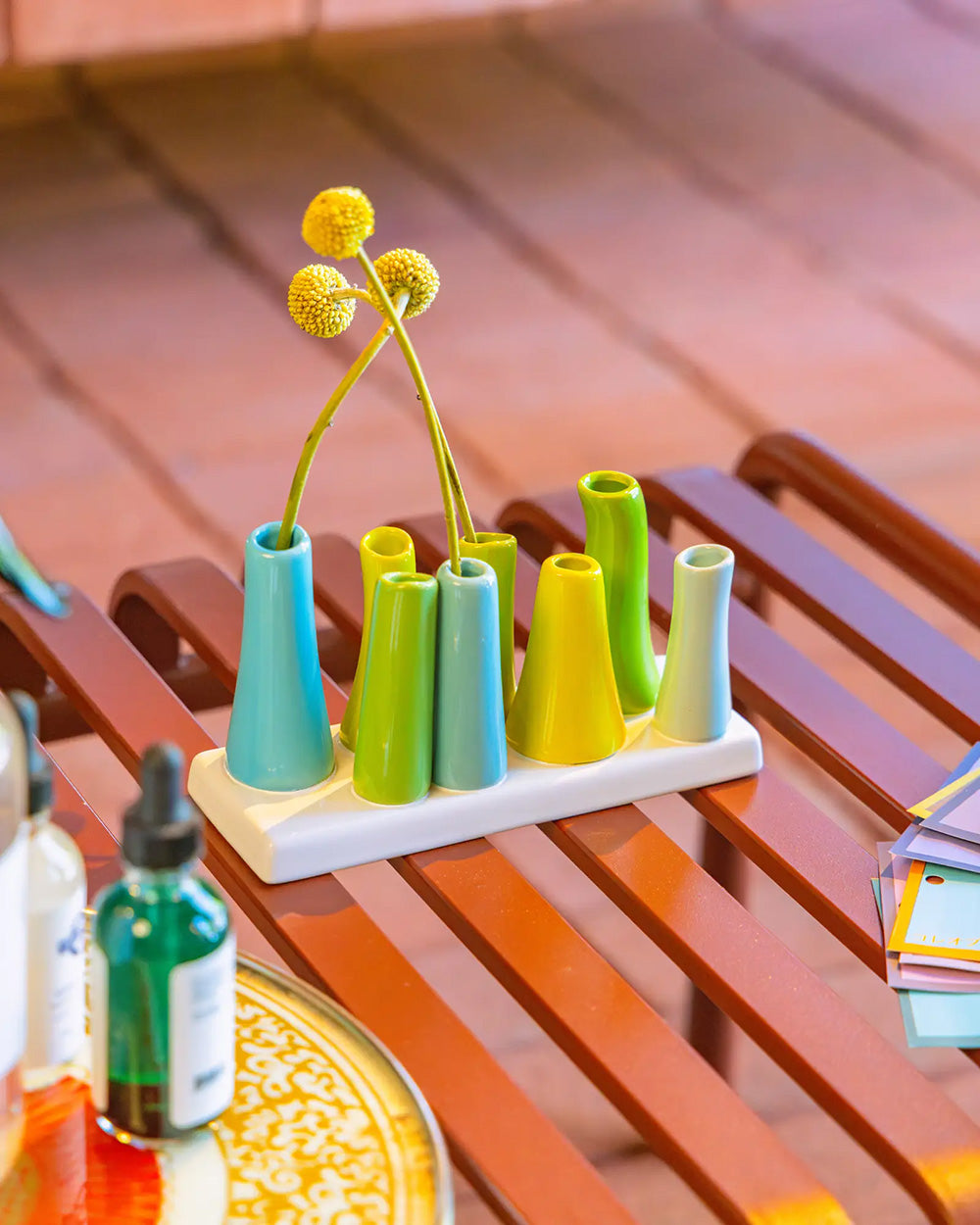
Chive ceramic pooley bud vase in color scout blue, styled with fresh flowers, on a red bench.

Pooley Tube Vase, three heights, no adjusting
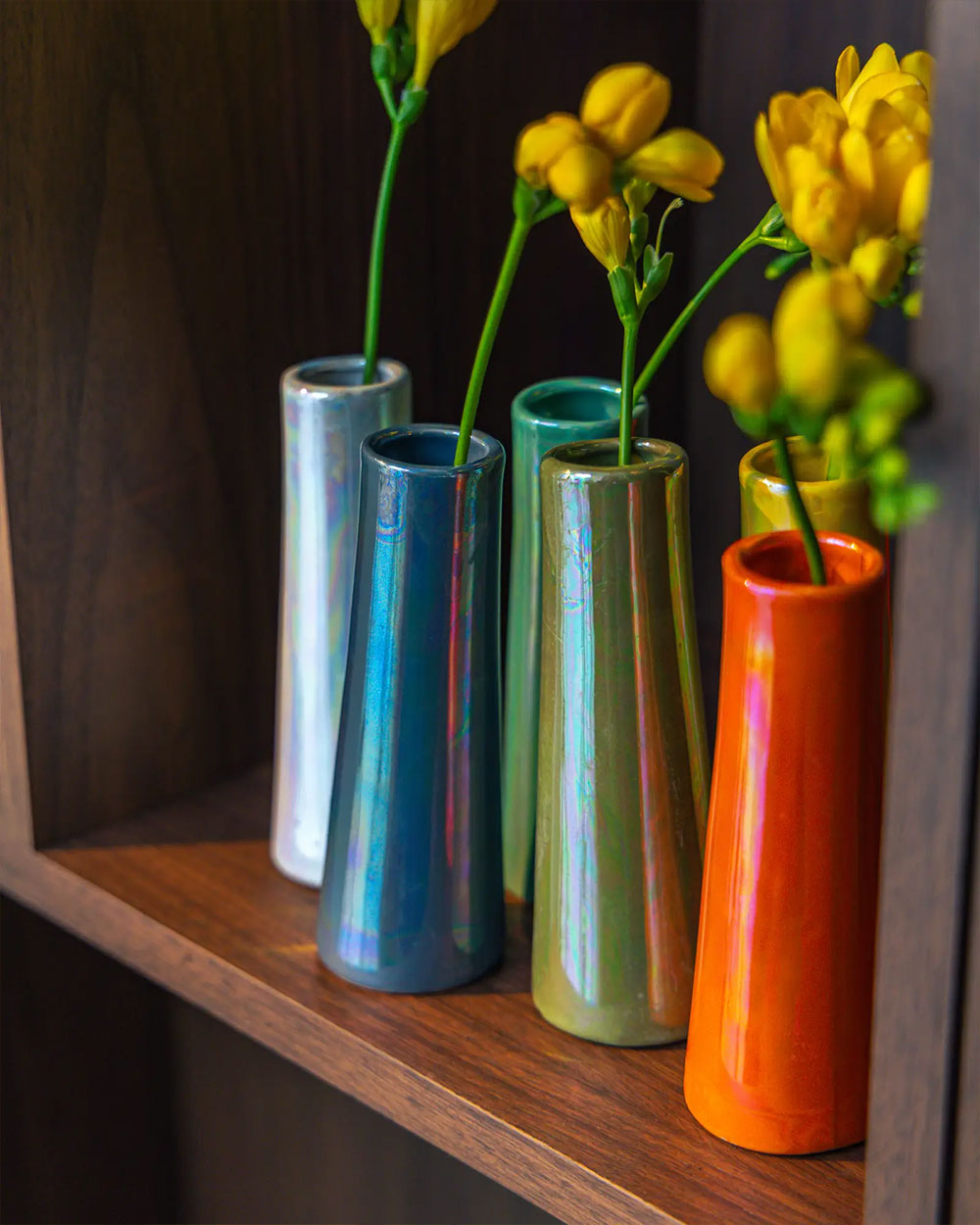
The ceramic vases at Chive come out of the same studio habit that produced everything else here: design the object once, correctly, then resist every opportunity to complicate it. Each one holds stems. None of them holds back. The Pooley Tube Vase's fixed tube heights are that habit in miniature — three decisions made for you, permanently, whether or not you'd have made them yourself.

The Ceramic Vases Collection

Every Chive vase is built around one decision about how flowers should stand, then finished by hand until that decision reads as obvious. For the Pooley 3, the decision was altitude: three tubes at three heights, staggering whatever you bring home into a composition that required no committee. It earns the entry console, the bathroom ledge, the bookshelf gap — anywhere a small object with a firm opinion improves the room. Shop the Ceramic Vases collection.

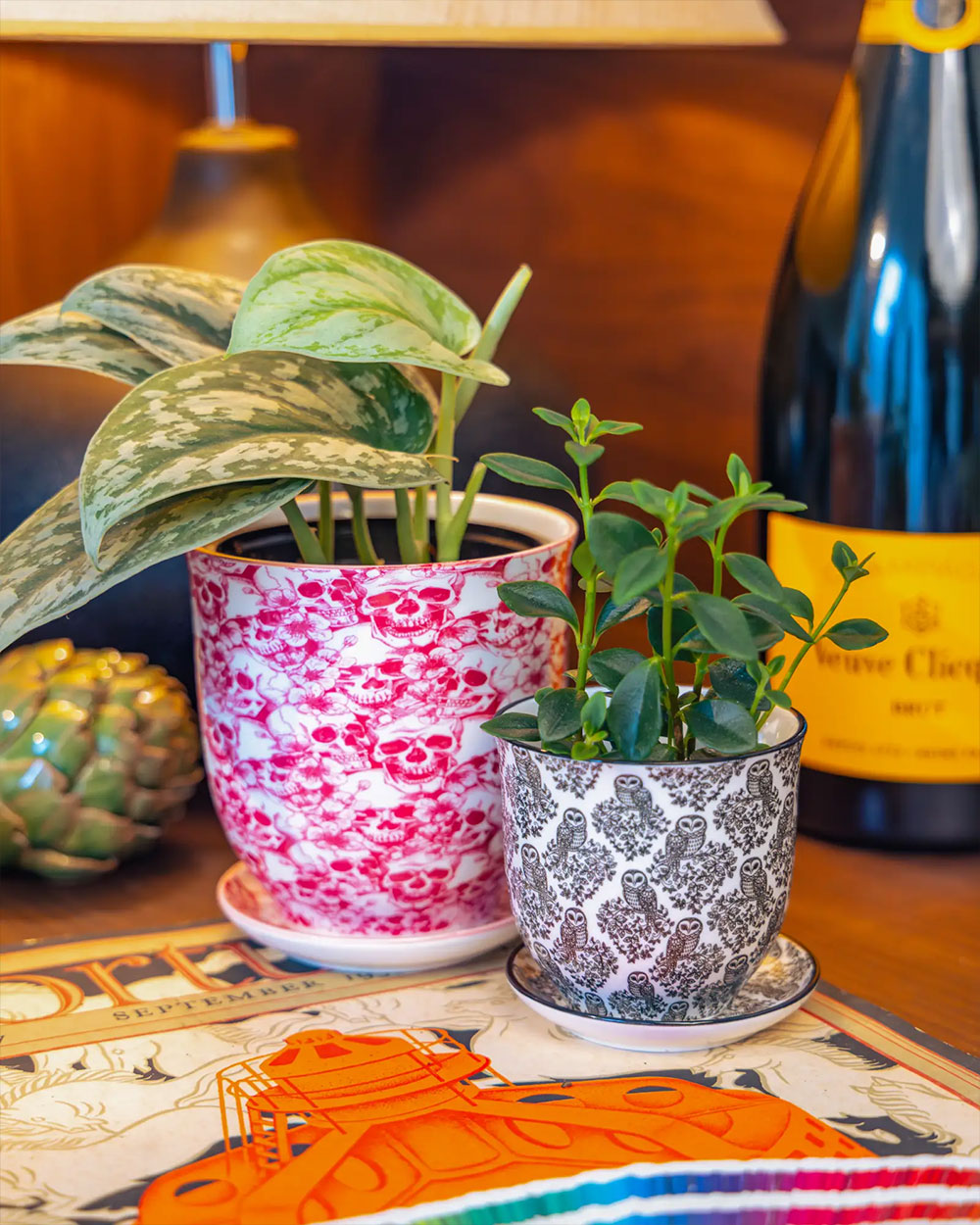
Chive Liberté planters in skull and black owls prints, styled with a silver satin pothos and peperomia on a kitchen table.

Liberte Porcelain Pot and Saucer

Park the Liberte Porcelain Pot and Saucer a hand-width to the left of the Pooley 3 rather than beside it in a matched pair, and the shelf becomes a small still life instead of a product lineup. The pot grows something living, the vase holds something cut, and the porcelain keeps the peace between them. Odd-numbered groupings win shelves. This makes two, so add a book.


Chive Studio at Chelsea Flower Show displaying ceramic pooley vases of different colors.

Designed Once, Correctly — Chive Since 2004

Chive Ceramics Studio was founded in 2004 on a premise that has not required updating: draw the object right the first time, and let it stay drawn. The studio drafts, prototypes, and fires its own work in-house, which means every piece that ships was argued about in the same room where it was made. Arguments are the quality control here, and always have been. A design that survives the studio's own residents — none of whom are shy, and several of whom are loud — has earned its SKU number honestly. Twenty-two years in, the catalog is full of shapes that have outlived the trends that were supposed to replace them. That longevity is not luck. It is stubbornness, applied daily, in small batches.


Inside the Chive Design Studio

Low maintenance, high impact. Let's make home styling look easy.

Plant Propagation Made Simple

Lexi Bertolas
In the quiet hours of morning, while most neighbors slumber peacefully in their beds, one can often find the dedicated gardener hunched over a collection of glass jars, examinin...
Read the full story

The Best 10 Styles of Vases

Jessie Duenas
The glorious world of flower vases! Because nothing says "I have my life together" quite like a carefully chosen vessel for your soon-to-be-wilting flora. Gather 'round, fell...
Read the full story

Frequently asked questions

What should you look for when buying a Pooley 3 vase online?

A pooley 3 vase bought online should list its tube heights, its base width, and whether the maker fires the piece in-house, and ours publishes all three. That sounds like bragging until you have opened a box containing a vase that photographs at eight inches and measures at four. We have opened that box. Measure twice.

What single flowers look striking on their own in the Pooley 3?

Single flowers with strong vertical lines do the most work in the Pooley 3: a ranunculus, an anemone, one improbable allium. The fixed heights stagger them automatically, so each bloom gets its own altitude and none of them has to compete. My aunt uses three carnations and calls it restraint. She is not wrong.

What are the Pooley 3 vase's dimensions for shelf or table display?

The Pooley 3 vase's dimensions run from the Large at eight inches across and three high, through the Medium at five by three, to the Tall at four inches wide and seven high. Shelf, sill, or table, one of the three fits the ledge you are eyeing right now. Probably the one you did not plan to buy.

How is the Pooley 3 vase's ceramic finish made at the studio?

The ceramic finish on the Pooley 3 starts as a raw glaze the studio mixes in small buckets and ends under a firing schedule nobody is allowed to rush. Between those two points there is sanding, dipping, and a certain amount of standing around looking worried. The worry is part of the finish. It shows.

How often should you change the water in the Pooley 3 vase?

Water in the Pooley 3 should be replaced every two to three days, and sooner in the heat of summer. The tubes are narrow, so you are swapping tablespoons rather than pints, and the whole operation takes less time than deciding you will get to it tomorrow. Tip each tube, rinse, refill, and walk away. Done.

Which rooms suit the Pooley 3 vase's shape and scale best?

Rooms with one good surface suit the Pooley 3 best: an entry console, a bathroom ledge, the shelf your books almost fill. Its footprint is small and its opinion is large, so it carries a corner without demanding the corner be redecorated around it. Big rooms tend to swallow small vases whole. Small rooms make this one famous.

Which holds more stems, the Pooley 3 vase or the Pooley vase?

Comparing the Pooley 3 vase to the original Pooley, the original holds more stems — eight tubes to three. The 3 answers a different question entirely: what to do on a morning when the garden produced exactly one good thing, twice. Three stems is an edit, not a shortage. Some days the edit wins.

What was the original idea behind the Pooley 3 vase's form?

The original idea behind the Pooley 3's form was to fix the heights so the arranger could stop making decisions. The studio kept removing choices until only placement remained, then quietly removed most of that too. What survived is a vase arguing that composition was never your job to begin with. It was always the vase's.

Ceramic astronaut vase with flowers styled on shelf — Chive Studio Toronto
Behind the Studio

The story behind the Chive astronaut vases

The story of Laika, Félicette, a solar eclipse in New York, and a space bar that ordered a hundred vases a month until it closed.