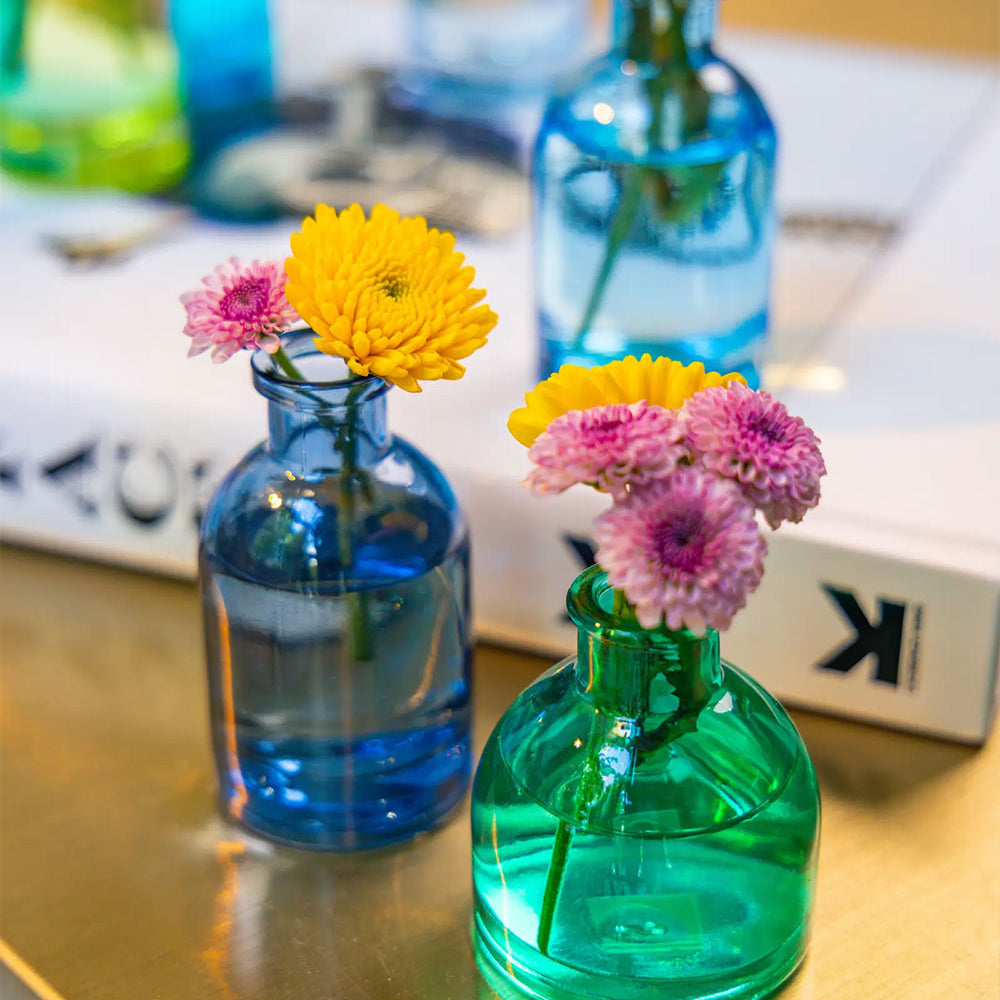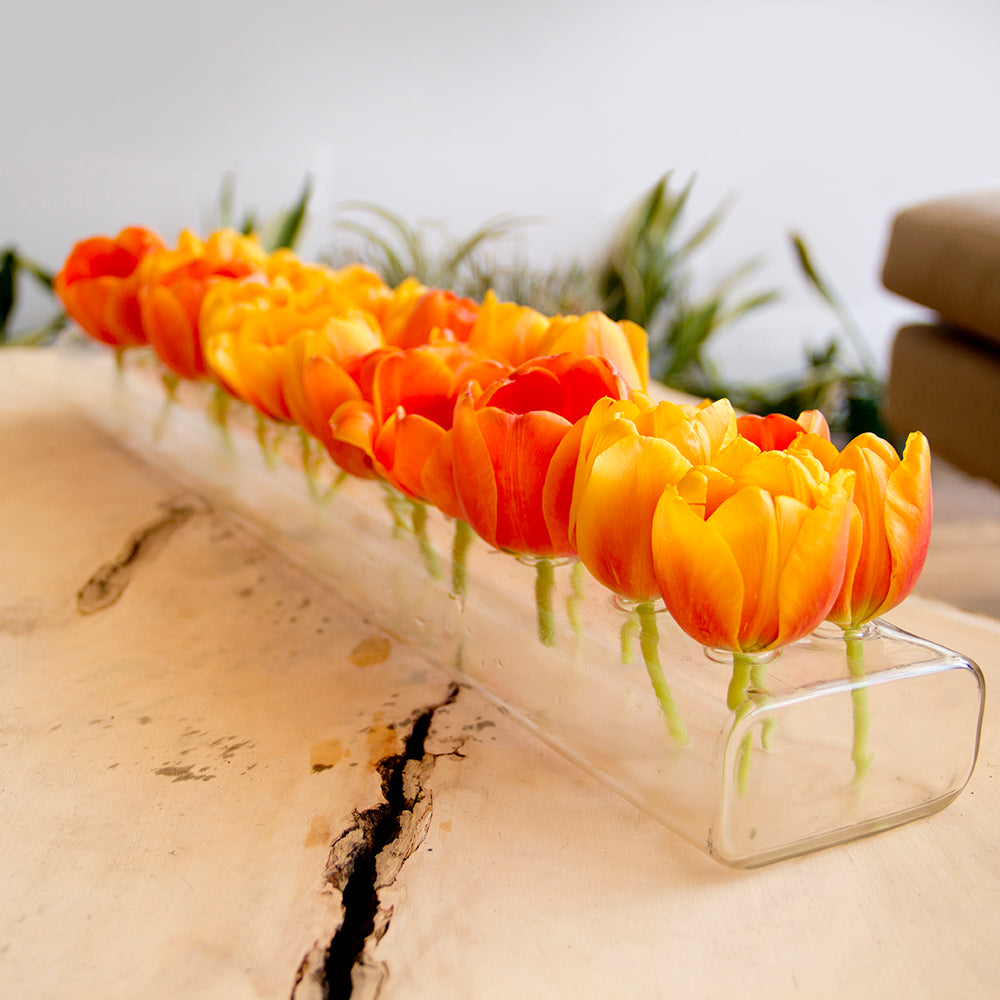
Raygun Glass Modern Clear Flower Vase

Regular price $24.75
Hand Blown Glass
Dishwasher safe cleaning
30-day return policy

Build the Arrangement That Looks Harder Than It Was

Pick a vase to anchor the shelf, then add the rest until it reads as curated instead of collected.


The Raygun vase is a retro sci fi vase in the strict sense: drawn in 2011, aimed squarely at a design language that had finished by 1960. Two inches, three inches, six inches, being depth, width and height, which makes it the smallest footprint here carrying nearly the most height above it. That ratio is period-correct and not accidental. The atomic age vase idea always turned on tapering something upward until it looked capable of more than it does, and glass is the one material that carries the joke without becoming a toy, because the stem stays visible inside the shape and the object stays a vessel. One stem, occasionally two. There is a single piece and a single size, which is unusual for us and says something about how little argument the drawing needed. Nothing since has improved on it. Not a joke about the future so much as an argument that a shape can be dated on purpose.

Product detail

Product Detail:

  • Material: Glass
  • Glaze finish: Translucent
  • Year Designed: 2011
Dimension
  • 2 inches long, 3 inches wide, 6 inches tall
Vase Care Instructions

All glass vases in this collection are dishwasher safe for easy cleaning, with one exception: mercury glass vases should be hand-washed only. The silvered mercury finish is a delicate coating rather than a solid color, and dishwasher heat and detergent can dull or strip it over time.

For standard glass vases, just load it in with the rest of the dishes — no special care needed. For mercury glass pieces, wash gently with warm water and mild soap, and dry with a soft cloth rather than letting it air dry with water spots.

Rinse and dry after each use, especially if flower food or cut-stem residue was in the water, so nothing lingers and clouds the glass.

Flowers that Love this Vase
  • Buttercup
  • Tulip
  • Iris
  • Lisianthus
  • Statice
  • Delphinium
  • Yarrow
  • Feverfew
  • Viola
  • Love-Lies-Bleeding

Quick Guide to Building a Floral Arrangement

  1. Pick your vase first
  2. Start with your anchor flower.
  3. Build in odd numbers.
  4. Add height, then fill.
  5. Greenery does the quiet work.
  6. Cut stems at an angle, underwater if you can.
  7. Step back before you decide it's done.

Shipping & returns

Shipping

  • Free shipping: Orders $200+ within the US
  • Standard: 5–8 business days, Express 2–3 business days (at checkout)
  • International Ships: to 40 countries — rates at checkout
  • Packaging Ships: in outer box to protect gift box

View full shipping policy →

Returns

We accept returns within 30 days of delivery on unused items in original packaging. If your piece arrives damaged, contact us within 7 days with a photo and we will replace it at no charge.

View full return policy →

Wholesale Inquires

Have a cool shop? Know someone that does?

Find Chive on Faire →

Raygun Glass Modern Clear Flower Vase - Chive Ceramics Studio - Vases - Chive US

The folder of good ideas - The Raygun

Of everything in this catalogue, the Raygun is the one object we have never made a second version of, and the reason is not principle. We simply never got round to it.

It has been on the list. It has been on several lists. Twice a year somebody proposes a taller one, or the same shape in amber, and everybody agrees this is a good idea, and then a season starts and the proposal goes back into the folder where good ideas are kept warm and unattended. I have looked in that folder. There is a note in my own handwriting from 2014 that says RAYGUN - AMBER? and nothing else, as though the author expected to be back within the hour.

The honest version is that a piece which needs no changes generates no urgency, and urgency is what actually moves things onto a bench here. Everything else in the range has a variant because at some point somebody complained, or a shop asked, or a size failed. Nobody has complained about this one.

So it remains a single shape in a single size, held in place by nothing more principled than an absence of pressure, and I have made peace with the fact that this is not a design philosophy.

Chive Studio trimming tulip stems with scissors on a wooden surface, with white, purple, and pink tulips arranged nearby.
How to Cut Flowers Like a Pro:

A (Mostly) Simple Guide to Cutting Your Flowers

So, you’re making an arrangement? Let’s ensure it lives long enough to impress someone—even if it's just you.

  1. Scrub the Scissors: Wash your shears first. Your flowers do not want a side of Dorito dust.
  2. Cut at 45°: Snip stems at an angle. It gives them a straw instead of making them chug from the bottle.
  3. Trim Underwater (Fancy Mode): Cut them submerged to block air bubbles. It’s extra, but they didn’t ask to suffocate.
  4. Ditch Submerged Leaves: Strip anything below the waterline. Unless you are actively going for a swamp aesthetic.
  5. Snip Again if Stale: If they sat out on the counter, trim them again. They need a fresh start (don’t we all?).
  6. Swap the Water: Change it and trim the stems every few days so they don't die immediately.

Voilà! You are now a domestic deity. Go take your Instagram photo before you forget to water them.

Pro Tip: The light does half the work.

Glass catches and bends light in a way ceramic can't. Set the arrangement somewhere it'll get some late afternoon sun, even for an hour, and the water and stems start doing something a solid vase never will.

Perfect Pairs for Any Shelf
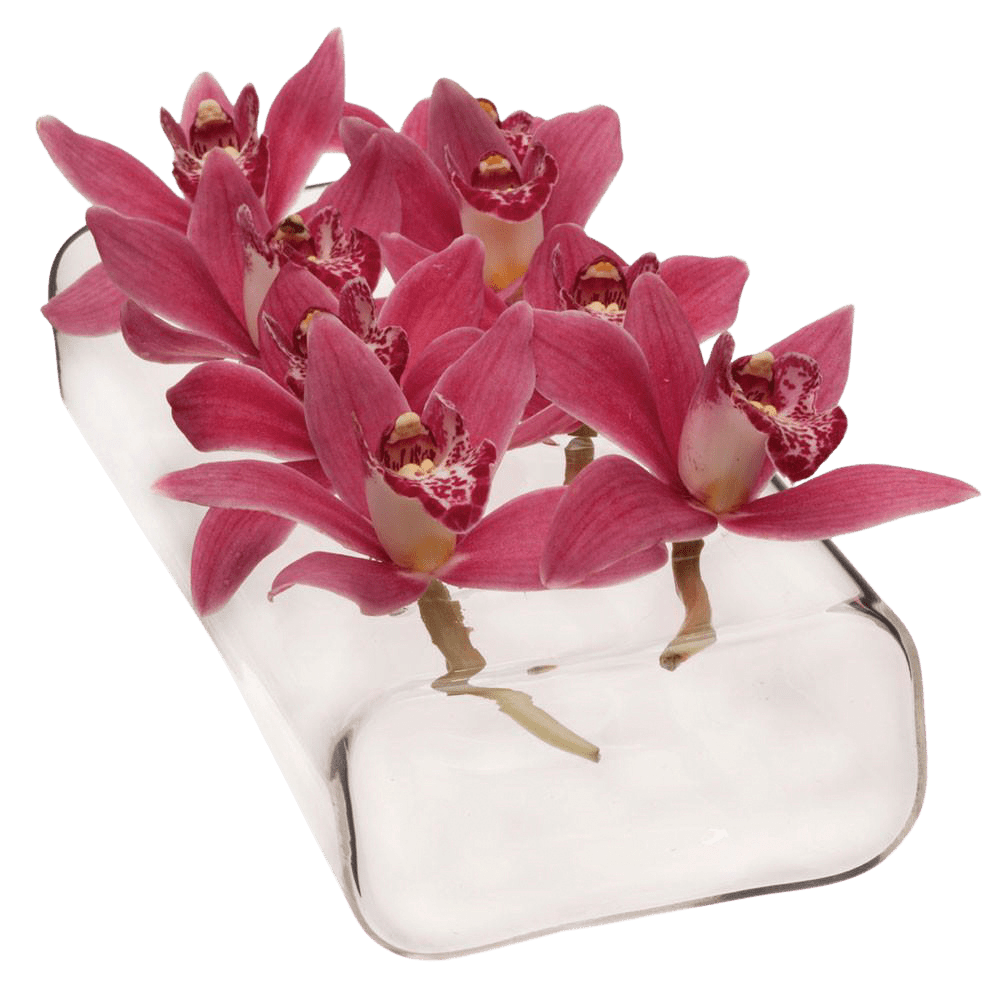
Rectangle Flute Glass Modern Clear Flower Vase - Chive Ceramics Studio - Vases - Chive Ceramics Studio

The Same Refusal, Multiplied

The glass vases at Chive come out of the same studio habit that produced everything else here: design the object once, correctly, then resist every opportunity to complicate it. Each one holds stems. None of them hides anything. The Raygun holds a single stem in a narrow bore and admits to nothing more. When that same refusal turns into many openings instead of one, spaced along a straight body, the Rectangle Flute Long Vase is where it ends up.

Settled At Six Inches, Never Adjusted
Every Chive vase is built around one decision about how flowers should stand, then finished by hand until that decision reads as obvious. On the Raygun the question was proportion: how much height a very small base can carry before the object stops looking stable and starts looking precarious. The answer arrived at six inches over a footprint you could cover with a business card. Nothing has been adjusted since. That same reluctance to keep tinkering is the reason every piece in the glass vases collection looks settled rather than styled.

Two Footprints, No Overlap

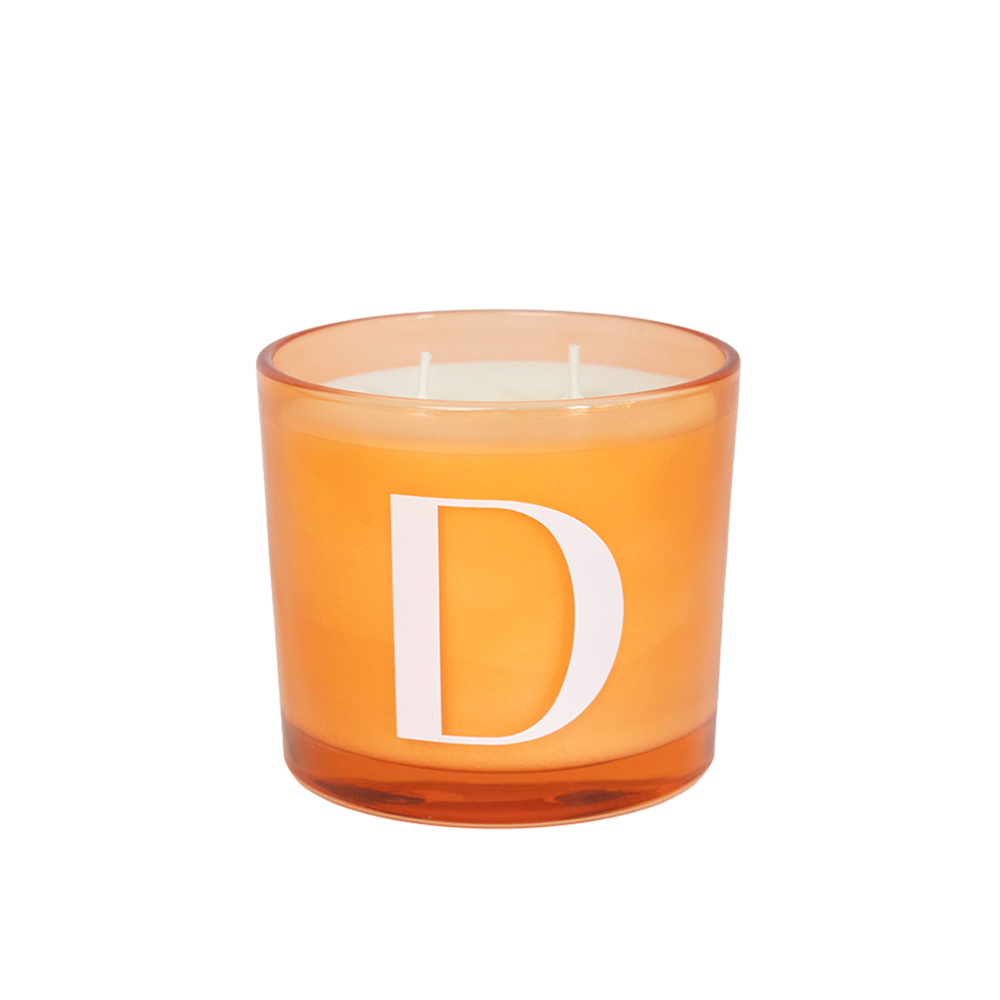
This takes up almost no ledge, which leaves room beside it for something that does. A Dream Boat Candle occupies a low wide circle and the Raygun occupies a tall narrow column, so together they cover a shelf without either one needing company. Two objects, two footprints, no overlap. That is the entire composition and it wants nothing further.


One Maker, Start to Finish

One maker carries this piece from the gather to the cooling rack without handing it on. We do not work that way on most things, and the exception is entirely about the shape. A tapering form with a narrow bore is judged continuously rather than at stations, because the wall thins as it rises and the point where it thins too far arrives without warning. Splitting that across two people means splitting the judgement, and the judgement is the skill. This company has produced its own glass from 2004 onward and never got round to industrialising this particular object, which turns out to have been the correct accident. A piece nobody complains about generates no pressure to change how it is built, and in this one case the neglect protected something worth protecting.


Inside the Chive Design Studio

Low maintenance, high impact. Let's make home styling look easy.

The Best 10 Styles of Vases

Jessie Duenas
The glorious world of flower vases! Because nothing says "I have my life together" quite like a carefully chosen vessel for your soon-to-be-wilting flora. Gather 'round, fell...
Read the full story

Wedding Centerpiece Vases: The Planning Guide Nobody Gives You

Jessie Duenas
Wedding centerpiece vases work best small and plural — three to seven per table, one to three stems each. A fifteen-table reception needs roughly seventy-five vases and 100 to 1...
Read the full story

Frequently asked questions

What is a raygun vase and what sets the Raygun apart?

It is a single-stem vessel whose silhouette quotes mid-century futurism, tapering up from a small rectangular base through a narrowing waist. The distinguishing feature is proportion rather than decoration: six inches of height standing on a base measuring two by three makes this the tallest thing here relative to the ground it covers. Colour is doing no work at all here. The profile is the design.

Can the Raygun vase hold dried stems as well as fresh?

Better than fresh, if anything, and a single dried stem is where this excels. The bore narrows toward the middle, so a stem pushed down meets resistance and is held along a short section of its length, which means it stands at whatever angle it entered with no water assisting. Grasses, seed heads and dried larkspur suit it. One stem is the honest maximum.

How much water does the Raygun vase hold when filled?

Very little, and unusually the amount is not really a choice. There is space for one stem, so the volume required is whatever covers a single cut end by an inch or so, and beyond that extra water accomplishes nothing except sitting there. You cannot meaningfully overfill or underfill a vessel with one job. Fill to roughly a third.

Why was glass chosen for the Raygun vase's construction?

Because the interior has to be visible for the shape to make sense. A tapering profile only reads as a taper if you can watch the stem narrow into it, and in an opaque material the same silhouette becomes a solid object pretending to be a prop. Clear glass keeps it a vessel while keeping the reference legible. Opacity would turn the reference into a costume.

Can you remove hard water marks from the Raygun vase easily?

They can be removed, but on a bore this narrow the sensible approach is to stop them forming. What you fill it with matters more than what you clean it with, so cooled boiled water, or filtered water in a hard-water area, prevents the ring that a soak then has to argue with. Prevention is considerably easier here than reach. Clear glass hides nothing.

Where does the Raygun vase look best in a modern room?

Wherever nothing else will go. A base of two by three inches fits the front edge of a bookshelf, the corner of a bathroom shelf, the narrow strip beside a sink, a windowsill too shallow for a bowl. That is a genuinely useful property in a modern room, where most surfaces are already committed. Put it somewhere a book could not lie flat. Height without footprint is rare.

Should you choose the Raygun vase or the Flute 24 vase first?

Raygun first if you want one stem in a small space, and the Flute 24 first if you are dressing a table. They are not really alternatives: one occupies six square inches and holds a single flower, while the other runs two feet down a table and holds twenty-four. Budget usually decides in the Raygun's favour. Scale decides in the other direction.

When did the Chive studio team design the Raygun vase?

In 2011, which is later than most people guess, because the language it borrows from was finished half a century earlier. That was the point. The drawing set out to prove that a silhouette could be dated deliberately rather than left old-fashioned by accident, and the studio ran it without adding one variant afterward. Fifteen years of exactly one version. Nobody has asked for another.

Ceramic astronaut vase with flowers styled on shelf — Chive Studio Toronto
Behind the Studio

The story behind the Chive astronaut vases

The story of Laika, Félicette, a solar eclipse in New York, and a space bar that ordered a hundred vases a month until it closed.