Rockpile Glass Modern Clear Flower Vase

Regular price $30.25
Hand Blown Glass
Dishwasher safe cleaning
30-day return policy

Build the Arrangement That Looks Harder Than It Was

Pick a vase to anchor the shelf, then add the rest until it reads as curated instead of collected.


The Rockpile vase looks like something that accumulated rather than something anybody made, which is the entire trick. As a stacked stone vase it reads as four or five rounded forms settled against each other, and the eye keeps trying to find the seams between them. There are none. It comes out of one mould, 4.75 inches long against 4 inches tall, which is a margin of under an inch and just enough to make the thing read as horizontal. Two inches deep keeps it off the edge of a shelf. Calling it a pebble shaped glass vase undersells the stacking, since a single pebble would be inert and the stack is what suggests it arrived by weather rather than by design. Short stems only, and enough of them that the glass carries some weight rather than standing there being clever. Atop a low shelf it settles immediately, the way a found object does and a designed one usually does not. That much you notice before you notice the flowers.

Product detail

Product Detail:

  • Material: Glass
  • Glaze finish: Glazed
  • Year Designed: 2011
Dimension

4.75 inches long, 2 inches wide, 4 inches tall

Vase Care Instructions

All glass vases in this collection are dishwasher safe for easy cleaning, with one exception: mercury glass vases should be hand-washed only. The silvered mercury finish is a delicate coating rather than a solid color, and dishwasher heat and detergent can dull or strip it over time.

For standard glass vases, just load it in with the rest of the dishes — no special care needed. For mercury glass pieces, wash gently with warm water and mild soap, and dry with a soft cloth rather than letting it air dry with water spots.

Rinse and dry after each use, especially if flower food or cut-stem residue was in the water, so nothing lingers and clouds the glass.

Flowers that Love this Vase
  • Anemone
  • Dahlia
  • Marigold
  • Cornflower
  • Strawflower
  • Calendula
  • Anthurium
  • Forget-Me-Not
  • Magnolia
  • Hydrangea

Quick Guide to Building a Floral Arrangement

  1. Pick your vase first
  2. Start with your anchor flower.
  3. Build in odd numbers.
  4. Add height, then fill.
  5. Greenery does the quiet work.
  6. Cut stems at an angle, underwater if you can.
  7. Step back before you decide it's done.

Shipping & returns

Shipping

  • Free shipping: Orders $200+ within the US
  • Standard: 5–8 business days, Express 2–3 business days (at checkout)
  • International Ships: to 40 countries — rates at checkout
  • Packaging Ships: in outer box to protect gift box

View full shipping policy →

Returns

We accept returns within 30 days of delivery on unused items in original packaging. If your piece arrives damaged, contact us within 7 days with a photo and we will replace it at no charge.

View full return policy →

Wholesale Inquires

Have a cool shop? Know someone that does?

Find Chive on Faire →

Rockpile Glass Modern Clear Flower Vase - Chive Ceramics Studio - Vases - Chive Ceramics Studio

You can see me not fixing it - The Rockpile

There is a category of object that looks like it was found rather than made, and getting there is much harder than it sounds, because everything a skilled person does instinctively works against it.

A maker's instinct is to resolve things. Even out the wall, true up the rim, make the curve continuous. All good instincts, all of them wrong here, because the moment a stack of rounded forms becomes regular it stops reading as an accumulation and starts reading as a pattern, which is the one thing a rockpile can never be. So the work involves persuading experienced people to leave something slightly unresolved on purpose, and then persuading them again on the next one, because it does not get easier.

Rasheed put it best during sampling. He said the problem is that you can see me not fixing it. Which is exactly right, and also exactly the thing we spent months getting rid of.

The finished piece gives no sign of any of this whatsoever. People pick it up and assume it simply fell out of a mould looking that way, and in a sense it now does, which is the best outcome available and a slightly deflating one for everybody who spent the winter on it.

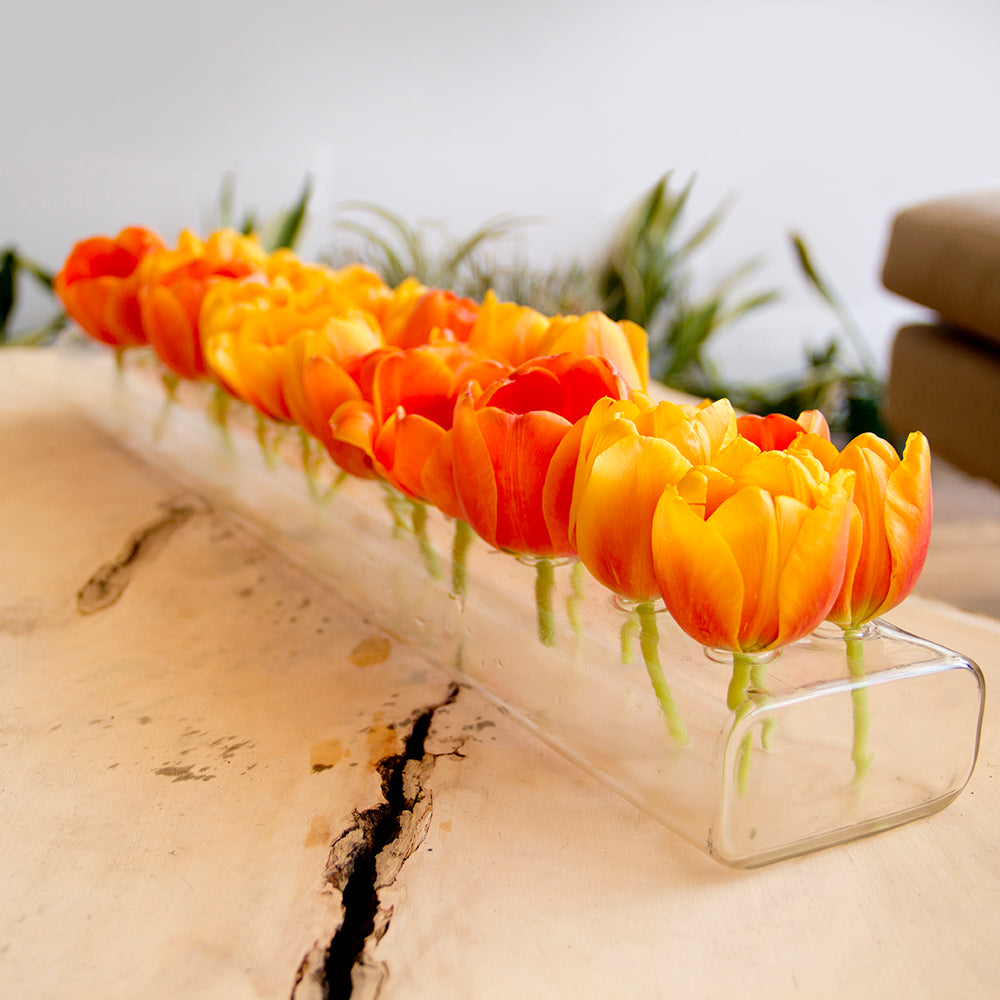
Chive Studio trimming tulip stems with scissors on a wooden surface, with white, purple, and pink tulips arranged nearby.
How to Cut Flowers Like a Pro:

A (Mostly) Simple Guide to Cutting Your Flowers

So, you’re making an arrangement? Let’s ensure it lives long enough to impress someone—even if it's just you.

  1. Scrub the Scissors: Wash your shears first. Your flowers do not want a side of Dorito dust.
  2. Cut at 45°: Snip stems at an angle. It gives them a straw instead of making them chug from the bottle.
  3. Trim Underwater (Fancy Mode): Cut them submerged to block air bubbles. It’s extra, but they didn’t ask to suffocate.
  4. Ditch Submerged Leaves: Strip anything below the waterline. Unless you are actively going for a swamp aesthetic.
  5. Snip Again if Stale: If they sat out on the counter, trim them again. They need a fresh start (don’t we all?).
  6. Swap the Water: Change it and trim the stems every few days so they don't die immediately.

Voilà! You are now a domestic deity. Go take your Instagram photo before you forget to water them.

Pro Tip: The light does half the work.

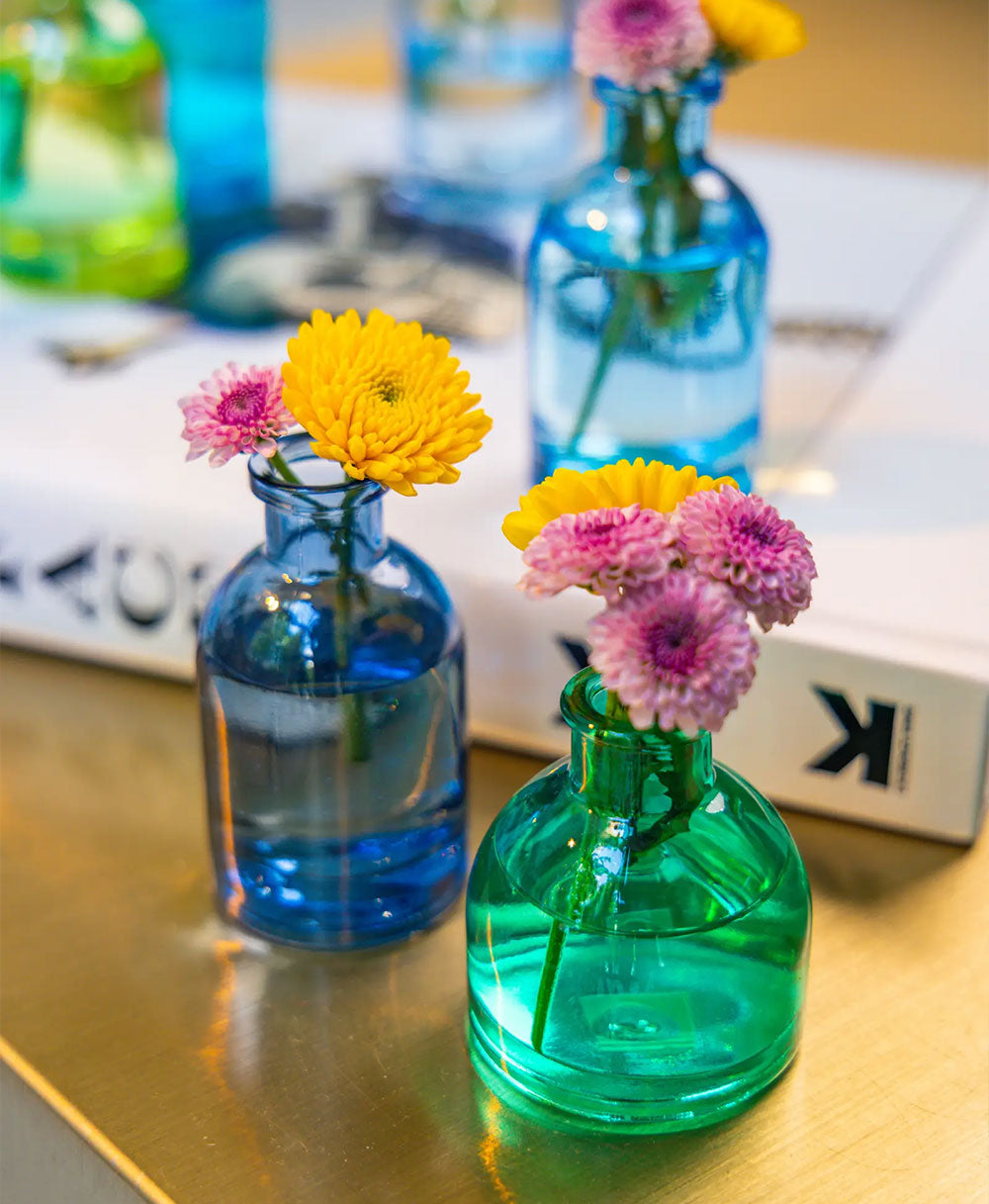
Glass catches and bends light in a way ceramic can't. Set the arrangement somewhere it'll get some late afternoon sun, even for an hour, and the water and stems start doing something a solid vase never will.

Perfect Pairs for Any Shelf

The Card Shop at the End of Civility

The glass vases at Chive come out of the same studio habit that produced everything else here: design the object once, correctly, then resist every opportunity to complicate it. Each one holds stems. None of them hides anything. The Rockpile is that instinct working against itself, since the object has to look unresolved on purpose. When the same interest in rounded forms goes small and precise instead of loose, the Smasak Glass Bud Vase is next in line.

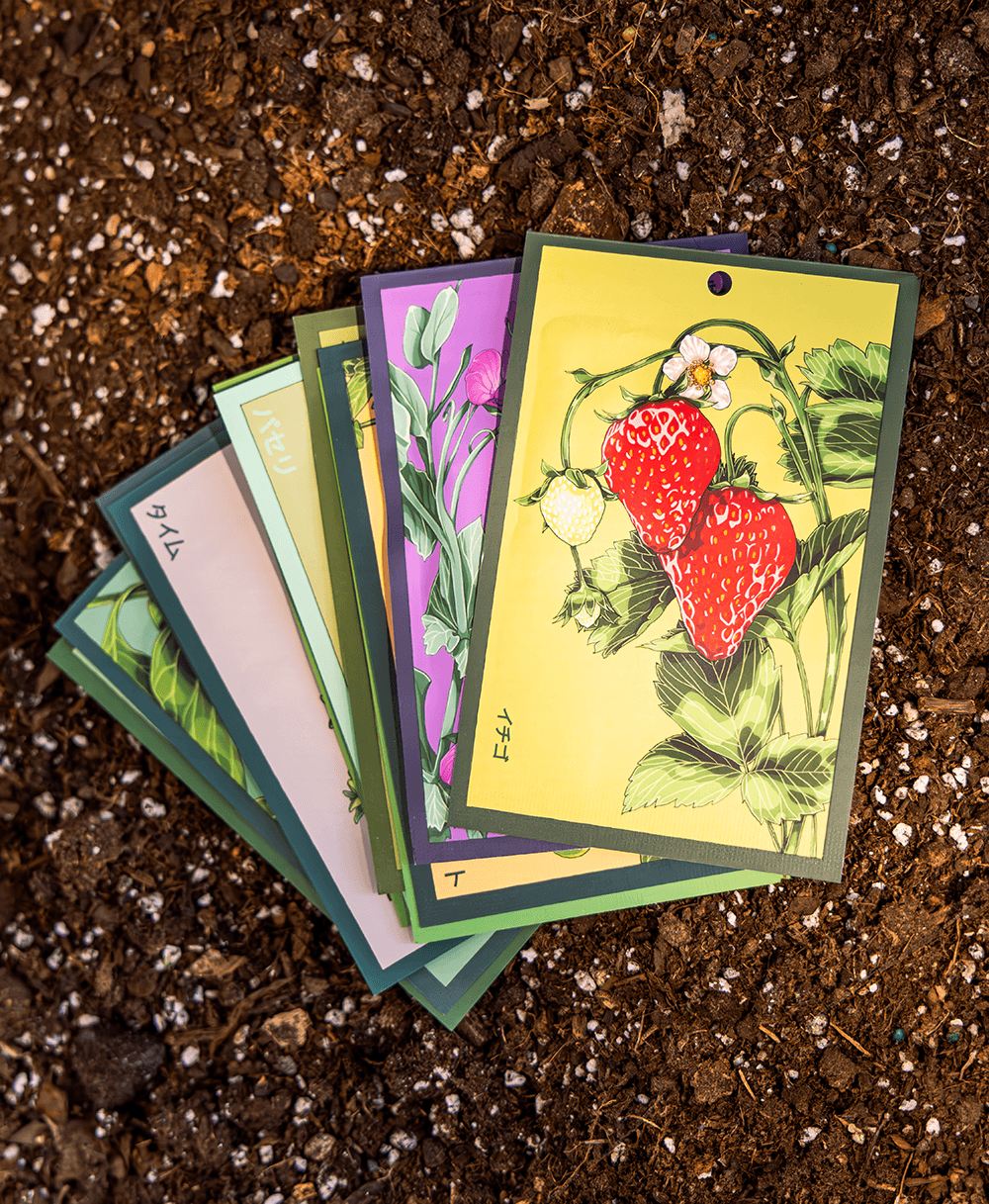
Shido seed packets for vegetable and floral category, by Chive Studio

Shido Seeds Almost Too Pretty to Plant

Every Chive vase is built around one decision about how flowers should stand, then finished by hand until that decision reads as obvious. With the Rockpile the decision was to hide the making entirely: one mould, no visible seams between the stacked forms, and an outline irregular enough that the eye reads accumulation rather than repetition. Nothing about it should look drawn. Everything about it was. The wider glass vases collection is built on single decisions taken early and then defended.

Rainbow Carrot seeds produce the other kind of irregular object, the sort where no two come out the same and the misshapen ones taste identical. Pull a handful in autumn, wash them, and stand the leafy tops in this while you decide what to do with the roots. Carrot foliage is genuinely good cut greenery and almost nobody uses it.


We Carved It Here - Chive Since 2004

The mould for this was carved in-house, and the person who carved it is still here, which matters because a shape pretending to be accidental has to be adjusted by feel rather than by drawing. There was no specification to send anybody. Chive opened in 2004 and has cut its own tooling for most of that time, and on this piece the alternative was never realistic: an outside toolmaker would have asked for dimensions we could not supply and delivered something regular and correct and useless. The carver made a stack, looked at it, and changed it, several times over. That is not a process you can put in an email.


Inside the Chive Design Studio

Low maintenance, high impact. Let's make home styling look easy.


Frequently asked questions

How does the Rockpile earn its name as a rockpile vase?

A rockpile is several separate stones resting where they landed, and this is one continuous piece of glass doing an impression of that. The stacked forms have no seams between them because there are no joins to seam; the whole thing releases from a single mould. What earns the name is the irregularity, since evenly spaced bulges would read as a pattern instead. Accumulation is the effect being chased.

Do short-stemmed garden flowers work well in the Rockpile vase?

They are the right choice for it. This is a low horizontal vessel at 4 inches tall, so tall stems turn it into a plinth and short garden material lets it stay the object it is. Anemones, calendula, marigolds and strawflower all sit at a workable height. Cut so the heads clear the top by a couple of inches. Foliage alone also reads well.

What footprint does the Rockpile vase take up on a table?

It occupies 4.75 inches by 2, and stands 4 tall. That length-to-height margin is a fraction under an inch, which reads as nothing on paper and does most of the work in practice, because it tips the piece just far enough into horizontal to sit down on a surface rather than stand up from it. Two inches of depth keeps it clear of a shelf edge.

Is the Rockpile vase's glass body durable for everyday use?

Very. This is thick single-mould glass with mass distributed low, so it is heavier than its size suggests and sits down hard on a surface. The rounded forms have no thin projections to chip, which is the usual failure point on sculptural glass. It will comfortably survive a knock from a passing sleeve. The underside is the vulnerable part.

Is the Rockpile vase dishwasher safe or hand wash only?

Hand wash, and the reason is the outside rather than the inside. Water collects in the recesses around each rounded form and a machine will simply leave it sitting there to dry into marks along every hollow. The interior is a simple cavity and rinses out easily. Dry the exterior with a cloth, working into the dips. Air-drying is what leaves the rings.

Does the Rockpile vase work as decor without any flowers in it?

Better than most, because it does not read as an empty vase. Without flowers the eye takes it for a solid sculptural object, something closer to a paperweight than a vessel, and the opening is small enough to go unnoticed from across a room. Leaving it bare on a low shelf is entirely legitimate. That is unusual in a vase.

What makes the Rockpile vase different from the Smasak vase nearby?

Scale and intent. The Rockpile is a low horizontal mass built to look accidental, while the Smasak is a precise sphere of barely two inches, and they sit at opposite ends of what rounded glass can be asked to do. One suggests weather and the other suggests a jeweller. Put them together and both improve. Alone they read completely differently.

How did the Rockpile vase's design evolve at Chive studio?

The drawing came quickly in 2011 and the mould took months, because an irregular shape cannot be specified and has to be arrived at by adjustment. Early versions were too even and read as a pattern of bumps rather than a stack of stones. The fix was making the forms disagree with each other in size. Nothing has been changed since it was settled.

Ceramic astronaut vase with flowers styled on shelf — Chive Studio Toronto
Behind the Studio

The story behind the Chive astronaut vases

The story of Laika, Félicette, a solar eclipse in New York, and a space bar that ordered a hundred vases a month until it closed.