
Scallions Vegetable Seeds Packet

Regular price $4.95
Vacuum Sealed
NON-GMO
Seed Pack Guarantee

Build Your Garden With These Shido Seeds

Choose a seed packet as your starting point, then round out the bed with these for that thrown-together-but-somehow-perfect harvest.


Scallions seeds for the kitchen garden that intends to actually produce scallions this year. Scallions are the vegetable that requires the least commitment and delivers the most consistently.

Scallions is the quick-growing allium that can be harvested at any stage and improves nearly every dish it enters. Each packet is hermetically vacuum-sealed -- removing the oxygen that causes standard paper seed packets to lose germination viability within approximately one year. State law requires a 3-year viability label on sealed packaging. NASA research on hermetic seed storage indicates viability of up to 10 years under proper conditions. Every packet is non-GMO and germination-tested at independent third-party labs before it earns its Japanese woodblock print artwork.

Seed specifications
  • Material: Seed
  • Botanical name: Allium Fistulosum
  • Genus: Allium
  • Plant family: Amaryllidaceae
  • Species: Fistulosum
  • Plant type: Perennial
  • Pollination type: Vegetable
  • USDA Hardiness Zones: 3-9
  • Packet contents: ≈ 50 Seeds
  • Packaging: Hermetically vacuum-sealed
  • Non-GMO: Yes
  • Seed viability: Up to 10 years (sealed) / 4–5 years (unsealed, ideal conditions)
  • Difficulty: Easy - Beginner Friendly
Sowing & growing guide

Quick Sowing Guide:

  • When to sow: Direct sow in early spring, or start indoors 6-8 wks before last frost
  • Sowing depth: 1/4 in
  • Initial spacing: 1-2 in
  • Row spacing: 12-18 in
  • Days to germination: 7-14 days
  • Light: Full sun
  • Water: Consistent moisture
  • Soil: Well-drained
  • Harvest: 60-80 days

Start Growing: Step-by-step sowing and growing guide

About vacuum sealing

Why Vacuum-Sealed Seeds Last Longer

Standard paper seed packets are permeable to oxygen and moisture -- the two primary causes of seed degradation. Most paper-packaged seeds begin losing germination viability after approximately one year, contributing to significant garden-industry waste: packets purchased, not planted, expired, discarded. Shido Seeds are hermetically vacuum-sealed. The packet does not expire quietly in a drawer. It waits.

About the Packaging

Every Shido seed packet is illustrated in the style of Japanese 1910s woodblock printing -- designed and drawn in-house by Chive, that has been exhibiting at the Chelsea Flower Show in London every year and does not, as a matter of principle, sell to big-box retailers. Customers collect the packets as a series. This was not the original plan.

Shipping & returns

Shipping

  • Free shipping: Orders $200+ within the US
  • Standard: 5–8 business days, Express 2–3 business days (at checkout)
  • International Ships: to 40 countries — rates at checkout
  • Packaging Ships: in outer box to protect gift box

View full shipping policy →

Returns

We accept returns within 30 days of delivery on unused items in original packaging. If your piece arrives damaged, contact us within 7 days with a photo and we will replace it at no charge.

View full return policy →

Satisfaction Guarantee

We stand by the quality of our flower seed packets! Every Shido seed packet is lab-tested for germination before it ships. If your seeds do not perform to the stated germination rate under correct growing conditions, contact us and we will replace or refund. Guaranteed!

Wholesale Inquires

Have a cool shop? Know someone that does?

Find Chive on Faire →

Radish Horticultural Specifications

Botanical

Allium Fistulosum

Plant Type

Perennial

Light

Full sun

Water

Consistent moisture

Soil

Well-drained

Depth

1/4 in

Germination

7-14 days

USDA Zone

3-9

Mature Height

12-18 in

Harvest

60-80 days


Getting to know your Scallions

Scallions, also known as green onions, are grown for their mild, genuinely slender stalks rather than the mature bulb a standard onion eventually develops. They thrive in well-drained soil and full sun, reaching a harvestable size considerably faster than a bulbing onion variety ever would. Scallions can be harvested continuously by cutting the green tops and letting the base regrow, which means a single planting can realistically supply fresh scallions for weeks rather than requiring a single, one-time harvest. They show up constantly raw in salads, stirred into soups just before serving, or scattered over a finished dish as a fresh, mild garnish that doesn't overpower whatever it's paired with. Consistent watering supports that quick, steady regrowth, and a bit of regular feeding helps sustain multiple cuttings from the same planting over an extended period. Scallions also work well tucked into tight spaces between other vegetables, since their narrow growth habit doesn't compete much for room the way a bulkier crop would. Few alliums offer this much ongoing, cut-and-regrow flexibility from a single small planting. That flexibility is really the whole reason scallions stay in such steady rotation in a kitchen garden. That efficient use of a small garden footprint is really the whole reason they stay in constant rotation.


History & origin

Ancient China

Bunching onions (Allium fistulosum) are believed to have originated in China or Siberia, with cultivation in China dating back over 2,000 years -- distinct from the bulb onion, which likely originated further west in Central Asia.

Historical Confusion with Marco Polo

Bunching onions were long credited to Marco Polo's travels to China, though this is now understood to be inaccurate -- Allium fistulosum is native across parts of both the Old and New World, meaning wild and cultivated populations likely existed independently in multiple regions well before any single point of introduction.

East Asian Culinary Tradition

Scallions remain a foundational ingredient across Chinese, Japanese, and Korean cuisine, used both as a cooked vegetable and a raw garnish.

Western Adoption

Scallions became a standard grocery item in Western countries over the 20th century, valued for their mild flavor and use as a garnish in a wide range of cuisines.

Today

A globally used allium, valued for being usable at nearly every growth stage from thin sprouts to thick, mature stalks.

Shido Vegetable and Flower Seeds Vacuum sealed for peak freshness

Step-by-Step Sowing & Growing Guide

Getting Started

Perennial, direct sow or transplant

Step 1: Timing - Direct sow in early spring, or start indoors 6-8 weeks before last frost.

Step 2: Soil - Rich, well-drained loam, pH 6.0-7.0.

Step 3: Sowing - ¼-½ inch deep. Germination takes 7-14 days.

Step 4: Ongoing care - Divide established clumps every few years to maintain vigor -- since this is a true perennial, not a one-and-done crop.

Step 5: Harvest - Cut tops and base about an inch above the roots rather than pulling the whole plant -- this lets the same clump regrow for repeat harvests.

Before you start

Materials needed to sow

  • Garden bed or seed trays: Direct sow or start indoors.
  • Garden fork: For working soil.
  • Plant labels: Since established clumps are meant to be divided and replanted every few years, marking planting dates helps track when that's due.

Materials for harvest and storage

  • Scissors or a knife: For cutting tops and base an inch above the roots, rather than pulling the whole plant.
  • Basket: For collecting the harvest.

Tip: Cut above the roots rather than pulling -- because this is a true perennial, leaving the roots in place lets the same clump regrow for repeat harvests, unlike an annual green onion that's simply used up.

Growth Requirements

Light:

  • Prefer full sun to partial shade.
  • At least 6 hours of direct sunlight per day for optimal growth.

Soil:

  • Requires well-draining, fertile soil with a pH of 6.0-7.0.
  • Adding organic compost or aged manure improves soil quality.

Watering:

  • Keep soil evenly moist, but avoid waterlogging.
  • Water deeply once or twice a week, depending on weather conditions.

Temperature & Climate:

  • Ideal growing temperature: 55-75°F (13-24°C).
  • Can tolerate light frosts, but extreme cold or heat may affect growth.

Fertilization:

  • Use a balanced fertilizer (10-10-10) or organic compost.
  • Apply a nitrogen-rich fertilizer every 3-4 weeks for continuous leaf production.

Maintenance

Mulching:

  • Apply a thin layer of mulch to retain moisture and suppress weeds.

Pruning & Harvesting:

  • Cut outer leaves first to allow continuous growth.
  • Harvest scallions 60-80 days after planting, or sooner for younger greens.

Bolting Prevention:

  • Avoid high temperatures to prevent premature flowering.
  • Water consistently and provide shade during hot periods.

Refrigeration:

  • Store fresh scallions wrapped in a damp paper towel in a plastic bag for up to a week.

Freezing:

  • Chop scallions and freeze in airtight containers for up to 6 months.

Drying:

  • Dehydrate chopped scallions at 95°F (35°C) and store in airtight jars.

Troubleshooting and common mistakes

  • Pulling the whole plant — since this is a true perennial (unlike most immature-bulb 'green onions'), cutting the tops an inch above the roots lets the same clump regrow for repeat harvests instead of ending the plant
  • Never dividing established clumps — congestion reduces vigor over the years -- divide and replant every few years

Culinary uses & nutritional information

What it's used for

1. Culinary Uses:

  • Scallions are mild and versatile, used both raw and cooked.
  • Commonly added to salads, stir-fries, soups, omelets, and garnishes.
  • The white stalks have a stronger onion flavor, while the green tops are milder.

2. Nutritional Benefits:

  • High in vitamins A, C, and K, as well as fiber, antioxidants, and sulfur compounds.
  • Aids in digestion, immune support, and heart health.
  • Low in calories, making them a healthy addition to any diet.

3. Companion Planting:

  • Scallions repel pests like aphids and carrot flies.
  • They grow well with carrots, lettuce, tomatoes, and herbs.
  • Avoid planting with beans and peas, as onions can inhibit their growth.

What parts are edible

  • White base: Edible, milder than the green portion.
  • Green tops: Edible -- unlike a bulb onion, both parts of a scallion are routinely used, not just one.

Nutritional data

Raw green onion, per 100g

Calories: 32 kcal

  • Carbohydrates: 7.3 g
  • Protein: 1.8 g
  • Total fat: 0.2 g
  • Dietary fiber: 2.6 g
  • Vitamin C: 18.8 mg (21% RDA)
  • Folates: 64 µg (16% RDA)
  • Potassium: 276 mg
  • Cholesterol: 0 mg
  • Vitamin K: ~207 µg -- notably higher than a standard bulb onion, since the green tops contribute significant vitamin K that a bulb onion lacks

Companion plants, pests & diseases

Companion planting

Good companions

  • Carrots, tomatoes, roses, beets — general allium companion benefits

Poor companions / avoid

  • Beans, peas — alliums inhibit legume growth

Pests

  • Onion thrips — silvery streaking on leaves
  • Onion maggots — larvae tunnel into the base; row covers help prevent egg-laying

Diseases

  • Downy mildew — in crowded, humid plantings
  • Purple blotch — purplish lesions on leaves, favored by wet conditions
  • Rust — orange pustules on leaves

Pro Tip

Scallions are a cut-and-come-again crop! Harvest the green tops and leave the white base in the soil—it will regrow for multiple harvests. Keep the soil moist and fertilize lightly for the best flavor.

Bonus: You can also regrow them from store-bought scallions by placing the roots in water!

Seeds worth keeping

What makes Shido Seeds different

Shido Seeds are designed by Chive Studio, a ceramic design company. We are not a seed conglomerate. We do not sell through big-box retailers. Each variety in the catalog was selected because it is worth growing — not because it ships well in bulk or photographs well in marketing materials.

Every packet is germination-tested at an independent third-party lab before it earns its woodblock illustration. The vacuum seal removes the oxygen that causes standard paper packets to degrade. The stated germination rate is a floor, not a marketing figure.

If something goes wrong, contact us. We will make it right.

Plants that Grow together look good together...even if they are ceramic

A Slower, Fuller Allium
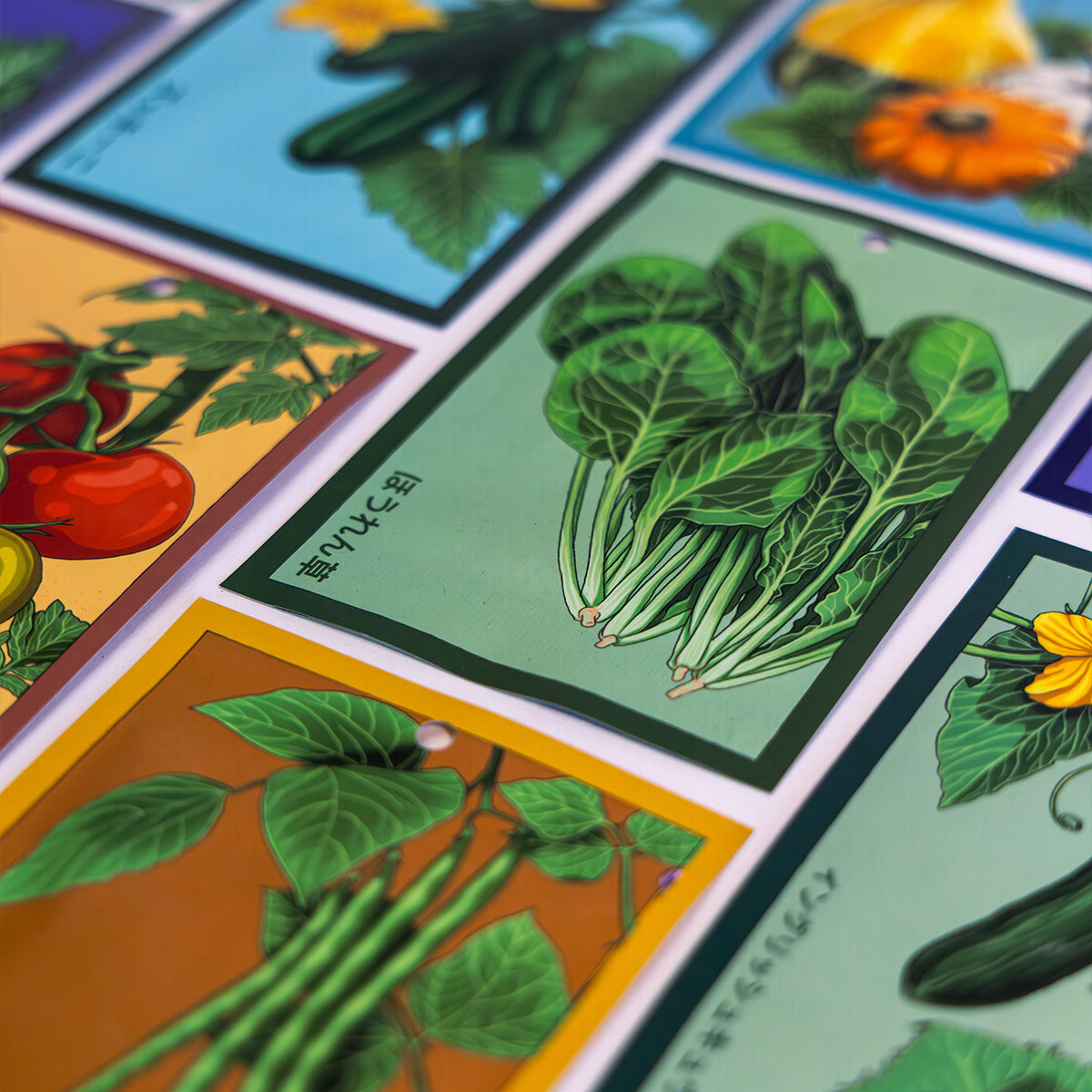
For an allium that develops a full bulb over a longer season, Leek trades scallion's quick regrowth for a slower, more substantial harvest.

Vegetable Shido Seeds packets — by Chive Studio Toronto

The Rest of the Vegetable Garden

Find this among Shido's vegetable seed collection, where quick, repeat-harvest crops sit next to slower, one-time vegetables.

Buttercup Yellow Gay Paree Peony - Chive Ceramics Studio - Ceramic Flowers - Chive Ceramics Studio

Regrowth Without the Regrowing

Scallions need cutting and regrowing to keep producing, but Chive's Ivory Stargazer Lily stays exactly as full and complete as the day it arrived.

Chive Shido seed packets with botanical illustrations on a peg rack, showing cherry blossom, tomato, and eggplant designs.

The credentials behind the packet

A crop grown for repeated cutting rather than a single harvest puts real pressure on the seed to establish well from the very first attempt. The studio addresses that pressure directly, minimizing oxygen exposure in every packet from the moment it's sealed, a step most paper-only seed racks skip entirely. Scallions reward a gardener with weeks of ongoing harvest, and that payoff only works if the initial seed actually comes up reliably in the first place. Repeated harvest depends on a strong first attempt more than people realize. That same sealed standard extends to every allium in the lineup, quick-growing or otherwise. Small, quick crops deserve the same attention as slower ones.


Plant Care, Simplified with Chive

Keep it alive, keep it thriving. Let's make plant parenthood look easy.

Are Seed Packets GMO? The Honest Answer

Todd Newgren
Are seed packets GMO? No—home garden seed packets, Shido included, are never genetically modified, since GMO seed is only made for large-scale commercial crops. The non-GMO badg...
Read more

Nobody grows one dahlia. This is what nobody tells you.

Ryan Hearst
How to grow dahlias from seed: start indoors 6–8 weeks before last frost, transplant after frost, and expect first blooms in late summer. Nobody warns you that one bloom is all ...
Read more

Frequently asked questions

What is the best way to grow scallions from seed?

Scallions need well-drained soil and full sun, growing considerably faster than a bulbing onion variety since they're harvested for their green tops rather than a mature underground bulb. Consistent watering supports the quick, steady regrowth this crop is known for. That efficient use of a small footprint is really the whole reason they stay in such steady rotation.

Can scallions be regrown after cutting?

Yes — cutting the green tops and letting the base regrow allows continuous harvest from a single planting, often for weeks longer than a one-time harvest crop would offer. Some gardeners get several rounds of regrowth from a single planting before needing to resow. That regrowth cycle can repeat several times before the plant genuinely tires out.

What's the difference between scallions and regular onions?

Scallions are harvested young, before a proper bulb has time to develop, while a standard onion is left in the ground considerably longer to form that familiar, fully rounded shape. That distinction in harvest timing is really the entire difference between the two crops. That earlier harvest timing is really the defining difference between the two.

How do you use scallions in cooking?

They show up constantly raw in salads, stirred into soups just before serving, or scattered over a finished dish as a fresh, mild garnish that doesn't overpower other flavors. A quick chop right before serving preserves their mild flavor better than adding them too early. Adding them at the very end preserves that fresh, mild bite best.

Do scallions need a lot of garden space?

No, their narrow growth habit takes up relatively little room, making them a good fit for tucking between other vegetables in an already established bed. That efficient use of space also makes scallions a natural companion crop in a mixed bed. That compact habit also makes scallions forgiving of imperfect spacing decisions.

How long do scallion seeds last?

Vacuum-sealed Shido Seeds packets remain viable for up to 10 years under proper storage, compared to roughly one year for a standard paper seed packet exposed to normal conditions. Small, quick crops deserve the same attention as slower ones. That reliability matters given how often this crop gets replanted across a season.

Can scallions be grown indoors?

Yes, a sunny windowsill provides enough light for scallions to grow reasonably well, making them one of the more practical vegetables for a small indoor herb or vegetable setup. A south-facing window generally provides enough light for consistent indoor growth. A bit of direct sun each day supports steady, consistent indoor growth.

Is this seed germination-tested?

Yes — every Shido Seeds packet, scallions included, is tested at independent third-party labs before it reaches a shelf, ensuring dependable results for this quick-growing crop. That scrutiny matters given how quickly this crop moves from seed to harvest. That scrutiny matters given how often this crop gets replanted. No exceptions made anywhere.

Verte Rx Shiny Leaves for Plants - Chive Ceramics Studio - Chive Ceramics Studio

The seed is the start. Verte RX handles the rest.

Most seedlings fail not from bad seed but from soil that runs out of what the plant needs before the plant can find it. Verte RX is a liquid plant vitamin formulated for exactly that window — the weeks after germination when the root system is establishing and the margin between thriving and stalling is narrowest.