Aubergine Jewel Marble F1 Vegetable Seeds Packet

Regular price $4.95
Vacuum Sealed
NON-GMO
Seed Pack Guarantee

Build Your Garden With These Shido Seeds

Choose a seed packet as your starting point, then round out the bed with these for that thrown-together-but-somehow-perfect harvest.


Aubergine Jewel Marble F1 seeds for the kitchen garden that intends to actually produce aubergine jewel marble f1 this year. The Jewel Marble aubergine is the plant that makes the vegetable garden look like it has been styled.

Aubergine Jewel Marble F1 is an F1 hybrid aubergine producing small, marbled, multi-coloured fruits that are as ornamental as they are edible. Each packet is hermetically vacuum-sealed -- removing the oxygen that causes standard paper seed packets to lose germination viability within approximately one year. State law requires a 3-year viability label on sealed packaging. NASA research on hermetic seed storage indicates viability of up to 10 years under proper conditions. Every packet is non-GMO and germination-tested at independent third-party labs before it earns its Japanese woodblock print artwork.

Seed specifications
  • Material: Seed
  • Botanical name: Solanum melongena 'Jewel Marble' F1
  • Genus: Solanum
  • Plant family: Solanaceae
  • Species: Melongena
  • Plant type: Annual
  • Pollination type: Vegetable
  • USDA Hardiness Zones: 9-11
  • Packet contents: ≈ 50 Seeds
  • Packaging: Hermetically vacuum-sealed
  • Non-GMO: Yes
  • Seed viability: Up to 10 years (sealed) / 4–5 years (unsealed, ideal conditions)
  • Difficulty: Moderate - Recreational Gardener
Sowing & growing guide

Quick Sowing Guide:

  • When to sow: 8-10 wks before last frost
  • Sowing depth: 1/4 in
  • Initial spacing: 18-24 in
  • Row spacing: 24-30 in
  • Days to germination: 7-10 days
  • Light: Full sun
  • Water: Consistent moisture, avoid standing water
  • Soil: Well-drained soil, fertile, loamy soil (rich in organic matter)
  • Harvest: 70-80 days

Start Growing: Step-by-step sowing and growing guide

About vacuum sealing

Why Vacuum-Sealed Seeds Last Longer

Standard paper seed packets are permeable to oxygen and moisture -- the two primary causes of seed degradation. Most paper-packaged seeds begin losing germination viability after approximately one year, contributing to significant garden-industry waste: packets purchased, not planted, expired, discarded. Shido Seeds are hermetically vacuum-sealed. The packet does not expire quietly in a drawer. It waits.

About the Packaging

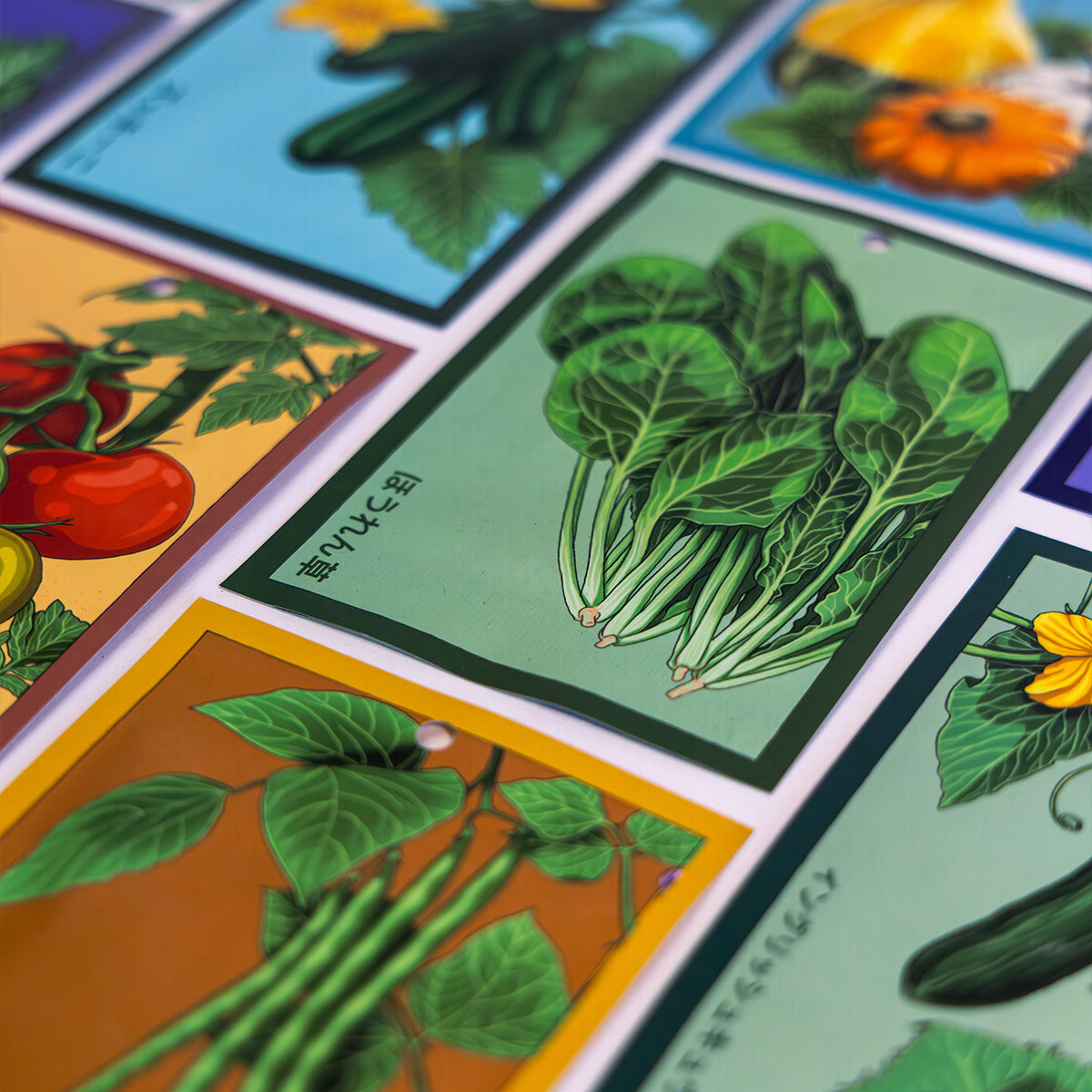
Every Shido seed packet is illustrated in the style of Japanese 1910s woodblock printing -- designed and drawn in-house by Chive, that has been exhibiting at the Chelsea Flower Show in London every year and does not, as a matter of principle, sell to big-box retailers. Customers collect the packets as a series. This was not the original plan.

Shipping & returns

Shipping

  • Free shipping: Orders $200+ within the US
  • Standard: 5–8 business days, Express 2–3 business days (at checkout)
  • International Ships: to 40 countries — rates at checkout
  • Packaging Ships: in outer box to protect gift box

View full shipping policy →

Returns

We accept returns within 30 days of delivery on unused items in original packaging. If your piece arrives damaged, contact us within 7 days with a photo and we will replace it at no charge.

View full return policy →

Satisfaction Guarantee

We stand by the quality of our flower seed packets! Every Shido seed packet is lab-tested for germination before it ships. If your seeds do not perform to the stated germination rate under correct growing conditions, contact us and we will replace or refund. Guaranteed!

Wholesale Inquiries

Have a cool shop? Know someone that does?

Chive Wholesale →

Radish Horticultural Specifications

Botanical

Solanum melongena 'Jewel Marble' F1

Plant Type

Annual

Light

Full sun

Water

Consistent moisture, avoid standing water

Soil

Well-drained soil, fertile, loamy soil (rich in organic matter)

Depth

1/4 in

Germination

7-10 days

USDA Zone

9-11

Mature Height

~22 in tall

Harvest

70-80 days


Aubergine Jewel Marble F1 Vegetable Seeds Packet - Chive Ceramics Studio - Seeds - Chive Ceramics Studio

Getting to know your Aubergine Jewel Marble

Jewel Marble F1 earns its name honestly, producing small, rounded eggplants marbled in shades of purple and cream rather than the single deep color most people picture when they think eggplant. This hybrid variety was bred specifically for that compact, ornamental shape, making it as much a conversation piece on a plate as it is a genuinely useful cooking ingredient. It thrives in consistently warm temperatures and full sun, the same basic conditions most eggplant varieties ask for, though its smaller fruit size means it often reaches harvest a bit faster than a standard full-sized eggplant would. The marbled skin stays tender enough to cook without peeling, and the flesh inside carries the same mild, absorbent quality that makes eggplant such a versatile base for bold seasoning. Its compact plant size suits a container or smaller garden bed particularly well, producing a genuinely full harvest without demanding the same sprawling space a larger variety would need. Regular watering supports steady fruit development, and consistent warmth from planting through harvest matters more here than with a more temperature-tolerant crop. Few eggplants combine this much visual interest with this little demand for garden space. That combination is really the whole reason this hybrid variety has found its own following among smaller-space gardeners.


History & origin

Ancient South Asia

Eggplant (Solanum melongena) was domesticated in South and Southeast Asia, with cultivation dating back over 4,000 years -- notably one of the few major vegetable crops NOT native to the Americas or the Mediterranean.

Silk Road Trade

Eggplant spread westward along trade routes through Persia and into the Mediterranean and Africa by the early medieval period.

European Introduction

Eggplant reached Europe later than many other vegetables, via Arab traders and the Moorish presence in Spain, and was for a time regarded with the same suspicion once directed at tomatoes, given its nightshade family membership.

Modern F1 Breeding

'Jewel Marble' is a modern F1 hybrid bred specifically for compact, container-friendly growth and small, egg-sized fruit -- part of a broader 'Jewel' series developed for home gardeners with limited space.

Today

Eggplant remains a dietary staple across South Asia, the Middle East, and the Mediterranean, with modern compact varieties like this one extending its appeal to small-space and container gardeners.

Shido Vegetable and Flower Seeds Vacuum sealed for peak freshness

Step-by-Step Sowing & Growing Guide

Getting Started

Annual, started indoors, container-friendly

Step 1: Timing - Start indoors 8-10 weeks before last frost.

Step 2: Soil - Rich, well-drained soil.

Step 3: Sowing - ¼-½ inch deep on a heat mat if possible. Germination timing is not well documented for this specific hybrid; allow the standard eggplant window of 7-14 days at 75-90°F.

Step 4: Transplant - After frost danger passes and soil is warm, 18-24 inches apart -- or into an individual container of at least 5 gallons, since this variety is bred compact specifically for pots.

Step 5: Ongoing care - Limit fruit set to 12-15 per plant rather than the full 15-20 possible, for better individual fruit quality.

Step 6: Harvest - Pick at 2-3 inches, egg size, while skin is firm and glossy.

Before you start

Materials needed to sow

  • Seed trays or small pots: For the 8-10 week indoor start.
  • Heat mat: Eggplant germinates best in consistently warm soil, 75-90°F.
  • Grow light: For strong seedling growth through the indoor period.
  • Individual containers, 5+ gallons: Have these ready before transplanting -- this variety is bred specifically for container growing, and undersized pots limit the yields it's capable of.

Materials for harvest and storage

  • A sharp knife or pruners: This variety's stem can be prickly -- cutting cleanly is safer than trying to twist or pull fruit free.
  • Basket: For collecting fruit.
  • Refrigerator (short-term) or blanching setup for freezing: For storage beyond a few days.

Tip: Pick at 2-3 inches, egg size, while the skin is still firm and glossy -- and consider limiting total fruit per plant to 12-15 rather than the full 15-20 possible, for better individual fruit quality.

Growth Requirements

Temperature:

  • Seeds germinate quickly at temperatures between 70° to 90°F (21° to 32°C)
  • Germination optimal at 20-25°C
  • Growing season: 70-85°F (21-29°C) daytime, 60-70°F (15-21°C) nighttime
  • Transplant outdoors after nighttime low temperatures are above 50°F
  • Cannot tolerate frost or temperatures below 50°F (10°C)

Light:

  • Can be grown in a sunny sheltered location outdoors
  • Full sun preferred (6-8 hours direct sunlight daily)
  • Minimum 6 hours of direct sunlight for optimal fruit productionProtection from strong winds essential
  • Morning sun particularly important for flower and fruit development

Soil:

  • Well-draining, fertile soil with good organic content
  • pH range: 6.0-6.8 (slightly acidic to neutral)
  • Rich, loamy soil with good moisture retention
  • Avoid heavy clay or waterlogged conditions
  • Raised beds beneficial for drainage and soil warming

Water:

  • Consistent moisture throughout growing season
  • 1-2 inches of water weekly during active growth
  • Deep, infrequent watering preferred over frequent shallow watering
  • Mulching essential to maintain soil moisture
  • Avoid water stress during flowering and fruit development

Space:

  • For early/late crop allow 46cm between plants, for main crop allow 38cm
  • Container minimum: 5-gallon capacity for proper root development
  • Row spacing: 3-4 feet apart for easy access and air circulation
  • Vertical space: 2-3 feet height allowance with support structures

Maintenance

Weekly Tasks:

  • Monitor soil moisture and water deeply when needed
  • Check for pest activity, especially on leaf undersides
  • Harvest mature fruits every 2-3 days during peak season
  • Remove any damaged or diseased plant material

Bi-weekly Tasks:

  • Side-dress with compost or balanced fertilizer during growing season
  • Install plant supports at the time of planting and adjust ties as needed
  • Prune lower leaves touching the ground
  • Monitor and adjust mulch layer

Monthly Tasks:

  • Deep fertilizer application during active growing season
  • Comprehensive pest and disease inspection
  • Soil pH testing and amendment if necessary
  • Evaluate support system effectiveness

Seasonal Tasks:

  • Spring: Seed starting, soil preparation, transplanting
  • Summer: Regular harvesting, pest management, consistent watering
  • Fall: Final harvest, plant removal, soil preparation for next season

Fertilizing Schedule:

  • Pre-planting: Work compost and balanced fertilizer into soil
  • Early growth: Balanced fertilizer (10-10-10) every 2-3 weeks
  • Flowering/fruiting: Lower nitrogen, higher phosphorus and potassium fertilizer
  • Container growing: Liquid fertilizer weekly at half strength

Support and Training:

  • Plants require support despite compact nature
  • Install stakes or small cages at planting time
  • Tie stems loosely with soft materials
  • Remove suckers (shoots between main stem and branches)
  • Prune lower branches to improve air circulation

Troubleshooting and common mistakes

  • Overcrowding containers — this is a compact, container-friendly variety, but still needs its own adequately sized pot (5+ gallons) to reach the yields described
  • Letting too much fruit set — limiting to 12-15 fruit per plant (rather than the full 15-20 possible) produces better-quality individual fruit

Culinary uses & nutritional information

What it's used for

1. Culinary Applications:

  • Grilling and roasting for Mediterranean dishes
  • Stuffing due to perfect individual serving size
  • Stir-frying and Asian cuisine preparation
  • Ratatouille and vegetable medleys
  • Baba ganoush and dip preparations
  • Pickling and preserving due to compact size
  • Raw preparation in salads when very young

2. Curries and Indian cuisine applicationsNutritional Benefits:

  • Good source of dietary fiber
  • Rich in antioxidants, particularly nasunin (anthocyanin)
  • Low-calorie, nutrient-dense vegetable
  • Contains folate, potassium, and manganese
  • Source of chlorogenic acid with anti-inflammatory properties

3. Garden and Ornamental Uses:

  • Compact plants ideal for container gardening and patios
  • Ornamental value with attractive purple flowers
  • Space-efficient crop for small gardens
  • Conversation starter due to unique striped appearance
  • Educational tool for teaching plant breeding and F1 hybrids

4. Practical Benefits:

  • Individual serving-sized fruits reduce waste
  • Extended harvest period with continuous production
  • Suitable for farmers markets due to unique appearance
  • Gift potential for fellow gardeners

What parts are edible

  • Fruit: The only edible part -- best harvested at egg size, 2-3 inches, while the skin is firm and glossy.

Nutritional data

Raw eggplant, per 100g

Calories: 25 kcal

  • Carbohydrates: 5.9 g
  • Protein: 1 g
  • Total fat: 0.2 g
  • Dietary fiber: 3 g
  • Vitamin C: 2.2 mg (2% RDA)
  • Folates: 22 µg (6% RDA)
  • Potassium: 229 mg
  • Cholesterol: 0 mg
  • Nasunin: an anthocyanin antioxidant concentrated in the purple skin -- eggplant's most notable compound, not a standard vitamin/mineral

Companion plants, pests & diseases

Companion planting

Good companions

  • Beans, peppers — classic eggplant companions
  • Marigolds — general pest-deterrent value

Poor companions / avoid

  • Fennel — allelopathic to many nearby plants
  • Other nightshades — shared disease vulnerabilities -- rotate away from tomatoes, peppers, potatoes

Pests

  • Flea beetles — shot-holes in young leaves, a persistent early-season pest for eggplant
  • Spider mites, aphids — cluster on new growth
  • Colorado potato beetle — will feed on eggplant as well as potatoes

Diseases

  • Bacterial wilt — flagged specifically for this variety in Shido's existing product copy -- sudden wilting with no recovery, no cure, avoid planting in soil with a history of the disease
  • Verticillium wilt — soil-borne, causes one-sided wilting
  • Damping off — affects seedlings from overwatering or unsterile mix

Pro Tip

Limit the number of fruits per plant to 12–15 tops to maintain size and flavor quality. Removing late-setting fruit allows the plant to focus energy on earlier fruits, resulting in larger, firmer, more vibrant Jewel Marble fruits. Also, early staking helps prevent root disturbance and stem breakage.

Vegetable sprouting in rich dark soil - Shido Seeds
Seeds worth keeping

What makes Shido Seeds different

Shido Seeds are designed by Chive Studio, a ceramic design company. We are not a seed conglomerate. We do not sell through big-box retailers. Each variety in the catalog was selected because it is worth growing — not because it ships well in bulk or photographs well in marketing materials.

Every packet is germination-tested at an independent third-party lab before it earns its woodblock illustration. The vacuum seal removes the oxygen that causes standard paper packets to degrade. The stated germination rate is a floor, not a marketing figure.

If something goes wrong, contact us. We will make it right.

Plants that Grow together look good together...even if they are ceramic
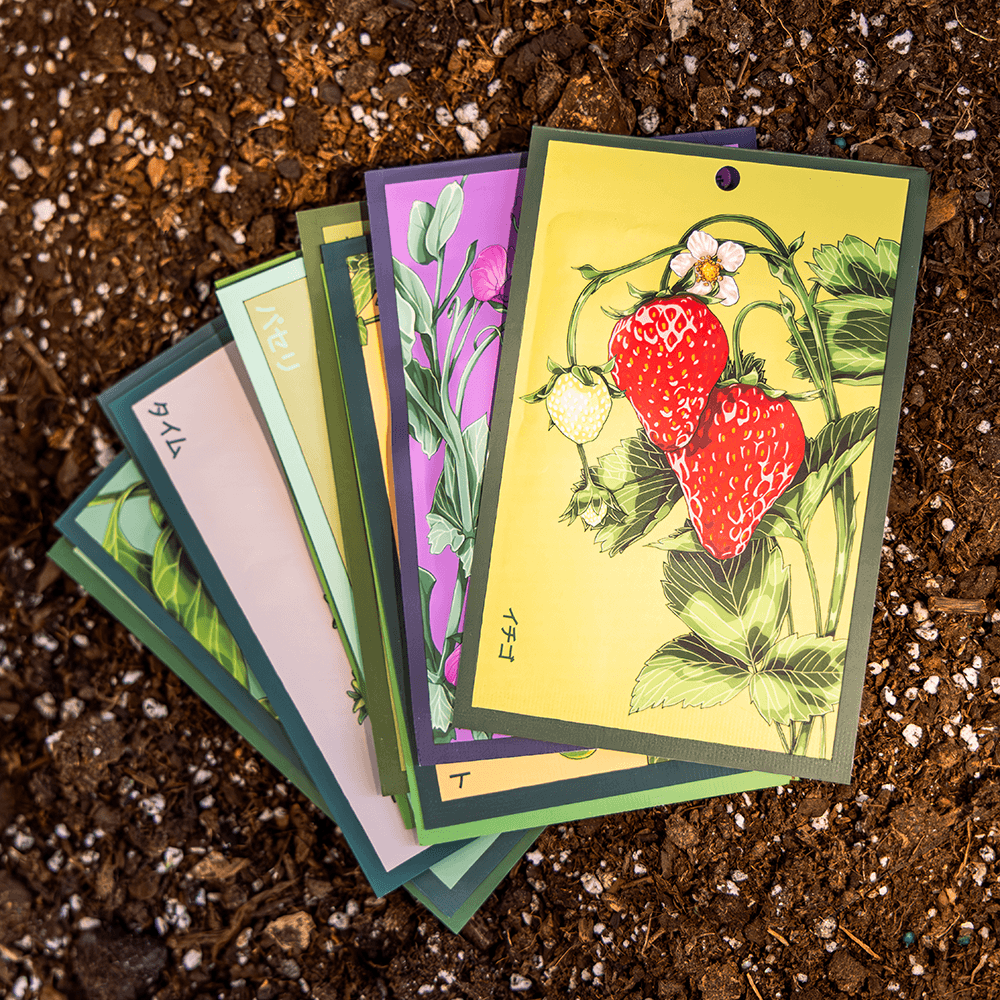
Set of Chive Shido Seeds packets with fruit and flower illustrations on a soil background.

The Classic Version

For the traditional full-sized version of the same crop, Black Beauty Eggplant trades Jewel Marble's compact, marbled fruit for a larger, more classic shape.

Vegetable Shido Seeds packets — by Chive Studio Toronto

More From Shido's Garden

This is part of Shido's broader vegetable seed collection, where compact hybrids sit alongside larger, more traditional varieties.

Marbled Color, No Growing Required

Jewel Marble's pattern only appears once fruit fully develops, but Chive's Ivory Comanche Peony shows its own marbled variation the moment it arrives.

Chive Shido seed packets with botanical illustrations on a peg rack, showing cherry blossom, tomato, and eggplant designs.

The credentials behind the packet

A hybrid bred specifically for a distinctive marbled look still depends entirely on a seed that performs reliably, no matter how much visual interest the final fruit carries. The studio protects that outcome by minimizing oxygen exposure in every packet from the moment it's sealed, well ahead of anything a paper envelope typically manages. A variety this deliberately bred for a specific appearance deserves seed just as carefully handled on the way to a gardener's hands. That same standard applies whether a variety is a century-old heirloom or a modern hybrid cross. Novelty in the fruit shouldn't come paired with uncertainty in the packet. A small, marbled fruit still asks for the exact same care as anything larger in the lineup.


Plant Care, Simplified with Chive

Keep it alive, keep it thriving. Let's make plant parenthood look easy.

Nobody grows one dahlia. This is what nobody tells you.

Ryan Hearst
How to grow dahlias from seed: start indoors 6–8 weeks before last frost, transplant after frost, and expect first blooms in late summer. Nobody warns you that one bloom is all ...
Read more

Do Seeds Expire? How Long Do Seeds Last

Todd Newgren
Seeds don't expire — they lose viability as oxygen depletes stored energy, and vacuum sealing is the fix. Chive's Shido Seeds are vacuum-sealed, germination-tested, and stocked ...
Read more

Frequently asked questions

What is the best way to grow Jewel Marble eggplant?

Jewel Marble needs consistently warm temperatures and full sun, growing into a compact plant that produces small, marbled fruit faster than a standard full-sized eggplant variety typically manages. Regular watering supports steady fruit development throughout the season, and its smaller scale makes it a strong fit for containers or tighter garden beds. That combination of speed and compact size is really what sets this hybrid apart from a traditional eggplant.

Why does Jewel Marble eggplant have a marbled pattern?

It was specifically bred as an F1 hybrid to produce that distinctive purple-and-cream marbling, a deliberate trait rather than something that occurs naturally in standard eggplant varieties grown from open-pollinated seed. That deliberate breeding is really the whole reason the pattern looks so consistent across every fruit. That consistency is really what makes the hybrid recognizable at a glance.

Is Jewel Marble eggplant good for containers?

Yes, its compact plant size makes it particularly well suited to container growing, producing a genuinely full harvest without demanding the sprawling space a larger eggplant variety would typically need. Its compact footprint makes it a natural fit for anyone without room for a larger, sprawling plant. Small-space gardening has genuinely benefited from varieties bred this compact.

Do you need to peel Jewel Marble eggplant before cooking?

No, generally not — the marbled skin stays tender enough to cook without peeling, which also helps the fruit hold its distinctive appearance once prepared. That's a genuine convenience compared to a variety where peeling is really the expected first step. A quick rinse is usually all the prep the skin actually needs.

What does Jewel Marble eggplant taste like?

It carries the same mild, absorbent flesh found in most eggplant varieties, readily taking on whatever seasoning or sauce it's cooked alongside rather than offering a strong flavor of its own. That neutral base is part of why eggplant works across so many different cuisines and preparations. Bold seasoning tends to work especially well against that mild base.

How long do Jewel Marble eggplant seeds last?

Vacuum-sealed Shido Seeds packets stay viable for up to 10 years when stored properly, compared to roughly one year for a standard paper seed packet exposed to normal air and humidity. A small, marbled fruit still asks for the exact same packaging care as anything larger in the lineup. No shortcuts taken for hybrid or heirloom varieties alike.

Can Jewel Marble eggplant be grown alongside standard eggplant?

Yes, the two grow under nearly identical conditions, so planting both side by side works well for anyone wanting both the compact novelty and a more traditional full-sized harvest. Grouping them also makes for an interesting visual contrast once fruit starts appearing on both. Both mature around a similar general timeline too.

Is this seed lab-tested for germination?

Yes — every Shido Seeds packet, Jewel Marble included, is germination-tested at independent third-party labs before it ever reaches a shelf. No shortcuts taken for hybrid varieties. That standard holds regardless of how a variety was originally bred. No shortcuts taken for a hybrid this deliberately bred. Every packet gets the same treatment.

Verte Rx Shiny Leaves for Plants - Chive Ceramics Studio - Chive Ceramics Studio

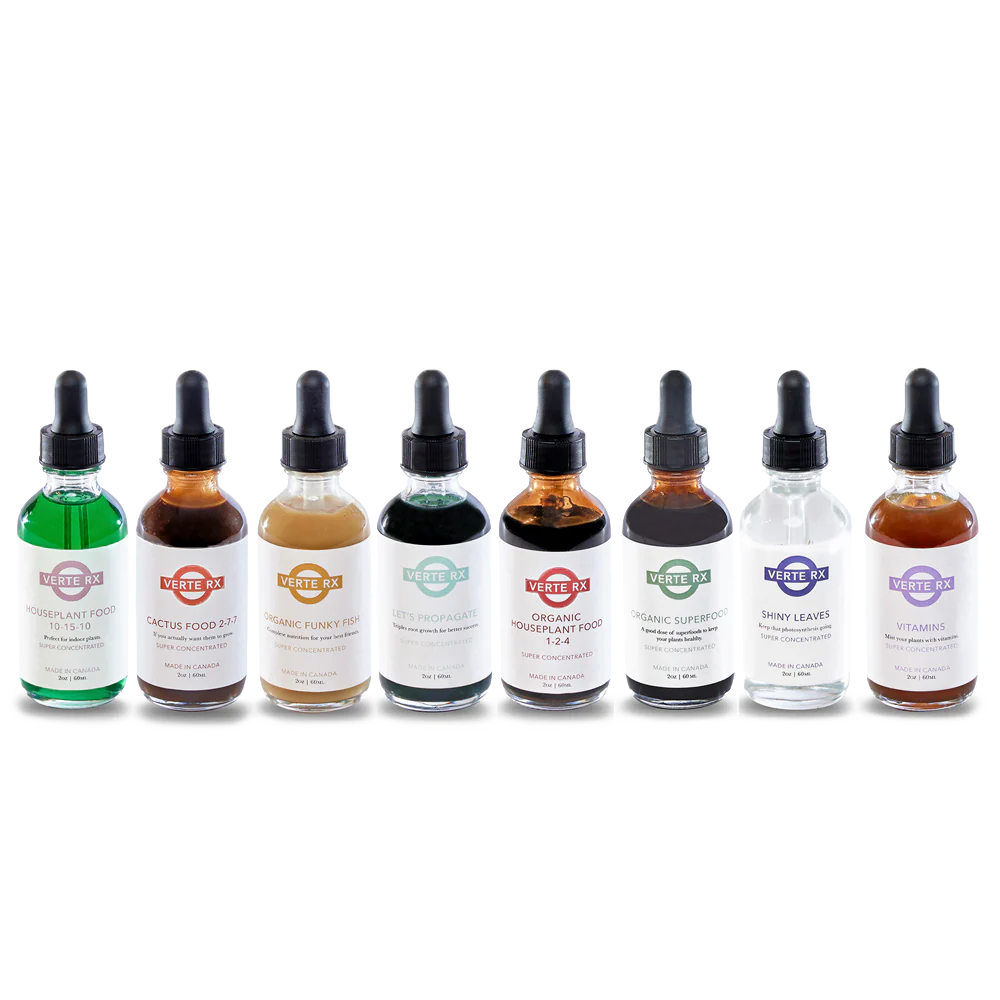
The seed is the start. Verte RX handles the rest.

Most seedlings fail not from bad seed but from soil that runs out of what the plant needs before the plant can find it. Verte RX is a liquid plant vitamin formulated for exactly that window — the weeks after germination when the root system is establishing and the margin between thriving and stalling is narrowest.