
Black & White Glass Modern Flower Vase

Regular price $21.50
Colors: Black
Shapes
Hand Blown Glass
Dishwasher safe cleaning
30-day return policy

Build the Arrangement That Looks Harder Than It Was

Pick a vase to anchor the shelf, then add the rest until it reads as curated instead of collected.


A black vase is a commitment — it anchors whatever sits next to it and makes everything else in the room answer to the contrast. The Black and White vase from Chive earns that anchor role with hand-combed black and white glass, a two tone glass vase where no two pieces share the same pattern because the color is drawn through while the glass is still workable, and the person doing the combing has roughly ninety seconds before the decision becomes permanent. The result looks effortless, which is the entire trick of caring about something this much in private. The cup format measures 2.75 by 2.3; the taller vase runs 3.8 by 3.3, both profiles hold daffodils, gerbera daisies, and peonies without competing against the surface. Black does not fade. White does not yellow. Glass holds both indefinitely, which is more than most commitments promise. The combing happens at the Chive studio in a window of ninety seconds, after which the pattern belongs to physics alone.

Product detail

Product Detail:

  • Material: Glass
  • Glaze finish: Translucent
  • Year Designed: 2012
Dimension
  • Cup: 2.75 inches diameter, 2.3 inches tall
  • Vase: 3.8 inches diameter, 3.3 inches tall
Vase Care Instructions

All glass vases in this collection are dishwasher safe for easy cleaning, with one exception: mercury glass vases should be hand-washed only. The silvered mercury finish is a delicate coating rather than a solid color, and dishwasher heat and detergent can dull or strip it over time.

For standard glass vases, just load it in with the rest of the dishes — no special care needed. For mercury glass pieces, wash gently with warm water and mild soap, and dry with a soft cloth rather than letting it air dry with water spots.

Rinse and dry after each use, especially if flower food or cut-stem residue was in the water, so nothing lingers and clouds the glass.

Flowers that Love this Vase
  • Daffodil
  • Gerbera Daisy
  • Peony
  • Anemone
  • Yarrow
  • Allium
  • Nasturtium
  • Larkspur
  • Flowering Quince
  • Pussy Willow

Quick Guide to Building a Floral Arrangement

  1. Pick your vase first
  2. Start with your anchor flower.
  3. Build in odd numbers.
  4. Add height, then fill.
  5. Greenery does the quiet work.
  6. Cut stems at an angle, underwater if you can.
  7. Step back before you decide it's done.

Shipping & returns

Shipping

  • Free shipping: Orders $200+ within the US
  • Standard: 5–8 business days, Express 2–3 business days (at checkout)
  • International Ships: to 40 countries — rates at checkout
  • Packaging Ships: in outer box to protect gift box

View full shipping policy →

Returns

We accept returns within 30 days of delivery on unused items in original packaging. If your piece arrives damaged, contact us within 7 days with a photo and we will replace it at no charge.

View full return policy →

Wholesale Inquires

Have a cool shop? Know someone that does?

Chive Wholesale →

Black & White Glass Modern Flower Vase - Chive Ceramics Studio - Vases - Chive Ceramics Studio

Ninety Seconds to Permanent — The Black & White

This is the piece we geek out about more than is strictly reasonable for a vase, and we are not hiding that particularly well around the studio. The black and white are not poured in and left to sort themselves out — someone at the studio actually combs the color through the glass while it is still workable, which takes longer than anyone would guess from looking at the finished result. The combing window is roughly ninety seconds. After that the glass cools past the point of cooperation, and whatever pattern exists at second ninety is the pattern that ships. No two are the same. Not because we set out to make each one unique — that is marketing language, and we are wary of it — but because the physics of hot glass and a steady hand simply do not repeat. Designed in 2012, offered as a cup roughly two and three-quarter inches across by two and a third high, or a taller format near three and four-fifths by three and a third. Either format accepts daffodils, gerbera daisies, anemones — blooms that gain from a dark backdrop rather than fighting it. The finished object appears effortless, which is what happens when private obsession meets a disciplined hand.

Chive Studio trimming tulip stems with scissors on a wooden surface, with white, purple, and pink tulips arranged nearby.
How to Cut Flowers Like a Pro:

A (Mostly) Simple Guide to Cutting Your Flowers

So, you’re making an arrangement? Let’s ensure it lives long enough to impress someone—even if it's just you.

  1. Scrub the Scissors: Wash your shears first. Your flowers do not want a side of Dorito dust.
  2. Cut at 45°: Snip stems at an angle. It gives them a straw instead of making them chug from the bottle.
  3. Trim Underwater (Fancy Mode): Cut them submerged to block air bubbles. It’s extra, but they didn’t ask to suffocate.
  4. Ditch Submerged Leaves: Strip anything below the waterline. Unless you are actively going for a swamp aesthetic.
  5. Snip Again if Stale: If they sat out on the counter, trim them again. They need a fresh start (don’t we all?).
  6. Swap the Water: Change it and trim the stems every few days so they don't die immediately.

Voilà! You are now a domestic deity. Go take your Instagram photo before you forget to water them.

Pro Tip: The light does half the work.

Glass catches and bends light in a way ceramic can't. Set the arrangement somewhere it'll get some late afternoon sun, even for an hour, and the water and stems start doing something a solid vase never will.

Perfect Pairs for Any Shelf
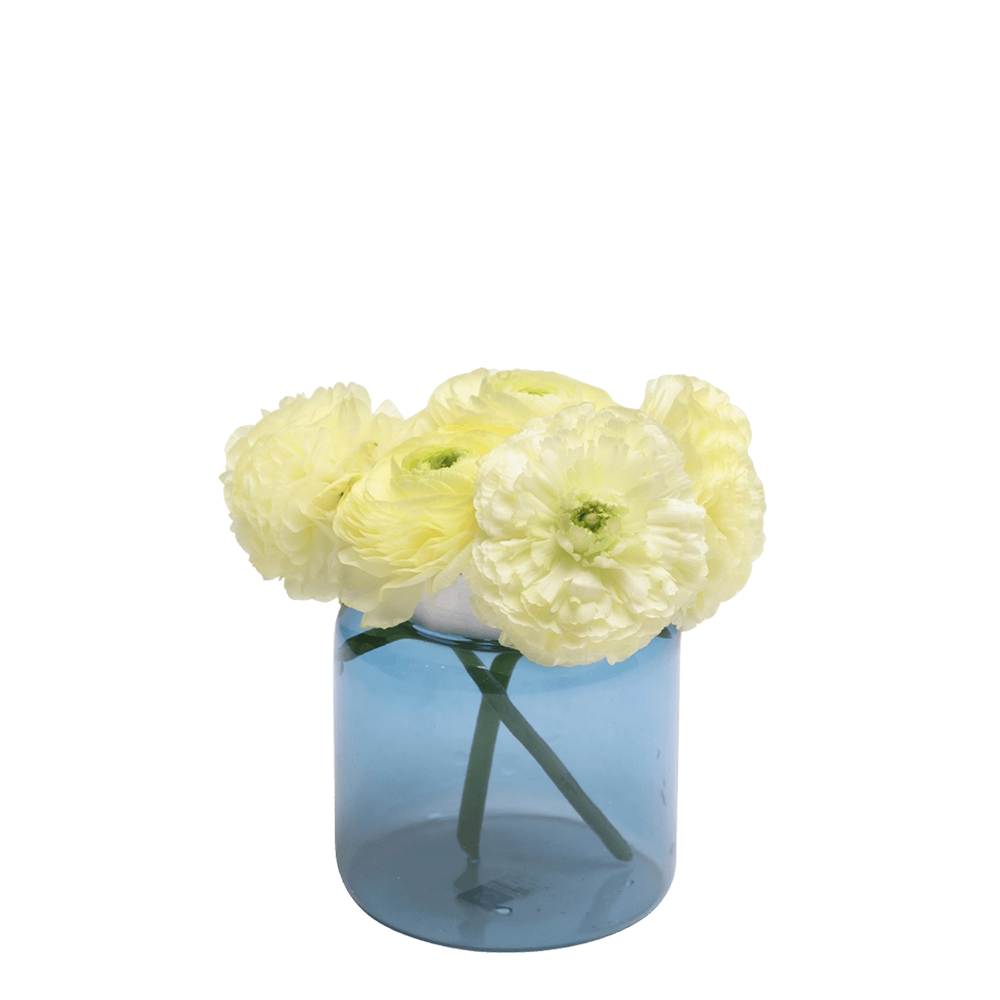
Where Color Pools At The Bottom
The glass vases at Chive come out of the same studio habit that produced everything else here: design the object once, correctly, then resist every opportunity to complicate it. Each one holds stems. None of them hides anything. The Blue Jar Glass Vase is a wide-mouthed jar that suits loose bunches and lets color pool at the bottom through translucent glass walls that hide nothing. See the Blue.

Every Finish, The Same Studio Habit

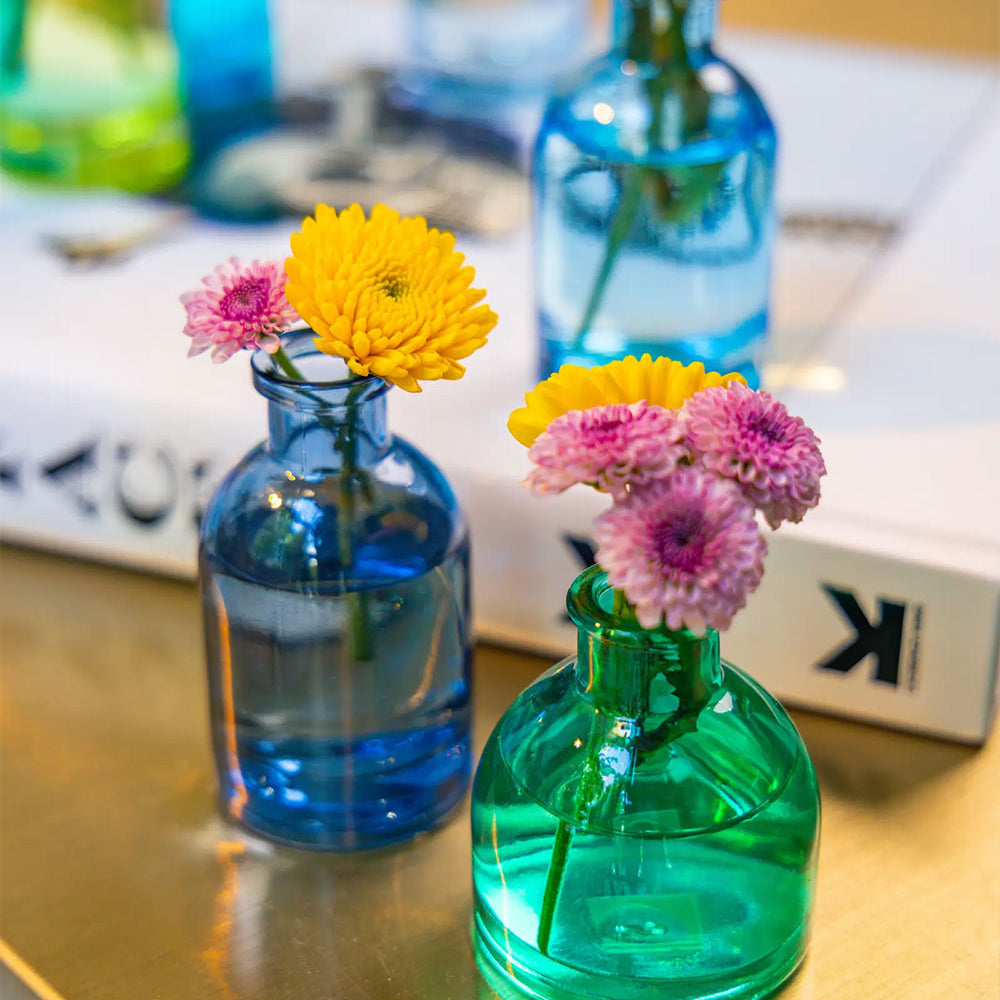
Every Chive vase is built around one decision about how flowers should stand, then finished by hand until that decision reads as obvious. Chive's glass range spans from ribbed Art Deco cylinders and arched centerpieces to wall-mounted horns and magnetic test tubes, each piece built to display the stem, the water, and whatever light the room offers without interference. Every finish ships from the same studio, shaped by hand, designed once, and left alone once it works. Browse the full glass collection.

Warm Candlelight Meets A Drawn Pattern
Light the Foxy Candle beside the hand-combed glass for a pairing where warm candlelight meets the drawn pattern and the room gains both scent and visual texture in a single considered glance. The candle does the atmosphere; the combed glass does the architecture beside it. Shop the Foxy.


Ninety Seconds and Counting

At Chive, the founding year of 2004 established the principle that the hand of the maker should stay visible in the finished piece, and the hand-combed glass may be the most literal example of that principle at work. Every pattern is combed through the glass by a person within about a minute and a half before the glass firms, and the result carries the evidence of that hand in every line. No two are identical — a consequence of physics, not marketing. Small batches, careful combing, each piece examined before it ships. Twenty-two years of learning when to add and when to leave alone, and this vase represents the adding side of that ledger.


Inside the Chive Design Studio

Low maintenance, high impact. Let's make home styling look easy.

Wedding Centerpiece Vases: The Planning Guide Nobody Gives You

Jessie Duenas
Wedding centerpiece vases work best small and plural — three to seven per table, one to three stems each. A fifteen-table reception needs roughly seventy-five vases and 100 to 1...
Read the full story

The Best 10 Styles of Vases

Jessie Duenas
The glorious world of flower vases! Because nothing says "I have my life together" quite like a carefully chosen vessel for your soon-to-be-wilting flora. Gather 'round, fell...
Read the full story

Frequently asked questions

How does the Black & White earn its name as a black vase?

The hand-combed piece earns its name through a process where dark glass is drawn through lighter glass once, producing a surface where the darker tone dominates and the lighter tone follows wherever the comb traveled. The dark tone is functional rather than ornamental — it runs through the glass rather than sitting on top. Every piece carries a different pattern because the combing is done by hand.

Do short-stemmed garden flowers work well in the Black & White vase?

Garden flowers with shorter stems suit the cup profile especially well — the opening is just under three inches across and accommodates daffodils, gerbera daisies, and anemones without crowding. The taller vase profile handles slightly longer stems at just under four inches across and over three inches tall. Keep arrangements simple so the combed pattern shows through.

What footprint does the Black & White vase take up on a table?

This two-tone piece takes up a footprint of roughly three inches across for the cup or just under four inches for the vase profile, both compact enough for a nightstand, a bathroom counter, or a bookshelf without claiming the whole surface. The cup sits lower at just over two inches tall and the vase stands above three inches. The pattern does the visual work.

Is the Black & White vase's glass body durable for everyday use?

The combed glass tolerates routine daily handling — the pattern is embedded in the glass rather than applied to the surface, which means it will not peel, chip, or fade over time. The glass thickness is consistent with the rest of the Chive range and holds up to routine contact around the home. Handle it the way you would handle any glass object.

Is the Black & White vase dishwasher safe or hand wash only?

Hand washing is recommended — warm water, a soft cloth, and gentle handling to protect the combed glass surface from anything abrasive. The two-tone design lives inside the glass rather than on top, so scrubbing will not remove it, but the surface finish benefits from careful treatment. Rinse after each use and dry promptly to prevent spotting on the darker glass.

Which rooms suit the Black & White vase's shape and scale best?

The combed glass suits rooms where the contrast between black glass and white combing has something to play off — a white shelf, a dark wood table, a marble counter, or a brightly lit bathroom vanity. The pattern shifts appearance depending on the background and the angle of the light source. Bright windows show it best.

What makes the Black & White vase different from the Jar vase nearby?

This combed piece differs from the Jar in both form and process — the Black and White is hand-combed glass with a pattern unique to each piece, while the Jar is a single-color vessel designed for larger loose bunches. The combed piece is a display piece where the surface is the point; the Jar is a workhorse where the flowers are the point.

How did the Black & White vase's design evolve at Chive studio?

The combing technique was developed at Chive starting in 2012 from an experiment in how far you could push two-tone glass combing within a ninety-second working window. Early trials tested different color ratios before black-dominant emerged as the strongest visual anchor for the whole product line. The form has not changed since.

Ceramic astronaut vase with flowers styled on shelf — Chive Studio Toronto
Behind the Studio

The story behind the Chive astronaut vases

The story of Laika, Félicette, a solar eclipse in New York, and a space bar that ordered a hundred vases a month until it closed.