
Boysenberry Flower Fruit & Berry Seeds Packet

Regular price $4.95
Vacuum Sealed
NON-GMO
Seed Pack Guarantee

Build Your Garden With These Shido Seeds

Choose a seed packet as your starting point, then round out the bed with these for that thrown-together-but-somehow-perfect harvest.


Boysenberry seeds grow into a large, dark hybrid berry with a rich, complex flavor somewhere between a blackberry and a raspberry. Shido boysenberry seeds are non-GMO and hermetically vacuum-sealed, so the packet stays viable long past what a paper envelope would allow. Standard paper-packed seeds begin losing germination viability after approximately one year.

The boysenberry is the fruit equivalent of a confident opinion: large, dark, and not easily confused with anything else on the vine or off it. It doesn't split the difference between its parent fruits so much as claim the best of both and move on, entirely unconcerned with being classified or, frankly, being questioned about it at all. The vine grows with equal confidence, taking exactly as much trellis as it pleases. Every packet ships germination-tested at independent third-party labs before packaging, a formality the seed has already outlasted many times over inside its vacuum seal.

Seed specifications
  • Material: Seed
  • Botanical name: r. ursinus × idaeus
  • Genus: Rubus
  • Plant family: Rosaceae
  • Species: ursinus
  • Plant type: Perennial bramble hybrid
  • Pollination type: Vegetable
  • USDA Hardiness Zones: 6–9 zone
  • Packet contents: ≈ 100 Seeds
  • Packaging: Hermetically vacuum-sealed
  • Non-GMO: Yes
  • Seed viability: Up to 10 years (sealed) / 4–5 years (unsealed, ideal conditions)
  • Difficulty: Moderate - Recreational Gardener
Sowing & growing guide

Quick Sowing Guide:

  • When to sow: 8–10 weeks before last frost
  • Sowing depth: 1/4 in
  • Initial spacing: 3-5 ft
  • Row spacing: -
  • Days to germination: 1–3 months
  • Light: Full Sun
  • Water: Consistent moisture
  • Soil: Loamy, well-drained (rich in organic mater)
  • Harvest: 2-3 years

Start Growing: Step-by-step sowing and growing guide

About vacuum sealing

Why Vacuum-Sealed Seeds Last Longer

Standard paper seed packets are permeable to oxygen and moisture -- the two primary causes of seed degradation. Most paper-packaged seeds begin losing germination viability after approximately one year, contributing to significant garden-industry waste: packets purchased, not planted, expired, discarded. Shido Seeds are hermetically vacuum-sealed. The packet does not expire quietly in a drawer. It waits.

About the Packaging

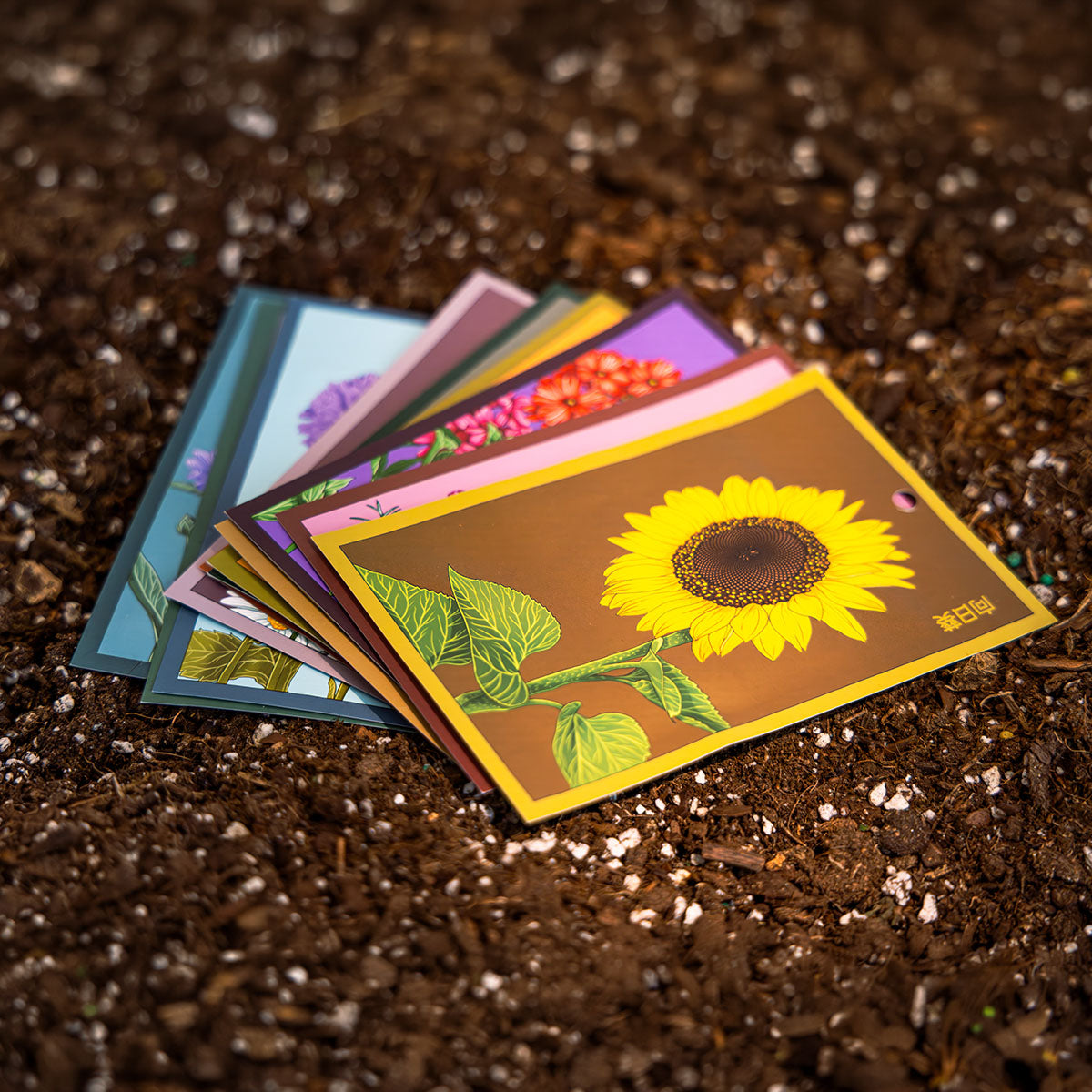
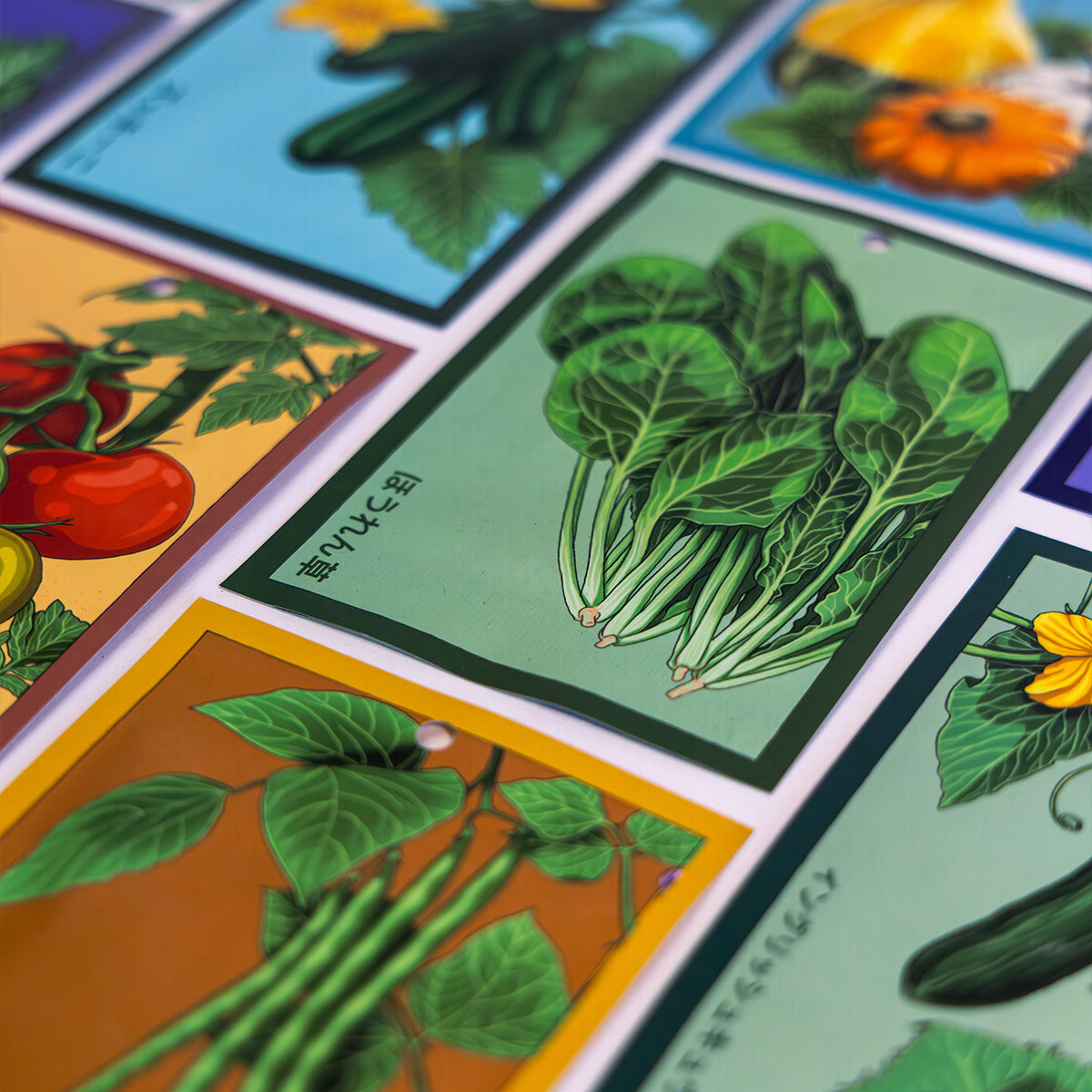
Every Shido seed packet is illustrated in the style of Japanese 1910s woodblock printing -- designed and drawn in-house by Chive, that has been exhibiting at the Chelsea Flower Show in London every year and does not, as a matter of principle, sell to big-box retailers. Customers collect the packets as a series. This was not the original plan.

Shipping & returns

Shipping

  • Free shipping: Orders $200+ within the US
  • Standard: 5–8 business days, Express 2–3 business days (at checkout)
  • International Ships: to 40 countries — rates at checkout
  • Packaging Ships: in outer box to protect gift box

View full shipping policy →

Returns

We accept returns within 30 days of delivery on unused items in original packaging. If your piece arrives damaged, contact us within 7 days with a photo and we will replace it at no charge.

View full return policy →

Satisfaction Guarantee

We stand by the quality of our flower seed packets! Every Shido seed packet is lab-tested for germination before it ships. If your seeds do not perform to the stated germination rate under correct growing conditions, contact us and we will replace or refund. Guaranteed!

Wholesale Inquires

Have a cool shop? Know someone that does?

Find Chive on Faire →

Radish Horticultural Specifications

Botanical

r. ursinus × idaeus

Plant Type

Perennial bramble hybrid

Light

Full Sun

Water

Consistent moisture

Soil

Loamy, well-drained (rich in organic mater)

Depth

1/4 in

Germination

1–3 months

USDA Zone

6–9 zone

Mature Height

5–6 ft trellis-trained

Harvest

2-3 years
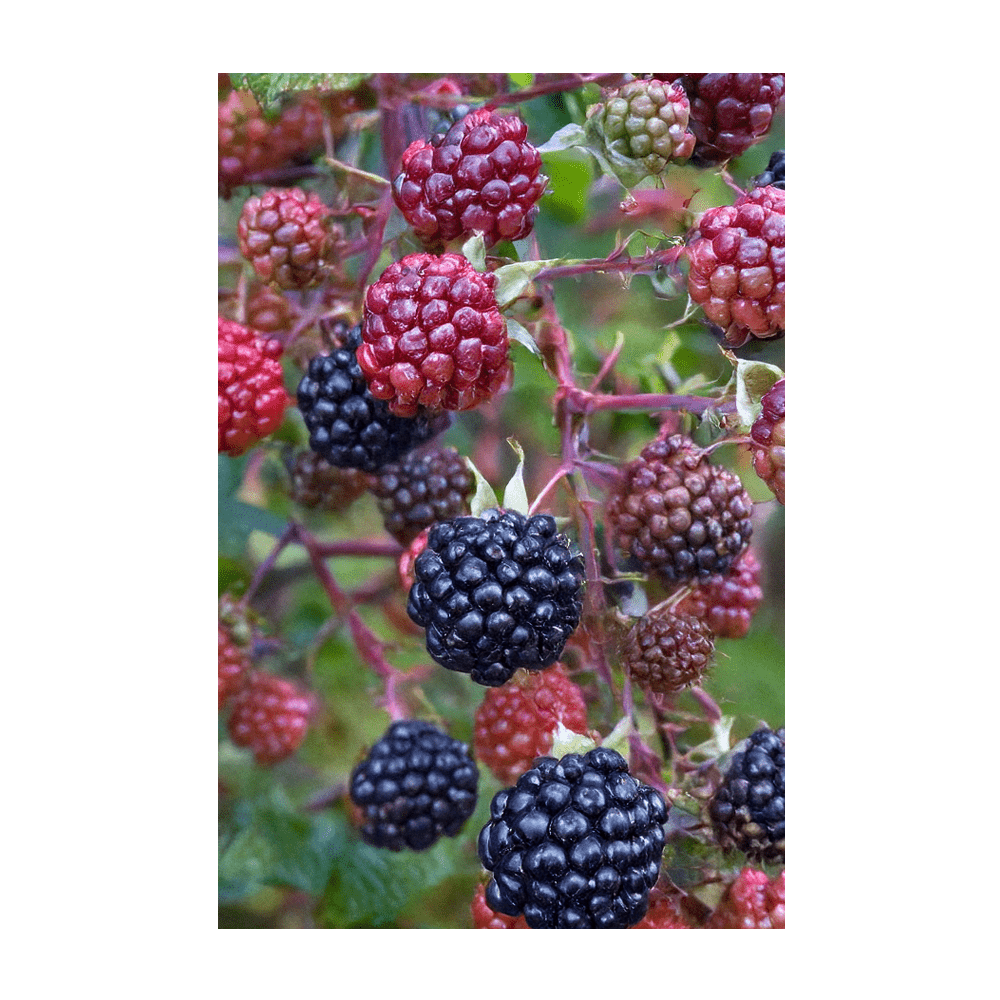

Boysenberry plant on supports in summer garden

Getting to know your Boysenberry

Boysenberries are large, deep maroon-purple, and genuinely soft, so soft that they're notoriously hard to ship, which makes them a rare find in stores and a genuine treasure for anyone growing their own. Their flavor runs rich and layered, sweeter than a blackberry, juicier than a raspberry, with floral and wine-like notes that make pies, jams, and syrups genuinely sing. In the garden, boysenberries are vigorous growers, and by vigorous, that really means borderline unruly. They need trellising, pruning, and regular supervision to keep their thorny canes in check, but treat them right and they'll reward a gardener with genuinely massive harvests each summer. They thrive in full sun with well-drained, slightly acidic soil, and appreciate a good layer of mulch to keep roots cool through warmer stretches. Be prepared to defend the harvest from birds too, since boysenberries ripen fast and disappear even faster once they do. Boysenberry isn't here to be cute or convenient; it's here to be genuinely unforgettable. Grow it if flavor with real edge, personality in the plant, and a harvest full of history sounds like a fair trade for the extra supervision it demands. Few berries demand this much active supervision while paying it back this generously.


History & origin

1920s, California

Boysenberry is credited to Rudolph Boysen, a Californian horticulturalist who experimented with crossing blackberry, raspberry, dewberry, and loganberry varieties, developing a new large, dark hybrid berry in the 1920s.

Near-Loss and Rescue

Boysen's early plantings struggled and the variety nearly disappeared, until grower Walter Knott heard about the berries and, with Boysen's help, located and rescued surviving vines from Boysen's abandoned field in the early 1930s.

Knott's Berry Farm

Walter Knott propagated and popularized the rescued berry at his farm stand in Southern California, and the boysenberry became closely tied to Knott's Berry Farm's identity, eventually growing into a major berry-farming and food business built substantially on the fruit's popularity.

Mid-Century Decline

Boysenberry enjoyed major popularity through the 1950s and into the 1960s, but declined afterward in part because the delicate fruit didn't hold up well to commercial shipping and packaging.

Today

Remains most strongly associated with Knott's Berry Farm and Southern California, prized by home growers and small farms for its rich, tart-sweet flavor, and every plant in cultivation still traces back genetically to Boysen's original rescued vines, since the hybrid must be propagated clonally rather than from seed.

Shido Vegetable and Flower Seeds Vacuum sealed for peak freshness

Step-by-Step Sowing & Growing Guide

Getting Started

Perennial bramble hybrid -- CANNOT be reliably grown true from seed

Step 1: Read this before sowing - Boysenberry is a complex four-way hybrid (raspberry × blackberry × dewberry × loganberry). Multiple horticultural sources are explicit that seed-grown plants will NOT produce a true boysenberry -- every commercial boysenberry plant traces back to clonal propagation from the original Knott's Berry Farm stock, not seed. If a true-to-type boysenberry is the goal, this is a genuine limitation of growing from seed rather than a normal care variable.

Step 2: Timing - If sowing anyway (to see what the seedling produces, understanding it won't match the named variety), start indoors 8-10 weeks before last frost.

Step 3: Soil - Well-drained, loose, loamy or sandy soil, full sun.

Step 4: Sowing - ¼-½ inch deep, kept moist -- bramble seed benefits from cold stratification beforehand.

Step 5: Transplant - After the last spring frost of the second year, space plants 5-6 feet apart -- boysenberries commonly aren't planted in their final spot until their second spring.

Step 6: Harvest - If the resulting plant fruits, expect it in its second year -- berries are ready when they turn deep reddish-purple and detach easily.

Before you start

Materials needed to sow

  • Seed trays or small pots: If sowing seed at all -- see the planting guide and troubleshooting notes on why this won't produce a true boysenberry.
  • Seed-starting mix: For germination, should seed be sown.
  • Refrigerator space and moist sand or peat: For cold stratification, which benefits bramble seed generally.
  • A sturdy trellis or support structure: Needed regardless of propagation method, since boysenberry vines are vigorous and sprawling.
  • Pruning shears: For managing canes and removing spent growth.
  • Bare-root plant or rooted cutting (the reliable alternative): Worth having on hand as a backup plan, since this is the method that actually guarantees a true boysenberry, unlike seed.

Materials for harvest and storage

  • Very shallow basket or single-layer tray: This fruit is famously delicate -- more so than any other berry in this collection -- so shallow containers matter even more here than for raspberry or blackberry.
  • Refrigerator storage, used within a day or two: This berry doesn't hold up well even under good storage conditions -- plan to eat or process it quickly rather than storing it for later in the week.
  • Freezer bags or trays: The most practical way to preserve a crop beyond a couple of days, given how quickly the fresh fruit declines.

Tip: Boysenberries don't ripen further once picked, so harvest only fully colored, deep reddish-purple fruit -- and handle it as little as possible afterward, since this is the one berry in this set where rough handling shows almost immediately.

Growth Requirements

Light:

  • Requires full sun.

Soil:

  • Prefers well-drained, loose, loamy or sandy soil.

Watering:

  • Requires consistent moisture.

Temperature & Climate:

  • Hardy in zones 6-9.

Fertilization:

  • Apply a balanced fertilizer in early spring.
  • Side-dress with potassium during fruiting.

Maintenance

Trellising & Training:

  • Train vigorous vines onto a sturdy support structure, set up before or at planting.

Mulching:

  • Apply organic mulch to retain moisture and suppress weeds.

Pruning:

  • Remove spent canes after harvest.
  • Manage vigorous growth regularly to keep the planting from sprawling out of bounds.

Watering:

  • Keep moisture consistent.

Harvesting:

  • Pick at full color — this fruit doesn't ripen further once picked.

Storing:

  • Highly perishable — use within a day or two, or freeze promptly, since this is the most fragile fruit in this collection.

Troubleshooting and common mistakes

  • Expecting a true boysenberry from seed — this cannot be reliably achieved -- see the planting guide for the full explanation
  • Delaying harvest or rough handling — the fruit's famous fragility (part of why it fell out of commercial favor decades ago) means it needs picking right at ripeness and gentle handling immediately after

Culinary uses & nutritional information

What it's used for

1. Culinary Uses:

  • Consumed fresh, though best eaten quickly given its fragility.
  • Used in jams, preserves, and syrups.
  • Baked into pies and other desserts.

2. Nutritional Value:

  • Good source of dietary fiber, vitamin C, and manganese.
  • Contains antioxidant compounds typical of its blackberry and raspberry parentage.

3. Garden & Decorative Uses:

  • Its vigorous vine can be trained decoratively along a trellis or arbor.
  • Makes a good companion plant with garlic, commonly said to help deter aphids.

What parts are edible

  • Fruit: The entire edible harvest -- an aggregate of drupelets, similar in structure to blackberry, reflecting its blackberry parentage.

Nutritional data

Raw boysenberry, per 100g

Calories: ~50 kcal

  • Carbohydrates: ~12 g
  • Protein: ~1 g
  • Total fat: ~0.4 g
  • Dietary fiber: ~5-7 g -- consistent with its blackberry/raspberry parentage
  • Vitamin C: ~15-20 mg (estimated, 17-22% RDA) -- likely higher fresh than the ~6 mg sometimes cited from frozen product, since freezing degrades vitamin C
  • Folates: ~25 µg (estimated, similar to blackberry)
  • Potassium: ~196 mg
  • Cholesterol: 0 mg
  • Confidence note: boysenberry-specific fresh-fruit analysis is less commonly published than for its parent species -- treat these figures as a reasonable estimate rather than a precisely verified measurement

Companion plants, pests & diseases

Companion planting

Good companions

  • Garlic, chives — said to help deter aphids from nearby brambles

Poor companions / avoid

  • Nightshades (tomatoes, potatoes, eggplant, peppers) — share verticillium wilt susceptibility
  • Wild or unmanaged brambles nearby — virus risk

Pests

  • Raspberry beetle — larvae feed inside fruit
  • Aphids — cluster on new growth, also spread virus
  • Spider mites — worse in hot, dry conditions

Diseases

  • Verticillium wilt — soil-borne; avoid planting after nightshades
  • Botrytis (grey mold) — this variety's fruit is notably delicate and prone to this in humid conditions or if left too long after ripening
  • Cane blight — causes wilting and dieback, entering through wounds

Pro Tip

Focus on cane management: Carefully prune last season’s fruiting canes at soil level immediately post-harvest. Select only 5–7 healthy primocanes each spring, trim laterals to manage density, and train them on a two-wire trellis system. This structured approach ensures strong airflow, easier harvest access, better fruit yield, and containment of wander‑rooting canes.

Seeds worth keeping

What makes Shido Seeds different

Shido Seeds are designed by Chive Studio, a ceramic design company. We are not a seed conglomerate. We do not sell through big-box retailers. Each variety in the catalog was selected because it is worth growing — not because it ships well in bulk or photographs well in marketing materials.

Every packet is germination-tested at an independent third-party lab before it earns its woodblock illustration. The vacuum seal removes the oxygen that causes standard paper packets to degrade. The stated germination rate is a floor, not a marketing figure.

If something goes wrong, contact us. We will make it right.

Plants that Grow together look good together...even if they are ceramic
Its Rebellious Cousin
For an equally unruly bramble with its own distinct attitude, Blackberry shares boysenberry's need for real trellising and regular supervision.

Vegetable Shido Seeds packets — by Chive Studio Toronto

The Rest of the Fruit & Berry Garden

This is part of Shido's broader fruit and berry collection, where vigorous brambles share space with more compact, well-behaved fruit.

Buttercup Yellow Gay Paree Peony - Chive Ceramics Studio - Ceramic Flowers - Chive Ceramics Studio

Rich Flavor, No Bird Patrol Required

Boysenberries need real vigilance against birds once they ripen, but Chive's Ivory Rose never needs defending from anything at all.

Chive Shido seed packets with botanical illustrations on a peg rack, showing cherry blossom, tomato, and eggplant designs.

The credentials behind the packet

Some of the studio's best glaze colors came from combinations nobody would have paired on purpose, two pigments that shouldn't have worked together producing something richer than either alone. Boysenberry follows that same unlikely logic, a cross between blackberry, raspberry, and loganberry that had no business tasting this good, and yet somehow does. The studio treats a genuinely unpredictable variety like this one with the same careful sealing every packet gets, since an unlikely combination deserves a seed just as dependable as anything more conventional in the lineup. Sometimes the best results come from ingredients nobody planned on combining in the first place. That combination is worth protecting from the very first step.


Plant Care, Simplified with Chive

Keep it alive, keep it thriving. Let's make plant parenthood look easy.

Nobody grows one dahlia. This is what nobody tells you.

Ryan Hearst
How to grow dahlias from seed: start indoors 6–8 weeks before last frost, transplant after frost, and expect first blooms in late summer. Nobody warns you that one bloom is all ...
Read more

How to Plant Zinnia Seeds | Shido Seeds Guide

Todd Newgren
Zinnia seeds germinate in 7 days and bloom all summer long. You plant one packet thinking "a little color." By August, the zinnias have taken over. Learn the one rule that keeps...
Read more

Frequently asked questions

What is the best way to grow boysenberries?

Boysenberries need full sun, well-drained, slightly acidic soil, and sturdy trellising to manage their genuinely vigorous canes. Regular pruning keeps growth in check, and a good layer of mulch helps keep roots cool through warmer stretches of the season. That combination of care matters more here than with a lower-maintenance fruiting plant.

Why are boysenberries hard to find in stores?

Their genuinely soft texture makes them difficult to ship without bruising, which is exactly why they're a much more common find in home gardens than on a grocery store shelf. Grocery store distribution generally favors firmer fruit that survives transport, which boysenberries simply don't manage. That fragility is really the entire tradeoff for such a genuinely rich, complex flavor.

What does a boysenberry taste like?

It carries a rich, layered flavor — sweeter than a blackberry, juicier than a raspberry, with floral and wine-like notes that make pies, jams, and syrups genuinely stand out. That layered complexity is really the whole reason bakers reach for boysenberries over more common alternatives. That complexity holds up remarkably well in baked goods that give the flavor room to shine.

Do boysenberry plants need a lot of maintenance?

Yes, more than a lower-maintenance fruit — the thorny canes need regular pruning and supervision to stay productive rather than sprawling into an unmanageable tangle. Skipping that maintenance for even one season noticeably reduces the following year's harvest. Consistent attention throughout the season is really the whole price of a strong harvest.

How do you protect boysenberries from birds?

Netting draped over the canes as fruit ripens is the most reliable method, since boysenberries ripen quickly and disappear just as fast once birds discover them. Checking daily during peak ripening season catches fruit before birds get to it first. A quick daily walk-through during peak season catches most of the fruit before birds do.

How long do boysenberry seeds last?

Vacuum-sealed Shido Seeds packets remain viable for up to 10 years under proper storage, compared to roughly one year for a standard paper seed packet exposed to normal conditions. That combination is worth protecting from the very first step. Cool, dry storage further extends that shelf life well past the basic guarantee.

Is boysenberry a cross between other berries?

Yes — it's a hybrid berry combining traits from blackberry, raspberry, and loganberry, which is part of what gives it that genuinely complex, layered flavor profile. That hybrid heritage is part of why boysenberry doesn't taste quite like any single parent fruit. That heritage explains the genuinely distinctive flavor that sets it apart from either parent alone.

Has this variety been recognized at a flower show?

Chive has exhibited its seed line at the RHS Chelsea Flower Show, where professional grower feedback has helped shape several varieties currently offered in the catalog. That scrutiny matters given how much this variety's flavor depends on careful growing conditions. That trade show presence has helped shape several varieties currently offered across the catalog.

Verte Rx Shiny Leaves for Plants - Chive Ceramics Studio - Chive Ceramics Studio

The seed is the start. Verte RX handles the rest.

Most seedlings fail not from bad seed but from soil that runs out of what the plant needs before the plant can find it. Verte RX is a liquid plant vitamin formulated for exactly that window — the weeks after germination when the root system is establishing and the margin between thriving and stalling is narrowest.