Wall Brick Glass Modern Clear Flower Vase

Regular price $27.50
Sizes
Hand Blown Glass
Dishwasher safe cleaning
30-day return policy

Build the Arrangement That Looks Harder Than It Was

Pick a vase to anchor the shelf, then add the rest until it reads as curated instead of collected.


A brick vase begins life as a container for cut stems and then, in most houses, gets quietly reassigned. People start pushing cuttings into it and watching roots thicken in the water, which is a more interesting hobby than buying flowers that arrive already finished. Mounted flat against plaster, the wall brick vase stops reading as storage and starts reading as something you steer a visitor toward on the way to the kitchen. Nobody asked it to become art. It managed that on its own, the way useful objects sometimes do while you are looking elsewhere. This glass brick flower vase comes in two heights (7.75 inches in the large, 6 in the small), both a shade under two inches deep, so a row of them can share one wall without crowding. The people who make these work them by hand at Chive Ceramics Studio again, batch after batch, and no two come out matching exactly.

Product detail

Product Detail:

  • Material: Glass
  • Glaze finish: Translucent
  • Year Designed: 2010.0
Dimension
  • Large: 10.16 cm (4") long, 5.08 cm (2") wide, 19.69 cm (7.75") height
  • Small: 10.16 cm (4") long, 5.08 cm (2") wide, 15.24 cm (6") height
Vase Care Instructions

All glass vases in this collection are dishwasher safe for easy cleaning, with one exception: mercury glass vases should be hand-washed only. The silvered mercury finish is a delicate coating rather than a solid color, and dishwasher heat and detergent can dull or strip it over time.

For standard glass vases, just load it in with the rest of the dishes — no special care needed. For mercury glass pieces, wash gently with warm water and mild soap, and dry with a soft cloth rather than letting it air dry with water spots.

Rinse and dry after each use, especially if flower food or cut-stem residue was in the water, so nothing lingers and clouds the glass.

Flowers that Love this Vase
  • Ranunculus
  • Snapdragon
  • Rose
  • Orchid
  • Waxflower
  • Scabiosa
  • Veronica
  • Lily of the Valley
  • Iceland Poppy
  • Tweedia

Quick Guide to Building a Floral Arrangement

  1. Pick your vase first
  2. Start with your anchor flower.
  3. Build in odd numbers.
  4. Add height, then fill.
  5. Greenery does the quiet work.
  6. Cut stems at an angle, underwater if you can.
  7. Step back before you decide it's done.

Shipping & returns

Shipping

  • Free shipping: Orders $200+ within the US
  • Standard: 5–8 business days, Express 2–3 business days (at checkout)
  • International Ships: to 40 countries — rates at checkout
  • Packaging Ships: in outer box to protect gift box

View full shipping policy →

Returns

We accept returns within 30 days of delivery on unused items in original packaging. If your piece arrives damaged, contact us within 7 days with a photo and we will replace it at no charge.

View full return policy →

Wholesale Inquires

Have a cool shop? Know someone that does?

Find Chive on Faire →

Wall Brick Glass Modern Clear Flower Vase - Chive Ceramics Studio - Vases - Chive Ceramics Studio

Nobody Asked It To Become Art

The most common question about this piece has nothing to do with flowers. It is whether the thing will come off the wall. The honest answer is that the vessel will not, but your wall might, and the difference between those outcomes comes down entirely to what you screwed into. Plasterboard with no anchor fails eventually, usually while you are out of the house. A proper toggle holds far more than a glass rectangle full of water ever weighs. We say so in the instructions and people still write to ask, which I understand, because there is a particular dread attached to hanging something breakable above something you love. Renters ask a different question, which is whether adhesive strips will do. They will, provided you empty it first, provided the plaster is genuinely clean, and provided you accept that adhesive is a relationship rather than a fixture and wants renewing yearly. Somewhere we have a photograph of eleven of these mounted in a grid in a rented flat in Manchester, every one held up with tape, every one filled. I have never found the courage to ask how long that lasted, and at this remove I would rather simply assume the best of all eleven.

Chive Studio trimming tulip stems with scissors on a wooden surface, with white, purple, and pink tulips arranged nearby.
How to Cut Flowers Like a Pro:

A (Mostly) Simple Guide to Cutting Your Flowers

So, you’re making an arrangement? Let’s ensure it lives long enough to impress someone—even if it's just you.

  1. Scrub the Scissors: Wash your shears first. Your flowers do not want a side of Dorito dust.
  2. Cut at 45°: Snip stems at an angle. It gives them a straw instead of making them chug from the bottle.
  3. Trim Underwater (Fancy Mode): Cut them submerged to block air bubbles. It’s extra, but they didn’t ask to suffocate.
  4. Ditch Submerged Leaves: Strip anything below the waterline. Unless you are actively going for a swamp aesthetic.
  5. Snip Again if Stale: If they sat out on the counter, trim them again. They need a fresh start (don’t we all?).
  6. Swap the Water: Change it and trim the stems every few days so they don't die immediately.

Voilà! You are now a domestic deity. Go take your Instagram photo before you forget to water them.

Pro Tip: The light does half the work.

Glass catches and bends light in a way ceramic can't. Set the arrangement somewhere it'll get some late afternoon sun, even for an hour, and the water and stems start doing something a solid vase never will.

Perfect Pairs for Any Shelf
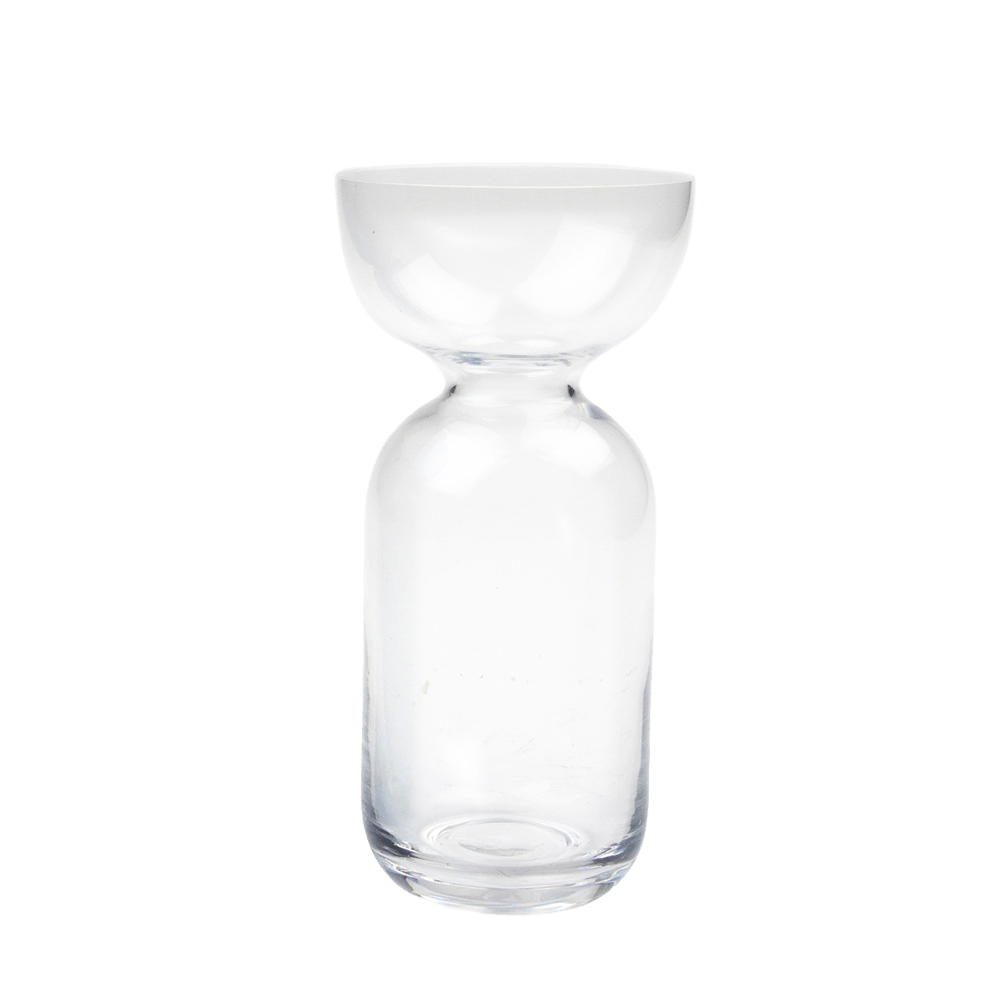
Bulb Forcer Glass Flower Vase - Chive Ceramics Studio - Vases - Chive US

The Opposing View On Where Water Stands
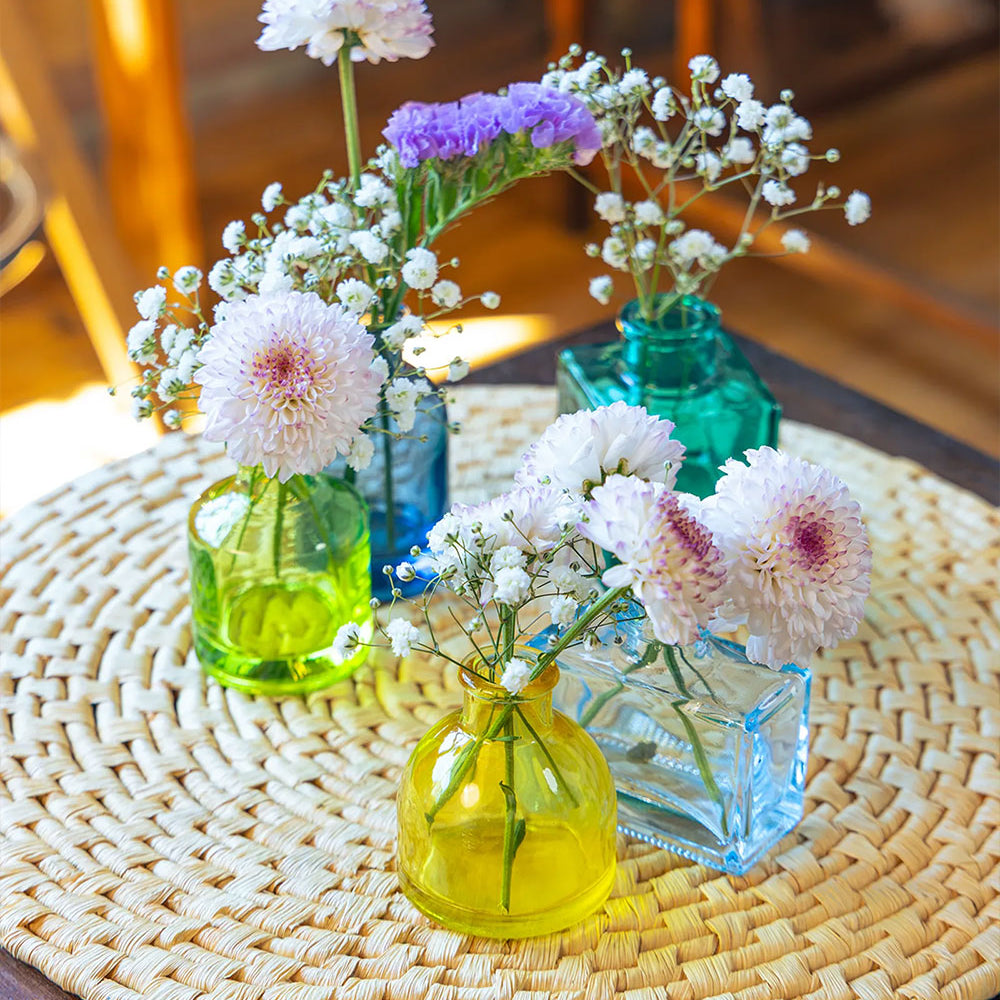
The glass vases at Chive come out of the same studio habit that produced everything else here: design the object once, correctly, then resist every opportunity to complicate it. Each one holds stems. None of them hides anything. A bracket is the least sentimental way to present a flower and the Brick commits to that entirely. When you would rather the water stood on a surface, the Bulb Forcer Vase takes the opposing view.

Chive Loft glass bud vase set in assorted shapes and colors on a table mat, each styled with flowers.

For Rooms With No Floor Plan Left

Every Chive vase is built around one decision about how flowers should stand, then finished by hand until that decision reads as obvious. Mounted designs occupy a small, stubborn corner of the glass vases collection, and they exist because horizontal room runs out long before vertical room does. Kitchens, corridors, the strip of plaster beside a bathroom mirror: none of those will accept a vessel standing upright, and every one of them will accept a vessel bolted on. Most of the range assumes furniture underneath it. This portion assumes none.

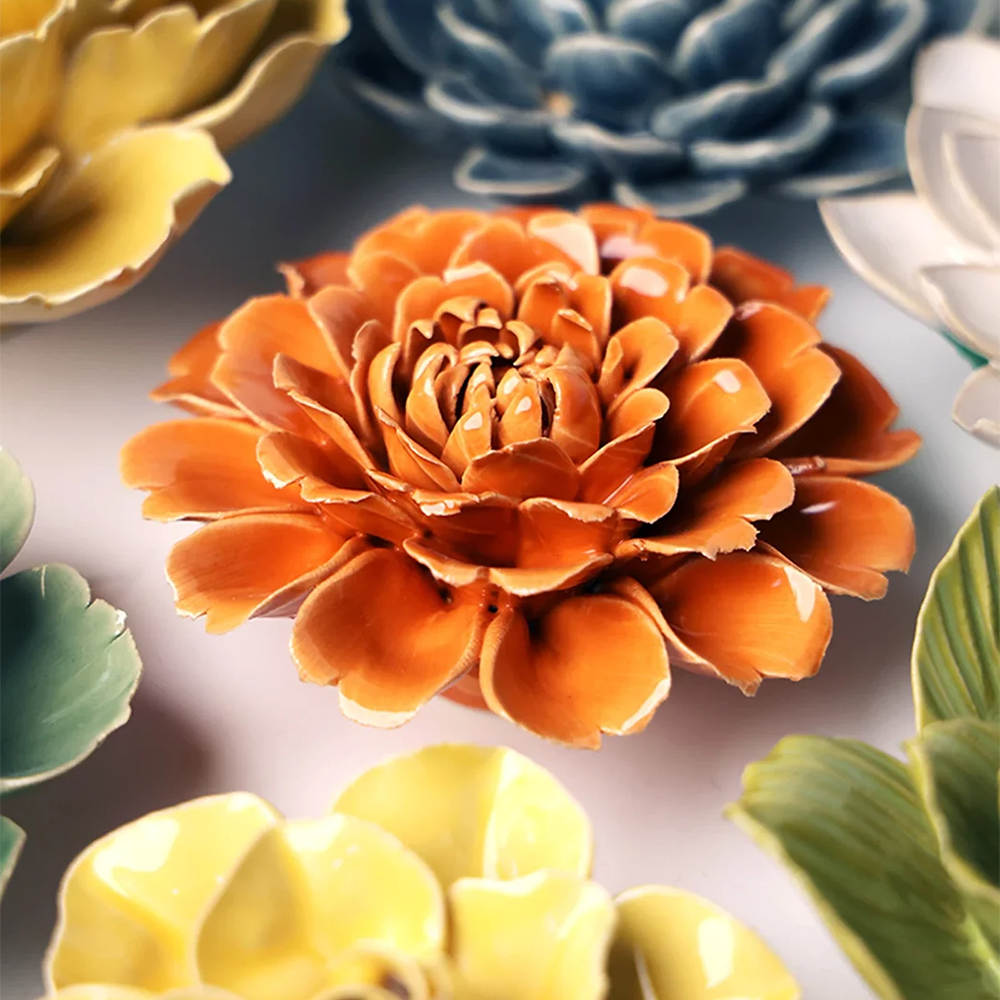
Close-up of the Chive October Birth Flower Marigold fiesta orange ceramic flower among assorted Chive ceramic flowers.

Permanent Colour, Weekly Colour

Hang the Orange Fiesta Marigold Wall Art beside it and the plaster starts doing two jobs simultaneously. One item is permanent colour, fired and finished and never once needing water; the other changes weekly and occasionally forgets to. Read together they look like a considered arrangement instead of a lone object stranded overhead. Ceramic high, glass low.


Wall Space Counts As Space

Chive opened in 2004, and the mounted pieces began roughly three years after that, and they began because a customer living somewhere very small sent a photograph of every horizontal surface she owned, all of them occupied. There was no room for a vase. There was, though, a great deal of unused wall. That reframing became a small line which has quietly outgrown its origins: brackets, brick forms, cups, horns and cones, each designed to put water where furniture cannot follow. It stays the part of the catalogue solving a real problem rather than offering an alternative to something already working perfectly well. Small rooms drove the whole idea, and small rooms keep it in the range.


Inside the Chive Design Studio

Low maintenance, high impact. Let's make home styling look easy.

Wedding Centerpiece Vases: The Planning Guide Nobody Gives You

Todd Newgren
Wedding centerpiece vases work best small and plural — three to seven per table, one to three stems each. A fifteen-table reception needs roughly seventy-five vases and 100 to 1...
Read the full story

Frequently asked questions

What is a brick vase and when would you actually use one?

A rectangular glass vessel that fixes flat to a wall rather than standing on anything. You reach for one when the surfaces are full, which in a galley kitchen or a corridor is a permanent condition. It also suits cuttings, because the flat face lets you follow root growth without lifting anything out. Renters use them as readily as owners. Two screws, no furniture.

Which stems suit the Brick vase's opening and proportions best?

Straight slim stems that do not need a wide throat. Ranunculus and snapdragon perform well, since the stalk keeps its own line and the head stays above the rim. Waxflower and scabiosa match the shallow depth nicely. One orchid spray reads beautifully against flat plaster. Skip heavy roses and anything top-weighted, which levers the piece forward. Slim beats showy.

Is the Brick vase sized for a windowsill or a mantel?

Neither, strictly, because it does not stand up at all. Fixed to plaster it projects two from the surface and runs four across, the taller of the pair reaching a fraction under eight from base to rim while the shorter stops at six. Left on a sill it topples the first time a window opens. Give it a wall.

What glass quality can you expect from the Brick vase?

Clear soda-lime glass, blown rather than pressed, so thickness varies slightly across the face and the piece carries small distortions when you look through it on an angle. Those are not faults and we do not grade them out of a run. Pressed glass is uniform and reads that way. Handwork should look like handwork.

Does the Brick vase need special care between flower arrangements?

Between arrangements, lift it off the bracket and wash it properly, because the corners of a rectangular vessel trap residue that a curved one never would. A slim bottle brush reaches them. Where cuttings have been rooting, rinse using diluted white vinegar to shift the biofilm that always forms. Dry the outside before remounting. Damp brackets corrode.

How do you group the Brick vase with other Chive pieces?

In a row, at one height, evenly spaced. Three along a corridor achieve more than any single large vessel could, because repetition reads as intention rather than accident. Mixing the two sizes in one row destroys that, so keep the pairing for separate walls entirely. Partner them with ceramic wall pieces instead of further glass. Repeat, then contrast.

How does the Brick vase compare with the Bulb Forcer?

They share a material and very little else. The Brick fixes to plaster and carries cut stems in a shallow rectangle, whereas the Bulb Forcer stands on furniture and suspends one bulb above water for weeks on end. One is display; the other is a slow experiment you keep checking. Both suit people who enjoy watching roots. Wholly different timescales.

Why is it called the Brick vase and what's the story?

Because it is roughly the size and proportion of a house brick, and nobody in the studio could better that in 2010. The name stuck fast, which is what happens whenever a description turns out to be accurate. There was a brief internal campaign for something a good deal more elegant. It lost decisively.

Ceramic astronaut vase with flowers styled on shelf — Chive Studio Toronto
Behind the Studio

The story behind the Chive astronaut vases

The story of Laika, Félicette, a solar eclipse in New York, and a space bar that ordered a hundred vases a month until it closed.