
Dwarf Schefflera Indoor Houseplant Seeds Packet

Regular price $4.95
Vacuum Sealed
NON-GMO
Seed Pack Guarantee

Build Your Garden With These Shido Seeds

Choose a seed packet as your starting point, then round out the bed with these for that thrown-together-but-somehow-perfect harvest.


Schefflera seeds grow into an architectural indoor plant known for its glossy, palmate leaves. Shido dwarf schefflera seeds are non-GMO and hermetically vacuum-sealed, so the packet stays viable long after a paper one would have expired. Standard paper-packed seeds begin losing germination viability after approximately one year.

It is the plant that makes the rest of the windowsill look like it is trying too hard, arriving fully composed and staying that way with minimal encouragement. Growth is steady rather than dramatic, tolerant of a little neglect once established, and entirely uninterested in being anyone's fussiest houseplant. It has the quiet confidence of a plant that has never once needed to be told it looks good where it is. Every packet ships germination-tested at independent third-party labs before packaging, a formality the seeds themselves seem unbothered by, having already survived years sealed in a vacuum.

Seed specifications
  • Material: Seed
  • Botanical name: Schefflera Arboricola
  • Genus: Schefflera
  • Plant family: Araliaceae
  • Species: arboricola
  • Plant type: Evergreen shrub
  • Pollination type: House Plant
  • USDA Hardiness Zones: 10–11 (houseplant everywhere)
  • Packet contents: ≈ 20 Seeds
  • Packaging: Hermetically vacuum-sealed
  • Non-GMO: Yes
  • Seed viability: Up to 10 years (sealed) / 4–5 years (unsealed, ideal conditions)
  • Difficulty: Easy - Beginner Friendly
Sowing & growing guide

Quick Sowing Guide:

  • When to sow: Any time indoors
  • Sowing depth: 1 in
  • Initial spacing: 36-48 in
  • Row spacing: 3-4 ft
  • Days to germination: 3-8 weeks
  • Light: Full Sun
  • Water: Moderate
  • Soil: Moist, fertile, well-drained

Start Growing: Step-by-step sowing and growing guide

About vacuum sealing

Why Vacuum-Sealed Seeds Last Longer

Standard paper seed packets are permeable to oxygen and moisture -- the two primary causes of seed degradation. Most paper-packaged seeds begin losing germination viability after approximately one year, contributing to significant garden-industry waste: packets purchased, not planted, expired, discarded. Shido Seeds are hermetically vacuum-sealed. The packet does not expire quietly in a drawer. It waits.

About the Packaging

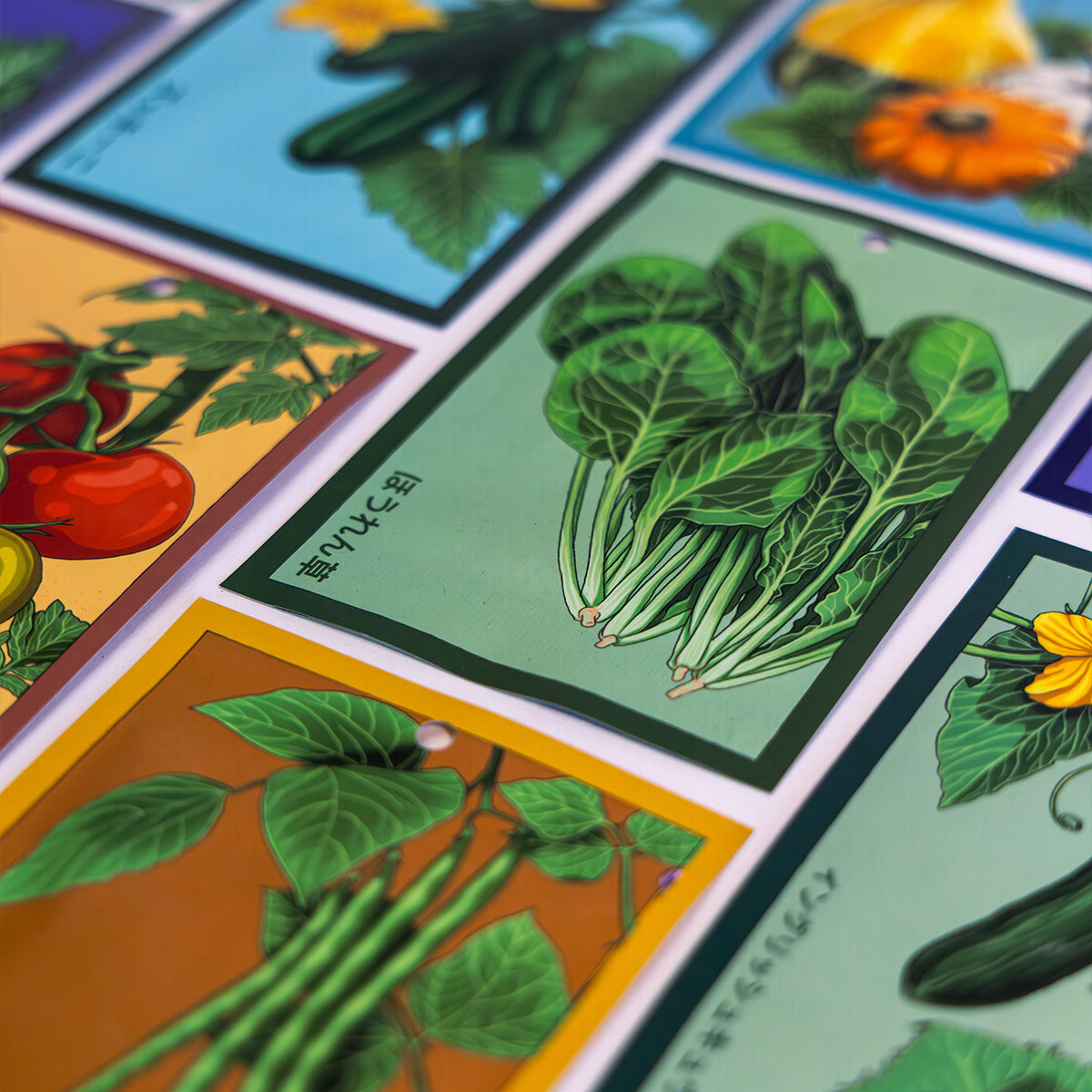
Every Shido seed packet is illustrated in the style of Japanese 1910s woodblock printing -- designed and drawn in-house by Chive, that has been exhibiting at the Chelsea Flower Show in London every year and does not, as a matter of principle, sell to big-box retailers. Customers collect the packets as a series. This was not the original plan.

Shipping & returns

Shipping

  • Free shipping: Orders $200+ within the US
  • Standard: 5–8 business days, Express 2–3 business days (at checkout)
  • International Ships: to 40 countries — rates at checkout
  • Packaging Ships: in outer box to protect gift box

View full shipping policy →

Returns

We accept returns within 30 days of delivery on unused items in original packaging. If your piece arrives damaged, contact us within 7 days with a photo and we will replace it at no charge.

View full return policy →

Satisfaction Guarantee

We stand by the quality of our flower seed packets! Every Shido seed packet is lab-tested for germination before it ships. If your seeds do not perform to the stated germination rate under correct growing conditions, contact us and we will replace or refund. Guaranteed!

Wholesale Inquires

Have a cool shop? Know someone that does?

Find Chive on Faire →

Radish Horticultural Specifications

Botanical

Schefflera Arboricola

Plant Type

Evergreen shrub

Light

Full Sun

Water

Moderate

Soil

Moist, fertile, well-drained

Depth

1 in

Germination

3-8 weeks

USDA Zone

10–11 (houseplant everywhere)

Mature Height

3-6 ft indoors, up to 8 ft outdoor

Harvest

50-60 days to mature


Getting to know your Dwarf Schefflera

Dwarf Schefflera boasts palmate compound leaves composed of several glossy, oval-shaped leaflets that radiate outward like the ribs of an umbrella, a shape that's really the entire reason behind its common nickname. The plant maintains a dense, genuinely bushy structure and is often pruned or trained to keep a tidy, compact appearance suited to indoor spaces with limited room to spare. While it rarely blooms indoors, mature plants grown outdoors in tropical or subtropical climates may produce clusters of small, red-orange flowers followed by tiny black fruits, though the primary appeal indoors remains squarely on the striking foliage itself. Dwarf Schefflera thrives in bright, indirect light and tolerates a range of indoor conditions better than many finicky tropical plants, making it a genuinely forgiving choice for a less experienced grower. Consistent but moderate watering suits it best, letting the top layer of soil dry out between sessions rather than keeping things constantly damp. Regular pruning encourages that dense, bushy growth habit rather than a leggier, more sparse shape over time. Its glossy leaves also help it stand up well to typical indoor conditions, including the lower light and drier air a bright window can't always fully offset. Few houseplants combine this much structural interest with this little demanding care.


History & origin

Native Range

Schefflera arboricola is native to Taiwan and Hainan Island, China.

Naming

The genus honors Jacob Christian Scheffler, an 18th-century German botanist.

Mid-20th Century Houseplant Boom

Became a widely popular tropical foliage houseplant as indoor plant collecting grew in the mid-1900s, valued for its tolerance of typical indoor conditions.

Commercial Landscaping

Became a staple of office and commercial interior landscaping from the 1970s and 1980s onward.

Today

One of the most common tropical foliage houseplants worldwide.

Shido Vegetable and Flower Seeds Vacuum sealed for peak freshness

Step-by-Step Sowing & Growing Guide

Getting Started

Step 1: Sowing - Surface sow or barely cover in a well-drained general potting mix.

Step 2: Warmth & humidity - Keep warm and humid — a humidity dome speeds germination.

Step 3: Germination - Can be slow, often several weeks.

Step 4: Transplant - Pot up as seedlings develop, providing bright indirect light rather than direct sun.

Step 5: Early pruning - Begin pinching growing tips early, well before the plant matures — this establishes the bushy, full form this plant is grown for from the start rather than trying to correct legginess later.

Before you start

Materials needed to sow

  • Small pots or trays with drainage holes: Standard depth is fine for this fibrous-rooted species.
  • Well-drained general potting mix: No special formulation needed beyond good drainage.
  • Heat mat: Helps maintain the 70-75°F this seed prefers.
  • Clear plastic cover or humidity dome: Holds consistent humidity through the sometimes slow, uneven germination window.
  • Plant labels: Useful if starting alongside other tropical foliage plants with similar-looking seedlings.

Materials for harvest and storage

  • Pruning shears: For shaping the plant and for taking stem cuttings to propagate new plants.
  • A glass of water or rooting hormone (optional): For rooting cuttings taken during pruning, if propagation is the goal.

Tip: Prune and take cuttings in spring or early summer, when the plant is actively growing and cuttings root most reliably.

Growth Requirements

Light:

  • Bright, indirect light — tolerates lower light but grows more slowly.

Soil:

  • Well-drained, general-purpose potting mix.

Watering:

  • Allow the top inch or two of soil to dry between waterings.

Temperature & Climate:

  • Prefers typical indoor warmth, 60-80°F.
  • No frost tolerance — indoor plant only in most climates.

Fertilization:

  • Feed monthly during spring and summer; reduce or stop in fall and winter.

Maintenance

Light & Placement:

  • Bright, indirect light is ideal — tolerates lower light but grows more slowly and less densely.

Soil:

  • Well-drained, general-purpose potting mix.

Watering:

  • Allow the top inch or two of soil to dry between waterings — more forgiving of underwatering than overwatering.

Pruning:

  • Pinch or trim growing tips to encourage bushier, fuller growth and control size.

Feeding:

  • Feed monthly during spring and summer growth; reduce or stop in fall and winter.

Repotting:

  • Repot every 2-3 years, or when roots become crowded, sizing up gradually rather than jumping to a much larger pot.

Troubleshooting and common mistakes

  • Sudden leaf drop — often caused by a cold draft, sudden temperature change, or overwatering rather than a single clear cause
  • Leggy, sparse growth — usually a sign of insufficient light — pinching growing tips helps encourage bushier growth once light is improved
  • Brown, crispy leaf edges — typically underwatering or low humidity rather than a pest or disease

What it's used for

1. Decorative Uses:

  • A classic glossy-leaved houseplant, well suited to both traditional and modern interior styles

2. Practical Benefits:

  • Included in NASA's clean air study as a plant associated with improved indoor air quality
  • Genuinely low-maintenance and tolerant of some neglect, a good choice for offices or busy households

3. Garden & Landscape Uses:

  • Grown outdoors as a landscape shrub in frost-free climates

4. Novelty & Educational Value:

  • Responds well to training as an indoor bonsai-style specimen for those interested in the practice

Companion plants, pests & diseases

Companion planting

Good companions

  • Pothos, philodendron, and other tropical foliage plants — similar bright-indirect-light and moderate-water needs make for easy grouped indoor care

Poor companions / avoid

  • Cacti and succulents — conflicting water needs if grouped together

Pests

  • Spider mites — fine webbing, especially in dry indoor conditions
  • Scale insects, mealybugs — common on stems and leaf undersides
  • Aphids — occasional on tender new growth

Diseases

  • Root rot — from overwatering or poor drainage
  • Bacterial and fungal leaf spot — more likely in overly humid, poorly ventilated spaces

Pro Tip

Rotate your plant regularly to ensure even growth and prevent it from leaning toward the light source. This helps maintain its natural symmetry and compact form.

Seeds worth keeping

What makes Shido Seeds different

Shido Seeds are designed by Chive Studio, a ceramic design company. We are not a seed conglomerate. We do not sell through big-box retailers. Each variety in the catalog was selected because it is worth growing — not because it ships well in bulk or photographs well in marketing materials.

Every packet is germination-tested at an independent third-party lab before it earns its woodblock illustration. The vacuum seal removes the oxygen that causes standard paper packets to degrade. The stated germination rate is a floor, not a marketing figure.

If something goes wrong, contact us. We will make it right.

Plants that Grow together look good together...even if they are ceramic

A Different Foliage Statement
For another plant valued primarily for its leaf shape, Umbrella Plant brings its own radiating leaf pattern to a very different growing setup.

Vegetable Shido Seeds packets — by Chive Studio Toronto

More From Shido's Garden

This belongs to Shido's houseplant seed lineup, where structural foliage plants sit next to flowering and desert varieties alike.

April Birth Flower - Daisy ceramic wall flower styled on wall — Birth Flower Collection — Chive Studio Toronto

Glossy Leaves, No Pruning Required

Dwarf Schefflera needs regular pruning to stay tidy, but Chive's Ivory Monch Aster stays exactly as arranged as the day it arrived.

Chive Shido seed packets with botanical illustrations on a peg rack, showing cherry blossom, tomato, and eggplant designs.

The credentials behind the packet

A plant grown primarily for its foliage still depends on a seed reliable enough to actually produce that foliage before anything else about the plant matters. The studio addresses that directly, cutting oxygen exposure at the source rather than leaving a packet's fate to plain paper packaging. A houseplant valued for consistency in its appearance deserves that same consistency at the seed level too, not just once it's grown in. That standard doesn't shift based on whether a plant is grown for flowers, fruit, or simply its leaves. Foliage-focused doesn't mean lower stakes for the seed itself. The leaves are the whole point, so the seed has to be too.


Plant Care, Simplified with Chive

Keep it alive, keep it thriving. Let's make plant parenthood look easy.

Are Seed Packets GMO? The Honest Answer

Todd Newgren
Are seed packets GMO? No—home garden seed packets, Shido included, are never genetically modified, since GMO seed is only made for large-scale commercial crops. The non-GMO badg...
Read more

Heirloom vs Hybrid Seeds: What Actually Differs | Shido

Todd Newgren
Heirloom seeds aren't automatically better than hybrid seeds—each suits different goals, from saving seed year to year to fighting off disease. The real difference is genetics, ...
Read more

Frequently asked questions

What is the best way to grow Dwarf Schefflera?

Dwarf Schefflera thrives in bright, indirect light and tolerates a range of indoor conditions, growing into a dense, bushy plant with distinctive umbrella-shaped leaf clusters. A spot near an east or west-facing window usually provides that balance well. Rotating the pot occasionally also encourages even growth on all sides of the plant.

Why is Dwarf Schefflera called an umbrella tree?

Its palmate compound leaves radiate outward from a central point like the ribs of an umbrella, which is exactly where that common nickname comes from. Each leaflet radiating from a central point is really what creates that distinctive umbrella silhouette. That radiating pattern repeats across every leaf cluster the plant produces as it matures.

Does Dwarf Schefflera flower indoors?

Rarely — it mostly blooms only when grown outdoors in tropical or subtropical climates, so indoor growers should expect to enjoy it primarily for its foliage. Outdoor specimens in the right climate occasionally surprise growers with that unexpected seasonal bloom. Those outdoor blooms are considered a genuine bonus rather than something to expect indoors.

How much water does Dwarf Schefflera need?

Moderate, consistent watering suits it best, letting the top layer of soil dry out between sessions rather than keeping the soil constantly damp. Allowing the top inch of soil to dry out between waterings avoids most common problems. Yellowing lower leaves are often an early sign that watering has been slightly too frequent.

Does Dwarf Schefflera need regular pruning?

Yes, generally — regular pruning encourages that dense, bushy growth habit and keeps the plant from becoming leggier and more sparse over time. Pruning back leggy stems also encourages fuller, more compact growth from lower on the plant. Pruning during active growth in spring or summer produces the best, fastest recovery.

How long do Dwarf Schefflera seeds last?

Vacuum-sealed Shido Seeds packets remain viable for up to 10 years under proper storage, compared to roughly one year for a standard paper seed packet exposed to normal conditions. The leaves are the whole point, so the seed has to be too. Storing packets somewhere cool and dry helps preserve that extended shelf life even further.

Is Dwarf Schefflera easy to care for indoors?

Yes, genuinely — it tolerates a range of indoor conditions better than many tropical plants, making it a forgiving choice for a less experienced grower. Wiping dust from the glossy leaves occasionally also helps them photosynthesize more efficiently. That tolerance also makes it more forgiving of an imperfect watering schedule than many tropical plants.

Is this seed germination-tested?

Yes — every Shido Seeds packet, Dwarf Schefflera included, is tested at independent third-party labs before it reaches a shelf. That extra scrutiny matters given how much this plant's appeal rests entirely on its foliage. No shortcuts taken for a foliage-first plant. Leaves are the payoff; the seed is the start.

Verte Rx Shiny Leaves for Plants - Chive Ceramics Studio - Chive Ceramics Studio

The seed is the start. Verte RX handles the rest.

Most seedlings fail not from bad seed but from soil that runs out of what the plant needs before the plant can find it. Verte RX is a liquid plant vitamin formulated for exactly that window — the weeks after germination when the root system is establishing and the margin between thriving and stalling is narrowest.