
Green Leaf Lettuce Vegetable Seeds Packet

Regular price $4.95

Vacuum Sealed
NON-GMO
Seed Pack Guarantee

Build Your Garden With These Shido Seeds

Choose a seed packet as your starting point, then round out the bed with these for that thrown-together-but-somehow-perfect harvest.


Green Leaf Lettuce seeds for the kitchen garden that intends to actually produce green leaf lettuce this year. Green Leaf Lettuce is ready in 30 days, which makes it the fastest answer to the question of whether to start a garden.

Green Leaf Lettuce is fast-growing loose-leaf lettuce ready in 30-50 days and the most reliable cut-and-come-again crop in the garden. Each packet is hermetically vacuum-sealed -- removing the oxygen that causes standard paper seed packets to lose germination viability within approximately one year. State law requires a 3-year viability label on sealed packaging. NASA research on hermetic seed storage indicates viability of up to 10 years under proper conditions. Every packet is non-GMO and germination-tested at independent third-party labs before it earns its Japanese woodblock print artwork.

Seed specifications
  • Material: Seed
  • Botanical name: Lactuca sativa 'Green Wave'
  • Genus: Lactuca
  • Plant family: Asteraceae
  • Species: Sativa
  • Plant type: Annual
  • Pollination type: Vegetable
  • USDA Hardiness Zones: 2-11
  • Packet contents: ≈ 100 Seeds
  • Packaging: Hermetically vacuum-sealed
  • Non-GMO: Yes
  • Seed viability: Up to 10 years (sealed) / 4–5 years (unsealed, ideal conditions)
  • Difficulty: Easy - Beginner Friendly
Sowing & growing guide

Quick Sowing Guide:

  • When to sow: Direct sow or transplant from early spring through much of the growing season
  • Sowing depth: 1/4 in
  • Initial spacing: 4-8 in
  • Row spacing: 18-24 in
  • Days to germination: 7-10 days
  • Light: Full sun
  • Water: Consistent, even moisture
  • Soil: Fertile, well-drained
  • Harvest: 45-65 days

Start Growing: Step-by-step sowing and growing guide

About vacuum sealing

Why Vacuum-Sealed Seeds Last Longer

Standard paper seed packets are permeable to oxygen and moisture -- the two primary causes of seed degradation. Most paper-packaged seeds begin losing germination viability after approximately one year, contributing to significant garden-industry waste: packets purchased, not planted, expired, discarded. Shido Seeds are hermetically vacuum-sealed. The packet does not expire quietly in a drawer. It waits.

About the Packaging

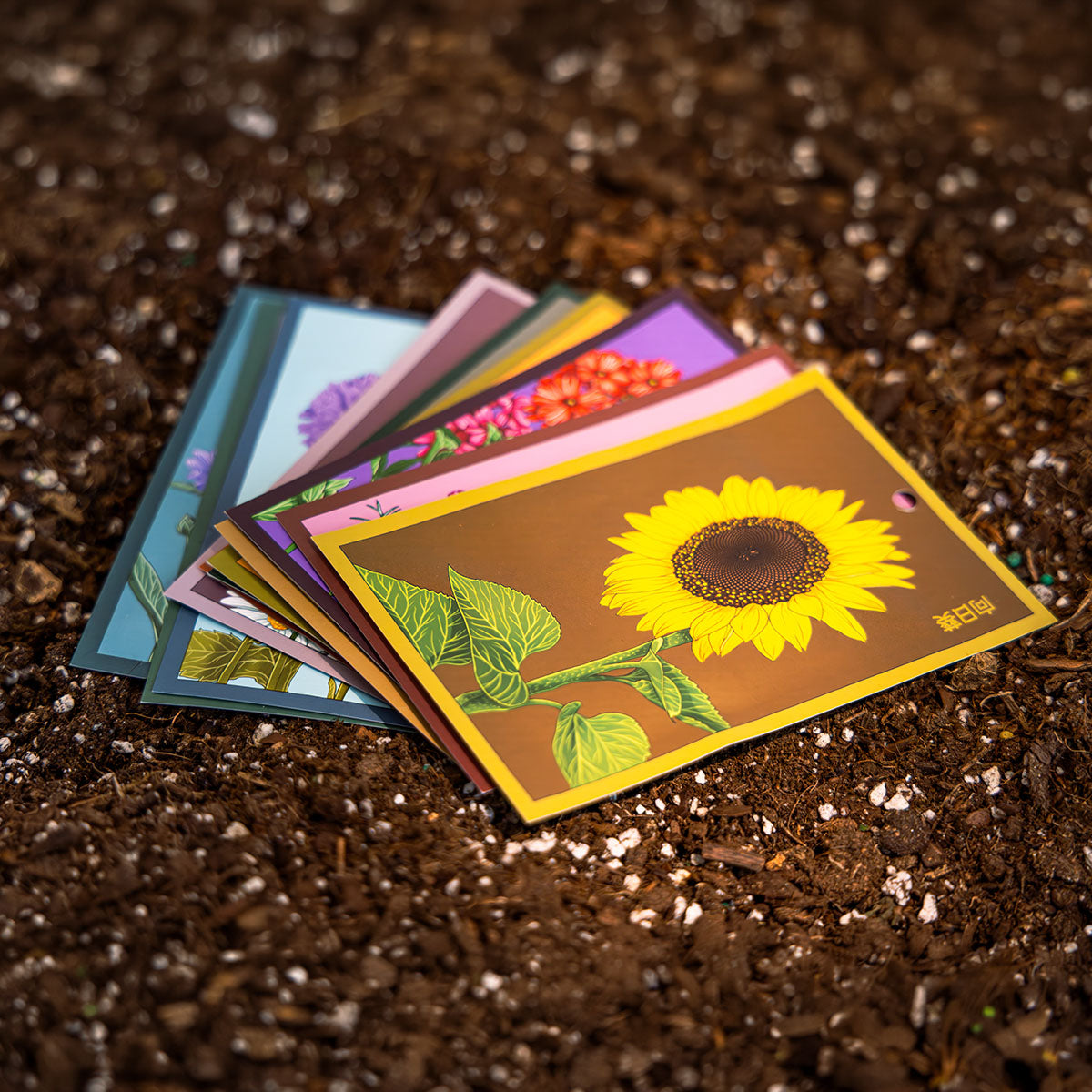
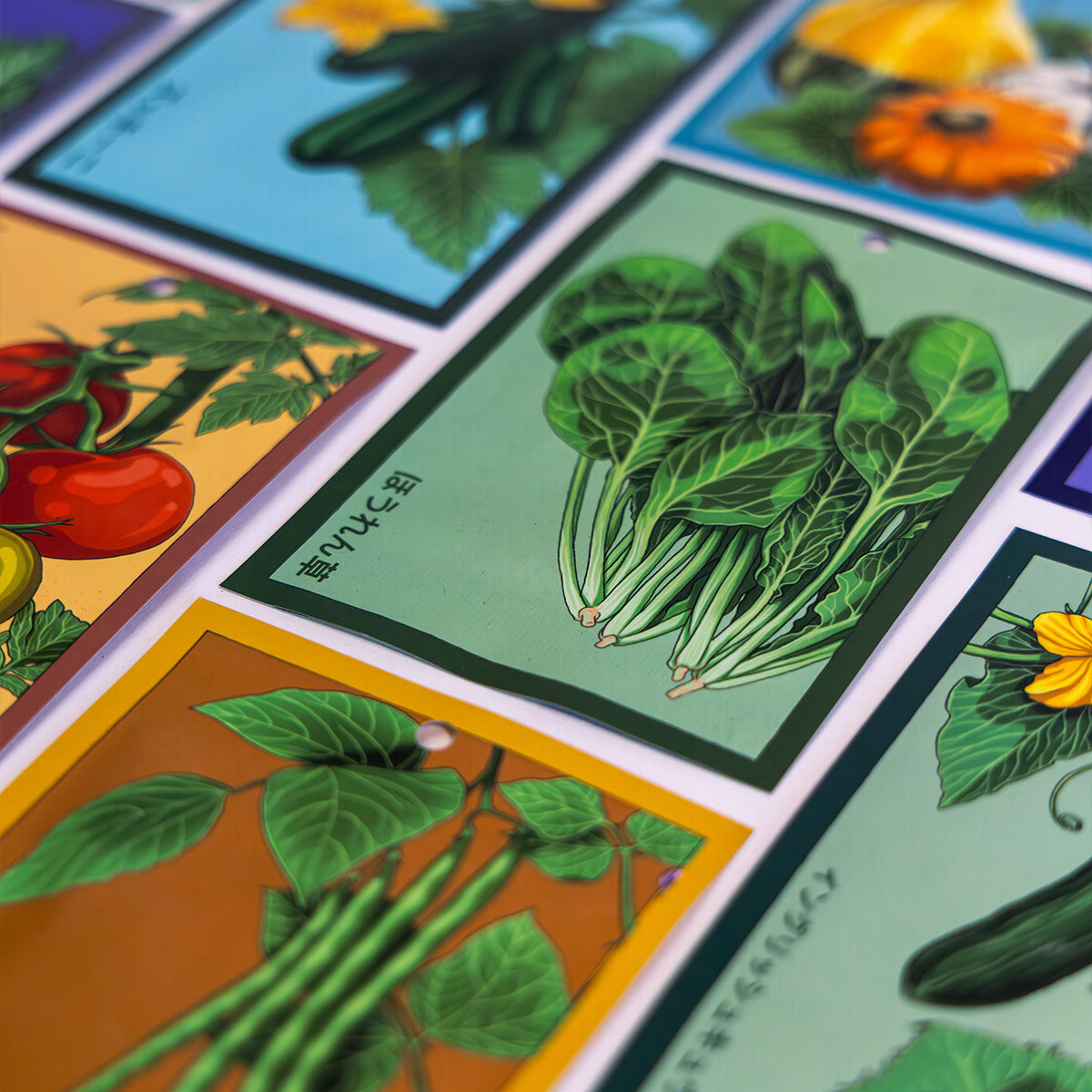
Every Shido seed packet is illustrated in the style of Japanese 1910s woodblock printing -- designed and drawn in-house by Chive, that has been exhibiting at the Chelsea Flower Show in London every year and does not, as a matter of principle, sell to big-box retailers. Customers collect the packets as a series. This was not the original plan.

Shipping & returns

Shipping

  • Free shipping: Orders $200+ within the US
  • Standard: 5–8 business days, Express 2–3 business days (at checkout)
  • International Ships: to 40 countries — rates at checkout
  • Packaging Ships: in outer box to protect gift box

View full shipping policy →

Returns

We accept returns within 30 days of delivery on unused items in original packaging. If your piece arrives damaged, contact us within 7 days with a photo and we will replace it at no charge.

View full return policy →

Satisfaction Guarantee

We stand by the quality of our flower seed packets! Every Shido seed packet is lab-tested for germination before it ships. If your seeds do not perform to the stated germination rate under correct growing conditions, contact us and we will replace or refund. Guaranteed!

Wholesale Inquires

Have a cool shop? Know someone that does?

Find Chive on Faire →

Radish Horticultural Specifications

Botanical

Lactuca sativa 'Green Wave'

Plant Type

Annual

Light

Full sun

Water

Consistent, even moisture

Soil

Fertile, well-drained

Depth

1/4 in

Germination

7-10 days

USDA Zone

2-11

Mature Height

6-10 in loose rosette

Harvest

45-65 days


Getting to know your Green Leaf Lettuce

Green Leaf Lettuce is a cool-season, loose-leaf variety with vibrant, tender, ruffled leaves that grow best in moist, nutrient-rich soil with ample sunlight and moderate temperatures. Unlike head-forming lettuces, Green Leaf Lettuce never develops a compact core, which makes it genuinely easy to harvest continuously by picking outer leaves as needed rather than waiting for an entire head to mature at once. Consistent watering keeps the texture crisp and helps prevent the bitterness that can creep in in when growth slows or stresses out under inconsistent conditions. The plant suits succession planting particularly well, since new leaves keep coming as older ones get harvested, extending a single planting's usefulness well beyond what a single-harvest crop offers. In the kitchen, Green Leaf Lettuce brings a mild, slightly sweet flavor and genuinely crisp texture to salads and sandwiches alike, without the bitterness that turns some people off leafy greens generally. Like most lettuce, it can attract aphids and slugs, though row covers and thoughtful companion planting go a long way toward keeping both in check without much additional effort. For a gardener who wants salad greens on a rolling basis rather than all at once, this is one of the more forgiving, low-maintenance ways to get there.


History & origin

Ancient Egypt

Loose-leaf lettuce types represent some of the closest surviving relatives to the earliest cultivated lettuce forms grown in ancient Egypt, predating the later development of tightly-headed types.

Historical Continuity

Because loose-leaf lettuce doesn't require the same selective breeding toward head formation, it has changed comparatively little in basic growth habit across its long cultivation history.

Today

Valued by home gardeners specifically for its fast growth, heat tolerance, and continuous harvest style, making it one of the more forgiving and beginner-friendly lettuce types available.

Shido Vegetable and Flower Seeds Vacuum sealed for peak freshness

Step-by-Step Sowing & Growing Guide

Getting Started

Annual, the most forgiving lettuce type in this project

Step 1: Timing - Direct sow or transplant from early spring through much of the season -- notably more heat-tolerant than head-forming lettuce types.

Step 2: Soil - Rich, well-drained loam, pH 6.0-7.0.

Step 3: Sowing - ⅛-¼ inch deep.

Step 4: Harvest - Cut outer leaves continuously, leaving the center to keep growing -- true cut-and-come-again, with far less bolting risk than romaine or butterhead.

Before you start

Materials needed to sow

  • Garden bed, prepared soil: Direct sown or transplanted -- this type is more forgiving of timing than head-forming lettuces.

Materials for harvest and storage

  • Scissors: For cutting outer leaves continuously.
  • Basket: For collecting the harvest.
  • Salad spinner and airtight storage: For removing moisture and extending freshness.

Tip: Harvest outer leaves and let the center keep growing -- true cut-and-come-again, with far less bolting risk than head-forming lettuce types, so there's less urgency to harvest everything at once.

Growth Requirements

Light:

  • Prefers full sun to partial shade.
  • In hot climates, partial shade helps prevent bolting (premature flowering).

Soil:

  • Requires well-draining, loamy soil with a pH of 6.0-7.0.
  • Adding compost or organic matter improves nutrient content and moisture retention.

Watering:

  • Needs consistent moisture, about 1-2 inches of water per week.
  • Avoid overwatering to prevent root rot and fungal diseases.

Temperature & Climate:

  • Thrives in temperatures between 55-70°F (13-21°C).
  • Bolts quickly in high temperatures above 75°F (24°C).

Fertilization:

  • Benefits from light applications of balanced fertilizer (10-10-10).
  • Too much nitrogen can lead to excessive leaf growth but poor flavor.

Maintenance

Watering:

  • Keep soil evenly moist, but avoid overwatering.
  • Use mulch to retain moisture and suppress weeds.

Weed Control:

  • Hand-pull weeds carefully to avoid disturbing the shallow roots.
  • Apply a layer of organic mulch to prevent weeds from growing.

Harvesting and Seed Collection

1. When to Harvest:

  • Ready for harvest in 30-50 days after planting.
  • Pick outer leaves first for a continuous harvest.
  • Harvest entire plants before bolting for the best flavor.

2. Collecting Seeds for Future Planting:

  • Allow some plants to bolt and produce yellow flowers.
  • Collect dry seed heads and store seeds in a cool, dry place.

Troubleshooting and common mistakes

  • Treating it like head lettuce — no head needs to form with this type -- harvesting outer leaves continuously while the center keeps growing works far better than waiting for a single cutting event
  • Assuming it needs the same bolt-avoidance timing as romaine or butterhead — loose-leaf types are the most heat-tolerant lettuce category and can be succession sown more casually through more of the season

Culinary uses & nutritional information

What it's used for

1. Culinary Uses:

  • Commonly used in salads, wraps, sandwiches, and burgers.
  • Can be used as a garnish or in smoothies for extra nutrition.
  • Pairs well with a variety of dressings and toppings.

2. Companion Planting:

  • Grows well with carrots, radishes, onions, and cucumbers.
  • Avoid planting near brassicas like cabbage, which can compete for nutrients.

3. Soil Improvement:

  • Acts as a great cover crop to help reduce soil erosion.
  • Enhances soil fertility when composted after harvest.

What parts are edible

  • Leaves: Harvested continuously as individual leaves rather than as a single head.

Nutritional data

Raw loose-leaf lettuce, per 100g

Calories: 15 kcal

  • Carbohydrates: 2.9 g
  • Protein: 1.4 g
  • Total fat: 0.2 g
  • Dietary fiber: 1.3 g
  • Vitamin C: 9.2 mg (10% RDA)
  • Folates: 38 µg (10% RDA)
  • Potassium: 194 mg
  • Cholesterol: 0 mg
  • Overall: Vitamin A and K both notably higher than iceberg, reflecting the general rule that darker leafy greens carry more nutrients than pale, tightly-headed types

Companion plants, pests & diseases

Companion planting

Good companions

  • Carrots, radishes, cucumbers, strawberries, onions — classic companion pairing, low competition

Poor companions / avoid

  • Crowded plantings generally — no strongly antagonistic companion documented, but crowding raises disease risk

Pests

  • Aphids, slugs and snails, leafminers — standard lettuce pest pressures

Diseases

  • Downy mildew, lettuce drop (Sclerotinia), bottom rot — standard lettuce fungal pressures

Pro Tip

For crisp and flavorful green leaf lettuce, plant in cool weather and provide consistent moisture to prevent bitterness. Use rich, well-draining soil and space plants 8–10 inches apart for good airflow. Harvest outer leaves frequently to encourage continuous growth, or cut the entire plant just above the base for regrowth.

Bonus: To extend the harvest, plant in succession every 2–3 weeks and provide light shade in hot weather to prevent bolting.

Seeds worth keeping

What makes Shido Seeds different

Shido Seeds are designed by Chive Studio, a ceramic design company. We are not a seed conglomerate. We do not sell through big-box retailers. Each variety in the catalog was selected because it is worth growing — not because it ships well in bulk or photographs well in marketing materials.

Every packet is germination-tested at an independent third-party lab before it earns its woodblock illustration. The vacuum seal removes the oxygen that causes standard paper packets to degrade. The stated germination rate is a floor, not a marketing figure.

If something goes wrong, contact us. We will make it right.

Plants that Grow together look good together...even if they are ceramic
A Head-Forming Alternative
For a more traditional head shape instead of loose leaves, the Romaine Lettuce grows in the same cool-season conditions with a sturdier, upright habit.

Vegetable Shido Seeds packets — by Chive Studio Toronto

The Rest of the Vegetable Garden

This belongs to Shido's vegetable seed catalog, spanning loose-leaf greens and head-forming varieties alike.

Buttercup Yellow Gay Paree Peony - Chive Ceramics Studio - Ceramic Flowers - Chive Ceramics Studio

Ruffled Leaves That Never Wilt

Fresh-picked leaves only stay crisp for a few days, but Chive's Ivory Chrysanthemum keeps its ruffled shape on a shelf with no watering required.

Chive Shido seed packets with botanical illustrations on a peg rack, showing cherry blossom, tomato, and eggplant designs.

The credentials behind the packet

Succession planting means resowing Green Leaf Lettuce multiple times across a single season, which turns one underperforming packet into a much bigger problem than it would be for a single-harvest crop. A failure on the third or fourth sowing derails an entire summer's rhythm rather than just one attempt. Sealing oxygen out of the packet is the studio's way of guarding against exactly that kind of compounding risk, a step most paper packets never bother taking. That standard doesn't shift based on how many times a variety gets resown in a season. Reliable germination matters just as much on the last sowing as it does on the first.


Plant Care, Simplified with Chive

Keep it alive, keep it thriving. Let's make plant parenthood look easy.

Nobody grows one dahlia. This is what nobody tells you.

Todd Newgren
How to grow dahlias from seed: start indoors 6–8 weeks before last frost, transplant after frost, and expect first blooms in late summer. Nobody warns you that one bloom is all ...
Read more

Do Seeds Expire? How Long Do Seeds Last | Shido

Todd Newgren
Seeds don't expire — they lose viability as oxygen depletes stored energy, and vacuum sealing is the fix. Chive's Shido Seeds are vacuum-sealed, germination-tested, and stocked ...
Read more

Frequently asked questions

What is the best way to grow lettuce seeds?

Green Leaf Lettuce grows best in moist, nutrient-rich soil with ample sunlight and moderate temperatures, and consistent watering keeps the texture crisp while helping prevent the bitterness that can creep in under stress. That continuous harvest style is a big part of why loose-leaf varieties remain a popular choice for home gardens.

Can you harvest lettuce without pulling the whole plant?

Yes — Green Leaf Lettuce never develops a compact core the way head lettuce does, so picking outer leaves as needed lets the plant keep producing rather than requiring a single, one-time harvest. Most gardeners find a two-week interval between sowings keeps a steady, manageable supply coming without any gaps.

What is succession planting and why does it matter for lettuce?

Succession planting means sowing small batches every couple of weeks rather than all at once, which keeps a steady supply of fresh lettuce coming rather than one large harvest that matures and bolts all at the same time. Harvesting regularly and keeping the soil consistently moist both help delay that shift for as long as possible.

Why does lettuce sometimes taste bitter?

Heat stress and inconsistent watering are the most common causes, prompting the plant to bolt toward seed production, a process that reliably makes the leaves taste more bitter than they did earlier in growth. Watching for early damage and intervening quickly tends to prevent a small problem from becoming a bigger one.

What pests commonly affect leaf lettuce?

Aphids and slugs are the most frequent culprits, though row covers and thoughtful companion planting go a long way toward keeping both in check without much additional effort. Companion planting with aromatic herbs like chives can also help deter both pests without much extra effort. Catching an early infestation before it spreads makes treatment considerably easier down the line.

How long do lettuce seeds last?

Vacuum-sealed Shido Seeds packets remain viable for up to 10 years under proper storage, compared to roughly one year for a standard paper seed packet. In hotter regions, a partly shaded spot can actually extend the growing season noticeably. Given how often this variety gets resown across a season, starting with genuinely reliable seed matters more than it would for a single-harvest crop.

Does green leaf lettuce need full sun?

Ample sunlight helps, though it tolerates slightly more shade than some other vegetables, particularly in warmer climates where a bit of afternoon shade can actually prevent premature bolting. That partial shade tolerance makes it a more flexible option than some lettuce varieties for gardens without full-day sun. That flexibility makes it a reasonable choice for gardens that don't get consistent full sun all day long.

Is this seed line lab-tested for germination?

Yes — every Shido Seeds packet is germination-tested at independent third-party labs before reaching a shelf, this variety included. That testing happens before any packet reaches a shelf, regardless of how frequently a given variety gets replanted across a season. That standard holds regardless of how many times a single variety gets resown across one growing season.

Verte Rx Shiny Leaves for Plants - Chive Ceramics Studio - Chive Ceramics Studio

The seed is the start. Verte RX handles the rest.

Most seedlings fail not from bad seed but from soil that runs out of what the plant needs before the plant can find it. Verte RX is a liquid plant vitamin formulated for exactly that window — the weeks after germination when the root system is establishing and the margin between thriving and stalling is narrowest.