
Rapini Vegetable Seeds Packet

Regular price $4.95
Vacuum Sealed
NON-GMO
Seed Pack Guarantee

Build Your Garden With These Shido Seeds

Choose a seed packet as your starting point, then round out the bed with these for that thrown-together-but-somehow-perfect harvest.


Rapini seeds for the kitchen garden that intends to actually produce rapini this year. Rapini has strong opinions about how it should be cooked, and it is correct.

Rapini is the bitter Italian brassica green harvested just before flowering when flavour is at its most assertive. Each packet is hermetically vacuum-sealed -- removing the oxygen that causes standard paper seed packets to lose germination viability within approximately one year. State law requires a 3-year viability label on sealed packaging. NASA research on hermetic seed storage indicates viability of up to 10 years under proper conditions. Every packet is non-GMO and germination-tested at independent third-party labs before it earns its Japanese woodblock print artwork.

Seed specifications
  • Material: Seed
  • Botanical name: Brassica rapa subsp. ruvo
  • Genus: Brassica
  • Plant family: Brassicaceae
  • Species: Ruvo
  • Plant type: Biennial, grown as an annual
  • Pollination type: Vegetable
  • USDA Hardiness Zones: 6-7
  • Packet contents: ≈ 100 Seeds
  • Packaging: Hermetically vacuum-sealed
  • Non-GMO: Yes
  • Seed viability: Up to 10 years (sealed) / 4–5 years (unsealed, ideal conditions)
  • Difficulty: Expert - Advanced Grower
Sowing & growing guide

Quick Sowing Guide:

  • When to sow: Direct sow in early spring or mid-to-late summer for fall
  • Sowing depth: 1/4 in
  • Initial spacing: 4-6 in
  • Row spacing: 12-18 in
  • Days to germination: 5-10 days
  • Light: Full sun to partial shade
  • Water: Consistent moisture
  • Soil: Fertile, low acidic, well-drained
  • Harvest: 40-60 days

Start Growing: Step-by-step sowing and growing guide

About vacuum sealing

Why Vacuum-Sealed Seeds Last Longer

Standard paper seed packets are permeable to oxygen and moisture -- the two primary causes of seed degradation. Most paper-packaged seeds begin losing germination viability after approximately one year, contributing to significant garden-industry waste: packets purchased, not planted, expired, discarded. Shido Seeds are hermetically vacuum-sealed. The packet does not expire quietly in a drawer. It waits.

About the Packaging

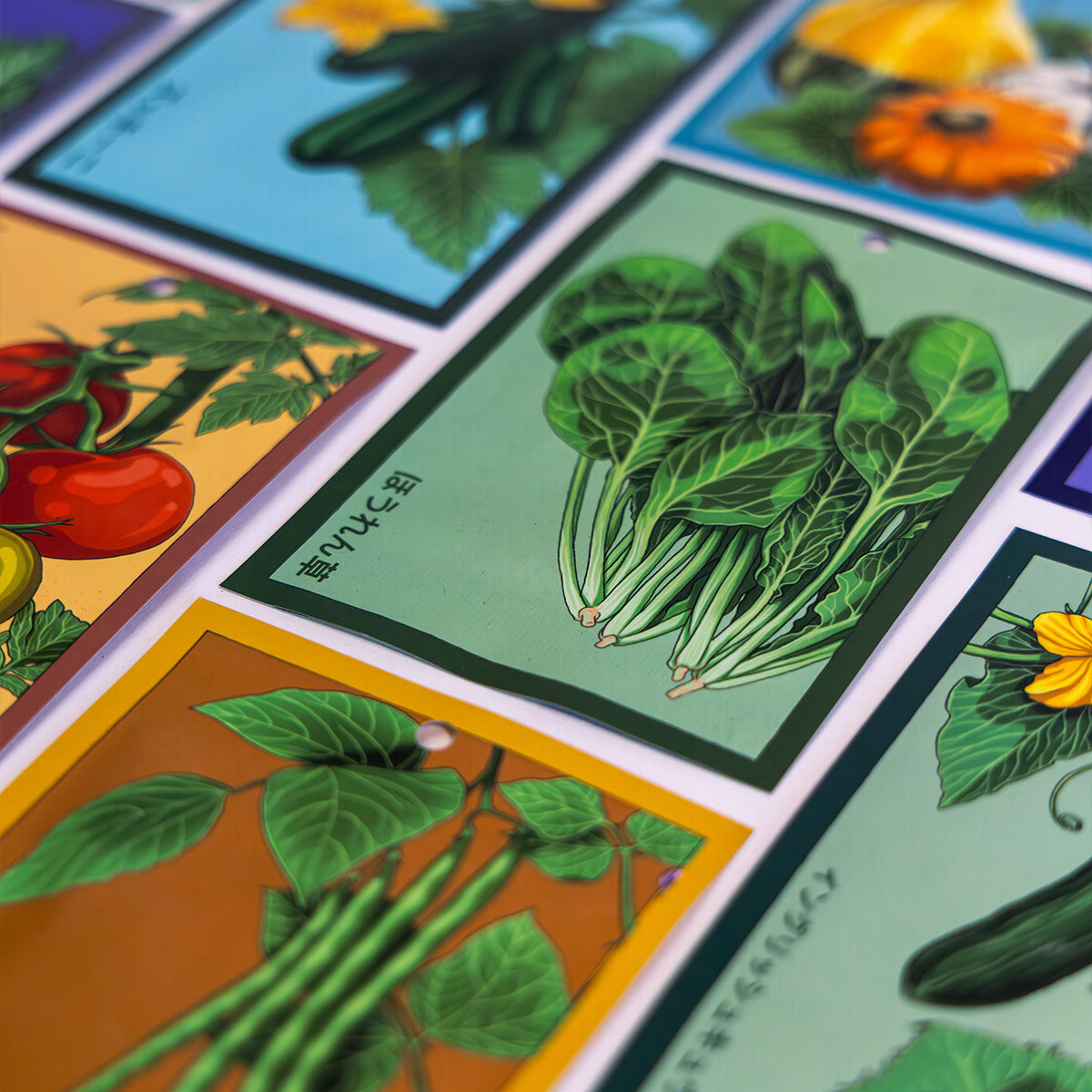
Every Shido seed packet is illustrated in the style of Japanese 1910s woodblock printing -- designed and drawn in-house by Chive, that has been exhibiting at the Chelsea Flower Show in London every year and does not, as a matter of principle, sell to big-box retailers. Customers collect the packets as a series. This was not the original plan.

Shipping & returns

Shipping

  • Free shipping: Orders $200+ within the US
  • Standard: 5–8 business days, Express 2–3 business days (at checkout)
  • International Ships: to 40 countries — rates at checkout
  • Packaging Ships: in outer box to protect gift box

View full shipping policy →

Returns

We accept returns within 30 days of delivery on unused items in original packaging. If your piece arrives damaged, contact us within 7 days with a photo and we will replace it at no charge.

View full return policy →

Satisfaction Guarantee

We stand by the quality of our flower seed packets! Every Shido seed packet is lab-tested for germination before it ships. If your seeds do not perform to the stated germination rate under correct growing conditions, contact us and we will replace or refund. Guaranteed!

Wholesale Inquires

Have a cool shop? Know someone that does?

Find Chive on Faire →

Radish Horticultural Specifications

Botanical

Brassica rapa subsp. ruvo

Plant Type

Biennial, grown as an annual

Light

Full sun to partial shade

Water

Consistent moisture

Soil

Fertile, low acidic, well-drained

Depth

1/4 in

Germination

5-10 days

USDA Zone

6-7

Mature Height

Up to 12 in

Harvest

40-60 days


Getting to know your Rapini

Rapini is a cool-season crop that produces slender stems, deeply lobed leaves, and small green buds that look remarkably similar to miniature broccoli florets, which is really why it's sometimes called broccoli rabe. The entire plant is edible, stems, leaves, and buds together, and it offers a robust, genuinely assertive flavor that intensifies the longer the plant is allowed to mature before harvest. It thrives in cool weather and well-drained soil, growing quickly enough that most gardeners see a harvestable crop within a matter of weeks rather than months. Rapini shows up constantly in Italian cooking, typically sautéed with garlic and a bit of olive oil, which mellows some of that natural bitterness into something considerably more approachable for milder palates. Consistent moisture throughout the growing period matters more than people expect, since a stressed plant tends to develop an even sharper, more bitter edge than a well-tended one would. Harvesting before the buds fully open captures the plant at its most tender, since waiting too long lets the flavor turn noticeably tougher and more assertive than most cooks actually want. Few greens deliver this much bold, distinctive character from this quick a turnaround in the garden. Timing that harvest right is really the entire skill behind growing rapini well.


History & origin

Ancient Mediterranean

Rapini (Brassica rapa, Ruvo Group) descends from the same wild turnip ancestor as several other Brassica rapa vegetables, with cultivation in Italy dating back many centuries.

Southern Italian Tradition

Rapini, also called broccoli rabe, is most strongly associated with Puglia and other regions of southern Italy, where it remains a defining seasonal vegetable in traditional cooking.

Italian-American Immigration

Rapini was brought to the United States primarily through Italian immigration in the late 19th and early 20th centuries, remaining largely confined to Italian-American communities for decades before broader recognition.

Today

Increasingly available in mainstream American grocery stores, though still most strongly associated with Italian cuisine specifically.

Shido Vegetable and Flower Seeds Vacuum sealed for peak freshness

Step-by-Step Sowing & Growing Guide

Getting Started

Biennial grown as an annual, cool-season

Step 1: Timing - Direct sow in early spring or mid-to-late summer for fall -- bolts quickly in heat.

Step 2: Soil - Fertile, well-drained soil, pH 6.0-7.0.

Step 3: Sowing - ¼-½ inch deep. Germination takes 5-10 days.

Step 4: Ongoing care - This will NOT form a broccoli-style head -- expect a leafy, stemmed plant with small buds, not a central crown.

Step 5: Harvest - Cut just before the small flower buds open, a few inches below the buds -- side shoots continue producing after the first cut.

Before you start

Materials needed to sow

  • Garden bed, prepared soil: Direct sown.
  • Garden fork: For working soil before sowing.

Materials for harvest and storage

  • A knife or scissors: For cutting the stalk a few inches below the flower buds.
  • Basket: For collecting the harvest.

Tip: Cut just before the small flower buds open -- side shoots will continue producing after the first cut, extending the harvest, but only if picked at the right early stage rather than left to flower fully.

Growth Requirements

Light:

  • Prefers full sun (at least 6 hours of direct sunlight daily).
  • Can tolerate partial shade but may result in slower growth.

Soil:

  • Thrives in well-draining, fertile soil rich in organic matter.
  • Ideal soil pH: 6.0 - 7.5.
  • Loosen soil and add compost or aged manure before planting.

Watering:

  • Requires consistent moisture, about 1 inch per week.
  • Avoid overwatering, which can lead to root rot and fungal diseases.

Temperature & Climate:

  • Grows best in cool weather (spring and fall).
  • Can tolerate light frosts, but prolonged cold may stunt growth.
  • Avoid planting during the heat of summer as it will bolt quickly.

Fertilization:

  • Enrich soil with compost or balanced fertilizer before planting.
  • Use a nitrogen-rich fertilizer (such as fish emulsion) to encourage leafy growth.
  • Avoid excess nitrogen, which may lead to too much leafy growth and fewer buds.

Maintenance

Mulching:

  • Apply a thin layer of straw or organic mulch to retain moisture and suppress weeds.
  • Helps regulate soil temperature and prevent bolting.

Harvesting Rapini:

  • Harvest 40-60 days after planting, before buds fully open.
  • Cut stems 4-6 inches from the ground, leaving lower leaves for regrowth.
  • Continual harvesting encourages more shoots to develop.

Refrigeration:

  • Store fresh rapini in a plastic bag in the refrigerator for up to 5 days.
  • Keep unwashed to retain freshness.

Freezing:

  • Blanch rapini in boiling water for 1-2 minutes, then transfer to an ice bath.
  • Drain well and freeze in airtight containers.

Preserving Flavor:

  • Use within a few days for the best taste and texture.
  • If rapini becomes too bitter, blanch before cooking.

Troubleshooting and common mistakes

  • Waiting for a broccoli-style head to form — this is the single most common point of confusion -- despite the name and appearance, rapini won't form a large central head; harvest at the small-bud stage instead
  • Letting buds open before cutting — harvest just before flower buds open for the best flavor and texture

Culinary uses & nutritional information

What it's used for

1. Nutritional Benefits:

  • Rich in vitamins A, C, and K, as well as calcium, iron, and folate.
  • Contains antioxidants that support immune health.
  • Low in calories and high in fiber, making it an excellent choice for a healthy diet.

2. Culinary Uses:

  • Frequently sautéed with garlic and olive oil for a traditional Italian side dish.
  • Can be boiled or blanched to reduce bitterness before cooking.
  • Used in pasta dishes, risottos, omelets, and pizzas.

3. Companion Planting:

  • Acts as a natural pest deterrent when planted near tomatoes, beans, and onions.
  • Repels aphids and flea beetles that often attack garden crops.

What parts are edible

  • Leaves, stems, and flower buds: All three are eaten together -- unlike true broccoli, where mainly the central head is used, rapini is harvested as a whole leafy-stemmed bunch with small buds attached.

Nutritional data

Raw broccoli rabe, per 100g

Calories: 22 kcal

  • Carbohydrates: 2.9 g
  • Protein: 3.2 g -- notably high for a leafy vegetable
  • Total fat: 0.5 g
  • Dietary fiber: 2.7 g
  • Vitamin C: 47 mg (52% RDA)
  • Folates: 108 µg (27% RDA)
  • Potassium: 196 mg
  • Cholesterol: 0 mg
  • Vitamin A and K: both notably high

Companion plants, pests & diseases

Companion planting

Good companions

  • Onions, garlic — general brassica companion pairing
  • Dill, mint — compatible cool-season timing

Poor companions / avoid

  • Strawberries — documented poor pairing
  • Other brassicas — shared pests/disease within rotation window

Pests

  • Aphids, whiteflies — cluster on new growth
  • Flea beetles — shot-holes in leaves
  • Cabbage loopers, cutworms, beet armyworms — standard brassica caterpillar pressures

Diseases

  • Clubroot — soil-borne, requires long rotation
  • Downy mildew, black rot — standard brassica fungal pressures

Pro Tip

Rapini (broccoli rabe) grows best in cool weather, so plant it in early spring or late summer for a flavorful harvest. Keep the soil consistently moist and harvest when the buds are tight—before they flower—for the best taste.

Bonus: Regular picking encourages more tender shoots!

Seeds worth keeping

What makes Shido Seeds different

Shido Seeds are designed by Chive Studio, a ceramic design company. We are not a seed conglomerate. We do not sell through big-box retailers. Each variety in the catalog was selected because it is worth growing — not because it ships well in bulk or photographs well in marketing materials.

Every packet is germination-tested at an independent third-party lab before it earns its woodblock illustration. The vacuum seal removes the oxygen that causes standard paper packets to degrade. The stated germination rate is a floor, not a marketing figure.

If something goes wrong, contact us. We will make it right.

Plants that Grow together look good together...even if they are ceramic

A Milder Brassica Green
For a considerably gentler green in the same broad family, Broccoli shares rapini's cool-season habits with a much softer, more familiar flavor.

Vegetable Shido Seeds packets — by Chive Studio Toronto

The Rest of the Vegetable Garden

Browse Shido's full vegetable seed collection for other bold, quick-growing greens that share rapini's assertive character.

Buttercup Yellow Gay Paree Peony - Chive Ceramics Studio - Ceramic Flowers - Chive Ceramics Studio

Bold Flavor, No Sautéing Required

Rapini needs cooking to mellow its bite, but Chive's Ivory Amandine Ranunculus is ready to enjoy exactly as it arrives, no kitchen needed.

Chive Shido seed packets with botanical illustrations on a peg rack, showing cherry blossom, tomato, and eggplant designs.

The credentials behind the packet

A quick, assertive crop like rapini gets planted with the expectation of fast results, which makes a slow-germinating packet a genuine letdown rather than a minor delay. The studio protects that expectation with the same standard applied everywhere else in the lineup, cutting oxygen exposure before a packet ever ships rather than leaving results to chance. Bold flavor deserves an equally dependable start, not a seed that quietly undercuts the whole timeline before it even begins. A crop known for speed deserves a seed just as quick to actually cooperate. That care holds steady whether a vegetable takes days or months to reach the table. Speed shouldn't come at the cost of consistency.


Plant Care, Simplified with Chive

Keep it alive, keep it thriving. Let's make plant parenthood look easy.

Nobody grows one dahlia. This is what nobody tells you.

Ryan Hearst
How to grow dahlias from seed: start indoors 6–8 weeks before last frost, transplant after frost, and expect first blooms in late summer. Nobody warns you that one bloom is all ...
Read more

Do Seeds Expire? How Long Do Seeds Last | Shido

Todd Newgren
Seeds don't expire — they lose viability as oxygen depletes stored energy, and vacuum sealing is the fix. Chive's Shido Seeds are vacuum-sealed, germination-tested, and stocked ...
Read more

Frequently asked questions

What is the best way to grow rapini from seed?

Rapini thrives in cool weather and well-drained soil, growing quickly enough that most gardeners see a harvestable crop within a matter of weeks. Consistent moisture throughout that short window matters more than people expect, since a stressed plant develops an even sharper, more bitter edge. That short window is really the entire reason rapini suits a gardener who wants quick, visible results.

Why is rapini also called broccoli rabe?

Its small green buds look remarkably similar to miniature broccoli florets, which is exactly where that alternate name comes from, even though the plant itself is a distinct crop. Rapini's name itself is often used interchangeably with broccoli rabe across different regions and cookbooks. Different regions have simply settled on different names for the same basic crop.

How do you cook rapini to reduce bitterness?

Sautéing with garlic and a bit of olive oil is the classic approach, mellowing much of that natural sharpness into something considerably more approachable for milder palates. A splash of good olive oil and a squeeze of lemon rounds out that classic preparation nicely. That combination has made it a genuine staple across generations of Italian cooking.

When should rapini be harvested?

Before the buds fully open, which captures the plant at its most tender — waiting too long lets the flavor turn noticeably tougher and more assertive than most cooks actually want. Checking buds daily as they approach maturity helps catch that ideal harvest window precisely. A slightly early harvest still delivers good flavor without much real downside.

Is the entire rapini plant edible?

Yes — stems, leaves, and buds are all usable together, which makes for a genuinely efficient harvest compared to a vegetable where only one part actually gets eaten. That whole-plant usability is really part of what makes rapini feel like an efficient crop to grow. That efficiency also reduces waste compared to a crop where much gets discarded.

How long do rapini seeds last?

Vacuum-sealed Shido Seeds packets remain viable for up to 10 years under proper storage, compared to roughly one year for a standard paper seed packet exposed to normal conditions. Speed shouldn't come at the cost of consistency. That reliability matters given how quickly this crop moves from planting to plate.

Can rapini be grown in succession?

Yes, and its quick turnaround makes it particularly well suited to it, allowing a gardener to sow a new small batch every couple of weeks for a steady, rolling harvest. That rolling harvest style suits a kitchen that wants fresh greens on a regular basis. That rolling harvest style suits a kitchen wanting fresh greens regularly.

Is this seed germination-tested?

Yes — every Shido Seeds packet, rapini included, is tested at independent third-party labs before it reaches a shelf, ensuring dependable results for this fast-growing green. That scrutiny matters given how fast this particular green moves through its cycle. That scrutiny matters given how fast this green moves through its cycle.

Verte Rx Shiny Leaves for Plants - Chive Ceramics Studio - Chive Ceramics Studio

The seed is the start. Verte RX handles the rest.

Most seedlings fail not from bad seed but from soil that runs out of what the plant needs before the plant can find it. Verte RX is a liquid plant vitamin formulated for exactly that window — the weeks after germination when the root system is establishing and the margin between thriving and stalling is narrowest.